Smuggling EVIL Past the Revenue Men! “Night Creatures” reviewed! (Blu-ray / Scream! Factory)

The Marsh Phantoms are Coming to a Blu-ray Near You!

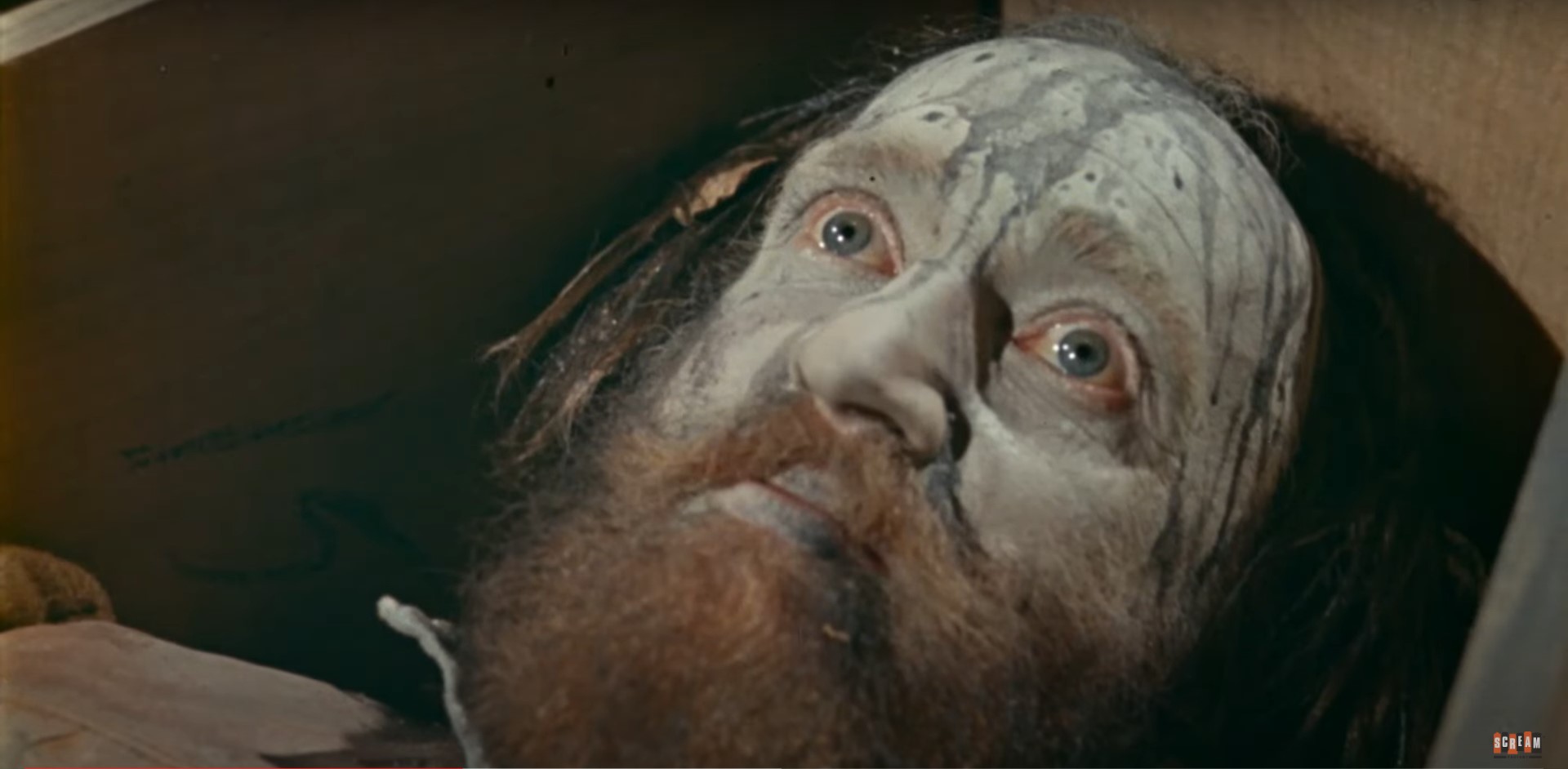
A savage pirate is left for dead on a remote island by his ruthless captain, a small village avoids taxation from the British King’s revenue men by smuggling French Brandy, and on the same village’s marsh land, ghostly skeletons ride into the night, placing the fear into wanderers with ghastly-glowing skulls and undead horses. At the center of it all is Dr. Bliss, the Romney Marsh village Vicker, who also heads the liquor smuggling ring in town and plays the King’s tax revenue soldiers as fools by misdirecting their attention to elsewhere and away from their illegal brandy run. Keeping up with a ruse that’s cracking at the foundation with one of Romney Marsh’s irresolute community leaders forces Dr. Bliss to think fast and stay on top of a smuggling operation at the constant brink of collapse, but a return of a familiar face stirs up conflict and the captain of the revenge men continues to push for the truth no matter the cost.

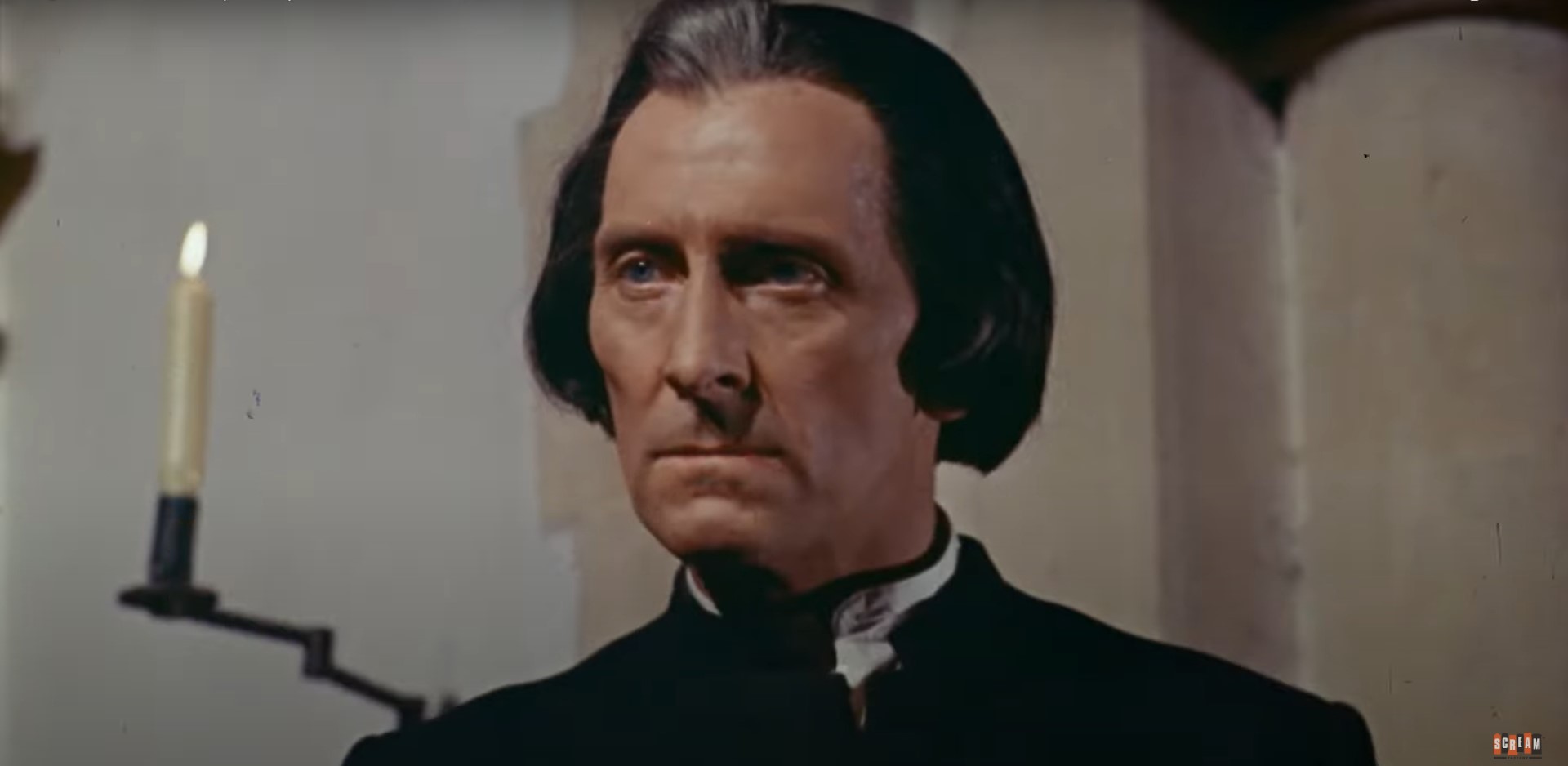
Peter Cushing is well-known for his solemn gothic horror roles in nearly a slew of countless Hammer films. An unequivocal and stoically determined vampire hunter, the intelligently disillusioned creature maker befallen by his creation, and a wizard sleuth with a nose for clues in tracking down murders are just a few of his linchpin roles for Hammer Productions that the English actor portrayed so very brilliantly in the company’s peak, and off-peak, years. Yet, one of his most pinnacle performances stem from one the lesser-known Hammer productions based off the English author Russell Thorndike’s anti-hero and swashbuckling novel “Dr. Syn” published in 1915. Known in the United Kingdom as “Captain Clegg” and “The Curse of Captain Clegg” because of legal rights issues with the Thorndike title and Disney (yes, that Disney!), U.S. audiences might recognize the Cushing film as “Night Creatures,” directed by a Hammer one-off in Peter Graham Scott (“The Headless Ghost”) and is written by Hammer vet Anthony Hinds (“The Brides of Dracula,” “The Kiss of the Vampire”) under his usual pseudonym John Elder with additional dialogue from Barbara S. Harper. John Temple-Smith produces the film under Hammer Film Productions

Though the cast, crew, and production company were bound not able to use “Dr. Syn” in the film that didn’t stop Peter Cushing in becoming Dr. Bliss, the peoples of Romney Flat’s very own Vicker who revitalized the small town and severed them from hefty taxation with a scheme of smuggling. Clearly, Cushing is in his glory, in his element of wide range, and can be seen as having a ball with playing a dualistic character in Dr. Bliss. Dr. Bliss bares no sign of being saintly stiff around the gills as any pious man might be portrayed and Cushing, at times, can be as rigid as they come in certain roles. Not Dr. Bliss though as a man playing the facade to hide behind-the-curtain his good intentions from those who want a piece of the pie for king and country. Opposite Cushing is “Never Take Candy from a Stranger’s” Patrick Allen as Captain Collier who trucks men by boat to land a surprise inspection after being tipped off about a possible smuggling ring. Allen’s cuts Collier from the clever cloth but the leader of revenge men is always one step behind his time as Pirate chaser and now as a fraud nabber. Another excellent act of thespianism in “Night Creature” is another Hammer household name in Michael Ripper (“The Curse of the Mummy’s Tomb,” “The Plague of the Zombies”) after a long stint of playing unnamed sidelined roles early in Hammer’s beginnings. Ripper has an unforgettable look with gravely gruff voice and a quick timed wit that makes him a pleasure every time he steps into the scene. Just coming onto the scene is Oliver Reed on the coattails of his success with “The Curse of the Werewolf” and though his role is purely supportive, his act as the love stricken and loyal to the smuggling cause son of the naive local squire and magistrate (Derek Francis, “The Tomb of Legeia”) who isn’t in on the scheme. “Night Creatures” rounds out the cast with Yvonne Romain (“Circus of Horrors”) as about the closest thing resembling a love interest, Martin Benson (“The Omen”), and Milton Reid (“Deadlier Than the Male”) as the Mulatto pirate exploited as a shackled hound dog to sniff out French Brandy…literally.

A swashbuckling, smuggling caper with notes of macabre imagery and a purloin-the-show performance by Peter Cushing stows “Night Creatures” away as one my favorite Hammer productions. Laced with characteristically grand production pieces and sets, mostly shot at Hammer’s Bray Film Studios, “Night Creatures” looks luxurious and feels expensive as pirate ship interiors, magnificent church hall, and haunting shots of a scarecrow with voyeuristic eyes propped on the countryside landscape elevate not only the story but also the rich characters brimming with complexity. Scott does a fine job sustain an ambiguous Dr. Bliss who, from our own suspicions, can be immediately pinpointed with a backstory that never falls in the pit of exposition. The true story behind Dr. Bliss is practically pressed, squeezed, tugged, and pulled by tooth and nail to finally be revealed to the audience and the moment is greatly satisfying when admission to something we all know is finally out in the open. While Dr. Bliss purposefully misguides the revenge men astray from his illicit activity, “Night Creatures” is also misguiding the audience with ghastly suspense in the existence of the Marsh Phantoms, a luminescent design of full body skeletal depictions on top of midnight cloaks and onesies, pulled off by special effects supervisor Les Bowie (“Paranoiac”) and his team to add a taste of horror to a rather subterfuge storyline of rebirth and sacrifice.

Now on a part of their Collector’s Edition line, Scream! Factory releases “Night Creatures” onto Blu-ray home video with a new 2022 2K scan from the original interpositive. The result is mostly immaculate with visualize details along the skin lines that makes every bead of sweat and every follicle more apparent to the eye. The release is presented in a 1080p high-definition transfer in what’s now labeled Univisium, an aspect ratio that is 2:1 (2:00.1), reformatted from the original 1.85:1 aspect ratio. Less than a handful of scenes display what looks to be posterization and a degrade in the scan, causing the scene to revert back to the original transfer for a split second. For this you receive a little more width that, ironically enough, homes better in on the focal image. The English language DTS-HD Master Audio mono mix has little to speak ill of as the dialogue, with a hint of continuous static, is greatly clean and clear, ambient track is balanced in range and depth, and you can follow every clashing note in Don Banks’ dramatically orchestrated score. Special features include a new audio commentary with film historian Bruce Hallenback, a new interview with Les Bowie’s special effects technician Brian Johnson, Pulp Friction with film historian Kim Newman on his take on the clustering mess of “Dr. Syn” film rights, Peter Cushing’s Changing Directions with film historian Jonathan Rigby mostly on Peter Cushing’s admiration for the role and his invested interest in playing the main role, a making-of featurette narrated by John Carson, The Mossman Legacy of film historian John Carson showcasing the lot of antique carriages crafted by the George Mossman company in Hammer films, a still gallery, and the original theatrical trailer. The unrated, 83-minute feature also includes a cardboard slipcover with new illustrated from cover art by Mark Maddox. Don’t let a claggy title like “Night Creatures” fool you! Though not the sexiest title, “Night Creatures” will enliven with the mystery of Marsh Phantoms, the suspense of the cat & mouse smuggling game, and the pure bliss on Peter Cushing’s face as he fully immerses himself into the role of his lifetime.

The Marsh Phantoms are Coming to a Blu-ray Near You!

EVIL Lights Up When Peeling Skin! “Human Lanterns” reviewed! (88 Films / Blu-ray)


Own this beautiful release from 88 Films of the “Human Lanterns”

Two respected and wealthy Kung-Fu masters have a long rivalry, trying to one-up each other at any cost even if that means stooping into their personal life to gain the most public admiration.  With the annual lantern festive approaches, to have the best and brightest lantern would sustain at least a year of gloating over the other master.  When a lantern maker with a retaliation mindset against one of the more boastful masters is hired to make his festival entry, the lantern maker exacts horrifying revenge by fueling their feud behind the scenes. Kidnapping beautiful women who are dear to each master and exploiting their soft delicacies for his crazed creations, the maniac lantern maker turns the village upside down, forcing the local constable into an impossible investigate into the village’s most popular residents when none of the evidence points to the other.

“Ren pi den long,” aka “Human Skin Lanterns,” aka “Human Lanterns” is a grisly Kung-Fu murder-mystery that’ll make your skin crawl right off from your body. The stylishly colored and ethereally varnished 1982 Hong Kong film is written-and-directed by Taiwanese director Chung Sun (“Lady Exterminator) that blended the likes of a giallo mystery into the well-choreographed martial arts mania with the profound Kung-Fu screenwriter, Kuang Ni (“The One-Armed Swordsman,” “The Flying Guillotine”), co-writing the script alongside Sun. While not as ostentatiously gory or as cinematically profane as the 80’s released Category III certified films that rocked Hong Kong audiences, and the censor board, with shocking, gruesome imaginary and content, “Human Lanterns” does sit teetering on the edge with mostly a tame Kung-Fu feature that quickly turns into the blistering carnage of a basket case, or in this a lantern maker, who uses hiding as a double entendre. “Human Lanterns” is a Shaw Brothers Studio production executively produced by the oldest of two brothers, Rumme Shaw, and, then new to the Shaw Brothers’ board of directors, producer Mona Fong.

“Human Lanterns” starred two the renowned names in martial arts films from the 1970s and well into the 1980s with “Fist of Fury” and “The Swordsman and the Enchantress’s” Tony Liu as the impeccably arrogant Lung Shu-Ai with a self-image to protect more than the women in his life and “Bloody Monkey Master” and “Return of the Bastard Swordsman” Kuan Tai Chen sporting a sweet mustache as Lung’s longtime rival, Tan Fu. Shu-Ai and Chen have really spot on, well-versed, fight sequences together braided into their play off each other’s character’s haughty personas. While behind the curtain of overweening and defiance between the two masters, Chao Chun-Fang unceremoniously sneaks into the fold by happenstance as Lung offers him money for the best lantern this side of the lantern festival. Lung and Chao Chun-Fang, played with a demented, idiosyncratic duality from Leih Lo (“The Five Fingers of Death,” “Black Magic”), another master in the art of fighting in his own style, have an inimical past…well, at least thought so by Chun-Fang. In a sword dual over a woman, Lung defeats Chun-Fang and purposefully scars him above the left eye, causing him the inability to look up, and while the lantern maker has stewed for many years, training all the while to be the best fighter, his tormentor Lung Shu-Ai has nearly all forgotten about the incident and found trivial enough to ask Chung-Fang to make him a lantern and offer him out for drinks for being old buddies of yore. However, this yard pulls the wool over the eyes of self-centered, the upper class, and the unruffled nonchalant as Chung-Fang takes advantage of the Kung-Fu masters naivety and uses the rival as a screen to cover up his kidnapping deeds of the women in their lives, played by Ni Tien (“Corpse Mania”), Linda Chu (“Return of the Dead”), and Hsis-Chun Lin. “Human Lanterns” rounds out the character list with a hired assassin in Meng Lo (“Ebola Syndrome”) and a competent but out of his league village constable in Chien Sun (“The Vampire Raiders”).

The look of “Human Lanterns” is often dreamy. No, I don’t mean dreamy as in gazing into the strong blue eyes of your tall and dark fantasy man. The dreamy I’m speaking of is produced by cinematographer An-Sung Tsao’s luminescence that radiates of background and the characters through the wide range of primary hues. Tsao’s colorful and vibrant eye doesn’t clash with the vintage era piece consisting of impressively detailed sets, a costume design plucked straight from the 19th, and hair, makeup, and props (which I’ve read some of the blades were authentic) to bring up the caboose of selling the completed package of delivering a spot-on period film. When Leih Loh dons the skull mask, an undecorated and unembellished human skull, with wild, untamed hair sprouted from every side of the eyeless mask, Loh transforms into a part-man, part-beast jumping, summersaulting, leaping, and seemingly flying through the air like a manically laughing ghost. The visual cuts petrifyingly more than described and if you add an extensive amount of Kung-Fu to the trait list, “Human Lanterns” has a unique and unforgettable villain brilliantly crafted from the deepest, darkest recesses of our twisted nightmares. “Human Lanterns” has a wicked and dark side that balances the more arrogantly campiness of Lung and Tan’s hectoring rivalry. When Lieh Loh is not skinning in his workshop or Lung and Tan are not bullying each other into submission, there’s plenty of action with the heart stopping, physics-defying martial arts that just works into the story as naturally as the horror and the comedy. With shades of giallo and fists of fury, “Human Lanterns” is Hong Kong’s very own distinctive and downright deranged brand of good storytelling.

88 Films lights the way with a new high-definition Blu-ray of the Shaw Brothers’ “Human Lanterns” from the original 35mm negative presented in Shawscope, an anamorphic lensed 2.35:1 aspect ratio that more than often displays the squeeze of the picture into the frame. One could hardly tell the upscale to 1080p because of the very reason I explained in the previous paragraph of the airy An-Sung Tsao façade that softly glows like bright light behind a fog. Nonetheless, the image quality is still stunning and vivid, a real gem of conservation and handling on this Blu-ray release. The Mandarin dubbed DTS-HD 1.0 master audio is synched well enough to the action for a passing grade. The foley effects, such as the swipes and hits, are often too repeated for comfort, but adds to “Human Lantern’s” campy charm. The newly translated English subtitles are synchronous with the picture and are accurate but, in rare instances, come and go too quickly to keep up with the original language. The release comes not rated with a run time of 99 minutes and is region locked at A and B. Why not go full region free is beyond me? Licensing? Anyway, special features include an audio commentary by Kenneth Brorsson and Phil Gillon of the Podcast On Fire Network, “A Shaw Story” interview with then rising Hong Kong star Susan Shaw who talks about the competitive and easy blacklisting Hong Kong and Tawain cinema market, “The Beauty and the Beasts” interview with in story brothel mistress played by Linda Chu often harping upon not wanting to do nudity despite directors begging her, “Lau Wing – The Ambiguous Hero” interview with Tony Liu that comes with its own precaution title card warning of bad audio (and it is really bad and kind of ear piercing) as the lead man really regales his time on set and in the industry between Golden Harvest Productions and Shaw Brothers Studios, and rounding out the main special features is the original trailer. The package special features is a lantern of a different color with a limited edition cardboard slipcase with new artwork from R.P. “Kung-Fu Bob” O’Brien, a 24-page booklet essay entitled “Splicing Genres with Human Lanterns” by Barry Forshaw accompanied by full colored stills, posters, and artwork by O’Brien, a double-sided fold out poster, and reversible Blu-ray cover art that can be flipped from the same, yet still awesome, O’Brien slipcover art to the original release art. The new 88 Films’ Blu-ray set conjures a renaissance satisfaction like none other for a highly recommended, genre-ambiguous, vindictive affray.

Own this beautiful release from 88 Films of the “Human Lanterns”

Surrounded by Aquatic EVIL, No One Can Escape “The Island of the Fishmen!” reviewed! (Full Moon / Blu-ray)

Check out the scantily-cladded woman encroached upon on “The Island of the Fishmen” Blu-ray!

A French prisoner ship sinks to the bottom of the Caribbean leaving only a handful of prisoners and the Left Lieutenant Claude de Ross, the ship’s doctor, stranded on a lifeboat for weeks until they a mysterious force drives them through the fog and crash them on the rocks of a seemingly deserted volcanic island. Only a few prisoners and the doctor manage to survive the wreckage, stumbling upon a ritualistic area of empty graves and abandoned artifacts of an island society. This is where the haggard and hungry men meet the beautiful Amanda Marvin on horseback and follow her through the island jungle to a clearing where the edifice of Edmond Rackham sits imposing on them. Having left his home country, Rackham settled upon this uncharted island, garnering local Caribbean inhabitants as servants, and being a greedy treasure hunter who might have just discovered the lost city of Atlantis. There’s only one problem, the city is surrounded by aggressive fishmen kept at bay by Amanda’s famed disgraced biologist father who has fallen severely ill, charting a course for the good doctor, Lt. Claude de Ross, to be unharmed in order to care for perhaps the only person who knows how to manage the wrath of the fishmen.

A swimmingly aquatic creature feature with an all-around gratifying men in costume pastiche, familiar to the style of “The Creature from the Black Lagoon,” in Sergio Martino action-adventure horror “The Island of the Fishman.” Also know under the revamped shots of “Screamers” aka “Something Waits in the Dark,” here we have the original film in all it’s natural glory from the director of “Your Vice Is a Locked Room and Only I Have the Key” and “Torso” director Martino from a script by Martino, Sergio Donati (“Orca”), “Slave of the Cannibal God’s” Cesare Frugoni who workshopped with Sergio Martino’s older brother, Luciano Martino, (“So Sweet… So Perverse”) on the original story. Some would also say that “The Island of the Fishmen” is also a crossbreed between H.G. Wells’ “The Island of Dr. Moreau,” H.P. Lovecraft’s “The Shadow Over Innsmouth,” and, aforementioned, “The Creature from the Black Lagoon.” The 1979 Italian production stars an international cast shooting along various locations in Italy and is produced by Luciano Martino under Dania Films and Medusa Distribution.

American, United Kingdom, and, of course, Italian come together to form “The Island of the Fishmen” cast that doesn’t stray too far away from their individual innate dialects. The most pompous is he Essex-born Richard Johnson’s sadistic and fortune hungry Edmond Rackham with a caricature of a voice that isn’t like anything in his performance in Lucio Fulci’s “Zombie.” As Rackham, the inflections reminisce of a British Humphrey Bogart mixed with a one Dick Dasterdly and so Johnson comes off a bit cartoony and overly dramatic compared to the film’s panache malnourished yet earnest hero in Italian actor Claudio Cassinelli (“Murder Rock,” “The Scorpion With Two Tails”) as Left Lieutenant Claude de Ross, a ship’s doctor who suddenly becomes the medical caretaker and leading guard over a lifeboat full of hardened prisoners, some who have blood on their hands. Franco Javarone and Roberto Posse play a pair of surviving convicts, especially two at odds on how they should treat their next in rank penal officer. Though being thrust into the oversight position, the Lieutenant doesn’t have to worry about his prisoners for too long as the island’s baleful environment with jungle death traps, poisonous water, voodoo priestess, a sadistic lord of estate, and mutant fish people swimming in circles around the island’s parameter and through the cut through waterways sees to their wellbeing. “Island of the Fishmen” does have a few predominant male figures of different caliber but there are also a pair of women inhabiting the island who, too, have counteracting roles. Bond girl Barabara Bach (“The Spy Who Loved Me”) became plagued by the ocean’s frightening fishmen only two years later as the captive dame of Edmond Rackham who holds her hostage as he pushes her father (Joseph Cotton, “The Survivor”) to continue with his mind control potion over the fishmen. Then, there’s Shakira. No, not the Brazilian singer-song writer with the hypnotizing booty shaker. This Shakira is a voodoo priestess, played by Jamaican actress Beryl Cunningham (“Dorian Gray”), who works for Rackham but ultimately envisions foreboding doom on the volcanic island. Giuseppe Castellano and Franco Mazzieri round out the cast.

A whole lot is going on in this film that from the surface seems, surfacing meaning the home video covers and posters, to focus chiefly on the hostile half-fish half-man creatures that bubble to surface, check out top side for any unwanted visitors, and quickly dispatch them before disappearing under the glassy waters of the Caribbean. I adore the design of the rather stiff but crudely convincing creature suits with buggy fisheyes, razor piranha like teeth, and cladded entirely green and scaley in a design by Massimo Antonello Geleng who by vocation was more a production designer with credits including this film along with “Cannibal Holocaust,” “City of the Living Dead,” “The Church,” and “Dellamorte Dellamore” to name a few. Yet, the fishmen were not a sole source of danger on an island that had a deadly schemer in Edmond Rackham, the motif of voodoo and jungle trap throughout, a volcano ready to erupt and engulf the island with lava, and the lost city of Atlantis as the grand epic finale that pivots this story on an acute elbow left that shows a mighty ambitious story on an Italian slim budget. To put it frank, Sergio Martino was able to put all the elements together into a cohesive, coherent plot with action, horror, exploitation, and mad science fiction albeit the story’s wild and diverging concepts.

Though many U.S. audiences know this film as Roger Corman’s highly altered, New World Pictures presented cut retitled as “Screamers,” Full Moon features releases the original oeuvre of Sergio Martino with a remastered Blu-ray release from the original 35mm negative. The 99-minute film is presented in a widescreen 2.35:1 aspect ratio that captures in perfect matte composition and frame the locational miniatures, such as the manor house or the underwater Atlantis temples, in a compression that doesn’t make the structures obvious fakes. Slightly tinged yellow, the overall color palette is renders out well enough to suit the release with a pristine transfer seeing no signs of real significant damage. The English language tracks come in two formats – a PCM 2.0 and a Dolby Digital 5.1 surround sound. The English-speaking actors have their original tracks intact while the Italian cast have their original dialogue re-dubbed in English for posterity on new releases such as this one. Dialogue, nor any of the corresponding audio tracks, show any signs of fidelity issues or damage, but do feel muffled, even on the 5.1 as if the sound was boost stifled and left with some of the channels lacking vigor. Aside from Full Moon trailers, the R-rated film rides solo on this hi-def release. “Island of the Fishmen” is a small film fighting hard to swim upstream and really does a number on many different levels regarding where the audiences should focus their attention on, but I can see why Roger Corman wanted to give Martino’s film a second run after a commercial flop with a new, gory scenes edited right into the heart of “Island of the Fishmen’s” flexible, cartilaginous bones. Despite Corman’s efforts, Sergio Martino’s unmolested, original reeling reel is the one and only catch of the day for this purist.

Check out the scantily-cladded woman encroached upon on “The Island of the Fishmen” Blu-ray!

This EVIL is Why I Don’t Have a Roommate! “2DLK” reviewed! (Unearthed Films / Blu-ray)

“2LDK” Now Leasing a New Life on Blu-ray from Unearthed Films!

Rana and Nozomi couldn’t be more different coming from different backgrounds with antagonizing behaviors.  The two aspiring actresses live in a cozy two-bedroom apartment hosted by the same production company that has them vying for the same lead role in an upcoming feature film.  The role could jumpstart either of their careers and, internally, Rana and Nozomi believe the other isn’t good enough despite their different approaches in as city girl Rana uses her famine ways and laxer attitude to slut her way up to the top while the country-born Nozomi diligently studies the dialogue and the role to impress beyond her days as a parent-encouraged elementary stage actor.  When tensions rise through apartment sharing irksome nuisances and a man’s affections put an even more divisive wedge in the already gaping hole between them, Rana and Nozomi reach a breaking point and a violent melee of at each other’s throats ensues.

From my personal experience, the only roommate I’ve ever had was my wife during our engagement period and I can tell you that living with someone else – someone’s quirks, someone’s habits, and someone’s tastes – can be utterly earthshattering and explosive in what seems like every little pampered or established, taken for granted role you had living without a roommate is acutely upended and tossed into apocalyptic chaos.  Or, at least, that’s how it feels, right?  The sentiment is exactly perfectly and with killer instinct in Yukihiko Tsutsumi’s written-and-directed fight!-fight!-fight! film “2LDK.”  The 2003 Japanese movie helmed by the “12 Suicidal Teens” Tsutsumi co-wrote the script with Yuiki Miura, who of the last six years penned episodes of the recent various “Ultraman” series.  The 8-day shoot left no time to spare, leaving much of the cast and crew to shoot longer, sleepless nights, on “2LDK,” which in Japan shorthand describes the type of apartment – a 2-bedroom apartment with a Living room, Dining room, and Kitchen.  “2DLK” is a production of Micott, Times in, and DUEL Film Partners and is produced by Kazuki Manabe and Susumu Nakazawa.

When the central plot revolves around two aspiring actresses cohabiting a single living space and, literally, fighting over every inch of space, also literal as well as figural, there’s no room for more cast or even extras.  We’re first introduced to Eiko Koike (“Terra Farmers”) as Nozomi, a small province girl, reserved in manner, and extremely methodical to the point of obsessive.  Koike perfectly pitches Nozomi’s quiet but strong behavior, yet still judgmental about a roommate from the total opposite spectrum in Rana.  Played by Maho Nonami (“Scarecrow”), Rana’s a big city Tokyo girl with a jaded history.  Blunt, sleazy, and inconsiderate of apartment-sharing etiquette, Rana knows how to push Nozomi’s buttons – hard and on purpose with a innocent smile.  The story dives into differentiating Nozomi and Rana with an immediate internalizing of trash talking voiced over for the audience to see how Rana thinks Nozomi wearing high school gym clothes is hanging on to her humble origins whereas Nozomi itemizes every piece of Rana’s expensive accessories with a dollar amount.  Tensions slowly build from there and the actresses do a phenomenal slow burn into madness where the pot lid rockets to the sky when irritations hit the boing point summit.  Before you know it, electric-corded chainsaws are being wielded, spray cleaner bottoms are being spritzed into eyeballs, and eggs and toilet lids are being cracked over heads.   

“2LDK” is compact carnage, relatable dark fantasies of every roommate with a grudge against something thought their roomie did incorrectly or inconsiderately over and over again.  Other factors play into the two women’s meltdowns that provided fuel to the flame the burns with them in.  Rana struggles with the indirect suicidal death of a mother and child during her affair with the woman’s husband.  Nozomi bears the burden of forcedly shepherd to be the best whether to her studies or acting.  Not to forget to mention that both are in the running to be handpicked for a feature film role by the production company and there’s a man in the mix as an exploited chip against the other adoring roommate just to stick that knife into the side and twist for a little extra gut-wrenching spite.  Tsutsumi builds the seething hate, the tension, and the momentum that all comes crashing down in a Tsutsumi tsunami of cat fighting violence, weaponizing every inch of that small apartment from their individual bedrooms to the kitchen as a battleground.  Tsutsumi smartly doesn’t make “2LDK” a story about good versus evil as there are hardly any instances where the audiences will feel Rana nor Nozomi are in the wrong and wish their demise by virtuous-righteous other.  The bout is equally matched at their core and in scrappy ability to pick up whatever is lying around as a deadly weapon. 

Unearthed Films brings this one-on-one battle royale to an all-new Blu-ray release in association with Duel Film Partners and distributed by MVD Visual.  The perfectly paced and timed 70-minute film is presented in a widescreen 1.78:1 of AVC encoded 1080p high-definition transfer.  Image appearance is quite similar to another Unearthed Films Blu-ray release in “Tokyo Decadence” with a hefty grain product that be very discernible in blacker/darker areas of the image, suggesting maybe a celluloid film gauge that offer a pleasantly filmic presentation instead of a white-glove and sleekly fabricated digital video.  While colors don’t exactly pop, the texture is there surrounding skin pores and facial imperfections that shine in the details.  Unearthed Films presents two options with a Japanese 5.1 DTS-HD master audio and a 2.0 PCM stereo.  The multi-channel has a tad trouble discerning the inner voice overs between the two woman and never quite isolating their individual dialogues.  Some food for thought in case you decide to not pay attention to the movie and look at your phone as the dialogue courses through.  Some of the action came off with a bit of an echo but the overall soundtrack is robust with a clean and clear dialogue that comes with option English subtitles.  Extras include a commentary with actresses Maho Nnami and Eiko Koike with subtitles, a making of “2DLK,” interviews from the Tokyo International fantastic Film Festival, interviews from the premiere screening, production briefs on the duel between the roomies, a video message for theater audiences, interviews from the screening at Kudan Kaikan, and a photo still gallery.  Duel epitomizes “2LDK” exactly and only the Japanese know how to formulate a 70-minute comedy-action-thriller of two going toe-to-toe to the death.

“2LDK” Now Leasing a New Life on Blu-ray from Unearthed Films!

Prepare Yourself for the Side-Splitting EVILS of Adultery. “Sex and Zen” reviewed! (Umbrella Entertainment / Blu-ray)

A Must-See, “Sex and Zen” is highly erotic and highly funny.

A wealthy educated man is arranged to marry the beautiful and sexually naïve daughter of a high scholar.  After persuading her sex being a cornerstone to a healthy marriage, she quickly concedes to his insatiable desires.  Yet, the man wants more and decides to venture out into world seeking passionate sexual escapades and when he happens upon a distinguished scoundrel, who’s good at swordplay, martial arts, and as a carnal adviser, the man is schooled about his insignificant manhood needing to be the size of a horse’s.  The obvious thing to do, transplant his penis with a horse’s.  The comical insanity pursues from then on out with the man falling for not only the brutish fabric maker’s wife, but also a bisexual noblewoman with a jealous lady lover.  When the scholar’s secret is found out, the jealous lover imprisons the man’s stay-at-home wife into prostitution, spearheaded by the seduction of the vengeful fabric maker posing as the house’s new gardener.  

Attuned to the same idea as war and peace, “Sex and Zen” is a delicate balance of control between the two and the dire consequences suffered if the sanctity of matrimonial fidelity is not respected.  Hailing from Hong Kong under the infamy of the Category III rating and with surprising staggering budget of approx. 4 million USD, director Michael Mak’s artfully erotic 1991 sex-comedy is by far one of the most entertaining of its genre ever to be produced into the world.  Michael Mak, the director of the three sequels following the “Long Arm of the Law” after taking over the franchise from his brother Johnny Mak, helms a script penned by “To Be Number One” writers Alexander Lee and Ying-Chiet Lee, based loosely off the drama-tragedy novel “The Carnal Prayer Mat” by Yu Li.  While definitely not a mirror dramatization of Li’s novel, “Sex and Zen’s” melodrama is in full-frontal effect with outlandish sex organ transferring and fiendish-flings and betrayals that make this slapstick an absolute riot.  Raymond Chow’s Golden Harvest (“Game of Death,” “The Man from Hong Kong”) and Michael Mak’s brother’s company, Johnny Mak Productions,” build “Sex and Zen’s” luxurious sets and wardrobe, bright with colors and backed by phenomenal talent. 

“Sex and Zen” is only as good in its absurdity as it’s actors and actresses and, fortunately, Lawrence Ng and Amy Yip, and amongst the others, infuse and imprint themselves to the carnally comically characters with pleasure.  Ng (“The Underground Banker,” “Madame Q”) plays the travelling sex alcoholic husband Mei Yeung-Sheng to “Erotic Ghost Story’s” Amy Yip character, Huk-Yeung.  Huk-Yeung is an in the closet nympho taught to be disgusted by sex from her father’s puritanical stance.  Though Ng. and Yip’s scenes are few, they sizzle as explorers of each other’s bodies with Ng portraying shameless lust for the flesh against Yip’s innocent purity.  When Mei Yeung-Sheng ventures out into the world seeking erotic flings, that’s when Kungfu superstar Lieh Lo (“Fiver Fingers of Death”) enters the fold as the famous masterful thief Choi Kun-Lun who not only steals from the rich and gives to the poor as a Robin Hood-esque martial arts bandit but also becomes the sexual advisor to a hapless Yeung-Sheng and his itsy-bitsy trouser snake problem.  Lo’s hilariously cavalier and unpredictable in his performance that offers a divergent against the constant yearnings to follow the graphic depictions of pornographic picture art.  The scholar becomes entangled with an abused fabric seller (Japanese-born actress Mari Ayukawa, “Groper Train Hurry Up and Come”) and, in consequence, the fabric seller’s husband Wong Chut, a ultra-physical ruffian played vigorously intensive by Elvis Tsui (“The Boxer’s Omen”), who has a vendetta against the scholar and has an affair with the scholar’s wife that leads to prostitution, frail health, and immense guilt in an parable about the misconduct of unchecked sexual liberties.  “Sex and Zen” rounds out with a solid cast in Hong Kong comedian Kent Cheng (“Dr. Lamb”), Isabella Chow (“The Nocturnal Demon”), Carrie Ng (“Angel Terminators”), and Feng Tien (“Fist of Fury”) as the Sack Monk who warns about lust-induced karma that pulls the story into a full arc.

“Sex and Zen’s” mighty price tag is beyond being obvious with elaborately detailed set designs and structures, equally elegant and era appropriate wardrobe and makeup, elevated stunt work that blends highflying Kungfu with softcore eroticism, a physical and omnipresent choreography, and a few complicated shots, especially the one involving the back-and-forth editing of above and below the surface of a steamy hot tub sexual assault-to-fantasy fornication.  The inexplicit story can be difficult to follow at times without much being conveyed to what the characters are doing, especially in the first act that jumps from a licentious Mei Yeung-Sheng debating with a temple-residing Sack Monk on the principles of polyamorous relationships, to the scholar fulfilling his engagement to and the slow deshelling into wanton exercises of the aristocracy daughter, to finally his sudden departure from her as he ventures out into the world for untamed carnal delights with strange women.  From that point, “Sex and Zen” becomes a little more cohesive and coherent, building upon the scholars need for a bigger penis at the suggestion of his newfound friend Choi Kun-Lun and bedding the wife of a loutish fabric maker while paralleling a forbidden lesbian love affair of two stepsisters without the meddlesome of man in the mix.  As Mei Yeung-Sheng and the lesbians’ paths collide, stiff and unforgiving karma catches up to each and every one of them with the welting sting of tit-for-tat cuckolding.  Yet, Mak’s depiction of the story is wilder than the slapstick and melee humor with a stark contrast of, or maybe a complete overshadowing all together of, the perversion of foreign sex toys.  From the hilt of a scroll brush to both ends of a golden flute (I’ll let that visual sink in)the women of “Sex and Zen” have a knack for insertion talents in this Hong Kong Cat III sideshow of debauchery and comedy. 

Coming in at #2 on Umbrella Entertainment’s Sensual Sinema label, “Sex and Zen” lands on a sleek Blu-ray home video from the Australian distributor. Presented in a widescreen 1.85:1 aspect ratio, the “Sex and Zen” Umbrella Blu-ray has impeccable full high definition, 1080p quality that pops right off the screen. The original 35mm transfer has a healthy amount of good grain and the colors lavishly seize control over every scene with a full-bodied range of hues. Blacks are inky and unaffected by any major artefact issues and the skin shades are poor-riddles and hair-laden in every since of the detail spectrum. Umbrella’s Blu-ray offers two audio options with a Cantonese 5.1 DTS-HD master audio with optional English dub or a Cantonese 2.0 Dolby Digital stereo with optional English dub. The dubbed-dialogue overlay is slightly asynchronous with the image, but there’s robust dialogue amplification centralized out of the five channels coinciding with isolating individual ambient sounds, such the swooshing of the swordplay or the chains clinking during acrobatic coitus. Special features are a little slim and of yore for a second title on a new sublabel, but the release offers an achieved, English-subtitled interview with director Michael Mak diving into the budget, working with the actors, and creating certain scenes. The theatrical trailer is also available on special features. The hot pink Sensual Sinema cardboard slipcover has a retro impression with various posters of the film on the slip and the snapper case surrounded by also a hot pink border. The film is listed as region B coded but played on my region free player without issue, runs at 95 minutes and is rated R+ for high level sex scenes. “Sex and Zen” is, by far, one of the best and most fetishized sex comedies ever produced and though a notorious Hong Kong CAT III production, the film is absolutely riotous and one-of-a-kind, deserving of praise from hedonistic crowds around the globe.

A Must-See, “Sex and Zen” is highly erotic and highly funny.