EVIL Cowboys Up! “Ghostriders” reviewed! (Verdugo Entertainment / Blu-ray)

A small Texas town in 1887 took lynch mob tactics upon a jailed outlaw Frank Clements after a prominent resident and his family were slain.  In a last-ditch effort to save their gang boss, Clements’ men come in guns blazing but mob leader, the Reverend Thadeous Sutton, pulls the gallows lever to send Frank Clements to his doom.  Fast forward 100 years later to 1987, renowned historian Professor Jim Sutton researches the notorious murdering bandit, even owning a piece of Clements’ property with a cursed sawed-off double barrel shotgun, but the 100th year anniversary delivers good on the Clements’ curse as he and his men return from the dead and gun down all in the rural Texas backland.  Walking into a supernatural showdown with the undead is the professor’s son Hampton and his friends on a road trip to his father’s isolated estate where surviving the night of continuously respawning malevolent six-shooters will seemingly never happen.

Ghost cowboys.  That small and obscure piece of particular subgenre stemmed from the broad western horror pie can be and has been a hard product to peddle, bucking audiences off its hind side faster than a mechanical bull full of amateur rodeo saddlers.  Think about it.  Can one even name a handful of horror westerns involving cowboys, especially gunslingers back from the grave?  There’s Lee Vervoort “Gun Town” that’s more of a saloon town slasher.   “Ghost Brigade” might be the closer to the theme with Civil War soldiers possessed by evil voodoo spirits.  However, the relatively unknown TV movie “Ghost Town” from 2009, surrounding a group of college students pursued by ghostly outlaws in an abandoned western town, hits the nail on the head.  Again, these titles are rare and if you find one that does exists, more than likely the film’s a waste of cinematic space.  In any case, if you’re hellbent on a decent gunslinging ghoul film, Alan Stewart’s “Ghostriders” will saddle up just nicely.  Penned by Clay McBride (“Ghetto Blaster”) and James Desmarais (“Victim of Love”), the debut film of Alan Stewart resurrected a ruthless gang of gunslingers for pure retribution set on location at the Texas Safari Ranch in Clifton, Texas and was self-produced by Stewart, under Alan L. Steward Productions, along with fellow producers in cinematographer Thomas Callaway, who went on to be the DoP of “Slumber Party Massacre II” and “Deep Blue Sea 2,” as well as composer Frank Patterson, and Alan’s wife/production manager Susan Stewart. 

As you’ve probably noticed, the “Ghostriders” crew is small and wears many large brimmed hats by engaging themselves deeply into this 1987 released indie production.  Same can be certainly said about the cast.  Actor turned stunt man Bill Shaw was booked for dual performances between two characters stretching 100 years apart with the zealous Reverend Thadeous Sutton and the reverend’s grandchild, professor Jim Sutton.  The ancillary gunfighters, led by Frank Clements himself, Mike Ammons, are actually members of a roadside replica of a wild west town.  The actors, trained to shoot revolvers, take fake bullet hits, and learn to be rootin-tootin’ cowboys and townsfolk, took to the camera’s key antagonist roles that required them to also do some stunt work.  When considering the other cast, “Ghostriders” struggles to emerge a lead out of the various roles.  In the role of Professor’s Sutton’s son, Hampton, Jim Peters’ often subtle comedic timing, towering stature, and his cool-and-calm intellect as a stunt pilot points to lead man material, yet there are elements and qualities surrounding his young adopted sidekick Cory, played by Ricky Long, who went on to have a very long and extensive career working on the purple dinosaur kid show “Barney,” that qualifies the often inept and lovesick grease monkey to Hampton’s stunt planes as another candidate for lead man.  Even Bill Shaw could be considered principal.  Either way, for an 80’s flick, “Ghostriders” campy characters and dialogue flatten whatever substance McBride and Desmarais tries to wedge into their narrative.  Whether be the tragic bond that glues Hampton and Cory’s strong friendship or Cory’s inability to read his recent court Pam (Cari Powell) and her fascination toward Hampton, those moments of human depth are cannibalized by “Ghostriders’” round’em-up, shoot’em-down gang of ghosts.

Alan Stewart’s “Ghostriders” might be an intelligible film, but it’s certainly not an intellectual one due to budget and inexperience complications.  Pacing is good with the historical backstory opening transitioning into the present’s continued lawlessness of curse-resurrected 19th century killers after building up the prominent players with depth and humanism in order for us to care about their plight, but also in regard to the characters, there’s much left unsaid and undone to nearly every role for a complete and justifiable narrative arc.  Point in case, Clements and his gang’s ability to return 100 years after the hangman’s knot tightened around their throats goes very much unexplained along with their connection to Clements’ shotgun that seemingly holds the key to their supernatural slaying.  A lack of essence towards the titular antagonists’ return from the pine box to wreak havoc on the Sutton bloodline really has no merit to stand on, leaving a void in the crux that doesn’t serve well within the parameters of an imagination reasoning.  We need some sort of resolution for Clements return, whether it’s a deal with the Devil or perhaps stolen Native American necromancy rituals used to cheat an outlaw’s own foretelling of death, to make sense of the senseless driven chaos because, as far as we’re shown, Clements and his gang are no more than just abnormal bad dudes doing normal bad dude things.  “Ghostriders” also won’t knock your boots off with high dollar special effects.  There’s some superimposing of people and items disappearing and some solid stunt work (again – some of these hombres are moonlight as stunt people), but the most impressive practical special effects used are the blood squibs.  If you like firecracker pops making craters and spurting blood off of bodies, “Ghostriders” has you covered with plenty of squibs with a select few in slow-motion.  

“Ghostriders” rides into the black sunset with a rare cowboy horror from Alan Stewart and the film is receiving new life on an unrated Blu-ray from Verdugo Entertainment and MVD Visual.  Verdugo Entertainment’s an independent cult film distributor seeking to release forgotten retro features of the 70s and 80s, centralizing themselves mainly around westerns, horror, or in this case, a blend of both.   The region free Blu-ray converts the 16mm A & B negative into a 4K scan resolution that maintains impeccable image quality with little to fuss about, such as extremely faint and seldom vertical scratches.  There wasn’t any noticed forced enhancement or cropping which provides logical evidence to a pristine original negative. Though the original English language mono soundtrack bears the same unblemished qualities as the video, the difference lies within the soundtrack’s weak decibel levels that leaves the dialogue corridor stuffy and muddled behind a curtain a fairly perceivable static interference through the duration. The release labels the audio as remastered, and I’m certain the audio was spruced up from a worser quality, resulting in a much more palpable and persistent outcome that works at your attention rather than leaving caution to the wind. Verdugo offers up a nice selection of special features with an audio commentary with cinematographer-producer Thomas L. Calloway, writer-producer James Desmarais, and moderator Steve Latshaw, a brand-new original documentary “Bringing Out the Ghosts: The Making of “Ghostriders” with Desmarais and Calloway recollecting memories of being on set and talking about the cast and crew, an archived documentary “Low Budget Films: On the Set of “Ghostriders” is a Baylor University funded vintage doc about the makings of independent film, more so about this particular one, feature stills and behind-the-scenes photo gallery, the original trailer, and a new reissued trailer, which you can see below, all packaged nicely in a Blu-ray case with a cardboard slipcover with a cheeky illustration of three skeleton desperados cladded in cowboy attire and brandishing Winchester rifles. Nowhere near what the film is like but the comicbook-esque cover is eye-catching and whimsical enough to draw you in. Verdugo Entertainment could have easily chewed up this unknown cult film and spat it out with cheap distribution ease into the marketplace spittoon. Yet, the indie distributor dressed the late Alan Stewart film with respect, properly showcasing a neater, cleaner, and far from forgotten meaner spirited square off against the living and the dead.

One Man Takes on the EVIL Australian Crime Syndicate! “The Man from Hong Kong” reviewed! (Umbrella Entertainment / Blu-ray)

“The Man From Hong Kong” on the Ozploitation Classics Blu-ray from Umbrella Entertainment!

A newly formed Australian narcotics unit busts up a major drug deal that lands a crime syndicate pusher into the custody of the authorities.  The pusher, low on the totem pole of a larger drug organization, speaks no English and with the inexperience of the Australian unit, Hong Kong special branch inspector, Fang Sing-Leng, is requested for interrogation interpretation and be the escort of extradition back to the pusher’s native Hong Kong residence, but while in custody, the pusher is gunned down by an assassin.  Sing-Leng thrusts himself into Sydney’s criminal underworld the Hong Kong way, leaving a trail of destruction in his solo-takedown of formidable drug kingpin, Jack Wilton.

For film loving youngsters, would they know what cinema was like before green screens, motion capturing technology, and other computer imagery devices to create alien worlds and improbable fight sequences?  Would comprehending the idea that before the pre-implementation of these technological advances in film there was a just-do-it fortitude toward the physical and raw aspects of special effects and stunt work?  Those wee moviegoers’ heads would explode into itty-bitty chunks of brain matter by the very slight thought of a man jump kicking another man off a high-speed dirt bike without even one ounce of a tethered harness or helmet for safety.  Hazard upon dangerous hazard is what writer-director Brian Trenchard-Smith offers on the table from his debut martial arts film “The Man from Hong Kong,” the first martial arts film of its kind hailing out of Australia.  Trenchard-Smith’s working title “Yellow Peril” sought to sprinkle in between the high kicks and hyahs an amusingly intended, but greatly nearsighted, prejudice of the subtle racism in how Australian people viewed East Asia; however, Raymond Chow, the Hong Kong-side producer for this two-country co-production, ozploitation actioner, didn’t quite see the humor in “Yellow Peril” (and we don’t blame him).  Thus, “The Man from Hong Kong” title was born with some minor contentious distaste for its generic branding.  Trenchard-Smith’s The Movie Company Pty. Ltd (“Stunt Rock”) and Hong Kong’s Golden Harvest Company (“Sex and Zen”) served as co-productions, releasing the joint venture in 1975 with variable success across the globe.

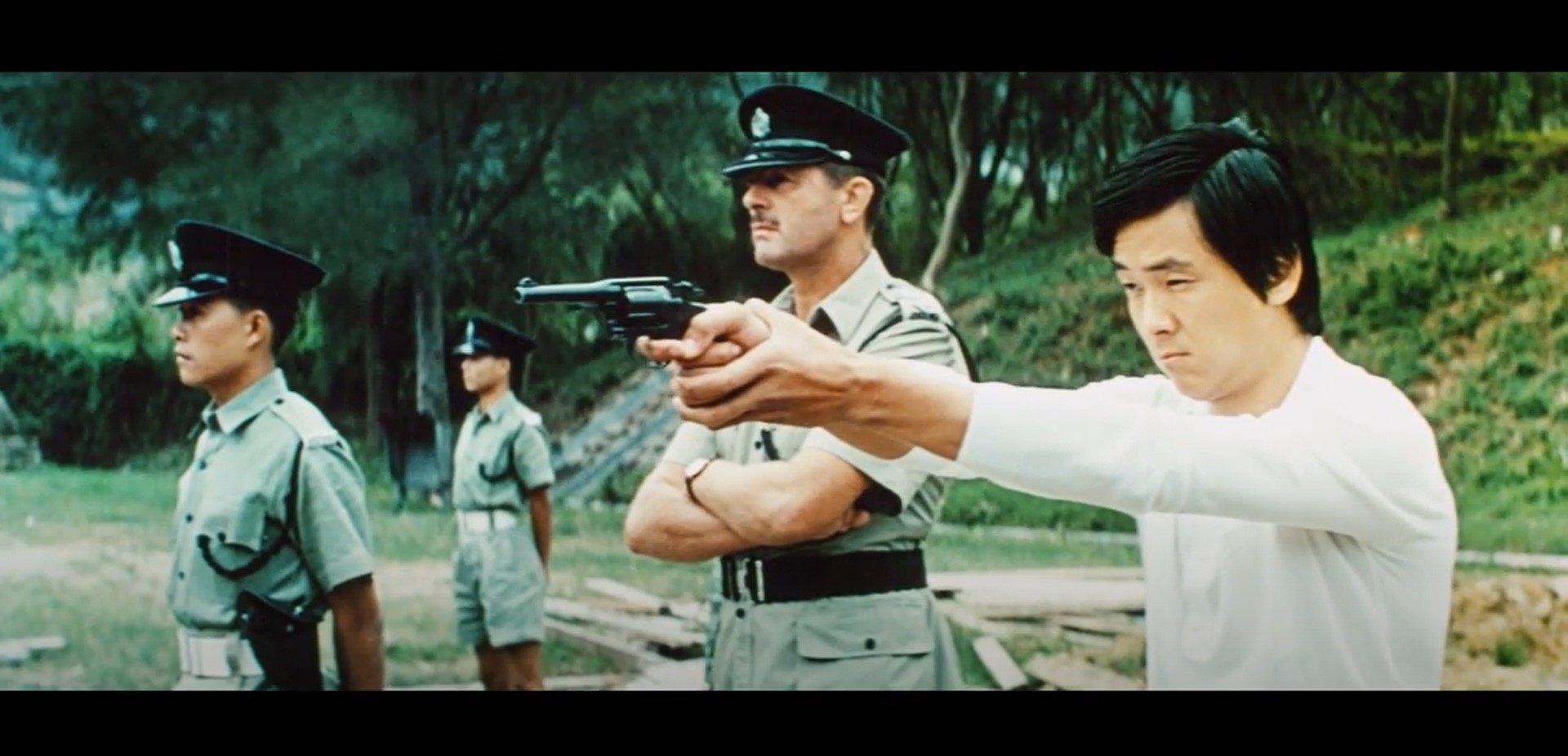
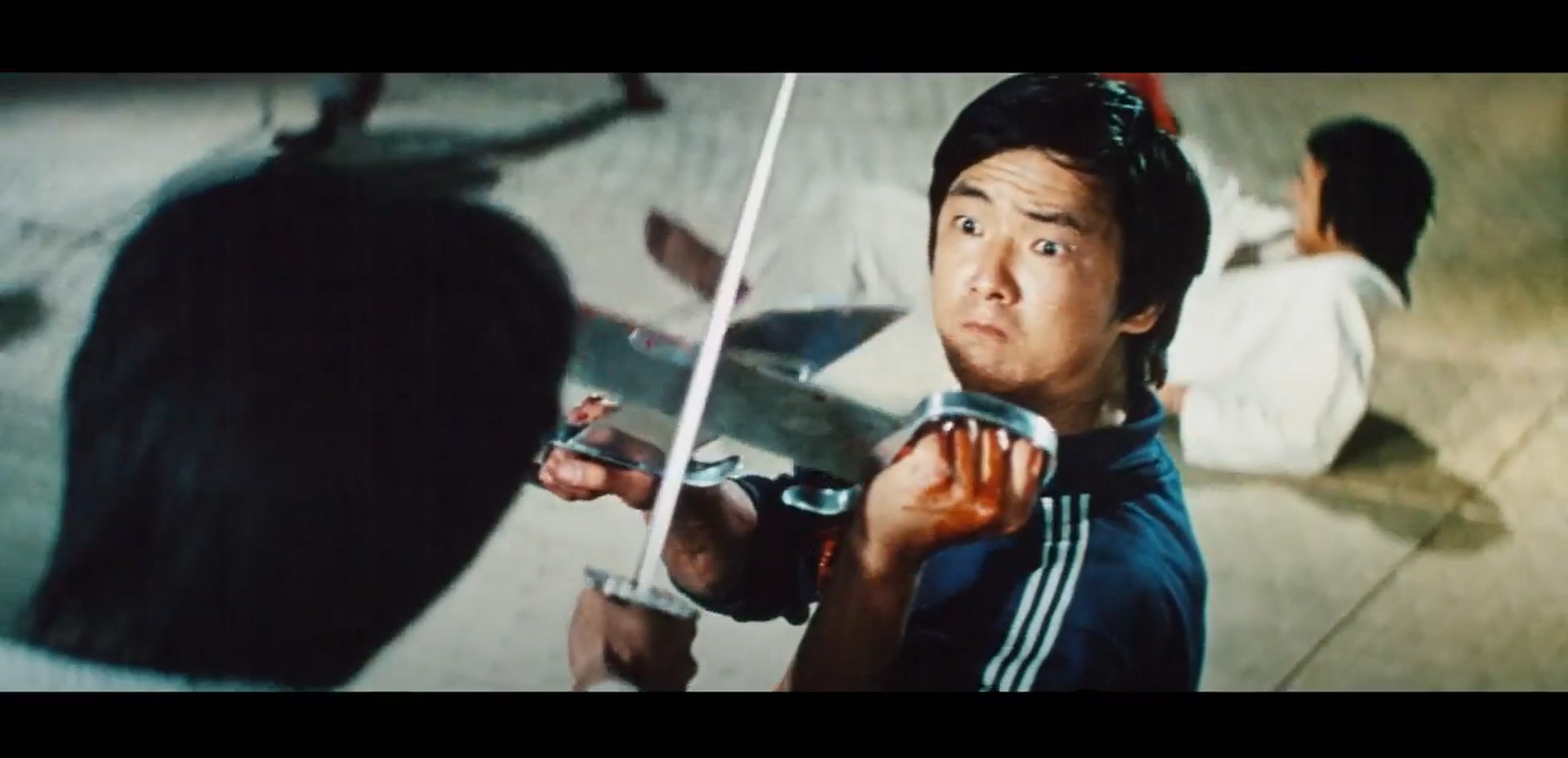
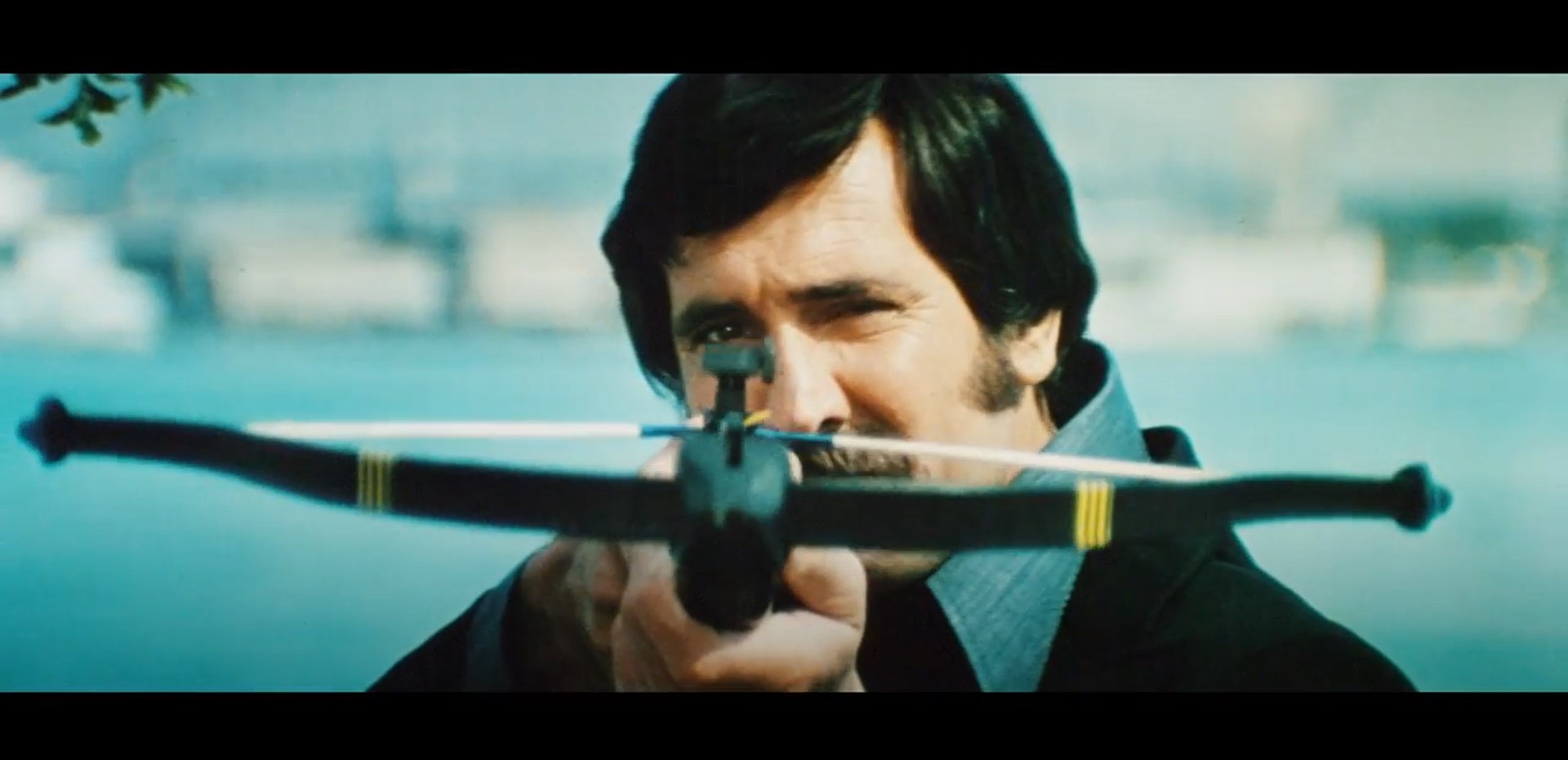
The first choice Brian Trenchard-Smith had in mind for the role of Fang Sing-Leng was mega-martial arts superstar Bruce Lee hot off the success of 1972’s “Fist of Fury,” 1972’s “The Way of the Dragon,” and 1973’s “Enter the Dragon.”  “The Man from Hong Kong” seemed to be a perfect segue into Lee’s next martial arts box-office hit that may have also reclaimed cinematic stardom for his soon-to-be co-star George Lazenby who fell into a blacklist slump after declining to reprise his 007 James Bond role from “Of his Majesty’s Secret Service.”  Unfortunately, and tragically, Bruce Lee suddenly died at the age of 32, leaving a void to fill not only Trenchard-Smith’s first film but also in the martial arts entertainment world.  In comes Jimmy Wang Yu, China’s former #1-turned-#2 after the quick rise of Bruce Lee.  The “One Armed Swordsman” series Wang Yu not only entrenches himself into the titular role at the behest of producer Raymond Chow as a suitable replacement, but Wang Yu also became Trenchard-Smith’s directorial counterpart of the Hong Kong shot scenes and the fight sequences, the latter being superbly thrilling by Wang Yu and his stunt team’s dedicated skillset to make the showmanship look authentic and bruising.  The extended chase through the streets of Sydney and into a no holds kitchen brawl with legendary stunt man Grant Page (“Stunt Rock”) is one of the best one-on-one rundown combat arrangements of its era.  Lazenby’s an effective villain with his towering height, broad build, and Tom Sellick mustache and has the ability to choreography not-so-half-assed kung fu, meeting and matching Wang Yu’s on screen moves without looking dopey or forced.   Australia’s film industry was so small at the time, there are number of recognizable actors mostly from the “Mad Max” series with the likes of Hugh Keays-Byrne (“Mad Max,” “Mad Max:  Fury Road”), Frank Thring (“Mad Max Beyond Thunderdome”), Roger Ward (“Mad Max”) in key or notable performance roles along with Bill Hunter (“Mad Dog Morgan”) and a pair of titular character love interests in Rebecca Gilling and Rosalind Speirs.

When judging a martial arts film, one critiques the hand-to-hand or melee weapon play contests, scrutinizing every punch thrown and kick taken, for complexity and believability.  If it looks real, it sure as hell feels real when conveyed from off the screen and to the audience.  Though “The Man from Hong Kong’s” scenes feel a little airy, pulling punches slightly too perceptibly, the choreography is quick and exhibits naturally enough through a variety of action and locations, including on top of Australia’s famous tourist attractions Ayers Rock for a wham-bam, drug sting and bust opening with a great-looking and thrilling car explosion shot that nearly takes the camera man’s head off with an unplanned, detonation jettison of a spinning car door toward the camera crew.  Those sorts of risky stunts are prevalent throughout that lends to “The Man from Hong Kong’s” enthralling physicality tone with Trenchard-Smith and his team’s wiliness to learn as they go in their death-defying acts.  The film is a tour de force of stunts, ranging from car chases, glider flights, skyscraper plunges, and an unforgettable kitchen skirmish with real melee weapons kneaded into its very fabric, with a Dirty Harry hero whose more of an anti-hero lawbreaker than the villains he’s up against by specializing in China’s miscreant brand of investigative police work. 

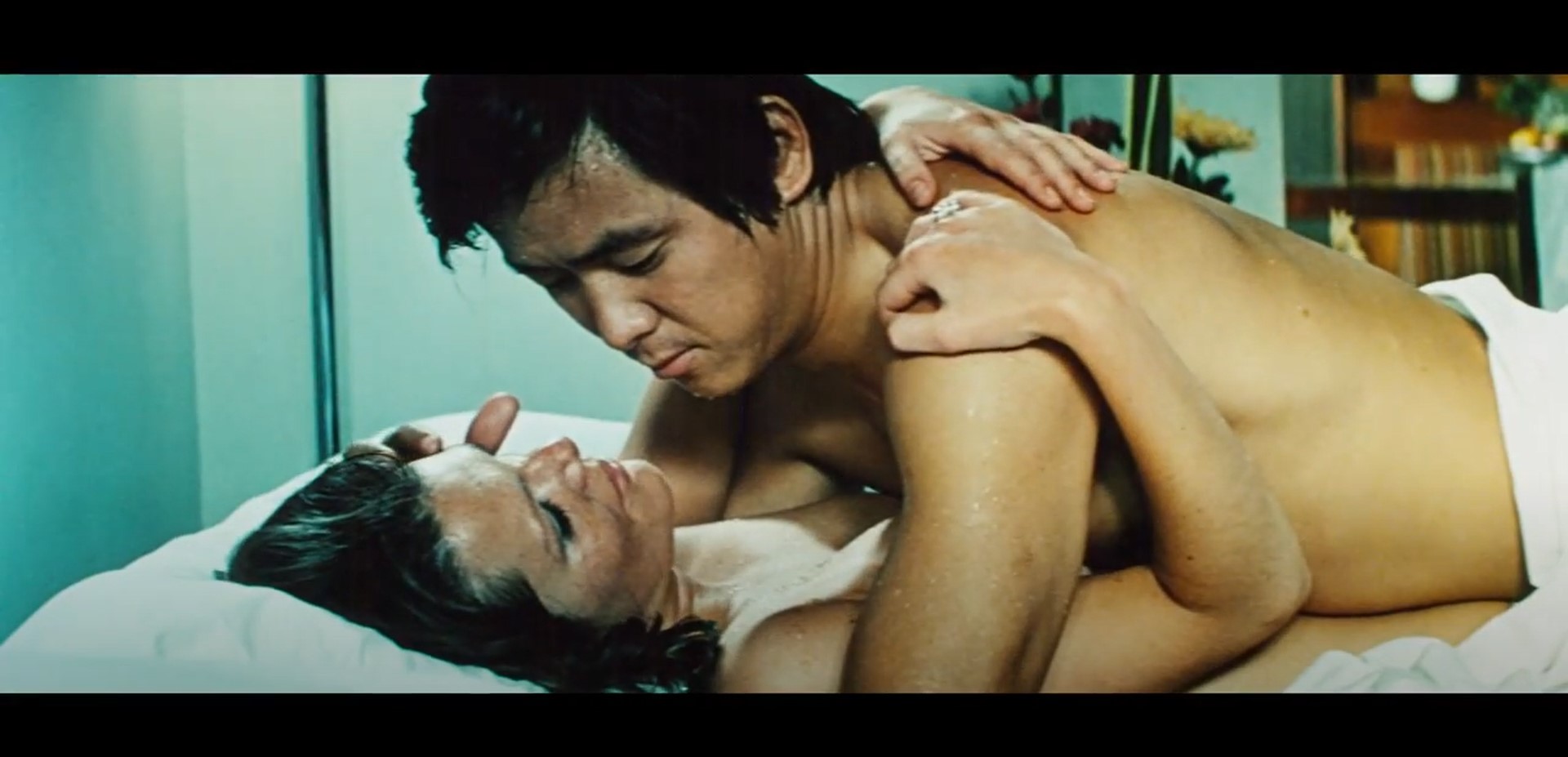
Perfectly suited as number 9 on the spine of the Umbrella Entertainment’s Ozploitation Classics banner is Brian Trenchard-Smith’s “The Man from Hong Kong,” now released on a region free, 2-disc AVC encoded Blu-ray.  Presented in a widescreen 2.35:1 aspect ratio with full 1080p, high-definition resolution, Umbrella has pulled out all the stops to release the best transfer to drool over.  Subtle vertical scratches here and there have no standing impact on viewing and the distinguished color palette is quite good and natural-looking for a film from nearly five decades ago.  There is a healthy amount of positive grain from the 35mm film stock, but the compression never comes into an issuance of sacrificing the quality, leaving darker scenes appearing bright and visible without the effect of enhancement or zealous contrasting.  My only substantiated gripe is with the subtitle cards that, in a way to not have to redo the English subtitles for the Mandarin dialect, the original frames were seemingly kept in and the image reverts back to a lesser quality degree.  Two audio options are available, an English-Mandarin language DTS-HD 5.1 Master Audio and a lossy DTS-HD dual channel.  Umbrella’s kbps output erratically fluctuations between 2400-3400 but even with the rollercoaster ups-and-downs, “The Man from Hong Kong” still had a robust action track and the dialogue came through discernibly clear.  Only goofy aspect about the audio is “Game of Death” and “Bloodsport’s” Roy Chiao’s English dubbing of Jimmy Yang Yu who obviously knew English or knew how to act like he knew English by watching his mouth articulate the native vernacular.  Umbrella also pulls out all the stops for the special features department in this limited to 3000 copies 2-disc set with the second disc a CD soundtrack arranged with Noel Quinlan funk-rock score and the main Billboard topping opening theme “Sky High” by the band Jigsaw.  Also included is a 2001 audio commentary from director Brain Trenchard-Smith, actor Hugh Keays-Byrne, and stunt director Grant Page, an all-new(ish) interview with Grant Page from 2008 entitled Real!Quick! pulled from Mark Hartley’s ozploitation documentary “Not Quite Hollywood,” extended interviews with the director, executive producer David Hannay, cast members George Lazenby, Roger Ward, and Rebecca Gilling, cinematographer Russell Boyd, 2nd unit cameraman John Seal, and first assistant director Hal McElroy from the same Hartley documentary, Trenchard-Smith’s 50-minute documentary “The Stuntmen,” a 75-minute “Kung Fu Killers” TV special directed by Trenchard-Smith and featuring Grant Page and George Lazenby, behind the scenes footage, opening night press conference footage, various and alternate  trailers and promos including a HD theatrical trailer, a cardboard slipcover with new illustrated design, and a reversible Blu-ray case cover art that also lists all 23-tracks on the CD.  The special features runtime outshines the 106-minute feature with a slew of interviews; however, much of the interviews really harp over-and-over upon George Lazenby’s set-on-fire coat mishap scene and Jimmy Wang Yu before the camera rolls catching and eating dragon flies ahead of a kissing scene with Rebecca Gilling.  “The Man from Hong Kong” isn’t notable because it’s Australia’s first martial arts film.  It isn’t notable for the attempt of resurgence of a former James Bond actor or because of its robbed promise of the late Bruce Lee.  What makes “The Man from Hong Kong” important to the film industry as a whole is its precursor value for being the example of a cast and crew to put life and limb on the line for the sake of motion picture art and be damn good at it.

“The Man From Hong Kong” on the Ozploitation Classics Blu-ray from Umbrella Entertainment!

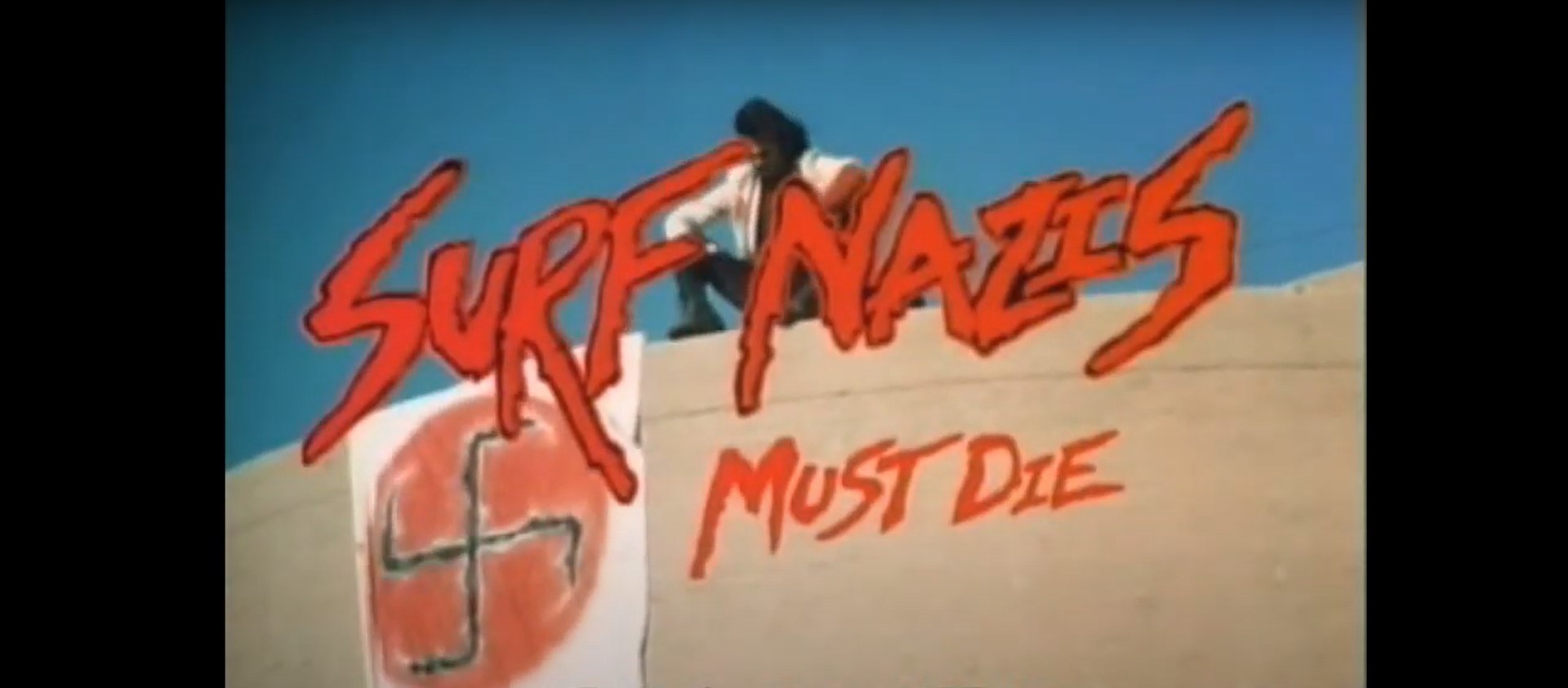
EVIL Hangs Ten! “Surf Nazis Must Die” reviewed! (Troma Films / Blu-ray)


Check Out the New Price Drop for the New “Surf Nazis Must Die” on Blu-ray!

The waves of Power Beach wash ashore red with the blood of territorial gang war.  Wiping out is not an option for the Nazis, the largest and strongest wave riders consisting of new age Neo-Nazis led by Adolf, his lady Eva, and ingenious welding right hand Mengele.  As they surf for turf, the Nazis strong arm the rival gangs into a no choice option of calling a truce amongst themselves to attack and take down the Krauts and regain control over the towering waves and lucrative scores of Power Beach.  Caught in the middle is Leroy, a young black man who becomes gang war collateral damage on the unsafe beaches.  When Eleanor “Mama” Washington gets wind of those responsible for her son’s death, she’s blitzkriegs the surf Nazi’s of Power Beach with her own brand of grenade throwing justice.

Ever since being highly promoted at random on Alex Powers’ wannabe Troma film “Sadistic Eroticism” starring adult film actress Sophie Dee, perhaps as Powers’ favorite Troma release, seeing “Surf Nazis Must Die” tickled the curiosity of the olfactory snout and became one of those must watch titles canonized with outrageous, off-color content that’s routine for the Lloyd Kaufman and Michael Herz independent shock-and-comedy distributor, Troma Films.  Peter George directed his semi-serious, mostly satirical-toned debut film from a Jon Ayre script based off George’s original story idea of incorporating the territorial surfer scene of California with a laying siege, post-apocalyptic, gang and revenge narrative that’s a delectable smorgasbord buffet of low-budget subgenres.  Perfectly situated in front of deep-water oil rigs and the towering smokestacks of power plants and other various manufactories along California’s graffiti-cladded Huntington Beach, “Surf Nazis Must Die” is a production of Peter George’s The Institute alongside company co-owners in editor Craig A. Colton and producer Robert Tinnell (“Frankenstein and Me”).

Tennessee born actress Gail Neely receives her big break in a lead role of a feature film.  Lamentably, that film was full of bad taste and full of punk surfers with red painted swastikas on their black wetsuits who also paralleled nefariously notorious figures of bigotry and war crimes against anyone not white Anglo-Saxon.  Yes, Neely is a black actress pitted against and taking revenge on a group of racist thugs, a narrative we’ve seen before, but the “Naked Gun 2 ½:  The Smell of Fear” actress took an unjust backseat (an unfortunate and unintended Rosa Parks pun) in sharing the lead with the very Nazis she ruthless takes head on.  Trying to understand why Peter George and Jon Ayre decided to focus more on the strategic overthrows of gangland rather than to journey Mama Washington’s revenge in her death wish arch is beyond comprehension in a lopsided narrative that gives more screen time to Nazis and gangs than it does a grieving, nursing home-residing, mother hellbent on avenging her slain son with vigilantism.  The latter is a much better story that breaks up the stagnant gang mentality unwavering throughout.  Neely does her best to pull audiences back into the revenge fold with a grit and attitude that takes us back to 1970’s blaxploitation films of yore, but ultimately, “Maniac Cop’s” Barry Brenner and “Star Slammers’” Dawn Wildsmith and Michael Sonye inadvertently bleed out Neely’s full potential with their respective Nazi counterparts – Adolf, Eva, and Mengele – and their intercompany squabbles and beach brawls against rival gangs.  “Surf Nazis Must Die’s” cast rounds out with Robert Harden (“Dead Girls”) as Leroy, Joel Hile (“Deadly Friend”) as Hook, Gene Mitchell as Brutus, and Tom Shell (“Hard Rock Nightmare”) as Smeg.

With a title like “Surf Nazis Must Die,” the expectation bar was high to bequeath audiences guaranteed politically incorrect exploitation and sizable good versus bad mayhem crashing like a cacophonic wave on the surf.  “Surf Nazis Must Die” does meet that brazen bar that associates surf territorialism to the likes of Nazism by way of excluding outsiders from their surf turf and be nasty about it as well.  Would I compare it to Nazism?  Probably not, but in the heat of control and power over others less fortunate in riding waves might draw a vague resemblance.  In a bit of satire and irony, 1940s Nazi Germany was ruled by an extremely authoritarian people running a tight ship in every facet from the meticulous armed ranks to innovative engineering to the ostentatious decorated halls and buildings of propaganda and flag hoisting pageantry, but Peter George’s Nazis, granted the new age variety, plague themselves about the beach, living off stolen goods while driving around in a makeshift shark modified van, tanning their mostly exposed bodies, or dressed in graffiti stylized wetsuits and trench coats with glitter-face painted swastikas.  The characters are cuter in caricatures than they are in terrorizing tyrants of the beach.  What’s even more interesting about “Surf Nazis Must Die” is that none of the gangs carry firearms despite one of the popular Troma cover arts displaying an archetypal lampooned Nazi riding a wave and wielding an Uzi.  The “Clockwork Orange” gangs meandering about with unprovoked violence carry traditional switchblades, nontraditional switchblade surfboards, nunchakus, staffs, a hook for an arm, and there’s even one guy with a speargun.  Only Mama Washington is armed to the teeth with conventional weaponry of grenades and a handgun that makes this film even more unfathomable at times.

Thirty-five years later, “Surf Nazis Must Die” continues to make waves a war zone with a new Blu-ray released from Troma Films and distributed by MVD Visual. The newly restored, newly remastered, high-definition region free Blu-ray is presented in a widescreen 16×9 aspect ratio from the original 35mm negative and is not quite the fully uncut version, running two minutes short at 83 minutes from the director’s cut that circulates overseas. The color matte lacks bounteous vision that fails to give range to the graffiti art amongst other aspects. The transfer has little-to-no blights with some transparent vertical scratches in a single frame but nothing else more to note. George and editor Craig A. Colton work their magic on a remarkable cutting room performance with splicing in Hawaiian surfing footage with the Huntington Beach narrative in a near seamless manner. The English language lossy LPCM 2.0 track doesn’t hook into you with a linear fidelity with no range or depth but does provide fair dialogue clarity and no impeding audible damage. “Terror Eyes” and “Future Shock’s” Jon McCallum has a fantastic synth score that pulsates life into the overabundance of stagnant moments and the film is worth a watch just for McCallum’s soundtrack alone. Gnarly special features include a new introduction by a locked down stricken Lloyd Kaufman diving into his pool to take a bath, a circa late 80s/early 90s interview with Peter Geoge conducted by the enthusiastic Lloyd Kaufman, another circa late 80s/early 90s snippet interview with producer Robin Tinell, a pair of deleted scenes with Peter George commentary, scenes from the Tromaville Cafe, Radiation March Promo against pollution, a pair of archived Troma NOW PSA announcements that are as sexually titillating as they are meaningful in their message, a Soul of Troma promo trailer,” “Latched” short, and various other Troma promos: Indie artists vs cartels, Lloyd Kaufman gets “fucked” by the Hollywood system, and Lloyd Kaufman’s Audiobiography. There’s also mention of a “Gizzard Face” promo, but I did not see it as an option in the bonus content. “Surf Nazis Must Die” inches along and loses a lot of key momentum along the way building around the striking title. Eventually, the undercutting of gang machoism crumbles away to leave an open path for Mama Washington’s full-blown assault as a true cinematic Nazi hunter extraordinaire.

Check Out the New Price Drop for the New “Surf Nazis Must Die” on Blu-ray!

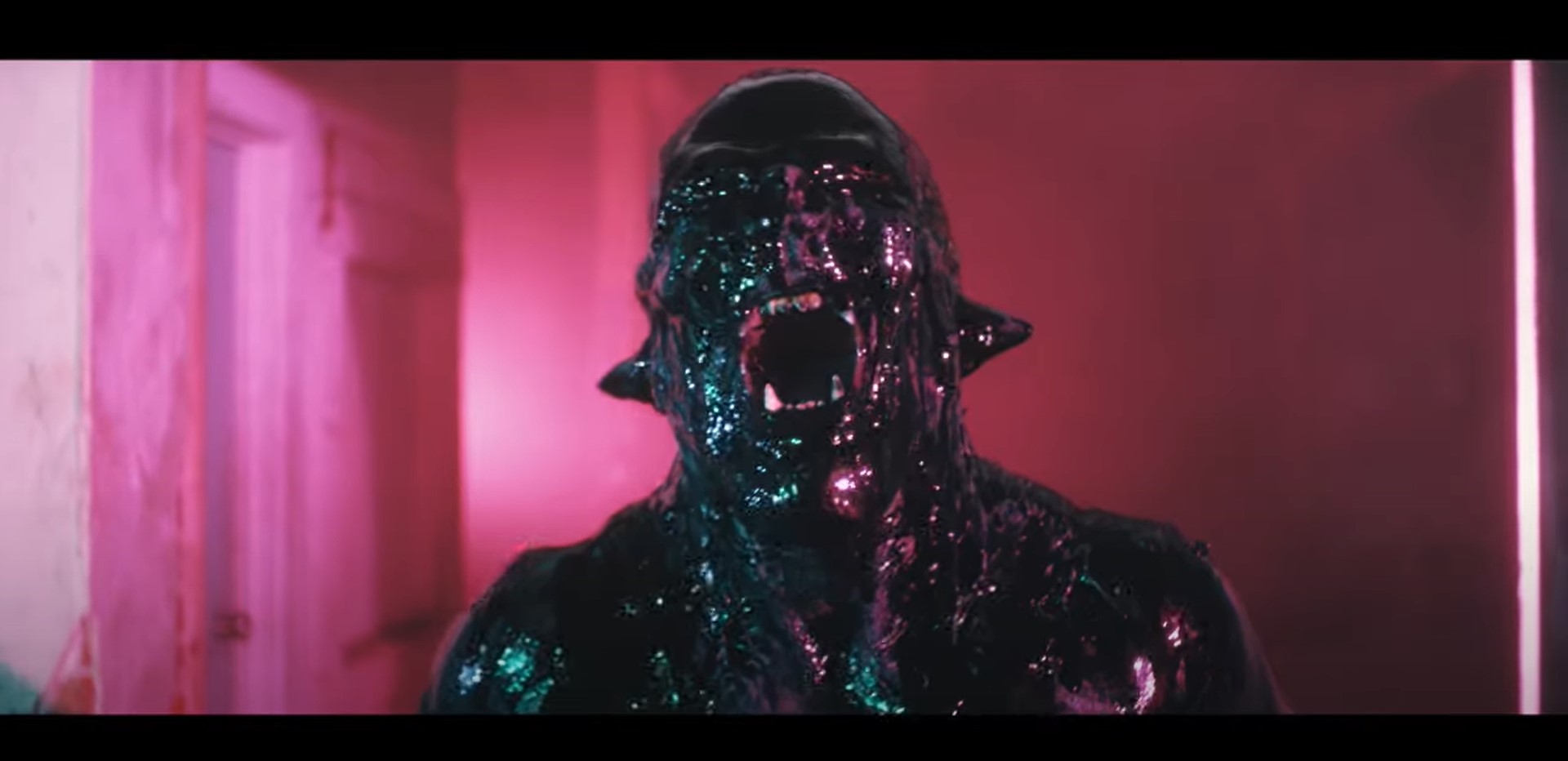
Mindy Robinson Takes on EVIL Strippers in “Brides of Satan” reviewed! (Dark Side Releasing / Blu-ray)


“Brides of Satan” available at Amazon.com!  DVD and Blu-ray!

Engaged happy couple Mary and Charlie want to dip their toes into debauchery before tying the knot.  When they patron a dive strip club, looking to unwind a nervous Charlie down a notch with a sultry, on-stage lap dance, the club is suddenly seized by three well-armed Satanist strippers looking for quick cash and a virtuous sacrifice to conjure a demon.  Kidnapped for the dark ceremony, Mary and Charlie find themselves in their grip with Charlie being murdered to complete half the ritual, but Mary is able to escape when a rival gang claims rights over the territory that sidetracks the Satanists summons.  Mourning over her fiancé’s death, Mary is taken under the wing of a junkyard sensei who trains her to fight and to be fearless against all those in her path for vengeance. 

From horror enthusiast Joe Bizarro comes the filmmaker’s first written and directed feature film, the pastiche grindhouse revenge-thriller “Brides of Satan.”  Bizarro, who co-produced “Another Plan from Outer Space,” the Lance Pollard offshoot homage to the Ed Wood Jr.’s iconic science fiction-horror “Plan 9 From Outer Space,” co-writes his 2021 exploitation with “Take Shelter” cinematographer and first time screenwriter Noel Maitland penned to be a wild-and-strange ride through the various territories of genre landscapes.  Film in and around the greater Los Angeles area, “Brides of Satan” stitches the perceived strange and unusual charisma of L.A.’s alt-scene offerings around a familiar framework with a few arbitrary bits of bizarre.  Along with Bizarro and Maitland is fellow executive financier Lance Pollard, who we mentioned had previous dealings with Bizarro, and the jacks of all trades Victor Formosa (“Iron Sky:  The Coming Race”) along with William Wulff, Celeste Octavia, Lisa Mason Lee, and Mike Ansbach serving as producers on the Joe Bizarro Studios labeled production. 

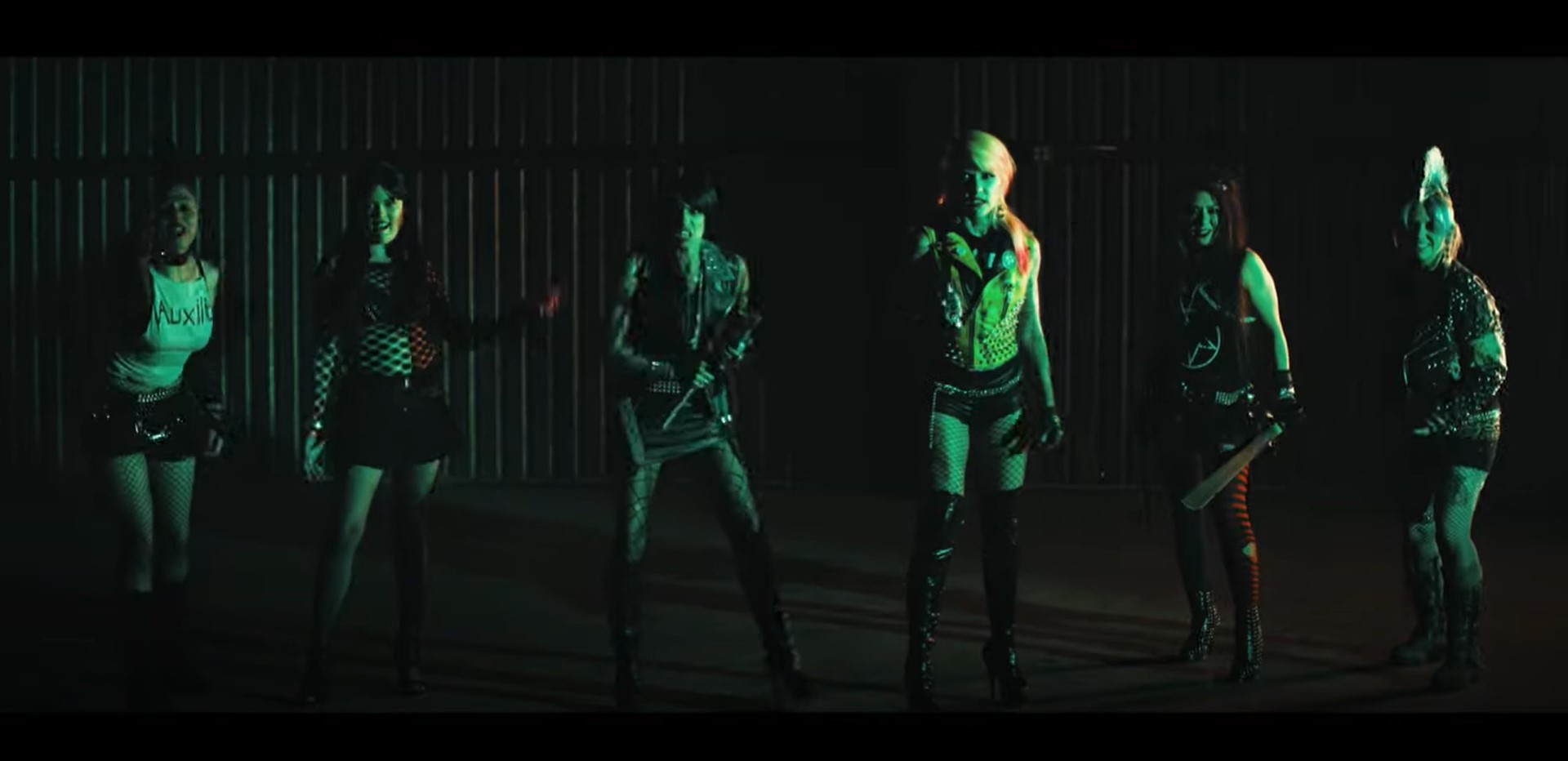
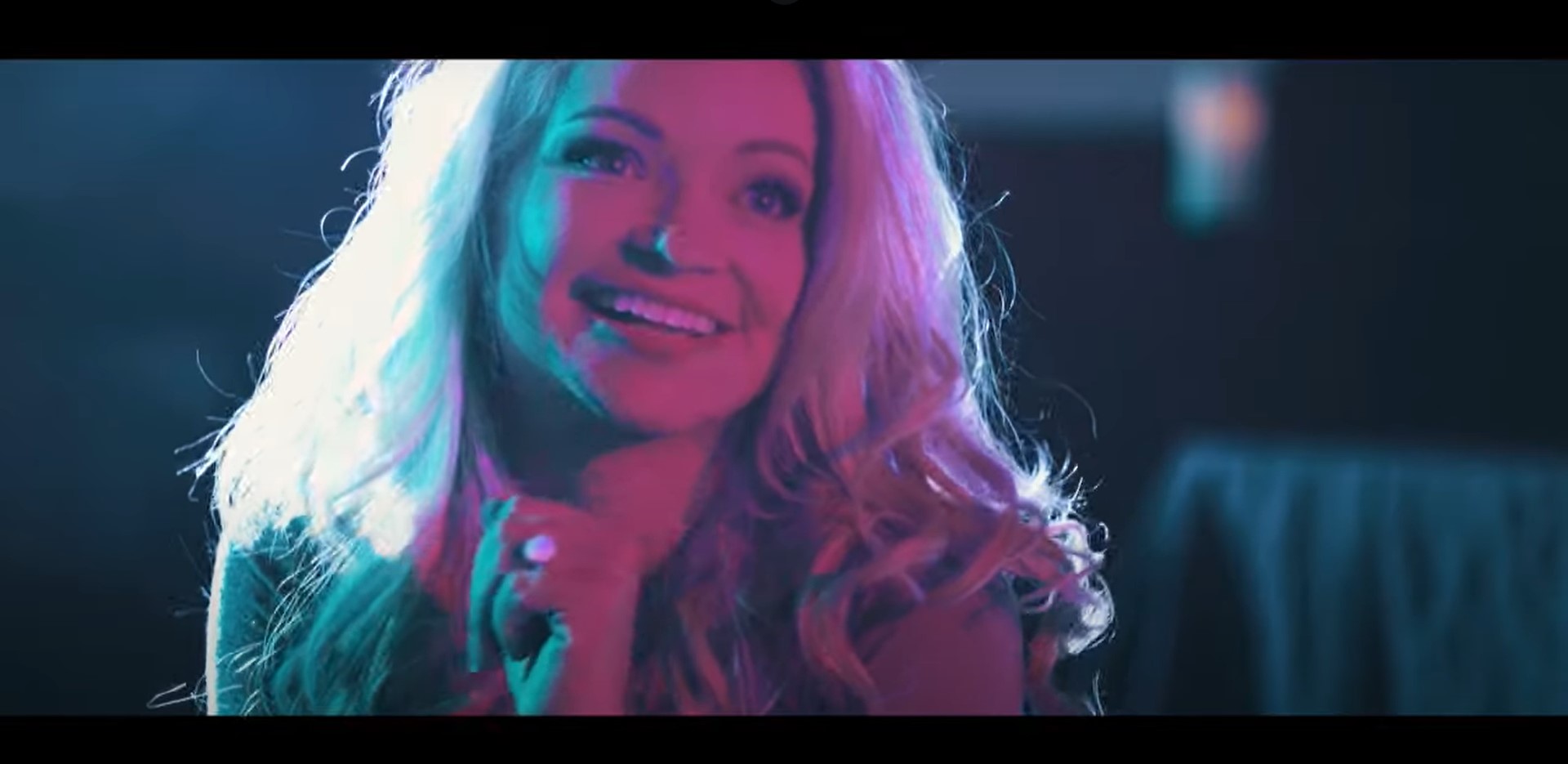
Right off the bat, the montage introduction of the tri-gang strippers, played by Alice McMunn, Joanna Angel, and Rachel Rampage, with sizzling eroticism and skin, seductively gazing into the camera and pole dancing captured in slow motion immediately sets the tone for the rest of the story. Laden from their colorfully neon-dyed hairstyles to their fishnet-led leathery platform heels with body ink, their focal opening is a bit of Joe Bizarro in a nutshell as well as an eclectic look into a cast comprised of goth, burlesque, body-mod, and fetish aficionados.  I was also hoping for a cameo from adult actress Joanna Angel’s husband Aaron ‘The Small hands’ Thompson, but alas, no such luck.  Though McMunn, Angel, and Rampage get the juices flowing and motivate the narrative into a plot point of character deconstruction, reconstruction, and revenge, neither of them are the top bill for lead role.  That responsibility falls solely on the “Evil Bong” franchise – wait, there’s an “Evil Bong” franchise? – actress Mindy Robinson that, through a (Joe) bizarro world, adds an interesting element of casting for the outspoken Republican commentator who happens to also be the girlfriend of former mixed martial artist and “Expendables” actor Randy Couture.  Robinson amiably plays a loving fiancé Mary to an equally amiably, yet unresolved, Charlie (Michael Reed, “The Disco Exorcist”). Eventually, Mary’s woman scorned vengeance becomes a juggernaut of kickass, learning geriatric kung-fu from a junkyard hobo, but Robinson disingenuously leaves her fluffy and bubbly self into a character who’s supposed to be this badass that beats half-naked Satan acolytes in one blow and can vanquish netherworld demons in the bat off an eyelash. Much of the film is Robinson promenading provocative and oddball locales, meeting more provocative and oddball characters, to track down her fiancé’s murderer in a forfeiture of commanding the scenes with scene-stealing presence. Though she bests an array of stud-cladded, garage punk baddies armed with arm drills, nail bats, and switchblades, their brief moments on screen leave more of an impact than the principal protagonist and much like the gang of three strippers, in which two-thirds of them cease to exist after approx. 15 minutes into the film, they’re built up as more prominent players in this psychos-ville showdown yet fizzle to literally just a passing moment in the narrative, giving way to a film full of nothing but near essentially cameos from Anatasia Elfman (“Shevenge”), Ellie Church (“Frankenstein Created Bikers”), Sarah French (“Art of the Dead”), and Damien D. Smith (“The Purge”). There are also true cameos from “Blood of the Tribades” filmmakers Sophia Cacciola and Michael J. Epstein, professional burlesquer Olivia Bellafontaine, and Madelyne Cruelly from the pirate punk band Yours Cruelly.

“Brides of Satan’s” gimmick is to live up to representing the yield of grindhouse cinema and for the most part, Joe Bizarro cultivates a passable resemblance by borrowing from the constructs and the ideals that came from them of the golden age of independent cinema decades between the 60’s and early 90’s and reworked them into his own passion project. “Brides of Satan” is undoubtedly derivative in most of designer elements, but I did find Bizarro’s concept of uniting the alternative network and B-movie troupers into a singular movement to be refreshing in it’s something you don’t regularly see or experience too often out of the shadows and living in the daylight. As disparaging as it may sound, the sensation becomes that carnival sideshow effect where the societal outcasted abnormalities entrance and pluck at your curiosity strings much to the same effect that ostentatious or surreal horror and sci-fi movies are a way to escape the harshness of one’s own bleak day-to-day reality. However, Bizarro didn’t quite achieve the paragon of his idea not because of his cast, who are mostly stupendously talented in their own rites, but rather more with a watery script barely sustaining flavor to its revenging aspects and supernatural rifts, the imbalance amongst characters, and a dialogue so intrusively oversaturated with hackneyed one-liners that the next words out of their mouths are predictable ones. That tiredness, that sparkless originality, that familiar taste again and again is what ultimately quells “Brides of Satan’s” fetching title and it’s weighted of promise.

Rowdy and burning with streaks of fluorescent colors, “Brides of Satan” is a come Hell and high-water tribute for exploitation film lovers and the Joe Bizarro debut is now on high-definition Blu-ray home video from Dark Side Releasing.  Presented in a widescreen 2.39:1 aspect ratio on a BD25, Bizarro and Maitland, whose technical trade in director of photographer is implemented here, opt for a tenebrously smoky and shadowy obscured grindhouse-noir that innately secretes tactile details but do offer that sense of mystique danger and a carnivalesque veneer at times, using lighting techniques to accomplish the desired look.  The English language Dolby Digital stereo has lossless quality from a 384kps bitrate that, despite its dual channel limitations, outputs decent robust tracks.  Dialogue is crisp and clear, ambient background noise and ransacking has ample range and depth, and the original soundtrack from Ausie Jamie Coghill (Jimmy C) of The Jimmy C Band offers a lounge-grunge-like Rock and Roll score hitting all the right notes apt to the narrative.  The opening monologue from Rick Galiher doing his best Vincent Price vocals.  If you closed your eyes and just listened to the tracks, you can distinctly hear every tone and note in everything from a wonderfully broad audible spectrum. The special features include an audio commentary with the director Joe Bizarro, a handful of deleted scenes and bloopers, a photo gallery of stills and alternate posters (which there are a ton of), and a short skit entitled “Rad Roommates,” a pseudo-sitcom produced by Bizarro about a man and his monstrous hairball of a lowlife roommate.  If you’re lazy and don’t feel like navigating through the menu options to the special features, wait until after the feature’s credits roll through as the special features will follow, beginning with “Rad Roommates.” The Dark Lord takes a bemusing backseat that drives “Brides of Satan” more toward solely being a revenge thriller with few incomplete spidering out subplots that belly up by its own creator. 

“Brides of Satan” available at Amazon.com!  DVD and Blu-ray!

A Stuntman and Rock-n-Roll Magicians Have EVIL Under Control! “Stuck Rock” reviewed! (Umbrella Entertainment / Blu-ray)

The MUST OWN version of “Stunt Rock” Now on Blu-ray at Amazon.com!

Grant Page is a world-famous veteran stunt man from Australia and his new big project, a high octane, thrilling action move feature packed with car chases, fire sequences, and death-defying falls set in Hollywood, California.   When he arrives, his cousin Curtis picks up from the airport and shows him around, ending up at the recording studio where Curtis’s band Sorcery is lays down tracks for their upcoming album.  Between Grant’s thrilling high flying, quick burning stuntman work and the band’s theatrical heavy rock and magic trick performances, a showcase of entertainment energizes the soul as well as entertains it.  Before long, a column journalist Lois Willis aims to get Grant’s story on occupational health and lifestyles.  They’re joined by Grant’s costar of the film, leading lady Monique van de Ven, and together they rock out and enjoy the daredevil antics like one big life party. 

Unique in format and content, “Stunt Rock” reflects upon the ostentatious career of director Brian Trenchard-Smith. Before immersing himself in straight-to-video sequels of “The Omega Code,” “Night of the Demons,” and “Leprechaun,” Trenchard-Smith had a talent for being unabashed and taking risks in making something different. Thus, an 86-minute one-part showcasing demo reel, one-part fictional story, and one-part heavy rock music video was born from a slew of Trenchard-Smith shot achieve footage highlighting the impressive physicality resume of the one and only Grant Page. In 1978, “Stunt Rock’s” short theatrical run assumed the picture too radical for the general public with a motley crew of characters and a get-to-know Grant Page storyline that interjected the heavy rock, or borderline glam rock, of Sorcery, a five-piece band accompanied by two magicians whose illusions and pyrotechnics were performed live on stage as the musicians rocked out. Only recently has “Stunt Rock” re-emerged onto home video due in part to the advocating acolytes of the now defunct by not forgotten band and has become a wonderous and enriching blast from the past of reliving decades old history, contrasting artistry cooperating under one umbrella, and a deluge of rock and master class stunts. Also known as “Crash” or “Sorcery,” Martin Fink produces the quasi-action docu-musical with Trenchard filming under his own banner, Trenchard Films.

Grant Page, a man you may never recognize in name or face but probably have seen his broad list of service work at least a dozen times or more. “Mad Dog Morgan.” Yup, Page did the stunts. “No Escape.” Yup, that too. “Mad Max.” That as well! Between performing the stunts and a stunt coordinator, Grant Page has achieved over 100 credits to his name, but not until receiving the lead role in “Stunt Rock” is where he actually got to be himself…literally. Trenchard-Smith’s goal was to put Grant Page on a platform having worked with the stuntman on previous films, such as “Deathcheaters” and “The Man from Hong Kong,” putting his career, and life, on the line numerous times. Page is charming and collected under his rugged facial hair and glasses atop a muscular physique as he’s paired to cohabitate with the latter half of two-word title. Grant Page is stunt whereas Sorcery is rock. Consisting of, at the time, members of the Americna rock group were front man Greg Magie, bass Ritchie King, guitarist Smokey Huff, drummer Perry Morris, and Keyboardist Doug Loch who always wore a glitzy or colorful stocking mask with had his vocals adjusted to a higher pitch. There were also two highly skillful stage performing magicians in Paul Haynes as the bearded King of all Wizards, Merlin, and Curtis James Hyde as Haynes on stage villainous counterpart, the Prince of Darkness aka Satan. In between the two rip-and-roaring personas is a reporter working on a column piece and Grant becomes her angled subject. Brian Trenchard-Smith’s wife of 40+ years is Margaret Gerard in the role of Lois Wills, a love interest who doesn’t quite understand Grant’s obsession with intentional self-destruction as a profession but quickly falls for the big hunk despite any real tangible flirtation. Across the aisle at the other end of female perspective is Monique van de Ven playing as herself. The Netherlands actress, who mastered the art being in a catch-22 love triangle between her longtime husband and her adventurous and new female lover in “A Woman Like Eve,” is positioned in “Stunt Rock” as certifier of the fake movie Grant is there to stunt for being the leading actress eager to do what Grant does, the stunt work, at the chagrin of her asset protecting agent.

“Stunt Rock” may not be our bread-and-butter material for review, containing a severe lack of ghastly horror, creature horror, sleazy exploitation, gore and shock, phantasmagoria schlock, etc.  Instead, what “Stunt Rock” is is a pure, 100%, grade A cult classic title that goes beyond the baseline criteria for critique, as if the film even needed our insignificant stamp of world cinema approval.  Absolutely not, as “Stunt Rock” speaks for itself, literally so in the very title, delivering essentially what the film is selling, documenting, exhibiting, and entertaining along with the caveat to be a career booster and an endearing tribute for director Trenchard-Smith’s much adored and highly respected Grant Page. The way Trenchard-Smith fashions his own shot stock footage of Page’s exhilarating and adrenaline junky spectacles into flashbacks, split screens, and just a reel of collected examples whenever Page goes into specific memories of stunts, a montage of similar acts, or even how he feels before or during the performance never bogs down into arrogant gray area on the part of feature’s star. Only the director behind the one-two punch “Day of the Panther” and “Strike of the Panther” could pull of “Stunt Rock’s” insanity on celluloid, rock on reel, and a cloud nine high on a combination of both.

“Stunt Rock” is more than just assemblage of electrifying stunts as it also brings down, as well as breaks down, stunt work as not this grandiloquent behavior but more about precision, planning, and self-care with some mild levels of egomania to do things bigger, better, and more dangerous. All of this great content is now on coming at you on a Blu-ray home video from Umbrella Entertainment as the 8th spine on their Ozploitation Classics label. Presented in a widescreen 2.35:1 in full high definition, 1080p, the region free Australian release is a fury of packed goodness, in all sense of the term. Rated PG, “Stunt Rock” is about as wholesome as a PG film came come that even comes with an opening disclaimer about not trying these stunts at home, so parents open your children’s eyes to “Stunt Rock!” As far as image quality is concerned, Umbrella’s release perfects the natural-looking colorization by adding a pop of robust color, unintrusive grain, and baring miniscule blemishes. Most of the film is shot in 35mm, but some of the older footage Trenchard-Smith shot on Grant Page is in 16mm and the varying levels of difference in the details can play tricks on the mind with the stark contrast. The English language DTS-HD Master Audio 2.0 is a solid track. Dubbing can tilt an audio imbalance in the depth around certain dialogued moments, but for the most part, no compression issues leave a clean and clear outcome with even an array of well-recording Sorcery tracks and capturing all the fine details in their pyrotechnic and smoke and mirror shows in front of a live high school audience. This Blu-ray is packed with special features beginning with an exclusive virtual interview with Brian Trenchard-Smith and his wife/leading lady Margaret Gerard at their home in Oregon going over every facet in the genesis and aftermath of “Stunt Rock,” plus 2008 interviews with Grant Page and the director from Not Quite Hollywood segment, 2008 audio commentary from Page and Trenchard-Smith, 2009 audio commentary from the director, producer Marty Fink, and actor Richard Blackburn, a 2009 introduction to the film, extended interviews with Sorcery guitarist Smokey Huff and Marty Fink, 2009 audio interview with the band’s drummer Perry Morris, Brian Trenchard-Smith’s Alamo Drafthouse Appearance, Cannes Promo Reel, a HD theatrical trailer, an exclusive new Trenchard-Smith approved trailer reel, and more audio commentary from the director in Trailers from Hell. And that’s not all! Beyond the colorfully retro-esque slipcover and snapper cast with reversible cover art with the film’s posters on the inside is a 14-page collectible comic book with the abridged illustrated version of the film. “Stunt Rock” is an amazing, one-of-a-kind film with now a one-of-a-kind Blu-ray release from Umbrella Entertainment sure to be a must-own for any fans of Brian Trenchard-Smith, Grant Page, or Sorcery!

The MUST OWN version of “Stunt Rock” Now on Blu-ray at Amazon.com!