Prepare Yourself for the Side-Splitting EVILS of Adultery. “Sex and Zen” reviewed! (Umbrella Entertainment / Blu-ray)

A Must-See, “Sex and Zen” is highly erotic and highly funny.

A wealthy educated man is arranged to marry the beautiful and sexually naïve daughter of a high scholar.  After persuading her sex being a cornerstone to a healthy marriage, she quickly concedes to his insatiable desires.  Yet, the man wants more and decides to venture out into world seeking passionate sexual escapades and when he happens upon a distinguished scoundrel, who’s good at swordplay, martial arts, and as a carnal adviser, the man is schooled about his insignificant manhood needing to be the size of a horse’s.  The obvious thing to do, transplant his penis with a horse’s.  The comical insanity pursues from then on out with the man falling for not only the brutish fabric maker’s wife, but also a bisexual noblewoman with a jealous lady lover.  When the scholar’s secret is found out, the jealous lover imprisons the man’s stay-at-home wife into prostitution, spearheaded by the seduction of the vengeful fabric maker posing as the house’s new gardener.  

Attuned to the same idea as war and peace, “Sex and Zen” is a delicate balance of control between the two and the dire consequences suffered if the sanctity of matrimonial fidelity is not respected.  Hailing from Hong Kong under the infamy of the Category III rating and with surprising staggering budget of approx. 4 million USD, director Michael Mak’s artfully erotic 1991 sex-comedy is by far one of the most entertaining of its genre ever to be produced into the world.  Michael Mak, the director of the three sequels following the “Long Arm of the Law” after taking over the franchise from his brother Johnny Mak, helms a script penned by “To Be Number One” writers Alexander Lee and Ying-Chiet Lee, based loosely off the drama-tragedy novel “The Carnal Prayer Mat” by Yu Li.  While definitely not a mirror dramatization of Li’s novel, “Sex and Zen’s” melodrama is in full-frontal effect with outlandish sex organ transferring and fiendish-flings and betrayals that make this slapstick an absolute riot.  Raymond Chow’s Golden Harvest (“Game of Death,” “The Man from Hong Kong”) and Michael Mak’s brother’s company, Johnny Mak Productions,” build “Sex and Zen’s” luxurious sets and wardrobe, bright with colors and backed by phenomenal talent. 

“Sex and Zen” is only as good in its absurdity as it’s actors and actresses and, fortunately, Lawrence Ng and Amy Yip, and amongst the others, infuse and imprint themselves to the carnally comically characters with pleasure.  Ng (“The Underground Banker,” “Madame Q”) plays the travelling sex alcoholic husband Mei Yeung-Sheng to “Erotic Ghost Story’s” Amy Yip character, Huk-Yeung.  Huk-Yeung is an in the closet nympho taught to be disgusted by sex from her father’s puritanical stance.  Though Ng. and Yip’s scenes are few, they sizzle as explorers of each other’s bodies with Ng portraying shameless lust for the flesh against Yip’s innocent purity.  When Mei Yeung-Sheng ventures out into the world seeking erotic flings, that’s when Kungfu superstar Lieh Lo (“Fiver Fingers of Death”) enters the fold as the famous masterful thief Choi Kun-Lun who not only steals from the rich and gives to the poor as a Robin Hood-esque martial arts bandit but also becomes the sexual advisor to a hapless Yeung-Sheng and his itsy-bitsy trouser snake problem.  Lo’s hilariously cavalier and unpredictable in his performance that offers a divergent against the constant yearnings to follow the graphic depictions of pornographic picture art.  The scholar becomes entangled with an abused fabric seller (Japanese-born actress Mari Ayukawa, “Groper Train Hurry Up and Come”) and, in consequence, the fabric seller’s husband Wong Chut, a ultra-physical ruffian played vigorously intensive by Elvis Tsui (“The Boxer’s Omen”), who has a vendetta against the scholar and has an affair with the scholar’s wife that leads to prostitution, frail health, and immense guilt in an parable about the misconduct of unchecked sexual liberties.  “Sex and Zen” rounds out with a solid cast in Hong Kong comedian Kent Cheng (“Dr. Lamb”), Isabella Chow (“The Nocturnal Demon”), Carrie Ng (“Angel Terminators”), and Feng Tien (“Fist of Fury”) as the Sack Monk who warns about lust-induced karma that pulls the story into a full arc.

“Sex and Zen’s” mighty price tag is beyond being obvious with elaborately detailed set designs and structures, equally elegant and era appropriate wardrobe and makeup, elevated stunt work that blends highflying Kungfu with softcore eroticism, a physical and omnipresent choreography, and a few complicated shots, especially the one involving the back-and-forth editing of above and below the surface of a steamy hot tub sexual assault-to-fantasy fornication.  The inexplicit story can be difficult to follow at times without much being conveyed to what the characters are doing, especially in the first act that jumps from a licentious Mei Yeung-Sheng debating with a temple-residing Sack Monk on the principles of polyamorous relationships, to the scholar fulfilling his engagement to and the slow deshelling into wanton exercises of the aristocracy daughter, to finally his sudden departure from her as he ventures out into the world for untamed carnal delights with strange women.  From that point, “Sex and Zen” becomes a little more cohesive and coherent, building upon the scholars need for a bigger penis at the suggestion of his newfound friend Choi Kun-Lun and bedding the wife of a loutish fabric maker while paralleling a forbidden lesbian love affair of two stepsisters without the meddlesome of man in the mix.  As Mei Yeung-Sheng and the lesbians’ paths collide, stiff and unforgiving karma catches up to each and every one of them with the welting sting of tit-for-tat cuckolding.  Yet, Mak’s depiction of the story is wilder than the slapstick and melee humor with a stark contrast of, or maybe a complete overshadowing all together of, the perversion of foreign sex toys.  From the hilt of a scroll brush to both ends of a golden flute (I’ll let that visual sink in), the women of “Sex and Zen” have a knack for insertion talents in this Hong Kong Cat III sideshow of debauchery and comedy. 

Coming in at #2 on Umbrella Entertainment’s Sensual Sinema label, “Sex and Zen” lands on a sleek Blu-ray home video from the Australian distributor. Presented in a widescreen 1.85:1 aspect ratio, the “Sex and Zen” Umbrella Blu-ray has impeccable full high definition, 1080p quality that pops right off the screen. The original 35mm transfer has a healthy amount of good grain and the colors lavishly seize control over every scene with a full-bodied range of hues. Blacks are inky and unaffected by any major artefact issues and the skin shades are poor-riddles and hair-laden in every since of the detail spectrum. Umbrella’s Blu-ray offers two audio options with a Cantonese 5.1 DTS-HD master audio with optional English dub or a Cantonese 2.0 Dolby Digital stereo with optional English dub. The dubbed-dialogue overlay is slightly asynchronous with the image, but there’s robust dialogue amplification centralized out of the five channels coinciding with isolating individual ambient sounds, such the swooshing of the swordplay or the chains clinking during acrobatic coitus. Special features are a little slim and of yore for a second title on a new sublabel, but the release offers an achieved, English-subtitled interview with director Michael Mak diving into the budget, working with the actors, and creating certain scenes. The theatrical trailer is also available on special features. The hot pink Sensual Sinema cardboard slipcover has a retro impression with various posters of the film on the slip and the snapper case surrounded by also a hot pink border. The film is listed as region B coded but played on my region free player without issue, runs at 95 minutes and is rated R+ for high level sex scenes. “Sex and Zen” is, by far, one of the best and most fetishized sex comedies ever produced and though a notorious Hong Kong CAT III production, the film is absolutely riotous and one-of-a-kind, deserving of praise from hedonistic crowds around the globe.

A Must-See, “Sex and Zen” is highly erotic and highly funny.

The Best Spies Seek Thrills When Taking Down EVIL! “Deathcheaters” reviewed! (Umbrella Entertainment / Blu-ray)

If Anyone Can Hide from the Grim Reaper, It’s the “Deathcheaters” on Blu-ray from Umbrella Entertainment!

Vietnam War brothers-in-arms Steve Hall and Rodney Cann banded together well after the fighting was over and channeled all their pent up energy into being adrenaline junky stuntmen for movies, television series, and commercials as a living and as a lifestyle.  When the two Australians are duped and setup into a high speed chase and a daring rescue mission by one of their country’s own clandestine government agencies in a ploy to test Steve and Rod’s daredevil abilities, they pass the qualifying assessments and are offered an espionage job by agency head under the pseudonym of Mr. Culpepper who has no other incentive to provide other than the job to be the most challenging, death-defying operation to gorge on by two extreme sport enthusiasts.  Unable to resist, the stuntmen embark to a secret base on a remote island of the Philippines where they’ll dodge bullets, explosions, and over 100 guards to fight their way in and out to obtain classified documents for their country.

“Deathcheaters” became the third viewing adventure involving the actor-director combination of stuntman Grant Page and director Brian Trenchard-Smith that falls right in between “The Man from Hong Kong” and “Stunt Rock” and clearly delineates an understanding that Grant Page was a genuine fascination for Trenchard-Smith who sought to take the daring stuntman out of solely stunt role and puree him into a leading man role, showcasing Page’s hang-gliding, dune buggy, and skyscraper falls,  for the director’s second feature film released in 1976.  And, then, there’s John Hargreaves who we will dive into his there-but-not there presence later on. “Deathcheaters” is an ozploitation action-comedy that fulfilled two of Trenchard-Smith’s obsessions – stuntmen and spy films – from a story by the director and penned to script by Michael Cove and is produced by Trenchard productions alongside a conglomerate of production companies, including “Mad Max’s”  Roadshow Entertainment (a subsidiary of Village Roadshow), D.L. Taffner (“Ghost Stories”), Nine Network Australia, and the Australian Film Commission.

Undoubtedly, “Deathcheaters” stars Grant Page as the relationship unattached and cocky Rodney Cann whose only other interest besides bedding the single ladies is his enamored basset hound, Bismark.  Cann’s best friend, Steve Hall, is newly hitched to Julia who more-or-less disapproves of her husband’s risky vocation.  “Long Weekend’s” John Hargreaves plays the cheeky Steve Hall with sarcastic charm, matching his complement stunt partner and while Hargreaves has the chops to pull of the persona, the late Sydney born actor is well behind the curve when matched up with Grant Page.  Page is a stuntman playing a stuntman while Hargreaves is an actor portraying to be a stuntman and, unquestionably, that delta shows pretty radically when Page is driving the dune buggy, is descending rapidly from a tall building, or scaling a rock cliff without a harness and Hargreaves is relatively stationary.  Hargreaves has his moments but is greatly overshadowed by the veteran Page.  Before she was Brian Trenchard-Smith’s wife, “Stunt Rock’s” Margaret Gerard was John Hargreaves on screen romance who is vocal but wishy-washy on her husband’s exploits, even on the highly dangerous, international espionage mission assigned by the enigmatic Mr. Culpepper (Noel Ferrier, “Turkey Shoot”).  “Deathcheaters” round out with Judith Woodroffe, Drew Forsythe, Annie Semler, and Vincent Ball.

“Deathcheasters’ falls on the heels of the martial arts success of “The Man from Hong Kong” and is another stunt celebratory film from the ozploitation director with a penchant for large explosions and need-for-speed car chases.  All the stunts were perfectly poised in design and well executed.  Trenchard-Smith isn’t at all afraid to have the camera right in the middle of the action, strapping the 16mm camera to whatever plausible to place the audience in the action with the heroes.  As much as Trenchard-Smith goes full throttle with a tour de force, the same tricks become a little stale after, unfortunately, having previously watched “Stunt Rock” and “The Man from Hong Kong” that also featured self-set wet-gel fires, hang gliding, free falling, and among others aerobatic and dangerous acts that are seemingly in Page’s limited bag of showstopping routines.  There’s rarely anything new in “Deathcheaters” that warrant an awe response and that can be cliched, tiresome, and overall detrimental to the experience unless you’ve never seen a Trenchard-Smith film. If you’re one of those people never to have popped in one of his films, don’t expect “Deathcheaters” to be gritty, tough-as-nails, spitfire. Many of Trenchard-Smith’s earlier films, including “Deathcheaters,” sells solely on the witty, clean banter and a knack for the implied something really terrible happened to the bad guys with nothing ostentatiously explicit in the demise category. “Deathcheaters” can be wholesome, light, and aromatic of a repartee trashcan, but you get some great stunt work, explosions, and a car chase from this 1970’s Australian picture.

Like “The Man from Hong Kong” and “Stunt Work,” “Deathcheaters” too receives the Ozploitation Classics Blu-ray honor bestowed upon it from Umbrella Entertainment as spine number 10. Newly scanned in high definition 4K for the first time, John Seale’s cinematic vision has never looked better in this region free release, presented in standard widescreen 1.85:1 aspect ratio. The original vault materials held up nice enough to warrant a clear picture with only a few, brief blemishes. The super 16mm shot film, blown up to 35mm, often still feels ever so lightly flat in contour definition and in color; yet all the scenes look naturally aboriginal from the masters. The English language DTS-HD master audio 2.0 mono is a naturally lossy single speaker audio mix that doesn’t exact full representation of the action on screen though robust in fidelity. Dialogue perceives feebler during exterior scenes as capturing dialogue competes with the elements due to poor boom placement or just inferior equipment. Like the other releases, bonus features are nicely packed with a newly extended interviews with Brian Trenchard-Smith, Grant Page, and John Seale from the Not Quite Hollywood documentary, a new audio only interview Remembering “Deathcheaters” with executive producer Richard Brennan, new liner notes from Trenchard-Smith, a 2008 commentary with the director, executive producer, and leading lady Margaret Gerard (listed as Margaret Trenchard-Smith), Trenchard-Smith trailer reel, theatrical trailer, and a Trenchard-Smith directed bonus feature in “Dangerfreaks – The Ultimate Documentary.” The clear snapper case is housed inside a cardboard slipcover and inside the snapper’s liner is a 16-page comic book adaptation from Dark Oz, much like Umbrella accompanied with “Stunt Rock.” “Deathcheaters” shows its age but still pulls out all the stops with amazing stunt choreography and gave way to Grant Page being solidified lead man material, even with his corny one-liners, and simultaneously building upon Brian Trenchard-Smith’s early career in a niche field of being obsessed with overachieving, arrogant, and unafraid stuntmen.

If Anyone Can Hide from the Grim Reaper, It’s the “Deathcheaters” on Blu-ray from Umbrella Entertainment!

Don’t be Afraid of an Unstoppable EVIL Killer on Your Fishing Trip. Do be Afraid of the Very Pregnant Wife You Left to Go on that Fishing Trip! “Sweetie, You Won’t Believe It” reviewed! (101 Films / Blu-ray)

Now On Bluray from 101 Films – “Sweetie, You Won’t Believe It!”

Dastan is about to be a new father, but he is over his head with debt and can no longer withstand the verbal abuse of his headstrong, ready-to-pop wife, Zhanna.  When an opportunity opens up go fishing with his best friends Murat and Arman, he whisks away before she can sink her nagging teeth into him again and tries to enjoy the relaxation of catching fish by floating down the river.  That’s until he and his friends stumble upon an execution by a crime boss and his goons.  Frantically trying to escape, they run into a strange man with a burnt face living out in the wilderness.  The three friends and the gangsters are targeted by the maniacal, murderous stranger with an apparent unkillable survival instinct and supernatural abilities. 

Who would have thought one of the best action-comedy horrors would have come out of Kazakhstan and come to think of it, this 2021 Yernar Nurgaliyev film “Sweetie, You Won’t Believe It” is probably the only Kazakhstan film come across this desk.  Natively titled “Zhanym, ty ne poverish,” Nurgaliyev’s genre blending zany is bursting with dark comedy, gore, and a framework that tests the sturdiness of friendships as well as the clear-cut recognition for the things you have in life because the world isn’t always greener on the other side.  In fact, the world is actually dusty and partway arid in an isolated Kazakhstan landscape that resides with antisocial individuals – mob transgressions, deranged psychopaths, and even those who just want to get away from their wives.  The regular comedy helming Nurgaliyev cowrites the script with first time screenwriters Zhandos Aibassov and Daniyar Soltanbayev under Art Dealers productions in association with the international action company, Nomad Stunts, that delivers the film’s amazing fight choreography.

An ensemble cast of character actors construct a living, breathing dark comedy worth the time and effort. Plenty of unsuspecting twists and turns keep the preposterous party going beginning with an opening of a very black and white passive aggressive quarrel involving principal character Daston (Daniar Alshinov, “A Dark, Dark Man”) who, from this male reviewer’s perspective, takes a relentless verbal whip in emasculation. Alshinov expresses so clearly the biting-tongue frustration in a hilarious montage of on rage’s edge with wife Zhanna (Asel Kaliyeva) dishing out the third degree on all his husbandry failures. Avoiding his wife’s warpath behavior, aggravated by being on the verge of giving birth at any time, Daston’s quickly sneaks in his desires and hightails it on a last getaway before he becomes a father or dies of incessant verbal abuse, whichever comes first. Community school officer Murat (Yerlan Primbetov) and sex-toy dealer Arman (Azamat Marklenov) finally are able to steal away Daston in a little time for themselves. The acting trio leading up to the fishing spot are naturally conversive that gives into their characters longstanding friendship with quippy jabs at each other and overselling their less-than-satisfactory positions in life, but not until the friends stumble haplessly while floating down the river into being witnesses of a murder by low-end horse gangsters and run into a stoic one-eyed, burnt face bald man intent on spilling blood for vengeance because the gang killed his dog does Daston and his friends need to go to Hell and back to realize how special their friendship means to each other. “Sweetie, You Won’t Believe It” is a bro movie (and I mean the characters say bro a lot) with an orchestrated series of unfortunate, yet very funny, gruesome events to resolidify a tattered friendship and to reexamine life. The film costars Almat Sakatov, Rustem Zhanyamanov, Yerkebulan Daiyrov, Bekaris Akhetov, Kadirgali Kobentay, and Gauhar Sagingalieva.

Nurgaliyev develops a physical comedy based around a plan gone awry collision course between four groups destined to intertwine in battle royal.  “Sweetie, You Won’t Believe It” lands the slapstick one, two, three combination of action, comedy, and notes of horror well outside infantility and outdated material in a smartly laid path of events unfolding to a brawling showdown of those left standing.  I believe the imbalance between physicality and the humorless, if not slightly bothersome, subtitled dialogue stems from the lost in translation.  Subtitles can only convey a literal account of the Kazakhstani reflection and regionalism mayhem often blown to unrecognizable smithereens during a crude translation, but being a foreign film with grossly simplified subtitles shouldn’t be a cause for total write off as there’s much to enjoy from the funneling, concentrated, ever-twisting storyline to the outrageous action stuffed tightly in cramped houses to the perfectly spectacular blend of practical and CGI violence and gore fabricated nearly seamlessly by special effects duo Juliya Levitskaya and Elde Shibanov. Heads role, jaws detached, and plenty of eviscerating shotgun blasts crest above as the cherry on top of the Dastan and his friends’ misadventure through Kazakhstan countryside in a story that’s as ruthless as “Deliverance” and as magnetically dark and eccentric as “Kiss Kiss Bang Bang.”

101 Films brings what is called an “insane, violent, and hilarious” fun from Kazakhstan (and we couldn’t agree more) to a UK Blu-ray home video. The region B, high definition, 1080p Blu-ray features a widescreen 16:9 aspect ratio of the short 74-minute film, certified UK 15 for strong gory injury detail, violence, threat, and language. Image quality is quite good of rendering mostly the grassy desert-like Kazakhstan landscape and the framing prompts greatly what to expect through either Azamat Dulatov’s harness cam strapped to the actors for closeup reactions or perfectly timed pan when needed to express off-center comedy. What’s really sensational about the film is the localized soundtrack. Nurgaliyev doesn’t buy, beg, borrow, or steal popular westernized tracks to broaden his film’s release and, instead, the soundtrack has a plethoric range of native music from lounge pop to hip hop. The Kazakhstani PCM stereo has more than enough ample timbre and offers a suitable range and depth despite being a dual channel. There are no dub tracks (in case you were wondering) and the English subtitles are forced (for those of few who don’t like to read during the film). Though bonus features would have been nice to root into and explore more of the behind-the-scenes aspect of the country’s film industry, the only bonus material on this 101 Films’ release is the theatrical trailer. As far as fiasco films go, “Sweetie, You Won’t Believe It” ranks high this side of the 21st century as a humorous, violent, and perspective redirecting genre-bending film that needs be in everyone with a black sense of taste’s library.

Now On Bluray from 101 Films – “Sweetie, You Won’t Believe It!”

EVIL Cowboys Up! “Ghostriders” reviewed! (Verdugo Entertainment / Blu-ray)

A small Texas town in 1887 took lynch mob tactics upon a jailed outlaw Frank Clements after a prominent resident and his family were slain.  In a last-ditch effort to save their gang boss, Clements’ men come in guns blazing but mob leader, the Reverend Thadeous Sutton, pulls the gallows lever to send Frank Clements to his doom.  Fast forward 100 years later to 1987, renowned historian Professor Jim Sutton researches the notorious murdering bandit, even owning a piece of Clements’ property with a cursed sawed-off double barrel shotgun, but the 100th year anniversary delivers good on the Clements’ curse as he and his men return from the dead and gun down all in the rural Texas backland.  Walking into a supernatural showdown with the undead is the professor’s son Hampton and his friends on a road trip to his father’s isolated estate where surviving the night of continuously respawning malevolent six-shooters will seemingly never happen.

Ghost cowboys.  That small and obscure piece of particular subgenre stemmed from the broad western horror pie can be and has been a hard product to peddle, bucking audiences off its hind side faster than a mechanical bull full of amateur rodeo saddlers.  Think about it.  Can one even name a handful of horror westerns involving cowboys, especially gunslingers back from the grave?  There’s Lee Vervoort “Gun Town” that’s more of a saloon town slasher.   “Ghost Brigade” might be the closer to the theme with Civil War soldiers possessed by evil voodoo spirits.  However, the relatively unknown TV movie “Ghost Town” from 2009, surrounding a group of college students pursued by ghostly outlaws in an abandoned western town, hits the nail on the head.  Again, these titles are rare and if you find one that does exists, more than likely the film’s a waste of cinematic space.  In any case, if you’re hellbent on a decent gunslinging ghoul film, Alan Stewart’s “Ghostriders” will saddle up just nicely.  Penned by Clay McBride (“Ghetto Blaster”) and James Desmarais (“Victim of Love”), the debut film of Alan Stewart resurrected a ruthless gang of gunslingers for pure retribution set on location at the Texas Safari Ranch in Clifton, Texas and was self-produced by Stewart, under Alan L. Steward Productions, along with fellow producers in cinematographer Thomas Callaway, who went on to be the DoP of “Slumber Party Massacre II” and “Deep Blue Sea 2,” as well as composer Frank Patterson, and Alan’s wife/production manager Susan Stewart. 

As you’ve probably noticed, the “Ghostriders” crew is small and wears many large brimmed hats by engaging themselves deeply into this 1987 released indie production.  Same can be certainly said about the cast.  Actor turned stunt man Bill Shaw was booked for dual performances between two characters stretching 100 years apart with the zealous Reverend Thadeous Sutton and the reverend’s grandchild, professor Jim Sutton.  The ancillary gunfighters, led by Frank Clements himself, Mike Ammons, are actually members of a roadside replica of a wild west town.  The actors, trained to shoot revolvers, take fake bullet hits, and learn to be rootin-tootin’ cowboys and townsfolk, took to the camera’s key antagonist roles that required them to also do some stunt work.  When considering the other cast, “Ghostriders” struggles to emerge a lead out of the various roles.  In the role of Professor’s Sutton’s son, Hampton, Jim Peters’ often subtle comedic timing, towering stature, and his cool-and-calm intellect as a stunt pilot points to lead man material, yet there are elements and qualities surrounding his young adopted sidekick Cory, played by Ricky Long, who went on to have a very long and extensive career working on the purple dinosaur kid show “Barney,” that qualifies the often inept and lovesick grease monkey to Hampton’s stunt planes as another candidate for lead man.  Even Bill Shaw could be considered principal.  Either way, for an 80’s flick, “Ghostriders” campy characters and dialogue flatten whatever substance McBride and Desmarais tries to wedge into their narrative.  Whether be the tragic bond that glues Hampton and Cory’s strong friendship or Cory’s inability to read his recent court Pam (Cari Powell) and her fascination toward Hampton, those moments of human depth are cannibalized by “Ghostriders’” round’em-up, shoot’em-down gang of ghosts.

Alan Stewart’s “Ghostriders” might be an intelligible film, but it’s certainly not an intellectual one due to budget and inexperience complications.  Pacing is good with the historical backstory opening transitioning into the present’s continued lawlessness of curse-resurrected 19th century killers after building up the prominent players with depth and humanism in order for us to care about their plight, but also in regard to the characters, there’s much left unsaid and undone to nearly every role for a complete and justifiable narrative arc.  Point in case, Clements and his gang’s ability to return 100 years after the hangman’s knot tightened around their throats goes very much unexplained along with their connection to Clements’ shotgun that seemingly holds the key to their supernatural slaying.  A lack of essence towards the titular antagonists’ return from the pine box to wreak havoc on the Sutton bloodline really has no merit to stand on, leaving a void in the crux that doesn’t serve well within the parameters of an imagination reasoning.  We need some sort of resolution for Clements return, whether it’s a deal with the Devil or perhaps stolen Native American necromancy rituals used to cheat an outlaw’s own foretelling of death, to make sense of the senseless driven chaos because, as far as we’re shown, Clements and his gang are no more than just abnormal bad dudes doing normal bad dude things.  “Ghostriders” also won’t knock your boots off with high dollar special effects.  There’s some superimposing of people and items disappearing and some solid stunt work (again – some of these hombres are moonlight as stunt people), but the most impressive practical special effects used are the blood squibs.  If you like firecracker pops making craters and spurting blood off of bodies, “Ghostriders” has you covered with plenty of squibs with a select few in slow-motion.  

“Ghostriders” rides into the black sunset with a rare cowboy horror from Alan Stewart and the film is receiving new life on an unrated Blu-ray from Verdugo Entertainment and MVD Visual.  Verdugo Entertainment’s an independent cult film distributor seeking to release forgotten retro features of the 70s and 80s, centralizing themselves mainly around westerns, horror, or in this case, a blend of both.   The region free Blu-ray converts the 16mm A & B negative into a 4K scan resolution that maintains impeccable image quality with little to fuss about, such as extremely faint and seldom vertical scratches.  There wasn’t any noticed forced enhancement or cropping which provides logical evidence to a pristine original negative. Though the original English language mono soundtrack bears the same unblemished qualities as the video, the difference lies within the soundtrack’s weak decibel levels that leaves the dialogue corridor stuffy and muddled behind a curtain a fairly perceivable static interference through the duration. The release labels the audio as remastered, and I’m certain the audio was spruced up from a worser quality, resulting in a much more palpable and persistent outcome that works at your attention rather than leaving caution to the wind. Verdugo offers up a nice selection of special features with an audio commentary with cinematographer-producer Thomas L. Calloway, writer-producer James Desmarais, and moderator Steve Latshaw, a brand-new original documentary “Bringing Out the Ghosts: The Making of “Ghostriders” with Desmarais and Calloway recollecting memories of being on set and talking about the cast and crew, an archived documentary “Low Budget Films: On the Set of “Ghostriders” is a Baylor University funded vintage doc about the makings of independent film, more so about this particular one, feature stills and behind-the-scenes photo gallery, the original trailer, and a new reissued trailer, which you can see below, all packaged nicely in a Blu-ray case with a cardboard slipcover with a cheeky illustration of three skeleton desperados cladded in cowboy attire and brandishing Winchester rifles. Nowhere near what the film is like but the comicbook-esque cover is eye-catching and whimsical enough to draw you in. Verdugo Entertainment could have easily chewed up this unknown cult film and spat it out with cheap distribution ease into the marketplace spittoon. Yet, the indie distributor dressed the late Alan Stewart film with respect, properly showcasing a neater, cleaner, and far from forgotten meaner spirited square off against the living and the dead.

One Man Takes on the EVIL Australian Crime Syndicate! “The Man from Hong Kong” reviewed! (Umbrella Entertainment / Blu-ray)

“The Man From Hong Kong” on the Ozploitation Classics Blu-ray from Umbrella Entertainment!

A newly formed Australian narcotics unit busts up a major drug deal that lands a crime syndicate pusher into the custody of the authorities.  The pusher, low on the totem pole of a larger drug organization, speaks no English and with the inexperience of the Australian unit, Hong Kong special branch inspector, Fang Sing-Leng, is requested for interrogation interpretation and be the escort of extradition back to the pusher’s native Hong Kong residence, but while in custody, the pusher is gunned down by an assassin.  Sing-Leng thrusts himself into Sydney’s criminal underworld the Hong Kong way, leaving a trail of destruction in his solo-takedown of formidable drug kingpin, Jack Wilton.

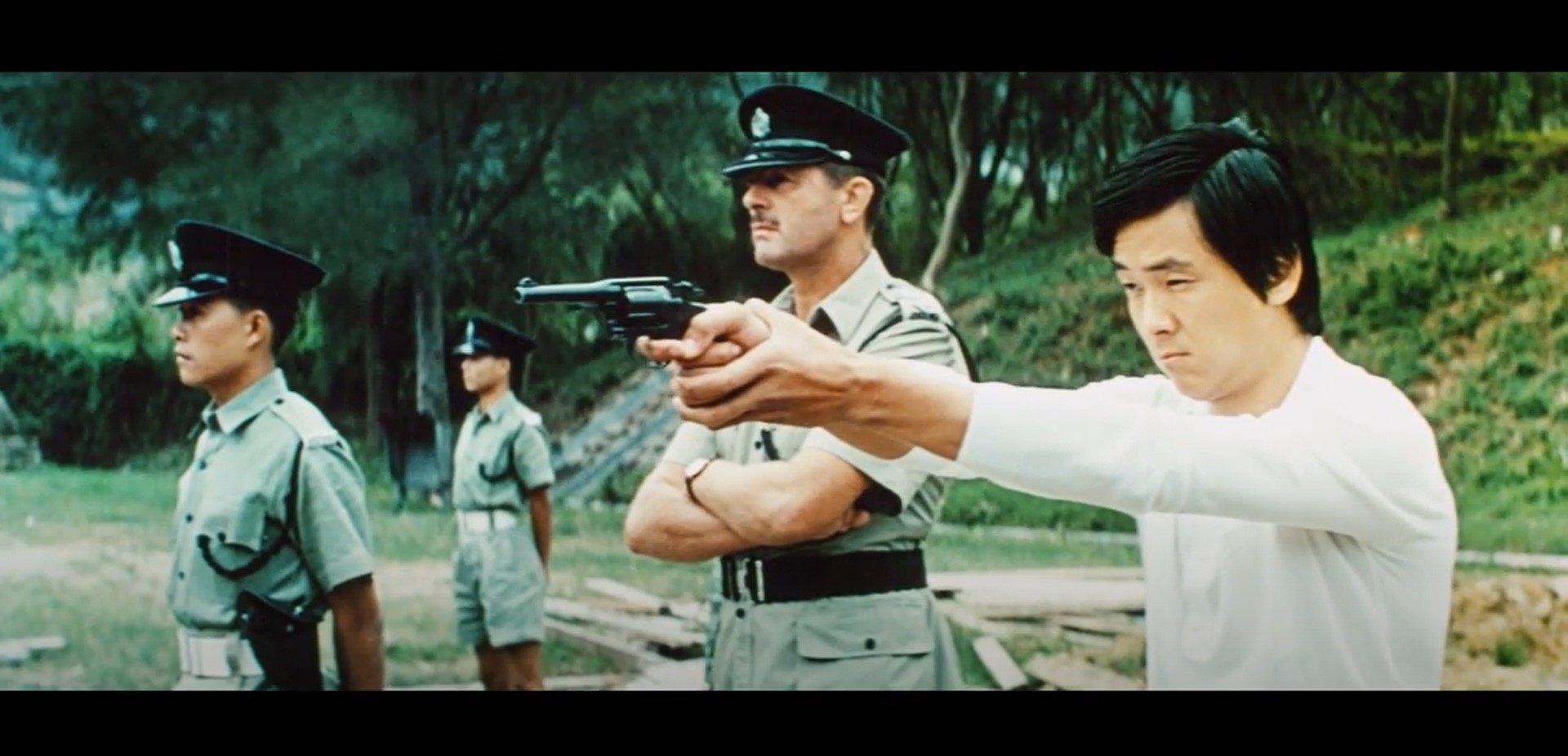
For film loving youngsters, would they know what cinema was like before green screens, motion capturing technology, and other computer imagery devices to create alien worlds and improbable fight sequences?  Would comprehending the idea that before the pre-implementation of these technological advances in film there was a just-do-it fortitude toward the physical and raw aspects of special effects and stunt work?  Those wee moviegoers’ heads would explode into itty-bitty chunks of brain matter by the very slight thought of a man jump kicking another man off a high-speed dirt bike without even one ounce of a tethered harness or helmet for safety.  Hazard upon dangerous hazard is what writer-director Brian Trenchard-Smith offers on the table from his debut martial arts film “The Man from Hong Kong,” the first martial arts film of its kind hailing out of Australia.  Trenchard-Smith’s working title “Yellow Peril” sought to sprinkle in between the high kicks and hyahs an amusingly intended, but greatly nearsighted, prejudice of the subtle racism in how Australian people viewed East Asia; however, Raymond Chow, the Hong Kong-side producer for this two-country co-production, ozploitation actioner, didn’t quite see the humor in “Yellow Peril” (and we don’t blame him).  Thus, “The Man from Hong Kong” title was born with some minor contentious distaste for its generic branding.  Trenchard-Smith’s The Movie Company Pty. Ltd (“Stunt Rock”) and Hong Kong’s Golden Harvest Company (“Sex and Zen”) served as co-productions, releasing the joint venture in 1975 with variable success across the globe.

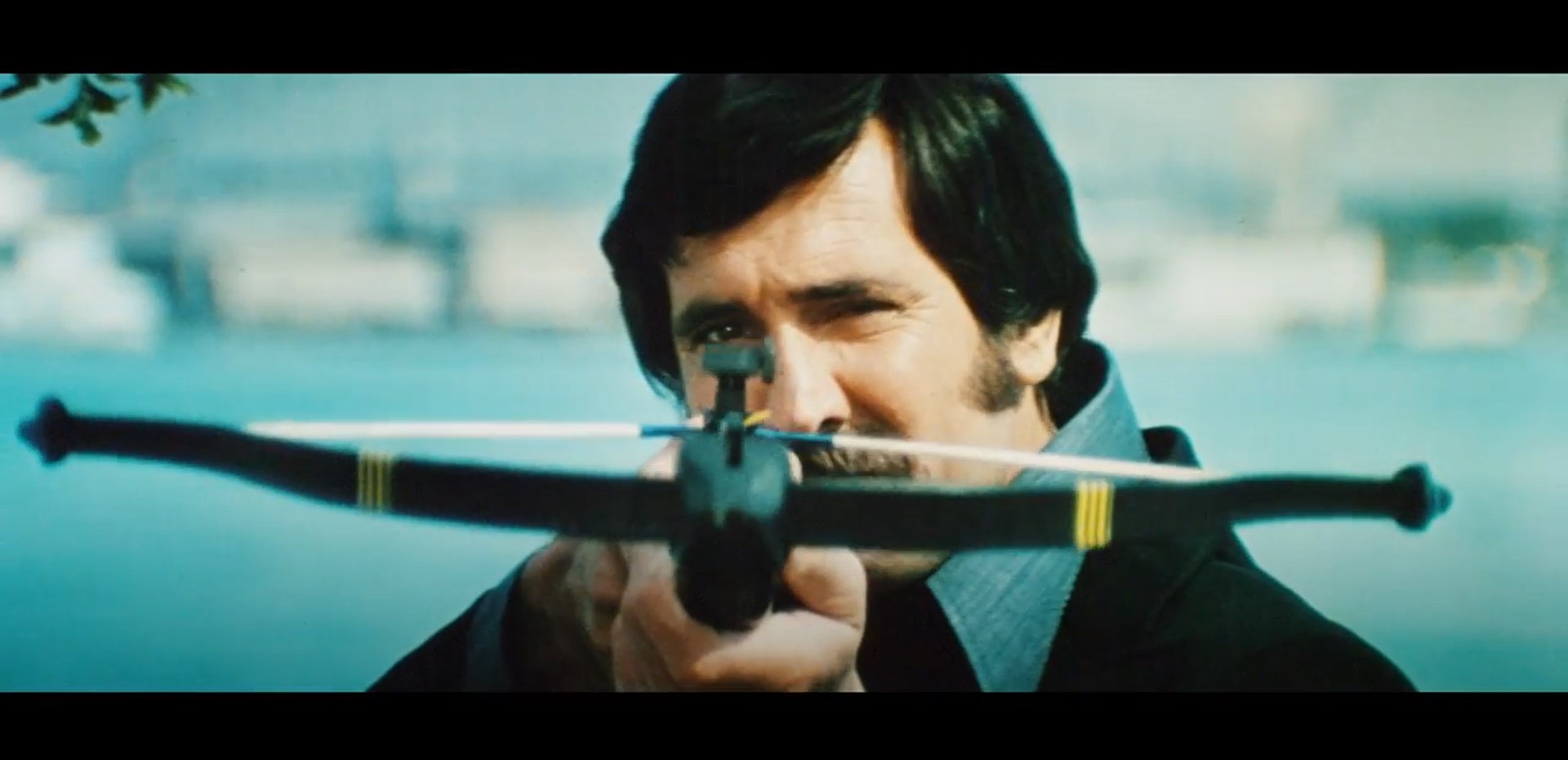
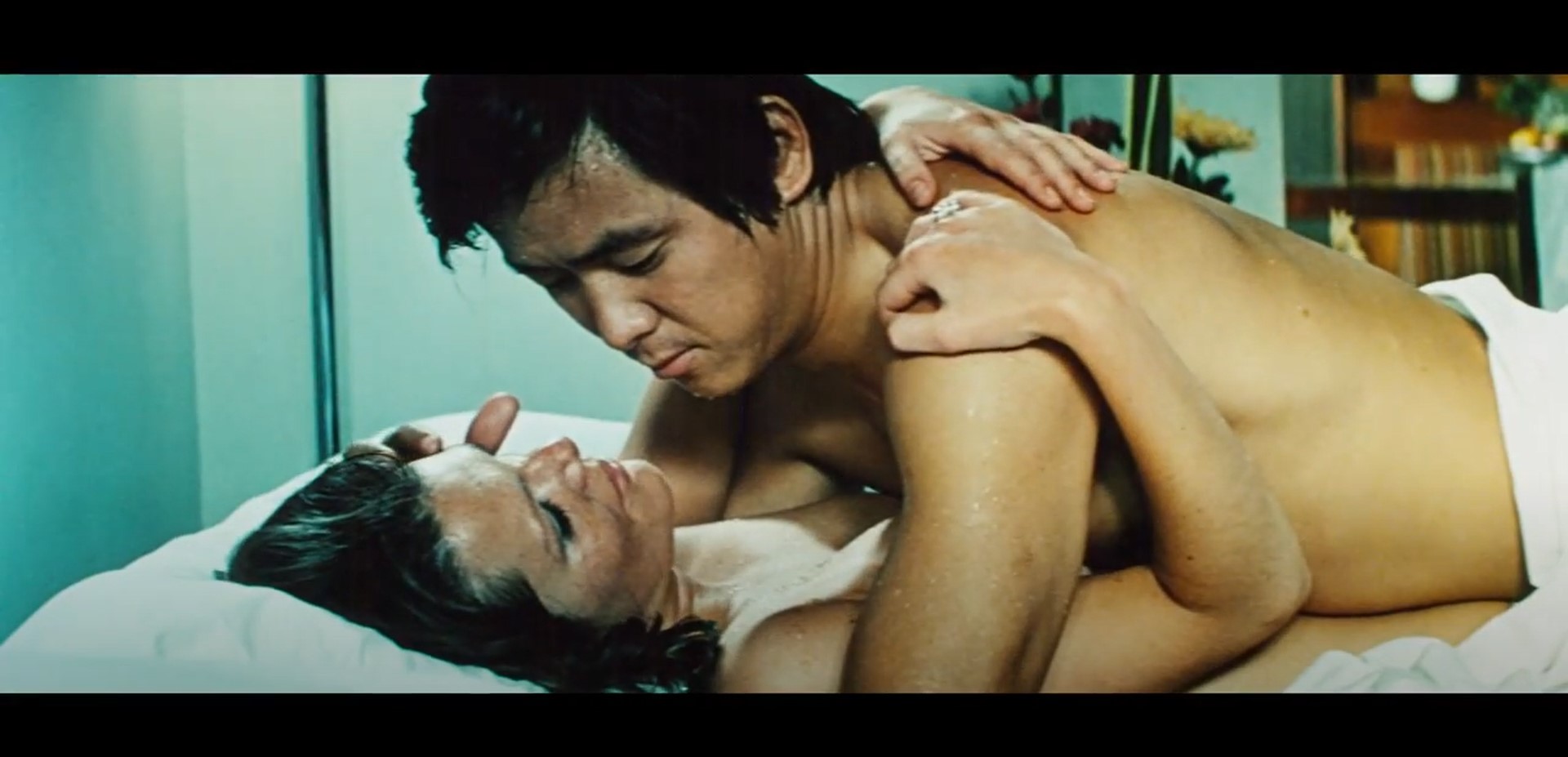
The first choice Brian Trenchard-Smith had in mind for the role of Fang Sing-Leng was mega-martial arts superstar Bruce Lee hot off the success of 1972’s “Fist of Fury,” 1972’s “The Way of the Dragon,” and 1973’s “Enter the Dragon.”  “The Man from Hong Kong” seemed to be a perfect segue into Lee’s next martial arts box-office hit that may have also reclaimed cinematic stardom for his soon-to-be co-star George Lazenby who fell into a blacklist slump after declining to reprise his 007 James Bond role from “Of his Majesty’s Secret Service.”  Unfortunately, and tragically, Bruce Lee suddenly died at the age of 32, leaving a void to fill not only Trenchard-Smith’s first film but also in the martial arts entertainment world.  In comes Jimmy Wang Yu, China’s former #1-turned-#2 after the quick rise of Bruce Lee.  The “One Armed Swordsman” series Wang Yu not only entrenches himself into the titular role at the behest of producer Raymond Chow as a suitable replacement, but Wang Yu also became Trenchard-Smith’s directorial counterpart of the Hong Kong shot scenes and the fight sequences, the latter being superbly thrilling by Wang Yu and his stunt team’s dedicated skillset to make the showmanship look authentic and bruising.  The extended chase through the streets of Sydney and into a no holds kitchen brawl with legendary stunt man Grant Page (“Stunt Rock”) is one of the best one-on-one rundown combat arrangements of its era.  Lazenby’s an effective villain with his towering height, broad build, and Tom Sellick mustache and has the ability to choreography not-so-half-assed kung fu, meeting and matching Wang Yu’s on screen moves without looking dopey or forced.   Australia’s film industry was so small at the time, there are number of recognizable actors mostly from the “Mad Max” series with the likes of Hugh Keays-Byrne (“Mad Max,” “Mad Max:  Fury Road”), Frank Thring (“Mad Max Beyond Thunderdome”), Roger Ward (“Mad Max”) in key or notable performance roles along with Bill Hunter (“Mad Dog Morgan”) and a pair of titular character love interests in Rebecca Gilling and Rosalind Speirs.

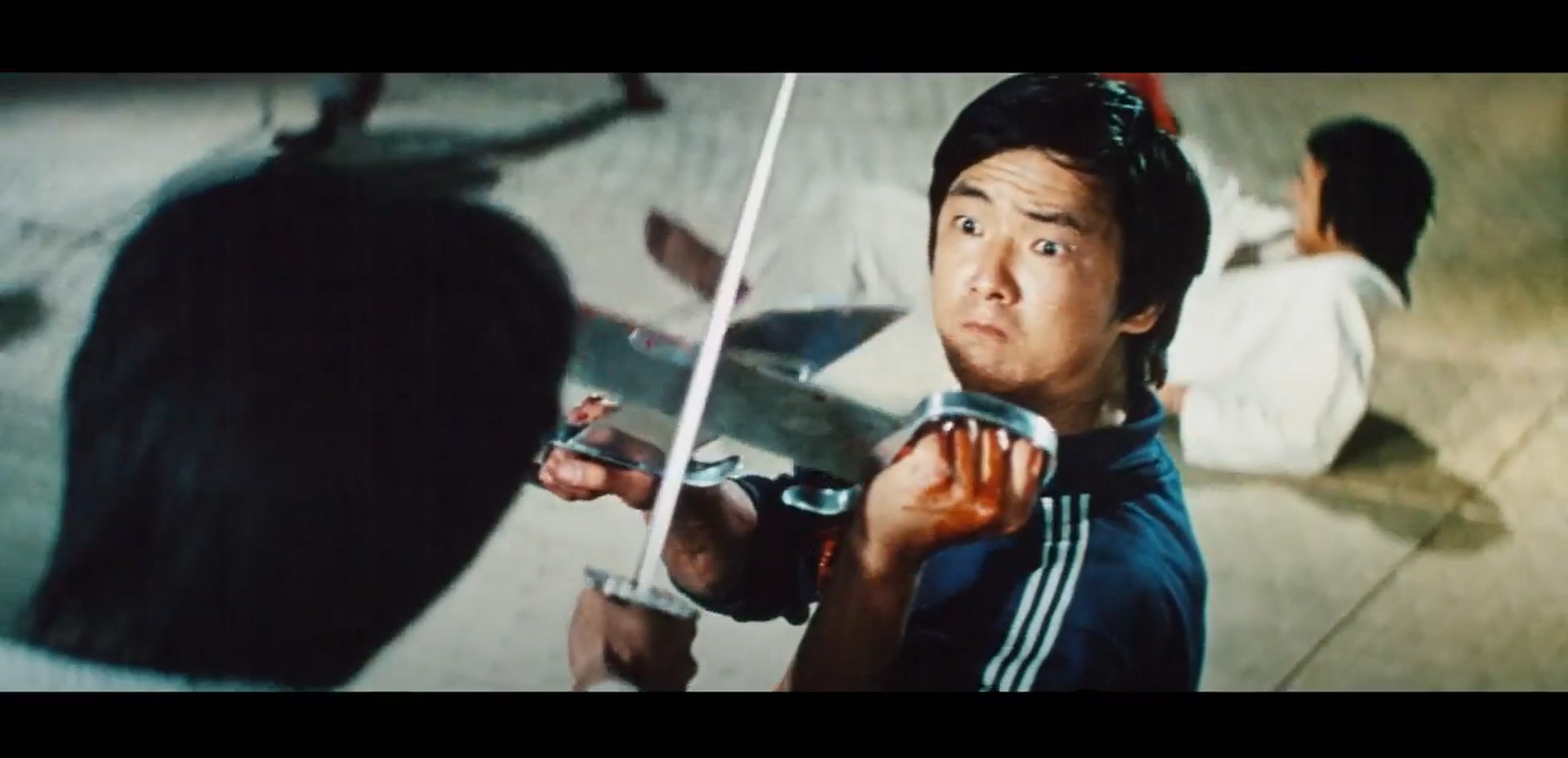
When judging a martial arts film, one critiques the hand-to-hand or melee weapon play contests, scrutinizing every punch thrown and kick taken, for complexity and believability.  If it looks real, it sure as hell feels real when conveyed from off the screen and to the audience.  Though “The Man from Hong Kong’s” scenes feel a little airy, pulling punches slightly too perceptibly, the choreography is quick and exhibits naturally enough through a variety of action and locations, including on top of Australia’s famous tourist attractions Ayers Rock for a wham-bam, drug sting and bust opening with a great-looking and thrilling car explosion shot that nearly takes the camera man’s head off with an unplanned, detonation jettison of a spinning car door toward the camera crew.  Those sorts of risky stunts are prevalent throughout that lends to “The Man from Hong Kong’s” enthralling physicality tone with Trenchard-Smith and his team’s wiliness to learn as they go in their death-defying acts.  The film is a tour de force of stunts, ranging from car chases, glider flights, skyscraper plunges, and an unforgettable kitchen skirmish with real melee weapons kneaded into its very fabric, with a Dirty Harry hero whose more of an anti-hero lawbreaker than the villains he’s up against by specializing in China’s miscreant brand of investigative police work. 

Perfectly suited as number 9 on the spine of the Umbrella Entertainment’s Ozploitation Classics banner is Brian Trenchard-Smith’s “The Man from Hong Kong,” now released on a region free, 2-disc AVC encoded Blu-ray.  Presented in a widescreen 2.35:1 aspect ratio with full 1080p, high-definition resolution, Umbrella has pulled out all the stops to release the best transfer to drool over.  Subtle vertical scratches here and there have no standing impact on viewing and the distinguished color palette is quite good and natural-looking for a film from nearly five decades ago.  There is a healthy amount of positive grain from the 35mm film stock, but the compression never comes into an issuance of sacrificing the quality, leaving darker scenes appearing bright and visible without the effect of enhancement or zealous contrasting.  My only substantiated gripe is with the subtitle cards that, in a way to not have to redo the English subtitles for the Mandarin dialect, the original frames were seemingly kept in and the image reverts back to a lesser quality degree.  Two audio options are available, an English-Mandarin language DTS-HD 5.1 Master Audio and a lossy DTS-HD dual channel.  Umbrella’s kbps output erratically fluctuations between 2400-3400 but even with the rollercoaster ups-and-downs, “The Man from Hong Kong” still had a robust action track and the dialogue came through discernibly clear.  Only goofy aspect about the audio is “Game of Death” and “Bloodsport’s” Roy Chiao’s English dubbing of Jimmy Yang Yu who obviously knew English or knew how to act like he knew English by watching his mouth articulate the native vernacular.  Umbrella also pulls out all the stops for the special features department in this limited to 3000 copies 2-disc set with the second disc a CD soundtrack arranged with Noel Quinlan funk-rock score and the main Billboard topping opening theme “Sky High” by the band Jigsaw.  Also included is a 2001 audio commentary from director Brain Trenchard-Smith, actor Hugh Keays-Byrne, and stunt director Grant Page, an all-new(ish) interview with Grant Page from 2008 entitled Real!Quick! pulled from Mark Hartley’s ozploitation documentary “Not Quite Hollywood,” extended interviews with the director, executive producer David Hannay, cast members George Lazenby, Roger Ward, and Rebecca Gilling, cinematographer Russell Boyd, 2nd unit cameraman John Seal, and first assistant director Hal McElroy from the same Hartley documentary, Trenchard-Smith’s 50-minute documentary “The Stuntmen,” a 75-minute “Kung Fu Killers” TV special directed by Trenchard-Smith and featuring Grant Page and George Lazenby, behind the scenes footage, opening night press conference footage, various and alternate  trailers and promos including a HD theatrical trailer, a cardboard slipcover with new illustrated design, and a reversible Blu-ray case cover art that also lists all 23-tracks on the CD.  The special features runtime outshines the 106-minute feature with a slew of interviews; however, much of the interviews really harp over-and-over upon George Lazenby’s set-on-fire coat mishap scene and Jimmy Wang Yu before the camera rolls catching and eating dragon flies ahead of a kissing scene with Rebecca Gilling.  “The Man from Hong Kong” isn’t notable because it’s Australia’s first martial arts film.  It isn’t notable for the attempt of resurgence of a former James Bond actor or because of its robbed promise of the late Bruce Lee.  What makes “The Man from Hong Kong” important to the film industry as a whole is its precursor value for being the example of a cast and crew to put life and limb on the line for the sake of motion picture art and be damn good at it.

“The Man From Hong Kong” on the Ozploitation Classics Blu-ray from Umbrella Entertainment!