The Gates Are Opening and The EVIL Wants to Squish Your Brains! “City of the Living Dead” reviewed! (Cauldron Films / 4K UHD – Blu-ray)

Cauldron Films’ “City of the Living Dead” on 4K and Blu-ray 3-disc Release!

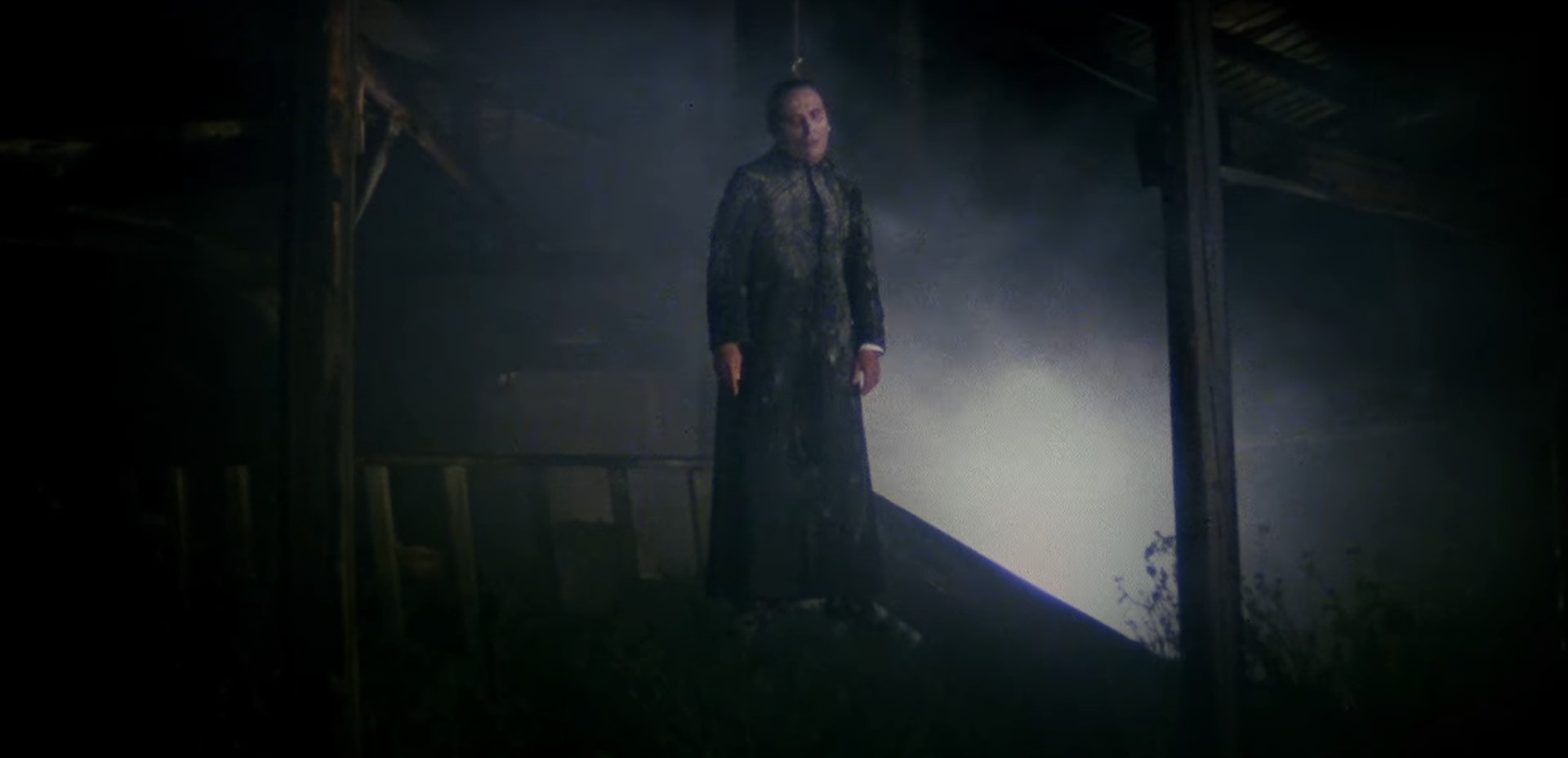
In the Dunwich, a priest commits suicide by hanging himself in the Church’s graveyard.  In the same instance, a psychic based in New York City holds a séance where she witnesses the beginning of the gates of hell opening.  The order sends the psychic into sheer fright that nearly kills her.  A reporter digging deep into the near death of the young woman also buried alive and befriends the psychic, following his nose for a good lead despite its absurd sounding hoodooism of death apocalypse in less than 72 hours.  The psychic and reporter travel to the hard-to-find Dunwich town where the residents have been mysteriously vanishing or discovered dead of curious causes.   Baffled by all the strange occurrences is the town psychiatrist who witnesses first hand the troubles that stir fear into those close to him.  When the psychiatrist teams up with psychic and reporter, they must venture to the very depths of crypt Hell to close the gates and stop the dead for rising before All Saints Day.
The Godfather of Gore Lucio Fulci undoubtedly lives up to his title, establishing himself as one of Italy’s more profound and substantial horror filmmakers before his death in 1996.  “City of the Living Dead” came at the height of Fulci’s success after his breakout into the American market with “Zombie” or “Zombi 2,” an unofficial sequel to George A. Romero’s superb “Dawn of the Dead.”  Yet, Fulci didn’t follow suit with “Dawn’s” social commentary and pale-faced flesh eaters; instead, the writer-director stemmed his undead creatures from black magic hoodooism set in the sunny and sandy Caribbean islands with just as much visceral violence as his inspiring mostly Pittsburgh-based counterpart.  Alternatively known as “The Gates of Hell,” the Italian production of “City of the Living Dead” remains set in the U.S., filmed in New York and the surrounding metropolitan northeast, as the first part of the Gates of Hell trilogy that coincided with “The Beyond” and “The House by the Cemetery,” both of which were released approx. a year later.  “City of the Living Dead” is a Dania Film, Medusa Distribuzione, and National Cinematografica production with Fulci producing as well as the American Robert E. Warner (“Return of the Swamp Thing”) as executive producer.
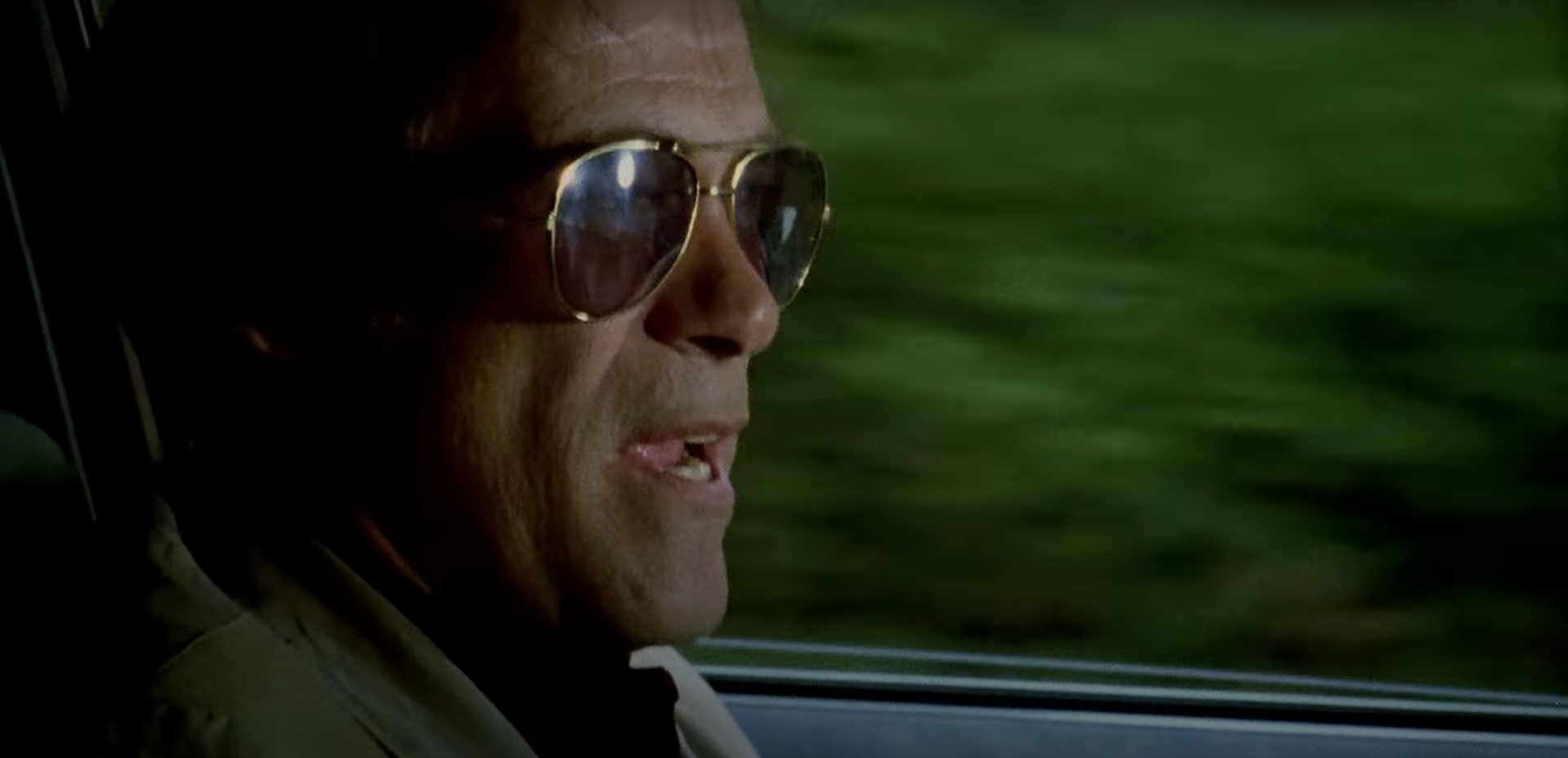
A medley of nationalities make up “City of the Living Dead’s” who either are or are playing American characters.  Comprised mostly of Italian actors Antonella Interlenghi (“Yeti: Giant of the 20th Century”) as one of the first doomed Dunwich victims, Michele Soavi (director of “The Church”) as a canoodler with his brains being squished, Daniela Doria (“New York Riper”) as the other canoodler having her innards become outers, Fabrizio Jovine (“The Psychic”) as the hung priest who started all this mess and as the harbinger of the living dead, and Carlo de Mejo (“Women’s Prison Massacre”) in the psychiatric lead.  There’s an abundancy of diverse Italian flavor that definitely grounds “City of the Living Dead” as an Italian production, but a minor chunk of the cast are Americans with co-principal Christopher George (“Graduation Day,” “Pieces”) as a rakish NYC reporter forcing his way into a minor lead turned major forthcoming day of reckoning and Robert Sampson (“Re-Animator”) in a minor law enforcement role that bears little significance.  Sprinkled in the cast is also the Swedish-born-turned-Italian actress Janet Argen (“Eaten Alive”) as the psychiatrist patient and UK actress Catriona MacColl rounding out the principal cohort as the psychic.  MacColl is the only actress to have a role in all three of Fulci’s Beyond the Gates films, playing different characters in each.  Between Christopher George’s skeptic playfulness, Janet Argen’s uncontrollable hysterics, and in the unmalleable wrought shock of fear, the sundry cast doesn’t hinder the performances that mesh well under the greater air of portent and the hours leading up to end of days.  Giovanni Lombardo Radice (“Cannibal Ferox”), Luca Venantini (“The Exterminators of the Year 3000”), Adelaide Aste, Venantino Venantini (“Cannibal Ferox”), Robert Spafford, James Edward Sampson (“StageFright”), Perry Pirkanen (“Cannibal Holocaust”), Michael Gaunt (“Forced Entry 2”), and filmmakers Robert E. Warner and Lucio Fulci costar.
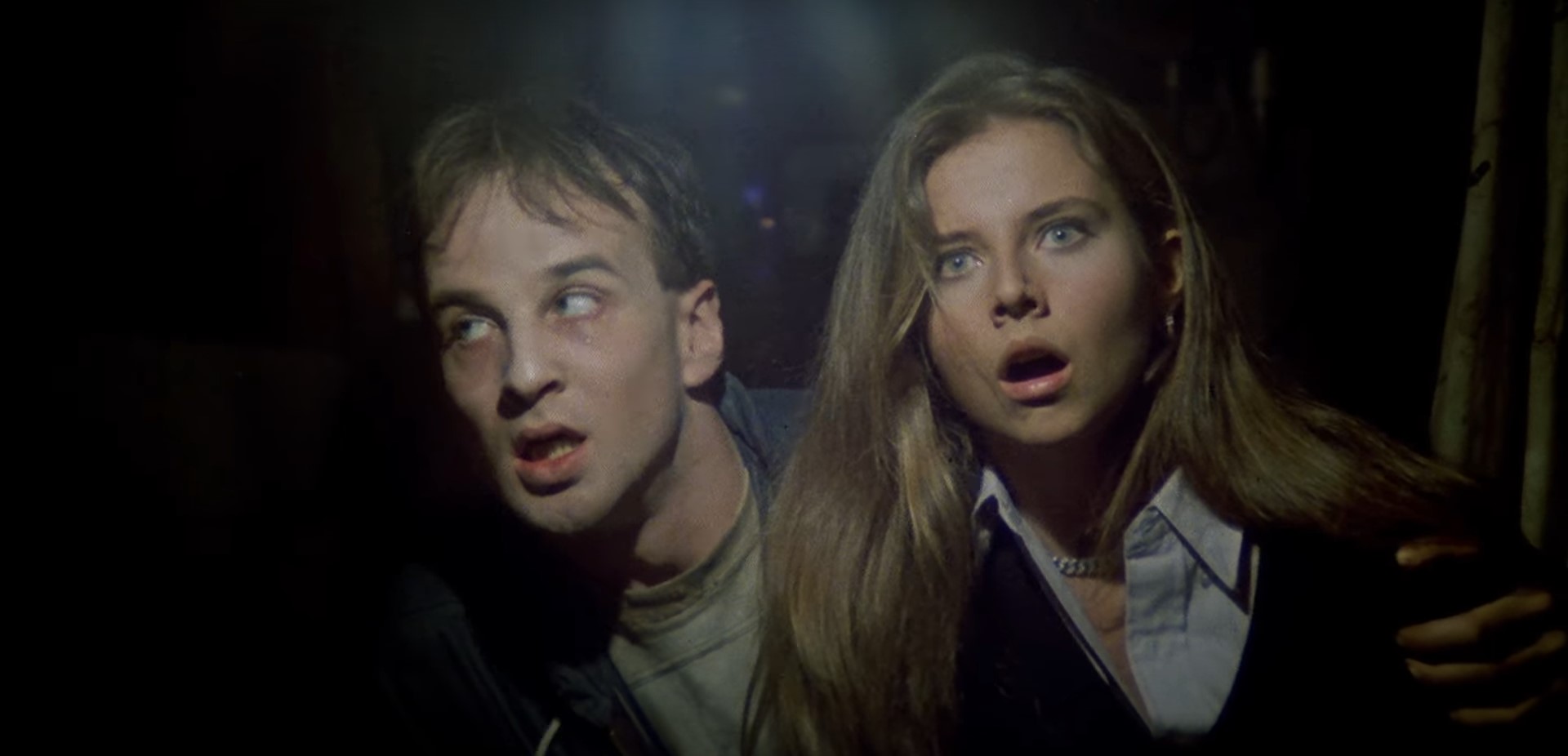
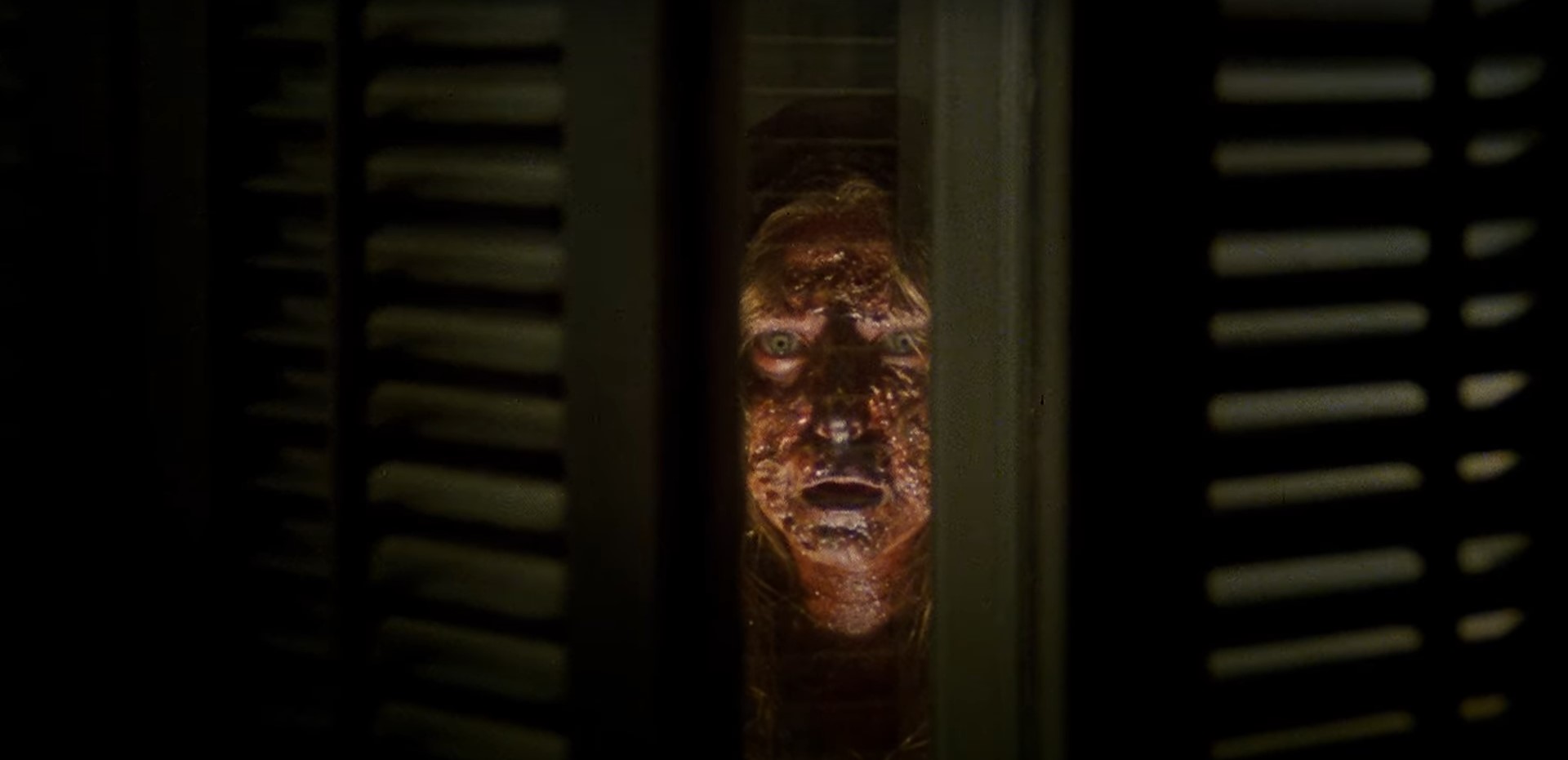
Through an unexplained mysticism and preformed stipulations on why the priest was the be all end all gatekeeper to the dead’s awakening on Earth other than Dunwich was original built upon the ruins of a witch-burning Salem, Massachusetts or why the day after the unmentioned Halloween season (likely because Italians do not celebrate Halloween with an abundance of candy and custome), All Saints Day, becomes the zero hour date when clearly the dead are already fatally impacting lives in the corporeal realm, Lucio Fulci masterful magician qualities diverts attention away from seemingly crucial elements of the plot toward a complete and total elemental atmosphere of fear, using eerie fog, whipping wind, and phantasmagoria imagery of the macabre to implant chthonic horror slowly rising above ground.  Makeup artist Franco Rufini recesses the sight sockets with deep, infraorbital darkening under the eyes in stark contrast with the pale shade skin, creating that classic yet effective zombified corpse casing in conjunction with special effects artists Gino de Rossi (“Burial Ground:  The Nights of Terror,” “Cannibal Ferox”) use of ground raw meat or whatever the gushy material used to construct the cerebrum contents that just squishes to a pulp between the fingers of the undead when they grab a fist full of hair, skin, and brains from behind an unlucky left living.  There’s quite nothing like a Lucio Fulci film where the ghouls knock on the door from the other side, threatening the land of the living, the world even, with a sound and steady ghoulish malevolence and death in a well-lit and framed Fulci-scope to hammer down defined purpose that drives a penetrating stake through the chest bone and into a chilled soul.
“City of the Living Dead” goes beyond the format gates and arrives onto a 3-disc 4K/Blu-ray release from Cauldron Films.  2160p Dolby Vision 4K and a 1080p AVC encoded high-definition options really put this Fulci classic back on the map, unlike the small, forsaken city of Dunwich. The 4K UHD is an HEVC encoded, 2160p Dolby Vision ultra high-definition resolution while the AVC encoded Blu-ray sports 1080p high-definition, presented in a widescreen 1.85:1 aspect ratio. Through the translucent mist of natural, good-looking grain, Cauldron Films have hyper-accentuated the atmospherics with a clean rendering of the innate cooler-to-warner photography grades of blue-to-yellow with creating a harsh contrast transition. The encoding never shows an ounce of detail distress to keep textured and palpable image of the darkened crypt or the thick fog exteriors that often would degrade decoding with omitted data. The Cauldron Films release retains and sustains bitrate that fastens the dark levels to a robust and effective pitch black. What’s neat about this release is the ability to toggle between the English DTS-HD 2.0 Mono and the Italian DTS-HD 2.0 mono, both post-recorded in standard with Italian productions. Both tracks are comprehensibly sound with a clear and clean dubbing with the only detailed differences being one in English language and the other in Italian and the title card switched out for the each. Between the two, range is exact on both with not a lot of superfluous ambient sound and both tracks offer a near blemish free experience in a robust context of atmosphere. Disc 1 and 2, 4K UHD and Blu-ray respectively, come with new audio commentaries, including with cult film critic Samm Deighan, author of Italian horror cinema Troy Howarth and film critic Nathaniel Thompson, as well as individual archival commentaries with actors Catriona MacColl and Giovanni Lombardo Radice. Disc 3 includes an interview with production Massimo Antonello Geleng, actor Giovanni Lombardo Radice, and on-stage Q&A with Venantino Venantini and Ruggero Deodata (“Cannibal Holocaust”), a Q&A with Catriona MacColl, a Q&A with composer Fabio Frizzi, interviews with special effects artist Gino de Rossi and principal actor Carlo de Mejo, A Trip Through Bonaventure Cemetary – an explorational and historical account on the main cemetery where the priest in the film hangs himself, trailers, an image gallery, and other archival interviews in a near feature-length collection of conversations with cast and crew reminiscing about Lucio Fulci during filming. The 4K UHD and third disc packed with special features are region free while the Blu-ray remains region A locked in licensed playback on the format. Both features have a runtime of 93 minutes and the release is unrated. Emerging from the gates of standard definition hell, Cauldron Films tempers Lucio Fulci’s “City of the Living Dead” to a foreboding crust, burgeoning with ominous clout the undead’s underscoring resurrection.

Cauldron Films’ “City of the Living Dead” on 4K and Blu-ray 3-disc Release!

Five Men. Two Women. What EVILs Could Be Committed? “The Last Island” reviewed! (Cult Epics / Blu-ray)

“The Last Island” is Man’s Last Hope!  Now on Blu-ray!

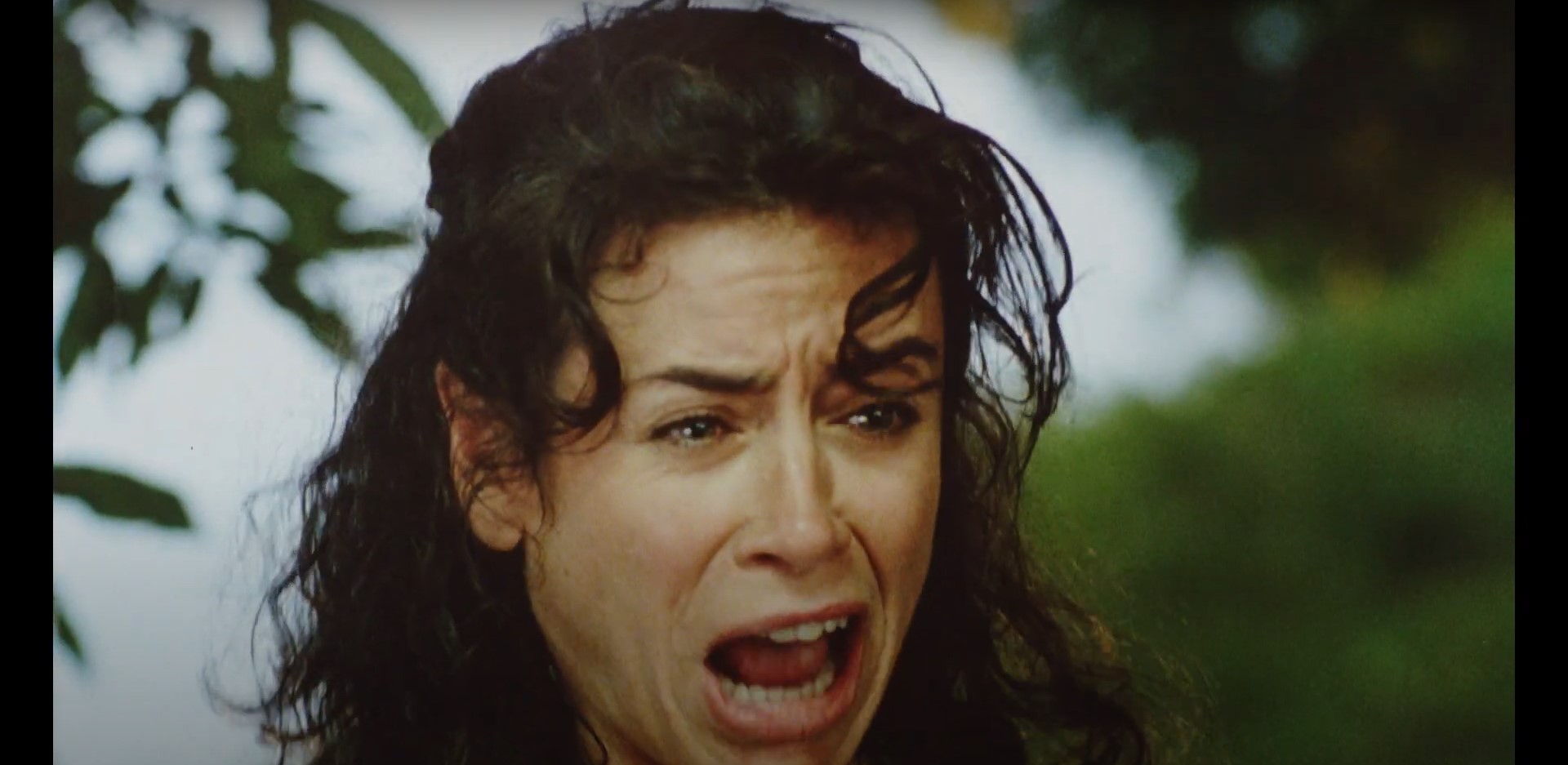
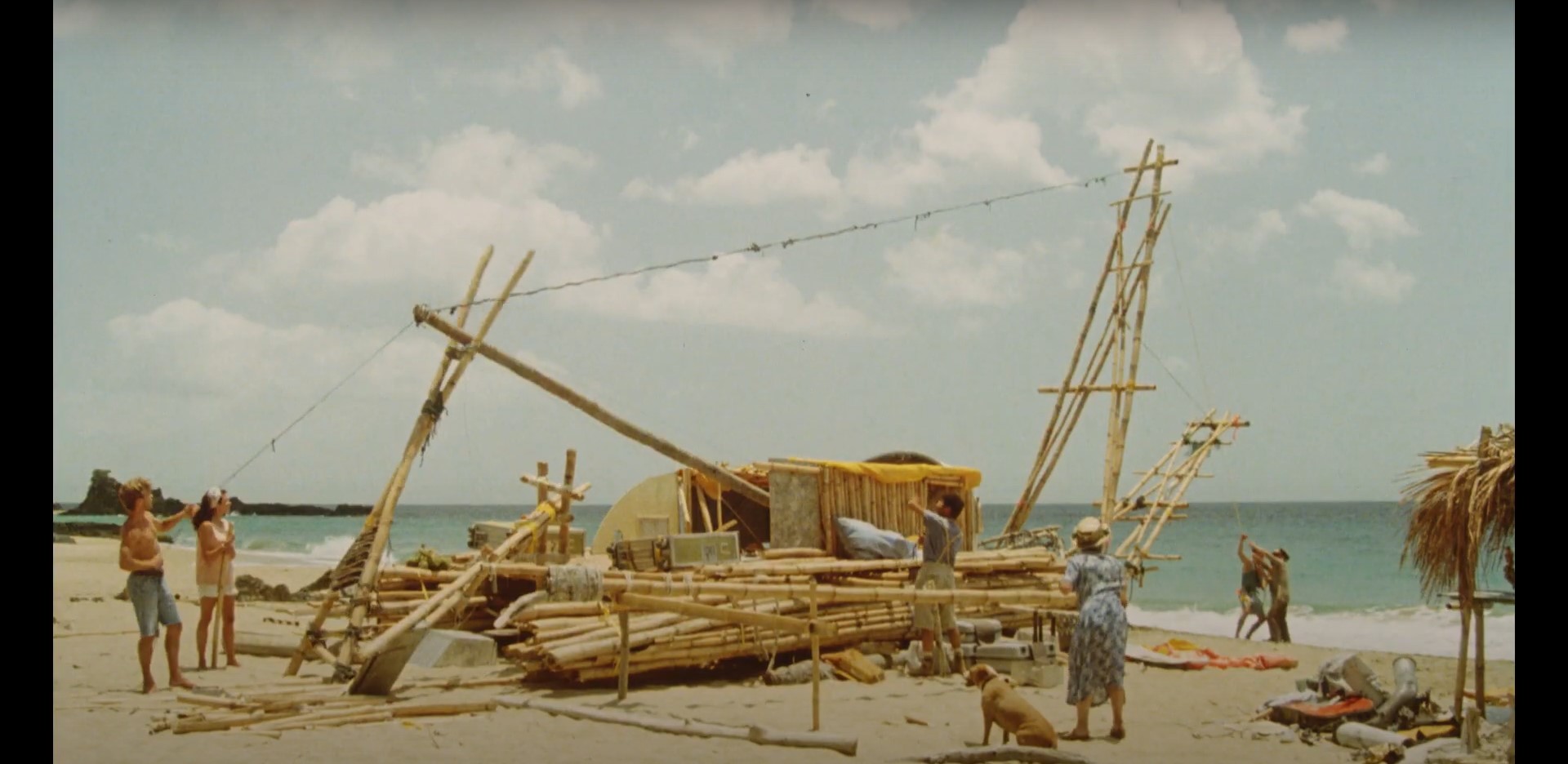
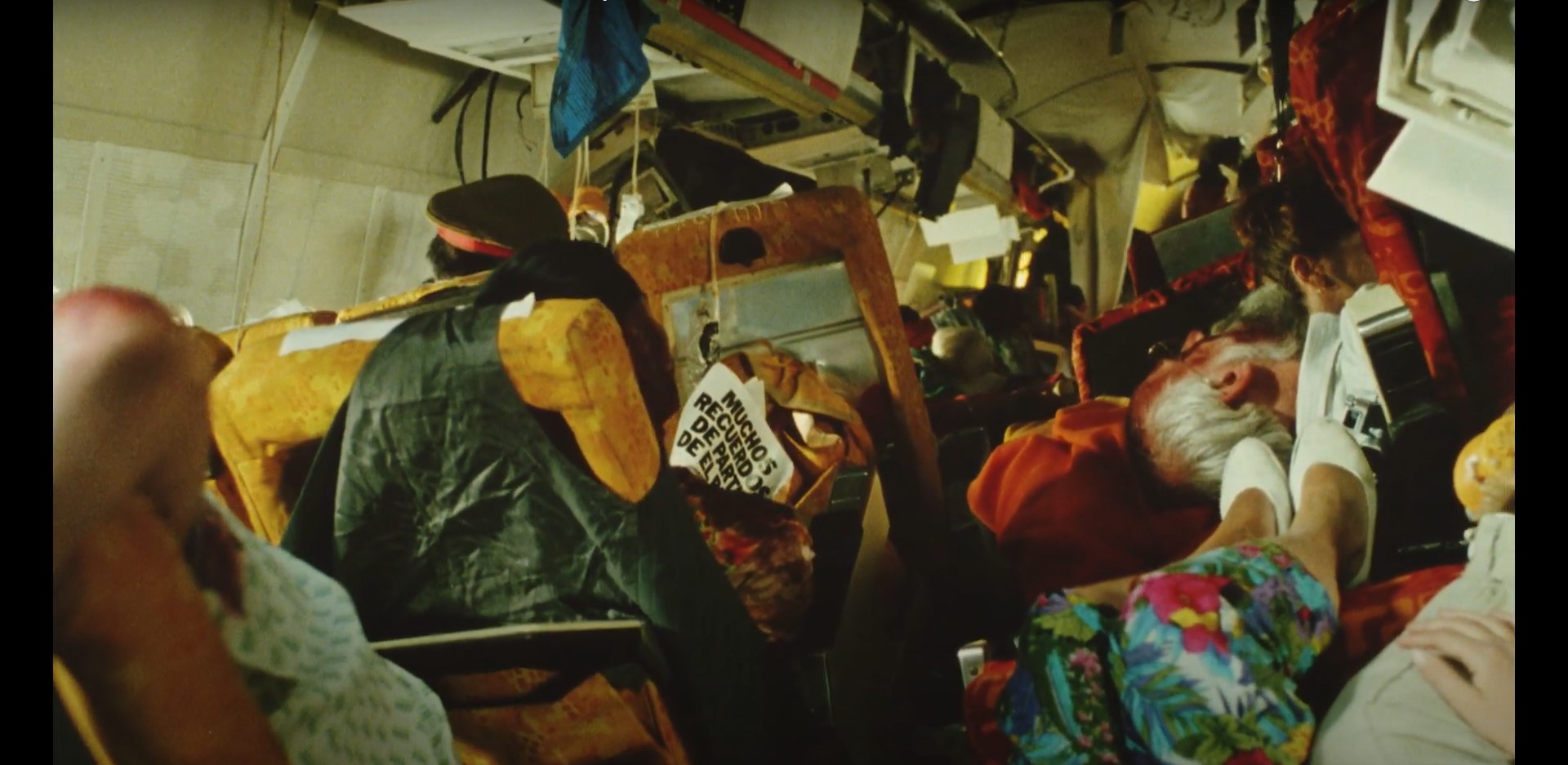
The horrible, mangled wreckage of a commercial plane crash on a deserted tropical island only leaves seven survives – five men and two women.  Burning what’s left of the remaining passengers, salvaging through baggage, and setting forth a plan of survival until their hopefully imminent rescue,  the survivors lean on each other and on hope for only temporary residence on the idyllic island.  With a working radio only picking up static on every channel, a mysterious boat carrying a charred body to shore, and other clues that suggest the world may have just gone through a nuclear disaster, the possibility of never leaving the island seems very real despite their best efforts to the contrary.  Fear of being the last humans on Earth takes hold and for the species to survive, the idea of procreation insidiously warps their already traumatized principles.  Two women survived the crash but with one being an old woman, the younger fair of the sex becomes the object of necessity between the men of varying sexual orientation, beliefs, and ethics. 

Director Marleen Gorris helms another powerfully provoking and feminist perspective, gender divisive drama, but her 1990 released third feature, “The Last Island,” is quite different from her previous two films that have established her with such labels as a feminist filmmaker and the more preposterously perception of being a man-hater.  The differences are stark within the Netherland born Gorris’s penned script and directorial.  Unlike “A Question of Silence” and “Broken Mirrors,” “The Last Island” isn’t casted with frequent Netherland actresses of previous collaborations with this particular film seeing more native English speakers from the U.K. and Canada.  A large scale production also distances the previous handful of dressed interiors with exterior foliage, day-glow lighting, and a giant plane prop that elevate the tensions of exposition.  “Amsterdamned” and “The Lift” director Dick Maas along with colleague Laurens Geels produce “The Last Island” under Maas and Geels cofounded Dutch production company First Floor Features as one of their many English-run films. 

“The Last Island” had a cast that brimmed with over-spilling success having just come off acclaimed features within the last decade.  Paul Freeman was the first villainous face against one of America’s most beloved archeological heroes as Belloq in “The Raiders of the Lost Ark,”  Freeman pivots nearly a decade later in another strong, affluent role but as an older gay man with a taste for grooming younger men.  Freeman plays the Scottish born Sean, a seemingly ally to the one child-bearing able woman on the island but his own gender is turned against him with his need to live and his need to be in power to sustain the human race.  Opposite Freeman, and eyed as more of the principal character, is the lesser known Shelagh McLeod (“The Sleep of Death”) who is given a voice of reason, voice of choice, and voice of justifiable resistance against a crumbling male majority.  McLeod completely stands rivaling against a formidable Freeman without the backstory of ethical waning and as the well-rounded Joanna, she finds herself in opposition of other eclectic group of men with extreme strengths and flaws.  Pierre (Mark Berman, “Tom et Lola”) is a brilliant scientist but a craven coward, Nick (Kenneth Colley, “Star Wars:  Episode V – The Empire Strikes Back”) has military arms training for hunting but is a bigoted, pious fanatic, Frank (Mark Hembrow, “Out of Body”) is strong and compassionate but indecisive and insecure, and Jack (Ian Tracey, “The Keeper”) is the epitome of youth but is arrogant and motivated by sex.   Morris is able to turn each of the salient men seem small and insignificant beside Joanna steadfast candor.  Then there’s Mrs. Godame, the seemingly most insignificant character who is actually the most complex out of them all.  Age is just a number but the way Morris writes the old woman makes subtle suggestion that she might be more of a higher power than what she appears to be on the surface.  One suggest is hidden in plain sight right in the old woman’s name, Godame, and if you split the syllables, God and Dame equals Woman God.  “Willow’s” Patricia Hayes dons a charitable, mother-like performance providing hints of being the abstention Almighty by ending many sentences to the others with my child, knowledgeable in wisdom and in parable, trying to guide with conversation and compassion, and we’re even introduced to Mrs. Godame lying on the beach, arms stretched, and perceived from a top view as if in a crucifix position.

Religious imagery and metaphors run beyond the subtext of Mrs. Godame.  The world has seemingly destroyed itself from what is suspected to be a nuclear war and thrusts a reasonable suggestion that the age of apocalypse is nigh.  Man and woman are stranded on an island that’s been referenced as paradise on more than one occasion and Eden, a garden where the first man and woman lived, was known for its abundance of natural beauty and paradisal qualities.  Other aspects from the story of Adam and Eve and the Garden of Eden are also present, such as the forbidden (poisonous) fruit and the snake that bites one of survivors.  Joanna can be said to be the forbidden fruit as well in a reversal of the theological tale where man is tempted by the forbidden fruit, tries to take a bite, and is cursed by removal innocence and bliss and replaced with sin, misery, and, eventually, death, more specifically, death of the human race.  Morris blends these elements smoothly into the conspicuous concept, leaving a very few mysterious metaphors left unresolved by the natural consequence of the characters, and ending on a note of ambiguousness hopelessness because is Joanna pregnant or not – we’re neither informed by the story or Mrs. Godame herself with another imparting and inconclusive turn of phrase that bestows a classic curtain fall on the unforeseeable future of the survivors. 

Cult Epics releases “The Last Island” on an AVC encoded, high-definition 1080p, BD50 presenting the new 2K transfer and restoration scan from the original 35mm print in a widescreen aspect ratio of 1.85:1. An opening preface notes that the restoration done was done on the only working English-language 35mm print known available, accompanied by evident dirt and scratch imperfections. Comprehensively, the restored print is beautifully vibrant with popping tropical frondescence and a deep blue sky. Much of the imperfections come early on, during the aftermath of the crash, where faint but evident scratches are noticeable, dust specks can be visible but insubstantial, and with the only real blight being a rip-split frame that flashes a horizontal tear across the screen. Details are sharper than expected with a nice delineation in the space between, skin textures, amongst other tactile elements such as trees, the plane, and the sandy setting, don’t wash out under the brilliant sun that lights up everything, and black levels keep inky inside the naturally adequate grain. Though a Dutch production, the dialogue track is all in English with a DTS-HD 2.0 master audio. Also available is a LPCM 2.0 stereo. Even-keeled throughout the picture’s entirely, never did the levels intertwine or lose strength in what’s a satisfactory arranged overlayed soundtrack in suitable company with Boudewijn Tarenskeen’s grave dramatic score. Optional English subtitles are available. Special features include an audio commentary by film historian Peter Verstraten who returns for another Cult Epics release, an audio-less, raw footage behind-the-scenes of certain production creations such as the plane setting and certain dynamic scenes mantled with diverse song tracks, an archive interview with Politica columnist Annemarie Grewel, the original theatrical trailer, promotional still gallery, and trailers. Also include but not in special features is a Dick Mass audio-only introduction at the play film selection. The clear Blu-ray amary case sports the original composition “The Last Island” one-sheet of wrecked plane and stranded survivors. On the cover’s reverse side is a full spread of the cast in one of the more memorable, heartbreaking scenes. There is no insert included inside and the disc art has the same rendered front cover art. Clocking in at 101 minutes, this Blu-ray has region free playback and is not rated. Gorris’s eye for upending men rationales to use against them tears into the very fabric of their misguided intentions as the prospect of end of the world comes down to one, single-minded thought – to procreate when facing extinction and the only way to do that is a man’s way.

“The Last Island” is Man’s Last Hope!  Now on Blu-ray!

A Horde of EVIL Won’t Stop a Father from Seeing His Child for the First Time. “Day Zero” reviewed! (Well Go USA / Entertainment)

“Day Zero” on Blu-ray from Well Go USA Entertainment

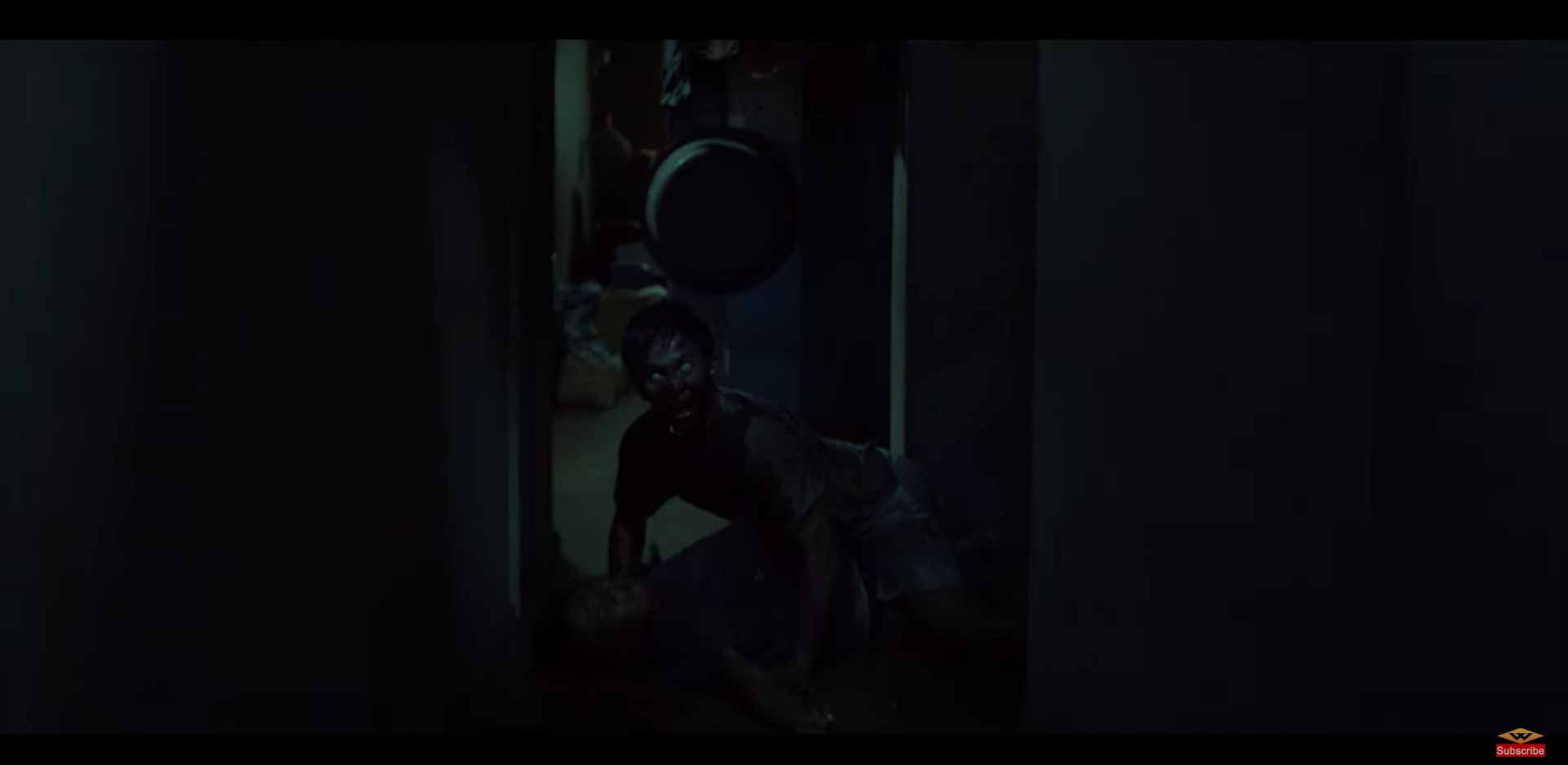
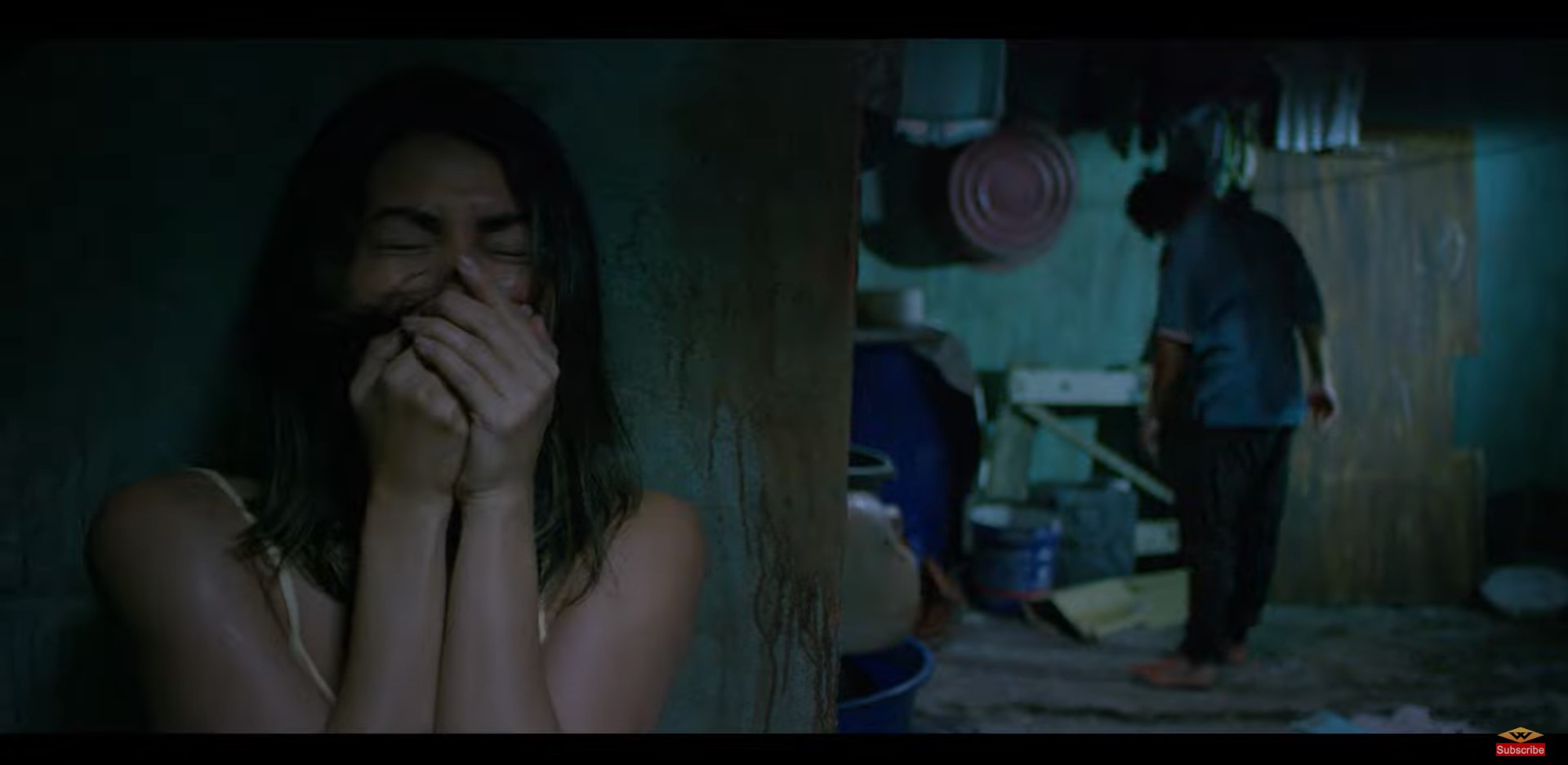
Convicted on charges of assault, ex-special forces and all-around big guy Emon looks to keep his nose clean, banking off his good behavior to get him released from prison to see his wife and child, who he has never laid eyes on since being incarcerated.  When trouble finds him behind bars, Emon loses his chance with a dismissive warden until a mutated dengue fever virus sweeps through the city.  The virus turns people crazed and blood hungry, quickly engulfing the populated city and streets with chaos that fortuitously, as well as unfortunately, sets all the prisoners free in a tumultuous fight between the living and the infected dead.  Emon must battle through to save his family trapped inside their multi-storied apartment building but inside the dark, densely-packed corridors, the structure is infested with infected with not many places to hide and not much room to evade the bite of the hungry dead.

A running Z-charged, fight-for-your-life thriller hailing from the Philippines with “Day Zero,” the sophomore feature length film from brothers Joey De Guzman, the director, and Ays De Guzman, the screenwriter.  “The Ghosting” director, Joey De Guzman, revs up the slow-motion and high-octane gunplay and the barreling running zombie action set to the tune of a “28 Days Later” type virus that quickly spreads through the one of major metropolises of the Pilipino microcosm.  Ays De Guzman, authorial designer of a few independent Pinoy horror of the past decade with the horror-comedy “Da Possessed” and the dysfunctional family thriller “Santigwar,” Ays bends himself down a different avenue of anxiety-gear terror that taps into a semblance of Zack Snyder caffeinated zombie-violence.  “Day Zero” remarks the return of the “Rabid” producing team of Glenn Mark Salamat, Michaela Reyes, and Stacy Bascon under the production banners of Reality MM Studios and Regal Entertainment.

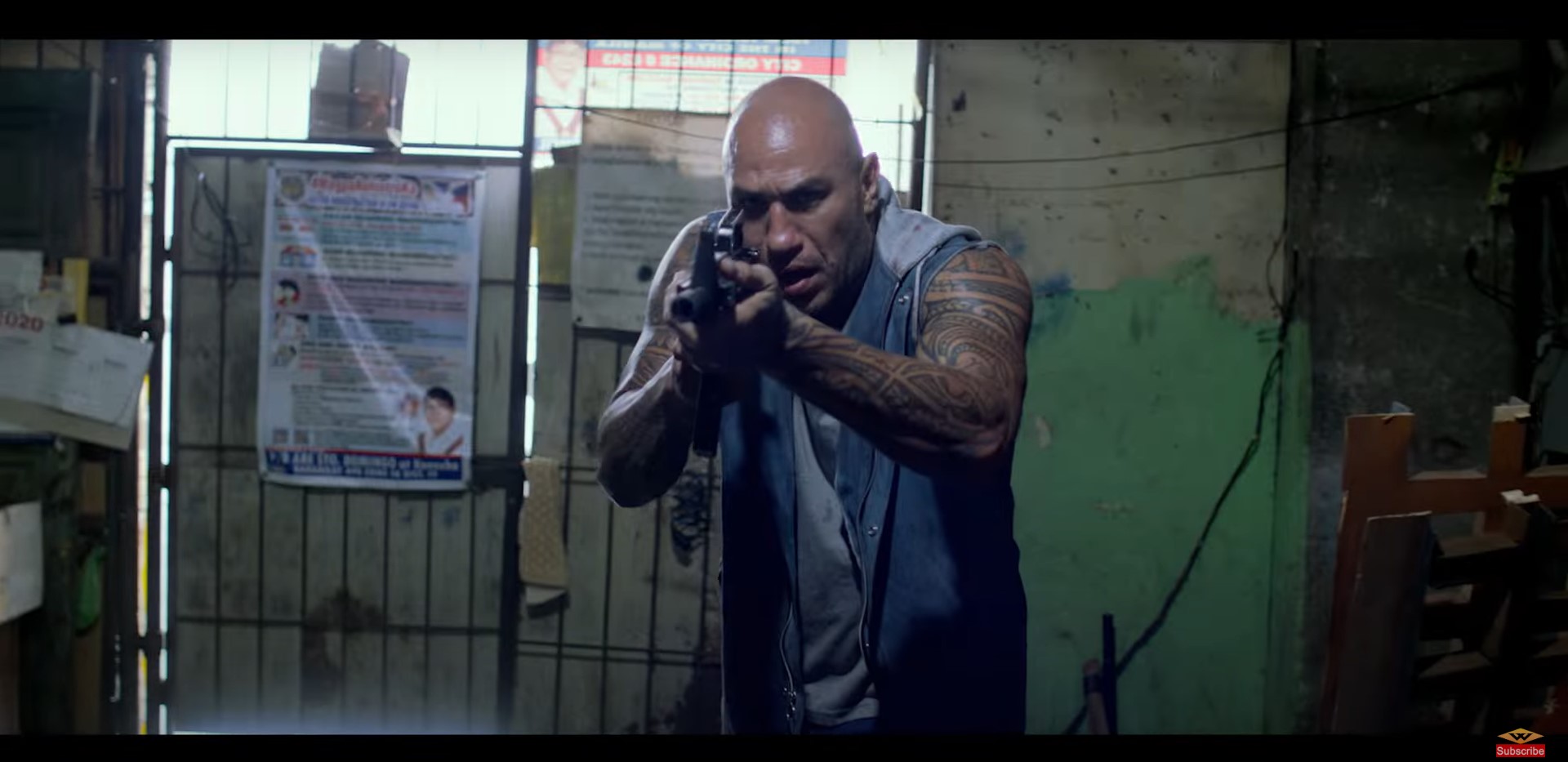
Speaking about Zack Snyder, I’m convinced hiring a leading man who looks like a Dave Bautista doppelganger playing a large-and-in-charge ex-special forces is undoubtedly derived from Snyder’s 2021 “Army of the Dead.”  Also, a shaved head doesn’t help avoid the lookalike image as Brandon “The Truth” Vera exits the mixed-martial arts arena for greener, lower-impact pastures of the picture business.   The Filipino-American made his feature film debut in 2018 with BuyBust, a narcotics bust and drug war shootout actioner filmed in Manila, going back to his heritage roots to be featured in homegrown productions.  Vera’s latest bout with action “Day Zero” has ingrained much of the same hand-to-hand and weaponry discharging skirmishes except with zombies.  Much like Bautista, Vera’s a broad shouldered, big dude and he’s massive in the tight corridors of the building interior sets yet the former arena fighter just doesn’t bring his large and imposing presence to the screen, he also brings his agility and grace choreographing complex tussles with the forsaken fiends trying to feast on him and others.  Amongst the axe slashing, neck breaking, face impaling, and gunplay galore, Vera also shows his softer side being a puppy-eyed father attempting to connect with his 7 to 8 year old daughter for the first time and rationalize with her on why he didn’t want her to see him in prison.  The softer side of the Emon incorporeally clashes with the rough and ready former special forces kill machine, diluting his character by pulling him in different directions that never consummated a mesh of the two sides.  Instead, we’re delivered a better arc in his wife Sheryl (Mary Jean Lastimosa, “Santigwar”) with initial discomfort with Emon’s troublesome woes only to then understand his internal hardships.  Coming out on top after injury over injury, Sheryl becomes a survivor for not only her deaf daughter but also for Emon who has finally made it back into their lives.  Because the Republic of Philippines is geographically limited, “Day Zero” has a relatively convey Pinoy cast that have crossed paths on previous projects; these actors and actresses include Pepe Herrera, Freya Fury Montierro, Yohance Levi Buie, Joey Marquez, Jema Galanza, Ricci Rivero, Shermaine Santiago, and Jovit Moya.

“Day Zero” is enjoyable, zombie destroying cannonade without the supplements of a patient zero other than radio chatter on the dengue fever mutation.  The well-traversed plot doesn’t ring any originality bells and adds nothing new overall to the zombie canon in what’s simplistically a good-ole fashion romp of the routine.  What Joey De Guzman renders well is progressing the intensity from a slow setup of familiarizing ourselves with Emon and his family to turning up the volume on the convulsing savagery between the rampaging infected and Emon busting out his full-on commando skillset that can eliminate scads of a charging herd.  Guzman’s able to deliver fast action and decent camera work with some satisfying scenes of sanguine splatter.  The sound design of the zombie war cry hones in on the maddening and frightening being cornered and out of options as survivors scatter in a deemed-derelict apartment building with junk-riddled hallways and sturdy but thin cardboard doors, the latter may denote poor set design, but the overall look and feel of enveloping darkness and cluttered walking spaces makes “Day Zero” have that original Resident Evil 2 environment atmosphere to a point.  By no means am I comparing “Day Zero’s” acclaim to the popular 90’s sequel of iconic survival horror but the narrative also plays into a similar storyline scenario which, ironically enough, is more parallel to the franchise than Paul W.S. Anderson’s adaptations aside from the lack of a diabolically Umbrella corporation.  Guzman shows his influencing hand with his latest venture and comes out unscathed with a tachycardia zombie-action movie that won’t flatline on you.

Not the usually novel, alternative horror Well Go USA Entertainment has released onto Blu-ray as of late, but “Day Zero” is no zero on our book with its nonstop, large scale, and gripping action on a limited budget.  The AVC encoded, high-definition 1080p, BD25 is presented in a widescreen 16:9 aspect ratio.  Graded with a grim cinereal of cadet blue and turquoise, the image has a nipping and snappy delineation within the heavily shadowed interiors with exteriors often bright but still greatly detailed and contoured for depth.  No issues with the format storage and transfer compression within those shadowy compartments that amply decode, or rather unload, the visual markers, perhaps aided by the limited color scale.  The Filipino, mixed with a smidgen of English, DTS-HD 5.1 track has immense depth surrounding the zombie war cry, hitting those rear channels nicely for distinct localization.  Though a lot of action is in confined spaces, depth also translate well to other environmental aspects of the sound design.  Muzzle fire has a brawniness with a consistent impact complimenting the nonstop action.  Dialogue is clean, clear, and intelligible with optional, error-free English subtitles in synch with the narrative flow.  Usually, Well Go Entertainment releases have promotional behind-the-scenes and interviews, special effects insight, or something in the bonus features content but, alas, this particular release only sees itself into our players with the film’s trailer on the static menu.  Same goes with the omitted slipcover that was present in their two previous horror releases. The Blu-ray is housed in a standard snapper case with Vera peering intently forward overtop a near silhouette of an apocalyptic Pinoy street with an odd, near-skeletal figure at the top right adjacent to Vera’s right shoulder and standing on a roof.  This particular, pretty-cool designed character is not in the film.  While the front cover can grab a prospective buyer or renter’s attention, the back cover diminuendos “Day Zero’s” appeal with a prominently goofy, white-eyed infected in the middle looking stupor than scary.  Inside, an advert tableau of other Well GO USA distributions, such as Donnie Yen’s “Sakra,” “The Tank,” and Jackie Chan’s “Ride On,” fill the insert section, which may vary per batch made.  Pressed disc art resembles “Evil Dead” with a red background and a profiled hand reaching upward.  Region A locked, the feature comes not rated at 82 minutes long.  “Day Zero” is my first Filipino horror film experience in nearly four years with the last being 1971’s “Beast of the Yellow Night” and continues to always be a pleasing sit-down with its taste for terror no matter how hackneyed or homage traced. 

“Day Zero” on Blu-ray from Well Go USA Entertainment

Sometimes, You Can Feel EVIL Tightening Around Your Throat. “Death Knot” reviewed! (Well Go USA / Blu-ray)

“Death Knot” Hangs Loose on Blu-ray! Purchase Your Copy Here!

Hari and his sister Eka receive the tragic news of their mother’s suicide.  They return to their rural childhood village home to attend her funeral and prepare arrangements for the family home, but the siblings are met with a cold shoulder as the locals have shunned their mother, fearing her as a black magic practitioner who made a pact with the Devil himself.  The suicide and the village distress illicit different responses in both children – Eka wants to put everything behind her and live her life in the city of Jakarta. While Hari drowns himself of guilt over his mother’s death as he hasn’t visited his mother in years and wants to cherish the time left of his mother’s house, despite the not so pleasant childhood memories of his mother’s descent into mental instability.  When a upcoming storm makes leaving the village impossible, in what the superstitious locals note as The Harvest to claim souls, Hari, Ek, and Eka’s husband, Aldi, are forced to stay the night and that’s when strange visions and odd behaviors evoke the presence malevolent entity, an ancient deity, to beleaguer Hari and Eka into submitting to its will.   

Not too many Indonesian horror films see the light of day, buried beneath the massive manufacturing machine from the West, such as North America and Europe, that churns out films about every 8 seconds, the same rate in which babies are born at in the U.S, but that doesn’t mean the country known for its idyllic 17,000 islands and Buddha temples doesn’t have a repertoire of horror. In fact, obscure cult celluloids like “Lady Terminator” and “Satan Slaves,” known to those with indie horror running through their veins like crack cocaine, are the exemplar of the scarcely noticed Indo-horror collective and now that modern technology provides streaming servies far and wide from every corner of the world and advances in filmmaking make accessibility and recording film considerably cheaper and easier to complete, getting exposure becomes greater to other titles mostly hidden gems from the rest of the narrowed focused general population. Point in case, Cornelio Sunny’s “Death Knot” debuts his occult thriller that incorporated the grimly prophesized myth known as the pulung gantung that speaks of a great, fiery meteor being a harbinger of suicide and in Indonesia, the most common suicide method is by gantung aka hanging. “Death Knot,” also known as “Tali Mati,” isn’t the only film based on the myth, but what separates this film from other myth-based works is that the pulung gantung is still relevant today with highly resolute belief amongst the underprivileged and poorer neighborhoods. Sunny co-wrote the script with Ike Klose and is produced by Ismail Basbeth under Sunny’s company banner Matta Cinema in association with Kathanika Entertainment, SRN, and Umbara Brothers.

To ensure his debut directorial goes without a hitch, Sunny slides into the lead role of Hari and how Sunny and Klose write the character counterintuitively to screenplay 101 by not building him up, providing background, or instill preconceived notions through the acts. Hari’s a clean slate from start to near finish from scene one that involves him waking out of a horrible dream about his mother after briefly texting his sister. Written to have no depth in existing or having interests in anything, Hari’s hyper-focus is his mother’s legacy and commorancy, leaving his current mundane left in Jakarta to worry about his decease mother he hasn’t seen or talk to in years. Sunny is swarthy handsome, strong in subdued stubbornness, and limits his range toward his character in being the nondescript nonbeliever of occultism that innately scares the dickens out the poor village people. Hari and sister Eka (model/actress Widika Sidmore, “May the Devil Take You Too”) toss crumbs of background about growing up with an absent father and a community abhorred mother but appear unruffled by a broken home and, for the most part, shrug much of that rich backstory from their tabled history. Sidmore does a better job bottling Eka’ fear and loathing of a place that dejects her existence as villagers shun them for their devil pact bloodline and, eventually, the ooze of unwantedness seeps out of her to the point of being an emotional mess. Only when her loveable and amenable goofball husband, Adi (Morgan Oey, “The Deadly Love Poetry”), suddenly grows an obstinate backbone and refuses to leave the village, acting strange with an uncomfortably warped smile on his face as he fixates his glare deep into the forest, does Eka’s emotions pour toward a direction and hone in on a purpose until she, herself, falls into the same possessed-like predicament that befits her more than Adi but would be two perfectly ear-to-ear, Chesire cat-grinning candidates for Parker Finn’s horror-hit, “Smile.” The entity that has dominion over them isn’t so subtle, but Oey and Sidmore’s performances are, in a good way, awkwardly creepy and perfectly executed. Oey’s mimicking of a twist on the Balinese dance Hari’s mother performed in the opening scene before her demise and with what looks to be Hari’s mother silhouette impelling the dance in the shadows is “Death Knot’s” eeriest moment that lands traditionalism and supernaturalism into a single scene of shadows and visitants.

“Death Knot” is a slow burn, dread building, culture integrating, ambitious debut feature from actor-turned-director Cornelio Sunny.  Performance driven with little-to-no special effects, the surrounding morose atmospherics of “Death Knot” relies on the cast and it’s portentous, jump scare score to deliver a palpable fear without a perceptible villain, keeping very much in tune with one of Indonesia’s notorious folklores.  The limited budget constrains Sunny to character exposition and pursuance of self-selling the concept of an entity inhabiting friends and family with only their God-given talents and appearances to construct ominous opposition.  Descriptively, the notion sounds monotonous in tone, substandard in achieving a certain level of jitters, and gridlocked from a story perspective, but Sunny and his counterparts are able to feed the idle monster with energetic enthusiasm that turns the notion on its head with menacing and foreboding results, amplifying to one of the story’s other themes of paralyzing guilt that affects Hari from moving forward in life because of that equivocal estrangement between him and his mother.  However, one of the biggest problems to come out of “Death Knot” is the ambiguously fated ending for Hari, surrounded by a 50-yard radio of melee weapon-holding villagers like he’s been suddenly dropped in the middle of the Resident Evil 4 video game.  Perhaps not making the connection more evident, Sunny and Klose do faintly paint the picture of social class tensions with big city Hari, Eka, and Adi being met with aversion by the lower-class, rural village who have a strong belief system in the supernatural but is not a major clash or even an apprised motif represented only by a few aloof moments.  I was also hoping to see the myth’s harbinger of death with a great fireball in the sky to signify the beginning of The Harvest, aka hangings to usurp soul energies to feed the devilish deity, but that didn’t happen considering the budget for limited-to-no visual effects. 

“Death Knot” has this somber quality in its characters who are dropped into an unwelcoming village on a dark and stormy night scenario that puts a very Plutonian stamp on what kind Hell-crafted mark an ancient, malevolent God has left on forgotten land.  Well Go USA Entertainment picks up and distributes the home video rights to Cornelio Sunny’s debut hair-raising feature with a Blu-ray release. Presented in a widescreen 1.78:1 aspect ratio, the cinematography by Gunna Nimpuno captures the elemental beauty of rural Indonesia with rolling fields as far as the eye can see and the integrated towns built into hills becomes one seamless graft of spartan man living humbling on nature. Night shot continuity is Nimpuno’s weakest link in the arrangements of shots between the house at night and the forest at night. Outside the house is a natural pitch black with little lighting other than a green gel or another warm color in the house exterior but the forest scenes, every single one, are glazed with blue tint during day shooting to fabricate night sequences. The reproduction compression on this AVE encoded BD25 is rather good with little-to-no signs of banding, artefacts, or other lossy content issues. The Indonesian DTS-HD 5.0 Master Audio is digitally a solid track with a lamentably fine, back of the mind, sound design harmonized with an intense summitting score. There are also no issues with the digital tracks, any audio compression, and each track plays its role in sundered channels, creating an omnidirectional biodome that immerses you into the Sunny’s intimate family curse. English subtitles are option and are well-synched with grammatical accuracy. Aside from the opening previews of other Well Go USA titles, there are no other bonus features with this release. The physical features include the traditional Blu-ray latching snapper with a creepy enough illustrated cover art of a small smiling evil figure standing and surrounded by an engulfing forest. Inside is a leaf insert advertising other new Well Go USA distributed films. The film is not rated with a region A coded playback and has a runtime of 101-minutes. Cornelio Sunny first efforts don’t go unnoticed as “Death Knot” hooks with a mystery that slowly unravels the ugly truth of material myth and renders a stagnant guilt out of a powerfully, paralyzing combination of estrangement and loss.

“Death Knot” Hangs Loose on Blu-ray! Purchase Your Copy Here!

A Stop-Motion EVILscape of Totalitarian Hell! “Mad God” reviewed! (Acorn Media International / Blu-ray)

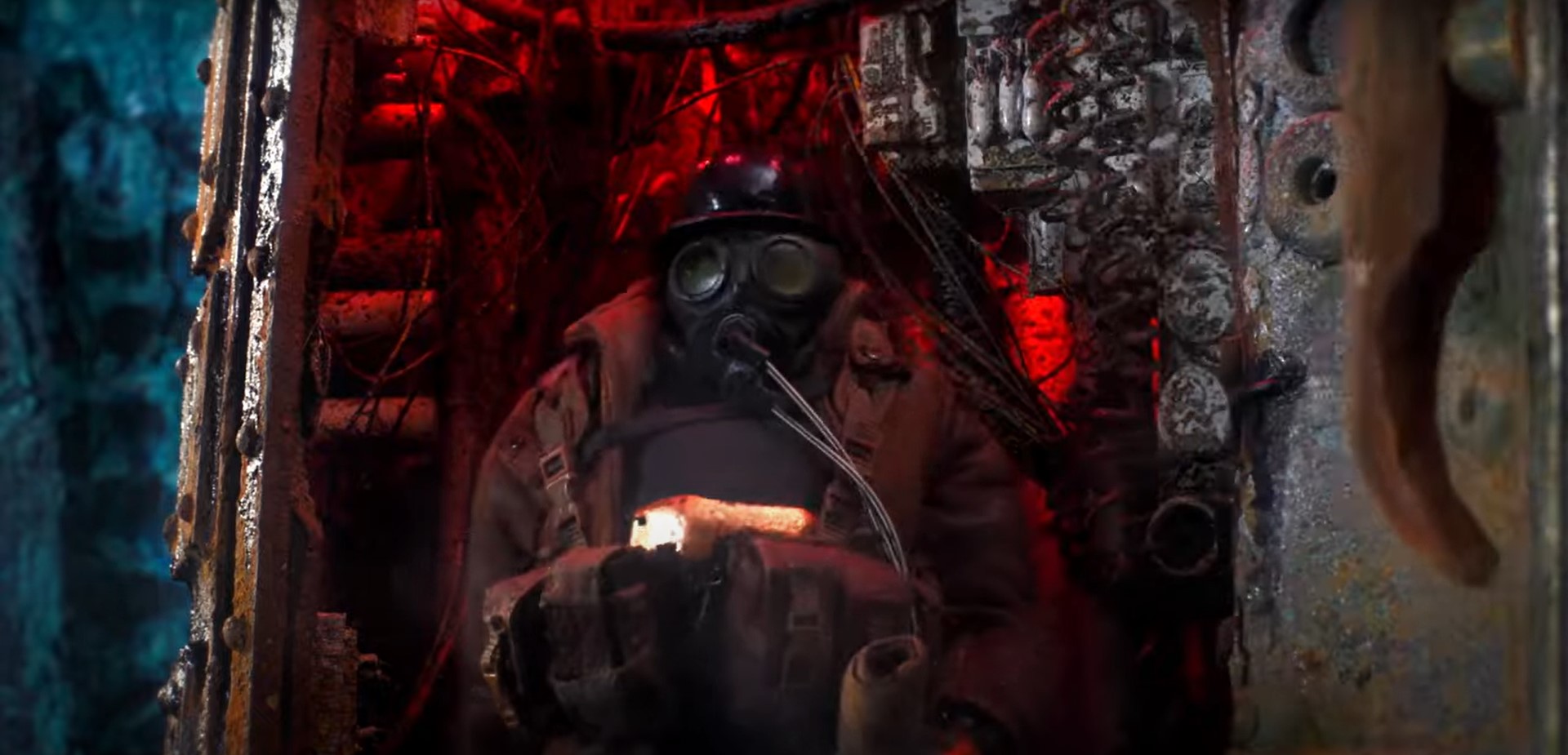
Descending from above into the depths of grotesque terror and suffering, The Assassin steps out of the drop pod with a gas mask, industrial armor, a suitcase, and a crumbling map.  Bearing witness to the surrounding horrors – cruel experimentations, enslaved beasts, tortured manufactured slave laborers, dog-eat-dog atrocities – The Assassin sallies forth, descending deeper into the primordial pit.  The missioned at hand is to set an explosive charge that will eradicate out the ruinous, oppressive filth that aims to corrupt the everything, but there the darkness won’t be so easily wiped away and The Assassin must stay in the shadows and out of sight or else become a tortured fixture in the fray. 

“Mad God?”  More like mad genius!  Phil Tippett’s 34-year, stop-motion, pet-project “Mad God” is the purest Hell I’ve ever seen.  Tippet, famed stop-motion and puppeteer effects artist responsible for the iconic visual effects and stop motion work in fan films such as the original “Star Wars” saga and the “Robocop” franchise as well as cult favorites “Howard the Duck,” “Piranha” and “House II:  The Second Story,” started “Mad God” in 1987 that become more of an ambitious project than originally thought and once the 1993 saw a computer generated effects revolution with a little prehistoric dino-disaster film called “Jurassic Park”, a film Tippett also did work on as dinosaur movement consulting supervisor because of his expertise on the short “Prehistoric Beasts,” the gifted animator had shelved “Mad God” for about 20 years with the though a newer, shiner, computer-driven animation would be the next best thing studios would ardently desire. This two-decade span gave Tippett time to outline objectives and really expand upon ideas of how “Mad God” should look and feel when conveyed. Tippett co-produces the film with Jack Morrissey under Tippett Studios and presented by IFC Midnight and AMC’s Shudder.

Just because “Mad God” is dialogue-less doesn’t make the “Mad God” voiceless. All around, in every scene, is a disturbing commentary or an unhinged metaphor bred mostly out of the animatable inanimate, but there are some live action performances weaved into the mad tapestry of monstrous titans and despot of cruelty. The most clearly discernible face of the lot comes from a director, “Repo Man” and “Sid and Nancy” director Alex Cox to be more exact. Cox plays the long nailed and regime-driven “Last Man,” representing divine leadership of a modest, dieselpunk heaven above a more organic and grotesque hell-type world. Only on screen for perhaps a total of 5-to-10 minutes, Cox grunts and gestures with precision articulation to give off a fair and just ruler impression. Niketa Roman plays the next real person to have some substantial screen time. Less of an actress and more of an animator by trade, with credits including “Blade II,” “Jurassic World,” and “Star Wars: Episode IX – The Rise of Skywalker,” Roman finds an expressive talent in her striking, heavily made-up eyes overtop a surgical mask and gown when whisking away one of the Assassin’s souls to be studied and experimented on by a broodingly ethereal entity. Other micro-performances include minor roles of tortured monkeys, various iron-cladded Assassins, witches, and gnomes from Satish Ratakonda, Harper Gibbons, Arnie Hain, David Laur, Chris Morley, Anthony Ruivivar, Tucker Gibbons, Tom Gibbons, Hans Brekke, and Jake Freytag.

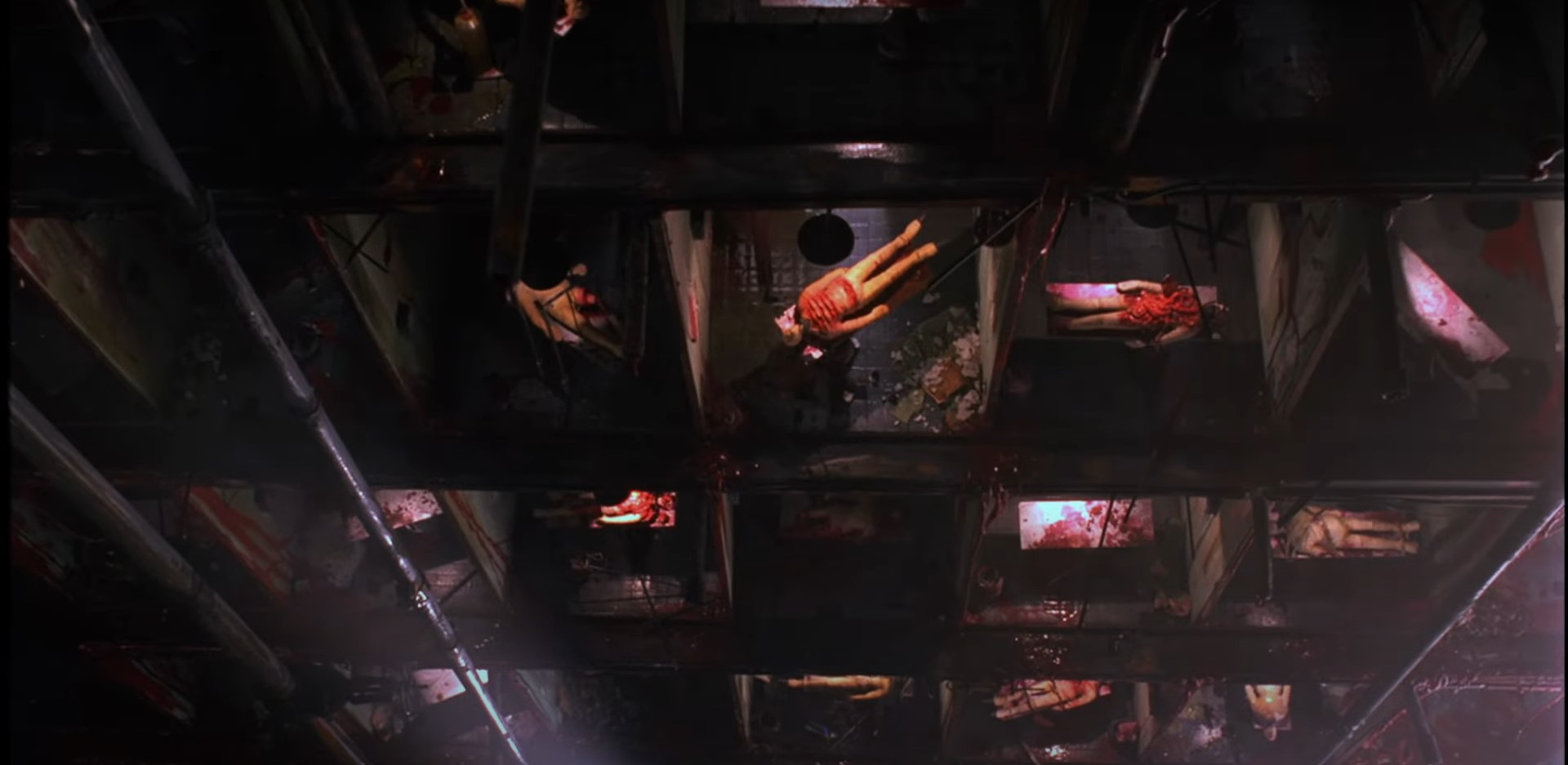
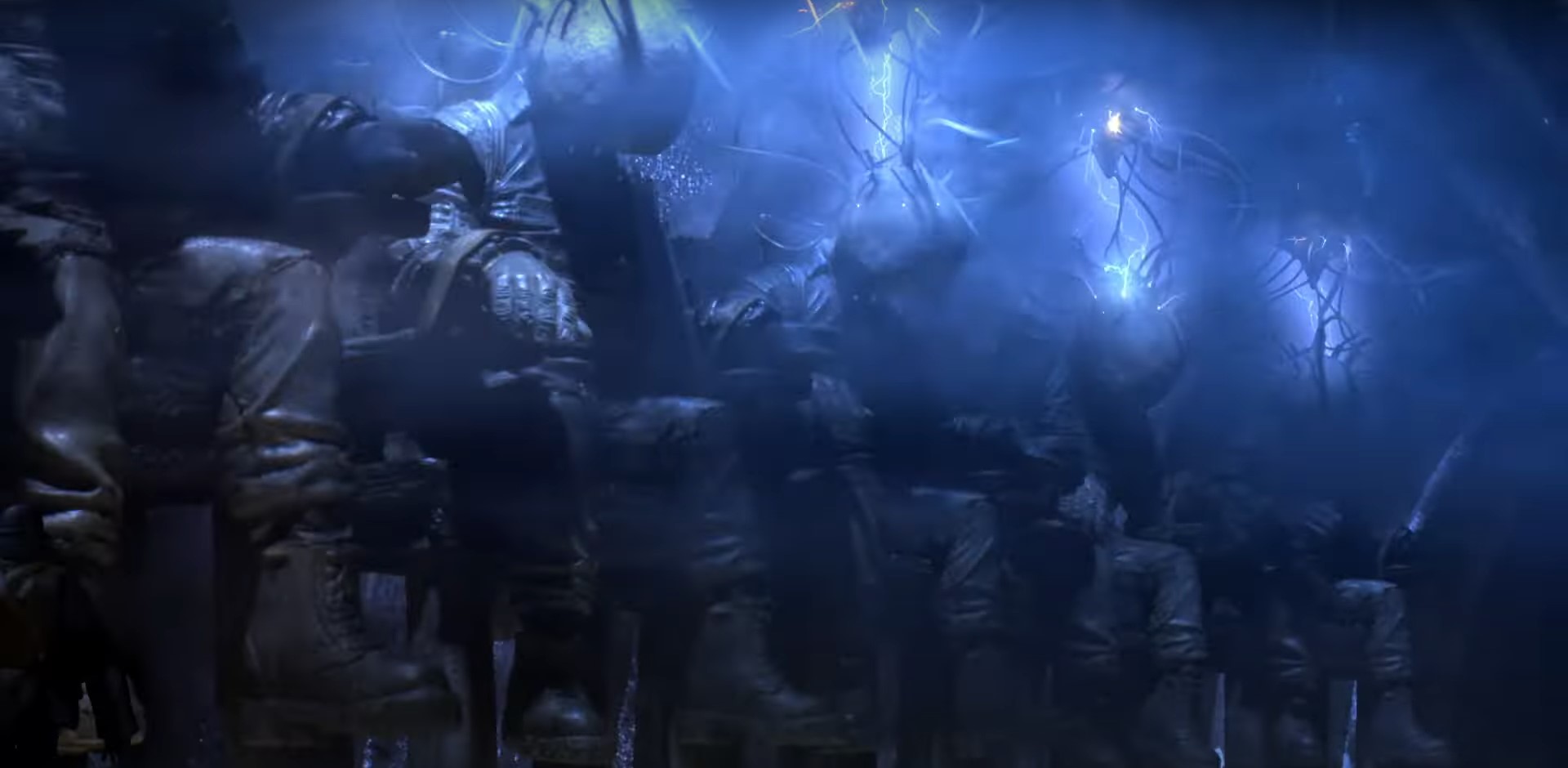
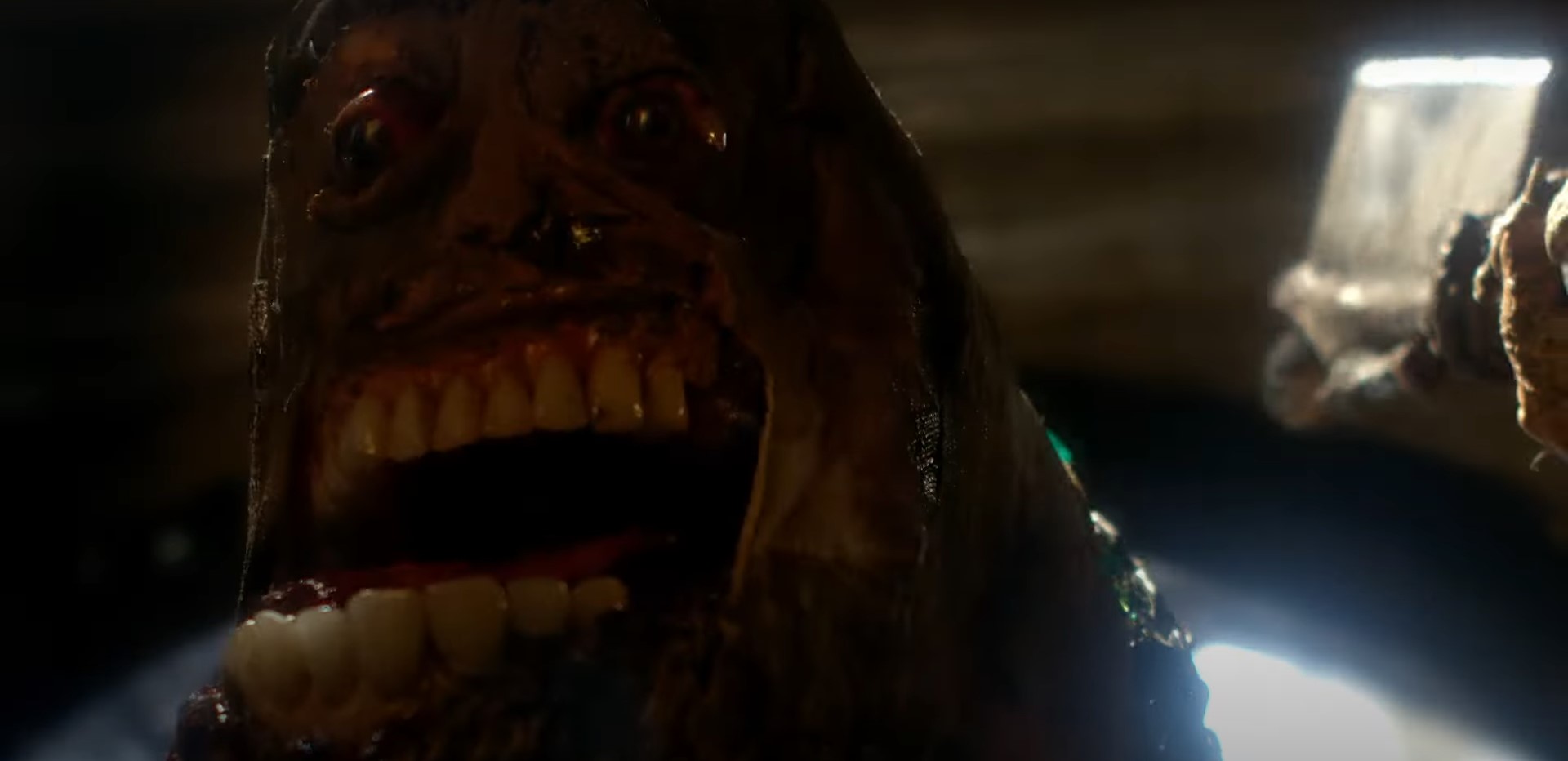
“Mad God’s” possibilities and interpretations are endless. Phil Tippett pulls from a motley of inspiration that includes, but is not limited to the fantastical, sometimes hellish, paintings of Hieronymus Bosch, the wacky, often gonzo animation of Tex Avery, the stop-motion titans of Nathan Juran’s “The 7 Voyages of Sinbad, and Dante’s Inferno. The mind is a deranged and wonderful creator of the macabre and of the aberrant and as a receiving device, the mind can also, if opened up enough, accept such visceral visuals of bowel fluids being jettisoned out by electric shock and into the mouth of an organic machine that manufactures fibrous, lumbering humanoids for slave labor. Like lemmings in a way, these exploited shadows of human beings will succumb under their own demise or at the gnarled and unforgiving hands of their master’s gargoyleish work-whippers. “Mad God’s” eye for detail is greatly disturbing to see cities in monolithic cities and cultures in ruins, the composite depth between foreground and background action in one scene reminds me a lot of older works like “The Neverending Story” or “Clash of the Titans” that create a vast scale with smaller objects, and the playful irony of a nightmare netherworld being commanded over by a baby’s babble doesn’t nearly seem to a stretch from the truth. As the multiple Assassins trek through the chaos and the insanity, an overwhelming sense of life is meaningless scores the landscape as there isn’t an ounce of compassion or empathy to be had or displayed for any of the malformed creatures and wretched humans. A laborer is crushed by a stone – no biggie. A cute and cuddle animal is attacked and whisked away for food storage – all in the day of cruelty. A man is stripped of his armored gear, injected with a mysterious substance, and prepped for exploratory surgery – all for show in front of a live clapping and cheering audience. The only compassion I can make sense is the Assassin’s mission to blow up this God-forsaken world of eternal suffering to restart the heart. Madness grinds bones, fillets spirits, and crushes souls in Phil Tippet’s Godless underworld and can haunt you even while you’re awake.

A surreal stop-motion wonder and excruciation, “Mad God” brings all the horrors of the subconscious mind to the surface with a high-definition, 1080p Blu-ray. The region 2, PAL encoded release from UK distributor Acorn Media International presents Tippet’s tour de force in a widescreen 1.78:1 aspect ratio and the image is purposefully varied to exhibit different strokes of craft as students would assist Tippet with contrastive topographies to carve out an apocalypse-riddled world that’s in a state of a violet retrogression. Tippet and Tippet Studio visual effects artist, Chris Morley, pivot to “Mad God’s” cinematography appearance with brooding, darker tones that illuminate and are erratically sparked with warm neon glows or brilliant voltage streaming through highly conductive bodies. Some earlier scenes from the late 80’s have natural grain from the 35mm stock and then later, more recent scenes have a cleaner, sleeker look with the digital recording. The Dolby Digital 5.1 surround sound mix has an all-embracing range, mostly with sudden and alarming blazons of guttural roars, unnerving baby babble, elongated zaps and shocks, and the indistinct yips and yaps of a mad world, that sustains on a line of being lesser than crisp, which might be contributed to the inexact capture of depth as sometimes all sounds casts like from inside the reverberations of a fishbowl. Descriptive SDH subtitles are available. Bonus features include audio commentary with Phil Tippett and “Pan’s Labyrinth’s” Guillermo del Toro, cast & crew commentary, an interview with Phil Tippett, “Mad God’s” various painter, cartoonist, animator, and psychology inspirations, the making-of “Mad God,” Maya Tippett’s Worse than the Demon – Phil Tippet’s daughter’s 12-minute thesis documentary of her father’s 34-year passion project journey, Academy of Art & “Mad God,” a behind-the-scenes montage, and a behind-the-scenes photo gallery. “Mad God” has a runtime of 84 minutes and is UK certified 18 for strong violence and gore. A motion picture diorama of Phil Tippett’s neoteric psyche, “Mad God” is wrath wrapped in heart and soul, two descriptors not topmost on the surface but are meticulously integrated into every frame of pain, suffering, and despair.