When Greed Induces EVIL at “The Estate” reviewed! (Vertical Entertainment / Digital Screener)


Spoiled rich gay son George despises his cheapskate father.  George’s equal in age, and similarly spoiled, horny step mother Lux also equally despises the loaded philanderer who rarely stays in town, leaving them with little to do and with little money to do it with.  When they meet tall, dark, and handsome Joe at a bar and invite him back to their estate house, a psychosexual love triangle leads to a murder-for-hire plot against the patriarch billionaire to collection the opulent inheritance.   Complications arise when unbeknownst bastard children cause a legal clog in their pipedreams of being insanely well-off.  One murder after another begins to unravel not only their lust for wealth and each other, but also a deeper, darker secret to rue for the wealth they wished (and killed) for.

An over-the-top, narcissistic machination-built dark comedy of greed, self-importance, and lust is how I would personally define the first feature length film, “The Estate,” from director James Kapner.  Diverging from his own comedy web series, “Baker Daily,” to work again with Kapner, from their previous collaboration on the political lampooning “Baker Daily:  Trump Takedown,” is Chris Baker, screenwriter of “The Estate,” who not only pen strokes the worst-of-the-worst of diabolical super-egos but also plays one of the downright flamboyant scoundrels as the lead role.  Majority of “The Estate” takes place inside the grand titular location, compartmentalizing the indie film’s budget solely on the sordid activity of three main characters without much of else as a distraction.  The Los Angeles shot film is independently produced by comedy producer Rod Hamilton, Kapner’s business partner Adam Makowka, and the second producing credit for Alixandra von Renner (“Boogeyman Pop”), with Mark Boujikian, William Bruey, Nicholas Lyons, and Scott R. Long as executive producers and is made under the Stone Lake Production and Runners Films production companies. 

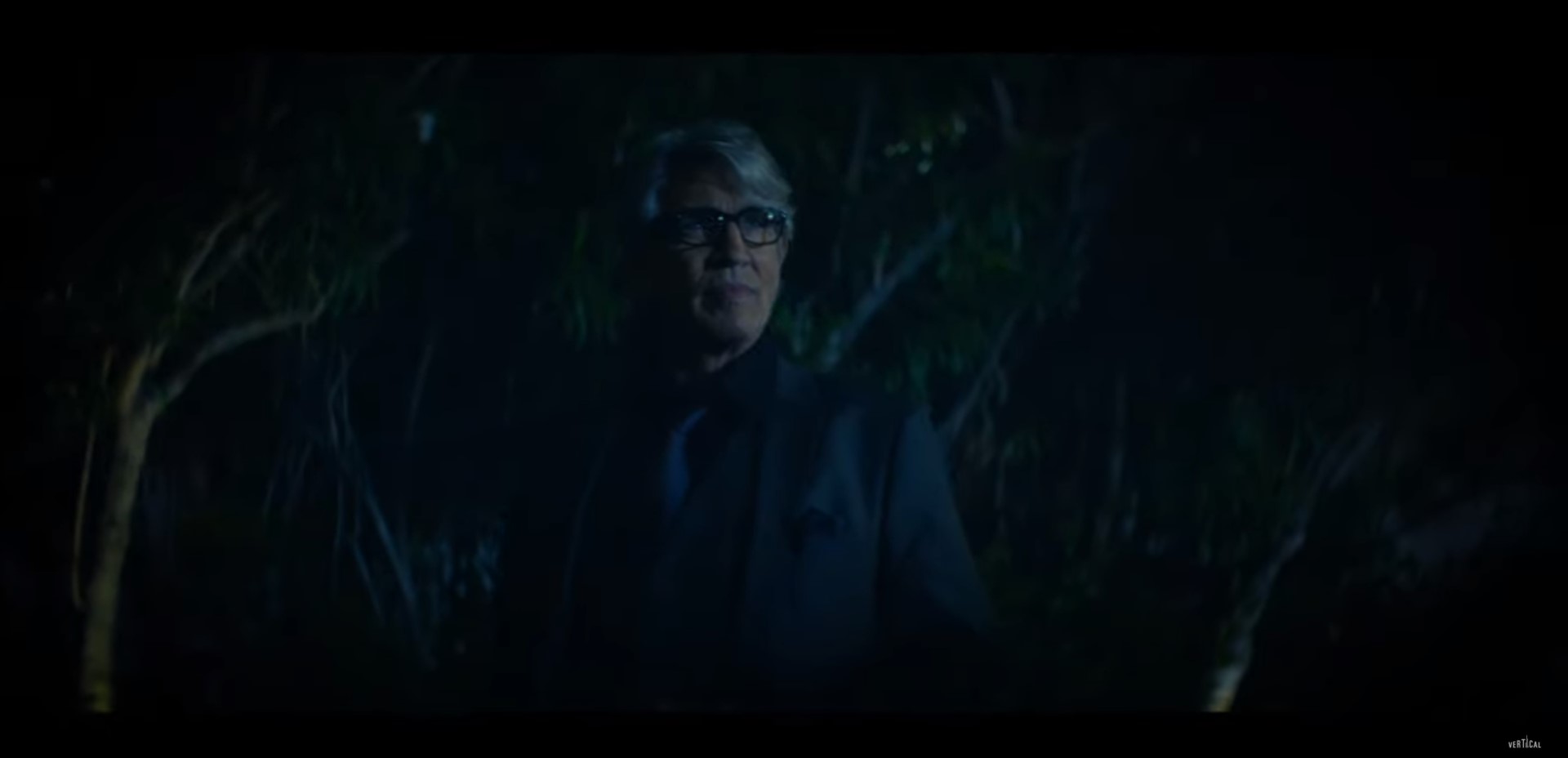
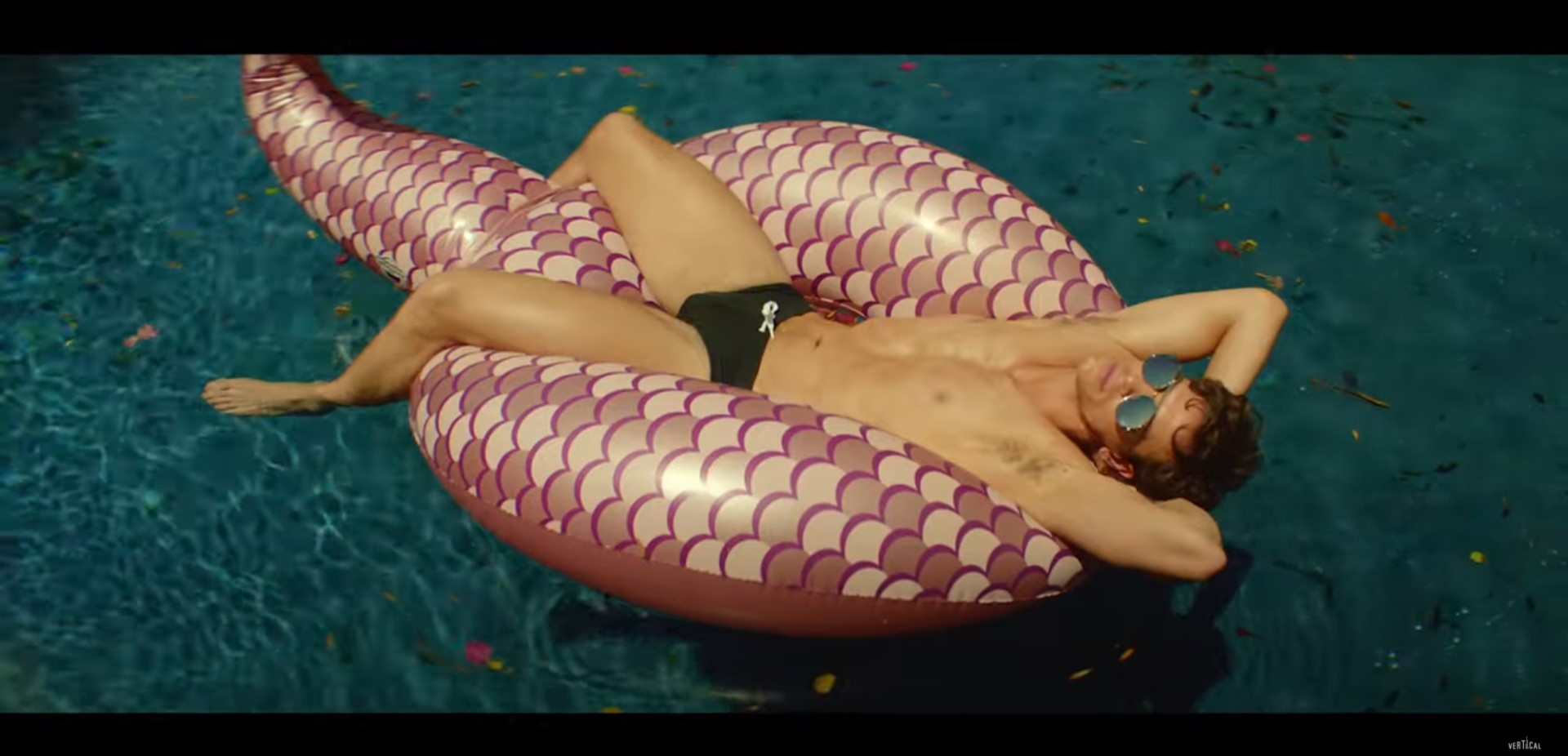
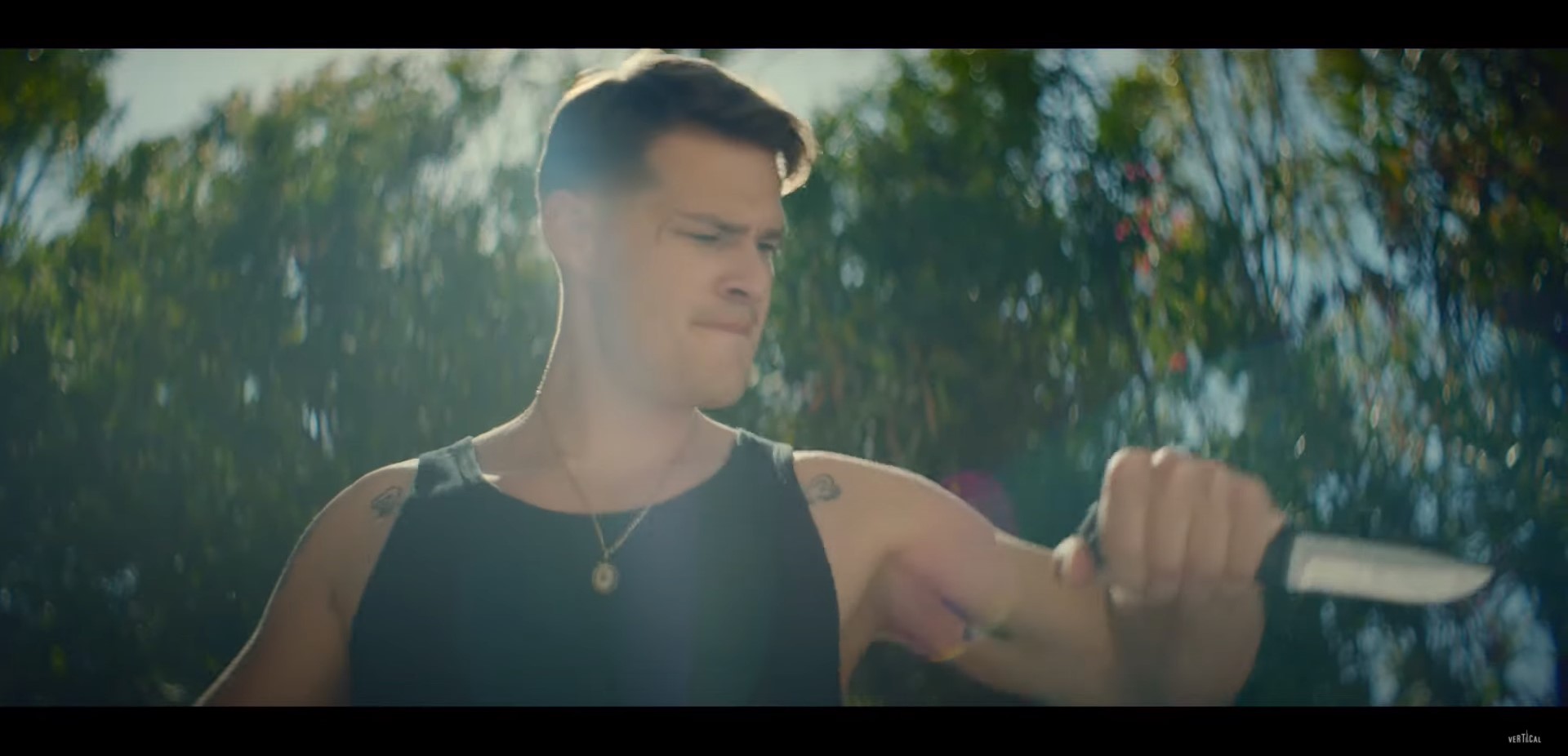
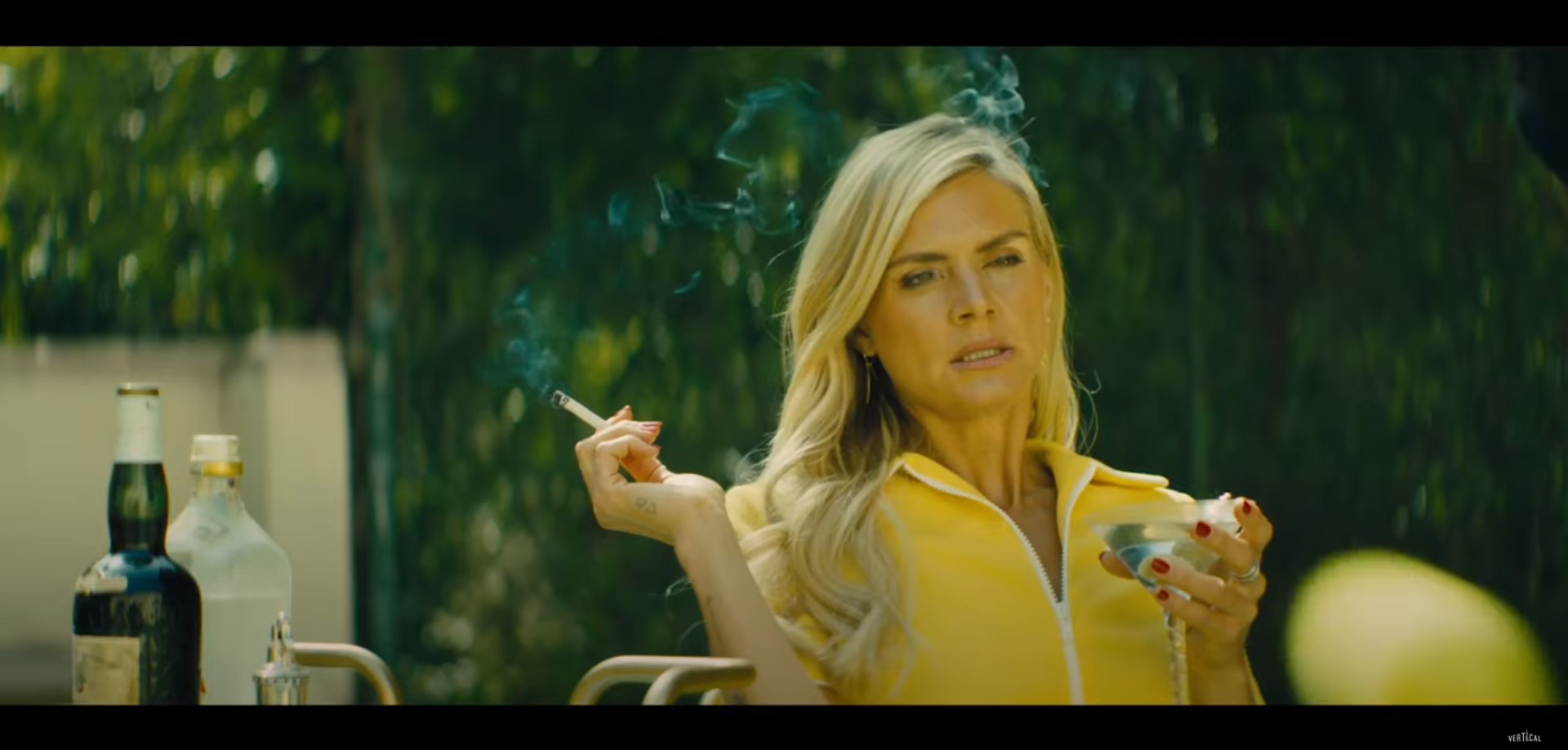
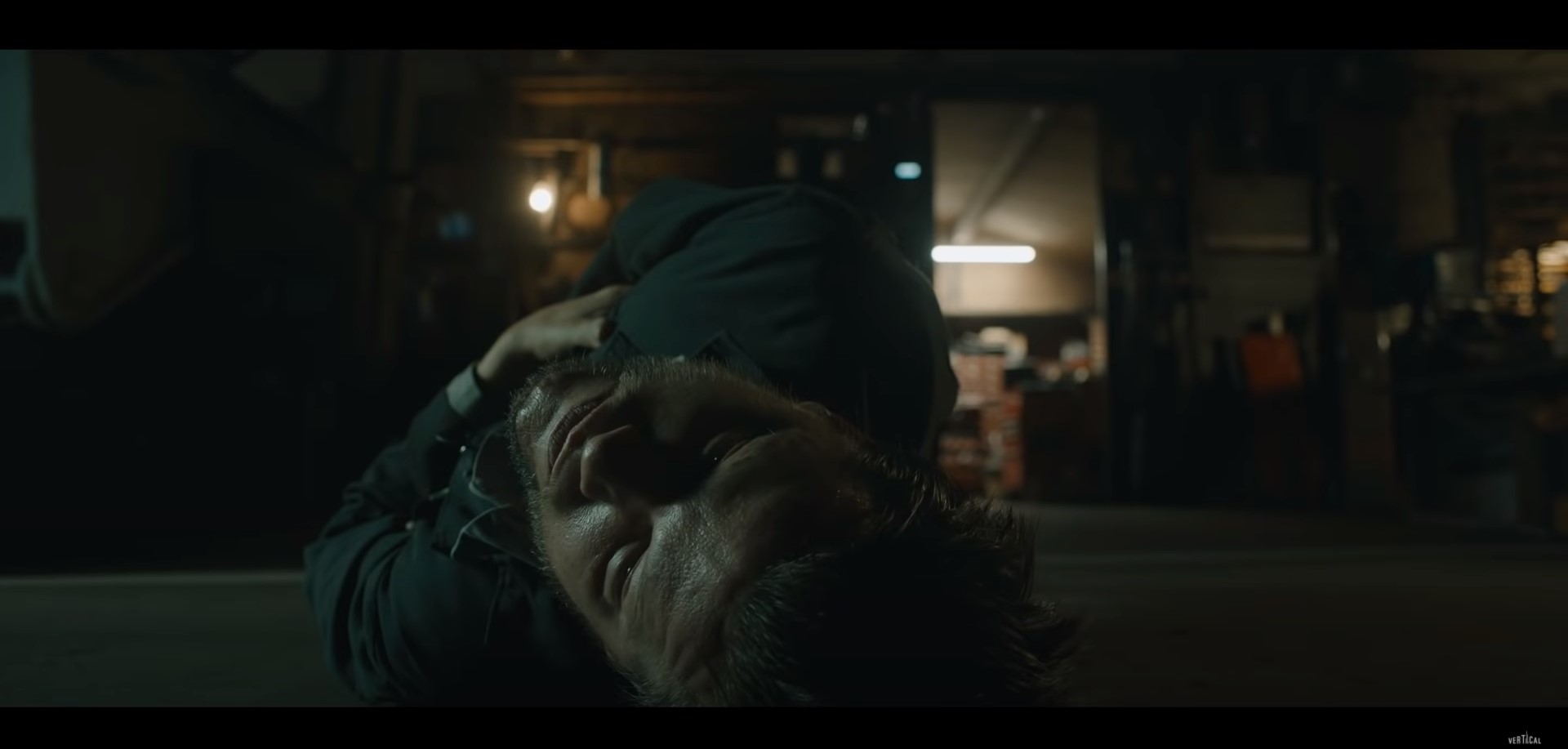
“The Estate” is a haute and brutish trio’s tale of sex, lies, and murder.   At the head of the snake is George, an entitled son seeking elegance and power as he longs in the background to attend the prestigious Black and White Gala, and is played bitingly by the film’s genesis writer, Chris Baker.  Baker, a Harvard graduate and a gay man, certainly utilizes both personal traits for George he’s clearly written for himself.  George is smart under that superficial Versace façade and, also, is a gay man looking for a romantic connection, but like any relationship single person, told by one’s own vantage point such as George’s, a wash of doughy-eyed thick-headedness just completely engulfs his rational senses when a pretty face suddenly shows up.  That rugged handsome face just happens to be of “iZombie’s” Greg Finley as hunky hitman Joe who George unexpectedly bumps into due in part of his oversexualized and, too, vain Stepmother Lux donned wonderfully with a wickedly crass tongue of comedienne, Eliza Coupe.  Together, a charcuterie board of carnality ceases to no end between the three in a back-and-forth, pass-the-man around pansexual affair with plotting and murder speckled in the middle.  Performances are concentrated with tongue and cheek, black matter comedy with ultra-ostentatious gab and garb to deliberately set the satirical tone metaphorically for the super-rich attitude of white, wealthy America.  With all that jazzy, pent-up, entitlement, add Eric Roberts into the mix, then you really get the worst-of-the-worst from the “Best of the Best” actor as the filthy rich patriarch.  Roberts can exude sleazy well with his own mannerisms and deliveries, solidifying his own Eric Robert’s laidback version of a despised billionaire debauchee.  “The Estate” rounds out with Rif Hutton (“The Thirteenth Floor”), Ezra Buzzington (“The Hills Have Eyes” remake), Lala Kent (“The Row”), Kyle Rezzarday, and “Hostel:  Part II’s” Heather Matarazzo as the tech-savvy lawyer office secretary who shamefully peters out after an interesting turn of events with the character’s involvement.

“The Estate” is one of those dark comedy thrillers where one wrongdoing subsequently creates a domino effect for more wrongdoings.  How’s that saying go?  Be careful what you wish for, you just might get it.  Indeed, the characters do get what’s coming to them as one killing turns into two killings and two killings turns into three etc.  As the bodies pile up in between the bedroom sheets sex and the coy flirting during initial stages of affections, the kind where butterflies flutter inside the stomach, what turns from an aloof pair of spoiled rotten solitaries is a false confidence in blindly following boredom’s famished way of saying death and sex is all-around exciting.  There’s also this vying of the sexes to see who can sweep Joe off his feet and while there’s obviously no issue with the polyamorous pansexuality, the story’s a bit lopsided with Baker’s intimate scenes with Finley being more expositional compared to Joe and Lux’s more implied romps and that inherently leads viewers onto one obvious path without the spice of unexpected chance.  Though George is written to be an alter egocentric doppelganger of his creator, Chris Baker, the Frankenstein theory only works well to extent before seeping into obnoxious conceited territory.  This is where “The Estate” begins to show signs of wearing out it’s welcome with living in George’s weighted down perspective of the high life.  Purpose seems vague mostly yet “The Estate” is also one of those nonchalant, throwing caution to the wind dark comedy narratives, sinfully funny, for the sake of touting an exaggerated resemblance of a detached privileged mindset. 

Things are not so nice and cozy at “The Estate” that has arrived this October on VOD and in theaters from Vertical Entertainment. Clocking in a 85 minutes, “The Estate” is paced to fit the conspicuous cinematography from the Texas born Mike Simpson with mood lighting mixed with tinting and as well as using a spherical lens to set the current tone. Simpson keeps shots tights between medium and closeups for more intimacy between the trio as well as to keep within the confines of a smaller production and set location. Since a digital screener was provided, I can’t comment on the quality of the audio and video aspects, but “The Estate” comes with an eclectic soundtrack that includes tracks from Lucky Beaches, Viagra Boys, Ritchie Valens, Joy Downer, and Toots and the Maytals. There were no bonus material or after credit scenes. Witty, dark humor that teeters always on the cups of being too much for one sitting, “The Estate” deadeyes the caricatures of the 1% with fatal attractions and an inheritance stocked with greed culminating to an unbelievable finale

Tune In to EVIL’s Frequency. “99.9” reviewed! (Cult Epics / Blu-ray)

Lara, a paranormal radio show host, learns her close friend and former lover has been tragically killed in an accident at small village of Jimena.  Determined to find out what happened after a mysteriously mailed tape unveils disturbing images of her friend, Lara travels to Jimena to investigate the accident she believes was intentional.  Entangled amongst the village’s strange residents, suspicions are high on just about everyone who had contact with the deceased, but Lara is certain about one thing, at the center of her investigation is an abandoned house with a ghastly urban legend, afflicted by the entombment of murdered women and children souls and, one-by-one, the faces of the torture souls are manifestly etched out from within the walls onto the surface.  As Lara inches closer to the truth of her friend’s research of the phenomenon, the shocking truth will reveal a dark power trying to keep the house’s secrets contained.

Estranged lover.  Tortured souls.  Witchcraft.  Secret experiments.  Murder mystery.  Agustí Villaronga’s “99.9” depicts a loaded, shrouded ethereal thriller with a thin translucent layer of homosexuality draped over so delicately you almost don’t realize the Spanish filmmaker’s subtle exhibition of lifestyle exile.  The 1997 film, also known as “99.9:  The Frequency of Terror,” a subtitle moved from the main title to tagline status, is shot primarily in Madrid as well as certain exterior shots in La Vereda, Guadalajara to provide the intimate essence of a small village’s ever-watching glower.  Villaronga, along with cowriters Lourdes Iglesias and Jesús Regueira, stitch an argyle style narrative sweater of consistent checkered behavior inside an ostentatious presentation of simmering hostility toward foreigners and homosexuals, stirring an isolating heroine into a mixture of local animus and lingering occultism.   “The Black Moon” and “Ninth Gate” executive producer Antonio Cardenal solely funds “99.9” and with Impala and Origen Producciones Cinematograficas serving as co-productions. 

Bearing most of the story’s weight is lead actress María Barranco (“Witching and Bitching”) in an unfamiliar to her thriller role polar opposite of her profound previous work as a comedienne in the vocational genre.  Yet, Barranco grabs the role with undue hesitation or eager to professional please Villaronga with her character entering a spurning atmosphere seething with mistrust and ill-intent.  Playing a single mother enduring the unknown status of her estranged lover, also the father of her fatherless child, it isn’t until a package containing a VHS tape of mostly recorded static and a naked man, her estranged lover Victor (Gustavo Salmerón, “V/H/S Viral”), briefly seen fleeing for his life instills a strong uncompromising need to find the truth.  Barranco captures being rocked and shaken by Victor’s footage so much so that her tension and fear contagiously transmit to the viewer and that hardly lets up in a deluge of suspicious and dread curiousness compelling her to investigate the gruff and oddly civil villagers.  One of those village inhabitants, Juan Márquez, reeks of nervous energy that’s poured into his hunky local mechanic Mauri who becomes the mystery’s weakest link amongst the unbreakable locals, especially under the rigid impatience of Mauri’s girlfriend Julia (Ruth Gabriel), house owner Lázaro (Ángel de Andrés López, “Sexy Killer: You’ll Die for Her “), and the creepy committed bruha mother Dolores (Terele Pávez, “The Day of the Beast,” “Witching and Bitching”).  Pávez stamps her presence into “99.9’s” grim resolve that links Dolores to the souls trapped in the house with fanatical obsession.  The cast rounds out with Simón Andreu (“Flesh+Blood”), Pedro Mari Sánchez (“Creation of the Damned”), Maite Brik, and Paula Soldevila (“Immortal Sins”).

If I had to compare another film to “99.9’s” persistent bleak atmospherics and a singular principle quietly poking around to solve a cryptic scene-turner, a more widely known and recognizable title with a familiar cast, I would put up Villaronga’s film against Robert Zemeckis’s circa 2000 Harrison Ford and Michelle Pfeiffer thriller “What Lies Below.”  Both works are saturated with melancholy stuffing and are beautifully shot in their own stylistic right, but Villaronga adds an undercurrent of homosexual persecution as well as a xenophobic aspect that seeks to discourage, dismay, and disconcert nosy foreigners poking around in local business with a gray area of a big city versus little community vibe and scientific fact versus yokel superstition.  Yet, the script renders omission at more pivotal character junctures that go in-depth about backstory, such as the case with the forgotten Victor who, despite being a major plotpoint in the opening scene of the movie, is more a name thrown around as device to stir commotion amongst the locals.  Victor’s experiments in capturing the images and sounds of tortured souls aimlessly floating inside an ethereal plane in the electronic noise of television broadcast during his very much alive subjects’ REM sleep practically dissipates faster than a bottom burp with the window open and the breeze blowing. As loose as the script may be, Villaronga makes up for it with a tone of stern pall, a delicate theme of bigotry mitigated by the tortured souls and mischievous plot ingredients, and the timorous determination exuding from Maria Barranco’s portrayal.

“99.9” is Lara’s radio station frequency; a frequency in the story that nurtures and embraces the abnormal paranormal from callers night in, night out. Instead of sitting comfortably behind a mic and headphones, cozy in her sound proof studio, her frequency is a barrier that is flipped on it’s head as she becomes involved in like the stories of her callers. Speaking of flipping, in more of a “99.9” is Lara’s radio station frequency; a frequency in the story that nurtures and embraces the abnormal paranormal from callers night in, night out. Instead of sitting comfortably behind a mic and headphones, cozy in her sound proof studio, her frequency is a barrier that is flipped on it’s head as she becomes involved in like the stories of her callers. Speaking of flipping, in more of a layman, satanic sense, “99.9” inverted is also the sign of the beast. Either way, two solid possible metaphors for “99.9” give meaning to the tuning title that’s now available on a dual-layer Blu-ray and DVD combo from Cult Epics who present the film in the original European preferred widescreen 1.66:1 aspect ratio from a 2K scan of the original 35mm negative. Villaronga’s chromatic vision finds unadulterated success in the crisp, clean picture of the Cult Epics release with almost no damage from the original transfer. There’s a slight, and extremely brief, scratch noticeable in the first half of the film, but the amount of grain is perfection and no evidence of manipulation of enhancing. Details are insanely delicate on every tactile texture, even the skin. Aforesaid, Villaronga expresses in color, using a cool blue tints, which is actually toned down some with the transfer, and implementing different lighting techniques to reinforce Javier Aguirresarobe’s breathtaking scenic wide wide shot cinematography. The Spanish language DTS-HD Master Audio 5.1 on the Blu-ray packs a punch with balanced channels funneling not only clean, unobstructed dialogue, but also “Pan’s Labyrinth” composer, Javier Navarrete,’s brooding baritone, chordophone score. There are two other audio options for the DVD: a LPCM 2.0 Stereo and a Dolby Digital 2.0 Stereo. Optional English subtitles are available and do match up well with no faults. Special features include a new-ish interview with director Agusti Villaronga conducted by Cult Epic’s Nico B, the making of 99.9 that has archival interviews with the director, María Barranco, and other cast and crew, an isolated Javier Navarrete score, and Agusti Villaronga trailers. Both formats are region free and not rated with a runtime of 111 minutes. Back in the 90’s when Spanish supernatural thrillers peaked, “99.9” was right there with a captivating ghostly gossamer from Spain.

Own 99.9 on Blu-ray DVD Combine from Amazon.Com!

Tribes at War makes for Eternal EVIL. “The Secret of Sinchanee” reviewed! (Vertical Entertainment / Digital Screener)


Watch “The Secret of Sinchanee” on Amazon Prime Video

Deerfield, Massachusetts – 1995 – a young boy becomes the sole survivor after a drifter senselessly massacres his mother and sister during the Christmas holiday while his father was out of town.  25 years later, Will Stark, that once little surviving boy now haunted by his past, bothers not live outside expectations and to be left alone to a life of normalcy, even working at the same industrial towing company his father once worked managed, but when the untimely death of mentally unstable father, who battled dissociative identity disorder and depression, among other psychological problems stemmed by the tragic loss of a wife and daughter, leaves Will inheriting his childhood home, the same home where the gruesome murders took place, Will’s life becomes anything but mundane with a house pulsating with malevolent paranormal energy connected to the sacred land it’s built on.  Searching for an ancient talisman, unyielding entities exploit Will to stop at nothing and kill anyone to get back what is theirs lost 25 years ago.

Shot on location around the snowy banks of Deerfield, Massachusetts comes the Steven Grayhm written and directed “The Secret of Sinchanee with a folkloric backstory set in New England about a feud between an invulnerable indigenous people versus malicious pagan settlers stretching over time into present day with an ancient artifact as the centerpiece to possession and murder.  The “House of Dust” and “Crash Site” actor steps into his first feature directorial and writing project with a story that crosses paths the hereditary burden of lineage bred mental issues with the tribalistic supernatural forces, opening with text origins of the longstanding rival feud between the selfless mysticism and disease immune Sinchanee people and the black magic disciples of Atlantow who seek to snuff out the Sinchanee bloodline.  The 2021 American made film is the first product of the Steven Grayhm and Nate Boyer co-founded, military veteran empowering Team House Studios and presented by Truth Entertainment. 

Not only does Steven Grayhm write and direct “The Secret of Sinchanee,” the Canadian actor also helms the lead as Will Stark, the town-talked recluse troubled by his grisly past.  Quiet and unphased by the strange nightmares and powerful visions inside his father’s house, Stark gradually becomes an entranced pawn and Grayhm poses a lifeless, wandering shell of a man honestly enough but on paper, Stark never questions the housebound oddities or even shed a lick of emotion when his dog, his only companion, vanishes.  Grayhm just kind of sleepwalks through the performance which I’m sure was his intended purpose since, you know, he wrote and directed the film.  In a parallel plane, detectives and marital exes, Carrie Donovan (Tamara Austin, “The Walking Dead”) and Drew Carter (Nate Boyer), embroil themselves into a Deerfield homicide case despite their past differences and their shared preteen daughter (Laila Lockhart Kraner).  Though not playing a footballer or someone in the armed forces, Carter steps into law enforcement as Boston PD and though Massachusetts is not a big state, I’m not sure a Boston detective would travel 120 miles outside of the city to continuing investigating a Boston murder in the rural sticks of Deerfield.  The entire dynamic between the local Donovan and the big city Carter plays to unresolved subversive tune of Carter taking advantage of the moment in order to rekindle the spark with his ex-wife or, perhaps, just be close to this daughter.  Obviously some personal tension between them but rarely does that tension surface to endorse strife as Donovan is carried away the homicide case, taking her investigation to an unlawful next level by trespassing onto Stark’s land and inside his house to be spooked by the spirits’ distorted reflection of herself.  Somewhere in the trio of leads lie a more meaningful connection that’s more muddled by individual character, side story offshoots, leaving what’s most important to the film scattered profoundly thin to meet the bar.  What also doesn’t bode well for Grayhm’s debut is the late introduction of a key Sinchanee descendent, Solomon Goodblood, played by Rudy Reyes who starred alongside our horror community gal pal, Diana Prince, in “Beach Massacre at Kill Devil Hills,” who intercedes for his fading bloodline as a shaman against Atlantow. 

Speaking of Atlantow, there is hardly a sense or a tangibility to the sect God plaguing the Stark family going on for decades now and that sides more with the mental instability theme of a family with a history of mental illness coinciding the allusions of one’s own internalized battle with trauma, insomnia, and past down disorders to manifest tragedy into a shared psychosis of Atlantow’s sinister and manipulative craft.  Perceived heinous actions, such as modern day scalping or wielding a tomahawk, can be seen as someone possessed with incoherent malintent because that traumatized person’s survival’s guilt warps them so.  Unfortunately, the story’s jumble beyond one aortic premise and spreads the whole concept thin without hardly touching upon the Sinchanee and Atlantow quarrel as noted in the opening text that laid out the intentions of a contentious war between good versus evil.  In the film’s reality, “The Secret of Sinchanee” is about two cops stumbling into Atlantow’s business in trying to find a sacred artifact.  We’re not even granted the reason why this talisman, a decently sized arrowhead, is terribly significant to the dark forces of Atlantow aside from vocal desperation in the object’s return to sacred ground.  Is “The Secret of Sinchanee” more aligned with themes of desecration of sacred land?  The meddling of a once proud culture now lost?  Not much clarity among the variety of circumstances happening inside Grayhm’s runtime lengthy debut picture other than the surface level possession and the cops’ investigation that motivates them into the paranormal situation.

Under the executive producer team of Joe Newcomb (“Dallas Buyers Club”) and Jose Martinez Jr, “The Secret of Sinchanee” is now available on Digital HD and On Demand this month of October, released by Vertical Entertainment.  With a runtime just shy of two hours, 115 minutes, the film will be available on all major cable and digital platforms, including Apple TV, Amazon Prime Video, Vudu, Comcast, Cox, and Spectrum, as well as playing in select theaters. Though an indie picture, production value pinnacles the budget, shot cleanly by Logan Fulton using an ARRI Alexa camera to capture the serene snow covered wooded landscapes of typical rural New England while succumbing to remain steady in the clean-cut darkness and warmer hues when things go bump in the night. Definitely not much camera movement, but the still shots, mostly medium to closeup, are framed properly without an any abnormality, providing just enough evidences to keep viewers on edge, while sprinkling in a Dutch angle or two to encourage anxiety where due. No special features included with this digital screener nor were any bonus scenes present during or after the credits. “The Secret of Sinchanee” remains private under a lock and key guise of mental illness and consigned to oblivion of parentage without breaking through those cognizant barriers to fully grasp a ancient tribal hatred that spills beyond normal time and space.

EVIL is All in Your Head! “Implanted” reviewed! (Gravitas Ventures / Digital Screener)

Year 2023.  After a devastated global pandemic, health companies engineered an experimental personal diagnostic nanochip called LEXX that is surgically implanted into the a human’s spine.  For Sarah, a woman down on her luck living homelessly after being let go from her job and struggling to cope with her mother’s early stages of dementia, quick cash is essential for survival and this experimental program, that uses advanced AI technology, tempts a desperate Sarah into participating in human trial runs.  Initial implementation serves Sarah with quick vitals and healthy lifestyle recommendations articulated by an artificial voice in her mind, but when the AI has other plans for Sarah, such ordering the assassinations of the health startup’s top leadership and destroying all evidence of the program, Sarah has to either obey every lethal command or fight against the insidious tech that has complete control over her pain sensors as well as her mother’s life.

COVID-19 has been the baseline culprit for millions of deaths worldwide.  The impact of the pandemic has inspired filmmakers to a creative outlet of churning out stories surrounding a lifechanging and devasting virus.  Some are ridiculous, off-color, cash grabbers – “Corona Zombies” comes to mind – but there are a few out there that challenge the gratuitous advantage-taking by folding in more substance into the story.  Fabien Dufils attempts to go above and beyond the here and now with a post-pandemic, self-containing thriller entitled “Implanted” and is the first written and directed non-made for television feature length independent film for the once music video director set in the urban jungle of New York City.  “Implanted” spins A.I. tech horror with the whooshing fast track of the health care system to eagerly push experimental drugs, in this case a clinical artificial intelligent grafting, upon the desperate, often marginalized, public.  There’s also an allegorical smidgen of mental illness thrown in there as well.  Dufils co-writes the script with fellow Belgium screenwriter David Bourgie under Dufils’ Mad Street Pictures production company.

Making her lead performance debut, mentally wrestling an invasive cybernetic nanochip, is Michelle Girolami who also serves as associate producer.  We all have that little voice inside our heads, telling us what do and think to an inevitably end of accordance with that ever so delicate whisper of persuasion and that’s how Girolami has seemingly approached this role with that little suggestive presence cranked up to the level of full-fledged chaos on two-legs.   Girolami ultimately is a reverse mech with all the cold puppeteering directed shots directed by programmed software and so much of the actress’s performance is solo, feigning responses to a bodiless voice and reacting to pain generated from within whenever she doesn’t comply to the relentless LEXX.  Unable to bounce dialogue and reactions off of others can be a tough sell for most actors, but Girolami really slathers it on thick the vein-popping strain of integrated torture.  Opposite Sarah is Carl (Ivo Velon, “Salt”), another hapless experiment participant forced into assassination servitude, but Carl’s purpose isn’t exactly crystal clear.  His LEXX unit shepherds him down a collision path with Sarah, but the two separate LEXX units have no shared intentions and while that’s wonderfully niche to provide individual A.I. with their own personal liberties and schemes, Carl just wanders the city, sometimes murdering the program’s top leadership or doing something polar opposite of Sarah with no substantial collusion about their subversive attacks.  The what could have been interesting cat-and-mouse game tapers off and the story leads into more of characters trying to regain back their autonomy and this is where Dufils’ narrative shines using LEXX as a symbol for mental disorders and how those impoverished or distressed are struggling to cope can lose themselves and give in to the internalized madness slipping outward.  Parallelly, Sarah’s mother (Susan O’Doherty) suffers from dementia that reinforces the theme.  Martin Ewens, Shirley Huang, Sunny Koll, John Long, and David Dotterer wrap up the cast list.

“Implanted’s” sci-fi concept can be described as if Amazon’s Alexa, with all the internet connections and text-to-speech bells and whistles, suddenly became murderously woke inside your cerebral cortex.  “Implanted” relays humanity’s lopsided dependency on advanced technology that continues to make us even more less connected to each other and the possibility of a machine takeover just that more feasible.  However, much like when a software program crashes, a malfunctioning script error ravages the narrative for not being tight enough, leaving unaccompanied loose ends as devices that fail to progress the story along stemmed by sudden drop off character development and unknown, speculation at best, motivations.  There’s also no discernable backstory to the why LEXX’s A.I. has snafued.  At least with “Terminator,” Kyle Reese provides exposition about Skynet’s sudden upheaval and domination over the human race whereas “Implanted” dives into none of that rich framework and tossing it aside for the sake of just tormenting Sarah into being a killer pawn, moving her across the NYC chessboard with the intent of taking down the king, queen, and knights of LEXX’s program.  To what ends?  Explanation on the specified targeting isn’t made entirely clear as programmers to CEOs are solely liquidated for just being involved.  

“Implanted” is a warzone for headspace and there can be only one victor in this psychological, sci-fi thriller released now, digitally, from Gravitas Ventures.   The unrated, 93 minute film also showcases the various hats of director Fabien Dufils with one being cinematographer.  Dufils captures obscure, slightly neglected, areas of New York City that’s becomes refreshing to consume because even though the Big Apple is well known for glass and steel skyscrapers, the undergrowth locations ground “Implanted” as relatable without the monolithic structures and hustle and bustle tropes.  In juxtaposition to the down-to-Earth background, the decision to sprinkle in visual effect blood splatter taints “Implanted’s” realism.  Though not gory by any means, digitally added blood can’t be cleansed from the physical veneer and being an indie feature, I would have though a run to corner store for a bit of red food coloring would have been a cost saving measure.  “Implanted” adds another layer to the man versus machine subgenre with tinges of mental illness and too reliant on tech themes but undoubtedly leaves gaps in the narrative coding, racking strenuous mental effort without the egregious assistance of an A.I. nanochip.

EVIL Says Lights Out! “The Power” reviewed (Acorn Media International / Blu-ray)


East London, January 1974 – a young nurse starts her first day at a stringent hospital during a political war between the government and mining union workers.  Resulting form the conflict is a nightly shutdown of electricity across the entire country.  As the hospital falls into darkness, the young nurse is forced to work the nightshift at the behest of the hospital’s stern matron, ordering her care for the unresponsive in the intensive care unit that’s receiving a limited feed of generator power.  Afraid of the dark, the nurse finds herself short of pleasant company who are knowledgeable of her sordid past, making her feel more alone in an already isolating and gloomy environment.  When she feels an aggressive presence surrounding her, watching her every movement, and even possessing her for short periods of time, dark hospital secrets come to light and her past connects her to be the key to it all.

Partially based off the 1974 Three-Day Week measure implemented on January 1st to battle inflation and avoid an economic collapse in the UK, Corinna Faith’s things that go bump in the dark ghostly feature, “The Power,” pulls inspiration from the government versus trade union war political contest as a backdrop set for the Shudder exclusive release.  To briefly catch inform you, part of the plan was to have Britain’s private sector pay was capped and bonuses eliminated to cutoff high rate inflation, infuriating much of the coal mining industry who were responsible for a good percentage of fueling much of Britain’s energy at that time.  During the month of January 1974, nightly blackouts were issued for all commercial use to conserve coal stocks.  Inspired by this short-lived UK struggle, the 2021 English film became the sophomore written and directed project for Faith, but is chiefly her breakout film following the over a decade and half, father and son Irish drama, “Ashes,” released in 2005.  “The Power” has topical supremacy with a strong parallel of, as the title suggests, power and a delicate allegorical presence of women taking back control of their lives after being suppressed by wicked and disregarding men and their collaborators.  Conglomerating production companies are behind Corinna Faith’s “The Power,” including “Cargo’s” Head Gear Films and Kreo Films, the prolific British Film Institute, Stigma Films (“Double Date”), and Air Street Films.

Starring in her first lead role, Rose Williams plays the mild-mannered and meek young nurse, Val, with an enigmatic and subversive past that has seemingly caused some controversary at a private school.  Williams turns on the docile humility, laying on thick Val’s readiness to submit to any command without contest despite the young nurses visible cues of uneasiness and bumbling hesitation.  Val’s qualities purposefully pose her mindset molded by a system she has shunned her for an unspeakable act that’s skirted around persistently throughout the story.  Faith really puts emphasis on having Val feeling extremely isolated and alone in the old, dark hospital with antagonist characters who some are familiar with Val and others who are new faces to the young nurse, but still exude an uncomfortable impression, such as the strict matron nurse (Diveen Henry, “Black Mirror”) and bizarrely skeevy maintenance man Neville (Theo Barklem-Biggs, “Make Up”).  Even a familiar face in fellow nurse Babs (Emma Rigby, “Demons Never Die”) strives to make her not forget about her unpleasant past.  Only in foreigner child, a patient named Saba, an introductory performance by Shakira Rahman, Val discovers a kindred spirit of an equally alone and frightened prisoner of the hospital.  For the two sole apprehensive souls, I really couldn’t pinpoint the trembling fear in their eyes or understand how they’re not crippled by the immense inky blackness that seems to engulf everything and everyone with an enshrouding sinister presence.  Gbemisola Ikumelo, Charlie Carrick, Sarah Hoare, and Clara Read make up the remaining cast.

The electricity backout is merely more for harrowing effect, creating lifeless atmospheres of bleak corridors and dank basements that swallow securities with meticulous ease, but “The Power” is more than just a lights out, afraid of the dark, paranormal picture as Faith pens a parallel theme that fashions the title in double entendre stitches.  Audiences are not immediately privy to the backstory that disturbs Val to the core as she finds consternation in the dark’s unknown possibilities.  This we can clearly see in her scattered imaged nightmares and her reluctance to forcibly work the night shift with little-to-no illumination.  As the story unravels, Faith drops breadcrumb hints and misdirection indicators that not only reveal more into Val’s background but also the background of Saba’s and the presence that is targeting them both in playful manner as if an invisible “Jaws” shark was tugging and pulling in all different directions in the tightly confined hospital setting, leading up to what and whose power truly presides over them.  Dark becomes light in the water shedding moment that defines Val’s lightning rod purpose in being a ragdoll puppet for a ghost’s whims and while the story successfully builds up to that climatic moment with blank eye possessions and unconscious grim mischief told in reverse order, “The Power” ultimately tapers off with a finale that falls apart on the precipice of something significantly special for the voices of traumatized women everywhere in recovering the power over themselves.  Though abundant with tension-filled jump scare frights during the puzzling mystery, the horror element also suffers a misaligning derailment in the end with a happy-go-lucky procession of no longer being afraid of the dark, dropping the bulk of scares like a sack of unwanted potatoes no longer ripe for a tasty reward.

Still, “The Power” is a single-setting period horror with potent scares along with an even more compelling subtext significance. The region 2, PAL encoded, 83 minute feature is presented in a widescreen 2.35:1 aspect ratio on a single disc BD25 with a 15 rating for strong supernatural threat, violence, child sexual abuse, and sexual threat. Perfectly capturing the precise black levels, the Blu-ray renders a nice clean and detailed image, leaving the negative space viscerally agitating while waiting for something to pop out of the dark. The color is reduced, and slightly flat, to de-age the filmic look for a 1970’s bleaker of cold, sterile atmospherics. The Dolby Digital 5.1 surround sound mix is a chocked full of robust fidelity. The jump scare ambience and short flash of up-tempo works along with the rest of the solemn score. Where “The Power” lacks is with the dialogue and not within the confines of prominence; instead, capturing the dialect cleanly was challenge to undertake as most of the cast mumbles through most of the Liverpool-esque dialect and dialogue. Special features on the release include an audio commentary with director Corinna Faith and Rose Williams and a behind-the-scenes still gallery. A feminist noteworthy horror, “The Power” connotes powerful and uncomfortable contexts that’ll surely make you squirm far more violently than being alone in the ill-boding dark.