Kebabs Made From Drunken, Evil Patrons! “K-Shop” review!


Zaki owns a small kebab shop in England’s vern own party central in Bournemouth on the South Coast. Every night, Zaki withstands the late night drunken antics of the local party goers in the hope his son, Salah, would continue his graduate studies and to also, maybe, one day own his own fine dining restaurant, but when he becomes involved in a scuffle with a late night rowdy bunch, he’s killed in a fit of alcoholic whims. Salah takes over his father’s shop, neglecting his studies, and continuing the serve the intoxicated public in his father’s memory, but when he accidentally kills one stubborn customer, he mincings his body parts into kebab meat instead of calling the police and whenever a deplorable enter his shop, he serves them the newest menu item. One sloppy drunk customer after another, Salah wages a vigilante’s war on party world, especially toward a new dance club that masks over a drug trafficking ring.

“K-Shop” is the 2016 horror from writer-director Dan Pringle in his first helmed feature that aims to explore the troublesome nature of the after party, intoxicated human plagued upon sensible people. Pringle strengthens the social commentary by implementing actual footage of drunken debauchery filmed right on England’s South Beach that range between spewing chunks onto the sidewalks to heated back and forth fisticuffs. Pringle’s script tackles that insatiable inner urge everyone has felt at least once in their life when dealing with unreasonable nightlife and that is to raise a fist against them to show how to act like a decent human being. “K-Shop,” which denotes being a double entendre for Kebab Shop and Kill Shop, takes the act one step further, introducing a cannibalistic element to the mix as Salah rids scrum from the earth by slicing and dicing them into his kebab mixture. Salah’s father, Zaki, is a Turkish refugee and him and his son are essentially immigrants that becomes another script undertone brought up the club owning, drug trafficking, all over bad guy Jason Brown.
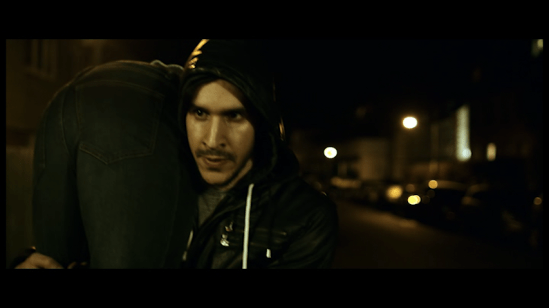
Salah is brilliantly executed by Ziad Abaza who brings a cache of raw emotions to his character. “K-Shop’s” trailer hinted at a horror-comedy feature, but there’s nothing funny about Abaza’s Salah who seems that life is wholeheartedly against him as a downtrodden college student in a search for basic human decency and compassion. Salah is pitted against an egregious Jason Brown played by Liverpool native Scot Williams and Williams embodies and embraces being a person of high social status and fame, a person of who lavishes in luxury, and epitomizes being a slime ball. Brown’s a stark contrast against Salah who has to slave away and earn his living while Brown takes his life for granted. The supporting cast are also very interesting starting with Reece Noi as Malik who voyeuristically takes an interest in Salah’s vigilantism and who also, perhaps, shares common cultural aspects, but Malik is just a kid acting beyond his age at times and then drastically at his age at the most crucial moments during his dynamics with Salah. Another character is Salah’s potential love interest in Sarah portrayed by Kristin Atherton. Atherton provides a sweet, quiet, and intelligible demeanor to Sarah that projects onto Salah whereas other women in Salah’s life, mostly his patrons, are loud, obnoxious, and corrupt. Lastly, “Doomsday’s” Darren Morfitt instills a catalytic character in fallen from grace Chaplin Steve. There’s a bit of a confessionally staged event between Salah and Steve that offers a realization and a tale-end twist that just puts that unwanted pit into the bottom of stomachs.

Now “K-Shop” isn’t totally perfect, especially in the flow of the film. Pringle doesn’t clearly provide a timeline of progression. Between the holidays Christmas and News Years is perspectively prominent, but Salah’s calling, or mission, seems to extend weeks, if not months, and that isn’t clearly communicated. Plus, there’s slight difficulty understanding turn page moments that dilute the significance of events whether it’s through too much exposition or choppy editing. Where “K-Shop” is weak, Pringle makes up with gore and story. The gore is absolute from scorching an inebriated man’s face sizzling in a vat of hot oil to chopping up limbs with a butcher’s knife in order to make his delicious kebabs. Pringle’s conclusion is absolving, satisfying, and also, at the same time, fruitless because even though Salah makes a stand against immorality, a realization washes over him that nothing will ever change despite cutting the head from the snake.

Breaking Glass Pictures distributes “K-Shop” on to an unrated DVD home video. The DVD is presented in a widescreen 2:35:1 aspect ratio and the overall quality is stunning sporting a dark painted picture and still convey a healthy color palette even if lightly washed in a yellow hue. The’s no attempt to enhance the image as the natural color tone comes right out and off the screen and that dark gritty matter really speaks to Pringle’s capabilities to create shadows. The English Dolby Digital 5.1 audio track is surprisingly hanging around par level as, some of those key moments once spoken about, are lost in a muddled heap in the dialogue track, but there’s range and fidelity thats good on the output amongst a balanced five channel track. Bonus material includes a behind-the-scenes segment and deleted scenes plus Breaking Glass trailers. “K-Shop” is dark, gritty, and eye opening backed by a versatile lead in Ziad Abaza and helmed by newcomer filmmaker Dan Pringle, seeking to entertain and unearth our inner and deadly vigilante doppelgänger in the midst of social indecencies.

“K-Shop” on DVD at Amazon!

Oscar Wilde’s Not-So-Evil…”The Canterville Ghost” review!


An ambitious physics professor Hiram Otis obtains a research grant that requires him to study in England, pulling his wife, daughter, and two young boys from their Indiana home into a strange new world. In an age of obsolete aristocracy, the Otis family is able to afford rent at the grand Canterville Hall, a legendary castle with an infamous tale of death and suspicion that also might have resulted in being an affordable estate for the American family. Legend records have it that the lord of the castle, Sir Simon de Canterville, had subsequently killed his wife due to his obsessions and became the victim of his wife’s family spiteful vengeance by being chained to a dungeon cell. For 400 years, Sir Simon remained in that cell and his ghost haunts Canterville Hall, but despite their beliefs in the supernatural, the physics professor and his wife can’t see the ghost and only their teenage daughter and two young boys are able to witness him roam the halls, haunting those who live within the castle walls.

Every once and awhile, we’ll thoroughly review a light-hearted fantasy, horror, or sci-fi film and since we’re hot off the heels of the review for Wes Craven’s “Summer of Fear,” the made-for-television train might as well keep chug-chug-chugging alone with the 1996 TV movie adaptation of the Oscar Wilde novella, “The Canterville Ghost.” Distributed by ABC, the Sydney Macartney (as Syd Macartney) directed and Robert Benedetti teleplay written installment tries to differentiate itself and standout amongst a plethora of adaptations that span across the globe, but the American Broadcast Company, a subsidiary of the great and powerful Disney, aimed to separate from the masses by adding star studded power and the result brought a rejuvenation to the ye old tale over two decades ago.

The big name headliner is none other than Captain Jean-Luc Picard himself, Patrick Stewart, two years after his 7-year stint on Star Trek: The Next Generation. Stewart, who co-produced the film, adds his theatrical flair and is absolutely brilliant shaping drama monologues into dense thickets that define Sir Simon de Canterville’s ghost, but there’s an issue; the problem doesn’t lie with Patrick Stewart, but with how Benedetti’s teleplay expos from the story as a continuous, if not slightly jumbled, stream of old English that just feels like rambling. To alleviate that strain is Stewart’s co-star Neve Campbell to add a softer, glassy-eyed touch to the story with a pinch of plain jane American girl insecurities, characterized in Wilde’s story as Virginia Otis. Perhaps in the beginning portion of the height of her career, Campbell finds herself between “Party of Five” and hitting scream queen status as Sydney Prescott in “Scream,” but the “Wild Things” actress wasn’t that sultry or that chased in “The Canterville Ghost” who only took upon an annoyed teenage girl persona, wishing her life was back in America up until the mysterious spirit of Sir Simon de Canterville allured a spark into her dull life. Alongside Stewart and Campbell, Daniel Betts, Ciarán Fitzgerald, Raymond Pickard, Cherie Lunghi, Donald Sinden, Joan Sims, and the late Edward Wiley, who died shortly before the film’s premiere, costar.

Going into “The Canterville Ghost” was nothing short of knowing nothing other than the fact the Patrick Stewart and Neve Campbell were in the lead roles of a Disney backed, family film and to be completely honest, Macartney’s vision completely underwhelms. Along with the verbose nature of the script-to-teleplay alterations, the magical supernatural portions are inarguably cheap, even for television. The simple superimposing of Sir Simon de Canterville offered no stimulation as the the two scenes just didn’t splice together well to seamlessly make the grade. Firecracker explosions and party store cobwebs dilute even thinner the already slim pickings of special effects that top when Virginia Otis crosses over into a dense fogged ghostly realm thats chopped, cropped, and edited with such disorganization, the entire scene feels more lost than Virginia trying to escape the other side back to the living.

Sydney Macartney’s “The Canterville Ghost” is presented for the first time ever on Blu-ray courtesy of the U.K. distributor Second Sight Films. The Blu-ray is presented in the Academy ratio of 1.33:1 with 1080p resolution on a MPEG-4 AVC BD 25. Second Sight’s release will have the best looking version of this film, if the quality is anything like the screener sent to me, with a strong color palette, minor digital noise, and rich in great detail; so detailed in fact that the blemishes on Neve Campbell and Daniel Betts can be seen. The English DTS-HD audio track is lively, but not entirely boastful with more thematic and dramatic elements. Dialogue track is clean and clear and the score by “Dead Heat” and “Tremors” composer Ernest Troost augments his fairy tale rendition into the mix. Bonus material includes new interviews with director Sydney Macartney and producer-writer Robert Benedetti. Second Sight’s presentation of Hallmark Entertainment’s “The Canterville Ghost” has strong Blu-ray technical potential, but despite the big names of that time period and a visually stimulating setting, the fantastic adventure through a cursed ghost’s melodrama and a bored young girl’s tenure of self discovery unfortunately didn’t rivet with excitement or wonder, losing steam with it’s important message that life is more than being in a bubble of stagnant disappointment and guilt.

Wes Craven’s Evil After School Special! “Summer of Fear” review!


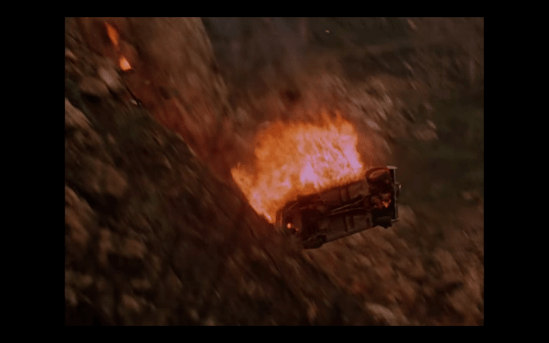
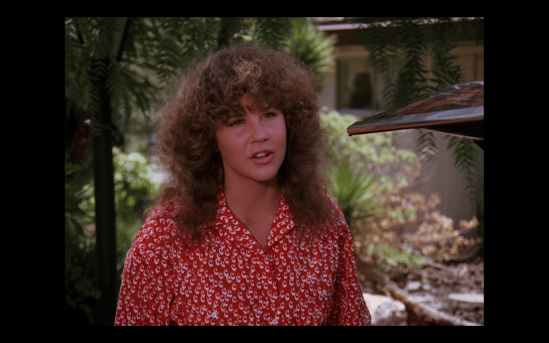
Julia Trent is left orphaned after the fatal accident of her parents that involved them falling to their fiery deaths when their car careens off a cliff attempting to drive their housekeeper home. The only family Julia has left is the Bryant family whom she hasn’t seen in over 15 years. The Bryants welcome their niece with consolation and open arms, inviting her to room with her cousin, Rachel. Rachel has the perfect life: a loving mother and father, a cute boyfriend, and the ability to ride and compete in horse competitions. However, Rachel’s world is upended when Julia enters her life and something just doesn’t seem right when Julia slowly begins to push Rachel out of her comfy position, bewitching the men in her life to turn against her and being the center of a number of considerable accidents. As Rachel suspicions grow and she becomes further attached from all those that surround her, an investigation ensues with Rachel at helm to retrieve what’s rightfully her’s from an underlying evil.

The late Wes Craven made for television movie “Summer of Fear,” also known as “Stranger in the House,” is a living relic; a time capsule type horror this generation will find difficult to grasp, like Nintendo’s Gameboy or music tape cassettes, with thrilling suspense unlike today’s cookie cutter product. After he shocked audiences with the controversial “The Last House on the Left” and crafted a shifty dream killer in “A Nightmare on Elm Street,” director Wes Craven embarked on a venture into the television movie scene that didn’t spur graphic content, but focused putting the supernatural in the forefront of reality with a similarity to that of “Tales of the Darkside” or “The Twilight Zone,” captivating audiences sitting in front of the boobtube with twists and thrills in a Halloween premiered NBC movie. Based on Lois Duncan’s novel of the same title and written for television by Glenn Benest (who also wrote another Craven directed picture “Deadly Blessings”) and Max Keller, Wes Craven greatly accepted the challenge of reaching a broad audience without being subversive and explicit, sharing his vision with another living horror icon in the starring role.

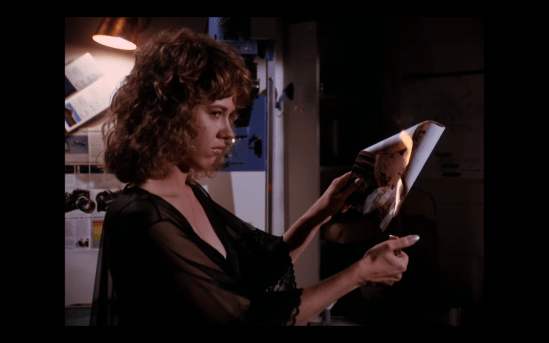
“The Exorcist’s” Linda Blair has a role that’s certainly a far cry from the possessed Reagan, but the 1978 “Summer of Fear” had opened up a sleuth-type role for Blair that made her more of the hunter than the victim. Blair’s raspy voice and spoiled girl attitude completes the privileged daughter of the household compared to her tall and charming rival, Julia Trent, in “Necromancy’s” Lee Purcell. Purcell compliments Blair all too well and, together, the on screen tension is ever present, even if slightly over exaggerated. From that point on, “Summer of Fear” was filled in by other great talent such as Jeremy Slate (“True Grit” ’69), Carol Lawrence, a very young Fran Drescher in the beginning of her career, Jeff McCracken, and Jeff East (“Pumpkinhead”), but the more fascinating role, that was hardly explored, is awarded to MacDonald Carey, the resident occult professor of the neighborhood. Carey’s has a very old school actor with a performance very familiar to Robert Mitchum and the veteran actor’s vast career felt very small here in the catalytic role as the confirming source for Rachel in her suspicions.

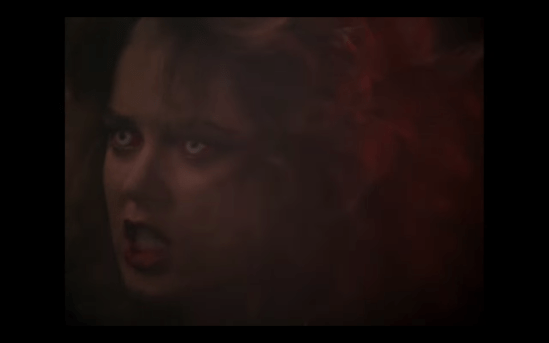
In addition to the withdrawal of the contentious content, “Summer of Fear” entertains on a minimalistic special effects stage that still pops with jaw-dropping suspense and still caters to an, even if slightly dated, story altering moment that rockets toward a maelstrom finish. All the while, Lee Purcell’s character has such glam and beauty that the bewitching sticks overpoweringly raw as a telling moment that beauty isn’t all that’s wrapped up to be and people can be ugly on the inside. Through brief glimpses into Julia Trent’s authentic past, including the mountainous Ozark retreats, one could conclude the story’s ultimate ending, but the fact that the actors embrace their rolls and Wes Craven connects himself enthusiastically to the project makes “Summer of Fear” a solid small box show of terror.

Doppelgänger Releasing releases the Wes Craven classic “Summer of Fear” for the first time onto Blu-ray home video. Transferred to a 1080p resolution, the presentation is certainly made from TV in the Academy, 4:3 or 1.33:1, aspect ratio. Image quality sporadically has moments of definition instability where the image goes fluffy or soft and amongst the duration’s entirety are a slew of white specks and noticeable grain, but the transfer remains solid over the decades that display a grandeur of vivid coloring despite some scenes of with an overburdening washed yellow tint. The English 2.0 DTS-HD Master Audio cleanly presents the feature with not a lot of flashy audio moments and the dialogue is clean and clear suggesting that the audio track aged very well. Bonus material includes an audio commentary track by director Wes Craven, an exclusive interview with Linda Blair, photo and poster gallery, and concluding with the original 1978 trailer. “Summer of Fear” might be obsolete in modern ways of terror filmmaking, but Wes Craven imprints a searing cult classic that brandishes more than just guts and gore. Instead, the father of “Scream” continues to impress beyond the grave, thanks to distributors like Doppelgänger Releasing, with the filmmaker’s expansive range that debunks many popcorn horror goers’ assumptions about the director and his films. “Summer of Fear” simply showcases that Craven was a jack of all trades when coming down to brass tax in creating a terrifying story.

Buy Summer of Fear at Amazon!

An Evil Demon Ate My Baby! “Out of the Shadows” review!


Police detective Eric Hughes and his pregnant American wife Katrina strive to find their own place and withdraw from Eric’s father’s home. A hot tip leads them to small, slightly rundown, midwives maternity facility just out on the rural outskirts of Crystal Springs. With help from their friends and a lot of elbow grease, Eric and Katrina rehab the structure into their dream home to settle down in hopes to raise their first born, but Katrina quickly discovers that her dream house is more like the house from hell when shadowy figures suddenly appear through the walls with an apparition of a midwife nurse bellowing, “Give me Scarlett!” – the name of Katrina’s unborn child. The Hughes turn to the Church to plead for assistance and an unorthodox demonologist, hearing their call for help, tends to their aid in hopes to cease the languishing torment, but rushing into the situation, eager to rid the supernatural forces from plaguing the Hughes, has escalated the pending doom for their unborn child.

“Out of the Shadows” is the 2017 released, ghostly-demonic horror from Australia, directed and co-written by Duncan “Dee” McLachlan along with co-writer Rena Owen (“The Last Witch Hunter”) from a story by Eric Nash. McLachlan’s atmospherics can compete with the best, toying with the shadowy figures passing behind frosted windows and door panes in a glimpse of a moment, demonic tongue ripping through the ears of the latched upon victim that is Katrina, and conjuring up vivid and haunting figures that are airy and grim. All of which is backed by sound cinematography by Viv Scanu in creating a personality, essentially giving breath, toward the Hughes home of destined damnation. Set location speaks for itself being a countryside, rundown hovel, but the innards bare an unsecured unsettling with many windows in a well ventilated structure fenced around by obscuring foliage that creates a gloomy prison for a tormented Katrina.

Kendal Rae stars as the stalked Katrina Hughes who goes from happy-go-lucky to a panicky mess in less than sixty seconds from the first inkling of trouble. Rae has a fine performance being the frightened house wife to the never-at-home husband, but that inability to transition, with time, Katrina’s slow burn into insanity or supernatural plunder is a blight on her performance. That never-at-home and naive detective husband finds an actor as the first feature film for Blake Northfield. Northfield’s has naivety down pat with Eric’s dismissive attitude and a penchant for not caring. Eric and Katrina seek the help from a renegade exorcist Linda Dee (Lisa Chappell) whose a biker relative of Father Joe Phillips (“Matrix’s” Helmut Bakaitis) with a checkered past and on thin ice with the Catholic Church for practicing unauthorized exorcisms, but that’s about how far the script takes us when delving into Linda Dee’s backstory. Jake Ryan, Jim Robison, and “Alien: Covenant’s” Goran D. Kleut, as the Hat-man Demon, round out the remaining cast.

As with the Linda Dee character, a noticeably uncomfortable underdevelopment of major roles put divots into the, what should have been, a cut and dry storyline whose only complexity would be if Katrina’s harrowing ghostly encounters are caused by either a sudden loneliness with her husband leaving her by herself for work, the fluctuation of pregnancy hormones, or an acute combination of both. Dee’s wavering stance with the Church, and also with her uncle, is hardly touched upon with brief exposition and doesn’t convey the severity of her actions that warrant being on the outs with the Catholic officials. Concurrently, Katrina suffers with a tangent subplot with unspoken tension between her and her State side mother that never gets explored, leaving the scenes left detached like an unhinged satellite orbiting the planetary story.

Umbrella Entertainment releases the Bronte Pictures produced “Out of the Shadows” onto DVD that’s presented in an 2.35:1 widescreen. Image quality has some nice outlined details without sizable DNR, especially during night sequences in the midsts of constructing a formidable shadow army. Though tinted in more of a blue and yellow hue, the overall color palette is pleasing, even if staged like a “Saw” film. The computer generated effects are where the details go awry dipping toward a softer side that perhaps exhibits the production value. The English Dolby Digital 5.1 soundtrack has no defining qualms with a even spread of low and high level ranges to where even the muttering demonic chanting is audible. There are no bonus material and the DVD doesn’t even have a static menu for guidance as the movie plays as soon as the opening credits roll. “Out of the Shadows” has a premise that’s been through the horror mill before, but director Dee McLachlan holds the thrilling line, maintaining a collectively strong start to finish to only stray from one or two key subplots that would wholeheartedly tie the entire film together.

In Search for Evil, Evil is Always Close! “Lycan” review!


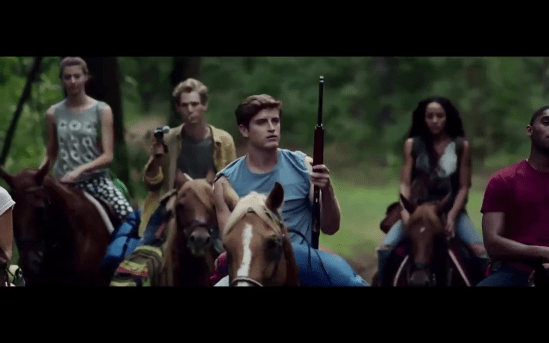
Set in Talbot County Georgia of 1986, six university students are assigned a write a 25-page report on a moment in history. The subject for the report was ultimately based off of local lore, a haunting story from a century old newspaper clipping that told legend of Emily Burt who was the prime suspect of being the notorious wild animal that tore through the local sheep herds. Ill-prepared and flippant for the report’s hot Georgia weathered journey into the woods, the students ride horseback through a labyrinth of trails on the Burt property and come under attack by a lurking bloodthirsty presence hellbent on separating them and tearing them to pieces. Desperation sets in when tensions flare, sides are taken, and perceptions are misled in a time of grave crisis, leaving the schooled students being taught a lesson in isolation and confusion in a classroom of ill-fated situations.

“Lycan” is the 2017 released survival horror thriller from co-writer and director Bev Land, making his inaugural feature film debut. Michael Mordler co-wrote the script that’s been described as “Hitchockian” and resembles a backdoor twist much to the similitude of M. Night Shayamalan films. Like Shaymalan’s earlier work, “Lycan’s” horror is extremely effective without having to bare witness an antagonistic beast and by leaving the girth of the killer’s destructive path to the imagination, our minds begin to formulate diegesis theories and build hypotheticals to the killer’s characteristics. The use of wolf-o-vision is a past time tool that flashes all it’s teeth to bring life to an unseen threat, but Land and Mordler pen a breadcrumb trail of hints that compound to a head in the midst of the chaos, unveiling the true threat in a full frontal way that’s a silver screen rarity, but nearly takes the fun out of the mystery.

Starring in “Lycan” is Bev Land’s wife, Dania Ramirez (“Quarantine”), in the lead role of the mysterious Isabella Cruz. Ramirez’s has to accomplish multiple feats with Isabella Cruz whose a bit of an awkward loner who then has to reintegrate herself into the social realm of a group of variously distinguished characters. Parker Croft portrays as pot smoking, wise-cracking, pervert named Kenny McKenzie who documents the trip with an 8mm camera, Rebekah Graf is the stuck up and prissy Blair Gordon who only accompanies the group on this trip because of Jake Lockett’s baseball jock Blake Simpson. Craig Tate, unfortunately, falls into the stereotypical ‘token black guy’ Irving Robinson while Blair’s sorority pledge, Kalia Prescott’s Chrissy Miller, opts to the gal to get laid. Aside from Ramirez, the rest of the cast of characters fall into formulaic limbo, stuck in their own devices, and never really elevate into more than just surface level characters. Two of the more eyebrow raising actors that never saw the character development light of day were that of Gail O’Grady (“Chromeskull: Laid to Rest 2”) and Vanessa Angel (television’s “Weird Science”). O’Grady’s Ms. Fields warranted more background into how the ranch owner came to have Isabella Cruz enter her life and much more unopened mysteries about their dynamic.

While “Lycan” offers an up-to-snuff survival horror, the story’s bookends fall short of fully completing the story. The opening puts big man Presley Melson’s lonely farm boy stuffing lady of the night Anna, played by Alina Puscau (“Dracuala: The Dark Prince”), full of his pork roll. As the wolf-o-vision circles the lovemaking barn setting, Melson and Puscau trot out with only their skivvies to check out the outside racket and become, uh, victims of the antagonist? Not really sure because the scene starts from afar and the wolf-o-vision glides right up to Melson’s face without much of a peep from either Puscau or Melson. The ending is just as enigmatic with a brief present day scene (the story is set in Georgia 1986) of an unknown little girl picking up a razor sharp object from the leaf strewn ground and then there’s a cut to black to roll credits. Before this useless segment, the pinnacle moment of the third act springs too many leaks to plug. Combined with the stagnant and underdeveloped characters, “Lycan” is an unkempt story left wide open becoming a victim by it’s own scripted structure.

MVD Visual presents onto a region one, unrated DVD, the 1 Bullet in the Gun production, “Lycan.” Presented in anamorphic widescreen 1.85:1, MVD’s DVD image is beyond spectacular with immense details in every scene, even in the production illuminated night scenes. Digital noise is completely absent and the coloring is naturally vibrant. The Dolby Digital 5.1 Surround Sound has an effective ambient track with clarity and range in the wolf howls and the cracks and snaps of outdoor living. The original soundtrack by Devine Adams and score by Jason Pelsey revel in distortion free perceptible measures. An audio downside would be the dialogue track that suffers from unfortunate mic placement, leaving major story affected parts of the dialogue left muddled and indiscernible. Bonus material includes interviews with director and co-writer Bev Land, along with co-writer Michael Mordler, the cast including with Dania Ramirez, Rebekah Graf and Vanessa Angel, and Crystal Hunt (Executive Producer) and Steven C. Pitts (2nd Unit Director). A panel discussion with the Lycan producers and the original theatrical trailer round out of the extras. Land and Mordler’s “Lycan” disperses moments of original horror with snap-witty dialogue, but as a whole, the story trends toward a paint-by-the-numbers route without breaking the mold as a low tier “Hitchockian” thriller.

Buy “Lycan” on DVD at Amazon!