Being Dismissed is EVIL That’s Hard to Choke Down. “Swallow” reviewed! (Second Sight Films / BD-R Screener)

Newly pregnant housewife, Hunter, putters around the house while her workaholic husband enjoys the fruits of success and friendship with colleagues.  When she’s not cleaning the house or preparing a meal for herself, Hunter stares into the oblivion of her isolating environment.  The country girl who really had nothing to her name has fortunately found an opportunity to never be worried about financial insecurities and with every material thing a person could want in their right at her fingertips.  All Hunter has to sacrifice is her control.  Feeling lonely, powerless, and trapped, Hunter discovers swallowing inedible, dangerous objects gives her great joy and something she can control.  As she goes deeper into this obsession and her perfect world begins to crumble, she’s confronted with reexamining her dark past that stems her unusual eating habit.

Sometimes it’s our strange quirks, our self-destruction behaviors, and our subconscious need to be noticed, or in control, or out of the pockets of others that can deliver horrid outcomes that, ironically enough, can be also our incognito liberator.  As such displayed in Carlo Mirabella-Davis’ written and directed introductory feature film, a blend of family melodrama and interior body horror, with “Swallow.”  The 2019 released psychological thriller is difficult to digest, literally, as the protagonist struggles coping with external control issues in a seemingly perfect life, a life that has never quite felt like her own, while also encouraging an alarming new physiological appetite for what is known in the eating disorder circles as Pica.  Set in upstate New York, shot around the idyllic Hudson Valley area, “Swallow” is produced by the award-winning “Nomadland’s” Mollye Asher and “Black Box’s” Mynette Louie, who have a long history in investing into bold and interesting emotional depth tales, and is a production of the France based companies, Charades and Logical Pictures.

Undertaking the daunting task of Pica emulating is Haley Bennett.  “The Haunting of Molly Hartley” and “Hardcore Henry” actress tethers a line to the core basis of her character Hunter who has to gradually chip away portions of her blank exterior of a person subconsciously suffering from similar symptoms of Stockholm Syndrome.  Hunter very much believes in the social saturation of wifely duties at an attempt to please her bread-winning husband Ritchie (Austin Stowell, “Colossal”), constantly gathering reassurances and happiness from him.  I also like the play on words with the husband name Ritchie that speaks to his haughty behavior.  Bennett, in great detail, captures Hunter’s disfigured, uncertain happiness and wholehearted attempts to join the ranks of a proud housewife, an area mirrored by silent authority from her mother-in-law Katherine (Elizabeth Marvel, “All the Little Things We Kill”).  As soon as Hunter swallows that very first foreign object, Bennett derives true delight from the bizarre action.  From then on, blistering is away is being a slave to Ritchie’s wealthy ties as that little object, that spherical inkling of hope, gets the marble rolling down the gullet of taking back what’s hers, her life.  Bennett and Stowell finesse their characters’ relationship with a teetertotter of genuine sympathy and ingenuine gratification in what’s a blurry line of compassion or a total fake façade for the allusion of appearances.  The weakest character, for me, is Luay, the Syrian expat who fled the turmoil of homeland war and has become something of a caretaker to Hunter.  Played by Laith Nakli, Luay’s sympathy for Hunter runs deeper than her psychological disorder, and Nakli can dish out awkward, slow burn compassion with the best of them, but that connection between Luay and Hunter misses the timely mark with a blank and acute switching of allegiances gone unspoken and with inaction.  Luna Lauren Velez (“Dexter”), David Rasche (“Cobra”), Babak Tafti, Nichole Kang (“Ten Minutes to Midnight”), Zabryna Guevara, and “American Horror Story’s” Denis O’Hare rounds out the cast.

Hunter’s fixation can be compared to the likes of any other vice and soul-swallowing addiction – gambling , drugs, sex – but the very fact that it’s Pica, and on a certain level of the OCD spectrum, makes Mirabella-Davis’ script somewhat of a curious oddity as the filmmaker builds a story around a dysfunctional family and one’s own personal grasp on destiny.  Though set in modern times, “Swallow” very much has a 1950s-1960s vibe with the dynamic of the working husband and the wife stays home to spruce up the house; there’s even a particular scene of Hunter vacuuming in a 50’s-ish tea length swing dress.  Despite the story’s curious and odd nature and the stuck in time antiquated gender inequality veneer, Mirabella-Davis utilizes these aspects to shape and shed light on the more diabolical of inner detriments with Hunter’s lack of confidence and autonomy stemmed from a difficult to swallow past and a financially affluent relationship that actually disallows personal freedom.  “Swallow” is oppressive in ways as Ritchie and his family and friends attempt to squeeze every ounce of value out of Hunter with value being the unborn child amongst other things.   The psychology of “Swallow” melds past and present together to form Hunter’s dangerous method of taking over the reigns of a life she never steered and Mirabella-Davis crafts an exquisite niche thriller to encourage us to gobble up.

Second Sight Films, a label known for it’s substantial and lavish re-releases, snacks on another high profile film with their profound limited edition Blu-ray of Carlo Mirabella-Davis’ “Swallow.” The single disc, PAL encoded, region B BD-25 is presented in the original aspect ratio of a widescreen 2.39:1 aspect ratio. Since a BD-R was provided for review purposes, I am unable to comment on the true characteristics and qualities of the audio and video, but do note Katelin Arizmendi’s stunning cinematography that’s full of palpable texture to every minute piece of inedible edibles Hunter puts down her throat and the gorgeous long shots of Hunter being engulfed by the depth with the isolating forest setting that looks to be lurking in the background. The limited edition release hit shelves this past Tuesday, the 22nd, and has a ton of features to check out, including a new audio commentary by director Mirabella-Davis and producers Moilye Asher and Mynette Louie, A Personal Story exclusive interview with the director that’s seriously in-depth and passionate about his work on “Swallow,” Something Bubbling Underneath exclusive interview with producer Moilye Asher, The Process exclusive interview with editor Joe Murphy, Metal and Glass exclusive interview with composer Nathan Halpern, Alexandra Heller-Nicholas’s take on “Swallow” A Room of One’s Own, Mirabella-Davis’ short film “Knife Party,” and a rigid slipcase with new artwork by Haley Turnbull along with a soft cover booklet with an introduction by the director and containing essays by Anne Billson, Jordan Crucchiola, and Ella Kemp. Lastly, at the tail of the special features are 6 beautiful collectors’ art cards. “Swallow” is rated UK 18 and runs for 94 minutes. Bennett wins the prize for making “Swallow” a throat-clearing success and bravo to Mirabella-Davis for being brave enough with an unusual story set around an uncommon eating disorder and directing the hell out of it.

Limited Edition Blu-ray from Second Sight Films Available at Amazon.com

When the Girl of Your Dreams Thinks Like an EVIL Robot! “Deadly Friend” reviewed! (Blu-ray / Shout Factory)


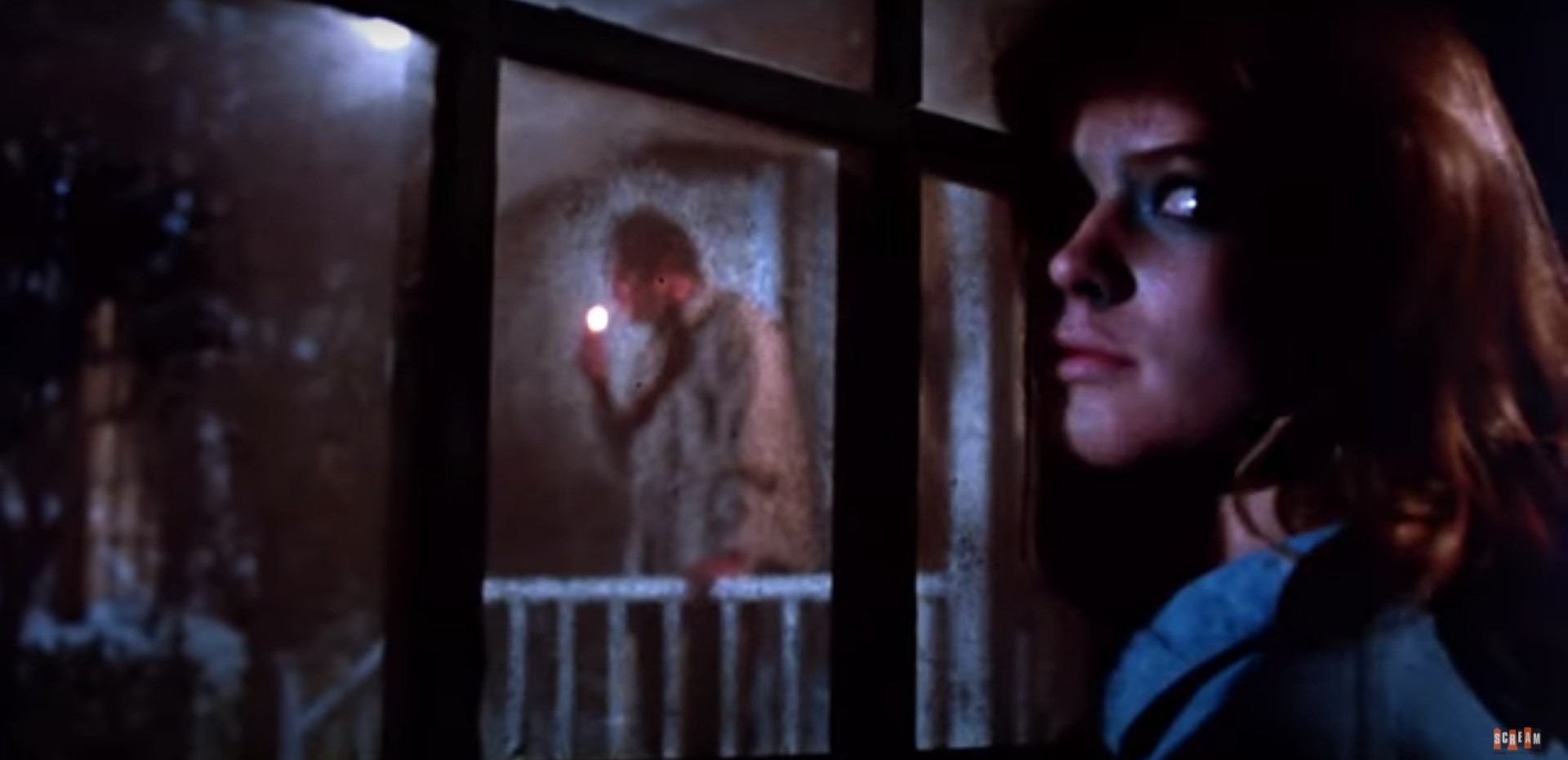
Whiz kid Paul Conway, along with his mother and artificial intelligence robot creation called BB, move to a new house to be close to Poly Tech where the teenage prodigy begins research study on the human brain.  Paul quickly befriends Tom, the local paperboy, and cute neighbor Samantha, aka Sam, that evolves into more than just friendship, but when Sam’s abusive father kills her and BB is blow to smithereens by a cruel, paranoid neighbor over the holiday season, a distraught Paul begs his friend Tom to assist him in a radical resurrection to save Sam by implanting BB’s A.I. chip into Samantha’s brain.  The long shot surgery pays off and Sam is awake and moving around automatonlike, but the thoughts and feelings of Sam and BB blend and the hatred toward their killers feeds into the need of grisly revenge.

Wes Craven.  Every genre fan upon hearing his name goes through an euphoric reliving in seeing one of his films for the first time.  For most that film is “A Nightmare on Elm Street” with Robert Englund starring as the fedora-sporting, dream killer Freddy Krueger  who wears a glove with finger knives.  Krueger has been and still is one of the most iconic and memorable villains ever in horror since Krueger’s from Craven’s nightmare-to-cinema creation in 1984.  Fast forward two years later, Craven hops at the chance to make a studio film with Warner Bros.  A film that’s polar different from “ANOES” with a touching, PG-rated macabre, science fiction coming of age story based off the Diana Henstell novel entitled “Friend” with an adapted script by Bruce Joel Rubin who went on to pen “Ghost” and “Jacob’s Ladder” a few years later.  After test screenings, the studio began to meddle, urging, if not demanding, Craven add horrific violence to the intensity lighter story thus turning “Friend” into “Deadly Friend” with a blender hacked story that failed at the box office during the Halloween season nonetheless.  Pan Arts/Layton serves as the production companies with Warner Bros presenting “Deadly Friend” under the studio’s banner.

At the center of the story are two star-crossed teens in the midst of adolescent flirtation.  Eyes glued to one another, but separated by the cruel whims of a drunken father, are Paul, “The Little House on the Prairie” star Matthew Labyorteaux and Samantha, “Buffy the Vampire Slayer” feature star Kristy Swanson.  While not overly smoochy between Paul and Sam, the then teenage youngsters sell the affectionate tension between them with depth in their performances.  Yet, the Swanson’s post-surgery mechanical movements are terribly rudimentary and cheesy, turning the studio warranted violent exploration of youth and morbid Sci-Fi cybernetics story into the laughing stock of the already inanely entertaining killer robotic subgenre.  Without the studio intervened violence and gory edits, I could not envision Craven and Rubin’s touching story between Paul and his desperation creation to cure his broken-hearted affection for both his robot and the girl next door.  By far the best principle role is Tom, played by Michael Sharrett (“Savage Dawn”) who really plays into that Craven and Rubin softer vision with a bit of well-timed comedy.  As a character, Tom’s always falling or fainting in some capacity and deliveries some great one-liners that jazz up the lightheartedness of “Deadly Friend’s” more macabre stance.  Big names and distinguish faces fill rather unexpected cameos, such as “The Goonies” Anne Ramsey as a paranoid recluse who blows away BB in a Halloween mischief gone wrong, as well as Roger Rabbit voice actor Charles Fleisher as BB.  “Deadly Friend” routs out with Anne Twomey (“The Imagemaker”), Richard Marcus (“Tremors”), Lee Paul, and Russ Marin (“The Dark”).

I know Warner Bros. swallowed the original intent of “Friend,” chewed it with the purpose to add crowd-pleasing violence and gore, and spat out an game-changing “Deadly Friend” totally going against the wishes of the cast and crew, but losing that more tender creativity of an undead romance narrative wasn’t put out to pasture in vain.  Infamy and a semi-cult status long after release came out of the hellish mixed-bag of critically panning spitfire and the disownment of the film’s creators.  One particular scene, involving a basketball and an explosion of head goo, is definitely one of the more rememberable and well executed kill scenes of the era.  As a whole, “Deadly Friend” rests in ridiculous peace as many viewers will watch, digest, and come to some kind of self-compromising understanding on Craven’s misadventure and will relinquish to the fact that the film has a place in his repertoire of work.  Yet, dicey editing and pacing issues suggests a heavily edited film and trying to surmise how “Friend” would have been perceived in studio unmolested form is nearly impossible given the already bizarre sci-fi narrative subject matter.  What I found more interesting is Craven essentially sticking it to the studio’s request for violence and gore by rehashing much of “A Nightmare on Elm Street” into “Deadly Friend’s” framework with the intense dream sequences, a giant furnace-boiler room, a severely burned man’s face, and even a few shots of a blond Kristy Swanson garbed in white has a familiar Amanda Weise skin.  Overly compressed and subsequently reworked to appease audiences, “Deadly Friend” is no friend at all on a “Re-Animator” or insert man-in-machine horror parallel dipped into a “Short Circuit” coating that plainly suffers from outside interference resulting in a neutralized effect.   

You’ll never have a friend like “Deadly Friend” now on a collector’s edition Blu-ray from Scream Factory, a subsidiary of Shout Factory!  The rated R film has a runtime of 90 minutes and is presented on a 1080p High-Definition, region A Blu-ray in a widescreen 1.85: aspect ratio from a new 2K scan of the interpositive 35mm film.  Without much criticism, the virtually undamaged transfer refreshes previous releases for high-definition aficionados with a palatable amount of grain and the details are clearly discernable.  Colors looks good too between the natural skin tones and the range in contrasts, providing new life into Philip H. Lathrop’s (“Lolly-Madonna XXX”) two-toned atmospheric cinematography.  The English language DTS-HD Master Audio Mono track is equally as pleasant with clear and clean soundtrack unobstructed by damage or static.  No issues with the dialogue as well in another testament to Shout Factory’s attention to the audiophile-appreciated fidelity.  Optional English SDH subtitles are available.  Special features include new interviews with Kristy Swanson and writer Bruce Joel Rubin who go into rigorous details about the Studio’s interception as well as working with their cast and crew mates.  There are also new interviews with composer Charles Bernstein and special make up effects artist Lance Anderson.  The theatrical trailer rounds out the special features.  “Deadly Friend’s” tech-horror with a twist is about as deep as the brain of a toaster oven replacing your girlfriend’s father submissive and overly meek brain, but the new Scream Factory collector’s edition is absolute perfection.

Wes Craven’s “Deadly Friend” now on a Collector’s Edition Blu-ray!

Dan Stevens. The New Face of EVIL? Freakin’ Love It! “The Guest” reviewed! (Second Sight Films / BD-R Screener)

Recently hospital discharged combat soldier David Collins visits a fallen brother in arms’ family, The Petersons, to convey their son’s last moments of love for his family.  Taken immediately in by the grieving mother, David stays for a few nights at the Peterson home, quickly befriending the family of four with his military “yes ma’am” charm and good looks.  When a string of accidental and homicide related deaths begin to flare up in what’s typically a quiet rural town, eldest daughter, Anna, suspicions turn to David.  As Anna digs deeper into David’s past, nothing can stop the elite special forces soldier from taking steps to protect his identity and his mission, even if that means turning the Petersons’ hometown into a deadly warzone. 

One part action, one part slasher – Adam Wingard’s “The Guest” is a hot take on the infiltrator horror subgenre.  The “Pop Skull” and “You’re Next” director, who went on to helm the epic clash of the two biggest creatures in all of creature feature history with this year’s “Godzilla vs. Kong,” directed “The Guest” to challenge the slasher narrative with an atypical, slightly campy, American indie thriller with an unanticipated and surprising twist that’s more than just your run-of-the-mill snapped war-traumatized soldier gone shell-shocked rogue.  The script reteams “Dead Birds’” writer Simon Barrett with Wingard for their eighth collaboration that pits all the story’s action into the rural confines of an unnamed small town in America while the actual shooting location takes place in New Mexico.  “The Guest” is a production of the UK based HanWay Films, which also oversaw the production of Wingard’s “You’re Next,” and Snoot Entertainment of the zomedy “Little Monsters” from the producing management team of Keith and Jess Wu Calder.

To put things simply, Dan Stevens is scary good.  The “Downtown Abbey” star plays the titular troublemaker and, now, I will never look at Matthew Crowley the same way again.  Stevens trades out the proper aristocracy of British English with a slight American English Southern draw, a heavily used trope portrayed with U.S. troops in cinema, but Stevens does more than just talk-the-talk.  The Surrey born actor who once played the Beast in Disney’s live-action version of “Beauty and the Beast” plays a different kind of monster that’s akin to a wolf in sheep’s clothing with David, adorning his physically fit character with a clandestine depth in his ambiguous background and sociopathic tendencies that makes him very much a mysterious maniac much in the same fashion as iconic slasher villains.  Trying to stop David’s undermining reign of controlled carnage is Anna Peterson, played by Maika Monroe (“It Follows,” “Independence Day:  Resurgence”).  Ana’s a levelheaded, yet rebellious, teenager adverse to being told what to do to much of her parents chagrin from dating a pot dealer to her objection in David’s stay with them.  Monre puts angsty effort behind Anna Peterson’s eyes, but the character herself is rather flimsy willing to put her trust in an unsponsored secret organization agent, “John Wick” films’ Lance Reddick, and his request to get into his car urgently without hesitation, but has a difficult time swallowing at her own pace her dead brother’s fellow soldier even with the stamp of whole heartily approval from her parents and little brother and photographic evidence of her brother’s relationship with David.  Yet, Barrett’s openly oblivious characters play into the slasher/thriller campiness of accepting everything at face value without ever an inkling of doubt.  Perfect examples of this would be 3/4th of the Peterson family: the mother (Sheila Kelley, “A Passion to Kill”) trust him with handling routine tasks like picking up her son from school or laundry, the father (the great supporting actor Leland Orser, “Alien:  Resurrection,” “The Bone Collector”) trusts him with personal secrets, and even the school outcast brother (Brendan Meyer, “The Color of Space”) desperately believes David is his friend.  Tabatha Shaun, Joel David Moore, Ethan Embry, Chase Williamson, and Steven Brown co-star.

Pulling loads of admiration and inspiration from the “Halloween” franchise, “The Guest” not only rocks as an action thriller but also mimicking a retrograded slasher in a subgenre slapped with a label I like to call the infiltrator subgenre.  David Collins is no mindless, walking and not talking, killing machine like The Shape, but instead gains trust, backdoors problems, and has the quick confident moves to see the job through with hand-to-hand combat and other more visceral merciless methods.  Barrett and Wingard purposefully leave much to the imagination with David’s past, turning what would usually outcome as frustrating ambiguity for an essential character to more of an enigmatic antagonist allure similar to the way we don’t have a clear-cut motivation why Michael Myers or Jason Voorhees shish kabob horny teens without a second thought.  Sure, there are sequels that try to enlighten reasons, such as being pure evil, but abstract is not concrete.  Same with “The Guest” with a control spoon feeding of just enough backstory to wet one’s thirst for more on David’s ruthless sociopathic behavior.  David’s also a very likeable with the impression that his good deeds done in violence speaks to a justice-driven character, but what’s brilliant about David, and enhanced profoundly by Dan Stevens, is that when he does kill someone in cold blood for this first time, the impact is tremendously unreal because it’s unexpected and off brand from the Barrett and Wingard’s buildup of him being a standup and do-what’s-right soldier.

Second Sight Films invites you to be their guest for their limited edition 4K Ultra Hi-Defintionand Blu-ray of Adam Wingard’s “The Guest” that hit retail shelves this month on October 25th.  The stunning makeover of this cult favorite, limited to 5,000 copies, offers a brand new color grading for both formats supervised by Wingard with 4K UHD presented in Dolby Vision HDR.  Since a BDR was provided, commenting on the exact audio and video quality of the release isn’t possible, but rest assured, knowing the care and attention Second Sight Films put into their releases, “The Guest” will surely not overstay it’s welcome in the image and audio department.  The film has runtime at 100 minutes and a UK 15 certification; however, there is much more to this 3-disc release that includes the film’s 80’s inspired soundtrack on a compact disc.  Special features include new Adam Wingard and Simon Barrett commentary plus an archive commentary track from the two filmmakers, a new interview with actor Dan Stevens The Uninvited Guest, a new interview with actress Maika Monroe A Perfect Stranger, a new interview with Wingard and Barett By Invitation Only, a new interview with producers Keith and Jessica Wu Calder Producing the Guest, a new interview with director of photography Robby Baumgartner Light and Fog, a new interview with production designer Tom Hammock Lightning Strikes, a new interview with composer Steve Moore The Sounds of The Guest, and deleted and alternate including an outtake gag with optional director commentary.  With this limited release comes a rigid slipcase with new artwork by Adam Stothard, 160-page booklet with new essays by script to screen storyboards and extracts, behind the scenes photos, Wingard’s soundtrack notes, and new essays about the film, and, lastly, 6 collector’s art cards. In a time when modern horror desperately needs a solid sequel, “The Guest” is a good candidate with it’s captivating villain with so much story still left to tell. Hopefully, Second Sight Films’ irrefutable powerhouse release will ignite step-taking action amongst the rumors.

Grab it fast!  Liminted Edition “The Guest” on 4K UHD and Blu-ray Now at Amazon.com!

When Greed Induces EVIL at “The Estate” reviewed! (Vertical Entertainment / Digital Screener)


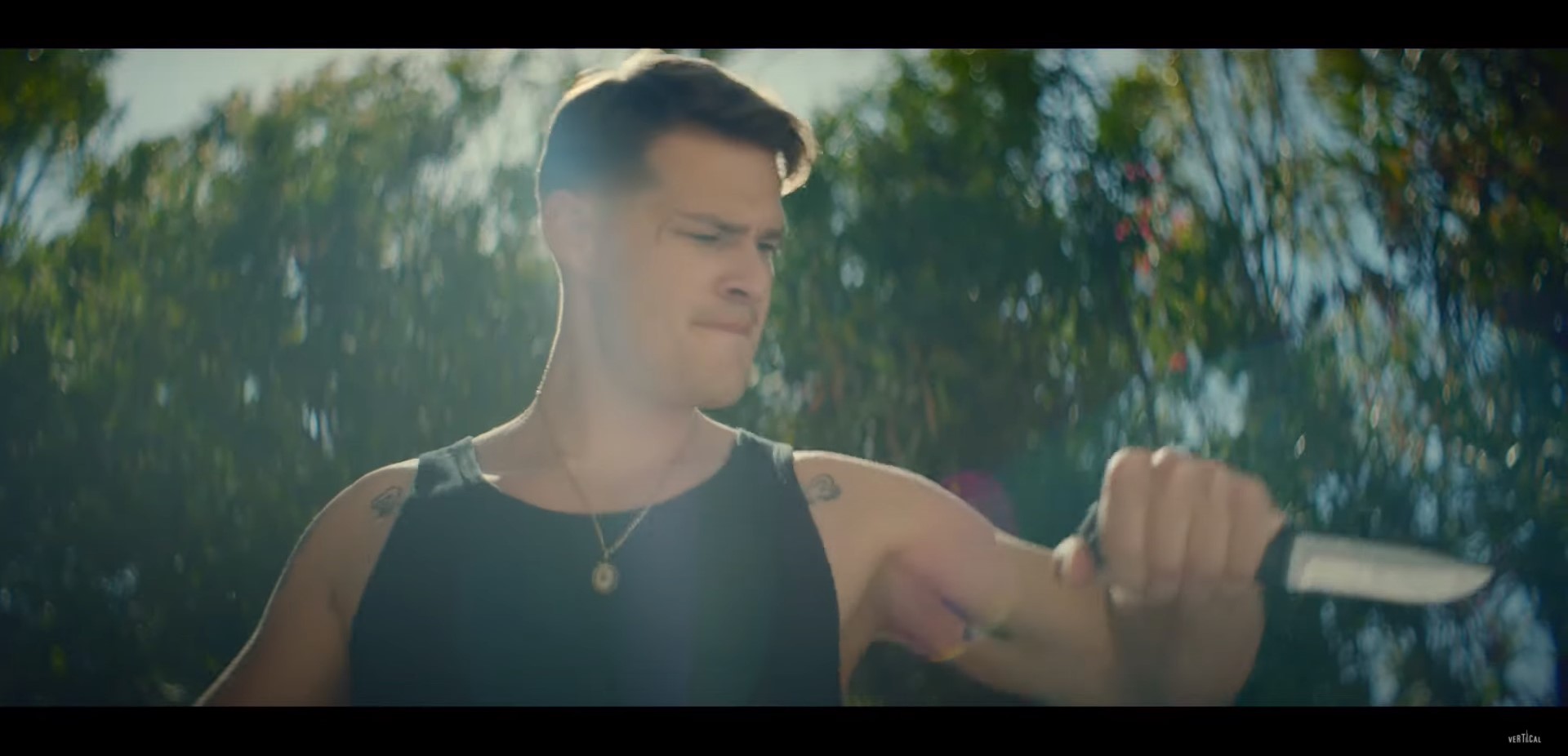
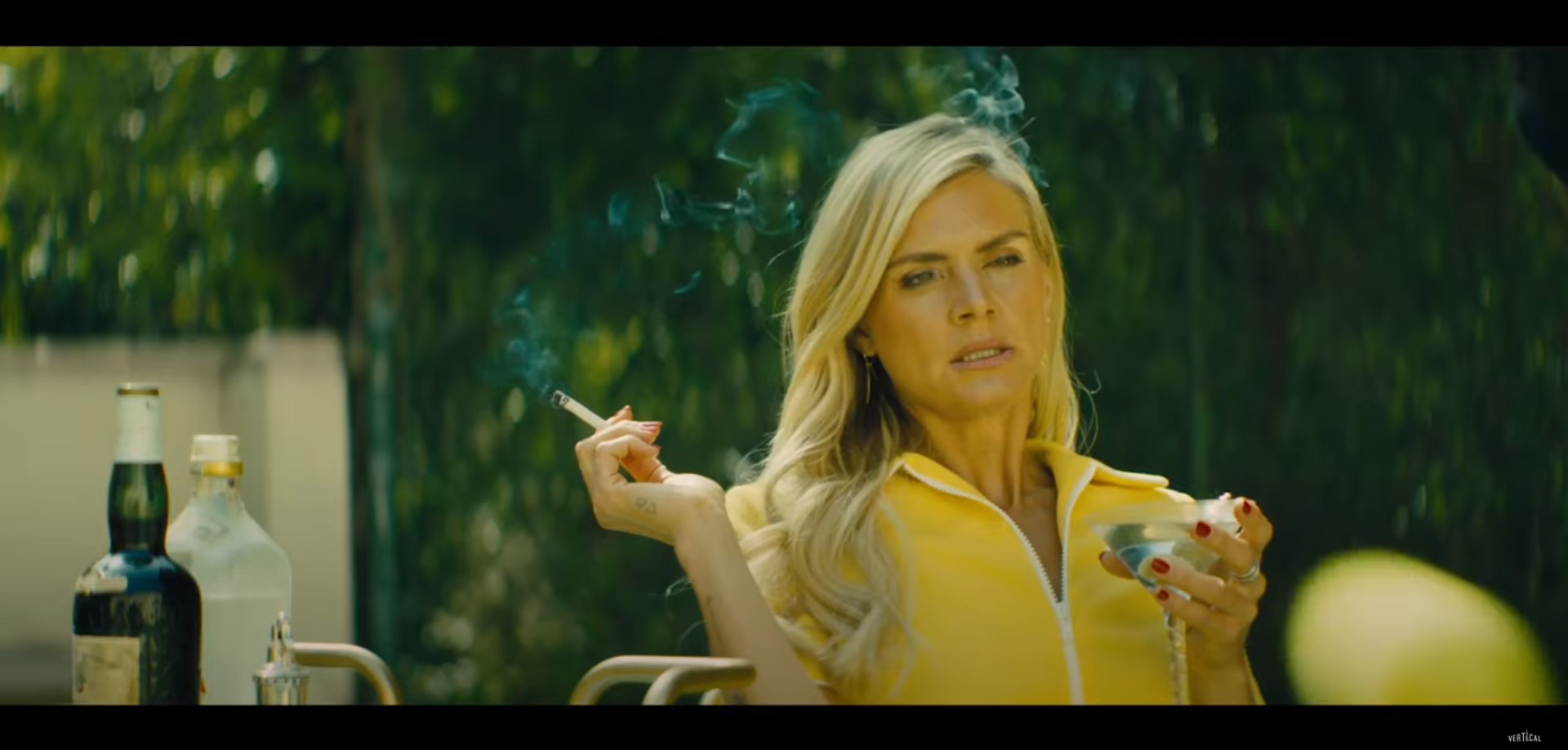
Spoiled rich gay son George despises his cheapskate father.  George’s equal in age, and similarly spoiled, horny step mother Lux also equally despises the loaded philanderer who rarely stays in town, leaving them with little to do and with little money to do it with.  When they meet tall, dark, and handsome Joe at a bar and invite him back to their estate house, a psychosexual love triangle leads to a murder-for-hire plot against the patriarch billionaire to collection the opulent inheritance.   Complications arise when unbeknownst bastard children cause a legal clog in their pipedreams of being insanely well-off.  One murder after another begins to unravel not only their lust for wealth and each other, but also a deeper, darker secret to rue for the wealth they wished (and killed) for.

An over-the-top, narcissistic machination-built dark comedy of greed, self-importance, and lust is how I would personally define the first feature length film, “The Estate,” from director James Kapner.  Diverging from his own comedy web series, “Baker Daily,” to work again with Kapner, from their previous collaboration on the political lampooning “Baker Daily:  Trump Takedown,” is Chris Baker, screenwriter of “The Estate,” who not only pen strokes the worst-of-the-worst of diabolical super-egos but also plays one of the downright flamboyant scoundrels as the lead role.  Majority of “The Estate” takes place inside the grand titular location, compartmentalizing the indie film’s budget solely on the sordid activity of three main characters without much of else as a distraction.  The Los Angeles shot film is independently produced by comedy producer Rod Hamilton, Kapner’s business partner Adam Makowka, and the second producing credit for Alixandra von Renner (“Boogeyman Pop”), with Mark Boujikian, William Bruey, Nicholas Lyons, and Scott R. Long as executive producers and is made under the Stone Lake Production and Runners Films production companies. 

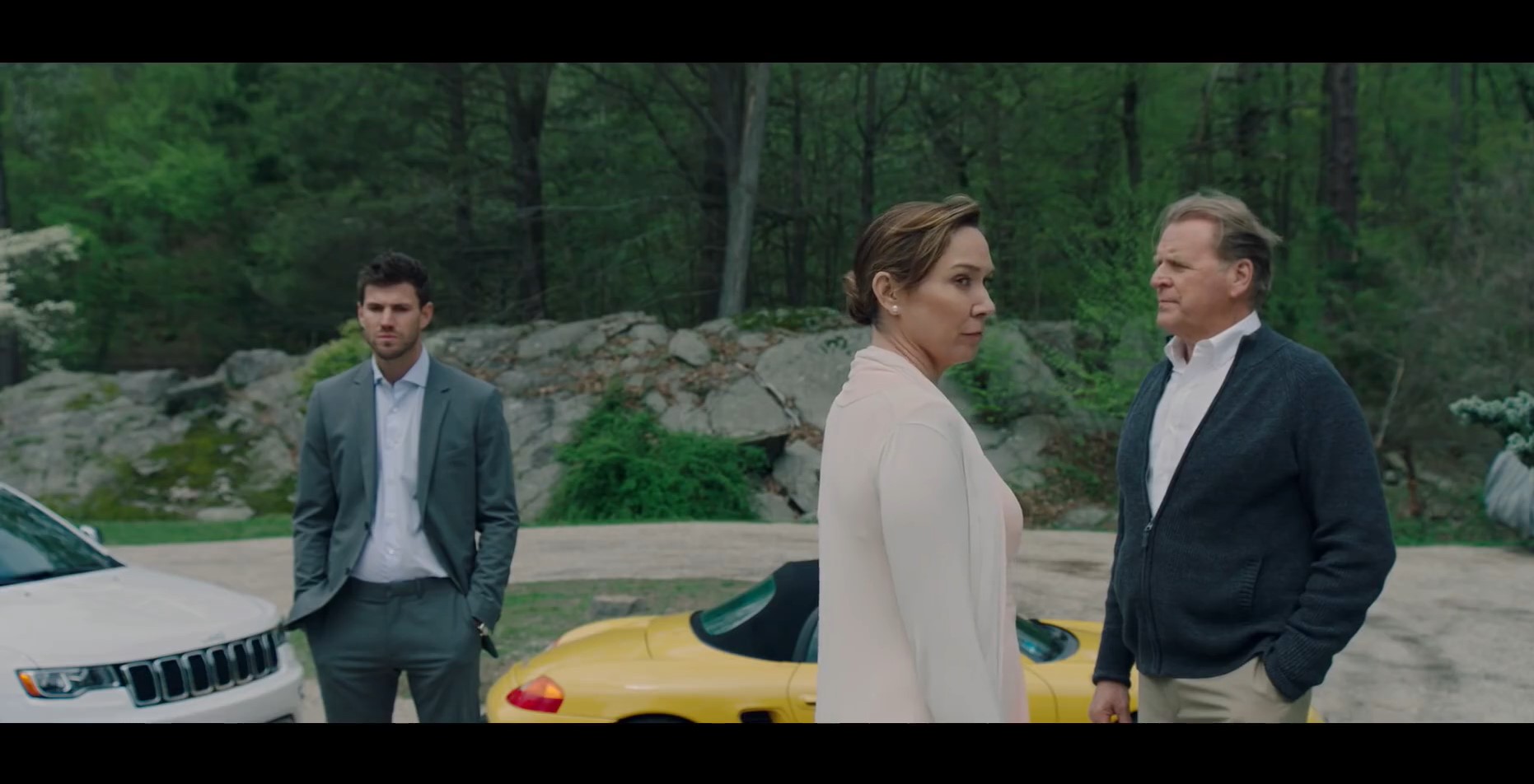
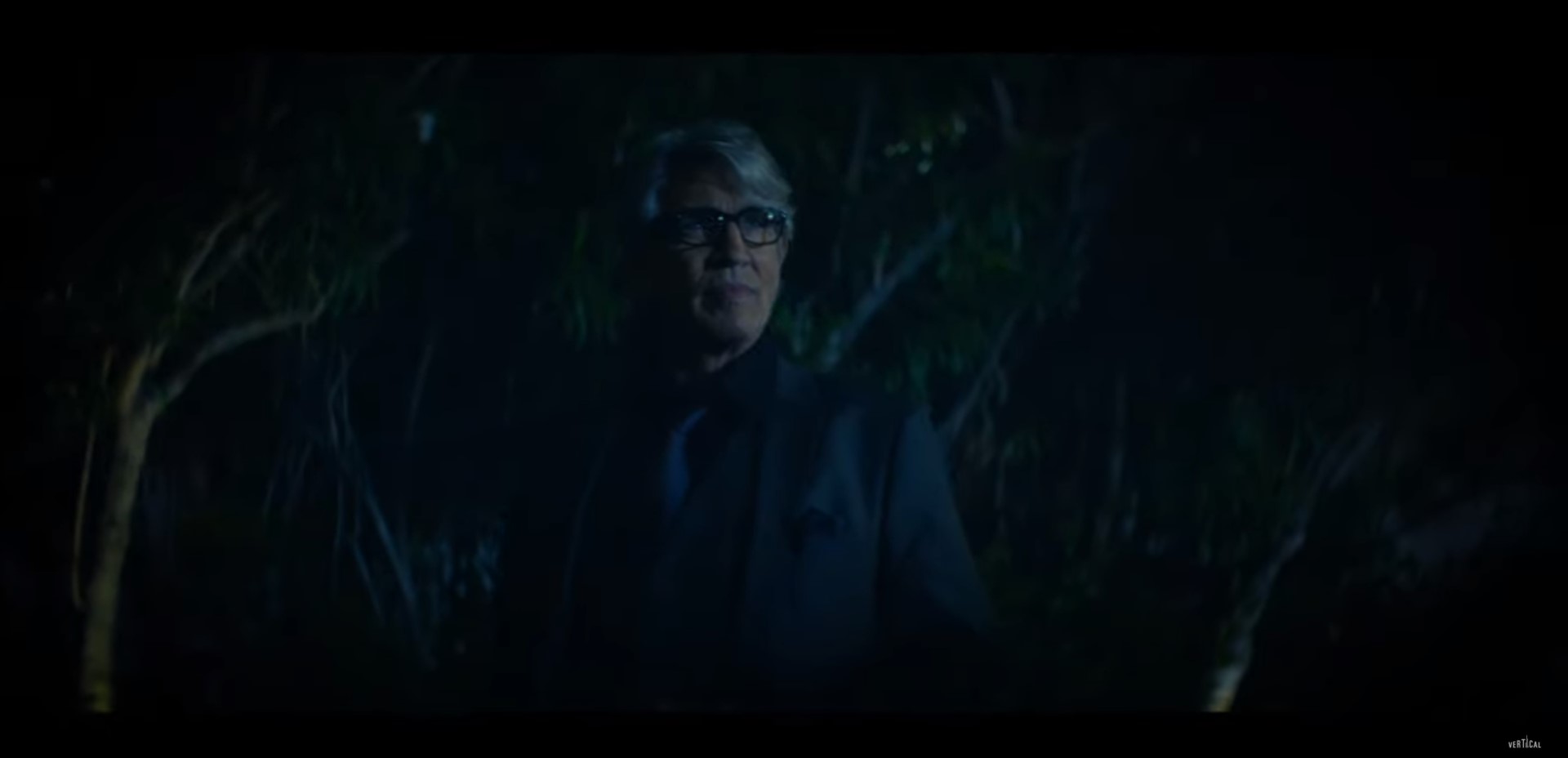
“The Estate” is a haute and brutish trio’s tale of sex, lies, and murder.   At the head of the snake is George, an entitled son seeking elegance and power as he longs in the background to attend the prestigious Black and White Gala, and is played bitingly by the film’s genesis writer, Chris Baker.  Baker, a Harvard graduate and a gay man, certainly utilizes both personal traits for George he’s clearly written for himself.  George is smart under that superficial Versace façade and, also, is a gay man looking for a romantic connection, but like any relationship single person, told by one’s own vantage point such as George’s, a wash of doughy-eyed thick-headedness just completely engulfs his rational senses when a pretty face suddenly shows up.  That rugged handsome face just happens to be of “iZombie’s” Greg Finley as hunky hitman Joe who George unexpectedly bumps into due in part of his oversexualized and, too, vain Stepmother Lux donned wonderfully with a wickedly crass tongue of comedienne, Eliza Coupe.  Together, a charcuterie board of carnality ceases to no end between the three in a back-and-forth, pass-the-man around pansexual affair with plotting and murder speckled in the middle.  Performances are concentrated with tongue and cheek, black matter comedy with ultra-ostentatious gab and garb to deliberately set the satirical tone metaphorically for the super-rich attitude of white, wealthy America.  With all that jazzy, pent-up, entitlement, add Eric Roberts into the mix, then you really get the worst-of-the-worst from the “Best of the Best” actor as the filthy rich patriarch.  Roberts can exude sleazy well with his own mannerisms and deliveries, solidifying his own Eric Robert’s laidback version of a despised billionaire debauchee.  “The Estate” rounds out with Rif Hutton (“The Thirteenth Floor”), Ezra Buzzington (“The Hills Have Eyes” remake), Lala Kent (“The Row”), Kyle Rezzarday, and “Hostel:  Part II’s” Heather Matarazzo as the tech-savvy lawyer office secretary who shamefully peters out after an interesting turn of events with the character’s involvement.

“The Estate” is one of those dark comedy thrillers where one wrongdoing subsequently creates a domino effect for more wrongdoings.  How’s that saying go?  Be careful what you wish for, you just might get it.  Indeed, the characters do get what’s coming to them as one killing turns into two killings and two killings turns into three etc.  As the bodies pile up in between the bedroom sheets sex and the coy flirting during initial stages of affections, the kind where butterflies flutter inside the stomach, what turns from an aloof pair of spoiled rotten solitaries is a false confidence in blindly following boredom’s famished way of saying death and sex is all-around exciting.  There’s also this vying of the sexes to see who can sweep Joe off his feet and while there’s obviously no issue with the polyamorous pansexuality, the story’s a bit lopsided with Baker’s intimate scenes with Finley being more expositional compared to Joe and Lux’s more implied romps and that inherently leads viewers onto one obvious path without the spice of unexpected chance.  Though George is written to be an alter egocentric doppelganger of his creator, Chris Baker, the Frankenstein theory only works well to extent before seeping into obnoxious conceited territory.  This is where “The Estate” begins to show signs of wearing out it’s welcome with living in George’s weighted down perspective of the high life.  Purpose seems vague mostly yet “The Estate” is also one of those nonchalant, throwing caution to the wind dark comedy narratives, sinfully funny, for the sake of touting an exaggerated resemblance of a detached privileged mindset. 

Things are not so nice and cozy at “The Estate” that has arrived this October on VOD and in theaters from Vertical Entertainment. Clocking in a 85 minutes, “The Estate” is paced to fit the conspicuous cinematography from the Texas born Mike Simpson with mood lighting mixed with tinting and as well as using a spherical lens to set the current tone. Simpson keeps shots tights between medium and closeups for more intimacy between the trio as well as to keep within the confines of a smaller production and set location. Since a digital screener was provided, I can’t comment on the quality of the audio and video aspects, but “The Estate” comes with an eclectic soundtrack that includes tracks from Lucky Beaches, Viagra Boys, Ritchie Valens, Joy Downer, and Toots and the Maytals. There were no bonus material or after credit scenes. Witty, dark humor that teeters always on the cups of being too much for one sitting, “The Estate” deadeyes the caricatures of the 1% with fatal attractions and an inheritance stocked with greed culminating to an unbelievable finale

The Most EVIL Being in the Galaxy Doesn’t Stand A Chance Against Little Mimi. “Psycho Goreman” reviewed! (Acorn Media International / Blu-ray)

Brother and Sister, Luke and Mimi, discover a gem that unimprisons a dark alien warlord destined to destroy worlds.  The gem and the being are one, connected by the ancient forces powering the talisman, and whoever wields it can control the evil one.  Fortunately for now, the gem is in young Mimi’s possession.  The bossy and sassy preteen sees the alien, dubbed Psycho Goreman, as a new friend and toy, gallivanting around town catering to every Mimi whims.  Lightyears away on a distant planet, a council comprised with the forces of good, who banished Psycho Goreman to eternal banishment and imprisonment, learn of their once terrorizing tormentor having escaped his confines.  Leader of the council, an elysian warrior named Pandora, vows to track down their adversary and put an end to his existence, bringing a destructive showdown of good versus evil in Mimi and Luke’s small-town. 

The anomalous mind of filmmaker Steven Kostanski is vacillatingly distinctive and churning adulation for the late 1980’s to early 1990’s high camp, metal-infused horror films that heavily inspired him.  His latest written and directed Sci-Fi horror-comedy, “Psycho Goreman,” fits perfectly into Kostanski’s brand of stupidity, nonsensical, animation-saturated, bizarro reality horror that has made us, or at least me, fall heads over heels for his previous credits, such as “Manborg” and the “W is for Wish” segment of “The ABCs of Death 2.”  Kostanski is also a special effects guru having worked delivering gruesome terror and insane imagination skills to the big and small screen, but makeup FX artist takes a backseat to his employer, the Ontario-based MastersFX managed by Todd Masters, and they grab the reins by providing a slew of mixed bag practical and visual effects and animation styles that is a time warp back to the tangibly ridiculous and forged every follicle freakshow horror and science fiction celluloid from 30 some odd years ago.  “Psycho Gorman,” or “PG” for short, is a production of the pseudonym Crazy Ball Productions, as in the Crazy Ball game Mimi and Luke play, and Raven Banner, presented as an exclusive acquisition by RLJ Entertainment and Shudder.

To make something as ridiculous as PG to work, you need a colorful, wildcard cast to pull off every microfiber of manic personalities you can muster and sticking out with the wildest personality is not the titular character who is neither the brightest highlight nor the leader of the pack.  That spot was filled far before PG makes an unearthing introduction by the film’s smallest, youngest, and most delightfully sarcastic and ostentation lead in newcomer Nita-Josee Hanna as Mimi, who’s roughhouse and snarky sassiness goes unparalleled even up against the Arch Duke of Nightmares.  The dynamic plays on that whimsical idea of little girls with big personalities can be the center of attention.  In this case, Mimi requires the world, no, the universe to revolve around her ultra-spoiled nurturing.  Her possession of the gem gives her unlimited power with her possession of PG, played by undoubtedly hot and bothered by the latex suit, but otherwise good sport, Matthew Ninaber (“Transference”).  Hanna and Ninaber are an absolute joy to watch together with their contrasting comedic deliveries:  Hanna’s aggressive flamboyance compared to Ninaber’s subtle and solemn stewing.  Then there’s Mimi’s brother Luke, played by Owen Myre, who will have a role in the upcoming “Terrifier” sequel and one of the film’s running jokes is PG can never remember Luke’s name.  That lack of standout presence for Myre’s character is quite literal and not because Myre’s performance is forgettable and a complete wash (in fact, Myre is fantastic is the meek, submissive older brother), but between Mimi and PG, those overwhelming characters totally consume much of the attention.  Adam Brooks (“Manborg,” “Father’s Day”) and Alexis Kara Hancey fill in as Mimi and Luke’s lackadaisical father and frustrated mother while Kristen MacCulloch (“Motherly) suits up as the PG’s holier-than-thou arch nemesis, Pandora, in Templar species form while Roxine Latoya Plummer blends in with the rest of the population with Pandora’s human form.  “Pscyho Goreman” rounds out with Alex Chung, Scout Flint, Robert Homer, Conor Sweeney, Matthew Kennedy, Asuka Kurosawaw, and Scott Flint.

“Psycho Goreman” necessarily fills a pivotal void.  Most genre films aim to pass along a message, sometimes important to the filmmakers, to convey a lesson, an idea, a political or social protest, or to spark awareness on an issue, but with Steven Kostanski, watching his work is like taking a vacation with an immense clearing of any and all undercurrents and obvious messages for pure, unadulterated, frequently mindless entertainment that just looks cool.  Underneath the composited animation and practical effect layers is an anything goes, no strings attached, brutally-caked, dopamine drip that causes glossy-eyes and a warm wash over of all the senses.  Side effects I can definitely live with and be refreshed by when needing a break from reality.  The amount of space medieval practical effects alone makes “Psycho Goreman” feel like “He-Man and the Masters of the Universe” and while that Gary Goddard 1987 science-fiction fantasy starring Dolph Lundgren, perhaps, heavily inspires Kostanski’s intergalactic battle-royale on Earth, the story mirrors much to the tune of “Suburban Commando” with Hulk Hogan.  Hear me out.  Rogue-vigilante, played by Hogan, crashes into Earth where he winds up with the unsuspecting Wilcox family who melts the big, bad commando’s heart and simultaneously fix, mostly unwittingly, what’s broken with the family while alien bounty hunters track him down.  “Psycho Goreman” is the same storyline with less gore; hell, “PG” is even kid dialogue friendly.  If you know “Suburban Commando,” you know, and now you can’t unsee it! 

As part of Acorn Media International’s RLJ Entertainment and Shudder exclusive line, “Psycho Goreman” is destined for darkness onto Blu-ray home video with over 2 hours of special feature content.  The UK region 2, PAL encoded, BD50 is presented in a widescreen 2.39:1 aspect ratio with a runtime of 96 minutes.  Nothing noteworthy to terribly point out from the digital picture shot on an ARRI Alexa Mini with Angenieux Optimo Lens that produces a spherical image you’ll optically notice that seemingly has a rounded surface to bring wide framed objects closer together.  Kostanski utilizes a blend of stop-motion and green screen with seamless results and even though slightly on the caricature side of alien landscape and creature production, everything befits “Psycho Goreman’s” extensive universe.  The English language DTS-HD Master Audio 5.1 has excellent acoustical output in a vast array of vocal timbres and epic ambiance on and off of Earth.  Dialogue is clean and prominent on both the actors and voice actors with the latter sometimes, unfortunately, masked by the voice manipulator.  The Blu-ray release packs a punch with over 2 hours of special features including a director’s commentary, interviews with cast and crew including Steven Kostanski, Nina-Josee Hanna, Owne Myre, Adam Brooks, Alexis Hancy and Matthew Ninabar, different fight chirography records from location and in practice at a martial arts studio, behind the scenes featurettes with character backstories, a trading card gallery, concept art, a behind-the-scenes photo gallery, and the animation creation.  “Psycho Goreman” is rated 15 for strong bloody violence, gore, and injury detail.  Sit back, relax, and let Steven Kostanski speak to your childhood senses with his adult antihero, “Psycho Goreman.” 

Own “Psycho Goreman” on UK Blu-ray (Region 2)