When EVIL Runs The Show, That’s When the Reality Sets In. “Funhouse” reviewed! (Magnet Releasing / Digital Screener)

Eight C-grade social media celebrities sign a contract for a new reality show, Furcas’s House of Fun.  The reality show streams worldwide on all electronic devices in an exhibition of different and standoffish personalities locked together in apartment-size living quarters.  Contestants will have to face challenges and weekly viewer voting to be the last one standing for a chance to win a 5 million dollars cash prize  Instead of sexy making out sessions, drunken brawls, and contestant melodrama to boost viewer ratings, Furcas’s House of Fun is in actuality a syndicated snuff reality show where a contestant is voted out is a contestant receiving a brutal death in front of the entire world.  Survivors watch behind paned glass as one-by-one their castmates are dispatched in the most gruesome way possible, directed by a screen animated panda bear helmed by a sadist eager for the show to go on.

Ready to have a little fun?  The “Funhouse” is open for what is a variety show of horrors in this 2019 shot, 2021 released reality show of encroaching aggravation and gore from writer-director Jason William Lee.  “The Evil In Us” filmmaker plays his hand at personifying internalized resentful rage for hack, do-nothing, inconsequential to society celebrities by feeding them gladly and enthusiastically to the bloodthirsty wolves.  “Funhouse” isn’t your typical social media or tech horror film as Lee dishes out a thought-provoking disgust covered in a powdery sugar and popcorn veneer that’s surely to please the broad range of horror fans.  The co-ventured Canadian-Swedish story of shallow fame nihilism is shot in the Providence of British Columbia and in Stockholm, home base of Ti Bonny Productions under executive producer Henrik Santesson, in collaboration with Lee and producer Michael Gyorl’s Sandcastle Pictures.

With the surname Skarsgård, acting is in certainly in the blood.  Valter Skarsgård, the youngest son of “Nymphomaniac” and “Deep Blue Sea’s” Stellan Skarsgård’s first marriage and the brother of terrifyingly frighteningly Pennywise actor, Bill Skarsgård (“It”), branches out following his ancestral destiny by headlining as the lovable and misjudged Swede, Kasper Nordin, who leeched fame by being the ex-husband to a renowned singer.  Nearly the spittin’ image of his older brother Bill, Valter brings his name and family looks to the table while showcasing his own talent amongst a motley crew of nationalities.  That’s one of “Funhouse’s” main messages about social media stardom as a plague that has spread to every corner of the world symbolically infecting each contestant from a different country:  Dayleigh Nelson (“Island of the Dolls”) of Britain, Khamisa Wilsher of America, Gigi Saul Guerrero (“Puppet Killer”) of Mexico, Amanda Howells of the Philippines, Mathias Retamal (“The Source of Shadows”) of Chile/Canada,  Karolina Benefield of Poland, and Christopher Gerard of Ireland.  The roles of wannabe celebrities is an ostentatious representation of click bait influencers who will sell essentially their soul and show their skin to be noticed and this turns the clear antagonist villain, a merciless gamester and contract abider with business dealings more vile than from the Devil himself, to be a subtle antihero of sorts as the cast rounds out with Jerome Velinsky’s wickedly sophisticated performance as Nero Alexander that is urbane nihilism at its best. 

Outrageous, fun, and gory – “Funhouse” has all the hallmarks of a 90’s horror on cruise control.  With a bedazzling rudimentary shell of a panda bear avatar animation and blend of practical and digital blood over the simplicity of a small location and indie production, Lee is able to fly through the narrative at whiplash speed and still drop animosity-awarding and empathetic traits to believe in the cast of characters.  In the middle of the chaos of axe splitting heads and being dunked into a barrel of highly corrosive acid, a topical theme of the detrimental social media and influencer stardom to society really positions “Funhouse” on the frontline for inflammatory and anti-social media messages, harping on the noncontributing and unbeneficial role of these money-generating, like-focusing, click baiters in culture and society other than selling to their audiences sex, gossip, and violence.  Speaking of violence, I was pleasantly surprised by the right amount of gore that didn’t shoot for extravagant levels despite some smoothing around the digitally added sinew and guts, keeping a modest amount of realism to the dystopian gameshow construct.  Initially, there are dubious first act moments that quickly shuttle hapless soon-to-be-casualties into the same location, much like in “Saw II” when characters all wake up in the room together and we have no idea who they are, where they come from, and what their backstory is, but as the film progresses we learn more about them and the roles they play in the maniacal puppeteer’s design.  The twist, almost meta-like, ending leaves “Funhouse” on a low note that doesn’t fulfill any void for its existence, but a good chunk of the story is really meaty with a revolving door of plights and a small, yet efficient, compassion outpouring spicket.

Not your traditional participatory surprise-laden and mirror maze attraction, “Funhouse” will still bring old-style thrills with some new blood spills in it’s grand opening release in theaters and on demand on May 28th courtesy of Magnet Releasing. Shawn Seifert (“Dead of Night”) lays out a smorgasbord of cinematography techniques that includes rich, un-matted color filters, isolating characters in darker, dim rooms in making them seem centerstage for their own grand demise, and cultivates stationary, handheld, tracking, and some drone shots for an extremely vibrant and glossy approach and feel for reality television version 2.0. Lee edits the digital reel himself and, honestly, the pacing wanders quickly to the overly rushed section like a quick-spit-it-out story wanting to be finished before it even begins and is compounded with another intrusive quality in the hyperactive back-and-forth of shots that aims to resemble the irksome flight in and out of reality shows that speed up and slow down like a nervous teenager behind the wheel of their parents and continuously presses down on the brake pedal. Stay tuned after credits for a gag bit scene that ties into the main story but promises nothing more. No more being voted off the island or nixed by expert judges, “Funhouse” cleans house with deadly eliminations and a message of the unyielding power granted to many so easily through a rapidly reshaping medium that has become too influential on a braindead scale.

The EVILS of Trauma Band Together to Take Down the Bad Guys. “Riders of Justice” reviewed (Magnet Releasing / Digital Screener)


Estranged form his family due to war torn military deployment, Markus must now come home to take care of his teenage daughter after his wife dies in a violent train accident.  A statistic mathematician, Otto, aboard the same train believes the train accident was no accident at all but a hit on a high profile informant testifying in the coming days against the head of a ruthless gang known as the Riders of Justice.  Joined by his eccentric friends, a therapy-inundated hacker named Lennart and an OCD computer whiz named Emmenthaler, they present Markus a convincing theory that his wife was a casualty of a gang’s complex assassination.  Unable to resist, Markus and his newfound friends set a course to unearth and destroy those who they think are responsible for his wife’s demise. 

With my unhealthy man-crush on “Valhalla Rising” and “Hannibal” star Mads Mikkelsen aside, “Riders of Justice” initial plot teased very little interest in what seemed to be another wife or child dies kill-them-all revenge action-thriller.  “Riders of Justice” also marks the 5th time Mikkelsen and director-screenwriter Anders Thomas Jensen collaborate on a project over the course of the Jensen’s entire 20 year directing filmography.  Jensen, who co-write the film adaptation of Stephen King’s “The Dark Tower,” ping ponged the story idea of the Denmark production with fellow “The Dark Tower” writer and “The Girl with the Dragon Tattoo” adapted writer, Nikolaj Arcel, in a story that brings tormented trauma victims together, latching on to idea they find themselves useful for, and inadvertently find the counsel they need through a dangerous operation in hunting down coldblooded killers.  Sisse Graum Jorgensen serves as producer under the Zentropa Productions entertainment banner and Sidsel Hybchmann debuts in her first producer role after a seasoned run as an associate producer alongside Graum Jorgensen on previous projects and between Graum Jorgensen and Hybchmann, “Riders of Justice” has a strong female producer contingent supporting a nearly all-male cast in bed with their lovable misfit characters that aims to be more about acceptance than revenge. 

Did I mention I have an unquenchable need to see every movie Mad Mikkelsen has starred in?  With “Riders of Justice,” Mikkelsen sports a long, skunk-colored beard with a shaved head in a not-so-typical look for one of, if not the, biggest movie stars to come out of Denmark.  Mikkelsen takes on this look for Markus, a military deployed father who rather be running covert drills and operations with his brothers in arms rather than being a father and husband in what becomes evident an underlining issue with his character.  As Markus tries to comfort his daughter Mathilde (“Andrea Heick Gadesberg) the only way he knows how as a regimentally stoic head of the house, but for being away so long, he knows very little of his now teenage daughter.  Mikkelsen’s natural gift for austere should be award-winning as becomes a lethal enforcer, a role he does extremely well, for a group of traumatically damaged outcasts looking for a righteous cause, beginning with Denmark’s Seth Rogan doppelganger, Nikolaj Lie Kaas, as a fellow train passenger Otto, a brainy mathematician who momentarily befriends Markus’ wife by offering up his seat that ultimately leads to her death.  Otto’s guilt, surging through him a pair of different ways, leads the brilliant mathematician to reach out to Markus with the help of his equally smart, yet equally maladjusted friends Lennart (Lars Brygmann “Flies on the Wall”) and Emmenthaler (Nicholas Bro “Nymphomaniac Vol. 1”). What ensues next are inadvertent events that spin Markus into a plot to assassinate an entire gang based off the statistics of one mathematician’s conspiracy theory evidence and along for the ride are the mathematician and his misfit buddies who might just be too smart for their own good. Every single performance is dead on spectacular with every character lush with tragic communal backstories and are clubbable in their own unconventional rite within the circle of Markus’s fearless vengeance at the center as they are drawn together by their own neurosis behaviors. Gustav Lindh, Albert Rudbeck Lindhardt, and Roland Møller round out the “Riders of Justice” cast.

The one sheet doesn’t do Jensen’s film any justice with a bearded Mikkelsen standing face front taking up much of the negative space, strapped with an automatic rifle around his back and a handgun in hand with the faded images of helmeted dirt bikers riding in the background. Let me tell you this: There were no dirt bikes in the movie. Not one. Mikkelsen looks great, as always, but the poster makes “Riders of Justice” reminiscent Mark Wahlberg’s “Shooter.” “Riders of Justice” stands outside that circle of militia or gorilla tactic action by being about 50% comedy and good comedy at that from Brygmann, Bro, and Kaas who elevate “Riders of Justice” from another run of the mill actioner about revenge, a subgenre plastic bag Liam Neeson can’t seem to escape from, to a heartfelt piece about belonging and mentally recuperating through helpful outreach with a standard whoop ass fare plotline.  Though some of the investigating work pinpointing the gang comes about far-fetched, I still believe “Riders of Justice” is one of the best films released this year, touching upon several multiplex themes of mental health, the urge to reach out for help to battle your issues, father and daughter relationships, and a sense of fitting in and having a purpose as an ostracized member of society. 

“Riders of Justice” has a lot of heart as well as a lot of brutal violence balled up in one remarkably empathetic film.  Magnet Releasing will be releasing the film everywhere May 21st with a limited run May 14th in New York and Los Angeles theaters.  Serendipity plays a huge role in Jensen’s vision of life against the odds and how people can ultimately rally together, sometime unexpectedly, to overcome obstacles often daunting for individuality with a sense of humor that can trump the dark behaviors of a depressive story core.  Kasper Tuxen’s cinematography in the hard lit scenes often confines the actors in a small car or around a table that not only screams cloak and dagger positioning but also exacts a sense of fellowship as they do everything together from planning, to surveillance, to assassinations, to even impromptu counseling sessions. The bookending story fable of happenstance leading from sadness to happiness christens “Riders of Justice” that debatable label, often argued with films like “Die Hard” or “Lethal Weapon,” of whether it’s a Christmas film or an action film. Fans will not have to stay for the credits expecting to see a bonus scene as there isn’t one; instead, enjoy the 115 minutes of fractured individuals coming together to be unlikely heroes in this hilarious shoot’em up ballbuster from Denmark.

Mobsters Can’t Stomach EVIL in “Witness Infection” reviewed! (Freestyle Digital Media / Digital Screener)

Two rival mafia families are moved mistakenly into the same small California city as part of a Witness Protection Agency relocation.  In order to avoid an all-out territory war between the two sides, who are already busting at the seams of confrontation, the two families devise an arranged marriage of peace between one kingpin’s beautiful daughter and another’s withdrawn from the family business son, Carlo, who rather work as a dog groomer with his friend Gina, but when a new sausage food truck starts selling out of their popular menu items with tainted ground meat, the overstuffed and gastrointestinal suffering customers turn into blood hungry zombies running rampant on the streets.  After Carlo and his friends nearly escape the clutches of an angry mob boss after refusing his daughter’s hand in marriage, his troubles didn’t end there as they must now trek through the zombie-infested town and battle hordes of the undead to save his own flesh and blood before they down a family size portion of contaminated Italian sausages and meatballs. 

Mafia families and the undead go together, right?  The two factions clash in a Guido versus zombie horror-comedy “Witness Infection” from a script by Nickelodeon-animation voice actor, Carlos Alazraqui, who had entertained many mid-thirty-something-year-olds in voicing Rocko from “Rocko’s Modern Life” and comedy writer Jill-Michele Melean of the “Zombie Marriage Counseling” shorts and “MADtv”.  At the helm is director Andy Palmer who, in the past, directed generically titled B-horror flicks with familiar names and faces, such as Courtney Gains (“Children of the Corn”), Danielle Harris (“Halloween 4 & 5” franchise), Robert Englund (“Nightmare on Elm Street”), and Clint Howard (“Evilspeak”).  For the pun-driven “Witness Infection,” Palmer finds much of his muses elsewhere in the form of voice actors exposing themselves (in a non-perverted way, you sickos!) for a mezza morta borgata!  Voice talent, ranging from “The Boondocks,” to the “Extreme Ghostbusters,” to the original “Inspector Gadget,” run in unison with an over-the-top bambino in the zombie cache, arranging a small time hit of laughs and gasses with some respectable gore moments submerged in the bloody sauce.  Produced by Alazraqui, Melean, and Warner Davis, co-owner of Petri Entertainment with Andy Palmer that serves as production company alongside Mob Goo Productions. 

Robert Belushi, yes, that iconic and distinct surname is the one and the same of his father Jim Belushi, stars as Carlo, a disinterested mob family son who wants nothing to do with organized crime and wants everything to do with living a normal, loving life.  The narrative plays into Carlo being protected by his mob boss father by shielding him from the unsavory and cutthroat dealings of mafia life, but when his father can no longer protect his dog grooming son, Carlo is thrust into an arranged marriage with the daughter of a rival family.  Belushi isn’t his father and doesn’t have the wily charm that can snap into macho in an instant; instead, the “Devil’s Due” actor enacts a softer side in a story crowded full of uncouth wise guys. Carlo is also a man caught between two worlds as a man who would do anything for family, but also standing up for his convictions and Belushi connects with Carlo’s tug-a-war discord. Jill-Michele Melean writes herself a character in Gina, Carlo’s pet grooming colleague studying to be a veterinarian. Gina’s the insinuated love interest championing Carlo’s fateful decision. Melean mixes chummily stepping into the love interest role who then characteristically goes into a tailspin arc to be in one instance frightened by a severed deer head but then okay with bashing the head’s in of undead acquaintances in the next. Together, the chemistry between Belushi and Melean felt flat with a more of a friendship zone interplay. Granted, “Witness Infection” doesn’t flaunt a range of emotional drives to feed off of in a clearly spaced three act story of assertion in not participating in an arranged marriage, a bar stronghold attack, and a race back home to save his family from deadly digestion and concluding with what’s finally a big spark between Gina and Carlo in their, what once, platonic relationship. Casting also stars an unforgettable comedian lineup beginning with this actress’s voice you know, but who you’ve rarely in Tara Strong (“Extreme Ghostbusters”), the versatile Maurice LaMarche (“Inspector Gadget”), the multitalented Carlos Alazraqui (“Rocko’s Modern Life”), one part comedian and one part break dancer Bret Ernst (“Cobra Kai”), and rounding out with Vince Donvito, Erinn Hayes, and Monique Coleman as the foxy anti-token, anti-trope black woman who won’t be just another unnecessary death in another horror movie.

What first popped out at me is “Witness Infection” using severe flatulence as a goofy symptom of turning into a boil-laden and baggy-eyed zombie.  An immediate turn off by the fart and poop gags after eating the tainted sausage that pays a disparaging homage to Jersey’s cultural culinary cuts of meat has the viewing pleasure be huffed at at the thought of getting through yet another zombie film using passing gas to get a comedic rise.  Luckily, and to my surprise, the initial buildup of the outbreak happens all at once, like a switch being turned on, and then the conventional chaos of zombie madness ensues and farting is left in the wind.  However, “Witness Infection” only garners a few chortles in a flat and tired banter and slapstick comedy.   Much can be said the same about the rest of the story that has Carlo, Gina, and cousin Vince go through what feels like a redundant motions of survival action against a mass creature attack, such as an assault on a bar stronghold where they encounter a blaxploitation vixen, Rose, in a fully-fledged satirical scene that barely cups the intended result with an unnecessarily pitstop with heavy exposition that brings no motivation to the characters.  Not all fails to impress as the clash with the undead dependably aggressive, especially when James Ojala’s special effects poke through with an eye-catching overly violent money shot.  Ojala, who has worked on “Dead Birds” and “Thor,” delivers a really impressive head-ripping decapitation scene involving a toilet seat and lots of blood.  The only downside to the scene is that most of it hit the cutting room floor, leaving only a milliseconds of material to be left in awe.  Though the zombies snarl asynchronously loud with the action and sound like one of the Tiger King’s famished big cats, the makeup is economically slicked on but does the job nonetheless. 

Strong, eclectic performances and the blink-and-you’ll-miss-it gore keeps Andy Palmer’s “Witness Infection” as a bat-swinging, deer-eating, head-smashing horror-comedy not to miss, capisce!  Freestyle Digital Media distributes the film come March 30th on Video-on-Demand and on Digital HD platforms, such as iTunes and Google Play, with a runtime of 82 minutes.  A Panasonic EVA 1 camera was used to shoot the film under the cinematic eye of Filip Vandewal’s stabilizing safe mode approach by not being too adventurous with the camera work, but there are some nicely framed scenes that pull together the actors during confrontational and down to the earth moments with a prime example being Carlo and his father running through the stern discussion, for the first time, of arranged marriage with a rival crime boss’s daughter who is dating his brother but because his brother is sterile, he can’t have children, ergo an heir to the mafia family.  Along with the solid acting from Belushi and despite some continuity mistakes in the scene, the backdoor being open and also being closed then back to open again, the blunt pleasantries that captures firm love between the two of them is sincerely present.  As far as bonus scenes go, there were zero bonus scenes during and after the credits.  “Witness Infection” chips away at the zombie genre’s plodding wall with a pin hammer dink by stirring in Mafioso drama and diabolical flashes of gore.   

The Greatest Trick EVIL Ever Pulled Was Convincing Couples the Perfect Marriage Ever Existed. “Happily” reviewed! (Saban Films / Digital Screener)

Tom and Janet have been married for 14 years.  By that amount of time elapsed, marriage has moved past the honeymoon stage and settled into routine with the spark having dulled and sex life becoming nearly, if not totally, stale, but for Tom and Janet, their libidos are the equivalent to hormone-driven teenagers.  Their marriage has happily sustained over the years, never veering off course, but when a couples’ retreat invitation is rescinded by their friends because of the envied desire for each other and a mysterious man arrives at their door step next day offering a syringe injection that will cure them into a normal married couple, Tom and Janet believe they’re a part of a sick joke by one of their so-called friends, leading to a dead body, a brief case of unknown substance, and a re-invitation to the couples’ retreat where they must figure out who is and who isn’t of the four other couples are on team Tom and Janet.  Yet, the trip founded on the idea booze and relaxation turns into a disclosure of lies, secrets, and deadly disconnections. 

What’s the secret to a long lasting marriage?  Good sex, obviously.  But can an ostensibly impenetrable marriage be flawless?  That’s one of the themes writer-director BenDavid Grabinski toys with in his inaugural feature film directorial of “Happily” that disparages the unsullied union of Tom and Janet by a quartet of couples, who are also Tom and Janet’s closest friends, who aim to stick it to the happy couple because of their own marriage and life failures.  Grabinksi, creator and writer of revamped “Are You Afraid of the Dark?” television series, incorporates that element of grim tale mystery for allegorical effect into the psychology of envious, mal intent friends projecting their negativity on Tom and Janet’s positivity and love.  “Happily” is a production of the Arizona based Common Wall Media, an indie record and film production labeled owned and operated by Chuckie Duff, and, perhaps, the reason “Happily” has a killer soundtrack that includes Tim Capello “I Still Believe.”  Jack Black (“Tropic Thunder,” “Goosebumps”) also produces the film under his Electric Dynamite Productions, Inc. banner in collaboration with Indy Entertainment (“Nightmare Cinema”). 

I find extreme difficulty seeing Joel McHale in anything remotely with a serious tone for someone who grew up with the comedian during his 12 season days of E!’s spinoff of Talk Soup titled simply, The Soup.  McHale’s range as a funny man is beyond being paramount with great comic timing and able to deliver an unlimited amounts of laughs in just his mere expressions and that has translated well into his filmic career from comedies such as “Ted” to “The Happytime Murders” and even well into his more earnest and darker roles in “Deliver Us From Evil” and, his most recent release which is “Home Alone” for a more mature audiences, “Becky.”  In “Happily,” McHale plays Tom, a loving husband to wife Janet who can’t keep their hands off each other and never fight for more than half a day in what’s staunchly considered a perfectly sickening marriage by their closest friends.  One thing I’ve learned from watching Joel McHale in this role is not only can he bear the weight evenly of an emotional thriller, but the guy is jacked!  Opposite McHale is “Penny Dreadful:  City of Angels” star Kerry Bishé, matching the sexual and profound tone as the wife, Janet. Bishé takes on Janet’s ever benevolent wifedom, elevating it to a whole new level as the working spouse, ready to gratify Tom by any means possible and in any compromising position possible, who’s also served hand and foot by the same man who knows how to reciprocate at the right moment. Bishé’s a favorable compliment to McHale as a power couple daring the odds together on the same page until losing they’re way because, simply, they’re inevitably human. Tom and Janet square off against four other couples under suspicion of a suspected prank-gone-wrong after meeting with a mysterious man played by “Office Space’s” Stephen Root. Could the pranksters be the flamboyantly affluent, but unaffectionate Karen and Val (Natalie Zea of “The Following” and Paul Scheer of “Piranha 3DD”)? Could it be the uptight lesbian couple Carla and Maude (Shannon Woodward of “Westworld” and Kirby Howell-Baptiste of the upcoming “Cruella”)? Or is it the carefree Patricia and her inhospitable husband Donald (Natalie Morales of “The Santa Clara Diet” and “Mastermind’s” John Daly)? Maybe its the anger unmanaging Richard and his newfound fiancé Gretel (Breckin Meyer of “Freddy’s Dead: The Final Nightmare” and Charlyne Yi of ” Puppet Master: The Littlest Reich”)?

Grabinski forcibly shoves the happily in “Happily’s” Tom and Janet’s marriage down our throats with a diabolical lustful half-exposition, half-hanky-panky action before title sequence intro into their infinity spicy life. The couple screw like two teenage rabbits hopped up on an aphrodisiac more than a typical mundane couple of 14-years should ever seen in their union’s lifetime, but, then, Grabinski throws in the proverbial monkey wrench into the gears. The question comes up, and lingers throughout, whether Tom and Janet are inherently broken, a defect in their existential creation, and that begins to snowball down the hill of insidious thoughts as the protagonists have their idyllic marriage tainted by the hair brain idea of a stranger, carrying two syringes of an insta-fix made up of unknown, illuminating material, who beguiles them with bureaucratic niceties to lie his way into their home and tells them he works for a higher power. Is this mysterious man God? Perhaps, the Devil? Grabinski smartly keeps that little detail under wraps and, for the first half of the film, stays a mystery upon itself. In time, each couple begins to unravel cankerous secrets, all of which have been targeted at Tom and Janet for their perfection and that’s perhaps where “Happily” struggles a bit as a story as Grabinski has a rolodex of past events being flipped through a plethora of interaction exposition, leaving morsels to try and puzzle the uneasiness of the morose couples’ retreat together. The long and short of the story is that the audience will need more morsels to chew on, get the creative juices flowing, to understand character motivations because, in the end, “Happily” is one big couples therapy session of divulging secrets to wash away, more or less, soul-deteriorating sin.

Before all hope is lost between two people, an intervention is warranted, even if it’s a divine one in BenDavid Grabinski’s dark comedy “Happily” heading our way to theaters, digital, and on demand come Friday, March 19th from Saban Films. The R-rated film runs for 96 minutes is presented in a widescreen 2.39:1 aspect ratio that gets to showcase more of Adam Bricker’s luridly dreamy style. The “Starry Eyes” cinematographer instills a firm taste of precise, primary coloring tinting that evokes the intensity of the scene rather than pitching an outlined overlay on top of his soft lighting. The red “Predator”-esque vision through CCTV lens is a nice touch of also breaking up the more natural lit scenes for that ominous approach. Since “Happily” is coming to theaters, there is obviously no bonus material, but stick around for scenes during the credits and after credits. Lies, betrayals, murder, and the uncanny are soaked into “Happily’s” absorbent fibers as one of this years best dark comedies that hones in on ascertaining that nothing is perfect but the perfection that you make together.

Love. A Complicated EVIL. “Me You Madness” reviewed! (STX Entertainment / Digital Screener)

Catherine Black, a materialistic and narcissistic hedge fund businesswoman, prides herself on expensive fashion, a healthy appetite for wealth, and a keen appreciation for 80’s music.  There’s also one little other aspect of Catherine’s life that excites her immensely, she’s a total sociopathic serial killer and cannibal who gets off on inviting the detrimental to society to her Malibu home for the slaughter.  When petty thief Tyler thinks he’s pulling a fast one over the megalomaniac by casing her lavish home full of luxurious jewelry, cars, and décor, he’s actually walked into a trap set by murderess.  Toying with her prey before springing her trap, a typically emotionally detached and cold Catherine begins to feel something for not only Tyler’s ruggedly handsome looks but also for his down to Earth knowledge of the world around him, but upon his discovery of her freezer full of preserved dismembered body parts, a love and hate cat-and-mouse game ensues as Catherine and Tyler battle it out between either their individual survival or to pursue the sensation of madly falling for each other. 

A hyperbolic whirlwind in how opposites attract to the new wave tune of an 80’s soundtrack with a glitzy siding of the modern macabre, “You Me Madness” visually defines the coined idiom to be crazy in love.   The debut dark comedy of 2016’s remake of “Cabin Fever” and “The Midnight Man’s” actress, Louise Linton, introduces the Scotland native not only as a director, but also as a screenwriter, penning “You Me Madness’s” unflinching admiration to homage music, films, and their clichés and incorporate them into a fiercely funny comedy that sows unusual seeds of love.  Shot primarily on location in Malibu, set atop of a promontory in and around the sleek modern Ed Niles’ glass-and-steel architecture of the marvelous Henman House, that lists with a hefty price tag of nearly ten million dollars in today’s housing market, and has been the backdrop as Johnny Rico’s family home in Paul Veerhoven’s 1997 authoritarian war on the bugs, “Starship Troopers.”  Linton’s Stormchaser Films serves as the production company with financial backing from Christopher Rush Harrington (“Dead of Winter”), Jijo Reed (“Deadly Famous”), and Christelle Zeinoun.

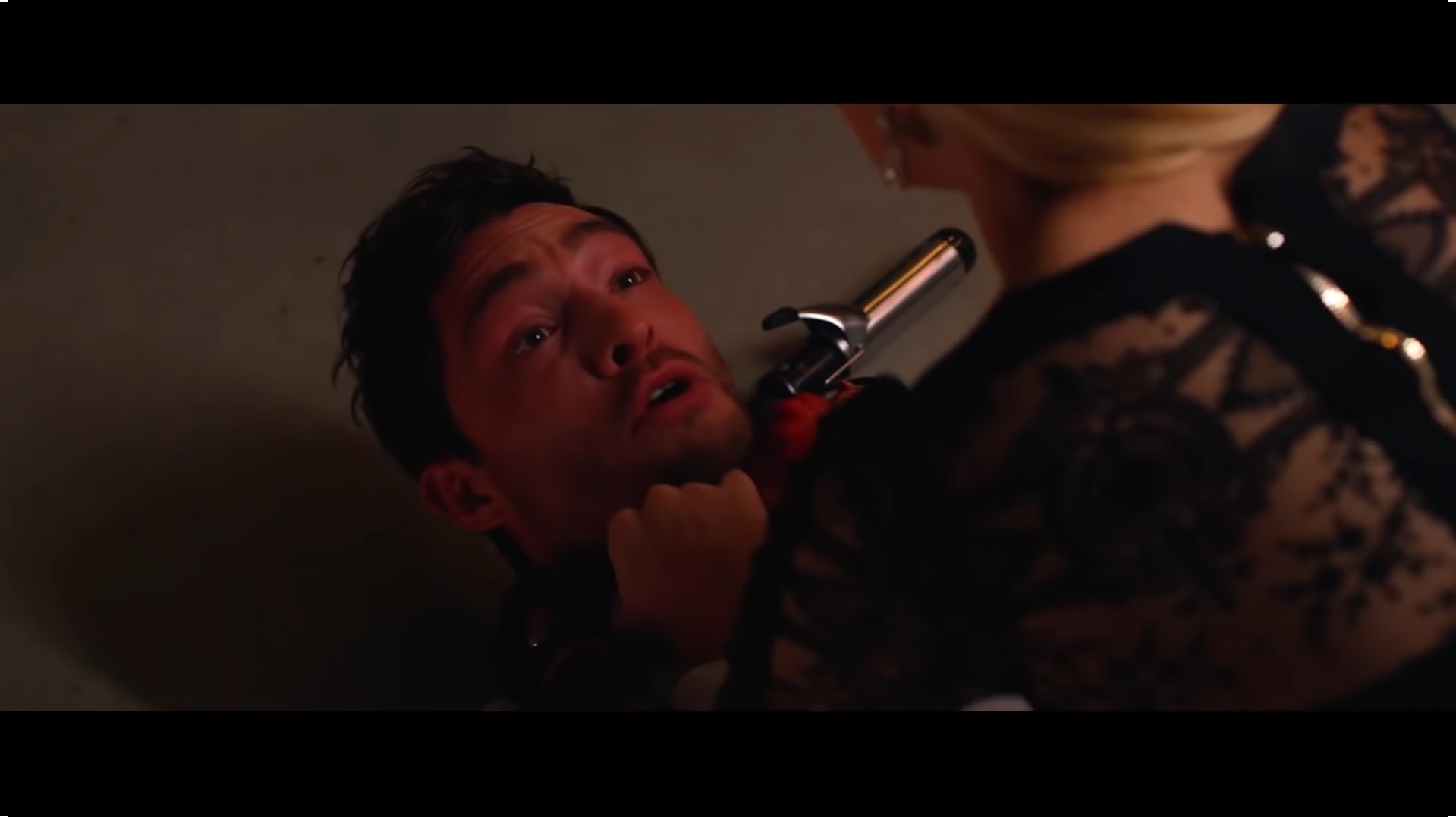
If I didn’t know any better, I would say “Me You Madness” is the riley, subconscious projection of Louise Linton who not only directs and writes the film but also leaps into to the star role as the self-absorbed Catherine Black.  It is my opinion that Linton’s desire to be a filmmaker stems from her love of moves, especially from the 1970s and 1980s, from the slew of references deliberately spoken throughout to either bring attention about and to avoid the overused tropes all together or a story structure style to galvanize the, sometimes historically ridiculous, long lineage of serial franchises like with “Texas Chainsaw Massacre” when Catherine wields a chainsaw and stops to quickly turn toward the camera to harp about the series longevity.  But, in any case, Linton is wonderful as the powerful corporate sociopath saturated in elegance and is near impervious in breaking her principles about stylish perceptions whether be her designer made outfits during kill mode or keeping red wine, and blood, of her Italian-purchased sofa…or is it a couch?  Linton is opposite the sweet, yet skillfully crafty, innocence radiated from Ed Westwick as conman Tyler Jones.  The British born actor steps into an entirely lighthearted, yet dark, role that’s undoubtedly different from his previous cache of disconsolate films of “Children of Men” or “S. Darko,” the sequel to “Donnie Darko,” with stories of gut-wrenching dread and a general sense of uneasiness throughout.  Despite having a black-comedy tone, “You Me Madness” evokes Westwick to gleam with hopeless love for a smart and beautiful woman undeterred by her then wanting to then needing to kill him because he knows too much about he in spite of her feelings for him.  As you see, the coupling dynamic in this Catherine Black and Tyler Jones show is tremendously complex and both actors are able to reach that level of radical commitment of killer zany passion but only to a limited extent.  Linton terribly overshadows Westwick’s dry, almost deadpan, manner that leaves Tyler feeling unworthy of pursuit because here you have this beautifully intelligent and aggressively possessive woman with Linton’s grand presence coming to life on screen over everyone, and everything, in the film and in strolls a rather silent and express soft Westwick that doesn’t quite fit the bill. 

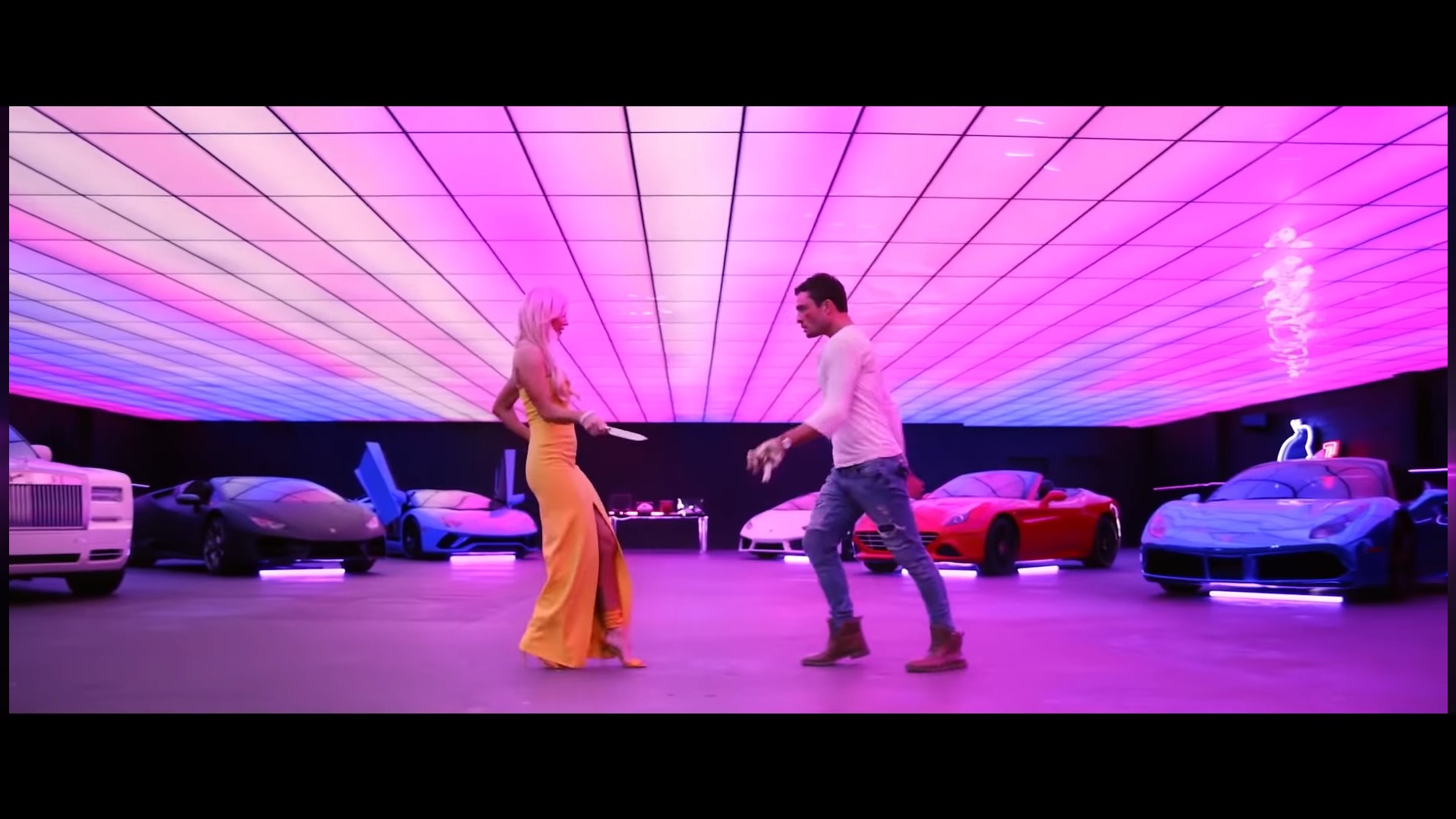
What I found to be thoughtful and carefully worked was Catherine Black’s image from the male perspective.  Like I said, Catherine is a power-hungry, manipulative, and material-driven narcissist but also beautiful, elegant, and well-versed at stratagem, but this larger-than-life character isn’t demeaning to women as a whole nor is she degraded by the, essentially, the one man in this story with her.  Most rape-revenge or women with a cause narratives inflict a barrage of choice nasty descriptors, such as cunt or bitch, toward the heroine or anti-heroine because she’s battling back against the man or men who’ve wronged her or a loved one. Linton further moves away from the odious layers of destruction lamina by stylishly beefing up the neon effervesce exterior and glam lifestyles of the rich and famous hyperextended upon with a love of an 80’s music soundtrack complete with 80’s arbitrary dancing with Ed Westwick jumping, kicking, swaying, and hypersexualizing dance moves around the Black’s house to the omnipresent soundtrack that includes bands Yello, New Order, The Pointer Sisters, A-Ha, The OJ’s, and Thompson Twins just to name a few. Linton also adds a meta touch where the main characters can turn and narrate directly at the audience to narrate their thoughts.  The unlikely of couples Tyler and Catherine have a relationship that’s being sewn together during their deadly love skirmish right before our eyes as the Catherine led audiences with a narrative disclosure of her confined world seeps into Tyler’s unguarded bubble to the point where he can now turn to the camera and speak to the audience that forms a stronger bond between them.  Yet, “Me You Madness” doesn’t quite have that perfectly coursed transition from enemies to lovers with a story that starts to become lost in itself from being built up strongly by Linton establishing, overtly, Catherine Black’s dark lifestyle choices and the kill scenario plot on this street smart thief to then watering down Catherine’s intense resolute that peters into a shoulder shrug of giving up and in to Tyler after a ferociously hellbent to cut his throat and Hannibal Lector him for dinner.

“Me You Madness” starts off hungry like a wolf film that gets physical with a smooth criminal but turns into a total eclipse of the heart that’s addicted to love and is never gonna give you up!  “Me You Madness” hits video on demand services Valentine’s weekend, releasing February 12th, distributed by STX Entertainment (“Hardcore Henry,” “The Boy”). The 97 minute duration is a celebration of enriched love more powerful than money, fancy things, and diabolical desires while also contributing playful banter and dazzling with the overkill of a voluptuary femme fatale. Ray Peschke’s cinematography grasps the “Miami Vice” vibe. Peschke’s can be on both sides of the coin with a sterilizing bright white of elegance to then flip around into a drug-fueled, kind of smoky robust color variant scene chosen carefully from a broad palette to accentuate the mood. Obviously, going full neon is important too and with Catherine’s dark room spin class, you get that rich fluorescent coloring when all riders are adorned in wearable glowsticks and a neon light illuminates their light colored clothing. Since “Me You Madness” is a brand new film opening right into the video on demand market, there were no bonus materials with the feature nor were there any extra scenes mid-or-after credits. Often wordy to be an adjunct of pop culture name-dropping, “Me You Madness” still renders as a beautifully shot, sybaritic-inclined film that slightly misses the intended mark of connection and love, but does take us out of our dreams and down the lane of playful nostalgia and frivolous fun.


Watch “Me You Madness” on Prime Video! Click the poster to watch!