A Lake Swimming With EVIL Off of “Mermaid Isle” reviewed! (WWMM and MVDVisual / DVD)


On a nearby island with an infamous past, four friends come to dock on the island from a pleasure craft cruise to explore the adjacent and serene lake surrounded by woods. What was supposed to be a fun, relaxing, and romantic getaway turns frantic when one of them accidently falls into the lake and is bitten by a mysterious unseen creature in knee high water. With a storm brewing and the bite affects worsening, the group takes shelter inside a seemingly abandoned lakeside cabin receiving an unwelcome and surprise greeting from an old woman who immediately wants to kill the injured party, but is bitten during the small skirmish and kills herself in total fear. Bewildered, the group remains in refuge from the storm, sleeping through the worst winds and rain only to wake up to find the injured and one other friend missing. Their search brings them back to the lake where they discover once bitten, there’s no saving you as the lake is a breeding ground for vicious, blood hungry mermaids, spreading their transformative contagion with a single bite. As the survivors contemplate next steps, the old woman’s delinquent adult son returns home to find mother dead and sets out to kill her murder.

Popping my mermaid horror cherry with the Jason Mills’ ravenous take on the mythical half-human, half-aquatic creature feature, “Mermaid Isle,” released in 2020. The writer-director debuted his first genre feature back in 2009 with an attic dwelling creature terrorizing an unsuspecting and already fragile and distraught family in “Above Us Lives Evil,” also more commonly known as “They Came from the Attic,” but it wasn’t until 2015 when “Above Us Evil Lives” came across our critical lap and was reviewed rather favorably for the filmmaker’s first credited venture with the following excerpt observing Mills as a “promising” director with “attributes that can contribute to the horror community” through the “strategical” use of knitting visual FX work with practical prosthetics to supply an effective heinous attic monster on a penny pinching purse string. Over a decade later, Mills continued his successful ability to turn around project after project of independent b-horror that includes the markings of spiraling madness with “The Changing of Ben Moore,” a joint home and alien invasion thriller with “Alone We Are Not,” and even tackling the mysterious and carnage-laden mythical sasquatch in “Bigfoot Country.” The director’s latest sea-faring fiends maintain the basic principle features of a fabled mermaid: an alluring, half-naked maiden on the top half with a marine flipper-tail at the bottom. Yet, “Mermaid Isle” explores the darker side of the mermaid mythology with a schlocky, self-funding of the plagued island concept with his own production company, Millspictures Studios.
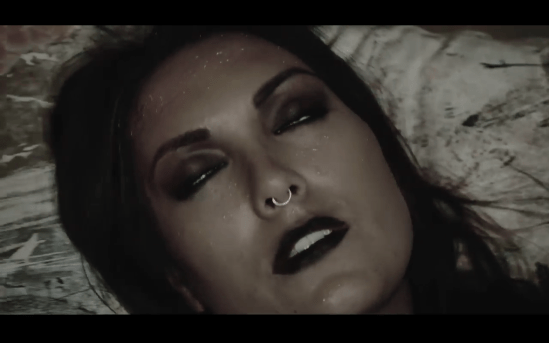
“Mermaid Isle” is very character dependent to push the story along and toward the secluded residing lake since the story concept doesn’t involve any victims to be wound up stranded, buoying in the water, and surrounded by deadly and infectious mermaids creating a filthy amount of dire circumstances of harrowing survival. Instead, we doggie paddle along with bland, monotonous, and uninteresting characters played by bland, monotonous, and uninteresting actors riding the only wave of substance of the lead character (Mark Reinhardt) being rejected upon his proposal to his short term girlfriend (Kristina Soroff). The other two in the group, an assertive goth (“Bigfoot Country’s” Kiana Passmore) and tagalong friend (Samuel Buchanon), offer little to warrant their survival as they’re targeted for either mermaid chum or to be marked for warped evolution. The young cast never click together as on screen friends or form a frantic group with a correlating enemy, but rather seem underwhelmed by the lake inhabited by evil mermaids being the source of their dilemma. There was much more interested in the double sided danger foreboding around the old woman (Elinor Walker) and her bad new son (Dan Martinez), whose mysterious ruffian background surfaces to the top as he’s eager to turn his newfangled life of a straighten arrow path is squashed back into the miscreant he was once was by hunting down those responsible for his mother’s death, but that also fizzles into oblivion. Hope for the character emerges when he declares, “time to do some bitch fishing,” as an oath to, once again, contain the mermaid contagion from spreading by some noble crusade of, oh, I don’t know, spear fishing the hell out of the creatures or taking a dive into the depths of the unknown and do a little hand-to-flipper combat. Sadly, “Mermaid Isle” continues to miss chances rewarding viewers with potential much needed plights. The film rounds out with Liam Tait, Austin Richards, and Garnet Campbell in some unresolved, barely associating epilogue set four months later.
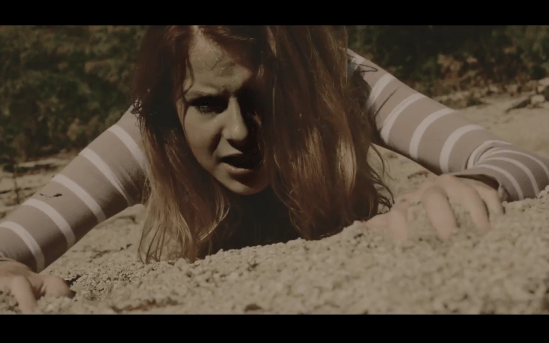
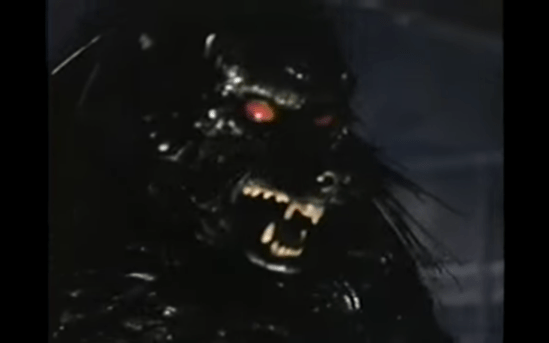
“Mermaid Isle” struggles to come up for air as an exalting mermaid horror, especially being released in 2020 amongst a sea of competing indie interests. Yet, Mill’s story spans over three and half decades beginning with a backstory, told through the words of newspaper clippings from 1983, honing in around a prefacing story of a father and son being murdered by a mermaid bitten daughter and transforms to ravage portion of the family. While the news clipping claim hoax, the mother, the old woman, who we visit in the story later at the cabin, is shuttled off by authorities to a psychiatric ward because of her rant and ravings about killer mermaids. While the slightly crafty, yet also chintzy soaked way to setup the film is engrossing enough to keep us interested at the start, the small budget stiffens any kind of any remotely rudimentary devices to then mingle man versus unnatural nature in a project too big for the budget’s britches. Further reaffirmations assume the assigning of multiple hats amongst the crew and cast, including Kiana Passmore is also the first assistant director, Garnet Campbell is the line producer, and the Mills and the Passmore families extending their services as credited Crafty and Location scouts. The story logical capsizes the moment the movie is popped into the player. For instance, the movie is entitled “Mermaid Isle,” but the Island is adjacent to a river and on the other side of that river is a lake so the premise really has nothing to do with the island, but rather a lake. The DVD back cover mentions the four friends attempting to conjure (spelled conjueron the back cover); yet, there’s none of that conjuring jazz and nothing to affix the detached epilogue to the rest of the film, as previous stated. Lastly, the DVD front cover has more gore, more skin, and even a shark in the water. Low and behold, none of those enamors exists. I will say this about “Mermaid Isle,” the mermaid itself looks convincing, obscured enough around the seams and the physical fish tale to pull off an effective mermaid creature with pitch black eyes and a face flush with hunger.
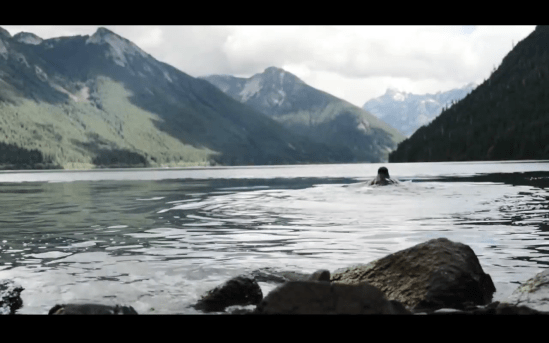
If feeling adventurous, jump into the deadly waters of Jason Mills’ “Mermaid Isle” on DVD courtesy of World Wide Multimedia Entertainment, an affiliate of Alchemy Works, and MVDVisual. The not rated, 80 minute feature, is presented in a widescreen presentation, 1.66:1 aspect ratio, and the overall video image quality is not too terrible, but lacks breadth of color, compressing the details of the woods, the rocky lake shore, the old cabin, and the snow-covered trees more favorably than would have expected. Some aliasing during more actiony sequences in the water with the mermaid swimming. The English language 5.1 surround sound mix is a complete lackluster in regards to dialogue. The muffled vocals are nearly indiscernible levels for more than half the dialogue track and heavily overshadowed by ambient mix and, a bright spot on the release, the Thomas Beckman viola that almost feels too Renaissance to be paired with “Mermaid Isle.” Aside from a static menu with chapters, there were no special features included. Having no point of refence having never seen “The Lure,” “She Creature,” or even “The Mermaid: Lake of the Dead,” “Mermaid Isle” sinks the aquatic humanoid subgenre deep into Davy Jones locker for greenhorn viewers, but bares intrigue at times with the idea of a menacingly unfathomable creature stirring in the blue waters, sloshing up enough to give you the creeps and not bother with the movie itself.

[https://www.youtube.com/watch?v=wWcq9bQGb6I]

“Mermaid Isle” available on DVD. Click the poster.

EVIL Goes Metal! “Project Metalbeast” reviewed! (Invincible Entertainment and MVDVisual / DVD)


A top secret CIA operation, known as Operation Lycanthropus, leads two agents to a Hungarian castle where they must retrieve a sample of werewolf blood in order to create the prototypical ultimate super soldier. With his partner’s throat ripped out during the initial werewolf attack, agent Butler manages to retrieve a sample after plugging the werewolf with metal bullets, but upon returning to the secret operation headquarters in the States, his supervisor, Agent Miller, and a team of scientists pursue a more subdued approach in synthesizing an advantageous killing machine. The unhinged and impatient Butler injects himself with the remaining blood sample, transforming him into a blood thirsty werewolf. After attacking and killing a scientist, Agent Miller neutralizes the beast and places him in cryogenic suspension, hidden away in the secured basement, for future sinister endeavors. Twenty years later, a new secret operation headquarters building is erected after the first burns down, clearing the way for a new team of scientist developing game changing medical technology for burn and cancer victims by creating artificial skin out of metal, but when the project is suddenly taken charge by Agent Miller, the bewildered and upset scientists are impelled to work on human cadaver trials, placing Agent Butler’s inanimate body on the operating table for a metal skin transplant. When he suddenly awakes, the base of unsuspecting scientists and military personnel come under attack by a formidable and blood hungry beast now armored plated with a metal exterior and virtually no way in stopping it’s vicious wrath.

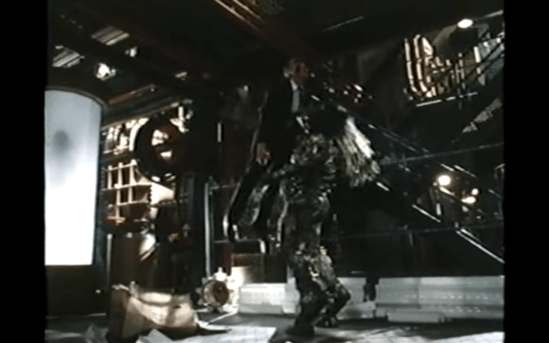
Talk about an archetypical blend of classic and tech horror, “Project Metalbeast” exemplifies the age-old theme of scientific research being usurped for control and power and the end result is fatally catastrophic. Also known as “Proect Metalbeast: DNA Overload” and just plain ole “Metalbeast,” the film was written and directed by Alessandro De Gaetano (“Bloodbath in Psycho Town”) who spun a 1995 unorthodox werewolf feature that presaged playing God in more ways than one and added a fresh and new elemental armament to an iconic, and already super, beast on the prowl. Tom Irvin, Brad Hardin, David Barrett and Wesley Wofford, who makeup (no pun intended) the special effects team of Magical Media Industries, have credits that include the “Carnosaur” killer dinosaurs and a couple of the “Halloween” franchise sequels and have applied their combined tapestry of creative talents to bring a practical, larger-than-life metalbeast to the screen that’s not only monolithic in size, but also fearsomely primal with a glint of “Terminator” characteristics in its glowing red eyes. “Project Metalbeast” was one of the last semi-cult releases of Prism Entertainment Corporation, a company that chugged out some great B-horror films mainly in the 70s and 80s with titles such as “Eaten Alive” and “Body Melt,” and one of only a few films from the associated production company, Blue Ridge Entertainment.

Before taking Jason Voorhees to space to metalize the already the indestructible carnage incarnate, Kane Hodder did a test run stepping inside the augmented paws of a gnarled werewolf. Instead of space, Hodder grounds his performance by barely able to walk on two hind legs in the fabricated prosthetic suit, but the veteran stuntman and character actor is the dynamo practical effects horror version compared to today’s CGI-guru, Andy Sirkis, thriving tangibly polar opposite on the character effect sake, but Hodder captures the metalbeast’s utmost power gait and stance despite the extremely limited range of motion. Another symbol success in his own right is Barry Bostwick as Agent Miller. Bostwick is best known for his hero role in “The Rocky Horror Picture Show,” but to me, he’ll always be the aloof mayor in Spin City opposite Michael J. Fox so it was challenging to accept Bostwick as a conniving cutthroat intelligence agent. Yet, the longtime actor has perfected the knack of being haughty in not only his performance, but in all his mannerisms, making Agent Miller a completely loathsome character undeterred by the sensitives of others. Opposite Agent Miller is the more rational and sensitive head scientist, Dr. Anna de Carlo, played by Kim Delaney who appeared in “Darkman II: The Return of Durant” that was released the same year. Delaney didn’t excel as the strong heroine one might expect her character to be thrust into a situation that calls for her to protect not only her life, but all the lives outside the base if the creature escapes and the scientist is more-or-less part of a splinter group derived from a team effort against the metalbeast. Costars include Musetta Vander (“Mortal Kombat: Annihilation”), Dean Scofield, Tim Duquette, Lance Slaughter, William G. Clark, and John Marzilli as the unhinged Agent Butler.

“Metalbeast” sounds like a metal title, but Gaetano works the orchestrated talents of Conrad Pope into the soundtrack and “Project Metalbeast,” at the time, was Pope’s scored feature as a composer, the classically trained musician has been the orchestrator on a variety of films, such as the films of “Jurassic Park,” “Star Wars,” and “Harry Potter.” Yet, Pope’s score is akin to Harry Manfredini, a character of the story, that maneuvers coincidingly with the metalbeast while simultaneously triumphantly denotes specific scenes of dread, victory, and intense suspense with the latter being reminiscent of Mandfredini’s “Friday the 13th” brashly intrinsic cello and violin composition when Jason Voorhees would startle victims on the screen and chase them down a moonlit forest path. While Pope’s score is invigorating, the story leans more toward less so with a tediously uninspired quality regarding the film’s semblance of a comprehensive secret operations base that has corridors stunk of a standard hospital setting and story structure that fortunes little against the beast’s point of view in which Gaetano merely removes a few frames and adds a distortion effect to the picture that peers out of the eyes of a drunkard’s discombobulated staggering as well as leaving some plot holes with the bit characters, such as the other military police who simply just vanish though the character pool has been whittled down near the climax. Plus, Bostwick’s Agent Miller doesn’t age in the 20-year gap in the story, leaving any tidbits of truth versus a metallic werewolf as dust in the wind. Even with the faults, “Project Metalbeast” without a doubt is a product of it’s decade with a touch of lycanthropy campiness illuminating a sardonically augmented military killing machine.

Resurrected from the video graveyard and for the first time on a home video release in the States, or at least officially, Alessandro De Gaetano’s “Project Metalbeast” lands onto DVD from independent entertainment distributor, Invincible Entertainment, and partnered with MVDVisual. Presented in a full frame, 1.33:1, the transfer looks like either a VHS rip or a scan from an unofficial DVD release with heavily lossy details amongst a washed hue overlay. There’s some transfer imperfection, such as slight scratches, but is less intrusive than the soft image. The English language mono audio is bombastic, but there’s no strength behind the explosions, beast growls, and such to emphasis the impactful scenes. Dialogue remains in the forefront behind the ambience and, even, Conrad Pope’s powerful, but non-subversive score. Depth and range are acceptable as the camera and sound relation viably work hand-in-hand. The Invincible Entertainment release is nearly bare bones without an significant transfer upgrade, no bonus features, and barely a static menu. “Project Metalbeast” lives and breathes as a poster boy of a 1990’s revamped creature feature genre that transforms a classic monster into a man’s weaponized wet dream, but the film stutters as a reserved case of conservative metal monster mayhem.

Own “Project Metalbeast” on DVD!

Available for free with a Prime Video subscription!

Neglect. Rape. Christmas Birth. A Perfect Storm for EVIL to be Born! “The Curse of the Werewolf” reviewed! (Scream Factory / Collector’s Edition Blu-ray)


Set amongst the simple, yet sometimes divisively barbaric, culture of Eighteenth Century Spain, a beggar stumbles into the castle of a cruel king whose throwing a lavish wedding reception with his lords. The King’s young bride takes pity on the beggar as his force to be the occasion’s jester to obtain scraps of food and wine, but when the King retires with his new wife, he orders the beggar to be imprisoned. Forgotten to the point of insanity with his only visitor a lovely mute jailkeeper’s maid, the haggard and disheveled beggar goes mad with ravenous intentions and when the maid is punished for disobeying the now elderly, but still cruel, King, she is locked away with the beggar who rapes her. When the maid is released next morning, she kills the King and escapes into the woods to live like an animal until she’s barely found alive by a nobleman named Don Alfredo. Nursed back to health by Don Alfredo’s servant, Teresa, and discovering that the maid is pregnant, Don Alfredo and Teresa tend to the maid until the eventual birth on Christmas Day, an unholy time to give birth to a child according to superstition. The maid dies shortly after giving birth and the child, named Leon, is then raised by Don Alfredo and Teresa as their own, but carries with him a terrible curse stemmed from the maltreatment of his parents and being born on Christmas Day that transforms him into a bloodthirsty werewolf when the moon is full. When a priest advised that only love will restrain the beast from emerging, young Leon must be continuously shown affection, but when a young man, Leon leaves home to live his life, but the beast within him returns to ravage the village’s population.

Let’s travel back in time to the groovy year of 1961 when the renowned Hammer Horror direct, Terence Fisher (“Horror of Dracula”), was accelerating to the height of his career into what would be the United Kingdom’s very own colossally cult production studio, Hammer Horror, that economically constructed violent storied horror concepts splayed with a brilliant crimson blood inside an orgasmic gothic melodrama circulating around most of the classic monsters like Dracula, The Mummy, and Frankenstein, but, in this review of a new collector’s edition of Scream Factory’s Blu-ray release, Fisher wrestled with the hound from Hell, the werewolf, in “The Curse of the Werewolf” that was penned by Anthony Hinds, under the pseudonym of John Elder, as his sophomore credit behind “The Brides of Dracula.” English studio locations were transformed, not under the light of a full moon, to fabricate a mock village of Eighteenth Century Spain with the immaculate details to the sets and costumes, surely recycled from previous Hammer films, to offset the inherent English accents on a broken Spanglish vernacular. Fisher and Hinds upend common werewolf narratives, spinning a wildly tangent rendition of Guy Endore’s already highly taboo tricked out horror novel, “The Werewolf of Paris,” and drape it heavily with Gothicism.

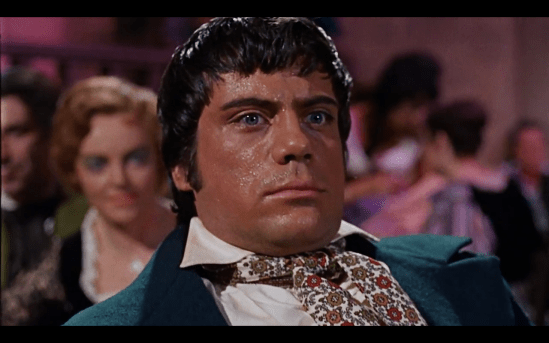
Playing the shapeshifter werewolf is Oliver Reed who at the time was relatively unknown, playing a few bit parts such Plaid Shirt (“Wild for Kicks”) or my personal favorite, Man With Bucket on Head (“No Love for Johnnie.”) Yet, Reed exuded animalistic qualities, such as his dark features and somber eyes, that made him ideal for the role by appearances alone. The thespian in him didn’t quite fit what I believe Fisher was trying to flush out for his beast as Reed held back with a stoic reserve rather than a man desperate for salvation or death, but no one could deny that Reed wore the werewolf makeup like no other, a fine tuned testament of makeup artist Roy Ashton’s creativity that intensified an already beastly framed actor. “The Kiss of the Vampire’s” Clifford Evans took the role of being the wealthy socialite and surrogate father, Don Alfredo, who took the responsibility of raising a cursed child as his own with much suppression love as he could muster to stave the beast from returning. The legendary actor who starred in countless crime-dramas step outside his niche and into horror, even if at the time horror was considered a schlocky exercise of distaste content for a cheap thrill. As Don Alfredo, Evans wages his worth solely on the prospect of being a gentled hearted father-figure doing the right thing even if it’s detrimental to himself and the veteran actor triumphs taking an aloof man with little responsibility to his village, let alone his home, and turning him into taking the matter of his adopted son’s affliction into his own hands when he fails to cobble another solution together. “The Curse of the Werewolf” holds many other fine support performances from “Circus of Horror’s” Yvonne Romain as the mute jailkeeper’s maid, Catherine Feller, Richard Wordsworth, Warren Mitchell, Anne Blake, and John Gabriel.

“The Curse of the Werewolf” is driven not by the snarling teeth action or the transformative body horror one expects of Lycanthropy features. Instead, Hammer’s film rides a story high without being arbitrary with nonsensical waning on the centerpiece of the story, the curse, coursing the path that led to Leon’s fate that was no fault of his own. Leon’s throat-ripping moonlight rendezvous was bred from cruelty and circumstance of severe class division that reaps the life from those in the same blue collar social class as Leon, leaving the higher, wealthy class virtually unscathed by the curse’s wrath in a cruel ironic twist of events. With the story leading the charge, special effects and makeup take a backseat without only some immature fangs and shadowy lurking to sate the need for creature presence. When Roy Ashton’s vision of the half-man half-beast does make a full presentation of Oliver Reed in the full hairy beast getup, complete with a furrowed brow, elongated lower canines, and large wolf ears that were connected with bristly, greyish brown hair down the side of his lower jaw, the werewolf is worth the wait for some of the best practical werewolf makeup from the mid-20th century and surely was the inspiration for future werewolf films, such as “Wolf” with Jack Nicholson. The novelty of “The Curse of the Werewolf” still remains ripe despite being nearly half a century young, giving the beast a meaningful, if not also pitiful, existence to empathize being damned on two fronts: a wretched, cursed soul and being the target of a village mob.

Can love soothe a killer heart? Find out in Scream Factory’s collector edition Blu-ray of “The Curse of the Werewolf” with a new 4K scan from the original 35mm negative and presented in a 1080p high-definition widescreen format of a 1.85:1 aspect ratio. Rendering with clean textures and superb details, the image has remarkable vibrancy and hue balance in it’s tinctured technicolor. The transfer is virtually blemish-free, suggesting that the original negative aged well, with agreeable natural grain to complement the film stock. Scream Factory has produced the best looking version of this classic Hammer release. The English language DTS-HD single channel Master Audio renders, again, scot-free of aged distortion with the high-definition eminent boost to providing even clearer dialogue and untarnished ambient clattering during more turbulent scenes of laughter or beastly disarray. English subtitles are optional. A collector’s edition wouldn’t be complete with a slew of bonus materials and, boy, does “The Curse of the Werewolf” have brand spanking new material for the special features that include a new Roy Ashton tribute piece by his friend and “Little Shoppe of Horrors'” writer Richard Klemensen and new audio commentary with film historians Steve Haberman and Constantine Nasr. Plus, interviews with actors Catherine Feller, Yvonne Romain, Mike Hill, art director Don Mingaye, art department member Margaret Robinson, and filmmaker Jimmy Sangster in “The Making of The Curse of the Werewolf” featurette, a look at Lycanthropy that discusses whether man’s inner wolf can be a transformative source of mental will, a still gallery, and the theatrical trailer. The package is illustrated with Oliver Reed’s snarling werewolf persona by Mark Maddox, who designed Scream Factory’s “The Thing” release, and comes in a nifty cardboard slip cover. All in all, Scream Factory brought new life into the re-originating and re-orientating “The Curse of the Werewolf” that is, perhaps inarguably, the best Hammer upgrade to date.

Own “The Curse of the Werewolf” today!

EVIL is a Slice of Deep Dish Hell in “Creepy Tales of Pizza and Gore” reviewed! (Bayview Entertainment / Screener)


Pizza, that delicious concoction of bread, marinara, cheese, and your topping of choice kneaded and pieced together in a gooey circular of staple culinary awesomeness, has somehow found its way baked into an Italian-sans-meatball horror anthology that promises an equally saucy taste of crusted blood red gore. Five varied, harried tales of horror molded into a gruesome and terrifying VHS-style that will send chills down your spine as you swallow your first piping hot bite of pizza will either have you hungry for more or hurling out your pepperonis. These tales of macabre include the cursed audio tracks of a deadly screaming ghost, the grisly torture and murder in the name of Satan, the tragic and supernatural deaths of two ill-fated lovers, a wooded creature stalking stranded motorists, and a VHS tape that seeks revenge on its former, ungrateful owner.

Let’s take our time traveling machine back to 2014 where Italian filmmaker, Lorenzo Fassina, releases his second feature directorial film behind the horror-comedy, “Anamnesi Mutante,” transmitting by way of a five tale anthology humorously entitled “Creepy Tales of Pizza and Gore;” the titles of the shorts are “Screaming Ghost,” “Devil of the Night,” “Alone in the House,” “Wood,” and “Killer Tape.” Co-directed with producer Marco Giangiarelli, The Milan born Fassina’s background also includes being a director of a collection of short films and music videos for bands that include Italian metal bands Cripple Bastards and Viscera///, similar music scores the anthology. The eclectic tales that greatly homage horror of the 80’s that include rich in color film titles and poignant atmosphere audio mixes, each have a runtime average of approx. 10 minutes long, and offer a mixed macabre of subgenre goodness from technological horror to inanimate object horror besieged with an interlacing host, a faceless, demon-like presenter with much to say, much like the Crypt Keeper. My apologies in advance as the screener that was provided didn’t have subtitles so the host’s soliloquy goes mostly misunderstood, but by the way of editing and how the syntax is structured, one would assume the ghoulish emcee sets up the pizza eaters with the next short video nasty. “Creepy Tales of Pizza and Gore” is produced by Fassina’s indie company, DirtyTape.

Most of us in the States more than likely won’t find any familiar faces inside the confines of these five tales and, know what? That’s okay! Aside from our hell bound host, there’s not a lick of dialogue spoken, but the capability to connect with the characters and the capacity to understand the story without words is as transparent as crystal clear waters of the Venice canals. An assemble of facial and eye expressions and a well edited together script and structure by Fassina for each short provides a sustainable and a sufficient menacing mixed bag of mouthwatering horror. The largely novice cast has either worked on previous projects with Fassina before or are an unknown delight to us viewers and cast list includes Sara Antonicelli, Beatrice Cartoni, Jonathan Farlotta, Jacopo Grandi, Francesco Marra, Tommaso Meledina, Alessandro Melito, Riccardo Tiberi, and Bunny Roberts with a cherry on top topless scene for good measure.

I’m not a terribly big fan of anthologies. Yes, I enjoy “Creepshow 2,” like every other horror fanatic smuck, and I do revel in the grave zest of the low-budget spectrum, especially with compilations from directors of the “HI-8”, aka “Horror Independent 8,” that featured the bloodbath films of some 80s/90’s SOV prodigies in Ron Bonk, Donald Farmer, Tim Ritter, and Marcus Koch, but most anthologies find their unsuccessful way right toward the trash bin, condensed to third-rate releases with little-to-no marketing and hardly any surplus material in the special feature department. “Creepy Tales of Pizza and Gore” may be a foreign anthology barely making an insignificant speck in the cinema market, but certainly shouldn’t be overlooked as the derived golden age of an immensely beloved straight-to-VHS horror courses through the veins of Fassina’s reverencing anthology. The stories garnish b-reel content, but not necessarily effortless or incompetent in substance and range from serious, to tongue-in-cheek, and out right absurdity, with the latter stories being the weaker links. In all, it’s a fun and entertainment horror show from our Italian friends.

“Creepy Tales of Pizza and Gore is delivered fresh and blood warm onto DVD home video courtesy of the New Jersey based distributor, Bayview Entertainment. As aforementioned, Bayview Entertainment publicity provided a streaming screening link so the audio and video aspects will not be critique for this review, but the DVD specs include a single disc, Anamorphic widescreen presentation, with an unrated rating on an Italian language anthology that, supposedly, has English subtitles – my screener did not have subtitles. Bayview Entertainment’s DVD casing resembles entirely like a VHS-cassette with faux movie rental stickers stuck on the outer plastic. The packaging is a nice and warranted touch to a VHS-homaging anthology. There were no special features included with the screener or released in the press release. Chow down on night with “Creepy Tales of Pizza and Gore;” a validating horror anthology worthy of time and effort and reaffirming the faith in anthologies once again with wild, imaginative macabre ambitions without the stiffening efforts of pushy financiers calling behind-the-wheel shots.

“Creepy Tales of Pizza and Gore” won’t disappoint! Buy here on Amazon.com

EVIL Can Never Replace Love in “After Midnight” reviewed! (Umbrella Entertainment / DVD)


Well known country boy Hank has everything he could ever need in the small, rural Florida town: having an establish family lineage, being the owner of a local bar hotspot, and obtaining the love of the beautiful Abby. Their gleaming happiness suddenly goes dim when Abby abruptly takes off, leaving a note with little information of her whereabouts or her plans. Fraught in her absence, Hank drinks himself into a stupor most nights of romantic nostalgia while also fending off his rustic home from a beast out of the surrounding woods that continuously scratches at his front door nightly. Hank’s friends believe he’s suffering a mild mental break as night-after-night, the snarling beast evades Hank every effort to capture and kill it.

“After Midnight” is a sheering melodious and delicately programed romance-horror from “The Battery” writer-director Jeremy Gardner allotting co-directorial duties again with continuous collaboration beside Christian Stella. As Gardner’s third film in the director’s chair, second inside the realm of horror, “After Midnight” brandishes more a sappy love story that sings the tune of a love lost warrior where the relationship woes lie within the deepest, darkest corners of himself rather than being a frontline horror sprinkled lightly with dusted coating of amorous renewal. “After Midnight” is a topsy-turvy monster movie not for an insouciant genre fan who rather skim the surface for blood on the topsoil than dig feverously for the originating root. If you’re also a fan of the mysteriously acclaimed, H.P. Lovecraft-inspired “The Endless,” the filmmakers behind that film – David Lawson, Aaron Moorhead, and Justin Benson – produce “After Midnight” under their Rustic Films label in association with Vested Interest, Cranked Up Films, and Kavya Films, casting that querying memento clinging like a foreboding, nagging scratch needing to be itched.

Not only is Gardner the director, he also stars as Hank, enduring the multi-hat involvement in his films in thematic fashion from his previous films, spearheading the roles in “The Battery” and “Tex Montana Will Survive!,” and Gardner has also branched out beyond his work, having roles in the visceral Joe Begos’ films “Bliss” and “The Mind’s Eye.” Gardner sports his common wear of a U-shaped V-neck t-shirt and bushy beard overtop his large frame and wields a sharp tongue, whiplashing small witticisms as he charms his serenading rustic charisma upon Brea Grant as Abby. The “Dead Night” actress enacts every man’s inherent fear of being lost without their better half when Abby hightails from Hank’s steadfast stance on life. Grant provides a flood of emotional drought through a series of Hanks’ melancholy, good times flashbacks that provide backstory fuel to Hanks’ quickly withering grounded state. Gardner and Grant’s chemistry eerily dons the routine life span of young love and weary complacency without so much showing the beat work argumentative discussions and differences of a diminishing relationship; their natural banter never derails even amongst a bedeviling beast with nightly visitations on a drained Hanks’ doorstep. “After Midnight” fleshes out with a cast of superb supporting roles with nearly Henry Zebrowski (“Cut Shoot Kill”) stealing the show as a half-wit yokel, Justin Benson (“The Endless”), Ashley Song, Nicola Masciotra, Taylor Zaudtke, and creature performer Keith Arbuthnot as the man in the monster suit.

Speaking of the monster suit, the unknown origin creature is very Guillermo del Toro-esque with a quasi-rubbery look, but still renders terribly real with the puppetry facial expressions and Keith Arbuthnot contorting his body to exuberate natural movements. However, don’t look to be thrilled by a ferocious beast as the constant the source of contention. It’s more of an afterthought, a pleasant afterthought, filling Hank’s Abby void or is it? It’s a question you’ll be contemplating when the credits role when a monkey wrench finale disrupts your premediated blue print scheme of a reason for the creature’s existence. Romance and melancholy cross paths in an overwhelming heap of love sickness, guilt, disappointment, and jealousy in a well thought out, smart dialogued version of a self-growth narrative.

There always seems to a malevolent monster behind the scenes, perpetrating the demise of a flourishing relationship exemplified by a beautifully wicked allegory in “After Midnight” distributed onto DVD home video by Umbrella Entertainment. The transfer is presented in the original widescreen, 2.35:1 aspect ratio, on a region 4, 83 minute runtime disc. The presentation is virtually flawless with palatable natural coloring, gleaming southern-sweat coated, natural looking skin tones, and overall details with Hank, and Hank’s house, looking specifically grimy and unkempt. Greenery is of a brown lush backdropped inside what could be anywhere small town America. The English language 5.1 Dolby Digital surround sound audio renders a nice range and depth with the monster’s muffled scratching and growling outside the door, the shotgun blasts are powerfully exalting, and the dialogue clearly couriers through all relationship qualms and Hanks droll dialogue. As of many Umbrella Entertainment standard feature releases, there are no bonus features nor a static menu. “After Midnight” is a contagious love story for not it’s mushy, heartfelt, weepie doting into the tears of self-pity, but for that lingering presence of sinister cynicism the monster epitomizes, a stark terror scratching every night under the skin until the unbearable hole in our hearts is finally sated by love’s return.

“After Midnight” available on DVD at Amazon