A haughty and unpleasant stock trader taking an Uber to a late-night business meeting stumbles upon a drug deal gone bad. Monstrously bad. A werewolf intrudes into the exchange, killing three people and biting the trader on the shoulder. Stumbling into the nearby woods disoriented and with a pocketful of cocaine, his desire to relieve the pain from his shoulder as well as to escape the nightmare of being lost and confused in the woods lies within the white as snow narcotic housed on his person, but every time he takes a nasal hit, his addiction curses him into becoming like the wolf that attacked him. Happening across a film crew shooting a microbudget horror film and having no clue what’s happening to him, he partakes with the director’s cocaine habit that fuels his inner beast to come out and hunt them down one-by-one to rip them to shreds high on nose candy.
Much the same way the farcical “Sharknado” gave birth to a few analogous action-horror spoofs with similar ridiculously punned titles, such as “Clownado” or “Lavantula,” that combines a vilified thing with one of the many wraths of mother nature, 2023’s “Cocaine Bear” too began the same conceptual nonsense that spewed out “Attack of the Meth Gator,” “Cocaine Shark,” and now, we’re treated to the next level of hopped-up creatures with “Cocaine Werewolf.” Helmed by longtime microbudget horror filmmaker Mark Polonia, under the Polonia Bros. Production banner, and penned by first time screenwriter Tyger Torrez, the 2024 horror-comedy cuts the werewolf’s bane with powdery coke, spiraling the legendary lycanthrope into a stimulated frenzy of blow. “Camp Blood’s” David S. Sterling of Sterling Entertainment funds the in-and-around Wellsboro, Pennsylvania-shot project with fellow producers Ford Austin (“Dahmer vs. Gacy) and Cleopatra Entertainment’s Tim Yasuni and Brian Perera (“Frost,” “The Black Mass”) serving as producer and executive producer.
Returning to the schlocky world of penny-made horror is Brice Kennedy who has reconnected with Mark Polonia since “Razorteeth” and “Splatter Beach” from 2007. Shortly after Mark’s brother, John Polonia, unexpectantly died in 2008, Kennedy returns to the in front of the camera scene in 2024 after a lengthy hiatus of 17 years. Kenney takes the lead role of the cocaine addicted stock trader bitten to become a rampaging werewolf with a proclivity for nose blow. The West Virginia native never lost a step in those 24 years of off camera with a smooth slip into an obnoxiously crass stock trader jostled to wander the woods and to be anxious to get to the next snort of his pocket narcotic. Kenney plays on a fraction of the rubber masked werewolf, with Mark Polonia and others donning the snarling molded and faux hair stitched latex, but we don’t know or can’t tell which portion of the man-wolf Kenney portrays. Brice carries much of the story until he meets the film crew halfway, through the muck of drug deals gone sour between actors James Carolus and Titus Himmelberger of “Sharkula,” a pair of unlucky drivers behind the wheel of their cars in Michael Korotitsch (“Motorboat”) and Marie DeLorenzo (“Sister Krampus”), and two hunters, from James Kelly (“Sharkula”) and Jeff Kirkendall (“Motorboat”) suspicious of the recent mauling deaths of their neighbors and find themselves way over their head with the animal that’s causing all the carnage. Principal position shifts from being solo to a shared introduction of the film crew, exploring satire of making a low-budget, independent horror movie about a hackneyed clown slasher (Noyes J. Lawton, “Virus Shark”) chasing two girls through the forest. Those two females leads, Jamie Morgan (“Motorboat”) and Greta Volkova (“The Last Frankenstein”), get put through the trope wringer with lesbianism tendencies and gratuitous shower nudity, not to also neglect mentioning being damsels in distress from a killer clown, and become centrically the focus toward heroine, aka the final girl, as the cocaine werewolf infiltrates their small band of filmmakers. Hot on the savage beast’s trail is Ken Van Sant (“Virus Shark”) as the local sheriff baffled by what’s tearing people apart. If you couldn’t tell already, the cast is comprised of Mark Polonia regulars, those who have worked together on numerous projects, and have a kind of inner circle rapport with each other from the various Mark Polonia Bros. productions and this also includes Cody Losinger, Tim Hatch, Yolie Canales, and Alyssa Paige that rounds out “Cocaine Werewolf.”
I had promised myself after reviewing “Motorboat” dismally, I would stay away from another Mark Polonia production but because of my personal philosophy and prejudge avoidance policy of not researching and previewing films before watching them for critical analysis, I burned myself into Mark Polonia’s world once again. I was duped in part of Cleopatra Entertainment being partnering producers and the distributing label as they’re becoming well known for release moderately subpar horror product and have their own entourage line of actors, actresses, and filmmakers, such as Devanny Pinn and Brandon Slagle, with notable B-movie guest stars like William Shatner (“Star Trek”), Vernon Wells (“Commando”), and Udo Kier (“Blood for Dracula”) in some of their releases. Additionally, I absolutely enjoyed “Gun Woman’s” Kurando Mitsutake from print-to-film manga adapted “Lion Girl” that recently saw the physical media light. Unfortunately, I did not get the same pleasure out of “Cocaine Werewolf” under Polonia’s formulaic filmmaking and while Polonia does apply some effects techniques, mostly off-kilter visual f/x such as the added cold breath, the blood spurts, or the swirling faces that indicate human-to-wolf transition, but there isn’t a consistency to them and doesn’t blend into “Cocaine Werewolf’s” whole tone in what is more of a convenience choice rather than a unifying or connective element. “Dead Ant” and “Psycho Goreman’s” Josh Wasylink’s werewolf mask design would be any kid’s Halloween wet dream in what has pretty remarkable detail contrasted against the microbudget. Granted, there are not pneumatic or hydraulic components to the constant mask but a little blood here, a little blood there, and some glowing red eyes and you got yourself a damn good-looking, classic-feeling werewolf.
From Cleopatra Entertainment, the film division of music label Cleopatra Records, comes “Cocaine Werewolf” onto an AVC encoded, 1080p high-definition, BD25 Blu-ray. Frequently lacquered in a CIG haze, the ungraded image manages to retain a solid definition of sharp detail presented in an anamorphic 1.85:1 aspect rato. This can be good and bad for the image quality that while really creates delineation around textural clothing and the ample foliage it can also really expose to a fault and emphasize the rubbery inanimate mask along with the large cut out eyes, blackened with dark makeup to try and make the mask and the actor seamless. Depth is fine and medlied across multiple locations and the color range has natural, varied pop, diffused into the smokey trope atmospherics and angled up and key lit cinematography by Paul Alan Steele. Blacks are slight washed but not crushed or with significant banding. Like most Cleopatra Entertainment releases, the soundtrack overwhelms enough of the other audio layers in this English language LCPM Stereo 2.0 that it slightly takes of the edge of the impact, but the lossless quality awakens the snarling, growling werewolf noises and the dialogue is amply consistent throughout that even the Gothic rockabilly score from The 69 Cats doesn’t fully immerse viewers solely in the band’s dark melodiousness. Bonus content includes a Mark Polonia commentary, which the director is usually pretty good about supplying and supporting for most of his work, an image slideshow, and the trailer plus trailers for other Cleopatra Entertainment releases. Physical attributes of the conventional encased Blu-ray include an uncredited but insane Red Riding Hood inspired illustration on the front cover. There is no reverse side of the cover nor are there any inserts included in his release and the disc is pressed with the same front cover image. The unrated Blu-ray comes region free and has a runtime of 80 minutes.
Last Rites: “Cocaine Werewolf” is better than most of the contemporary Mark Polonia body of work, but the heart-pounded effects of his laced comedy-horror is not addictive enough to produce the euphoria to warrant another line hit, leaving this derived werewolf indie in withdrawals.
World-renowned but virtually unorthodox and cursory neurosurgeon Dr. Seymour Caligari removes yet another brain tumor with relative ease from a cancerous-afflicted patient. After the large golf ball sized tumor is discarded for oncology dissection and study in the lab, the once lifeless biological malignant specimen escapes from the medical pan and starts violently attacking people on a rouge killing spree. Having absconded the hospital grounds, the tumor continuously stays on the hunt for its next meal, devouring the distasteful locals surrounding Dr. Caligari’s mansion home. Caligari, his son Dash, and stepdaughter, Kitsie, who is an alcoholic and is also oddly dating her stepbrother, soon find out that the nearby, forest hiding tumor is growing into a large, tentacled, and toothy ball with bloodthirsty, feeding frenzy tendencies and it’s up to Caligari’s family to reconnect whole their interfamily relationship faults if they want to stop it before it consumes more victims.
A practical schlock tribute to the pre-1980s monster movie, this 2024 release “Brain Tumor” embodies every bad, mutated cell that defined the ridiculously slathered B-movie creature features of yore, the ones that aired late enough to be seen by the burning the midnight oil few and were described with every exclamatory interjections and horrifying, vocabulary descriptors you could think of to put shock, terror, and fear in large, screen-to-screen filling grotesque font. Glen Coburn, who’s directorially debuted with the “Blood Suckers from Outer Space” in 1984, wrote and directed his latest comedy-horror cheapie in nearly three decades since his last feature. The American-made picture reteams Coburn with Bret McCormick whom both helmed a segment in the “Tabloid” horror anthology alongside the third co-segment director, Matt Devlan. This time, the “Repligator” and “The Abomination” producer McCormick designs Coburn’s tumorous creature, much like the body-bred monster of “The abomination,” with “Tabloid” actress Kay Bay producing the film under Whacked Movies, distributed by TinyBig.
“Brain Tumor’s” schtick is part half-century ago creature feature and part absurdist humor brought upon by the cast of caricature characters beginning with Dr. Seymour Caligari in off the cuff remarks and off topic comments that no one patient wants to hear while in the middle of brain surgery, which, if I’m correct, requires you to be awake depending on the type of operation. Behind Caligari is an actor who is usually behind the camera in Bil Arscott, cinematographer for “Christmas of the Dead” and gaffer for the Ryan Kline black market human meat selling comedy-horror short film “Meat.” Perhaps the less sensationalist absurdist in the entire picture, Arscott is joined by Jack Mahoney and Sydney Hatton as son Dash and stepdaughter Kitsie who embody the light “Cruel Intentions” incest between siblings. Yes, I know they’re stepsiblings but there’s still a creepy factor about it. Plus, Kitsie’s mentioned on multiple occasions about her alcoholism but that sidebar aspect her character doesn’t flourish or become problematic. Dash tries to convince himself his father has nothing to do with the recent string of murders while Kitsie’s devil’s advocate reign of suspicion marks the doctor complicate. In the end, none of the complexities amount to anything in a fiery fight finale of man versus malignant tumor with casualties in between from mostly interesting yet throwaway characters in biopsy researcher Phoenix Leach (Danielle Wyatt), Caligari’s medical assistant Freddy (Aspen Higgins), a bordering predo-priest Father Bud (Matt Tucker), and 2000’s indie scream queen Anjanette Clewis (“Witchcraft 13,” “Suburban Nightmare) in perhaps the only gory scene in the entire film.
At eye level, “Brain Tumor” is nothing more than a quirky horror-comedy conjured up with slim conceptualization from Coburn seeking to spend a shoestring budget. Not a ton of substantial story inside this framework of a cantankerous killer tumor with a vaginal mouth, snakelike tentacles, and a single ocular just above the vagina dentata. With no mutational cause for the creature’s resulted effect, the titular terrorizers mostly skulks in nearby bushes and grabs those stupid enough to leave the confines of their home to check out that weird sound. Following a formulaic path similar to monster movies of the 1950s modernized to reflect with a jab of a politically divided climate and a liberal sense of humor, “Brain Tumor” fails to that semblance of an under-the-veil of Golden Age cinema veneer classified by those archaically rendered B-films, substituting the strived charm of making the most of it with farce and satire just like most modern movies that more-or-less mock what once was for a serious creature feature. Without the presence of significant monster mayhem and without the presence of a personality, Coburn’s creature metastasizes into too many benign lumps that it causes a deficiency in entertainment, horror, and for it’s intended comedy.
“Brain Tumor” arrives onto DVD home video from rising physical media distributor MVDVisual in distributive collaboration with Whacked Movies. The MPEG2 encoded DVD5 is upscaled to 1080p from the standard 720p resolution. Picture quality doesn’t hold many qualms through an ungraded and brightly lit digital compression. There’s an artificial quality to the rudimentary visual effects that emits a plastic and hard-edged surface without a smoother blend into the frames. Color density is quite sharp against the off-and-on emerging details when green screen tactics are not being utilized or the scene is not overexposed with natural lighting. Audio specifications are not listed on the back cover, but my player has identified the English language mix encoding as an uncompressed stereo 2.0. Digital audio retains a crisp and clean reproduction albeit the feedback crackling during higher pitched screaming. Dialogue renders clean, free of obstruction, and with prominence over the other encoded tracks and despite it’s microbudget, an onboard mic doesn’t seem to be used here based off the clarity and depth of sound. There are no subtitles available with this feature as well as no bonus content in this barebone, feature-only release. The unsigned illustrated front cover art is neat though, an above average Ghana-like design that’s more accurate to the film’s storyline. Aside from the sexy front cover, that’s about the sum of “Brain Tumor’s” physical allure with no insert accompaniments and a disc art pressed with partisan screengrab of the monster. The 76-minute feature comes unrated and is region free.
Last Rites: While I applaud the use of a stationary, yet tangible, bio-organic mutated creature instead of a visual effects atrocity, “Brain Tumor” is terminally fated to be a miss amongst fans both old and new with too little monster, too little gore, and too little sense to save itself from itself.
A rebellious, preteen girl wading through the stepfather muck of new family dynamics befriends a small spider she discovers while snooping around a neighbor’s room in her apartment building. The unique, small spider can mimic her every vocal sound, quickly captivating the girl’s interest as she seeks solace from her upended life, and the spider is constantly hungry being sequestered to a jar as the girl’s newfound pet. The more she feeds the spider she’s named Sting the bigger it grows in a short period of time. During the night, Sting unconfines itself and roams the airducts, immobilizing apartment residing animals and people alike with a potent paralyzing bite, to then web-encase them in the ducts and feast upon her captured prizes while still alive. When Sting threatens the girl’s family, she must put her angsty squabbles and feelings aside and take the fight to her once beloved pet that has now become a giant, flesh-eating, arachnid.
There hasn’t been this much fun in a giant spider movie since “Eight Legged Freaks!” “Sting” is a 2024, Australian creature feature from “Wyrmwood” franchise director Kiah Roache-Turner who pours portions of his own experiences in life into the script, metamorphosing “Sting” from being not only just a monstrous amount of arachnophobia but also a personally purging of multitude of fears rolled up into one web-slinging scary movie. The story is set inside a slum apartment building in New York City at the centric mercy of a Northeastern blizzard; however, “Sting” is actually shot on a production stage in Sydney, in the New South Wales province of Australia, that has taken on the doubling duty for The Big apple. “Sting” is a coproduction between Align Films, Pictures in Paradise, and See Pictures with “Wyrmwood: Road of the Dead’s” Michael Potin, Jaimie Hilton, and “Daybreakers’” Chris Brown producing.
The cast is comprised of mostly Australian actors modulating their voices to the American accent and doing a rather impeccable job at it with only a slight slip of a slower drawl. The principal nuclear family opens in the middle of new dad throes, the building’s handyman Ethan (Ryan Corr, “Wolf Creek 2”) struggling to not only meet the demands on his slumlord boss / stern aunt by marriage named Gunter (Robyn Nevin, “The Matrix Reloaded”) but also navigate a path toward a better, more-to-his-liking job while also reaching through and connecting with his defiant stepdaughter Charlotte (Alyla Browne, “Furiosa: A Mad Max Saga”). Sting, the spider, runs through the apartment tenants that include a depressed and alcoholic widower (Silvia Colloca, “Van Helsing”), a monotone marine biology grad student (Danny Kim), and even a spirited exterminator (the only American in the film in Jermaine Fowler, “The Blackening”) who holsters a nail gun for NYC protection as well as vermin gas bombs on his utility belt. All-in-all, diversity is rich if not slightly stereotyped, but Roache-Turner does a really good job at telling their backstories through the camera shots and without the need for much expositional dialogue, such as the unsaid death of the widower’s family but enough visuals and grief expressions do formulate what happened. Components of backstory life heighten the tension, or even share awkward moments, collectively between neighbors and family members that lead to presumptions and to, eventually, an explosion of distrust and anger that makes the perfect screener to blind them what’s really creepily-crawlingly around. Noni Hazlehurst and Penelope Mitchell (“Hellboy” ’19) conclude the casting as immigrant mother with Alzheimer’s and her first-generation daughter married to Ethan and trying to also navigate a precarious life out from under her slumlord aunt’s grasp.
“Sting” is one of those movies that reminds horror fans why the genre is great and beloved. Titular spider named after the “Lord of the Ring’s” sword that injured Shelob, the giant spider, in “Return of the King” and a definitive “Alien” inspired film, complete with a viciously blood-thirsty extraterrestrial bug that suspends prey with webbing and a badass female heroine, “Sting” masters the giant spider effect by mostly using practical means. That’s right, a giant spider puppet, manned by eight puppeteers, checks most of the computer-imagery at the door and enters with confidence from master of effects Sir Richard Taylor and his team from Wētā Workshop, who has help build effects for the recent “Mortal Kombat,” Ti West’s “MaXXXine” films, and has had a helping hand in the MCU. Skulking on ceilings, stealthily silking down, locomoting with smooth, natural movements as the spider, approximately the size of large black Labrador, has manipulated properties to lurk and hunt to visually feed the need and scare the phobia right into your once comforted being. The story’s struggling family and honesty-is-the-best-policy themes ground “Sting’s” rabid arachnida with relatable turmoils, especially from a parenting and child point of views and anyone who has had children or parents, like the majority of us do, will understand preteen problems. Ultimately, Sting represents childish hidden secrets, something they can control of their own volition, and a rebellious cause that’s ironically not good for them, turns uncontrollable, and is an obvious problem, akin to doing drugs for an extended period. Sting might not be a line of cocaine or a hypodermic needled filled with narcotic poison, but space spider does have toxicity that courses a paralyzing agent conveyed by a single bite.
Spiders are the demonized sharks of the land and continue to string webs of fear inside audiences. Well Go USA Entertainment Blu-ray of “Sting” proves spiders still secrete a damn good monster movie that’s one part “Aliens” and one part “Charlotte’s Web” with an AVC encoded, 1080p high-definition, BD25 release presented in a 1.85:1 aspect ratio. For a Well GO USA product, “Sting” is one of their better compressed discs that I’ve seen, retaining unexpurgated blacks and fling out glistening, texture palpable details throughout, and there were a plenty of black and low-lit areas to what afflicts most of the label’s releases, a potentially image sidelining obstacle. Coloring is a tad soft but moderately sound when juxtaposed against an enormously, slick gun-metal toned spider. The English DTS-HD 5.1 Master Audio surround sound mix renders with strength, a solid, multi-channel testing sound design when the spider creates a clatter in the airducts for back, side, and front localization. Depth appropriate is fine as well as a wide range of audio action onomatopoeia. No issues or obstacles obstructing the clean and clear dialogue, layered in the forefront and level weaved into the action where needed. English subtitles, as well as English SDH and French subtitles, are optionally available. Typically, we do not usually receive in-depth special features from Well Go USA due in part of his long history with Eastern films where bonus content seems nearly nonexistent. For “Sting,” there’s a substantial behind-the-scenes featurette taking a long look on the Roache-Turner’s concept and inspiration, the Creation of the Monster sizes up how the special effects were completed by Sir Richard Taylor’s company, interviews with the cast and crew on making the film, and the theatrical trailer. Encased inside a conventional Blu-ray Amaray, Sting has, in my opinion, a very effective, genuinely creepy poster of a spider walking across the floor next to a body, graded in a blue hue and working deep with the shadow angle for potency. Well Go USA surprises again with the fun disc pressed art of a toon-ish illustration that doesn’t seemingly fit the rest of the package marketing but becomes clear from the storyline. An advert for the company’s other newer releases, “The Flying Swordsman,” “Your Lucky Day,” and “A Creature Was Stirring,” is adjacently tucked in. “Sting” has a well-paced 91-minute runtime, is region A encoded for playback, and is rated R for violent content, bloody images, and language.
Last Rites: No doubt about it. “Sting” is fang-tastic! A modern spidersploitation film that flexes hard, built upon the strong backs of some great pop culture and science-fiction horror moments as an endearing tribute.
Along the serene Thailand shores, a doctor and his young colleague take their family and fiancé to a beach resort for some much-needed time away after a massive casualty natural catastrophe on a nearby island swallows the entire village with seismic volcano bedlam. Little do they know that a component of the disaster has swam to their very watery spot on the beach resort and gnashed without remorse on the doctor’s family and fiancé. Not knowing what kind of creature could do such carnage, they soon discover through first hand witness accounts and the evidence gathered that a large crocodile, mutated by man’s own disregard for mother nature, is the culprit. The men, along with a fisherman who believes in a destiny of a beastly showdown, swear to track down the killer croc and kill it. The crocodile’s bloodlust on mankind is seeming unstoppable as it wreaks havoc swimming down river, destroying entire villages in its destructive and hungry path.
Thailand’s reptilian “Jaws” equivalent, “Crocodile” wriggles with wayward ferocity in this giant creature feature horror that rivals Bruce the shark. “Computer Superman” director Sompote Sands oversees the enormous amphibious aggressor versus frantic and frightened man film that merged or morphed from Won-se Lee’s “Crocodile Fangs” into a blending of the two productions of the same film of one seamless man versus animal hunt above and below the surface of the water. Sompote Sands produces the venture along with a postdated credit toward exploitation producer Dick Randall (“Pieces,” “Escape from Women’s Prison”) from “Crocodile Fangs.” Coproduced by Robert Chan and Pridi Oonchitti, “Crocodile,” or rather “Crocodile Fangs,” was a multi-national undertaking with Thailand and Korean actors and crew and a Japanese special effects company bringing the giant, carnivorous maneater to cinematic actualization. The Chaiyo Productions spliced feature was distributed into the U.S. under Cobra Media.
Doctors Tony Akom and John Stromm have it all; Akom (Nard Poowanai, “Ghost Hotel”) has a beautiful wife and child and leads a charmed life despite his vocation challenges of being a doctor always on call. and Stromm (Min Oo) is recently and happily engaged to Angela (Ni Tien, “Black Magic” 1 & 2). Their vacation doses audiences with a picturesque double date plus one child but does a rough patch setup of Dr. Akom’s family neglecting workaholism that isn’t crafted to be a strain on the relationship he has with his family but rather bring upon him tremendous guilt and inset the good doctor into a studious montage of crocodile research after his family becomes crocodile chow. Sympathy toward the doctors is incurred but the level of sympathy falls low as the ladies’ death scene falters in the editing room, or perhaps was only partially shot, as only one of them is visually attacked while the others are grieved over in postmortem. Character will is strong enough to carry the anticipated revenge but the giant crocodile is truly the main star stud, a vicious, village-obliterating mammoth of armor and teeth goes full Godzilla on the riverside communities and dining buffet style on anyone, land or sea, who makes a splash in his kill radius. Unlike in “Jaws,” “Crocodile” is back-and-forth without the mysteriousness of the shark’s lurking underneath the glassy surface, snatching swimmers and boaters to a watery, gory grave, and this really solidifies the crocodile as an intended principal figure as a well-known, full-visible, antagonistic killing machine spurred by man’s own atomic-making hand; an idea that’s only theorized in exposition and not practically fleshed out. “Crocodile’s” cast fills out with Kirk Warren, Angela Wells, Hua-Na Fu, Bob Harrison, and Nancy Wong.
“Crocodile” very much embodies the “Godzilla” and “Jaws” with deference without being a total negligent rip of either more widely successful hit. The crocodile, in the form of its oversized whipping tail and rather big and detailed puppet head, raze miniaturized villages, much the same way Godzilla tramples over Tokyo in the 50s through the 80s, and the storyline for “Crocodile” parallels portions of Steven Spielberg’s 25-foot man-eating Great White tale of three men boarding a boat to hunt down a formidable creature, complete with yellow barrels and a sinking ship to an exploding finale. Antiquated by today’s standards, for late 70’s, the special effects are a marvel to behold. Kazuo Sagawa, of the special effects company, Tsuburaya Productions, lead the department with size-mattering scale and detailed depictions of villages and boats being quickly and violent undone by either a crocodile puppeteer or a mini-croc circling the boat and even, at times, being wire-flown through the air, bombarding the model ship with WWF elbows (do crocodiles have elbows?). Action sustains an intensity that’s wrathful and keeps the heart palpitating with excitement. The same thing can’t be said about the story through the choppy editing style, often times revisiting cut scenes being spliced into progressive context, but the setting, exterior weather, and clothing haven’t changed.
Synapse Films obtains the original Cobra Media distributed U.S. release and meticulously restores “Crocodile” in a 2K scan from the original 35mm camera negative, premiere the film for the first time on Blu-ray worldwide. With an aspect ratio of 2.35:1, the AVC encoded, 1080p high-definition, BD50 is a deathroll of beauty and when Synapse says meticulously restored, the poof is in the details and coloring. Not a ton of age wear or damage, a nearly pristine print for some intricate touchups to invigorate the content. One brief series of scenes appeared as if the film cell was folded with a blended vertical line down the right side, much like a scratch would appear on the film but this looked different; however, the line did not substantially affect viewing. Between the rapid severity of the crocodile thrashing and the reduced frames of select slow-motion sequences, there is nothing to fault about Synapse’s compression with objects keeping intact and away from ghosting or aliasing. Blacks are generally faded but don’t show signs of posterization or banding. The English print audio spec is a DTS-HD MA 2.0 mono dub. Fidelity of the original audio is retained, uncompressed for lossless sound in all areas of the ADR, Foley ambience, and the cue soundtrack of the impending or attacking crocodile, with a hint of John Williams theme in the opening credit track. English subtitles are available, but the dub is perfectly clear and prominent. Special features include an audio commentary with writer and film historian Lee Gambin, a video interview with Won-se Lee, director of “Crocodile Fangs,” deleted and alternate scenes from different country versions of the film, and the original theatrical trailer. The standard release comes in a green Blu-ray Amaray without the “nude” slipcover but has the same original, clothed illustrated artwork. Inside, the disc is pressed with a toothy faceless creature versus and a scantily cladded bikini woman. Opposite side is the usually accompanying Synapse catalogue for this year, 2024. The R-rated feature has a runtime of 92 minutes and is region free!
Last Rites: A Thailand terrorizing monster movie with unrelenting savagery and terrific special effects for circa late 70s. if you can withstand the story’s choppy waters, “Crocodile” is a fun and fierce swim through predatory, blood-suspended waters.
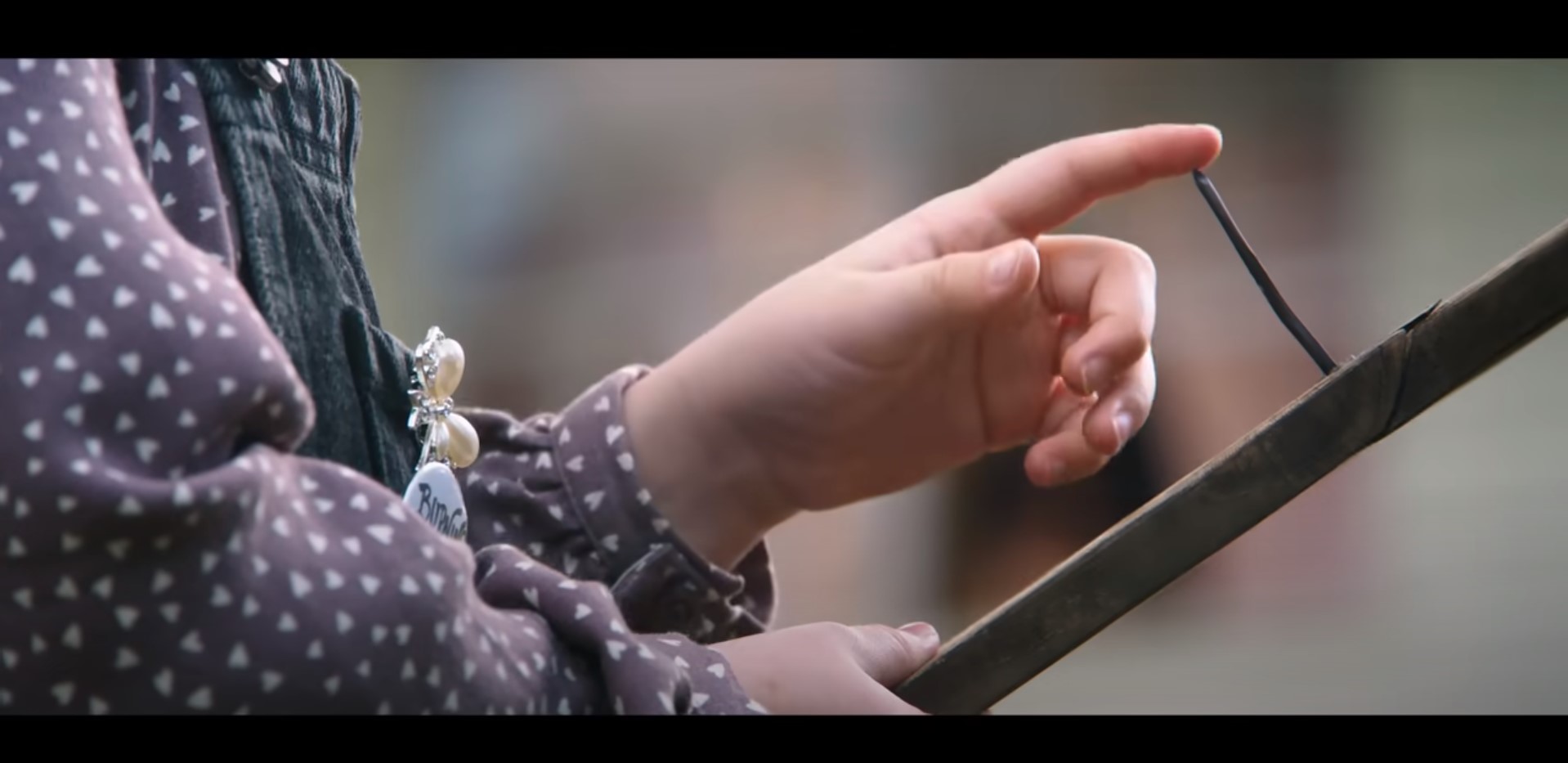
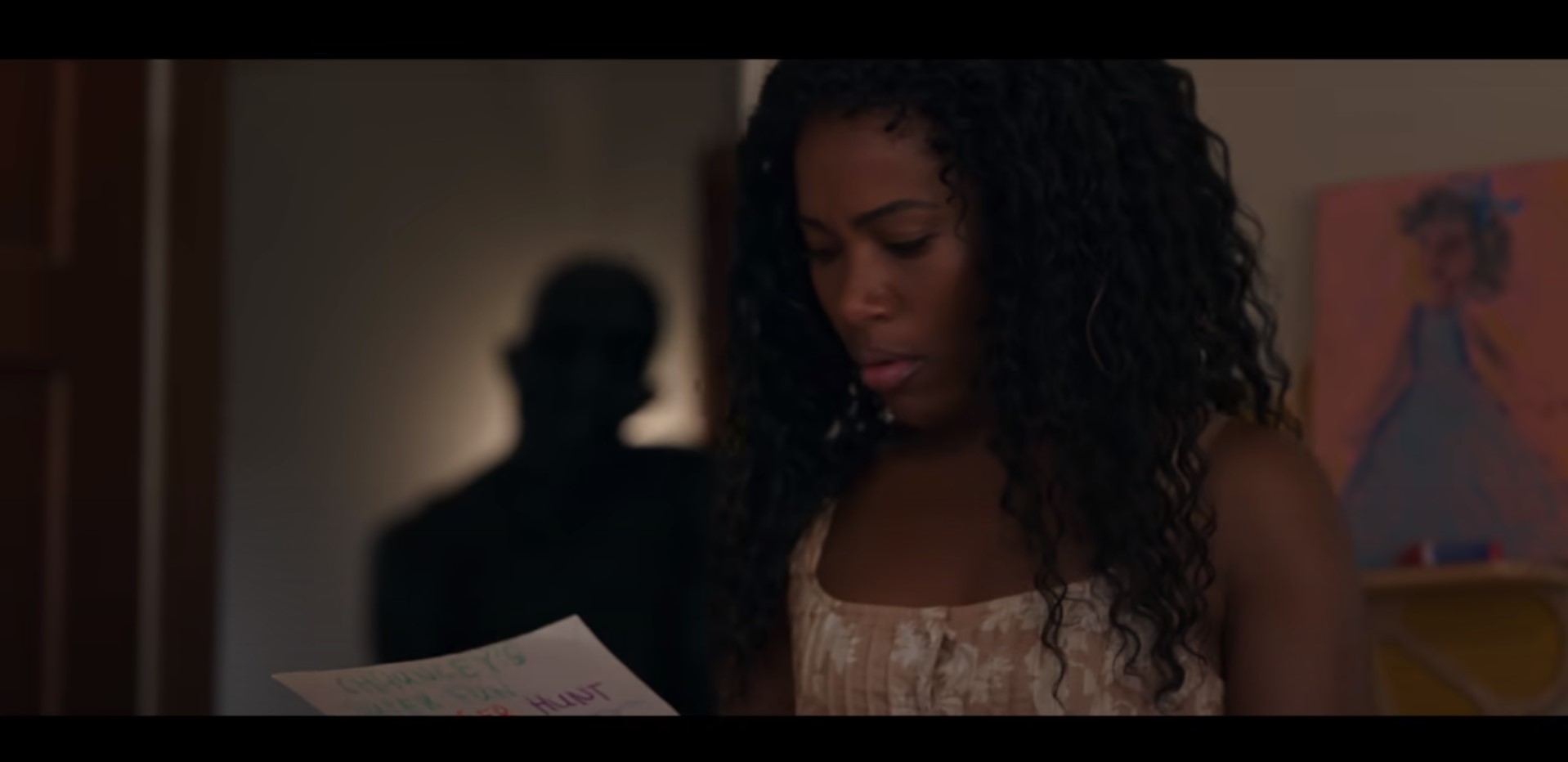
Jessica purchases her family home, moving in with her new husband and stepchildren where she reminisced being happy once as a child up until her father’s mental breakdown forced her to move out of the house and live with her grandmother. Returning to her childhood home might have suppressed most of memory but has also spurred a few good recollections she aims to share with the conflicting attitudes of her stepdaughters, the angsty, teenager Taylor and her little sister, Alice, who suffers from a traumatic past. When Alice discovers a stuffed bear in the basement and conjures up an imagery friend named Chauncy, Jessica feels content knowing Alice is coping with a new friend outside intense therapy sessions but when Chauncy’s seeming innocent scavenger hunt turns to hurt Alice, all the forgotten, difficult memories of her past surface and Chauncy is more than an Alice’s imaginary friend but spurned entity seeking to reconnect to Jessica, feed off her unique creativity, and keep her always in the Never Ever world of imagination.
At least once during our childhood, we all had an imagery friend to lean on, to play with, to cope with difficult situations. For me, my imagery friend was an 8-foot white teddy bear I would snuggle into its lap and read my adventurous stage one or two books to. For Lionsgate and Blumhouse, their imagery friend is much, much more sinister! “Imaginary’s” dark twist on the juvenile fantasy is the brainchild of writer-director Jeff Wadlow, the filmmaker behind 2018’s “Truth or Dare” and 2020’s “Fantasy Island.” The Charlottesville, Virginia native seemingly has thing for spinning games and fantasies into crooked, ill-fated variants. “Princess and the Frog” writers Greg Erb and Jason Oremland cowrite the script with Wadlow, adding their experiencing in writing children stories for Wadlow’s eviscerating of childhood joy. Lionsgate Films and Blumehouse Productions distributor the Tower of Babble Entertainment film with Jason Blum, Sean Albertson, Paige Pemberton, Paul Uddo, Jennifer Scudder Trent, and Jeff Wadlow producing.
In the crosshairs of a targeting imaginary friend is Jessica, a successful children’s book author on the outside of trying to assimilate herself into a new family while, at the same time, struggling to understand her nightmares and troubled childhood past. DeWanda Wise (“Jurassic World: Dominion”) stars the struggling, but good-natured stepmother Jessica who’s married to “The Walking Dead’s” Jesus, I mean Tom Payne. Taegen Burns and Pyper Braun play Payne’s sibling daughters in their respective roles of Taylor and Alice as they make their horror film debut. Detrimental to “Imaginary’s” silkiness of a happy couple is the artificial interactions between Wise and Payne who appear to be just going through conventional motions of a very awkwardly scripted and painfully garish couple. When Payne departs the entire climatic acts for his character’s musical tour, other characters begin to flourish more naturally from between Wise, Burns, and Braun who become entwined into a certain teddy bear’s revengeful plan and this fountains a pleasant range of character arcs with overcoming fears, building character emotions, and settling the tension between them within the context of a common foe narrative. One crucial, tell-all character goes critically by the wayside because, at the very last possible moment, Betty Buckley (“Carrie”) as the longtime neighbor Gloria becomes a deluge of exposition and she’s only introduced in full much later into the story because the writers had no idea how to integrate her earlier and make the information Gloria sits make sense until desperate moments arise. Buckley, though monotone at times, makes for a good crazy lady. “Imaginary’s” cast fills out with Veronica Falcón (“The Wind of Fear”), Samuel Salary, Matthew Sato, and Alix Angelis (“The Cleansing Hour”).
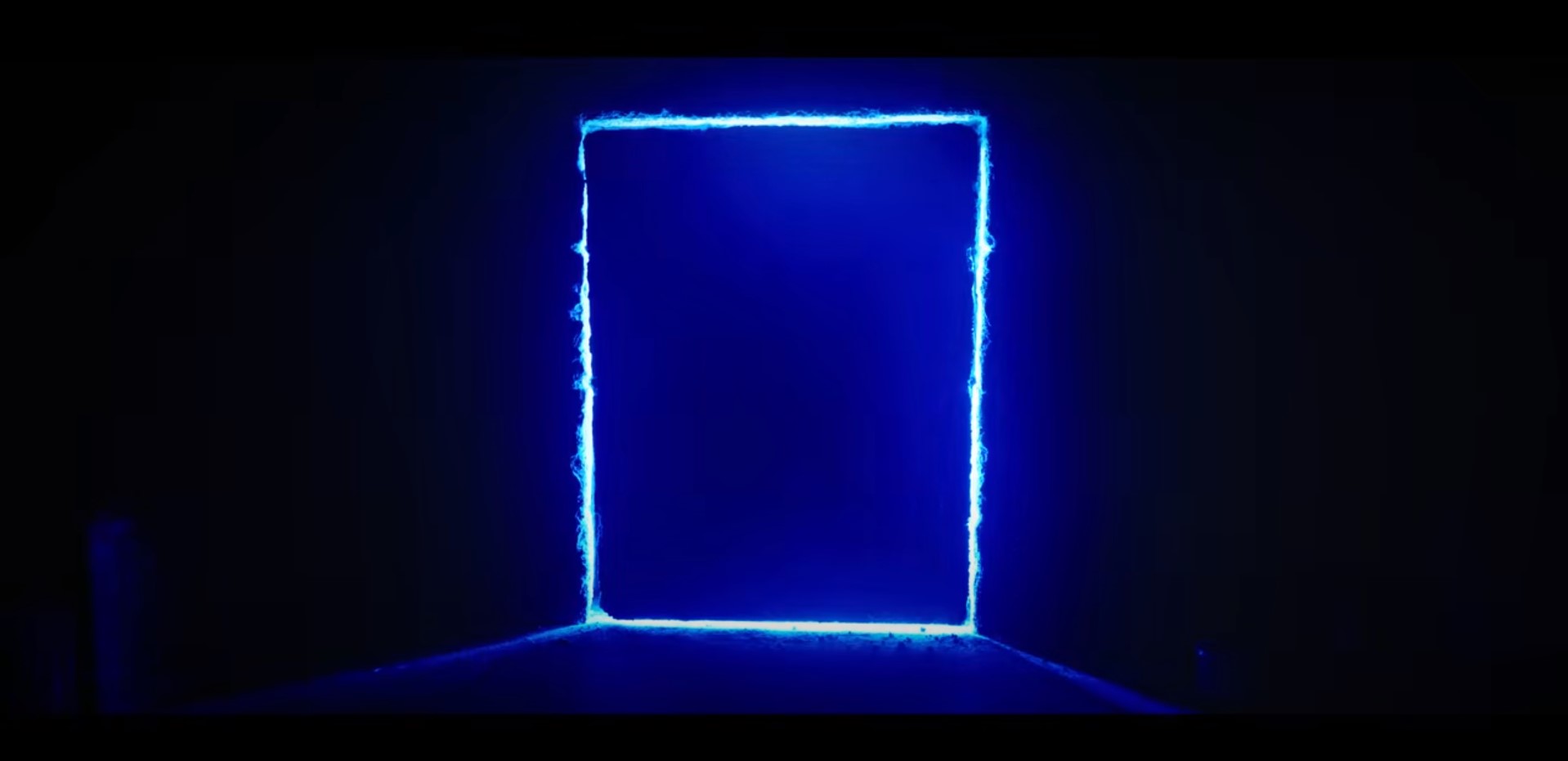
Audiences will need to expand their imaginations to get immersed into “Imaginary’s” interdimensional, child creativity-eating plot that careens through the specifics and details. “Imaginary” suggests children have this invisible pal that snake tongues into their ears, feeding them childish ploys and harrying shame to get them to do what they want, and, inevitably, suck them into the Never Ever world through a checklist bizarre ritual. The story suggests a globally subversive circle of these entities have been explains that every culture has a take on the imaginary friend concept and even throws into the dialogue other children having disappeared shortly after speaking of the Never Ever but the shorted change of the widespread disappearances background and the fact that crazy old, neighbor lady Gloria somehow surmised a pile of information on the subject, self-published knowledgeability on the ritual, being, and even the Newer End world, provides threadbare, credulous support for the storyline. Stylistic and visually, “Imaginary” endorses its own title with tactile manifestations of the entity’s power. Men in nightmare costumes is always preferable over overly silky-smooth and impalpable computer-generated monsters and the work done by the effects crew greatly engenders childish fears with an overgrown, toothy, scary teddy bear and a topsy-turvy world that are magical yet foreboding.
Snuggle up with your Teddybear and get ready to be scared in “Imaginary” on a 2-Disc DVD and Blu-ray set from Lionsgate Films. The AVC encoded, 1080p high-definition, BD50, presenting the film in a 2.39:1 widescreen aspect ratio, is a solid showing of image integrity with crafty cinematography from James McMillan (“Twisted Metal“) that avoids the seams of the monster suits, keeping them in a considerable degree of low-level shadows, and using odd angles to make contradictory scenes flush in the Never Ever. Yet, despite the max storage capacity of a 50-gigabyte disc, compression banding still rears its ugly between gradient tones contrasting dark and lit scenes; problematic areas are not entirely throughout the picture but intermittently spotty to say the least. The DVD9 is MPEG-2 encoded with an upscaled 1080p. The English language option is a three-dimensional Dolby Atmos surround sound and if Dolby Atmos was going to be used for anything feature, “Imaginary” would be that feature with tons of range and depth mechanicals to float audio into the spatial fields above and below. When Never Ever doesn’t formulate a logical structure and up is down and down is up, Atmos caters and evolves to the fluid environment, emitting pinpoint ambience to be shaped to the size of television room. Dialogue comes over clean and clear, established in the forefront amongst the other audio layers. Spanish and French 5.1 Dolby Digital surround sound are also available audio options with English, Spanish, and French subtitles to select from. Special features include a feature length audio commentary by director, and cowriter and producer, Jeff Wadlow with producer-actress DeWanda Wise. Also, encoded into one long featurette, are four medium-short mini-featurettes of Meet Your New Imaginary Friends of getting to know the characters of “Imaginary,” Frills and Thrills of taking a child’s joyous creativity and twisting it into a creature-laden nightmare, Crafting the Beast of Imaginary is a look at the tangible creations of “Imaginary’s” monsters, and Bringing Nightmares to Life looks at how the Never Ever is constructed and shot to get the illusion of an upside down interior slice of another dimension. Sheathed inside a glinty, nearly lenticular, cardboard slipcover is the traditional Blu-ray Amary, both with the innocently, ominously looking Chauncy bear on the front cover. In the interior, each side houses a respective format within a push lock. A digital copy does come with the release within the insert clasps. “Imaginary” is a PG-13 horror (are they trying to appeal to kids?) with a runtime of 104-minutes and a region A playback.
Last Rites: I Imagine “Imaginary” could have gone over ten times as smoothly and more coherent with a longer runtime time to flush out more characters and a better designed narrative. Instead, pacing is quickened to race through unpacking more complex themes: childhood abuse, childhood trauma, the division of the original and regluing of a new nuclear family, family history of mental illness, the concept of imaginary friends, and so forth. The result is a less than desirable bastardization of an imaginary friend that leaves us high and dry for more context and substance than just a puppeteered scare bear.