The EVIL Peruvian Whistle of Death! “Face of the Devil” reviewed (MVD Visual / DVD)


Deep inside the Amazon jungle of Peru, seven friends getaway from university life by staying at a remote riverside resort.  No cell service.  No nearby towns.  The resort shelters an idyllic retreat for those looking to escape the mundane routine of the real world, but the jungle is also home to an indigenous evil entity, some may even label it the Devil.  Better known among the locals as el tunche, the trickster spirit prays on innocence and the naïve, psychologically tormenting with a foreboding whistle indicating it’s nearby presence.   With no help in sight and nowhere to hide, the jungle comes alive with an ear-piercing whistle that seeks to swallow the seven vacationers to their doom. 

To some extent, horror lives and dies by permanency of myth and legends, cultivating inspiration from ancient, as well as new, mythical beasts and spirits and spin them into entertainment macrocosm or, perhaps, even to just simply to share the rarity of knowledge and heritage surrounding the tales.  If in American mountaintop forests bigfoot roams inconspicuously around populated areas, breeding enigma and scaring children around campfire stories, then in South American, el tunche does much of the same instillations for the Peruvians who inhabit their legendary fiend, preying on delinquent youths, in the dense jungle.  Outside of Peru or maybe even South America, el tunche is not globally known, but for one Peruvian film from 2014, local lore becomes broaden beyond confining borders and creeps right into our home video media players.  Director Frank Pérez-Garland helms the maligning mythos with “La Care del Diablo,” aka “Face of the Devil,” from a Vanessa Saba screenplay set in the ominous jungles of Peru plagued by a wandering and whistling evil spirit searching for those lost among the tall trees and foliage.  Peruvian based Star Films and La Soga Producciones spearheads the production located on set of an ecolodge in the uncommercialized area of Tarapoto just North of Lima and serving as producers are Gustavo Sanchez (“The Green Inferno”) and Varun Kumar Kapur. 

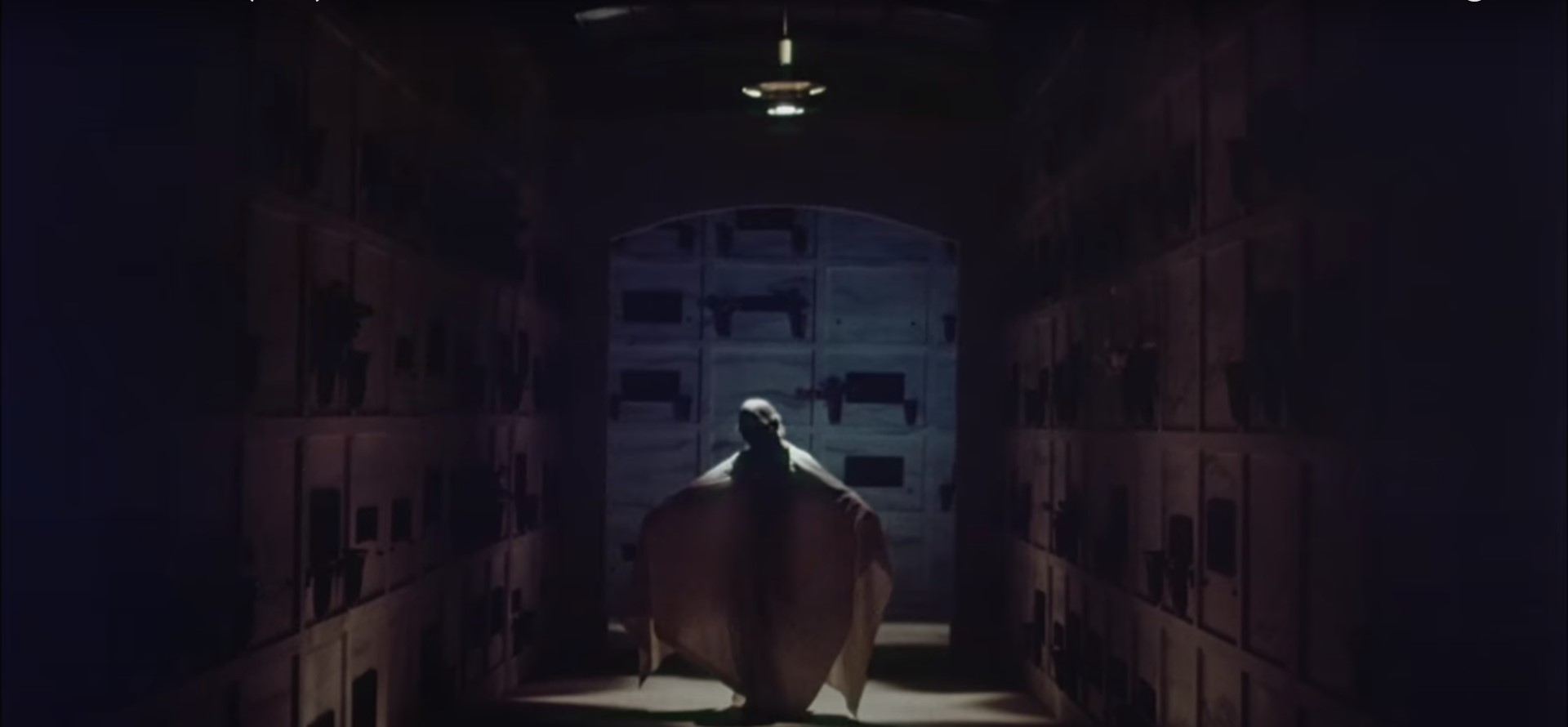
“Face of the Devil” is a hyper localized narrative that’s fully contained inside the jungles of Peru as well as a casting all Peruvian actors with zero other nationalities appropriating roles for a mythological tall tale extension that rightfully needs to be expressed by native filmmakers.  As such, you won’t recognize a face amongst the cast unless you’re eyeballs deep into South American cinema.   The film opens with a dream sequence of a young girl staring at her towering mother’s weird, unholy behavior that ends with her mother, played by writer Saba, quickly reaching out for child and abruptly awakens from the dream is Lucero (Vania Accinelli).  Lucero’s nightmares become an important reoccurrence, like an omen, that doesn’t seem to upset the college freshman despite the nightly fright, but other aspects upset her father to the point where he yells at her for wanting to go on a trip with her friends, signifying a quick trip into unspoken complications sanctioning Lucero’s mother death that worries the same fate may also fall upon his daughter.  Before we know it, a reluctantly agreed to Lucero is river boating with her six friends:  couple Mateo (Nicolás Galindo) and Fabiola (Maria Fernanda Valera), Camila (Alexa Centurion), Paola (Carla Arriola), Pablo (Guillermo Castañeda), and new boyfriend Gabriel (Sergio Gjurinovic).  The friends are seemingly full of life, love, and fun but the dynamic turns only slightly complex with love triangles that only go as far as being the butt of the weekend’s jokes.  The characters do very little in the story, splashing around in what seems to be an unreasonable number of ecolodge pools for most of the time while playing spin the bottle, truth or dare, skinny dip, or just make fun of each other because, as a trope bylaw, that is what college-age kids do to spark tensions and cause divisions, and I find the characters and their portrayers to be uninspired to do or be more that invokes the frisky wrath of el tunche.  Javier Valdez and Ismael Contrearas bookend the cast of characters as two polarizing stances on dealing with otherworldly spirits by either being cautions and frightened as Valdez is with Lucero’s papa or embrace the spirits for self-purpose as it is with Contreras who plays the resort owner. 

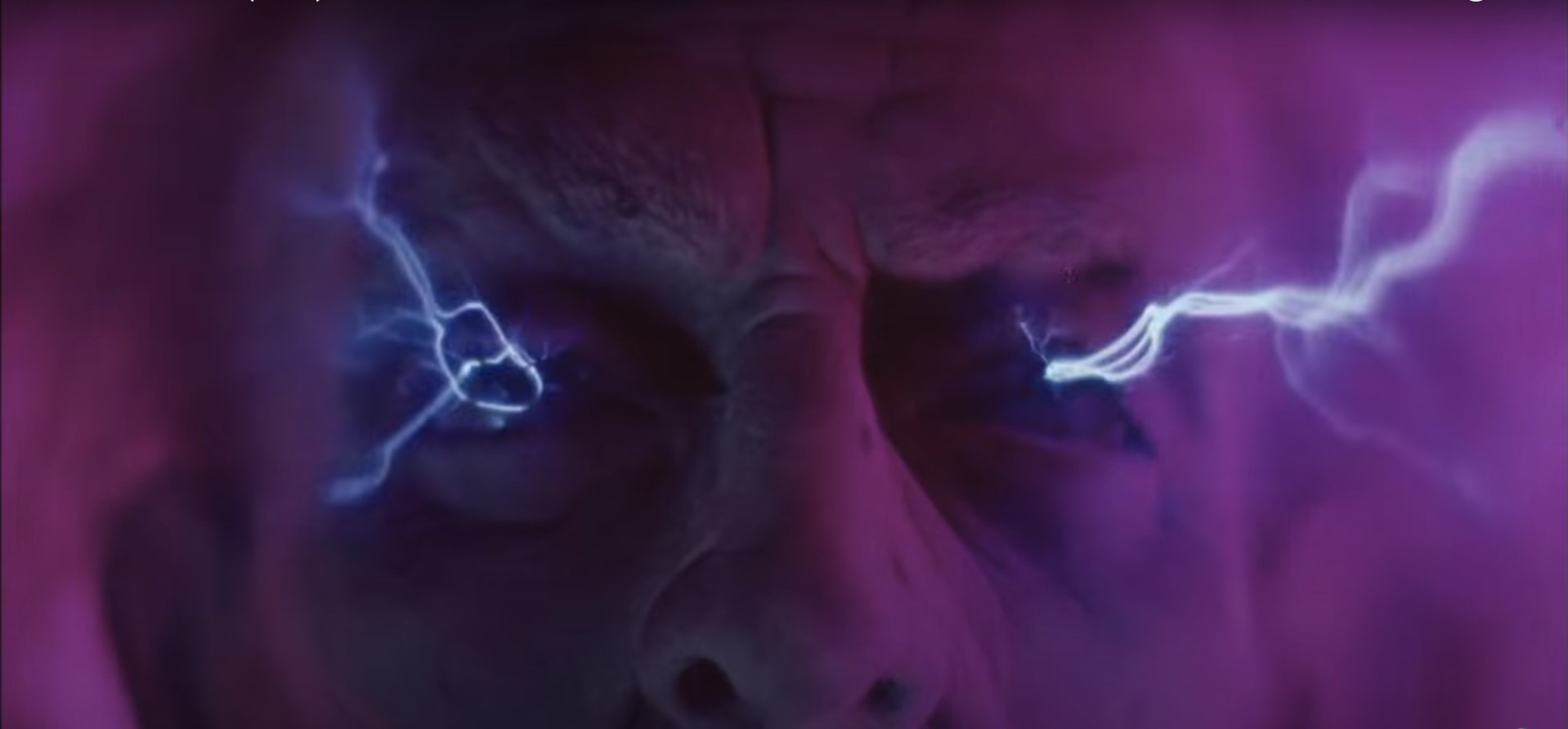
“Face of the Devil” has all the properties of an European-fried and campy-peppered supernatural kill tally, drawing elements from the jungle cannibal subgenre sans the cannibals and the teen slashers sans the slasher.   Instead, el tunche is an all but forgotten myth lost over time through the generations until “Face of the Devil” calls to mind the cautionary dangers of cultural wise tales for naïve and disrespectful youth who wind up on the deadly end of el tunche’s mean streak.  Saba’s script incorporates more than just your average urban legend come to life tale with a Diablo-sized pretext to why el tunche all of the sudden decides to besiege upon this particular group of vacationers.  Per the legend, el tunche gobbles up those lost in the jungle thicket, but Saba and Pérez-Garland’s religious context direction, including the motifs of the trinity cross and bodily possession, has the good-natured Lucero, infected by her mother’s randomized demonical occurrence, be the proximity key to el tunche’s unleashing.  Good versus evil also becomes strongly painted in the latter half of the narrative and is affixed to the lore’s distinctive construct.  The further Lucero is led from a path of spotless geniality, from her overprotective father, the more she experiences nightmares and the closer she is coming face-to-face with the malevolent forest entity feeding off her tarnished past.  Sadly, “Face of the Devil” weans off from nurturing el tunche into a singular idea with the entity depicted as, but limited to, an invisible presence, a black oil spill in the water, a pulsating yellow glow, or as Anna Gonsalves says in “Predator,” the jungle came alive and took them.  Even the current DVD release represents el tunche as a Lovecraftian-like creature with tentacles coiling out of the jungle river water and enclosing around a bikini-cladded sex symbol with a tattooed vagina – provocative!  Yet, inaccurate.  There are no tentacles and no woman with vagina ink.  “Face of the Devil” struggles with character motivations, sending boyfriends off into the woods without tools or guidance to find help, leaving the story to fend for itself solely on a slap-dashed gory ending that’s a little too late in salvaging the ferocity of one of Peru’s most mythical phantasmas. 

Like aforementioned, the DVD cover is a tad misleading, enticing with sex and tentacles topped with DEVIL in a big red font.  Now, you can go in eyes wide open with your own copy of “Face of the Devil” distributed by MVD Visual in collaboration with Jinga Films and Danse Macabre.  The single layer, single sided, region free DVD5 is 77 minutes presented in a widescreen 1.78”1 aspect ratio. Reason behind discerning the storage format to be a DVD5 is evident in the compression issues that clutters the picture with artifacts, leaving highly noticeable splotches to shake details to the core. There’s also the use of the vapid gray tint insipidly squashing any color and life from the lush green jungle Pérez-Garland finds himself extremely lucky shooting inside. Watching “Face of the Devil” felt cinematography akin to an episode of “The Handsmaid Tale” or “The Walking Dead” where a bland overlay masks more than just brightness and beauty of natural hues and light. The Spanish audio mixes have two lossy options – a 5.1 surround and a 2.0 stereo. Switching between the two, the 5.1 obviously has a little more robust soundtrack during the cacophony of jungle augury. Snakes hissing, bat clicks, the comprehensive soundbites of other animals in audio vibrational flight combined with the intense whistle, like a diluted train whistle, has ambient staying power to be the most effective element to el tunche’s death harbinger presence. Dialogue is less robust but prevalent and the English subtitles synch well without error. As far as special features, nothing beyond that of the static menu and there are also no bonus scenes during or after the credits. The opening title card credit sequence is about as artistic as the film allows itself to be only to then dwindling into pedestrian territory. Set in the Peruvian jungle deemed to be a major waste of location perfection as much of “Face of the Devil” buoys chiefly poolside with the cheap Dollar Store adhesive tape barely coupling a connection between local legend and the Devil in this wet behind the ears teenager-in-danger yarn.

“Face of the Devil” available on DVD at Amazon.com

EVIL Has Layers. Colorful, Beautiful, Red Dripping Layers. “No Reason” reviewed! (Unearthed Films / Digital Screener)

On the verge of moving from her quaint apartment, Jennifer begins her morning caring for her son, Nico.  Throughout the morning, her complex neighbors come knocking at her doorstep with unusual behaviors, even so with the mailman who apathetically leaves her bathroom a mess after requesting an urgent need to use the toilet.  After leaving Nico with an elderly woman in an adjacent unit to do some light shopping, Jennifer comes home her son and neighbor not answering the door and figures they went out for a while.  As time passes and her anxiety builds, Jennifer decides to soak in a relaxing bath but when she falls asleep, she awakes amongst a pile of dismembered bodies, subjected to ultra-violent video recordings of the neighbors who she saw earlier, and a masked maestro of anguish to help Jennifer regain life purity through pain.  Through the layers of suffering, the ugliness Jennifer has to endure to survive and find her son might be an awakening she will forever regret. 

From the violence saturated mind of German auteur Olaf Ittenbach comes a battle of conscious, a gore waterlogged vision, in his 2010 blood-shedding shocker, “No Reason.”  Now, I may be over a decade late to the party on this title, but Unearthed Films has brought a newly remastered, fully uncut Blu-ray to physical and virtual retail shelves, reviving the “Legion of the Dead” and “The Burning Moon” filmmaker’s title from the North American grave as the Intergroove Media DVD has been out of print for a long time, and kicking my ass into high gear with diving into the surreal expressionism, splayed into every nook and cranny, of deviated behaviors and splintered thoughts.  “No Reason” is a production of Ittenbach’s IMAS Filmproduktion studios and co-produced by German SOV splatter film connoisseurs, Michael Nezik and Ingo Trendelbernd.

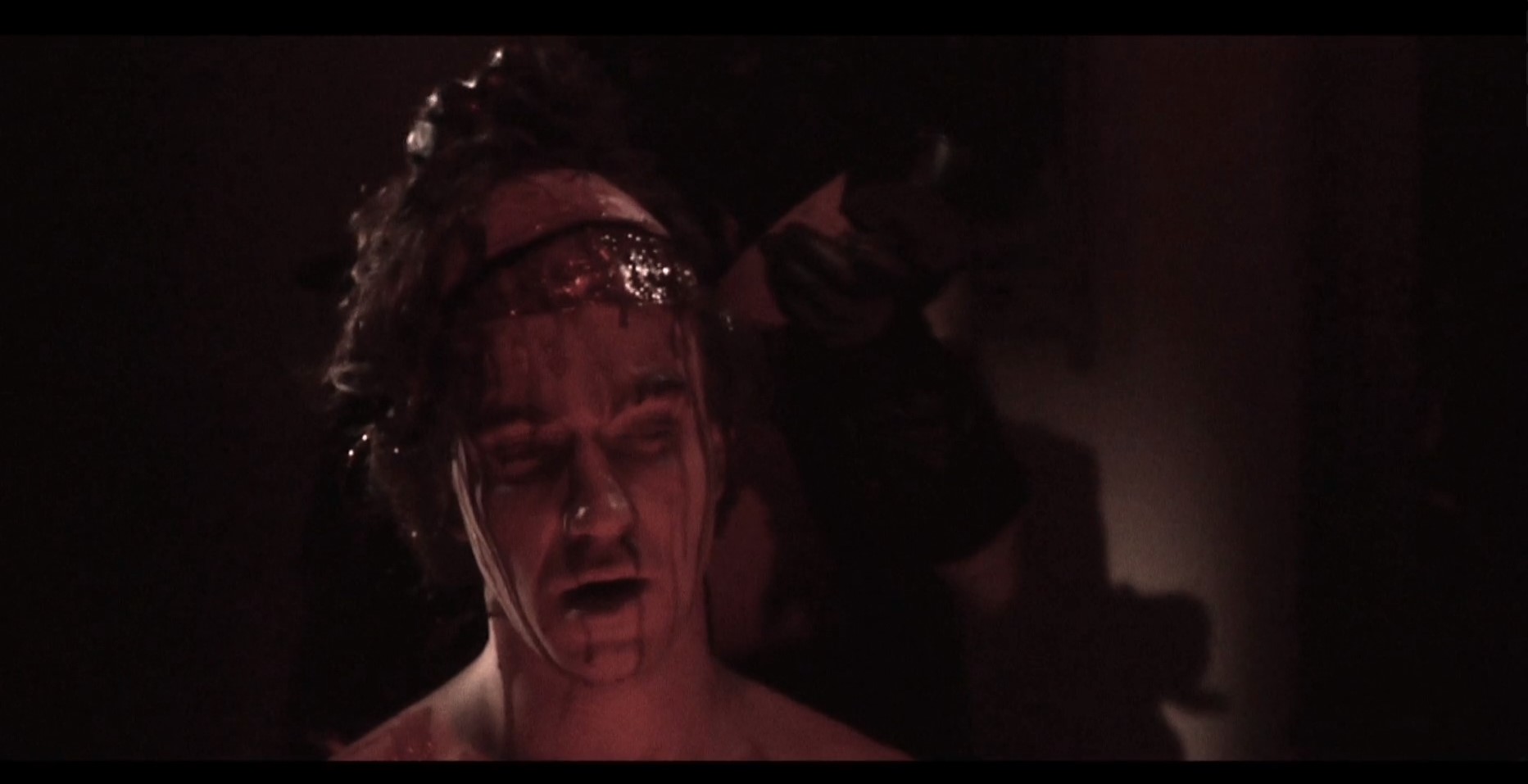
Like Alice traversing a macabre-cladded hell on Earth wonderland is Irene Holzfurtner as the confused lost soul Jennifer  More or less fully naked and bloodied half the story, crossing through portals of layered perdition in order to find her son and saving grace, Holzfurtner has insurmountable perplexity hung across her character’s face in the midst of being plopped into bedlam, taking the character on a journey pain, torment, and enlightenment bare ass naked and covered in blood in a metaphorical rebirth.  Overseeing Jennifer’s trial and tribulations into being brought back reborn as it were is a sadist donning a crude Cthulhu mask and strapped tightly into a medieval BDSM attire who speaks in riddles and verse to sermonize his cathartic guidance.  Markus Hettich towers a monolithic man of pain and pleather, calmly exercising his shrouded authority a healthy amount of sadism, masochism, and sadomasochism in order to undress the falsehood of Jennifer’s split spirit.  Hettich pins an ideal Devil-like antagonist, rupturing through the connective tissues of the psyche with a lingering omnipresence that delivers shivers down the spine.  Mathias Engel, Alexander Gamnitzer, Andreas Pape, Annika Strauss, Ralph Willmann, and Hildegard Kocian make up the supporting cast who are most cooperative being exploited by the violence and nudity that accompany their ill-fated roles of humiliation, torture, and inevitable gruesome death.

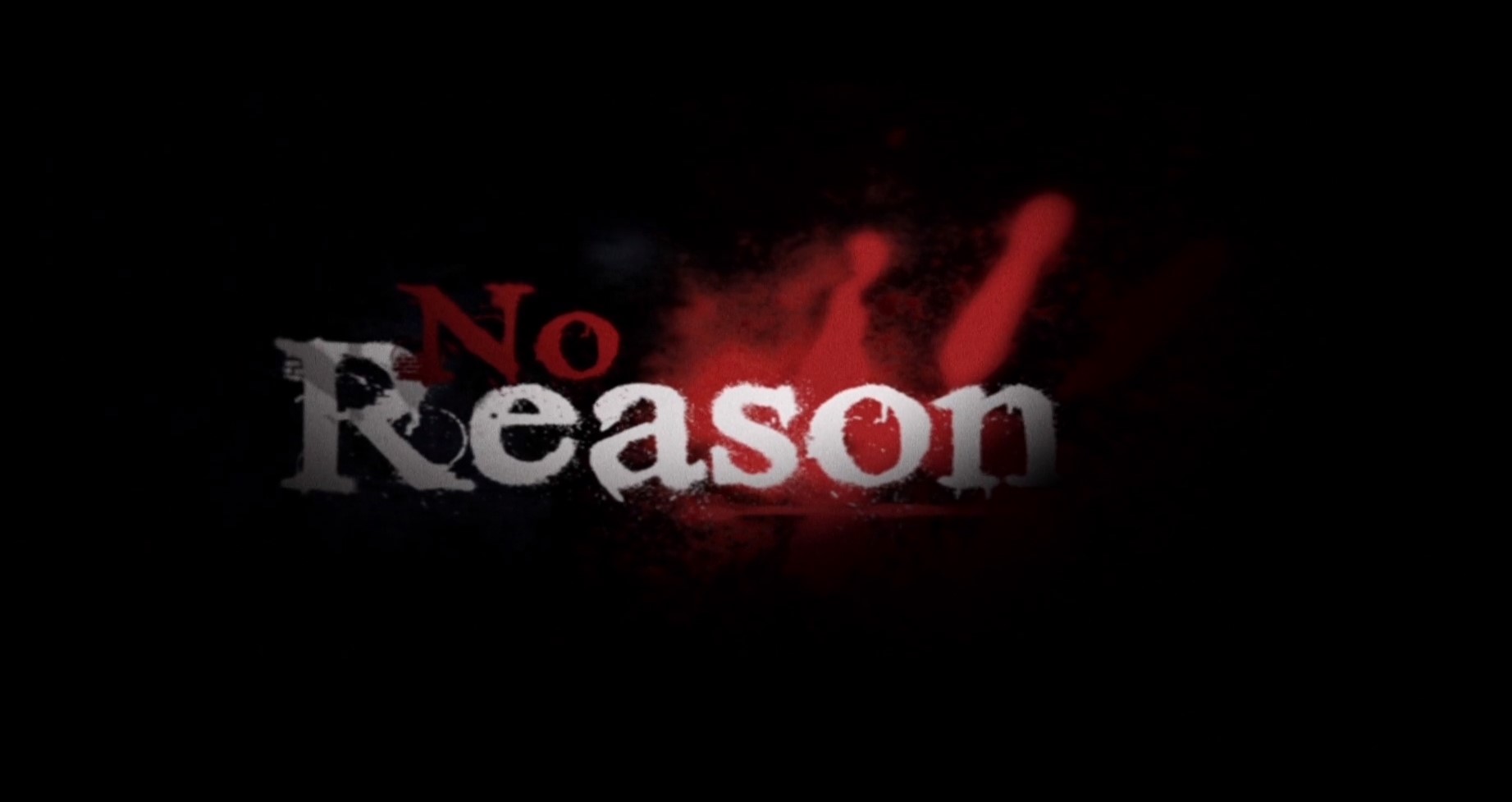
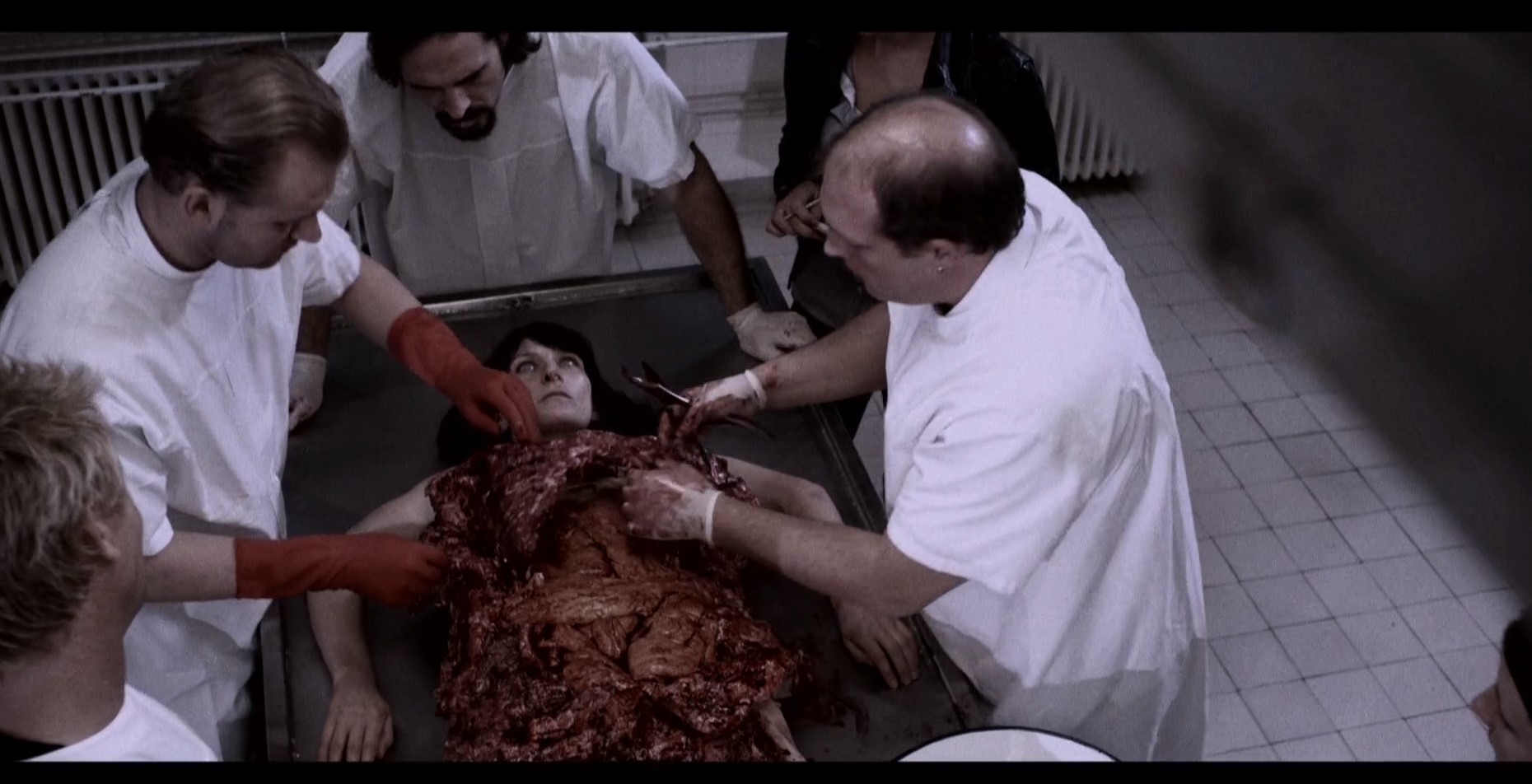
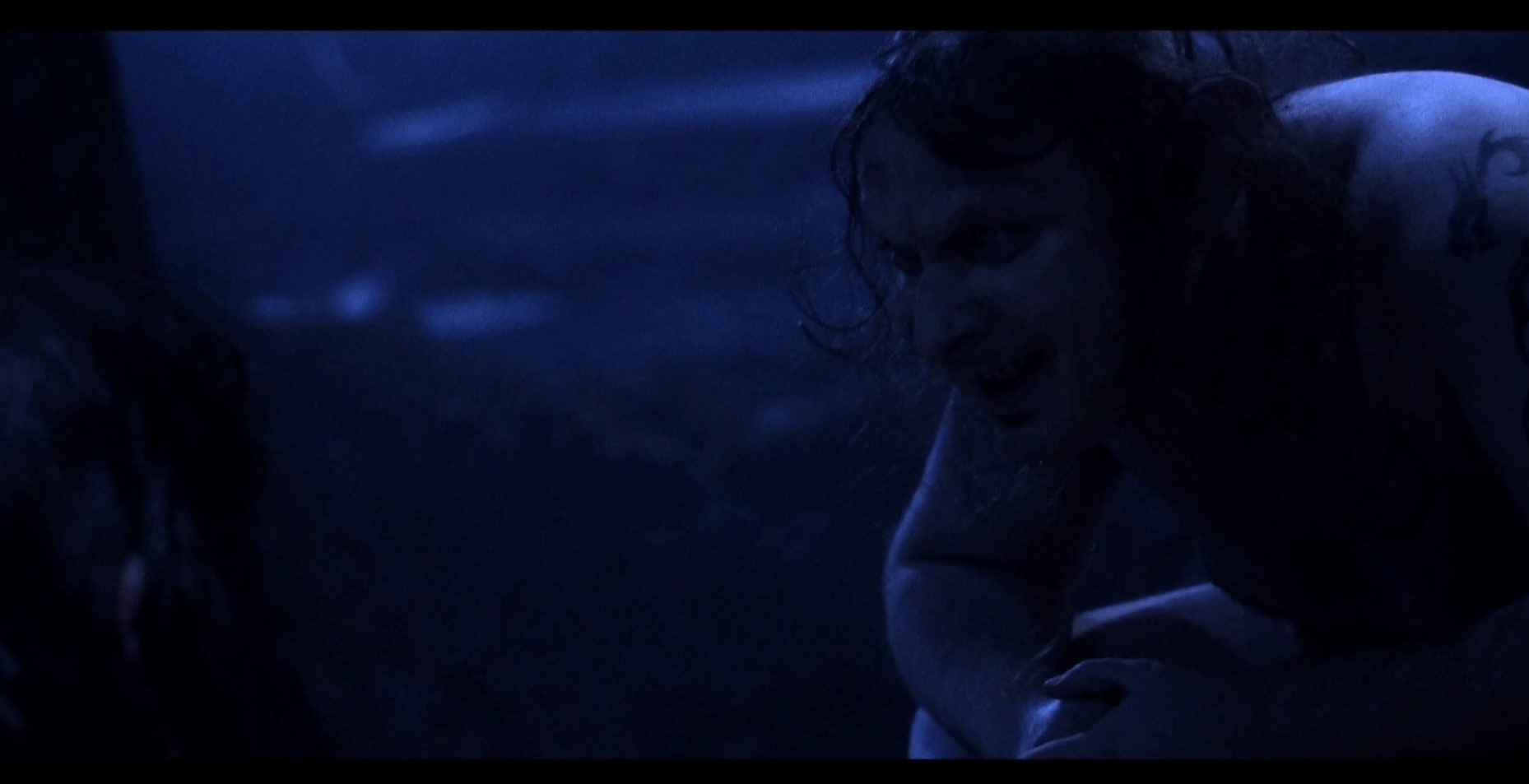
Ittenbach obviously brings the gore but the controversial director, who has sparked backlash for glorifying violence, brings a beaming arthouse allure to his “No Reason’s” gargantuan bloodletting.  Layered with multi-colored conjectures point to the unhinged state of a mind, Jennifer endures unspeakable anguish in layers encoded with red, green, and blue, each specifically engineered by the masked man to trigger a response when testing Jennifer’s will; a will to what end is something you’ll need to watch the film to understand.  What I can tell you is that each color stage bares a horrific theme – red is simply the spilling of innocent blood, green is feminine dominance symbolized by BDS&M (a running motif throughout) where uninhibited women urinate on men (explicitly shown), castrate by oral sex, and divulge themselves with lots of male body disfiguration through whips, chains, and other large dominatrix toys, and blue is filled with mutants who are just as ugly on the inside as they are on the out.  Completing each stage costs Jennifer bodily harm as a reparation for staying on the path of enlightenment, the white layer.  With a little money behind the project, Ittenbach’s able to accomplish some fantastically brutal scenes with fleshy prosthetics and I, personally found the intro credits to be insanely power in it’s composition despite the simplicity of it.  Where “No Reason” buckles is the crux of Ittenbach’s artistry with the parable that borders nonsensical guff.  I’m not going to lie, “No Reason” is difficult to follow from the pre-opening credit epilogue home movie montage of Jennifer and her parents frolicking on the grass, praising Jennifer’s smarts at such a young age, to the post-opening credit opening of a naked and bloody Jennifer holding a detective hostage, to the surreal cerebral journey through a timeless purgatory horror house Jennifer finds herself trapped, the segues, if any, often feel omitted and we’re left to assume the rest. 

The brisk 76 minute runtime perfectly balances the right amount of abstract story and gore and, now, “No Reason” has a better reason for your attention with Unearthed Films’ new scan of an uncut Blu-ray release! The May release is presented in a high definition, 1080p, widescreen 1.76:1 aspect ratio. I can’t comment too much on the audio and visuals as a digital screener was only provided, which means there were no extras accompanied with the screener as well. “No Reason” is the first collaboration between Ittenbach and director of photography, Axel Rubbel. The pair went on to work on Ittenbach’s “Savage Love” two years later, but Rubbel has more of an imprint with Ittenbach’s candy-coated eye-popper gorefest with a kaleidoscope of blushes a tinged aberrant from the normal blacks, reds, and browns that blotted onto gore and shock films. The release will include two German language audio track options, a 5.1 surround sound and a stereo 2.0. Both should include English subtitles and, if the Blu-ray is anything like the digital screener, the subtitles are synched well with the dialogue and, from what I can tell, are grammatically error free. My abnormal brain can choke down the free-for-all soul-damaging ultra-violence and gore charcuterie board and Olaf Ittenbach’s “No Reason” fits that bill with a wide berth of exhibited atrocities while also coming up for air by attaching a misdirection substance behind the graphically lurid details of skin ripping from the muscular tissue and flesh lacerated to shreds by a cat-o-nine tails to ease us into the tumultuous mind of a psycho’s path.

“No Reason” available on Uncut Blu-ray!

When EVIL Runs The Show, That’s When the Reality Sets In. “Funhouse” reviewed! (Magnet Releasing / Digital Screener)

Eight C-grade social media celebrities sign a contract for a new reality show, Furcas’s House of Fun.  The reality show streams worldwide on all electronic devices in an exhibition of different and standoffish personalities locked together in apartment-size living quarters.  Contestants will have to face challenges and weekly viewer voting to be the last one standing for a chance to win a 5 million dollars cash prize  Instead of sexy making out sessions, drunken brawls, and contestant melodrama to boost viewer ratings, Furcas’s House of Fun is in actuality a syndicated snuff reality show where a contestant is voted out is a contestant receiving a brutal death in front of the entire world.  Survivors watch behind paned glass as one-by-one their castmates are dispatched in the most gruesome way possible, directed by a screen animated panda bear helmed by a sadist eager for the show to go on.

Ready to have a little fun?  The “Funhouse” is open for what is a variety show of horrors in this 2019 shot, 2021 released reality show of encroaching aggravation and gore from writer-director Jason William Lee.  “The Evil In Us” filmmaker plays his hand at personifying internalized resentful rage for hack, do-nothing, inconsequential to society celebrities by feeding them gladly and enthusiastically to the bloodthirsty wolves.  “Funhouse” isn’t your typical social media or tech horror film as Lee dishes out a thought-provoking disgust covered in a powdery sugar and popcorn veneer that’s surely to please the broad range of horror fans.  The co-ventured Canadian-Swedish story of shallow fame nihilism is shot in the Providence of British Columbia and in Stockholm, home base of Ti Bonny Productions under executive producer Henrik Santesson, in collaboration with Lee and producer Michael Gyorl’s Sandcastle Pictures.

With the surname Skarsgård, acting is in certainly in the blood.  Valter Skarsgård, the youngest son of “Nymphomaniac” and “Deep Blue Sea’s” Stellan Skarsgård’s first marriage and the brother of terrifyingly frighteningly Pennywise actor, Bill Skarsgård (“It”), branches out following his ancestral destiny by headlining as the lovable and misjudged Swede, Kasper Nordin, who leeched fame by being the ex-husband to a renowned singer.  Nearly the spittin’ image of his older brother Bill, Valter brings his name and family looks to the table while showcasing his own talent amongst a motley crew of nationalities.  That’s one of “Funhouse’s” main messages about social media stardom as a plague that has spread to every corner of the world symbolically infecting each contestant from a different country:  Dayleigh Nelson (“Island of the Dolls”) of Britain, Khamisa Wilsher of America, Gigi Saul Guerrero (“Puppet Killer”) of Mexico, Amanda Howells of the Philippines, Mathias Retamal (“The Source of Shadows”) of Chile/Canada,  Karolina Benefield of Poland, and Christopher Gerard of Ireland.  The roles of wannabe celebrities is an ostentatious representation of click bait influencers who will sell essentially their soul and show their skin to be noticed and this turns the clear antagonist villain, a merciless gamester and contract abider with business dealings more vile than from the Devil himself, to be a subtle antihero of sorts as the cast rounds out with Jerome Velinsky’s wickedly sophisticated performance as Nero Alexander that is urbane nihilism at its best. 

Outrageous, fun, and gory – “Funhouse” has all the hallmarks of a 90’s horror on cruise control.  With a bedazzling rudimentary shell of a panda bear avatar animation and blend of practical and digital blood over the simplicity of a small location and indie production, Lee is able to fly through the narrative at whiplash speed and still drop animosity-awarding and empathetic traits to believe in the cast of characters.  In the middle of the chaos of axe splitting heads and being dunked into a barrel of highly corrosive acid, a topical theme of the detrimental social media and influencer stardom to society really positions “Funhouse” on the frontline for inflammatory and anti-social media messages, harping on the noncontributing and unbeneficial role of these money-generating, like-focusing, click baiters in culture and society other than selling to their audiences sex, gossip, and violence.  Speaking of violence, I was pleasantly surprised by the right amount of gore that didn’t shoot for extravagant levels despite some smoothing around the digitally added sinew and guts, keeping a modest amount of realism to the dystopian gameshow construct.  Initially, there are dubious first act moments that quickly shuttle hapless soon-to-be-casualties into the same location, much like in “Saw II” when characters all wake up in the room together and we have no idea who they are, where they come from, and what their backstory is, but as the film progresses we learn more about them and the roles they play in the maniacal puppeteer’s design.  The twist, almost meta-like, ending leaves “Funhouse” on a low note that doesn’t fulfill any void for its existence, but a good chunk of the story is really meaty with a revolving door of plights and a small, yet efficient, compassion outpouring spicket.

Not your traditional participatory surprise-laden and mirror maze attraction, “Funhouse” will still bring old-style thrills with some new blood spills in it’s grand opening release in theaters and on demand on May 28th courtesy of Magnet Releasing. Shawn Seifert (“Dead of Night”) lays out a smorgasbord of cinematography techniques that includes rich, un-matted color filters, isolating characters in darker, dim rooms in making them seem centerstage for their own grand demise, and cultivates stationary, handheld, tracking, and some drone shots for an extremely vibrant and glossy approach and feel for reality television version 2.0. Lee edits the digital reel himself and, honestly, the pacing wanders quickly to the overly rushed section like a quick-spit-it-out story wanting to be finished before it even begins and is compounded with another intrusive quality in the hyperactive back-and-forth of shots that aims to resemble the irksome flight in and out of reality shows that speed up and slow down like a nervous teenager behind the wheel of their parents and continuously presses down on the brake pedal. Stay tuned after credits for a gag bit scene that ties into the main story but promises nothing more. No more being voted off the island or nixed by expert judges, “Funhouse” cleans house with deadly eliminations and a message of the unyielding power granted to many so easily through a rapidly reshaping medium that has become too influential on a braindead scale.

One Hundred and Twenty-Nine Men, Two Ships, and One EVIL Beast Trapped Together in Icebound. “The Terror” reviewed! (Blu-ray / Acorn Media International)


Departed from English ports in 1845, two exploration sailing ships, HMS Erebus and HMS Terror, sought to chart a northwest passage through Artic waters above North America.  Bound for King William Island with over 120 men between the two vessels, the traversers found themselves icebound as the Winter months froze the arctic waters completely and solidifying their positions within one large ice mass.  Their story doesn’t end there as months pass, even through the summer, and winter’s firm grip shows no sign of rising above zero degrees, sweating the brow of the few experience Arctic officers.  To top off their troubles, a vicious polar bear, or some kind of supernatural beast connected to Innuit people, hunts down and ravages a few unfortunate Royal Navy seamen.  Low of provisions and spirits, a combination of infinite winter madness and trembling fear weigh heavy on the seafaring fellows frozen in an icy cold Hell. 

Straight from the ill-fated expedition in British maritime history, the mystery surrounding Captain Franklin and his crew’s death and disappearance in the Arctic is given the hypothetical explanation and supernatural treatment in season one of the AMC series “The Terror.”  However, the tale is more relative to the adapted novel of the same name written by American author Dan Simmons who specialized in science fiction and horror.  Adding elements of a monstrous presence stalking them in the shadows of a bleak tundra, Simmons’ historical fiction turned television series blurs the lines of non-fiction and fiction with chilling atmospherics and the indelicacies of human nature when necessities for survival are pushed to the extreme and are in short supply.  “The Terror” is backed by a strong executive producer team in Ridley Scott (“Alien”) and notable historical television producer David W. Zucker (“Mercy Street,” “The Man in the High Castle”) with writers Max Borenstein (“Godzilla vs. Kong”) and Andres Fischer-Centeno (“Under the Dome”) penning the screenplays with Tim Mielants, Edward Berger, and Sergio Mimica-Gezzan directing a total combined 10-episodes under the Scott Free Productions and Entertainment 360 flag. 

The AMC television thriller scores an amazing cast of seasoned English and Irish actors refined in their skills of becoming a part of the history their work reflects.  Chiefly surrounding the top three principle commanding officers, “The Cook, the Thief, His Wife & Her Lover’s” Ciarán Hinds as Captain Sir John Franklin, “Underworld: Blood Wars’” Tobias Menzies as Commander James Fitzjames, and with a foremost focus on “Resident Evil:  Apocalypse’s” Jared Harris as Captain Francis Crozier, an unique dynamic courses through the speckled personalities of each commander in the face of duty for Queen and country and in the certain finality to their crisis from the God-fearing Franklin, to the command prodigy Fitzjames, to the more sage practicality of Crozier.  Each also have their own flaws that inadvertently put a blight on the already ill-fated mission of charting a passage through the frigid bleakness of the Arctic ice and how they interact with a doubt inching motley crew of novice and experience sailors, especially between the stark contrast of fellow principle characters in the amiable Harry Goodsir (Paul Ready), whose personality is reflected by his name, in confliction with the more menacingly conniving shipmate Cornelius Hickey (Adam Nagaitis).  Both Ready and Nagaitis perfect their roles in convincing the audience on how we should feel about moral compass as they become the nerve center that drives the tale of continual darkness.  Praiseworthy performances definitely go to the entire cast, that also includes Nuuk native and Greenlandic band frontwoman, Nive Nielsen as well as Ian Hart, Alistair Petrie, Trystan Gravelle, Tom Weston-Jones, and Richard Riddell, pinpointing and bringing to life the mid-19th century Royal Navy speak, look, and mannerisms that adapt over the length and breadth of “The Terror’s” forlorn themes of two ship’s crew stranded in what could be said is a strange and alien terrain that evokes madness and fear in the longer you reside. 

The information surfaced about Franklin’s lost expedition with the discovery of possible cannibalism evidence discerned in the early 90’s and, more recently, the found wreckage of both the HMS Erebus and HMS Terror within the past decade add insurmountable coils of surreal realism around the true tragedy of both ships when embellished supernatural elements of an Inuit spirit animal stalking, hunting, and ravaging the crew.  Simmons novel and the series go hand-and-hand story wise but pull visually inspiration from Sir Edwin Landseer’s painting entitled “Man Proposes, God Disposes” where one polar bears tear at what’s left of a ship’s mast and another swallows what looks like human ribcage remains in a surely more a powerful image that’s aligned with the series in the offering an outcome of when it comes to man versus nature, nature will unduly win on it’s own frozen turf. AMC and Ridley Scott undoubtedly knew how to showcase a character driven story where over the time relations build and deteriorate between crew, officers, and a mingle of both and in that stretch of time, the passing of time itself has seemingly stood still as the nights become longer, routines are made, and the ships are stuck on the ice like a warm tongue pressed against a frozen metal pole, but, in the 10 episode series, the story stretches over a nearly two year period and the production is able to connect together next scenes to the previous ones without having to address each and every moment or exposition enough information to avoid the explanatory segue. This method of filmmaking always leave a smidgen of unknown, leaving viewers like us on tenterhooks and in an agitated state that we’ll never fully understand or fulfill that missing part of the mysterious portions and lapses in time. The unfortunate real life story itself casts an alluring wonder and I would even go as far as maritime excitement even if stemmed out of tragedy; that’s how “The Terror,” affixed to the rising ice in an infinite frozen sea of stalagmites, dresses every episode with a less is more garb. “The Terror” endures for a long time in the mind set to replay the desperation and the poignancy of the character’s madness, fear, cold, hunger, and the rest of their godawful bad luck.

A story relished with new fright and unsullied violence with every repeat viewing is now available on a two-disc, region 2 Blu-ray from Acorn Media International. The 10-episode series is presented in a widescreen, 16:9 aspect ratio, on two PAL encoded discs with a total runtime of 453 minutes. The image pails in comparison to the perilous subject matter with a more softer, hazier picture than the harsh, snowy environment setting. Yet, I find that the subpar high definition not to be a complete distraction as much of story plays out in the dark or in the thick of flurries meant to obscure the eyes from seeing reality before biting your head off. Two different audio options are available on the release – a DTS surround sound 5.1 and a Dolby Digital PCM Stereo 2.0. Both tracks have high audio discernible marks as a well-balanced whole with the dialogue cleanly present, the ambient noise, especially the continuous wood creaking on the ships being squeezed by the ice, finely tongued for ever musket shot and snowy foley, and a respectfully insidious soundtrack that makes the body’s blood curl. Option English subtitles are available. I do think the bonus features are a little on the cheap side with only AMC’s behind-the-scenes commercial break segments making the cut on this release, complete with the AMC logo in tow, but the special features include Ridley Scott on “The Terror,” a look at the characters, the boat and visual effects, and concluding with an inside look at each episode featurettes. By the end of the last episode of “The Terror,” you won’t feel chipper, you won’t feel happiness for a long time; yet, you’ll want more and wished season 2 continued the story, but after an impressionable gnarly grand finale, “The Terror” season one is one of the best televised horror shows to come out in a very, very long time.

On Valentine’s Day, Were You Struck by EVIL’s Arrow? “Cupid” reviewed! (High Flier Films / Digital Screener)

In one interpretation of the legend involving the god of love, Cupid is betrayed by his mother, Venus, the Roman goddess of beauty, when she poisons Cupid’s consort, Psyche, over conceited jealously with the tainted tip of his own arrows of love and desire.  Enraged, Cupid denounces love and if he can’t have love, no one will love as he sells his soul to Death in the underworld and becomes a demon of execution summoned by those who abuse love.  When the incessant bullies as Faye’s school push her too far, Faye evokes Death through a black magic ritual and contracts with the master of the netherworld that all those in her high school shall never know love.  Death summons the scorned Cupid to do the ghastly bidding that places not only Faye’s tormentors in Cupid’s destructive path, but also her friends, her teachers, and herself.    

Post-Valentine’s Day horror movies always seem appropriate as if love itself is fleeting, elusive, and nothing but trouble and elicits a bit of cathartic relief for unfortunate souls unable to find love come February 14th.  Nothing screams more about anti-love than Scott Jeffery’s arrow-through-the-heart and twisted Roman mythology story, “Cupid,” that festers from a lower fork in the road possibility of the god of love and desire aggrieved to become malevolent and spiteful in a cheeky, campy rampage.  Jeffery isn’t afraid to take on the challenge of transforming Cupid into a heart-stopping death-dealer as the film’s writer-director who has credential history of being a serial B-horror movie filmmaker with a resume of titles stemmed from myth, legend, and tall tales having produced and written the Frau Perchta inspired “Mother Krampus,” the Gorgon fueled, “Medusa:  Queen of the Serpents,” and producing that little dental-snatching hag known as the “Tooth Fairy.”  Jeffery aims to demonize the match-maker in the UK production from his Proportion Productions alongside co-producer and CEO, Rebecca Matthews.

The heart of the story begins with Georgina Jane (“Pet Graveyard”) as the hopeless romantic schoolgirl, Faye, reading from a book of black magic spells to bewitch the high school’s hunky male teacher, Duncan Jones, played by Michael Owusu in his introductory feature film performance.  Though Owusu is a handsome devil that plays authentically into his role, Faye’s character surpasses shallow and gullible traits as she’s desperate enough to try enchants for an older man to fall for her teenage body and soul and naïve enough to think that her charm passage actually worked enough to warrant sending scandalous pictures of herself over the phone to whom she believes to be Mr. Jones when in actuality is a Faye browbeating clique led by the insufferable rebellious student Elise, a role callously perfect for “Pagan Warrior’s” Sarah T. Cohen.  Jane tries to squeeze out as much as she can as the victim of Elisa’s volley of vile bullying tactics but also somehow cope the receiving end of embarrassment of kissing a shocked Mr. Duncan and as the two instances clash in a heap of dump on Faye day during Valentine’s, Faye retreats back to her fantasy safe haven as she tries to summon Death in vengeance.  This time, the incantation works and in flies with two large white wings and Roman sandals is Bao Tieu caked in some pretty atrocious facial makeup with a horizonal cleft nose, exposed teeth in a skull’s bare smile, and some serious baggage under the eyes.  I’m assuming Tieu’s short stature and small frame makes him suitable to portray the Cupid look often depicted as a child or as a slender, nearly feminine man in mythology art, but in “Cupid,” as the harbinger of death, the overall package feels less menacing and more absurd appropriate for the B-horror mockup as the dialogue-less winged villain hunts down rather easy prey using a campy assortment of atypical, Valentine’s Day weapons like heart shaped cookie cutters, a bouquet of roses, and mushy, sharp-edged greeting cards alongside Cupid’s go-to bow and arrows.  “Cupid” rounds out the cast with a majority of Scott Jeffrey entourage actors who’ve been in many of his produced films, such as Abi Casson Thompson (“The Candy Witch”), Ali Barouti, Georgie Banks (“The Mermaid’s Curse’), Kelly Juvilee (“ClownDoll”), Jake Watkins (“Toothfairy 2”), Adrian Bouchet (“HellKat”), and Nichola Wright (“Witches of Amityville Academy”).

Valentine’s Day holiday has seen a fair share of engendered horror films. While “Cupid’s” heart doesn’t beat to the same lovestruck drum as George Mihalka’s “My Bloody Valentine” or Jamie Blanks “Valentine” that scoff at romance by killing every love sick person in the room, Jeffrey’s take on Valentine’s Day stays on the slasher subgenre path, but takes a tongue-and-cheek route despite the earnest performances. I mean, really, who gets ninja starred in the back with Valentine greet cards or have their skin sliced out with heart-shaped cookie cutters? Jeffrey’s killer concepts have immense heart, no pun intended. Where “Cupid” begins to stray lies in the left out important details and the fast-and-loose character development that leaves a rancid taste of an expired box of chocolate in your mouth. For instance, Faye, a high school girl of maybe 16 or 17-years old, has what seems to be an archaic artifact of ancient black spells in her possession for reasons we don’t know how she obtained. Do we then conclude that Faye obsessively meddles casually with the black arts? Or did she visit Ray Stantz’s Occult Book store in NYC? There’s also a rich backstory, if not tale-telling, in Faye and Elise’s contention for each other involving a relationship scandal between Faye’s mom and Elise’s dad that’s only scratched at the surface and never really brought to light, but would have greatly help in explaining Elise’s wickedness toward Faye, who briefly blames her mother’s aggressive libido for all her high school problems. In what is, in all serious, an allegory for bullying spun high school mass murder, “Cupid” heavily ousts the outlier as a person lost in the fray of struggling to cope and turns to evil to solve their problems by taking out everyone in an instant. The only thing different is Jeffrey doesn’t arm Faye with a rifle; instead, he weaponizes her impulsive desires in the form of a demonized Cupid. Another character who doesn’t flesh out is Duncan Jones who drops out of medical school in order evade debt for the rest of his life; instead, he’s a substitute teacher with feelings for a colleague and his biggest prospect is chaperoning the Valentine’s Day dance. Instead of nurturing Jones’ arc from the beginning of the film, his medical background is only brought in later to serve as the needle in the arm for all the blood junkies out there as “Cupid” gets gory with a hacksaw scene that comes out of left field compared to the rest of the movie. “Cupid’s” story wilts like 6-day old roses starting to smell like rot, but is still thorn sharp as a campy, fun slasher braided with classical mythology and mass shooting undercurrents.

Valentine’s Day has come and gone, but you won’t be able to get away from “Cupid” that easily as the Scott Jeffrey written-and-directed holiday slasher soars in onto DVD from Uncork’d Entertainment and High Fliers Films in the United Kingdom. The PAL encoded DVD has a runtime of 84 minutes. There were no details provided on the DVD specs and since the screener provided was a digital screener, no critique will be made on the A/V aspects other than director of photography Ben Collins’s cinematography that deploys a better way to experience “Cupid” with perforated soft glows of vibrant tints in the most weirdest of places, like the school bathrooms, during tense supernatural expectations or when Cupid is on the prowl, giving more interest toward the scenes that might seem more run of the mill ordinarily. There were no bonus materials with this release nor were there any bonus scenes during or after the credits. Abuse love and love will abuse you right back tenfold in this death-summoning, tale-twisting holiday themed horror “Cupid.”