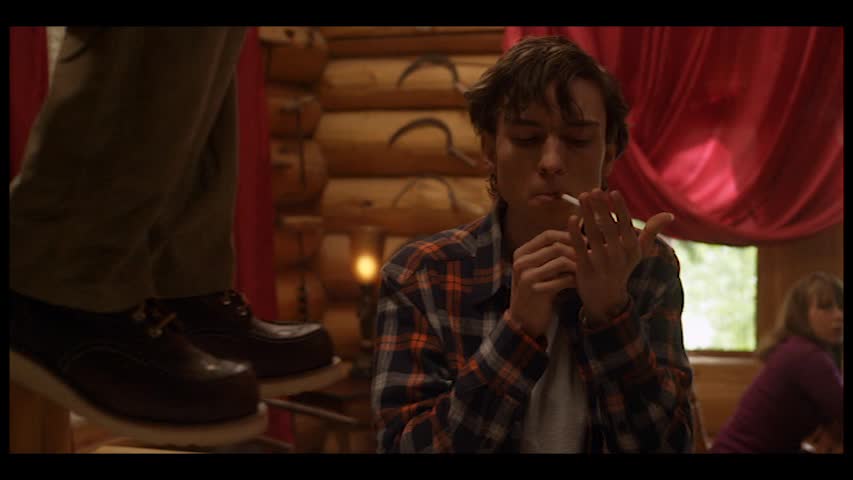
A troop of cub scouts set out on a camping trip in the deep forests near an abandoned bus factory. At the helm are three scout masters overseeing a handful of lively young cub scouts. One of children, Sam, has been through a troubled and violent past and has been labeled the outcast amongst the rest of the troop. Sam encounters a feral young boy, who has been trained by a murderous psychopath whom has made the woods his deadly home. As nobody believes Sam’s run-in with the wild boy whose been stealing around camp, the troop hastily concludes that Sam is lying and stealing, resulting in the trop disliking him even more all the while setting up their fate for something far much worse: a killer camping trip.

Booby traps. Children vs. Children. Outside nude showering. An ingenious killer. Fun and newfangled horror has made it’s grand return since “The Collector!” Freshman director Jonas Govaerts, with a boat load of crowd funded money, has brought a keen eye to the campy, wooded survival genre with his independent film “Cub” aka “Welp” in the films original French/Flemish language. Going through the motions of setting up character development and moving the characters seamlessly into a ominous situation is what seems to come natural to director Govaerts. Unnaturally, Govaerts doesn’t explore the psychotic background of such an interesting, yet mysterious killer, leaving everything about the antagonist’s intentions to the imagination. This villain, only known as the “psychopathic mentor” on the Artsploitation Films Blu-ray back cover, maintains a dated, yet marathon technique killing spree operation underground in the dark woods, setting up crafty and deadly traps for those who embark on his land. There’s a little tidbit of setup on the killer from an officer explaining to the scout masters that the vacant nearby factory has made some previous employees disgruntled, making the land a cursed hotspot.

“Cub’s” success mainly stems from it’s actors. Gill Eeckelaert, who has only “Cub” credited under his name, phenomenally creates a superbly feral and masked boy, surviving on the land and in the trees. With a scrawny physique and zero dialogue, Eeckelaert has formed a eerily scary character, more so than the actual menacing mentor. In all honesty, the feral boy should have been the main antagonist pitted against the troop. This character’s counterpart, Sam, played by Maurice Luijten is the epitome of good, yet something is off with the character as told with seldom sharing of the information about his past, his foster parents, his damaged photograph, and the list goes on. While a clear picture of Sam never fully emerges until the finale, the good that bubbles up from his character couldn’t be any more prominent as he’s contrast next to the constant bully shadow of a scout master named Baloo and his mindless troop of followers, looking to be cool in the Baloo’s perverted and unorthodox eyes. With only a handful of ally accompaniments on this trip, those who wish Sam harm outweigh those who want to protect him.

With the “Lord of the Flies” similar attitude and with more than half your cast under the puberty requirement age, Govaerts ruthlessly places every single person in danger and places every single character on the chopping block. There’s no sugar-coated dancing around the innocent minors, making them actually part of the organic story instead of pussyfooting around them as if they’re made of fragile, non-tempered glass. However, I do feel the opportunity was completely wasted or missed to take out each individual character one-by-one with a signature death scene, but I don’t believe the effect of certain character or characters being dispatched watered down the “oh my god” value.

The Artsploitation Blu-ray has a beautiful 2.35:1 ratio, widescreen presentation with only very little aliasing detected and the night scenes just as clear as the day scenes. The 5.1 Dolby Digital mix flawlessly contributes to the overall impact of the story, creating a great balance between LFE and HFE, dialogue, soundtrack, and ambient tracks while providing accurate and well-timed English subtitles. The superb giallo-esque score by Steve Moore, who goes under the pseudo name of Gianni Rossi and worked on “Gutterballs”, delivers an intense, on the edge of your seat synth rendition of danger and chase. “Cub” director Jonas Govaerts and his crew earns their merit badges for constructing a bloody and innovative film. Another winning release for Artsploitation Films and another recommendation from this reviewer.
Category Archives: Death
No Justice for Evil! “Future Justice” review!

After five years of cryogenic solitude, Python Diamond returns on a heavily armored military escort ship, returning from Saturn where a maximum prison holds Earth’s most dangerous convicts until their execution date. As they close in on home, Earth has gone dark, communications have gone silent, and massive radiation cover most of the populated soil. A faint signal of power draws the crew down to a manageable radioactive portion of scorched Earth where they discover a small band of people, surviving in an underground bunker and striving to live in a post nuclear fallout. The exploration of life search doesn’t go unnoticed as a violent, more dominant group of survivors seek to take the military’s possessions, if not their lives too, and when war breaks out between them, another mutated and dangerous player enters the game.

Another Richard Griffin directed project and another great example of a superbly self-reliant genre film thats sharp-witted, off-colored, and, of course, entertaining to horror and post-apocalypse fans. Though Griffin and his usual cast of cast members tackle the homage with full-brute strength, Griffin places a gently new-used spin upon each of his inspired works in the form of great absurdity that’s hard to refute or dislike no matter what genre of movie fits your fancy. His post-apocalyptic, science-fiction, horror film “Future Justice” revolutionizes the homage by stripping iconic films of their popularities and mashing them together into a very coherent and comprehensible story without seeming like a total rip off. Instead, Griffin takes the Nathaniel Sylva written story and runs with it like a powerful running back whose hugging on tight to that pigskin ball and charging like hell to the end zone for his first touchdown, treasuring that first score and making it his own unique success even though scoring touch downs has been down countless times before.

The underwhelming title, “Future Justice,” doesn’t speak much to the film’s overall enthusiastic gesture. Yet, the witnessing of gung-ho filmmakers given only an inch to work with and stretching that into a long mile, or even two, is always an amazing length. Nathaniel Sylva didn’t only write the film, he also starred as the lead character, a confident and calculating convict named Python Diamond which is a bit of a play on the John Carpenter Snake Plissken character from “Escape from New York” and “Escape from L.A.” Then, the story embarks on a motley crew, like you would see in a “Mad Max” movie, group of scavengers looking to take all and leave nothing for the rest. Finally, “Future Justice” takes an unexpected turn by introducing a radiation mutated, humanly doctored, one pissed off person-creature that hungers to seek and destroy every last living being in the underground bunker.

The successfulness of character actor Steven O’Broin’s Gazeebo, head of the blood thirsty gang, makes him ruthlessly enjoyable to watch on screen. O’Broin and Griffin have worked previously together on “Sins of Dracula;” O’Broin aspired to be similar to Vincent Price in the Hammer Horror influenced Dracula film. Michael Thurber, more notable one of Griffin’s entourage of actors and also co-stars in “Sins of Dracula,” delivers a phenomenal and intentionally excessive method acting skill that always fits into, in every which way, all of Griffin projects. Working with an estimated $20,000 budget and limited locations doesn’t translate over to O’Broin or Thurber who can transform a small production into the illusion of a bigger ordeal, causing a mind altercating effect with their viewership. “Future Justice” delivers movie magic at its finest.

Speaking of movie magic, visual effects supervisor John Dusek works along side again with Griffin and meshes a blend of practical effects with campy computer generated imagery. The result only adds to the unique charm, capturing the zany essence of this world gone dark story and running with it to take the zaniness one step further, but also respecting the Italian post-apocalyptic films of the 1980s. Exploding heads, detaching limbs, brain-splattering head shots keep the violence fresh when various effect methods are implemented and Dusek tunes right into his entire arsenal to deliver. The effects go hand-and-hand with Daniel Hildreth’s space epic score, striking the composer analogue of other Sci-Fi film greats.

The MVDVisual region free DVD release is presented an in unrated 16:9 widescreen format at a runtime of 83 minutes. The extras include a commentary with cast and crew, a short film entitled “Mutants of the Apocalypse,” and a theatrical trailer of the film. The clear picture defines the details and vividly displays the colors, especially when the mutated creature emerges. The 2.0 audio mix hinders a little in the dialogue by the overpowering score and ambient tracks, but doesn’t disrupt much at all. “Future Justice” doesn’t apologize for laying down the law by smacking action and thrills right to the face. I’d recommend this title to any Sci-Fi or horror buff in a need of a necessary relapse into the post-apocalypse.
Evil. On Repeat! “Blood Punch” review!

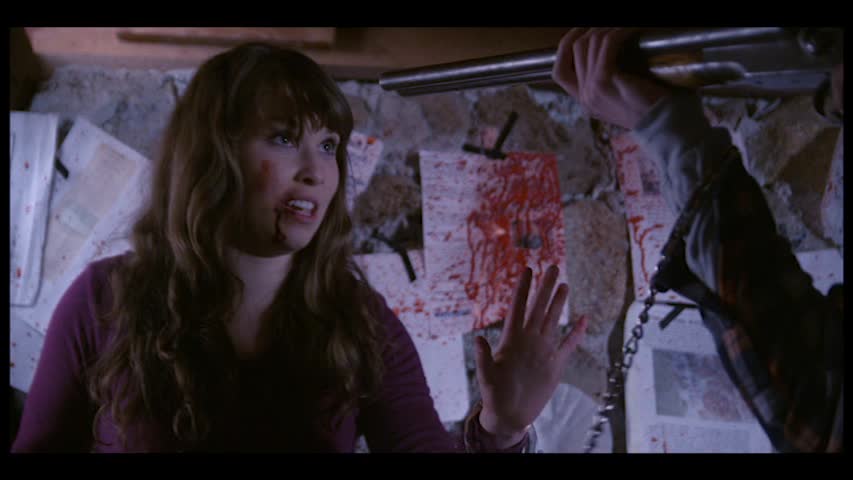
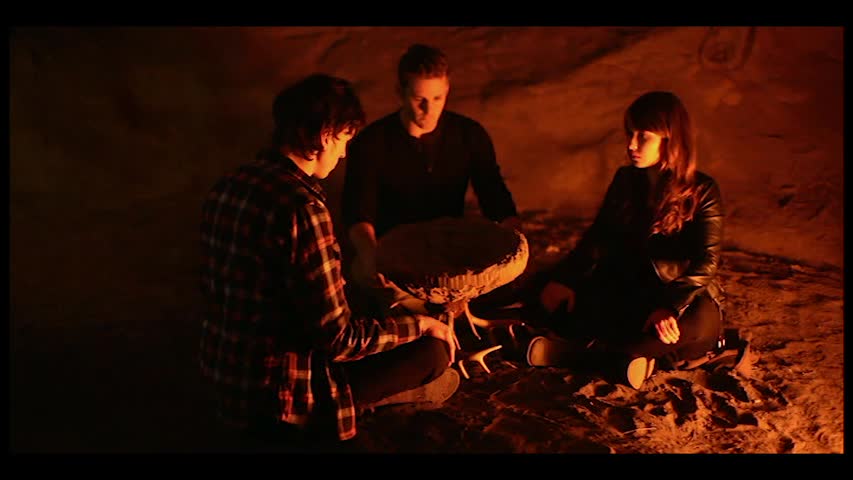
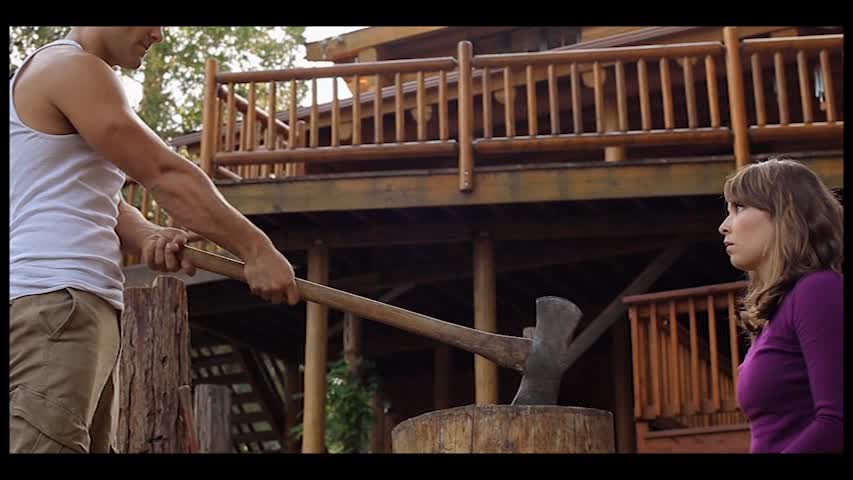
Milton was a mild mannered, bright young man with a promising future in chemistry until he was busted for conducting a meth kitchen on campus grounds and ordered to attend a drug rehabilitation center. With a little over four months left on his sentenced term, a fast-talking, drug-selling beauty Skylar walks into his life and offers a get-rich-quick scheme to Milton that involves partnering up with her and her psychotic boyfriend Russell. The challenge is to cook up a large amount of Meth within 24 hour window for an all around bad guy named Archer. Before lovestruck Milton can make choice in the matter, he’s dragged into the precarious undertaking located at an isolated cabin in the woods where the trio’s fate takes a turn toward an endless course plotted for blood, death, and various treachery.

Finally, a B-movie horror with a novelty story that continuously inflicts old school thrills, gratuitous violence, and black comedy. A sheer guessing game for the character outcomes from the beginning to the rolling of the end credits, which, in this loop-upon-loop story, covers possibly every single last fate that could be bestowed upon them. “Blood Punch” stands as this generations’ even darker version of “Groundhog Day.”

The cast and crew deliver on both sides of the spectrum. The lead actors are all native New Zealanders, who have previously worked on prior projects together, embodying vibrantly into their roles with precision and passion. Milo Cawthorne as Milton has a persona similar, in physicality and in acting, to Jesse Eisenberg; a slender built and facetious individual whose smarts can and will obtain devious potential in order to come out on top. I prefer Cawthorne over Esienberg because Milo is well less pompous. Milton’s chemistry with Skylar is of a stellar black and white origin. Skylar portrayed by “The Lord of the Rings: The Two Towers” child star Olivia Tennet embarks on the daunting task of being chain-smoking wench whose had to grow up quick from, at least, the age of 12. To round out the dynamic cast and to add a contrast character to Milo is the muscular and handsome Ari Boyland as the loquacious and psychotic Russell; Boyland’s frighteningly impulsive and insane, making him a great adversary to the logical Milton.

The person who wrote these characters and the person who directed these characters would assumably be well versed in the horror or dark comedy frame work. The overall intrinsic mayhem of “Blood Punch” is synonymous to a genre experienced writer and director. However, “Blood Punch” is oddly unique and not just on bonded paper but also for whom the director and writer are and their attributed credits. Director Madellaine Paxson and writer Eddie Guzalian are experienced, long time writers of children television series and films. Yes, at the helm is a crew that wrote and directed a bloody, foul-mouthed, carnage-soaked film also worked on projects like “Kim Possible,” “Power Rangers R.P.M.,” and “Lilo & Stitch: The Series.” “Blood Punch” is their first horror film together and completely knocked it out of the park; perhaps, due in part to their creative imagination when the majority of theirr work is animation where basically anything goes – just ask Wild E. Coyote. Paxson has such an eye for the littlest details that almost every scene, which were well edited together, stood on their own without any support or exposition. The ongoing debate about time and time warps will be an agonizing one, but Paxon and Guzalian wrap our characters’ timelines in a detailed manner, which nearly through me for a loop – no pun intended.

Even if being a film released from 2013, “Blood Punch” lands near the top at being one of my favorite movies released this year on DVD courtesy of Midnight Releasing. The 16:9 Widescreen presentation is near amazing with a flawless, colorful picture, comparing well against a Hi-Def release. The stereo 5.0 mix works well with the soundtrack and ambiance tracks, but can overcome the dialogue track only by a little. Extras include deleted scenes, outtakes, and test footage. “Blood Punch” is 107 minutes of pure, unadulterated roller-coaster thrills where there’s no waiting in line to jump right back on.
Movie Magic Evil Waters Down Real Evil. “House on the Hill” review!

Based on the true story of serial killers Leonard Lake and Charlie Ng, director Jeffery Frentzen (Black Dahlia) chronicles the speculated portions of Lake’s and Ng’s homicidal and psychopathic murders. Their murderous spree involved kidnapping young women, enslaving them, and eventually murdering them while also targeting their own relatives and friends, and even seizing the opportunities to abduct whole families. After Lake served in the Marine Corps, he met Charlie Ng and by the 1980s, the two men had constructed an isolated house where innocent people were brought to be tortured, ransomed, and eventually their demise at the hands of their materialistic and deviant captors.

“House on the Hill” is the Jeffery Frentzen directed and co-written with Nicole Marie Polec film that semi-documents the tragic events of Leonard Lake’s and Charlie Ng’s serial killing spree of the 1980s and incorporates actual footage of Leonard Lake speaking about his disturbing views on the world such as enslaving women and being prepared for the inevitable world apocalypse. Most of Frentzen’s movie is embellished as, like the majority of serial killer documentaries, most of what is unknown of Lake will never see the light of truth of what really happened on his ranch. The legend behind Lake and Ng states that there could have been as few as 11 murders or as high as 25; Frentzen attempts to showcase the latter by adding many fictional victims into his film to be representatives to those unknown victims who were never discovered or whose bones were severely untraceable.

However, some of the facts that are true, that we do know about Lake, didn’t quite make the cut because of Frentzen’s x, y, or z reasons. In the film, Lake’s wife is named Cat played by Rachel Devlin (Zombie Nation), but in reality Lake’s wife name was Claralyn Balazs aka “Cricket.” If Lake’s wife name is clear, why go with “Cat?” Also, Lake had constructed a bunker in the backyard of his ranch, but “House on the Hill” has a separate, well-locked shed in the backyard. Simultaneously, Frentzen’s movie has consistent filming errors that even the untrained eye can catch. Continuity glitches that are obvious (Naidra Dawn Thomson’s bra strap is in various positions between takes on a particular scene) and obvious props that are in more need of a convincing sell from the actors and to be well edited to not give the impression of false intentions. Lastly, the overly generic title doesn’t specifically speak much upon Leonard Lake and his accomplice Charlie Ng. “House on the Hill” title has no curb appeal and no real bite to entice viewership.

What I did find pleasurable about “House on the Hill” was the leads’ acting. Canadian actor Stephen A.F. Day and first feature film actor Sam Leung do an above mediocre performance of Leonard Lake and Charlie Ng. They manage to show and sell having no empathy when committing terrible acts, managing the ability to embody the evil within a killer on screen. Barring Frentzen’s epileptic editing and use of tints, lenses, and over exposers, I still was able to see the good in Day’s and Leung’s performances without the editing hoopla that attempted to make the events more dramatic, shocking, and traumatizing.

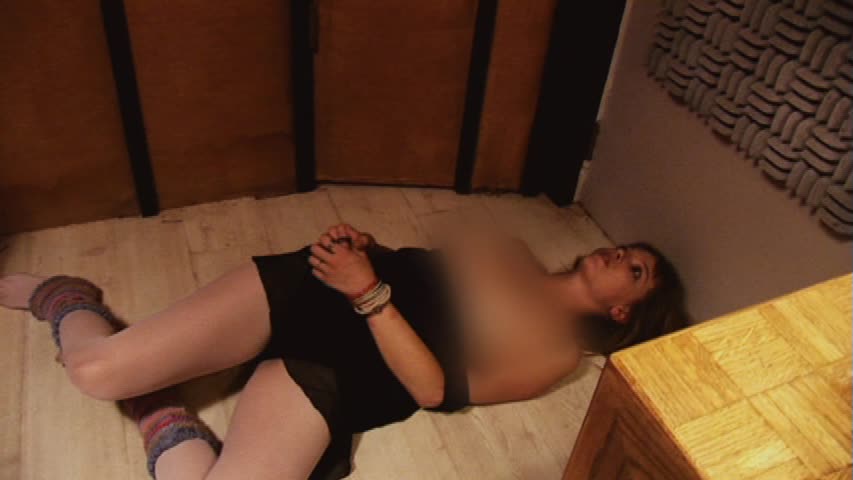
I’m a little disappointed in the distribution of this film. Not only does the jejune title leave a bleak taste, but the DVD cover doesn’t quite represent what is being sold here. On the cover, there is a dirt pathway leading up to a two story, mansion-like structure sitting on top of a hill and seemingly decayed and abandoned. On the DVD backside, a meathook pops right out at you along with a female victim strung up by her arms, screaming toward to the sky. Meathook does not make a credited or on screen appearance nor does the house in the film look like the mansion on the DVD cover. What is even more disappointing, and what I have to comes to term with every now and then, is the heavily edited cut in which “House on the Hill” was released. The DVD cover states, “Warning Explicit Content,” and does show some intense moments containing blood and torture with implied rape. ‘Some’ being the key word because I’ve seen more explicit content on the local evening news. This might be due in part of the post-production censorship which most noticeably focuses on covering up any and all nude scenes. Olivia Parrish’s topless scene was crudely censored by being blurred out and awkwardly cropped to show a low-resolution image, a forced zoom in, of her neck up as she’s being molested. The same cropping censorship goes against Laura Hofritcher’s topless scene as well during her torturous scene.

The North 40 Production film and MVD and ITN distribution DVD release doesn’t score to well for this reviewer. I’m able to look past the editing techniques, post-production effects, and unbalanced audio, but being a writer and a firm patron of freedom of speech, the censorship of the nudity and potentially the bloodletting has my blood boiling. However, even though Leonard Lake and Charlie Ng may have not been extensively covered on the silver screen or on entertainment television, I am glad Frentzen told partial of the notorious story and was able to tell his rendition of the unknown accounts.
Evil Wants to Make a Triple Feature! “The House with 100 Eyes” review!
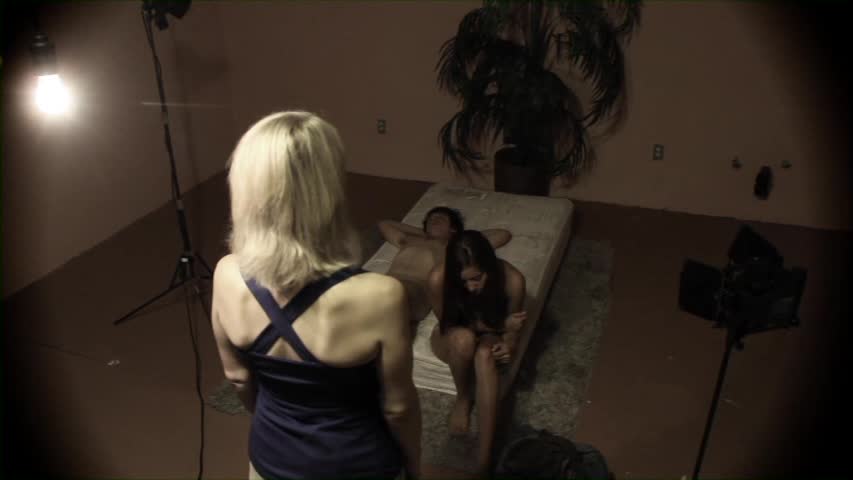
Anything goes in Hollywood, California and anybody can be a star. Just ask amateur filmmakers Ed and Susan, an average middle class married couple, who are searching the streets, scouting for their three actors to star in Ed and Susan’s Red Studios produced snuff film. Ed is hellbent on making his next film a never before seen triple feature – three kills in one night. After days of scouting the streets and coming up with no potential stars, Ed and Susan finally happen upon three homeless youths and offer them $500 each to star in, what the believe to be, just a harmless porno film. Things don’t go as planned as what was suppose to be Ed’s perfect triple feature night turns to be a nightmare for all parties involved. The story is told through Ed’s staged house cameras and the cameras have a night of death to tell.
I’ve only experienced one other Jay Lee directed movie prior to “The House with 100 Eyes” and that was with “Zombie Strippers!” starring Robert Englund and Jenna Jameson and while I solely purchased that title for personal entertainment and didn’t write up a review, I remember “Zombie Strippers!” being ridiculously gory. Jay Lee hasn’t strayed too far from his element with “The House with 100 Eyes” and teams up with co-director and lead actor Jim Roof (who had a part in “Zombie Strippers!”) to bring gore and shock to a mockumentary about creating a snuff film.

Unlike anything I’ve ever seen before, “The House with 100 Eyes” labels itself as horror-comedy, but in reality, the overtone deems itself more factual about the human condition. Married couple Ed and Susan couldn’t be any more realistically different; Ed is a sadistic psychopath who gets off on his addiction of suffering and murder while Susan’s more organized, structured, and satisfies her desires through death by poisoning. Not much information is explicitly given about Ed or Susan except tidbits shared by each character through self interview commentary; Ed grew up torturing animals and watching their reactions through the results of his torment while Susan went through a string of abusive husbands and her torment feels more man-made. Now while I’ve just described two very disturbed individuals, their marriage couldn’t be any more comically stereotypical; small marital spouts, sexual frustrations, “happy homemaker” wife, etc. Ed and Susan even have a pet – a young female victim named Maddie who had all her limbs severed and is probably going through Stockholm Syndrome with Ed and Susan. The comedy element is their marriage as it’s actually not a facade for making a horrific snuff film.

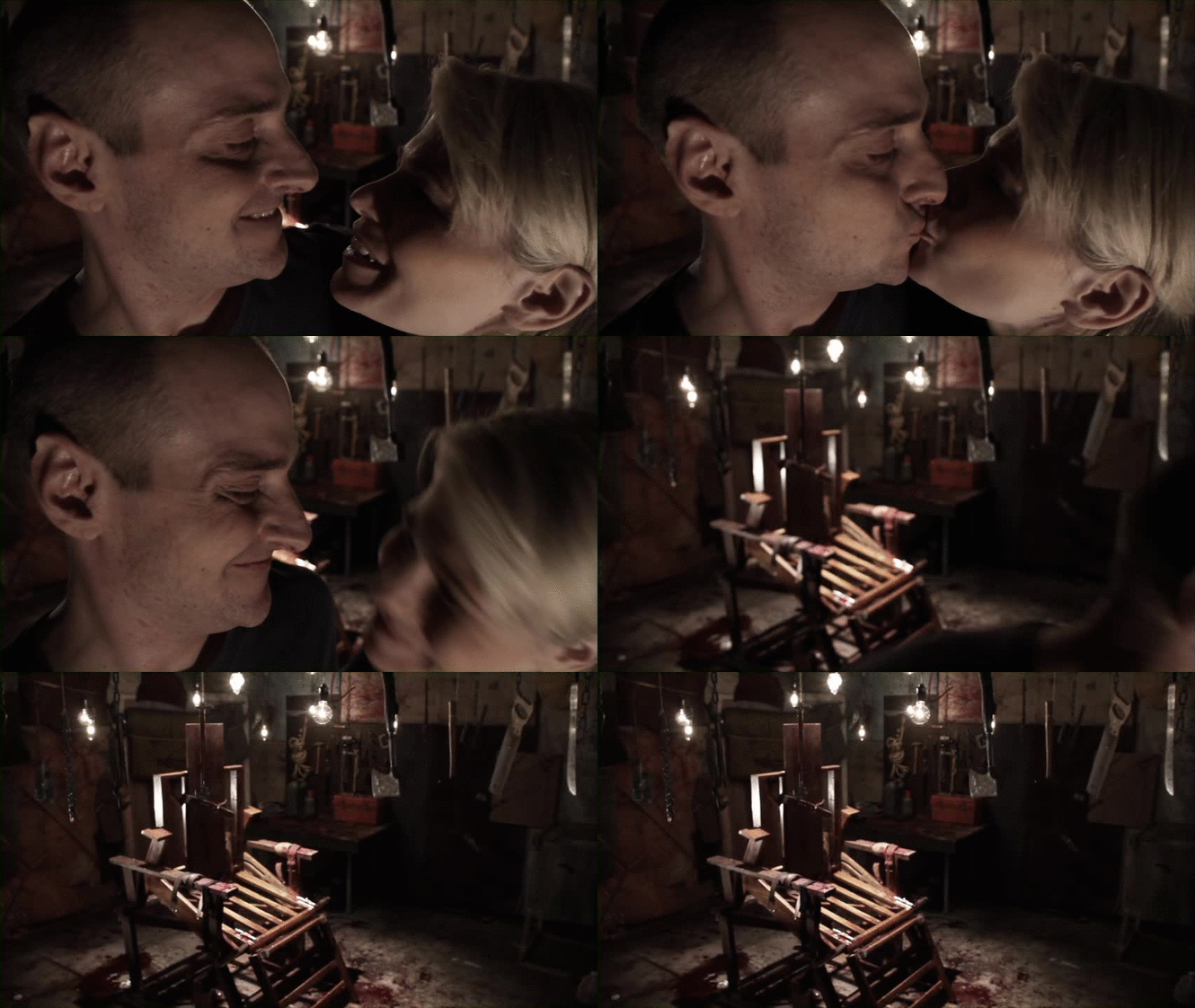
The gore brings the viewer back to the subject matter of the film and the effects couldn’t be anymore gut wrenching. Ed’s torture chair has to be the most frightful part of story, strapping in his victims and just going to town on them with whatever tool inspires him. Ed slices, dices, breaks, guts, hammers, and chisel aways until the very last breath and his merciless demeanor, conveyed very well by Jim Roof, sells icy cold-heartiness. While Jay Lee didn’t linger too much on the gory scenes, Lee’s ability to inflict the anguish of the quick shots by implementing screeching audio interference from one of Ed’s stand cams, heightening the reflection of pain of torture. Ed is well complimented by his wife Susan, portrayed by Shannon Malone, who is a wolf in sheep’s clothing. Susan might be pleasant and even tempered when compared to Ed, but once the sweet kiss of death reaches near her nostrils, she can’t help herself to take it upon herself to inject a vicious, blood-vomit inducing poison into her prey. This makes Susan just as deadly, if not more so, than Ed.

Now while I might be putting “The House with 100 Eyes” on a tall pedestal, I’m not too pleased with the intentional censorship of nudity. The purpose of Ed’s snuff film is for sexual gratification; he wants the double whammy of dirty sex and grisly murder. When the two lovers, Clutch and Jamie, remove their clothing, their privates are censored by close up framing or blurring out techniques. The censorship practice puts a damper on the film’s ugly subject matter, dumbing down and unbalancing the violence and the nudity. The way the filmmakers worked around this was a heed before the presentation that Ed’s tapes were all made public to expose, which the authorities thought were a hoax, the atrocities of Ed and Susan but the victim’s humility was to be kept intact.

Another miscue for me was the open ending, leaving the conclusion up for interpretation. I’m usually one for open endings, but the way “The House with 100 Eyes” set itself up in the beginning with the “public release” should have forcibly led to a closed ending, wrapped in a nice little red bow. The ending considers the audience to be left frightened or wondering if their support for the victims will be justified, but the ending was more of an abrupt cut away from what could have been a more effective, plot defining ending.
The Artsploitation Films DVD release runs an unrated 76 minute feature presented in a 1.78:1 widescreen transfer through many digital cameras accompanied by 5.1 surround mix. The film looked sharp and clear with only minor digital noise interference during some of the more darker scenes. The well-placed screeching audio was a nice touch for fear effect, but does become a bit ear-stiffening after prolonged use. On the inside of the DVD casing, a note from the directors Jay Lee and Jim Roof give you a bit of insight on what to expect and don’t sugar coat about the dark comedy. It’s purely a film about absolute evil.

Overall, Jim Lee and Jay Roof along with a solid cast deliver a cringe-worthy found footage mockumentary that mind behind the eyes of the malevolent and being very happy to do so with a evil smirk on their faces. Make sure you send your kids to be early before viewing the Artsploitation Films’ release of “The House with 100 Eyes.”