Sonar Radiation is Music to the EVIL’s Ears! “The Living Dead at Manchester Morgue” reviewed! (Synapse / Blu-ray)


Don’t Let the Sleeping Corpses Just Lie!  Grab a copy of “The Living Dead at Manchester Morgue” at Amazon!

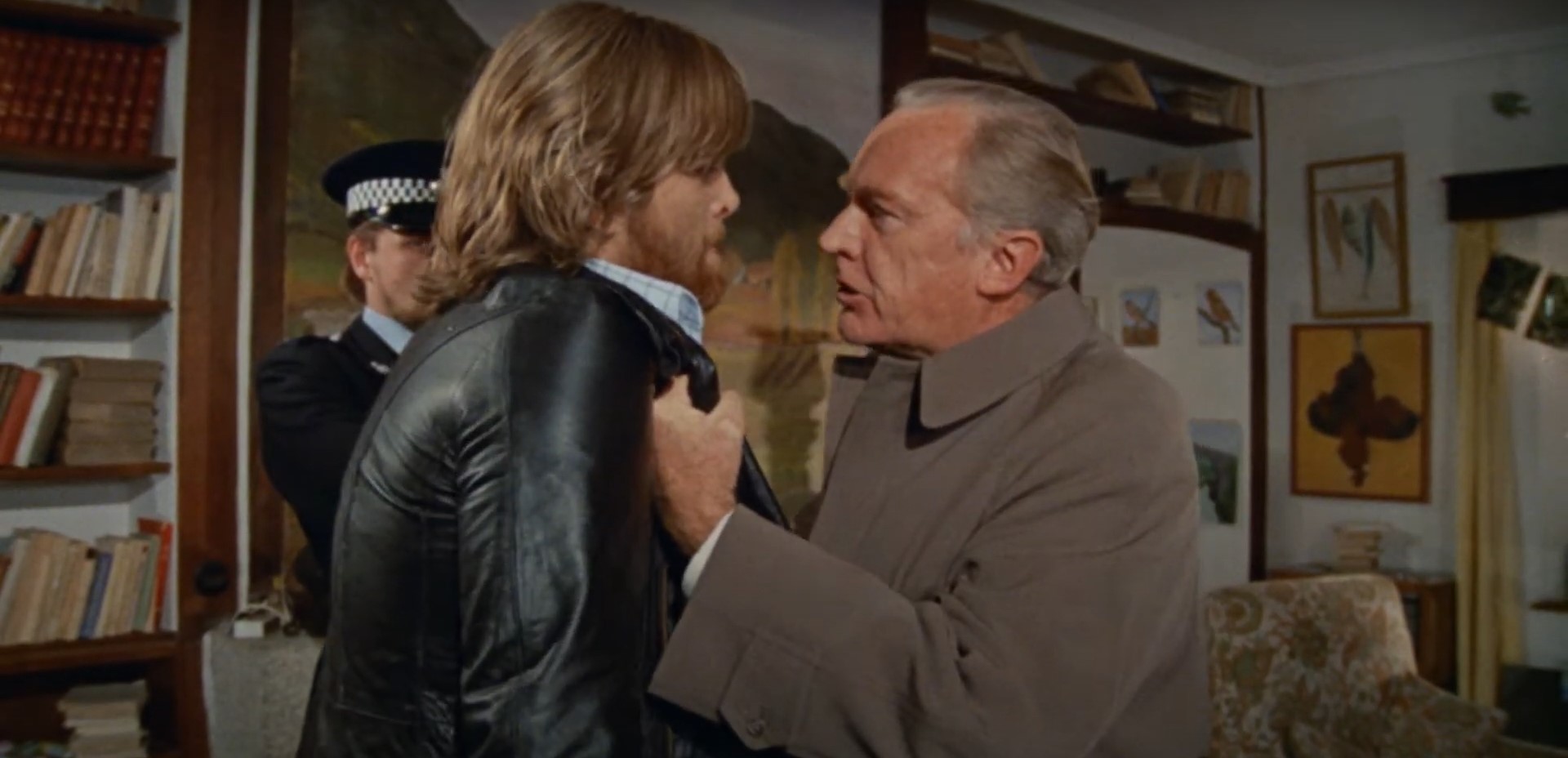
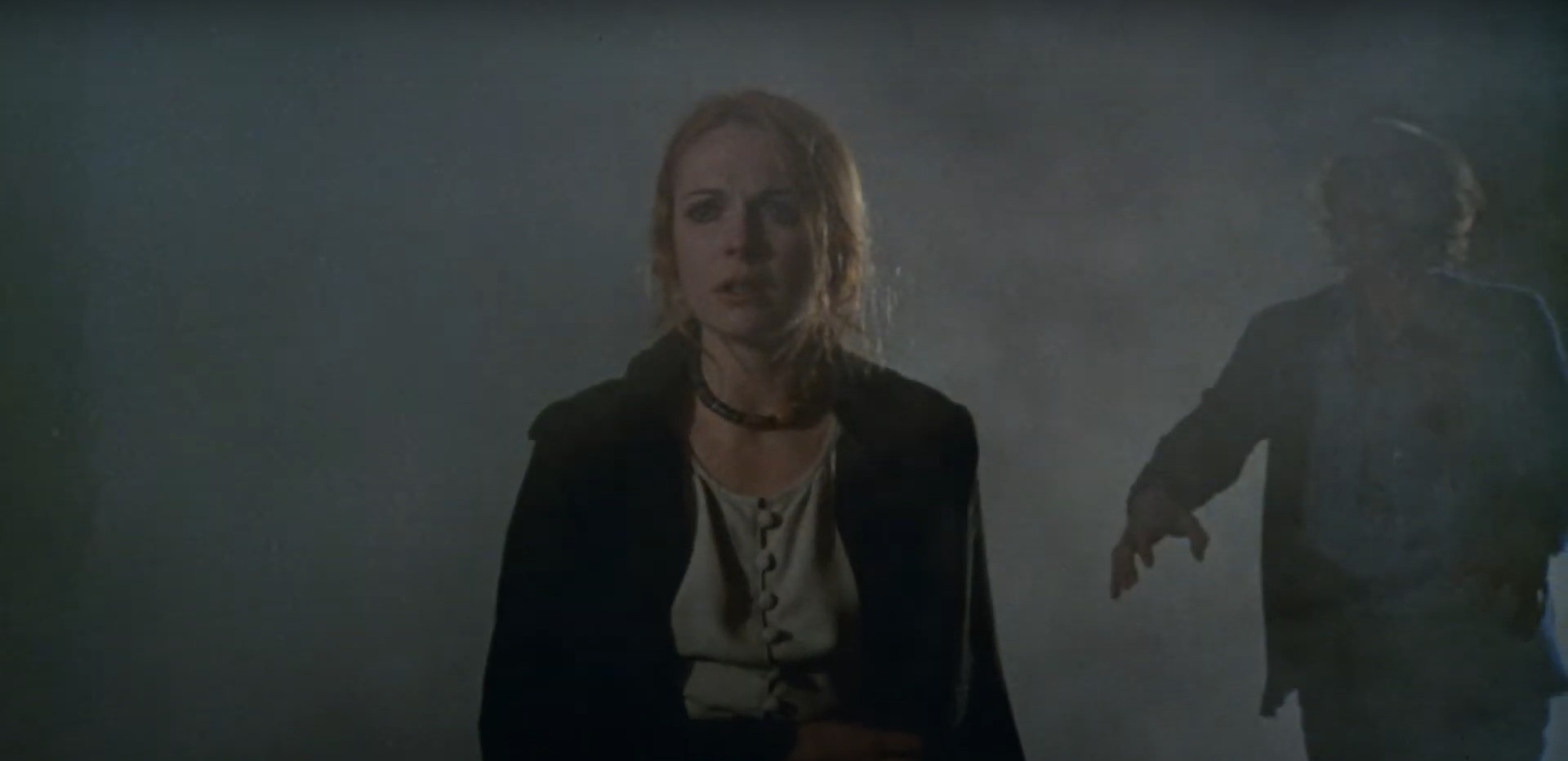
After having a run-in with a beautiful woman, Edna, at a gas station who accidently wrecking his motorbike, Manchester antique dealer George offers to drive her car to her destination in the country, her sister’s place in Southgate, and then borrow the car to continue on toward his appointment in Windermere.  However, upon their arrival in Southgate, Edna’s husband Martin has been brutally murdered and the police immediately suspect the two urbanite out-of-towners George and Edna of coming the heinous crime.  In reality, the recently dead in a mile radius has their nervous system reactivated and directed to kill the living by a new sonar radiation technology aimed to destroy crop pests.  With the police and the dead on their heels, George and Edna seek to expose the truth to the world before its too late and the experimental new pesticide’s range is extended to cover more ground. 

Hitting the stop button here before we dive into our review of “The Living Dead at Manchester Morgue.”  If you’ve never seen the Jorge Grau directed 1974 flesh eating zombie film then drop everything – you’re work, your kids, your winning lottery ticket worth millions – and take the next one hour and 33 minutes to enjoy the graphically gory, social commentary horror that not only cashes in on the George Romero “Night of the Living Dead” gamechanger undead horror but also rivals Romero’s film in story and in full, gorgeous color.  “The Legend of Blood Castle” director Jorge Grau helms the Spanish-Italiano co-produced script penned by Sandro Continenza (“Uncle Was a Vampire”) and Marcello Coscia (“Teenage Emmanuelle”) and was provided to Grau by “The Eroticist” and “Don’t Torture the Duckling” producer Edmundo Amati who wanted to make a Romero-esque flesh-eating zombie film of his own.  Also more widely known as “Let Sleeping Corpses Lie,” “The Living Dead at Manchester Morgue” is co-produced by Manuel Pérez and is a co-production between Star Films and Flaminia Produzioni Cinematografiche.

Hot off the presses of Italian action-crime dramas, Ray Lovelock (“Emergency Squad,” “Almost Human”) finds himself playing an antique merchant holding up shop in the metropolitan area of Manchester, England and as George Meaning, the relatively undisclosed personal experience as an antique merchant, Lovelock gets into character not on the business end but when the shopkeeper goes on holiday in the country, riding his motorcycle Windermere where he has arranged a meeting with some very important people that never flesh out in the end. Speaking of flesh, don’t expect the leading lady Cristina Galbó (“The House that Screamed”) to provide any as the panicky Edna Simmonds on her way to her sisters (Jeannine Mestre, “Count Dracula”) for an intervention toward her sister’s severe heroin use. Much of the only flesh to be hand in “The Living Dead at Manchester Morgue” is that is which ripped from the bodies and stuffed into rotten, undead mouths. In itself, the entire scenario between Edna and her druggie sister is a compelling enough story to warrant attention in accumulating a sense of sisterly betrayal and a sacrificial compassion to do the right thing despite the consequences. However, that pathway, no matter how distressingly prominent it may seem, does not carry over into the main plot points of an experimental pesticide treatment involving sonar inadvertently raising the dead to be superhuman zombies. Between an Italiano (Lovelock) and a Spainard (Galbó), who not throw in an American while we’re at it with Massachusetts born Arthur Kennedy (“The Antichrist”) to be the aging local inspector keen on pinning every murder on youthful urbanites with their hippie ways and satanists beliefs. “The Living Dead at Manchester Morgue” fills out the cast with José Lifante (“Night of the Walking Dead”), Vincente Vega (“Historias para no dormir“), and “Flesh+Blood’s” Fernando Hilbeck as the foremost feared zombie.

What makes Jorge Grau’s take on the living dead canon so impressive is not only the social commentary story that seeks to deconstruct ecological progression as an ironic destructive poison to the Earth and its inhabitants and the striking moments in gore effects from the team of Juan Antonio Balandin, Luciano Byrd, and Giannetto De Rossi (of Lucio Fulci’s “Zombi”) that have remained timeless in holding up and rivaling against many of today’s gruesome effects, but also the terror-inducing sound design that combines Giuliano Sorgini’s funky-spook with Antonio Cárdenas zombie-vision resonances of heavy breathing and resonating heart thuds that cues the lurking of an undead lurker.  The effect is potent and full of imminent danger when included into Grau and cinematographer Francisco Sempere’s (“Death Will Have Your Eyes”) perfectly framed shots of the Romero-esque zombie lumbering toward their prey in an unstoppable hunger to kill and eat and, sometimes, convert to their infant-legion inside-and-out of the zombie perspective.  Along the lines of “The Living Dead at Manchester Morgue’s” environmental theme is the juxtaposition of big city and countryside in regards to their pollution levels in the opening credit scene where George rides out of Manchester through the degradation of the masses who are popping pills, wearing face masks (like in today’s COVID climate), numb to shock (in the scene where a naked protestor runs in front of stalled traffic for peace and the motorists are blank to the moment), passing by death and polluted nuclear smoke stacks.  Once the lead George reaches the countryside, he removes the scarf covering his nose and mouth and breathes in fresh air with a smirk on his face.  From then on, the story moves forward with a cautionary tale of ill-fated modern progression, such as urbanism, seeping into a natural landscape and causing death and destruction, leaving an poignant aftertaste in the inevitably of man’s ignorance will kill us all.  Grau’s film is a good candidate to be a promotional movie for the dramatic effects of climate change in today’s campaign for ecological change to reduce our carbon footprint.

Synapse brings “The Living Dead at Manchester Morgue” home onto a Blu-ray home video, restored in 4K from the original camera 35mm negative that includes the authentic and intact opening and closing credit sequences. The region free, AVC encoded release is presented in 1080p high definition of a widescreen 1.85:1 aspect ratio and the picture is the gold standard of presentation with a vivid and stable color palette, controlled DNR without any posterization, and greatly detailed without an inkling of lossy image quality. Two audio mix come with the release – a DTS-HD Master Audio 5.1 surround sound remix and the distinctive to the Synapse release the original English theatrical mono mix. Though nice and nostalgic in the original English mono mix, the clarity and robustness of the channels on the DTS-HD track is by far superior with its reformulated by Synapse lossless quality and fidelity, especially in that aforementioned sound design by Antonio Cárdenas. The English dub on Ray Lovelock can be off-putting at times but the track is still beyond the best of the two available audio options. English SDH subtitles are available. Extras include two audio commentaries by author and film scholars Troy Howarth, Nathaniel Thompson, and Bruce Holescheck, a feature length (89 min) documentary Jorge Grau – Catolonia’s Cult Film King that explores the lift and films of director Jorge Grau, The Scene of the Crime is special effects and makeup artist Gionnetto de Rossi discussion on the film, another de Rossi feature of the SFX artist at a Q&A at the Festival of Fantastic Films in the UK (43 minutes), the theatrical trailer, TV and radio spots, and a sleek black snapper case that wouldn’t be complete with a Synapse catalogue booklet. If you’re a diehard zombie genre fiend, Jorge Grau’s “The Living Dead at Manchester Morgue” must be at the top of your personal video collection. If it isn’t, kick yourself in the shin really hard and then check out Synapse’s gorgeous release of the Spanish-Italiano production that’s worth every second of your life viewing.

Don’t Let the Sleeping Corpses Just Lie!  Grab a copy of “The Living Dead at Manchester Morgue” at Amazon!

I Would Be EVIL Too If Disturbed at “6:45” reviewed! (Well Go USA / Blu-ray)

Now on Blu-ray “6:45” the Worst Time of Your Life!

Bobby and Jules seek to fix their broken relationship with a vacation to the island resort town of Bog Grove after a big fight about Bobby’s suspected infidelity.  The off-season island is strangely quiet with hardly any tourists roaming the shops and boardwalk.  The couple stay at the Cozy Nook bed and breakfast, owned and operated by an eccentric host, Gene, whose more personally invasive than he is hospitable, yet everything else feels like a dream for both Jules and Bobby reconnecting to what is lost between them until a hooded man slices Jules’s throat and snaps Bobby’s neck.  Next thing Bobby knows, he becomes awoken by a 6:45 am alarm and feeling relieved that the horrific moment was only a dream, but when the events exactly play out as they did in his dream and he dies again the same way only to wake up again at 6:45 am, he, and he alone, realizes he and Jules are trapped inside a time loop driving him to face a different, more grim reality.

Ah, yes.  The time loop genre.  An alternate dimension where reliving the same day over and over again without a new path of escape on the horizon had established a foundation of fear beginning with Bill Murray starring in the Harold Ramis directed comedy “Groundhog Day” and has more recently been a executed (pun intended!) delightfully in the Christopher Landon cycling slasher “Happy Death Day.”  Well, here we are again, as if we ourselves are stuck in a time loop, with another rinse and repeat picture titled “6:45” from the “Perkins’ 14” director, Craig Singer.  “6:45” will mark as screenwriter Robert Dean Klein and Singer’s fourth collaboration in their respective roles and their first feature together in 15 years following 2001’s “Dead Dogs Lie,”, 2003’s “A Good Night to Die,” and 2008’s “Dark Ride.”  The fictional locale of Bog Grove is actually multiple locations up and down the new Jersey Shore from Ocean Grove to the Seaside Heights, showcasing a few local hangouts and attractions of the upper Jersey shore of Ocean County.  “6:45” is coproduced between the director and the films’ stars Augie Duke and Michael Reed under the Birds Fly Dogs Bark Wind Blows productions.

Augie Duke must need a vacation because “6:45” makes the second getaway horror where one of Duke’s previous characters vacations at the Jersey Shore following the Cape May-shot psychological thriller “Exit 0” alongside sojourning costar Gabe Fazio.  While there are parallels between the two Jerseyan films, Singer’s very own holiday in Hell is set on repeat and poor Augie Duke has to continuously have her throat cut more than a handful of times as the romance-question Jules, but being a quietly discreet scream queen of indie film (“The Black Room,” “Hell’s Kitty,” and “Necropolis:  Legion”), the L.A. born Duke can handle a simple boxcutter to the juggler.  Opposite of Duke, playing a recovering alcoholic musician in Bobby, is an equal match for indie horror credits to his name with Michael Reed (“The Disco Exorcist,” “Exhumed,” and “Subferatu”).  Duke and Reed play nice as a happy couple on the rebound but as death and the date never ends, the strain between them grows with intensity every cycle as Reed has been the outlier in remembering every moment of his girlfriend’s death and the helplessness he feels in the inability to stop it no matter what route he tries. Creepy characters a peppered throughout just to make more peeving towards Reed tumble drying recollection of events from the Cozy Nook’s nosy nuisance of a host Gene (Armen Garo, “The Manor,” “Coda”), the drunk lesbian Brooklyn (Sasha K. Gordon), and the shadowy, silent man (Joshua Matthew Smith) who’s a representation of the incessant range and has one job of slicing throats and breaking necks. Remy Ma, Sabina Friedman-Seitz, The 45 King, Allie Marshall, and Windows, himself, from “The Thing” Thomas G. Waites co-star in the film.

“6:45” has a story that can easily wrap you up initially and have you invested in a couple burdened by their love-hate relationship. To lure you in more, that light-and-dark balance tilts more toward the latter in a dangerous askew manner and love morphs into a blinding obsession to where anything is possible, making that narrative of a volatile human chemistry cocktail needing to be told as straightforwardly as humanly possible. Singer works diligently on keeping Reed and Jules on that track of an askew reality revolving around the historical mysteries of a bruised romance that include infidelity, alcohol abuse, and even violence, but Singer keeps close to the chest in not unveiling the true nature of Bobby’s repetitive retreat on what should have been the best day the newfound happy couple’s lives after rekindling and taking next steps to marriage with an island proposal that’s seen as Bobby’s good faith effort in turning around his life for the better because of his love for Jules. Yet, out of nowhere, the established linear narrative takes an unexpected montage turn in style, blending the couple’s past, present, and future all in one Brady Bunch grid mixed with even more flashbacks and repeated scenes that tries to explain more of Bobby’s checkered, playboy background and hand over emotional stress of repeating everyday like a persistent and noisy street hawker trying desperately to hand you pamphlets. Yet, the repeated days stay sequential after Bobby’s next death and so Bobby and Jules die more than a dozen or so times, but the next title card follows in sequential order (but aren’t they also reliving the same day so wouldn’t be day 2 over and over again). “6:45” attempts unnecessary stylistic approaches to keep the story fresh because no one wants to see the same thing over and over again and that’s perhaps where Robert Dean Klein collapses in the second act that inevitably bled to a total meltdown of story in the third act in trying to connect the time of 6:45 am to an important event with an end result of just leaving us more bewildered about the reference. The gist of Bobby and Jules’ downfall is clear, but how Singer takes us there is a pothole-laden path with lots of senseless bumps along the way.

This off-season, Jersey shore, psychological thriller really casts a dark cloud over the sunny good times usually offered for vacationers. “6:45” is the shark roaming just offshore in that feeling of fearful uncertainty of what lurks about. Well Go Use Entertainment releases the Craig Singer film onto a region A Blu-ray home video, presented in a widescreen 16X9 aspect ratio, and is rated R for strong violence and gore, sexual content, nudity, and language throughout. Cinematographer Lucas Pitassi casts a fairly natural image, clearly sharp and texturally above par in Well Go Usa’s high-definition Blu-ray release. While much of the gels and abnormal lighting comes more into play at the tail end of the film, “6:45” offers a more than just a paradoxical effect on the mind but also on the sight of seeing what should be a joyfully hopping with out-of-town patrons and vividly bright with beach sun resort town turned into a cold and dreary Hell by the ocean. The English language DTS-HD Master Audio 5.1 had some issues with inconsistent dialogue levels that were, at times, muffled without just cause. Perhaps, the cause was more boom placement or interference of some sort. The soundtrack by Kostas Christides has a smoother quality while creating tense atmospherics where needed and ascending into rock instrumental for those black sheep montages and flashbacks. English SDH subtitles are an available option. On the variable-trailer-esque menu, there are no bonus features nor are there any bonus scenes during or after the credits on this barebones release. The cardboard slipcover, of the repeated Blu-ray cover art, is a flat, smooth matte that nicely sheathes the snapper case. “6:45’s” thrills and chills literally emanate a no time to die mantra disillusioned by guilt and death and the only slither of hope out of purgatory is to come clean, but if it was only that simple – in life and in Craig Singer’s film.

Now on Blu-ray “6:45” the Worst Time of Your Life!

The Best Spies Seek Thrills When Taking Down EVIL! “Deathcheaters” reviewed! (Umbrella Entertainment / Blu-ray)

If Anyone Can Hide from the Grim Reaper, It’s the “Deathcheaters” on Blu-ray from Umbrella Entertainment!

Vietnam War brothers-in-arms Steve Hall and Rodney Cann banded together well after the fighting was over and channeled all their pent up energy into being adrenaline junky stuntmen for movies, television series, and commercials as a living and as a lifestyle.  When the two Australians are duped and setup into a high speed chase and a daring rescue mission by one of their country’s own clandestine government agencies in a ploy to test Steve and Rod’s daredevil abilities, they pass the qualifying assessments and are offered an espionage job by agency head under the pseudonym of Mr. Culpepper who has no other incentive to provide other than the job to be the most challenging, death-defying operation to gorge on by two extreme sport enthusiasts.  Unable to resist, the stuntmen embark to a secret base on a remote island of the Philippines where they’ll dodge bullets, explosions, and over 100 guards to fight their way in and out to obtain classified documents for their country.

“Deathcheaters” became the third viewing adventure involving the actor-director combination of stuntman Grant Page and director Brian Trenchard-Smith that falls right in between “The Man from Hong Kong” and “Stunt Rock” and clearly delineates an understanding that Grant Page was a genuine fascination for Trenchard-Smith who sought to take the daring stuntman out of solely stunt role and puree him into a leading man role, showcasing Page’s hang-gliding, dune buggy, and skyscraper falls,  for the director’s second feature film released in 1976.  And, then, there’s John Hargreaves who we will dive into his there-but-not there presence later on. “Deathcheaters” is an ozploitation action-comedy that fulfilled two of Trenchard-Smith’s obsessions – stuntmen and spy films – from a story by the director and penned to script by Michael Cove and is produced by Trenchard productions alongside a conglomerate of production companies, including “Mad Max’s”  Roadshow Entertainment (a subsidiary of Village Roadshow), D.L. Taffner (“Ghost Stories”), Nine Network Australia, and the Australian Film Commission.

Undoubtedly, “Deathcheaters” stars Grant Page as the relationship unattached and cocky Rodney Cann whose only other interest besides bedding the single ladies is his enamored basset hound, Bismark.  Cann’s best friend, Steve Hall, is newly hitched to Julia who more-or-less disapproves of her husband’s risky vocation.  “Long Weekend’s” John Hargreaves plays the cheeky Steve Hall with sarcastic charm, matching his complement stunt partner and while Hargreaves has the chops to pull of the persona, the late Sydney born actor is well behind the curve when matched up with Grant Page.  Page is a stuntman playing a stuntman while Hargreaves is an actor portraying to be a stuntman and, unquestionably, that delta shows pretty radically when Page is driving the dune buggy, is descending rapidly from a tall building, or scaling a rock cliff without a harness and Hargreaves is relatively stationary.  Hargreaves has his moments but is greatly overshadowed by the veteran Page.  Before she was Brian Trenchard-Smith’s wife, “Stunt Rock’s” Margaret Gerard was John Hargreaves on screen romance who is vocal but wishy-washy on her husband’s exploits, even on the highly dangerous, international espionage mission assigned by the enigmatic Mr. Culpepper (Noel Ferrier, “Turkey Shoot”).  “Deathcheaters” round out with Judith Woodroffe, Drew Forsythe, Annie Semler, and Vincent Ball.

“Deathcheasters’ falls on the heels of the martial arts success of “The Man from Hong Kong” and is another stunt celebratory film from the ozploitation director with a penchant for large explosions and need-for-speed car chases.  All the stunts were perfectly poised in design and well executed.  Trenchard-Smith isn’t at all afraid to have the camera right in the middle of the action, strapping the 16mm camera to whatever plausible to place the audience in the action with the heroes.  As much as Trenchard-Smith goes full throttle with a tour de force, the same tricks become a little stale after, unfortunately, having previously watched “Stunt Rock” and “The Man from Hong Kong” that also featured self-set wet-gel fires, hang gliding, free falling, and among others aerobatic and dangerous acts that are seemingly in Page’s limited bag of showstopping routines.  There’s rarely anything new in “Deathcheaters” that warrant an awe response and that can be cliched, tiresome, and overall detrimental to the experience unless you’ve never seen a Trenchard-Smith film. If you’re one of those people never to have popped in one of his films, don’t expect “Deathcheaters” to be gritty, tough-as-nails, spitfire. Many of Trenchard-Smith’s earlier films, including “Deathcheaters,” sells solely on the witty, clean banter and a knack for the implied something really terrible happened to the bad guys with nothing ostentatiously explicit in the demise category. “Deathcheaters” can be wholesome, light, and aromatic of a repartee trashcan, but you get some great stunt work, explosions, and a car chase from this 1970’s Australian picture.

Like “The Man from Hong Kong” and “Stunt Work,” “Deathcheaters” too receives the Ozploitation Classics Blu-ray honor bestowed upon it from Umbrella Entertainment as spine number 10. Newly scanned in high definition 4K for the first time, John Seale’s cinematic vision has never looked better in this region free release, presented in standard widescreen 1.85:1 aspect ratio. The original vault materials held up nice enough to warrant a clear picture with only a few, brief blemishes. The super 16mm shot film, blown up to 35mm, often still feels ever so lightly flat in contour definition and in color; yet all the scenes look naturally aboriginal from the masters. The English language DTS-HD master audio 2.0 mono is a naturally lossy single speaker audio mix that doesn’t exact full representation of the action on screen though robust in fidelity. Dialogue perceives feebler during exterior scenes as capturing dialogue competes with the elements due to poor boom placement or just inferior equipment. Like the other releases, bonus features are nicely packed with a newly extended interviews with Brian Trenchard-Smith, Grant Page, and John Seale from the Not Quite Hollywood documentary, a new audio only interview Remembering “Deathcheaters” with executive producer Richard Brennan, new liner notes from Trenchard-Smith, a 2008 commentary with the director, executive producer, and leading lady Margaret Gerard (listed as Margaret Trenchard-Smith), Trenchard-Smith trailer reel, theatrical trailer, and a Trenchard-Smith directed bonus feature in “Dangerfreaks – The Ultimate Documentary.” The clear snapper case is housed inside a cardboard slipcover and inside the snapper’s liner is a 16-page comic book adaptation from Dark Oz, much like Umbrella accompanied with “Stunt Rock.” “Deathcheaters” shows its age but still pulls out all the stops with amazing stunt choreography and gave way to Grant Page being solidified lead man material, even with his corny one-liners, and simultaneously building upon Brian Trenchard-Smith’s early career in a niche field of being obsessed with overachieving, arrogant, and unafraid stuntmen.

If Anyone Can Hide from the Grim Reaper, It’s the “Deathcheaters” on Blu-ray from Umbrella Entertainment!

EVIL Trolls the Waters, Angling for a Kill. “Bood Hook” reviewed! (Troma Films / Blu-ray)

Troma’s 2-disc “Blood Hook” Available on Amazon!

Muskie Madness.  That’s the moniker for the locals’ fishing contest set as the background for a group of city slicker friends looking to unwind and do a little fishing themselves.  17 years earlier, Peter van Clease witnesses his grandfather suddenly fall into the lake and disappears without a trace.  Present day, Peter returns to his grandfather’s cabin with his friends but is still haunted by the memory from his childhood.  When locals and tourists engage in the contest for who can catch the biggest Muskie, a maniacal fisher casts his giant fishhook lure into the flesh of unexpected contestants on the lake and on the shore, dragging them violently into water and never to be heard from again.  The disappearances send Peter into not only an investigation of those currently missing but also into the cold case of grandfather’s demise whose fate was eerily similar. 

On the calm, glossy surface, “Blood Hook” resembles the quintessential severed tongue-and-cheek comedy and horror of Troma’s outrageously independent repertoire.  Tossed around as a crude idea about opulent society diluting the quality and the quietness of quaint lake resorts during their extravagant vacations outside city life, “Blood Hook,” once under the working title of “Muskie Madness,” is the first, if not the only that I can recall, American fisher-slasher from the unique imagination and vision stemmed from director Jim Mallon (producer, writer, and director of the “Mystery Science Theater 3000” series and movie) and producer David Herbert’s childhoods growing up in the summers of small town Wayward, Wisconsin.  Larry Edgerton and John Galligan were brought in to spruce up the script as the official screenwriters, adding bits of dry humor to an already unorthodox slasher in this catch-and-released in 1986 B-movie produced by Golden Charges and Spider Lake Films Ltd.

Like a Kleenex, the young cast falls into the fresh for one-use category of being mainly known for their role in “Blood Hook” and I hate to use that analogy because there are some really campy, genre-perfection talented acts here for a relatively large cast of a small, independent production about a killer fisherman.    Granted, a handful of the talent were able to snag up minor roles in bigger films, such as with Mark Jacobs (“Goodfellas) in the principal lead of Peter van Clease.  Jacobs, who is a dead ringer for David Schwimmer appearances and mannerisms, castrates van Clease’s manhood with extreme meekness more so than the character’s wishy-washy stance on his university music studies, romantic connections, and confronting homicidal maniacs when his abducted woman is in danger of becoming grinded up minnow chow.  What is more vexing about van Clease is the fact he essentially woes 2/3 of the principal ladies without even casting a line.  Beyond the frustrating namby-pamby, all other characters are depicted, in every sense of the term, more in accordance with those who portray them.    There is a side relationship building between van Clease’s friend Finner (Christopher Whiting), an enthusiastic fisherman who is new to the group of city friends, and Bev D. (Sandy Meuwissen), a single local with a toddler, that the audience can get invested in and takes an interesting turn when Bev D. plays the fishing rod at both ends, dipping her toes in another man’s lake with fellow local, and crazed military nut, Evelyn Duerst (Bill Lowrie).  Evelyn’s father, and yes Evelyn is a grown man with a beard, is played by Paul as the van Clease estate caretaker and a real stern pit for local purity.  A fan favorite will be the salty-looking bait shack owner Leroy Leudke complimenting his lovable persona, thick Minnesotan accent, and overall mysterious allure (with a lure) from Don Winters.  The cast rounds out with Lisa Jane Todd (“Playback”), Sara Hauser, Patrick Danz, Dale Dunham, Paul Heckman, Bonnie Lee, Don Cosgrove, Dana Remker, and Donald Franke.

Blood Hook” trawls through the familiarity of the 80’s slasher genre with an obscured hunter, a high body count, and a copiously campy campsite of carnage, but this peculiar fillet is sliced from a different kind of fish. While casted under darkness, the killer flings a cast of nylon fishing line with a large, sharp-hooked Suick lure distinguish itself as a unique weapon of choice that fills the icy blood cooler. There’s comedy in that diabolical device, largely so when making too much noise on the water that can scare fish away from patient fishers as Mallon hyperbolizes the idea of outsiders raising a ruckus amongst the sanctity of the local waters while paralleling a message about the aftereffect horrors of war; however, where we should be laughing at the idea of a fisher hooking a 150lb prize human, we’re only barely smirking at the irony as much of the dark comedy doesn’t precisely translate well from paper to screen. “Blood Hook” is about as big as the hook going into the gut as it’s no ordinary jonboat film as Mallon’s film looks serious, feels serious, and acts like a contender up against the iconic slasher-mega yachts of the time with a disconcerting sound design by Thomas Naunas of deafening cicada tymbal clicks all too familiar during summer days coupled with an eerie gelled and moody cinematography from Marsha Kahn that sets the slasher narrative as such. Both Naunas and Kahn exhibit perfect harmony in a disharmonious narrative context as a pair of feature film greenhorns looking for a launching point in their careers.

Muskie Madness turns into a Muskie Massacre. “Blood Hook” is the cinematic catch that almost got away, but Troma reels this trophy cult film back aboard onto a new 2-disc Blu-ray release distributed by MVD Visual. Presented in 16:9, “Blood Hook” holds up even to today’s standards against scrappy independent productions with a slight soft, yet noticeably clean presentation from the Super 16mm stock blown up to 35mm.  Some frames appear cropped and stretched on faces in extreme closeups, losing a bit of textural definition that leans more into a softer picture, but the contrasting is balanced which is unusual for a Troma film, the coloring is richer around the lush outdoor vistas without breaking stride of other color appropriate opportunities, like the vibrant red blood, and no evidence of any damage transferred over from the negative.  No formal mention of audio specifics on the back cover, but I suspect the track to be DTS-HD Master Audio Mono that’s clear but has issues with projecting low-talk dialogue.  Thomas Naunas’s soundtrack introduces a repetitive looming synth score kept well in check around more less-than-major problematic dialogue scenes.  Naunas’s sound design as a whole is paramount to “Blook Hook’s” envisioned success with an incessant cicada clicking combined, on the regular, with discord tones to jar the audio senses in relationship to an imminent threat.  First disc contains the feature plus scene selection menu.  The second disc is all special features clunkily arranged around the rehashing of Vinegar Syndrome produced interviews from their 2018 Blu-ray release with director Jim Mallon, actress Lisa Jane Todd, special effect artist Jim Suthers, and an audio interview with cinematographer/editor Marsha Kahm.  Along with the theatrical trailer, there’s also the usual Troma promos that accompany their re-release such as for Troma Now, Radiation March against pollution, and the Return of Gizzard Face 2 to promote Troma NOW’s streaming service.  The 2020 Metal + Hitchcock “Blood Stab” short, starring Lloyd Kaufman, finds its way onto the release too. “Blood Hook” is a tackle box of slasher tropes and anti-war and PTSD undertones though slightly dragged down by its weighted comedy; however, a killer sound design and a topnotch killer makes “Blood Hook” a perfect poster film for Troma heads.

Troma’s 2-disc “Blood Hook” Available on Amazon!

Prostitution Might Be the Oldest Profession but Killing People on Camera is the Evilest! “Snuff Tape Massacre” reviewed! (SRS Cinema / DVD)


Pick Up This Nightmare Fuel of “Snuff Tape Massacre” on DVD at Amazon!

Two killers are employed to do what they do best, to make a snuff tape.  Brokering the deal is Brand, a middleman serving on the behalf of a unknown client and relaying the job’s details to his contracted filmmakers.  The casted stars of their next production is a young pregnant woman who works at the home for the disabled and one of the residents, a 15-year-old deaf-mute girl who can’t utter a single sound due to her extreme incapacitated condition.  Pretending to be making a documentary about the disabled, the two killers were able to gain the women’s trust, easily drug them, and move them to a secluded location where the sadistic torture and affectionless murder show begins.

Straight torture and gore with no cinematic style or undertone depth is not every moviegoers preferred cup of tea.  For this gore hound, I can take it or leave it but would enjoy the darkest recesses of human sadisms and fantasies more if something was more germane to the reason for gore, but as far as Juval Marlon’s “Snuff Tape Massacre” is concerned, what you receive is a single perspective propelled by unsympathetic maliciousness, nihilism, and a taste for that metallic sweetness of blood.  The Germans are fairly well known for their insensitive, uncouth, and extreme films from the likes of directors Olaf Ittanbach and Jörg Buttgereit.  Does Juval Marlon have the blood and guts to be on the same level?  His written and directed 60-minute independent feature, also known as “Stermgewehr,” (“rifle” in German), aims to be a gruesome shocker under Marlon’s own befitting Beheading Films banner.

Obviously, none of the following names will be a part of a familiar, household cast fixture.  These types of gorging gore films usually have a small and conversant with each other cast of at approximately a hand full of willing actors and actresses to possibly mar, or better yet castrate, their acting aspirations with needless disturbing content that’s ironically overstated as well as understated.  “Snuff Tape Massacre” has a total of five members in the cast and out of the five members, only one uses a first and last name. The others go essentially dark with their real or full names anonymous to the world because who would ever in their right mind want to be associated with a movie about a snuff film? Thomas Goersch is the only full name credited and the only actor who a respectable credit list. However, Goersch has had many publicly and critically panned low-rent features with “The Curse of the White Woman,” “Bloody Shadows,” and “Poltergeister Experiment” being just some of his most recent samples that fallen into the depths of unsalvageable dumpster fires (and this has perked my darkly morbid and unusual curiosity in bad, bad movies!). As businessman Brand, Goersch never gets his hands dirty, leaving the role and his name unscathed and to leave all death-dealings to his hired hands in a pair of automaton teenage terminators including the head Snuff Filmer (Navarro) and his unnamed companion on the trail of blood. At least Goersch has a bit of Bill Zebub underground star power in Germany, Navarro exists only in this film as the one of the two mostly shaded and masked killers who kidnap actresses Tanja and Maria V. to exploit. The ruse surrounding the kidnapping leaves what ever little effort there was to be, to make the ordeal more engaging and exciting, was left back on Brand’s phone call as the Snuff Filmer’s plan to be pseudo-interviewers for a documentary goes off without a hitch. Maria V. does find as an interviewee of a second-year social worker enthusiastic about helping but her fellow co-kidnappee in binds Tanja literally serves as a second body to humiliate, torture, and execute by two desensitized individuals that isn’t a far stretch from their rigid performances as high and tight killers.

The crux of the problem with “Snuff Tape Massacre” is that the movie is just too long. Right now, you’re sitting there, reading this, cross-eyed by confusion, and thinking to yourself, “Steven, didn’t you say this was a 60-minute movie?” The answer is, yes, I did say that, but Marlon’s previous work, of similar extreme fetishisms, have been short films and “Snuff Tape Massacre” feels very much like a short film that’s been mishappened by a rack, stretched beyond its limits to where the possibility of being recognized for what it is, an orthodox gore and shocker, no longer factors into the equation. Scenes run too long and are over kneaded to the point of losing its impactful rise. For instance, when the young 15-year-old mute-deaf girl is being threatened by the Snuff Filmer’s automatic rifle barrel as he stuffs it into her mouth in an unspoken, simulated act of fellatio, the scene drags on for minutes upon minutes. As aforementioned, “Stermgewehr” in Germain is rifle and so these scenes should have some significance importance but overall feels juvenile and executed with poor time management. Marlon obviously doesn’t have two Nickels to rub together to fund this film, using old compact, pocket-sized digital cameras to record the varying levels of video and audio quality, but the one thing us gore hunds can appreciate is the gore. We can certainly tell a fake leg, arm, and even penis when one comes on screen and “Snuff Tape Massacre” is not exempt from using more-so than obvious inner details with no arterial or vascular details whenever a leg or arm is chopped (or even sawed) off with a dull hatchet, but what can be admired is the seamless look of the leg and the arm to the actresses. We’re not talking about a mannequin’s appendages or a plastique digits here when the dragged-on interview has finally wrapped, and the real raw material begins with decent prosthetics and blood pumping mechanisms that squirt blood longer and for the duration. The most effective effect is dick-hole jab stuck on repeat until the snuffer hits what we all presume is the back off the prosthetic piece but in the back of our mind, we’re really thinking bone. It’s a crotch-grabbing, leg-crossing, dick mangling moment no guy will ever forget.

SRS Cinema is well-known for bringing schlocky shockers to the table under the guise of really fantastic and detailed artwork for the banner’s DVD covers. “Snuff Tape Massacre” is no exception here as Juval Marlon’s film is juicy enough to make the company’s Nightmare Fuel line with an unrated and extreme release presented in widescreen 1.85:1 (16:9) aspect ratio in a lower resolution of 720 pixels (due to the compact digital cameras). Though unable to tell what cameras are being utilized, there are two different cameras are being used based on the vast difference in picture compressions with one looking stronger and more detailed than the other. The onboard microphone for the English language dual channel stereo mix is a lossy MPEG audio format that really takes a hit with the inconsistent background noise and electronic interference with a straight hum throughout when Marlon’s industrial sampler score is not substituted for sole audio dominance. Like many other SRS titles, the only special features included are SRS trailers for their catalogue unless you count the aforesaid artwork design of an illustrated half-naked bathtub victim with eyes of kitchen knife-stricken terror as part of the special features package – see below. “Snuff Take Massacre” is considerably low for a repeat viewing, but there are enough scenes that will undoubtedly make you recoil and squirm and that, my gory compadres, is worth the sole price of admission.

Pick Up This Nightmare Fuel of “Snuff Tape Massacre” on DVD at Amazon!