The EVIL Next Door Invites the Urban Decay. “Terrified” reviewed (Acorn Media International / Blu-ray)


A young boy is hit and killed by a bus.  A housewife is found hung in her bathroom.  A man has disappeared in his home.  Three incidences, three houses, three souls have one thing in common.  They’re neighbors.  The unusualness surrounding each tragedy grabs the attention of former forensics investigator Jano who’s own experience with the paranormal thrusts an unquenchable desire to examine the supernatural.  In a matter of coincidence, Dr. Mora Albreck, a vocational psychokinetic researcher, follows up on the disappearance of the man who called her countless times for help, but then just vanishes.  Accompanied by Dr. Albreck’s assistant, Dr. Rosentock, and Detective Funes, a weary, on-the-edge officer with a bad heart, the divide themselves to stay the night in each house and experience the paranormal phenomena calling from the beyond, but the entities calling just might terrify them. 

Hailing from Argentina comes the shivering, cross dimensional unknown from writer-director Demián Rugna’s 2017 properly titled, “Terrified.”  Originally known as “Aterrados,” the Buenos Aires filmmaker, who’s helmed hell bound thresholds previously with his introductory feature film, “The Last Gateway,” remains inside the grindhouse and horror bubble with another slit between realities thriller.  This particular bubble bursts with a whirlwind of nebulous outbreak of terror while providing microbe commentary about the potential dangers of Latin America’s water system and a perspective theme that speaks volumes on the issues of duality in what really happened and what the general public is told. Don’t trust your eyes! Nothing is what it seems! That’s the whole premise of “Terrified’s” knee-quivering appall, produced by Fernando Díaz under Machaco Films and the Instituto Nacional de Cine y Artes Audiovisuales (INCAA).
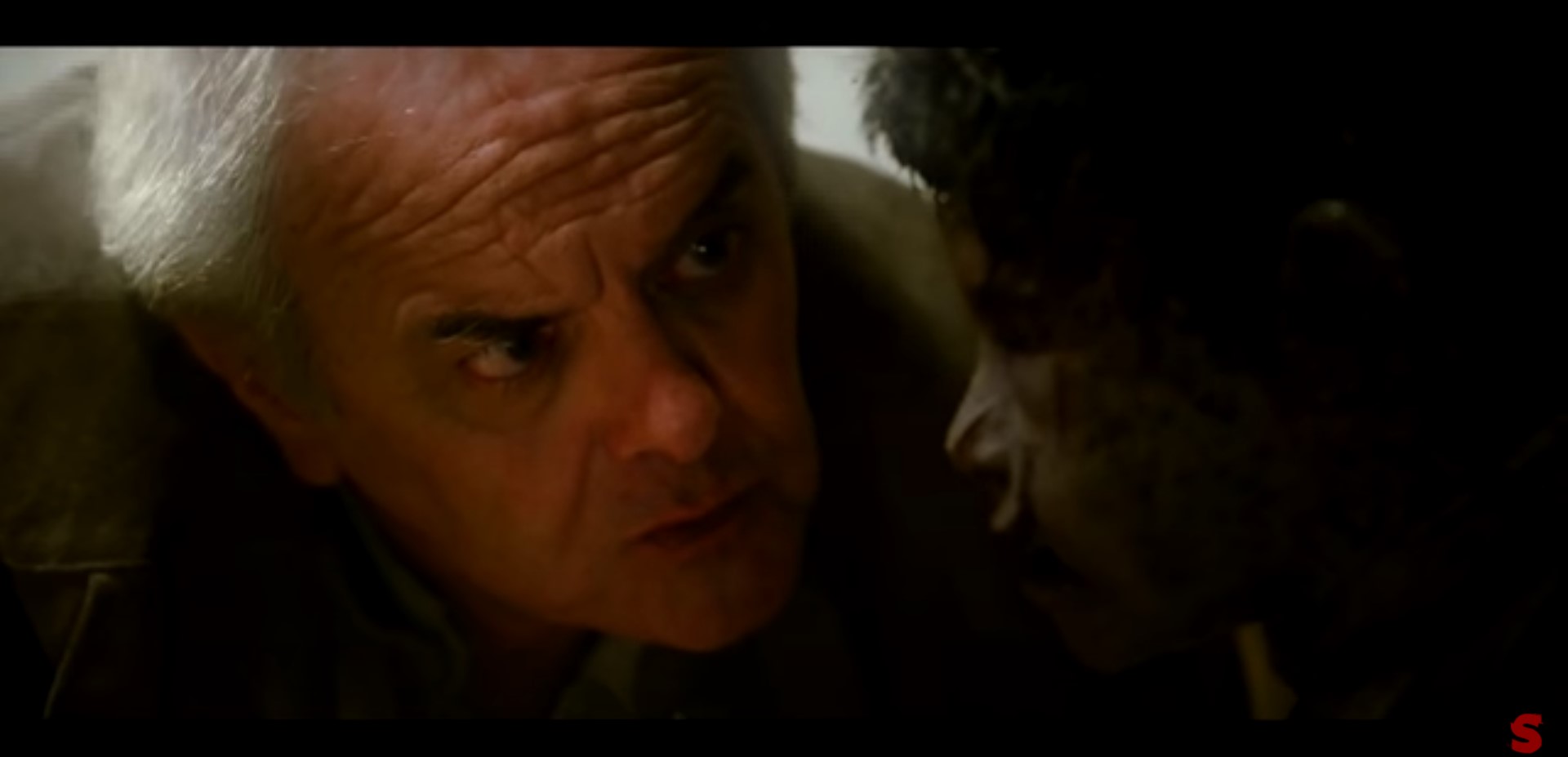
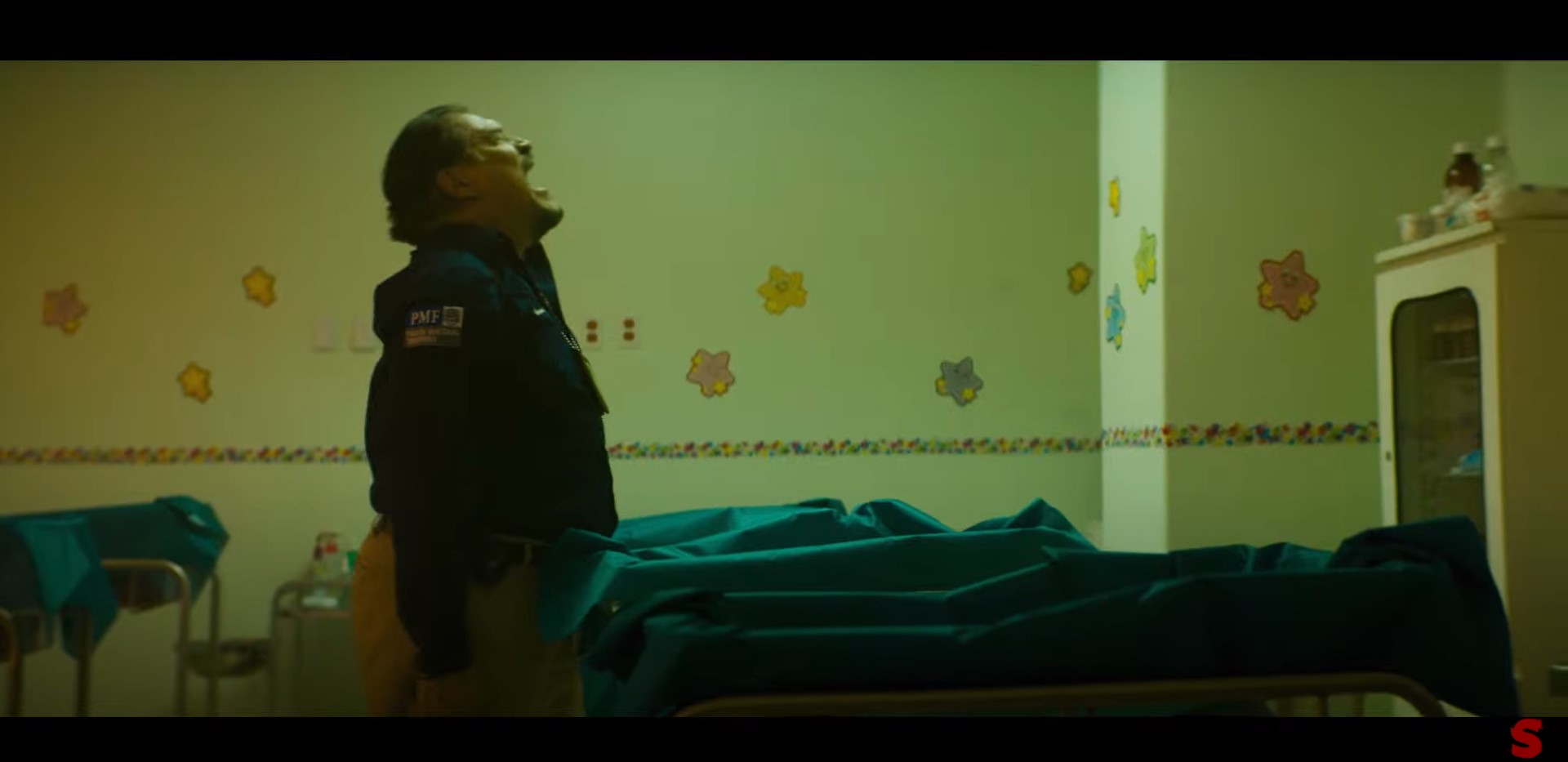
Rugna’s paces “Terrified’s” entropic buildout near the edge of an anthology, ghosting us the one reason for a neighbor’s supernatural experience for the next to eventually bring the heart of the cast together as a motley group of paranormal investigators. Starting with retired forensic specialist Jano who has a morbid curiosity for the unknown that fascinates him more than the abnormal mortifies him with fear. In his first feature length performance outside of television, Norberto Gonzalo understudies the very concept of the character Jano with objective eye for curiosity and knowledge much like any scientist. Jano is invited by Detective Funes, played by another television regular, Maximiliano Ghione, to the investigation of a recently deceased boy’s corpse having returned to his childhood home and is now a rigor mortis statue sitting upright at the dining room table. Though through exposition about their training and partnership over the years, Jano and Funes sit on the opposite sides of the fear spectrum with Funes’s engendered nervousness to the whole uncanny event and mentioning his bad ticker which comes into play later on in the story. Opposite side of the street, in walks into frame Elvira Onetto, an appropriate name for the film at hand. The “Jennifer’s Shadow” actress is Dr. Mora Albreck, renowned paranormal psychologist checking in on a manic patient who recently disappeared. Rugna really appreciates the mindset of the kindred spirits in Jane and Dr. Albreck with their sense of childlike giddiness toward the whole matter while those around them – like Funes or the boy’s mother – shiver with fear or break psychologically. While Jano and Dr. Albreck naturally work their way into the story, Dr. Rosentock is left with being the odd eccentric out. While just as enthusiastic about the phenomena that’s swallowed souls around the neighbor, Rosentock just appears as Dr. Albreck’s assistant who has traveled from a great distance to study…something like what’s happening…so is said in the film. Played by George L. Lewis in his only credited role, Rosentock is as much as self-assured, unafraid, and matter-of-fact as he is a caricature of old Hammer Horror style scientists when dealing with otherworldly entities, imposing a need for a little weight to his story, but, unfortunately, his participation lives and breathes only as participate to Albreck’s project. There are many fine performances around with the ebb and flow of minor characters, played by a talented cast that includes Julieta Vallina, Demián Salomón, Agustín Rittano, and Natalia Señorales.

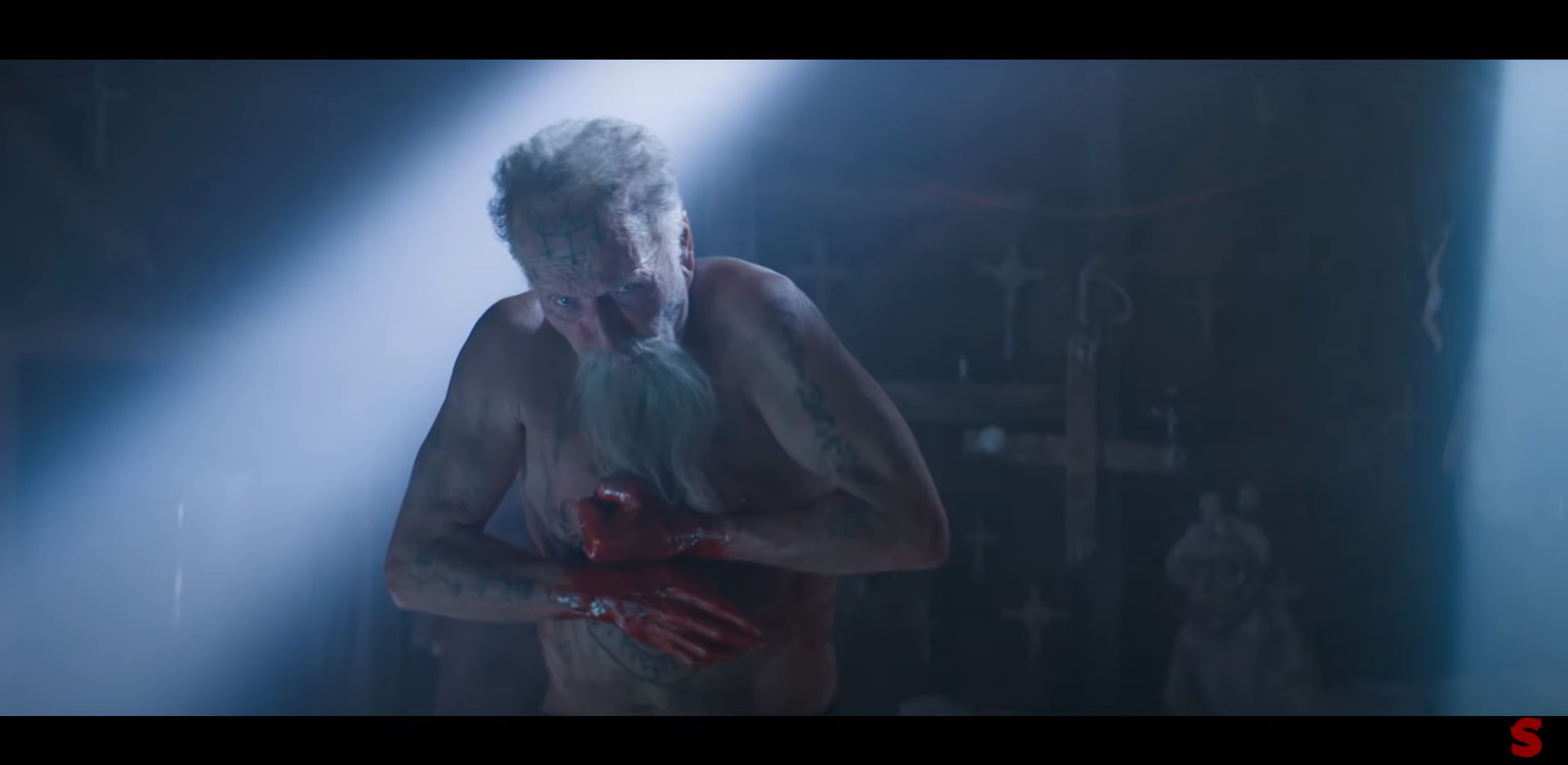
“Terrified” is one of those movies where the silence and the stillness can have a higher affect on the spine-prickles.  Rugna’s gold standard patience establishes a tense tone without the supplementary tumultuous, ear-splitting chaos that usually grinds teeth and curls toes as the sediment of panic begins to settle at the pit of the stomach.  Marcus Berta and Lionel Cornistein’s blend of practical and visual effect are near seamless, but ultimately land the one-two knockout punch of anxiety-riddled scares with tall, crumpled monsters skulking under the bed shadows, glowing eyes peering through wall cracks, and a the stiffly rotten decomposing boy popping into frame in a split second.  Cornistein’s composite designs are not too shabby for the editor and visual effects artist’s first feature rodeo let alone generated a complex olio of otherworld oddities.  In regards to “Terrified’s” themes, in my travels to Central and South America, I’ve been advised to be cautious in drinking the tap water that’s filtered differently compared to the U.S., leaving local microorganisms to swim in the guts of those unaccustomed to them, and Rugna points in that direction by consistently focusing on the water taps, drains, showers, the action of drinking water, and, also, literally spelling it out for us by Dr. Albreck to not drink the water in these spirit plagued houses due to microbes traversing from beyond through the water system.  Dual perspectives becomes important as well.  After the gruesome discovery of the boy corpse sitting at the dining table, Funes needs a rational explanation to report in contrast to the unexplained grisliness, something that makes sense and wouldn’t frighten the daylights out of him, his colleagues, or the general public.  Coincidingly, Rugna creatures also exist on two different planes, sliding between the panes, and not always visible; this is another verbally illustrated facet that unsuitably reaffirms the theme.
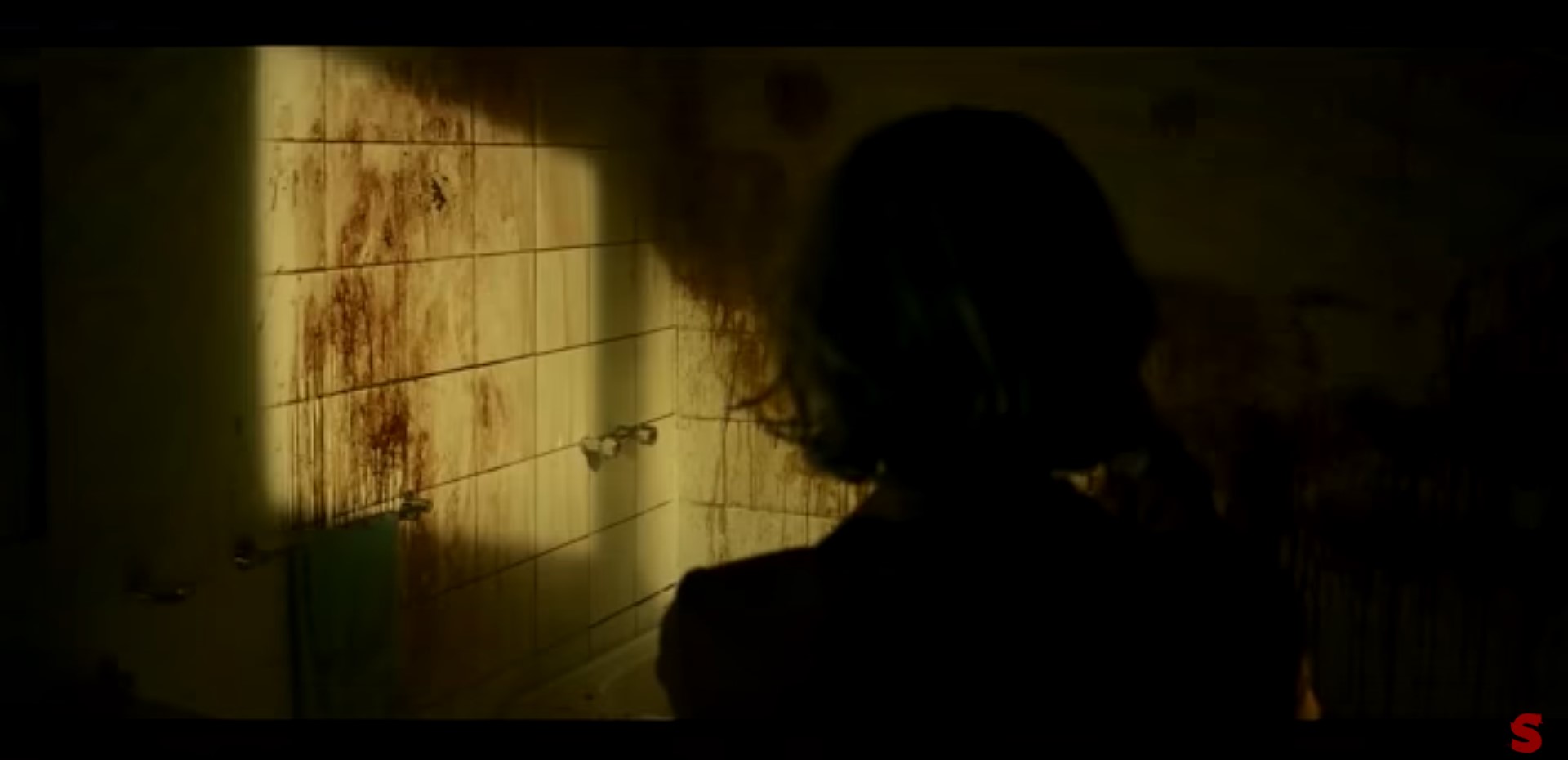
“Terrified” scales the expansion of dimensions with bottomless creepiness and shock value, rifting from Shudder’s streaming service and right onto a UK Blu-ray home disc distributed by Acorn Media International.  The region 2, PAL encoded, BD25 disc houses a presentation displayed in a widescreen, 2.35:1 aspect ratio, with a 15 rating for strong horror, bloody images, and language. The 1080p, HD resolution is an indifference concern with the already blemish free digitally shot film, but director of photography, Mariano Suárez, heeds every shot taking Rugna’s perspective theme to heart with lowlight and obscurities as fear-fodder. The Dolby Digital 5.1 surround sound mix flexes a full-bodied, channel defining muscle with clear, prominent dialogue, a diabolical range in sound design, good depth, and an off-key canorous soundtrack because every horror fan eats up an inharmonious and creep tunes. Unfortunately, much like the “Belzebuth” release, “Terrified” comes with no special features other than a menu with the animated trailer of the film. “Terrified” is the chef’s kiss of Latin American horror, an epitome of jaw-clenching terror that’ll have you sleeping with the lights on tonight.

Buy “Terrified” on Blu-ray (Region 2) from Acorn Media International!

A Cop, a Paranormal Investigator, and a Priest Walk Into an EVIL Extermination Plan! “Belzebuth” reviewed!


The joy of a new baby is cut short for Detective Ritter who bares the tragedy of his little boy viciously killed in a massacre of nursey infants by a psychotic nurse before taking her own life.  Five years later, and losing not only his child but also his wife to severe depression, a disheveled Ritter is called in to investigate a mass murder involving a 12 year old boy slaughtering young children in a preschool classroom.  To him, the two events don’t spark similarities, but to a paranormal investigating Catholic priest, Ritter’s tragedy and the events in the classroom are linked by the unorthodox priest’s examination.  All the evidence points to an excommunicated Catholic priest practicing demonology that sends the two men down a path of unholy darkness in a series of murderous catastrophes influenced by the rebirth of the Messiah.

When the first scenes from “Belzebuth” open with a maternity ward nurse stabbing with vigorous force every single infant child in their crib with a scalpel, you know nothing wholesome is sacred and everyone is fair game in what is to be a grim story of infinite barbarity and darkness.  “Belzebuth” falls in the line of fire of Mexico City born writer-director Emilio Portes with an augmented, dark humored social commentary loaded with evil entities and grimace-laden gore.  The “Meet the Head of Juan Pérez” filmmaker cowrites “Belzebuth’s” irrational rational for the unfortunate real world trend of mass murders and touches upon, sensationally, the evolution of Catholicism extremities to battle evil in the world with first time feature length film screenwriter Luis Carlos Fuentes.   The Mexico/American film is produced by Rodrigo Herranz, Michelle Couttolenc, and Jaime Basksht, with Ana Hernandez as executive producer and Pastorela Peliculas in cooperation with patriotic promotion from the Instituto Mexicano de Cinematografia, aka IMCINE, serving as the production companies.

If you Google Mexican actors, the power of artificial intelligence and ignorant manual input couldn’t separate Mexico form any other Latin American country as the powerhouse search engine provided me results like Danny Trejo, John Leguizamo, Jennifer Lopez, Javier Bardem, and Penélope Cruz.  Now, while I respect each and every one of these performers who provide a variety of lush character and emotional erudition to each of their roles, not one of them is born in Mexico.  Some that listed do not even share the same heritage.  But do you know what the most astonishing, most outrageous, and most shameful aspect of my search was this?  The Tepic, Nayarit, Mexico born Joaquín Cosio was not among the top 50 results.  From captivating television with Guillermo del Toro small screen adaptation of vampiric apocalypse of “The Strain” and the intense drug-fueled drama of “Narcos: Mexico” to his Hollywood presence in the star-studded, James Gunn directed “Suicide Squad” to his humbler beginnings that includes Bond, James Bond, in “Quantum of Solace,” Cosio’s a strong and versatile candidate for intense thrillers and “Belzebuth” is right in the actor’s wheelhouse as a downhearted Detective Rigger with a short fuse.  As a supernatural skeptic, Ritter’s forced into confronting his past demons with the demons of the present by tracking down rogue priest Vasilio Canetti (Tobin Bell, “Saw” franchise) with the help of Father Ivan Franco (Tate Ellington, “Sinister 2”) of the Paranormal Forensic Department, which sounds kind of silly because Franco’s squad is an extension of the Church.  Bell brings his delightful deadpan bedside manner as the excommunicated priest in guerilla warfare with a determined, demonic evil trying to massacre as many children as possible to find the reincarnated Messiah in what would be the Third Coming as the Second had come and failed during the Crusades.  Bell is the yin to Cosio’s yang until circumstances rear-end last ditch efforts and all Hell breaks loose in a drug smugglers’ tunnel.  Aida López, José Sefami, Yunuen Pardo, and Liam Villa round out the cast.

If possession-fueled carnage and the antiheroic archetype weaponizing demonology for good tickles all the right places, “Belzebuth” can be the feather tickler of dreams.  Fans of Clive Barker’s “Lord of Illusions,” Peter Hyams’ “End of Days,” and the graphic novel “Constantine” can indulge into Portes’ explicit nihilism and lack of public conviction in religion in the director’s allegoric telling of something really big and really satanical happening right under people’s noses while a small motely crew of conversant peons try to stop a wall of Deviltry.  Portes also consistently touches upon Mexico’s unsystematic corruption, even among Ritter and other protect and serve officers, and the once firm-handed political system of the Institute Revolutionary Party (PRI) as potential cause for all the suffering enacted demon-rooted abscessations.  The mentioning of drug cartels pop up frequently, too, symbolizing the seemingly random acts of violence are just never just random acts, but an perpetrated hit on a human target much like the cartels’ unsavory methods to either take out competition, eliminate obstacles, or to silence whistleblowers.  Portes does a phenomenal job using his film as an allegory in making a political statement but lacks balance in favoring gore over profile with some characters who rather feel written in just for the sake of a broader English audience.  Father Ivan Franco is such character with interesting combinational vocations as a paranormal investigator and a holy man of the cloth.  Yet Franco, who wields a gun and has supercool video and audio recording specs, spearheads a larger suborganization shielded away from the public eye and, unfortunately, the viewer eye that never feels like a cog in the entire “Belzebuth” machine.  Franco and his team of spook-sleuths, who, by the way, vanish completely from his side early into the investigation, supposedly follow and investigate peculiar tragedies connected to misaligned presences leaving spiritual residue on the real world plane, but how his team comes about connecting the dots exclusively to just the first two tragedies, five years separated, is a bit of stretch and a letdown in fabricated continuity and weight behind Franco’s existence to be involved.  Pockets of plot holes pop up here and there on other facets but generally speaking, “Belzebuth” works black magically as a spiritually and culturally vivisecting detective thriller.

The Shudder original 2017 release, “Belzebuth,” scares up onto an UK Blu-ray release from Acorn Media International. The region 2, PAL encoded, single layer BD25 presents the film in a widescreen, 2.35:1 aspect ratio, with a runtime of 109 minutes.  Ramon Orozco’s cinematography flashes with a gorgeous red and blue color palate that fits the iniquitous tone and adds an ethereal, hazy backlighting to only enhance the tone to more sinister levels.  Acorn’s Blu-ray sharpens Orozco’s already byzantine schemes that enriches the details in the skin as well as a the sacred relic artifact-cladded locations that become claustrophobic and entombing.  Even Juan Martínez Espín visual special effects casts a solid effort of barely a smooth surface computer generated phoniness, especially in one crucifying scene of psychological torment.  You’ll know it when you see it.  “Belzebuth’s” powerful Dolby Surround 7.1 audio track is an assault on the eardrums of the best kind with a husky, industrial melodic soundtrack and hefty sound design with accompanying diverse range and proper depth that could be described as literally placing every creak, stab, and cackling laugh sound right into the darkest corners of your ears.    An unfortunate surprise about the Acorn release is that there are no special features aside from the animated menu that is essentially chaotic “Belzebuth’s” trailer plastered with menu options.  Possession films tend to stale at a dime of dozen, but Emilio Portes’s freshly terrifying “Belzebuth” entertains and scares to the very last morsel.

Honey’s Sweet, But There’s EVIL in the “Royal Jelly” reviewed! (Uncork’d Entertainment / Digital Screener)


Bee careful what you wish for in this apiary tale that tells a story of high school misfit, Aster, an easy target for unsympathetic pubescent bullies, including the continuing at-home abuse from her half-sister, Drew, and pitiless stepmother.  With neither school or home being a safe retreat, Aster finds comfort in an unorthodox and brash substitute female teacher who has taken a shine to Aster and provides her shelter when she’s distraught after discovering her collection of apiary beehives was maliciously destroyed in an act of malice.  After living with her teacher and her son for some time, they exhibit strange behaviors, develop skin rashes, and Aster begins to notice that she doesn’t quite feel like herself either as her safe haven is unveiled as a façade for her grooming to become the next hive queen.   

“Royal Jelly” isn’t exactly the killer bee movie you’d be expecting.  Writer-director Sean Riley invites a new take of the Apiformes horror subgenre outside the beehive of being per se a creature feature with his new film, “Royal Jelly.”  And, yes, even though tiny in size, bees are still tiny creatures with mighty (painful) stingers.  Those not familiar with the term royal jelly, other than it being an unique title for Riley’s sophomore feature, royal jelly is the honey bee secretion from glands located in the hypopharynx and is the chief nourishment for colony’s larvae.  See!  Who says horror movies can’t be education?  Somehow, someway the Baton Rouge, Louisiana-born director found malefic inspiration secreting from his metaphorical hypopharynx domiciled glands and packages with it a paralleling an all too familiar fairy tale crowdfunded by Indiegogo backers, second feature funded this way behind his breakout directorial of the comedy “Fighting Belle,” and Riley’s Integral Motion Pictures.

Now, who is this leading lady willing to be misled into a turned-out humanoid life sized queen bee?  The University of Southern Mississippi Fine Arts graduate Elizabeth McCoy, of course.  The Greater New Orleans actress slips into an quasi-goth cladded outcast Aster sporting fishnet stockings and a black graphic t-shirt promoting the band Queen, a bit of fitting foreshadowing if I’ve ever come across one.  Before being bequeathed the hive throne, McCoy has to render Aster a meek existence made small by the death of her beekeeper mother backstory and surrounded by loneliness stemmed by an abusive sister and stepmother and a coward of a father.  The only joy made clear in Aster’s life is her bees.  When her apiaries are decimated, that is when high school sub Tresa (Sherry Lattanzi) flies in and shelters Aster under her wing that makes for an odd couple combination that’s one part predatory teacher fraternizing with a vulnerable student and one part comical motherhood to see McCoy tower over a short Lattanzi who is in this insect sovereign role. Doesn’t Darwin always say the strongest always survive? I guess there’s nothing in Darwinism about the tallest. Lattanzi expresses Tresa about as audaciously enigmatic as they come with little-to-no story arc to move in accord with as Tresa just shows up, out of the blue, and after a scene where Aster’s teacher has had his throat slit and I’m still trying to fathom the plot hole of how the hell Tresa entered the frame so quickly, as a substitute teacher, without ever laying eyes on Aster until stepping into her classroom. Sparse is the name of the game as Tresa, as well as Aster, are poorly written without much density and neither actress can pull off miracles adding layers to already rotten onion. The rest of the cast includes Raylan Ladner, Lucas T. Matchett, Fiona McQuinn, Jonas Chartock, and Jake McCoy.

Pulling inspiration from Roger Corman’s “The Wasp Woman,” Riley’s “Royal Jelly” ditches the experimental cosmetics for timeless folk lore while still vaunting a Corman class cinema gooey with bee secretion center. Instead of an enchanting tale of rags to riches, this loose Cinderella adaptation comes with all the classic hallmarks like an evil stepmother, a wicked stepsister, and a fairy godmother manifesting Aster’s dreams on the spot, but instead of a magical wand and a pointy hat, this fairy godmother comes in the form of a personified bee queen wearing a façade of a presumptuous substitute teacher. Riley’s openly emblematic killer bee story could go one or two ways. 1 – Aster is actually being groomed by a bee queen to take over her hive as a homolog event to Aster’s earlier class presentation on the eusocial bee social organization or 2 – Aster has snapped due to bullying and she’s daydreaming, hallucination, or dead and the bee-havorial chaos she’s experiencing is either in her head or is sardonic Hell. I like the second theory better over the first as I don’t find Aster’s sprouting of inorganic and rigid Halloween costume bee wings and a makeshift stinger, that appears more phallic than necessary, to be enticing me with a freakish reality. I still can’t get over the possibility of a predator allegory as a big truck cruising Tresa targets Aster to mate with her “sons” “Henry” or “David” to produce a heir of sorts. Either way you slice into Sean Riley’s “Royal Jelly,” little feels right story-wise with the delimited, bareboned farmhouse and apiary analogy and with the flighty characters leaving all their aces on the table which Riley scarcely goes back to address, such as with Aster’s family who just disappear from the story altogether though scenes of her snide stepsister showing slithers of guilt and sympathy go unfounded.

The bee invasion has landed with Uncork’d Entertainment’s release of Sean Riley’s “Royal Jelly” this September on all digital platforms From the unhinged “Homewrecker” to the love you to death “Cupid,” Uncork’d Entertainment distributes a wide berth of independent horror, stretching to all home entertainment platforms, and acquires the bee-horror “Royal Jelly” that fits into the company’s catalogue. Since released digital, the audio and visual aspects won’t be given the once over. Jonathan Hammond (“Attack of the Southern Friend Zombie”) serves as cinematographer who’s overexposed day scenes are starkly contrasted by the night scenes’ hard lighting slathered with an unforgiven blue tint. The inconsistent visual styles and slips, such as unfocused, blurry scenes at the dinner table near the beginning of the story, clash in the 94 minute runtime. Joe Hodges lays down a common brooding industrial score that’s not half-bad as the melodies change with the extent of the solid sound design. Stay tuned post credits scene for a millennial targeted public service announcement to protect and support the bee way of life by scanning a QR code to receive information on how to exactly do that. Pleasantly informative and certainly unusual, “Royal Jelly” evinces more the echelons of bee society and lot less the terror of horror and that takes a lot of the sting of Riley’s film, making this bee killer movie a total buzz kill.

Own or Rent “Royal Jelly” on Amazon Prime Video

Fortuity Can Be EVIL’s Plaything. “Like A Dirty French Novel” reviewed! (Blvd. Du Cinema Productions / Digital Screener)


An organized crime and deceitful milieu sets the stage for a missing bag of stolen cash, an unscrupulous bunch of characters, and a mysterious omnipresence being persuasive behind the curtain of a rotary phone.  When ex-lovers Crystal and Hue are not in heated spats over past infidelities, trapped inside their quaint apartment, Crystal moonlights as an adult cosplaying model secretly having an relationship with a stranger while Hue locks himself away in the bathroom conversing secretively and flirtatiously with an unknown woman he knows nothing about.  They become entwined in a heist gone wrong by a group of halfwit robbers that leaves a trail of death, lies, and an evil charting their fates in the shadows. 

Desultory pulp basking in noir fiction, “Like A Dirty French Novel” flaunts a chicly awkward and brazenly unmethodical black comedy and crime drama front from Cuban-American writer-director Mike Cuenca.  The “By the Wayside” and “I’ll Be Around” auteur stitches together a vivaciously satire and minuscule budgeted drama comedy shot in the zero hours of a time crunching, less than a week, schedule with an editing style, edited by Cuenca himself as one of his many production hats, of five chaptered, non-linear tale of sectionalized cynicism and infringing transgressions.  Cuenca co-write the script with Ashlee Elfmann and “I’ll Be Around” co-writer, Dan Rojay, with Cuenca self-producing under the filmmaker’s East Los Angeles-based, DIY encouraging production company, Blvd. Du Cinema Productions.

With an ensemble cast, “Like A Dirty French Novel” spreads out with five chapters, two interludes, and a prologue that begins with three men walking in a desert and approached by a mysterious woman in a chintzy, but intrinsically detailed, Japanese resembling Oni mask.  Before we can invest into these bewildering circumstance that leave the three men screaming for their very lives, Cuenca whisks up away right into Chapter One, introducing bickering ex-lovers Crystal (Jennifer Daley, “Blood Born”) and Hue (Rob Vally, of gay themed Steven Vasquez pictures such as “Angels with Tethered Wings” and “Dancing on the Dark Side of the Moon.”) snooping into each other’s hidden extracurricular activities that leave Crystal daydreaming about romance and Hue surrendering to smutty phone talk.  Not much is revealed in the first chapter before segueing into the second with Forrester Dooley (Grand Moninger), an unhappily married man who switches places with his twin brother and the recently unincinerated Bugs Dooley (also Moninger), but, as fate would have it, Bugs turns out to be a standup, wonderful guy whereas Forrester need for a break ironically places a bullseye on back and he ends up stranded in the desert with two unsavory fellows, circling back to the film’s vague prologue.  The cause for their stranding is because of Lane, a manic drifter delightfully captured by “We Take The Low Road’s” Amanda Viola.  Lane is approached by cool cat Jake (Aaron Bustos) and what ensues next is a montage of innocent dalliance before he suddenly vanishes and is seemingly dead to the world.  Remaining chapters unravel more about the principle players, spilling their hidden agendas and their scheming roles surrounding a duffle bag of thieved cash pinched from a local ruthless kingpin Filmore Demille, played by Cuenca himself donning yet another hat.  The cast rounds out with Dominic Fawcett, Samantha Nelson, Laura Urgelles, Claire Woolner, Dan Rojay, Joey Halter, Miles Dougal, Steven Escot, Arko Miro, and “Murder Manual’s” Brittany Samson as the interlude’s stammering and obsessed fanatic of the masked and sexy graphic novel cosplay model.

“Like A Dirty French Novel” pulsates with pulpy fiction with hints of Lynchian notes through Cuenca’s back and forth pacing of connecting the dots to his equivocal crime thriller.   Cuenca’s gray area, faltering more than any other, lies in making that relating and understandable so important connection of reverting scenes back to earlier ones in order to have actions make sense.  A once over is not enough to fully grasp “Like A Dirty French Novel’s” abstract features and to be recursive would not be a sign of weakness or simplemindedness on our part.  Still, smoothing out the rough patches like with the peculiar finale, which I’m speculating to be the grounds of Hell, would have made “Like A Dirty French Novel” more of an easy read than a confusing one as well as completing most characters arcs with a satisfying tell all fate. Cuenca’s filmic message of what comes around, goes around comes across more clearly with those who reap what they sow. A faux book entitled Porter du Fruit or Bear Fruit yields to positive results and, in which this case, none of those characters who go to the grounds of Hell are saints by any means. Constrained by a shallow pocket budget, settings are simple outdoor public areas, small apartments utilized with polygonal angles, and, if you’re working in L.A. much like this shoot, then more than likely a scene or two, at the very least, is filmed in the desert, but seasoned cinematographer, Jessica Gallant (“The Control Group,” “Shevenge”) spruces up scenes with neon red lighting, dabbing in black and white, and centralizing characters with focal spotlight, adding little classic techniques that still pop in the camera’s eye. Gallant’s wide berth of techniques, from hot pink tints to emulating grindhouse celluloid grain and scratches, keeps a stylized profile wanting to be watched. However, most cast performances are not so debonair as they come across a bit prosy, staged, and without too much magnetism that usually trends with pulp-noir trademarks and, of course, trashy novels érotiques bon marché.   With the exception of the underused Amanda Viola and Cuenca’s solo-scene monologue, sleeping at the wheel performances drives no other standouts in this cast.

“Like A Dirty French Novel” premiered this past August at the independent showcase, Dances With Films film festival, held in Los Angeles at The Chinese Theaters as part of their Midnight lineup; however, no current confirmations on when the first home release – whether physical release or digital releases – will be available yet. Briskly paced at 78 minutes, Cuenca squeezes into one more hat among his list of production duties as author of the eclectic sometime brooding and sometime high energy score along with Carlos Colon composing the pieces that could resemble the minor league notes of Michel Legrand. Alas, Michael Cuenca’s “Like A Dirty French Novel” aims to be more bourgeoisie than an obvious low cut of a few francs with an ingrained pulpy style and more twist and turns than Grand Prix race car driver, but lacks that tour de force it strives to assimilate as because of stiff performances and a wildly untraceable storyline.

The Crossover EVIL Has Been Fearing! “Straight Outta Nowhere: Scooby-Doo! Meets Courage the Cowardly Dog reviewed! (Warner Bros / DVD)


“Warner Bros. Home Entertainment provided me with a free copy of the DVD I reviewed in this Blog Post. The opinions I share are my own.”

A sub-frequency sound sends Scooby-Doo into a crazed and booty shaking fit.  So much so, Scooby runs away from the mystery solving gang and straight into the quaint, bizarre rural town of Nowhere, Kansas where he bumps into another canine, Courage, whose experiencing the same soundx and sensations.  When a plague of monstrous cicadas dig from out of the earth, Scooby and his friends, plus Courage and his lovable human Muriel and grouchy old farmer Eustace, must understand the copious amounts of the longstanding strange and unusual happenings in Nowhere to solve the mystery of the giant cicada attack that goes deeper into Nowhere’s roots…literally.  The two dogs have to peel off their scaredy cat shells and face fear head on while chowing down some of Nowhere’s delightful delicacies!

Finally!  The two most famous, fright-filled dogs make their cinematic crossover debut in “Straight Outta Nowhere:  Scooby-Doo!  Meets Courage the Cowardly Dog” that brings the terror tenfold to toon town!  Under the supervision of the serial animation director, Cecilia Aranovic, who helmed two previous Scooby-Doo installments, “Scooby-Doo! And the Curse of the 13th Ghost” and “Scooby-Doo:  Return to Zombie Island,” and tackled the action-packaged animation of “DC Super Hero Girls,” finds herself tackling a short-lived, Cartoon Network created cult fan favorite, “Courage the Cowardly Dog.”  Returning to the Scooby-Doo universe is the televised “Mystery Incorporated’s” writer and editor Michael Ryan penning a script with Courage the Cowardly Dog and creative mastermind of John Dilworth in mind to maximize all the grandstanding personalities faithfully.  Both lovable and yellow-bellied pooches are produced by Hanna-Barbera Productions, who do more crossovers of their cartoons characters than NBA’s Tim Hardaway, and are joined by Warner Bros. Animation and Cartoon Network studios. 

“Straight Outta Nowhere” reteams the “Mystery Incorporated” voice cast of Frank Welker as Fred Jones and Scooby-Doo, Grey Griffin as Daphne Blake, and “Scream’s” Matthew Lillard as Shaggy Rogers.  The revamped “Ducktales’” Kate Micucci replaces Mindy Cohn as the voice of Velma Dinkley with an apt Velma impression that easily transitions without discording the mystery solvers.  Courage voice actor Marty Grabstein reprises his quirky exclaiming hound whose full of heart and also returning Thea White stepping into the boots of Muriel, one-half of Courage’s owners.  Sadly, like original voice actor for Eustace, the late Lionel Wilson, who passed away shortly after the original show’s discontinuance, Thea White also passed away but the sting of her death was more poignant as White past July at the age of 81 and this crossover is presented in White’s memory.  Bugs Bunny and Daffy Duck funnyman Jeff Bergman voices the grouchy and sarcastic Eustace without missing a beat and with about as much cynicism as his predecessors even when unloading a boatload of scares with his giant and unsightly boogey-boogey mask!  A Eustace classic! To preface my character opinion, this movie is obvious about the Scooby and Courage spellbinding the little viewers about location gumption in themselves to face their fears when it matters, but Scooby and Courage’s friends and family provide pivotal, building black support that should render each mystery solver and podunk rural-ite as a mini-lead within the story. That’s not the case inside this crossover that lacks specifics with certain characters, such as the straightforward Fred, Daphne, and Velma who instantly fall way behind without much dialogue or screen time in favor of the more caricatured Muriel, Eustace, and Shaggy. Eustace even gets his own rap music video. Some minor characters from Courage’s past return to scheme and terrorize with the voice work rounded out by Jeff Bennett (“Friday the 13th Part VII: The New Blood”), Chuck Montgomery, and Paul Schoeffler.

Who would have thought it? Scooby-Doo has been a staple of Saturday morning cartoons, television specials, spinoff movies, holiday events, and has been reimagined animatedly and in live-action since 1969. And Courage the Cowardly Dog? Well, Courage ran on Cartoon Network from 1999 to 2002 with little specials here and there in between, but virtually radio silent when compared to his over 50 year-old co-star. Yet, did you know, the 2021 film isn’t the first time these two hounds crossed paths? That’s right, Scooby and Courage (along with Shaggy, Mureil, and Eustace) were first seen in a brief Cartoon Network promo together that you current see on Youtube – search “Scooby and Courage Cartoon Olio.” To be honest, I had assumed Scooby-Doo, who has spanned over multiple generations, is practically known worldwide in every household, and has been an invaluable money-making machine for Warner Bros., would tip the crossover screen time into the animated Great Dane’s favor, but in a pleasant surprise, a good chunk and crucial portions of the story revolves around Courage and his immediacy characters who are brought to the forefront with Scooby and the gang clearly taking a backseat to the smaller, lesser known pup.  Even the animation sides more with Courage, preserving within a smoother veneer the intrinsically warped details familiar to the show, as seen with Eustace’s Courage-scaring mask or Courage’s fluid scared reactions, and we can be honest with ourselves that although Scooby works in Courage’s surrealistic macabre world, the Dane and his gang have been rendered countless times in many different animation styles throughout the last five decades.  Enigmatically familiar to one of the mysteries Scooby and his gang dive right into, the tale fashions a composite of two different protagonist dynamics to expose who or whom are behind the giant cicada attack and the hypnosis causing ruckus; however, like the original episodes of the early 2000s, Muriel and Eustace are present just for the ride as Muriel stumps a self-frustrated Velma with elementary riddles and Eustace mouths off like an old kook without as much as a care in the world around them or what’s happened in their own backyard of Nowhere. 

Witty, zany, and all of the above with a nostalgia high, “Straight Outta Nowhere:  Scooby-Doo!  Meets Courage the Cowardly Dog” will delight fans of both series with the hope for more team-ups in the future.  Warner Bros. Animation will release the film on DVD come Tuesday, September 14th with a G rating approved for all audiences and with a runtime of 78 minutes. The disc’s animation picture quality is about as animated and as lively in it’s vibrancy as the characters with no real cause for format concern as aside from a cleaner, more robust color palette, the colors translate nearly indistinguishably from it’s 1080, HD counterpart as the colors do saturate nicely, leaving little room for a potential washed or dull veneer. The English (and dog gibberish) language Dolby digital 5.1 surround sound mix boosts an energetic and immersive output with nonstop creature effects, explosions, laser zaps, etc. All the creepy ambience and score that make “Courage the Cowardly Dog” spookily alluring is right here on this DVD, filling out the channels with dichotic range and space with the depth. Screams take centerstage as the keystones to ever scary flick to maximize the intended feeling of fear and, in this case, laughter. One of the more disappointing aspects of the release is the special features and while three episodes, seemingly randomized picks – Scooby-Doo! Where Are You!’s – “Decoy for a Dognapper” and The Scooby-Doo/Dynomutt Hour’s – “The Gruesome Game of the Gator Ghoul” and “Chiller Diller Movie Thriller,” is a blast from the past and a bit of nostalgia watching reruns as a kid, I really wished there were interviews with the voice cast, especially Marty Grabstein, Thea White, and Courage creator John Dilworth to laud the show and let the fans their appreciate for the little guy…meaning Courage. “Straight Outta Nowhere:  Scooby-Doo!  Meets Courage the Cowardly Dog” wins on many levels: Courage the Cowardly Dog is back, Matthew Lillard is Shaggy once again, and the most petrified pooches in all of animation land bring two generations of people together for the whole family to enjoy their staple idiosyncratic gags and colorful personalities.

A Must Own “Scooby-Doo Meets Courage the Cowardly Dog” on DVD!