This Dinner Party Dishes the EVIL! “Happy Times” reviewed! (Artsploitation Films / Digital Screener)

A small, but affluent, Los Angeles Jewish community dine together at a Hollywood mansion in celebration of the Shabbat.  Mixed feelings about each other compounded with mixed drinks stir the emotions of heated topics, including business ventures, religious attitudes, social statuses, marital qualms, and hidden desires.  Lines are being drawn and sides are being taken when one thing leads to another and undisclosed secrets become evident in a clash of suburban violence that pits friend versus friend, colleague versus colleague, and husband versus wife to the death. 

Director Michael Mayer reminds us that you should never mix business with pleasure with a keep your friends close, but your enemies closer black comedy entitled “Happy Times.”  The brawl of survival centered around Israel immigrants living in the U.S. is the second written and directed film from Mayer, following polar oppositely against another Israel themed, 2012 picture, “Out in the Dark,” a gay drama in the backdrop of the two rival and patriarchal sides of the Israeli-Palestinian conflict.  The only conflict in this 2019 thriller-com is of the gravely plentiful and concentrated kind inside a L.A. mansion turned battle arena that sees about as much confrontation as the war-torn Gaza strip.  Co-written with Guy Ayal, “Happy Times” is a collaboration produced by Erri De Luca and Paola Porrini Bisson of OH!PEN and, the Israeli born, Gabrielle and Tomer Almagor’s Urban Tales Productions in association with Michael Mayer’s own company, M7200 Productions.

The Israel-nationality cast can be an immersive experience and a sign of good faith casting from the filmmakers as well as a show of open diversity from the production studios that casting Hebrew speaking, Israel background actors implies a serious interest and respect embroidered into the project. Mayer, born in Haifa, Israel himself, is a breath of a fresh air of non-appropriation in a time where whitewashing can still be prevalent in the movie industry. Israel born actresses Shani Atias, Liraz Chamami, and Iris Bahr command the screen not only as Israeli women in lead roles, but as different personas that interact and keep lively the one night, single dinner party narrative. Chamani especially dazzles in the details as the dinner hosting socialite wife and mother, Sigal, who exacts an assertive Jewish woman with a cooped up attitude and a knack for handling her own while also worried about her social status, an extravagant exhibition of a screen trope that you might experience on shows like “The Marvelous Ms. Maisel” or movies like “The Slums of Beverly Hills,” enacted on point when she’s handing a frightened dinner guest, outside their Jewish circle and fleeing from the scene, tin foil wrapped leftovers with a wide menacingly unsure smile, while holding a medieval crossbow to go frag another party guest, in the plain view driveway. The wives’ counterparts are equally as Jewish and equally as prominent in the fold of the affair with Ido Mor as a unscrupulous businessman co-hosting the dinner, Guy Adler as a construction manager with money problems, and Alon Pdut as an unhappily married Ph.D engineer bothered by his fellow dinner guests’ lack of education and tact. In all, most of the characters are undilutedly snobbish with the exception of Sigal’s struggling actor cousin, Michael, played by Michael Aloni, whose magnified Hollywood liberalism deconstructs the Hebrew bible as racist and inaccurate among other colorful adjectives and becomes the catalyst that begins all hell breaking loose. Stéfi Celma, Mike Burstyn, Daniel Lavid, and Sophie Santi become the filament around the principle leads that strengthen the kill or be killed melee in “Happy Times.”
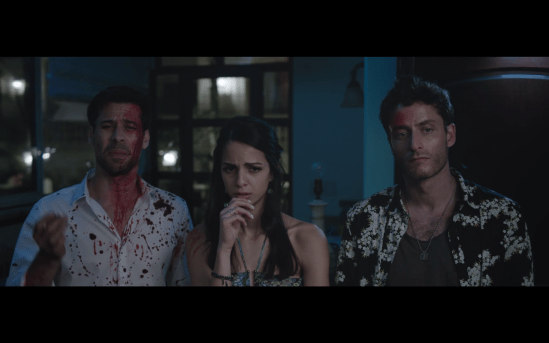
As if dinner parties weren’t already stressful enough, having to make trivial small talk, possibly acquaint or re-acquaint with unaccustomed faces, or pretend to enjoy the slop being served as food, “Happy Times” turns the internally exasperating dinner party debacle on its head with guests and hosts who are just too terribly comfortable with each other as volatile personalities explode like little active volcanos plumed to reach every corner of the house in a deadly playground for unstable, on-edge adults spewing their strident emotions and Mayer is able to maintain a layered pace with a narrative that’s snowballing quickly.  Where “Happy Times” struggles is the redline occurrences that trigger things to go very badly.  Though hardly trivial episodes between the guests, involving innocent infidelity affections or a slight practical joke stretched beyond devastating consequences, the harried moments afterwards diverge into a blown out result while more nefarious consequential revelations are held back, in after the fact chaos, and these differently graded spurs seem unbalanced, if not flip-flopped, in the story.  The characters themselves adequately course into being delightfully insane and as about as relatable as the internal frustration against our friendly-façade enemies, but there’s a part of me that personally wanted more development.  Military vet Avner, for example, exhibits symptoms of post-traumatic stress disorder (PTSD) as the horror sounds of war play in his head when under stress.  As he stares into oblivion when the rage fills into his face, especially by a nagging, browbeating wife who doesn’t seem to be aware of his condition, the subconscious killing-machine overcomes the mild-manner tech engineer.  There’s also Yossi’s opaque tax evasion scheme, Michael’s thespian struggles, and Mati, the late arriving Rabbi, who pockets money on the side from Yossi and Sigal that factor into an erratic equation that’s a mind field surprise every step of the way.

“Happy Times” relishes in unpredictable violence as a round table of feast or famine hatred in this dog-eat-dog thriller coming to you from the Philadelphia based distributor, Artsploitation Films. Slated for a February 9th, 2021 release, the unrated film will be presented in a widescreen, 2.39:1 aspect ratio, in a gorgeously rich color of a modest, natural color scheme. Kazakhstani cinematographer, Ziv Berkovich, distills a solid, yet uninspiring, photography of mostly still cam mixed with subtle steady cam, rooting firmly to particular rooms without capturing the flow of a big mansion, reducing much of the in clover luxuries of the hosts. The Hebrew, English and some Spanish 5.1 Dolby Digital mix offers well balanced layers of audio tracks with dialogue clarity and establishing good range with depth not really set up because of the close up or medium shot frames. Guy Aya;’s score offers a good blend of a violin-screeching from a murder mystery dinner theater with the inklings of traditional Israel folk sprinkled in to create an anxiety riddled brew of trouble. There were no bonus material included with the digital screener nor were there any bonus scenes during or after the credits. The best of times and the worst of times doesn’t compare to the bloodletting of “Happy Times” in a wildly amusing dark comedy with every impulsive-driven and tension-wrought scene chockfull with bated breath.

Pre-order “Happy Times” on DVD or Blu-ray at Amazom.com (Click the poster)

When EVIL Isn’t That Black & White. “Choir Girl” reviewed! (Nexus Production Group / Digital Screener)

Eugene lives a lonely, pitiable existence.  Residing with his ailing father in a slum neighborhood, his photography background captures the crime and the desolation that surrounds him, snapping pictures without ever interceding with his crime-riddled subjects, in an attempt to hold an exhibition or sell his work to a high profile magazine, Slipstream, as his ticket out of the despair that engulfs him.  When Eugene stumbles upon young teenage girls being drugged and held for prostitution, he becomes fixated on Josephine when a low-level editor, seeing her as a professional stepping stone, prods him for more pictures that evoke hope out of her situation, but when he finally intervenes, helping her escape, Eugene falls into a world of a massive prostitution ring with doctors, cops, and major organizations on the payroll and a kingpin named Daddy at the helm.  The deeper the debt placed upon him for showing compassion to Josephine, the more the lines blur on whether he’s become his muse’s lone savior or just his meal ticket out his current life.

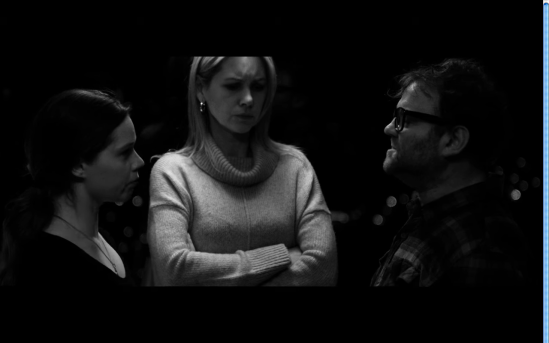
How far will your moral principles take you to save a teenage girl when you’re locked into a no-win situation?  That’s the theme explored to a shocking sexual assault conclusion in John Fraser’s 2019 unscrupulous Australian thriller, “Choir Girl.”  Introducing Fraser’s first credited written and directed full length feature film, shot entirely in black and white, the Melbourne arthouse and a goose egg-fairytale version of “Pretty Woman” speaks volumes toward the perceived illegality of immigration, the horrors of sex-trade, and the touch-and-go balance act between doing what’s right and self-serving opportunities with a 15-year old girl’s fate dangling at the end of a line.  “Choir Girl” is produced by Ivan Malekin under his Melbourne based label, Nexus Production Group, along with Lucinda Bruce serving as co-producer.

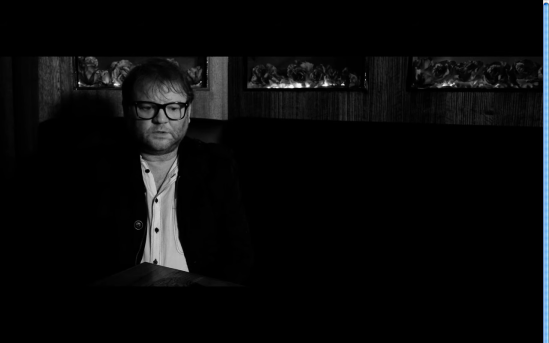
To carry “Choir Girl” through the muck of it all, a strong performance must arduously burden the gravity of the content and Peter Flaherty astounds with an ingloriously flawed and unlikely hero, Eugene.  “The Butcher Possessions” and “KIllervision” actor masts a greasily haggard with bordering neurodevelopment issues, disheveled in his attire, and walks with a noticeable limp, made intentionally noticeable when as he walks away from characters and situations.  Though Eugene seems meek, the shutterbug aches to improve himself by seemingly exploiting others as a freelance photographer and being persistent in that pursuit until becoming engrossed into a 15-year-old prostitute’s life struggle blossoming before our eyes a rather unsettling grown man and teenage girl relationship that assumes a pedophilia ideology of adoring the child to the extent of protection, but also falls in to grooming and sexual exploitation.  The film introduces audiences to Sarah Timm, playing Eugene’s muse, Josephine, an Eastern European illegal immigrant who literally has nothing left that is her own, this including her body, when forced into sex slavery so when Eugene and other characters call her diminutively by Jo, she immediately corrects them to call her Josephine in order to keep the one thing left that is still hers, her name.  In her first feature role, and a mightily demanding role it is with the amount of discomfiture of playing essentially an abused child, the German native will have audiences overlooking the fact that she’s portraying a teenager in the sordid sultriness of sex-trafficking with crafting Josephine’s war-torn history and pre-adolescent childhood stories as always the girl in the background, the unpretty forgotten girl that blended in and no one noticed, until she’s a part of a much larger, more ferocious, uncompromising system that Daddy (Jack Campbell) dictates with CCTV live feeds of every sleazy, scummy hotel bedroom in his syndicated footprint.  The cruelty that Jack Campbell reins savors every facet of Daddy’s being on screen with an intent to be a immovable roadblock in Eugene’s advanced for progress and for John Fraser’s “Choir Girl,” the character development and personalities find justification from the cast with the exception of one, the low on the totem pole and self-absorbed Slipstream magazine editor, Polly.  Krista Vendy imposes on Polly’s rabid  narcissism with an incredibility that becomes the underbelly amongst a bloc of solid performances.  Andy McPhee (“Wolf Creek”), Lee Mason (“The Caretaker”), Jillian Murray (“Body Melt”), and Kym Valentine fill out supporting roles. 

I love the juxtaposition opening of Eugene in his dark room in the middle of photographic processing his oblivious subjects, including a drug abusing child with a hypodermic heroine needle sticking out of his arm, a blowjob being serviced between a wall and bushes, or the aftermath of man being beaten with his assailants walking away from his leveled body, and then the title fades in from black and the next scene is of a framed magazine cover with the cover title “It’s All Back and White.”  The sequence sets up perfectly the entire premise driving “Choir Girl’s” gray area circumstances that nothing substantial, meaningful, or controversial can be black and white. Plus, the entire film is shot in black and white furthering the contrivance of the theme. The gray area challenging Eugene is a tightrope walk when squeezed for payment for snatching Josephine by the amoral organization claiming property theft, making him submit to the idiom of pulling his strings like a marionette or shooting at his feet to make him dance for insatiable perverse satisfaction. Eugene rarely displays remorse in his demeanor, face, or actions for the things he does and doesn’t do when faced with adversity in a slither of sociopathic idiosyncrasy, but when outright criticized for his inaction, he’s able to right wrongs with deplorable methods like a toddler trying to mop up a grape juice spill with mother’s expensive, white dress. There’s a bit of innocence or naivety in Eugene’s mind as you can almost see the gears slowly spinning when confronted but in the defense of the man who no really gave the time of day, those gyrating mice wheels of delicate thought snuck past every contingency against Eugene surviving Daddy’s deadly game, leading to an unsavory solution that puts the viewer in an awkward spot to either avert the eyes or remained captivated to see it through.


I, for one, remained seated, steadfast to the end, hypnotized by audacity of John Fraser in his feature film directorial, “Choir Girl,” that has arrived onto Apple’s iTunes. The unrated film is presented in it’s original aspect ratio of a widescreen format and will have an English language Dolby Digital 5.1 surround sound availability. Though derided as kitschy at times, the black and white veneer works here inside “Choir Girl’s” vascular system of catch-22s and director of photography, Mark Kenfield, rides a consistent straighten arrow style with steady cam shots, decent framing, and some tracking shots without pushing the envelope in regards to angles or oscillation. There were no bonus content or additional scenes during or after the credits. “Choir Girl” sings no praises of hallelujah. Offers no solace in time of hardship. If you’re looking for a movie that touches you, then you’re in for a rude awakening as “Choir Girl” obliterates the moral standards, leaving faith outside, with a severe penance in abetting the Devil’s work, selling their soul to do what’s right.

Steamed Pork Buns Stuff With EVIL! “The Untold Story” reviewed (Unearthed Films/Blu-ray)

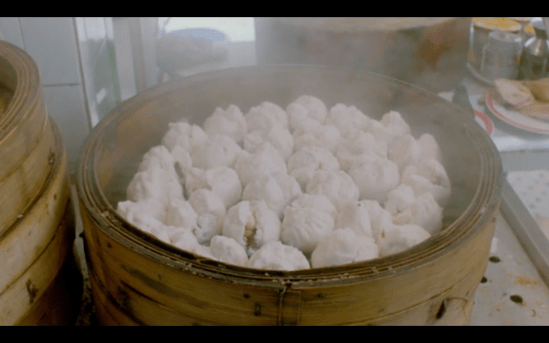
Wong Chi-hang brutally beats and sets fire to a fellow gambler who refuses to lend him money.  After destroying his identification card and creates a new look and identity, Wong flees Hong Kong before he can be hunted down for first degree murder and be served capital punishment for his crime.  For the last 8 years, Wong has lived and worked on the island village of Macau, running a small, but well-known, steamed bun restaurant, Eight Immortals Restaurant.  He receives inquisitive letters everyday asking about the whereabouts of the former owner, Cheng Lam, by Lam’s older brother on the mainland.  The letters force Wong to attempt manipulating lawyers into signing over the restaurant to him without Lam’s presence.  When the police discover dismembered limbs washed up on the beach, an investigation ensues that connects the body parts to a Chan Lai Chun, the mother-in-law to Cheng Lam, leading a small task force of blockheaded detectives to Wong’s restaurant where he becomes the prime suspect in the disappearances, but he won’t break so easily after being apprehended, unwilling to cooperate and confess to the whereabouts of the bodies of the vanished owner, his entire family, and a pair of workers.  Yet, what were exactly in those steam buns that made them so delicious?

Full disclosure.  I’m not too terribly familiar with Hong Kong’s rating system of Category I, II, and III, but I’ve more-or-less dabbled in the Category III (Cat III) horror and exploitation cinematic market, owning only a handful of these gruesome-and-sexually gratifying guilty pleasure full of sex, violence, and taboo concepts of titles such as “Riki-Oh:  The Story of Ricky,”  “The Chinese Torture Chamber,” and “Three…Extremes” and only “The Story of Ricky” has ever been popped into my player for recreational viewing.  Also, in my collection, is a Tai Sing DVD copy of Herman Yau’s 1993 crime-and-cannibalism graphic thriller “The Untold Story” and, frankly, I never opened it either, but when Unearthed Films sent me their new Blu-ray release to review, I’ll never be able to see chop sticks the same way again!  The eye-opening experience also screamed that I should definitely rip open and see those other films to quench my thirst for Cat III’s offensive opulence.  Based off a true story of the Eight Immortals Restaurant murders in 1985 around the Macau area, the nearly unwavering from the truth storyline parallels the Kam-Fai Law (“Dr. Lamb”) and Wing-Kin Lau (“Taxi Hunter”) co-written story in which a madman slaughters an entire family over a gambling dispute and runs their family business, the Eight Immortals Restaurant, until the police capture him, but Yau sticks more sensationalism to the already brutal notoriety surrounding the actual case with ground human barbecue steamed buns to tease with abhorrent flavor under the Golden Sun Films Distribution distribution of the Uniden Investments and Kwan Hung Films production.

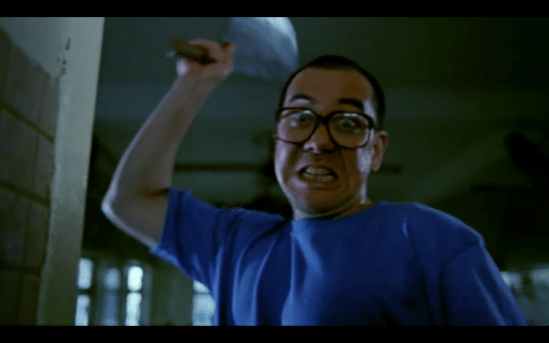
“The Untold Story’s” lead man in the shoes of the maniacal, rage-filled Wong Chi-Hang is “Ebola Syndrome’s” Anthony Wong who initially thought the script was greatly unattractive.  Little did he know that his performance would be so good, so osmosis with his wide-eyed lunatic stare through the luminating pixels of the television screen, that the role would honor him with a Hong Kong Film Award for best actor; Hong Kong’s equivalent to the best actor award for an Oscar in the States.   The “Hard Boiled” actor embodies a soul of frustration and anger to rise his character up to the demented level of nihilism and heartless exploitation that unforgettably scores being the face of “The Untold Story’s” cruelty.  Yet, there is a Jekyll and Hyde complex with Yau’s film that cuts the cynicism with a risible troupe of police officers supervised by Officer Lee (Danny Lee “The Killer”).  With a beautiful foreign woman, a blatantly announced hooker, always at his side and being the sharpest detective on the force, Lee’s a contradictory, authoritative commander meshing immoral principles and duty into one while leading a four-person squad of non-initiatives comprised of three rubbernecking men, craning their gulping jugulars toward Mr. Lee’s arm-candied gals, and one tomboy woman with an affinity for Mr. Lee who struggles with being taken seriously amongst her peers as an unenticing woman in cop’s clothing.  The officers’ western names are a slither of satire to poke fun at the nicknames of tough or macho cops go by in the States with Bo, King Kong, Robert, and Bull (respectively Emily Kwan, King-Kong Lam, Eric Kei, and Parkman Wong of “Dr. Lamb”).  The cast rounds out with Fui-On Shing and Julie Lee. 

“The Untold Story’s” embittered nihilistic violence, gratuitous rape and sodomy, and steamy, mouth-watering cannibalism leverages this Cat III film as tiptop horror exploitation from the far East.  If broken down more, director Herman Yau pins and sews together a liaising three act prong story of a horrid man’s attempt at deadly stability in society and a madcap group of officers, with a penchant for police brutality and coercing confessions, bumbling their way through clues that ultimately funnel into a blended third act of magnetizing the two sides together toward a satisfying, almost faithful, ending of “The Eight Immortals Restaurant:  The Untold Story’s” purloin and murder fiction and non-fiction exploit.  Yau spares no expense for gore, serving up a platter worth the splatter of some nifty chop’em up and grind their meat into the dough effects that’ll turn stomachs as well as heads and doesn’t exude as bargain basement quality; yet, just enough gore goes uncovered to tantalize without a full onslaught tarp covering the ground of disembodied limbs and floor-splattering entrails that boil down to an overshadowing character that detracts from the cast performances as such can accompany with the more extreme Asian horror catalogue.  There’s nothing gentle about the actions of Wong Chi-Hang, but the way he’s scribed to manifest spur of the moment carnage, stemmed by the most minute disputes, and the way Anthony Wong carries and maneuvers of a monstrous villain with ease takes an esthetical point to not stray away from his, or rather his victims’, story.  “The Untold Story” is, in fact, meta-exploitation fiction of non-fiction down to the very last tasty morsel. 

In what is perhaps the epitome of Hong Kong’s Category III film index, “The Untold Story” arrives onto high definition Blu-ray courtesy of the gore and shock genre label, Unearthed Films as part of the label’s Unearthed Classics line and distributed by MVDVisual. The well preserved, near flawless transfer is presented in a widescreen, 1.78:1 aspect ratio, and the picture is a vast improvement over the slightly washed previous DVD releases though favors a higher contrast resolution that ekes trading out the details for a brighter, softer film in an overall compliment of Cho Wai-Kee’s beaming cinematography. Whether in the police station or the restaurant, fluorescent lumens light up the scenes with a sterile-driven madness. The Cantonese, Mandarin, and some English 1.0 PCM audio track denotes, without surprise, the lossy quality doddering from age and antiquated equipment, but renders well enough without the imperfections of hisses, distortions, or any vocal impediments. The option English subtitles display without error with only the issue in their breakneck pacing when attempting to keep up with reading the subtitles and the rapidfire dialogue. You basically have to skim read. The special features include commentaries with star Anthony Wong and Herman Yau, the superbly dark and traditional film score isolated for audible pleasure, commentary with Art Ettinger from Ultra Violent magazine and Bruce Holecheck of Cinema Arcana, a Q&A with Herman Yau, a featurette of the history behind Category III films of Hong Kong Exploitation Cinema, a interview with Rick Baker entitled Cantonese Carnage, and Unearthed Film trailers. There’s also an two-page insert of Art Ettinger’s write up about Hong Kong cinema and “The Untold Story.” Resilient to the test of time, “The Untold Story” benchmarks a high point in High Kong exploitation cinema, recalls the tremendous feat of performance by Anthony Wong, and displays the sheer mastery of disciplined filmmaking from Herman Yau in this unforgettable gruesome black comedy.

Must Own Christmas Gift! “The Untold Story” on Blu-ray!

EVIL Trifles With a Vindictive Obsessed Cop in “Split Second” reviewed! (MVDVisual / Blu-ray)

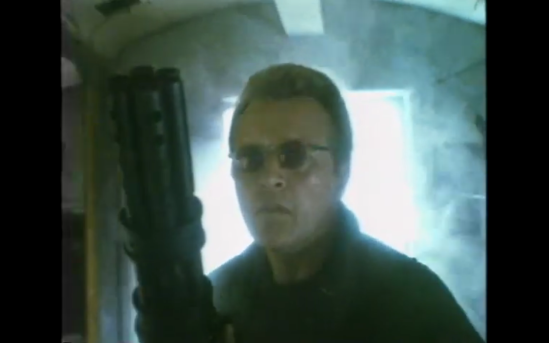
Global warming has taken a toll on the Earth’s polar ice caps in 2008 with cascading amounts of water flooding around the world bringing knee high waters to coastal cities.  London is hit hard with drenching sewer overflows and coastal run overs that result in an over infestation of rats to storm the streets, back alleys, and even resident homes, carrying a harmful disease in their occupation.  However, something else compounds the rat plague that slashes at random victims, tearing their hearts out violently from their chests without ever leaving a witness except for one, a rogue and paranoid detective Harley Stone whose partner was slain in one of the deadly attacks and himself marred by the killer. Partnered with a new hot shot know-it-all detective following the murders, an obsessed Stone confronts his haunting traumas as he continues to pursue the inhuman perpetrator who has a psychic connection to Stone, personally toying with the on-edge officer, and has kidnapped his girlfriend as bait.

Even though 2008 has come and gone now almost 12 years ago, Tony Maylam’s 1992 actionized-creature feature “Split Second” still holds water just like the rising tide pools on the streets of London.  “The Burning” director, Maylam, helms, with the finishing touches of the final sequences directed by Ian Sharp after Maylam’s sudden departure, a fast paced and snarky script penned by Gary Scott Thompson as one of the writer’s very first big budget outputs from nearly 30 years ago that was followed up with major studio films, including a little project you may or may not have heard of, “The Fast and The Furious” mega franchise.  Before nitrous suped-up cars hot-rodding on asphalt, jumping high speed trains, and flying off cliffs in a lap strap of criminal activity luxury, Thompson created a formidable, heart-devouring beast that became the trap-setting, trophy-hunting predator and the teeth-snapping, chest-bursting xenomorph all in one package to symbolize the irreversible and ignored effects of an overpopulated, warming planet.  “Split Second” is a production of Challenge Film Corporation and produced by Muse Productions with Chris Hanley, Laura Gregory, and Keith Cavele serving in a producer role.

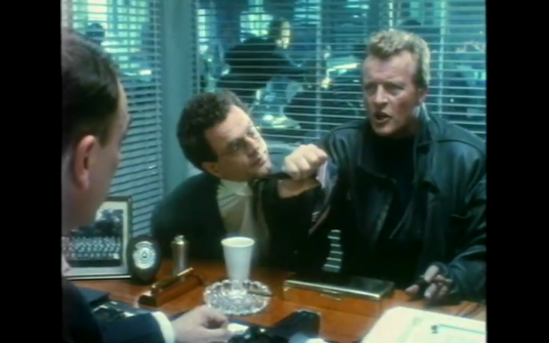
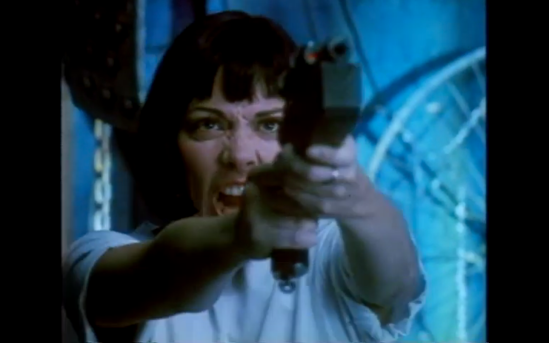
The Netherlands’ very own Rutger Hauer sheds his nice guy exterior for Harley Stone’s shell-shocked, rough and tough outer shell.  The late “Blade Runner” and “The Hitcher” actor brings a certain cinematic coolant to “Split Second’s” overheating fringe of disproportionate action and science fiction horror, a lop-sidedness typical of a Rutger Hauer production, by being larger than life in the little aspects that add to the dimensions of the scene, making every moment famished for Stone’s next eccentric and animated move.  Stone is partnered with an equally vigorous Detective Dick Durkin who starts out as a cultured drip of criminal activity and an astronomical proficient before quickly blooming into the same gritty mirror image of Stone.  Credited as Neil Duncan, the current vocational voice actor Alastair Duncan has a natural dynamic with Hauer despite their asymmetrical careers and endures an incredible character arc successfully turning Durkins’ relatively square image – though debatable with smart, good looking, and gets sex every day swagger – into a Stone acolyte after witnessing the human threatening existence of an unnatural ferocious monster.  The female love interest didn’t seem to fit the “Split Second’s” gentle steampunk lace and zany character scheme with Kim Cattrall as Stone’s estranged girlfriend, Michelle McLaine.  As much as love the “Big Trouble in Little China” actress’s late 80’s to early 90’s career, the girlfriend role feels sorely plopped into the film for the sake of having a love interest as much of the character is illuminated through exposition with McLaine being the wife of Stone’s former partner stemmed from her and Stone’s affair and then lingers her subsequent alienation from the rogue cop despite an inextinguishable flame between them. As Cattrall provides the sexiness in the city of London, McLanie iss aesthetically airy without tangible substance other than kick in the pants motivation for saving. “Split Second” rounds out with the late Pete Postlethwaite (“The Lost World: Jurassic Park”), Alun Armstrong (“Van Helsing”), Stewart Harvey-Wilson and “Scoorged’s” Michael J. Pollard as London’s the rat catcher.

“Split Second” is an early nineties junket spiraling with flashy facets of easily digestible, entertaining chewables that continuously hits all the right flavor sensations in terms of acting, dialogue, production design, creature design, and cinematography. The bonkers script and equally as bonkers visual concept inserts an extremely likable brazen world of the future in the form of a dank, or danker, London under one or two feet of water; in every moment Stone or Durkin hit the streets, they’re essentially swimming in brown street liquid and the overall effect places a blanket of filth glazing over my eyes and secreting out of my captivated body is a cold spine-shivering chill that’s immersive to Stone and Durkin’s slushing around. Stephen Norrington, who went on to direct “Death Machine” and “Blade,” slapped together a fairly effective creature design despite the creature rarely being in full exhibition and for very good reason. A brief flash of razor sharp fingers, a quick dash of unearthly skin, and the gruesome aftermath in it’s wake evolved a better rendition of the creature in our minds than perhaps the actual resulting appearance with result that tacked on one big mysterious allure that doubled down coinciding with the principle characters who also has never seen the killer before. “Split Second” is constantly suspended in action with little down time to reflect on the theme of global warming and it’s life-changing choking effects that not only rushes thousands of gallons of water onto the streets and increase the survivalist rat population up to nearly impossible control levels, but also tampers with the balance of astrometric forces, bringing evil to the world in the form of a heart-eating devil to the surface when astrology deemed the moon in position for such an event and that’s also perhaps the downside to Tony Maylam’s film. The monster bares little backstory to sink one’s teeth into and raises an immeasurable amount of unanswered questions relating to the fate that intertwined Stone into the creature’s inner sphere of extrasensory perception, the origins of the creature and it’s genetic makeup, and the relationship between it and the cult correlations.

A melting pot of feculent and bloodshed pother, “Split Second” arrives onto a high definition Blu-ray courtesy of 101 Films and on MVDVisual’s MVD Rewind Collection banner. The region free, R-rated feature is presented in 1080p with a widescreen, 1.85:1 aspect ratio with a newly 4K scan complete with restoration and coloring grading from the original 35mm negative. The inviting image, with adequate grain and a cigarette burn here and there, basks mainly in a steely blue among other primary colors rearing up while thick with a brightly contrasted neo-noir shadow wrung through. Skin textures are consistently and continuously glistening with sweat setting on top of the natural coloring and the facial follicules present a rather sharp image, making this release the best looking transfer to date. The English language 2.0 LPCM stereo mix doesn’t let up with a robust mix of forefront dialogue, a balance of range and depth, and a pulsating cheesy-action soundtrack Stephen Parsons and Francis Haines. English subtitles are optionally included. The heft bonus features package includes exclusive content such as an audio commentary by action film history Mike Leeder and filmmaker Arne Venerma, a new conversation entitled “Great Big Bloody Guns!” between actor Alastair Duncan and producer Laura Gregory, a “Call Me Mr. Snips!” interview with composer Stephen Parsons, a “Stay in Line!” interview with line producer Laura Borg, a “More Blood!” interview with creature effects designer Cliff Wallace, and a “Shoot Everything!” interview with cinematographer Clive Tickner. But, wait, there’s more! Also included is the original making of feature with stars Rutger Hauer, Kim Cattrall, Alastair Duncan, Michael J. Pollard, writer Gary Scott Thompson, original behind the scenes feature with effects creator Stephen Norrington and other cast and crew, the “Second Split” Japanese cut includes the deleted scenes and built in Japanese subtitles, 7 promotional TV clips, U.S. VHS home video promo, theatrical trailer, and a MVD exclusive reversible sleeve with artwork from The Dude Designs, cardboard slipcover, and mini-poster insert. The difficult decision to determine Rutger Hauer’s best work can be daunting as the man is King Midas with every project he touches, but “Split Second” reveals now more than just being pure gold with this MVD Rewind Collection Blu-ray release that’s a must own, must have, must see, and a must collect physical release of the rundown of a monster-run amok, neo-noir, steampunk, action-comedy-horror….in a nutshell.

Own this Rutger Hauer classic “Split Second” on Blu-ray!

Chronicling the Cannibalistic, Necrophilism EVILs of a Serial Killer is for Adult Eyes Only! “LoveDump” reviewed! (A Baroque House / Digital Screener)

July, 2003 – a hollow-hearted serial killer, Denise Holmes, moves into a motel room of a populated metropolis of the West Coast.  Journaling every perverse and murder-lust desire in a diary, the unspeakable acts of sex and death blend together as one as the urge to kill grows bolder, leaving a trail of gore in the wake.  Paranoia begins to sink in after the last execution of an innocent victim and desecrating their bloodied, decapitated head in an inerasable moment from the mind. What you’re about to hear are the audio recordings of Denise Holmes’ diary inserts, read by Detective Jamie Reams whose giving a tactile voice to a wraith-like monster.

Over the years, the term Horror has been exploitatively glamourized for capital, trendsetting and bedazzled with glitzy gems of tamed teenager torment that sold the strung up, struck down, and sliced-and-diced adolescent carnage-fodder into each and every way the human brain can conceive with only a tweak of difference adorned with each ornate kill. Horror has also become garish with gorgeous women for the gratuitous donation of bare skin for the camera and the audiences to entice and gawk at the beauty in death. I’m not going to lie, I eat every millisecond of film of the good, the bad, and the ugly when it comes to horror, and, truthfully, horror has been making a strong stance in the last couple of years and I’ve been embracing the subtle tingling of mind game thrillers to the overtly ostentatious gore-soaked slaughterhouses of a genre with the broadest spectrum known to the cinematic universe. The filmmaker under the alias of SamHel pushes our tolerance for extreme content to the breaking point with the written-and-directed 2020 adult-fetish exploitation, “LoveDump,” an independent film from the USA under the production company, A Baroque House, that set out to pay homage to the graphic adult and fetish horror films of 1990s Japan.

The 33-minute short film only stars two performers in non-speaking, purely physical roles. First up, Wolvie Ironbear, an intersex non-binary adult content pansexual specializing in gothic and kink fetishisms, depicts the notorious necrophiliac serial killer, Denise Holmes, and Apricot Pitts, an unshaven fetishist whose also in the adult content creator realm, as a hapless prostitute who becomes a slayed statistic of sadism lured in by Holmes to greedily satisfy the nagging ghastly degeneracies. Most of the runtime runs with Ironbear licking at the chops, contemplating the next libidinous victim. Thick in the air is the sordidness moisture of solo self-gratification with unorthodox sex toys: a pig’s head, human blood, and other interesting, socially ignoble objects not fit to describe without dismantling in spoiler territory. Ironbear has to be a killer and a pretender, playing into a pretense that is a wolf in a sheep’s kinky-gimp clothing when Pitt’s prostitute steps into the motel room. Together, Pitts and Ironbear are electric, sexy, and give a damn good X-rated show of lust and macabre that turns the fever of carnality into a gruesome display of monomania participation.

“LoveDump” is not an attractive title, but suitable for unattractive content of desecrating the dead to the likes of Jörg Buttgereit’s “Nekromantik” and Marian Dora’s “Cannibal” while striving to be akin to Japan’s extreme horror like “Splatter: Naked Blood” or the notoriously sought after Guinea Pig films. “LoveDump” has an outrush of a snuff film that emanates a deep, dark secret club with elite memberships under pseudonym-ship in the producer and production departments. The makeup and special effects prompt disconcert of an upholding quality for an indie picture and, so much so, the affect of the human soul skin-crawlingly good that we can’t find ourselves looking away when the urge to be squeamish is strong. SamHel’s film digs niche graves that not everyone will have the courage enough to step into by choice. For myself, “LoveDump” is purely curious voyeurism, ingesting and digesting the film as an informational vessel of visceral paraphilias and without a solid plot to chew on, “LoveDump” is a straightforward stitch in time gorging more on graphic imagery than story and that is where the A Baroque House flick loses me to an extent.

Don’t expect palsied love-stricken hearts to be oozing with jubilee affections; instead, expect a romantic bloodbath of narcissism in a solo courtship like none other in SamHel’s ultra-gory “LoveDump” on a limited edition DVD and Blu-ray from A Baroque House. The camera work by the monikered Excessive Menace renders a SOV resemblance from the 90’s with a lot of unsteady handheld shooting as well as adjusting the clarity of focus, but the frames do flicker noticeably which can be a minor nuisance. Almost all the sex and gore scenes are in an extreme closeup the gives you an extreme eye feel for the commingling faux blood and real semen. One of my only gripes is with the angles in the intercourse with Apricot Pitts that didn’t translate over well without the proper focus and lighting to be as a graphic as possible. Since provided with a digital screener and the screener provided is a rough cut of the short film, there were no bonus material included, if there were any. The limited edition physical packaged Blu-ray will include the full HD uncut version of the film, a still gallery, a behind the scene making of, and trailer. I assume the LE DVD contains the same features, but are not specified. Be warned! “LoveDump” is not teeny-bopping horror filmed for any Joe Schmo to casually sit down to Netflix and chill with their partner, unless they’re into switch BDSM with an ichor fetish and, in that case, “LoveDump’s” an avant-garde aphrodisiac bred out of extreme and unwavering compulsions.