Bestest EVIL in the Whole Wide World! “Clifford” reviewed! (Ronin Flix / Blu-ray)


“Clifford” is the Best Comedy of 1994 and Now on Blu-ray!

10-year-old Clifford wants to go to Dinosaur World in Los Angeles.  I mean, really, really, wants to go to Dinosaur World and will stop at nothing to get his heart’s desire, even if that means intentionally grounding his parent’s plane destined for Hawaii.  Clifford’s parents, on the verge of strangling their own relentless mischievous son, concocts a care plan that includes reaching out to Uncle Martin, an out-of-touch, workaholic, kid-adverse L.A. resident looking to impress upon longtime, child-longing girlfriend that he adores children.  It’s a win-win for everyone, even Clifford who’s chances to ride Larry the Scary Rex rollercoaster at Dinosaur World have significantly increased.  The perfect plan is swimmingly going well until Martin’s boss throws him a deadline curveball that sidelines Clifford’s theme park trip, breaking his promise to a more than impish little boy who has declared life-ruining war against the Bestest uncle in the whole wide world.

Yes, finally!  “Clifford” has arrived onto Blu-ray home video and just like that that mischievous little brat comes back into our nostalgic hearts.  The 1991-filmed, 1994-released PG-rated comedy is written by “Back to School” duo Steven Krampmann and William Porter and directed by Peter Flaherty, director of “Who’s Harry Crumb?” and Martin Short’s pseudo-late night talk show series “Primetime Glick.”  If you don’t see Krampmann or Porters’ names in the pre- and post-credits but notice Jay Dee Rock and Bobby van Hayes scrolling by than that’s because the writers used pseudonyms to quietly disown the finish final film that was embroiled in questionable approaches such as hiring Martin Short, a then 40-year-old comedian-actor, to portray a 10-year-old boy.  Yet, the bizarre comedy that has a talented cast as well as a demented and twisted side to it has gained a rather quiet cult following.  Larry Brezner (“The ‘Burbs”) and Pieter Jan Brugge (“My Demon Lover”) produces “Clifford” and is one of the last releases to trickle out from Orion Pictures before their unfortunate bankruptcy. 

Through extremely creative measures to ensure Martin Short can sell the physicality of a prepubescent boy on screen, “Clifford” is one of the former SNL performer’s best and memorable roles amongst his arsenal of personalities.  The naughtily tormenting persona with a Devil’s grin and absent eyes for sympathy brings Clifford to a level that’s analogous to a fixated horror villain setting a target goal of destruction, mayhem, and chaos. No one is safe from Clifford’s duplicitous trajectory, not even Uncle Martin played by the late, great Charles Grodin (“Midnight Run”) who provides his standard uptight and exasperated character at first but slides into a sinister nihilism when push beyond the point of return. Short and Grodin are centric to the story, phenomenal dynamically, and funny at very second despite how antiquated the content and comedy is at 30 years old. Seeing Short play a little boy doesn’t even register he’s a grown man in an adolescent role and that’s how good Martin Short can massage the material in his favor. You see Short, you see he’s a kid amongst the rest of the cast, you see his childish exploits, and, yet, none of that is troublesome, bothersome, or even a tiny bit weird as you’re drawn into an overexaggerating, yet highly relatable, parenting hardships in negotiating with out of control, scheming children and the pure, unabashed wackiness of Martin Short who, in my mind’s eye, is essentially in a step-down version of his iconic Ed Grimley personality. Bringing down Short’s antics and Grodin’s disgruntled demeanor is the measured Mary Steenburger (“Back to the Future III, “Powder”) subduing, in a good way, audiences as Uncle Martin’s lowkey love interest to bring us down from the eccentric shenanigans. The casting is overall tight on those three leads but Dabney Coleman (“Dragnet”) becomes the sleazy bigwig wedging between his employee, Uncle Martin, and Martin’s girlfriend, Richard Kind (“Stargate”) searching for patient with his insufferable Clifford, Jennifer Salvidge (“Evolution”) as Clifford’s yielding, but equally as exhausted, Clifford’s mother, and “Little Monster’s” Ben Savage as a troubled youth set to follow Clifford’s footprints.

How does “Clifford” hold up to today’s comedies? Rated PG, the 1994 film lacks the big hitting criteria that ultimately slaps stricter rating labels right onto the trailer and home video covers, that ultimately bring in audiences with sex, violence, and harsh language, but “Clifford” isn’t a kids’ film per se and subtly lands more adult oriented and sexually suggestive one-liners and scenes that wouldn’t fly by today’s standards. In fact, I personally believe the entire production would have been scrubbed if the first casting choice for a young boy was a 40-year-old man. Movies like “Clifford” are relics that should be treasured because we’ll never see comedy like this again and that’s what makes “Clifford” a part of cult cinema. “Clifford” doesn’t need itemized fixings to be a great story and to possess substance to be a phenomenal film. Instead, the idiosyncrasies of the plot and the singularity of talent glue the first draft of the inane script together in its finished product, rewinding that chunky gray and white brain matter and the bits of skin, tissue, and tufts of hair back into and onto the head after having its top blown thinking, how the hell do we pull off this script? The first two acts are character building and about the dynamics of two conflicting temperaments that ensue a series of tit-for-tat jail landing pranks and a slew of grating and passive insults, suggesting a character-driven, quirky slapstick story of growth and understanding between the two sides. However, the third act shows another, unexpected side of “Clifford” that revels in Uncle Martin’s vindictiveness after having his mind and spirit broken by a child’s chastising for breaking a promise and Flaherty goes big and berserk with the Larry the Scary Rex rollercoaster (which looks amazing to ride to this date) to which the calamity of events culminates an epiphany for one of them, abetted by the fact a run amok mechanical dinosaur nearly chomped down on a human-sized snack.

“Clifford’s” mischief and mayhem in hi-def never before has looked so good on this new U.S. release Blu-ray from Ronin Flix in association with Scorpion Releasing and MGM. The region A, 90-minute release is presented in 1080p and in an anamorphic widescreen, 1.85:1 aspect ratio, and much like the Blu-ray’s front cover of blown-up headshot closeups of Martin Short and Charles Grodin and a crumbling two-story home that’s not a component in the film, the picture quality also appears to be a bit stretched, leaving details slightly scattered and marginally pixelated. The transfer print is without a doubt clean and discernable but retains the original, untouched up MGM anterior. The English language DTS-HD Master Audio 2.0 is the only audio option that provides a good mix and balance of dialogue, chaos, and everything else in between to come together for a gratifying dual channel audio alloy. In extreme instances of bickering, high level pranking, and even the clamorous and deep dino-discharging climax, much of the details remain intact and clear without losing distinctiveness. The Ronin Flix Blu-ray is a feature only release with no software or hardware bonus content. With or without bonus features, the film itself is worth the cinematic calories as “Clifford” shines as arresting tale full of laughs, heart, and anarchy and is a hellraising life-amenity that shouldn’t be lived without.

“Clifford” is the Best Comedy of 1994 and Now on Blu-ray!

EVIL is Always the Quiet Ones. “Forced Entry” reviewed! (Dark Force Entertainment / Blu-ray)

“Forced Entry” on Blu-ray Available from Amazon.com and MVDShop.com

On the outside, Carl is a mild-mannered and a bit of a simpleton who works as a mechanic at the corner gas station.  On the inside, Carl’s an unstable, sociopathic rapist and murderer with chauvinistic patriarchal tendencies.  His grisly exploits rock the small New Jersey town but as life continues on so does Carl’s misguided perception that the women who cross his path want him.  As a mechanic and a rapist, Carl continues in getting his hands dirty even when the exceptionally beautiful housewife, Nancy Ulman, drops off her husband’s car for repairs.  With Nancy’s husband out of town, Carl creates an unfounded fantasy of being the one and only that can please her right.  As his obsession swells, Carl’s pushed over the edge into a no-turning back captive scenario by holding Nancy bound and hostage in her own home as he attempts irrationally and violently his case for bestowing his flawless companionship to her. 

Throughout nearly the entire history of cinema, the adult industry has remade blockbuster film titles into triple X spoofs.  “Beverly Hills Cox,” “The Penetrator,” “Clockwork Orgy,” and “Forrest Hump” are a few titles that come to mind.  But have you ever heard of a porn remade into an actual movie?  Of course, there’ve been a few biopics surrounding controversial cog players of the adult industry machine, such as with mainstream biopics that expose the lives of starlet Linda Lovelace of “Deep Throat” with Amanda Seyfried as the titular character and the notoriety of porn filmmakers Artie and Jim Mitchell in Showtime’s “Rated-X,” starring real life brothers Charlie Sheen and Emilio Estevez.  Never in my existence on this tectonic plate shifting Earth have I’ve ever bear witness to a porn being remade into a film marketed on retail shelves to the general public.  That’s the backstory behind Jim Sotos’s 1976 debut feature “Forced Entry” based off Shaun Costello’s 1973 stag film of the same name and starred that “Deep Throat” connection with Harry Reems as well as Reems costars Jutta David (“Sensuous Vixens”), Nina Fawcett, and Laura Cannon (“The Altar of Lust”).  Also known more uncommonly as “Mr. Death” and “Rape in the Suburbs to more commonly as“The Last Victim,” Henry Scarpelli adapted the script out of the X-rated context but kept much of the aggressive themes, changing the gas station attendant from a Vietnam shell-shocked maniac to delusional maniac stemmed from abusive mother issues.  Sotos and Scarpelli also serve as producers under the Kodiak Film production company. 

“Forced Entry” stars a then fresh faced Tanya Roberts.  The late “A View to a Kill” Bond girl and “The Beastmaster” actress received her start as the slightly frustrated, but overall pleasant, housewife Nancy Ulman who must fight for her life when Carl, under the wonderfully wild and violent guise of “Heated Vengeance’s” Ron Max, breaks into her home to fulfill his ferocious fictious fantasy.  The contrast Nancy and Carl is extremely key to “Forced Entry’s” modest success as the story plays out in both perspectives with more lean on Carl with a far more interesting mindset, internalizing monologues of desires and anger.  While Tanya Roberts is hardly stimulating on screen as routine wife and mother, concerned a little on her husband’s sudden indifferent behavior, she exhibits a stark normalcy that makes Carl’s actions flagrantly deviant with the anticipation that Nancy will be too submissive or afraid to fight back.  Ron Max is no David Hess but instills a disturbing, looney bin creeper who, most frighteningly of all, could be your neighborhood grease monkey mechanic.  Like Roberts, another yet-to-be-famous actress has her brief moments of screen time as Carl’s hitchhiker victim.  “Robocop” films’ Nancy Allen finds herself riding shotgun with a serial murder-rapist even before going face-to-face with the telekinetic prom queen, “Carrie,” in a blink and you’ll miss her thumb lifting and chitchat-disparaging segment to give Carl more depraved depth.  Billy Longo (“Bloodrage”), Michael Tucci (“Blow”), Vasco Valladeres (“Bad”), Robin Leslie, Frank Verroca, Brian Freilino and Michele Miles.

Color me easily impressed by the novelty of the basis of a porn plot being transposed into a more accessible outlet for audiences.  Pushing that novelty aside, “Forced Entry’s” plot is simply stitched together to make Carl this really bad guy by fashioning situations that indulge his impulses – a stranded woman motorist out in the middle of nowhere, a female hitchhiker talking back to him in his own car, a girl with high cut shorts pumping gas station air into her bike.  Though often disjointed in the story’s framework and for some reason, Carl’s face is initially pointlessly concealed for the broken down motorist attack, helpless moments like these, plus the crazed internal monologuing rationalizing his actions, pushes Carl’s chances of being stopped next to nil with audiences.  How will a happy homemaker, trapped in her own home, be able to survive crazy Carl?  That’s where the story really begins with the first moment he laid eyes on Nancy and as he rolls out the imaginary carpet of playing house with her, we begin to see how attached he becomes to the idea as he strays away form his normal off-the-cuff methods that has served him well until this point.  Much of the shock value comes from the climatic finale that determines Carl and Nancy’s fate with a slow-motion shot full of cacophonous screaming to bring a definitive effect to an unexpected turn of events.  “Forced Entry” is more Spinell “Maniac” than it is Hess “Last House on the Left” but not as well-known and has unformulaic structure that strolls too comfortably between the lines of shocking consternation.

Dark Force Entertainment and MVD Visual distributes this notable unconventional remake onto another Blu-ray home video, but this new and improved version of the film that includes nearly additional ten minutes of footage into the original 73-minute director cuts of the previous 2019 Dark Force Entertainment prints under the Code Red label. This longer version adds back in more of the sexually graphic material and is 1.85:1, anamorphic widescreen, presented in a 2K scanned transfer with a 1080p output from the original 35mm negative material of the US theatrical release. Granted, some of that footage, such as the snatching of the bike girl, is nearly impossible to discern much beyond an unrefined image. The coloring throughout is inconsistent and unstable with clear fluctuations in hue flickers and a few scenes early in the film suffer from conspicuous wear damage. However, I suspect this transfer to be the best of the best to date and is not all a waste of viewing space with much of the image holding up strong. The single audio option is an English LCPM 2.0 mono is not the cleanest with clearly noticeable crackle and static throughout and overtop a muted dialogue track. Tommy Vig’s (“Terror Circus”) score nabs more support than the others in the audio output. Special features include the full-length 88-minute VHS minute version from standard definition video so don’t expect the highest resolution if you’re looking for more sordid footage in an essentially quantity over quality version. The blue snapper case does have a limited edition stark black and yellow/orange cardboard slipcover. The new scan runs at 83 minutes in length in the region free and rated R Blu-ray (updated from the original PG rating when reexamined by the ratings board…go figure). Not just another rape-revenge notched into the controversial subgenre’s hole riddled belt, “Forced Entry” agitates suspicion in the most harmless of unsuspecting, quiet-natured nobodies as it only takes one to be the filthiest troublemaker hidden right under our trusting, naïve noses.

“Forced Entry” on Blu-ray Available from Amazon.com and MVDShop.com

The Absence of EVIL is Found in the Deepest of Cleavages. “Bigfoot or Bust!” reviewed! (MVD Visual / Blu-ray)

The Bustiest of the Busty on the Hunt for Bigfoot.  Check out “Bigfoot or Bust” on Blu-ray!

Bigfoot – the mythical legend of half-man, half-beast roams the quiet, dense, and uninhabited forests of anywhere USA, scarcely spotted by campers, hikers, and mythical creature enthusiasts looking to catch a glimpse of the dirty furry being.  There are those who are even more keen in catching bigfoot as a small group of big chested women set off into the wilderness to capture bigfoot and make their fantasies come true as they have their way with the beast.  However, two other groups are after the big, bad bigfoot – a brother-sister hillbilly duo seek to lay legitimacy to the legend’s blood relationship to their family and a trio of time travelling blonde babes have come to the past to export Bigfoot’s excrement worth trillions in the future.  Factions collide in this chesty-chase to be the first to snag the elusive, big-breast loving Bigfoot.

I’ve aforesaid that my quest for just an okay bigfoot storyline and film would suffice a lifelong dream of the big man getting some big respect in the movie industry.  You can’t count William Dear’s “Harry and the Hendersons” because it’s frankly not a horror movie though one of the best representations of our common and collective perceptive concepts of the creature.  You can’t also count Ryan Schifrin’s gory and intense “Abominable” as the Yeti is more of Bigfoot’s mountainous cousin.   Would Jim Wynorski, the director of “Chopping Mall” and “Return of Swamp Thing,” have the answer to my, and maybe all of our, prayers with his latest entry “Bigfoot or Bust?”  Far from it.  In fact, Wynorski’s Bigfoot entry, although purposefully campy and slathered with sex appeal, has put Bigfoot films many steps back, creating major concern for the subgenre (as well as the future of comedies) that may never see the light of day with a good installment.   Wynorski also penned the film produced by buxom blondes and feature stars Becky LeBeau, Gail Thackray, and director Jim Wynorski under Coldwater Canyon Pictures.

Instead of “Bigfoot or Bust,” the film should have been retitled as “Bigfoot vs. Bust” as the screen time volume is bursting with more breasts than of Bigfoot, but, likely, both selling features are equal in being not the genuine articles.  Becky LeBeau and Gail Thackray lead a very busty, very mature (as in age, not behavior) cast of cult erotica and exploitation of yore.  The former Playboy centerfold and Pay-Per-View starlet LeBeau’s longstanding work history with Wynorski basically gives her the freedom to do whatever her heart desires and if that means chasing down a man in an Sasquatch suit in skimpy clothing, jumping on random trampolines in the middle of nowhere, and being a DJ producing ACME-style noises with expensive audio equipment with her chesty counterparts, then, by God, that’s what she gets.  “Hard to Die” and “Curse of the Komodo’s” Gail Thackray, once again donning a Dawn-role as Dr. Dawn, a doctor of paranormal psychological and internal medicine, is LeBeau’s co-captain in the rundown expedition with former adult actress Christine Nguyen (“Bikini Jones and the Temple of Eros”, “Girls Guns and Blood”), Cindy Lucas (“Bikini Car Wash Massacre,” “Sharkanasas Women’s Prison Massacre”), and Melissa Brasselle (“Sorceress,” “Camel Spiders”) playing an leather-cladded ancestor of the outlaw Jesse James.  A similar titty train chugs along with Tane McClure (“Death Spa, “Commando Squad”), Deborah Dutch (“Caged Women II,” “Dances with Werewolves”), and Antonia Dorian as time-travelers with oversized plastic future guns and a pair of local bumpkins in Lisa London (“Samurai Cop 2:  Deadly Vengeance,” “Xtro 3:  Watch the Skies”) and Lauren Parkinson (“Halloween Pussy Trap Kill! Kill!,”  “CobraGator”).  Nguyen, Lucas, and Parkinson add young hot-bod blood to the cast of mature erotica icons, bringing down the average age to approx. 45-50 years, in an unofficial way of shepherding in the new while giving the past a grand finale. 

Even though a blatant, unbridled farce, I found “Bigfoot or Bust” to be skeezy and unsettling.  And I actually own two copies of “A Serbian Film” and “Slaughtered Vomit Dolls” without an emotional apprehension! Maybe it’s because there’s not a basic storyline and even one single decent performance. Maybe it’s because the inundated buffoonery plays to the oldest tunes of comedy. Or, maybe, the thought of those two previous aspects are as diluted as they are because the hyper focus is on Jim Wynorski and his elderly band of crewmates direct and film mature women in mostly their underwear, squirting themselves with water bottles and having pajama dance parties at night. The whole production wreaks of schlocky, slimy porn with no script and bad acting, but progresses entirely without the main sell of goods – porn! I wouldn’t even label “Bigfoot or Bust” softcore or even a panty sniff of erotica with the profound lack of skin and hard, sweaty bodies rubbing up against each other in a form of passion from that cast that has decades of body display under their itty-bitty tiny bikinis. Wynorski has directed graphic sexploitation films complete with snazzy, spoof-titles in “The Bare Wench Project,” “Alabama Jones and the Busty Crusade,” and “The Witches of Breastwick,” but Wynorski seemed determined to be anti-nudity, anti-explicit, and overall anti-film in his latest venture without thematically breaking stride in a genre that has become second hand to the filmmaker. “Bigfoot or Bust” is erotica-lite, a lofty romp that’s self-aware of it’s own brand of comedy and exhibits no shame for it’s peep-less peepshow.

The 90’s has come to call to infiltrate the 22nd century with bygone lust idols in “Bigfoot or Bust” on Blu-ray home video from MVD Visual. The not rated, region free Blu is presented in a widescreen 1.78:1 aspect ratio. Image-wise, the digital picture is unsurprisingly free and clean of spoils, has discernible details, and retains the natural lighting to reflect the natural skin tones on the unnatural cosmetic enhancements which reflects Wynorski’s long-time, director of photography collaborator Chuck Cirino usual plain as the air in front of you style. Fred Olen Ray’s Retromedia, along with Cirino, handle the visual effects which is nothing more than a convex visual effect around the actress’ chest areas and the speaker system cones for the cheap effect of bursting at the seams. There are also ostentatious, future-gun, energy beams that add that tickle of excitement much needed against the long-winded triteness and scores of unfulfilled teasing. The Blu comes with one audio track, an English 5.1 surround sound that perhaps the most genuine part of this release. Since most of the film is shot exteriorly, the dialogue is an echt harvest of tones and captures the surrounding natural elements within the same track with leveled volumes. English subtitles are available. Special features include Becky LeBeau’s hit single for the film, “Animal,” which is just a still photo gallery with an overlay of LeBeau’s single, audio commentary with director Jim Wynorski, a deleted scene of LeBeau changing outfits, a behind-the-scenes featurette worth seeing how Wynorski’s snappy, commanding directorial style and to see the love-or-hate-or-flirtatious dynamics between him and the actresses, and the original theatrical trailer. Runtime is a decelerated 75 minutes. “Bigfoot or Bust” is intentionally whimsy and garners sexploitation royalty for a self-deprecating good time, but the end result is unfunny, unattractive, and kitschy for a director and cast wandering outside their normal niches.

The Bustiest of the Busty on the Hunt for Bigfoot.  Check out “Bigfoot or Bust” on Blu-ray!


Another Cabin of EVIL in the Woods. “Exposure” reviewed! (Scream Team Releasing / Blu-ray)


Get exposed ot “Exposure” on Blu-ray at Amazon.com!

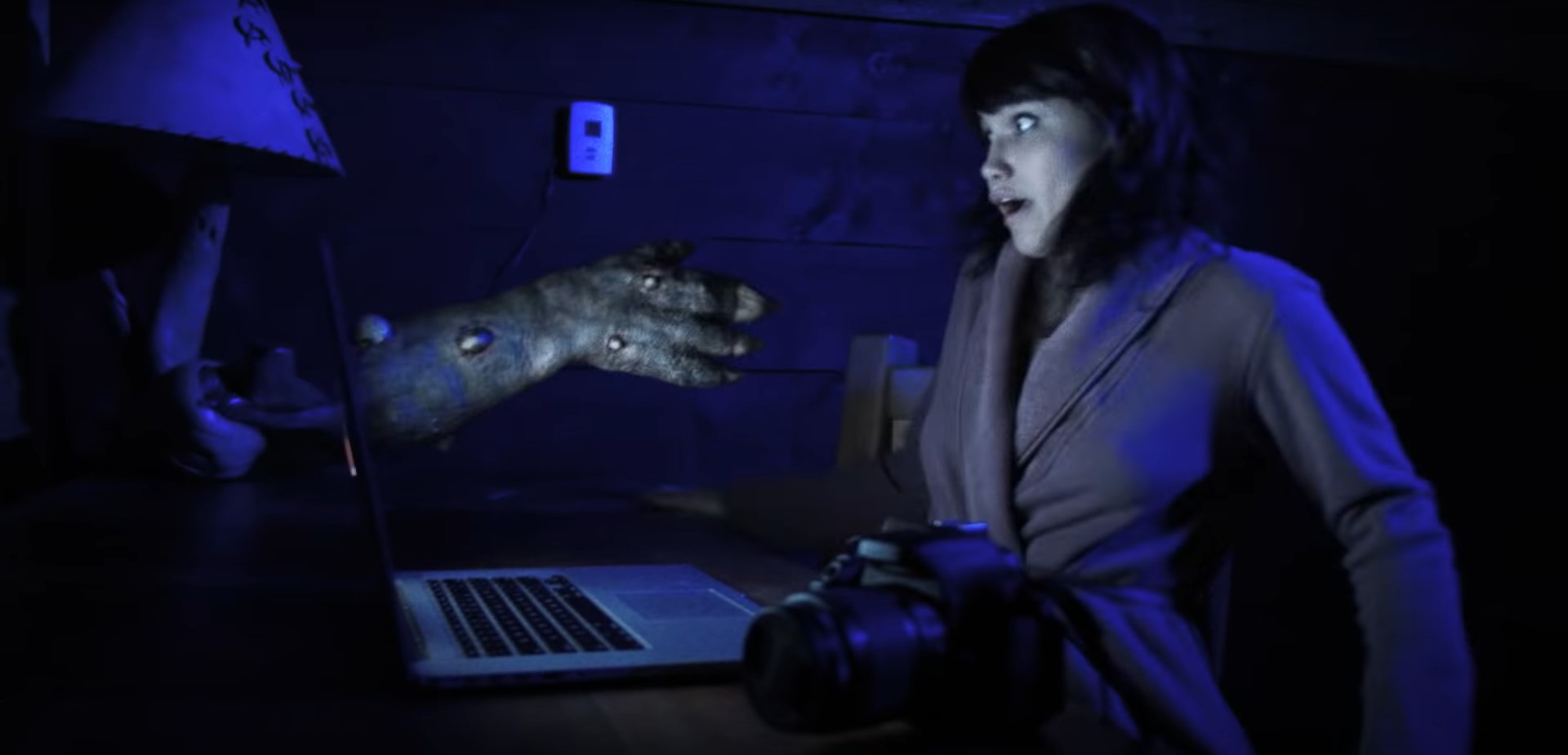
A rough patch in an abusive relationship opens up an opportunity for Myra and Owen to reconnect on a retreat at Owen’s family mountain cabin.  With wilderness for miles around, not a soul can disturb their serene getaway in retrieval what is lost in their relationship.  What they find is a biotic evil that has cursed Owen’s family once before and has returned to build a divide between the struggling lovers as a single, break-the-skin nip can transform anyone into a beastly monster.  Myra and Owen’s love for one another is put to the test when the monster blood insidiously begins to take over, leaving nearly nothing recognizable left behind the eyes. 

A complete monster movie bred out of the indie spirit with a callback to prosthetic practical effects that evokes a mental and emotion psychological theme around the durability of a relationship after being compromised by internal abuse and, possible, heredity mental health.  That’s the deep dive, suppositional story surrounding Austin Snell’s 2018 sophomoric feature film “Exposure” with a script penned by Snell and first-time screenwriter Jake Jackson.  “Exposure” is filmed in the wooded mountains of scenic Leadville, Colorado just outside the city limits of the quaint, stuck-in-time downtown where annual skijoring is a popular attraction right in the heart of town on mainstream.   Snell and Jackson produce the film alongside Clayton Ashley, who has worked as a gaffer on Snell’s debut feature “Erasure,” under their Kansas based LLC production company, Sunrunner Films.  

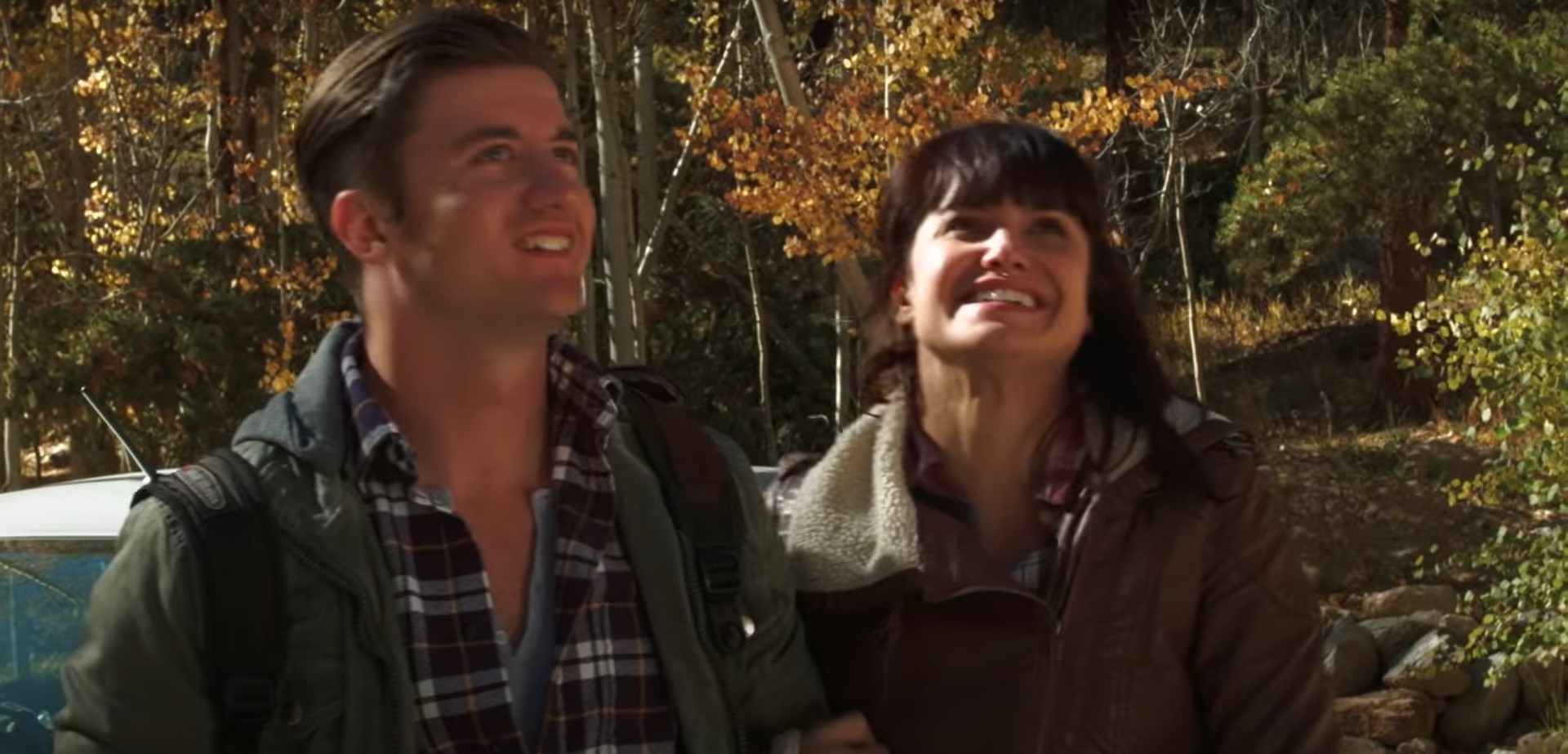
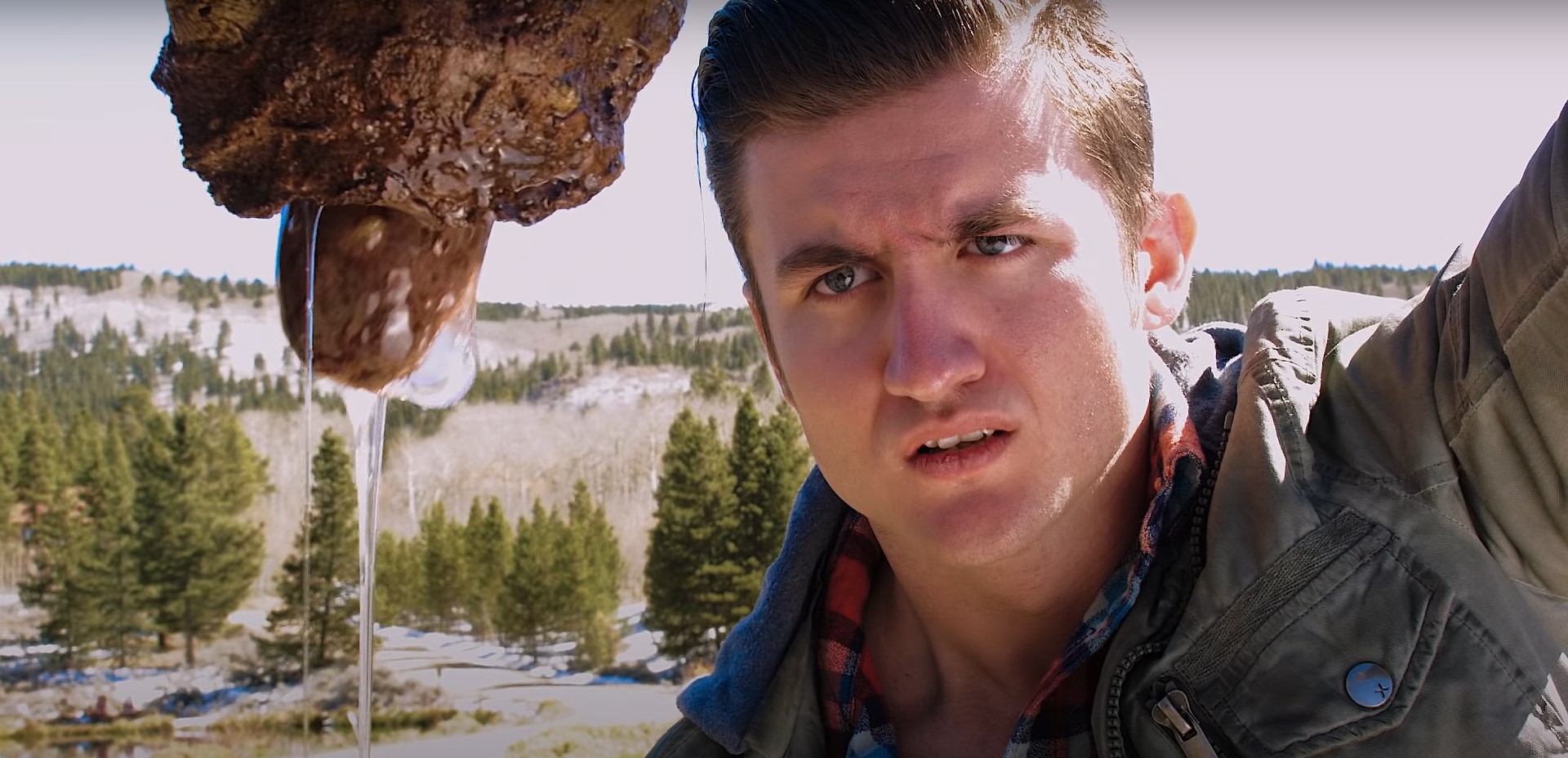
You can bet your lift ticket that the cast of “Exposure” is not strapping on skies and gripping to a rope for their dear life as a horse pulls the skier through the streets of downtown to go over manmade slopes and obstacles.  I wouldn’t think Snell would want to risk his four-person cast to such revelry actions that could result in injury.  Instead, a quiet, cabin-in-the-woods shoot leaves the actors to focus on the story at hand where a ingrained woodland evil infects and destroys an already bridle relationship between young couple Myra (Carmen Anello, “Zombie Beauty Pageant” and “I Am Lisa”) and James (Owen Lawless, “Hell Town”).  Anello and Lawless make a cute couple with some baggage hanging over their heads that is mostly implied rather than fully divulged and they sell well what their characters are struggling with, which is mainly trust.  Afraid of Owen’s temper, Myra is reluctant about moving forward in their relationship whereas Owen’s trust lies with Myra separating herself from an affair with a doting fling with a penchant for sending her sweet nothing texts she tries desperately to ignore.  I honestly don’t feel the immense love and hate tension in the room between Anello and Lawless who are more like best friends with an occassional spat than lovers going through a severe rough patch.  The more show of passion between them clings to the insincerity but that’s the high note for the connection between them.  Lynn Lowery (“I Drink Your Blood,” “The Crazies”) has a small role in flashbacks as Owen’s grandmother and Bruce Smith as the grandfather.

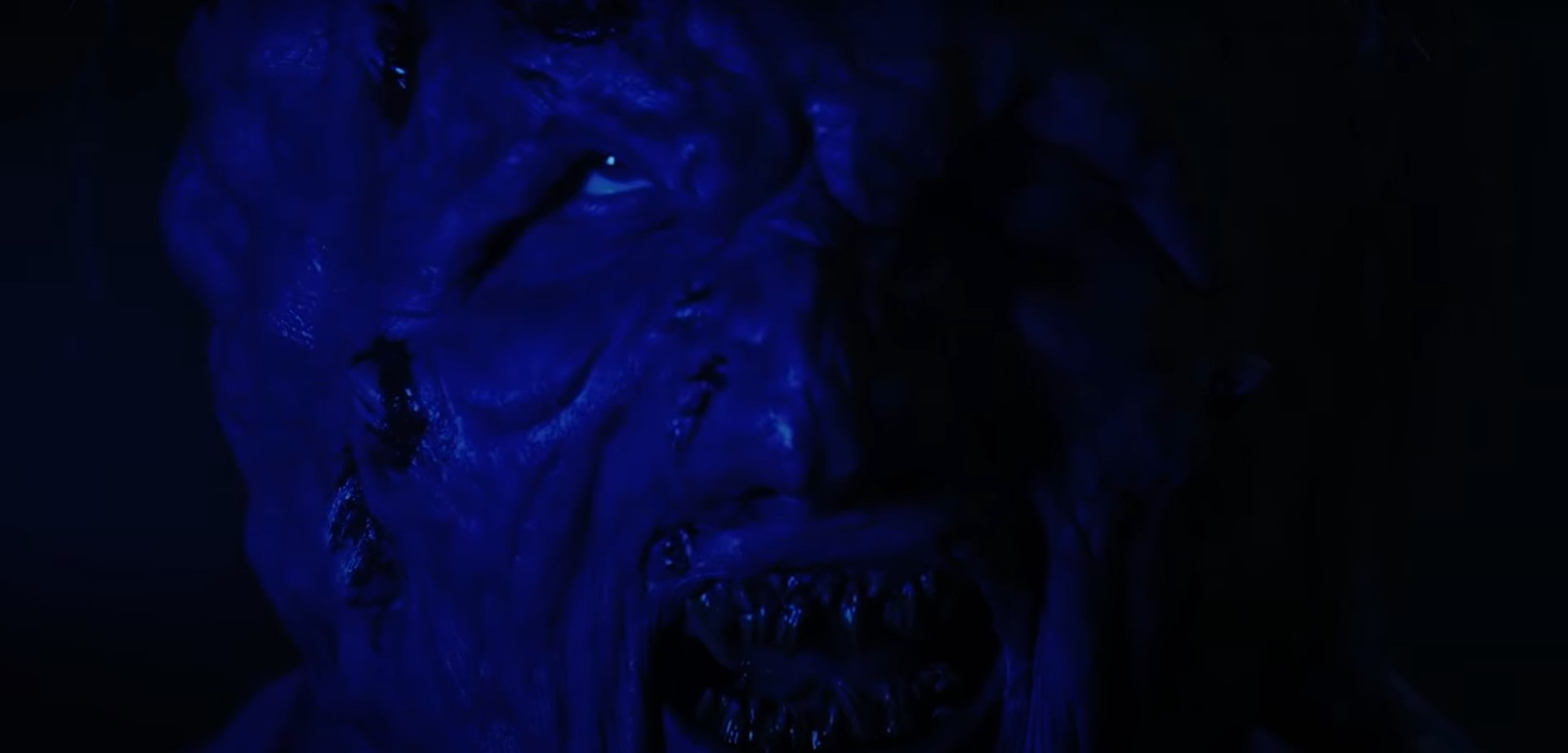
If you have already viewed Austin Snell’s “Exposure” then you likely know that the title is entangled in a double meaning. Perhaps even a triple meaning. Mountainous woods surrounded by frigid air with little-to-no help in sight leads to the vulnerability against the natural elements. In this case, the evil is the element, an unnatural one, that has laid claim to the area and sought the generational organic matter of Owen and Myra for its vile purposes – to spread its wickedness through the veins and mutate its victim into a hideous, baleful beast with a mind to match. The third meaning is more metaphorical as the term exposure can also be defined as the revelation of a typically bad thing that wasn’t clear before. In the film, Owen and Myra are going through a tough period in their romance with one of the inimical causes is Owen’s explosive and hurtful anger. Slithers of his masked morose behavior bubble to the surface in a motif view of just why they need to sort out the turbulent present in order for their possible future to resemble their merry past. The flashback story about Owen’s grandparents shed some light that what Owen may be going through is inborn, hereditary, and unchangeable; Owen’s reason and love mutates toward a gradual descent into monstrous behavior and that’s what the evil symbolically represents. Snell just happens to spin genuine relationship woes into an emblematic story with campy practical creature feature prosthetics and makeup. What most will dislike about “Exposure” is Snell’s true indie, natural approach to the special features that relies heavy on the cheesy, rubbery prosthetics and tangible tube and rod special effects without a lick of visual imagery for a smoothed over appearance. I applaud Snell for his raw, if not antiquated, choice that nods the throwbacks in the absence of contemporary conveniences.

For the first time on home video, “Exposure” makes a Blu-ray debut courtesy of Scream Team Releasing and distributed by MVD Visual. The not rated, NTSC region free, AVC encoded Blu-ray is presented in a widescreen 16X9 (1.78:1) aspect ratio. The 1080p, high-definition resolution looks pretty good and detailed, despite the heavy blue tint and gels, with negligible compression issues, especially with the heavy use of fog machine and a number of night scenes that don’t display noticeable banding or fuzzy/blotchy pixelation. The English language PCM 2.0 stereo audio provides a lossy amplitude that’s definitively detrimental to “Exposure’s” teetering success with audiences and the tracks don’t punch like that should for an atmospheric creature feature. The dialogue also sounds a bit boxy and artificial at times but, nonetheless, the dialogue track is still clear and discernible. Special features include cast and crew audio commentaries, a quick glimpse featurette into the behind-the-scenes of the special features, production stills, theatrical trailer, and retro VHS trailer. The physical Blu-snap case comes with reversible cover art, which, if you ask me, the secondary cover is the best with the illustrated, shadowy monster looming over a brightly lit heroine carrying a flashlight and a small axe. “Exposure’s” tribute veneer to the 80’s creature feature is spectacular without a doubt but lacks the energy to fully come to terms with its theme that’s become caught in the throes of a throwback rather than in the throes of relationship reconciling.

Get exposed ot “Exposure” on Blu-ray at Amazon.com!

EVIL Spirits and Japanese Internment Camps in “The Terror: Infamy” reviewed! (Acorn Media International / Blu-ray)

Chester Nakayama floats through life living with his immigrant parents on Terminal Island in San Pedro, California during World War II. A photographer hobbyist who helps on his father’s fishing boat and studies at a university, Chester doesn’t have steady employment and has recently learned his girlfriend, Luz, is pregnant with his baby. But those are not the height of Chester problems, or his family’s, when the country of Japan declares war on the United States by bombing Pearl Harbor and mysterious deaths surrounding the Nakayama family point to ancient Japanese beliefs of a Yūrei, or a ghost, clinging to a grudge. As the years past, Japanese American citizens are move from one internment camp to the next with no end in sight being projected as potential spies for the country of the rising sun and for Chester, Luz, and his family and friends, the Yūrei’s scheme endangers Chester’s life and legacy.

Following the success of the Ridley Scott (“Alien”) produced AMC horror television series, “The Terror,” the second season aims to build a new path of dread with a storyline plucked from the late 1900’s of two stranded artic explorer British ships trying to navigate a Northwest passage and now placed in a whole new and different, massive turbulent story and setting laid out in the early-to-mid 20th century during World War II America with Japanese Internment camps.  The second season comes with a partially new title, “The Terror:  Infamy” along with a new cast and new crew as well.  The subtitle’s double entendre refers to the then era United States 32nd President Franklin D. Roosevelt’s Day of Infamy speech given to the public after the assault on Pearl Harbor and also refers to another American infamous time of the mistreatment of the country’s own citizens, the Japanese Americans, placed into internment camps and constantly scrutinized as potential Japan spies.  “Infamy” showrunners Guymon Casady, David Kajganic, Scott Lambert, Alexandra Michan, Jonathan Sheehan, and David W. Zucker, along with Ridley Scott, return to the AMC, Entertainment 360, EMJAG Productions, and Scott Free Productions series.

At the tip of the ensemble cast spear, most consisting of Japanese heritage actors and actresses, is Derek Mio as the Yūrei plagued Chester Nakayama.  Perhaps the biggest role for the Mio, the role transcends Chester from a stagnant part-time fisherman on the dead-end Terminal Island settlement of San Pedro, California to a responsible man of action that sees Chester fight for his family, his wife, his children, and even fight for his country despite the maltreatment in order to course his loved ways safely through a plethora of evil.  While the character grows in an arc of accepting responsibility as a son, husband, and father, Mio never expresses the range of a story of his magnitude that takes him across various domestic terrains and on the other side of the conflict-engulfed world as he’s afflicted by a malevolent spirit.  Constantly confident and seemingly unafraid, Chester just simply endures the hardships along “The Terror’s” bombardment of grim reality.  Comparatively, the younger Japanese American generation are culturally more expressive next to the immigrated older generations in Chester’s father (Shingo Usami) and eldest family friend Nobuhiro Yamato (“Star Trek’s George Takei”) who we witness keep mostly in line with their stoic composures.  Takei, born in 1937, and his family were actually forced into living in converted horse stables and official internment camps across the country during the War and that gives the series a morsel of 100 times it’s weight in authenticity with firsthand experience. Along with the deep sympathies and an infinite amount of shame for the wrongfully imprisoned citizens of war, there’s also immense compassion for Chester’s wife, Luz, played by Chrstina Rodlo (“No One Gets Out Alive”). Rodlo runs the gambit of emotions that convey happiness with her time with Chester, to despondent loss, and to fear while on the run from the American government as well as an evil spirit who threatens her child. Just like the first season of “The Terror,” character staying power is often short lived as the horror and, well, the terror catches up to them in one way or another, but we see fine performances from Miki Ishikawa (“I Don’t Want To Drink Your Blood Anymore”), Naoko Mori (“Life”), Alex Shimizu, Lee Shorten, Hira Ambrosino, and Kiki Sukezane as the incessantly stubborn Yūrei and C. Thomas Howell (“The Hitcher”) with another flimsy performance as a hardnose major serving as head of an internment camp.

Subtly contrasting two very different kinds of horror between the yore of the fantastical Kaiden ghost stories coming to fruition with the Yūrei and the very non-fictional blight on American history that was falsely imprisoning American citizens with Japanese roots no matter what age. Both unsettling constructs are unequivocally provided equal weight in dread much like with season one that showcased the dog-eat-dog desperation of man isolated and trapped in extreme terrain with the supernatural forces of nature with a monstrous, polar bear like creature hunting them down one-by-one. Though the same dance, but a different song, season two has a very welcoming different take of blending of yore with lore that separates itself into a new entity, a new engagement, and a new facet of terror very befitting to the anthological series. Eventually, “Infamy” starts to lose steam when the Yūrei side of the story insidiously infringes fully into the fold when Chester and Luz have fled the internment camps and are living in nowheresville New Mexico. The camps fade away from the story and also from our consideration with only bits and pieces to chew on just to check in on principal characters and has a resolution that’s about as cheated as the Japanese Americans survivors given $25 by the American government to start a new life. Yet, “The Terror: Infamy” is poignant and informative, a better picture of what really happened on the American home front better any textbook could ever properly depict, and exposes the mainstream into the Kaiden-verse of Japanese culture.

The 2-disc, 10-episode Blu-ray set comes from UK distributor, Acorn Media International, with each episode with a runtime on an average of 40 to 45 minutes long and a total runtime of 419 minutes. The region 2, PAL encoded release is presented in a standardized for television widescreen format of 16X9 and the Acorn release doesn’t present a flawless picture with noticeable issues with severe cases of banding and compression artefacts around the darker portions of the scene and trust me, “Infamy” is plenty dim and leaden between John Conroy and Barry Donlevy’s cinematography unlike the previous season’s artic white landscape that brightens much of the frame. The Dolby Digital soundtrack produces a better product with satisfactory quality in all categories of score, ambient noise, and dialogue and is accompanied by well-synced and timed English subtitles. Bonus features include a look at the series part 1 (for disc 1) and part 2 (for disc 2) and the biographical and inside the head look at the characters through the eyes of their portrayers. “Infamy” is UK certified 15 as it contains the AMC edginess of bloody graphic content as well as some offensive language. “The Terror” series as a whole has remarkable historical insight commingled with soul-stirring, skin-crawling old wives’ tales. “Infamy” may not supersede its predecessor but is still one hell of an engaging and unique story that salivates us into wanting a third season.