When EVIL Runs The Show, That’s When the Reality Sets In. “Funhouse” reviewed! (Magnet Releasing / Digital Screener)

Eight C-grade social media celebrities sign a contract for a new reality show, Furcas’s House of Fun.  The reality show streams worldwide on all electronic devices in an exhibition of different and standoffish personalities locked together in apartment-size living quarters.  Contestants will have to face challenges and weekly viewer voting to be the last one standing for a chance to win a 5 million dollars cash prize  Instead of sexy making out sessions, drunken brawls, and contestant melodrama to boost viewer ratings, Furcas’s House of Fun is in actuality a syndicated snuff reality show where a contestant is voted out is a contestant receiving a brutal death in front of the entire world.  Survivors watch behind paned glass as one-by-one their castmates are dispatched in the most gruesome way possible, directed by a screen animated panda bear helmed by a sadist eager for the show to go on.

Ready to have a little fun?  The “Funhouse” is open for what is a variety show of horrors in this 2019 shot, 2021 released reality show of encroaching aggravation and gore from writer-director Jason William Lee.  “The Evil In Us” filmmaker plays his hand at personifying internalized resentful rage for hack, do-nothing, inconsequential to society celebrities by feeding them gladly and enthusiastically to the bloodthirsty wolves.  “Funhouse” isn’t your typical social media or tech horror film as Lee dishes out a thought-provoking disgust covered in a powdery sugar and popcorn veneer that’s surely to please the broad range of horror fans.  The co-ventured Canadian-Swedish story of shallow fame nihilism is shot in the Providence of British Columbia and in Stockholm, home base of Ti Bonny Productions under executive producer Henrik Santesson, in collaboration with Lee and producer Michael Gyorl’s Sandcastle Pictures.

With the surname Skarsgård, acting is in certainly in the blood.  Valter Skarsgård, the youngest son of “Nymphomaniac” and “Deep Blue Sea’s” Stellan Skarsgård’s first marriage and the brother of terrifyingly frighteningly Pennywise actor, Bill Skarsgård (“It”), branches out following his ancestral destiny by headlining as the lovable and misjudged Swede, Kasper Nordin, who leeched fame by being the ex-husband to a renowned singer.  Nearly the spittin’ image of his older brother Bill, Valter brings his name and family looks to the table while showcasing his own talent amongst a motley crew of nationalities.  That’s one of “Funhouse’s” main messages about social media stardom as a plague that has spread to every corner of the world symbolically infecting each contestant from a different country:  Dayleigh Nelson (“Island of the Dolls”) of Britain, Khamisa Wilsher of America, Gigi Saul Guerrero (“Puppet Killer”) of Mexico, Amanda Howells of the Philippines, Mathias Retamal (“The Source of Shadows”) of Chile/Canada,  Karolina Benefield of Poland, and Christopher Gerard of Ireland.  The roles of wannabe celebrities is an ostentatious representation of click bait influencers who will sell essentially their soul and show their skin to be noticed and this turns the clear antagonist villain, a merciless gamester and contract abider with business dealings more vile than from the Devil himself, to be a subtle antihero of sorts as the cast rounds out with Jerome Velinsky’s wickedly sophisticated performance as Nero Alexander that is urbane nihilism at its best. 

Outrageous, fun, and gory – “Funhouse” has all the hallmarks of a 90’s horror on cruise control.  With a bedazzling rudimentary shell of a panda bear avatar animation and blend of practical and digital blood over the simplicity of a small location and indie production, Lee is able to fly through the narrative at whiplash speed and still drop animosity-awarding and empathetic traits to believe in the cast of characters.  In the middle of the chaos of axe splitting heads and being dunked into a barrel of highly corrosive acid, a topical theme of the detrimental social media and influencer stardom to society really positions “Funhouse” on the frontline for inflammatory and anti-social media messages, harping on the noncontributing and unbeneficial role of these money-generating, like-focusing, click baiters in culture and society other than selling to their audiences sex, gossip, and violence.  Speaking of violence, I was pleasantly surprised by the right amount of gore that didn’t shoot for extravagant levels despite some smoothing around the digitally added sinew and guts, keeping a modest amount of realism to the dystopian gameshow construct.  Initially, there are dubious first act moments that quickly shuttle hapless soon-to-be-casualties into the same location, much like in “Saw II” when characters all wake up in the room together and we have no idea who they are, where they come from, and what their backstory is, but as the film progresses we learn more about them and the roles they play in the maniacal puppeteer’s design.  The twist, almost meta-like, ending leaves “Funhouse” on a low note that doesn’t fulfill any void for its existence, but a good chunk of the story is really meaty with a revolving door of plights and a small, yet efficient, compassion outpouring spicket.

Not your traditional participatory surprise-laden and mirror maze attraction, “Funhouse” will still bring old-style thrills with some new blood spills in it’s grand opening release in theaters and on demand on May 28th courtesy of Magnet Releasing. Shawn Seifert (“Dead of Night”) lays out a smorgasbord of cinematography techniques that includes rich, un-matted color filters, isolating characters in darker, dim rooms in making them seem centerstage for their own grand demise, and cultivates stationary, handheld, tracking, and some drone shots for an extremely vibrant and glossy approach and feel for reality television version 2.0. Lee edits the digital reel himself and, honestly, the pacing wanders quickly to the overly rushed section like a quick-spit-it-out story wanting to be finished before it even begins and is compounded with another intrusive quality in the hyperactive back-and-forth of shots that aims to resemble the irksome flight in and out of reality shows that speed up and slow down like a nervous teenager behind the wheel of their parents and continuously presses down on the brake pedal. Stay tuned after credits for a gag bit scene that ties into the main story but promises nothing more. No more being voted off the island or nixed by expert judges, “Funhouse” cleans house with deadly eliminations and a message of the unyielding power granted to many so easily through a rapidly reshaping medium that has become too influential on a braindead scale.

HELLelujah! God Does Not Deliver Us From EVIL! “We Still Say Grace” reviewed! (101 Films / Digital Screener)


A family living in deliberate solitude looks to God to provide them with everything they need to sustain.  Harold’s two teenage daughters have never experienced beyond the 14 acres of land their father and mother own, but the youngest, Maggie, can’t help but think of the wonders outside her father’s god-fearing, draconian sheltering.   When three teenage boys travelling to California suddenly break down on Harold’s remote land, an eager Maggie can’t wait to taste a mere glimpse of their perception of the outside world.  Being a good Christian man, Harold welcomes the hapless travelers into his home and convinces them to follow the rules and stay the night, but the boys’ seemingly happenstance car troubles is manipulated into an unavoidable sign of God’s will, or at least so in Harold’s eyes, and he decides to carry out a predetermined family suicide pact for him and his family to be welcomed into the gates of Heaven.

The one think learned, or maybe had shed more light on, out of this pandemic is the unstable relationship people have with God.  Religious extremist have weaponized the Powerful and Almighty against every day people like you and myself with contentious, hate-filled vocabulary such as damnation, burning, hell, etc., for those who do not seek his glory the way asininely seek it.  “We Still Say Grace” epitomizes that very lifestyle of devout fanaticism that has also been highlighted with buffoonery as the very same people who verbally condemn others usually don’t walk-the-walk but only talk-the-talk or are a charlatan involved in a more sinister plan.  “The Lodge’s” Brad Helmink and John Rauschelbach write and direct the film that has become their second feature horror film produced by the filmmakers under their Brothers Shamus Pictures, Mark Sonoda of Dauntless Studios, Room in the Sky Films, and Lexicon Entertainment. 

Now, I’m not a religious man or spread the word of the divine in my reviews, but God love Bruce Davison as the “Dahmer” and “X-Men” actor is a silver fox crazy man of God living rurally with his wife and two teenage daughters.  Davison relentlessly rallies Harold’s madness and is having a good old time performing as a man with a hidden agenda.  Harold is an intriguing character with little-to-no information about the character’s background or reasoning for being unreasonable, but that doesn’t seem to faze the legendary actor who had cut his teeth into horror 50 years ago as the original rat-speaking avenger, “Willard,” as Davion trots down a path of deceitful radicalism and manipulative exploitation.  Those he unscrupulously cons with pious smoke and mirrors are his own family in wife Betty (Arianne Zucker, “Days of Our Lives” daytime soap opera), Sarah (Rita Volk), and Maggie (Holly Taylor, FX’s “The Americans”).  As a viewer who is currently, at this very moment, chin deep in catching up on FX’s Cold War espionage thriller series of Soviet spies living as ordinary Americans in Washington, D.C. as they carry out missions in the name of Communism, I found difficult in separating Holly Taylor from her the 2018 series that ended its successful run in 2018 when she was a teenager.  Taylor’s roll in “We Still Say Grace” typecast the actress as another teen though having filmed the movie as a young adult woman, but the lighting is different and I don’t mean in a literal illuminating sense.  Taylor steps out from “The Americans’” 80’s setting and into, what I presume, is the 1990’s based off some wardrobe choices, car models, and the time frames that fit into those constructs and while she still has this inkling of suspicion that her parents are up to something, a parallel that has carried over, there hasn’t been this much ill-fitting reverence of a man hellbent on belting those he breaks bread with on a daily basis.  There is hesitancy and fear in Taylor eyes and that’s breaks up her from a reoccurring teenager role.  When the three teens (Dallas Hart, Frankie Wolf, and Xavier J. Watson) show up at the front door, that’s when things go, more than usual for Maggie, terribly awry. 

Aside from Bruce Davison, the other performances muster little faith in their roles with overplayed tropes, especially the stranded teens who could be plucked out as the Three Stooges of horror they’re so easily identifiable across the genre.  The premise itself isn’t exactly novel of a Bible thumping person teaching and preaching self-sacrifice, aka suicide, as a way to transcend beyond the heathens of this Earth but marketable and attainable as a small independent production with a California desert location, minor but effective special effects, and a handful of actors where much of the money is spent on talent.  “We Still Say Grace” is structurally very loose with character development and plot points, leaking continues dribbles of minor shifts that never patch themselves up on the backend.  For example, Harold’s not the black and white evangelical nut he seems to be but that is where his arc pauses and doesn’t backtrack into reasoning.   Helmink and Rauschelbach do better on the scene setups and interiors that make Harold uncomfortably fearsome and hostile in any context as he sometimes looms in the shadows of his farm chic house or toys with people, even his own family, like rats in a maze as he guides them along to their doom.

Premiering for the first time in the UK courtesy of 101 Films, “We Still Say Grace’s” penitent themed horror-thriller releases digitally this month of May.  As for the imagery presentation, and take this with a grain of salt with any digitally released film, the nearly 94 minute runtime seems to be filmed with a sun derived dust and light haze that I would compare the appearance more akin to trying to look through the bottom of a hard water stained glass.  Under the cinematography of Douglas Quill, the haziness plays into the rustic and dusty atmospherics that give age to the story and Quill frames Harold as a dominant and isolated figure, especially amongst the holy trinity ablaze in human flesh, as if he was the sole antagonist against the world.  The moment for shattered lives remains intent on the very edge of our corneas with the holy hell of “We Still Say Grace’s” patience brittle villain ready to gaslight and sacrifice anyone resisting against the grain of God’s good graces. 

EVIL Slums In The Company of Others. “Hausen” reviewed! (Sky Atlantic / Eps. 1-4 / Digital Screeners)

Jaschek moves into a property supervisor position of a slum housing complex with his 16-year-old son, Juri, after the tragic fiery death of his wife. Trying to rebuild and rebound on what’s left of his and his son’s life and waiting for the insurance money to pay out, Jascheck tends to the decrepit building maintenance and, over time, meeting the cold, strung out, and peculiar tenants while Juri attends school and becomes interested with the building’s discretionary drug pushing youths. When a young couple’s baby goes missing, the mysterious disappearance motivates Juri into an investigation, leading his curiosity to discover that the building itself, and the insidious sludge that oozes nearly from every crevice, feeds on the suffering and pain of the inhabitants.

When a black, wet stain on the wall embodies a biological presence of asexual spores and elicits the instinctual first thought of alarm sounding bells ringing to back away in your mind, this is how Till Kleinert and Anna Stoeva injects fear and biotic crud with their new horror television series, “Hausen.” It’s Bloggin’ Evil got to sample the first four episodes of the German 8-episode series that showcases director Thomas Stuber’s dank complexion of anthropomorphized leeching of the lower class, filmed partially inside an East Germany, 20 plus year abandoned hospital, once known as the GDR Hospital, located in Berlin. Kleinert is the writer and director of 2014’s “Der Samurai,” pulling from his film the lingering disembodied or dreamlike and integrating that surrealism imagery for the new series, and collaborates with first time writer, long time producer Anna Stoeva, one half of the boutique film production company, Tanuki Films. “Hausen” is a production of the Berlin-based company Lago Film, who co-coordinated the production on David Cronenberg’s “A Dangerous Method,” under department head, producer Marco Mehlitz.

“Hausen” primarily focuses around a reestablishing father and son, Jaschek and Juri, after a tragic house fire that claimed the life of Juri’s mother. The series starts off with the two driving up to the housing complex and breaking themselves right away into a runaway rundown building that needs more than just a sprucing up. “Transporter: The Series'” Charly Hübner plays the handy father, Jaschek, with non-expressive can-do attitude that becomes a block of interrelation between him and his son Juri in another unreadable performance from Tristan Göbel of Lago Film’s “Goodbye Berlin. That inexpression is the intentional tone of “Hausen’s” entire cast of tenant characters who float through a barely-living existence, most living grubbily, few living in humble comfort, but all being exploited by the organic narcotic that’s living, breathing, and striving from the inhabitant suffering. Hübner and Göbel impassively shepherd along the story along that introduces new characters into new episodes that digs deeper into the complex’s black, oozy, heart symbiotically connected to a caretaker known as Kater, the very first character Juri and Jaschek meet upon arriving at the building for the first time. The autodidact Alexander Scheer touts an unkempt, dirtied, and made to look like a complete hobo in Kater who, unlike his onscreen cohorts, vitalizes the screen with wild-eye expressions and an unsurmountable jocularity and puckish wit. The series rounds out with stars Lilith Stangenberg (“Bloodsuckers – A Marxist Vampire Comedy”), Stefan Haschke (“Krabat and the Legend of the Satanic Mill”), Daniel Sträßer, and Andrea Guo.

“Hausen’s” intended aloof pulse courses consistently throughout, at least in the first four episodes, that piece together and induce layers of grayscale personalities that have been cross affected by the building’s malevolent life force and the subjugating delinquent class that feel no need to make their surroundings better as their stuck in a vicious cycle rut of drugs and despondency. “Hausen” allegorically uses horror to intensify the already tragic aspects of corrupted ethical life choices people make when drugs are prioritized as more important than others and even their own lives. The first episode features a young couple with an infant and as they attempt to stay clean and withhold what little money saved for a new and better apartment, the building reacts by taking measures in the form of tormenting the husband’s brittle sobriety as he’s caring for the baby alone. He passes out and wakes to find the familiar narcotic he can’t seem to escape on his person. The scene mirrors good intentions of abusers who fall into withdraw with the withdraws being symbolically displayed as the building’s evil doings to keep the pain profit flowing. Overall, “Hausen” drips with underbelly exploitation that doesn’t stop with just the adverse, malignant housing as it spreads into Juri and Jaschek’s tense relationship and into the ounce of good left inside them, fleshed out in scenes that become a crossroad of choices where choice A) is to do the worst thing possible to compromise the smidgen of hope left or choice B) to reserve themselves into taking the harder, but good moral standing, road and work at rekindling a tattered bond that would go against everything the “Hausen” has thrown at them.

A skyscraper of bleak and austere horror, “Hausen” houses a slick secretion of mystery in every crevice. The Sky Germany produced horrifying mystery-thriller is now out in the UK on Sky Germany’s sister-programming, Sky Atlantic. A statically lit doom and gloom scenes never venture away from the tinted battleship gray and blue color scheme that goes hand-and-hand with a cleaned up GDR hospital shots from cinematographer, Peter Matjasko, that’s reminiscent of David Fincher films = think “Alien 3” but with way less yellows. The black sludge is a satisfying unnatural pigment of midnight black that contrasts nicely against said tinted lens coloring, providing a catheter of continuously streaming tenebrosity. We’ll have to wait and see how Juri, Jaschek, and the rest of the tenants fair in the last four episodes that shafted us with a plummeting cliffhanger midway through and, hopefully, ItsBlogginEvil.com can provide more coverage on the unnerving new television series that will put a stain your soul.

Nab’em, Chop’em, and Feed’em to the EVIL Ox! “Butchers” reviewed! (Breaking Glass Pictures / Digital Screener)

After the death of their firm handed, elderly mother, brothers Owen and Oswald Watson remain isolated in the boondocks, off the beaten path to nowhere, to live in their rundown family home, like the generations before them, to do the one thing they desire and born to do – abduct stranded motorists, kill the men, and imprison away the women for their sadistic and misogynistic pleasures.  After breaking down passing through on a rural bypass, four young friends find themselves fighting for their very lives against a pair of siblings with a deep rooted heritage of experienced violence to show for it, but when one of the brothers starts to become even more unhinged than normal, the remaining survivors seek to take advantage of the situation to escape, but their captors know the woods inside and out.

Everyone believes Canadians are overly nice and well-mannered.  Our considerate neighbors of the North withstand the plethora of static noise from the turbulent South, willing to forget and forgive in a moments notice with nothing more than a smile and slap across the back, but has anyone ever bare witness to Adrian Langley’s dog-gonna-hunt, exploitation film, “Butchers,” hailing from Ottawa, Ontario?  The 2020 survival horror thriller displays the unseen dark side of Canadian’s grinning and friendly façade and, boy, does it familiarize and rival some of the similar backwoods doggedness we’ve seen in the last quarter century.  The film is written and directed by Langley and co-written with Daniel Weissenberger (“Come True”) in the intent of being a gritty, hillbilly-gone-wild hoedown with butcher blade sharpness.  Langley’s cinematic shiplap usually provides hard to swallow and violent themed content set to put one on tenterhooks established from his string of unflinching crime dramas (“A Violent State,” “Crook”) when the director is not moonlighting as a made-for-television PG-rated filmmaker for the holidays (“Candy Cane Christmas,” “Homemade Christmas”).  Christmas is long gone and a long way off and no amount of jovial spirit can guarantee a happy ending in “Butchers,” a production of Langley’s Unit XIX Films and Nicolás Onetti, producer and filmmaker behind retro-manufactured giallo horror “Abrakadabra” and “Francesca,” attached under his production banner, Black Mandala.” 

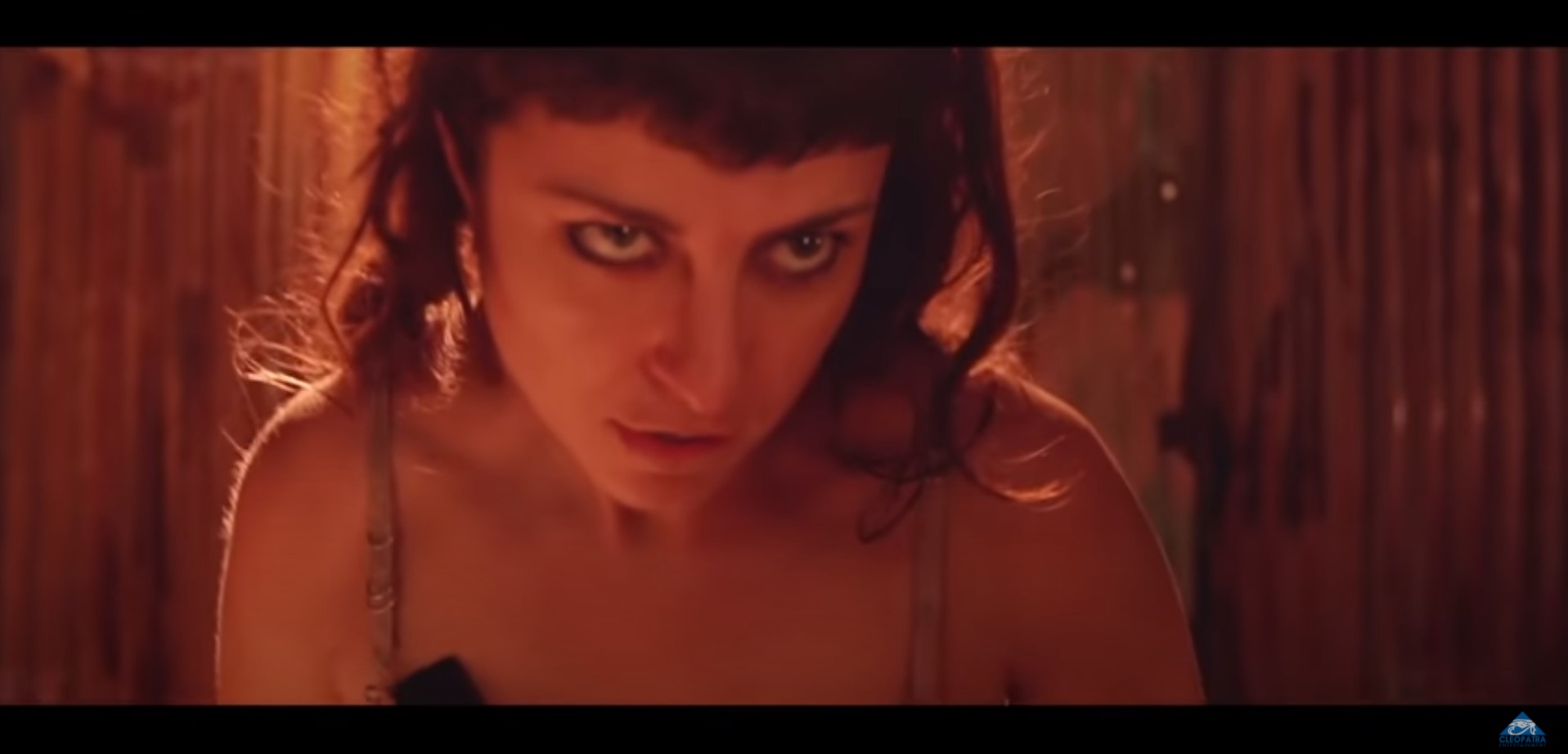
Principal characters are essentially the entire cast, small in size but pack a punch with their performances.  Starting off with the brothers, Owen and Oswald Watson, whose story begins during the snow and icy-filled heart of the winter months with them standing graveside, freshly filled with the remains of their mother, well before the hapless four protagonists breakdown in the summer’s heat.  The Watson boys story arc from second fiddle to top brass in a brief moment of background with the death of their mother as they quickly set to work pouncing on a young couple and exploiting the chained up and captive wife/girlfriend for carnal pleasure while abiding by a certain set of harshly punishable rules.  Television’s “Age of the Living Dead’s” Simon Phillips and Michael Swatton reteam in their respective roles of Owen and Oswald who are very much human characters with carefully planned and executed uncontrollable urges, callous whims, and fallible actions, sullied by a mixture of mental disease and rotten nurturing.  Philips is terrifying as in the intellectual brother, with his sophisticated word hole, very willing to get his hands dirty as the more perverse of the two brothers, but his relationship is on the rocks with his unstable brother, Oswald, as Swatton channels the internal family quibbling mindset of Leatherface from the “Texas Chainsaw Massacre” franchise with the exception of the crossdressing obsession and the iconic, rip-roaring chainsaw.  Oswald instead wields a custom butcher’s knife with jagged shark life teeth as he manically runs through the forest hunting down the four youngsters played by Julie Mainville (“Ghastlies”), James Gerald Hicks (“Killer Mom”), and “The Nights Before Christmas’s Anne-Carolyne Binette and Frederik Storm.  With these lambs for the slaughter characters, this is where Adrian Langley succumbs to tropes that instill a misplaced sense of courage, uncontrollable and shallow horniness, and a turmoil amongst friends to be the divisive factor leading of their fate.  “Butchers” rounds out the cast with Jonathan Largy, Samantha De Benedet, Blake Canning, and Nick Allan as uncle Willard. 

“Butchers” does have blatant derivative bones underneath a body that echoes the frameworks of pioneered films from the aforementioned “Texas Chains Massacre” to more recently “Wrong Turn,” the original film series formed in 2003 about inbred, cannibalistic mountain people.  These powerhouse of unpretentious and bloodthirsty franchises inspired much of what you’ll experience in Langley’s homage of a cyclical subgenre; yet, the filmmaker’s tale of two brothers with a bloodletting scheme of their own doesn’t lend itself as being a hack work nor does the story render like an atrocious carbon copy but, rather, “Butchers” lives in a moment of simple, matter of fact craziness living in the dark corners of the seemingly innocuous world.  Owen paints a near perfect picture of the one in a million chance that people, like his hapless captives, fall into the position they’re in, sophisticatedly monologuing with intent to his bound prey in a pair of scenes that slice a thinly opened gap of possibility and that, right there, is scary.  “Butchers” builds no momentum, but, instead, goes right for the throat straight from the get-go as Langley reinforces the attitude that this can happen to anyone by not getting too familiar with characters in their backstories.  In order to establish a pattern of action and to lay foundations in who we should and shouldn’t root for when things go to hell, virtue-less unfaithfulness becomes a promising wedge that doesn’t necessarily cause descension in the ranks of survival, but paves a trope-laden path of who will ultimately perish.

Backcountry exploitation might have seem to have run it’s course. I mean, really, how many times can crazy deformed cannibals wreak gut-spilling havoc on the naïve outlanders to their idyllic provinces? For me, as many time as it damn well pleases, especially when fundamentally satisfying as Adrian Langley’s “Butchers,” distributed by Breaking Glass Pictures and now available streaming on Prime Video. “Butchers” will be available on DVD at a to be announced date. Langley, wearing multiple of hats in the spirit of indie productions, dons the director of photography bowler hat…well, I don’t really know what hat the DOP would wear, but we’ll represent the position with a bowler for now due to the deluxe sophistication the bowler implies while still sustaining a classic touch and that’s how I see Langley’s clean and competent cinematography style whose able to frame scenes that force audiences to be a part of the action . As soon as a character turns to speak to another character or when a car hood slams, an effective rush of adrenaline courses through the veins when out of nowhere one of the brothers pop onto the widescreen 2.35:1 aspect ratio presented screen. “Butchers” come with no bonus material after a 92 minute runtime, but a single scene lingers during the credits that, again, harps back to a certain dancing killing machine from the original “Texas Chainsaw Massacre.” May not be an original concept, but “Butchers” can still castrate the soul with an exploitatively merciless family tree sowed with perversion and bloodlust.

Rent or Own “Butchers” on Amazon Prime Video! Click the Poster to Watch!

And We All Thought Puppy Mills Were EVIL! “Breeder” reviewed! (Eureka Entertainment / Blu-ray Screener)

Avid and accomplished equestrian, Mia, yearns for a child of her own with husband Thomas as the clock on her ovaries continues ticking into her 30s, but something keeps her husband from digging himself out of a sexually frustrated trench, causing strain on their marriage.  Mia thinks his imperative financial venture, a collaboration alongside ruthless businesswoman and unorthodox scientist named Ruben, has made him sexually reclusive being wrapped up in a delicate investment of reversing the aging process that could crumble at any time, but when a beautiful and youthful neighbor goes missing after frantically showing up bloodied at her front door, Mia follows her trail to an abandoned candy factory where Ruben holds hostage young women for her violating biohacking experiments.  Becoming caged herself at the mercy of Ruben, Mia, and the rest of the women, are left to the sadistic and misogynistic whims of Ruben’s henchmen, the Pig and The Dog, in between the good doctor’s examinations. 

What happens when the powerful elite, using wealth and influence, circumvent ethical red tape in order to receive medical advancements as soon as possible?  Director Jens Dahl and screenwriter Sissel Dalsgaard Thomsen explore that radical and illegal biohacking ideology with an intense and extreme feminist view in their 2020 released, invasively graphic, horror thriller, “Breeder.”   Hailing from Denmark, not too many extreme films come out of the Nordic country, but taking a cue from their German neighbors from the South with a sexual and age dysphoria viscosity, “Breeder” takes an urban legend-esque approach to age defying that’s more Countess Bathory than anything Aveeno facial creams could ever manufacture in a story based on biohacking blended loosely with the French folklore of Bluebeard where an affluent man has an obsessive habit in murdering his wives, one after another, per director Jens Dahl.  “Breeder” might not be that black and, well, blue with a tough love message and an illicit theme of subversive genetical achievements produced by Peter Hyldahl, Amalie Lyngbo Quist, Penelope Bjerregaard and Maria Moller Christoffersen of Beo Starling (Beofilm) production company.

Leading the pack of caged, exploitered women in this human puppy mill comes with a hefty price of compromising positions and uncomfortable scenarios. The 32-yeard old actress, Sara Hjort Ditlevsen, plays an age appropriate Mia whose coming down to her last straw when coming to her husband’s inability to commit to their teetering marriage, but Mia comes with a twist in that she never gives up, achieving her end goal even if that means strapping on her riding boots and stirrups, dropping her panties, and digging those spurs into her hind parts while masturbating just to release the sexual tension. Ditlevsen gives a gradual fuming performance gaslit by the abusing sustained by the sadistic misogynist, monikered The Dog (Morten Hoist) who, in appearances, has the visual looks of a greasy Bill Oberst Jr. Jackson Pollock’d from a Mads Mikkelsen portrait and has the temper to match. The Dog and his partner, The Pig, played by Jens Anderson in an unbalanced contrast to the The Dog’s screen time, are harnessed and weaponized by a mad scientist role that was originally intended for a man before screenwriter, Sissel Dalsgaard Thomsen, had an epiphany that her feminist script was playing right into that systemic, male dominant, structure. Instead, the role was flipped, in gender only, and performed by “Wild Witch’s” Signe Eghom Olsen. Olsen gives a chillingly cold performance in Ruben’s contradictory indifference for life by snatching youth and beauty from young women, those who spite Ruben just by the mere fact of their innate good genes and healthy reproductive system, and selling the epitome of their stolen essence to the highest, or oldest, bidder in an age-reserval scheme. Ruben does have another motive with self-preservation as her rare genetic makeup makes finding a genome match nearly impossible, but she slays away a lot of women and a lot of infants in order to unearth her type. Anders Heinrichsen, Eeva Putro, Elvira Friis, Eja Rhea Mathea Due, Oksana Kniazeva, and Sara Wilgaard Sinkjær round out of the cast.

One of the “Breeder’s” core themes is the power one holds over another, but absolute control is not a singular reoccurring motif as power ebbs and flows from one character to another in a rolodex of examples that include Thomas’s financial control of Ruben’s rebellious operational decisions, The Dog’s inhumane dominance over captive women he loathes, and, on the receiving end, an enslaved woman’s embracing of a submissive, masochistic posture to The Dog’s punishing sadism, but control can be fleeting as seen in many movies yet proved to be in an abundance in Dahl’s “Breeder” with plot points that overturn sovereign power through a pendulum sway of brute, bloody force and hostage exploitation ugliness.  One bizarre recurrent through the cat and mouse power struggles is urination.  Yup, bodily fluids make an appearance, but go beyond the one-time shock value affect with three, count them three, acts of peeing in which two scenes reflect dominance as the powerful relieve themselves all over the, at that time, docile weak as a dog would when marking his claimed spot in the yard.  “Breeder” continues the varied questionable character tactics when primary plot turning points fail to impress plausible reactionary needs; an example would include when Ruben uses Thomas’ affection for Mia to control his unpredictable behavior, but the obsessed mad scientist, not to be bested by losing her financial support, lets Thomas run freely around her private abandoned factory of horrors which allows Thomas to become a monkey wrench in her biohacking laboratorial machine.  The same easy street escapes run rampant throughout and is even unintentionally spoofed when one women is able to escape not once but twice The Dog and The Pig’s rigorous grasps, taking “Breeder’s” serious new wave extreme a level down to a sickly stage of story blunders with rough draft written characters and scuffle.


If golden showers are not the extreme go-to for brutal survival horror, “Breeder” offers a variety of acrid amenities from stapling lips together to a trash can full of dead, dismembered babies and is homeward bound in the UK on Blu-ray from Eureka Entertainment under the company’s Montage Pictures banner.  Available February 15th, 2021, the first 2,000 prints of the Blu-ray will come with a limited edition O-card slipcase.  If you’re not a physical media aficionado (…loser.  J/K), “Breeder” will also be available digitally and will be presented in the film’s original aspect ratio of 2.35:1.  The Danish language DTS-HD MA 5.1 audio mix will be accompanied with optional English subtitles.  Since this review is based off a Blu-ray screener, I will not go into depth with the audio and visual conditions, but the cinematography work is from the sophomore feature of Nicolai Lok.  Behind the camera, Lok’s settles on a drab color schemes of mostly black and grey of a sterile environment, with the Lindberg house or inside Ruben’s medical popup tent, along with hard yellows, like mustard, to accentuate the rust and grime in closeups to medium shots within the tight confines of the abandoned candy factory turned into an unsweet meat market, but uses a fisheye lens on the regular to the effect I couldn’t pinpoint other than to fishbowl dysphoria an already narrow area. The end result made scenes unnecessarily warped for the viewers already stomaching a large amount of women battering. The special features included an October 2020 answer only interview with director Jens Dahl and screenwriter Sissel Dalsgaard Thomsen discussing in depth the reason they wanted to make this film. “Breeder” opens with Mia prancing her horse Karat and she inner dialogues how they move in tandem, but she questions the pecking order of master and prisoner between them knowing for certain she’s Karat’s jailor and that translates perfectly into her own subhuman treatment as a branded and caged animal for the pleasure of others; however, this type of depth thinking begins to rotate the hamster wheel but, as soon as momentum picks up on those tiny legs of collusion and betrayal, a gradual limp slows that hamster’s endurance with not enough plot developmental pallets to digest in order to keep up the effort.