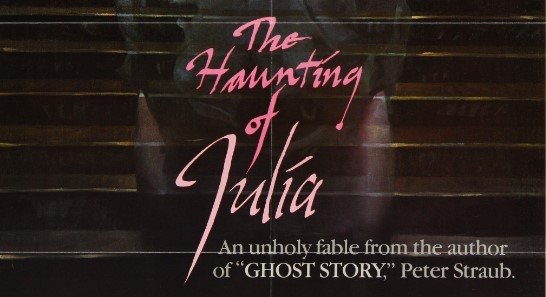
The Death of a Daughter Leads Down to a Psychological Path of EVIL! “The Haunting of Julia” reviewed! (Imprint / Blu-ray)

Limited Edition of “The Haunting of Julia” Available at Amazon.com!

This morning was like any other as the Julia rustles up breakfast for her all-business husband Magnus and their lively vivacious daughter Kate, but when Kate violent chokes on a piece of apple and Julie performs a bloody, untried tracheotomy in a state of panic in order to save her daughter’s life, their lives are forever changed as Katie dies in Julia’s arms. For weeks, Julia’s melancholic depression commits her to hospital care. When she’s ready for release per the Doctor’s recommendation, Julia avoids returning to Magnus as their relationship was never a mutually loving one but rather a normal route connected by the presence of their daughter Kate. In order to restart her life, Julia separates from a controlling Magnus and purchases a magnificent London house only to then be plagued by ghostly occurrences she suspects is the work of her late daughter. What Julia comes to find out is the troubling history of her newfound home.

Mia Farrow solidified herself as a genre actress by starring in the archetype for films revolving around the prince of darkness, Satan, in 1968 with “Rosemary’s Baby.”  Unlikely seeing herself as a prominent woman of a notable rite horror, Farrow quickly understood her value in the genre as a complex female lead in the unsettling and gothic protuberance atmosphere style.  Nearly a decade later, Farrow stars in the Richard Loncraine directed “The Haunting of Julia,” similar only to the menacing supernatural child component but digs deeper in manipulative complacency, psychological guilt, and of that distorted reality created by the stout motherhood connection.  The “Slade of Flame” director set his sights off of Rock’N’Roll inspired dramas around the ugliness of the music industry and onto the filmic adaptation of the Peter Straub novel “Julia,” penned by the Dave Humphries and “Xtro” trilogy director Harry Bromley Davenport.  The joint United Kingdom and Canadian production, titled originally as “Full Circle” in the UK, is produced by Peter Fetterman (“The Exorcism of Hugh”), under Fetterman Productions, and Alfred Pariser (“Shivers”) of the Canadian Film Development Corporation. 

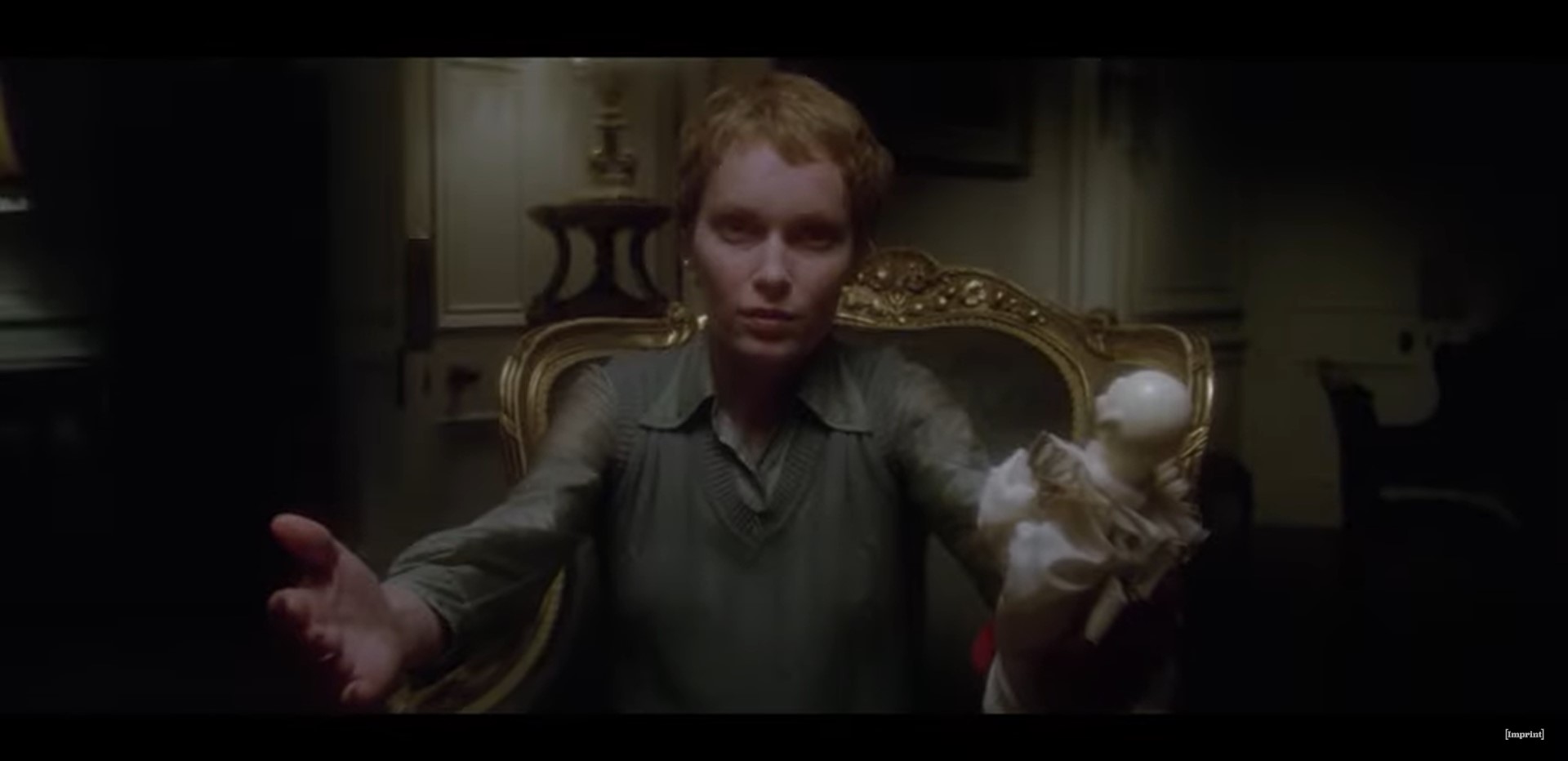
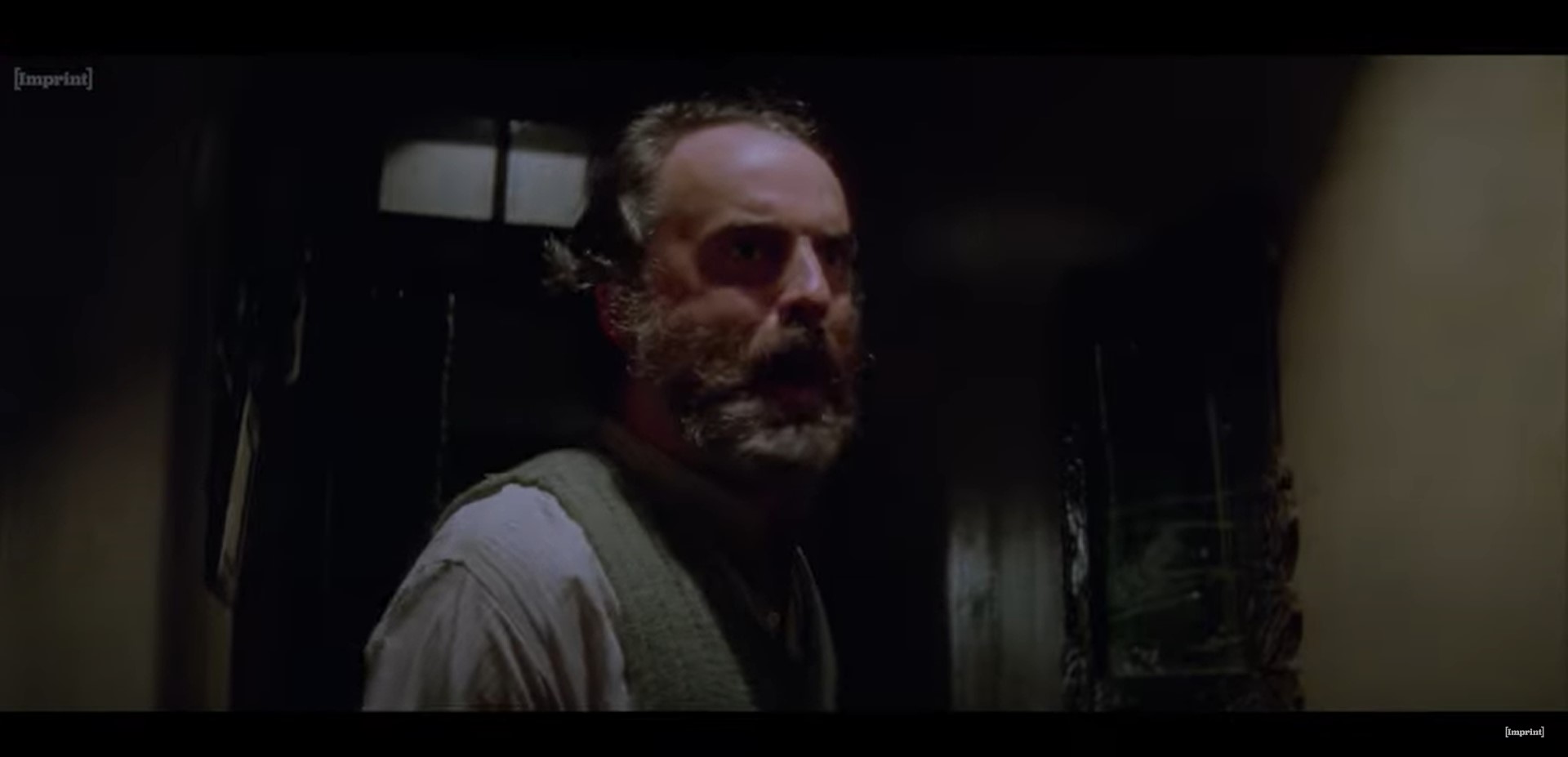
Mia Farrow’s distinct reactions and acting style very much engulfs the majority of horror experienced in “The Haunting of Julia,” as well as exhibited in “Rosemary’s Baby.”  The glassy eyed, long stares, the frightened, coiled emotions that swirl seemingly out of control, and the switch-gear ability to be strong and compliant in tense-riddled situations that just only involve herself in the scene.  While “Rosemary’s Baby’ and “The Haunting of Julia” may exact the same gothic aperture for child-themed horror and both are adapted literary works, “The Haunting of Julia” unfolds not in the anticipating of child birth but rather postmortem with the aftermath affliction of a child’s sudden and terrible demise that occurred in the frantic mother’s misguided embrace to take a knife right to her child’s jugular in hopes of dislodging an air denying obstruction.  This opening scene shocks us right into a grim framework that simultaneously divides trust and empathy for Julia as circumstances unveil what we might suspect all along, that Julia’s mental health suffered immensely.  What pushes Julia into undue stress is her controlling, dispassionate husband Magnus. Played by “Black Christmas’s” Keir Dullea.  Dullea pulls off the unsympathetic impassive father who just lost a child and can’t see the underlying psychological unrest his wife suffers.  In short, Magnus attempts to gatekeep Julia’s damaged psyche by trying to strong arm her back into normalcy, even going as far as manipulating Julia and his own sister Lily (Jill Bennett, “The Skull”) into slipping his foot into the door with a wife who fled from his grasp as soon as released from the hospital for essentially shutting down after their daughter’s death.  That toxic pressure is coupled with the seemingly unnatural incidences in her new home that clash her old life, chained to an unconsciously broken family, with her new life that seeks to decompress from a pair of diverse traumas.  “The Haunting of Julia” rounds out the cast with Tom Conti (“Blind Revenge”), Mary Morris (“Prison Without Bars”), Anna Wing (“Xtro”), Pauline Jameson (“Night Watch”), Peter Sallis (“Frankenstein:  The True Story”), Susan Porrett (“Plunkett & Macleane), Edward Hardwicke (“Venom”), and Sophie Ward (“Book of Blood”).

More or less forgotten by U.S. audiences due to no fault of the film’s own acclamatory measure or the audiences willing participation, the international produced “The Haunting of Julia” wasn’t publicized in the U.S. despite the two American leads – Mia Farrow and Keir Dullea.  Richard Loncraine’s film has incredible merit to the idea of a mother’s loss within the construct of gothic horror, which, in another aspect of unfathomable irony, resembled more closely to the American gothic style of the supernatural sequestered dark house.  Yet, this house is in London, wedged in like row homes, but as mentioned numerous times in the film, the house has distinction and grandeur that overlooks the buried ghostly history of the previous owners.  Julia absorbs the stories, filters through them, and comes to believe her own daughter is either trying to reach out to her or is hellbent on revenge for the amateur hour tracheotomy.  Loncraine does the phenomenal job of shocking our core with the early choking death scene of Julia’s daughter but once that dust settles, the pacing becomes more rhythmic to the point of building, slowly, Julia’s encounters with unknown forces that, at first, are just seemingly bizarre happenstances of left on bedroom plug-in radiators and playground visions of a girl that resembles her daughter cutting up another kid’s pet turtle.  These events play into their evident conspicuousness to push audiences deep into Julia’s mysterious milieu, officially sealing something isn’t right with the clairvoyant Ms. Flood’s scarred-screaming vision of a bloody child.  Julie become engrossed into learning the truth, eager to determine if that child is her late daughter and is fed tidbits of the house’s history that not only continues her own investigation but other research into other house tragedies that fork-split her presumptions.  As all this noise tornadoes around Julia, the stories, the occurrences, the deaths, viewers will never deduce to a reason closer to home, to Julia herself, until possibly too late at the end with a grisly open-ended finale that what Julia has been experience may have been done at her own forlorn hand. 

Atmospherically sound, undoubtedly creepy, and spearheaded by strong performances, “The Haunting of Julia” is the unspoken heroine of late 1970s supernatural horror – until now.  Imprint and Via Vision of Australia release a limited edition, high definition 1080p, 2-disc Blu-ray set with an AVC encoded BD50 of a new 4K scan transfer of the original 35mm negative. Presented in an anamorphic widescreen 2.35:1, the 4K scan is super sharp with virtually no compression issues on the formatted storage. Blacks, and negative spaces in general, are rich and void, despite Peter Hannan’s low-contrast and hazy surreal veneer that definitely plays into a psychotronic dreaminess. The resolution goes unaltered, and the natural grain maintains the original theatrical presentation for a revered 4k transfer. The English LPCM 2.0 mono track mix audibly delineates a viable one input split to make the dialogue and all other tracks comprehendible. Despite some slight here and there hissing, dialogue is amped up nicely for better resolved results that still remains mingled with the ambience in an all for one, one for all audio format. “Space Trucker’s” Colin Towns’s insidious and distinctly composed soundtrack reaches into the recesses of soul and strikes at the very nerve of fear with an unsettling score, perfectly suited for a mother drowning in the pitfalls of a supernatural sanctum. Optional English Hard-of-Hearing subtitles are available. The first disc special features include two audio commentaries – one with director Richard Loncraine and Simon Fitzjohn and the second, brand new, commentary with authors Jonathan Rigby and Kevin Lyons, new interviews with composer Colin Towns Breaking the Circle, cinematographer Peter Hannan Framing the Circle, and Hugh Harlow Joining the Circle, a new video essay by film historian Kat Ellinger Motherhood & Madness: Mia Farrow and the Female Gothic, the original trailer, and an option to play the film with either “The Haunting of Julia” or “Full Circle” opening title. The second disc is a compact disc of Colin Town’s 11-track score featuring 20 minutes of previously unheard music out of 60:52 of music. The limited-edition set comes with a neat lenticular cover on front of the hard box of what we assume is Julia’s ghost glaring at you from all angles as her eyes follow you. Inside is a clear Blu-ray snapper that’s a little thicker than your traditional snapper and comes with a built-in secondary disc holder. The cover art is simply Mia Farrow cowering outside the bathroom door but the reversible cover displays an original “Full Circle” poster as the front image. The disc arts are illustrative and compositions with the feature presentation disc the same as hard box lenticular without it being lenticular and CD pressed with Mia Farrow’s face in the background and a child’s cymbal banging toy in the foreground. Also in the hard box is a 44-page booklet feature an historical background essay by critic/writer Sean Hogan that has black and white and color photos and various poster art. The film, which comes in as Imprint catalogue # 218, runs at 97 minutes, is unrated, and, is assumed, for region A playback as it’s an Australian release – there is no indication on the package. “The Haunting of Julia” is Mia Farrow’s shining, yet lost effort post Roman Polanksi and is a remarkable look at subtle disconnection from extreme guilt when in every corner, every sign, is thought to be about your lost child.

Limited Edition of “The Haunting of Julia” Available at Amazon.com!


Romance and Chinese Boxing Don’t Equal EVIL and That’s Okay! “Gorgeous” reviewed! (88 Films / Blu-ray)

Fall in Love with “Gorgeous” on Blu-ray at Amazon.com!

Bu believes in true love.  The young Taiwanese girl, with immense positivity, travels from her small fishing village of Jibei to the big city of Hong Kong after discovering a bottle containing a romantic note floating in the sea.  When Bu is let down by the originating sender, a gay makeup artist in an attempt to use fate and fortune to bring back an ex-lover, she strikes up a friendship with him which leads to a wealthy business owner and Chinese boxing enthusiast C.N. Chan who serendipitously comes into her life.  With a well-known reputation of being a rake, Bu pretends to be a prominent ex-lover of a notorious crime boss in order to not be taken advantage of as she slowly falls for Chan’s playful charm.  A longtime rival businessman causes conflict by driving a wedge between Bu and Chan as fight training intensifies after losing to his rival’s hired professional fighter and Chan loses sight of what’s really important in life – happiness.  

International martial artists superstar Jackie Chan makes his debut on our little boutique review blog for his Hong Kong cult film, the 1999 romantic comedy with stellar fight sequences, “Gorgeous.”  “Forbidden City Cop” writer-director Vincent Kok teams up with Yiu Fai Lo and the “Rush Hour” star to pen a new kind of story for the stuntman and martial artists that would put a roundhouse kick of insecurities onto any action star’s chin.  Based on the Ivy Ho (“The Accidental Spy”) story, “Gorgeous” involves more than just punches, kicks, and high-flying antics with a comedy romance story about two very different people and perspectives finding commonality in unflinching happiness, joy, and love.  Jackie Chan does comedy very well but the comedy in “Gorgeous” is half non-physical, which the action star has mastered the craft by integrating into his physical model.  “Gorgeous” is a production of Golden Harvest Productions and is produced by Jackie Chan and then Golden Harvest president the late Raymond Chow.

Obviously, you can’t have a Jackie Chan movie without high-level martial arts action.  In the same breath, Jackie Chan wanted to give his Asian fans another movie after the tremendous success of “Rush Hour” that sent the longtime East-adored icon into global stardom.  Thus, “Gorgeous” was born, developed, and rewritten to add Jackie Chan as the lead character, playboy and business tycoon C.N. Chan, alongside costar Shu Qi of “Sex and Zen II” and “The Transporter” with Jason Statham.  As Bu, Qi develops a starry-eyed longing for unequivocal romance that you can only find in fairytales and storybooks as she is confronted by the puppy dog eyes of the local fishing boy proclaiming his love for her only to be rejected by Qi’s downplayed naivety that makes her appear to be the village simpleton.   Yet, the character is surrounded by a carefree comedic mom-and-dad of beer-drinking restaurant owners, Sung-Young Chen (“Hello Dracula”) and Elaine Jin (“The House That Never Dies”).  As a flirtatious couple of Bu’s hopeless romanticism driven by the signs and kismet and Chan’s all-business, no-play waning for a girl to be childlike to bring out the dormant happiness inside him, Jackie Chan and Shu Qi manage to never close that gap to fully immerse themselves as onscreen love interests in their 80’s structured amorous narrative and go get’em montage.   Where “Gorgeous” charisma lies is with Chan’s mano-on-mano dual with Jackie Chan’s hired member of his stuntman team, Brad Allan.  The former Australian gymnast and Chinese circus acrobat has a towering magnetism about him despite only standing 5’4” tall, shorter than Jackie Chan.  The fight sequences between the two nimble men with incredible speed and form, mirror each other with precision in their own individual styles, garner some the best one-on-one choreographed bouts ever to hit the screen and to be felt by the audiences with hard-hitting throws.  While the impact of the Chinese boxing is palpable, Chan and Allen pepper in lighter moments of great physical comedy that take the intensity down a notch in a welcoming reprieve from solemn combat.  That solemnity in Allen’s character is greatly received and adds to his magnetic appeal that doesn’t make the mercenary fighter a bad guy though hired by the antagonist (Emil Chau, “Super Cop 2”) of the story; instead, Allen’s fair without pulling punches and without dirty tricks, as he mentions to Chan to avoid, and we end up rooting for both men’s dignified square up being battled not in a square ring.  Tony Leung Chiu-wai (“Internal Affairs”), Ken Lo (“Holy Virgin vs. The Evil Dead”), Tats Lau (“Dating Death”), Richie Jen (“Tales from the Occult”), Siu Wai Cheung, and “Kung Fu Hustle’s” Stephen Chow costar.

While “Gorgeous” may not be evil in the least for our conversational liking and our in-depth coverage with its abundance of lighthearted goodness, romanticized ideals, and slapstick comedy, the turn of a century film has cult qualities with shoddy 90’s effects, intricate fight choreographies, and eclectic, eccentric performances that make the Hong Kong-Taiwan product standup and standout to be noticed.  The fight sequences alone swallow much of the attention and overwhelm a rather flimsy passionate plotline between C.N. Chan and Bu in what stirs between feels more platonic than desire.  “Gorgeous” attempts, and succeeds to a version of a successful end, a theme about positivity and happiness and how that brightness can be diminished by deceits, workaholism, and distracting contentions, sucking the joy from out of life and spitting out a solitude bitterness without any kind of understanding of how it all happened.  We see this more in the dynamics of business rivals Chan and L.W. Lo, two childhood friends driven apart by their subjective comparisons as they try to top one another, culminating from their back-and-forth to see who is the best at everything into the realization that their bond was ultimately worth more than success at material things.  This enriching theme, plus Jackie Chan’s stunt team work, pushes asides the infatuation glop of Chan and Bu’s playful childlike intimacy that just seems to slip through your fingers, unable grasp traction to be interesting enough.

“Gorgeous” receives an 88 Films’ 2K overhaul with a Blu-ray upgrade from the original film materials of the Hong Kong & International versions of the film, delivering two cuts in high definition 1080p and presented in an anamorphic widescreen 2.35:1 aspect ratio.  The AVC encoded BD50 offers plenty of room for “Gorgeous” to look, well, gorgeous on hi-def with a vibrant, spotless transfer of the 35mm shot print.   Coloring is consistently stable and rejuvenated for a fresh picture image; no one-off blips or glitches on the grading in sight on this very azure and teal toned production.  Despite holding two features and a handful of extras, the dual-layered single disc offers no hint of compression issues, creating a smooth beginning to end viewing.  The Hong Kong cut comes with a Cantonese DTS-HD 5.1 MA while the International Cut comes with the same as well as an English DTS-HD 5.1 dub track.  For authenticity purposes, the original native language is always the preferred choice and the Cantonese track on the HK cut simply shines with an orotund dialogue track, robust milieu and ambience, and a blended bubbly and businesslike score whenever the mood hits by Dan-yee Wong.  Balanced and kept in the check, neither track overtakes the other with a timely parallel consonance.  The newly translated English subtitles are paced well with error-free transcription.  Special features include Shy Guy – Andy Cheng, a member of Jackie Chan’s stunt team, discusses the rise of Brad Allen as well as note on the stunt team in general and Jackie Chan’s success at the time of “Gorgeous,” an interview with director Vincent Kok on Chan’s unfamiliar territory into romantic comedies, an archived making-of “Gorgeous” with raw and behind-the-scenes footage and interviews, “Gorgeous” music video in Cantonese and Mandarin, and the Hong Kong and International trailers.  The limited edition slipcover feature is a cardboard o-slip with illustrative art from 88 Films graphic artist Sean Longmore overtop a 2 to 3 millimeter thicker Blu-ray snapper to house the 32-page color booklet with daily set report of “The Accidental Spy” by writer Matthew Edwards and behind the-scene photos, a dual-sided mini-poster of Longmore’s slipcover art and the original poster one-sheet, a disc pressed with the image of Shu Qi smiling, and reversible cover art with the original poster one-sheet and a couple of “Gorgeous” stills joined together on one half.  Each cut is drastically different in length with the international cut heavily trimmed at 99 minutes while the HK cut keeps unedited at 2 hours.  Both features are not rated and are both have a region A and B playback with C untested.  Jackie Chan has always been a pillar of entertainment and “Gorgeous” is no exception to the rule.  88 Films refreshes the now 24-year-old film with a new, exciting transfer and physical package that commits one of the best fights in cinematic history to hi-def.

Fall in Love with “Gorgeous” on Blu-ray at Amazon.com!

Break a Promise with EVIL And Pay the Little-Big Price! “Unwelcome” reviewed! (Well Go USA Entertainment / Blu-ray)

Not the Leprechauns This Time.  It’d Be Goblins that “Unwelcome” You!  

Trying desperately to become pregnant for some time, Jamie and Maya celebrate the news of learning they’re expecting but their jovial rejoice is cut short when three thugs break into their city apartment home, nearly bringing an end to their lives and the baby.  When Jamie’s great aunt Maeve wills him a rural cottage in Ireland, the married couple jump at the chance to start afresh away from the urban chaos and the trauma in hopes for a peaceful life with their child.  The friendly village residents take in Jamie and Maya unconditionally but one stipulation is highly encouraged to be met if living at great aunt Maeve’s cottage:  they must leave out a blood offering for the little people, the Redcaps, of the forest butted up against their home.   Just happy to be out of the city, Jamie and Maya shrug off what they believe to be folkloric wives tales of old Ireland and on such short notice, they hire Mr. Whelan and his children, who come with an unfavorable village reputation, to do much-needed repairs around the house.  When dealings with the Whelan clan go violently sideways, Maya invokes superstitious belief to draw the Repcaps out of hiding and implore their murderous mischievousness for dire neighborly assistance. 

Welcome to the “Unwelcome!”  Pint-sized evil continues to be mondo popular around the world, especially in the Full Moon empire that’s built a kingdom off the backs of supernatural ankle biters.  However, “Unwelcome” is not a Charles Band production that’s rushed straight through to a fast-tracked, direct-to-video release of shoddy, schlocky proportions.  Instead, this release comes from overseas, the UK specifically, with some quality production footing that lands the 2023 released film into a limited theatrical run before hitting the home entertainment market.  Behind the film is Jon Wright, director of dark humored revenge against high school bullies in the “Tormented,” who directs and co-writes “Unwelcome’s” grim fairytale-like narrative of personal growth, inner fight, and underfoot goblins gone wild with Mark Stay, reuniting with Wright for the first time since their script collaboration on the 2014 automaton invasion epic, “Robot Overlords.”  Under the once working title of “The Little People,” “Unwelcome” is a production of the Yorkshire based Tempo Productions Limited, with cofounders by Jo Bamford and Piers Tempest as executive producer and producer, and the private equity investment group, Ingenious Media, with producer Peter Touche along with Warner Bros. and Well Go USA Entertainment distributing. 

“Unwelcome” has such unusual casting in a good way.  The entire Whelan clan consists of actors plucked from successful, multi-seasonal television shows that have essentially shaped their careers from their well-known, fan-adored roles, but the unintended adverse effect in such triumph stamina is being recognized only for that performance.  In my mind, Colm Meaney will forever be embedded in my hippocampus as Engineer Chief Miles O’Brien from “Star Trek:  Deep Space Nine.”  “Con Air,” “Under Siege,” and even as a British Airways pilot doomed for landing in “Die Hard 2,” Chief O’Brien, I mean Colm Meaney, is still in space tinkering with transporter buffers.  Here in “Unwelcome,” Meany is Daddy, aka Mr. Whelan, a rough around the edge contractor who beats his kids, let them get away with whatever they please, and has a real notoriety around town.  When I say kids, I mean grown adults stuck in Daddy’s hooligan wake and are played by more outstanding and familiar faces from Ireland, such as Hodor from “Game of Thrones,” Kristian Naim, Netflix’s “Derry Girls’s” Jamie-Lee O’Donnell, and the “1917” actor and upcoming principals of “Last Voyage of the Demeter,” Chris Walley, make up the trio of terribly laid construction workers who have really no business being around a hammer, a ladder, or anybody’s valuables.  That brings me to “Unwelcome’s” lead actors as the scarred couple who hires out Whelan’s band of delinquent spawns to do the handiwork repairs.  I realize Wright and Stay wrote Douglas Booth (“Pride, Prejudice, & Zombies”) to be an overly optimistic and fairly useless good guy with Jamie, but the insecurities are just ostentatiously oozing out of the husband without a clue.  Jamie’s arc also doesn’t quite flesh out by the end of the film as he’s blocked by the baby mama instincts of Maya, played by “Resident Evil:  Welcome to Raccoon City’s” Hannah John-Kamen, with an unspoken I’ll-do-it-my-damn-self attitude that sends the narrative into a knife-brandishing gob of Redcaps eager to do her bidding for an unfavorable exchange.  Maya sacrifices all for a good man with good intentions who can’t do diddlysquat to save her and, in the end, that doesn’t seem balanced for this ferocious fairytale. 

If there is one aspect, above all us, to note about “Unwelcome’s” shin kicking goblins as a takeaway is that the rambunctious and ravenous Redcaps are not computer generated, are not puppets, and are not even animatronics.  Actors and stuntmen fill those small shows with a little help of disproportionate movie magic, heeding to the ways of a lost art in miniaturizing actors, such as in “Willow” or “Honey, I Shrunk the Kids,” and touching up with some CGI on the tangible face molds for a layered composition that’s super fun to see come to life on screen.  Unfortunately, the Redcaps make a late appearance into a yarn unspooled with mostly the pent up pile of frustrations of Jamie and Maya as an unlucky couple without a chance of peace in the world.  Trouble finds them wherever they go in what’s essentially a trade for city thugs for unfriendly country versions of the same type of ill-mannered.  “Unwelcome” plays very much into it’s title that no place feels welcoming for a couple on the verge of the already daunting premise of parenthood life and everything appears now alien as the world is being upended by concessions for your child in what has turned terrifying in what was supposed to be a warm, welcoming of a new adventure.  That’s the sensation setup for the pair who trust dip into trusting superstitions and magical beings to be their guardians.  Folklore then takes over; its has, in fact, been welcomed to save the day no matter how maligned the backstories.  Wright and cinematographer Hamish Doyne-Ditmas do, in fact, construct an ocular stage crafted out of an ethereal red and yellow fire lit sky with an overall color theory toned to contrast as a mystical storybook set in what is usually flush with greenery around an Irish village, reminiscent of late 70s-early 80’s European horror sets built to detailed scale, built with vibrant backlighting, and yet built to feel distant, apprehensively off, and strange like another world, a Redcap ecosphere.  “Unwelcome’s” ending also pulls from that unabashed time to be creatively mad in an innately mad universe with an unexpected Redcap reason that doesn’t clarify so much their hunger for blood offers, which the diet includes raw store-bought meat and the frothy flesh of felonious individuals, but better explains their twisted promises and intentions for their knife-jabbing services rendered.

With Goblins, there’s always a price to pay but for the Blu-ray release of “Unwelcome,” the price is worth the admission.  The single-layered, AVC encoded, high-definition 1080p Well Go USA Entertainment release presents the film in a widescreen 1.78:1 aspect ratio.  Slightly squeeze onto a BD25, there’s some minor irregular compression patches that degrade solid darker colors and the image loses a bit of sharpness in the background – you can see an example when the Redcaps pop up out of the keep tower appearing more like moving globules than well-defined humanoids.  Goblin facial features and skin and clothes textures have tactile appeal during closeups with the same being said with the cast in their natural color tones.  Computer-generated facial movements have seamless pertinence to the surrounding action and the motion of the Goblin actors themselves with layering of frames looking clean to create their smallness around principal characters.  The English DTS-HD 5.1 Master Audio mix maintains a stout dialogue track but deploys no depth into recordings resulting in all the dialogue tracks to be at the forefront, even when characters are in the background in the scene.  The weird spatiality with the dialogue doesn’t translate over to ambient noise as those tracks are well designed into the scheme with levels of depth that add richness to the storybook atmospherics.  English SDH are optionally available.  Bonus features include a behind-the-scenes cast and crew interviews discussing their time forming the idea and working on the project, a making the Redcaps segment with special effects supervisor Shaune Harrison (“Nightbreed,” “Attack of the Adult Babies”) discussing the step-be-step process of bringing these little devils to life, including showcasing their head and body molds, and the theatrical trailer. The physical property comes in a standard Blu-ray snapper with latch with one-sided cover art of a knife-out Goblin starring up at the new mistress of the house.  Inside, a single-leaf advert of Well Go USA films and the disc pressed art with a blue-graded Goblin looking menacing makeup the inner contents. “Unwelcome” runs at 101 minutes, is rated R for strong violence and gore, pervasive language, some drug use, and sexual material. From an ironic perspective, “Unwelcome” uses the mythological mischievous of Goblins as a gas pedal accelerator to mature a pair of genteel gulls faced with a parlous reality and to be factotum in life in general told inside in the linings of a dark and gory fairytale universe.

Not the Leprechauns This Time.  It’d Be Goblins that “Unwelcome” You!  

Doppelganger EVIL Shares a Deadly Family Secret. “AmnesiA” reviewed! (Cult Epics / Blu-ray)

Become Caught Up in the Mystery of “AmnesiA” on Limited Edition Blu-ray!

Alex, a meek photographer, is called back to his family home by his estranged identical twin brother, Aram, on the news of their mother’s severe illness.  Agreeing to help look after her for a while, Alex travels back home with his new girlfriend in tow, a pyromania epileptic named Sandra.  Upon his arrival in Amnesia, the home of the family business of tinkering on broken down cars around the property, Alex is met face-to-face with a past he’s long tried to forget.  Aloof Aram’s peculiar involvement with organized crime, his heart-healthy mother’s obsession with heart conditions, Sandra’s fire infatuation, and himself crippled by a imprinted, photographic fear swirls with ridicule tension around the crumbling junkyard estate.  The years long secrets between the brothers about their childhood past have taken a personalized toll on them and being in the same space together after a long time a part has loosed embedded raw emotions and dug back up the past again to finish what they started all those years ago.

“Amnesia” is a curious and mysterious black comedy thriller from the Netherlands and is the surrealistically bold effect of duality and family skeletons in the closet from filmmaker, the Hague native, Martin Koolhoven.  Taking similar household elements from the avant, 60’s inspired “Suzy Q,” writer-director Koolhoven pours another fractured glass of dysfunctional family-ade to sour perfection, squeezing every last drop out of neglected relationships in order for the truth to the be tasted.  With themes around secrets, guilt, processing that guilt, and family, “Amnesia,” or as originally spelled, “AmnesiA,” progresses a narrative of an irreversible broken family from through the looking glass of dark comedy and layered mystery to it’s ultimate destruction perceived as bittersweet.  Shot in Belgium, “Amnesia” is produced by Paul Verhoeven “Black Book” producers, Jeroen Beker and Frans van Gestel, under the partners’ 1995 established, Amsterdam-based production company, Motel Films. 

If unable to locate two suitable actors to play siblings, why not have one great actor to be both?  That’s the approach Martin Koolhoven erected when falling head over heels with Fedja van Huêt who could intuitively give Koolhoven the exactness of each brother’s personality.  Brothers Alex and Amar are so distinct in how they carry themselves as well as in their appearance that your mind and eyes can barely keep the registered fact that the brothers are inhabited by the one and the same Huêt.  Huêt, along with some good writing from Koolhoven, keeps insecurities close to the chest, blossoming a massive bubble of enigma that often repels the brothers against one another to keep audiences from homing in too close to the exact cause of their personal strife.  Tension works wonderfully despite not having the ability to act against the actual physical embodiment of the antithesis to spar with and the editing fully supports the duality with perfectly seamed visual effects touchup efforts.  Other support efforts come from a great supporting cast, including the international success Carice van Houten who starred in Verhoeven’s “Black Book” and won an Emmy for her high priestess role of Melisandre on HBO’s “Game of Thrones.”  Houten’s cagy, pyromaniac Sandra is just as odd as her appearing suddenly into Alex’s life, or rather into the backseat of his car, when things are beginning to feel complicated for Alex having to return home after many years away.  Sandra’s emotionally supportive, almost as Alex’s backbone or a buffer, when dealing with Aram but she’s interpreted as not normal by the brothers’ mother (Sacha Bulthuis) who herself is a representation of the past that keeps the individualized brothers connected and tries to keep both boys nearby without angering them; she even attempts to turn Alex into his mechanic father, whether done consciously or subconsciously goes unsaid, but in the end, the past always creeps back to the present and the unresolved coming to a close will put the final nail into the coffin of the Amnesia family business for good.  Theo Maassen, Cas Enklaar, Eva van der Gucht, and Erik van der Horst costar.

“Amnesia” is a thought-provoking puzzle box of rearranging clues and drop in visitants that instill an uneasy, surrealism surrounding chiefly these two brothers.  Bubbling to the surface through a series of baby step flashbacks is the root cause for much of the tension coursing the narrative. History becomes the driving force behind Alex’s apprehension in returning home, seeing his naive mother, and interacting with sycophantic brother who’s also jaded by the life’s little lurid lesson by turning toward a life of crime and holding onto not only a grudge against his brother’s abandonment but also against a decision his father made many times over that he now sees as unfinished and unsatisfied. What’s even more interesting is the lack of urgency and empathy surrounding them and to resolve what has been stayed stagnant for years from their adolescence and into their adult established lives. Immediate attention matters become secondary to the underfoot game that occupies mental space between them, infects those around them, and spills out of the shadows to eventually into the light. For example, Amar’s partner Wouter is critically injured after a botched heist and comes to Amnesia to wait for further instructions from Eugene, Amar and Wouter’s boss; yet, while Wouter bleeds from his abdomen, Amar saunters around the house and Wouter is equally leisured when it came down to his mortal wound. Eventually, Sandra and the brothers’ mother grow accustomed to Wouter’s state, just like Wouter, and though their mother’s deteriorating health inches itself back and forth into the conversation, the only thing that doesn’t shy from the forefront and never becomes accustomed is the lingering sense of that something isn’t copacetic between Alex, Amar, and their father in what transforms into a problem of masculinity affairs in which Amar steers the way in accordance to alpha theory. Koolhoven uses closeups and arranges characters in scenes that makes them feel right on top of each other, in various ways, that perpetuates the incommodious communalism of Amnesia.

With the associated restoration from the Eye Film Institute, Cult Epics introduces a new 4K HD transfer and restoration of Martin Koolhoven’s “AmnesiA” onto a limited edition, 2-Disc, dual-layered Blu-ray from the original camera negative. IMDB.com lists “Amnesia” as an Arriflex 16mm film blown up to 35mm, but the is incredibly sharp for 16mm and there doesn’t appear to be a ton of makeup work to cover 16mm’s sizzling grainy and jitteriness. However, the film is presented in the European standard 1.66:1 aspect ratio that’s shot in Super 16 and is particularly fascinating how Koolhoven’s color schemes and depth shadowing adds to the noir fashion of Menno Westendorp’s beautifully warm and splintering specious cinematography. Restoratively, “AmnesiA” is a perfectly graded film with a sharp, invigorating image that exhibits no compressions issues on the dual-layer BD50, available on both discs. The Dutch language audio options on the Cult Epics release has three options: a LPCM 2.0 stereo, a DTS-HD 5.1, and a Dolby Digital 5.1. Jumping back and forth between the audio choices, I settled upon the DTS-HD surround sound mix that produces a better full-bodied output, if only by a little better with notifiable sharper crackling of the tire and car fires to bring an audible warmth to the scene. Sometimes, it’s the smallest vibrations that make a biggest impact. Dialogue renders nicely on each of the three tracks with clarity and a cleanliness of the recordings. Tracks are dynamically distinct in each scene that creates a nice depth in many of the closeup scenes with more than one actor. English subtitles are available on all three audio options. Special features on the first disc include an optional presentation introduction by director Martin Koolhoven, audio commentary by Koolhoven and star Fedja van Huêt that’s moderated by Peter Verstraten, a 44-minute theater aisle retrospective conversation with Koolhoven and actress Carice van Houten, a making-of featurette, an archive behind-the-scenes with Carice von Houten from 2001, and the theatrical trailer. The second disc includes two bonus films from Martin Koolhoven’: “Suzy Q” from 1999 and “Dark Light” from 1997. The release itself comes in a clear traditional Blu-ray snapper case inside a cardboard slipcover with a new burning tire lens illustrative artwork from Peter Strain. The snapper cover art is a split screen of Alex and Amar with Sandra divisively in the middle and the reverse side of the artwork contains original poster reproductions for “Suzy Q” and “Dark Light.” Disc art is pressed with the same cover design on the feature presentation while the disc two is pressed with an image for “Suzy Q.” The 89-minute “AmnesiA” comes unrated and the both Blu-rays are tested region free. A real mind flayer that gets under your skin in a humorously surreal way, director Martin Koolhoven’s “AmnesiA” stuns as an official debut feature film, a real under-the-radar sleeper hit for the Netherland filmmaking canon, that only Cult Epics could deliver pristinely with a time-of-day restoration and high-definition scan.

Become Caught Up in the Mystery of “AmnesiA” on Limited Edition Blu-ray!

A Family of EVIL Walks, Talks, and Comes in a Putrid Shade of Blue! “Super Z” reviewed! (Synergetic / DVD)

“Super Z” Has Bites and Baffoonery!  Amazon.com Has it on DVD!

A genetically produced, made-to-order zombie foursome are grown in a private laboratory and continue to be experimented on by a greedy CEO and his team of mad scientists from conception to create a group of governable, intelligent, and unstoppable do-bidders.  The latest batch of untested cultivating serum provides the four with the ability to think and talk, the only severe drawback side-effect is the  foulmouthed and uncivilized behavior makes them spitefully aggressive.  Able to speak for the first time, the zombies are actually a family of four and are able to use their undead abilities to escape with their undead lives to plot a revenge on all of humankind for all the cruelty brought down upon the zombie gene.  Feasting on a nearby couple to stave their hunger and infecting the couple’s white-boy rapper son to join the family as one of their own, a male heir of sorts amongst two older sister siblings, the now nuclear zombie family forages for human flesh while turning a rundown cabin in the woods into a place they can call home and plan their worldwide retribution, but as mother and father work on their relationship issues, a son finding love to become a man, and two sisters with an uncontrollable bloodlust, the impatient CEO hires mercenaries to hunt them down as retrievable property.

Who better to create an absurd, over-the-top zombie comedy than the people of France, the national birthplace of the absurdism philosophy.  That is what the gonzo-gory “Super Z” reflects, a heightened realization of life and intelligence after many years of being a docile dead becomes the basis for French writer-directors Julien de Volte and Arnaud Tabarly in their first feature length film.  Grossly saturated with explicit pejoratives, zany antics, and is hairbrained on a level I never would have thought could be achieved, “Super Z,” short for Super Zombie, is based off the filmmakers’ 17-minute 2014 short film “The Foodies” and now in 2022, the film unlocks yet again a very seldomly explored narrative that walks the same flip-the-script lines on taking the George Romero-style zombie perspective, such as with 2007’s “Aaah! Zombies!!” or 2013’s “Warm Bodies,” and laces it with an unrestrainable absurdist style.  To be honest, “Super Z” will repel the majority of audiences who can’t embrace its border crossing childishness and cartoon consorting pursuance.   Following the success of the short film, Tabarly and Volte’s Orléans, France based La Ruche Productions is the production company’s first feature film outside the regular shorts and documentaries accomplished by the company and is produced Laura Townsend.

The story engrosses us into the ebb and flows of family dynamics, but not just any kind of family dynamics as it’s made up of genetically modified zombies.  Yet, Arnaud Tarably and Julien de Volte don’t divide the extremities of the living and dead too far apart.  Family dinners are still held together around the table, the purpose of existence within the fragile relationship construct comes into question quite about between father and mother, and even a teenage boy coming into manhood when washed over with an overpowering smitten sensation at first sight of a farm girl are all the things the zombie family experience making a life away from human interaction with the only human interacting being the one where the zombies have the upper hand as well as the severed torsos, the castrated genital organs, or the decapitated heads as a full table spread with dad’s special gravy (aka blood) as the secret sauce.  While their performances won’t win any kind of awards, at all, I do believe “High Lane’s” Johan Libéreau as the father Gertre and “Savage State’s” Julien Courbey as the mother Stephana cater to the bloody nub of gnarly passion between two also covered in filth and body fluid zombies lovingly trying to protect their unique family at a normalized primal cost and formulate a monumental revenge against humans.  One question that rises out of Gertre and Stephana’s relationship is is Stephana supposed to be a man actor playing a woman character assigned gender by genetic disposition or a zombified gay man in transition?  It’s never clear but it also doesn’t really matter as it adds to Stephana idiosyncratic comedy as she removes a female corpses breast to sew to her own chest but also pees blood standing up!  It becomes just a curiosity that arises but the crux of the character is nailed down by Courbey who shows a sensitive and savage side being a cabin-wife to three children and providing for Gertre’s quest to queen her zombie world domination.  Gertre and Stephana’s children are played by returning “The Foodies” actors Fabien Ara as the baby boy Yvon and Florence Bebic-Veruin as sister Georgette with the addition of Audrey Giacomini being adopted into the ferociously multifaceted family cast as the second sister Marcelline.  Ara and Bebic-Veruin reprise their colorfully blue necrotic-skinned and blood-red splattered characters as squabbling siblings as the babied Yvon is coddled to the point of seeking love in a local farmer’s verbally abused but carefree and nearly toothless daughter Augustine, another reprised performance by Marion Mezadorian who was also a farm gal in “The Foodies.”  “Super Z” fills out the cast with lots of zombie fodder but also includes Jean-François arises, (“Time Demon”), Ludovic Schoendoerffer (“Crime Scenes”), Jacques Boudet (“Dracula and Son”), Laurent Bouhnik, and Jo Prestia of “Irreversible” as the mercenary’s very much alive cousin and the zombie family’s bodiless uncle!  Wait, and you’ll see what I mean.

“Super Z” will not sate everyone’s thirst of comedy nor will be gripping horror, but the French absurdist film will quench with gore galore with a setup that’s real light on its feet, swiftly making haste through a narrative that if you blink or didn’t hear a certain part of the dialogue, or read the subtitles if you don’t understand French, than you’re left holding the bag trying to play catchup on what the hell is going on.  Not your fault by any means as “Super Z” goes at a super breakneck speed that aggressively aggregates zombie intelligence, a laboratory escape, a zombie-turned-son, and a quiet, secluded abode to make camp all within the first 15 minutes or so.  From there, we ease into the zombie family country life, getting to understand their troubles, their ambitions, and their family squabbles more-and-more while father and his daughters hunt down bypassing humans with a machete and make a smorgasbord of homecooked organs, blood, and flesh out of them that is fit for an undead king while the wife cooks the food and showers the biologically unrelated brat with pet names and adorable little hairdos to much of his disgust.  Zany can’t describe “Super Z’s” overzealous rubbish yet within that zany overzealous rubbish, a thin stream of guilty pleasures can result in keeping attentions from pressing the off button and burning the disc to a crisp.  “Super Z” is not a too terrible horror-comedy as long as understanding the premised background helps focus on the filmmakers’ key conveyances within an absurdist designed paradigm that just happens to have lots of blood and guts. 

If the zombie subgenre was becoming too stale as week old bread, then “Super Z” keeps the rotting bags of walking meat fresh with a managing ménage of the uncouth undead. Synergetic distribution goes international with domestic releases with “Super Z” on DVD. The Smart-Ass Zombies are presented in a widescreen 2.39:1 aspect ratio with a picture quality that renders clean just like many modern-day digital models. The Synergetic DVD has consistent Mbps decoding reliability on the DVD5, decoding at a rate of 8.9 Mbps with hardly a blip on compression. In regard to the coloring, the zombie family’s forest background pops with lush greenery that becomes invariably evident in other mise-en-scene aspects as a higher contrast delineation defines the boundaries super well, materializing emerging imagery with deep shadows and a vibrantly eclectic color palette resembling near comic book visuals that luckily absorb Cyril Féron’s cut-and-paste visual effects into the crass configuration. The French Stereo 2.0 offers free from nuisance tracks but definitely output in a two-dimensional standard that, since there’s more range than one might expect, softens the punch of this madcap zombie mayhem to a par mix that works well enough. The zombified autotune adds a layer of obstruction over the dialogue track but if reading the burned in English subtitles, then there’s nothing lost in that respect. The entire mix is an overall healthy dose of ambient bustle, sprightly dialogue, and lots of buffoonery snaking in between. The Synergetic DVD doesn’t support bonus material with only the feature and a chapter selection on the main menu but there is an after credits stinger of a cow and a severed head that attempts one last quick chuckle out of the viewer. Supporting all region codes, the DVD has a runtime of 80 minutes and is seemingly unrated, there is no stated rating on the back cover. Speaking of which, Synergetic DVD covers skirt the cost with slapdash compositions an eighth grader learning AutoCAD could have completed for a solid C+. The mustard yellow with black, nearly indistinct, vignettes don’t provide any kind of appetizing stimulation and, oppositely, can snuff out any sort of enthusiasm toward checking this French absurdist piece out, but don’t let the lackadaisical cover art dishearten a peak into what could be a considerably wild and gory experience. Just be warned that “Super Z” isn’t for everyone and everyone isn’t for “Super Z” living on a different, bizarro plane of existence.

“Super Z” Has Bites and Baffoonery!  Amazon.com Has it on DVD!