This is One Evil Pussy! “Hell’s Kitty” review!


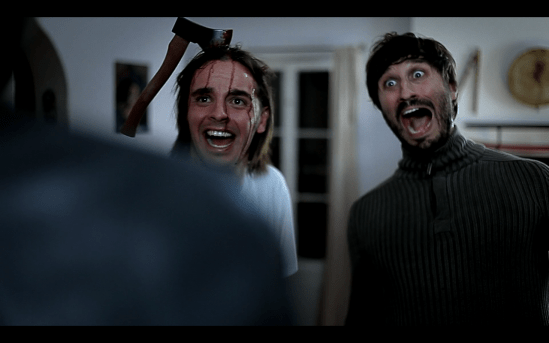
A Hollywood screenwriter named Nicholas owns a very special household feline. Angel, his Cat, has a unique relationship with her owner Nicholas. Yet, their unbreakable bond has put a severe damper on Nicholas’s intimacy with women as Angel slaughters any and all who becomes close with her beloved human. When Nicholas finally catches wind of the reason behind his love life woes and learns that Angel is actually possessed by an obsessive and dangerous demon, he and his friends Adam, whose also his downstairs neighbor in the apartment complex, seek to exorcise Angel back to being a nice kitty, but all who’ve challenged Angel thus far have been unlucky enough to be scratched to death. A medium, two priests, and even a cat therapist haven’t seem to help Nicholas through the bombardment of weird dreams and death that surround him in his lonely and tiny one bedroom apartment.

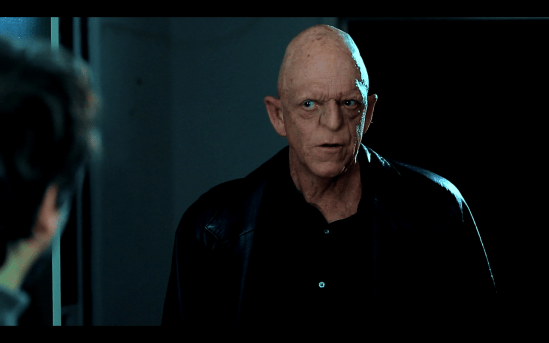
Cat lovers beware! “Hell’s Kitty” is purring up your leg to claw you in this new horror-comedy by writer-director Nicholas Tana. If you had thought cats were already contemptible enough to begin with then sit down in your air freshening kitty litter and get a can of Friskies out because you’re about to take a 666 ride with this demon kitty. “Hell’s Kitty” is original a web series created by Tana that began all the way back from 2011 to 2015 and, since then, has been immensely popular through the inter-webs with the extra special casts of genre vets ranging from “The Hills Have Eyes'” Michael Berryman to “The Fog’s” Andrienne Barbeau. From the web series, the episodes were pieced together, forming one hairball adventure of Nicholas and his demon cat, Angel.

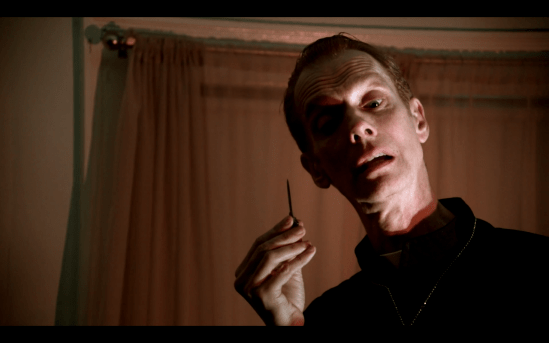
Aforementioned, Nicholas Tana headlines as himself because, essentially, “Hell’s Kitty” is based off true events of his turmoiled love life. Series regulars also become essential players in the film, such as Nicholas’s downstairs loafing neighbor and best friend Adam (Adam Rucho), Lisa Graves (Lisa Younger of “Cold Creepy Feelings”), and Dr. Laurie Strodes (Nina Kate of “Snake Club: Revenge of the Snake Women”). Then, there’s a slew of special guests that, at times, pay homage to the works that made them household names in horror or relating genres. Special guests that include “Children of the Corn’s” John Franklin and Courtney Gains semi-reprising their roles as Isaiah and Mordicia. Lynn Lowry (“The Crazies”), Doug Jones (“The Shape of Water”), Bill Oberst Jr. (“Coyote”), Kelli Maroney (“Night of the Comet”), Dale Midkiff (“Pet Sematary”), Lee Meriweather (Catwoman from “Batman” television series), Victoria De Mare (“Killjoy” franchise), and porn star goddess, and legend, Nina Hartley (“Pleasure Maze”)! That’s one heavy-hitting lineup! As a cherry on top, even a Killer Klown, you know, the ones from Outer Space, made an appearance!

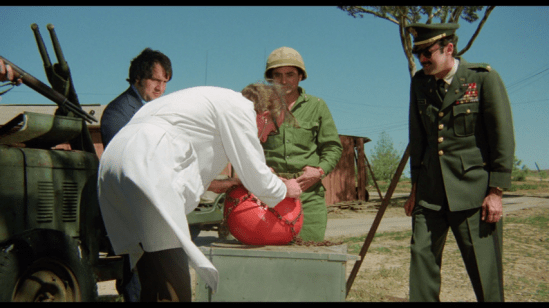
If a viewer didn’t know of or research into “Hell’s Kitty” web series past, the thought of low-budget junk just might scroll across a judgmental mindset. Let’s be honest for a second; “Hell’s Kitty” is grade-A camp with schlocky special effects and the editing quality of a ramshackle shackled ram. Along with the unique cast being intertwined into the story, other aspects of the Frankenstein-glued together film, such as the sharp pivoting subplots, stir up Nicholas ever so chaotic life into a new and interesting fold. From his fruitless sex life with various attractive women to the friend who always makes himself welcome in Nicholas’s apartment, Nicholas only has one consistent thing in his life and that is his relationship with the cat from hell and that journey is explored from episode-to-episode that climaxes with an ultra-drag musical rendition of something out of the “Birdcage.” Another quality to watch for, and enjoy, are the homages to fan favorites like “Children of the Corn” and “Killer Klowns From Outer Space” as mentioned before, “The Exorcist,” and “Psycho.”

MVDVisual and Wild Eye Releasing presents the Smart Media LLC,. production of “Hell Kitty,” as a whole, on DVD home video that’s visually subpar when considering the quality. The low bitrate crudely displays blotchy image quality, leaving details to the waist side. The 5.1 surround sound is the best attribute to the DVD with clear dialogue and a modest soundtrack. There are no extras included aside for the film’s trailer. While technically incompetent, “Hell’s Kitty” meows murderously onto DVD in a cultivation of cult actors and hellacious comedy by writer-director Nicholas Tana that does sometimes feel rehashed or borrowed from previous films, but the quirky evil pet element gnaws on an inner layer to be enjoyed and enthralled in a day-and-a-life of one man’s skewed, if not deranged, version of events of a lackluster romantic lifestyle blamed toward one jealous feline.

Add “Hell’s Kitty” to your collection!

From the Garden of Evil Come the “Attack of the Killer Tomatoes” review!


The United States comes under a relentless siege from a formidable foe unlike any other. An enemy that’s risen from the ground up to overthrow the very soil Americans’ inhabit. Flashing proudly their red colors, this adversary will fight and destroy anyone in their path. The attack of the killer tomatoes will seek to end mankind and take over the world! As desperation sets in, top U.S. generals, under the aloof guidance of the President of the United States, assemble a motley crew of special ops that become America’s best hope against a vicious barrage from the killer fruit….or are they vegetables? Under the leadership of Mason Dixon, his team will infiltrate, investigate, and, if lucky, exterminate the rotten to the core tomatoes. From the glossy red cherries to the plump big boys, the round ripe killers are hungry from human pulp and only Dixon and his team can stop them!

Courtesy of the MVD’s Rewind Collection, a newly released line of retro cult cinema, comes the impeccably unsystematic comedic spoof “Attack of the Killer Tomatoes!” for the first time on high definition Blu-ray! Writer-director John DeBello, along with his co-writers and fellow many hat wearing cohorts Costa Dillon and J. Stephen Peace, takes satire to the composter, lets it fester for a month, and releases a heaping pile of slapstick gold to the masses. The zany indie production, backed by various family members and local mom and pop retail operations, has been a horror comedy staple for past 40 years with not-so-cutting edge timeless humor that pokes a satirical finger at other more serious ventures such as Alfred Hitchcock’s “The Birds” with the film opening with a message about viewers brushing-off jovially the Hitchcock subtle creature until the event actually happened with aggressive, unflinching fowls terrorizing a small town and in that context, a film about killer tomatoes was born. DeBello’s film aimed to poke fun at many other things as well and successfully pulled the wool over the eyes of critics who remarked how awful his film was to behold, but that was the director’s sought-to, goal line intention.

Out of a cast of untrained talents and actors and actresses who never saw the bright lights and prepped sets ever again, only one actor stands out as a recognizable face and household name and that face and name was of Jack Riley as a Government slug. I might be a sucker for classic re-runs, but I remember Riley from his stint on “The Bob Newhart Show” and his very presence in “Attack of the Killer Tomatoes” legitimizes not on the film’s creditability but set the humor tone that was to be expected and despite almost being killed during filming as the rented helicopter accidentally crashes with him in it, the comedian rose from the ashes like a reborn phoenix and suggested to use crash footage to seemingly boost the pint-sized production value. However, it’s David Miller, who has zero interactions with Riley, in the lead role as a Mason Dixon. Though with an uncanny resemblance to the late funny man John Belushi with the wavy dark hair upon his short round figure, Miller goes fairly dark, as in quiet, for his leadership role as perhaps the only sane, and logical, character in the entire sequence of misfits. Dixon’s right hand Lt. Wilbur Finletter is played by co-writer, co-producer J. Stephen Pearce who courageously commits himself to doing all his own stunt work in a film that proudly wishes to just have a good time. Pearce’s approach to the lieutenant is with a sullied gung-ho persona that’s effective, but barely in the eyes of Mason Dixon. Dixon’s love interest Lois Fairchild, the only credited role of actress Sharon Taylor, inarguably is involved in an awkward game of being coy with Finletter as Fairchild, being a rookie reporter, aims to get the story at any cost while Finletter’s dimwit has him skate around her advances and oblivious to her information seeking intentions. Rounding out the cast is George Wilson, Eric Christmas (“Porky’s), Ernie Meyers, and Ron Shapiro.

Before “Scary Movie,” before “Naked Gun”, and even before “Airplane!,” “Attack of the Killer Tomatoes” had tailored, if not probably pioneered, this particular gag humor and in today’s day-and-age of political correctness, films like John DeBello’s are much like the Dodo bird – extinct. In the mix of light hearted witticisms, a number of racial, sexist, and overall bad taste cracks lie sporadically about the 87 minute runtime that wouldn’t make past the MPAA standards of today, that would invoke public ridicule and outcry for the filmmakers’s heads, and would unjustly place on a blacklist mark all involved, but just like a many number of these cinematic relics, they’re grandfathered into the fold. Though I doubt many millennials have even heard of the killer tomato franchise which would be baffling since health conscious wackos would enjoy seeing genetically modified tomatoes run a rampage, proving their points.

“Attack of the Killer Tomatoes” arrives on a special collectors edition Blu-ray/DVD combo set from MVD’s Rewind Collection. For the 1978 film, this release, presented in an AVC encoded 1080p 4k digital transfer of a 1.85:1 aspect ratio, is by far the best yet with a rich coloring range that pop and bring new life to the cult favorite. Hair line blemishes and some blotchy moments rear ugliness every so often, but the outcome of this release is astonishing when compared to previous DVD versions. The mono uncompressed PCM track reinforces a well rounded release when technically speaking. The dialogue is crystal clear and the musical numbers go off without a hitch. Perhaps, not as resonating as one would hope, but in the end, the mono track really sounds good here. Bonus features aplenty with audio commentaries from director John DeBello, J. Stephen Pearce, and Costa Dillon, three delete scenes, a collection of old interviews from cast and crew entitled Legacy of a Legend, a discussion on the helicopter crash, and “Attack of the Killer Tomatoes” original 8mm short film plus much, much more. Roughly about two hours of bonus content on this release makes it certainly a definitive collection. It took only 40 years for “Attack of the Killer Tomaotoes” to receive the treatment the John DeBello directed creature feature rightfully deserves and though might stink like rotten organic matter, there’s certainly nothing like the splat-fest riot of rolling, death-dealing fruit fleshed with trail blazing comedy unlikely to be repeated in today’s uptight community.

Own this version of “Attack of the Killer Tomatoes!”

Evil Gets Snuffed and Blued. Blu-ray That is! “Effects” review!


Special effects technician Dom joins a small cast on the scenic outskirts of Pittsburgh to work on a horror film with wealthy director Lacey Bickel at the helm. Filmmaker Bickel’s indifferent passion about obtaining the perfect shot for his movie puts Bickel at odds with the other cast and crew, rendering Lacey just another irregular and peculiar director attempting to show the general public his ultimate vision, but during one particularly odd behavioral moment, Dom was subjected to the exhibition of a presumably snuff film possibly directed by Bicket during a coke-filled round table discussion. Dom begins to suspect that the movie he’s laboring over isn’t the sole objective of Bickel’s, but stays quiet about his instincts and he forms a romantic relationship with Celeste, a gaffer whose worked with Bickel prior to, and the two resume their work on the film despite the being the oblivious subjects of a real snuff film.

In 1978, the Godfather of the modern zombie film, the late great George Romero, had an inner circle of friends conjure up their own funding for an idealistic, ahead of it’s time horror film entitled “Effects” with then newcomers and Pittsburgh natives Dusty Nelson at the helm, John Harrison producing and starring as the offbeat Lacey Bickel, and post-“Effects” “Day of the Dead” and “The Dark Half” editor, Pasquale Buba, as the other producer. Filming had wrapped with tons of positive public review potential to be the next big horror film of it’s time being produced out of Pittsburgh, but a major distribution complication had put the kibosh on any theatrical and home release run, leaving “Effects” to be shelved for nearly thirty years until 2007 when Synapse released the film on DVD. The snag resonates soundly with the group of filmmakers who are probably more than acquainted with their friend and colleague George Romero’s “Night of the Living” and the copyright problem. However, the American Genre Film Archive, or AGFA, began a kickstarter funding campaign to buy a 4K scanner to remaster cult and underground titles to Blu-ray and “Effects” became one of the first selected!

“Day of the Dead” star Joe Pilato stars as special effects technician Dom and Dom is a far cry from being his future role of the sadistic and stir crazy Captain Rhodes. Pilato brings a lot of peace and tranquility to his mild mannered, if not very gullible, character. Along side Pilato is another fellow “Dead” series star, Tom Savini, as portraying not his trade of a special effects tech, but as a producer of sorts in the film. Off camera, Savini handles the gruesome special effects with a straight blade and gunshot sequences. In character, Savini doesn’t stray too far from his character on “Dawn of the Dead,” donning the black leather jacket and sporting a cocky-jerk attitude. Producer John Harrison also has a role as the callus director Lacey Bickel who bosses around his two surface actors “Life of Brian” actor Bernard Mckenna and a “Dead” series dead head zombie in two of Romero’s films, a Mrs. Debra Gordon. McKenna delivers question mark after question mark of a performance that Matthew Lillard, perhaps, imitates the best in Wes Craven’s “Scream” whereas Gordon just provides a straightforward background performance with her scene with Lacey conversing over the idea of stress releasing sex being one of the more intense moments of the movie. Susan Chapek, Charles Hoyes, and Blay Bahnsen complete the cast.

Despite the modest budget, Nelson and his team construct monumental frightening moments. When Dom, Lacey, Lobo, and Barney converse around a mirror laced with coke, Lacey wants to show Dom a film after their sharing their opinions on what the general public will or will not pay to see. The actors’ faces and reactions as the snuff film rolls is on the brink of teeth clenching madness. The catalytic moment bombards questions internally into the group of presumably professional people and starts the separation between whose really in control of their fates. “Effects” is a movie within a movie and a deception within a deception where the characters have more than one role and pinpointing their specific purpose is difficult to land that Nelson’s film will have your head spinning with guesses. A fierce and boldly ambitious film from a scrappy Pittsburgh crew of talented filmmakers taking a risk with an intricate plotted thriller.

AGFA and MVDVisual present Dusty Nelson’s “Effects” for the first time on a region free Blu-ray. The 1980 thriller has been scanned and restored in 4K from the only existent copy of the 35mm negatives and delivered the original aspect ratio, an anamorphic widescreen 1.85:1. The image quality is better, but only slight above the Synapse DVD that sourced from 16mm negative and still maintains a healthy dose of noised induced and film grain and print damage. The color palette has a dullish grey-brown combination fairly noticeable to the naked eye. The English DTS-HD dual channel audio has hints of a hiss and faint crackle in more scene intense segments, but relatively clean and clear inside a limited range. Extras included are an updated version of Synapse’s retrospective documentary entitled “After Effects” that brings a stingy melancholy when seeing George Romero converse with his friends. There are also two short films by John Harrison, an archival commentary track, and liner notes by AGFA’s Joseph Ziemba. Plus, the AGFA Blu-ray has a snazzy illustrated cover, with reverse cover art, encasement. “Effects” glorifies snuff film with ample attention to detail and precision that only this Pittsburgh all-star team of filmmakers could produce on a limited budget and AGFA, alongside MVDVisual, amplify their efforts by a hundredfold with a remastered transfer withstanding straight razor home movies, a bombastic car explosion, and cloak and dagger guerilla filmmaking that’ll have you second guessing if the effects are only movie magic or not?

“Effects” on Blu-ray by AGFA and MVDVisual!

Evil Attracts With the Fluorescent! “Feed the Light” review!


Sara, a desperate young mother, infiltrates a secret facility workplace under the false pretentions of becoming an employee of the critical janitorial department. After losing custody of her adolescent daughter Jenny in court, the child becomes misplaced when her custody awarded father, an employee, loses Jenny in the facility that’s conducting unusual activity involving the building’s light energy source. With everyone on constant edge and under the powerful and dangerous influence of the light, including her very organized and unstable employer, Sara is able to find a sympathizer in the head janitor and by exploiting his mental map and valuable knowledge of the building, Sara goes deeper into the structural bones of a nightmarish reality where evil lurks in the shadows and not everything is what it seems.

“Feed the Light” is a H.P. Lovecraft inspired sci-fi horror directed and co-written by indie filmmaker Henrik Möller with Martin Jirhamn sharing the co-write. The gothic tale stems from the Lovecraft short story “The Colour Out of Space” that tells the tale of a meteor crash landing in the hills near Arkham, Massachusetts, poisoning and deforming all the living creatures nearby that creates chaos amongst the locals. The light, that never dulls, becomes the driving force of everything malevolent and that carries over into Möller’s film, but isolates the setting to a dilapidated building instead of a natural landscape and focusing more on the people inside rather than vegetation or livestock as the Lovecraft short story builds upon. Originally shot in color, Möller thought best to suck the color out from the reel and produce a mostly black and white film, sprinkled with color at strategic moments, that would convey the importance of the ever-present light and interpret a far more dramatic effect to play out; a decision I whole-heartedly agree because if laced with color, much of the abandoned warehouse setting would be a monotonous eye-sore. Instead, black and white enhances the light’s presence, makes it almost seem to stand out amongst the greyscale, and give way to more inspirationally vibrant hues when they are revealed.

For Henrik Möller, this is the director’s first dive into feature films and for the filmmaker whose better known for his shocking shorts, “Feed the Light” doesn’t water down the deranged, creative machine that just steam-plows through a 75-minute runtime and still managing to be mechanically sound to comprehend the Lovecraftian tone. Lina Sundén fills the lead shoes as Sara and Sundén embodies complete innocence and bewilderment when her characters goes forth into this strange facility, but doesn’t show much fear as if a mother’s determination is her driving force to go beyond being what frightens her. Alongside Sundén is Martin Jirhamn, who you might remember me saying he co-wrote the script, as the sympathizing janitor. Jirhamn has collaborated on many of Möller’s shorts, feeling comfortable taking on the challenge of a full length feature by taking on more of a scripted role that has a face with two sides. Rounding out the cast of memorizing characters are “Not Like Others'” Jenny Lampa as an authoritarian boss of the facility who tries to keep Sara from going on Indian Jones and the Raiders of the Lost Ark in the basement and Patrik Karlson otherwise known as the VHS-Man and Jenny’s father in the film.

“Feed the Light” has undertones beyond that of Lovecraft. The story feels nearly anti-establishment, a surreal and extreme look at how doing the same job, in the same office, staring at the same fluorescent lights can make one loose one’s humanity. The boss is a strict enforcer of the rules and doesn’t shrug at the thought of one of her employee’s burning out as long as the job gets done, but it’s not burning out that’s the problem. The light symbolizes obedience and control, turning those with a soul into mindless workers. There’s an unseen power embodying them such as with the dog man, played by Morgan Schagerberg, who, literally, sounds and acts like a canine that just happens to have glittery dust goo ooze out of it’s anus. Yup, weird. “Feed the Light” is jarringly weird, but also laminates into the prospect of hidden doom that’s very similar to the truth is out there concept reveled in the “X-Files.”

The Severin sub-label, Intervision Picture Corp., usually subjects us to older projects, but embraces newer indie films such as Henrik Möller’s “Feed the Light” and with the help of CAV Distributing, Möller and “Feed the Light” can be exposed to every house hold on Earth as a region free Blu-ray in 1080p full Hi-Def. The full frame is a staple of Intervision and doesn’t necessary cause any distress over cropped images. There is a fair amount of interference, but again, only enhances the indie labels reputation. Other than that, the image is fine laid under a Swedish language dual channel audio track that’s well balanced with a brooding industrial soundtrack by Testbild, a Möller familiarity. There are two extras accompanying the feature: one is a making of featurette and the other is an interview with the director, Henrik Möller. “Feed the Light” is a science fiction oddity chocked full with surreal depictions and nightmare creatures with a Lovecraft base and a passionate director’s otherworldly view of how light and color powerfully dictate our everyday lives.

“FEED THE LIGHT” is available on Blu-ray at Amazon!

Get Jacked! Get Evil! “Bloody Muscle Body Builder In Hell” review!


Living free from job responsibilities and able to workout whenever he wants, body builder Naoto is living the high life. His daily workout is interrupted by his former photojournalist ex-girlfriend in search of the next haunted house for her latest article and she calls Naoto to inquire his father’s old, creepy home that’s now in Naoto’s possession. Accompanied by a professional psychic, the three conduct a house call to get a presence reading and take pictures of the rundown, abandoned home. They find themselves trapped inside with Naoto’s father’s darkest secret malevolently toying with them and holding them hostage with her cursed power bestowed upon her death, 30 years ago, forsaken to her by the hands of Naoto’s fahter.

In 2014, first time director Shinichi Fukazawa’s endearment for Sam Raimi’s “The Evil Dead” has encouraged the filmmaker to tribute a film that has dubbed “The Japanese Evil Dead.” With all the depictions of Raimi’s film, including from a shotgun, an axe, and even a severed sarcastic-spewing mangled demon head, “Bloody Muscle Body Builder in Hell” views just as good as the sounds. Taking his film to the next level by going back in a time warp, Fukazawa de-amplifies the image quality with a lo-fi flare that adds chaotic charm bathed in retro-VHS vision as every desaturated hue and blanket of coarse grain is a step back in time. Fukazawa implements his own sturdy brand of macabre to branch his version of “The Evil Dead.” For instance, Fukazawa removes the Necronomicon, the book of the dead, all together. Instead, the director doesn’t forth put an outright explanation behind the cause of the cursed’s murderous revenge other than holding a jealous grudge and the lack of motivation is okay because “Bloody Muscle Body Builder in Hell” is a modern day video nasty.

Shinichi Fukazawa, himself, stars as Naoto, suffering every ding, boink, and bop as our hapless hero that’s aims to strike similarities to Ashley “Ash” Williams and his gift of being the king of Three Stooges foolishness. Fukazawa plays a more conservative character in comparison, but does manage spit out memorable one-liners made genre famous by Bruce Campbell, like “groovy.” THe lead actress, Asako Nosaka, holds her own as a lovely damsel in distress who can double on a dime as a Mike Tyson speed bag puncher. The trapped pair make a convincingly distressed protagonists, especially in such a small Japanese home that’s the equivalent to a cabin in the woods. Last on the roster is Masaaki Kai filling in the psychic’s shoes and conjures an performance that’s could fit right in with the Kandarian Cheryl, Scott, Linda, and Shelley demons.

“Bloody Muscle Body Builder in Hell” is a 2014 effects driven, blood hungry roller coaster of pure mayhem entertainment. The ingeniously creative special effects, on a shoe string budget, are made of eye-popping, skull-crushing, and limb-parting goodness that every horror fan can appreciate and love. The lo-fi cinema and melancholy horror fixes to not impress those who have a taste for the CGI eye candy and won’t knock your socks off with the latest and greatest technological, animated advances in effects that attempts to mock real life, but accomplishes the opposite in the fabricated grindhouse reel with overexposures and rough edges that are more fitting for the subject matter. Fukazawa does embody Raimi’s creative editing and angle vision that makes Fukazawa’s film feel very attached to “The Evil Dead” franchise.

The well-meshed video nasty mingles Japanese culture with a loving tribute to Raimi’s “The Evil Dead” franchise and kicks off Shinichi Fukazawa’s most interesting silver screen career. Terracotta Distribution’s “Bloody Muscle Body Builder in Hell” is a tightly packed 62-minute joyride with squirrelly, demented demons with heavy emphasis on the blood and the gore. Image quality is poor and that’s a good thing! The low-tech fullscreen and unrefined quality are a tall-tell sign of a SOV gruesomeness surrounded by a fuzzy Japanese dual channel stereo. Extras includes a Graham Humprey time lapsed video of him creating his DVD artwork, a behind-the-scenes gallery, a dismemberment of scene clips, and Japanese and Terracotta trailers bringing up the tail end. “Bloody Muscle Body Builder in Hell” packs a punch, delivers the death, and gorges itself in the gore in this UK DVD from Terracotta Distribution! and is a lovely blend of comedy, horror, and praise that’s powerfully short and sweet from a freshman director who aims to make a statement while giving appreciation in his own culturally established way.