EVIL Strikes with Thousands of Disastrous, Deadly Fangs! “Calamity of Snakes” reviewed! (Unearthed Films / Blu-ray)

Save the Date!  “Calamity of Snakes” Slithers onto Blu-ray and DVD!  Available at Amazon!

A greedy, time-is-money land developer pushes his project manager and structural architect to complete his condo building earlier than scheduled, even if that means to cut corners.  While digging to lay the structure’s foundation, a massive pit of deadly snakes is unearthed.  With no times to waste, the land developer orders the mass killing of the snakes by the crew and even takes matters into his own hand using a backhoe as a weapon against the wishes of more sensible architect.  Those who are karma-included and God-fearing believe the mass murder of the snakes will result in retribution with fears being validated when workers fall victim to random snake attacks.  Shrugging it off as superstition mumbo-jumbo, the land developer finishes marvelous residential condo and fills the units in record numbers.  His success becomes the tenant’s death trap who can’t escape the swarming thousands of deadly slithery serpents infesting every nook and cranny and climbing toward his penthouse, seeking revenge against the snakebit developer’s cruelty and greed. 

Warning.  If you have a severely crippling phobia of snakes, then do not press play on “Calamity of Snakes” or you’ll be crying in the fetal position for hours afterwards with imaginational visions of venomous serpents dangling around your neck and arms, clinging to your punctured flesh with their sharp, tapered fangs. Trust me.  I know from experience after having watched the William Chang Kee (Chi Chang) creature feature and going into the viperous vengeance film with my own form of sweat-inducing ophidiophobia, an extreme fear of snakes.  Kee’s 1982 production comes with a bit of notoriety that may put the film in hot water with Peta or other animal rights organization, it also may be a silver lining for those petrified by the carnivorous reptilians that lurk underfoot, but don’t worry, from Unearthed Films news board, the home entertainment distribution company pledges to donate a percentage of the “Calamity of Snakes’” sale profits to the Save the Snakes, an organization that aims to converse and repopulate all species of snake around the world.  Penned by Kee with cowriters Kang-Nien Li (“The Lady Avenger”) and Kuo Jung Tsai (“Crouching Tiger, Hidden Drago”), The Chinese film made in Taiwan, “Calamity of Snakes” wriggles to-and-fro between different genre elements with pieces of horror, martial arts, and comedy packed so tightly together that making diamond shaped heads and rattling tails difficult to define the kind of film Kee intended to convey, but what came to fruition fabulously depicts the can-do attitudes of developing a preposterous idea into something insane, terrifying, and effectuated with countless real snakes.  Chi He Film Company and the Hong-Kong based Kee Woo Film Co. serve as the production companies with Tsai-Ching Wang producing and Golden Sun Films (“Dr. Lamb”) distributing.

Despite the animal cruelty, which undoubtedly can’t be ignored, you have to give credit to the Chinese for their willingness to do just about anything in order to get the shot.  If that means two of the actors’ role violently around on a floor covered with live snakes, screaming their heads off, then they certainly have more cojones than I ever will.  From a recent interview I watched with Michelle Yeoh, the “Everything Everywhere All At Once” Academy Award winning actress describe the Chinese film industry of the 1980s to be stunt demanding and really did lack the strict safety standards when compared to the U.S.  “Calamity of Snakes” appears to be no different with the easily handling of cobras and an overall serpent magnitude that can’t be denied. Yun-Peng Hsiang stars as the young, U.S.-studied architect with a sensible and rational head on top of his shoulders, overcome with the feeling that his dealings with the unscrupulous land developer (Yuen Kao) and the two passive aggressively buttheads throughout the narrative that eventually lends to the developer getting what he wants by way of money, power, and backdoor dealings that denotes an allegory of affluence being blind to the perceptible cause-and-effect dangers ahead while the studiously educated are left ignored, exploited for their talents. “Calamity of Snakes” cast rounds out with Lui Cheung, Ying Lee, Tung-Min Huang, Ying Lee, Pei-Ying Lo, and Ping-Ou Wei as the land developer’s chucklehead assistant.

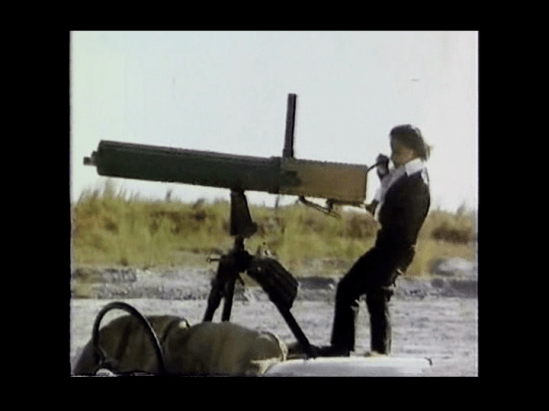
“Calamity of Snakes'” hardest part to digest is the disgusting display of snake homicide. In what becomes a grouping of three scenarios that are just scene after scene of killing snakes by the hacks of machetes, the release of mongoose going right for the head of the snake, and in a blaze of flame throwing fire, cruelty is terribly too integrated into the pericardium encased heart of Kee’s ecohorror and makes the snake outdoor market delicatessen scene that dispatches a cobra for use of consumption that much more palatable despite the graphic skinning, organ removal, and blood draining for a special drink cocktail that can supposedly cure what ails you. Down the hatch! After the ginormous scenes of genocide, rooting for the snakes to bite back against the unbridled cruelty of humans to come crashing down in a heap of revenge-seeking serpents is a sight of satisfactory glory. Kee, also known for his cheap but fast-paced martial arts films, creates a loose hierarchy amongst the ophidians by fabricating a boa constrictor that can kung-fu with the best human snake whisperer. The showdown scene takes flight with the constrictor whipping through the air using its large, serpentine tail as a formidable blunt object and its body to innately crush the life out of foes. In contrasts, the chop-socky, though wonderfully fast-paced and choreographed, is a bit out of place with a flying, unrealistic boa against the real slithering slitherers creeping along the floors and walls, decorating the rooms with slick, shiny scales that encircle terror around frantic condominium residents and the boss-level land developer who unsheathes a katana in another scene of snake cleaving in slow motion.

The day of the snake is here and now, on a high definition 1080p, AVC encoded, Special Edition Blu-ray from Unearthed Films as part of the boutique distributor’s Unearthed Classics sublabel and slotted at number 12 on the spine. The primary feature is presented in a widescreen 2.35:1 aspect ratio with a genuine digitized effort toward the best possible 2K scan rendition of the photograph film source print. There’s not a ton of wear, tear, or much of anything regarding damage aside from a few vertical scratches. Delineation is consistent with delivering characters and snakes transposed clearly, but often you might see the boa constrictor scenes share a softer exposure because of that accelerated camera work with the martial arts. Color reproduction does maintain a certain image fidelity, but the grading comes off placid, never giving the snake, or snakes, a chance to gleam a venomous glare with those eyelid-less and verticalized wide-angle seeing eyes. The original elements offer little to work with, but the Unearthed Films’ release is still top-notch work in delivering the best possible picture. The Mandarin, Cantonese, and English dub PCM mono 1.0 provide the typical options available when released in Taiwan decades ago; In fact, they’re all scratch tracks but I went with the Mandarin track that synchs not too adversely to viewing pleasure. With the mono, dub track, depth is done before it can even get started but “Calamity of Snakes” has immense range that conveys the whooshing actions of living things flying through the air during fight sequences, flamethrowers singe the very audible air, and the Foley keeps up to any and all actions with a more than satisfactory overlay track. Dialogue being the important aspect of anything film is fine here being in the forefront and clean albeit some moderate background crackling-static throughout. English subtitles are available and discern no issues with pacing or with spelling slips but there is a sense of something lost in translation as the dynamic discourse seesaws in an irregular way that feels forced and unnatural. Unearthed Films doesn’t just deliver one version of the film, the company offers two more edits for equality. If you’re not one for animal cruelty, a cruelty free version is available that omits the snake snuff. Also, the theatrical edit is a censored version, but Unearthed Films does include the 4:3 uncut, unrestored versions that adds back in prolonged sex acts and one very brief nudity scene. A From Shaw to Snake: The Venom And Violence of Early Chinese Language Horror Cinema brings back some key far East scholars, such as Calum Waddel, and new academic faces with Dr. Lin Feng, to discuss the background limbotic tug-a-war of Taiwan between the democratic island and mainland China that also morphs into the rising of Shaw Brothers’ films in the mid-20 century to eventually Golden Sun’s competitive rise, and subsequently the Shaw Brothers’ as well, into the kitschy crowd favorites of the horror genre. Reptilian Recollections: Lin Kuang-Yung In Conversation With Chui-Yi Chung converses in an interview with Lin Kuang-Yung recalling moments from production involving the countless number of snakes and the safety assurances with the cast and crew, despite some being bit a few times. The special features round out with a commentary track with Nathan Hamilton and Brad Slaton, alternate opening and ending credits, and a still gallery. The physical portions of the release come with a traditional Blu-ray snapper case inside a cardboard o-slip with the original Thai poster art by illustrator Kham, provided by the M. Wright Collection. The same poster art is used for the disc art as well. Inside the snapper case lies no insert or reverse cover art. The region A locked Blu-ray clocks the feature presentation in at 96 minutes and is not rated. “Calamity of Snakes’ is the original “Snakes on a Plane” of the 1980’s, a coiling revenge plotted by nature with potent venom and disturbing imagery that deserves to be a classic in its own right soon to once again see the light of day on DVD and Blu-ray come April 25 from Unearthed Films.

Save the Date!  “Calamity of Snakes” Slithers onto Blu-ray and DVD!  Available at Amazon!

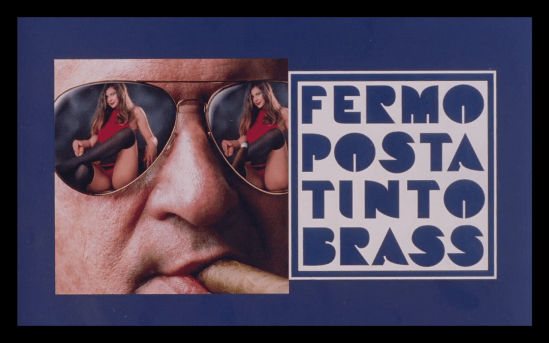
The Maestro Delivers Us From EVIL! “P.O. Box Tinto Brass” and “IsTintoBrass” reviewed! (Blu-ray / Cult Epics)


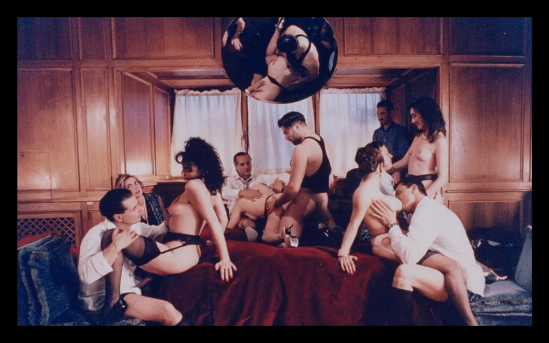
Tinto Brass, whose very name is synonymous with erotica cinema, presents a tantalizing series of letters and videotapes, written and recorded for him by adoring women executing their most sensual fantasies, exploiting their carnal desires, and giving the director a peak into their wet dreams. Brass’s lovely young assistant retrieves numerous submissions from his P.O. Box and as Brass scours through the countless correspondences, attempting to penetrate through the mundane to find that special something from his female fans, the stories become animated from text to short film visuals that involve spread eagle voyeurism, reluctantly desiring wife swapping, and a little husband and wife role playing to spice up their drab marital sex life by incorporating home movies. Each woman is able to confide in the maestro who harbors a gift for delivering classy and joyous erotica to not only the cinema market, but also into his admirers’ private lives.

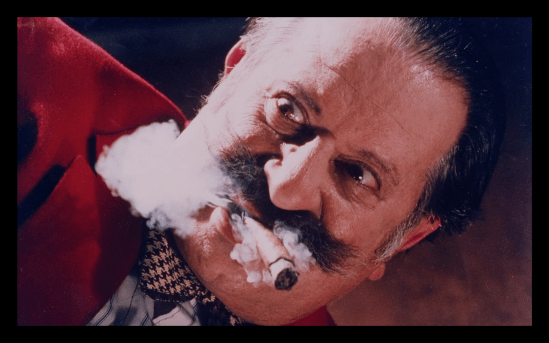
While America became gradually engrossed by the Showtime syndicated erotic drama series, “Red Shoe Diaries,” hosted by “X-Files” David Duchovny that showcased unconnected sensual stories from women who bared it all in heated encounters with male companions, the Italians’, who were experts in erotica cinema that this time, had their very own, slightly more explicit, version released in 1995 in full-length feature form, cleverly titled “P.O. Box Tinto Brass,” from director, and as titular presenter, the erotic master himself, Tinto Brass. Originally titled “Fermo posta Tinto Brass” in the native dialect,” “P.O. Box Tinto Brass” arrives on a new and restored 2-disc Blu-ray release from Cult Epics and acts as a celebration on not only the filmmakers’ immensely arousing body of work, but also a celebration on the director himself who has the uncanny ability to unearth the hidden away desires in all from his tongue-and-cheeky intimacy story arcs that relieve suppression for exploration of our natural sexual ambitions without the culpability instilled by taboo cultures. Granted, some of the material presented might feel dated and not as salacious as every John and Jane Smith can now utilize their God-given bodies to amass a modest fortune across the world wide web of sex, but to understand today’s culture, which still seems a fair share of sexually oppressive forces, we must look at Tinto Brass’s gift in normalizing what once was bedroom only material. Brass, who sport smoking a signature cigar throughout the film, uses his platform and becomes the vessel of expulsion to remove the privacy and shaming barriers that hinder healthy sexual appetites and, literally, creates a tactile representation of sexual jubilee with little-to-no seething judgement other than that of the character’s own restrictions. There are a ton of Brass trademarks shots that include, but not limited to, the hairy vulvas, a playfulness toward the vagina, exhibitionist flaunting, loads and loads of butt and breast angles in and out of clothes, elaborate location patterns on a grand, maybe art deco, scale, and, perhaps his most notable trademark, the expansive range of setting up elegant shots reflected off mirrors. As a whole, “P.O. Box Tinto Brass” brings a lighthearted and free atmosphere that’s uninhibited and sexy during and between each segment and while Brass is no doughy-eyed David Duchovny, I would be remiss in the lascivious eyes of Tinto Brass if I didn’t mention that after immersing ourselves in the “P.O. Box Tinto Brass” anecdotes, me and my wife had the most passionate, free verse sex we ever had since we’ve tied the knot 8 years ago, an experience that’s akin to an economically-friendly version of sex therapy. Thank you, Maestro!

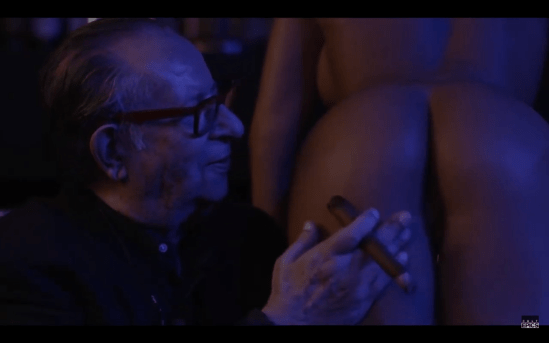
This leads us into the second disc of this Cult Epics epic release with a 2013 documentary, entitled “IsTintoBrass,” from a longtime Tinto Brass colleague and good friend, Massimiliano Zanin, who delves more into Brass’s political, experimental, and monumental work compositions that shaped the director into who is now the renowned eroticism auteur with a belief and a slogan that the ass is the window into the soul. Thought being born, bred, and flourish as an Italian filmmaker, “IsTintoBrass” speaks volumes about his French influences and his life guiding time at the Cinémathèque Française in Paris where he met Henri Langlois and Lotte H Eisner who exposed Brass to rare, unseen films His time Cinémathèque Française afforded him praise on his first films, such as “Who Works Is Lost” and “Attraction,” that were to the likes of French directors like Jean-Luc Godard and were labeled as a blend of part French New Wave movement and pop cinema. Zanin guides us through Brass’s continuous battles with censorship boards whose biggest problem with his filmic formations was not the nudity, but the supposed transgressions against conventional cinematic norms, especially with “Salon Kitty” that was an atypical example against the latter half of his career and used sex as a means of power of another person. His entrenched struggles didn’t end there as the documentary also shed lights on filmmaker’s most controversial work, “Caligula,” which became not his work due to a an underhanded producer who decidedly desired more sex than story and fought Brass, in more than one court of law, for the rights. Notable friends, colleagues, and film critics go through the eclectic Tinto Brass timeline, recalling and reexamining his decisions and aspirations into a multinational praise of his work. Some of these speakers included Franco Nero (“Dropout”), Helen Mirran (“Caligula”), and Sir Ken Adams (“Salon Kitty”). Plus, there is plenty of T and A to go around,

If Tinto Brass didn’t have a stroke in 2010, Zanin’s documentary wouldn’t have been made three years later as it’s a highlighted tribute of one remarkable Italian filmmaker’s life achievements stemmed from something as terrible as a life threatening ailment; yet, that’s how these things usually go, right? A retrospective acknowledgement, usually overwhelming positive in general, of a great artist whose work is greatly admired, frequently in a posthumous manner. In this case, Zanin saw fit to encase a historical record on Tinto Brass before meeting his maker, beginning with a really vigorous look into his inspirations at the Cinémathèque Française, chalking up much of his earlier work to his time spent looking through reels upon reels of avant garde films, but then Zanin quietly fades out of the path that elevated Brass as the cherished erotic connoisseur. Zanin’s story takes this awkward tangent to only skim the surface of Brass’s erotic films, which is strange since Zanin’s known and collaborated with Brass the last 20 years, about 13 years when this documentary was released, and penned a pair of his Brass’s saucy scripts, “Cheeky” and “Monamour.” Yet, the last 20, if not 30, years is surprisingly fleeting in Zanin’s capsulated effort to immortalize Tinto Brass. Still, the overall film is perhaps more endearing than Tinto Brass would have ever imagined, especially as brash and as perverse as his image portrays him outside the parameters of the filmic dome. Inside that dome, Brass has obtained throughout the decades a following of professional admirers and adoring fans who see him for what he truly is, himself. “IsTintoBrass” isn’t a gratuitous or perverted exhibition of an old man’s horniness; it’s an intoxication of what it means to actually be free from the repressive nature of censorship, the rapturous high of being an unchained artist, and being an obsequious master craftsman of cinema.

Cult Epics delivers a 2-disc limited edition Blu-ray of Tinto Brass’s “P.O. Box Tinto Brass” and Massimiliano Zanin’s “IsTintoBrass.” “P.O. Box Tinto Brass” has been newly restored and re-mastered in 4K high definition from the original 35mm negative and presented is a widescreen, 1.85:1 aspect ratio. The picture is absolutely stunning that revels in the burst of primary colors Brass was keen to implement. The details and the tones on the naked skin flesh out every beauty mark, fiber of hair, and every pore. Typically, Tinto Brass films run purposely a little soft to create a dreamlike, if not fantasy-like, setting to obtain a jovial mood setting for the uninhibited moments, but the details are still strong throughout. “IsTintoBrass” is presented in a widescreen, 1.85:1 aspect ratio, from a 2K transfer scan of digital video, aside from the snippets of Brass’s work. Video presentation is like crystal that obviously wouldn’t distinguish any kind of transfer anomalies because there wouldn’t be any. The Italian language 2.0 Mono LCPM/DTS-HD Master Audio 2.0 Mono (“P.O. Box Tinto Brass”) and the DTS-HD Master Audio 5.1 Surround (“IsTintoBrass”) are clearly discernible in all regards, especially in the Tinto Brass directed feature form ’95 with a clarity in the speech, a softer ambience that supports the dialogue rather than be level with it or overwhelm it, a range that mingles to support the dialogue as well. English subtitles are available on both discs. To smooth off any rough edges is a score by Riz Ortolani (“Cannibal Holocaust”) with a vibrant, cheeky score that fits perfectly into Brass’s wheelhouse of curvy, adventurous women. Bonus features on the first disc includes a 2003 interview with Tinto Brass who gives a brief background on his cinematic start, poster and photo gallery, and the trailer. Disc 2’s bonus material includes an interview with writer-director Massimiliano Zanin providing his reasoning for this documentary, a Tinto Brass achieve photo gallery, a couple of short interviews praising Brass’s passion, and trailers The package is also a work of art sheathed inside a cardboard, black and blood red slipcover and inside the casing is a 48-page booklet of Gianfranco Salis stills from the Tinto Brass achieve which are beautiful and almost Playboy-esque. To experience Tinto Brass is invaluable enough, but to experience his films in high definition is without a doubt worth it’s weight in gold with the powerhouse release of “P.O. Box Tinto Brass” and a retrospective documentary “IsTintoBrass” from Cult Epics!

Check out the LIMITED EDITION “P.O. Box Tinto Brass” release!

Being a Gracious Host Goes Well with an Accompaniment of Corkscrew Evil! “The House” review!


Set inside the conflict of World War II, a strayed former SS lieutenant and a German paratrooper must band together and escort a Norwegian captive through the snow covered forest of the frigid Norwegian mountains. Venturing through the cold and soulless landscape, the lieutenant is baffled by his bearings as his map doesn’t correlate with his surroundings, the sun is positioned at the opposite direction, and their compass points in the wrong direction. Faced with the possibility of gangrene and hypothermia, the lost combatants are forced to take up camp in a seemingly abandoned house that fly’s a hoisted Norwegian flag and has a pot of stew left simmering on a stove burner. Their already puzzling arrival into the residence is also met with unexplainable occurrences that place the extremely cold and weary soldiers even more so on an overwrought edge as they continuously search the house of presence telling life signs. Shadows and sounds trick their senses, soon realizing that the cozy confines are an inhospitable prison and with the deadly cold nipping at the doorstep, the soldiers are left with no choice but to face a sinister absence of time inside a hostile house that toys with their psyche and questions their own mortal existence.

Quickly becoming Norway’s prominent horror filmmaker, Reinert Kiil found success with his controversial and provocative “Whore” films and had a well-received review at Its Bloggin’ Evil for his cheerfully grisly, holiday slasher classic, “Christmas Blood.” Artsploitation Films continues to wholeheartedly support the Norway born director with his next venture, the supernaturally-charged possession of a home-sweet-home feature entitled simply “The House’ or “Huset” as titled in the original tongue. Kiil typically trends with shock horror, but with “The House,” there is an expansion upon his range as a filmmaker while remaining in a field he’s finds most endearing, pulling inspiration from his childhood memory vault of B-movie horror schlock and nostalgia grandeur, and dapples with replacing his guts and gory showmanship with slowly developing and instilling fear, especially with fear of the unknown and fear of change. Audiences are going to be attached to the hip and entrenched with the German soldiers, clueless to their predicament and anxious for them with the house’s uncanny and perplexing animosity, and Kiil doesn’t show much right away, slowly simmering the taut chills lined meticulously in the story.

Paratrooper Andres Fleiss is introduced in the preface attempting to save his mortally wounded friend and brother in arms, Max. Fleiss’s passion greatly motivates him as he jump out of a plane first rather than assess whether he has a parachute on first, willing to assign blame and kill Rune, Norwegian captive, right away without any provocation as instant relief and gratification. You see, Rune didn’t kill Max and, in fact, no exposition is provided about how the three men arrived at preface’s point in time, standing on a snowy side of a mountain just on the outskirts of a forest edge. Frederik von Luttichau (“A Room to Die For”) incites the paratrooper’s sense of duty and sense of irrationality. Luttichau’s able to quickly switch gears from confident combatant to a frightened bumbling idiot whose trapped inside a complete mind scramble of a situation. Fleiss is juxtaposed against the cooler head of a commissioned officer, Lieutenant Jurgen Kreiner. The former architect from Munich uses his SS training to tranquil the anxiety; so much so that Kreiner has a strange habit of protecting Rune from expiring much to the displeasure of Fleiss. Mats Reinhardt, in his sophomore film, is a juggernaut of emotional suppression. The rigid actor perfectly suits Kreiner’s stoic rationality toward not only the malevolent shelter, but also to Fleiss’s thin patience. Both characters’ melancholy is confounding as you start to feel for these Nazi soldiers stuck in a state of limbo and Kiil writes their roles down a personal level that expresses guilt, sadness, and shame that lets you know that they’re human too, humans who have done terrible things that have become their undoing. The Norway solider, Rune, is an important piece to the puzzlement. With his background unexplained and role in the house’s occurrences, Rune becomes an integrated symbol of subtle vengeance; even Rune, in the origin sense of the word, is defined as a secret mystery. Rune, or Runes, can also imply a set of symbols in archaic German languages much like the ones used on the closet door in the house or at the title screen. The mysterious Norwegian is subjected to being always hurt, whether a bout with gangrene or being shot, Rune ceases to cease. “Christman Blood’s” Sondre Krogtoft Larsen perforates the two opposes forces as a well-executed deceitful key to the mystery and though Rune doesn’t fully explain the entirety of the house’s backstory, Larsen simply quantifies the a potential reason with his the character’s simplicity role in it all. Other character flow in and out of the story as either a flashback or a vision and they include performances from Evy Kasseth Rosten (“Dead Snow”), Sigmund Saeverud (“Christmas Blood”), Ingvild Flikkerud, and Espen Edvartsen (“Dead Snow 2”).

There are other “House” reviews that compare Kiil’s film to the likes of “The Exorcist” or an exorcist type film and while the German soldier’s narrative is spliced with a flashback sub-story of a priest performance the rites of exorcism on a young girl inside the “House,” labeling the film as such warrants a rebranding. These flashback scenes, that are not consecutive, sluggishly rolls out a bit piece in the house’s backstory that almost predates the 20th century (the trailer suggests 1901), but doesn’t, in my opinion, obviously explain all that’s happening to the soldiers forty years later. Fleiss said it best during a frantic moment when the paratrooper comes to a full realization that the reason their stuck in an unescapable phenomena is because he and Lt. Kreiner are dead. Sometimes the more blatant reason is perhaps the more conclusive as Kiil offers a breadcrumb trail to point out these two Nazi soldiers are in oblivion of atonement. From the very beginning, the three men couldn’t explain how they came together, every facet of direction is obscured, time ceases to exist, their most inner desires and offenses bubble to the surface, and even Fleiss mentions the soup, the one simmer on the burner upon their arrive, is bland to the taste for the dead have no need for senses. In short, the momentary exorcist scenes are fathomable, perhaps in-depth more with the dated slideshow series of events in the Scandes, but, in context, cheapens the film slightly and could go easily as “The House” is inherently soul crushing and effectively atmospheric.

Artsploitation Films and Reel Suspects presents Rinert Kiil’s “House,” a product of Sanctum Films, onto DVD home video. The release is presented in an anamorphic widescreen, 2.35:1 aspect ratio, shot digitally that idyllically compositions Norway’s Norefjell snowy mountain range of the Scandes. The opening title sequence has some image instability with faint pixel fluttery in the compression, but doesn’t seem to go beyond the barely visible stage. “House” isn’t a flashy conceived concept that renders a lot of texture or detail warranted scenes, but darker scenes are overly rich with black that interpreting the visuals more difficult and as a note on one of Kiil’s visional techniques on being outside in or at night, like when Fleiss is hoisting the Nazi flag, the obvious tinted lens isn’t a reasonable substitute for dusk, dawn, and night. Skin tones are a pleasantly raw in appearance and, hey, the lighting in the snow is great for obvious reasons. The Dolby Digital 5.1 surround sound is hands down the past technical feature with an engrossing atmosphere track that has depth and range to send the audible senses hiding in fear underneath the comfy blanket. The intertwining German, Norwegian, and English language tracks holds strong and upfront with clear and precise synchronization of paralleling subtitles, offered solely in English, and Kim Berg and and Levi Gawrock Troite’s powerful score portrays a film bigger than it’s budget. Bonus features include a behind-the-scenes segment, an interview with Reinert Kiil who discusses his trek through Norway film and delves a little in each of his projects, a commentary track with Kiil, a short film by the director entitled “The Voice of One’s Conscience” (aka “Samvittighetens Rost”), and Artsploitation trailers. Reinert Kiil’s “The House” is non-exuberant horror diverging toward exploring the filmmaker’s unlimited possibilities and with “The House’s” diabolical descent into invigorating terror, Norway cinema has an abundance of sheer promise for the future of horror.

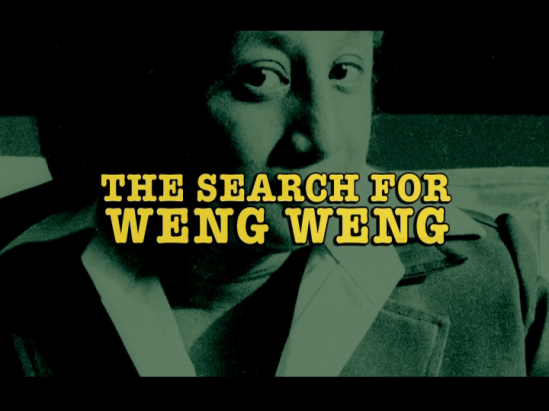
For All The Evil in the World, There is One Pint-Sized Hero! “The Search for Weng Weng” review!


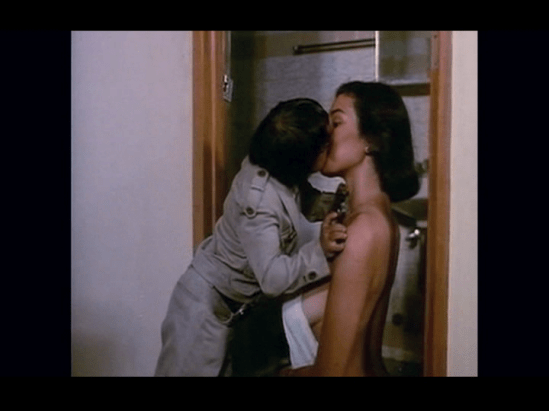
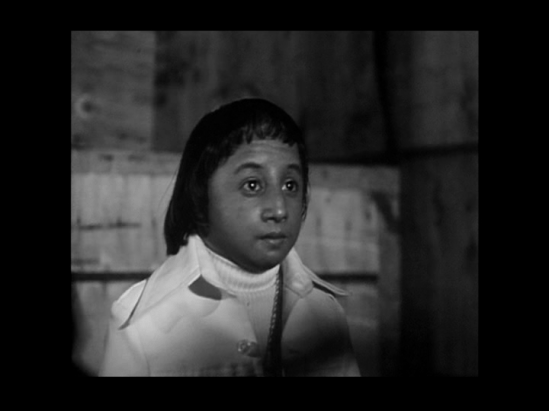
Australian filmmaker Andrew Leavold set forth on an adventure of answers to discover the legendary, the one-and-only, pint-sized actor known internationally as Weng Weng. In the early 1980’s, Weng Weng became the Guinness World Record’s smallest lead actor in a slew of rare, some never-before-seen, Filipino spy films and took the world by storm, creating a bizarre cult following on social media, and for Andrew Leavold, the only way to learn more about the Weng Weng, who could actually act and do his own stunts despite his small stature, was to create a documentary film that would take years in the making, but would hopefully answer three very simple, yet extremely difficult, questions: Who really was Weng Weng? How did he become Weng Weng? And where was Weng Weng now?

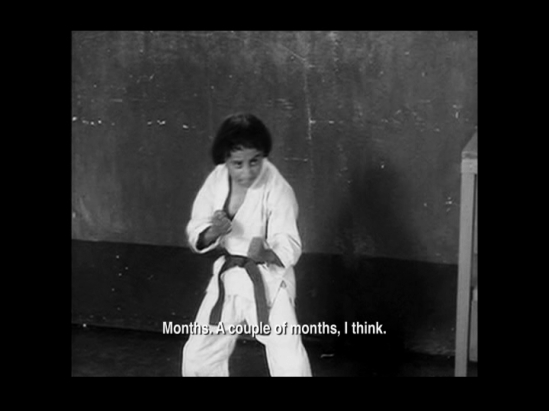
Weng Weng might be a humorous name for some, odd in fact, and his James Bond spinoffs as Agent 00 (double zero) flourished with zany stunts, practical special effects, and a tremendous amount of improbability – just like the Bond films themselves – but the Weng Weng films, even his Westerns, had an attractive aurora about them and not only because of the 2’9” sized actor. “The Search for Weng Weng’s” main focus was its titular star, but the film also displayed how the Pinoy films had engrained much of the Filipino culture and embraced their own charismatic star actors while, at the same time, being a byproduct of America’s Hollywood and other nation’s cinematic scenes. The Pinoy films were much akin to India’s Bollywood, replacing the musical and dancing segments with more action and comedy. Though Weng Weng’s films, including “For Y’ur Height Only” and “The Impossible Kid,” were whimsical and charming, Leavold’s documentary points out the darker side of the actor’s fame by comparing and explaining how Weng Weng’s “handicap” could be examined as a freak show gimmick that exploited Weng Weng out of cinematic earnings from his so-called adopted producers. The film also noted his lack of relationships with women and his health issues later on in life. Yet, “The Search for Weng Weng” highlighted much that was unknown about the actor, such as his real name, and that he was impressive and skillful at Karate; though small, Weng Weng wasn’t a traditional short person. He was fit and muscular and this helped him accomplish much of his own stunt work, which the Filipino stunt people have been claimed to be some of the best in the world.

Leavold doesn’t leave a stone unturned as he tracks down the persons involved in Weng Weng’s life. From the film crew who worked on the Agent 00 flms to his neighbors who grew up alongside him and from one of the five siblings, a brother whose the only surviving member of his impoverished family, to, perhaps, the wealthiest former first lady adored by all, Leavold checks every nook and cranny, every minute cubby hole to obtain that much more information about how Weng Weng lived and influenced their lives. In all, not a single person disliked the tiny personality as they appreciated much about him from his squeaking voice – that was always dubbed more masculine in the films – to his overall childlike serious, but calm nature. Weng Weng, in essence, was born a star guided by unscrupulous caregivers that was ultimately bittersweet for the childlike build and mentality.

“The Search for Weng Weng” hits the nail square on the head with the exactness of the title. Leavold’s impartialness leaves the wrongdoings against Weng Weng properly in the past as a good documentarian should impress. The editing is well done, taking a non-linear journey through Weng Weng’s short lived life and movie career and Leavold’s research and dedication to the project really amplifies through the film, giving Weng Weng the appreciation he rightfully deserves despite his height limitations.

Wild Eye Releasing in association with Monster Pictures presents “The Search for Weng Weng” on home video DVD. The region free, unrated DVD is shot in various formats from standard definition full screen to 16:9 widescreen with archival footage of the best of the best from the B-Asia film stock. Bonus features are plentiful with audio commentary from the director, Andrew Leavold, extended sequences of certain interviews, deleted scenes, the official “I Love Weng Weng” music video, and trailers. Who knew that there would be 92 minutes plus of content about a man not even three feet tall? Weng Weng was a mystery to us all and now, thanks to director Andre Leavold, everyone in the world can revel in that that is the amazing Weng Weng!

Buy Here “The Search for Weng Weng” on DVD!

It’s Bloggin’ Evil Interviews “Love is Dead” director Jerry Smith!

js

Horror Film Journalist and Filmmaker Jerry Smith

I would like to start off with the readers receiving some slight background on you. Can you provide us with a short bio about where you’re from, where you’re at now, and what prominently influenced you into the person you are today?

I was born and raised in the Central Valley of California, in a mid-sized City named Visalia. It’s grown into a city without any real film culture or following so I try to stay away as much as possible. I spend my days going back and forth between Los Angeles and Visalia due to my kids.

I came from a really rough childhood. As a kid, I was taken by my stepdad to see “The Accused” in the theater and being around six or seven, watching a film focusing on the gang rape of a woman really affected me. It scared me and made me uncomfortable for both Jodie Foster’s character and myself. That night, when we got home, my stepdad molested me, something that lasted for a good while. It turned a wild and outgoing kid into a scared little boy who was afraid of everything and everyone. He was a real piece of shit and an alcoholic, so my mom would give me enough money to go to the nearby theater to stay there all day watching movies. It was pre-Columbine obviously, so they didn’t give a shit about carding people. I saw “Child’s Play“, the latest “Friday the 13th” and the latest “A Nightmare on Elm Street” and in those films, I found solace in how the survivors would go through hell and come out ahead. It made me feel safe and horror became the love of my life because of it. Seriously though, I love the horror genre as much as my kids. Because I was a horror (and just films in general) fanatic, I would write stories and sequels to films as a kid and I became enthralled with Stephen King and Clive Barker at an EARLY age. I was sent to the principal’s office for bringing and distributing a backpack of Stephen King novels to the kids because one girl’s mom had an issue with “The Tommyknockers.” So I read and wrote and always wanted to be a writer and a filmmaker.


How did you begin your journalistic career toward some of today’s top horror news outlets, such as Fangoria, Shock Till You Drop and being editor-in-chief at Icons of Fright?

I owe my whole career in horror journalism/film critique to Rob Galluzzo (Co-Founder of Icons of Fright and Senior Editor at Blumhouse.com). I had read Icons of Fright for years (it was started in 2004) and kind of became acquaintances with him online via Facebook and at the time he was working at Amoeba in LA, so I would talk to him when I was there for something and he was always so friendly and kind. He’s seriously one of the most giving individuals I know. Well one day, a few friends went to LA and I was stuck in Visalia doing something and it frustrating me that I wasn’t doing anything with my love for writing. I messaged Rob and asked him for advice on starting your own site. He said he would give me advice, or if I wanted to, I could just start writing for Icons of Fright. I was blown away. Here there was a site that I read for years, and now I was getting to write for them. As time went on, I was pretty crazy about being on top of Icons and Rob took a job at FEARnet (RIP), so he asked me to be the Editor in Chief and steer the ship, so to speak, and I did that for five years. It was because of Rob that I began my writing career and it was because of him that I was vouched to Rebekah McKendry (Then at Fangoria, now Editor in Chief of Blumhouse.com) at Fangoria to start writing for them as well and when it was because of Rebekah, that I vouched to Chris Alexander, who not only was running Fangoria at the time but started Delirium Magazine and in time, moved over to Shock Till You Drop. When Rebekah and Rob went to Blumhouse.com, they were nice enough to allow me to write for Blumhouse. So my career has been full of wonderful people. Those said individuals, as well as genre professionals, like Heather Buckley and Ken Hanley, have all been wonderful to me. As far as Icons of Fright, the site is kind of in sleep mode. I was offered the position of Senior West Coast Correspondent for Fangoria and we’re all so very busy with our other professional writing gigs, that it felt like a disservice to pay little attention to it and post stuff here and there, so we kind of just put it in sleep mode for the time being to focus on other things.

Rob Galluzo

Rob Galluzo

According to your IMDB.com page, you’re a self-proclaimed workaholic. Can you describe how you manage your time between contributing, being editor-in-chief, and producing films while juggling, if any, a personal life?

It’s quite difficult to be honest. I’m a divorced father of three (two of my kids live with me), I write for three sites and two magazines and I’m a filmmaker as well. I have three film projects in the works, all with my wonderful collaborators over at Sickening Pictures in Cleveland and one with Turnstyle films helping out. As with any film journalist, we’re sent quite a few films to review, we got press junkets and premieres, conduct interviews, etc. It’s fucking insane, but I love it…and a plus side, my kids love the genre, so they’re always watching the more friendly horror films with me.

What possessed you to pursue your own production company, Dexahlia Productions, in 2010, creating your own pieces of filmic art?

I started Dexahlia back in 2010 and began to make short films here and there, but in all honesty, none of them were that spectacular at all. I just made them with friends and such. The closest to being “happy” with one was one called “Damnation Woods,” which was a relationship drama that had a handful of scenes I REALLY liked in between my incompetence at the time haha. I put a lot of that on hold in favor of my writing career for some time, but after meeting Zach and BJ, decided to just do both.

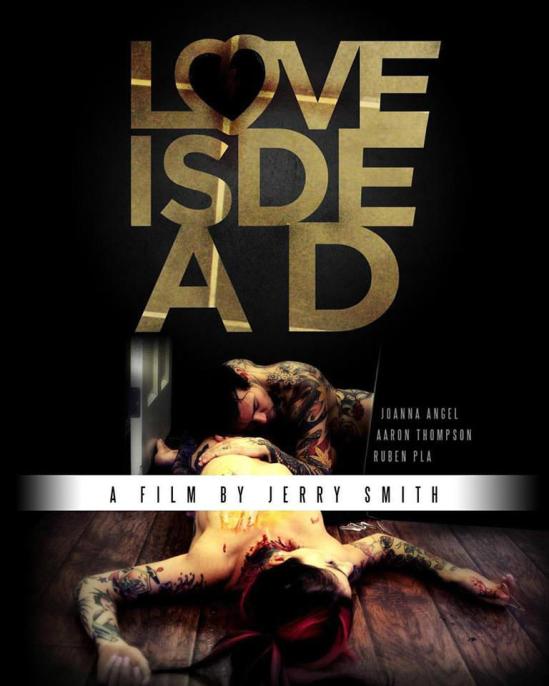
Can you delve into the personal inspiration behind your current short “Love is Dead” and what compelled you make a film about the circumstance?

Yikes. The inspiration behind the film came from my own life and my former marriage. It was something that began as a really wonderful joining of similar spirits, but somewhere along the way, things got DARK. All on my side of things. I began to drink a LOT and had other issues I won’t list and it made me into somebody who was never physically abusive but angry a lot and I took that anger, which in all honesty was anger that came from hating myself at the time, and directed it at her. Things got crazy and she tried to take her own life and it really woke me up and made me realize that I had pushed somebody I cared about to the absolute brink. I felt disgusted with myself and HATED myself for a long time, something that eventually made things bad. We divorced but remained best friends (we’re still very close) and I wanted to kind of tell the story of that, in a somewhat fictional way. Also, as I’ve said a lot over the years in many conversations with people: John Carpenter is my God, but I also worship John Cassavetes. His films were always so raw and unhinged as if you felt like something was going to blow up at any time. Cassavetes was a major influence in “LOVE IS DEAD.”

How did you approach the creation of “Love is Dead” with the association of BJ Colangelo and Zach Schildwachte’s Sickening Pictures?

There were a few false starts with the film. I did a crowdfunded campaign on Kickstarter and got 95% to the goal but was just short of making it so we got nothing. We went to another crowdfunding venue and ended up getting, I think, 1/4 of the original budget, so I was pretty bummed. BJ has been a really wonderful friend of mine for years now and Zach and I became friends because of their personal relationship, so their professional relationship came into play as well eventually. Zach and I had written a feature script together (which we’re still going to make) and were trying to pitch that around LA for a while. When “LOVE IS DEAD’s” campaign ended, Zach and BJ offered to come aboard and FORCE me to make the film. They flew into LA and we made the film. They were and are two of the most talented people I know and I owe them so much. I love those crazy motherfuckers. Ps- BJ Colangelo is one of the best film journalists around as well.

How did Joanna Angel, Aaron Thompson, and Ruben Pla come to star in this short?

I was familiar with Aaron from his work in the Adult Film Business and, also, I saw him play bass once when he was in the band Fenix TX. He really fit the exterior of what was in my head and I just had a great feeling about the guy so I reached out to him. He read the script and signed on, saying he’d drink a bunch of Jack Daniels and listen to Nick Cave until shooting to get into character hahaha. Ruben did the film almost as a favor to me. He’s been such a huge supporter of my writing and I’ve known him through the horror community. He directed an EXCELLENT short film called “HEAD” (look it up, it’s awesome!) with Matt Mercer and I loved the hell out of that and just loved Ruben’s work in everything he’s been in. The guy can play anything. His work in “24” was great. I remember watching “INSIDIOUS” in the theater and thinking to myself “that guy has a presence to him.” So when it came time to cast the role of Michael, the psychiatrist, I asked Ruben if he’d be down and he had the shooting date open and came and did such a great job and was so very professional. I love that guy. Love him. Originally, we had a different actress cast as Mara and throughout the crowdfunding campaign and right up until three days before shooting, she was attached. There was something of a misunderstanding (nothing bad or drama-related, she’s absolutely great) and so we had to postpone shooting and literally at the same time, I got a text from BJ and an email from Aaron saying we should cast Joanna. Truth be told, I didn’t think Joanna would ever do it, so I had never even thought of asking her. When they mentioned it, I sent her the script, she signed on and we were good to go.

Being an actual couple off the camera, was there some coaching to get Angel and Thompson in the right mindset before the pouring of assorted emotions into the shower scene? Or how did Angel and Thompson prepare for their characters Mara and Peter?

I was worried that they would be able to go to those dark and sad places being that they were (and are) a real life couple. So I was nervous right up until the first take of the shower scene. It took literally ONE take for that nervousness to go away because, holy shit, were they both amazing. It broke all of our hearts to watch them act, they were so passionate and just genuine in their performances. I talked to them here and there mostly about altering the dialogue to what would feel more natural to them, but aside from that, they were all set to get dark right from the beginning. I’m still shocked by how great Joanna, Aaron and Ruben were. I watch the short and it makes me sad, in a good way. They did their job, they destroy the viewer.

I feel like Joanna Angel would be very enthusiastic about an emotional roller coaster of a story of this magnitude and a bit of a change of pace from her staple work. Was that the case along with the rest of the cast and crew being equally as enthusiastic?

Joanna and Aaron were both stoked to do something different and the crew were professional but giddy as fuck the entire time. I mean c’mon, it’s fucking Joanna Angel. There’s no playing around or lying. She’s a legend in her field and as huge fans of everything Burning Angel does, we all were excited to work with them. The best part for me, aside from the actual filming, was the times in which we would take a lunch break and just talk about stuff. We all are into the same things: bands, movies, etc., so it quickly became a tone of feeling more like you were making a film with friends. It led to us wanting to work with them again, which we are going to do.

ja

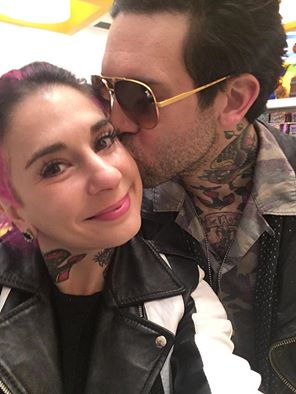
Joanna Angel and Aaron Thompson

Ruben Pla is a trained actor whose had roles in major productions such as “Insidious.” How was the dynamic between Pla and Aaron Thompson whose background is comprised of being a bartender, a musician, a screen printing business owner, and, most recently, a porn star?

They clicked right away. We were with Aaron for hours and hours before Ruben showed up for his scenes, so Aaron had all of his questions about the scene already figured out and such. When Ruben showed up, I had to surprise him with the fact that we had to change the scene from a scene of his character leading a men’s group to a one-on-one psychiatrist angle because of one of the actor’s having a heart attack!! Ruben literally took five minutes to alter his script, and was ready to go. He was dialed in and the two of them really just worked well together. It was great.

Even though “Love is Dead” completely tells Peter and Mara’s story in just over 10 minutes, there seems that there could have been an ample amount of content that might have been left untold. Your previous short “The Heart of Evil Things” also focused on problematic relationships. Could we expect another short, or perhaps a feature, in the future that would be a continuation, or as it’s own entity, that would extend more into the enduring human condition of struggling compatibility?

Yes, most definitely. Because of “LOVE IS DEAD,” I’ve kind of become the guy who casts porn stars in non-porn roles. My next two projects have adult film stars leading the cast and one of them is a continuation of the theme of a dysfunctional relationship. That one is more about accepting somebody for who they are and a look at a relationship within the adult film industry. I’m also working on something completely different and that’s probably what I’m going to be doing next. It’ll flip the southern noir thriller subgenre on its head. It’s kind of my cross between “Blood Simple” and “Bound.”

lodposter

Aside from deriving from personal experiences, what else drives or influences your creative process?

I’m just obsessed with how people talk and the power of words. That was why I called “LOVE IS DEAD” an emotional horror film. It’s about using words as a weapon and how they could be just as dangerous as knives or guns.

I read your blurb on Icons of Fright that you “adore all things [John] Carpenter,” but absolutely despise the Michael Myers and Laurie Strobe sibling connection in “Halloween 2.” I’m sure fans of “Halloween 2” and of yours could go toe-to-toe in a debate about the Myers’ legacy. Can you elaborate on your disgust with that film and discuss your thoughts on how Myers has progressed, or treated, over the years?

The “HALLOWEEN” franchise is like my baby in a lot of ways. I love it, but sometimes it does things that i don’t approve of or like. It’s like a child. The magic of the first film, which in my opinion is the greatest film EVER made, is the mystery of Michael Myers. He’s a pervert almost, watching the girls, stalking them for no reason other than Laurie dropped the key at the Myers house. It’s terrifying that a stranger would do that, that the person would stalk and kill people with no reason at all. The decision to make Laurie Michael’s sister just takes the mystery out of it and suddenly turns the entire series into that angle. It’s frustrating. That being said, HALLOWEEN 4 is still one of my FAVORITE films of all time, even with it being Michael trying to kill his niece, so I guess I’m a bit of a hypocrite. HALLOWEEN 3 is pure perfection and always has been. I’ve loved it since childhood. HALLOWEEN 5 is 70% terrifying and 30% off the rails crazy and the series never recovered. It just went down and down and down. I mean, in the Producer’s Cut of HALLOWEEN 6, Paul Rudd stops Michael with FUCKING MAGICAL RUNES. I want to start a band called, “Paul Rudd’s Magical Runes,” we’d rock. Luckily, the series is at Blumhouse now and with Jason Blum, Ryan Turek and John Carpenter involved in the development, I’m excited as hell for the next film.

Since you’re a John Carpenter fan, is it say to safe that your top three favorite movies of all time are Carpenter films?

Actually no. “HALLOWEEN” is my favorite film, but the other two go to Wes Craven’s “THE LAST HOUSE ON THE LEFT” and “FRIDAY THE 13TH PT. IV.” Recent films like “BEFORE I DISAPPEAR”, “COMET” and “DARLING” are edging close to the top though.

What’s next on the horizon for Jerry Smith? Are there any future projects on your docket that you can discuss with us at this time? Or is there any projects that you’re not helming that you’re highly anticipating?

Just the projects I spoke of earlier in this interview, the relationship drama and the southern noir thriller. As far as projects I’m NOT helming, there’s a script I co-wrote with Zach Schildwachter that he’s going to direct that I am DYING to see happen. He’s such a talented director and it shows in his films “SCUM” and “GETTING OVER.” It’s another fucking weeeeeeird movie.

In conclusion, is there anything you would like to add or share with your readers, fans, or enemies?

Thank you to everybody who has read anything I’ve written or watched “LOVE IS DEAD.” The reception has been amazing and I couldn’t be happier or more grateful to have so many awesome people tell me it affected them in one way or another. As far as fans or enemies, I doubt I have either. I don’t have any enemies, at least on my part.

Bonus Question: For all those who experienced “Love is Dead,” I’m sure there is a bit of curiosity surrounding one particular scene. Considering two of your three actors, was the shower fellatio scene simulated or did Joanna Angel go full blown Chloë Sevigny on actor/director Vincent Gallo in “The Brown Bunny?”

Funny question that leads to a fun story. When we were filming, Ruben kind of pulled me aside and asked, “So uh, Jerry, I know that Joanna and Aaron are into the Adult Film Industry,…the fellatio scene isn’t going to be real, is it? I personally don’t really want to do porn.” and was so friendly about it but had to ask and I told him the truth, which I’ll tell you now: It’s fake. They’re just great actors and as far as a certain fluid shown in the film…that’s a secret I’ll keep.

I appreciate your time once again, Jerry. We hope to hear more from you and your production company soon in future film endeavors and look forward to reading more of your work as well.