EVIL is Only in Your Nightmares. Or is it? “Retribution” reviewed! (Severin / Blu-ray)

Severely depressed artist George Miller attempts suicide by jumping off from his apartment building.  During the exact same time, a low-end gangster is brutally killed by cruel loan sharks.  Being both born on Aril 1st and dying at the same time, the tortured spirit of the gangster possesses the meek artist’s body right before being resuscitated by EMTs.  After a long recovery filled with horrific nightmares, the affable artist returns to his apartment building where he’s welcomed by fellow tenants and an overly warm landlord.  Still plagued by nightmares that have seeped into his awake conscious state, George medicates himself to sleep but the nightmares continue as he sees himself using psychokinetic powers to kill random individuals with extreme malice.  The nightmares are so real he wakes up in a sweaty panic to find out that that exact person was killed the night before the very way it played in his dreams.  When George realizes the gangster has inhabited his body for revenge, he and his friends take measures to put an end to the vindictive carnage. 

Santa Maria.  Mother of God.  Help me!!!  That phrase, attached to the very last seconds before a gruesome death and announced blankly from fiery, dagger eyes, has forever been seared into the recessed corners of my eardrums as the death cry that echoes throughout Guy Magar’s 1987 gory and visceral possession identity crisis, “Retribution.”  Magar’s ultra-violent and super-chromatic film is the filmmaker’s grand inaugural entrance as a full-length director following up behind a string of director chaired television episodes, including episodes from “The A-Team,” “Blue Thunder,” and “The Powers of Matthew Star” that regularly contained quickly charged, action packed sequences.  The Egyptian-born director translates those intense moments of frenzied disturbance into his mean-spirited and unforgiving vindicator of a script cowritten with then first time screenwriter, Lee Wasserman.  Shot in Los Angeles, “Retribution” is a virtual tour of the city, using the streets of L.A. and real locations, such as the Don Hotel for George’s residence and the nearby House of Neon Art, as a lively, eclectic, and wallet-saving convenient giftwrap for the film’s Dr. Jekyll and Mr. Hyde complexion that feels totally normal compared to L.A.’s divergent glamour.  Magar and Wasserman produce the film with Renegade and Unicorn Motion Pictures serving as the production companies and presented by Taurus Entertainment, formerly connected with United Artists. 

There are probably many actors that could been imagined for the role of George Miller, the suicidal artist plagued with visions of him committing murder, but it’s hard to imagine that venomous stare of complete satisfaction in madness spread across the face of anyone else other than Dennis Lipscomb.  No disrespect to the “Eyes of Fire” and “Wargames” actor but Lipscomb isn’t a chiseled-jawed and muscular leading man; in fact, Lipscomb is quite the opposite, but his range into mild-manner, all around nice guy George Miller into the lust for hatred and murderous revenge George Miller hangs on with complete chasmic permanence.  However, George’s love interest with the street working prostitute and fellow Don Hotel resident, Angel (Suzanne Snyder, “Return of the Living Dead II,” “Killer Klowns from Outer Space”), hardly ever seems natural in not only in the characters’ surreal age-yawning dalliance but also the chemistry looks and feels flat between Lipscomb and Snyder.  Magar and Wesserman neglect diving more into that bond between them but their enamored gleamy eyes for one another is apparent and strong without the context to back it up.  “The Dungeonmaster’s” Leslie Wing also is placed as a George Miller sympathetic advocate in her role as hospital psychologist Dr. Jennifer Curtis, but Dr. Curtis has more background to contend with in comparison to the suddenly conjured fondness from Angel as Curtis is a mental health professional caring for a suicidal patient from at his rock bottom worst to a complete positive turnaround in his mental transformation.  Curtis has more skin in the game with George’s supposed delusions of actually killing people in his nightmares as she defends not only George’s unique supernatural circumstances, but, in a way, herself as a licensed medical profession following HIPAA laws.  “Retribution” holds many dear and unforgettable characters that essentially captures the entire 1980’s spectrum of personalities and, even for a brief scene, the cast gives each role their all, including performances from Susan Peretz (“Dog Day Afternoon”), Clare Peck (“Teen Wolf”), Chris Caputo (“Ghost Warrior”), Danny Daniels (“Voodoo Blood Bath”), Ralph Manza (“Godzilla”), George Murdock (“The Sword and the Sorcerer”), Mike Muscat (“Hunter’s Blood”), and Hoyt Axton who doesn’t stray too far from his good intentions, but naïve, father role in “Gremlins” to being a detective tracking down suspect George Miller. 
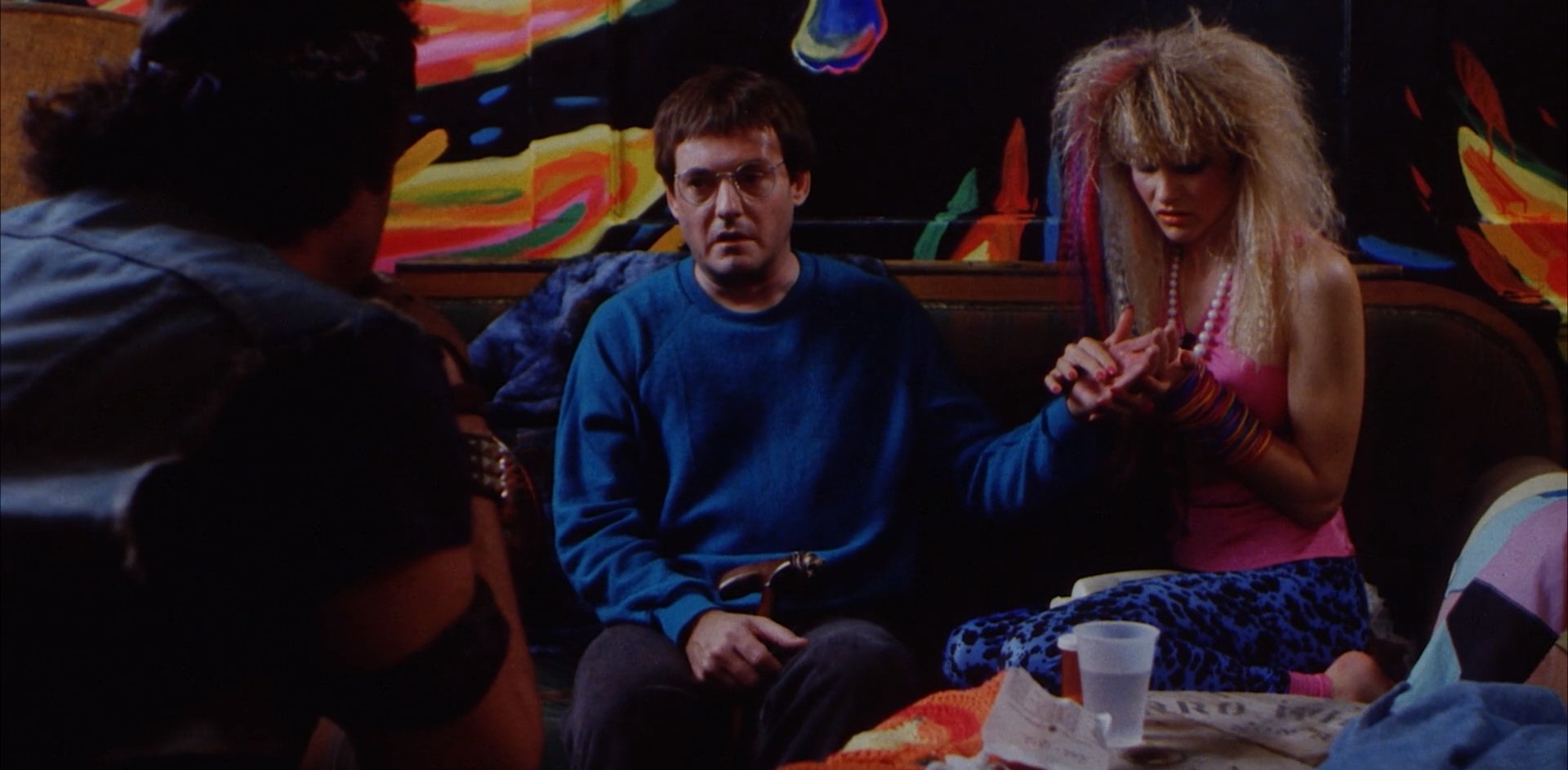
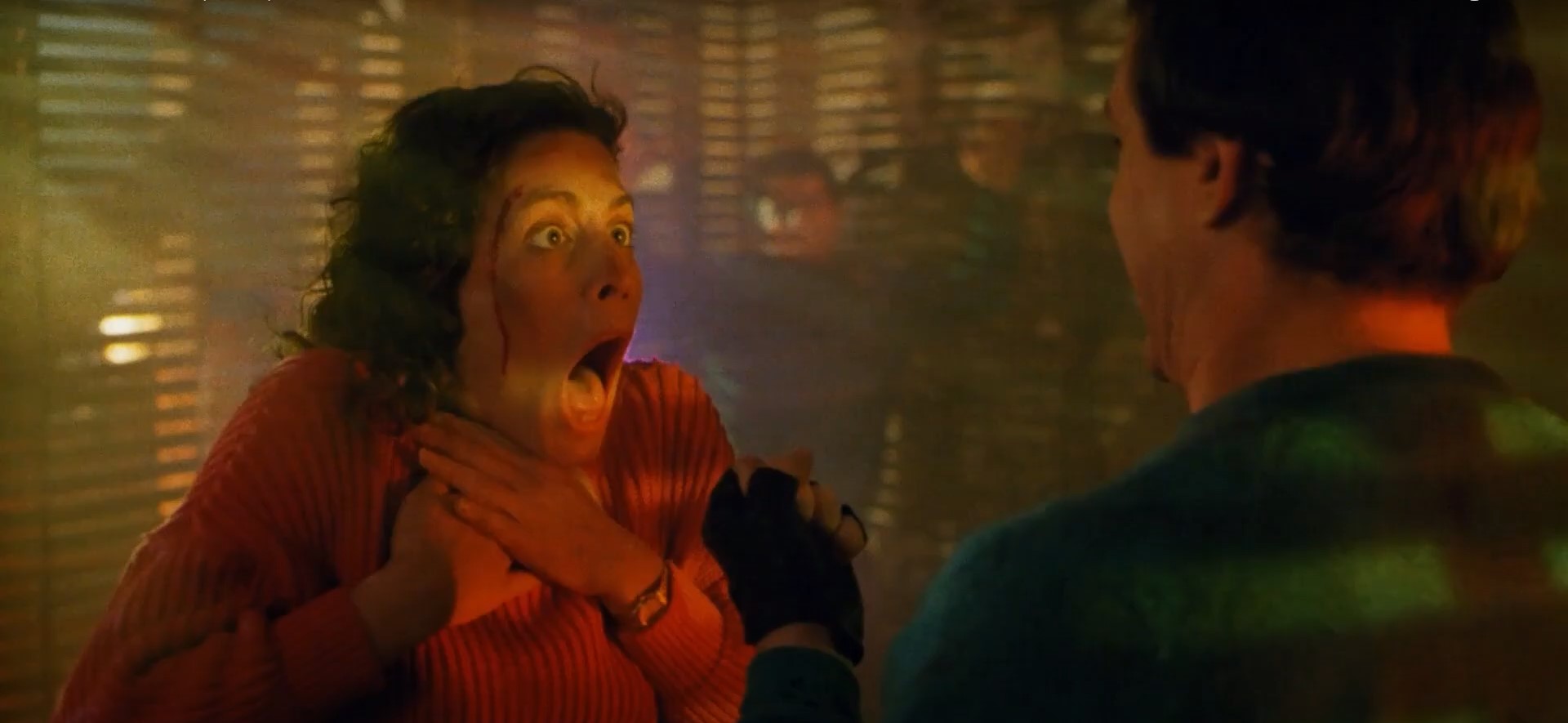
I’m in total awe of Guy Magar’s “Retribution.” That opening scene of the suicide attempt with Alan Howarth’s building tension score drops not a single piece of dialogue yet opens with a gripping life and death situation, musically synced to progress toward a harrowing climax, and every frame is dripping with vintage 80’s appeal. Magar definitely knew what strings to pull to get the blood pumping, to get you excited, and to drop an excellent mystery right in the lap, or the middle of the street in this case with George Miller’s body after it flops off the car it just smashed onto. From that point on, “Retribution” peddles forward following the recovery, recouping, and ruination of George Miller’s life at the unseen hands of an exploiting, malevolent spirit that seeks to track down the top-tiered gangsters that shot and burned him alive and exact his own brand of harsh psychokinetic justice. Does it matter how George and this gangster, both born on the same day and both nearly died at the same time, came to fuse transcendently together? Don’t worry. Magar didn’t think it was important either and he’s right! “Retribution” snags all the attention for the sole purpose of the ride and that ride being a beautiful, color-coded daymare. The one aspect that ultimately retracts the buzzing high, stemmed from most 80’s films, is the sluggish love interest subplot between George and Angel stutter stepping into an awkward phase of interactions that hard stops much of core plot and though the plot is neurotically nonsensical to begin with, George and Angel’s desires for each other are about as cringeworthy as they come. Stick with the gore by honing in on Miller’s subconscious alter ego of a gangster serving his killers their just desserts via Kevin Yagher (“Nightmare on Elm Street 2: Freddy’s Revenge”) and his highly effective special effects on a low end budget that, along with a brilliant showing of cinematography by Gary Thieltges, tips into the categorical likes of “The Evil Dead” or “The Exorcist.”
“Retribution” delivers a fervency unlike ever seen in one of the utmost, must-see, shamefully overlooked horrors films of the 80’s.  Now, with a deserved boost and in style, “Retribution” gets the royal restoration treatment with a jammed-packed and sleek 3-disc Blu-ray set from Severin Films and distributed by MVD Visual.  Disc one’s theatrical cut, clocking in at 107 minutes, comes from the recently discovered 35mm pre-print elements, shot on an Arriflex 35 BL3 per IMDB, and has been digitally scanned in 2K, presenting the region free film in 1080p Full High Definition inside the original widescreen 1:85:1 aspect ratio.  “Retribution’s” image pleasingly pops with fine delineating attention to the details that reach out to the point where they’re nearly tactile textures.  Every single setup of Robb Wilson King’s production designs are rich to begin with but are even figuratively injected with a smoother compression growth enhancing hormone, adding more layers of surface level details that personify and personalize the space.  Magar’s chromatically fluorescent vision is a literal tilt-a-whirl palette blast of phantasmagoria.  Disc tow is the extended Dutch video version that adds back in the extended seconds on the longer, gorier kill scenes.  The English language DTS-HD Master Audio 2.0 is the sole mix on the release and, honestly, sates the need with the dual channels.  You obviously don’t get the surround sound, which considering this release would have been ideal, but the stereo mix, as well as the dialogue track, is still full-bodied, identifiable, and spotless of blemishes.  John Carpenter understudy Alan Howarth scores his solo synth-laden story on tenterhooks with a tinge of a Miami Vice theme as well as setting tonal moods that add depth to character layers.  If you want the entire OST, you’re in luck!  The third disc is a compact disc of the entire soundtrack.  Special features includes over two hours of content with Severin exclusive looking back at the experiences with the late director Guy Magar and the ins-and-outs of making “Retribution” interviews with co-writer Les Wasserman Writing Wrongs, actress Leslie Wing Shock Therapy, actress Suzanne Snyder Angel’s Heart, actor Mike Muscat Santa Maria, Mother of God, Help Me!, soundtrack composer Alan Howarth Settling the Score, special effects artist John Eggett Visions of Vengeance, artist Barry Fahr The Art of Getting Even, production designer Robb Wilson King Living in Oblivion.  Other special features include Guy Magar’s student film “Bingo,” stills and poster galley, and the theatrical trailer all packaged under a cardboard slipcover and a reversible snap case cover. Severin Film’s “Retribution” release is a triumph, a proper regenerarcy of revenge cinema, with all the gory details being the star of the show.

Own this Amazing 3-Disc set of “Retribution” from Severin Films!

Believe the Bruja When She Says There’s an EVIL Demon Inside You! “The Old Ways” reviewed! (Blu-ray / Dark Star Pictures)

Drug-addicted and depressed American journalist, Cristina, travels to her ancestral home of Veracruz, Mexico to investigate local folklore and shamanism.  Upon visiting the local feared and shunned caves of La Boca, the next thing Cristina knows she awake locked up in and chained inside a makeshift cell and is told a demon is inside her by an elder Bruja and her assistant who still practice the old ways of exorcism.  Skeptical and scared, Cristina endures the primitive, and sometimes painful, religious rituals to extract the demon out from her soul, hoping they would eventually let her go if she feigns the demons release from her body, but when plagued by strange visions and unexplainable occurrences, Cristina comes to realize the real danger is actually from within.    

Shot on location in Catemaco, Veracruz, Mexico, “The Old Ways” clashes good versus evil in one small corner of the world while also enhancing the already enriched central American state known for its cultural brujo, or sorcery, celebrations and activity.  “The Old Ways,” which aims to symbolize spiritual demons to confront personal ones, is the first feature length venture from director Christopher Alender over 20-years since his first feature that was also, too, a horror, an off brand federal holiday themed slasher from 1999 entitled “Memorial Day.”  The 2020 demonic possession thriller reteams the “Memorial Day” writer and director as Marcos Gabriel pens the script that has become a miniscule reflection of himself being a Puerto Rician expat losing his own sense of heritage and culture of his ancestral land.  Full pin drop scares and profound depth of personal complexities, “The Old Ways” is a production of Soapbox Films (“The Wind,” “Southbound”) from Alender and Gabriel as executive producers along with Christa Boarini (“Spree”), David Grove Churchill Viste (“The Voyeurs”), and T. Justin Ross producing.

The lean characters keeps the story intimate and personal, rarely straying away from the rough-and-ready holding cell single location.  Only in Cristina’s backflashes of her Stateside office or the caves of La Boca do we dip into non-linear fractions of the what, when, why, where and how she became a befuddled prisoner to her Bruja host. No white washing here as the main cast is comprised of Latin-American actors and at the lead is “Fear the Walking Dead’s” Brigitte Kali Canales as the journalist with a death wish. You see, when Cristina embarks on her journey down to the La Boca caves of Veracruz, the troubled druggie searches for relief against an emptiness she can’t shake. Most of this narrative is backlogged backstory eventually worked on and worked out through flashbacks and through the excavation by her national residing cousin Miranda (Andrea Cortés). Canales really leans into her Americanized impediment delivering impatience, ignorance, patronization, and scoffing at Miranda and the Bruja teams’ beliefs and cultural responsibilities. The Bruja team, what I like to call it, is comprised of Julia Vera (“All Souls Day”) and Sal Lopez (“Return of the Living Dead III” ) as the last practitioner of primordial exorcism techniques, aka the old ways, and her assisting son, Javi, and the mother-son dynamic teeters of the customs and exercises of combating evil, a task that has been long withstanding against a beaten down and weary Javi. AJ Bowen (“The House of the Devil”), Julian Lerma, Michelle Jubilee Gonzalez, and Weston Meredith as the demon Postehki.

Now, Postehki is not a real demon from any culture’s cache of fiends. In fact, the whole mythos of “The Old Ways” is entirely fabricated for the sole sake of the story and I find that to be thrilling. Anything is possible with new folklore if done soberly without ostentatiousness and if mixed with some realism of the surrounding area, such as the Bruja element, that grounds the story with that much more of a terrifying blueprint. Plus, the allegories give the story tremendous depth with the demon inside Cristina that mirrors her addiction with drugs that initially obscure the audience from knowing if the evil within is real or is the drug effects the underlining culprit. Cristina’s addiction also plays into her immense sadness after her mother, the last connection to her heritage identity, dies and that melancholy she suffers forms a device that motivates her to return home looking to die herself. Cristina situation resembles being a satellite vessel cut off from the mothership and is lost and alone, leaving it up to Miranda to be that beacon of reconnection with not only her heritage but also her family. The third theme is the carryover of traditions from an older generation to a younger one that becomes very prominent between the Bruja, Luz, and Cristina to come to way of understanding the importance of keeping with the tried and true no matter how beyond crazy it may seem. The first two acts set up perfectly the puzzling nature of Cristina’s imprisonment and unraveling while touching upon subtopics and crowd pulling moments of breath holding terror, but the third act begins to spoil the salivating juiciness of what’s next behind each layer after a couple of false endings, a cheesy transition of character, and an eye-rolling one-liners essentially kill the visceral vibe.

Old habits, old feelings, and old origins pry open the emotional armor to a pervading and harbor-seeking evil in “The Old Ways” now on Blu-ray home video from Dark Star Pictures.  The not rated, dual-layer, region A BD25 is a presented in 1080p High-Definition with an aspect ratio of 2.39:1 anamorphic widescreen.  Cinematographer Adam Lee shoots a terrene-cladded and flat color incubus with strategically placed shots that trigger strong reactions that go toe-to-toe with a thumping tribal score and piercing ambient track from the 5.1 DTS-HD Master Audio track in the English and Spanish language.  Robust and formidable, the score packs a punch with a pulsating drum and pan flute score by “The Wolf of Snow Hollow” composer, Ben Lovett. Dialogue is clean and clear and the errorless subtitles align nicely with the vocals. English SDH subtitles are also optional. Special features include over 2 hours of bonus content with a feature length behind-the-scenes documentary The Old Ways: A Look Beyond that provides cast and crew opinions, history, and everything else in between about “The Old Ways” origins and reactions, a commentary track with director Christopher Alender and writer Nicholas Gabriel, deleted and extended scenes, and storyboards. “The Old Ways” is old world horror for the modern age, poised rightfully so to be a part of the possession genre canon even if coming off the tracks just a tad.

Dan Stevens. The New Face of EVIL? Freakin’ Love It! “The Guest” reviewed! (Second Sight Films / BD-R Screener)

Recently hospital discharged combat soldier David Collins visits a fallen brother in arms’ family, The Petersons, to convey their son’s last moments of love for his family.  Taken immediately in by the grieving mother, David stays for a few nights at the Peterson home, quickly befriending the family of four with his military “yes ma’am” charm and good looks.  When a string of accidental and homicide related deaths begin to flare up in what’s typically a quiet rural town, eldest daughter, Anna, suspicions turn to David.  As Anna digs deeper into David’s past, nothing can stop the elite special forces soldier from taking steps to protect his identity and his mission, even if that means turning the Petersons’ hometown into a deadly warzone. 

One part action, one part slasher – Adam Wingard’s “The Guest” is a hot take on the infiltrator horror subgenre.  The “Pop Skull” and “You’re Next” director, who went on to helm the epic clash of the two biggest creatures in all of creature feature history with this year’s “Godzilla vs. Kong,” directed “The Guest” to challenge the slasher narrative with an atypical, slightly campy, American indie thriller with an unanticipated and surprising twist that’s more than just your run-of-the-mill snapped war-traumatized soldier gone shell-shocked rogue.  The script reteams “Dead Birds’” writer Simon Barrett with Wingard for their eighth collaboration that pits all the story’s action into the rural confines of an unnamed small town in America while the actual shooting location takes place in New Mexico.  “The Guest” is a production of the UK based HanWay Films, which also oversaw the production of Wingard’s “You’re Next,” and Snoot Entertainment of the zomedy “Little Monsters” from the producing management team of Keith and Jess Wu Calder.

To put things simply, Dan Stevens is scary good.  The “Downtown Abbey” star plays the titular troublemaker and, now, I will never look at Matthew Crowley the same way again.  Stevens trades out the proper aristocracy of British English with a slight American English Southern draw, a heavily used trope portrayed with U.S. troops in cinema, but Stevens does more than just talk-the-talk.  The Surrey born actor who once played the Beast in Disney’s live-action version of “Beauty and the Beast” plays a different kind of monster that’s akin to a wolf in sheep’s clothing with David, adorning his physically fit character with a clandestine depth in his ambiguous background and sociopathic tendencies that makes him very much a mysterious maniac much in the same fashion as iconic slasher villains.  Trying to stop David’s undermining reign of controlled carnage is Anna Peterson, played by Maika Monroe (“It Follows,” “Independence Day:  Resurgence”).  Ana’s a levelheaded, yet rebellious, teenager adverse to being told what to do to much of her parents chagrin from dating a pot dealer to her objection in David’s stay with them.  Monre puts angsty effort behind Anna Peterson’s eyes, but the character herself is rather flimsy willing to put her trust in an unsponsored secret organization agent, “John Wick” films’ Lance Reddick, and his request to get into his car urgently without hesitation, but has a difficult time swallowing at her own pace her dead brother’s fellow soldier even with the stamp of whole heartily approval from her parents and little brother and photographic evidence of her brother’s relationship with David.  Yet, Barrett’s openly oblivious characters play into the slasher/thriller campiness of accepting everything at face value without ever an inkling of doubt.  Perfect examples of this would be 3/4th of the Peterson family: the mother (Sheila Kelley, “A Passion to Kill”) trust him with handling routine tasks like picking up her son from school or laundry, the father (the great supporting actor Leland Orser, “Alien:  Resurrection,” “The Bone Collector”) trusts him with personal secrets, and even the school outcast brother (Brendan Meyer, “The Color of Space”) desperately believes David is his friend.  Tabatha Shaun, Joel David Moore, Ethan Embry, Chase Williamson, and Steven Brown co-star.

Pulling loads of admiration and inspiration from the “Halloween” franchise, “The Guest” not only rocks as an action thriller but also mimicking a retrograded slasher in a subgenre slapped with a label I like to call the infiltrator subgenre.  David Collins is no mindless, walking and not talking, killing machine like The Shape, but instead gains trust, backdoors problems, and has the quick confident moves to see the job through with hand-to-hand combat and other more visceral merciless methods.  Barrett and Wingard purposefully leave much to the imagination with David’s past, turning what would usually outcome as frustrating ambiguity for an essential character to more of an enigmatic antagonist allure similar to the way we don’t have a clear-cut motivation why Michael Myers or Jason Voorhees shish kabob horny teens without a second thought.  Sure, there are sequels that try to enlighten reasons, such as being pure evil, but abstract is not concrete.  Same with “The Guest” with a control spoon feeding of just enough backstory to wet one’s thirst for more on David’s ruthless sociopathic behavior.  David’s also a very likeable with the impression that his good deeds done in violence speaks to a justice-driven character, but what’s brilliant about David, and enhanced profoundly by Dan Stevens, is that when he does kill someone in cold blood for this first time, the impact is tremendously unreal because it’s unexpected and off brand from the Barrett and Wingard’s buildup of him being a standup and do-what’s-right soldier.

Second Sight Films invites you to be their guest for their limited edition 4K Ultra Hi-Defintionand Blu-ray of Adam Wingard’s “The Guest” that hit retail shelves this month on October 25th.  The stunning makeover of this cult favorite, limited to 5,000 copies, offers a brand new color grading for both formats supervised by Wingard with 4K UHD presented in Dolby Vision HDR.  Since a BDR was provided, commenting on the exact audio and video quality of the release isn’t possible, but rest assured, knowing the care and attention Second Sight Films put into their releases, “The Guest” will surely not overstay it’s welcome in the image and audio department.  The film has runtime at 100 minutes and a UK 15 certification; however, there is much more to this 3-disc release that includes the film’s 80’s inspired soundtrack on a compact disc.  Special features include new Adam Wingard and Simon Barrett commentary plus an archive commentary track from the two filmmakers, a new interview with actor Dan Stevens The Uninvited Guest, a new interview with actress Maika Monroe A Perfect Stranger, a new interview with Wingard and Barett By Invitation Only, a new interview with producers Keith and Jessica Wu Calder Producing the Guest, a new interview with director of photography Robby Baumgartner Light and Fog, a new interview with production designer Tom Hammock Lightning Strikes, a new interview with composer Steve Moore The Sounds of The Guest, and deleted and alternate including an outtake gag with optional director commentary.  With this limited release comes a rigid slipcase with new artwork by Adam Stothard, 160-page booklet with new essays by script to screen storyboards and extracts, behind the scenes photos, Wingard’s soundtrack notes, and new essays about the film, and, lastly, 6 collector’s art cards. In a time when modern horror desperately needs a solid sequel, “The Guest” is a good candidate with it’s captivating villain with so much story still left to tell. Hopefully, Second Sight Films’ irrefutable powerhouse release will ignite step-taking action amongst the rumors.

Grab it fast!  Liminted Edition “The Guest” on 4K UHD and Blu-ray Now at Amazon.com!

When Greed Induces EVIL at “The Estate” reviewed! (Vertical Entertainment / Digital Screener)


Spoiled rich gay son George despises his cheapskate father.  George’s equal in age, and similarly spoiled, horny step mother Lux also equally despises the loaded philanderer who rarely stays in town, leaving them with little to do and with little money to do it with.  When they meet tall, dark, and handsome Joe at a bar and invite him back to their estate house, a psychosexual love triangle leads to a murder-for-hire plot against the patriarch billionaire to collection the opulent inheritance.   Complications arise when unbeknownst bastard children cause a legal clog in their pipedreams of being insanely well-off.  One murder after another begins to unravel not only their lust for wealth and each other, but also a deeper, darker secret to rue for the wealth they wished (and killed) for.

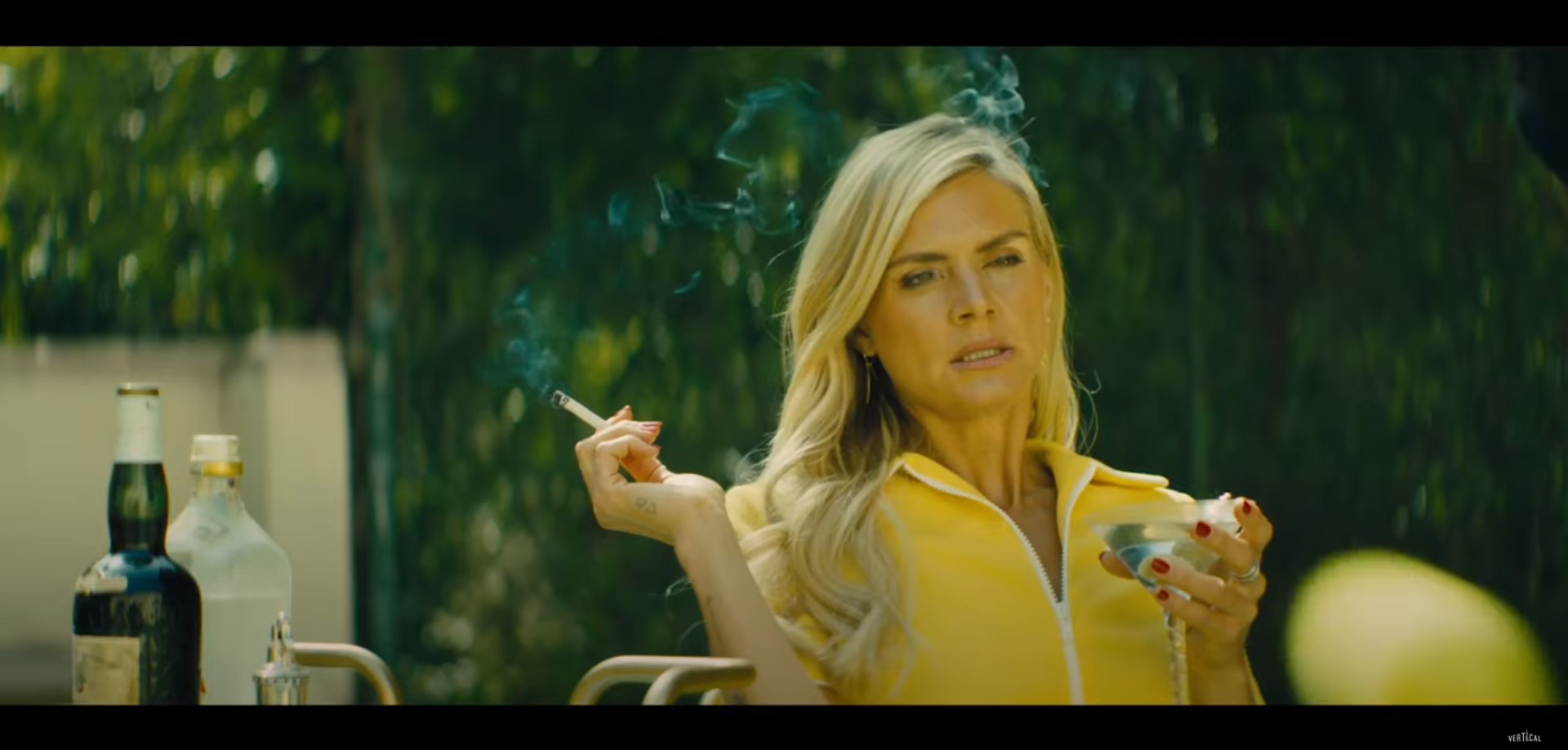
An over-the-top, narcissistic machination-built dark comedy of greed, self-importance, and lust is how I would personally define the first feature length film, “The Estate,” from director James Kapner.  Diverging from his own comedy web series, “Baker Daily,” to work again with Kapner, from their previous collaboration on the political lampooning “Baker Daily:  Trump Takedown,” is Chris Baker, screenwriter of “The Estate,” who not only pen strokes the worst-of-the-worst of diabolical super-egos but also plays one of the downright flamboyant scoundrels as the lead role.  Majority of “The Estate” takes place inside the grand titular location, compartmentalizing the indie film’s budget solely on the sordid activity of three main characters without much of else as a distraction.  The Los Angeles shot film is independently produced by comedy producer Rod Hamilton, Kapner’s business partner Adam Makowka, and the second producing credit for Alixandra von Renner (“Boogeyman Pop”), with Mark Boujikian, William Bruey, Nicholas Lyons, and Scott R. Long as executive producers and is made under the Stone Lake Production and Runners Films production companies. 

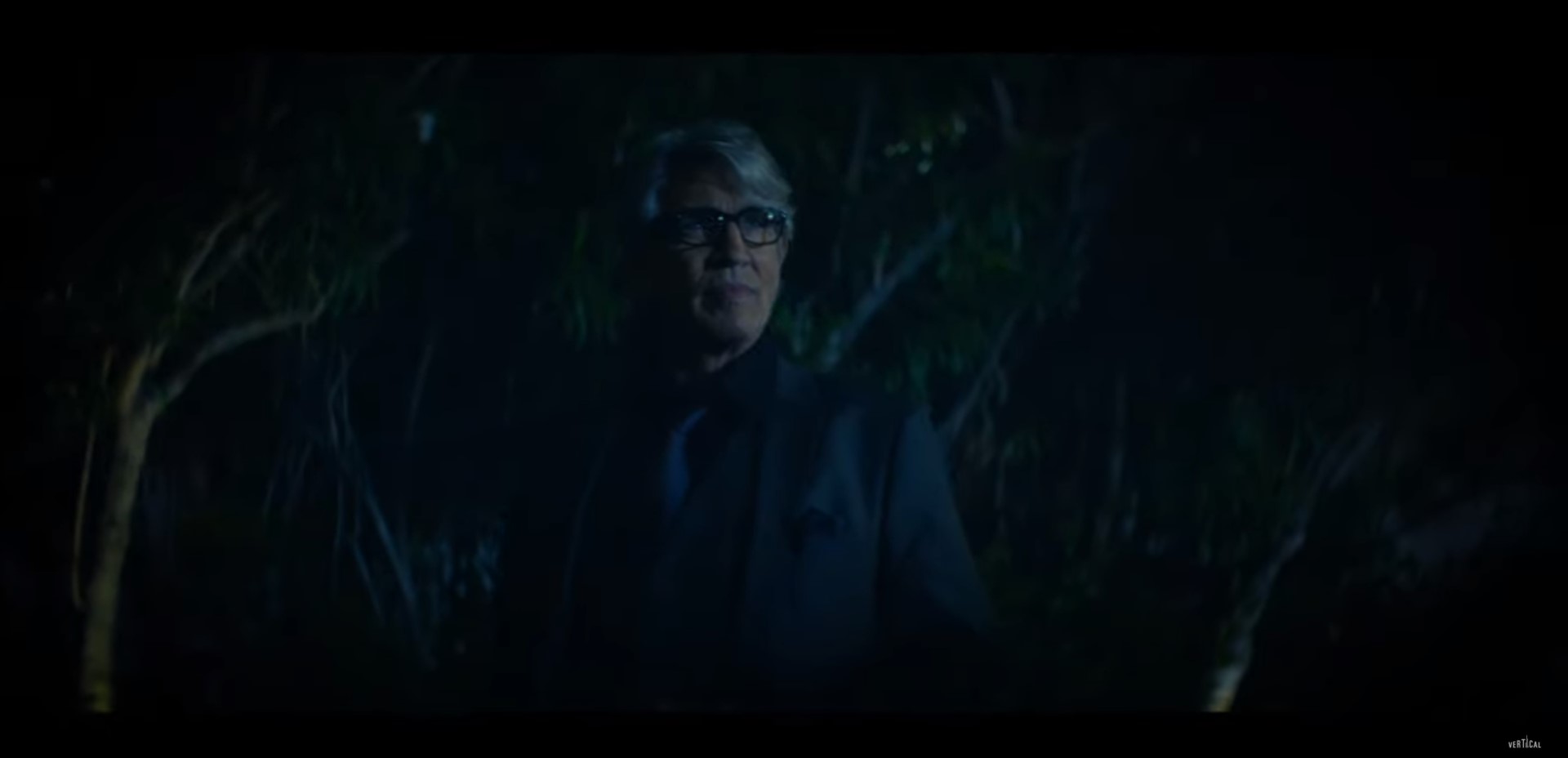
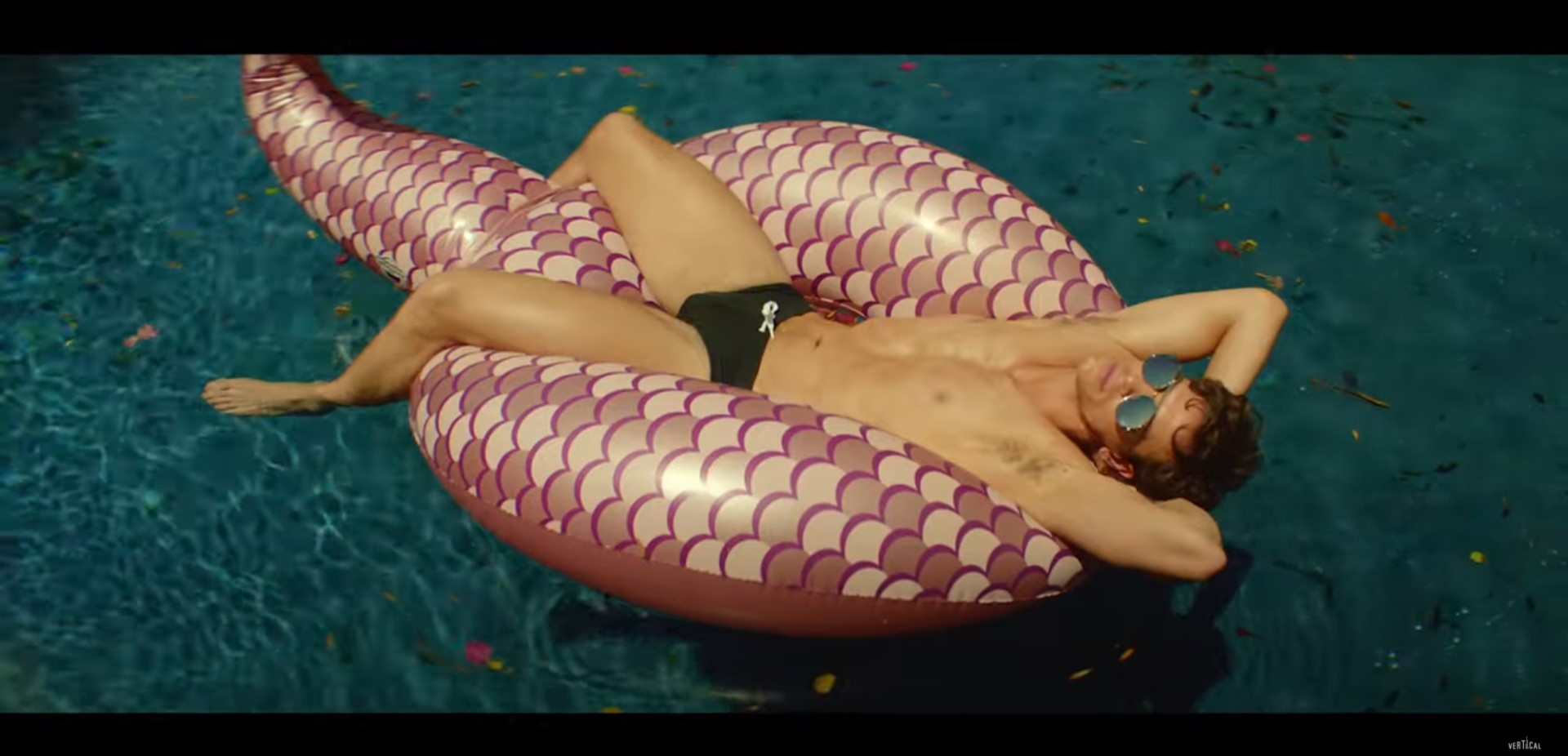
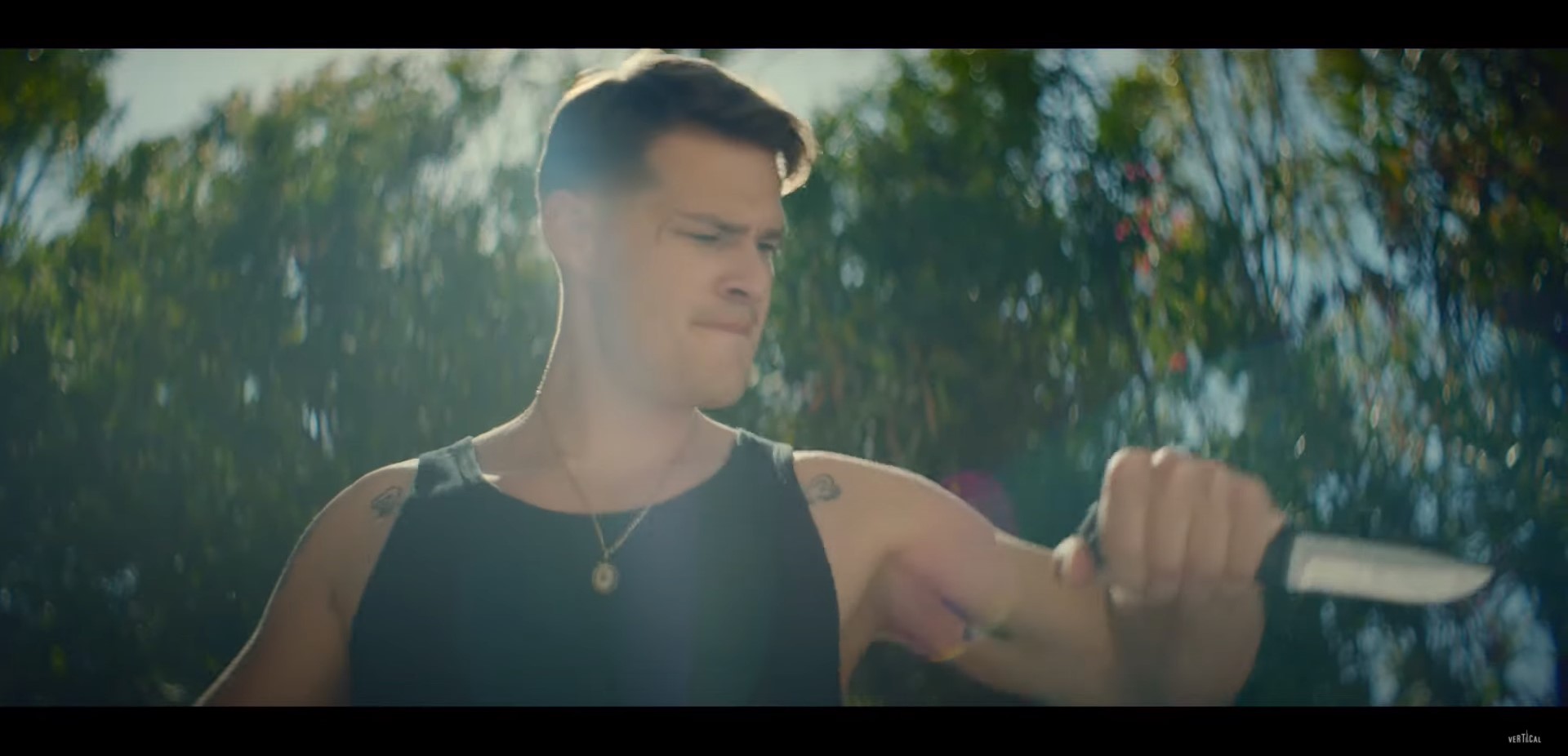
“The Estate” is a haute and brutish trio’s tale of sex, lies, and murder.   At the head of the snake is George, an entitled son seeking elegance and power as he longs in the background to attend the prestigious Black and White Gala, and is played bitingly by the film’s genesis writer, Chris Baker.  Baker, a Harvard graduate and a gay man, certainly utilizes both personal traits for George he’s clearly written for himself.  George is smart under that superficial Versace façade and, also, is a gay man looking for a romantic connection, but like any relationship single person, told by one’s own vantage point such as George’s, a wash of doughy-eyed thick-headedness just completely engulfs his rational senses when a pretty face suddenly shows up.  That rugged handsome face just happens to be of “iZombie’s” Greg Finley as hunky hitman Joe who George unexpectedly bumps into due in part of his oversexualized and, too, vain Stepmother Lux donned wonderfully with a wickedly crass tongue of comedienne, Eliza Coupe.  Together, a charcuterie board of carnality ceases to no end between the three in a back-and-forth, pass-the-man around pansexual affair with plotting and murder speckled in the middle.  Performances are concentrated with tongue and cheek, black matter comedy with ultra-ostentatious gab and garb to deliberately set the satirical tone metaphorically for the super-rich attitude of white, wealthy America.  With all that jazzy, pent-up, entitlement, add Eric Roberts into the mix, then you really get the worst-of-the-worst from the “Best of the Best” actor as the filthy rich patriarch.  Roberts can exude sleazy well with his own mannerisms and deliveries, solidifying his own Eric Robert’s laidback version of a despised billionaire debauchee.  “The Estate” rounds out with Rif Hutton (“The Thirteenth Floor”), Ezra Buzzington (“The Hills Have Eyes” remake), Lala Kent (“The Row”), Kyle Rezzarday, and “Hostel:  Part II’s” Heather Matarazzo as the tech-savvy lawyer office secretary who shamefully peters out after an interesting turn of events with the character’s involvement.

“The Estate” is one of those dark comedy thrillers where one wrongdoing subsequently creates a domino effect for more wrongdoings.  How’s that saying go?  Be careful what you wish for, you just might get it.  Indeed, the characters do get what’s coming to them as one killing turns into two killings and two killings turns into three etc.  As the bodies pile up in between the bedroom sheets sex and the coy flirting during initial stages of affections, the kind where butterflies flutter inside the stomach, what turns from an aloof pair of spoiled rotten solitaries is a false confidence in blindly following boredom’s famished way of saying death and sex is all-around exciting.  There’s also this vying of the sexes to see who can sweep Joe off his feet and while there’s obviously no issue with the polyamorous pansexuality, the story’s a bit lopsided with Baker’s intimate scenes with Finley being more expositional compared to Joe and Lux’s more implied romps and that inherently leads viewers onto one obvious path without the spice of unexpected chance.  Though George is written to be an alter egocentric doppelganger of his creator, Chris Baker, the Frankenstein theory only works well to extent before seeping into obnoxious conceited territory.  This is where “The Estate” begins to show signs of wearing out it’s welcome with living in George’s weighted down perspective of the high life.  Purpose seems vague mostly yet “The Estate” is also one of those nonchalant, throwing caution to the wind dark comedy narratives, sinfully funny, for the sake of touting an exaggerated resemblance of a detached privileged mindset. 

Things are not so nice and cozy at “The Estate” that has arrived this October on VOD and in theaters from Vertical Entertainment. Clocking in a 85 minutes, “The Estate” is paced to fit the conspicuous cinematography from the Texas born Mike Simpson with mood lighting mixed with tinting and as well as using a spherical lens to set the current tone. Simpson keeps shots tights between medium and closeups for more intimacy between the trio as well as to keep within the confines of a smaller production and set location. Since a digital screener was provided, I can’t comment on the quality of the audio and video aspects, but “The Estate” comes with an eclectic soundtrack that includes tracks from Lucky Beaches, Viagra Boys, Ritchie Valens, Joy Downer, and Toots and the Maytals. There were no bonus material or after credit scenes. Witty, dark humor that teeters always on the cups of being too much for one sitting, “The Estate” deadeyes the caricatures of the 1% with fatal attractions and an inheritance stocked with greed culminating to an unbelievable finale

Tune In to EVIL’s Frequency. “99.9” reviewed! (Cult Epics / Blu-ray)

Lara, a paranormal radio show host, learns her close friend and former lover has been tragically killed in an accident at small village of Jimena.  Determined to find out what happened after a mysteriously mailed tape unveils disturbing images of her friend, Lara travels to Jimena to investigate the accident she believes was intentional.  Entangled amongst the village’s strange residents, suspicions are high on just about everyone who had contact with the deceased, but Lara is certain about one thing, at the center of her investigation is an abandoned house with a ghastly urban legend, afflicted by the entombment of murdered women and children souls and, one-by-one, the faces of the torture souls are manifestly etched out from within the walls onto the surface.  As Lara inches closer to the truth of her friend’s research of the phenomenon, the shocking truth will reveal a dark power trying to keep the house’s secrets contained.

Estranged lover.  Tortured souls.  Witchcraft.  Secret experiments.  Murder mystery.  Agustí Villaronga’s “99.9” depicts a loaded, shrouded ethereal thriller with a thin translucent layer of homosexuality draped over so delicately you almost don’t realize the Spanish filmmaker’s subtle exhibition of lifestyle exile.  The 1997 film, also known as “99.9:  The Frequency of Terror,” a subtitle moved from the main title to tagline status, is shot primarily in Madrid as well as certain exterior shots in La Vereda, Guadalajara to provide the intimate essence of a small village’s ever-watching glower.  Villaronga, along with cowriters Lourdes Iglesias and Jesús Regueira, stitch an argyle style narrative sweater of consistent checkered behavior inside an ostentatious presentation of simmering hostility toward foreigners and homosexuals, stirring an isolating heroine into a mixture of local animus and lingering occultism.   “The Black Moon” and “Ninth Gate” executive producer Antonio Cardenal solely funds “99.9” and with Impala and Origen Producciones Cinematograficas serving as co-productions. 

Bearing most of the story’s weight is lead actress María Barranco (“Witching and Bitching”) in an unfamiliar to her thriller role polar opposite of her profound previous work as a comedienne in the vocational genre.  Yet, Barranco grabs the role with undue hesitation or eager to professional please Villaronga with her character entering a spurning atmosphere seething with mistrust and ill-intent.  Playing a single mother enduring the unknown status of her estranged lover, also the father of her fatherless child, it isn’t until a package containing a VHS tape of mostly recorded static and a naked man, her estranged lover Victor (Gustavo Salmerón, “V/H/S Viral”), briefly seen fleeing for his life instills a strong uncompromising need to find the truth.  Barranco captures being rocked and shaken by Victor’s footage so much so that her tension and fear contagiously transmit to the viewer and that hardly lets up in a deluge of suspicious and dread curiousness compelling her to investigate the gruff and oddly civil villagers.  One of those village inhabitants, Juan Márquez, reeks of nervous energy that’s poured into his hunky local mechanic Mauri who becomes the mystery’s weakest link amongst the unbreakable locals, especially under the rigid impatience of Mauri’s girlfriend Julia (Ruth Gabriel), house owner Lázaro (Ángel de Andrés López, “Sexy Killer: You’ll Die for Her “), and the creepy committed bruha mother Dolores (Terele Pávez, “The Day of the Beast,” “Witching and Bitching”).  Pávez stamps her presence into “99.9’s” grim resolve that links Dolores to the souls trapped in the house with fanatical obsession.  The cast rounds out with Simón Andreu (“Flesh+Blood”), Pedro Mari Sánchez (“Creation of the Damned”), Maite Brik, and Paula Soldevila (“Immortal Sins”).

If I had to compare another film to “99.9’s” persistent bleak atmospherics and a singular principle quietly poking around to solve a cryptic scene-turner, a more widely known and recognizable title with a familiar cast, I would put up Villaronga’s film against Robert Zemeckis’s circa 2000 Harrison Ford and Michelle Pfeiffer thriller “What Lies Below.”  Both works are saturated with melancholy stuffing and are beautifully shot in their own stylistic right, but Villaronga adds an undercurrent of homosexual persecution as well as a xenophobic aspect that seeks to discourage, dismay, and disconcert nosy foreigners poking around in local business with a gray area of a big city versus little community vibe and scientific fact versus yokel superstition.  Yet, the script renders omission at more pivotal character junctures that go in-depth about backstory, such as the case with the forgotten Victor who, despite being a major plotpoint in the opening scene of the movie, is more a name thrown around as device to stir commotion amongst the locals.  Victor’s experiments in capturing the images and sounds of tortured souls aimlessly floating inside an ethereal plane in the electronic noise of television broadcast during his very much alive subjects’ REM sleep practically dissipates faster than a bottom burp with the window open and the breeze blowing. As loose as the script may be, Villaronga makes up for it with a tone of stern pall, a delicate theme of bigotry mitigated by the tortured souls and mischievous plot ingredients, and the timorous determination exuding from Maria Barranco’s portrayal.

“99.9” is Lara’s radio station frequency; a frequency in the story that nurtures and embraces the abnormal paranormal from callers night in, night out. Instead of sitting comfortably behind a mic and headphones, cozy in her sound proof studio, her frequency is a barrier that is flipped on it’s head as she becomes involved in like the stories of her callers. Speaking of flipping, in more of a “99.9” is Lara’s radio station frequency; a frequency in the story that nurtures and embraces the abnormal paranormal from callers night in, night out. Instead of sitting comfortably behind a mic and headphones, cozy in her sound proof studio, her frequency is a barrier that is flipped on it’s head as she becomes involved in like the stories of her callers. Speaking of flipping, in more of a layman, satanic sense, “99.9” inverted is also the sign of the beast. Either way, two solid possible metaphors for “99.9” give meaning to the tuning title that’s now available on a dual-layer Blu-ray and DVD combo from Cult Epics who present the film in the original European preferred widescreen 1.66:1 aspect ratio from a 2K scan of the original 35mm negative. Villaronga’s chromatic vision finds unadulterated success in the crisp, clean picture of the Cult Epics release with almost no damage from the original transfer. There’s a slight, and extremely brief, scratch noticeable in the first half of the film, but the amount of grain is perfection and no evidence of manipulation of enhancing. Details are insanely delicate on every tactile texture, even the skin. Aforesaid, Villaronga expresses in color, using a cool blue tints, which is actually toned down some with the transfer, and implementing different lighting techniques to reinforce Javier Aguirresarobe’s breathtaking scenic wide wide shot cinematography. The Spanish language DTS-HD Master Audio 5.1 on the Blu-ray packs a punch with balanced channels funneling not only clean, unobstructed dialogue, but also “Pan’s Labyrinth” composer, Javier Navarrete,’s brooding baritone, chordophone score. There are two other audio options for the DVD: a LPCM 2.0 Stereo and a Dolby Digital 2.0 Stereo. Optional English subtitles are available and do match up well with no faults. Special features include a new-ish interview with director Agusti Villaronga conducted by Cult Epic’s Nico B, the making of 99.9 that has archival interviews with the director, María Barranco, and other cast and crew, an isolated Javier Navarrete score, and Agusti Villaronga trailers. Both formats are region free and not rated with a runtime of 111 minutes. Back in the 90’s when Spanish supernatural thrillers peaked, “99.9” was right there with a captivating ghostly gossamer from Spain.

Own 99.9 on Blu-ray DVD Combine from Amazon.Com!