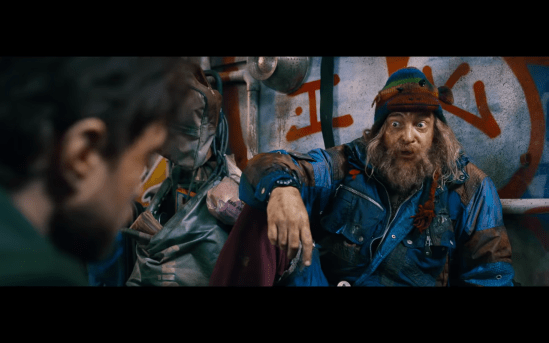
High school teenager Ko Ja-yoon lives with her adopted parents on a struggling cow farm. Ja-yoon‘s amnesia struggles with recollecting her past, she’s plagued with severe headaches, and suffers to retain any strength in her body. When her best friend persuades her to enter a popular singing contest, Ja-yoon’s nationally televisions performance triggers a covert agency to seek her out, dispatching Korean-American hitmen with supernatural abilities and local hit squad agents to track her down to either capture her alive or kill her. As the devious factions close in on her, placing her family in great danger, her past begins to unravel, revealing a troubling truth regarding who she really is and what she’s capable of effectuating.

Not to be confused as a sequel to Robert Eggers’ critically acclaimed, Americana gothic folklore tale “The Witch” from 2016, Park Hoon-jung’s “The Witch: Part 1 – The Subversion” diverges itself as the tenebrous action-mystery of a two-part film series from South Korea. Entitled “Manyeo” in the native Korean tongue, “The Witch” refers to a moniker bestowed upon the agency acquired children provided with genetically enhanced brains to open up their full, existential potential of God-like violence shrouded in the murky shadows and cutthroat conspiracies. “I Saw The Devil” writer Park also pens the script for his produced 2018 film that resupplies the darkness of a detective noir into another fantasy thriller furnished with a bloody veneer of a R-rated superhero movie. Gold Moon Film and A Peppermint and Company co-produce the Warner Bros. Pictures distributed picture.

Starring as the titular character, Koo Ja-yoon as The Witch, is South Korean actress Kim Da-mi making her introductory debut that’s considerably demanding for the early 20’s actress to tackle with little-to-none prior experience in “Avengers” level action, but that’s where the subversion sets in when Kim undermines with a body frail tool performance, throwing pity bait to sucker in the bigger fish, and then opening her ranges to play on the opposite side of the spectrum in a slim, but killer, authoritative absolute suit. Ja-yoon’s American counterparts are equally as intriguing with Korean-Canadian actor, Choi Woo-shik (“Train to Busan”) leading the pack of vicious and powerful mercenaries. Choi’s monstrous 2019 lineup of award-winning (“Parasite”) and action-packed (“The Divine Fury“) films set “The Witch” up for inherent success in a now powerful and versatile recognized Korean film market. Upstaging has a strong aurora inside Korean filmmaking as every scene invokes an intense stare, an action of grandeur, and dialogue – every actor has lots and lots of dialogue – and so, bold performances stand out from the remaining cast list who includes Jo Min-soo (“The Cursed“) as the prideful genetics doctor, K-pop’s 2Eyes band member Daeun as the cut from the same cloth American-Korean super villain, Go Min-se as Ja-yoon’s bestie, and Park Hee-soon as the curious Mr. Choi with a vendetta against all who are enhanced.

“The Witch: Part 1 – Subversion” is over two hours of grand chess and superhuman stratagem culminating at a writ large do-or-die finale. Even with a 125 minute runtime, Park Hoon-jung has to inertly cram a whole lot of story into a seemingly abundance and bountiful timeframe. As the staggering conspicuous tension builds and characters evolve into an elucidated light, scenes start stepping into confounding placement that bedevil slightly the storyline. If you’re able to piecemeal together the puzzle and able to follow casually, Park is able to eventually reel captivation back from surmountable follies of structure with flashbacks and, in this case, a generous amount of exposition to get viewers on track once again. The prodigious action rivals the Marvel movies of today with complimenting cannonade and psychokinesis while ushering in a heroine tapped from same vein as “Hannah” or “Lucy” into the Korean moving pictures.

Warner Bros Pictures and Well Go USA Entertainment entertain us with GMO action in “The Witch: Part 1 – Subversion” on a single format Blu-ray home video release presented in a widescreen, 16:9 aspect ratio, on a region A, BD25 disc. What I really like about Well Go USA releases are the consistencies of arrangements. The brightly lit, natural landscapes are vivid, floaty, and serene as if all of life is an idyllic safe haven for visual leisure. The black, almost gun metal black, of the nighttime segments render a more sinister and unfavorable approach to arms and danger likely ahead. Some posterization occurs during these moments, but little-to-no ill effect to the scenes themselves. Some of the chunkiness to the visual effects stem from combative action of the genetically altered, fighting against the slower normals with their high caliber, fully-automatic rifles and, also, against themselves, but these battles are interspersed to not violate audiences corneas to beyond the max extent of the natural law. The Korean language DTS-HD Master Audio mix offers a wide range of varied leveled action, from the mundane ambience of rural and urban life to the precision of activity during the more upbeat commotion of fight sequences and gunplay in tighter quarters. Dialogue placement renders nicely and is prominent while the option English subtitles captures beautifully with well synced and timed captioning. Bonus features three trailers which are two international trailers and one U.S. trailer. If Part 2 is anything like “Subversion,” the game of deceit will continue to unfold surprises one after another and beguile with the mysteries surrounding “The Witch’s” genetically invasive backstory that’s inherently pervading throughout, leaving an agape of wonderment, intrigue, and thrills.
Category Archives: Just fucking awesome
Giving EVIL the Electric Chair Only Gives EVIL a Buzz! “Destroyer” reviewed! (Cheezy Movies/DVD)

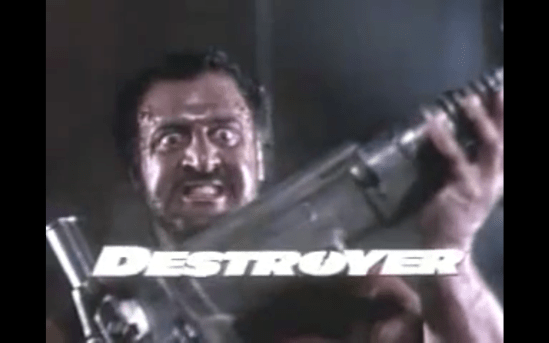
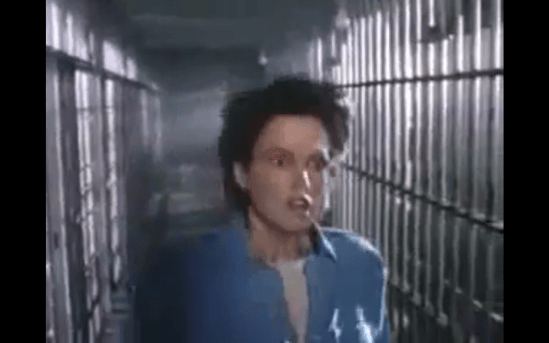
The unspeakable 23 rape and murder crimes of psychopath Ivan Moser grant him a seat of honor at the electric chair. As soon as the switch is thrown, a massive prison riot ensues and what happens next becomes unexplainable, confusing, and indeterminable. One thing is clear, the prison’s Warden Kash loses his position as the trashed penitentiary is forced to shut down. Eighteen months later, a film crew acquire permits to shoot a women-in-prison exploitation film inside the prison with the help of it’s one time custodial employee, Russell, who is just as creepy as the abandoned maximum security penitentiary that housed the infamous Ivan Moser. As production grapples with townsfolk opposition, electrician’s timing miscues, and some seriously bad acting, there’s one unexpected obstacles not accounted for…a living, breathing Ivan Moser still living inside the iron cladded prison.

Horror fans from all walks of life to the age gaps of multiple generations can all agree on one thing, that the 1980’s is the gilded age of horror to which inspired and/or captivated us all. The decade was also an industrious change for political climates that saw the fall of the Berlin and saw musical artists like Michael Jackson break the conventional molds of how music was orchestrated, sung, and danced too. For movies, the change came with technical innovation in elaborate special effects, such as in John Carpenter’s “The Thing,” and undogmatic view of how we perceive plots which opened the flood gates to a slew of unexplored ideas no matter how far-fetched they may seems. One plot such as this would be from the 1988 prison massacre film, “Destroyer,” directed by Robert Kirk as is one and only non-fictional feature before an extreme career solidifying shift to historical movie and television documentaries. Written by Peter Garrity (“The Forgotten One”), Rex Hauck, and Mark W. Rosenbaum, “Destroyer’s” a gritty tale of endless, black obsession fueled by insanity, revved up with inexplicable half-alive malice, and juiced with strength of an indestructible force without being overtly supernatural.

With an 80’s movie comes an 80’s cast and the popular reteaming of Clayton Rohner and Deborah Foreman from 1986’s holiday themed horror, “April Fool’s Day.” “Destroyer” isn’t based on a certain holiday, but converges more toward meta approach where Clayton Rohner and Deborah Foreman play the romantic couple, grindhouse screenwriter David Harris and stuntwoman Susan Malone, on film set of their women in prison movie – Death House Dollies. A typecast switcheroo is engaged as the physicality falls upon the female role while Rohner takes a reserved backseat as a writer and that entails Foreman to face off against Lyle Alzado as the unspoken titular character Ivan “Destroyer” Moser. Alazdo’s crazy eyes and muscular football build provides the suitable basic elements of a crazed killer; probably doesn’t hurt that Alzado was also juiced up on steroids throughout his career in the NFL and beyond his exit from sports entertainment. Alzado has been quoted in Sports Illustrated having uncontrollable anger from roid-rage and that pressurized anger seethed, one could assumed, in the eyes of Ivan Moser, forging a superhuman monster under the parental guardianship of Richard Brake lookalike, Tobias Anderson (“Harvest of Fear”). “Psycho’s” late Anthony Perkins co-stars a the director of the WIP film as an unusual placemat only to serve as a hot moniker in horror to be contextual candy for one big scene and not providing much else. Lannie Garrett, Jim Turner (“Pogrammed to Kill”), Pat Mahoney (“Strangeland”), and four Death House Dollies in a gratuitous shower fight scene co-star!

A purebred American slasher of eccentric electrifying devices, “Destroyer” chooses punitive measures against the concept of capital punishment, sending the cryptic message that the dead will haunt you and those that you touch forever in some warped guilt trip nexus. The message is only further hammered in by the embossed haunting atmosphere of Robert Kirk’s opening sequence of a priest walking down the hazy cellblocks toward Moser’s cell, sitting with twitchy Moser while he madly raves and rambles about the game show that plays on a television set in front of his cell, and going through the steps of a chaired electrocution echoes a utilitarian dystopia that fathers in the cold, ungenial tone of the prison and Moser’s psychotically feral thirst to kill. Ivan Moser’s vitality is infectious, a hail-mary shot you’ll be rooting toward the finale, as the serial killer undertakes undertaker duties with extreme perversity while chocking up his body count with unsystematic eliminations, such as with a conveniently placed jackhammer in the prison basement. The jackhammer’s scene is “Destroyer’s” bread and butter, the showpiece of the whole film, but Moser only snag a couple of some real good on screen kills. All the rest are off screen or channeled through another device, such as an electric chair, and that softens and stiffens Moser’s, if not also Alzado’s, ultimate larger-than-life presence. Still, “Destroyer” rocks Lyle Alzado’s short-lived indelible monster making movie talent and confines the space to a breathless solitary confinement death house ready to devour more victims.

“Destroyer” shocks onto DVD home video release distributed from Cheezy Movies, MVDVisual, and Trionic Entertainment, LLC. If you’re not willing to shell out big bucks for “Destroyer” on Blu-ray from Scream Factory, check out Cheezy Movies’ economy region free DVD presented in an academy ratio, full frame 4:3. A beginning title card mentions that Cheezy Movies attempts to find the best transfer available when searching out titles and I believe that was done here with this release, but unlike Scream Factory, funds were not poured into an expensive upscale as moments of banding start right at the title credits. The transfer instances of dirt and cigarette burns are immaterial enough to not falter viewing, but there’s a bit of hefty color posterization in the basement scene that nearly blends the entire white scheme together and causing difficulties defining individual objects. The English language single channel mono mix maintains a lossy connatural sell topping out at the it’s as good as it gets ceiling with an economy release, but the dialogue is surprising clear, soundtrack sounds good, and the ambience, though needing a fine tuning, shapes out depth and range nice enough. With this release, no special features are available. Much like “Destroyer’s” tagline, Robert Kirk’s feature won’t shock you, but will give a great buzz with a nightmare coiling around your brain performance from Lyle Alzado and a super 80’s execution-from-the-grave slasher that’s just a guilty pleasure to behold.
It’s EVIL That Can Truly Bring Love Back Together. “By Day’s End” reviewed! (Breaking Glass Pictures/DVD)

Down in the relationship dumps, Carly and Rina struggle with sustaining the love between them. Carly recently dropped out of medical school to pursue a videography career, Rina, whose a battling bulimic, can’t secure a job, and, together, the financial strain and their respective personal issues is pushing them apart as they indolently work toward a seemingly futile plan for the future in a rundown motel recently purchased by a college friend named Wyatt. As if things can’t get any worse, an infectious pandemic turns the diseased into flesh hungry zombies and has quickly engulfed their area shortly after devouring Europe before anyone knew what hit them. With all communications down and surrounded by the infected, Carly and Rina rely on each other for survival, armed with only a couple of handheld cameras and a knife, but one Rina becomes sick, how far will Carly go to save the love of her life.

Love and zombies. Never has there been a more catalytic experience when the fate of an undead ravaged Earth becomes the tinder box for rekindling affection of a broken relationship. That’s the surmised premise of Michael Souder’s director debut, a found footage horror entitled “By Day’s End,” released onto DVD by the Philadelphian home video distributor, Breaking Glass Pictures. The LGBTQ aware zombie horror is based on Souder’s short marketing preview entitled “Hunger” that involved a man and woman couple rather than two women and was set at a motel site with Souder acting as narrator in explaining his vision. While “Hunger’s” financials didn’t gain footing through crowdfunding, Sounder was able rework his vision that incorporates a different breed of zombie that can learn at a rapid pace, shot his film in 2015, and finally hitting the retail markets in 2020. Sci-Fi-fantasy writer, Justin Calen-Chenn, co-writes the script with Sounder and serves as co-producer with the director along with another co-producer, Alicia Marie Agramonte, in her first feature produced production. Joe Wasem serves as executive producer for this complicated love story in the midst of a zombie Armageddon.

The rocky romance between Carly and Rina land praise for Lyndsey Lantz (“Lore”) and Andrea Nelson (“I Spit On Your Grave: Déjà vu”) in being a convincing complex couple with tons of baggage including relationship singeing secrets from one another and an underlying passion that has grown a little stale from a future strained of financial collapse. The chemistry between the blonde haired Carly and the dark browned Rina sizzles with tension that steams like when hot water hits a freezing cold surface. Lantz provides Carly’s bubbly optimism of a woman in love that finds climbing Rina’s colossally icy barrier a frustrating feat despite an immense amount of devout love and loyalism for her partner. The one character that isn’t very convincing is the former military turned motel host Wyatt Fremont played by Joshua Keller Katz. Katz’s rigid performance falls into the stereotype category of a bad script read, overplaying Wyatt’s previous life with a smug thinning effect on the whole zombie chaos and Wyatt sticking out of place like a giant sore thumb. Rounding out the cast is Diana Castrillion (“Godforsake”), Umberto Celisano (“First House on the Hill”), Devlin Wilder (“Grizzled”) and die-hard horror fixtures Maria Olsen (“Starry Eyes”) and Bill Oberst Jr. (“3 From Hell”) with the latter providing his voice only.

Rina’s unceasing eating disorder has staked a claim as one of the spurs affecting Carly and Rina’s declining relationship and, yet, when another eating disorder where mankind craves the taste of each other, the once quarreling lovers reignite the warmth that was once their bond in an amusing parallel of events. Character analogies are not the only nice touches provided by Souder who tweaks the zombie, extending upon George Romero’s evolutionary concept of a learning and pliant zombie while also creating a big world apocalyptic problem with small world capabilities, with the undead playing possum – how very “Resident Evil.” The 74 minute runtime offers ideal pace to not linger in exposition, which some horror love stories tend to do, balancing the backstory and the instantaneous chaos into a smooth transition of events. The camera POV style renders the same objective with also a bit of tranquility that’s like a calm before the storm rather, as some ambience is muted by security cameras. The effect results a frightening, breath holding silence which is a nice, eerie touch of cinematography and uncluttered audio.

“By Day’s End” is the motel mayhem zombie movie you’ve been hungry for and comes to you on a DVD home video being released March 17 courteously from Breaking Glass Pictures. The DVD9, region 1 release is presented in a widescreen, 1.78:1 aspect ratio, that splices together handheld camera and security cam footage. The image quality respectively shares the diverse filming tactics used to interlace a story. Handheld footage features a bright, natural appeal whereas the security footage purposefully instills as ashen approach and softer, fuzzier details with the horizontal lines created by direct light The English language 2.0 stereo mix has clean and forefront dialogue; the creature gutturals cast a more over-the-top and tawdry vocal disappointment that wasn’t fear invoking. Ambient depth and range are sizable and balanced. Special features include a behind-the-scenes, a quaint blooper reel, and Souder’s short film “Hunger.” “By Day’s End” marks the first indie horror success story of a 2020 release with a delicately modeled blend of romance and horror and a surge of lasting captivation on both of those fronts.
EVIL’s a Face-Off to the Death! “Guns Akimbo” reviewed! (Saban Films / Screener)

Miles, a thirtysomething video game developer, remains stuck in an unfulfilling and lonely existence where being an internet troll gives him his only taste of dominance over those who normally succeed above him in all other life aspects. When he pokes and prods a popular and sadistic underground death match known as Schism, the virally trending sensation sweeping the internet nation comes knocking at his apartment door to officially install him into the next melee bout. With guns crudely surgically bolted to both hands, Miles, whose used to running from just about everything, now has to nut up against Schism’s most prolific killer, Nix, and save his kidnapped ex-girlfriend from the deviants behind the game.

Social commentary runs amok in this grisly balls to the wall, gunplay stimulating action-comedy, “Guns Akimbo,” from the New Zealander, “Deathgasm” writer-director Jason Lei Howden. Trading in doom metal horror for a crass bullet ruckus, Howden barrels down with an on fleek supercharged story like a runaway freight train or a 6,000 round per minute minigun, shredding through a high body count like in a high occupancy round of a first person shooter. Under the production wing of Occupant Entertainment and distributed by Saban Films, who released films such as “The Girl with All the Gifts” and Rob Zombie’s “31” and “3 From Hell”, “Guns Akimbo’s” edgy dystopian air gangling along nerdy humor scraps “Robocop” utilitarian veneer for a fresh coat of millennial trivialities, fleshing out, in a ream of firepower, relevant societal topics and facing their adversarial shades head on in a barrage of blood soaked bullets.

Spearheading “Guns Akimbo” is Daniel Radcliffe, who seemingly continues to distance himself from the world of wizardry of “Harry Potter” and focusing his current career on off-Hollywood and chic films that has gained Radcliffe a cult following alongside his cache of wizards and witches fandom. Feeling content stagnant, Miles lounges comfortably in the power of being a keyboard warrior and Radcliffe leads the non-exuberant charge until pushes comes to guns bolted to my and someone is trying to kill me-shove. Opposite Radcliffe is Samara Weaving as a brashly confident and hard-hitting character of familiar skin that’s similar to her Melanie Cross role in Joe Lynch’s “Mayhem.” Instead of being a mild-mannered woman infected to be a savage, floor-clearing combat artist, Weaving bares no dissuasion embodying another uncaged killer becoming the nitty-gritty, tattooed, and uncouth Nix, hard-nosed with violent tendencies stemmed by the fiery murder of her family. Together, Weaving and Radcliffe make engaging adversaries and friendlies who both end up on working on themselves while working with each other in a do-or-die game. Ned Dennehy plays the creator of Schism and overall bad guy Riktor. The Irish actor, who recently had a role in Nicholas Cage’s “Mandy,” finds himself just as tatted up as Nix, waving a nihilistic-revolutionist banner like its something to be proud of, but despite Dennehy’s best efforts in alleviating his cynical nature with a few sarcastic quips, Riktor comes off as bland and unfulfilled as a story’s aortic villain; instead, I found myself more curious about his fascinating short-lived henchmen played by Mark Rowley as a Zangief Street Fighter doppelganger, Racheal Ofori shelling out with double barrels, and Set Sjöstrand as a gimp mask wearing Fuckface. The international cast rounds out with Natasha Liu Bordizzo (“Hotel Mumbai”), a once in a lifetime hilarious homeless man act by funny man Rhys Darby, Grant Bowler, and Edwin Wright (“Turbo Kid”).

“Guns Akimbo” could have been pulled straight from the crimson flashy illustrated pages of a popular graphic novel and, most definitely, would have worked as one too, soon to come for sure, but as a feature film is concerned, as fun as Howden drapers it with explosions, expletives, and executions, “Guns Akimbo” ultimately shakes at the knees with acute breakneck, 24-hour speed that clocks in at a 95 minute runtime. While that’s the standard runtime of choice for movies, average around 90 to 100 minutes, consequences from flying through backstories (Miles, Schism, Riktor, Nix) in a blink of an eye at the story’s expense to hastily push for gun blazing glory puts all the pressure on the viewer to keep up. The story’s non-linear moments also factor into being an onerous barrier for audiences which are shiplapped together egregiously just for the sake of going against the atypical plot structure design and interspersed with flash backs and wishful thinking near death pipe dreams all jam and crammed packed into the sardine can that is the very eye-candy combat of “Guns Akimbo.” Yet, enough time was mustered for symbolism where Miles finds himself ensnared in the sticky negativity that is the social media sludge, fueled by the sadistic voyeurs enjoying the show in a violence-porn tapestry. From troll to titan, Miles rises as the unlikely gladiator presence in Schism, pushing him toward being a viral sensation from which he can’t escape despite the lack of enthusiasm to anything related to Schism and his skyrocketing social media status. The whole showdown thrusts him into controlling his own life whether he likes it or not, a kick in the ass for a lack of a better phrase, to get him motivated.

Come February 28th, Saban Films’ “Gun Akimbo,” produced by Occupant Films’ Joe Neurauter, Felipe Marino, and New Zealand film producer Tom Hern, will go full blown trigger happy into select theaters, on demand, and on digital. Since this movie is yet to be officially released, is a screener, and doesn’t have a home video release just quite yet, there will be no audio and video critique portion of this review nor were there bonus material. There have been many great dual wielding action heros in our lifetime, including John Weston from “Equilibrium,” Selene from “Underworld,” and even that Counter-Strike terrorist avatar with the option to wield Dual Berettas. Now, we have Miles from “Guns Akimbo,” an immense ball of New Zealand vitality, un-tapered exploitation, and twofold in gun fun.
Adolescence isn’t Innocence. Adolescence is Evil! “We” reviewed! (Artsploitation Films / Blu-ray)

Four teenage boys and four teenage girls decide one summer to live free, without inhibition, and to make as much money as possible. Discovering an abandoned caravan in the middle of nowhere, they set up their home away from home where doing what they want, and who they want, becomes a way of life. Sexual freedom and adolescent independency quickly leads the friends down a path of miscreant wandering and sordid pornography and prostitution. When one of the teens accidently dies, four accounts of what happened are told aloud to the court and with each version, the truth becomes indistinct amongst the slander, exploitative sex work, and their anarchist ways that surround a seemingly corrupt politician.

Debased youth bored with the common fabrics of society stitch their own downfall into extreme moral degeneration in Rene Eller’s 2018 dramatic-thriller from the Netherlands entitled “We.” Also known as “Wij” in the Belgium tongue, Eller tackles the cinematic adaptation of an Elvis Peeters’ novel of the same name from 2009 with not only directing a compelling and frightening image of idle hand youth, but the filmmaker’s also credited as penning the non-linear script told in four chapters that highlight four out of the eight teens’ versions of events and how that fateful summer not only saw their ethics become shattered, but also their close-knit friendships. Eller also co-produces the film, working alongside production companies Pragma Pictures and New Amsterdam Film Company.

“We” consists of a young cast, in age and in experience, bred from the Netherlands and though virtually credit-less, powerful performances from the lot all around that touch not only the venereal stimulators, but also reaches the twisted knot inside the gut of how being human equals being depraved. The four chapters begin with Simone, a young man smitten by the Femke (Salomé van Grunsven) who becomes a catalyst for the trial, played by an Anton Yelchin lookalike, Tijmen Govaerts. Govaerts gleams in Simon’s adolescent jubilee of love, sex, and carefree attitude. His story is followed by Maxime Jacobs’ Ruth, a 16-year-old who can’t seem to step beyond the line into total reckless abandonment, Yet, Ruth’s game for risky her own body to gain approval from her friends and for her shadowed love for Simon. Jacobs gapped teeth act as imperfect perfection upon her slumping figure sheathed in plaid, screaming purity inside her outcast shell, but Jacobs proves she can be more naughty in her character than that of her co-stars. Liesl’s third chapter paints a more grotesque picture of her friends summer. Pauline Casteleyn acts in the role of Liesl, an aspiring artist with that tough inner and outer shell Ruth aspires to but ultimately lacks. Casteleyn can cast a deadpan stare with the best of them that offers more of a chilling vibe off of Liesl, but neither of these roles could outwit, out-dominate Thomas. Aimé Claeys concludes the fourth chapter as the ringleader of the friends, or, more accurate, as the pimp and the kingpin. Thomas’ manipulate hand fosters questions about his past left purposefully open for a subjective opinion on whether his actions were that of his own boredom or being pushed to his limit by external forces. “We” rounds out with Friso van der Werf, Folkert Verdoorn, Laura Drosopoulos, Lieselot Siddiki, Gaia Sofia Cozijn, and Tom Van Bauwel.

Let me start off by saying that when the teens’ entrepreneur pornography ambitions comes to fruition, these reviewers’ eyes widened at the surprising site of explicit penetrations and fellatios; however, the unexpected hardcore isn’t the act of our already very naked actors who probably stood out for stand-ins as the story leads the friends to think of using masks for anonymity and all explicit scenes of sex involve masked performers or implied scenes are angled just right from the cruel and smart tactics of Rene Eller and cinematographer Maxime Desmet. “We’s” unreserved sexual boot up the censorship’s tight behind is this junkie’s drug of choice that gets the blood pumping in all the right places; yet, “We” garnishes a heavy topical subject serrated with generational and societal gaps of corrosive virtue and speaks in volumes of what entitlement entails for a body of minors spoiled by the very community that either nurtured or tormented them and then, finally, turn on them all, parental or not, with harsh repudiation. As a sincere compliment to director Rene Eller, “We” belongs in the maladjusted family tree that also bears the rotten teenage fruit of Larry Clarks’ “Kids” and Catherine Hardwicke’s “Thirteen” and harks back to the Golden Age of Dutch Cinema with the Dutch Sex Wave from the 1970’s which produced controversial erotica with “Blue Movie” and “My Nights with Susan, Sandra, Olga and Julie” from Scorpio Films. “We” has a friendly look and feel of a 70’s film despite modern devices, making the resemblance to the Golden Age that much striking.

From the Netherlands’ festival circuit comes the highly engrossing, explicit drama “We,” distributed stateside by the Philadelphia based Artsploitation Films onto an unrated director’s edition Blu-ray home video release. Presented on BD-25 in full HD and in a widescreen, 2.65:1 aspect ratio, impressive textures flourish every inch of skin of the actors and in the panning ariel shots, which are, at times, hard to obtain. Despite some early on aliasing during the opening scene and a bit of warm washed coloring that doesn’t pop with a colorful hue range, I’ve still become satisfied with the end result that sells the illusion of Summer (you can see the hot breath during some outdoor scenes), the immense use of natural lightening, and the skin tones announce a fresh feel for the flesh aplenty. The Dutch language DTS-HD Master Audio mix holds nothing to ill speak of with a rendered clear dialogue, ample range and depth, and subtitles that sync fine with clear delineation and no mistakes. Other than a static menu, the only other bonus on this feature is the explicit reversible Blu-ray cover that displays the bare ass(ets) of half the cast from one particular scene. There’s also the PG cover that you’ll see below to not offend any sensitive souls. Coinciding with being a great story, “We” is also an important film of human callousness hidden within the prospect of free love, an age-old infiltration and exploitation concept captured by Rene Eller’s subversive eye and Elvis Peeters sage mind.