

Tomaz, former Eastern European soldier of war is now living homeless in London, squatting overnight in rundown buildings with other displaced individuals and families. When the building he’s sleeping in goes up in fire, he’s injured upon escape and wakes in a hospital to learn that a nun found him and his belongings, leaving him a note to visit her upon his release. The nun, Sister Claire, offers him food and a bed in exchange for dire house maintenance for a sickly mother, Miriam, and her caretaker daughter, Magda. As time passes, Tomaz begins to fall for Magda, but her odd behavior and the dying Miriam’s severe skeleton living accommodations in the attic as well as her frail, pail body nag at Tomaz’s conscious that something is awfully amiss. However, his present enigma isn’t the only thing tugging at his tormented conscious when faced with the shocking truth of his residence.
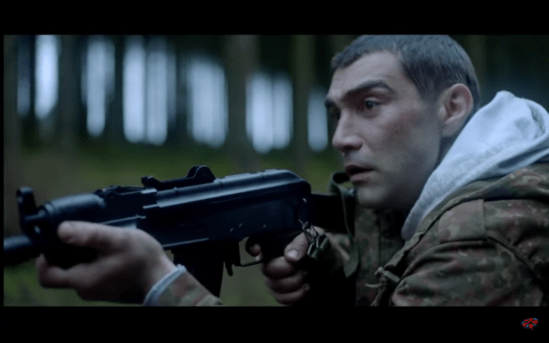
Actress turned filmmaker, Romola Garai, makes her full-length feature debut with a fissionable creepy, punish-thy-sinners, slow burn horror film entitled, “Amulet.” The UK production is written and directed by Garai, who previous work includes main cast acting roles in Joe Wright’s World War II dramatic thriller, “Atonement,” the sci-fi horror “The Last Days on Mars” along with costar Liev Schreiber, and filling in some tremendous shoes in the prequel to the 1987 rom-edy, “Dirty Dancing,” “Dirty Dancing: Havana Nights.” Now, Garai peers through camera lens, orchestrating from the director’s chair, an eerie body horror tale that involves demons, past regrets, and a diabolical, antiheroic nun conniving for the sake of humanity. Speaking of which, humanity is one of the central themes that “Amulet” explores in hellish fashion as our actions determine the outcome of our various shade of humanity forged ourselves and how we will be judged accordingly. “Amulet” is a production of Head Gear Films and Kreo Films FZ, and Metrol Technology, who have all collaborated on “Cargo, as well as in association with “Shed of the Dead’s” Trigger Films.

Cast in “Amulet’s” only male role is the Romanian born Alec Secareanu as Tomaz. The graduate of Caragiale Academy of Theatrical Arts and Cinematography actor envelops himself into a trouble ex-soldier without a country, unwilling to return to a worn-torn land in hopes to relieve himself from reliving the past. Secareanu exudes tenderness for Tomaz in order for audiences to empathize for a homeless man who has agreed to assist Magda and her ill mother. Garai engrains Tomaz with such sentimentality, it’s proves difficult to see the man any other way until the filmmaker incorporates Magda into the mix, a capricious role imparted upon to “Blade Runner 2049’s” Carla Juri. Juri moderately reprises her eccentrically free performance from the 2013 comedy-drama, “Wetlands,” as a seething promiscuous and alluring woman but, in the darker vision of “Amulet,” Magda is a servant of her dying mother who has a lying in wait, sheathed vocation yet to be revealed until Tomaz’s curiosity becomes too much. Secareanu’s and Juri’s performances define the characters with no details left out, but the overall best performance goes to Imelda Staunton as Sister Claire. As professor Dolores Umbridge from “Harry Potter and The Order of the Phoenix,” Staunton was maniacal as she was sophisticated, channeling that same energy into Sister Claire as a double-dealing nun with a fraudulent ebullient attitude. Sister Claire was molded surely for the English actress whose high cheekbones, tight mouth, and round eyes give her a perfect blend of meek malice. “Amulet” rounds out the cat with Angeliki Papoulia and Jacqueline Roberts.

“Amulet” scores well as a feminist’s film, more so as the debut film from a woman filmmaker, that takes the horrifying actions of men and, literally, demonizes their red herring benevolence, but, in Garai’s style, that isn’t overly provocative and megaphoned from a soapbox. The doleful, sometimes frivolous, tone regales in a bleaker light of conniving and withholding intentions. While “Amulet” relishes inside an original thought, the story ebbs with disjointed connective dots. The story itself isn’t linear as we’re moved back and forth between Tomaz’s tenure at Madga’s residence and his wartime past being posted up far from the frontlines in isolation, a moment Tomaz continues to relive while dreaming during his time his hands are self-bound with tape, a curious event that becomes important to note as the story unfolds. While the story isn’t linear, that is not why the audiences’ problematic pursuit will be challenging, but more so with the discerning of the amulets role amongst the trifecta of outcomes for Tomaz, Magda, and Sister Claire. The amulet, which is unearthed by Tomaz in the middle of the woods during his draft, is a woman with a shell headdress. Shells are a common motif throughout, serving as a warning of what to come. In some Christianity folklore, shells are a sign of light and salvation and, in a way, serve as Tomaz’s path toward salvation from a lost soul to provided a purpose with unholy consequences. It’s all interpretation, but “Amulet” is a novel look at blending religious predestination with a grim mythological tenor as an excellent melting pot source of ghastly affliction.

From Magnet Releasing comes the twisted tale of transgressional talisman, “Amulet,” from first time filmmaker Romola Garai. Since this film will release potentially in theaters and definitely on demand on July 24th, the digital screener will not be reviewed on it’s audio and video technical aspects, but Laura Bellingham, the direct of photography working on her debut full-length feature as well, introduces an uncomfortable warmth that engulfs the characters. It’s a reoccurring fire like theme, from Tomaz’s hotel inferno to Madga and Miriam’s home, that could be synonymous to the accommodations of fire and brimstone. Dialogue clarity is good and the ambience is equally fine. The soundtrack by Sarah Angliss didn’t do much for story, striking a pretermit chord in order to focus more on the story. There were no bonus features included with the digital screener nor were there any bonus scenes during or after the credits. “Amulet” is the very definition of feminist horror that bludgeons the stereotype and is well executed to deliver not just a subvert message of importance, but a damn fine film of dreadful body horror and artful mythos.
Category Archives: occult
A Crush Can Be EVIL’s Best Instrument of Earth Devouring Destruction! “Day 13” reviewed! (Digital Screener / Breaking Glass Pictures)

Colton has grown up more quickly than he expected. His father has abandoned him, his younger sister, Rachel, and mother, he’s become responsible for the daily chores, and has taken over partial parental duties when comes to Rachel, especially when their mother escapes to a 16-day getaway to decompress. While overseeing his daily errands and sister-sitting duties, the old, vacant house across the street shows signs of life when a father and daughter move in. Curiosity gets the better of Colton as he snoops around the house and bumps into Heather, the reclusive daughter who he immediately takes a shine to, but when he witnesses peculiar activity from the father, Colton is convinced of ill-intentions toward his daughter. Colton and Heather scheme ways to prove his wickedness and the mysteries behind the old house and previous family disappearances, but when her father’s grasp grips tighter, Colton’s decides to take Heather’s safety to the next level even if he doesn’t know or understand exactly the occult dealings he’s charging himself into.

Debuting her first full-length feature film, “Day 13” is the upcoming occult horror film that has reckless teenager whims, satanic sacrificial rituals, cat delicacies, and an Earth conquering demon from director Jax Medel from a script penned by Dan Gannon and Walter Goldwalter. Distributed by the genre bending Breaking Glass Pictures, which will be released August 8, 2020 on Video on Demand, “Day 13” simmers vehemently with teenage romance coursing through ominous waters that exploded violently with an archaic doomsday-apocalypse of brimstone and hellfire. Shot in and around Beverly Hills, Burbank and other suburbanite locations of the greater Los Angeles area of California, “Day 13” gleams with a West Coast vibe that quickly clouds over darkly, casting an ominous sensation like a lurking, shark shape shadow gliding through surfer saturated beach waters throughout. “Day 13” is a production on KAPOW Entertainment, which is founded by Jax Medel along with Richard C. Brooks, giving the filmmaker complete omnipotent over her project.

Hot off the coattails of hit Amazon Prime (“Transparent”) and Netflix (“13 Reasons Why”) series, Alex MacNicoll expands his portfolio further in the feature film market beyond his roles in “The 5th Wave” and “The Last Rampage,” tackling the occult playing a high schooler. The then 18-year-old during production, MacNicoll just left the grades of 9 through 12, but has been an actor since the age of 14. “Day 13” marks his second time playing a character named Colton who has eerily the same personality traits as his “Transparent” Colton that exudes the nice kid persona. As Colton Fremont, MacNicoll has to grow up sooner than he should when his father skips out on the family, a fact that’s barely divulged of any detail. MacNicoll is sure footed in his portrayal of a young, dumb, but great kid, bored out of his mind with the best intentions at heart. When a father and daughter move into the neighborhood’s spook house next door under surreptitious conditions, Colton becomes that old idiom, the mice will play while the cat is away, as he begins to spy on his neighbors, become enthralled by the recluse daughter, Heather (Genevieve Hannelius), and begins to routinely break into her house to see if she is okay from her strange and strict father. The father, who all we know is her adoptive father and has those strict rules we mentioned, is played by “Karate Kid’s” very own Cobra Kai master, Michael Kove. Kove’s relatively hidden away from the camera, given the perception his character, Magnus Travold, is up to no good behind the drapes until he’s hunting for intruders with an axe through the creaky halls and staircases of his new home. The dynamic between Travold and Colton is non-existent and the dynamic between Travold and Heather also sparks little hesitation about the old man’s intentions, but we’re privy to his cloaked dealings of rite and Heather’s unexplained abdominal pangs and it’s as if Jax Medel is literally drawing a picture of a visual 2+2 for audiences who may not connect the dots, fabricating devil perversity for the sake of story structure. “Day 13” rounds out with a supporting cast that includes “Angel 4: Undercover’s” Darlene Vogel, Meyrick Murphy (“The Walking Dead”), and JT Palmer.

While Medel’s experience hovers around the realm of the short film, there’s immense growing pains in her transition into feature film for the young filmmaker. Style, story structure, perception of time, and character development bare the brunt of Medel’s inexperience. The style is ultimately the best out of the four talking points as it’s just a personal opinion and observation that points out the plain rudimentary look of the picture that isn’t establishing a personal touch or a voice of her own talents. Medel can piecemeal a film together, but without any substance to stand out amongst the fray. As for the story structure, it collapses on itself nearing the end of act 2. Colton is now seemingly obsessed rather than concerned with Heather, purchasing nearly $1000 (on who’s credit card and not have the bank ping it?) worth of video equipment to spy on her and her father. Heather, even though she’s aware of Colton’s spying, only embraces on baseless accusations toward her father which blurs the line on Colton and Heather’s bond. At this point is where the perception of time goes into hyperdrive that accelerates their young teenage coupling into a quizzical love for each other without so much of a courtship of any sort, Colton’s deranged obsession with the house and residents that structures more curious enigma barriers over the house itself rather than Heather, and the nights leading up to the twisted climatic finale that skips stirring up suspense with frantic bewilderment of the players wondering the house looking for one another. When Colton’s best friend, Michael, decides to help him spy on and infiltrate into the neighbors house without so much batting an eye, I think he was also caught up in Colton’s infectious mania because all Michael wants to do is go out on his boat and be with his girl.

Countdown the days until “Day 13” hits online video on demand retail shelves, such as Amazon, iTunes, Google Play, Xbox, Playstation, Vudu, Fandango & Vimeo, courtesy of Breaking Glass Pictures. Since the screener was digital, video and audio technical specs will not be critiqued. A couple of things to point out about the inherent A/V aspects are important to note if deciding to stay in one Friday night to watch a scary movie. Though much of the film bares little effect of any kind and relies more on practical realism for the majority, when the visual effects by Mat Fuller (“ABCs of Death 2”) do come into the fold, they are slightly clunky, but by and large, not bad considering “Day 13’s” indie budget and are sorely underused when the full of demon apocalypse takes shape. The other takeaway from this review is about the odd ambient soundtrack as I wasn’t sure if I was watching Colton, Heather, and Travold in a house or on an 18th century mast ship. The house’s creaky hardwood floors sounded more like the swaying of a the Santa Maria pulling up into Plymouth Rock. There were no bonus material included with the digital screener nor were there any bonus scenes during or after the credits. “Day 13” has an intriguing premise of fraught young love topped with black magic, but, like the old superstitions of the number 13, Jax Medel’s debut fell upon bad luck, bad timing, and bad basics.
Shooting Up EVIL May Cause Hellish-Hallucinations! “Ozone” reviewed! (Temp Digital / Blu-ay and DVD)

On a stakeout to meet an informant, Detectives Eddie Boone and Mike Weitz are ambushed by a drug dealer named Richter and become separated in the fierce firefight. While detective Weitz tracks down their traitorous informant into a decrepit druggie den, Boone wrangles with Richter who injects him with a new street drug called Ozone. Unable to locate his missing partner for days, Eddie breaks standard police protocols to find his longtime friend and partner by digging into Ozone’s grimy underworld filled with powerful hallucinogenic manifestations from the drug that turns users into mindless mutated addicts and killing machines. Eddie will have to go through Hell to stop the distribution of Ozone and to rescue his partner from an elevated and fully transformed drug lord with unconventional powers that believes Eddie is key to his world dominance.

First, “The Dead Next Door.” Then, “Robot Ninja.” Now, TempVideo and MakeFlix present the next super-duper, 2-disc collector’s release from the visionary B-movie director, J.R. Bookwalter, with his 1995 horror film, “Ozone.” Co-written with the visual effects artist from “The Talisman” and “Subspecies 4: Bloodstorm, David A. Wagner pens his one and only option in which Bookwalter immediately took a shining to following a string of very taxing and bargain titles for a flyby label. Able to by clairvoyant with how “Ozone” should be constructed, deep inside the creative process of his auteur mind, Bookwalter felt desire to oversee the production, taking the helm on just how he would make an ambitious project come to a life on a microbudget. “Ozone” parallels the subculture of powerful narcotics, like heroin or cocaine, and amplifies the conditions of the euphoria side effects to monstrous, unpredictable heights through a labyrinth of what the hell is going to happen next? Mostly shot in Akron, Ohio, “Ozone” is a production of Bookwatler’s own company, Suburban Tempe Company aka TempeVideo, on an astonishingly low-budget of $3500 and a handpicked cast and crew.

Comprised mainly of Ohio based actors, “Ozone” finds it’s star in James Black who has previously worked with Bookwalter on “Zombie Cop” and “Chickboxer.” Black went on to stardom, making a living off of the Hollywood limelight by having roles in such films as “Soldier” alongside Kurt Russell and “Out of Sight” with George Clooney among many other television and movie roles, but Black’s humble beginnings shouldn’t be overlooked. His performance as the lead character, Eddie Boone, highlights his attributes as a leading man. The physicality of the former professional football player with good looks catches the corners of eyes that the man from Lima, Ohio can act as well as do action scenes professionally and effectively despite budget limitations. However, “Ozone’s” talent doesn’t end there with Black’s co-stars who wear multiple hats in other roles or behind the camera. Case in point is Bill Morrison and James L. Edwards as the two makeup a total of five characters in the film as well as serving to be critical components as crew. Morrison dons two roles plus crafting the special makeup effects and miniatures. Edwards supports three roles, including the main antagonist in what looks like a hefty body suit. Morrison and Edwards going through the rigors of makeup to pull off various characters with polar personalities provide “Ozone’s” well-rounded, always interesting, idiosyncratic individuals Eddie encounters through his misadventures of drug-fueled nightscapes. Tom Hoover, Michael Cagnoli, Michael Beatty, Jerry Camp, Mark S. Bosko, Wayne Alan Harold, Neil Graf, Leo Anastasio, Parris Washington, and Lori Scarlett in an unforgettable birth of a mutant baby scene rounds out this cast of colorful characters.

“Ozone” is a gooey, gory, gumshoe of a horror film baked on narcotics laced with nightmares and for the budget price of a dime bag, J.R. Bookwalter injects a full-fledged, black tar, down the rabbit hole thriller that’s akin to a Clive Barker Faustian concept. “Ozone” draws similarities from “Hellraiser” as well as could find strong congruence with “Lords of Illusions,” a film which was released the same year as “Ozone” in 1995. Instead of magicians of the occult, the use of a more salt of the Earth drug is a powerful, tangible substance that reflects relevance more so than of fantasy. Audiences can relate more to the idea of the twisted wrenching of habitual use of not only illegal drugs, but with perhaps medications, alcohol, or any number of other addictions that seemingly take over one’s life and replaces it with the worst part of themselves. The mysterious encounters Eddie Boone is subjected to during his tour of the drug enlightens the hardnose detective to an out of body horror experience wretched with disfigured humanoid shells and countless mutants determined on cornering the market on living not sober not on their own volition. The use of the new morph special effects merged with the respectable practice effects by Bill Morrison and his team gorge on body modification and overpowering death as synonymous to being high.

Just like “The Dead Next Door” and “Robot Ninja,” “Ozone” receives the king’s treatment into a duel format, 2-disc Blu-ray and DVD Signature edition release. Shot on Super-VHS C videotape in 1995 and then transferred to DVCAM in 2002 for the DVD remastering, the 2020 upgrade used the DVDCAM masters were captured as ProRes 442 HQ QuickTime video files for a new and comprehensive color upgrade, additional deinterlacing, and amend any other Super-VHS C tape imperfections. What resulted for the Blu-ray release is a super clean and enhanced look presented in the original 4:3 (1.33:1) aspect ratio of perfectly color corrected hues, brilliantly effusing various colors to coincide with the artistic storytelling of Eddie Boone’s trippy trek through “Ozone’s” chthonic evil. Seldom do minor blemishes pop up; in fact, you won’t even really notice when godsmacked on “Ozone’s” uncanny use of budgetary limitations. The English language DTS-HD Master Audio 5.1 surround sound mix is equally as impressive. Pulled from the DA-8 tape achieve of the original audio masters on an eight-track cassettes, all of the dialogue and some original sound effects were used as the basis for the new restoration in which Maui Holcomb and director, J.R. Bookwalter enhanced over the course of 18 years. Dialogue cuts to the front of the line, mixed and balanced well with the explosions, gunfire, and other skirmishes, delivering a flawless and discernable product. Depth and range render nicely throughout. The DVD specs are the original 1994 VHS version also in the original aspect ratio with an English language Dolby Digital 2.0 stereo mix. Jens C. Moller grand score elevates “Ozone” to the “next stage,” as the street mutates would coin it, offering up a bountiful, robust score that simultaneous blends action and horror seamlessly. If you’re looking for every nook and cranny bonus material on “Ozone,” you got it with an extensive bonus package on the Blu-ray disc that include a 2020 audio commentaries from J.R. Bookwalter, a 2003 commentary with the director and star, James Black, 2003 commentary, entitled “Street Zombies” from Bookwalter, bloopers and outtakes, production art and stills, news’ topic reels from 1993, promotional gallery, “Ozone’s origins explained through “Paying for Your Past Sins” with J.R. Bookwalter, “Into the Black” with star James Black and how he became involved, a 2003 location tour with actor James L. Edwards, behind the scenes footage with the only audio available is a commentary by J.R. Bookwalter, early test footage, and Tempe trailers. The DVD has additional material, such as awesomely isolating the musical score, 2020 audio commentary with Doug Tilley and Moe Porne of the No-Budget Nightmares Podcast, scenes from the Spanish dubbed version, the 1992 B’s Nest Video Magazine Intro, the original trailer, the Japanese trailer, the “Street Zombies” trailer, and more Tempe DVD trailers. The not rated, 81 minute, region free release also has optional English and Spanish subtitles. Inside the casing, which has a reversible wrap cover with the original VHS cover, housed inside a cardboard slipcover of revamped artwork by graphic designer Timothy Rooker includes an eight-page color booklet with liner notes by Tempe historian Ross Synder; it’s a good read up on “Ozone’s” conceiving and a little history on SOV of the 1990’s. Exquisitely enhanced and lush with material, the Signature Edition of “Ozone” just might be the definitive one of the wildly insane and bloodied occult cop fiction of independent horror ingenuity.

Available for pre-order. Hit shelves August 11th!

EVIL Necking in Bavaria! “The Kiss of the Vampire” reviewed! (Scream Factory / Blu-ray)

English newlyweds, Gerald and Marianne Harcourt, travel by motorcar to their honeymoon destination when, all of the sudden, the car breaks down in a small Bavarian village. The remote village is barren of life except a few irregular villagers remaining reclusive in their residence. Unable to go any further, the Harcourts stay at the local hotel where one other guest resides. Soon, their presence is requested in invitation by Dr. Ravna, a prominent and respected gentlemen of affluence, to have dinner with him and his family, but little do the newlyweds know is that Dr. Ravna is the master of a vampiric cult that has been plaguing the small village, turning the inhabitants into acolyte vampires, and now Dr. Ravna has turned his fixation on the beautiful Marianne. Will Marianne succumb to the vampire’s alluring powers or with the help of Professor Zimmer, a drunkard vampire hunter bitter with revenge, stop Dr Ravna before it’s too late for his new wife.

Stepping once again into the mystifyingly, macabre tale of a Hammer Films’ production, “The Kiss of the Vampire” stimulates as one of the progenies of the early beginnings that is today’s Hammer Horror as we know it and adore with the 1963 gothic tale of seductive vampirism and the callous, if not equally heartful, reprisal of the brokenhearted vampire hunter from director Don Sharp, who would direct a decade later the deadly occult riders of 1973’s “Psychomania” aka “The Death Wheelers.” The picture is produced and penned by “The Curse of the Werewolf’s” Anthony Hinds with the latter being credited under Hinds’ pseudonym, John Elder. Perhaps one of the lesser known Hammer Horror films due to limited broadcasting, “The Kiss of the Vampire” becomes the next installment of a Hammer Horror classic upgraded through a 2K scan from Scream Factory for maximum restoration on a nearly five decade year old film that included a scene straight out of the book of Alfred Hitchcock, but instead of birds, a swarm of crazed bats scour a chateau tower for blood. One of the last films to be shot at the Bray Studios in Berkshire, England, “The Kiss of the Vampire” is a smooch baring fangs that pits good versus evil marred as a defect from the Devil himself.

At the center of the natural versus supernatural tug-a-war is Marianne, a young, blonde English on the heels of being quickly hitched to Gerald Harcourt seemingly on the downlow, is played by Welsh actress Jennifer Daniel, who, at the time, was a newcomer to full-length features as she developed a steady career in television from the 50’s to the 60’s. Daniel is no Tippi Hedren, but she’s close, as the English socialite having embarked toward unfamiliar surroundings, a brooding Bavarian land with a fatal affliction that’s ravaging through the residents. Marianne and Gerald, an elated husband in a role by Edward de Souza, make a fairly adorable couple complete with newfound marital bliss and ignorance of the harsh realities of the outside world; perhaps, that young and in love ignorance is the most profound theme in “The Kiss of the Vampire” that explores the naïve nature of outsiders and blinded youthful endeavors despite the clear and present dangers that loom around them. Playing Dr. Ravna, who is not Dracula mind you, is Noel Willman, who bares a stunning resemblance to plumper Peter Cushing, and Willman’s socialite role is interesting as Dr. Ravna’s a blunt around the edges and, yet, unbelievably charming, a find blend from the Irish born actor who would later collaborate again with Jennifer Daniel in another Hammer Films product, “The Reptile,” in 1966. Opposite to the abundance of Dr. Ravna’s seemingly endless wealth and power is Professor Zimmer, a brooding dipsomaniac hellbent on destroying Dr. Ravna for the death of his daughter, played by “The Curse of the Werewolf’s” Clifford Evans. Though we know immediately from the opening graveyard funeral scene Professor Zimmer’s outskirt profession, his dark top hat, cape, sunken eyes, and brash persona places him in a seemingly villainous category and that displays Clifford Evan’s range as an actor. “The Kiss of the Vampire’s” strong support cast includes Jacquie Wallis, Peter Madden, Isobel Black, Vera Cook, and “The Devil-Ship Pirates’” Barry Warren as an intense spellbinder disciple of Dr. Ravna.

Critically speaking, “The Kiss of the Vampire” tenders more of an extension of the vampire mythos that directs more of the classic creature to the enigmatic way of the cult through an elegant Don Sharp vision rich in Gothicism and sound in the era it’s portrayed, early 20th century. Focusing more on the Hinds’ story that more or less involves Dr. Ravna’s fascination with Marianne to join his co-ed harem, the way he initiates Marianne might also indicate that the good doctor his binary feelings toward both sexes, making “The Kiss of the Vampire” very much an appealing, but clandestine, homoerotic companion to it’s more straight seduction tale. Another more obvious taboo for a film from the early 1960’s, “The Kiss of the Vampire” has no shame in being bloody. Scenes involving Professor Zimmer impaling his undead daughter violently with a shovel through her coffin and the blood floods upon the coffin opening is morbidly beautiful. Even when Gerard Harcourt smears with blood the sign on the cross on his chest is an absolute eye opener of the use of blood, as a weapon, and a defender of holy sanctums that nearly frightened Universal Pictures to the point of changing the entire essence of Sharp’s original depiction. Yet, one thing is constant between Hammer’s version and Universal’s broadcasted edit, the batty ending is a quick, cut-corner finale that puts a bat screeching halt to everything the story built up to and leaves plot holes that go seriously unexplained no matter how newfangled the method was on how to dispatch a cultish vampire coven. Okay, that’s enough vampire puns for this review.

Pucker up! “The Kiss of the Vampire” is receiving a Blu-ray collector’s edition treatment from Scream Factory! The interpostive went through a 2K scan and presented in a high definition, 1080p, of two widescreen aspect ratios, 1.66:1 and 1.85:1. The picture is phenomenal with lush hues that earlier home video versions, even the Warner Blu-ray boxset, didn’t even skim the level of Scream Factory’s collector’s edition. Colors only fade during the superimposed editing between scenes that really rack the vision cortexes to try and make sense of the transitions. The original negative survived well over the years with little wear and tear that consists of some minor scratches that are barely noticeable. The English language DTE-HD Master Audio mono track is a suitable accompaniment for single channel audio. Dialogue is clear and relatively unobstructed aside from a low distortional hum throughout the entire 88 minute runtime, but it’s faint enough to be a natural tune of the film. One audio mishap happens around the opening scene with the priest’s depth during his graveside sermon. The priest’s dialogue starts out strong and prominent, but when cut to Professor Zimmer, standing far in the distance, the priest vocals are reduced by a few decimals, but the volume remains the same when cut back to the priest, never upping his dialogue when cut back to his graveside sermon. English SDH subtitles are optional. A slew of new bonus material includes a new audio commentary by film historian and author Steve Haberman and Constantine Nasr and Little Shoppe of Horror’s founder, Richard Klemensen, speaks in tribute to the life of the Men Who Made Hammer with composer James Bernard and production designer Bernard Robinson. Other bonus content includes audio commentary with actors Edward de Souza and Jennifer Daniel that’s moderated by Peter Irving, deleted scenes from Universal’s NBC Broadcast that are bloodless filler interjections reshot with a brand new sub-story involving new characters not from the Don Sharp production, and the theatrical trailer. “The Kiss of the Vampire” might be an offbeat Hammer film, but the Scream Factory collector’s edition aims to infiltrate into horror collections nationwide with glorious looking picture and a stockpile of new bonus features to chew on.

Own The Kiss of the Vampire on a Scream Factory Collector’s Edition.

EVIL Metal vs EVILER Zealot! “We Summon the Darkness” reviewed! (Lionsgate / Digital Screener)

Set in the Midwest of the late 1980’s when a satanic cult has killed upwards of 18 people, slain in groups of threes, across the United States, three good girlfriends set forth on a road trip to a heavy metal concert. The girls bump into and befriend three aspiring musicians and fellow metal heads at the venue, inviting them to beers and some company while rocking out to killer show. The after show party moves to one of the girl’s father’s pastoral home for some late night boozing around the firepit, reminiscing about their favorite bands, and whatever else the dark night has in store for them, but the night of hedonism turns quickly into a night of terror when that satanic cult comes calling for three more souls. Some of the group isn’t truthful about their intentions and dead bodies pile up as the ritual killings aim to continue to spread.

Harking back to that killer trope oddity, a setup very keen in the 1980s, of a mysterious killer hiding behind a friendly façade, “We Summon the Darkness” is a modern day remembrance of such a subgenre in the slasher-survival field set along the drab bible belt of Indiana landscape, though, in actually, filmed in Winnipeg, Canada. At the helm is “My Friend DahmerMy Friend DahmerMy Friend Dahmer” director Marc Meyers from a script by Alan Trezza, who is the creative mind behind the short and feature film versions of another Alexandra Daddario comedy horror, “Burying the ExBurying the ExBurying the Ex,” that co-starred the late Anton Yelchin. May he rest in peace. Meyers moves his hand from the somber and inquisitive mutilations to murder of the Jeffrey Dahmer biopic origins story to the fanatical whims of pious psychopaths, daggering the crux of the issue into the misperceptions of stigmatic cultures and beliefs while at the same time being an extension of the dark comedy tone that worked charmingly with the tale of zombified ex-girlfriend hellbent on revenge. “We Summon the Darkness” is a product from a conglomerate of production companies, highlighting The Fyzz Facility,= (“47 Meters Down: Uncaged47 Meters Down: Uncaged47 Meters Down: Uncaged”), Grey Hawk Productions, Nightshade Entertainment, MEP Capital, and Common Enemy as well as Daddario, herself, pitching in into the producer pool that isn’t her first rodeo in that role.
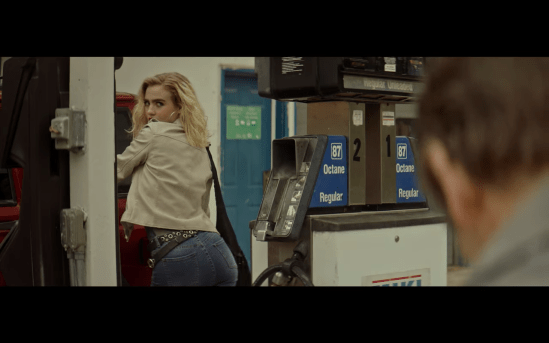
If you haven’t guessed already, Alexandra Daddario (“Burying the Ex,” “True Detective”) stars as Alexis Butler, one of the three metalhead girlfriends cruising to the show, and sequestering herself the ringleader of the road tripping trio as a level headed, parental type with an edge to keep her ostentatious blond friend, Val, played to the fine tune of being uninhibited crazy well by Maddie Hasson, and the timidly sharp Beverly, a role docile to the point of uncertainty and shepherd well by “Hell Fest’s” Amy Forsyth. The three very attractive concert goers bump into another trio of friends, more haplessly hazardous, if not hopeless, band mates who try their hardest to be as metal as they can be, even if that meals throwing a chocolate milkshake out of the window of their speeding van onto the gals’ Jeep. Austin Swift, Logan Miller (“Scouts Guide to the Zombie Apocalypse”), and Keenan Johnson (“Alita: Battle Angel”) make up the group caught red handed in a stroke of coincidence that the girls find them at the very same concert. As much as the two groups mirror each other in personalities, matching up almost perfectly in the varying degrees of state, one group holds a darker secret that could cost the other their very lives. That level-headedness Daddario portrays onto Alexis’ mindset becomes ravaged with wild fires in her eyes and her laid back amount of patience becomes threadbare frazzled when the bodies start to drop in a satanic twist of murder and mayhem, frenzied with extreme ideology founded on multiple levels of greed. Daddario wears crazed well in a very different side to her usually starry eyed and elegant approaches, making all the others seem abhorrently normal in comparison. “We Summon the Darkness” rounds out with Allison McAtee, Tanner Beard, Harry Nelken, and that “Jackass” Johnny Knoxville as Pastor John Henry Butler.

Despite Daddario’s rising stardom and luminous performance, “We Summon the Darkness” falls hard into a mosh pit of despair. The concept is sound and promising, but the execution couldn’t rise to the occasion with limited secretion of the murderous evil that has spread like a pandemic across the nation that’s has sorely downgraded and diluting the nature of the news and media’s role in beyond hammering in the deaths. When story turns dark, the effect feels whiffed and not as jarring as hoped as little is then diagramed to help assist the viewer grasp just what these satanic cultist wish to accomplish. Also, Trezza’s script is highly predictable as the twist is unfolded fairly early on even before the catalyst transition to a darker tone, spoiling the unveil with too many gnomic sidebar conversations and a slew of obvious character tells that don’t exactly shield the truth of their true wolf in spiked studded, black jacketed, metal band patched sheep’s attire. Also, the film pulled too many punches, teetering on the balancing beam whether it’s an edgy killer comedy or a killer comedy with that’s soft around the belly area. Plus, I’m still trying to figure out why a walk-in pantry has a lock on the inside…?
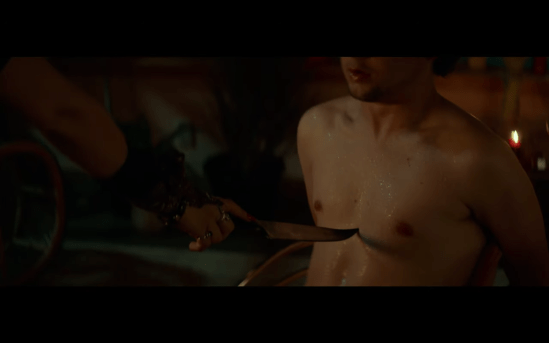
Metal posers rule while the victims haplessly mewl in this Marc Meyers’ film, “We Summon the Darkness,” hitting retain and digital shelves this week on DVD, Blu-ray, and Digital courtesy of Lionsgate and Saban Films. Since the screener provided was a digital streamer, the video and audio aspects will not be covered; however, the Blu-ray specs will feature a 1080p High Definition, 16X9 (2.39:1) widescreen presentation with an English 5.1 Dolby True HD mix while the DVD is presented in the same aspect ratio and will sport an English 5.1 Dolby Digital Audio. Both releases with have optional English, Spanish, and English SDH subtitles. Special features will include a featurette entitled “Envisioning Darkness” and an audio commentary with director Marc Meyers and writer Alan Trezza. “We Summon the Darkness’s” cheekiness is fresh for an 80’s maniac homage armored with solid performances by Alexandra Daddario and an uncharacteristically stoic Johnny Knoxville as a devout pastor against metal music, but seizes up, derails off the tracks, and fizzles to a reduced version of the greater version it could have been.

“We Summon the Darkness” out now on Blu-ray / DVD/ Digital! Click the cover!

 It's Bloggin Evil!