This 600 Horsepower Outboard Propeller Runs on EVIL! “Motorboat” reviewed! (SRS Cinema / DVD)

As Chief Brody Always Said, This Isn’t a Boat Accident!  “Motorboat” on DVD today!

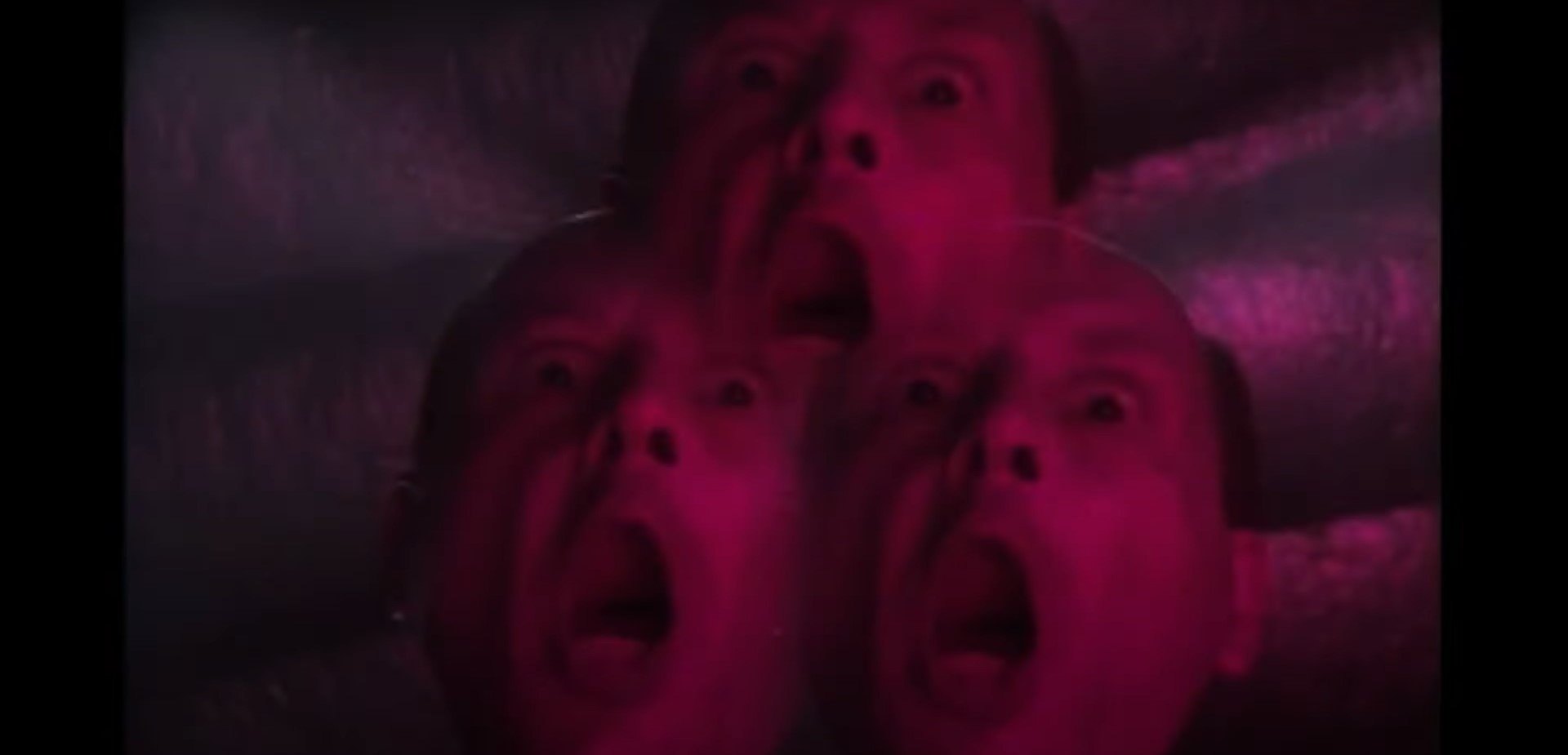
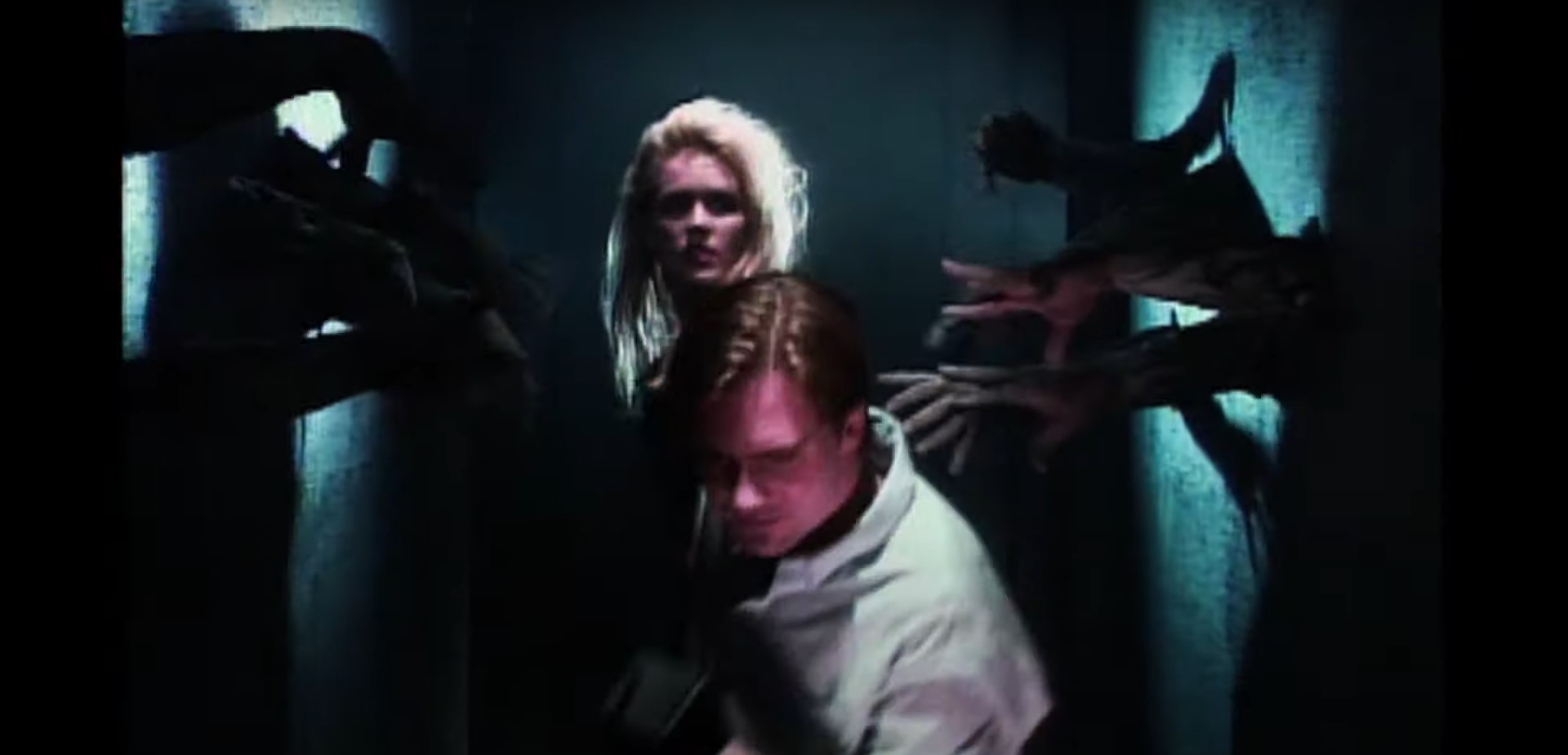
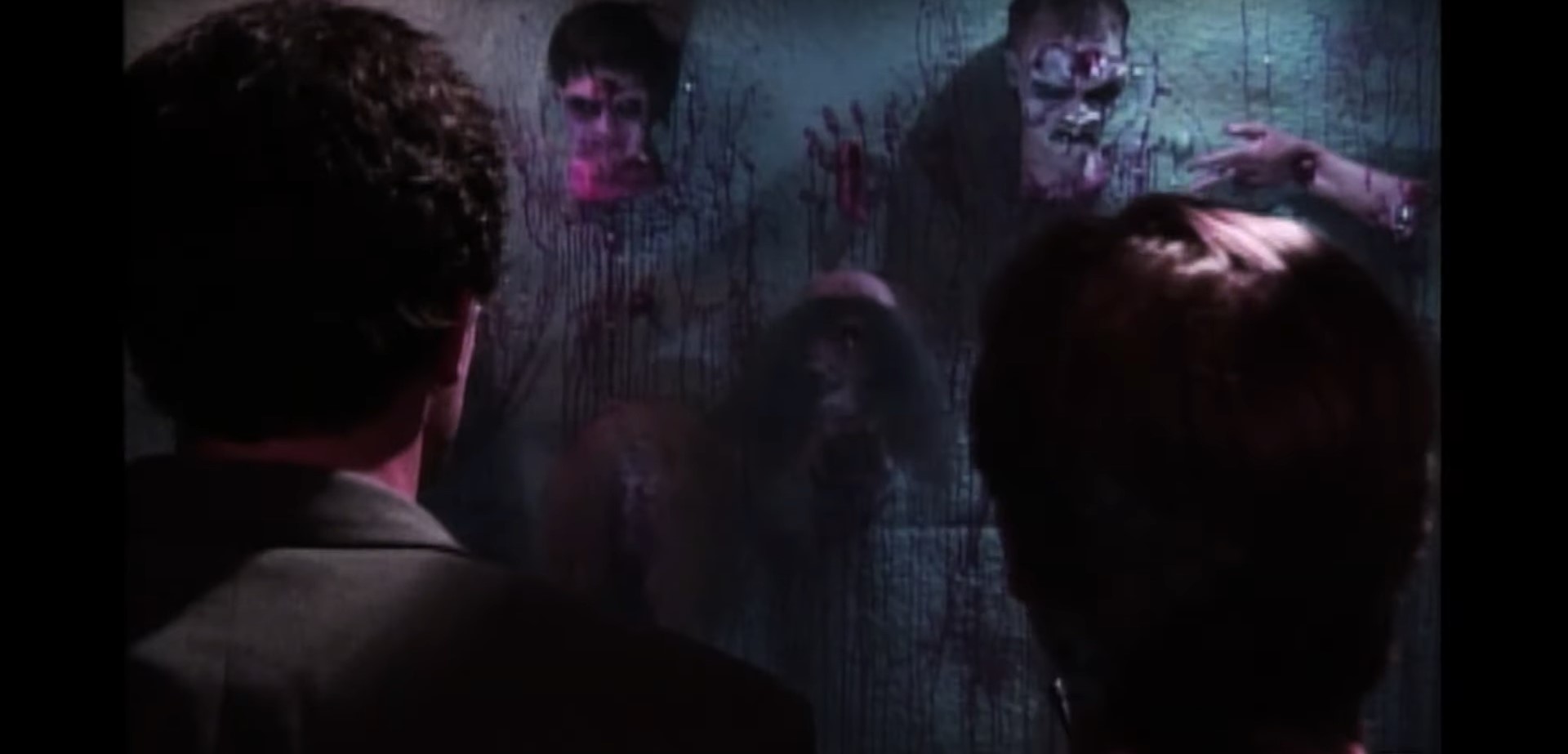
Messiah Ward and his cult of followers once plagued the surrounding Lake Jude for years, conjuring black magic and death in order to appease their netherworld lord.  Ward’s evil is only matched by the goodness of a man of the cloth, but the pious risktaker is no ordinary priest but Messiah Ward’s very own brother, Father Thomas.  Taking matters into his own had to save the souls of his community, Father Thomas mercilessly guns down Messiah Ward and his acolytes, ending his reign of terror…or so he thought.  Two years later, a black and powerful phantom speedboat appears on the lake, killing those who dare enter its waters.  With the help of the local lake patrol officer Barney Rayl investigating the homicides, Father Thomas must serve as the wrath of God once again to stop his brotherly possessed motorboat from hacking up any more innocent swimmers and fishers with its deadly outboard propeller. 

I’ve seen my share of possessed combustible engine films with cars, trucks, and even a killer bulldozer.  Hell, I’ve even seen a rubber tire on a rampage.  Yet, I’ve never seen a killer boat movie until today and the Polonias are responsible for the slaughter on the seas with their latest indie schlocker, “Motorboat.”  The “Splatter Farm” and “Hellspawn” director Mark Polonia and his son Anthony team up for their fifth rudimentary, lowbrow lunge at hyper-micro budget horror, crowdfunded on Indiegogo for around $5,000, and shot in the fall of October ‘22 in and around Tioga county, such as one location being Hills Creek State Park Lake to be one of three locations in creating a larger lake setting.  “Motorboat” is created by Polonia Brothers Entertainment, executively produced by SRS Cinema’s Ron Bonk, through Indiegogo, and John Dagostino with Mark Polonia producing, and Elliott Monroe (“Evil Bong 666”) and Previn Wong (“Yule Log”) set as associate producers. 

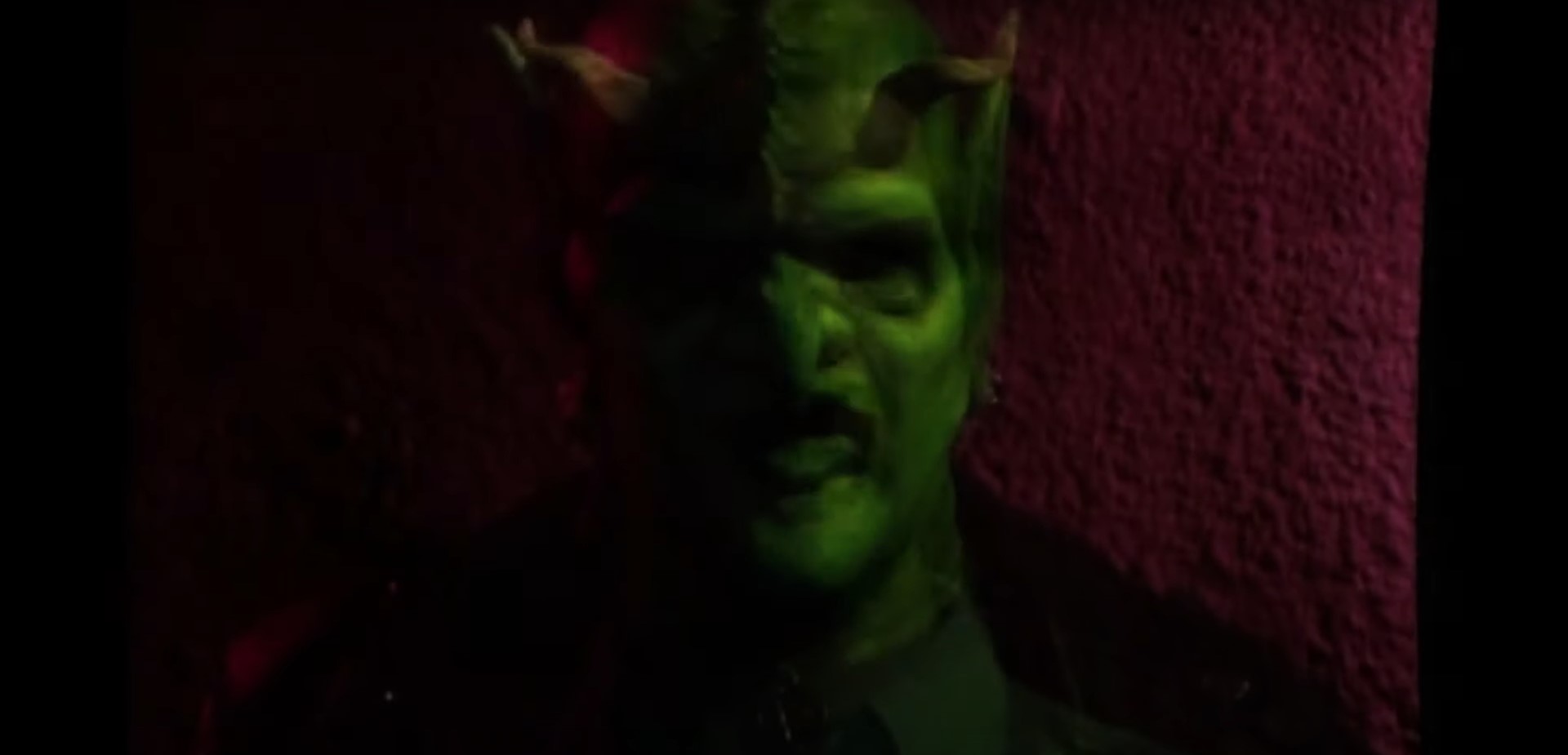
Like many of the Polonia Brothers Entertainment, a cast of regulars return to indulge in the tightknit production family and to give their all in providing their best performances to make micro budgets like “Motorboat” come to filmic fruition.  In the roles of Priest and Harbor Patrolman are Tim Hatch (“Shark Encounters of the Third Kind”) and Jeff Kirkendall (“Sharkula”) who have once again found themselves working side-by-side on a Mark Polonia production.  Cemented more into exposition than action, Hatch and Kirkendall essentially get the job done with their extensive rapport and long history working together but as developing their characters, a Priest and a Harbor Patrolman could have well been a Lake Fisherman and  Pizza Delivery Man as the professions are laid waste to the script’s lesser defining ideals that are more clearly evident, such as a demon possessed motor boat offing people on and off shore.  Also, Hatch and Kirkendall, as well as much of “Motorboat’s” cast, aren’t very expressive, use little gesturing, and corner themselves with monotone deliveries, taking what should be shocking scenes or jump into actions with little reactionary energy and intensity.  That fairly sums up “Motoboat’s” cast as Messiah Ward is more like the 1958 Plymouth Fury in “Christine,” a motorized machine on a killing spree, with Michael Korotitsch briefly playing the character under a black or rubber mask during his corporeal scenes.  The remaining cast are essentially the racked up body count boat fodder with Polonia regulars Jamie Morgan (“House Shark”), Ken Van Sant (“Sharkenstein”), Dave Fife (“Doll Shark”), and Noyes J. Lawton (“Virus Shark”).

As you can obviously see by the cast’s previous film credits, which all involved Mark Polonia, the director has a healthy fascination with the predators of the ocean, augmenting and exploiting sharksploitation from a limitless thought-bubble of narrative concepts.  Surprisingly, “Motorboat” does not contain one single dorsal fin or rows of razor-sharp visual effects teeth.  Polonia may have deviated from sharksploitation but never got out of the water by keeping the tide still infused with blood.  Post-production blood effects, rain, and layered energy spirals are not the most skillfully composited integration but what Polonia always strives for is to make an entertaining film, to keep the viewers engaged, and could only hope that the his microbudget efforted effects, such as using a 1/16 scale RC boat as the Messiah Ward’s ship of slaughter, afforded him enough production value to eke by but how Mark Polonia, and I’m sure son Anthony also, very masterfully retains engagement for his microbudget movies is to not linger on a shot that can make the scene stale or monotonous.  Granted, you may roll your eyes on lower shelf quality, but you’ll still find yourself connected to the screen as cuts are made for different camera angles, such as over-the-shoulder, behind-the-back, master shots, closeups, mediums, there’s never a single take for a long period of time to avoid idle eyes and unstimulated neuron firings.  The story itself cruises along as combination of films like “The Devil’s Rain” and “The Car” leaving a fair amount of demonic or possessed destruction in its wake but can be trying at times piecing together the whole story behind Messiah Ward’s purpose and transition into either a speedboat or a demon driving a speedboat, an unclear specific of the antagonistic character, and this undercuts Father Thomas and Harbor Patrol Rayl endgame goal because we’re not exactly sure who or what they’re up against.  An innuendo term like “Motorboat” suggests lighter, more in a foreplay of intentions, but SRS Cinema and Mark Polonia are abreast in another way to turn the tide toward something far more terrifying on the waters!

The one thing you can always count on Ron Bonk and SRS Cinema to pull off are immaculately enticing cover arts to catch one’s eye and that is what we have here with “Motorboat” on DVD home video.  The 16×9 widescreen presented film is a MPEG-2 encoded DVD5 shot digitally with an overall clean finish. However, compressions issues do appear with minor jittery picture noise and minor banding with skin tones ungraded and appearing sometimes orange in the shot. Thrifty visual effects are you get what you pay for but doesn’t necessarily affect the watch if going in, understanding, and if a fan of the Mark Polonia fast and dirty chugalug of filmmaking. An English stereo 2.0 is wangled by the built-in camera mic that more than most the time doesn’t have too many issues with playback aside the varying and inconsistent dialogue levels despite being in the same scene as well as unable to filter an overwhelming lakeside ambiance. Post ADR was used to overlay a couple of scene dialogue tracks due to the crashing, wind-driven waves of lakeside conversing. As a whole, dialogue sums up pretty clear without serious hurdles. The two-channel speaker relays a punchy boat-toot audio byte that sounds like a Mac truck blaring its horn whenever Messiah Ward the “Motorboat” is cruising the waters and killing the people. There were no English subtitles available. Extras include an audio commentary track with director Mark Polonia who half the time soapboxes his trials and tribulations as well as champions micro-indie filmmaking while also diving shallowly into “Motorboat’s” background waters. The official trailer and other SRS trailers are also present. I’m always impressed with SRS Cinema front cover artwork as it’s very appealing, alluring, and is sometimes not truly accurate and for “Motorboat,” we have a half-submerged woman in distressed and reaching out for help in the foreground as a minacious boat barrel toward her from behind. Not insert inside and the DVD art is the same front cover image but cropped to just show the woman’s frightened, eyeshadow-streaked face. Region free with a rum-runner runtime of 75 minutes, SRS Cinema’s DVD comes unrated. “Motorboat” is pure Mark Polonia and if you’re expecting high-caliber horror, you’re going to need more than a life preserver to survive these chopping waters.

As Chief Brody Always Said, This Isn’t a Boat Accident!  “Motorboat” on DVD today!

EVIL Will Always Get You in the End! “Ghoulies” reviewed! (MVD Visual / 4K-Blu-ray set)

“Ghoulies” Will Get You in the End With a 4K-Blu-ray set!

When a satanic ritual of sacrificing an infant boy is foiled by the acolyte mother, the child is taken far away from the fathering dark warlock who attempted to harness the boy’s youth for his own.  Fast forward 25-years-later, the malevolent father dies and the curse of the fiendish family tree has thought to be lifted.  The mansion is bestowed to very same young boy, Jonathan Graves.  Now a man in graduate studies and with Rebecca, his longtime girlfriend and love of his life, the inherited gothic mansion quickly entrances him into the urge for dark rituals, finding fascination in drawing and calling out the spirits and demons to do his bidding as their exclusive master.  In spite of Rebecca’s concerns and hoodwinking his unsuspecting close friends into a dark rite, Graves unwittingly resurrects his deceased and powerful father who seeks to pick up where he left off with his own callous ceremony from 25 years ago. 

If there are pint sized characters with a mischievous, devious edge, you better believe it that Charles Band is more than certainly behind the little terror-tykes hellbent on hell’s work.  One of the more successful ventures to come out of Charles Band’s empire, literally out from his Empire Production studio, is the 1984 released “Ghoulies.”  Written-and-directed by Luca Bercovici, as his debut feature film and who would later direct “Rockula” and “The Granny,” and co-written with Jefery Levy, who would go on to inevitably write a pair of sequels off the original film, the American-made production masters a flawlessly edited and sound designed layer composition mixed with the imprudence of 80’s stereotyped horror-teen character and nostalgic lighting and matte effects that make “Ghoulies” a travel-sized cult classic.  “Ghoulies” is produced and distributed by Empire pictures with Charles Band as executive producer, Jefery Levy as producer, and Debra Dion (“Oblivion”) as associate producer.

You can’t have a story about necromancing sorcery and demonic disinterring without big personalities and, fortunately, “Ghoulies” has a few that standout with memorable dark magic melodramatics.  Opening scenes of a ritual’s beginning introduces Malcolm Graves, an infernally flamboyant, wide-eyed, and animated with his hands sorcerer who likely won’t win the father of the year award.  “Mulholland Drive” and “Waxwork II:  Lost in Time” actor Michael Des Barres lights up the lurid life of Malcolm Graves with great enthusiasm and piercing eyes.  Graves eccentricity is balanced by another Lynchian actor Jack Nance as the acolyte turned mansion caretaker who oversees the Jonathan Graves’ wellbeing.   Nance meticulous eye gazes and gestural articulation combat and numb down Barress over-the-top dark magic ringmaster.  The “Eraserhead” and “Blue Velvet” actor definitely transposes his defined and evident presence of idiosyncrasies over to this little monster movie with manipulating occultist mascara that make “Ghoulies” that much more special.  The third actor is principal lead Peter Liapis who swings the pendula between normalcy and obsessive occultist as Jonathan Graves quickly swept up by an invisible force that drives him to become an intermediate master of miniature minions.  Liapis has that on/off switch ability to be sane one second and completely maniacal the next and when acting tranquil and the boyfriend of nicety to Rebecca (Lisa Pelikan, “Jennifer”), you better believe that we are convinced by his prosaic act.  Jonathan’s friends are an mixed lot of stereotypical lambs for the slaughter, to be used as pawns, and never know their role in the ritual of resurrection.  Stoners buds Mike (Scott Thomson, “Parasite”) and Eddie (David Dayan) fill “Ghoulies” with comedic jokester relief, rockabilly rake Dick (Keith Joe Dick) has eyes on the bedding prize with promiscuous Anastasia (Victoria Catlin, “Maniac Cop”), and an awkward dork Mark aka Toad Boy (Ralph Seymour, “Just Before Dawn”) tries to tickle swoon hottie Donna (a very young Mariska Hargitay, “Law & Order:  SVU”) are the paired up friends to fall into the, pun-intended, Graves trap.  “Ghoulies” round out the cast with the blonde and busty “Evil Spawn” and “Mausoleum” actress Bobbie Bresee as an open-armed invitation for sex and sacrifice while persons of short stature, Peter Risch (“Malibu Hot Summer”) and Tamara de Treaux (“Don’t Be Afraid of the Dark”), credited as the smallest actress in the world, made up a pair of mischievous, quarrelling minions fed up with the current incumbent of infernal dealings. 

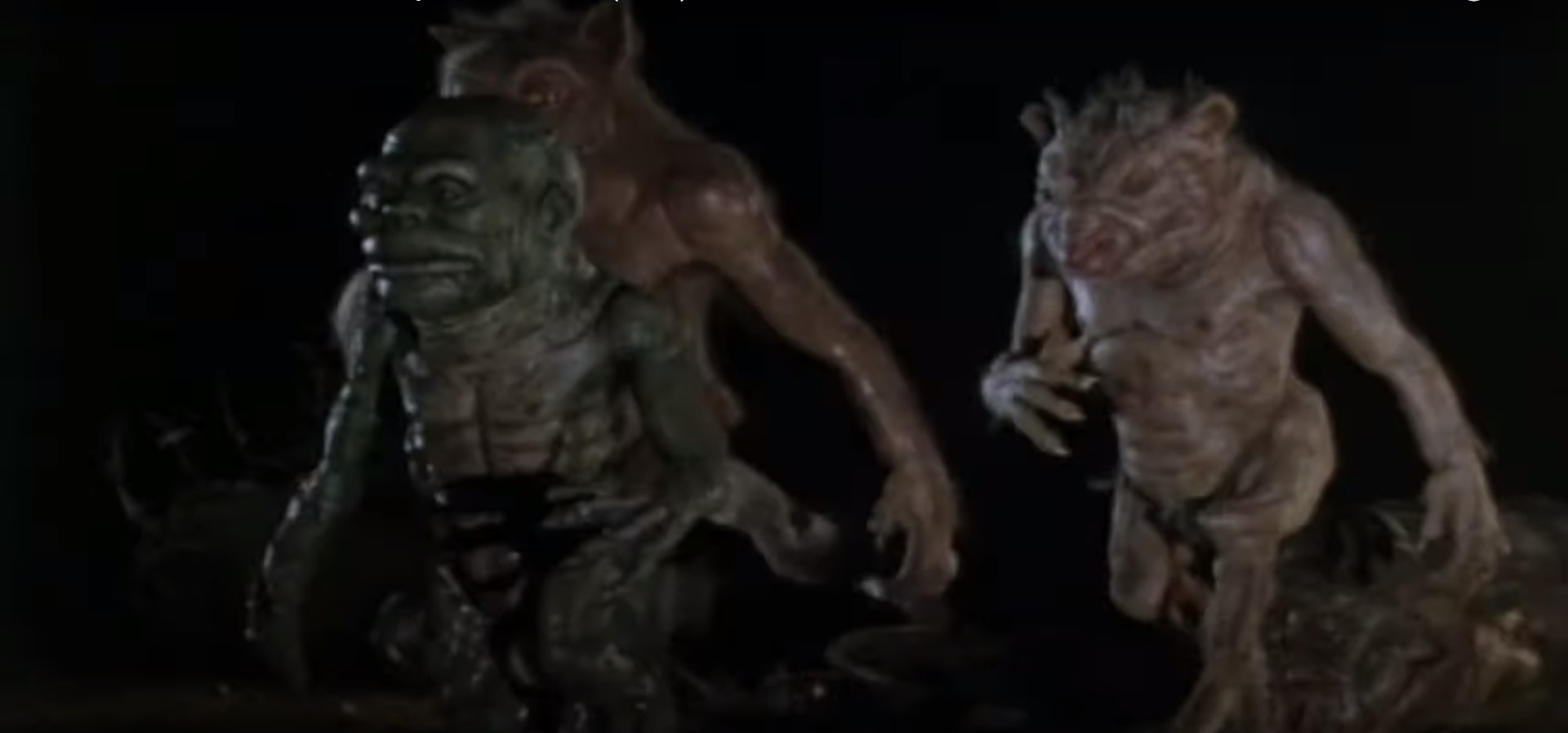
For a 1984, Charles Band production, especially one of his first to be distributed under his Empire Productions, “Ghoulies” establishes the bar for the miniature maniac mogul’s subsequent earlier films that may have been the peak era for Empire and even Full Moon pictures, having and hitting all the hallmark tropes of effectual horror.  A fog permeating production design with enough gothic hulk in the mansion and in the out-the-window small gravesite to immerse atmospherics, a matte composition of brilliantly simple visual effects blended with the catastrophe force inspired practical effects that aggrandizes the budget, the fantastic editing by now longtime Full Moon filmmaker Ted Nicolaou (director of “Subspecies,” “Don’t Let her In”) to piece together a more-than-palatable sound design and image, the carnivalesque soundtrack by Charles Band’s brother, Richard Band, to enrich impish latency around the characters, and, of course, the icky-coated and reptilian-rinded puppet demons by creator John Vulich (“Dolls,” “From Beyond”) in dynamic surroundings with the living, breathing characters.  What “Ghoulies” could use is fine tuning on was to further the story development.  A little more exposition into the background of who Malcom Graves is or who Jonathan Graves was calling from the slither of beyond could go a long way.  The ending transition also took a lighter approach, an additional aspect in this pre-Full Moon, Empire Production we don’t typical see in the ensuing works that grinds the desolation gears by shifting the clutch into third gear of blood, boobs, and bodies. 

Coming in at number two on the spine of the MVD Rewind Collection, as part of the 4K UHD LaserVision line, “Ghoulies” comes a 2-disc UHD and Blu-ray set. Presented in a 4K Dolby Vision HDR restoration from a16-bit scan of the original camera negative in 2460p and a sister 1080p Hi-Def restoration for the Blu-ray, both transfers exhibit in the original widescreen aspect ratio 1.85:1. Both transfers cherish the source material and even celebrate it with a clean print scan that elevates the definition of a gloomy, brooding abode under the cast of many a shadow. No issues with compression as black levels remain inky and the in-lined picture isn’t blighted by artefacts, revealing the natural grain without a combover to smooth out any original veneer from the 35mm acetated celluloid. Both discs come with an English DTS-HD 2.0 master audio that’s stark as it is clear and orderly with a prominent dialogue track and a ridiculously good sound design edit that enhances the rituals and rambunctiousness of the cult and kids. Boosted levels are balanced and well overlayed to provide max composition as we get a good range and depth of sound and space with the eye lasers, atmospheric house creaks, and an Earth-rattling finale. English subtitles are available on both formats. As usual due to the vast number of gigabytes needed, the Blu-ray special features outnumber the 4K UHD. The 4K special features include once Shout Factory! exclusives, such as a 2015 archival audio commentary by director Luca Bercovici, a 2016 audio commentary with Bercovici moderated by Terror Transmission’s Jason Andreasen. With the Blu-ray, you receive the 4K content plus a video introduction by Bercovici, which is quick, simple, and not much too an opening recollection of the keystone of his career, an interview with editor Ted Nicolau Editing an Empire that more so Nicolau’s career from beginning to current, an interview with actor Scott Thomson A Mind Is a Terrible Thing to Waste as he exchanges his “Ghoulies” remembrance in that same stoner-fog as his character, an interview with Luca Bercovici Just for the Chick Man, a half-hour behind-the-scenes featurette From Toilets to Terror, a photo gallery, four television spots, and the theatrical trailer. The physical contents include a faux crumpled cardboard slipcover of the iconic Ghoulie in the toilet marketing ploy complete with security tag at the bottom. Sheathed inside is a black Blu-ray amaray with an ironed version of the cardboard O-slip. Inside, both discs are pressed with laserdisc-esque pattern art, and the insert contains a folded collectible mini-poster of the faux crumpled slipcover. The 80-minute, region A locked release doesn’t list a rating on the back cover but I suspect an unrated feature like with most Empire/Full Moon products and this seems to be the complete, unedited version. “Ghoulies” is a must-see for the casual horror fan, “Ghoulies” is a must-see for die-hard fans, and this MVD 4K and Blu-ray Rewind Collection release of “Ghoulies” is a must-own for the collector at heart.

“Ghoulies” Will Get You in the End With a 4K-Blu-ray set!

Just Because Your EVIL Dad Says Its Okay, It’s Probably Not. “Netherworld” reviewed! (Blu-ray / Full Moon Features)

Enter the Netherworld on Blu-ray!

A wealthy owner of the Thorton plantation bequeaths to his willfully neglected son, Corey, his large Louisiana estate. He’s welcomed by the estate’s unusual lawyer, a house caretaker with an affinity for birds, and her beautiful daughter Diane who, despite her teenage muliebrity, immediately takes an interest and liking to the handsome young man. Corey is also met with his shirker father’s penned testament, to be resurrected from the dead by a sexually alluring brothel woman and necromancer named Delores who works at the local bordello and bar named Tonks. Fascinated by the idea, Corey hangs around the bar and becomes just as engrossed with Delores as his father as he seeks to abide by his father’s supernatural wishes but there’s a warbler cult connected to Delores and Corey’s father with an underhanded scheme that doesn’t favor the new, young estate owner trying to save and possibly get to know the father he never knew, the same one who abandoned him as a small child.

One of the more stranger Charles Band productions to every come out of Full Moon Entertainment, and that’s saying something for a media empire that made killing on hawking killer dolls amongst other oddity-saturated, carnivalesque sci-fi and horror for many decades, “Netherworld” is the early 90’s, Cajun-encrusted, occulter of the Full Moon legacy director of “Tourist Trap” and “Puppet Master,” David Schmoeller, who also cowrote the film alongside Charles Band. “Netherworld” harkens to a time before Band became visionally crazed by dolls, or miniaturized maniacs in general, with a plot that promises Cajun black magic beyond the traditional spells and curses of Louisiana Voodoo, a son desperate to reconnect with his long-lost father who abandoned him, and a flying stone hand with finger extremities that turn into vicious snake-like creatures when attacking the quarried head, but is “Netherworld” too extrusive of the regular and in vogue poured cement of solidified psycho-dolls? ‘Netherworld” is executively produced by Charles Band, produced by Ty Bradford (“Trancers II”) and is a part of the vast Full Moon Entertainment catalogue of productions.

Unsuspectingly walking into between the veil of the living and the dead is predominately television actor Michael Bendetti (“21 Jump Street”) embarking on his first ever horror feature as Corey Thorton, the city boy, or so we assume as he leisurely journeys down a windingly steamy Louisiana tributary in a button-down shirt and tie, who learns his deadbeat, rich father has left him a large amount of property. For having been left fatherless for all of his life, the pill that read as Corey’s deep-rooted longing to familiarize with a flake of a father is a hard one to swallow. The angle that Schmoeller should have attacked more resurrection motivation is the one that involves Corey searching for answers in his father’s disfavor, choosing to live without the flesh and blood legacy of a son, and why now, posthumously, does his father want to reconnect? Audiences will find the answer overly obvious, but Corey Thorton’s thickness proves more difficult to penetrate, especially when he’s beguiled by an enchantress who can summon a flying, snake-fingered hand that emerges an affixing binding wire out from its stony skin and can turn whorehouse johns into caged birdies, literally, if they misbehave or become indelicately frisky. The house keeper’s horseback riding daughter Diane is marred by Holly Floria (“Bikini Island”) with an excessive Southern Belle accent when her character’s status doesn’t stem from sophistication and affluency but rather from the blue collared starry eyes of Anjanette Comer’s (“The Baby”) motherly and hospitality position. When the climax arrives in grand temps and we’re face-to-face with Corey’s ghostly pops, living in the titular Netherworld, the story takes a sudden branch drop that executes any voyage into the void between worlds and there’s quite a bit of neglect for Robert Sampson (“Re-Animator”) as Corey’s father who barely has any scenes to live up to being the film’s primo antagonist pulling the strings of the marionette of his flesh and blood. “Netherworld” fills out the cast with Robert Burr (“Ghost Story”), Alex Datcher (“Passenger 57”), Holly Butler (“Vendetta”), George Kelly (“Jugular Wine: A Vampire Odyssey”) and Denise Gentile (“Ordinary Madness”) as the super-sexy, premium prostitute Delores with parapsychological powers that connect her to the land of the dead.

Off the tip of a gator’s nose, “Netherworld” offers a taste of Full Moon’s 90’s production, promising radically outlandish F/X with a monstrous airborne hand, saucy sexual content, and gore. Corey’s inner thoughts exposition and waterway introduction tends to be more private eye monologuing in the explanation setup of his unplanned inheritance and it also feels like the brittle beginnings of a trashy romance novel: young man travels down the river to his inherited late father’s estate, torn between a pubertal young daughter of the long-standing estate housekeeper and the haram brothel seductress with an eldritch, supernatural inveiglement. Corey’s past lacks backstory, leaving an even playing field across the board of all characters and participating audiences in what to expect from the wild card that is Corey. Immediately drawn to the wanton Tonks not for carnal desires but rather the one woman who her father says can restore his past expiration, Corey’s not a wild card of ambiguity as his role lacks the pull of tough decisions, often between character versus character conflict, with basically a mind already made up to visit the bar-and-bordello despite the ominous warning signs between George Kelly’s sloppy bayou cajuner wanting to dance with Corey at Tonks, Diane’s strong opposition for Tonks in general, and amongst others dubious gratifying points. “Netherworld” very much lives in a world of opposition, like Superman’s bizarro world that defies logic. Logic such as the transition of people into birds, or being inducted into a clan of avian cultists, or ciphering who’s a good guy and who’s a bad guy, or, and this is the most important or, the suddenly cleaved ending that not only doesn’t allow a satisfying ending but also doesn’t explain much, in dialogue or in action, what came into existence once Corey was stuck in the Netherworld other than the obvious trade his father wanted to force.

Full Moon Features brings Hell to Blu-ray with an uncut and remastered from the original camera negative transfer of “Netherworld” in the continuous effort by the empire to upgrade all their classics for a new wave of format availability. Scanned into 2K from the 35mm negative, the AVC encoded, 1080p, high-definition Blu-ray looks pretty darn good. Well kempt over the years, the negative appears to have sustained little age or wear that progresses the hi-def upgrade with relative ease. Color grading is warm and stoked with detail that encrusts every object – the lushy bayou forest, the stony power of a flying hand, Michael Bendetti’s layered curly-perm mullet – all of it is greatly textured and delineated for depth, presented in the 1:78:1, widescreen aspect ratio. Compression doesn’t appear to be an issue despite a lower storage BD25 but that might be due to the utter lack of bonus accompaniments. The release offers two audio options: an English Dolby Digital 5.1 surround sound and an English Dolby Digital 2.0 mix. Both options are equally suitable as the there’s not much more environmental oomph through the extra channels despite the full-bodied cacophonous cicada singing, which unfortunately doesn’t open up depth in the back channels despite the prevalence of the singing in the story’s background sonance. However, dialogue doesn’t feel cheated with a dominating layer and decent range to go with it. Along with essentially what is a bare bones disc, there are also no subtitles available with this release. What is available to view outside the feature is other Full Moon trailers and the original VideoZone segment that covers this particular 1992 gem. Physical features don’t stray too far from VHS, to DVD, to Blu-ray with the same flinty hand rocketing outward in a 3D-like position on the front cover. There are no inserts included with this release. “Netherworld” Blu-ray comes region free, with a runtime of 82 minutes, and, for the first time ever, uncut! An opposition to the usual spun of Louisiana voodoo-hoodoo, there’s another dark magic brewing in the bayou in “Netherworld,” but the promising story can’t coherently piece together down river in an uneven quagmire of quandaries.

Enter the Netherworld on Blu-ray!

EVIL Has the Right to Remain Dead! “Magic Cop” reviewed! (88 Films / Blu-ray)

No Two-Bit Magician In ‘Magic Cop” on Blu-ray!  

Hong Kong cops are confounded by a chaotic drug bust when learning that their female suspect, who had managed to overpower an entire unit of male officers and even take a bullet ambling deadpan into the streets, had died 7 days prior.  An outlying officer, and practicing Taoist, Uncle Feng is called to Hong Kong to not only quickly solve the narcotic crime but also investigate the unnatural properties of the case.  Feng is accompanied by his city eager niece Lin and two Hong Kong cops, a Taoist devotee and skeptic of Ancient Chinese spiritual mythologies.  Together, they track the drug trail to The Sorceress, a Japanese witch with powers that rival Feng and that can resurrect the dead into zombies and vampires to do her bidding, such as trafficking narcotics.  When the investigation closes in her business, The Sorceress and her right arm, skilled fighter plan to remove the only man worthy of stopping her.

Fans of Ricky Lau’s “Mr. Vampire” will once again be amazed and entertained by the fantastical and mystical action of Stephen Tung Wai’s “Magic Cop.”  Tung, a fellow martial artist and stunt man who had roles in “The Fatal Flying Guillotine” and John Woo’s “Hard Boiled,” helms his debut directorial penned by Chi-Leung Shum (“Vampire vs Vampire”) and the longtime Stephen Chow script writer Kan-Cheung Tsang (“Shaolin Soccer,” “Kung-Fu Hustle”).  The screenwriting duo brought lighting quick comedy to the mostly fictionally invented yet sprinkled with slivers of hard-pressed veracity and definitive entertaining occultism and what resulted resurrected “Mr. Vampire” semblance out of the being a period piece and into the modern day, backdropped in the year of 1990 when the film was released.  Long rumored to be the fifth sequel of the “Mr. Vampire” franchise, “Magic Cop” is a coproduction between Movie Impact Limited, Millifame Productions Limited, and Media Asia Film with star Ching-Ying Lam producing.

“Magic Cop,” and even “Mr. Vampire,” wouldn’t have such a cult following if it wasn’t for the Vulcan eyebrows and thin mustache of Ching-Ying Lam in costume.  The short-statured, Shanghai-born Lam delivers the same vigorous choreography and tranquil demeanor to this particularly stoic character of Uncle Feng, a Taoist practitioner to essentially wrangle unruly entities and please the spirits in the in-between our world.  Feng is old world and finds himself in surrounded by modernism when in Hong Kong, goaded by the young lead sergeant attached the case.  Practical as well as disrespectful, Sgt. Lam (Wilson Lam, “Ghost for Sale”) epitomizes today’s, or rather back then the 1990’s, modern man who has forgotten tradition and deference to those who came before.  Though padded with a fair amount of comedy coursing throughout, balanced against the impeccably edited tango fight sequences, Sgt’ Lam’s partner, known only as Sgt. 2237 played by “Centipede Horror’s” Kiu-Wai Miu, risibly wants to understudy Uncle Feng’s powers while Feng’s niece Lin, played by Mei-Wah Wong of “The Chinese Ghostbusters,” provides the subtle and quirky opposite sex that catches of the philandering eyes of Sgt. Lam.  The ragtag quartet of influx mindsets and personalities become challenged by their single common goal, to stop whoever is behind breathing life into the formidable dead and stop the unorthodox method of drug smuggling.  Former Japanese bodybuilder Michiko Nishwaki (“City Cops”) embodied that very dark magic antagonist.  Nishiwaki handles The Sorceress character with ease despite not having a surfeit army under her thumb; instead, this forces Nishiwaki to become the entire villain body with the slight, full-contact support for her right-hand bodyguard (Billy Chow, “Future Cops”) and a couple of undead lackeys, including Frankie Chi-Leung Chan of “Riki-Oh.”  “Magic Cop’s” cast rounds out completely with well-versed and seasoned, late actor Wu Ma (“Mr. Vampire,” “Return of the Demon”) as the chief inspector polarized in a complicated history with Uncle Feng.

What director Stephen Tung Wai boils down in essence is another variation of good executants of spirit humbled caretakers versus the wicked necromancers existing inside the fabric of the highly praised and cult-following “Mr. Vampire” universe.  Frankly, there’s nothing wrong with that derivativity since Ching-Ying Lam, Mr. Vampire himself, produces and stars as the titular hero.  Lam can conjure whatever-the-hell he wants in order to battle Hell itself.   “Magic Cop” is also a well-made, entertaining story, balanced between the contest wizardry, slapstick comedy, and the character dynamics, and stacked with improbable yet gratifying step-intensive fight orchestration that has gawked early martial arts films a wonder to behold and continues to do so to today but now trickles with pizzazz more-after-more due to put in place industry safety measures.  “Magic Cop” contains that lost art of potentially hazardous palatable physicality that beguiles more than the movie’s faux magic exhibited on screen.  To add to the authenticity, very little painted composited visual effects were used with makeup and the actors doing much of the heavy lifting with the editing team of Ting-Hung Kuo and Kee Charm Wu in full cut-and-paste fortifying mode to button up each sequence with comprehendible continuity of each punch, kick, and magical chopsocky.  One overtone made well known in “Magic Cop” is the unfillable chasms between old and new, respect and disrespect, and myth and science from whence solves no problems until some unified common ground can be reached in order to succeed, in this case, to stop a bitch of a witch.    

An age-resistance 35mm print scanned onto a buffed 2K Blu-ray that extracts the best print elements to-date. The AVC encoded, 1080p, Blu-ray presents Stephen Tung Wai’s picture in a widescreen 1.85:1 aspect ratio. A fine-tooth comb through the celluloid couldn’t unveil any major issue with the 88 Films release. Colors are richly grafted within the sabulous surfaces that are exceedingly defined with delimited, shadow-creating depth. Decoding speeds average around 35Mbps on a BD50, securing categorical choiceness amongst other releases and formats (that is until the potential 4K release). The release comes packed with four audio options to explore: The original Cantonese DTS-HD master audio 2.0 mix, a Cantonese DTS-HD 2.0 home video mix, an English DTS-HD 5.1 master audio dub, and an English DTS-HD 2.0 dub. Between the variated audio mixes, we preferred the original Cantonese DTS-HD 2.0 due to its cadence with the image and welcoming exactness through the lossless compression process. You can make do with the other three options, but the fidelity is much better with the original mix and only anti-subtitle sectarians would be pleased with an English dub. English subtitles are optional and synch well the dialogue but be prepared to speed read as the pacing is quick much like the dialect. Software special features include an audio commentary with Hong Kong film experts Frank Djeng and Marc Walkow, an alternate, standard definition Taiwanese cut of the film with alternate score, an interview with director Stephen Tung Wai, image gallery, and trailer. Endowed with a limited-edition, cardboard slipcover, the dark green Blu-ray snapper has newly illustrated, front cover artwork by Manchester graphic designer and 88 Films resident artist Sean Longmore, which is also on the cardboard O-slip. The reversible cover art has a reproduction of the original Hong Kong poster art. Stuffed in the insert is a mini-folded poster of Longmore’s front cover and a disc art, a scene moment captured in spherical rotunda, of the opening sequence. Available with a regional playback limited to A and B, the 88 Films release is not rated and has a runtime of 88 minutes. ‘Magic Cop, perhaps, wasn’t the sole proprietor of influence but certainly had a black talisman plying hand in the substrata of more Western favorites like “Big Trouble in Little China” and is a crucial cornerstone in representing the best of the Hong Kong Golden Age of cinema.

No Two-Bit Magician In ‘Magic Cop” on Blu-ray!  

The Stillness, the Quiet, and the Darkness evokes EVIL to Home In. “Skinamarink” reviewed! (Acorn Media International / Blu-ray)

The Kids Aren’t All Right in “Skinamarink” on Blu-ray!

A night of silence is disturbed when a young boy, Kevin, falls down the stairs of his two story home.  Rushed to the hospital to return to the same silence-soaked house, the restless boy and his sister Kaylee search for their dad who has suddenly vanished from his bedroom.  Doors, windows, and even the bathroom toilet has strangely disappeared right from sight.  Feeling scarred under the cover of isolated darkness, the siblings head downstairs to sleep on the couch softly lit b0 the fluorescent glow of the television set.  As they watch old cartoons, crayon, and build with large Legos, while catching a few ZZZs in between, strange noises resonate through the home, floor based objects are found stuck onto the walls and ceilings, and a twisted, omnipresent voice slips the siblings commands that exposes them the darkness from within the house.

Schismatically different from any other spine-taut chills ever experienced before, Kyle Edward Ball’s written-and-directed 2022 Shudder exclusive “Skinamarink” is no joyful and innocent children’s song in the filmmaker’s debut feature film.  Based and expanded upon Ball’s 2020 short film entitled “Heck,” viewers will be enveloped and swallowed by the very core of childhood fears that plays like a fever dream, or a distant nightmare, where faces are a blur, spatial direction is nothing more than theoretical concept, and the voices around us are distorted, muffled, and cold.  “Skinamarink” offers little warmth under constant blanket of darkness and leaves no room for hope when parents are removed from the picture.  What’s Ball leaves behind is primordial and innate terror that rarely can be seen straightforward and lucid.  The Canadian picture, which was filmed in Ball’s childhood home in Alberta, is a micro-budget production of ERO Picture Company, distributed by Bayview Entertainment, Shudder, and IFC Midnight, crowdfunded by Seed & Spark contributors and produced by “Texas Road” producer, Dylan Pearce.

Shot over the course of a week’s time, “Skinamarink” works more like CCTV footage recording the static surroundings within the scope of the lens.  The cast is small, rarely visible, and when visible, they are often obscured or never directly focused upon to mint atmospheric dread.  Two parents.  Two children.  A nuclear family becomes the objective of an omnipresent, ominous presence, but there are concerning questions about the integrity of the family that Ball incites with clues of broken household.  Father and mother briefly make an appearance, or with one of them just their voice, throughout the course of the night, restricted their attendance exclusively around the children’s perspective that makes viewers shrink and become engulfed in childish fears – sometimes they are adult fears as well – of the dark and of being separated from parents.  Lucas Paul and Dali Rose Tetreault as kids Kevin and Kaylee kill their seldomly seen performances with the patter of little feet running through the house and up-and-down stairs, their soft, angelic voices whispering to each other and calling out for their father, and when briefly in frame, or at least the back of their heads, they manage to complete the succinct shot just in the way Ball intends to secrete fear from our every pore amongst the quiet and stillness.  “Skinamarink” is not a character-driven film in the least as Ball cherishes a chilling atmospheric horror so father (Ross Paul, Lucas’s real life dad) and mother (Jamie Hill, “Grotesque”) receive what essentially is cameo roles to establish a feeling of lost when they’re gone and are perhaps the easiest roles the two actors have ever taken and turn out to be the most eerily effective on screen and over the audio track.

“Skinamarink” experiments more with surroundings, audio and visual senses, and common inborn anxieties rather than progressed by traditional methods of character dynamics and that is where the film will be conflict-ridden and divisive amongst the niche group of diehard horror fans.  General audiences will find “Skinamarink” to be a bore without much popcorn pageantry to keep short-attention spans entertained and a disembodied villain.  Slow burn horror usually has an elevated element to it and Kyle Edward Ball certainly incorporates an open for interpretation access door for the deep-dive genre conspiratorialists to work overtime on reasoning and explaining “Skinamarink” to the masses still trying to process what they just experienced themselves after watching the film.  Theories will run amok with the most prominent being Kevin’s fall that reduced him to a coma state and what we experience is all in Kevin’s conscious-cracked cerebrum trying attempting interpret, at best guess, the dissolution of mom and dad’s relationship.  Again, this is just a theory as Ball aims for ambiguity to fester fathomable, one-solution explanations.   Perhaps in a type of narrative the world is not ready for, but in my opinion, “Skinamarink” fills in what is void from modern day horror, a uniquely fresh and chance-taking pervasive eidolon scare package to revitalize genre numbness with slow burn phobias.

An original parapsychological paralyzer, “Skinamarink” arrives on a Blu-ray home video courtesy of Acorn Media International, the acquired UK distribution company of RLJ Entertainment.  Presented in a widescreen aspect ratio of 2.39:1, the AVC encoded BD25 sustains a purposefully intended lo-fi A/V feature, set to the date tune of 1995, much like when SOV quality films were abundantly popular because of their cost value and accessibility.  If you’re expecting depth of detail, you won’t get it from “Skinamarink’s” dense static approach that all but eliminates object definition.  Delineation is scarce to an effective scare tactic to which Ball tones the film; yet, the static is not, for lack of a better word, static as the current changes within the blips, increasing and decreasing visibility for desired poltergeist potency, if poltergeist is what we want to call it.  Set entirely in nighttime, sleepy home, the basking glow of tube television is the only semblance of color that emits a faint blue luminous while antiquated cartoons provide flat caricature coloring.  Certain scenes are shot in obvious night vision with the spherical focus that becomes unnatural in the frame, but there’s really nothing natural about Ball’s auteur style.  The lo-fi style choice continues into the English DTS-HD 5.1 surround mix that doesn’t exercise every channel.  Instead, we’re back to canned content with intentional hissing, popping, and distorted tracks.  Aside from a couple of innate audio recordings of a squeaking closet door, all the other ambient audio and dialogue is done after the fact in post-production to be rendered appropriately misshaped and muddled.  There’s also no score, retaining realism of a hushed house sound design to pay heed to soft footsteps and other delicate and mortifying milieu noises.  Depending on your audio setup, subtitles may be your friend here as the whispers are so low, they’re nearly inaudible.  There are a handful of scenes that have burned in English subtitles for that very reason, but full menu English captioning is available too for the minute amount of dialogue.  Special features only include an audio commentary track with the director and director of photography Jamie McRae.  Acorn Media’s release mirrors the U.S.’s RLJ Entertainment’s Blu-ray with the exception of a slightly thicker Blu-ray snapper. The front cover denotes essentially what to expect in the future, a low-resolution and a blue-toned, dark, inverted screenshot image of the young boy; this scene also translates to the disc art.  Encoded with a region B playback, “Skinamarink” comes UK certified 15 for strong horror and sustained threat in its 100-minute runtime.  Take my advice:  there’s nothing quite like “Skinamarink” outside the experimental gallimaufry but it’s sleepy time nature should not be viewed at the late-night weary hours or else it’ll lull you into a nightmare of your own.

The Kids Aren’t All Right in “Skinamarink” on Blu-ray!