To Be EVIL, You Must Capture EVIL! “Thir13en Ghosts” reviewed! (Blu-ray / Scream Factory)

Screen shot 2020-07-24 at 9.53.06 PM
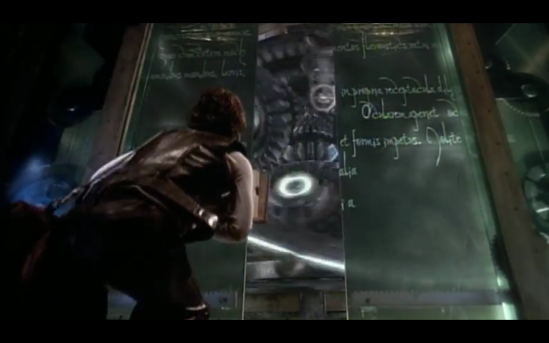
A maniacal and obsessed ghost hunter, Cyrus Kriticos, traps 12 tormented and violent spirits with the help of an avaricious, but anguished psychic, Dennis Rafkin, but when trapping the last ghost, the worst of the worst, a barbaric mass murder in life and in death named Juggernaut, Cyrus is killed in the process. His death leads to the inheritance of a one-of-a-kind house to his widowed nephew, Arthur, and his two children who are barely scraping by after the unexpected fiery death of their beloved wife and mother. When they enter what seemingly feels like a godsend house, immaculately structured entirely out of glass and metal, they find themselves trapped inside after tripping a series of mechanism that turn the isolated and elegant abode into a labyrinthic machine. Stuck inside with Arthur and his family are Dennis Rafkin and a ghost friendly liberator, Kalina Oretiza, who explain that the house is actually an evil machine with a goal of opening the eye to Hell and that the ghosts, imprisoned in the basement, are components that are being set free one-by-one in order to fulfill the ritual.
Screen shot 2020-07-24 at 9.52.18 PM
In the world of remakes, only a select few ever surpass the original. In fact, on rare occasions, do remakes actually replace the original due in part to being beyond respectful as well as masterful amongst critics and genre fans that have bestowed the reimagining an untouchable rendition to which no one can find anything wrong with it; this films include John Carpenter’s “The Thing,” David Cronenberg’s “The Fly,” and Chuck Russell’s “The Blob,” with Zack Synder’s “Dawn of the Dead” and Tom Savini’s “Night of the Living Dead” receiving well-deserved honorable mentions, because let’s face it, topping George Romero’s original work can be said to be blasphemous slander. What about those remakes in between? Those just above the pile of awfulness that generally makeup remakes? I consider Steve Beck’s “Thir13en Ghosts” to be one of this mid-level remake films that registers well with fans, but on the flips side of that coin, doesn’t ascend to total prominence over its predecessor. Written by longtime Full Moon Entertainment writer Neal Marshall Stevens (“Hideous!” and “The Killer Eye”) and Richard D’Ovidio (“The Call”), “Thir13en Ghosts” is a 2001 near-total rework of the 1960 William Castle directed and Robb White scripted “13 Ghosts” that used gimmicks like 3D specter glasses to draw audiences into the theater. “Thir13en Ghosts” was the second film after another William Castle remake, “House on Haunted Hill,” of the newly formed, William Castle nod-to, Dark Castle Entertainment, a division of Joel Silver’s Silver Productions formed by Silver, Robert Zemeckis (“Back to the Future”), and Gilbert Adler (“Bordello of Blood”) that honed initially on producing stylishly modern takes on classic gothic horror, such as “Ghost Ship,” the remake of “House of Wax,” and “Orphan.” What came out of this collaboration between Steve Beck and Dark Castle Entertainment is a complete dismantling of the wood paneling and lament flooring story for a modern marvel to emerge of unique terror that hasn’t been duplicated since.
Screen shot 2020-07-24 at 9.52.11 PM
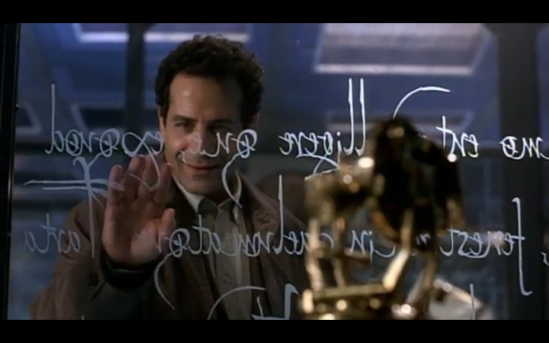
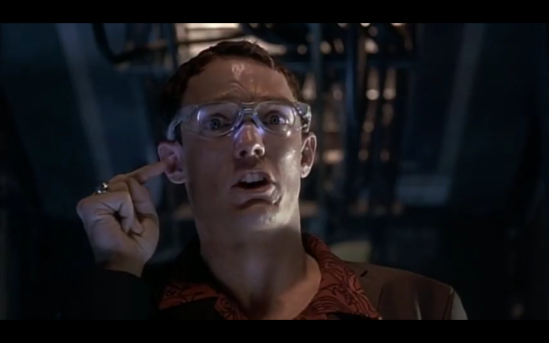
“Thir13en Ghosts” has an impressive, if not all-star, cast with diverse range of styles and experiences that it’s almost dumbfounding on how the filmmakers were able to contract some of these talents, including F. Murray Abraham, who has had an already eclectic credit list with “Amadeus,” “Surviving the Game,” and Mimic, and Tony Shalhoub who hand standout performances in “Addams Family Values,” “Men in Black,” and “Galaxy Quest.” Abraham and Shalhoub bring a sense of classical and methodological structure in a stark contrast between rationality and irrationality built upon an indifference of solitude and a sense of family. Then, there’s the comedic relief in the midst of danger, Matthew Lilliard (“Scream”) as the suffering psychic who uses his wit tongue to spur others and introducing hip-hop artist, Rah Digga, in one of her only motion picture performances to alleviate suspension with more tongue-and-cheek moments. Lilliard and Digga offer up two different comic styles while sustaining the underlying severity of being trapped inside an evil machine full of violent ghosts. Shannon Elizabeth, who we all know by now as the stunning “American Pie” girl, Nadia, or as I know her as the unfortunately raped and murder victim of a killer snowman in “Jack Frost,” plays Arthur Kriticos daughter, Kathy, who still a fresh faced newcomer to Hollywood despite being a hot commodity after her topless role in “American Pie.” The superb support roles don’t end there with notable roles from JR Bourne (“Ginger Snaps Back: The Beginning”), Matthew Harrison, Alec Roberts, John DeSantis, and EmBeth Davidtz, Sheila from “Army of Darkness,” as the ghost liberator.
Screen shot 2020-07-24 at 9.52.48 PM
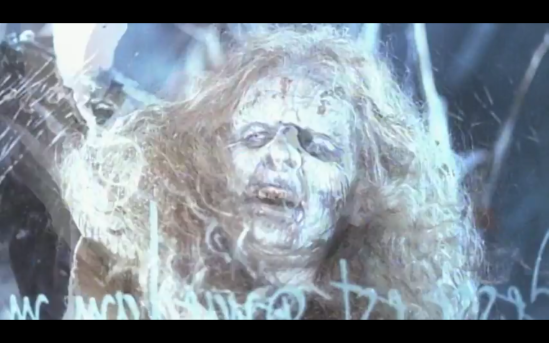
It’s hard to believe that “Thir13en Ghosts” is nearly 20-years old. I still recall my 17 year old self sitting in for a theatrical showing, remembering the opening gargoyle growling as the Dark Castle Entertainment logo reveals itself during the opening title credits, and coming out of the maze-like, gory-ghost film having experienced something special, even if then I didn’t understand why, only to years later realize that I’ve never seen something like “Thir13en Ghosts” before in my life. How does a remake reinvent itself so much that it can separate itself from the original film while also beguile with fresh ideas and no take a slew of browbeating chirps from those who holdfast that the original is the one and only? Most remakes cheaply throw gore to the wind, adding buckets of blood in hopes to satisfy horror buffs, but what winds up happening is that we ultimately get bored, having experienced blood and guts from singular storied films. “Thir13n Ghosts’” premise isn’t the only worthwhile experience that deserves praise, but also the spectacular production design by Sean Hargraves that thrusts the glass house concept into new heights with the house actually becoming an interestingly steampunk character itself and the prosthetic effects from a team spearheaded by a trio of the best special makeup effects artists in horror today, such as Howard Berger, Robert Kurtzman, and Gregory Nicotero., turning ghoulish encounters to ghastly visions that convey truly a tormented soul in the 12 ghosts. Though the story itself isn’t perfect, flawed at times with static character development and a few plot holes involving the ghosts and sequences of events, “Thir13en Ghosts” remains a cult favorite gaslit by frightening imagery, a solid cast, and unforgetting production design that started 21st century horror off brazenly strong.
Screen shot 2020-07-24 at 9.52.36 PM
Collect all “Thir13en Ghosts” on the Collector’s Edition Blu-ray courtesy of Scream Factory sheathed in a cardboard slip cover and has a reverse artwork liner that has the original poster artwork and new vivid illustration by Joel Robinson. Presented in a 1080p, high definition widescreen, 1.85:1 aspect ratio, from the original 35mm negative, “Thir13en Ghosts” shares a consistent image and vibrancy layer with the DVD version with an enhanced color stability. No edge enhancement or cropping adjustments rendered or any other blemishes to speak of, but the softer details could have been sharpened to gave a hard edge around the non-spiritual energy. The English language DTS-HD Master Audio 5.1 boosts the already hefty soundtrack that’s full of explosions and ghostly swooshes and moaning hums, finished off with grand, orchestra soundtrack by John Frizzell It’s been said that audience had to excuse themselves from the film due in part to the overbearing noise coupled with the strobe-like imagery, but the overall audio and visuals are a combined one-two punch of sensory power that works well. The Scream Factory release has new interviews in the bonus material, including sit downs with actors Shannon Elizabeth, Matthew Harrison, and John DeSantis and producer Gilbert Adler. There’s also a audio commentary with director’s Steve Beck, production designer Sean Hargraves, and special effects artist Howard Berger. There’s also an in-depth look at the creation of the thirteen ghosts in a small featurette, their backstory profiles, and the theatrical trailer. However you want to call it, whether it’s “Thir13en Ghosts,” “Thirteen Ghosts, or “13 Ghosts,” this new century remake still holds up to today’s horror lot with spellbinding phantom pandemonium in a glass box!

“Thir13en Ghosts” on Blu-ray on Amazon.com

Spies, Lies, Thighs, and EVIL Guys! “The Dallas Connection” reviewed! (Mill Creek Entertainment / Blu-ray)


Chris Cannon and Mark Austin are back to save the world from a devious organization once again as the two bureau agents are assigned to protect the last world-renowned scientist that developed an International World Arms Removal (I/War) satellite project that could detect terrorists’ weaponry no matter how concealed, but when the other three scientists from around the globe are brutally assassinated, the odds are stacked up against them and the bad guys are always one step ahead of them. Given four computer chips to guard at all times, I/War assigns their best agents to the task of securing hope for the project, called The Dallas Connection, for three days until a specifically timed launch to coordinator with a passing asteroid field that’ll power the satellite for years decades to come, but the well-armed and well-organized crime uses all assets and their power of seduction to gain control over the satellite at all cost.

The L.E.T.H.A.L. ladies series continues with the second buddy-cop picture, “The Dallas Connection,” helmed by Christian Drew Sidaris, son of the erotically charged-action producer and filmmaker, Andy Sidaris that follows up on the first Drew Sidaris prospecting fracas, Enemy Gold. “The Dallas Connection” is the tenth installment of the series, known also as the Triple B series (that’s Boobs, Bombs, and Bullets) that has little-to-nothing linking the entire series cache together aside from being exclusively explosive wrapped with a sensual rouleau of Playmate and Penthouse centerfolds, tightly coiled around the tight and firm half-naked bodies of it’s leading stars. The Sidaris team, under the Malibu Bay Films and Skyhawks Films banners, one again economically ignite a successful B movie that promises 90’s attired, flamboyant action on set at a few familiarly recycled locations in Shreveport, Louisiana and Los Angeles, California, redressed for a not-so different genre or distant premise.

As aforementioned, centerfolds are a staple in any Sidaris, father or son, girls and guns feature and “The Dallas Connection” is no exception, starting off with their main squeeze, good friend, and cult movie icon, Julie Strain, as one of the chief co-antagonist under the nom de guerre, “Black Widow.” Strain is tall, sexy, and a wild villain capable of restraining the violent kick of an AK-47 in thigh high boots and a low-cut open jacket that embodies gun nuts most delectable dreams. The once Penthouse Pet of the Year stays quite reserved compared to her tantamount villainous role in “Enemy Gold” by going topless only in a couple of instances in a death grip roll that involves a lap dance before her prey’s demise, a specified attribute to the beautiful and deadly small spider she spins her call sign from. Black Widow is joined the just as deadly Cobra, fellow Penthouse Pet of the Month February 1993, Julie K. Smith, and Scorpion, the equally as Julie Strain tall, Playboy Playmate of the Month December 1991, Wendy Hamilton. Smith and Hamilton offer up polar features that doesn’t make “The Dallas Connection” a one-type of woman show, but both are voluptuous in their own rite, adding sizzling hot tub sex scenes and long-legged strip shows to accentuate “The Dallas Connection” amongst the B movie fray. “Phantasm II’s” Samantha Phillips becomes the whip cream on top, rounding out Sidaris’ centerfold assembly, as another the third Penthouse Pet of the Month, June 1993. There’s also Bruce Penhall and Mark Barriere, but who cares about these shirtless studs who drag race old Plymouths and jet ski when you four gorgeous women to ogle over? Penhall and Barriere mark their return as Chris Cannon and Mark Austin from Enemy Gold in a buddy-cop adventure loaded with a Dirty Harry Magnum .357 and a M1 Grenade launcher assault rifle. Kaboom! Rounding out the cast is Gerald Okamura (“Big Trouble in Little China”), Roland Marcus, Cassidy Phillips, Ron Browning, Tom Abbott, and Rodrigo Obregon as a satellite scientist.

After finishing “The Dallas Connection,” I wanted to say that I’ve seen this movie before and not because of some misplaced form of déjà vu, but, rather, that I, in fact, HAVE seen this movie before in the precursor film of the L.E.T.H.A.L. ladies series, “Enemy Gold.” The story’s been tweaked slightly to a story with the same framework. Hell, like also mentioned, when you throw in some of the same locations as in “Enemy Gold,” Sidaris’s home with the hot tub and the cabin the woods, and redress the same actors, Julie Strain, Bruce Penhall, Mark Barrier, Rodrigo Obregon, Tom Abbott, and Ron Browning all in the essentially the same roles, “The Dallas Connection” just feels like an extension or a mirror image of that former film, making the story a weary one with nothing really new to spectacle except for three pairs of new, large-and-in charge, breasts in Smith, Hamilton, and Phillips. One difference noticed is that the bureau agents this time around are a lot dafter with skulls thick as a brick and unable to use common logic in the most practical situations. There have been many a time when producer Andy Sidaris commented his films to James Bond, but at least Bond had the smarts to always be on guard; Chris Cannon and Mark Austin do indeed think with their other head that do, in benefit, leave the door open for some saucy hot tub sex that’s perhaps the best simulation from Sidaris reel I’ve seen to date.

Available for the first time on Blu-ray, “The Dallas Connection” will get your rocket launchers off with ton of gunplay and is loaded with beautiful women. The region A, 1080p high definition presentation from a 4K scan restoration has an aspect ratio of 1.78:1 widescreen. The image’s simply gorgeous from the 35mm negative baring a few minor faint scratches that linger only for seconds at a time. There’s quite a bit of noise during the night scenes that almost make the scene look daylit, but skin tones, especially gleaming with water, are remarkably velvety and the textures on clothes and skin looks great for a low budget action. The English language DTS-HD Master Audio dual channel mix medleys appropriately, dialogue is clear and upfront and ambience has proper depth and range. Explosions are powerful coming through the dual channels with a hefty LFE and gunfire can rip just as good as Dutch blasting away at a trophy hunting alien in Predator. Even the sexy lounge soundtrack from Ron Di Iulio is on point despite being a rehash of “Enemy Gold” once again. Hardly any blemishes or distortions coming from the audio track. English SDH subtitles are optional. The bonus features mirror that of “Enemy Gold” as well with Andy Sidaris and Julie Strain doing this awkwardly coy and sugar daddy bit showing off “The Dallas Connection” merchandise and international posters that lead into Andy’s film school where him and his wife, Arlene, go onto commentary on how to shoot scenes and edit them together, using an action and a sexy scene from “Return to Savage Beach” as reference. In the same behind the scenes, there’s an equally bizarre Joe Bob Briggs interview where the legendary MonsterVision and The Last Drive-in Host seems uncomfortable with Andy and star Julie K. Smith about how he persuades to get these beautiful centerfolds to be in his films. Other bonus material includes a commentary on the film itself and theatrical trailer. “The Dallas Connection” is a Texas-size IED with a busty ornate façade, but acts more like a duplication of something we’ve already experienced, making the sophomore feature from Christian Drew Sidaris just a more of the same.

Only $12.99 at Amazon.com! Plus, you purchase a VHS tape! WHAAA!?!

Knights, Murder, Zombies…It’s an EVIL Smorgasbord! “Erotic Nights of the Blind Dead” reviewed!


Buitrago, Spain in 1310, Templar priests set forth on a mission, wandering the countryside to root out evil witches for torture, flogging, and eradication, but what the priests kept secret from public eye is that the village women they were apprehending were actually innocent and used as a means for sacrifice. The sadistic, malevolent priests drank the blood of their innocent victims for eternal life. Fed up with the Templar priests authority, the village men tracked them down to a gruesome end as the vowed in the throes of death to return for revenge. Buitrago, Spain in 1976, the Templar Priest, decomposed to the bone inside their tattered and dirty ceremonial robes, arise from their shallow graves with a hunger for vengeance and feed upon the flesh and blood of unsuspecting outside partygoers under the moonlight night.

Baring a thin shred of anything approximating a resemblance to Joe D’Amato’s “Erotic Night of the Living Dead” and Amando de Ossorio’s “Tombs of the Blind Dead” from the 1970’s to early 1980’s is Vick Campbell’s “The Erotic Nights of the Blind Dead. Also known as “Graveyard of the Dead” or, in it’s original language, “El Retorno de los Templarios,” is the 2007 Spanish produced throwback to the gothic and erotic ghoulish horror genre that once widely flourished through Europe and parts of South America and has, more or less, been nearly forgotten admirably for decades. “Erotic Nights of the Blind Dead” marks Campbell’s feature and script debut that blends the gothic and the erotic for an entry into the soles (or souls, perhaps?) of considerable shoes to fill and the consensus is Campell’s a size 10 trying to fill out into a size 18 wide but leaving too much wiggle room for missteps.

Campbell, also known Vick Gomez, commissions mostly a Spanish cast of the unknown variety, starting off with Eloise McNought in her breakout performance as the troubled, young Miranda who has been sexually abused by her father and has, somehow, misplaced her husband. Miranda’s backstory has an equal amount of ambiguity as the rest of the cast with bits of family melodrama to piece together her obviously distraught mental state. McNought’s a budget actress at best as she sometimes looks right at the camera in the midst of intense scenes and Campbell has a knack for upskirt scenes with McNought which feels creepy and impertinent to the story. Miranda’s the searched figure for her brother Jorge, Albert Gammond. Gammond, who had a role in Campbell’s short “Violencia gore,” has less backstory as the estranged son of the family and when he arrives to 1976 Buitrago, out of nowhere, to search for his sister, the siblings tango the enigmatic dance of who, what, when, why, and how? Gammond’s few dialogue moments are eaten up by Jorge trying to convince a distressed Miranda he’s her brother and reminding them of the childhood songs they sang as kids. Thais Buforn, Rick Gomans, Anarka de Ossorio, Dani Moreno, Anthony Gummer, Julian Santos, and Jose Teruel co-star.

“Erotic Nights of the Blind Dead” flatters being as an economic version of an Amando de Ossorio “Blind Dead” film, which centers around the vile and wretched depravities of the ghastly Templar Knights ethos and while Campbell captures the essence of the Knights and their menacing macabre presence of soiled garbs and persistence, the attention to the rest of a, literally, non-story is hastily slapped together or stuffed with cinched time wasters. The first half hour involves nothing more than Templar Priests roaming the countryside, flogging with an endless crack of a whip those who they deem dissident. The Knights’ whip must be malfunctioning as it could not rip flesh or break the souls of man until well into the lashing that mercifully warrants an edit for some bloody, but still steadfast firm, scarring and sheered rags. I felt the floggers arm and shoulder pain with such extensive beatings. Next, the majority of the second act consists of Jorge pleading with his sister Miranda to listen to him and convince her about his brotherly love and bring her back home. At this point, flashbacks of her father’s lust for her are introduced to backstory Miranda’s despair; the smoking gun catalyst finally rears a father-daughter rape-incest ugly head in act three when the Templar Knights have resurrected for blood thirsty revenge and gives some context of Miranda’s blabbering incoherency in the middle of the dry Buitrago landscape; yet, Miranda’s daddy issues hardly explain why the Templar Knights have returned at this point in time and just want the undead Knights tend to accomplish with their revenge at hand. In fact, there’s no explanation given at all…they just return and rampage. Campbell extends upon the risible execution of an Amando de Ossorio film by inverting scenes that are the same shot just in reverse, utilizing a single ambient track over and over again on multiple scenes, and countering whatever shred of terror from the Knights with an easy way out of unexplained reasoning for their befuddling demise. Almost as if Campbell didn’t know how to end his film and gave up with a snap of his fingers. Who does he think he is, Thanos!?

“Erotic Nights of the Blind Dead” lands DVD home video distribution from MVDVisul and Wild Eye Releasing on their Raw and Extreme banner. More raw, then extreme, Vick Campbell’s gleaming debut homage offers no eroticism either on the region free, 70 mintue runtime title, but, rather, lingers over incest and whipped-bloodied breasts of slim illicit pickings and suggests the title was more a ploy against “Graveyard of the Dead” to gain buys. The picture is presented in a widescreen format, but suffers from horrible color banding and severe compression issues that nearly make this title indiscernible like an aged or scores of duplication VHS transfer. The Spanish language stereo track also has flaws with speckled quality and coarse feedback at times due to bad mic placement. As aforementioned with the repetitive ambient and score tracks, range and depth do not reside with these versions of the Templar Knights that are probably inundated in a violent anguish of the same loop of rattling chains and heavy breathing. To add salt to the audio wound, the English subtitles are riddled errors such as Obbey instead of Obey or Swete instead of Sweetie. Special features include a behind-the scenes segment of ho-hum production takes, deleted scene, and Wild Eye trailers. One thing I think might be interesting is actress and executive producer Anarka de Ossorio who, I can’t confirm, might have some relation to Amando de Ossorio; the idea would be neat if his legacy still lives on through his kin. A brooding atmosphere from beginning to end, “Erotic Nights of the Blind Dead” has little else to offer under a guise to link itself to legendary Euro-trash gold, but filmmaker Vick Campbell detrimental diegesis could tarnish the very jeweled films in which he attempts to honor.

Purchase Erotic Nights of the Blind Dead on DVD!

The Evil Inside and Out Won’t Stop You From Protecting Your Own! “Cargo” review!


A pandemic sweeps across the Australian land, transforming the infected into hunger-driven cannibals. Andy and his wife, Kay, boat down river in hopes to find a safe zone for their baby daughter Rosie in attempt to avoid major populations and even the occasional infected, but when Kay falls victim to a bite aboard an apparent abandoned sailboat while salvaging for supplies, the couple have no choice but to seek help on the mainland. Desperation leads to carelessness when Andy veers off the road and crashes. He awakens to his wife having turned rabid, sustaining a bite on his arm when saving his daughter from the backseat. With maybe two days until the virus overcomes him, Andy must find a way across a mostly vacant landscape to find someone to take care of his young daughter. With time running out, Andy’s plight takes him through a barren-inhabited land where he encounters various walks with some being too unsavory and too unsuitable for his daughter’s welfare.

Ben Howling and Yolanda Ramke are the first time directors behind the 2017, zombie-classified horror-drama “Cargo.” The screenplay was also penned by Ramke stemming from a remake of the directing duo’s short film of the same title. The short, that went on to be a finalist at the world’s largest short film festival, Tropfest, and went viral back into 2013, being showcased on the internets most popular genre sites. From there, the success of Howling and Ramke’s 7-minute short, encouraged by a strong fan base, was able to land equity to fund a full-length feature set in Howling and Ramke’s home country of Australia. The 2017 film added a star cast, a grittier and gut-busting bigger budget, and even landed back the main actor from the short film in a smaller, but significant role. “Cargo’s” bigger, more organic, and exalts the very essence of being human in an isolated, catastrophic, capitalism dystopia overrun with the chrysalis monsters.

English actor and star of the “Hobbit” series, Martin Freeman, lands the lead role of Andy. Freeman’s usual knack consists of being mild-mannered with a variety of facial expressions and his performance in being a desperate father in “Cargo” is no different; yet Freeman expresses another quality that consistently stays in the shadows of his other worth and that is strength. Andy might be conservative and portrayed as meek, but when push comes to shove, Andy steps to the plate and Freeman shows us his upper hand of his character’s abilities. Freeman works alongside first time child actress, Simone Landers, as Thoomi, an indigenous native offspring who relies on Andy to return her to her family while Andy relies on her to bring safety to his infant daughter. For a first time performance, Landers couldn’t have been more of a perfect fit aside the experienced “Sherlock Holmes” actor. Also co-starring in “Cargo” is Anthony Hayes, Susie Porter, Caren Pistorius, Kris McQuade, and, “Crocodile Dundee’s” David Gulpili who, to quote Ben Howling who said it best, is essentially Australian actor royalty.

“Cargo” isn’t your typical genre zombie film. In fact, I wouldn’t even brandish it the label of a zombie film. Ramke’s post-epidemic story reverberates a more familiar “28 Days Later” echo that spurs more life altering contagion than the dead resurrecting to feast on the living. The infect do not run, but stumble, like a zombie and also crave living delicacies; yet, their tainted blood seeps an inhuman generated neon-orange-like sap through facial orifices that feels more like the European zombie of an organic or voodoo nature. These human-turned-monsters also bury their heads below the dirt up to their shoulders in a state of transformation or a rebirth in a sense. The essence of “Cargo’s” villainy is expanded further from Howling and Ramke’s initial short film that just introduced a milky-eyed dead head and these types of infected give “Cargo” a better, more substantial presence in an overcrowded living dead genre, but the infected are not the main villains as people, essentially one capitalistic vulture, is the real threat against the protagonists.

Umbrella Entertainment presents “Cargo,” a Netflix film, onto Blu-ray home video in a sleek full HD 1080p and presented in a widescreen, 2.35:1 aspect ratio. The region B, MPEG-4 AVC encoded disc has great detail over the dry Australian countryside stocked with brown and brown vegetation, natural coloring across the board, especially in the infected’s neon-orange ooze, and an overall favorable viewing experience. The English 5.1 DTS-HD Master Audio doesn’t necessarily have a bombastic track, as it isn’t that kind of film, and the range is fairly around a mild-mannered tonality with a hiccup of gunfire and shouting in the ambient tracks. Dialogue is perfectly crystal clear in the forefront. Bonus material includes two featurettes, one entitled “Cargo: Shaping A Fragile Future” and the other “Cargo: Maternal Combat,” interviews with cast and crew, Q&A from May 2018 in Melbourne, the original Tropfest 2013 short, and the theatrical trailer. “Cargo” breathes fresh air into a threadbare genre with a sheer look into humanity’s willpower and callous.

Don’t Let Evil Give You The Shaft! “Down” review!


One of New York City’s popular skyscrapers, the Millennial Building, is a modern marvel with 102 floors sought to be visited by national and international tourists, looking to reach the zenith and take a once-in-a-lifetime, awe inspiring gander across the Big Apple’s urban jungle landscape or seeking to be a working stiff inside the immaculate bones of the building’s historical foundation. Every day, thousands of visitors and employees ride the Millennial Building’s 73 elevators, assuming the safest ride possible to the touch the bottom of the sky, but when a deranged scientist implements a controversial biomedical computer into the building’s elevator vascular network, one tragic accident after another compiles fatal consequences within the vertical box that draws negative national attention. Elevator mechanic Mark Newman teams up with a rebellious newspaper reporter Jennifer Evans to investigate and uncover the a larger-than-life conspiracy behind a killer elevator organism.

Over three decades ago, Dutch filmmaker Dick Maas wrote, directed, and released the killer elevator film, simply titled “De Lift,” in the Netherlands. About 18 years later after his commercial success for “De Lift,” Mass spawned an American remake of the film entitled “Down,” also known as “The Shaft,” that transformed into the forgotten bastard when compared to Maas’ 1983 feature. To be frankly, “Down’s” terror-comedy knack with spunky characters and zany deaths put the 2001 remake right smack dab at the top of the repeat value charts and despite the lack of rigorous plausibility, the refreshingly no-holds barred, fun zone horror film doesn’t think twice, charging forward with gun blazing in an elevator ride to cinematic hell that shows no mercy and gives not one single care with each surpassing floor level. Be damned the backstory with meager exposition! Be damned the underdeveloped characters who are pivotal to the plot! Be damned the complexities of how the biomedical elevator system is able to live, breath, and reproduce through murder and mayhem! “Down” has a black and white, up and down glory that’s considered b-horror good that’s very reminiscent of the early films of Peter Jackson.

If you’re going to remake a killer elevator film, go big with the cast and Mass surely pulled through by signing cult genre stars of the time. Naomi Watts was just coming into the mainstream scene as she tackled well-received projects around that same time frame between David Lynch’s “Mulholland Dr.” and “The Ring” a year later, but the “Tank Girl” actress showed more than just her aesthetic assets, more than just shrieking horrific screams, and more than just displaying her big guns. In “Down,” she proved to be a gung-ho, rough-it-with-the-boys portrayer of a feisty reporter whose hot on the trail of a conspiracy helmed by surreptitious characters played Michael Ironside, who did not lose an arm in this film like he does in “Total Recall,” “Starship Troopers,” and “The Machinist,” and Ron Pearlman (“Hellboy,” “Cronos”). However, James Marshall, in the lead as the elevator mechanic, couldn’t ratchet tight a performance that called for concern and durability; instead, Marshall, known for playing James Hurley in “Twin Peaks,” schlepped clumsily on screen compared to the aggressively hungry Watts. Eric Thal (“The Puppet Masters”), Dan Hedaya (“Alien: Resurrection”), Edward Herrmann (“The Lost Boys”), and Kathryn Meisle (“Basket Case 2”) round out the remaining cast.

“Down’s” commercial success was plunging disaster. Reasons ranging from a flimsy premise to being an unconventional horror to the genre were, more than likely, not the major players in “Down’s” inability to elevate an audience. More so, the reasons stem solely between one or two factors, if not both. For one, Maas writes New Yorkers as belligerent morons, cocky, greedy, and deranged. Many of the characters are like this and if there was any that embodied any sliver of rationality or humanitarian attributes, there screen time was quick and fruitless. Secondly, though “Down” released in the spring of 2001, a film set in a New York City high rise with multiple mentions of terrorists and even verbally conveying a foiled plot to take down the twin towers probably hurt the film’s home entertainment value to the point where a DVD release didn’t surface until a good two years after the theatrical premiere.

Aside from all the delays, harsh reviews, and a shoddily cropped Artisan DVD release, Blue Underground delivers a godsend presenting “Down” on Blu-ray/DVD combo. The 1080 HD on a BD 50 dual layer disc has a widescreen 2.35:1 aspect ratio and radiates with clarity; so clear, that I had a hard time placing the year as the image certainly outshines most turn of the century products. An immense amount of detail just exemplifies the extraordinary content without appearing as a discount deal for special effects. Audio options include an English and French 5.1 DTS-HD and an English and French Dolby Digital stereo with both including optional English SDH subtitles and Spanish subtitles. The amount of range is leaps and bounds beyond the Artisan’s par quality with the 5.1 channelling maximized quality and clarity. Dialogue track is clear and free from obstructions with the only stain being the horrendously dubbed diner jerk that punches James Marshall in the face, but that’s not necessary a make or break blemish. Bonus materials include audio commentary with writer-director Dick Maas and stunt coordinator Willem de Beukelaer, the making of “Down,” behind-the-scenes footage that’s exclusive to the Blu-ray, theatrical trailer, poster and still gallery, and teaser trailers of upcoming releases. The casing itself harnesses a collectible booklet with new essays by Michael Gingold. “Down” finally shines through with a stellar release from Blue Underground, a leader in restoring and releasing cult films. If in the mood for a story without much thought while desiring to choke on out of this world terror-comedy then “Down” is a must on the upcoming marquee!

Own “Down” on Blu-ray!