
“The Devil’s Candy” 4K UHD and Blu-ray Is Now Available from Second Sight Films!
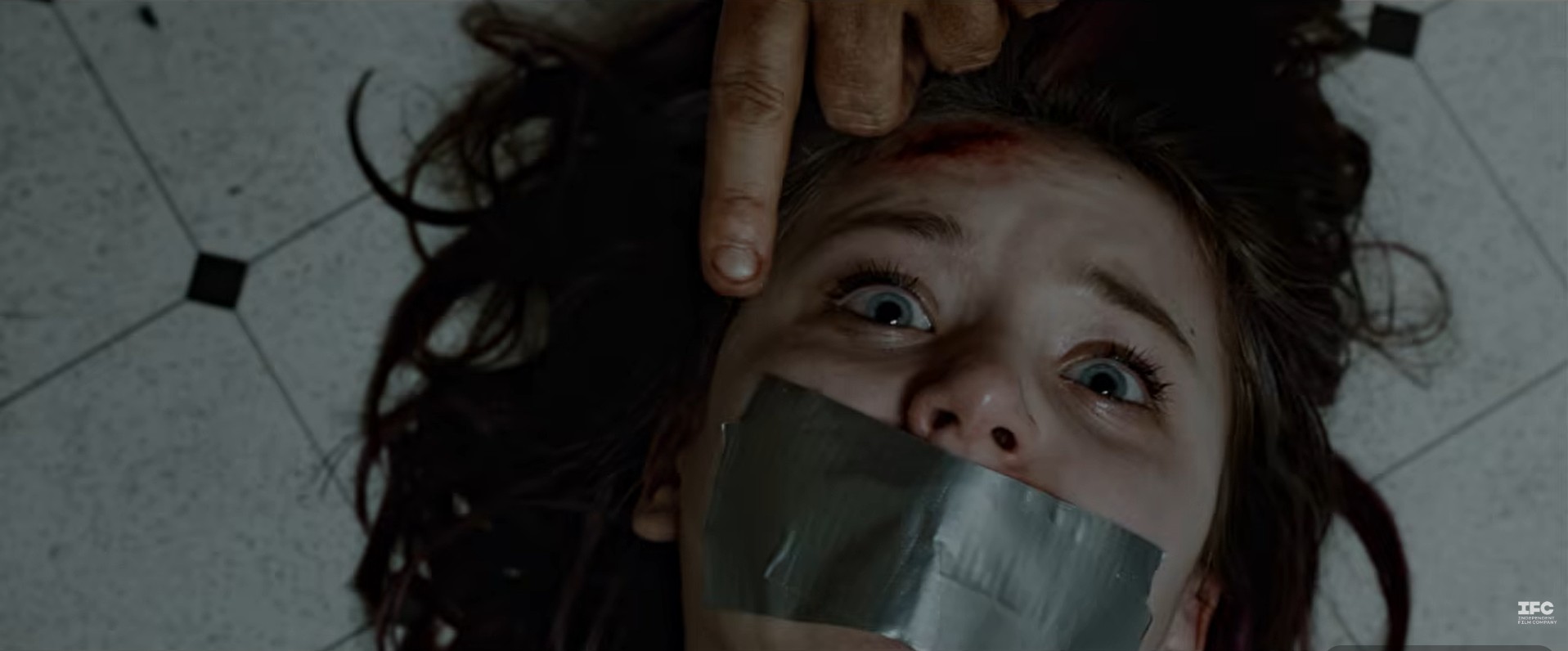
A financially struggling, heavy metal inspired painter buys a bargain country house with an adjacent studio to work toward commissions and to home his wife and daughter in a bigger, lighter space. When an unstable man with a child-like intellect disability arrives at their doorstep, wanting to come home to play his electric axe guitar to drown out the Satanic chants he continues to hear, he becomes the beginning of the family’s nightmare in their new home. The man is a child serial killer, an unwilling agent of the Devil, who believes children are the Devil’s candy and when he can’t muffle out the continuous chanting in his ear, he must obey the commands to supply his master with more hacked up adolescence. A couple of near miss encounters with the painter’s young daughter put the family on edge and into police witness protection but that won’t stop him from coming for her.
Sean Byrne, the Australian filmmaker who debuted with the insane prom queen killer in “The Loved Ones” and who turned Jai Courtney into a shark-obsessed serial killer in “Dangerous Animals,” directed “The Devil’s Candy” in between those two productions and is his only solely U.S. produced film to date. The 2015 film that mirrors the Satanic Panic era with its heavy metal and its unspecified yet strongly suggested 1980’s motif is written by Byrnes to symbolize the contentious efforts to divide family bonds in the best and worst of times with the killer representing the invasive and dangerous wedge when the painting father suddenly develops a muse for his work, losing track of time while working and neglecting his family responsibilities. “The Devils Candy” is produced by Jess Wu and Keith Calder (“You’re Next,” “The Guest”), Chris Harding (“You’re Next,” “The Guest”), and Roxanne Benjamin (“Southbound”) under HanWay Films and in association with Snoot Entertainment.
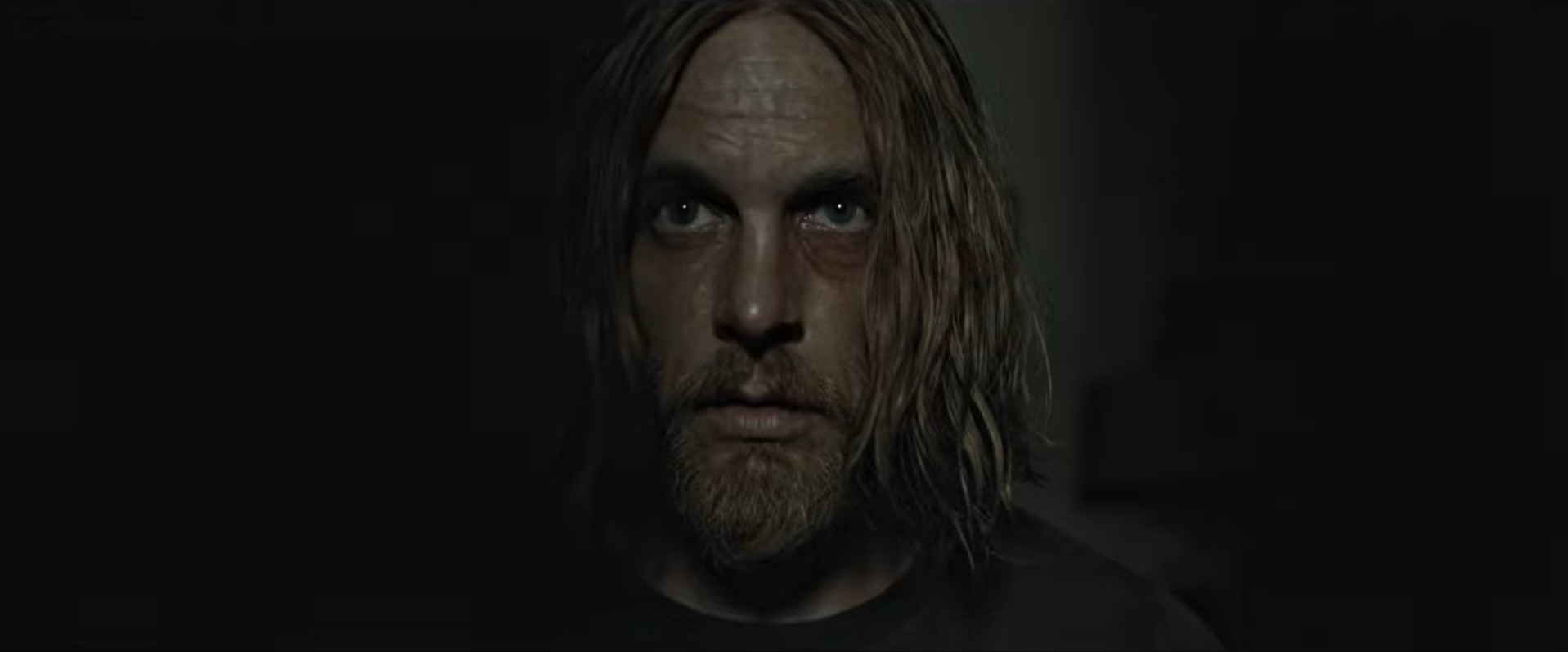
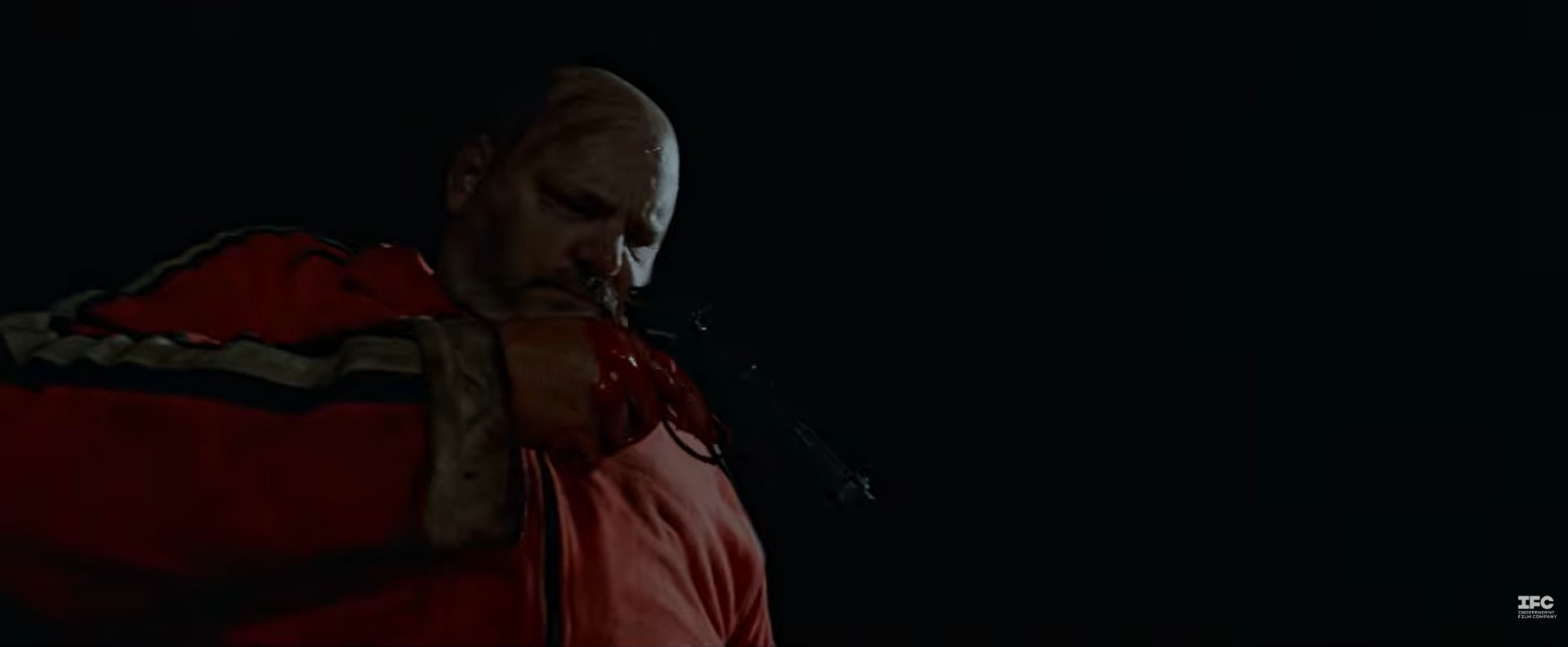
Ethan Embry is an interesting casting choice to be play principal father Jesse, a father-painter with a heavy metal music edge who becomes possessed to paint disturbing images of upside crosses and children burning. Embry, who has the softest, puppy-dog eyes in the industry, fits remarkably as the likeable Jesse, sporting a long hair wig overtop his scruffy facial hair and athletic and muscular toned body that becomes a character in itself to display his intensity as a normal painter and more so as a possessed painter but never leaning toward being malevolent under the influence of possession, just a bad dad to daughter Zooey (Kiara Glasco, “Maps to the Stars”) that jeopardizes their close bond. I found it curious that Shiri Appleby, “The Killing Floor”) is mostly out of the narrative picture as wife Astrid. There are a couple of heart-ot-heart scenes between her and husband Jesse but from the most part, Astrid is absent working across town and leaving much of the family relationship strain in the hands of Zooey and Jesse without Astrid weighing on Jesse’s lapse in judgements: forgetting to pickup Zooey from school, leaving the door open late at night while painting, etc. Astrid is written with too much understanding and not enough mother bear ferocity. My personal favorite supporting actor, who has been around for decades and here has a bigger antagonist role, is Pruitt Taylor Vince finding and exhibiting his inner calling to kill children. “The Identity” and “Mississippi Burning” actor with noticeable nystagmus that moves his eyes involuntarily, mostly side to side, has in his firm grip one of the more subtle yet disturbing characters with layers, struggling with the Devil’s speak commanding his ear and becoming violent went his attempts to subside the viperous, chanting tongue hit roadblocks. “The Devil’s Candy” rounds out the supporting pars with Tony Amendola (“The Curse of La Llorona”), Leland Orser (“Alien Resurrection”), Craig Nigh (“Terror Birds”), Oryan Landa (“Hollow Scream”), Jamie Tisdale (“From Dusk till Dawn: The Series”), Mylinda Royer, Marco Perella, and Sheila Bailey Lucas.
Satan and heavy metal are nearly synonymous in the horror assemblage – Charles Martin Smith’s 1986 “Trick or Treat,” John Fasano’s 1987 “Rock ‘n’ Roll Nightmare,” Jason Howden’s “Deathgasm,” and even “Bill & Ted’s Bogus Journey” blends Hell with Rock ‘n’ Roll! – and all give a villainy credit to the God antithesis known as the Satan. “The Devil’s Candy” is a poster child for the Metal and Satan genre, as part of the dubbed “Metalsploition” or “Rocksploitation.” Yet, the Sean Byrne film plays a different kind of setlist, one that doesn’t slap Satanic right into your face but rather plays to the tune of possible mental illness with a subtle flavor of supernatural forces at work, behind the veil of derangement and delusion. Hell and brimstone, corporeal demons, or any kind of the depths emerging from the fiery pits of the underworld are greatly and purposefully omitted from “The Devil’s Candy” and that is a welcome change from the aforesaid films, grounding this terrifying exchange more onto the fabric reality, as seen in news reports of child kidnapping and murder. This instability doesn’t only apply to the Pruitt Taylor Vince’s Devil whispered, child-killing character but also applies to Embry’s Jesse, a family man with a metal edge who flirts with temptation, tempted to the darker side of metal, by being influenced with a malevolent muse to draw disturbing images and skirting responsibility that threatens the stability of his family, causing trust severing discord. He also toys getting in bed with an artist curator who thrives and lusts after dark, provocative, profane art, with his gallery name being Belial – another name used for Satan in other cultural and religious beliefs. Jesse must resist fame, fortune, and the guile techniques of Satan on Earth, another pointblank theme mentioned in the movie with a televangelist and return to his roots of connecting with his daughter and wife instead of selling his soul, or selling out, to the Devil.
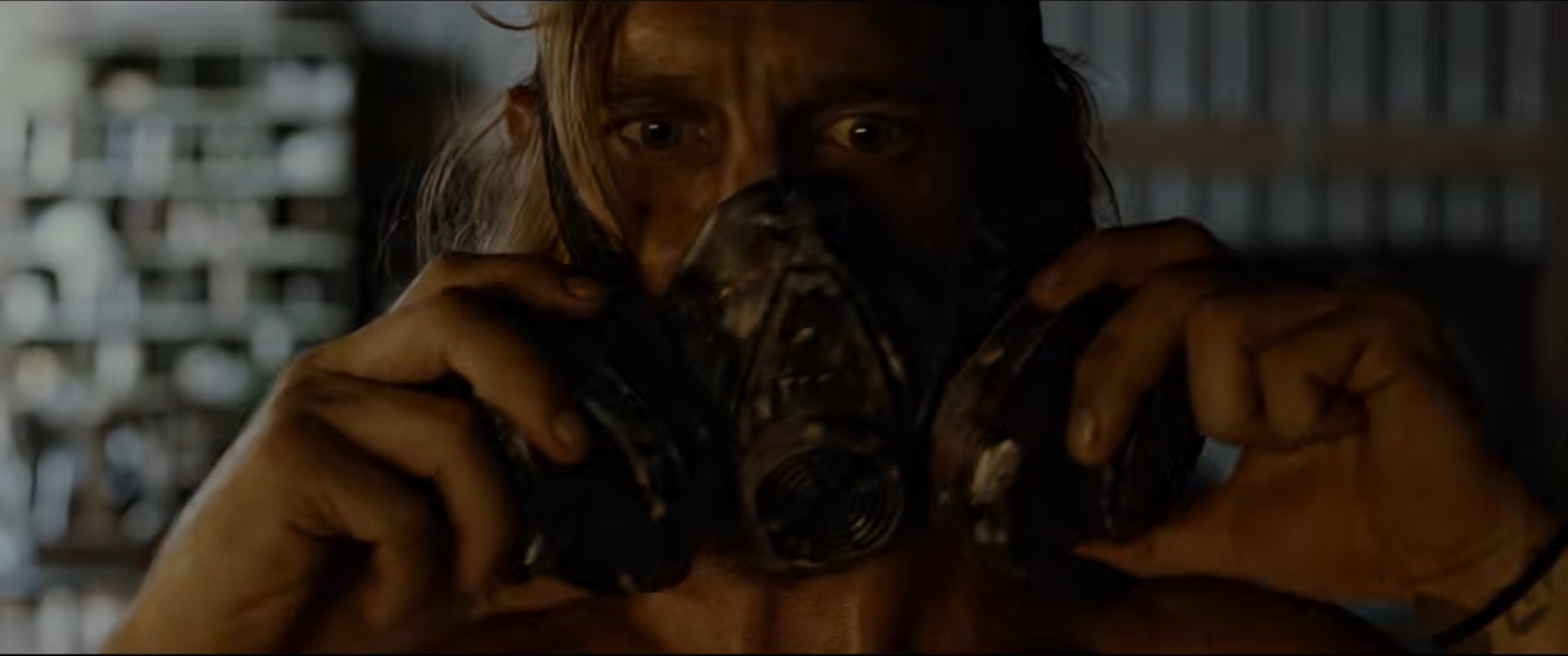
Second Sight Film’s dual format, 2-disc, 4K UHD and Blu-ray set of “The Devil’s Candy” is a tremendous gift to the physical media world. The HVEC encoded, 2160p resolution, BD100 and the AVC encoded, 1080p resolution, BD50 are strikingly peak picture quality for their respective formats. The limited edition contains a new, producer-approved 4K restoration of the original digital print and, while there’s likely not a massive different between the digital master and the restoration, Second Sight’s imaging for the release is superb, nonetheless. Hovering a settled moody and low-key tone, creating an abundance of shadows and underexposure, Simon Chapman’s cinematographer creates the necessary anxiety that nowhere is safe away from a maniac driven by the dark Lord. There’s beauty in the hard contrast with a cooler tone in more lit areas with details coming through greatly in these scenes that warrant them. Skin tones and fabric textures have organic tactile and reflective presence. Both formats are presented in a widescreen 2.40:1 aspect ratio that gives it a tighter yet lengthier exhibition for the high-def resolution. The English audio on the both discs is an encoded lossless DTS-HD 5.1 Master Audio and it rocks! Metal is master for the metalsploitation picture with great emphasis on the low-tone and harsh electric guitar strumming while a heavy rock soundtrack, consisting of metal band tracks from Metallica, Goya, Slayer, Pantera, and Machine Head to name a few, is infused with the satanism scenario and Jesse and Zooey’s metalhead lifestyle. Dialogue is clean and clear with prominence above the layers where appropriate, never conflicting with the metal rock. Range and depth play a factor with off-screen action told through key non-diegetic sounds that can almost paint a picture in your head, and this also goes toe-to-toe with the non-diegetic chanting inside the mind/ear of our principal characters because of its omnipresence, which seemingly engulfs the entire space in frame and then some. Optional English subtitles are available. All the special features are encoded on both discs, which is quite unusual for a UHD to have the full list of extras and perhaps suggests a more efficient HVEC compression. These extras include an audio commentary with director Sean Byrne, Into the Fire a new intro interview by director Sean Byrne, new interviews with actor Ethan Embry Those Fragile Things, director of photography Simon Chapman Devil in the Details, editor Andy Canny The Cutting Room, production designer Thomas S. Hammock A Big Step Forward, and Sean Byrne’s short films: “Advantage Satan” and “Work?” Like other limited edition sets from Second Sight Films, “The Devil’s Candy” receives a rigid slipbox with warm illustrated art by graphic artist Huan Do that extends beyond the slip box onto the bi-fold UHD and Blu-ray tall jewel case, a front and center lobby card of six with the rest being images from the film, and the book, a 120-page read of new essays from Aton Bitel, Reyna Cervantes, Becca Johnson, Joe Lipsett, Mary Beth McAndrews, and Zoe Rose Smith. The book also includes production artwork of potential paints, cast and crew credits, and physical media acknowledgements. This is a heavy (metal) set! The UK certified 15 release for strong threat, violence, and language has a region free UHD and a region locked B standard Blu-ray with a runtime on both discs clocking in at 79 minutes.
Last Rites: “The Devil’s Candy” is a hard-rocking, hard-hitting thriller on the cusp of Satanic Panic but submerged fully in dangerous mental illness surrounding the welfare of children.


