Superpowers Can Be Just as EVIL as They are Good. “The Unhealer” reviewed! (Scream Factory / Blu-ray)

“The Unhealer” on Blu-ray home video from Scream Factory!

An old graverobber unearths the supernatural powers of an ancient Native American burial ground that gives him the ability to heal as well as to be resilient against injury with self-restoring powers.  When exploiting the local residents of his newfound “Godly” gift, a botched healing of a bullied teenage Kelly with severe pica disorder transfers the powers to him, curing his disorders and restoring his health while also leaving the old graverobber to die.  With a new lease on life, Kelly pursues his dreams, standing up to his relentless tormenters, and even finding the courage to ask out a girl, but when the powers prove to be addiction beyond control and the bullies never let up on their aggression on him, Kelly uses his newfound gifts to exact a deadly course of revenge. 
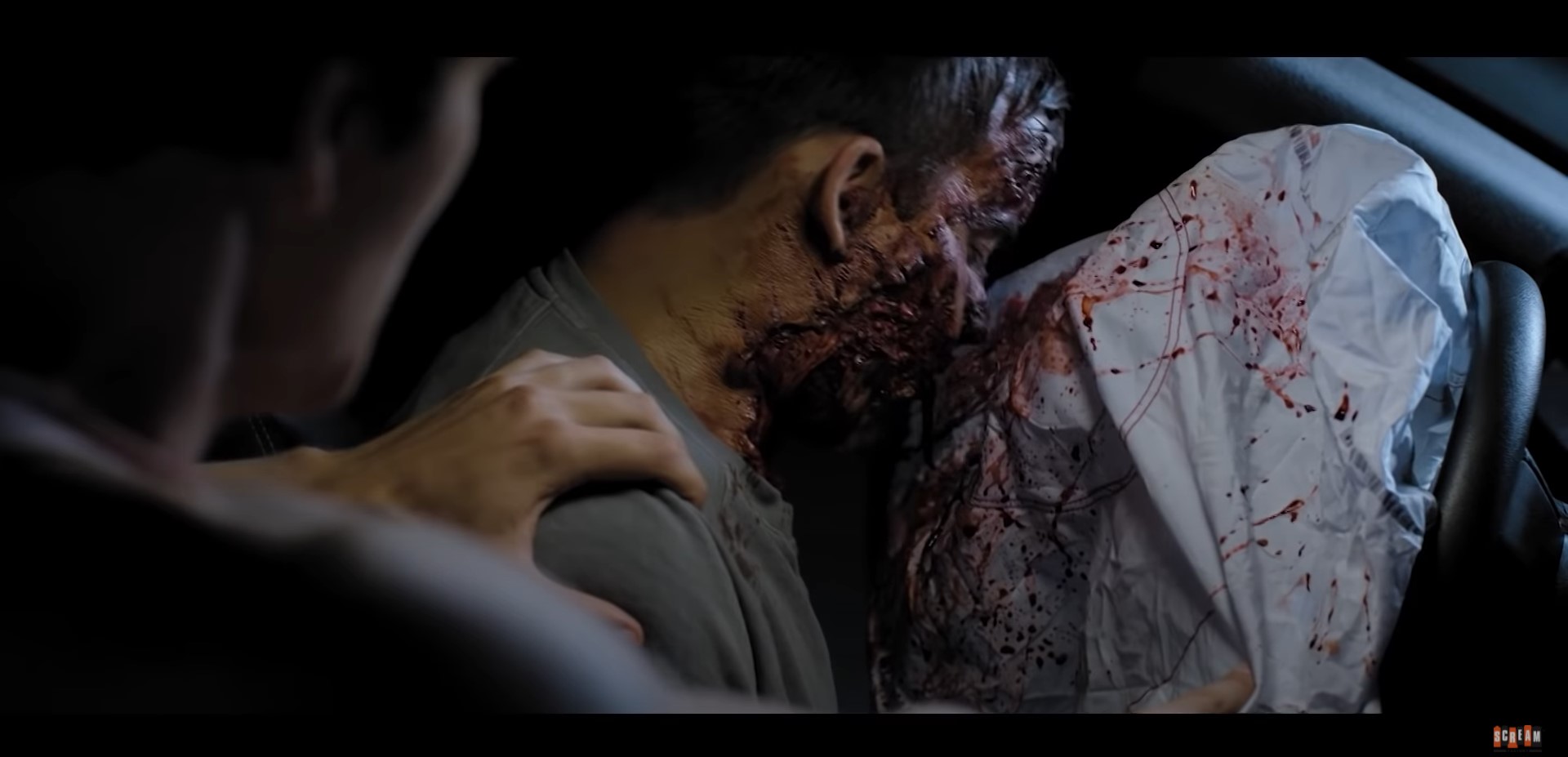
“Pet Sematary” meets “Christine” – a Stephen King-esque bully-revenge, supernatural thriller “The Unhealer” from the Argentinean born director Martin Guigui.  The music video and feature film director returns to American horror nearly a decade later after helming the 2011 “Beneath the Darkness,” starring Dennis Quaid, with a thrilling teen angsty script penned by first time screenwriters Kevin E. Moore and J. Shawn Harris that recalls a narrative very familiar to the late 80’s to early 90’s with oppressive high school bullying by the jocks and the turning point revenge by the receiving end pipsqueak.  Originally scripted under the title “Pica Boy,” “The Unhealer” reveals the dangers of severe polarities between one disorder to the next with the humbling fragilities trapped inside one’s own psychological disorder to the over-confidence of feeling invincible due to physical anomalies that result in no pain being suffered, losing one’s empathetic reasoning.  “The Unhealer” is produced by writer J. Shawn Harris and his sibling actress, “Night of the Demons 2” and “Night of the Scarecrow’s” Cristi Harris along with star Natasha Henstridge and “Why?” filmmakers Corbin Timbrook and Galen Walker with Horror Business Films and 7 Ideas serving as production companies.
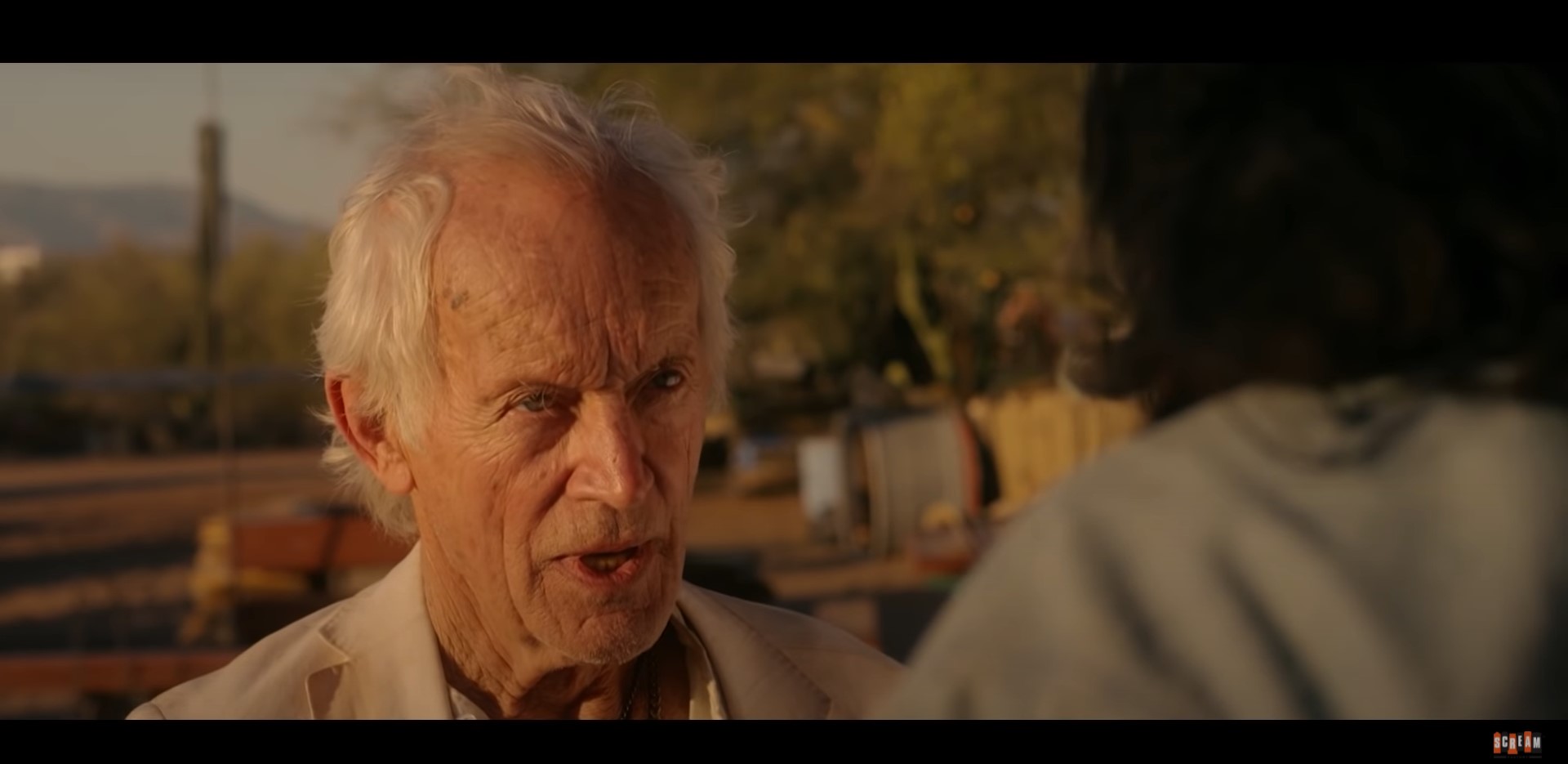
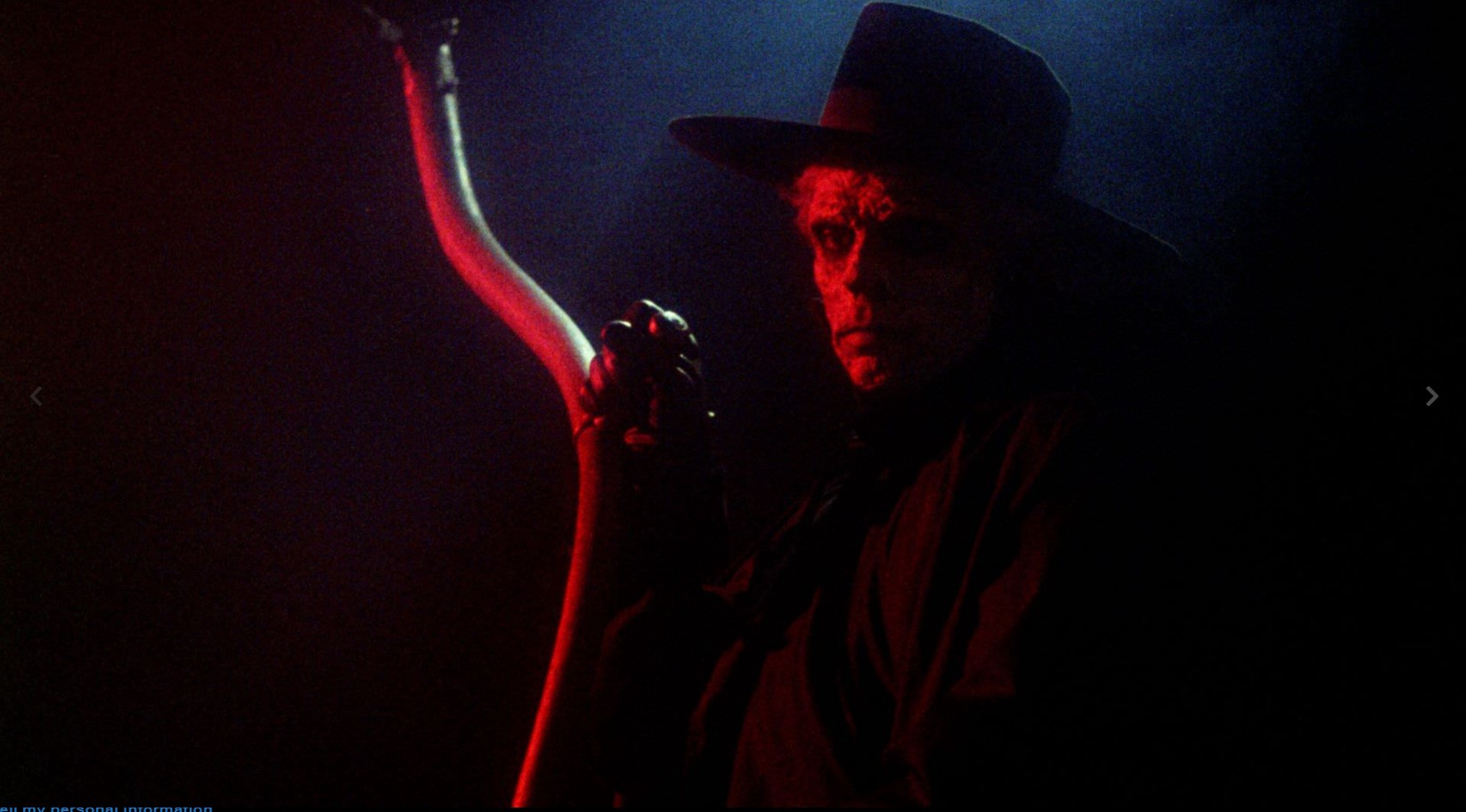
Headlined with three big and recognizable names inside the genre circles and out, the film stars Lance Henriksen (“Pumpkinhead,” “Aliens”), Natasha Henstridge (“Species,” “Ghost of Mars”) and Adam Beach (“Windtalkers,” “New Mutants”) playing variable degrees in their roles important to “The Unhealer’s” story progression and each performance never overlaps prominent personalities that can sometimes stall out and unbalance a production.   Henriksen plays a long in the tooth snakeoil salesman named Pflueger who exploits the locals with his newfound healing powers and when he’s hired by Kelly’s desperate mother, Natasha Henstridge, the scene becomes a passing of the torch as Pflueger unintentionally transfers his powers to Kelly (Elijah Nelson, “Chain of Death”) that magically heals him of his longtime psychological Pica disorder. Not so much a youthful soul anymore, Henriksen has tall tell signs of showing his age, but the 81-year-old New York City born actor can still sear memorable performances into our psyche with a wisecracking charlatan conman in Pflueger, dressed from head to toe in a shabby white suit and tossing up awkward hand gestures when deriding burial ground protecting Shaman Red Elk, played by long time serial supporting man Branscombe Richmond (“Commando,” “Hard to Kill”). More awkward in his reaction to receiving an unexplainable supernatural gift is Elijah Nelson who goes from deaths door to want to join the Navy Seals in a matter of minutes after the Pflueger plot point passes. The writing doesn’t exactly assist in Kelly’s transition with an acceptance of power without an inkling of trying to comprehend is as Kelly tries to hurt himself and tries to encourage being pounded by bullies as if he already fully understands the immense reality of his abilities. Even his mother, who under the understanding that she has tried everything possible scientific medicine man has to offer to cure her only child, is instantly okay with Kelly’s rushing into the unknown. A nearly unrecognizable Natasha Henstridge from her “Species” franchise days after a thyroid autoimmune disease diagnosis doesn’t stop the late 40’s blond beauty from being just that – a beauty – in an overly protective mother role desired by the local single men from the house visiting doctor to the Adam Beach’s Native American Sheriff Adler. Beach becomes the absent father figure for Kelly and a person who has a foot in both the Native American spiritual world and in the Anglo-Saxon realities and melodramatics. Beach proceeds as the main lead of the third act, following Henriksen and Henstridge to keep a constant, recognizable presence throughout and providing his own stamp as the voice of reason whereas the first two culminated extreme biases toward Kelly. Kayla Carlson, Angeline Appel, Gavin Casalegno, David Gridley, Mike Gray, Thomas Archer, Will Ropp, and one my new personal favorite actors in Chris Browning (“Agnes”) fills out the remaining cast.

Very early on initial reactions toward “The Unhealer” were poor mainly because of the luridly unflattering dialogue and perplexing transitions between scenes that don’t exactly hit the mark matching up character intentions, but the more I watched, the more an optimistic sensation started to arise in me. Starting small in the recesses of my cerebral film database then growing until metastasizing fully into my mind and, eventually, into my nostalgic-detecting ticker is “The Unhealer’s” robust recollection toward how fun bully-revenge-thrillers from two to three decades ago can be with a carbon copy simulation ingrained with a novel narrative surrounding Midwest Native American mysticisms carrying with it that age old “Spiderman” insinuation that with great power, comes great responsibility, but in “The Unhealer’s case, as the tagline suggests, comes great pain. Screenwriters Moore and Harris burden Kelly with a King Midas touch that no matter how hard the character tries to contain his nearly invincible power, outside forces influences and unforeseen happenstances steer Kelly toward self-destructing disaster. Between a group of buffed up and obnoxious high school jocks as unyielding tormenters, Kelly pushed into a self-protecting corner despite a generous passive attitude, especially being run over with car at one point, and the unpredictable and limitless avenues built as substory awry to make “The Unhealer” a joyful hidden gem, the Martin Guigui film on the outside appears to be a cheap, indistinguishable, B-movie, but if you dig deeper, dig until you unearth a medicine man’s ancient dusty bones, and you’ll discover deep seeded veneration, a gripping story, and dark magic carnage.

“The Unhealer” will undoubtedly fly under many viewers’ radars but is a must watch from (Shout!) Scream Factory’s distribution label in a cooperation release with VMI Worldwide (“Orphan Killer”). The full HD, 1080p Blu-ray of the 2020 production is an encoded region A release with unrated certification and a runtime of 93 minutes, presented in a widescreen 2.35:1 aspect ratio. Generally nothing to swing image quality from one spectrum to the next with a RED Weapon Dragon digital shot. Already decent at compression, the RED camera provides a crisp demarcating image in the forefront and capture the textures in a literal closeup with focus precision. “The Unhealer’s” lighting and set dresses cater less to the supernatural phantasmagoria with Massimo Zeri’s realistic Arizona landscapes and suburbia venues that don’t excite the camera with its cold truth realism rather than the mise-en-scene tropes of horror atmospherics. The English DTS-HD Master Audio 5.1 also has zip to complain about with high resolution quality with a surprising ample range of effects. Dialogue is prominent and clear as well. English SDH subtitles are an available option. Special features include one-sided individual cast/character behind-the scenes interviews which is basically cut and edited footage of the actors describing their characters in footnote fashion. The gag reel is a better feature that takes the same interview format, intertwines it with music, and lines up the gags with an instrumental soundtrack in one seamless show of goofs and hijinks throughout production. Deleted scenes and extended/alternate scenes, surrounding mostly around Kelly and Dominique’s coy love interest, cap the features. At first glance of the final package, “The Unhealer” looks totally like a rip off inside and out of the cardboard slipcover with a “Star Wars'” lightsaber color scheme and a character illustrated design underneath the title dressed in “Stranger Things” font, but don’t let parroting cover fool you as “The Unhealer’s” dark journey from being the bullied to the bully is an unabated and inescapable catch-22.

“The Unhealer” on Blu-ray home video from Scream Factory!

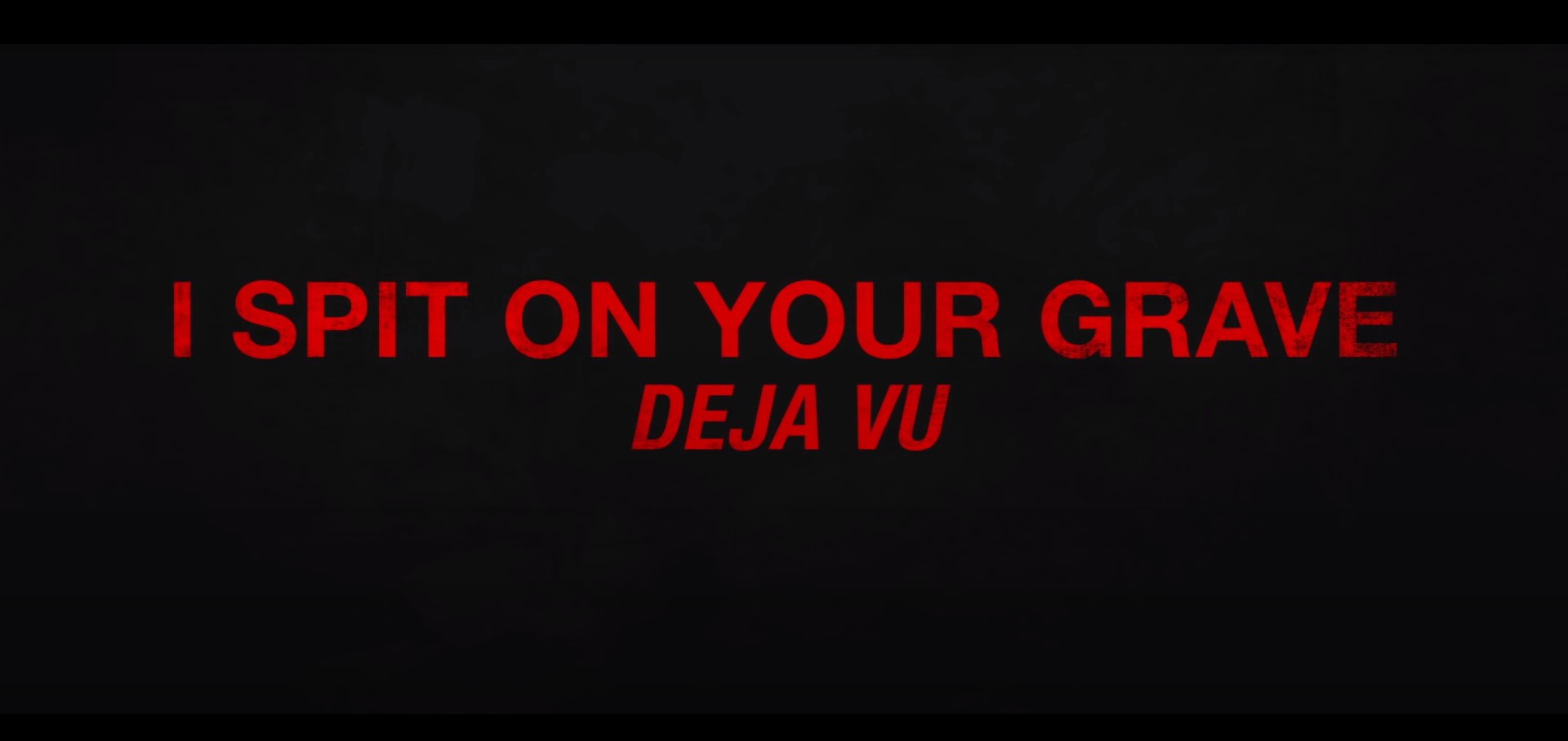
Meir Zarchi Returns With Another Round of EVIL Exploitation! “I Spit On Your Grave Deja Vu” reviewed! (Ronin Flix / Blu-ray)

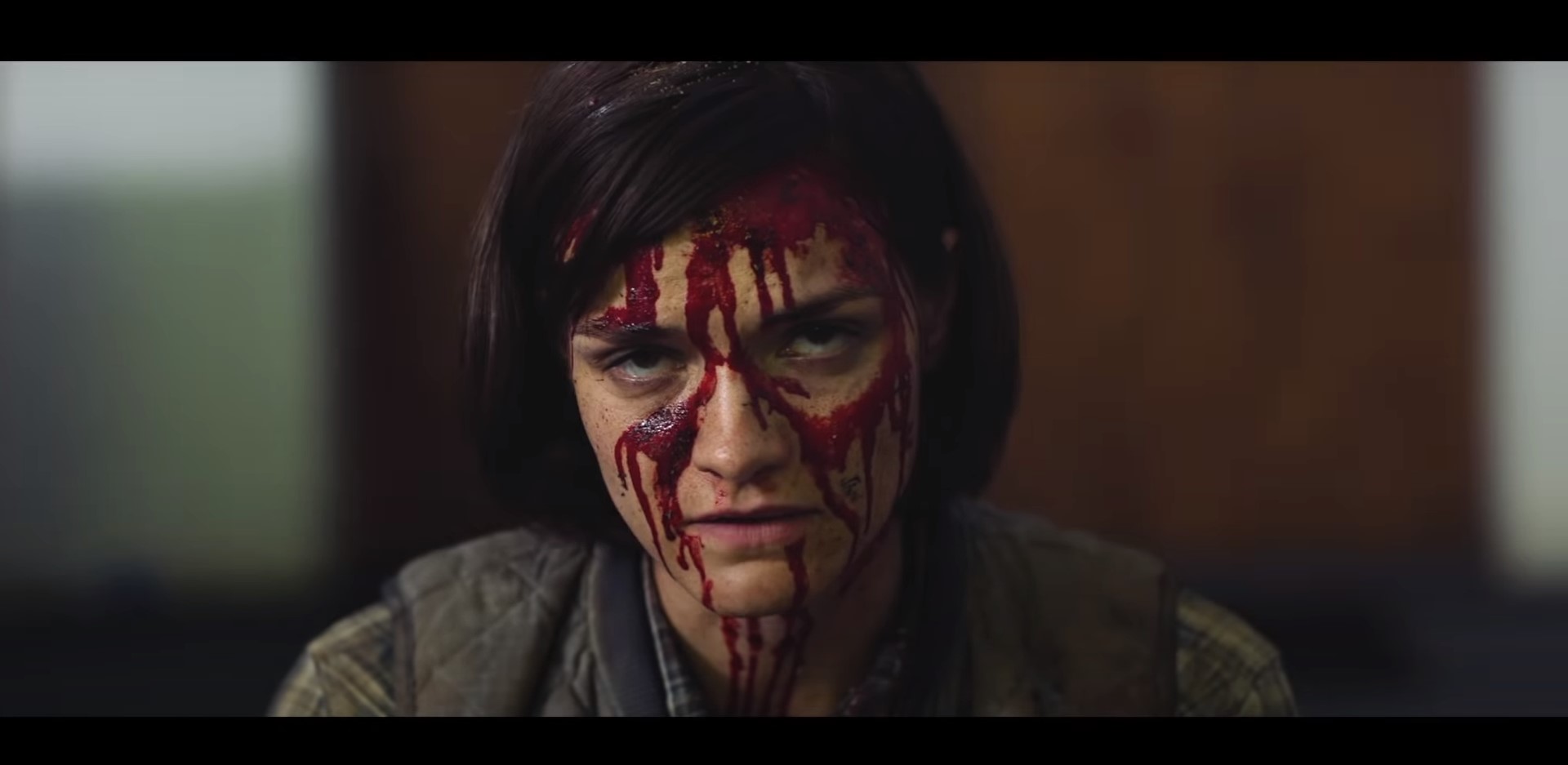
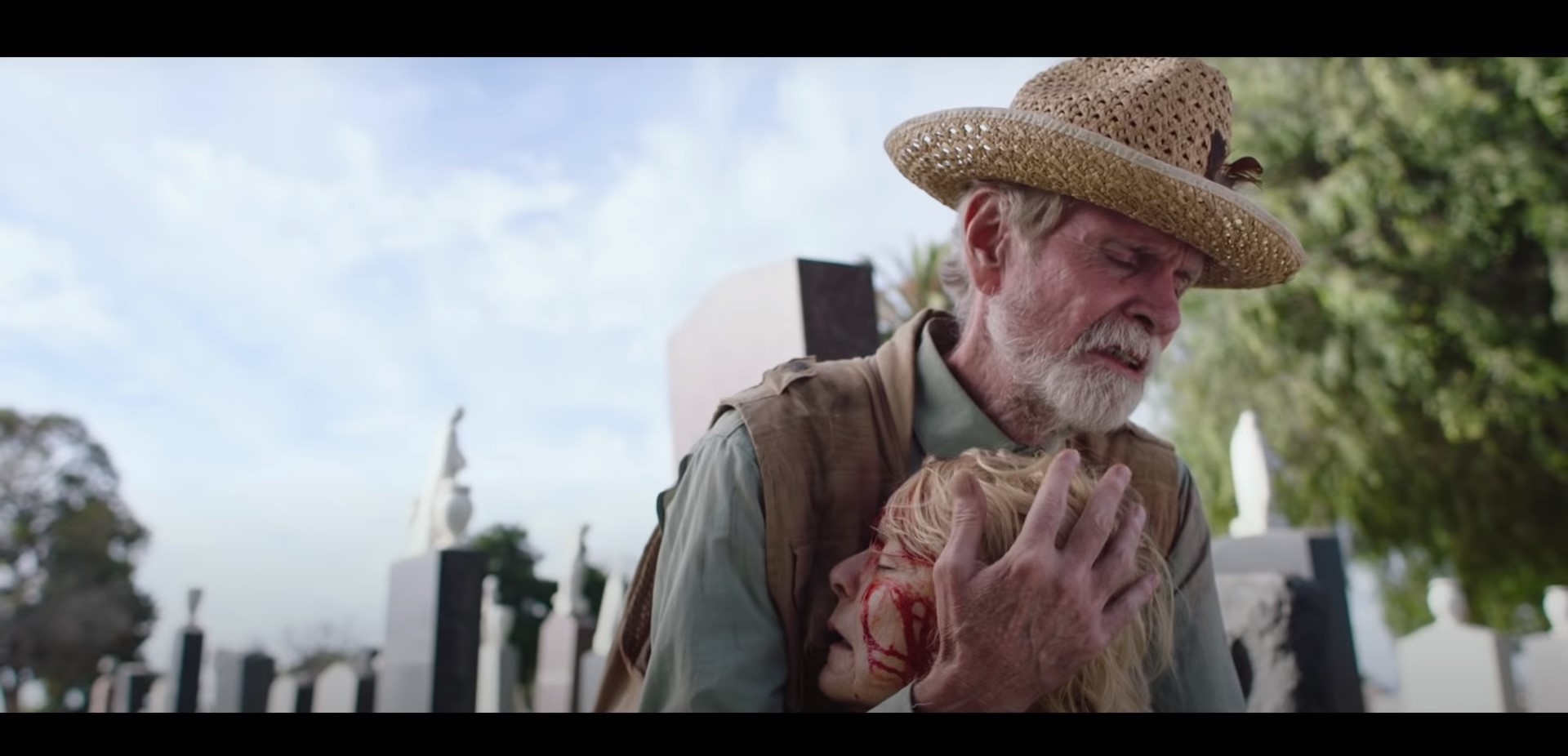
Forty long years have passed since the sexual assaulting atrocities of Johnny Stillman and his gang were committed on the young and beautiful Jennifer Hills.  Empowered by her horrific tale of survival with the release of a new tell all book of how she outwitted and took homicidal revenge on her rapists by luring them in with her sexual persuasions, Hills finds herself back in familiar terrorizing territory being kidnapped by Johnny’s devoutly vindictive widow and three living relatives of the gang that once ganged raped and brutally beat her, but she’s not alone.  Captive with her as collateral damage is her famous supermodel daughter, Christy.  Both are caught up in an eye-for-an-eye revenge plot where being lethal is the only means of survival and with a long history of resentment, rooted deep inside Johnny’s kin, fighting back will take every ounce of resilience and strength against a community of hellbent sociopaths. 

Circa 2005-2006 is around the time I first bared witness to Meir Zarchi’s 1978 controversial exploitation shocker, “I Spit on Your Grave.”  Popping in the DVD popped open my eyes to the world of graphic vengeance and the submission to primal, carnal whims inside the human-on-human violence context.  Before Zarchi’s film, which is also known as “Day of the Woman,” and even Wes Craven’s “The Last House on the Left,” this neophyte’s description and knowledge of horror was limited to the stymies of broadcast television that only aired edited and censored slashers like the “Friday the 13th” and “Halloween” series or supernatural presences of “A Nightmare on Elm Street” and “Poltergeist.”  Never has the likes of “I Spit on Your Grave” been a red pill option into the vast horror matrix for this then college kid who glazed over with the façade of sleeping through studies and worrying over trivial matters involving the opposite sex.  In a way, Zarchi was a kind of Morpheus to me when I started purchasing physical media that opened my eyes and my mind to the rape and revenge facet in horror hidden behind the commercial veil.  In 2010, a Zarchi produced reboot saw more light in the commerciality and spawned two sequels in its wake, but not until 2019 did Zarchi get back to writing and sit back in his director’s chair to helm an official, yet less commercial, sequel entitled “I Spit On Your Grave Déjà Vu” or “Day of the Woman Déjà vu” that was produced by his limited company banner, Déjà Vu LLC with son Terry Zarchi and Jan O’Connell producing.

The long-awaited sequel reteamed Zarchi with original lead actress, and also ex-wife, Camille Keaton, distant relative of the famed comedy and stunt actor, Buster Keaton.  Camille Keaton, who looks phenomenal in her 70s during production, steps back into the infamous Jennifer Mills role that made her a household name amongst grindhouse-horror community.  Though completely nude for most of the 1978 film, that part of her performance takes a step back for a new actress to pave a new path in the saga.  Obscure indie scream queen Jamie Bernadette (“Axeman,” “The Bunnyman Massacre”) is ceremoniously passed the torched as the new riches to ragdoll as the Jennifer Mill’s unhappy supermodel daughter, Christy, who becomes haplessly snagged into her mother’s unforgotten past.  Bernadette offers a variable beauty and a diverse poise that doesn’t make Christy a carbon copy of Jennifer Hills, but the actresses deliver the same apathetic venom of a woman scorn.  More of a carbon copy is the four backwoods bumpkins fuming over Jennifer Mills’ vindictive dissecting of their dead relatives.  The gang is spearheaded by Beck, played by Maria Olsen who, like Bernadette, has made a name for herself in low-budget horror having roles in films such as “To Jennifer,” “Starry Eyes,” and “Gore Orphanage.”  Olsen projects Becky as the gas station attendant from Hell, someone you don’t want to interact too long with as you’re pumping gas in the middle of nowhere, but Becky is not a woman of a few words who constantly has to remind us, to the blistering point of annoying, that she must avenge her late husband’s sinful murderess.  The rest of the gang didn’t impress much after that.  Jonathan Peacy has a chance to shine from out of the extra and bit part shadows as the crazed and hyperactive Kevin, brother of Stanley from the original film, and while Peacy channels his best Al Leong look, Kevin is ultimate a big detrimental goof with small dog syndrome than actual menace.    The last two aren’t any better with a lackluster act by Jeremy Ferdman as Andy’s cousin and “Tales of Frankenstein’s” Jim Tavaré’s rather befuddling downplay of Matthew’s mentally disordered father, Herman, who teeters back and forth between morals with a jumbled underlay of piety.  There are not many sane performances in a rather loose and unbridled Zarchi follow up with a cast that rounds out with Alexandra Kenworthy, Roy Allen III, and Holgie Forrester.

Performances aside, “I Spit on Your Grave Déjà vu” is also a cacophony of yelling as the script, from paper to pronunciation, reaches top of the lung levels with every bit of dialogue from every player in this tussle of who’s right and who’s wrong when it comes down to justifications of killing.  Zarchi’s sequel lacks the tact his first film achieves so delicately with Mills post-assault softer approach to lay waste her assailants.  “Déjà vu” satisfies its own revenge kicks with little subtly in trying to be outrageous, outlandish, and off its rocker as the confrontation between Christy and the gang becomes a rancorous grudge match.  What concerns me most about “Déjà vu” is the year in which this sequel takes place.  Between the 1978 original and the 2019 follow up, 40 years have passed, but the characters don’t fit any of Father Time’s natural aging characteristics on the surface.  Becky looks okay as an early to mid-60s woman despite Maria Olsen’s actual age being early 50s at the time of filming and release.  Herman is another one that sneaks into fathomable constructs as a character living a farmer’s life in the latter half of middle age, but I question whether Kevin and Scotty were even born yet.  The two youngsters barely seem to be out of their 30s and the same can be said for Christy where much more of her life is revealed as the story progresses.   If following the script logic, I would assume the story takes place in the 90s, but certain technologic advances, like modern day touchscreen phones, suggests no earlier than late 2000s.  As a whole, time and space don’t appear to exist on any reasonable plane for the film with characters able to bump into each at random intervals despite being a densely wooded and rural location and, for all you cinematographers out there, if your location is supposed to be rural, don’t shoot in at a cemetery with a massive grave footprint with a stream of cars speeding down a busy suburban street.  You instantly lose the illusion.  Zarchi’s intentions were clear to only echo the original while allowing for individuality with a brasher onslaught of right versus wrong, eye for an eye, and misguided righteousness for injustice, but the execution crumbles with excruciating results, never reaching the same poetic justice the first film accomplishes so graphically grafted. 

As far as rape and revenge exploitation is considered, “I Spit on Your Grave Déjà vu” gets about as down and dirty and ugly as they come.  Cult movie curator, Ronin Flix, delivers the Meir Zarchi sequel onto Blu-ray home video, presented in 1080p, full high definition, with a widescreen 2.39:1 aspect ratio.  A+ for natural lighting, skin tones, and overall appeal, Pedja Radenkovic’s cinematography is about as uninspiring as they come artistically, but, as a personal preference, the shots are more organic, raw, and less distracting from the content that’s much more abrasive and interesting.  A more natural framework also more time for Russell FX’s practical effects to be showcased without enhanced imagery.  As long as the details are there (they are), no damage is concerning (there wasn’t), and the framing made sense (for the most part), “Déjà vu” can be considered a win for Radenkovic.  The English language DTS-HD 5.1 Master Audio soundtrack for “Déjà vu” is a blessing and a curse.  Dialogue clarity is excellent and there’s a wide range to exploit, forgive the punned term, each channel with great balance, but remember what I said about all the character yelling?  Also, with the higher bitrate DTS, the quality is too good for some of the applied ambient effects like the exhaust sputtering of an old Ford pickup that sounds way too fake and way too close despite its positioning in the scene. The region A, not rated Blu-ray is stored on a BD50 due in part to the film’s massive 148 runtime and the inclusion of special features that include a new audio commentary with film critic and “The Last Drive-In” host Joe Bob Briggs, select cast interviews, the making of the film, behind the scenes footage from producer Terry Zarchi, and the theatrical trailer. Is “I Spit on Your Grave Deja Vu” the long-awaited sequel to Meir Zarchi’s first film? I’d say they’re two totally different exploitation entities cut from the same cloth with ties only in names and some flashbacks alone, but both films would make for a great double bill that starts with a harrowing, nothing-to-lose, woebegone toned, revenge thriller complimented with a lukewarm and unfocused follow up to help come down off the original’s gripping ultra-violence high.

Ronin Flix’s “I Spit on Your Grave Deja Vu” Blu-ray available at Amazon.com!

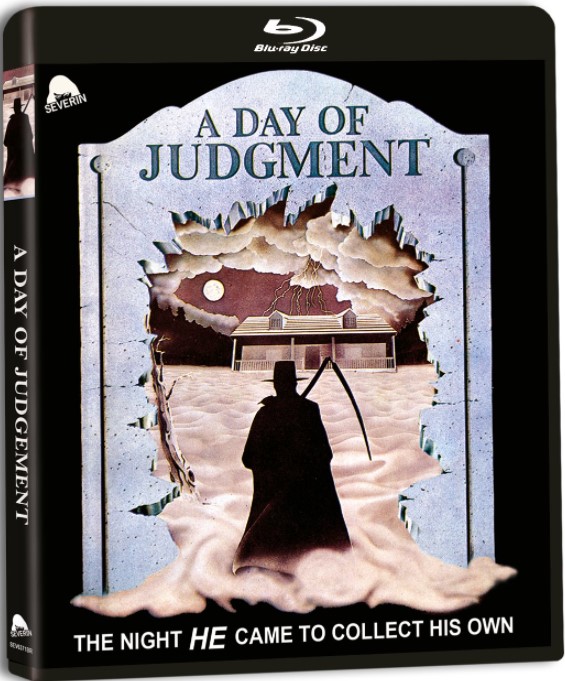
Do EVIL, Get Dead! “A Day of Judgment” reviewed! (Severin Films / Blu-ray)


1930s rural America – the dejected town priest resigns his congregational duties after failing the local townsfolk who have all but returned to the Church and reclaim their faith in the savior lord Jesus Christ and God.  On his exit of the town’s border, the priest crosses paths with a shadowy figure riding an austere wagon and holding a scythe.  A town full of heartless schemers, adulterers, swindlers, and murders have their unforgiving stories told that leave their fellow townsfolk, their friends, and even their families left suffering in their wake.  The shadowy figure tracks each sinning stray down to face retributing judgment.  The righteous and terrible punishments send the unsavable souls to an eternal existence in Hell.

The Grim Reaper cometh. Screen cap courtesy of Severin.

What was once considered to be a Christian-centric educational project had turned into a Christian-centric damnation of horrors in the quasi-anthology “The Day of Judgment,” where the sinners of sin town deviate from the Godfearing path and into a vat of immorality and ungodly aberration.  “The Day of Judgment,” occasionally under the U.S. bootleg title of “Stormbringer,” is the one and only directorial from C.D.H Reynolds (aka Charles Reynolds), an academic educator turned briefly to film working under the legendary, North Carolina based Earl Owensby Studios that produced the 1981 released film.  The script is penned by Owensby Studios’ regular writer, Thom McIntyre, who inked the film between a pair of genre credits, including the incarcerated grindhouse actioner “Seabo,” also known as “Buckstone County Prison” a few years earlier and a snippy flick of a pack killer Rottweilers terrorizing a mountain resort in “Dogs of Hell” a couple of years later.   Owensby, obviously in regard to his own studio work, took part as the fire and brimstone tale’s producer along with associate producer and longtime “Power Ranger” director Worth Keeter curating the final touches as the creative architect of the script’s grimmest portions or more line as the assistant director of adding the bleaker, bloodier fates of the sinners.

William T. Hicks. Screen cap courtesy of Severin.

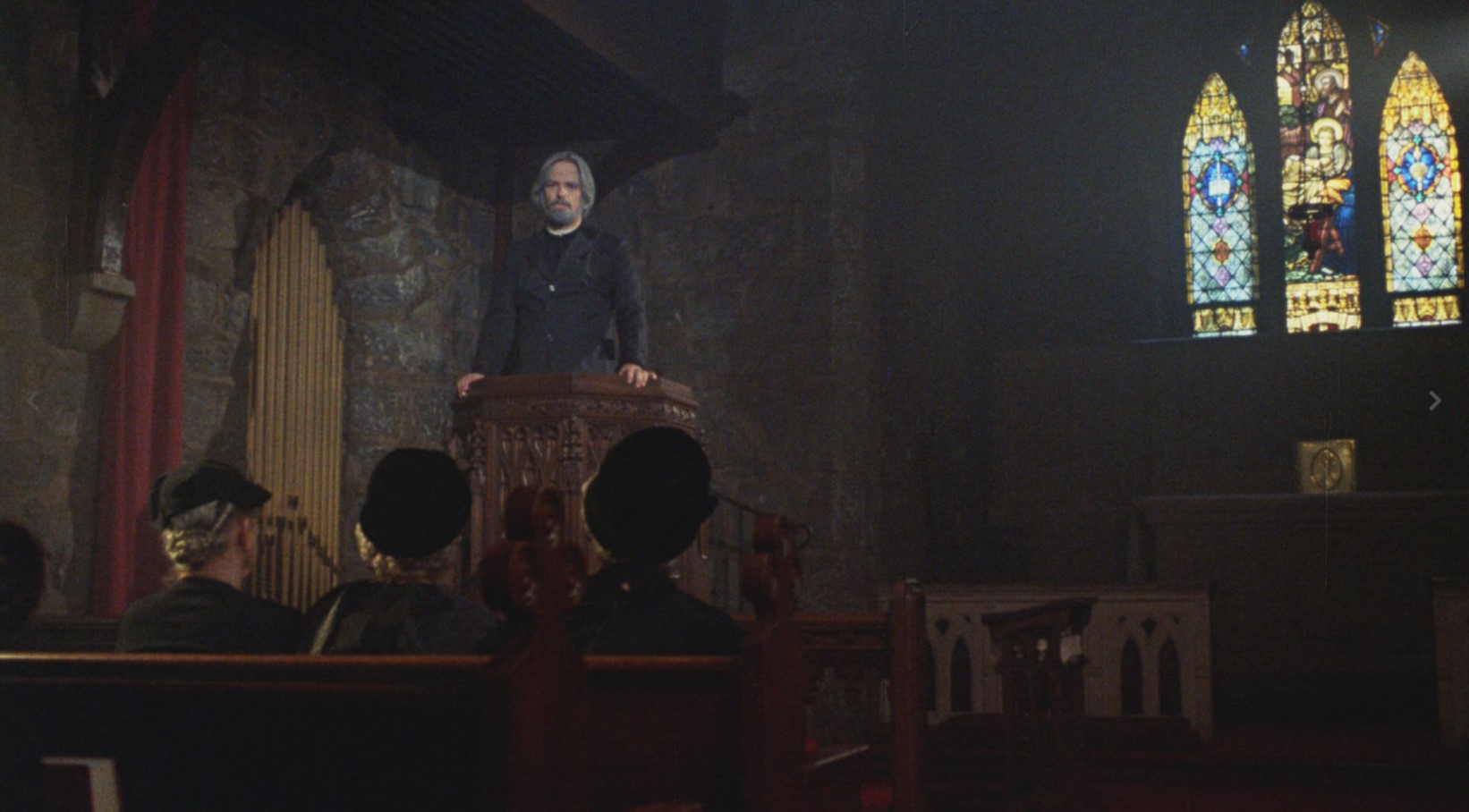
“A Day of Judgment” has a non-linear anthology-like structure that swings back and forth between different character scenarios of wickedness.  You may meet one character at the very beginning of the story and don’t meet them again, until you’re already through having sent a good chunk, if not all, of the sinners to Hell in a handbasket.  But McIntyre hones in well on setting up nicely each character’s backstory, those who the priest crosses paths with as he exits the town and delivering their ultimate demise (with an assistant from Worth Keeter’s gloomier approach).  The director himself Charles Reynolds plays the crestfallen Reverend Cage in a classic expository preacher riding out of town and crossing paths with soon-to-be-troublesome townies in William T. Hicks (“Death Screams”) as a greedy and heartless bank owner, Careyanne Sutton and Larry Sprinkle (“Trick or Treat”) as man slaughtering, pretense adulterers. Toby Wallace as the hometown disparaging mechanic scheming to steal the family business out from his parents noses to sell, Helene Tryon (“Dogs of Hell”) as the frettingly kook and paranoid old lady poisoning the local children’s pet goat, and Brownlee Davis (“Wolfman” ’79) as the delusional and disgruntled former employee of his best friend looking for a finality in revenge.  “A Day of Judgment” had this weirdly transitional acting style for an 80’s released horror that resembled the Golden Age of cinema through the 1950s and 1960s where everything is loud and pronounced without much reflection, pause, or change in tone.  Though the style sticks out like a sore thumb, perhaps Reynolds made a shallow attempt to recapture the 1930s as which the narrative period is set.  The acting isn’t terrible but is more staged and reactionary to the course of events.  The cast rounds out with Carlton Bortell, Richard Dedmon, Inga Dennis, Denise Myers, Jerry Rushing, Harris Bloodworth and Fred Roland.

C.D.H. Reynolds as Reverend Cage. Screen cap courtesy of Severin.

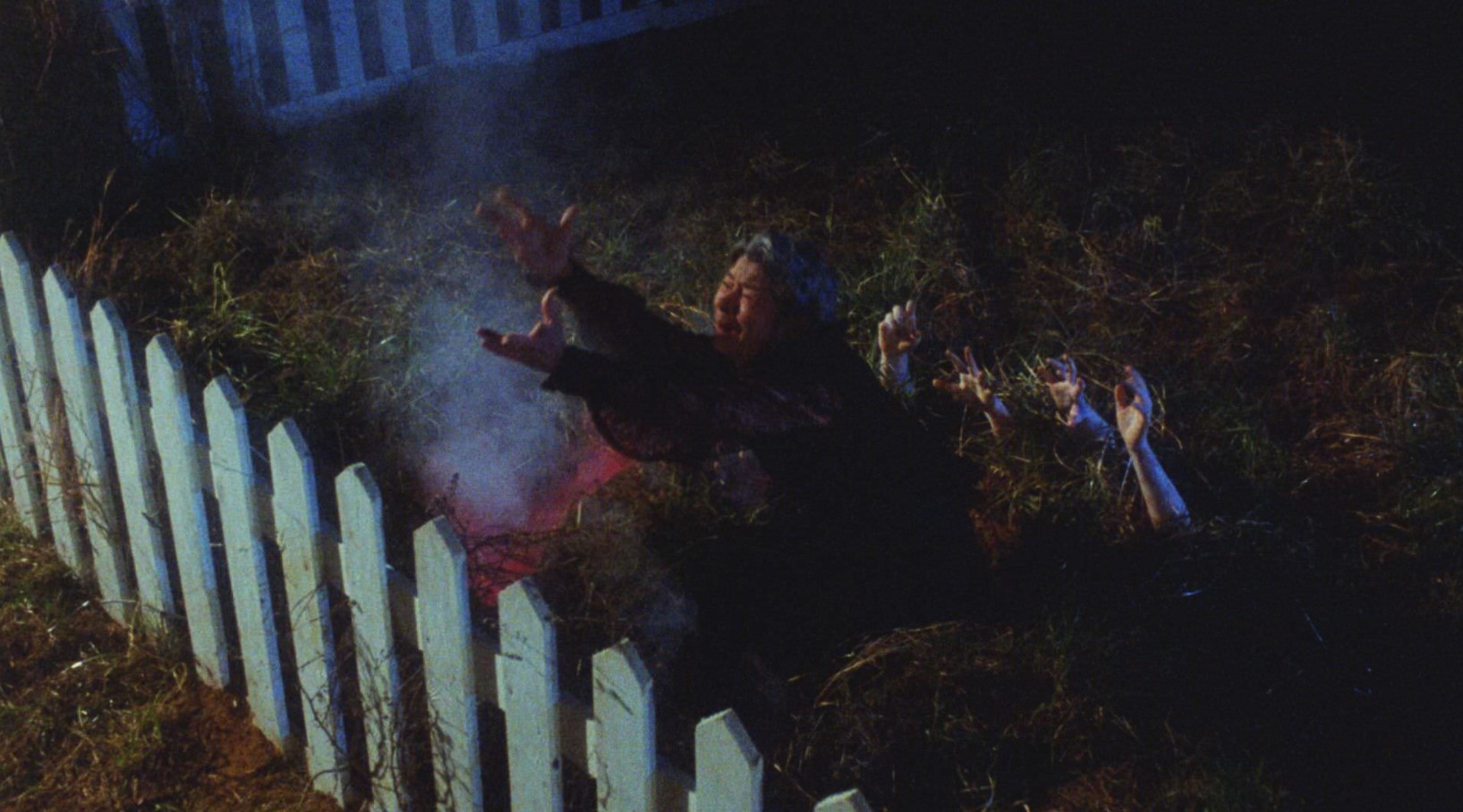
Earl Owensby produced films were not known to be big box office hits as they coursed the grindhouse, drive-in theater circuits with relatively unknown talent nearly strict to the back pockets of the Owensby Studios and still meeting profitable margins on low budgets.  “The Day of Judgment,” which doesn’t feel like a grindhouse film, carried meager success by way of production design and wardrobes alone.  Give credit where credit is due with an Owensby film that can dole out a variety of era appropriate automotive roadsters and specific period garments for the illusion.  Some sets are dressed scarcer than others with lots of blank spaces and sparse knickknacks to build upon the 1930’s décor but the overall impression is quite effective, transporting one out of the 80’s and into the depression era the narrative frequently suggests.  I also favored the non-linear anthology of individual hell bound circumstances as that structure rendered “A Day of Judgment” as a whole rather than a pie sliced into six-even segments with a common core connection that, at times with other films, individual stories can feel untethered to the main theme.  In today’s times, “A Day of Judgment” is severely antiquated but the more “bleaker” character demises often landed with underripe special effects and a fair amount of cheesiness that’s a Loony-Toons illustrated representation of Hell that looks more like Wile E. Coyote’s Southwest American desert home.  I was anxiously awaiting the beep-beep of Roadrunner, speeding across the screen, and the drop an ACME anvil on top of the sinners’ melons. 

Helene Tryon being dragged to Hell. Screen cap courtesy of Severin.

The overall message in “A Day of Judgment” is clear that sin and crime doesn’t pay, and the wrath of God’s retribution will come down hard in the form of a scythe.  Severin Films presents up a new Blu-ray, scanned in 2K of the original interpositive print now in full 1080p HD resolution of the widescreen 1.85:1 aspect ratio. Preserved pristine and having virtually no wear from age, “A Day of Judgment” is an amazing picture to behold for its first Blu-ray release with heightened resolution that extricates more details than possible than any other release can provide, especially when those other releases are the official VHS and DVD bootlegs. Here the color grading excellently pops with deeper hues of prime colors to provide more life into the death that’s onscreen. One thing to note about the release is the immense phosphorescence glow around whites and other lighter colors that can be eye-catchingly distracting when a piece of white paper becomes the main focus due to a conspicuous radiance. Other than that, the picture is clean, the grain is healthy, and no obvious signs of alterations to enhance the visual spectrum. The English language mono audio track, though emitting crystal clarity without any audio blemishes, is not terribly clear on whether Severin went with Dolby Digital or the DTS-HD. Other listings on the web offer up “A Day of Judgment” with a dual channel DTS-HD Master Audio while the back cover displays the Dolby Digital logo with a detached written description as a mono track, which coincides with Severin’s official site. With the film’s outmoded ingrained technology, Dolby Digital would be, to me, the obvious format that produces higher quality sound using a lower bitrate. Special features include a pair of new Severin exclusive interviews with British author Stephen Thrower of “Nightmare USA” in The Atheist’s Sins and snippet interviews from Worth Keeter and Thom McIntyre in Tales of Judgment. Final spec notes on the Blu-ray are a region free coding and has a runtime of 97 minutes. Stuck in stasis of prim and conservatism, “A Day of Judgment” has become this oddball labeled slasher of the 80s era that aimed to explore new and unusual stories and techniques on every avenue, but still leaves this impression of Bible-thumping Christian values that serve as a stern warning for all ye sinners!

“A Day of Judgment” on Blu-ray and DVD from Severin Films.  Click Here to Purchase at Amazon.com

Those Little EVIL Buggers Ruin Everything! “Ankle Biters” reviewed! (Dark Star Pictures / Digital Screener)


Injured hockey goon Sean Chase has severe on-ice anger issues but leave from the game curbs his temper for the better after meeting an internally distraught Laura Haywood.  Enamored by the mother of four who enjoys rough sex as much as he does, Sean decides to willingly plunge into marriage by asking Laura for her hand against his friends and family passive advise him of the hefty, multi-kid baggage in Laura’s tow.  To set the romantic mood, Sean takes Laura and her young kids to his family’s lakeside cabin where all the locals know him, personally and professionally, but when the girls discover cell phone footage of Sean and Laura’s bedroom exploits and interpret them as Sean hurting their mother, they devise mischievous retribution on Sean in order to protect mommy. 

From being a bare knuckler enforcer using the rink as his boxing ring to becoming the haplessly smitten and blind to four little girls’ perception of him as the bad guy, the once penalty box denizen Sean Chase is now the penalized good guy in the Canadian dark-comedy “Ankle Biters” from writer-director Bennet De Brabandere.  Also known as “Cherrypicker,” the title used in the film, the film is Brabandere’s first feature length film based off a story by lead actor, Zion Forrest Lee (“Hit It”), who oft puts delicate notes of misperception as the main theme in his tale.  Shot primarily in the harbor village of Ontario’s Tobermory “Ankle Biters” is produced by Michael Flax of Flax Films, director Bennet De Brabandere, long time makeup artist Sean Sansom with credits from “Land of the Dead” and “eXistenZ, and special effects company, Mindwarp Productions’, Francois Dagenais (“Saw” franchise, “Chucky” SyFy series).  The film is presented in part by APL Films.

As if seeking some sort of self-punishment, story originator Zion Forrest Lee takes the form of a punching bag for four overprotective little girls; four real life sisters, in fact, played by Rosalee, Dahlia, Violet (“Bad Santa 2”), and Lily Reid, the latter Reid having played a significant role in Johannes Roberts’ recent “Resident Evil” reboot as young Claire Redfield and will be involved in another Lee and Brabandere collaboration in the upcoming apocalypse thriller, “Salvation.”  As a father of three girls myself, the Reid girls are nothing short of genuine, killing their roles with tweaked difference in each of their individual personalities as cute and morbidly curious children and siblings.  Lee offers up a rather over-the-top approach toward Chase’s Mr. Perfect in a way that doesn’t come across naturally as the performance is stuck somewhere between Phil Hartman in “Jingle All the Way” and Chevy Chase in “Christmas Vacation” (I’m in the Christmas spirit with my films, if you can’t tell) with a suave sexy toward the women who swallow it up and dorky goofball toward kids who don’t understand it. Chase’s legendary hockey status has been interweaved into the community surrounding his family’s lakeside cabin, such as the local cops with Officer Brian (Gareth Moyse), local shopkeepers like Jordy (Jordan Mills), and even other vacationers, a pair of lakeside neighbors in Anthony (Doru Bandol) and Caprice Gaddis (Maria Sant’Angelo) with their blossoming teenage daughter Matia (Matia Jackett, “Crimson Peak”). By far one of the more interesting characters, Matia doesn’t actually progress the story with her flirtatious crush on Chase as she’s used as more of a device to propel the Haywood girls into full-blown psycho-kiddies as Matia bites off more than she can chew on a what should have been a routine babysitting gig. The biggest name in the film is the “Who’s Line is it Anyway?” comic Colin Mochrie in an unfunny role as the town’s police chief. “Ankle Biters” houses many curious characters come and go, adding little to story or not adding enough, with select bit performances from Evert Houston, Michael Copeman, and Jani Lauzon amongst the Canadian cast.

Not one single member the cast had that it factor that sparks allurement, intrigue, laughter, hate, or any other kind of emotion they’re trained to extract from you or intent on to make you feel in certain crucial points in the story. As a dark comedy, “Ankle Biters” lacked, well, comedy with an overreaching and flat satire on the innocence of mistaken circumstances. When the opening credits roll with the Gary Glitter “Rock and Roll” sampling “The Hey Song,” a track used for decades at sporting events, and we’re immediately exposed to a confrontational and bearded hockey player punching the eye out of an opposing team player into the title sequence, investing myself was easy as the synch of melodious Jock Jams and brutality is promised for the horizon; however, quickly skating from the ice is our beloved bloody-knuckled goon gone in a matter of oddly edited and sequenced scenes and is rarely seen again, even in flashbacks, as we’re dumped into post-hockey career, clean shaven, and on the behavior mend of Sean Chase trying to quickly nail down a woman with four kids who obviously dislike him a whole lot. I fail to see the transition, I don’t want to see the transition, and I’m angry “Ankle Biters” ended up in this transition whereas having Chase continue to be the injured, but still a fisticuffing and bearded enforcer, going toe-to-toe with brats would have been much more (Canadian) of an amusing watch. The better side of this genre blending coin is the darkness portion that really elevates during the latter half of the lakeside trip. Dead bodies, baby spiders crawling out of an ear, open wound fractured skull, a knife to the eye are just a few of the effective practical and composite applications from Francois Dagenais’s special effects company, MindWarp Productions, that keeps the story grounded with destroying the human anatomy as well as keeping up with the human fallibly in order to not have the film fall completely on its face with everything else erroneous.

Released back in mid-November, “Ankle Biters” landed onto On Demand platforms and DVD home video courtesy of Dark Star Pictures. Even though I’m unable to fully cover the audio and video details from any digital screener, I don’t think what was provided was even a finished version of the film that came complete with top left corner running timestamps and some obvious missing special effects, such as the missing prop knife tip when removed from the eye socket and then the tip is back whole on the next shot. No information on the DVD specs was given to me either. Brabandere and Lee do tease with a follow up sequel involving the “Son of Cherrypicker,” named after the lakeside penned “Cherrypicker murders” in the film which, again, was never made a solidifying connection to other than a brief news report ticker on television. If comparing a film close to “Ankle Biters,” Peter Berg’s “Very Bad Things” fits that gruesome bill with one gross misstep in front of another that eventually culminates to a shocking and even deadlier kill or be killed ending with a grown man versus four little girls.

Watch “Ankle Biters” On Amazon Prime Video

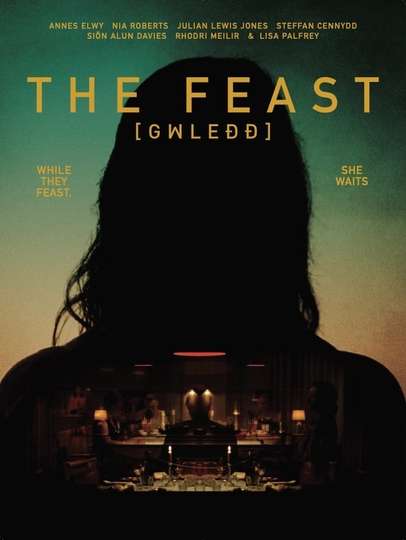
The Earth is Healing with EVIL Intentions. “The Feast” reviewed (IFC Midnight / Digital Screener)

Glenda is frantically planning a dinner party for seven people at her newly constructed, modern rural home in the Welsh countryside. In order to quickly prepare, Glenda hires a young waitress, Cadi, from the local pub-restaurant as a pair of extra hands, but becomes intertwined with Glenda’s eccentric and dysfunctional family and friends who are drug addicts, sexual deviants, narcissists, and greedily apathetic in respecting local Welsh traditions and lands. However, Cadi keeps her own secret, one that’ll will transform the joyous dinner party into a night of deadly retribution for all their sins upon Earth.

For a language once on the brink of extinction and only spoken by less than a million people, probably even more less than that estimate, director Lee Haven Jones’ debut feature film, “The Feast,” reintroduces the language to many of us with revitalizing the Celtic-tradition Welsh tongue by implementing it as the entire dialect for his introductory from the United Kingdom. Jones’ eco-horror clashes archaic Welsh lore and traditions with the newfangled inattentive and neglectful modernism from a script by Roger Williams, a frequent collaborator with Jones on previous credits such as the split-heritage documentary “Galesa” and the short-lived drama series drama series, “Tir,” about foreign invaders intrusively adding financial hardships Welsh landowners. Also known as “Gwledd” on script in Wales, “The Feast” is executively produced by Jones and Williams as well as Gwenllian Gravelle, and Paul Higgins under an amass of production companies in the British Film Institute (with funds stemming from the national lottery), Ffilm Cymru Wales, S4C, Fields Park and, in association with, Great Point Media and Melville Media Limited.

THE FEAST Still 1

A dinner party fit for the scum of society comes to mind as Jones rounds the horn introducing Glenda’s passively confrontational family whom all are on display for having vices unsuitable for polite society. Beginning with her sons, two brothers shamed by their parents into hiding from out of the public eye by whisking them away to their rural abode, are portrayed by actors Steffan Cennydd as the drug addicted and party loafer Guto and Sion Alun Davies as the an intelligent and sterile sociopath with a sordid past involving accusing women. There’s also her husband Gwyn (Julian Lewis Jones, “Elfie Hopkins: Cannibal Hunter”) with a sleazy demeanor and an quenchable thirst for money. The family friend Euros (Rhodri Meilir) lives and breathes squeezing every ouch of worth from the dollar signs he envisions plastered on everything to the point that his pigheadedness will eventually get the better of him. Lastly, there is Glenda (Nia Roberts) herself who is a pursuer of the finer, material things eager to display them proudly no matter the cost of bloodshed. Roger Williams’ characters are written absolutely lush with cancerous class and a vague sense of their surroundings as they stew proudly being one boldly intense personality to the next; however, they become becomes cleaved by the house party help, Cadi, with a shark-circling simplicity by Annes Elwy. Elwy barely has any dialogue as she submerses Cadi, quietly like a submarine silently churning the waters, into the family’s eclectic affairs and studying their every movement with a naïve gaze, but there is nothing naïve about Cadi’s uncomfortable silence that becomes heedlessly unnoticed by, no surprise here, the group of narcissists. “The Feast” rounds out the cast with Lisa Palfrey, the only rational head with surprising little screen time after briefly unveiling a shocking revelation about just exactly who Glenda let in her home.

THE FEAST Still 2

2021 has been the year for under-the-radar, but oh so good, eco-horror.  Among the ranks following this years Ben Wheatley’s “In the Earth” and Jaco Bouwer’s “Gaia” comes the all-things-Welsh cautionary outlier that when pushed too far, when disturbed too much, and when reeking virally infused putrid, a vindictive reaper will come calling.  In this case, that harbinger of death takes the form of a landbound spirit rooted in lore with an insidiously coy wolf in sheep’s clothing mounting a strike with subtle, rancorous fangs by smothering them with their own debaucheries and vices.  “The Feast” will take a couple of viewings to fully digest the complete airy extent of Jones’ lax editing, under the cut and paste thumb of Kevin Jones, that can infrequently blur character timelines and presence in the story, as if plot points were forced into an unsure elucidation to connect the dots.  With a simmering horror on a spoke of unsettling imagery, the editing should have slightly been more binding to tighten gray areas; instead, “The Feast” has an abstract quality third act that not only chops up scenes, but also chops up bodies influentially consumed by the already self-destructing aspects. Some time must pass, a few days maybe, to let “The Feast” penetrate an understanding as it’s one of those flicks, wrapped loosely in cultural folklore or maybe told with the assumption non-Welsh viewers will grasp, the more thought about or written about, the more appreciation the film will disclose way after the credits roll.

THE FEAST Still 3

Funny how gravitating cultural folklore and nature grow an impeccable theme of doom as if shaping mythologies and a life-growing ecosystem equate to nothing more than a foreboding sense that one day mankind will become extinct at their own hand. “The Feast” portions a slice of that ominous pie, topped with Welsh lore and gore, coming to North America theaters and digital on-demand this November 19th, just in time for America’s feasting activities of Thanksgiving. The 93 minute, unrated film will be distributed by IFC Midnight, the sister label to IFC Films, owned and operated by AMC Networks Inc. Bjørn Ståle Bratberg serves as cinematographer who options to start with the fresh-air, blue-sky landscape of the Welsh countryside than slowly guide us, step-by-step into the character delinking from the natural, beautiful world into a more menacing night of harsh darkness and fervent flame to reveal true identities. Bratberg’s dim lighting seemingly imprisons the sordid family in the new and modern home that’s like a prison with a gray brick interior and has a room of relaxation for Glenda that is noted by a guest in resembling a prison cell. The message of revenge resounded loud and clear; “The Feast” lays down coruscating repercussions in reaping the land for one’s own benefit and Lee Haven Jones’ wayward timebomb evokes an upsetting fear and tension for a dinner party finale that is surely to go way-wrong in this different kind of revenge thriller.