Caught in the Act, Evil Must Do Evil’s Bidding. “The Killer Must Kill Again” reviewed! (Rustblade / 50th Anniversary Blu-ray)

“The Killer Must Kill Again” on a restored, 50th Anniversary Blu-ray!

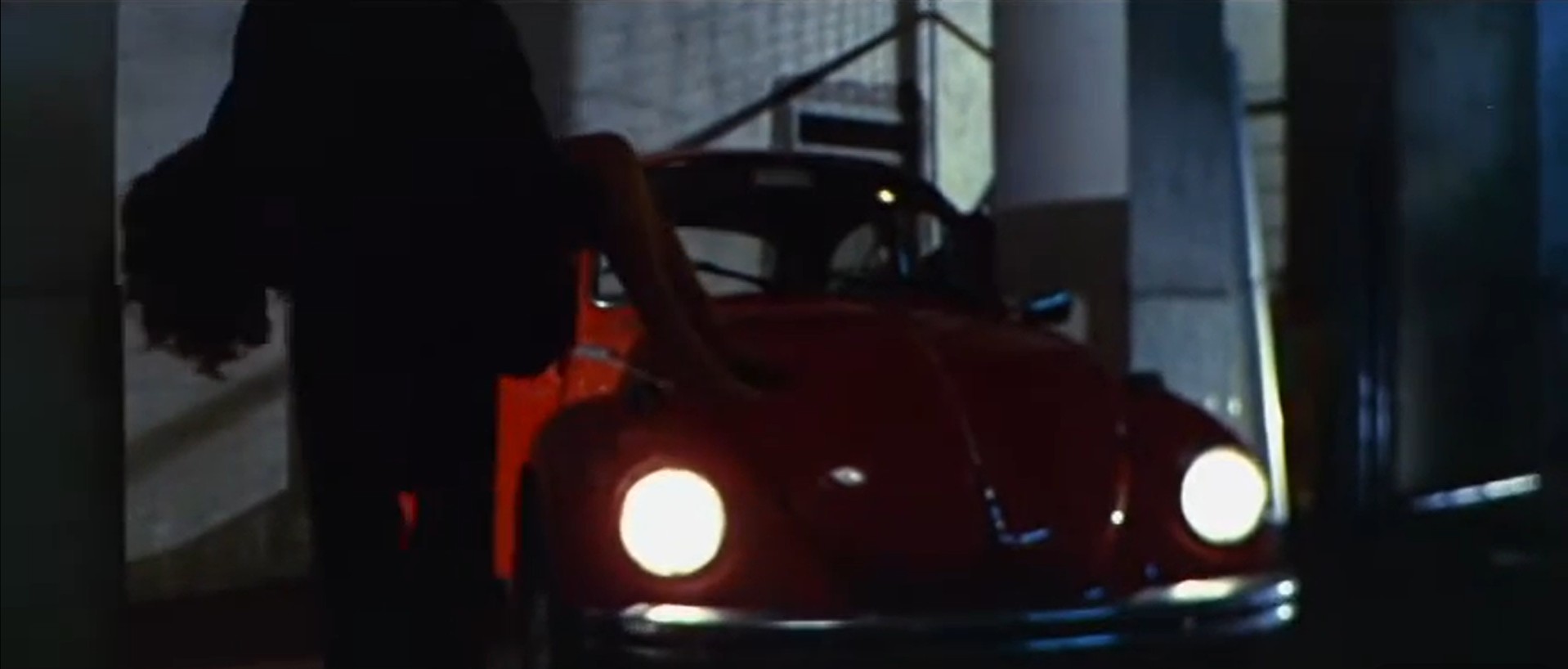
Giorgio and Norma’s hot-and-cold marriage takes a turn for the worse when Giorgio’s greed convinces him to plot her murder after she threatens to cut him off from her family’s money.  When Giorgio catches a sexually perversive killer in the act of dumping a young girl’s body in an isolated canal, he devises a blackmail agreement with the killer to murder his wife and falsely claim a ransom from her father to satisfy Giorgio’s gluttony.  Killing Norma was easy enough but after the killer brings the car around to put her body in the trunk, a young couple steal the car for an all-night joyride to the beaches of Seagull Rock, unbeknownst to them a dead body stowed in the trunk.  With the killer in pursuit of the couple and the police suspicious of Giorgio’s involvement of his wife’s disappearance, it’s only a matter of time before the killer must kill again.

“L’assassino è costretto ad uccidere ancora,” aka “The Killer Must Kill Again,” is a straying kind of Italian psychotronic film from the typical giallo overload being produced out the country between the 1960s and up to the early 1990s.  Released right in the middle in 1975, the film never enshrouds viewers in mystery with a blunt, clearcut case of who and who is not the villains, the victims, and the heroes.  “The Naked Doorwoman” and “Contamination” director Luigi Cozzi helms the script he cowrites with Daniele Del Giudice (“The Story of a Poor Young Man’) with an inclination of slipping darkly dry comedy into the fold of a cold and callous killer’s purview of an extorting mastermind’s bidding and the uncomfortable self-serving sexualized force thrust upon women, the dead and the living.  Sergio Gobbi (“Vortex”) and Umberto Linzi coproduce the GIT International Film, Paris-Cannes, and Albione Cinematografica coproduction. 

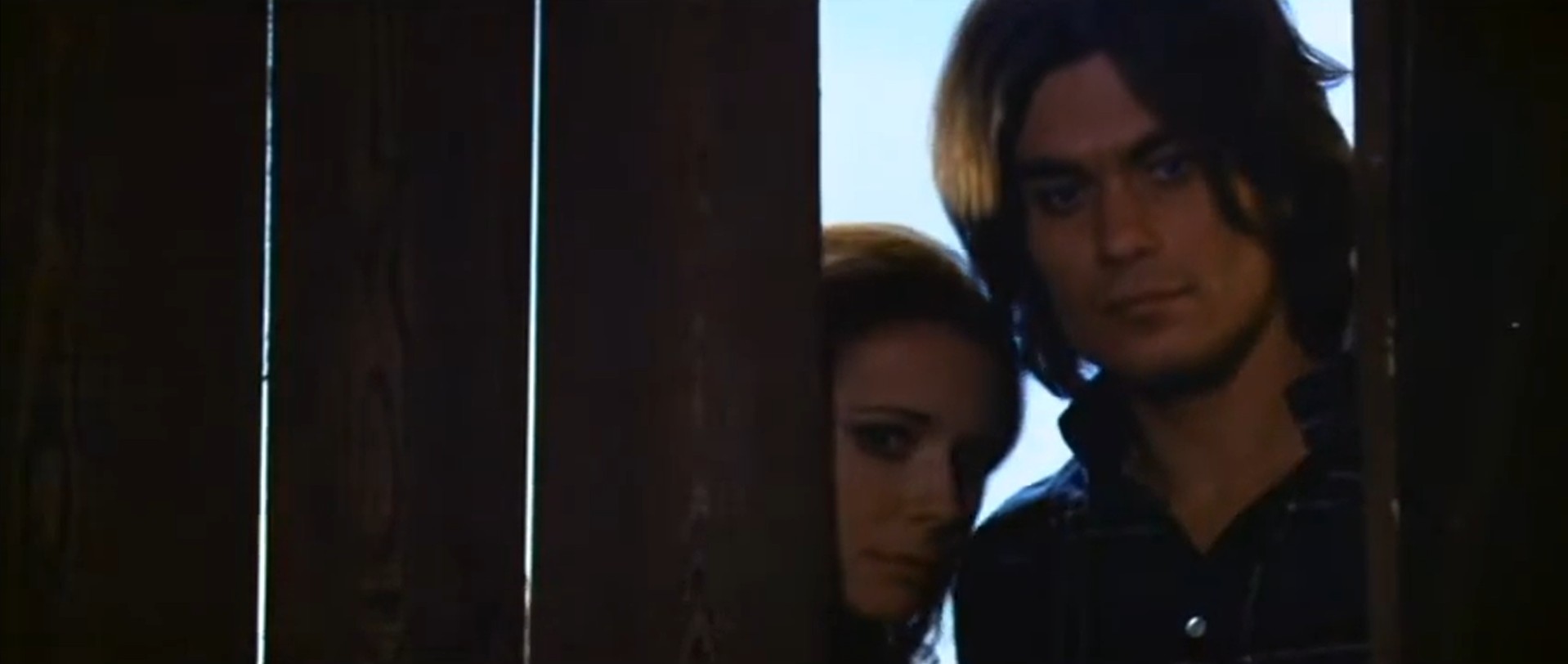
The cast is comprised of an ensemble lot and for an Italian production, there are hardly any Italian actors leading the charge.  Most of the principal cast hails from Europe, mostly Spain, and with a few outliers from France and even one from Uruguay in South America.  Each actor and actress have a rough fair share of screen time, preluded with the titular killer, played by Frenchman Antoine Saint-John.  Saint-John has a face for television, villainy television that is, with high cheekbones that create deep contoured shadows, a danger stare, and a round head with cranium hugging, short dark hair that make him distinct amongst his fellow castmates.  “The Beyond” actor’s heart put effort into a heartless role of the unnamed perverted murderer of young, beautiful women for unknown reasons and motivations.  That’s not the case for the opposite transgressor, the killer’s blackmailer Giorgio Mainardi who’s a scheming businessman and money leech off his wealthy wife (Tere Velázquez, “Night of 1000 Cast”), two reasons and motivations to put a kill contract on his wife.  “The Strange Vice of Mrs. Wardh’s” George Hilton dons the dapper swindler with trim suits, neat hair, and a handsome façade underneath his ugly intentions as he tries to fraud his wife’s ransom for himself.  Caught in the middle of this plot are two young lovers, who in themselves are not so innocent by stealing the killer’s car with a dead woman in the trunk.  Cristina Galbó (“The Living Dead at Manchester Morgue”) and Alessio Orano (“Lisa and the Devil”) are the couple Laura and Luca, two teens on a stolen car joyride to a distant beach front in order Luca to try and convince Laura to take her virginity.  While there’s ransom fraud, murderous plots, murdering, corpse disposal, and other heinous crimes, the most disturbing in the story is Luca’s pressuring to get into Laura’s pants and his means of satisfying his lust by picking up car stranded blonde (Femi Benussi, “Bloody Pit of Horror”) and cheating on Laura while she is raped when confronted by the pursuing killer.  The sleaze and skeeze level on Luca is beyond reproach and it really makes him more the villain than the actual killer who’s up two bodies by this point.  The principal cast can’t be complete without police presence and that is where Eduardo Fajardo (“The Murder Mansion”) steps in as the cool, suave, know-it-all-and-see-how-it-all-plays-out inspector, a cliched role of the time and even in today’s whodunit ventures.   

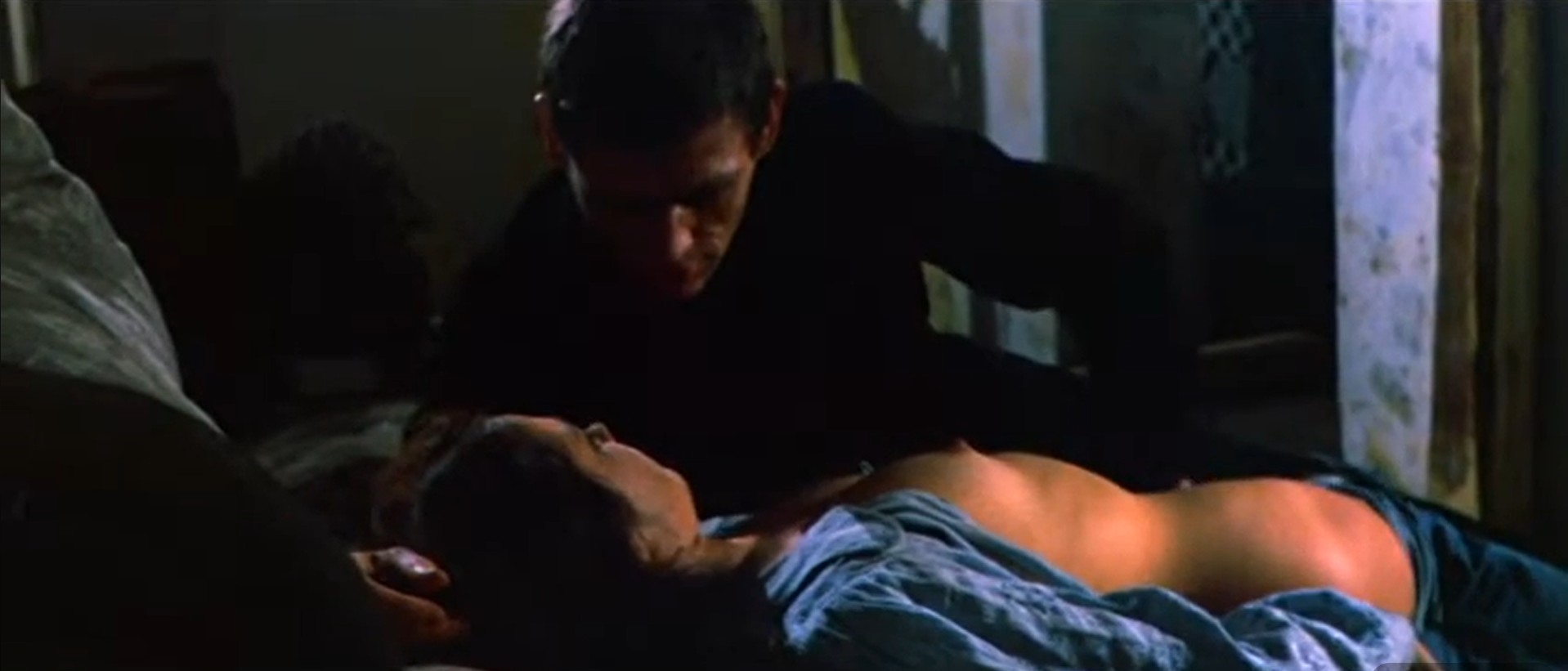
This crime giallo lacks mystery but makes up for it with rich characters, a sleaze-bag crime, and a little style from director Luigi Cozzi and cinematographer Riccardo Pallottini in their choice to visual effects to insulate the moment within a scene by matte narrowing the focus and using a sharp spherical lens to heighten the tension around the center focus with a semi-fishbowl effect.  Coupled with solid editing and great lighting for the night drive sequences between the two cars and it’s reflexive, subsequent chase, the story’s pace doesn’t rush into the more gushing violence and sexual subversion, effectively building up a pressure cooker of a confrontation between the killer and the kids that’s brilliantly edited in a taut juxtaposition that flips back and forth between the killer’s virtually explicit raping of Laura and Luca’s wanton encounter with a stranded licentious blonde motorist; both elicit wrongdoings, rendered around the crave of naked flesh, but they are from different perspectives with one being a clean cheat of carnality with another person and the other being a malicious rape of innocence yet both leave that sour taste of discomfort in the mouth but the edited design is about as sweet as it gets. 

The Italian distributor Rustblade Records, under the movie release sublabel of simply Rustblade, release L’assassino è costretto ad uccidere ancora,” aka “The Killer Must Kill Again,” onto a new Blu-ray in its complete Cozzi’s original vision and is a restored transfer for worldwide audiences in association. The 50th anniversary Blu-ray is AVC encoded, 1080p high-definition resolution, on a surprising BD25. The BD25 is surprising because the restored picture quality looks phenomenal considering the capacity, retaining deep shadows, vibrant color palette, and no incongruous signs of compression artefacts. There is however some detail smoothing fragmented throughout depending on the interior or exterior scene. More of the opening moments between Giorgio and Norma look quite polished and intricate regarding textural skin and fabrics but a good number of moments appear to smear portions of the face, especially in Antoine Saint-John’s more distinct facial characteristics. Depth and range favor the bold with Cozzi able to obtain decent amount of space between objects within his stylized choices and the color spectrum, like many giallo films, is saturated with intensity. An Italian and an English 2.0 DTS-HD Master Audio are the reigning encoded audio choices, both of which are post-production ADR and both of which show the obvious synchronization discord. The English translation, as well as the English subtitles, contain generalizations of a perhaps more complex scripted dialogue intent. With ADR, dialogue clean and clear with present, defined space right in the front two channels but lacks milieu acoustics, depth, and little range with the action added with Foley. Nando De Luca’s lingering avant score blend single low-note guitar chords, resonating piano keys, and Theremin wooing lift up the story with ominous tension. The English subtitles appear accurate without any grammatical errors. Special features include an interview with director Luigi Cozzi, a film analysis by Federico Frusciante, a horror enthusiastic musician from Rustblade Records, film locations toured by Giallo Italiano, and the feature trailer. The 50th Anniversary Edition comes with two versions: a limited-edition DVD/Blu-ray Deluxe mediabook with postcards and a single disc Blu-ray. For this review, the single disc was provided in a clear Amaray case with double sided art sleeve of a giallo yellow and contrast shadowed illustrated composition of characters and the reverse side depicting two moments from the movie drenched with giallo yellow. Presented in widescreen 2.35:1 aspect ratio, the not rated, region free film has a runtime of 90 minutes.

Last Rites: A giallo unlike the rest, “The Killer Must Kill Again” is a perversion of greed, lust, and murder without virtuous players in a plot gone awry. Luigi Cozzi’s 1975 classic is a genre staple for fans old and young in this Italian murder shocker and Rustblade offers a new and improved, director approved vision that collectors will see to acquiring immediately.

“The Killer Must Kill Again” on a restored, 50th Anniversary Blu-ray!

EVIL’s Casting Couch Could Be the Last Audition! “Young Blondes, Stalked and Murdered!” reviewed! (Anchor Bay / Blu-ray)

Not Red Heads, Not Brunettes, Blondes! “Young Blondes, Stalked and Murdered!” on Blu-ray!

Stacy and Josie are two aspiring young actresses living in Los Angeles.  Both women are blonde and both ambitious to make it big in acting while being friends vying for the same work in the difficult industry that involves casting couches and who-knowing-who to get even just a foot into the door.  As Stacey’s journey to fulfil her acting career stumbles role-after-role, especially after a unique pre-casting session with a film director named Sasha, she finds that Josie receives role interest from the same director.  The pressure gets under Stacey’s skin to where nightmares evoke jealousy and a thin layer of fear, raised by the widespread terror of blonde women, also aspiring actresses, being discovered horrible murdered by a killer who records every kill.  Stacy pushes forward but her friendship with Josey wanes with her casting success and the news of more blonde actresses found gruesomely murdered unlock her nightmares to their full potential. 

“Young Blondes, Stalked and Murdered” catches the eye with a lustrous, vice-drenched title, but the narrative layout is anything but candidly conventional.  The film can be described as a reverse slasher that keeps the serial killer of young, blonde actresses in the peripherals integrated ever so delicately inside a character study of the principal lead, in this case with Stacey, a Minnesotan with stars in her eyes.  Those stars eventually lose their sheen, but the desire doesn’t dull amongst a deficiently of roles for an overabundance of the same type of actress going for them.  For writer-director, “Young Blondes, Stalked and Murdered” is Nick Funess’s first feature-length production based loosely on the trials and tribulations of young women cat scratching their way into the business with a hairline hook of a maniac with a murdered type.  Silence Films serves as the production company with Corentin Leroux and Matt Morello co-executive producing alongside Funess for the L.A. shot film.

Inhabiting as the primary character learning the curve of your desired trade is Samantha Carroll in her second full-length feature role but first at the helm as the star.  However, as Stacy, Carroll plays a character who doesn’t feel like her longed dream of being a star.  Instead, Stacy plays by the rules as if there’s a guide or a playbook to becoming a successful on-screen thespian.  Carroll’s range of emotions can peak from mile excitement to absolutely feeling crushed by the weight of failure.  Disdain and jealousy also rear their ugly heads in between inside a structure that isn’t exclusive in following Stacy as Josie runs a parallel course with less touch-upons in the grind that is to follow one’s dreams.  Elle Chapman’s more dolled up for the role by accentuating her natural beautiful for perkier and more cosmetically inclined haughtiness to contrast her conceit against Stacy’s honest efforts.  Though Funess essentially wraps the story around two actresses, the extent of supporting actors is limited to the exact same number with Gemma Remington as another blonde, actress acquittance and/or rival to Stacy and Zachary Grant as a casting filmmaking who has unspoken quirks about his character Sascha that are told through his rather distinct distilled friendliness and the way Funess and Corentin Leroux frame him by cropping out portions of his body by the frame itself or by objects, as if hiding bits and pieces of his truth in obscurity.  Both Remington and Grant’s scenes are brief and spliced in to add to the stress of an actress’s day-in-a-life, to terraform the the gossipy, cutthroat world, and, in earnest, to be more a grounding third-dimensional force that doesn’t allow Josey to be the only other character for Stacy to bounce off of, yet the characters do add impact with the peripheral killer with Remington’s gruesome news update of another blonde-headed body found as well as hinting at the killer’s possible modus operandi of how he selects, hunts, and dispatches his victims and Grant going further with that idea with a seemingly irrelevant and odd casting couch method depicted with Stacey on screen and with Josey off-screen told anecdotally through her perception, and from both experiences may leave breadcrumb clues toward a suspect without ever divulging concrete evidence toward an unnamed and masked killer rarity making an appearance in the film.

Like most moviegoers might experience, my eyes bored with interest into the unique title.  So much so, my mind started an imagination factory of possibilities there could be inside the encoded disc.  A true-blue slasher initially became settled on with a conventional killer stalking, hunting, and the eventual demise of the titular, ill-fated blondes and while that sort of terminus concept is hackneyed beyond repair, excitement still bubbles to the surface because the method itself sells from it’s tried and true history with genre fans and general audiences alike.  “Young Blondes, Stalked and Murdered” is not that kind of film.  You can label it a deconstructive or backwards slasher, but the subgenre thriller has deeper drama roots in the grounded character conflict garden, blossoming more toward a psychological thriller with a rear mirror, background view of a niche specific serial killer.  Funess’s film is akin to some apocalyptic thrillers of an impending, world-ending devastator on the horizon that you know is coming but it’s the interpersonal dynamics, or maybe even political and authoritarian moments, leading up to that catastrophe that are the heart-and-soul of the story.  Funess’s film is very much a slice of life rather than a slice of flesh with an eye for framed shot, the draw of contention through personal hindrance and envy, the melting mindset stemmed by failure, and it’s an overall celebration of performance by the cast in a story with minimal violence because the violence itself is at the very back of the mind, forgotten almost as these young blonde women continue to strive for just an ounce of limelight no matter the cost that stares directly at their faces. 

Anchor Bay continues to release rebellious films on their revamped label with “Young Blondes, Stalked and Murdered” now available on Blu-ray.  Stored on a single-layered BD25, the AVC encoded high-definition film, 1080p resolution, is presented in widescreen 1.78:1 aspect ratio.  Image wise, the picture captures natural appearances with a soft grading that lightly brightens the image.  There is some excellent use of blacks that are solid and deep with crush but works to the advantage of the scene to create a void tension of what’s inside’s it’s inkiness.  Skin textures are fair with some smoothing over of texture, but the tones appear organic and consistent throughout; the same can be said about fabric and surface textures in a range of settings and outfits that add unconscious concentrated coatings to the mise-en-scene.  The English 5.1 DTS-HD MA audio is overkill for a dialogue and score-driven soundtrack narrative but does provide clean conversation with plenty of clarity and no interference.  The back and side channels are less utilized with most of the action held within camera lens view, reducing any kind of non-diegetic milieu activity to the flutter of soft intrusions.  Sergei Kofman’s delicate perceptible score hangs in the rafters for the most part but does come down form time-to-time when needed to either build tension and show discourse in Stacey’s life/wellbeing as she struggles to get ahead with acting gigs. The special features include a scene-by-scene breakdown audio commentary from writer-director Nick Funess and executive producer-cinematographer Coretin Leroux. Anchor Bay’s Blu-ray is encased in a standard Blu-ray Amaray with a white, yellow, and poker hot red artwork of a splattered star with Stacey’s face inside staring back out at you. A leafy insert depicts the same primary artwork plus additional, similar artwork. Clocking in just above an hour at 65 minutes, “Young Blondes, Stalked and Murdered” has region free playback and is unrated.

Last Rites: “Young Blondes, Stalked and Murdered” is a hard sell as a backwards slasher but the unsettling disseminating of ruthless Hollywood is a methodology projecting hopelessness, defeating, and hostility, metaphorically represented by a killer on the hunt for blonde actresses and could pop into frame at any moment.

Not Red Heads, Not Brunettes, Blondes! “Young Blondes, Stalked and Murdered!” on Blu-ray!

Welcome Proclaimed EVIL Into Your Home! “Video Psycho” reviewed! (SRS Cinema / Blu-ray)

“Video Psycho” on Blu-ray and DVD home video!

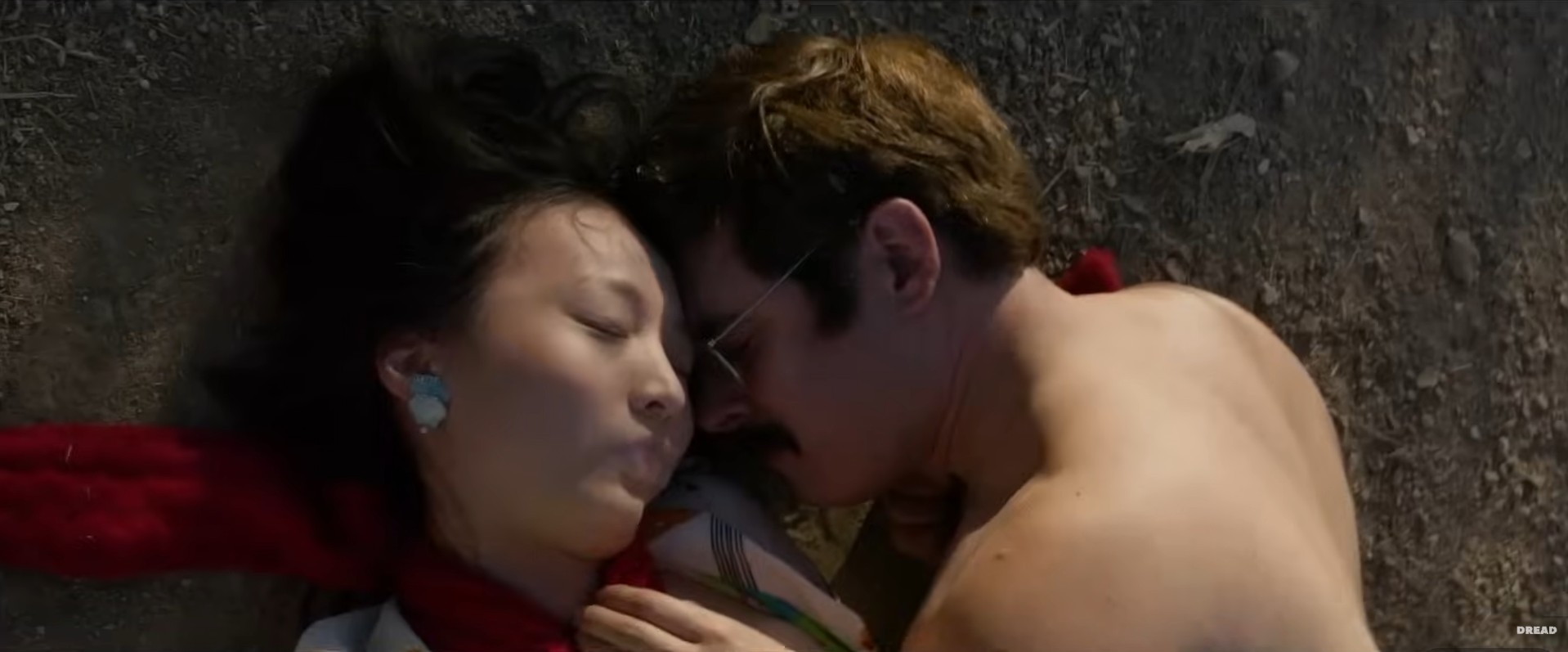
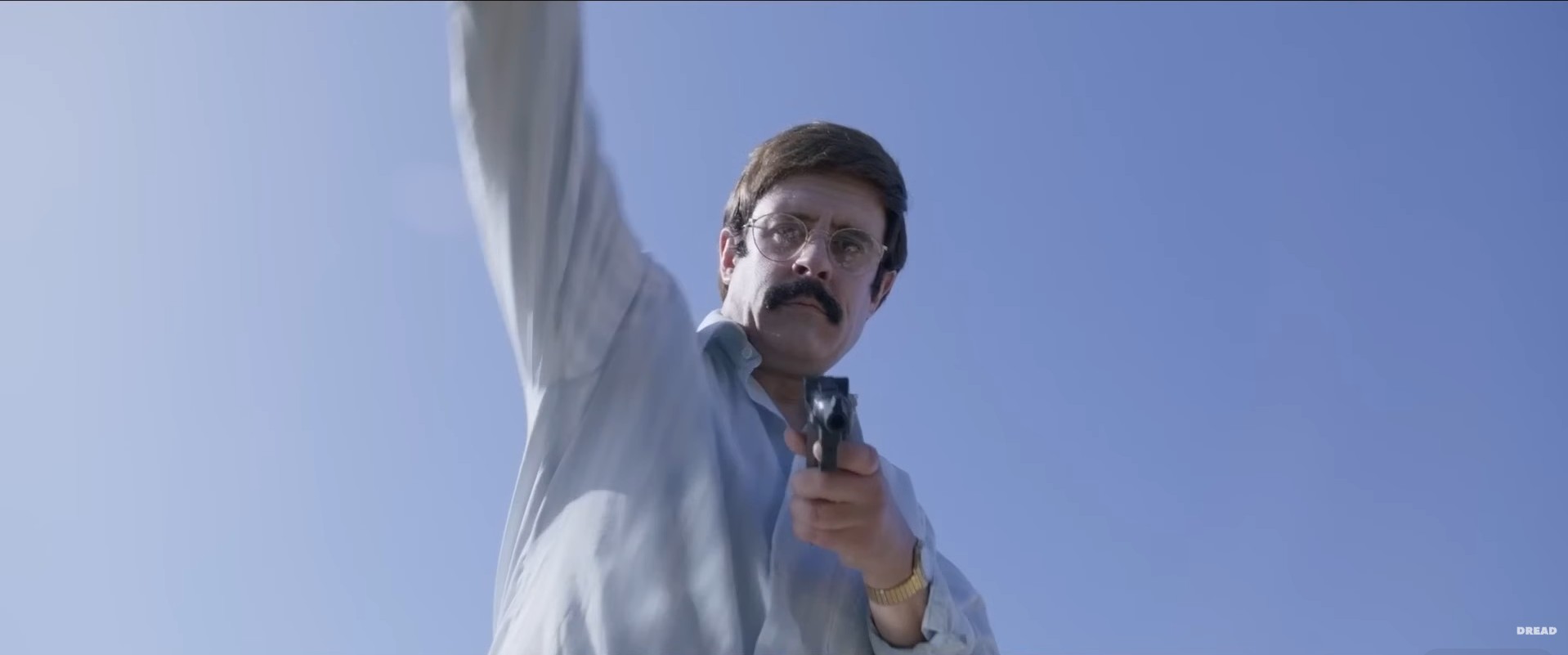
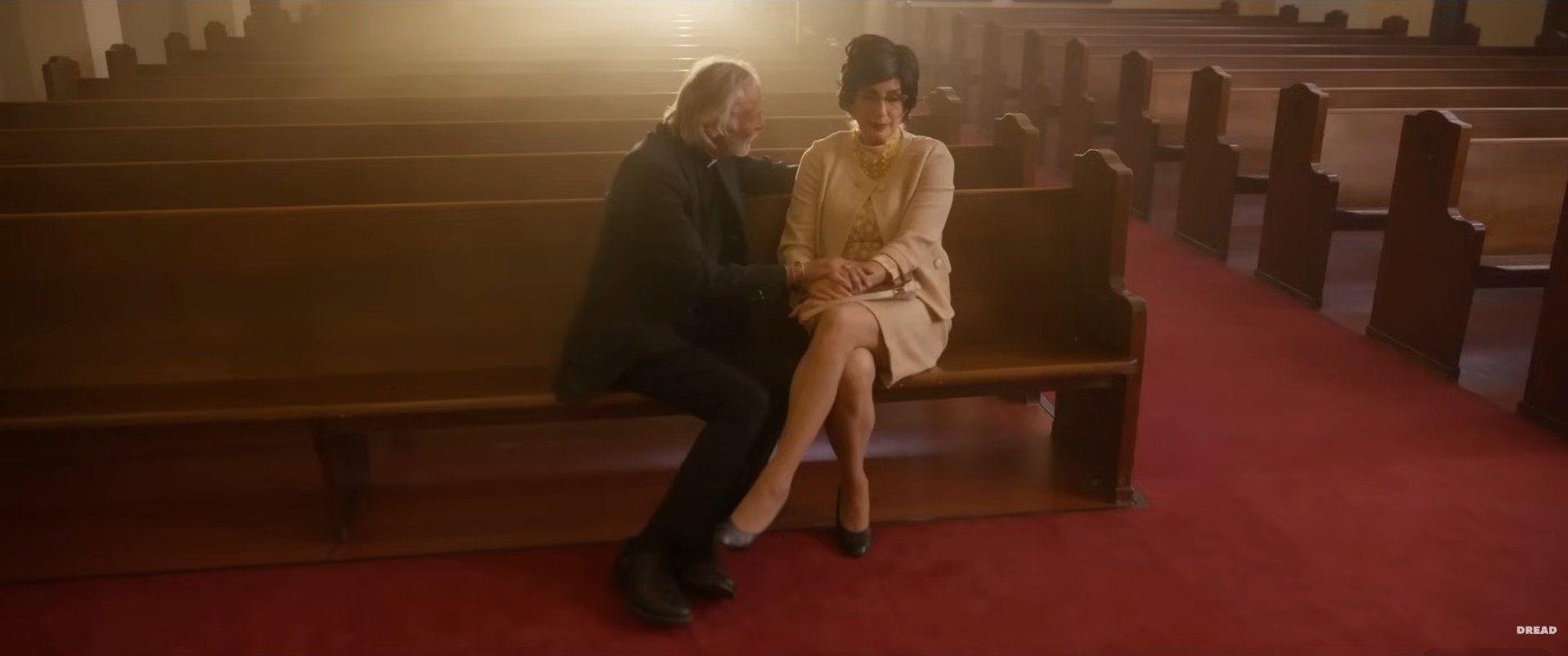
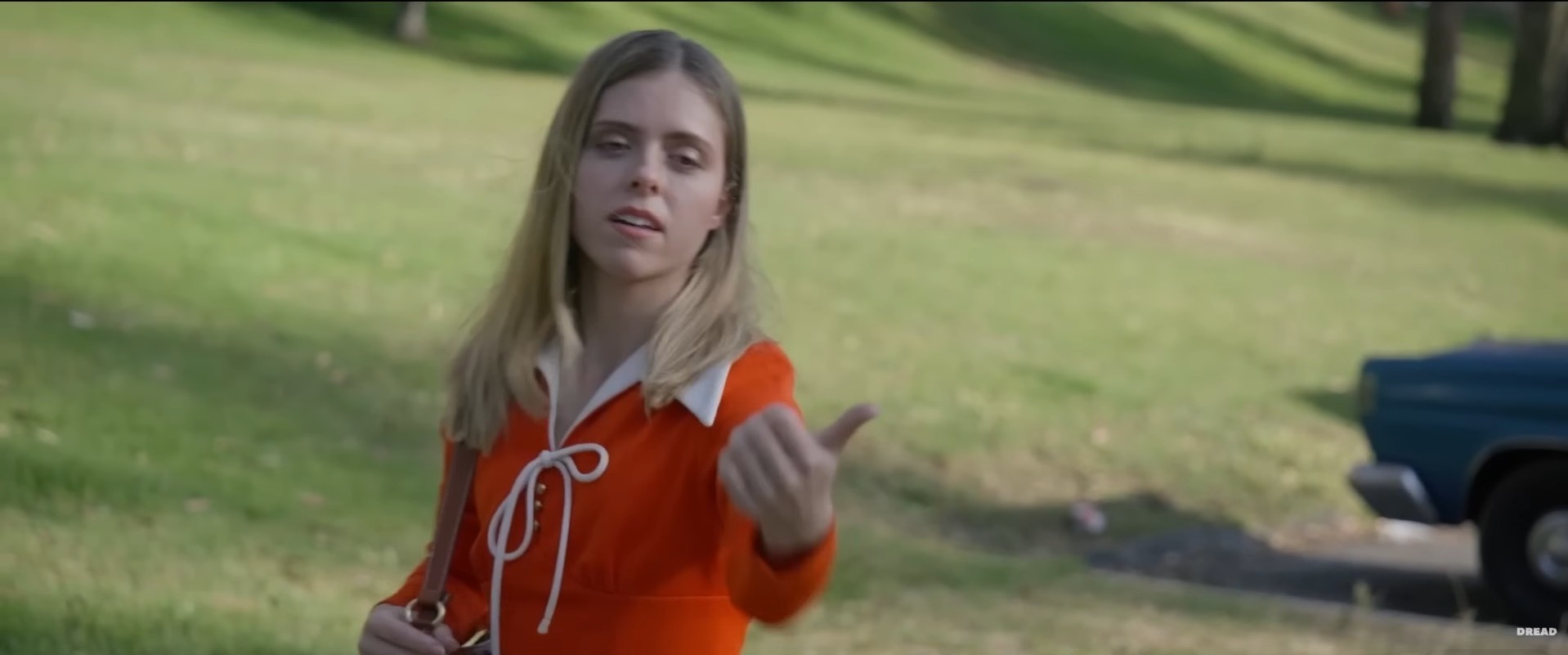
On his way back home, Jason picks up a Ryan, a hitchhiker looking for a new start in town, goaled to achieve three things:  a place to call his own, to obtain a job that pays minimum wage, and to find a girlfriend.  Empathetic to Ryan’s new beginnings having gone through himself, Jason invites the hopeful drifter to stay at his shared home with girlfriend Julie and little sister Kylie.  One night drinking between Jason and Ryan, Ryan confesses to killing a man and even delivers video proof with his own recorded snuff film the act.  Disregarding the video and Ryan’s confession immediately as a joke, Jason lets the man stay until another snuff video involving someone Jason knows puts Ryan in the driver’s seat that could set up Jason as the suspect.  Weeks go by and Ryan basically has the run of the house with Kylie and Julie being fed up with his intrusion and Jason’s illogical reasoning for continuing to let him stay.  With Kylie in his romantic sight, Ryan is on his path to achieve his goals. 

A SOV-horror that proves you should never pickup strange hitchhikers and also proves that there are really unsuspecting, trusting, and overall dumb people out there willing to open up themselves, their home, and their family members to complete strangers, even after adamantly admitting to their heinous crimes.  That’s the essential takeaway for Del Kary’s directed, shot-on-video thriller “Video Psycho,” co-written by Kary and Pete Jacelone, a long independent horror producer and writer who began his writing career on the 1997 film and went on to write an abundant of horror you’ve likely never heard of, such as the “Psycho Sisters” series, “The Killer Clown Meets the Candy Man,” and the eyebrow raising “Duck!  The Carbine High Massacre.”  Kary’s career is not as lustrously tarnished with two films in the late 90s, including this one and “Snuff Perversions:  Bizarre Cases of Death,” and not another until last year’s “Cheater, Cheater,” a slasher based off the childish rhyme cheater, cheater pumpkin eater.  Kary solely produces the PsYChO Films production, shot in Yakima, Washington. 

“Video Psycho” embodies that home movie aesthetic that was shot with poor equipment but amongst good friends, and probably a few beers too.  The cast is compromised a bunch of one-and-done actors with Kary’s film being their only credit as the story follows more from the perspective of serial killer Ryan, played by James Paulson.  With a soul patch, poofy dark features, and thick eyebrows that slant down in a malevolence manner, Paulson contains that judgy general appearance of a psychopath and distills apathetic patterns that are nonchalant and blunt.  While Paulson thrives as killer, Jason is the daftest, most gullible person to ever live in the cinematic universe.  Now, I’m not saying actor Adam Kraatz is the blame, performance has nothing to do with the way the character is written by Kary and Jacelone and that’s their own doing, but Jason’s inactivity to do anything or warn anyone is more frightening than the antagonist.  Girlfriend Julie (DeAnna Harrison) and baby sister Kylie (Jennifer Jordan) also can’t understand the man of the house’s submissiveness to a complete stranger who has this power over him.  When they both begin to question his authority and rational when weeks past and this random guy from off the road is still hanging around, Jason reverse psychologizes the two people closest to him which makes us wonder who the real villain is in the story.  The only other characters with substance are Kylie’s boyfriend Rick (Jared Treser), who has little impact being a buffer between sociopath Ryan and his tender beloved Kylie, and video store manager Steve (Art Molina), who does a better buffering job deflecting Ryan’s unwanted and stalkerish advances until Ryan has his way with him.  Outside the principal lot, the rest of the cast fills in with Ryan’s videoed victims, most come in a single montage of analog recorded murder, with Jason Alvord, Chris Valencia, Shannon Dimickl Brandy Jordan, Jack Meikle, Heidi Munson, and Charles Summons.

Lo-fi and dry, “Video Psycho” presents an invariability that ultimately kills any intrigue, tension, and fear.  With the cast being what it is, an adequate of inexperience, the narrative needed a lift to cannon itself beyond the routine of motiveless stranglers who kills for the love of killing.  Kary and Jacelone’s attempted twist for high impact is Ryan showcasing his snuff body of work to newfound friend and host Jason and for Jason to think nothing of it and let the maniac stay with him and his closest loved ones.  At this point, audiences will slap their foreheads so hard aspirin couldn’t handle the amount of pain to follow and attention to the rest of the story will begin to wane as disbelief ad improbability start to set in like a bad side effect of an illicit drug that clearly has said side effects.  Acts two and three barely blip on the developmental and dynamic activity meter between the characters conversations of the Ryan confoundment.  Essentially, they all talk about the inaction of others and give the benefit of doubt rather than taking action themselves to alleviate Ryan’s squatting.  Ryan’s the other character enacting real change during his weeks’ stay by videotaping every count like it’s his last and insidiously inflicting himself creepily toward Kylie.  Kary does output a few notable scenes of unsettlingly imagery, such as Kylie’s haunting dream of Ryan calling her name and getting closer to her bed as she sleeps while in strobe light and with the lo-fi videotape quality, the effect is definitely dream surreal, at least that is what “Video Psycho” has going for it.

SRS Cinema’s newly restored and re-mastered Blu-ray edition is on AVC encoded onto a 25GB BD-R with 1080p high-definition resolution.  Not that the pixel count really matters with “Video Psycho” and it’s lo-fi videotape that’s neutralizes textures and color and comes with its share of interlacing and tracking issues.  To worry about compression problems, to which there is none within the uncomplex file and its size used for the codec, would be a waste of mental and visual space with an image that does delineate objects to differentiate, implies true hue, and does the job of lower grade, SOV-horror with authentic commercial SOV-qualities of home S-VHS camcorders.  SRS Cinema never really cared about being the picture of health when it comes to quality, so this isn’t off brand for their content and schtick but does heavily play more into the little-known obscurity of home-grown thrillers within its full frame 1.33:1 aspect ratio.  The English mono track offers parallel quality to the video with a static and lo-fi quality that won’t have the pithy impact of a robust and all-inclusive surround sound or even stereo.  Kary’s produced in minor key minimalism and dread score is one of the element’s that be elevated. Dialogue’s hit-or-miss with clarity that’s often impeded by the said interference and poor mic placement, or just the intrinsic issues of an on-board mic.  There are no subtitles available.  With poor A/V quality, why release this film on Blu-ray?  The answer is simply because of the wide-ranging special features that include interviews with the actors who play Ryan’s on-screen and video victims, such as Art Molina, Jennifer Jordan, and Adam Kraatz.  There’s also a feature paralleling commentary track, behind-the-scenes rehearsal footage, deleted scenes, alternate takes, and outtakes.  Plus, the official and teaser trailer along with additional SRS Cinema previews.  The company continues to commission some pretty rad artwork and that is also true here with Belgium graphic artist STEMO who electric saturations of purple, red, pink and blue make for a eye-catching and intriguing roadside killer artwork, even if a bit literal with a thumb up hitchhiker holding a video camera on the side of a blood soaked road in the foreground.  The artwork fits snuggly in between the film layer of a standard Blu-ray Amaray and the disc is pressed with the same front cover image.  The 75-minute feature comes not rated and the Blu-ray is available region free.

Last Rites: An unremarkable, home brewed, strangler picture with little to say, “Video Psycho” has unimaginative idiocy with characters and a narrative conclusion that can be seen a mile away, leaving the SRS Cinema’s title worth only to watch because of its catfishing artwork.

“Video Psycho” on Blu-ray and DVD home video!

EVIL’s the Bacon, the Pork Roll, and the Scrapple All Mixed and Slashed together! “Butcher’s Bluff” reviewed! (Breaking Glass Pictures / DVD)

“Butcher’s Bluff” on DVD from Breaking Glass Pictures!

Film students Rodger, Nicole, and Derrick decide to head to the rural Texas town of Emerald Falls and make their class project documentary around the 28 missing persons over the years and the Hogman, an urban legend of an escaped killer now roaming the woods of Butcher’s Bluff.  Bringing along their friends to make it concurring party getaway at Rodger’s family vacation cabin, the trio conduct interviews with the eccentric town locals to build a story around the Hogman myth, even ascertaining the original location for the mask Hogman wore during his first kills before escaping psychiatric prison.  The more they investigate into the Hogman, the more the locals warn them to stay away from Butcher’s Bluff but in a case of curiosity killed the cat, the documentary film students and their drug-fueled, sexed-up friends find themselves being hunted with no cell service, no help within miles, and no way out of the Hogman’s kill radius. 

Co-directors William Instone and Matt Rifley helm their first collaborative feature “Butcher’s Bluff,” a 2023 small town slasher reminiscent of the renaissance slasher movement of the 1980s, packed with practical gore effects, odd backwoods characters, a campy party of vice-riddled youth, and, moist importantly – excuse me – most importantly, T&A.  Instone, whose all-in director, writer, and producer debut horror “Jon” from 2012 brings one man’s delusions into horrifying reality, cowrites his latest grim story with writer, painter, and overall liberal arts connoisseur Renfield Rasputin.  Filmed in Texas with principal locations taking place in Bastrop, New Braunfels, and San Marcos to composition a story set in the fictional town of Emerald Falls and its rural woodland of Butcher’s Bluff.  The film is a crowdfunded venture that raised an approximate $60K to cover principal shooting and post-production costs with Instone and Rifley serving as primary producers amongst an amalgamation of crowdfunded producing backers   Instone’s Thunder Mountain Films, in association with Dull Knife Productions and Spicey Ramen Productions, go hog wild with their slasher horror. 

As if he doesn’t have enough on his plate writer, directing, and producing “Butcher’s Bluff,” Instone also portrays the main antagonist Hogman, masked with a stitched together pig head complete with cockeyed tusks and garbed with a dingy mechanic jumpsuit and tan jacket.  The Hogman is a walk-and-run chaser with a duel-sided axe and rusty, broad curved knife as main melee weapons though he’ll get his bare hands dirty from time-to-time.  Instone’s not flashy with the villain and doesn’t key-light any iconic poses, stances, or stares to incite a nerve coursing fear.  Hogman’s victims are anyone and everyone who enters the Butcher’s Bluff forest, from necking lovers (Jacqueline Hays and “Mallrats’s” Jeremy London), to lost pot farm thieves (“You’re Next’s” L.C. Holt, “Scare Package’s’” Christopher Winbush, “Girls Gone Dead’s” Shawn C. Phillips), to finally, but not limited to, the Rodger’s friends and classmates on their excursion investigation and party.  Fortunately, the group displays different caricature tropes without going full-blown cliché.  Between them you have the exuding sexy yet overly bitchy duo of Sam and Tina (a cut pixie cut but broodingly built Samantha Holland and a slender yet high-end platinum blonde Kayla Anderson), Rodger’s sex-driven, dweeb cousin Bobby (Dakota Millett) who Sam and Tina torment, the polar opposite to Bobby stud with Jake (Santiago Sky) and of course the three documentarians:  Rodger (Michael Fischer), Derrick (Johnny Huang), and Nicole (Paige Steakley), each reside in their own attribute world consistently, dying the way they live, that’s very telling of their moral fiber.  In additional to Jeremy London and Shawn C. Phillips, who have worked themselves into being staples of the indie genre films, other notable names to mention for their brief but key roles are Brinke Stevens (“Nightmare Sisters”), Paul T. Taylor (“Hellraiser:  Judgement”), Bill Oberst Jr. (“3 From Hell”), and Bill Johnson (“The Texas Chainsaw Massacre II”) peppered into the rest of the supporting cast to draw in fandom.

“Butcher’s Bluff” has the necessary bone structure to be a digestible slasher, checking all the elemental boxes, and Instone and Rifley manage to technically pull off a nearly 2-hour film on a crowdfunded budget.   The problem is “Butcher’s Bluff” has a hackneyed routine about it.  Instead of creating something new and wonderfully, gory and diabolical, under a distinct flag of novelly progressive storytelling, every scene feels all too familiar, a telltale sign to horror fans that we’ve seen this kind of story before.  From Hogman’s stony silence and indiscriminate aggression bores him as a Michael Myers carbon copy, a family in cahoots with a s flesh-stitched maniac plays the tune of “Texas Chainsaw Massacre,” and there’s even a character moment of yelling What Are You Waiting For? aimlessly into the dark forest while spinning around with arms wide apart that oozes Jennifer Love Hewitt vibes.  Add in some rather uninspiring frame, shot design, and editing and “Butcher’s Bluff” very much embodies the crowdfunded costs rather than the intended crowdfunded spirit.  Now while all of this portion of the review sounds grossly negative, don’t just run for the hills to the next slasher film in line just yet as Instone and Rifley still manage to keep an engagement lock on what makes the slasher film enjoyable to behold with some decently inlaid practical gore effects, including a pleading head being sliced horizontally through from mouth to hair or a posthumous, lawn chair display of one fine girl’s nipples and eyes plucked from her body and posed on her eye-gouged out person as if giving a blood offering to the audience Gods.  There’s also the inviting gratuitous T&A from Samantha Holland, Kayla Anderson, and Jacqueline Hays that keeps the old theme motif alive within the campy slasher genre as well as keeping young boys’ dreams from becoming dry.

Breaking Glass Pictures distributes the archetypical slasher “Butcher’s Bluff” onto DVD home video.  The MPEG2 encoded, 720p upscaled standard definition, DVD9 really has a tough go with the compression capabilities as there’s quite a bit of data to encode/decode within a near full-time night shoot picture and color accompaniments that blend right into the darkness, melding out of a clean definition.  Presented in a widescreen 1.78:1 aspect ratio, banding and splotching render a difficult deciphering of data in inkier fields.  When colors do contrast or arise into lighter hues, there’s a pop of demarcation with its full potential held back by an ungraded layer.  Textures are extremely fluid throughout with the prominent skin scenes offering a decent, natural look but most scenes are fuzzy as if the upscale fights the downscaling for supremacy.  The English Dolby Digital 5.1 surround sound offers an adequate compression for a routine slasher with mid-level range with clear and clean dialogue overtop eerie forest soundscape of breaking branches, tree knocks, and leave crunching footsteps.  The mix doesn’t convey much depth with dialogue and ambience hanging around the front channels while medium shots and some tree knocking flirt with the side channels.  A mainstay slasher should have a memorable, tense-riddles soundtrack for the chase or create omnipresence fear but “Scream, Queen!  My Nightmare on Elm Street” and “Dinner with Leatherface” composer’s Alexander Taylor’s insipid inspiration can’t be held in the memorable bank and fails to elevate the Hogman’s imposing sheer terror.  English closed captioning is available.  Special features include a proof on concept trailer for the crowdfunding campaign that stars a handful of the actors from the feature film, such as Michael Fischer and Paige Steakley, and a behind-the-scenes music video that contains behind-the-scenes footage.   The DVD presence is standard fair for Breaking Glass Pictures with a DVD Amaray and a one-sided front cover art, which subjectively pleasing in its retrograde mockup of an illustrated Hogman looming over a scared, running Steakley (supposedly) in her white tank top and high cut shorts.  There is at least one noticeable error on the back cover that spells Paige Steakley’s name incorrectly in the credits, listing her last name as Steakely.  The Not Rated release is hard encoded with region 1 and has a two-hour runtime which can appear quite long, but the pacing was not terrible and the long runtime for an indie slasher didn’t feel overly immeasurable. 

Last Rites: “Butcher’s Bluff’s” has little to offer as far as the next novel and generational slasher but scratches the genre itch with a large body count, solid kills, and campy campers looking to buy, sell, and trade their vices for being violated.

“Butcher’s Bluff” on DVD from Breaking Glass Pictures!

EVIL’s Beauty is in Her Catwalk Madness! “Nothing Underneath” reviewed! (Rustblade / Blu-ray)

“Nothing Underneath” 40th Anniversary Blu-ray Available Here!

Bob Crane, a Wyoming park ranger, suddenly sees visions of gloved hands wielding long, sharp shears entering his supermodel, twin sister’s hotel room in Milan, Italy.  His  psychic experience with his sister sends him packing frantically to Italy, specifically to the Hotel Scala, where his sister, amongst many other gorgeous supermodels, reside when working in Milan.  Unable to locate her and without a sign of disturbance in her hotel room, her disappearance is seemingly nothing more than that – a disappearance – but an aging police detective, Commissario Danesi, is willing to investigate the disappearance which will be his very last case before retirement.  Without any leads, Crane and Danesi don’t have much evidence to go off of until another supermodel is brutally murdered in the same hotel and a pair of scissors is the forensically determined cause of death.  The once case of disappearance now turns into a murder investigation and goes deeper into the ugliness of the fashion world with a deranged killer targeting supermodels. 

Considered to be a prominent gem of the giallo genre but not entirely considered to be a full-fledged horror by the filmmakers is Carlo Vanzina’s “Nothing Underneath.”  Known natively as  “Sotto il vestito niente,” inspired by the title only written by Marco Parma, a pseudonym for journalist Paolo Pietroni, Vanzina cowrote the novel extraneous story alongside brother Enrico Vanzina (“Call Girl”), who are siblings more suited in the measures of comedic premises initially, and the prolific horror writer Franco Ferrini’s, whose screenplays of Dario Argento’s “Phenomena,” “Opera,” “The Card Player,” and amongst others, as well as Lamberta Bava’s “Demons”, gave the writer formidable cult status and creditability amongst the international horror fan base, not to forget to mention regular work and collaboration with a master of horror, Dario Argento.  “Nothing Underneath” is shot on location in Milan under the Faso Film productions with executive producer Raffaello Saragò (“The Witches’ Sabbath”) and producer Achille Manzotti (“Beyond Darkness”).

What’s interesting and more infrequent for this Italian production is that it’s entirely shot in English and not dubbed in post-production ADR.  Reason for this was for “Nothing Underneath” to be a synch-sound production with the image and to market it better internationally because of the main cast comprised of American and English actors.  The American actor, starring in his debut feature film, is Tom Schanley (“Savage”) as Wyomning park ranger Bob Crane and the way the story is structure really homes in Crane as the principal lead with a complete credit setup and character follow-through of the Yellowstone National Park.  Schanley’s blonde hair and muscular toned good looks embodies a likeness to his on-screen supermodel sister, played by Nicola Perring, who, as the story displays her, is not in the business of acting with very little dialogue and is only used for her short platinum blonde hair and thin figure for narrative form fitting.   The other native English speaker in a cooperative lead role is “Halloween’s” Donald Pleasence as an investigator on the verge of retirement.  Pleasence is no stranger to Italian cinema, seeing his fair share in the 1980’s psychotronic pictures, including Dario Argento’s “Phenomena” released prior.  The prolific British actor still manages to produce mountains of charm even in his most rubbish Italian accent as the long in the tooth comminssario eager to solve one more exciting, mysterious case and buddying up with young, handsome, and outdoorsy Bob Crane with twintuition.   The love interest falls upon real life model and Denmark native, then 19-year-old Renée Simonsen who is absolutely stunning with her looks and with her debut into acting in what is a significant role that involves a lot of screentime, a lot of dynamic and interactive dialogue, and does show some brief nudity with intimate sexual situations with Schanley.  “Nothing Underneath” has a roster that fills out with Catherine Noyes and Maria McDonald as Milan models, Paolo Tomei as a coke-head jeweler and model philanderer, Cyrus Elias as Comminssario’s Danesi’s assistant, and Phillip Wong as the peculiar fashion photographer Keno Masayuki.

“Nothing Underneath” isn’t a skimpy, loose garment with nothing going for it.  Instead, Carlo Vanzina offers more with his giallo by making it less giallo in terms of its cinematic style and with Pino Donaggio’s score which is in the style of, much like the rest of the filmed and narrative structure, a Brian De Palma erotic thriller.  With plenty of sexy sashaying from beautiful models, a balance between sex and sadism teeters as the alluring aspects of a promiscuously titled are dissected and interspersed with a long sheer psycho engrossed by a theme rarely explored and depicted, but certainly skimmed, during those times of 1980’s Europe and completely disconnected from Paolo Pietroni’s story with keeping only the fashion world and the murder mystery as core elements and adding a supernatural flavoring with the brother and sister telepathy.  Donaggio’s suspenseful brass orchestration and conduit synth-infusion score separate itself others in the subcategory that deploy synth-rock, haunting discord, and, perhaps, even a late 70’s swanky cop thriller piece typically layered alongside.  The composition, coinciding with the temporary expat cast as most giallo’s permit, often feels more westernized while still striking notes of unnerving tension and having collaborated with De Palma on “Dressed to Kill” and “Body Double” years prior, Donaggio imports those arrangement qualities for the Italian market and reaping success amongst the rest of the frayed giallo conventions. 

Italian boutique label Rustblade extends their release of “Sotto il Vestito Niente,” aka “Nothing Underneath” to the North American market with a new region free, 40th anniversary special edition Blu-ray release as well as releasing deluxe releases that come with accompanying limited edition lobby cards postcards, a polaroid, a poster, a colored vinyl, a book, CD soundtrack, a tote bag, and even, yes you’re going to read this correctly, underwear.  The standard release isn’t that supplementally sexy but does have great standalone supplementals in its AVC encoded, 1080p full hi-def, BD50.  The newly restored version stems from the original 35mm negative and presented in 1.85:1 widescreen aspect ratio.  The negative print looks to have been in pristine condition that rendered an impeccable transfer that fully provides depth and detail accentuated by well-adjusted and put together color grading that elevates the pop of the natural hues.  No signs of compression issues or smoothing over with sharp detail textures on skin and fabrics alike as well as the metallic shears having reflective qualities as it sheens and shines in mirrored property.  Two audio options are available, an Italian DTS Master Audio 2.0 Mono and an English DTS Master Audio 2.0 Stereo, the latter comes from the English living synch recording mixed in Dolby Stereo.  The English track is preferred here as its natural with innate reflections and tones of the actors on screen.  I noticed brief moments of Italian actors being English dubbed as a mismatch in the A/V synchronization as well as a disturbance in the aural consistency.  The dialogue track has prominence but has intermittent hissing and crackling, likely from the video-synch recording.  English, Italian, Spanish, and German subtitle are available.  Special features include interviews with co-writer Enrico Vanzina and composer Pino Donaggio, plus a film analysis by Francesco Lomuscio, the theatrical trailer, and a still image gallery.  For the standard packaging, the clear Amaray encasement has the supermodel in sheer and blood artwork used in previous DVD and Blu-ray versions and the reverse side as a still image with the opposite a black and red silhouette of shears and blood drop splatters.  The disc is pressed with the same cover art image.  Rustblade’s release is not rated and has a total runtime of 94 minutes.

Last Rites: Rustblade’s 40th Anniversary Edition Blu-ray of Carlo Vanzina’s “Nothing Underneath” is a great leap toward a go-to less giallo that’s tragically overlooked and underappreciated but ranks high above the bar and near the top sure to please in seduction and in murder.

“Nothing Underneath” 40th Anniversary Blu-ray Available Here!