EVIL’s Casting Couch Could Be the Last Audition! “Young Blondes, Stalked and Murdered!” reviewed! (Anchor Bay / Blu-ray)

Not Red Heads, Not Brunettes, Blondes! “Young Blondes, Stalked and Murdered!” on Blu-ray!

Stacy and Josie are two aspiring young actresses living in Los Angeles.  Both women are blonde and both ambitious to make it big in acting while being friends vying for the same work in the difficult industry that involves casting couches and who-knowing-who to get even just a foot into the door.  As Stacey’s journey to fulfil her acting career stumbles role-after-role, especially after a unique pre-casting session with a film director named Sasha, she finds that Josie receives role interest from the same director.  The pressure gets under Stacey’s skin to where nightmares evoke jealousy and a thin layer of fear, raised by the widespread terror of blonde women, also aspiring actresses, being discovered horrible murdered by a killer who records every kill.  Stacy pushes forward but her friendship with Josey wanes with her casting success and the news of more blonde actresses found gruesomely murdered unlock her nightmares to their full potential. 

“Young Blondes, Stalked and Murdered” catches the eye with a lustrous, vice-drenched title, but the narrative layout is anything but candidly conventional.  The film can be described as a reverse slasher that keeps the serial killer of young, blonde actresses in the peripherals integrated ever so delicately inside a character study of the principal lead, in this case with Stacey, a Minnesotan with stars in her eyes.  Those stars eventually lose their sheen, but the desire doesn’t dull amongst a deficiently of roles for an overabundance of the same type of actress going for them.  For writer-director, “Young Blondes, Stalked and Murdered” is Nick Funess’s first feature-length production based loosely on the trials and tribulations of young women cat scratching their way into the business with a hairline hook of a maniac with a murdered type.  Silence Films serves as the production company with Corentin Leroux and Matt Morello co-executive producing alongside Funess for the L.A. shot film.

Inhabiting as the primary character learning the curve of your desired trade is Samantha Carroll in her second full-length feature role but first at the helm as the star.  However, as Stacy, Carroll plays a character who doesn’t feel like her longed dream of being a star.  Instead, Stacy plays by the rules as if there’s a guide or a playbook to becoming a successful on-screen thespian.  Carroll’s range of emotions can peak from mile excitement to absolutely feeling crushed by the weight of failure.  Disdain and jealousy also rear their ugly heads in between inside a structure that isn’t exclusive in following Stacy as Josie runs a parallel course with less touch-upons in the grind that is to follow one’s dreams.  Elle Chapman’s more dolled up for the role by accentuating her natural beautiful for perkier and more cosmetically inclined haughtiness to contrast her conceit against Stacy’s honest efforts.  Though Funess essentially wraps the story around two actresses, the extent of supporting actors is limited to the exact same number with Gemma Remington as another blonde, actress acquittance and/or rival to Stacy and Zachary Grant as a casting filmmaking who has unspoken quirks about his character Sascha that are told through his rather distinct distilled friendliness and the way Funess and Corentin Leroux frame him by cropping out portions of his body by the frame itself or by objects, as if hiding bits and pieces of his truth in obscurity.  Both Remington and Grant’s scenes are brief and spliced in to add to the stress of an actress’s day-in-a-life, to terraform the the gossipy, cutthroat world, and, in earnest, to be more a grounding third-dimensional force that doesn’t allow Josey to be the only other character for Stacy to bounce off of, yet the characters do add impact with the peripheral killer with Remington’s gruesome news update of another blonde-headed body found as well as hinting at the killer’s possible modus operandi of how he selects, hunts, and dispatches his victims and Grant going further with that idea with a seemingly irrelevant and odd casting couch method depicted with Stacey on screen and with Josey off-screen told anecdotally through her perception, and from both experiences may leave breadcrumb clues toward a suspect without ever divulging concrete evidence toward an unnamed and masked killer rarity making an appearance in the film.

Like most moviegoers might experience, my eyes bored with interest into the unique title.  So much so, my mind started an imagination factory of possibilities there could be inside the encoded disc.  A true-blue slasher initially became settled on with a conventional killer stalking, hunting, and the eventual demise of the titular, ill-fated blondes and while that sort of terminus concept is hackneyed beyond repair, excitement still bubbles to the surface because the method itself sells from it’s tried and true history with genre fans and general audiences alike.  “Young Blondes, Stalked and Murdered” is not that kind of film.  You can label it a deconstructive or backwards slasher, but the subgenre thriller has deeper drama roots in the grounded character conflict garden, blossoming more toward a psychological thriller with a rear mirror, background view of a niche specific serial killer.  Funess’s film is akin to some apocalyptic thrillers of an impending, world-ending devastator on the horizon that you know is coming but it’s the interpersonal dynamics, or maybe even political and authoritarian moments, leading up to that catastrophe that are the heart-and-soul of the story.  Funess’s film is very much a slice of life rather than a slice of flesh with an eye for framed shot, the draw of contention through personal hindrance and envy, the melting mindset stemmed by failure, and it’s an overall celebration of performance by the cast in a story with minimal violence because the violence itself is at the very back of the mind, forgotten almost as these young blonde women continue to strive for just an ounce of limelight no matter the cost that stares directly at their faces. 

Anchor Bay continues to release rebellious films on their revamped label with “Young Blondes, Stalked and Murdered” now available on Blu-ray.  Stored on a single-layered BD25, the AVC encoded high-definition film, 1080p resolution, is presented in widescreen 1.78:1 aspect ratio.  Image wise, the picture captures natural appearances with a soft grading that lightly brightens the image.  There is some excellent use of blacks that are solid and deep with crush but works to the advantage of the scene to create a void tension of what’s inside’s it’s inkiness.  Skin textures are fair with some smoothing over of texture, but the tones appear organic and consistent throughout; the same can be said about fabric and surface textures in a range of settings and outfits that add unconscious concentrated coatings to the mise-en-scene.  The English 5.1 DTS-HD MA audio is overkill for a dialogue and score-driven soundtrack narrative but does provide clean conversation with plenty of clarity and no interference.  The back and side channels are less utilized with most of the action held within camera lens view, reducing any kind of non-diegetic milieu activity to the flutter of soft intrusions.  Sergei Kofman’s delicate perceptible score hangs in the rafters for the most part but does come down form time-to-time when needed to either build tension and show discourse in Stacey’s life/wellbeing as she struggles to get ahead with acting gigs. The special features include a scene-by-scene breakdown audio commentary from writer-director Nick Funess and executive producer-cinematographer Coretin Leroux. Anchor Bay’s Blu-ray is encased in a standard Blu-ray Amaray with a white, yellow, and poker hot red artwork of a splattered star with Stacey’s face inside staring back out at you. A leafy insert depicts the same primary artwork plus additional, similar artwork. Clocking in just above an hour at 65 minutes, “Young Blondes, Stalked and Murdered” has region free playback and is unrated.

Last Rites: “Young Blondes, Stalked and Murdered” is a hard sell as a backwards slasher but the unsettling disseminating of ruthless Hollywood is a methodology projecting hopelessness, defeating, and hostility, metaphorically represented by a killer on the hunt for blonde actresses and could pop into frame at any moment.

Not Red Heads, Not Brunettes, Blondes! “Young Blondes, Stalked and Murdered!” on Blu-ray!

There’s No EVIL Treat with This EVIL Trickster! “The Jester 2” reviewed! (Dread Present / Blu-ray)

“The Jester 2” Blu-ray Is a Must-Get Sequel!

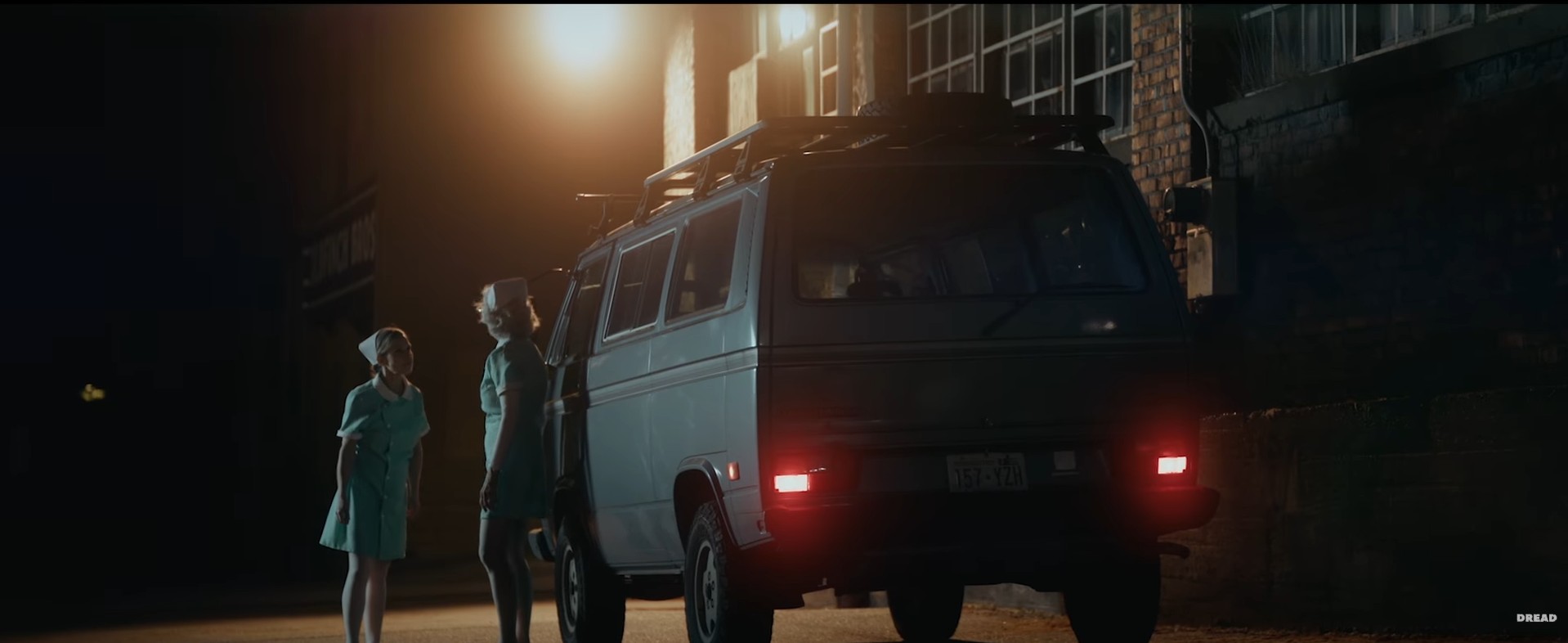
15-year-old Max is a girl without friends and with her bordering the edge of maturity that leaves her too old for trick-or-treating.  Dressed as magician with an enthusiasm for card tricks and slight of hand, Max tries unsuccessfully to make the best of her Halloween night as school peers mock and tease her until the animated and sinister Jester comes before her to show her a trick of his own.  When Max foils his trick, the Jester’s undertaking to contractually collect souls for Devil every All Hollows Eve comes into jeopardy as he loses his power to trick others.  The Jester forces Max’s hand to play tricks on others for their souls to be collected by the end of the night before his own soul burns in the internal inferno.  As the night goes on, Max must outplay the supernatural killer whose desperate game to spill as much blood as possible before the end of the night is coming to a full carnage head.

Our review of Colin Krawchuk’s “The Jester” called it “clever, entertaining, and devilish,” concluding out the review with “The Jester” acts the whimsical clown of conscience-stricken torment with an indelible joker different from the rest of the villainy pool. Yeah, we liked it.  Krawchuk and team return for a sequel, simply entitled “The Jester 2,” that opens backstory doors for the mischievous maniac whose mask grins from ear-to-ear and knows all of the tricks of the soul reaping trade.  Only one problem lies in his path, a 15-year-old girl who may be better a deceiving than he is.  The standalone sequel doesn’t segue with the original film, creating a new whole installment that anyone could enjoy without watching the original 2023 film or it’s viral short films both films are based off of.  Krawchuk writes-and-directs to be inherently different not only from the first film but from the large slasher genre that’s seen its fair share of clownish killers as of late.  Traverse Terror and Epic Picture Group collab once again for another Dread Presents release with Epic Picture Group leadership of Patrick Ewald coproducing side-by-side with “Bag of Lies” producing team of Victoria McDevitt, Jake Heineke, and Cole Payne. 

Michael Sheffield returns with his top hat and cane as the manically mute and mischievous Jester but with a slightly different approach to the Jester’s appearance.  Instead of a Venetian mask strapped around his head by an elastic band, the sequel’s Jester has a mask that’s seemingly an extension of his face, delineated by the rivulet of exposed under flesh between where skin ends and where mask begins.  Without Sheffield’s enthusiastic harlequinade and long, drawn out glares and motionless menace through empty, black eyes of the mask, “The Jester” films and shorts would without a doubt not be as entertaining and terrifying.  This time around, the Jester has a new foe in a 15-year-old girl with puerile dreams of magic and trick-or-treating.  It’s safe to say this girl, Max, is a loner with her peers making fun at her expense, but Max, as a final girl against the Jester, is intelligent and crafty in the face of pure evil despite her ounce of fear to live and be free of his threat against those she cares for – mother (Jessica Ambuehl, “Black Mold”) and sister – and strangers, even the ones that bully her.   Making her feature film debut, the then early 20-something Kaitlyn Trentham has a convincible foot in the door of “The Jester’s” awkward teen being the equalizer against supernatural Hell spawn.  Trentham can pivot between dejected loner to confident talent to the improvising fighter in the matter of circumstances, and when one of those circumstantial events involves Max’s family, a game of wits opens the chessboard for the next few moves.  Forced to align before “Halloween” night comes to close, “The Jester 2” is exclusively between Max and The Jester, good versus evil, for most of the narrative with filler, supporting characters weaved into the pattern to support the threat of tension and a high body count a sequel can be proud of.

Sequels tend to do everything bigger with their inlaid bigger budget off the back of a successful first film.  Big name talent, bigger effects, higher body count, etc., but character and story creator Colin Krawchuk doesn’t take the bait for a bigger boat and pushes that need to multiply tenfold “The Jesser’s” presence amongst audiences down to a suppressed level.  While that might seem counterintuitive to the idea of sequels, “The Jester “thrives on story and sf/x simplicity, letting Sheffield and Trentham battle it out and drive the story of certainly a different scenario from the first film.  The original “The Jester” embodies a similar tone but the control was imbalanced to “The Jester” with a supernatural upper hand always on the pulse of his tricked prey.  The sequel kinks the hose, stopping the Jester’s paranormal flow of life and soul snatching to be humbled by his need from a mortal who ultimately has his existence hanging in this teen girl’s sleight of hands.  This creates a perceptional shift from the Jester’s omnipresence, omnipotent immortality to he’s scraping by with desperation and longshot dependency on a young teen magician with a homemade costume.  This is not to say this new installment into the Jester’s ethos and extended qualities is downgraded or is riding the exact same original wave toward a mundane surf as the kills do have incremental whimsical value and there’s certainly more of a visual effects presence than before and it’s done well to push the sequel to be a step up and forward in conjunction with the good versus evil alliance storyline.

Epic Picture Group and Dread Presents returns the Jester for another go-around of illusionary ill intention with a Blu-ray release.  AVC encoded with 1080p, high-definition resolution on a BD25 and presented in a widescreen 1.78:1, the standard for video metrics supplies “The Jester 2” with adequate levels of a color saturation on a graded scale that leans toward ever so slightly a piano black finish.  Details hover between great depth to vague depending on the focus which Krawchuk and “2 Lava 2 Lantula’s” cinematographer Kevin Duggan who play with the perspective focus in the realm of an already detail-vague and hard-lit night shoot that’s contrast heavy, obtaining nice shadows around the contours of the Jester’s mask.  Duggan is not the returning cinematographer from the original 2023 film but really channels Joe Davidson’s (“President’s Day”) style that’s near raw with graded elements and focus precision.  “The Jester 2” offers an English Dolby Digital 5.1 surround sound and a Dolby Digital 2.0.  Much of the 5.1 is frontloaded with a trickle of atmospheric coming through side and back channels in a watery compressed copy of the track, that was likely recorded in Dolby.  Dialogues rendered clearly and cleanly, the Jester doesn’t speak anyway so much of his diegetic sounds are the ruffling swifts of his suit and hat with some walking cane taps, and the supernatural and killing ambient action has a punchy quality of a slight toon quality.  English subtitles are available for selection.  Special features include a director’s commentary, a making of featurette which is of Colin Krawchuk speaking on camera about the genesis and fruition of creating a sequel and sustaining villain with clips intercut into the interview footage, and the trailer as well as other Dread Presents’ previews.  The 87-minute Blu-ray is open to all regions for playback and is the film is not rated.

Last Rites: “The Jester 2” is the same but different and kills as a context sequel for a villain on the right path to being a successful franchise.

“The Jester 2” Blu-ray Is a Must-Get Sequel!

From the EVIL Clowns to the EVIL Scarecrow. “Die’ced: Reloaded” reviewed! (Dread / Blu-ray)

Go Beyond the Short Film with “Die’ced: Reloaded” on Blu-ray!

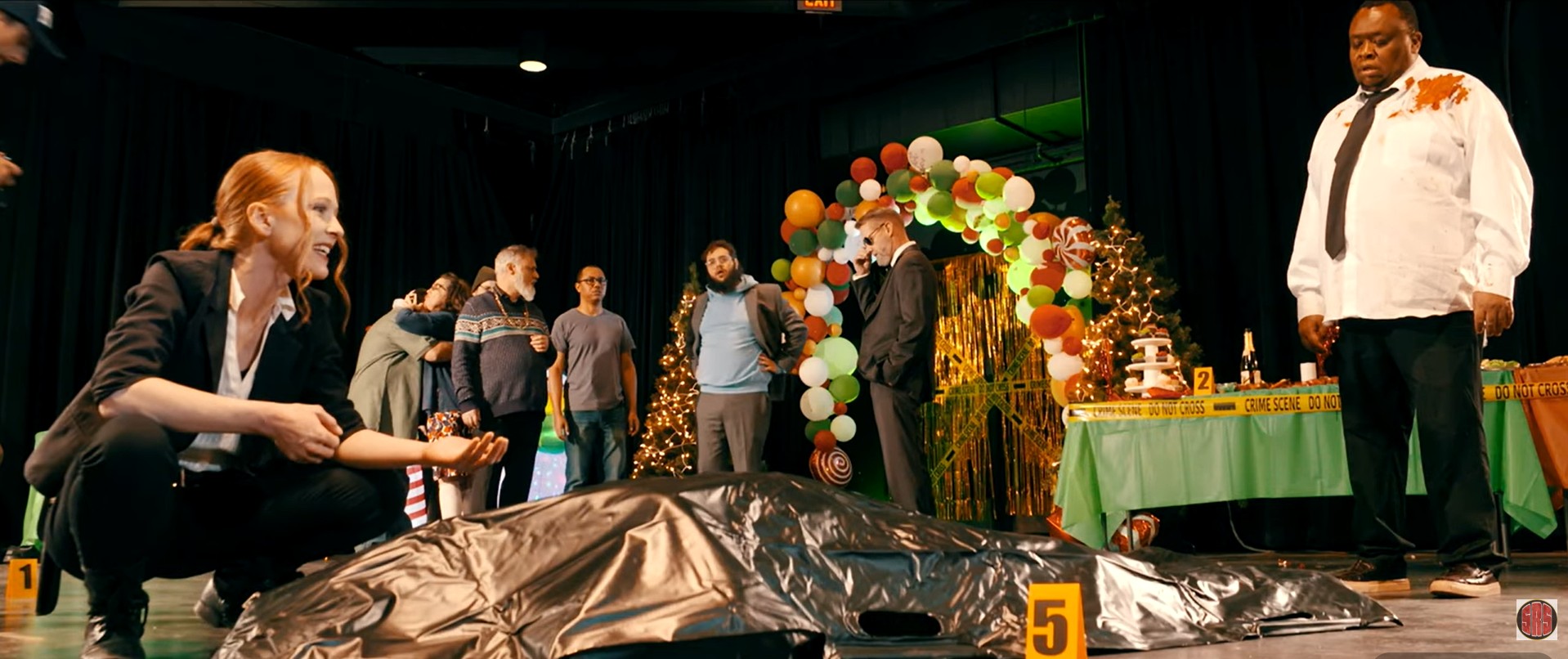
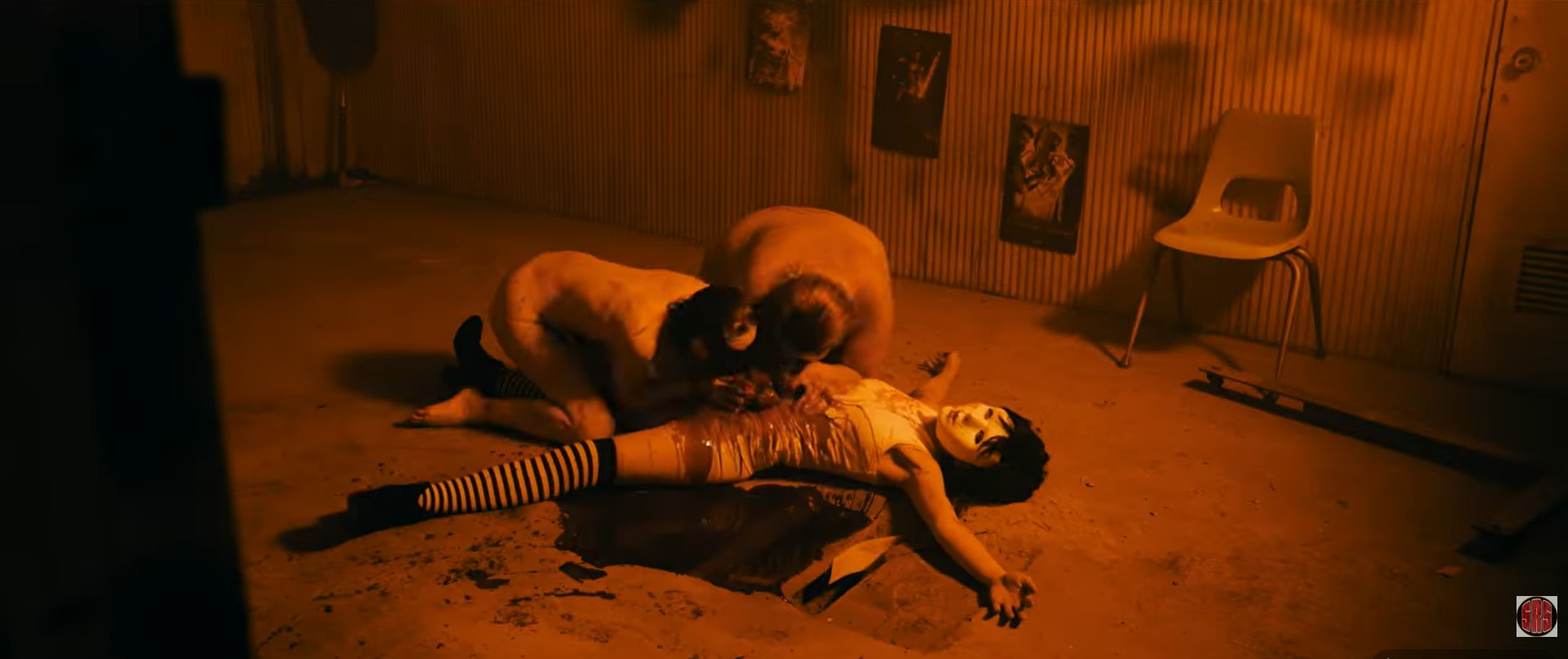
As child, Benjamin ripped his parents to shreds with his bare hands after long stints of abuse, including cutting out his tongue to forever silence him.  Now as a mute man, Benjamin remains incarcerated in a psychiatric prison, quiet behind a homemade mask, and under the care of a psychiatric doctor with good intentions.  After a violent, aided escape, leaving the doctor and a nurse mutilated and dismembered, Benjamin finds himself roaming the streets on Halloween night, coming across and killing a young man for his elaborately exaggerated scarecrow costume.  The imposing killer now has his sights set on a teenage girl, Cassandra, stalking her from inside the crowded venue of a friend’s costume party to invading her family home where her father is home alone.  Benjamin becomes a relentless force obsessed with Cassandra and he will stop at nothing and rack up the bodies in unrestricted violence just to have her.

Back in 2023, the co-director of “The Dark Side,” Jeremy Rudd, created a 50-minute slasher short “Die’ced” that took its villainous maniac, a scarecrow mute with a penchant for maiming and slaughtering, and made him into a viral internet hit, snagging the attention of the creative producing team over at Dread.  Along with some meager crowdfunded capital, roughly $3,500 out of a $75,000 goal, Rudd was able to extend his written-and-directed short film into a feature length release in 2025 and rebranded the film with the slightly tweaked title of “Die’ced:  Reloaded.”  Rudd, who has a 20-year career acting in front of the camera, brings his most eyed feature to his home of Seattle, Washington, set on Halloween as the backdrop for the slasher’s body pool, and utilizes Seattle surrounding specific businesses for some of his scenes, such as The Lott Coffee shop and the A&W Bottling Company in Snohomish county as key sets.  Taylor Jones produces with Louis Gallegos and Jeremy’s identical twin brother, Nathan, serving as executive producers.

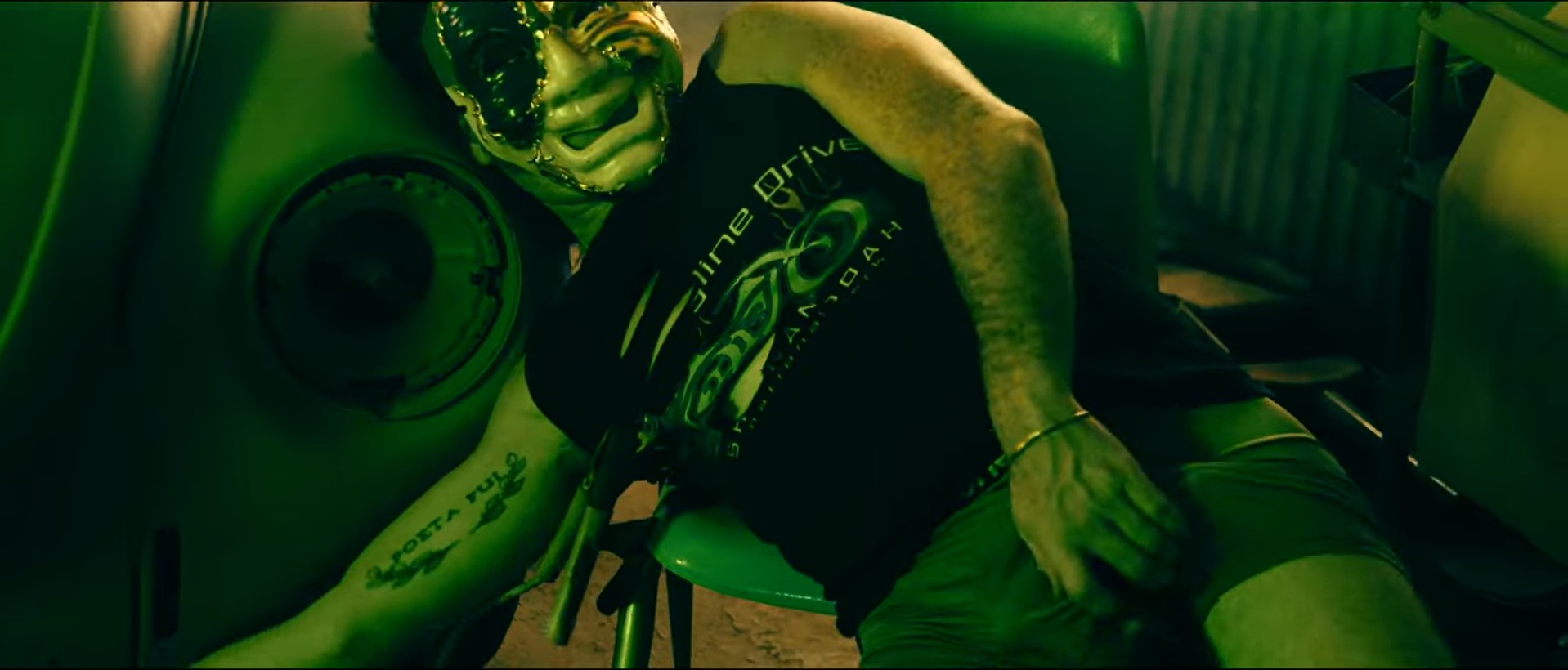
Acting as “Die’ced’s” frontman without a single line of dialogue, Jason Brooks stalks without being stealth as the deranged psych-prison escape Benjamin.  As a character actor of many faces, having donned the mask of the iconic Jason Voorhees character in a handful of short tributes, strapped on the gloves and fedora for a quick Fred Krueger, and has played the monster countless times over and over again, Brooks follows the footsteps of the likes of Kane Hodder, a part time stuntman keen on being the on-screen villain and making the role is own.  As Benjamin, there’s no qualms about the character’s imposing height and careful movements, some being gently infantile while most have an aggressive cruelty like a wild dog shaking a mouse in its jaws to literal pieces in a fit of blood spatter.   In the other corner, the final girl, Cassandra is just a seemingly normal teenage girl trying to live her adolescent life by going to parties and being a sister to brother Tommy.  However, there’s no way you could convince me Eden Campbell and Collin Fischer are playing teenagers.  Typically, a slasher high school cast would be near the edge or just over the threshold of adulthood, but Cassandra and Tommy are way too old to be high school students with an age range of mid-to-late 20s having a noticeable, natural filled out physique of maturity.  Campbell career stretch has her as a micro-scream queen of sorts from a few horror-related roles from her haunted theater debut performance in “Ghostlight” to having a significant role in the two-part Netflix series “Fear Street:  1978” based off the R.L. Stine scholastic book and with “Die’ced,” Campbell is no Lauren LaVera or Jamie Lee Curtis with her final girl character that’s pitted against a scarecrow garbed killer who’s able to take down without much to-do.  The cast rounds out with Christine Rose Allen as Benjamin’s nurse and escape benefactor, John Karyus (“Lo,” “The Gruesome Death of Tommy Pistol”) as an unfortunately psychiatric doctor being utterly taken apart piece-by-piece, and Nigal Vonas (“Coyote Cage”) as the Cassandra and Tommy’s father.

If analyzing “Die’ced: Reload” in the grand scheme of the slasher iconography, Benjamin, the scarecrow, boils down to being an unauthorized spinoff of Art the Clown, a completely unmistakable byproduct of the widely popular, ultra-violent “Terrifer” film and subsequent franchise about a devilish smiling clown immensely enjoying eviscerating victims in all different kind of ways.  With the same traditional traits of a brawny butcher running on vocal silence, Benjamin is compared to the fan favorites of Michael Myers and Jason Voorhees by its filmmakers, but as far as costume and behavior style goes, along with the intense desire to craft art out of the entrails of his victims, the “Die’ced: Reload” antagonist has more qualitative measure toward Art the Clown with the Aguste face makeup that accentuates the odd shape of a distinct facial bone structure, the harlequin jester who revels in the pursued dismemberment and savagery of innocent parties, and the fact a girl/woman becomes the singled out and obsessed target that rivals the Art the Clown versus Sienna inextricable link.  To further the film pretentiousness, the narrative is held together by elementary school graded glue and Scotch tape with an inexplicable twist that fails elucidation and logic and a familiar narrative that also relies too heavily on the gratuitous gore elements to carry it from beginning to end, reducing the once 2023 viral short into nothing more than a too soon hackneyed concept for 2025.  The “Reload” subtitle gimmick extends the original 2023 short by 30-minutes’ worth of additional gore footage and slipping in some of Benjamin’s backstory while the narrative trunk remains unchanged, but the overall outcome bares a slapdash impression as the story isn’t as terrifying or is whole enough for the Benjamin scarecrow to scare off even a murder of cowardly crows.

”Reload” scares its way onto Blu-ray from Dread’s home video label, Epic Pictures Group, with an AVC encoded, 1080p high definition, BD25 that’s has definitively no issues with the compression integrity seeing pitch black negative space, delineated outlining, and a stable digital image quality but isn’t quite as sharp.  “Die’ced” and director Jeremy Rudd pride themselves on their retro homage to the slasher genre of yesteryear where “Halloween” and “Friday the13th” reigned supreme and Rudd tries to emulate the effect with hazy fog, low and key lighting, and plenty of corner shadowing that impairs surface details and textual outputs.  Coloring is fine but the dark tone grading hampers the hue explosion that leaves the Scarecrow, or maybe Clownish, makeup moderately subdued under the straw mop and burlap hat. “Die’ced” is presented in a widescreen 1.85:1 aspect ratio and without a grain filter to exact a throwback 80’s slasher.  The English Dolby Digital 5.1 audio mix offers a tampered fidelity through the multi-channel system with a weaker side and back channels to focus more on the front.  Dialogue doesn’t deny clarity and provides enough prominence to be the singled finest element of the audio design that really lacks the range for broader Halloween costumed killer on the loose in Seattle that winds up at a drinking party and a bottling factory without making a bigger splash in the audio pool.  Special features include the original “Die’ced” short film and trailer, plus additional Dread produced film trailers.  Physical packaging is a standard Blu-ray Amaray case with Benjamin’s clown-scarecrow mug menacing smiling through the arch of a bloodstained sickle garnished with one single retro VHS “Horror” sticker which perfectly denotes the extent of “Die’ced’s” throwback slashery.  Epic Picture Group’s Blu-ray is region free and presents the film not rated with an 81-inute runtime.

Last Rites: I’m not seeing the viral sensation the internet saw with a hackneyed antagonist doing much of the same as those who came before, but “Die’ced: Reload” has an extreme slasher violence appeal that can temporarily quench bloodthirst and the open ending leaves more to be explored for character redemption.

Go Beyond the Short Film with “Die’ced: Reloaded” on Blu-ray!

You, Me, and EVIL Makes Three on “The Island” reviewed! (Eureka Entertainment / Special Edition Blu-ray)

“The Island” from Eureka Entertainment and MVD Visual! Order Here!

Geography teacher Mr. Cheung faith in his student’s studies lacks encourage and their grades likely won’t improve.  He decides to take his class on a field trip to an isolated island he once visited more than a decade ago as a young man.  With the intended purpose of relaxation, Mr. Cheung refuses his students of mentioning any schoolwork and studies to try and enjoy the coasting waters and the native nature the island has to offer.  However, there’s more than just animals and plants inhabiting the island as a family of three eccentric brothers welcome them with strange behavior and creepy vibes.  When the younger brother selects one of the student girls as his bride to carrier on their lineage, the once ideal getaway traps Mr. Cheung and his students without a way of escaping the irrational whims and delusions of the three brothers.  With a retrieval boat still a day out, the cornered teacher must keep his party alive at all costs. 

Considered Hong Kong’s answer or version of the backwoods pursuers of cutoff society people, 1985’s “The Island” secludes normal kids and their acquiescent teacher on an island where inbreeding has corrupted the copies of three brothers who’ve recently interred their adamant mother to rest and who’ve been searching for mainland women suitable to be the unsterile youngest’s wife.  Leung Po-Chi, or Po-Chih Leong, director behind “He Lives By Night” and “Hong Kong 1941,” produces a Jekyll-and-Hyde contrasting tale that’s sad and bleak to the core with a script not pinpointed to one particular writer but rather to a creative team within the production company D & B Films, aimed to capitalize on the western grim nature of the deranged and callous upon the unsuspecting and innocent seen in such exploitation and other B-pictures as Hong Kong shifts from the longstanding yet now waning Kung-Fu pictures.  Dickson Poon, Sammo Hung Kam-Bo, and John Sham, the founders of D & B Films, produce the film. 

John Sham may not be the ideal looking or sounding hero with a receiving hairline close to Three Stooges’ Larry Fine, thick, round spectacles, and about as average build of a middle-aged man as they come, but for “The Island” the ‘Yes! Madam” actor and D & B Films’s cofounder is suitable and ideal to be the pliantly, run-of-the-mill geography instructor looking to leave the woes of education behind him for a chance to revisit a place from his youth.  Unfortunately, Sham’s inadvertently the head of the snake as everyone remembers the exposed poisonous fangs threateningly elongated from with out the jowls underneath the reptilian beady and glowing eyes.  No one really remembers the slithering body unless there’s a warning rattle connected at the end.  That’s how the rest of the student body reproduces in trying to portray characters to care about but not really achieving the level of sympathy needed to rise about that film of understanding.  One of the more prominent kids is Phyllis, labeled the chunkier one by youngest aggressive, the snotty-simpleton Sam Fat (Billy Sau Yat Ching, “Scared Stiff”) and she’s targeted for Sam Fat’s procreation affections.  Played by Hoi-Lun Au, Phyllis has a working but tiffed relationship with Ronald (Ronald Young, “Sex and Zen III”) and see the untimely death of Ronald sends Phyllis into seeing red, being a formidable survival combatant against the remaining Fat brothers Tai (Lung Chan, “Encounter of the Spooky Kind”) and Yee (Jing Chen, “Riki-Oh:  The Story of Ricky”).  Billy Sau Yat Ching, Lung Chan, and Jing Chen are distinctly diverse to the best possible way, and each deliver their own dish of crazy that gives “The Island” an inescapable locked inside a padded cell substructure all too familiar on its base componentry but alien enough to master a new diverging kind of terror.  Che Ching-Yuen, Chan Lap-Ban (“Hex After Hex”), Kitty Ngan Bo-Yan, Lisa Yeun Lai-Seung, and Timothy Zao (“Diary of the Serial Killer”) costar in the relatively fresh faced and unknown at the time casted film. 

Leung Po-Chi wets our whistle with an opening of an intense forced marriage ceremony involving shuddering sexual exploitation and personal space invasive mistreatment of a mainland young woman, a swimmer who swam her way into trouble with the island’s inhabitants – an elderly mother and her three disturbed sons with the goal of using her for breeding a new bloodline.  This ultimately sets up the tone for a bleaker story that tells of nihilist cruelty with a thematic division between the urban educated and the unsophisticated rural folk, in this case the rural Bumpkins are isolated island inhabitants, but then Leung switches gears with a lighthearted introduction of frolic scurrying teacher and his students as they spread amongst the island’s sandy beaches wearing brilliantly colored skin tight swimsuits and bask in the island’s natural beauty with a couple of them going tangent into their own personal secondary storylines.   Those subplots never vine out and upward to flower fully but there’s enough stem and leafing groundwork between the good old gay times and a few individual internal affairs to setup sympathy for at least a select few as the relationship between visitors and residents quickly sours with Sam-Fat’s eyes growing bigger and bigger and his drool becoming slobbery and slobbery for Phyllis.  There’s not a ton of autonomy for the brothers who do their mother’s bidding long after she expires, committing themselves to the original plan of marrying off Sam-Fat in a show of take and force that robs Mr. Chueng’s dual purpose plan of a good time of fun and nostalgia.  Leung acutely abrupt faces again, back to the cruel inklings from the beginning, that displays unsettling camera shots, dark and low-warmth lighting, and a ferocity that’s always been with the brothers now more evident and growing inside the remaining survives who must fight for each other as well as themselves.  Leung’s style feels very much like a blend between the quick editing and fast action of a martial arts production but has the lighting and chaos-laden horror of an Italian video nasty that does see and lingers onto blood spilled. 

“The Island’s” a terror-riddled getaway that has arrived onto a new Blu-ray from UK label Eureka Entertainment routed through North American distributor MVD Visual.  For the first time on the format outside of Asia and as part of the company’s Masters of Cinema series (#324), Eureka’s Special Edition release is AVC encoded, 1080p high-definition resolution, BD50 and presented in the original widescreen aspect ratio 1.85:1.  With a brand new 2K restoration scan, “The Island” has impeccable quality measure that emerges the most minute details in every frame.  Skin tones have inarguable organic quality and a true-to-form reactionary sweat-gleam look induced when the chase is on.  The textures pop through in garb, foliage, and in dilapidated structure that gives certain discernibility and depth of object.  The original print has virtually no wear or tear as well as any aging problems, appearing to be a fresh off the reel transfer with natural appeasing grain.  The original Cantonese mono track is the only track available and is really the only mix we could expect and receive without a remastering, but, in all fairness, the mono works well enough to satisfy dialogue, ambient, and soundtrack integrity in its limited fidelity box  Dialogue is clean and clear on the encoding with no damage or other verbal obstructions but the modulation favors the antiquate characteristics of the era and the paralleling ADR offers little synchronous value, both to not fault of Eureka.  The optional, newly translated English subtitles by Ken Zhang pace well and are in flawless transcription.  The special edition is encoded with a new commentary with East Asian film expert Frank Djeng, a second new commentary by genre connoisseurs Mike Leeder and Arne Venema, a 2023 interview with the director Po-Chih Leong Surviving the Shoot, East Asian film expert Tony Rayns provides an appreciation video essay Tony Rayns on “The Island,” and the film’s trailer.  The limited-edition set comes with a red and yellow pastel colored O-card slipcover with new beaitfully illustrated artwork by horror graphic artist Ilan Sheady, whose supplied extreme and gory “Terrifier” franchise artwork to European media books, and delivers “The Island” a warm glaze of trouble-in-paradise, capturing the essence of what to expect from the story.  Original poster art graces the clear Amaray façade with a sepia image of John Sham from the opening scenes on the reverse side.  The limited set also includes a 19-page color booklet containing photos of “The Island” as well as other Leong productions, cast and crew credits, To Genre and Back:  The Cinema of Po-Chih Leong program notes by Roger Garcia for a strand celebrating Po-Chih Leong at the 2023 Far East Film Festival, an interview with the director conducted by Roger Garcia All Within the Same Film:  An Interview with Po-Chih Leong, and bring up the booklet’s rear are viewing notes and release credits.  The not rated feature has a runtime of 93 minutes and is region A/B locked for playback.

Last Rites: Director Po-Chih Leong’s trip to “The Island” is beyond bleak in social commentary and in of dire situation of nothing but pure innocence being destroyed by those left forgotten on the outskirts of mainlanders and of sanity. Eureka Entertainment’s Blu-ray honors “The Island” with praise upon praise for its slick high-definition picture, solid extras, and beautifully designed O-slipcase and design.

“The Island” from Eureka Entertainment and MVD Visual! Order Here!

The EVIL Clown Takeover is Has Begun! “Helloween” reviewed! (101 FIlms / Blu-ray)

Just in Time for the Season. “Helloween” on a 101 Films “Bluray!

October 31, 1996 – A disturbed 10-year-old Carl Cane, donning red and white lashes and slashes clown makeup, slayed his fostered before brutally axing down a healthcare social worker assigned to his case. Twenty years later, Cane has been locked away at Morton Psychiatric Prison for most of his life but still manages to be a high-risk inmate wearing the same clown makeup.  In ward of his care is Dr. Ellen Marks who endorses stringent safety protocols and has a stern bedside care for her dangerously persuasive patient.  Flash forward 20 years later during the 2016 #clownpanic craze, the mass clown sightings provide cover for Cane to mastermind his escape and influence the disenfranchised to wear his lashes and slashes maquillage and rise against all of Britain, Dr. Marks must race home to protect her daughters as they become marked in Cane’s chaos scheme of nationwide epidemic violence.  This year, Halloween is more tricks than treats in a manipulative game of incited rise against authority with a murderous madman at the helm. 

Not to be confused with the German metal band of the same name, the 2025 film “Helloween” is a UK production that’s been compared to “The Purge” meets “The Joker” from writer-director Phil Claydon (“Vampire Killers,” “Within”).  “Helloween’s” story pans briefly from 1996 to primarily set in 2016, the year when clown panic was a national news item where mysteriously scary clowns would show up in random places and projecting a menacing way about them, enough so to cause public concern.  Claydon expands upon the year-specific-craze with a killer clown motif and a coordinated attack on a nation’s infrastructure, creating national havoc while the mastermind of ceremonies stays with his bubble of motive, to completely destroy his psych ward physician in charge of his austere care.  “Helloween” is a production of Shogun Films under the producing eye of Jonathan Sothcott with Lance Patrick co-producing. 

For “Helloween” to be centered around an incitive massive violent force, one that’s purely evil, demented, wicked, etc., that character is required to be bigger than life in a show of calculated malevolence and will be ultimately the driving juggernaut key to the film’s success.  Carl Cane is that described character, an educated mental case hellbent on being a reign of chaos from the very moment his 10-year-old self, fostered and abused through the social childcare system, chops up his foster parents and social worker without blinking an eye of hesitation.  However, the 1996 boy and the 2016 man of Carl Cane showcase two different genus of the same sociopathic species as adult Carl Cane has a knack for the flamboyant flair and is a talkative taskmaster whereas his younger version is about as quiet as a calculating church mouse.  Forever the bridesmaid and never the bride, Ronan Summers finally receives his time to shine and expel his talent to the world as a prominently gaudy villain donning edgy Joker-esque clown face makeup and sporting a dirty inmate jumpsuit.  There’s always the expectations Batman will be coming down from the rooftop or creeping from out of the shadows at any moment!  Summers, who did have a small role in “The Dark Knight” as well as be a supporting actor alongside Richard Brake in “The Dare” and had numerous voice acting roles in notable videogames, such as “Dead Island 2,” “Wolfenstein:  The Old Blood,” and “Cyberpunk 2077,” has tremendous presence with a spine-shattering laugh and creates a dark arura around Cane’s ambivalent supernatural abilities.  Jeanine Nerissa Sothcott, wife of Shogun Films producer Jonathan Sothcott, goes up against the antagonist playing Summers as Dr. Ellen Marks, head of Cane’s psychiatric ward.  The “Peter Rabid” actress finds herself on the precipice of a clown barrage against her family that has its own secrets and troubles teenagers (or adult?) as there is divisive tension between the planned daughter of Leah (Caroline Wilde, “Ghost”) and the unplanned and resentful daughter Alice (Megan Marszal).  Michael Paré (“Streets of Fire”) is perhaps the biggest name, an American name, attached to the project as an investigative reporter unearthing a theorized connection between Cane and the coordinated clownpanic sightings and Paré’s about as straightforward and conventional unimpactful in performance as they come.  The cast rounds out with Shanton Dixon, Samantha Loxley (“Hosts”), and Tamsin Dean (“Everyone is Going to Die”).

Though “Helloween” borrows pieces of “The Purge” and “The Joker,” another generous portion of the inspirational pie is “Halloween.”  Not only does “Halloween” and “Helloween” share similar titling but also certain “Helloween” plot points and framed shots that resemble a clown costumed Micheal Myers expressionlessly exiting his family home after murdering older sister Judith.  Claydon’s nods may dilute the original story some but the mashup manages to curate an interesting tale of a large scale terror on a small time budget by using televised media to indicate Cane’s grandiose scheme from the confines of his impenetrable holding cell and creation tension with good, old-fashioned editing and framed shots for those jump scare and distressing moments.  One thing is for sure that hinders the large-scale scenario but doesn’t obliterate the affect it has in its entirety is the small number of locations used.  Much of the story takes place between two locations:  the Morton Prison and Dr. Ellen Marks’s home.   These two primary locations service most of the story’s core elements and, perhaps, Claydon relied too heavily on news media to spread the clown carnage rather than have it unfold in frame with not only more locations of active aggressive assaults, like we see in “The Purge” series but also hire more extras as clown faced Cane acolytes and have a number of victims suffer at the hands of clownpanic.  Set designs, colorful lighting, stark contrasting features, the rapid pace storytelling, and the performances do pick up the slack and hold onto that collapsing of society sensation in more of a localized manner rather than widespread.  The twist ending pops disjointedly with a welcomed turn of events but isn’t setup with a crucial visual or expositional detail, leaving on the table the one important puzzle piece of the considerable why rather than focusing on the exposed when and how. 

101 Films isn’t clowning around with their new Blu-ray release of “Helloween.”  AVC encoded, 1080p high-definition resolution, and stored on a BD50, “Helloween” has plenty of picture quality positives going for albeit the film’s primary color spectrum, a Spirit Halloween store amount of haze and smoke machines, and plenty of negative area shadows all of which wreak havoc of the encoding of data.  One way to judge video compression is the ability to delineate every object in the feature from inanimate to animate and there’s no questioning in the presentation as all objects have an elucidation effect that doesn’t work the mind harder than it should.  Claydon works depth to create effective highly taut moments while staying in the purge of light and hope atmospherics of omnipresent darkness.  Curiously, the Blu-ray back cover mentions the feature containing an English uncompressed Stereo PCM and a compressed English DTS-HD MA 5.1 with the extras solely being a Stereo PCM.  However, the Dolby audio icon is stamped on both back cover and DVD art.  While there’s no menu option to toggle between either feature track, my play listed the encoded audio as the PCM Stereo and DTS-HD MA 5.1 which can be concurred with by the uninhibited punchiness that heightens the scares and the eerie hallmarks of lightning cracks, creaky floors, and other loud bang sounds.  Ronan Summers’s is a proper English speaker with great emphasis on his pronunciations, much like Paré’s classic westerner approach to any situation and role, but there are some UK dialects that skirt the cockney accents and though difficult to cling to, the mix greatly makes clear the intended word or sentence without any issues.  UK English subtitles are optionally available.  Special features include a commentary track with director Phil Claydon, a behind-the-scenes featurette with cast and crew interviews going through their experiences and roles, and the film’s theatrical trailer.  There is also listed deleted scenes but there’s an issue with the encoded playback as when pressed, the option glitches back to the bonus features scene, never moving forward into the deleted scenes.  The clear Amaray case with one-sided art has a less-is-more cover art with a face closeup of Summers in a sinister expressed Cane makeup with a blade silhouette just in front-right of him.  While we’ve seen a few inconsistencies with these release – the audio track conflicts and the deleted scenes bug on the encoding – there’s one more variance with the UK rating.  The case has a UK rating of 15 for Strong Violence, Bloody Images, Threat, and Language; however, the disc is pressed with a UK 18 classification.  “Helloween” clocks in at 93 minutes and is locked with a region B playback. 

Last Rites: The energy from Phil Claydon’s “Helloween” amps up and matches Ronan Summers’s intellectual madman persona with a smoke and mirrors widespread mayhem and reliable jump scares that breed infectious tension for clowns and the disenfranchised in this quaint and modern day clownsploitation.

Just in Time for the Season. “Helloween” on a 101 Films “Bluray!