EVIL Wants the Industry Hot and Desired Jana Bates to be in His Movie! “The Last Horror Film” reviewed! (Troma / Tromatic Special Edition Blu-ray)

“The Last Horror Film” is Now Available on Blu-ray to Obsess Over!

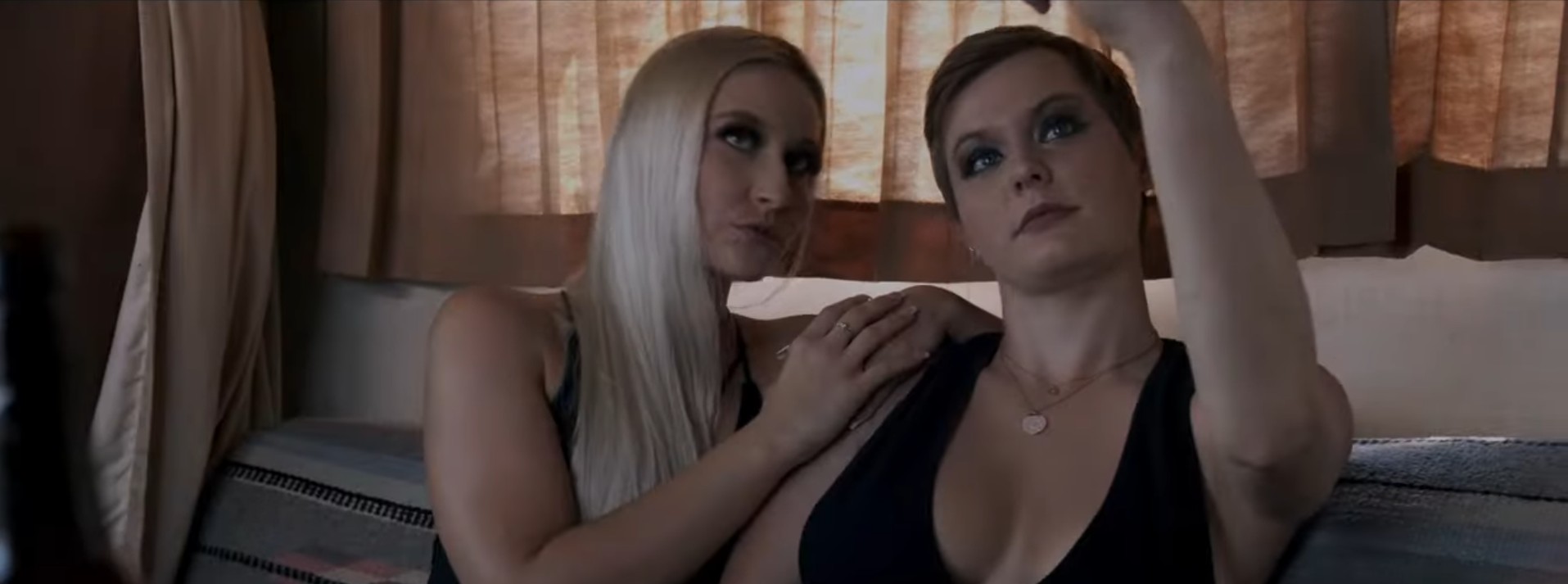
Obsessed with horror scream queen Jana Bates, New York City cabby Vinny Durand heads to France’s Cannes Film Festival to cast her in his own horror movie, “The Love of Dracula.”  Halted at every entry point of the private, star-studded events that include Jana Bates and being intercepted and rejected by Bates’s producer ex-husband, a rival producer, current boyfriend-manager, her agent, and a director, all of whom are in an intergroup conflict concerning the starlet, Jana, nothing will deter Durand from his perfect star.  When Jana walks in on the decapitated corpse of her ex-husband, a series of murders and missing persons involving her close friends and colleagues ensues in the days after and in all the while, Durand tries every attempt to meet the actress, stalking her with a video camera to film the perfect leading lady in his secret horror movie, invasively stepping into her life in the same instance the murders began to occur. 

A deranged NYC taxi driver flying to Europe for an aggressive meet, greet, and casting of a totally unaware horror actress to be in his own B-picture is the plotline everyone could, should, enjoy!  What’s not the love?  “The Last Horror Film” takes us from the grimy streets of the Big Apple to the exquisite sights and sounds of the seashore Cannes along the scenic French Riviera.  Helmed by London-born David Winters (“Thrashin’”) and penned by Winters, Tom Klassen, and Judd Hamilton (“Maniac”), “The Last Horror Film,” also known as “Fanatic,” is one of the best obsessed fan thrillers out there, such as containing the same context of the Clint Eastwood picture “Play Misty for Me,” but is lesser known to mainstream audiences because it features genre icons Joe Spinell and Caroline Munroe and has been primarily distributed under the unconventional indie picture and filmmaking risk taker, Troma Films, who at times isn’t everyone’s cup of tea distributor.  David Winters’s Winters Hollywood Entertainment and Shere Productions with Judd Hamilton and David Winters producing the 1982 American feature. 

Fans of Joe Spinell (“Maniac,” “Rocky,”) already know this but those who haven’t experienced the New York City-born and bred actor, “The Last Horror Film” role of Vinny Durand is one of his best.  Spinell obviously suits psychosis well, but Vinny Durand takes it down a different path and, believe me or not, Spinell finesse with the character is beyond magnificent in all his mannerisms, expressions, and intonations, in addition to his egg-shaped physical, slick greasy hair, and thin black mustache, that make Vinny Durand a likeable and infatuated with obsessed crazy.  “The Last Horror Film” is the third costar collaboration with female lead, and genre icon in her own right, Caroline Munroe behind “Starcrash” and “Maniac.”  The “Dracula A.D. 1972” and “Captain Kronos:  Vampire Hunter” Munroe essentially plays herself in the role of Jana Bates but with a role that comes with more glamour and prestige as horror actresses rarely received such recognition in the major industry circuits.  Munroe equals Spinell in performance but in her own right as more of normie actress with accolades living it up at Cannes and eventually landing in the final girl trope, exceled into terror within the radius of her killer.  Being embroiled in a different kind of love triangle, one that includes her silver fox husband ex-husband Bret Bates (Glenn Jacobson, “Wild Gypsies”), current boyfriend Alan Cunningham (Judd Hamilton, “Starcrash”), and rival producer Marty Bernstein (Devin Goldenberg, “Savage Weekend”).  As the potential body count rises, so does the continued cast list with David Winters himself in a reflected cameo role as a horror director named Stanley Kline, Susanne Benton (“That Cold Day in the Park”) playing an orthographic variant of her namesake in Susan Archer, and Sean Casey as a rockstar lending his castle to Alan and Jana for retreating safety.  The cast rounds out with Spinell’s mother, Flilomena Spagnuolo, playing Durand’s mother in a convincingly nagging and comedic way that makes me it’s not terrible too far from the truth of their off-screen relationship. 

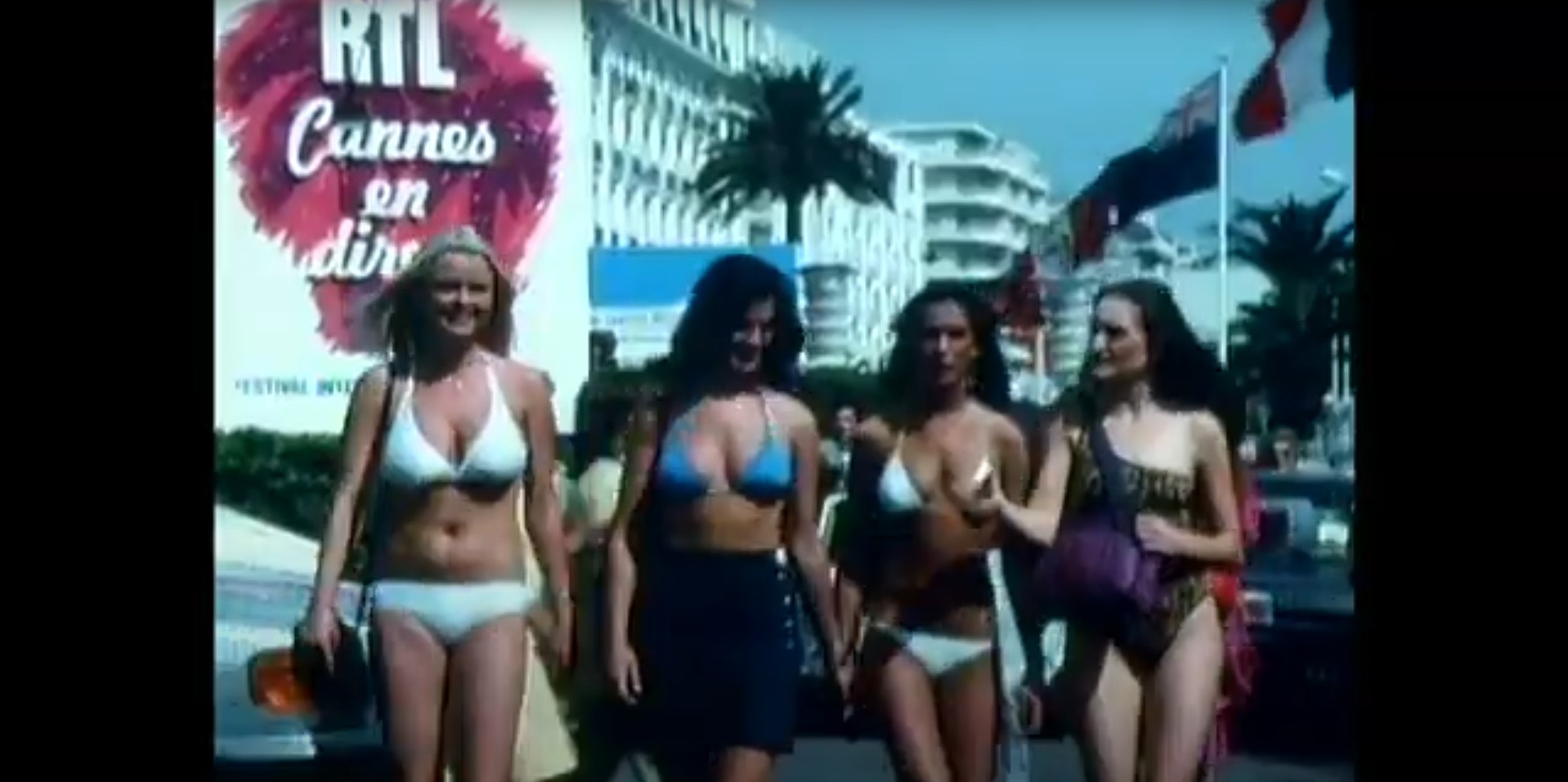
For a Spinell, Munroe, and David Winters production, “The Last Horror Film” is surprisingly vaulting with ambition for an unpermitted guerilla shot feature through the streets of Cannes.  Large parapet roof signs, gothic castles, the ritzy and beachy French Riviera, a score of happenstance and scripted extras,  and lots of topless women on the beach shots, Winters musters moneyed shots to coincide the well-dressed interiors of Durand’s apartment and hotel room and a slew of exteriors to play into the stalking fold.  Couple these manifested scenes of grandeur with the shocking moments of precision and effective gore and Spinell’s theatrically pleasing, creepy behavior performance and you got yourself a halfway decent meta slasher full of red herrings and a high body count, circling and overlapping itself within Duran’s directorial vision, the fake films within the critic panel and festival screenings and, as well as, the gotcha moment ending that gives one pause to think if what was just witnessed was actually the story, but while you’re scratching your head, perhaps feeling like a cinematic dummy of storytelling comprehension, there’s no doubt that David Winters successfully produced one hell of a horror picture starring Joe Spinell.

The new Tromatic Special Edition of “The Last Horror Film” is seemingly a repeat in some ways to the Blu-ray release from a decade earlier down to the exact cover art without the Tromatic Special Edition banner.  The AVC encoded, 1080p resolution and 1.78:1 widescreen aspect ratio, is compressed onto a BD50, an uptick in format storage from the 2015 to warrant it a Tromatic Special Edition.  However, image refinement is not in this re-release’s repertoire with a mirrored result of a lightly anemic look that still fails to color pop the feature in its eclectic set designs.  Darker scenes are in and out based of contrast, losing definition, and are inclined to be grainer negatively in the negative spaces.  In the brilliance of light, details can rooted out, especially in skin textures as Spinell’s pot marked face is exhibited in great detail amongst the other casts’ individual facial features.  Winter’s diverse and organized framing, plus with a little editing garnish, elevates whatever kitschy content there might have been into a grade-A B-picture; yet that doesn’t go without saying that there weren’t any editing flaws in the print that was subsequently transposed to the Troma transfer as horizontal cut lines and breaks in recurrent cells kink the chain ever so slightly.  The release also features the same English Dolby Digital 2.0 mix, a fidelity lackluster that doesn’t reflect the power the action medley and the score, the latter from composers Jesse Frederick, the vocalist of the “Full House” theme, and musical instrument compliment, Jeff Koz.  Dialogue renders above the layers but is on the softer side of volume, diluting the more intense moments of chase and murder without that impact punchiness.  Troma, like in my instances, flaunt a noteworthy tidbit in their releases, if there is one to flaunt, and in “The Last Horror Film’s” case, Depeche Mode’s track Photographic is the quoted feature music, says in big white and yellow font on the front cover.  What primarily separates the 2015 and the 2025 releases are the special features.  Archived commentary with Joe Spinell’s assistant and associate producer Luke Walter commentary moderated by Evan Husney from 2009, “The Return of Dolphin Man” short film by director John Patrick Brennan, a segment entitled “Kabukiman’s Cocktail Party,” the feature scrapped “Maniac II:  Mister Robbie’s” promotional trailer, the theatrical trailer, and a Lloyd Kaufman intro that dresses him in drag in the streets of an uninterested NYC are included on the special edition that features additional supplements with two more, 2023 produced, re-used commentaries from 1) Caroline Munro moderated by FrightFest’s Alan Jones and 2) again with Luke Walter by moderated by Severin Films’ David Gregory for the label’s own 2023 release.  Also from the Severin vault is the Like a Father Figure:  Sal Sirchia Remembers Joe Spinell interview with Sirchia’s memories and phoned tape recordings of Spinel’s voice messages, My Last horror Film Ever audio interview with producer Judd Hamilton, and “The Last Horror Film” location revisit featurette from New York City to Cannes, plus additional trailers under the title “Fanatic” (2) and the main title (1).  There are additional Troma materials with trailers from “Return to Nuke ‘Em High Vol. 1” and “Vol. 2,” The Toxic Avenger,” “Class of Nuke ‘Em High,” and “#Shakespeare Shitstorm.”  Aforementioned, the physical properties of the release nearly identical aside from the special edition banner across the top and the additional bonus content.  The 2015 Troma release is region locked A but a decade later Troma realized region free is the smarter move with the single 87-minute cut defining the release that comes not rated.

Last Rites: Take “Maniac” out of the equation, “The Last Horror Film” is Joe Spinell’s finest performance not taken lightly and though the story’s lurching flashes the check engine light, David Winters is able to still cruise along in his fanatic slasher.

“The Last Horror Film” is Now Available on Blu-ray to Obsess Over!

EVILFormers: Robots in Disguise! “Crash and Burn” reviewed! (Full Moon Features / Remastered Blu-ray)

“Crash and Burn” on Blu-ray from Full Moon Features!

In the year 2030, the global economy has collapsed and the most powerful organization on the planet, Unicom, controls most of the national markets with scrutinizing oversight.  What makes matters worse is years of pollution and nuclear naivety is dissipating the ozone layer, exposing the Earth and its denizens to altering ultraviolet rays that scorch the Earth with thermal storms, turning much of the terrain into wastelands. Out in the middle of nowhere in one of those barren lands, Unicom errand boy Tyson Keen delivers freon to an isolated Unicom television station fabricated from an old powerplant.  An impending thermal storm forces Keen to stay overnight with the motley crew of station personnel and televised guests.  When the thermal storm knocks out the power, they discover the station chief has been murdered, revealing the chief’s involvement with the Independent Liberty Union, a rebellion group against the mighty repressive Unicom, and secret plot involving Unicom’s illegal use of synthetic people to infiltrate the station to stop dissident behavior. 

2030.  That’s only five years away, folks!  Get ready for the global financial downfall and fallout when the ozone also says peace out after years of abuse.  Giant robots and subverting T-800s, I mean synthetic androids, are exploited for corporate gain and power over the few who resist.  Actually, if you think about it, the premise of 1990’s “Crash and Burn” might actually be happening now, today, five years earlier by the sound of it!  The Full Moon production, helmed by company founder Charles Band, (“Trancers,” “Doctor Morbid”) and written by J.S. Cardone (“Shadowzone,” “The Forsaken”), is seemingly ahead of its time with the exceptions of mecha robots and a vastly dusty wasteland of the Earth’s surface, complete with temperature rising thermal storms.  Unofficially considered a sequel to Stuart Gordon’s “Robot Jox,” another Full Moon production released the year prior, “Crash and Burn” is produced by “Nightmare Sister’s” David DeCoteau and John Schouweiler with Band and Debra Dion serving as executive producers.

The futuristic dystopian thriller plays out much like a slasher with a group of people hunkered down safely in shelter until one-by-one they’re picked off.  Paul Ganus (“The Monolith”) acts as the Unicom outsider Tyson Keen, a motorcycle-riding delivery boy just needing cash to get by in turbulent times, inside an established dynamic of a reclaimed power station used for Unicom television broadcasting where Ralph Waite dons the station chief shoes of Lathan Hooks, Megan Ward (“Arcade”) in the role of Lathan’s tech expert, teenage daughter Arren, Bill Moseley (“House of a 1000 Corpses”) as the station’s handyman Quinn, Eva LaRue (“Robocop 3”) educating the children over the TV waves as Parice, and Jack McGee (“Rumpelstiltskin”) in the blowhard and perverse egotistical TV host role Winston Wickett.  There are also two Winston Wickett guests, flesh and blood adult actresses who came back into the business after Unicom banned robot porn star and are being roasted by Wickett for their licentiousness, played by Elizabeth Maclellan (“Puppet Master II”) in the non-nude role of Sandra and Katherine Armstrong (“The Arrival”) in the topless required role of Christie.  Sandra and Christie are opaquer when it comes to their purpose as the two seemingly nomad women obviously need the money Wickett promises them to do the show to continue moving from place-to-place, but they put up with Wickett’s pompous and chauvinistic degrading being, even sleeping separately in the same quarters as the television host without wearing clothes.  There are dialogue moments between them that suggest there’s more to their relationship than what’s in exposition but never fleshes out; instead, Christie fleshes out in a shower scene with Bill Moseley’s Quinn for a brief cleansing.  The above cast of characters set the same for a “The Thing” similar mistrust when one of them is suspected to be a sabotaging, murderous robot in human skin, they even do a blood test too.  Solid performances all around with Moseley outshining most and Megan Ward’s innocence really comes through in her debut as a teenager while Ganus can be a suitable leading man but lacks the presence where it matters.  Jon Davis Chandler (“Carnosaur II”) and Kristopher Logan (“Puppet Master III:  Toulon’s Revenge”) round out the cast as two wasteland gas attendants close to the isolated power station.

“Crash and Burn” is an enjoyably campy, science-fiction horror that derivatively cherry-picks from other films in the genre.  From “The Thing” to “Aliens,” to even Full Moon’s own production “Robot Jox,” “Crash and Burn” puts other sci-fi cult films’ best elements together to form something new that instills a sense of isolating tension and heart-racing thrills from the man versus machine narrative.  Charlie Band adds his localized flavoring of beautiful women, sometimes teasing to bare it all, to zhuzh it up in a different light.  Like most of Full Moon’s earlier productions, and what separates the company’s catalogue from the modern features of today, is the practical effects.  Greg Cannom (Francis Ford Coppola’s “Dracula”) and his assistant Larry Odien’s make up effects, plus “Terminator 2’” Steve Burg’s robot design with the puppeteering, have longevity over the decades rather than today’s fly-by-the-seams visuals that often look cheap and mismatch against the live action with no tangibility and hardly anything the actors can work off against.  The under skin, robot skull exposure looks phenomenal for the era and budget with multiple layers peeling off in its prosthetic application and makeup arrangement. 

Full Moon continues to remaster their catalogue into high definition with their 1990 title “Crash and Burn” next on the docket. Remastered from the original 35mm negative, that was recently unearthed, the image has greatly improved from the flat colored transfers of previous positive prints, AVC encoded with 1080p high-definition resolution on a BD25. Full Moon’s remastering adds richness to the color pallet and a fine texture point that discrete objects the internal boiler room of the television station and, in contrast, the arid desert of Alabama Hills, California doubling as the futuristic wasteland. Skin textures are filled with stubble, ridges, imperfections, sweat, and robotic skin peels in every frame without the softening or smoothing over process to work quicker rather than precise. Full Moon offers two English Dolby Digital audio tracks, a Stereo 2.0 and a surround sound 5.1, which has been standard fair with the re-released remastered lineup. As fidelity reproduction goes, the layers perceive repressed for a bigger approach, especially one that has giant mecha action and a whipping thermal storm that causes a giant satellite crashing into a building. There’s nothing innately substandard about the Dolby mix, it’s perfectly adequate to handle the action, ambience, soundtrack, and the forefront dialogue and exact clear prominence without the lift in its intermediate range. English SDH are optionally available. Charles Band and actor Bill Moseley launches off the special features portion with a feature parallel audio commentary that’s entertaining between Moseley’s quips and Band’s stories in relation to the “Crash and Burn.” Also included is the making of the film, a blooper reel, the original trailer, and other trailers from Full Moon. Housed in a traditional Blu-ray Amaray, the original VHS art is reiterated, again, for the Blu-ray that’s more mecha oriented rather than stealthy robot assassins. There are no inserts inside or other physical features with the release that has a runtime of 85 minutes, is unrated, and is encoded as region free.

Last Rites: “Crash and Burn” does not do just that, crash and burn, but has real world dystopian concepts underscoring a Full Moon slasher reanimated by remastering for high-definition fanatics.

“Crash and Burn” on Blu-ray from Full Moon Features!

EVIL’s Beauty is in Her Catwalk Madness! “Nothing Underneath” reviewed! (Rustblade / Blu-ray)

“Nothing Underneath” 40th Anniversary Blu-ray Available Here!

Bob Crane, a Wyoming park ranger, suddenly sees visions of gloved hands wielding long, sharp shears entering his supermodel, twin sister’s hotel room in Milan, Italy.  His  psychic experience with his sister sends him packing frantically to Italy, specifically to the Hotel Scala, where his sister, amongst many other gorgeous supermodels, reside when working in Milan.  Unable to locate her and without a sign of disturbance in her hotel room, her disappearance is seemingly nothing more than that – a disappearance – but an aging police detective, Commissario Danesi, is willing to investigate the disappearance which will be his very last case before retirement.  Without any leads, Crane and Danesi don’t have much evidence to go off of until another supermodel is brutally murdered in the same hotel and a pair of scissors is the forensically determined cause of death.  The once case of disappearance now turns into a murder investigation and goes deeper into the ugliness of the fashion world with a deranged killer targeting supermodels. 

Considered to be a prominent gem of the giallo genre but not entirely considered to be a full-fledged horror by the filmmakers is Carlo Vanzina’s “Nothing Underneath.”  Known natively as  “Sotto il vestito niente,” inspired by the title only written by Marco Parma, a pseudonym for journalist Paolo Pietroni, Vanzina cowrote the novel extraneous story alongside brother Enrico Vanzina (“Call Girl”), who are siblings more suited in the measures of comedic premises initially, and the prolific horror writer Franco Ferrini’s, whose screenplays of Dario Argento’s “Phenomena,” “Opera,” “The Card Player,” and amongst others, as well as Lamberta Bava’s “Demons”, gave the writer formidable cult status and creditability amongst the international horror fan base, not to forget to mention regular work and collaboration with a master of horror, Dario Argento.  “Nothing Underneath” is shot on location in Milan under the Faso Film productions with executive producer Raffaello Saragò (“The Witches’ Sabbath”) and producer Achille Manzotti (“Beyond Darkness”).

What’s interesting and more infrequent for this Italian production is that it’s entirely shot in English and not dubbed in post-production ADR.  Reason for this was for “Nothing Underneath” to be a synch-sound production with the image and to market it better internationally because of the main cast comprised of American and English actors.  The American actor, starring in his debut feature film, is Tom Schanley (“Savage”) as Wyomning park ranger Bob Crane and the way the story is structure really homes in Crane as the principal lead with a complete credit setup and character follow-through of the Yellowstone National Park.  Schanley’s blonde hair and muscular toned good looks embodies a likeness to his on-screen supermodel sister, played by Nicola Perring, who, as the story displays her, is not in the business of acting with very little dialogue and is only used for her short platinum blonde hair and thin figure for narrative form fitting.   The other native English speaker in a cooperative lead role is “Halloween’s” Donald Pleasence as an investigator on the verge of retirement.  Pleasence is no stranger to Italian cinema, seeing his fair share in the 1980’s psychotronic pictures, including Dario Argento’s “Phenomena” released prior.  The prolific British actor still manages to produce mountains of charm even in his most rubbish Italian accent as the long in the tooth comminssario eager to solve one more exciting, mysterious case and buddying up with young, handsome, and outdoorsy Bob Crane with twintuition.   The love interest falls upon real life model and Denmark native, then 19-year-old Renée Simonsen who is absolutely stunning with her looks and with her debut into acting in what is a significant role that involves a lot of screentime, a lot of dynamic and interactive dialogue, and does show some brief nudity with intimate sexual situations with Schanley.  “Nothing Underneath” has a roster that fills out with Catherine Noyes and Maria McDonald as Milan models, Paolo Tomei as a coke-head jeweler and model philanderer, Cyrus Elias as Comminssario’s Danesi’s assistant, and Phillip Wong as the peculiar fashion photographer Keno Masayuki.

“Nothing Underneath” isn’t a skimpy, loose garment with nothing going for it.  Instead, Carlo Vanzina offers more with his giallo by making it less giallo in terms of its cinematic style and with Pino Donaggio’s score which is in the style of, much like the rest of the filmed and narrative structure, a Brian De Palma erotic thriller.  With plenty of sexy sashaying from beautiful models, a balance between sex and sadism teeters as the alluring aspects of a promiscuously titled are dissected and interspersed with a long sheer psycho engrossed by a theme rarely explored and depicted, but certainly skimmed, during those times of 1980’s Europe and completely disconnected from Paolo Pietroni’s story with keeping only the fashion world and the murder mystery as core elements and adding a supernatural flavoring with the brother and sister telepathy.  Donaggio’s suspenseful brass orchestration and conduit synth-infusion score separate itself others in the subcategory that deploy synth-rock, haunting discord, and, perhaps, even a late 70’s swanky cop thriller piece typically layered alongside.  The composition, coinciding with the temporary expat cast as most giallo’s permit, often feels more westernized while still striking notes of unnerving tension and having collaborated with De Palma on “Dressed to Kill” and “Body Double” years prior, Donaggio imports those arrangement qualities for the Italian market and reaping success amongst the rest of the frayed giallo conventions. 

Italian boutique label Rustblade extends their release of “Sotto il Vestito Niente,” aka “Nothing Underneath” to the North American market with a new region free, 40th anniversary special edition Blu-ray release as well as releasing deluxe releases that come with accompanying limited edition lobby cards postcards, a polaroid, a poster, a colored vinyl, a book, CD soundtrack, a tote bag, and even, yes you’re going to read this correctly, underwear.  The standard release isn’t that supplementally sexy but does have great standalone supplementals in its AVC encoded, 1080p full hi-def, BD50.  The newly restored version stems from the original 35mm negative and presented in 1.85:1 widescreen aspect ratio.  The negative print looks to have been in pristine condition that rendered an impeccable transfer that fully provides depth and detail accentuated by well-adjusted and put together color grading that elevates the pop of the natural hues.  No signs of compression issues or smoothing over with sharp detail textures on skin and fabrics alike as well as the metallic shears having reflective qualities as it sheens and shines in mirrored property.  Two audio options are available, an Italian DTS Master Audio 2.0 Mono and an English DTS Master Audio 2.0 Stereo, the latter comes from the English living synch recording mixed in Dolby Stereo.  The English track is preferred here as its natural with innate reflections and tones of the actors on screen.  I noticed brief moments of Italian actors being English dubbed as a mismatch in the A/V synchronization as well as a disturbance in the aural consistency.  The dialogue track has prominence but has intermittent hissing and crackling, likely from the video-synch recording.  English, Italian, Spanish, and German subtitle are available.  Special features include interviews with co-writer Enrico Vanzina and composer Pino Donaggio, plus a film analysis by Francesco Lomuscio, the theatrical trailer, and a still image gallery.  For the standard packaging, the clear Amaray encasement has the supermodel in sheer and blood artwork used in previous DVD and Blu-ray versions and the reverse side as a still image with the opposite a black and red silhouette of shears and blood drop splatters.  The disc is pressed with the same cover art image.  Rustblade’s release is not rated and has a total runtime of 94 minutes.

Last Rites: Rustblade’s 40th Anniversary Edition Blu-ray of Carlo Vanzina’s “Nothing Underneath” is a great leap toward a go-to less giallo that’s tragically overlooked and underappreciated but ranks high above the bar and near the top sure to please in seduction and in murder.

“Nothing Underneath” 40th Anniversary Blu-ray Available Here!

Experimental, Recreational Drug Use in College has Killer, EVIL Effects! “Blue Suneshine” reviewed! (Synapse Films / 3-Disc 4K UHD, Blu-ray, and CD Limited Edition Set)

Trip Out on Synapse’s Limited Edition “Blue Sunshine”

A party between friends turns deadly when one of them goes into a violent frenzy after being reveled his loss of all his hair.  Blamed for the murders, floating through life Jerry Zipkin is evading police investigators while also trying to connect the pieces on why a good friend of his would suddenly turn into a madman with no body hair and with five times the strength of any ordinary man.  His own investigation leads him to Blue Sunshine, an LSD variant connected to every transgressive event similar to the party, and at the center of it all is congressional frontrunner Edward Flemming who peddled Blue Sunshine 10 years ago at Stanford.  The latent consequence is now slowly surfacing to a head and more people are starting to experience the aggressive, alopecia effects, all Zipkin has to do to prove his innocent and a major ticking timebomb is to take a sample from a living specimen to show aberrant chromosome damage caused by the designer drug. 

Before becoming outed and investigated that the U.S. government experimented LSD on human subjects and it’s unknown but possible dormant side effects of years later, writer-director Jeff Lieberman put theory into sensationalized practicality with his post-psychedelic horror “Blue Sunshine” that turned ordinary, friendly people into headache-induced phonophobia sufferers and hairless, homicidal maniacs with super strength.  Lieberman’s 1977 released film snugs in between his killer Earthworm creature feature “Squirm” and one of the better backwoods slashers titled “Just Before Dawn,” tackling with themes of adverse effects from manmade drugs, political corruption, and to never judge a book by its cover.  The film is produced by “Squirm’s” George Manasse with “He Knows Your Alone” and “The Clairvoyant” producers Edgar Lansbury and Joseph Beruh serving as executive producers on the Ellanby Films production.

While the plot point that pushes Jerry Zipkin in the direction of investigation of the sudden fury and death surrounding his friend treads a threadbare rope with little background to suggest Zipkin is characteristically dedicated, loyal, curious, or all of the above to find out what happened, Zalman King’s overall performance as the path unaffixed Zipkin overshadows those missing background pieces and motivations.  In more key precise terms, Lieberman’s misdirection toward King’s erratic and strange behavior puts a lot of the focus on Zipkin rather than obvious derangement of the latent LSD maniacs with corrupted chromosomes in what was meant to puzzle the audiences in believing Zipkin himself might be the loose cannon cause behind the murders or, even perhaps, another ignorant victim of blue sunshine, which the latter would have been more intriguing and powerfully motivating for the Zipkin character as what drives him to solve the mystery and save himself.  None of the relationship resolve any type of secure or genuine interactions, specifically with Alicia Sweeney (Deborah Winters, “Tarantulas:  The Deadly Cargo”) with an unrealistic strong undying love for Zipkin despite only knowing him for a couple of months and the entire Stanford contingent from a decade earlier who Zipkin was able to easily link together within a matter of seconds of either examining a bloody crime scene or meeting a pair of the blue sunshine fiends.  One of the better, solid bonds is between the will-do-what-it-takes congress candidate Ed Flemming (Mark Goddard, Lost in Space) and his towering former college football buddy Wayne Mulligan (Ray Young, “Blood of Dracula’s Castle”) who becomes Flemming’s 6’6” advisor and bodyguard.  While might not seem like a well-rounded bond, Flemming and Mulligan have something tangible one can grab and understand when compared to other dynamic relationships that float in arbitrary.   Robert Walden (“Rage”), Charles Siebert (“Tarantulas:  The Deadly Cargo”), Ann Cooper, and Stefan Gierasch (“Carrie”) costar. 

“Blue Sunshine’s” premise has long stood the test of time because its more relatable now than ever as scientists and medical experts are in a fluid state of studying the effects of drugs digested, snorted, injected, or smoked weeks, months, years, and decades ago.  This premise also translates over to contaminants that cause sicknesses, such as the link between asbestos and cancer were tumors form years after exposure.  Lieberman catches wind early of the dangerous latent effects and manipulates it for the basis his film that is more fact than fiction.  Lieberman’s ability to minimize assurances on who is transfiguring into a killer is all in his characterizing nuances, shading in gray areas with excellently crafted character profile vignettes in between the opening credits that instill suspicion, fear, and some unknown stemmed danger ahead.  The unique setup is the filmmaker’s only real unconventional course in the narrative that plays out mostly a routine hand in a natural style albeit the surrealism of extreme closeups and angles on bald headed balefulness when the rage takes over or the slow, insidious madness that seeps into Zipkin’s mind causing hallucinations to exact an audience experiencing disturbance in the envisaged air.  Engaging and self-security eviscerating, “Blue Sunshine” is carbonated madness in a bottle, shook up and ready to pop. 

Synapse continues to upgrade their catalogue with Blue Sunshine next on the augmentation block with a new and mighty 3-disc Blu-ray and 4K UHD restoration release.  Presented in Dolby Vision HDR10, the restoration of the original 35mm camera negative sees it’s 4K transfer compressed with a HEVC codec that produces 2160p and is stored onto a BD100 while the Blu-ray is a compressed AVC, 1080p resolution, on a BD50.  The restoration will blow you away with diffused color palette and organic details that by far are the best they’ve ever looked with a balanced, natural grain level that keeps the speckling down in darker portions of the film to retain inkiness while securing the authenticity of the film stock without any smoothing over and artificial enhancements.  Vivid coloring, immersive details, and natural skin tones, when not softly grayed by the drug’s effects, throughout are appreciatively stable with no qualitative loss between cuts, creating a pleasurable and seamless visual experience on both formats.  Each format comes with two English audio options, a lossless DTS-HD master audio 5.1 surround sound, supervised and approved by director Jeff Lieberman, and a lossless DTS-HD master audio original theatrical mono 2.0.  While the amplification of the same sound output through the dual channels is inviting for purist, I highly recommend the immersive 5.1 surround sound that retains the genuine article of audio fidelity.   Charlie Gross’s orchestral strings instruments, percussive gongs, and synthesizing score fully engrosses the characters and audiences alike into a fold of unnerving, lingering tingles that evoke the monstrous maniac effect possibilities beyond the Jerry Zipkin tale.  Dialogue renders over with fine precision that hangs on every word and sentence with no hissing and crackling to obstruct it’s sweeping clarity.  A bountiful amount of Mind-Altering special features that fill this limited to 4000 copies set that include a new feature prologue introduction with director Jeff Lieberman.  There are two audio commentaries, an archived 2003 interview with Lieberman, a Channel Z Fantasy Film Festival ”Lieberman on Lieberman” interview with the director hosted by “Sleepwalkers” Mick Garris, a Q&A video from the Fantasia Film Festival 4K premiere moderated by Michael Gingold and Lieberman, an anti-drug scare-film “LSD-25” from 1967 and “LSD:  Insight or Insanity?” From 1968 from the American Genre Film Archive, Jeff Leiberman’s first film “The Ringer” with two cuts of the film, the original uncut version from the projection print source and the final release from the remastered Synapse Films 4K transfer with audio commentary included on the uncut version by Jeff Leiberman and moderator Howard S. Berger, still gallery and theatrical trailers. Synapse’s limited-edition boxset is nothing you’ve ever seen before from the company with not only a rigid slipbox case but there’s also a cardboard O-slipcover, both housing the clear, inch-thick Blu-ray Amaray case and both showcasing new illustrative, compositional, air brushed artwork of some of the key character scenes and expressions by Wes Benscoter, which is a real thing of beauty. The Amaray cover art is the regular 70’s grade cover art seen on previous releases from DVD to Blu-ray with a reverse side an image of the tripped-out Ed Flemming icon photo of his drug peddling days at Stanford. Overlapping 4K and Blu-ray discs display graphic presses in story moment compositions, though I don’t recall a half-naked woman in the film yet is on the cover. Not quite yet done with the bonus material, the 3rd disc is a 13-track Soundtrack CD of the score and laid overtop is the 11-page liner note booklet from Jeff Lieberman’s 2020 memoir “Day of the Living Me: Adventures of a Subversive Cult Filmmaker From the Golden Age,” plus the CD track listing, production credits, and special thanks on the backside. A reproduction of the original one sheet poster is stored in the insert as a mini-folded poster along with Synapse’s 2024 catalogue for your perusing pleasure. The rated-R film has a runtime of 95 minutes, and the limited edition doesn’t limit itself to a confined playback with region free decoding.

Last Rites: In order to snag a copy of this stellar Synapse set, muscles are required as this heavy boxset feels like 5lbs of software and hardware special features regarding Jeff Leiberman’s drugs-are-bad thriller “Blue Sunshine” with chrome dome, blank-stare killers doing the dormant bidding of 10-years-old recessed LSD.

Trip Out on Synapse’s Limited Edition “Blue Sunshine”

This Serial Killer Clown is Nothing More than an EVIL Romantic. “100 Tears” reviewed! (Unearthed Films / Blu-ray)

“100 Tears” Extended Director’s Cut Available Here!

Mark Webb and Jennifer Stevenson are two tabloid journalists looking to cover something more substantial than chasing cheap thrill information for quick cash.  When Jennifer raises the topic of covering serial killers and their cases, she focuses onto the Teardrop killer, a local serial killer who savaging murders and leaves behind a blood-stained mark in the shape of a teardrop as a calling card.  The deeper they dig into older and new cases, some of the incidents cross reference with a circus act was in town, believing the killer to be somehow involved with the travelling carnival but their investigation leads them to Gurdy, a deranged maniac dressed as a clown, fueled by a wrongfully accused of crimes past that resulted in the separation of him and the woman he loved.  Decades of slaughter culminate to the journalists’ confrontation with not only the killer clown but also his estranged, equally demented, daughter. 

A reconfigured inspiration of John Wayne Gacy, “100 Tears” is the extreme blood-soaked and vehemently violent killer clown picture from ultraviolent special effects artist and filmmaker Marcus Koch.  The 2007 feature is directed by Koch from a script penned by writer-actor Joe Davison (“Experiment 7,” “The Bell Keeper”) and more-or-les solidified Koch and Davison as independent artists in their own right, launching Koch orchestrating behind the camera instead of hands deep in practical gloop and glop of special effects as well as giving Davison a voice as a writer and a chance as an actor to which continues onto this day.  “100 Tears’ is a coproduction between Manic Entertainment, Pop Gun Pictures, and Starving Kappa Pictures initially released under the now defunct Anthem Pictures, but a legal issue with Unearthed Films eventually landed the extreme horror boutique label the rights for at-home release and would be not the only Marcus Koch film to be distributed by Unearthed Films under founder Stephen Biro as the two entities would reteam for the American Guinea Pig series with Koch directing “Bloodshock” and supervising special effects on the Biro-directed “The Song of Solomon.”  Davison would produce the film with Melissa K. Webb.

Not a direct replica of John Wayne Gacy, who’s modus operandi was to lure men and boys to his home to force unspeakable acts on them before eventually killing them, the Teardrop Killer, Luther Gurdy, shares with Gacy a large and portly frame, a full clown getup with makeup, and an indeterminable coldness when whacking and slicing into victims with an oversized cleaver.  Whether or not actor Jack Amos (“Unearthed,” “Experiment 7”) channels Gacy’s black heart spree is not exactly clear, but Amos does fashion Gurdy’s black-and-white patchwork bag of tricks when it comes to molding a formidable facade and approach to an unstoppable killing machine of malaise, hence the teardrop calling card soaked in blood.  Gurdy’s a sad, angry, and vengeful clown, the very antithesis of what the usually zany circus performance is supposed to be, and the gothically stitched macabre of an empty shell man is ultimately what Amos can strive to make of it as Gurdy is completely mute and exacts very little-to-no emotion other than an occasional smile when interacting with estranged daughter Christine (Raine Brown, “Nightmare in Shallow Point”) as they merrily slaughter, catching up for lost time after two decades.  Gurdy and Christine’s bond doesn’t quite reach a level understanding or development to quench ties of nature over nurture when it comes to their sociopathic tendencies in what is a more happenstance run that’s not fleshed out fully by the script.  A better, more robust duo, but still lacks the finer details is journalist colleagues, best friends, sexually pressurized roommates, or however they define their living arraignment and relationship status, Mark Webb (Joe Davison) and Jennifer Stevenson (Georgia Chris, “Vampire Biker Babes”), the tabloid founders chasing the Teardrop Killer story for more substantial, worthwhile content.  Their motivation is clear after a minor conflict of what to investigate and publish next and as they hit the streets, cross-reference facts, and interview persons of interest, Mark and Jennifer effectively become well-oiled investigators under the table of an ongoing police case that has seemingly hit dead-end after dead-end by clueless detectives Spaulding (Kibwe Dorsey, “Dead End”) and Dunkin (Rod Grant, “Noxious”).  “100 Tears” fills out with mostly with a kill fodder cast of adults playing troubled teens or rave party revelers but there’s Norberto Santiago as the carny connection to Gurdy’s baleful past that made him who he is now and the tabloid investigators looking to score substance.

Rooted by its sought after extreme gore, “100 Tears” is not just a simpleton story gorged with guts and blood.  Davison does his due diligence building character backgrounds, especially around Gurdy, despite his clown’s marginal motivations for going maniacally murderous the last 20 years in what was essentially unsubstantiated gossip that got out of hand with retaliation real quick under the circus tent in a black-and-white filtered backstory of carny love and loss.  Marcus Koch, however, didn’t want to make a drama about hurt feelings and harsh reactions of a melancholic clown but rather a melancholic clown that hurts people in a show of extreme prejudice and in an arbitrary, randomized course of mass murder for the sole purpose of our viewing pleasure, and when I say “our,” I mean viewers with visceral responses to decapitations, dismemberments, and spewing blood splatter.  The opportunity for Koch to show off his special effects talents are then delivered tenfold as a charcuterie of cuts, literal slice and dice cuts of Gurdy’s cleaver and the editorial process of cut and taping footage, not only excel Koch into the world of underground practical gore effects but also certifies him as a filmmaker-director that can be cohesive, coherent, and a challenger against censorship and convention, as we see later in his career with the American Guinea Pig films amongst others.

As far as killer clown movies go, “100 Tears” is pleasingly brutal in a stoic maniac manner in its less than spirited, disjointed story.  In a continuing effort of updating their DVD catalogue to high-definition, Unearthed Films release “100 Tears” onto AVC encoded, 1080p, 50 gigabyte Blu-ray.  Barebones information regarding the transferring process on the back cover doesn’t shed any light on the upgrade but the film, the extended director’s cut presented 1.77:1 widescreen aspect ratio and dropping the NC=17 rating, retains a lot of the grittiness inside a lack of color saturation, likely a Koch stylistic choice rather than a print concern, but this also retains a darker, indefinable image that becomes murky around low-lit scenes.  Even the lit scenes have a paleness about them, almost twinning the black and white clownish trappings and makeup of Gurdy’s jester attire.  There are miniscule posterization issues in the deeper negative spaces that makes me think the BD50 is not enough space to handle the feature plus all its bonus content, which includes the original NC-17 cut of the film.  The English language LPCM 2.0 track has lossless fidelity culminating through the front two channels.  Dialogue is clean and clear, but commercial grade equipment and unfiltered sound design does product a consistent buzz or hush of electro-interference.  Not a ton of range or depth to note in shots that are limited to closeups and mediums but a great amount of dominating squishy hacks when the big cleaver is brought down on limbs and heads with a blunt force hit that sounds, well, blunt.  English subtitles are optionally available.  Aforementioned, extras include the NC-17 original cut  as well as a feature length audio commentary with director Marcus Koch and Unearthed Films founder Stephen Biro, a lengthy online video interview with Koch, the making-of “100 Tears” in Blood, Guts & Greasepaint, the original and raw behind-the-scenes footage, bonus behind-the-scenes footage 16-deleted scenes, outtakes or goofed takes, Marcus Koch’s childhood short films, and a pair of “100 Tear” trailers.  Physical package is not much different from the DVD with a standard Amary with the same front cover image of Jack Amos in full Gurdy attire, holding a giant clever, and a tied-down body at his feet.  Disc is pressed with a similar image of Gurdy, and no other bonus material included.  The extended director’s cut Blu-ray has runtime of 95 minutes and is region A locked for playback.

Last Rites: “100 Tears” is all special effects, moderately dialogued, and feeble in story and this upgrade dominates more so with encoded special features with an A/V staying the course in the jump between formats.

“100 Tears” Extended Director’s Cut Available Here!