Never Trust a Script Written by an Egotistically EVIL “Scream Queen” reviewed! (Visual Vengeance / Blu-ray)

This Chainsaw’s Made for Cutting! “Scream Queen” on Blu-ray!

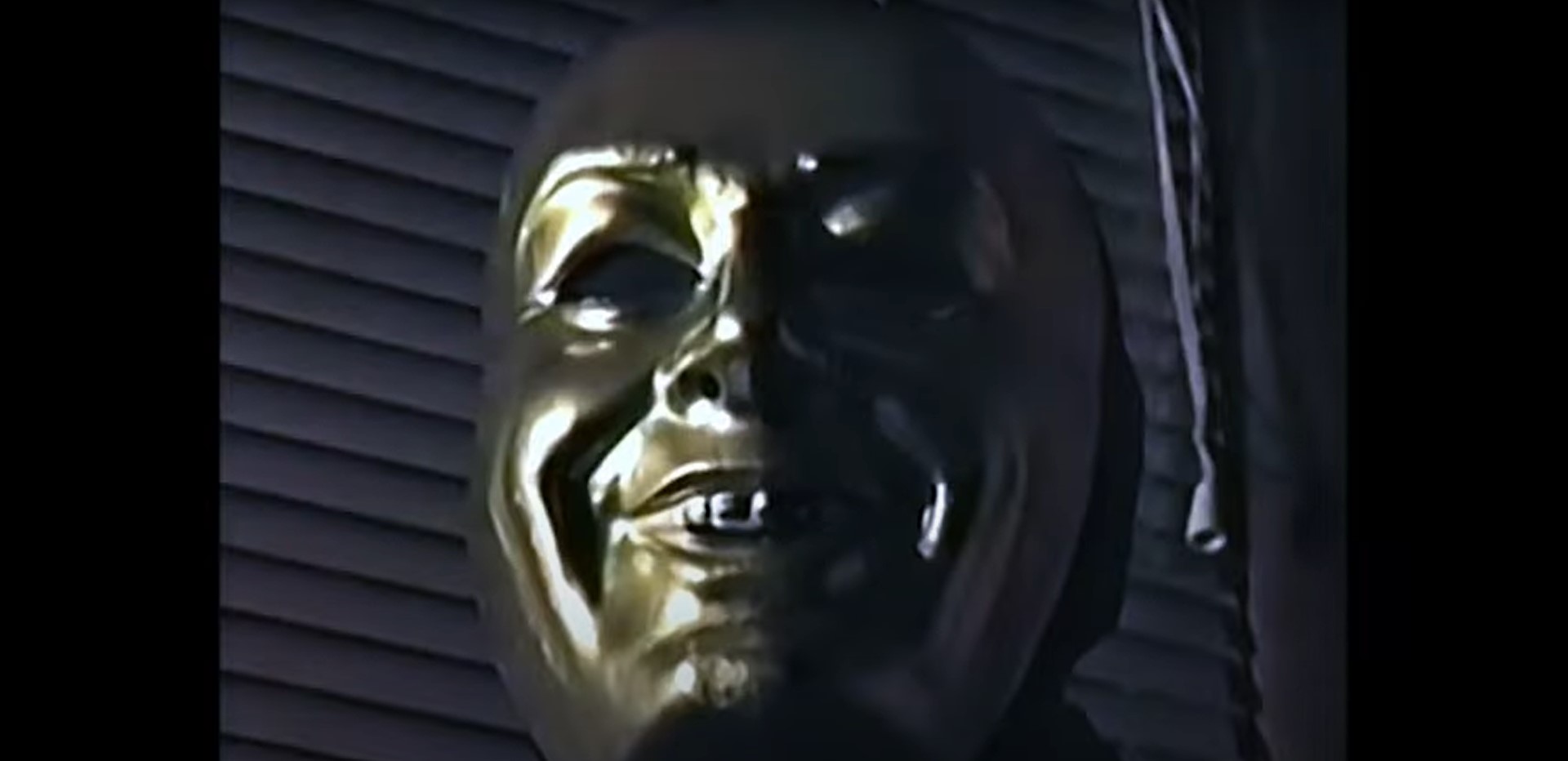
Malicia Tombs, an acclaimed horror actress known for B-movies and bad attitude, bursts into a wreckage of flames when her car sudden explodes after storming off the set of her new movie, “Scream Queen,” in which she wrote and starred as the titular character.  Part of the cast and crew were devastated by the accident that had cut their own career short while others were relieved the egotistical Tombs had perished despite publicly feigning grief over the loss of a genre fan-favorite.  Months later, the small cast and crew receive a mysterious invitation to gather at a creepy mansion butlered by Runyon.  When their host is unveiled as to be a very much alive Malicia Tombs, she offers them a lucrative sum of money to finish the film they’ve started but with a new script.  As the guests read through the new treatment, the cast and crew realize their present moments read just as their being played out in the script, even their deaths. 

If there was ever a single face deserving the representative distinction within an overpopulated categorized scream queen genus, Linnea Quigley would be that green-eyed, blonde-topped, beautiful face with an infectious smile.  Quigley worked with an array of filmmakers, ranging from some of the most renowned cult films of all times amidst reams of horror movies for nearly half a century (yes, we’re feeling old now) to the most independent of the independents films never having really receive the proper exhibition format or audience attention.  To what would be a delight to Quigley’s fanbase, one of those obscure features is Brad Sykes’ “Scream Queen,” a late 90’s filmed, 2002-released, SOV, U.S. slasher written-and-directed by the “Camp Blood” and low-budget filmmaker with Quigley in mind to play the scream queen character Malicia Tombs, now available, officially, on Blu-ray.  “Scream Queen” is the first major project for Brad Sykes in a collaborating effort in not only as a director but also as a co-producer alongside David Sterling of Sterling Entertainment.

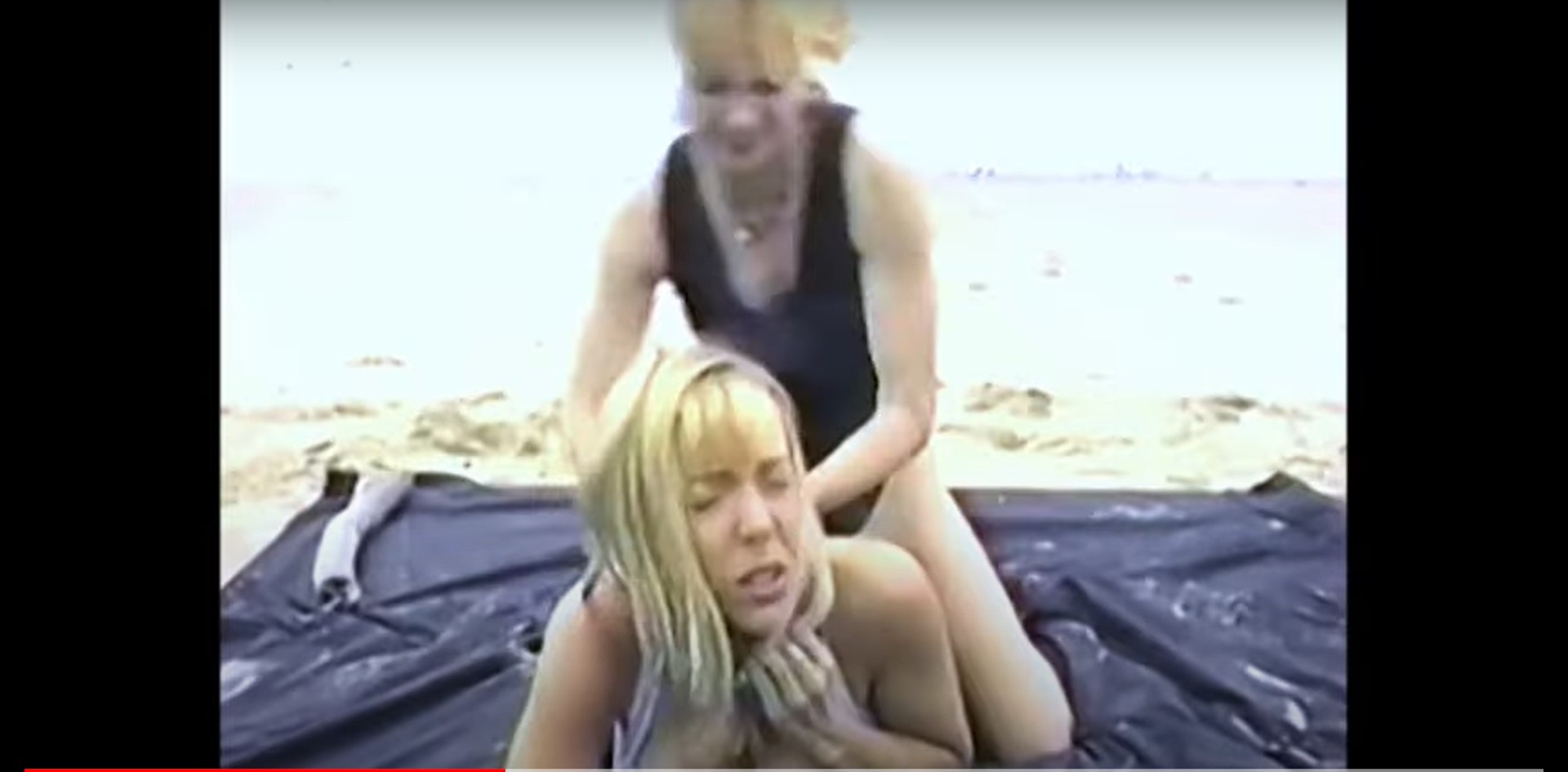
“The Return of the Living Dead” and “Night of the Demons” Quigley puts on another memorable and wickedly fiendish performance as the haughty genre scream queen Malicia Tombs who superiority has gone to her head as she embraces her designation to an exact mania, displayed early on when her character’s character attempts to choke-kill another actress despite the numbered scene not being a death scene and Malicia harps on wanting to continue with the resembling act of murder.  As much as Malicia Tombs embraces the killer instinct inside of her, Linnea Quigley very much embraces Malicia Tombs without having to take her top off and despite having less screen time than her costars.  While Quigley fades in and out of the linear story, the narrative progresses with livelihood hardships of the now out-of-work cast and crew who relied heavily on that small film to boost their acting and filmmaking careers.  That crop of characters falls short tipping into their expectations, aspirations, and even their relations to be just slasher fodder for the mysterious maniac roaming the house.  Jenni (Emilie Jo Tisdale,” Escape from Hell”) and Devon (Nova Sheppard) are inferred romantic roommates who sell clothes on the side of the street to make ends meet post failed film but don’t have surmountable direction to either be a full-fledged couple to sympathize or seem terribly concerned about opening their own clothing shop other than what would be a bad decision to reside at the mansion overnight.  Again, no sympathy there either.  The special effects goof Squib (Bryan Cooper churns chuckles relentlessly by relating more to his crafted effects dummy more than people, marking him conclusively comedy relief as well as fated for death that, like in life, no one takes him seriously when he shows up gruesomely mutilated.  The other principal actress across from Tombs is Christine (Nicole West, “Dimension in Fear”), a buxom blonde tired of secretary work succumbing to lead man flirtations in a dark and scary house where every shadowy corner is lodged with threat.  The pair fall into that horror character cliché of have sex, will die, quickly downgrading their pre-professional relationship into nothing more than dark house desire.  Director Eric Orloff (Jarrod Robbins, “Evil Sister 2”), a presumed spin on the Awful Dr. Orloff and perhaps hints at his motives, seems to be stuck in angsty avoidance and melancholy stemmed by what could have been with Scream Queen but that also peters to a gross negligence end of an arc waste.  Rounding out the cast are a couple of special bit parts played by prolific Full Moon Entertainment and overall horror movie screenwriter C. Courtney Joyner (“Puppet Masters III,” “From A Whisper to Scream”) as a televised homicide detective and Kurt Levee in a quasi-return of his character Runnion from “Evil Sister” but alternatively spelled “Runyon” in “Scream Queen.”  

Though obviously and definitely not the first to do this, “Scream Queen” humors metacinema measures built upon horror tropes and spherical plot points that redirects the story back upon itself for a killer effect.  The feature has no issues making and poking fun at itself within a campy context albeit the usually grave apprehensions of a true scary slasher movie that’s less campy of which a scream queen is born – think Jamie Lee Curtis in “Halloween” or Neve Campbell in “Scream.”  Bryan Cooper not only portrayed the foolish effects guy persona but also actually did a lot of the gore gags for the film, achieving very detailed inlaid gore prosthetics for a smalltime picture with an axe embedded into a chest and a mangled face to name a few.  The story itself feels a bit rough and ready as it slips into supernatural obscurity and, as aforementioned, character setups flounder to a stagnation, killing instantly the miniscule arcs that were structured prior to their mansion gathering in what becomes a slapdash of serial offing that wraps up the story post-haste without much cat-and-mouse tension.  With that said, “Scream Queen’s” unpolished plot had once mirrored its fallowed physical release until recently but now witnessing its birth out of twilight has been multitudinous worth the wait. 

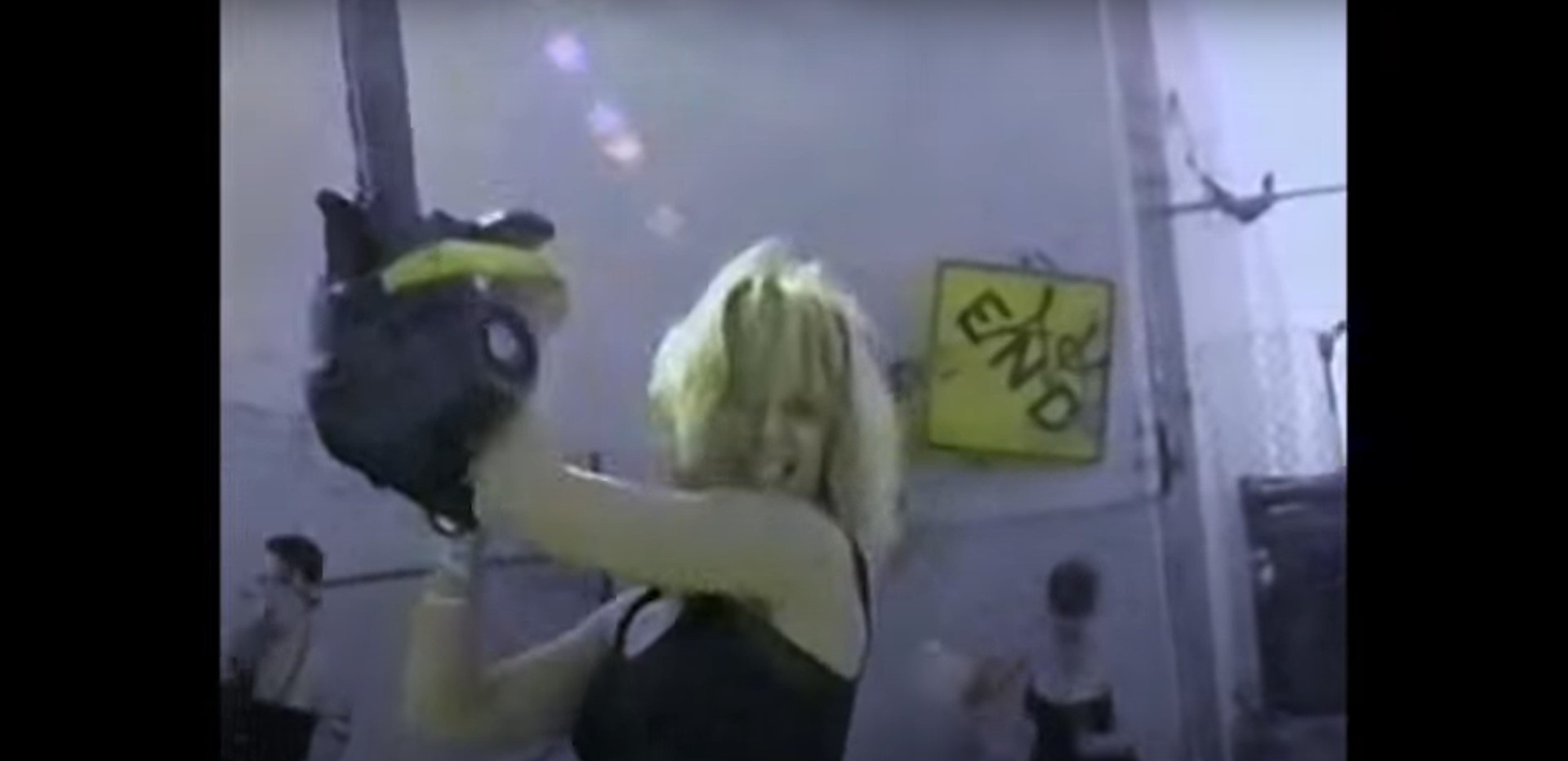
Another of Linnea Quigley’s lost films has been resurrected from the format graveyard by Visual Vengeance with a new Blu-ray release of “Scream Queen.”  The Wild Eye Releasing sublabel release comes with an AVC encoded, high definition interlaced scanned and director approved 1080i transfer from the 480p tape elements on BD50 capacity and comes also with the qualitative joys of a standard definition shot on video experience.  SOV tape upconversion can never completely eradicate the imperfections associated with tape and we also know this going in courtesy of Visual Vengeance’s standard practice of a fair warning before the film, but the overall “Scream Queen” presentation passes as clear content despite some minor tracking blips, 1.33:1 aspect ratio, original lower resolution, and scan line visibility, which is smoothed out nicely by the 1080i conversion. Exteriors and brightly lit scenes take on more shape compared to darker and low-lit areas that become like a void in standard DEF, which also hits the natural grading into a washed-out drab.  The English Dolby Digital 2.0 stereo labors to maintain some form of auricular strength but often nearly goes dark to where certain Linnea Quigley monologues periodically go silent for a few seconds, so the dialogue isn’t entirely clear but when it is, it’s relatively clean. There’s no hardiness pop in the audio track, staying suppressed throughout, and having little-to-no range or depth to the compile contexture. Some electro-interference throughout but nothing to be bothered by considering the grade of the SOV. Optional English subtitles are available. Special features include a commentary with writer-director Brad Sykes, a new behind-the-scenes documentary Once Upon A Time Horrowood that’s mostly Brad Sykes going through the stages of making “Scream Queen” and his recollections of his first big time produced film, a new interview with star Linnea Quigley, a new interview with one of the three various editors Mark Polonia (director of “Splatter Farm”), an original full-length feature producer’s cut of “Scream Queen,” a behind-the-scenes image gallery, Linnea Quigley image gallery, snippets from the original script, original trailer, and other Visual Vengeance distribution trailers. Along with the hearty software special features, hardware physical features include a six-page trifold with behind-the-scenes color photos notes by Weng’s Chop Magazine’s Tony Strauss and beautifully illustrated with dripping blood, a chainsaw, and Linnea Quigley on the front cover, a folded up mini color poster of a scantily-leathered Linnea holding one of the film’s murderous weapons, retro stickers, and your very own Four Star Video plastic rental card. All of this great stuff is stuffed inside a clear Blu-ray Amary case with a pressed disc art of a bloody illustrated Linnea sawing some unknown guy’s face off. The same illustrated graces the front cover in an expanded form and under a different hue. If you don’t like it, which I would be hard-pressed if you don’t, the reverse side contains one of the original cover arts with, again, a scantily-leathered Linnea holding that murderous weapon. The entire package is sheathed inside a rigid O-slipcover with an extended view of that chainsaw scoring with a bloody spray the eyeball from some guy’s face. The 13th Visual Vengeance release comes region free, unrated, and has a runtime of 78-minutes. Lost vintage now found and digitally revived to give us even more Linnea Quigley than we knew we needed with a meta-film shows initiative and fit special effects but swerves off trajectory into a more-of-the-same pathway. 

This Chainsaw’s Made for Cutting! “Scream Queen” on Blu-ray!

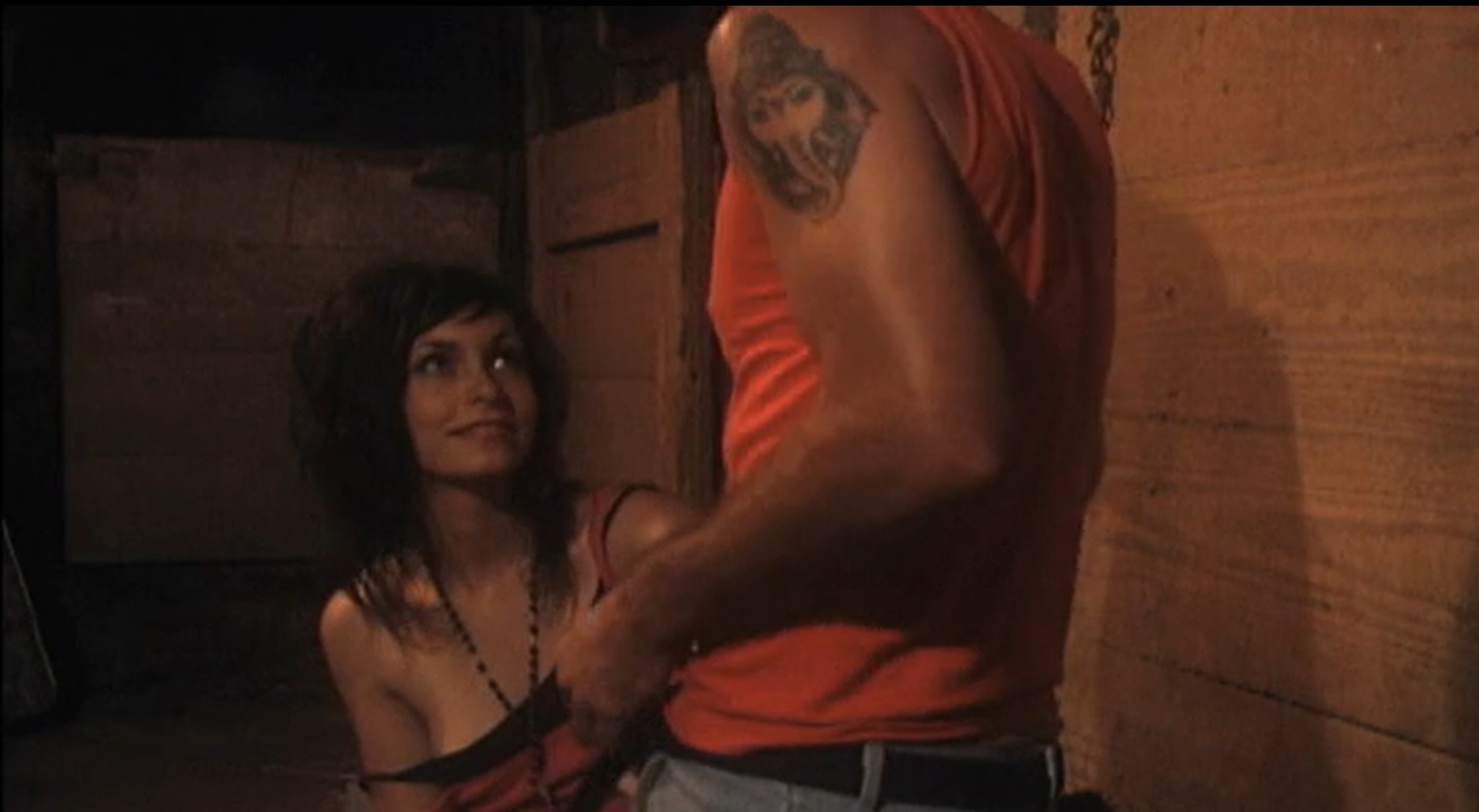
Be Careful Of Your Friends. They May Be EVIL! “Stabbed in the Face” reviewed! (Wild Eye Releasing / DVD)

“Stabbed in the Face” is now on DVD!

A high school Halloween party becomes the catalytic event for a motley of friends that plan a party in a remote haunted house where the urban legend of the three legged lady had brutally slain her husband and his mistress before her own insanity was gunned down by local authorities.  Simultaneously, a prison escaped murderer roams free around the same area, living a few friends on edge but reassured by the others that nothing will happen.  As the party begins, sex, drugs, and alcohol fuel the night away until one of the girls winds up missing and all that is left is a blood-stained bathroom where she was last seen heading.  Fingers begin pointing at each other as panic and anxiety sets in but as the thought of a deranged escape convict overtakes as best suspect, the others quickly split up to find more of their roll-in-the-hay and pothead friends only to discover the hard way that splitting up is a bad idea when hidden agendas come to light.

A character trope loaded slasher forms the foundational framework and sets up filmmaker Jason Matherne’s 2004 feature with a killer-thriller twist.  With an unambiguous forthcoming of brutality right smack-dab in the middle of the title of “Stabbed in the Face,” Matherne, the low-budget director of the franchised “Goreface Killer,” an if-you-can-believe-it less profane name to the film’s true title of “the Cockfaced Killer,” helms his sophomore gruesome gorescape off a script by fellow “Goreface Killer” writer and collaborator Jared Scallions.  The independent gore-and-shocker set in the late 1980s lands a setting in Louisiana and Mississippi, specifically around the off-beaten trails and areas of New Orleans, under Matherne’s New Orleans-based horror and exploitation yielding Terror Optics Films, under the copyright of CFK (Cockface Killer) Enteratinment, which innately chairs Matherne with the executive producer hat as well as with Jaren Scallions co-executive producing and having a principal role in the story.

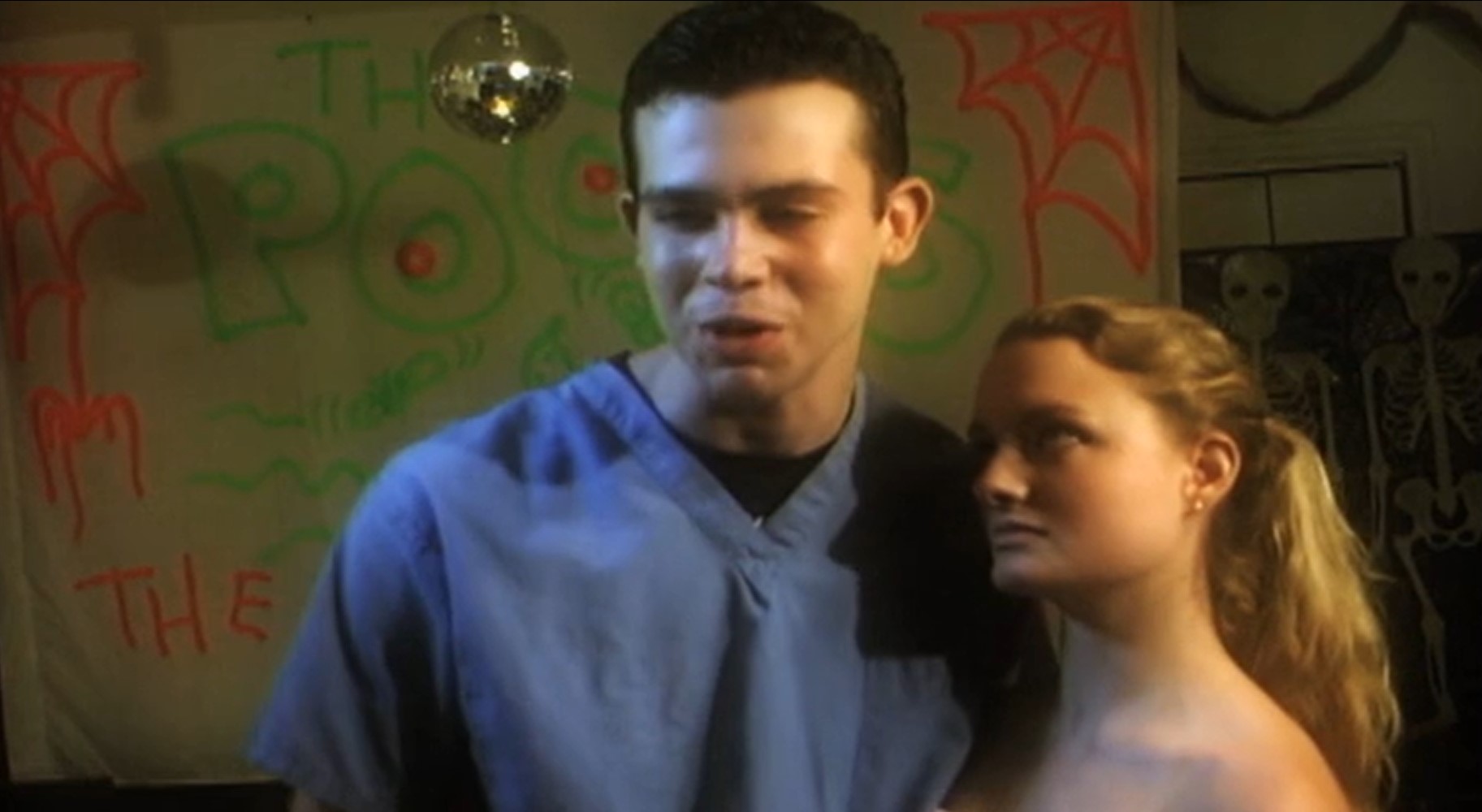
Character clichés clutter the chain of events with your typical pot smokers (Jared Scallions and André Le Blanc), bad boy (Eric Fox), jock (Bill Heintz), nerd (Steve Waltz), slut (Kristen McCrory), bitch (Dana Kieferle) and goody two-shoe virgin (Amanda Kiley).  The gang is all here for the slaughter, initiating formulaic conventionalisms that would make any horror aficionado cringe with an internal “here we go again” snide rippling through their gore-bore heads at the lack of originality and creativeness from another indie production.  Yet, if you stick with the story and pay attention (instead of doom scrolling your phone), Scallion’s script evolves out of being a simplistic carbon-copy primate and into a singular, secerning Homo Sapien with idiosyncrasies because though most characters remain on the routine attribute course, more than one don’t in an an uncommon but rarely explored concept that puts audience theories and callouts to bed before the unsuspecting reveal.  If needing a comparison, think about the “Scream” franchise as those films are really good at playing out the whodunit in complicated pairings with a big surprise at the very end.  In “Stabbed in the Face,” the unmasking is not as potent but the possible advents serpentine the story, some more obvious than others, and each carry a different motivation crashing head-on with each other after a few Matherne measured red herrings to throw off the plot predictable scent as well as building up tropes to the max of their mechanics, such examples would be the overly unchaste Starr who bed hops men without shame or overstating Bruce’s money and smarts with talks of getting into Harvard and his girlfriend is only with him for his family’s wealth.  Scallion slathers principals thick with stenciled overflow and when that bottom drops and all hell breaks loose, the ostensible outcome dissolves like wet paper.  Katheryn Aronson, Samantha M. Capps, Matt Mitkevicious, Bonnie W. Picone, Jerry Paradis, Helen Whiskey, Betsy Fleming, and J.C. Pennington complete the cast.

“Stabbed in the Face” is about as savage as it sounds.  Perhaps not as graphic or intense as the Wild Eye DVD illustrated cover art (we secretly wished it was), kills that amount to the titular act has a mortality rate of only two and those pair of perforations don’t live up to the wonderfully ghastly illustrated cover but, overall, fulfills the promise.  It’s quite evident that Matherne has no qualms about using splatter and sex, two of the biggest keys to a successful slasher, in his punk-scored abjection of lewd-laced murder.  Yet, it would be very remiss of me if I didn’t point out that “Stabbed in the Face’s” blade strikes air at times with the story.  Disconnection between the first couple of scenes and the haunted house party planning and then on completely omits the transpiring moment of the jock’s sister’s murder as scenes progress, passing through the event without as much of a whisper.  She’s just there in a scene and then she’s not and that isn’t explained until after the planning of the haunted house trip when the virgin naively asks while settling into his car about the girl who apparently was hacked to pieces on school grounds two months prior.  The heavy weight of that loss isn’t there for the jock, not even a fleeting moment of sadness or shock, as everything continues as if nothing happened.  The other characters are not struck by the loss either and this sweeps the character’s death under the rug and insignificant to the plot, but does a film entitled “Stabbed in the Face” really care about emotional scarring?  Or is the intention to leave open wounds to fester with more knife strikes, decapitations, and eviscerations?  If I was a magic eight ball, all signs would be point to yes toward the latter as special effects team Jason Bradford, Robert Masters, and Richie Roachclip pull their weight (professionally, not emotionally) creating better than anticipated morbid scenes of murder albeit the one or two obvious CGI blood splatter.

An 80’s teen slasher incarnate, “Stabbed in the Face” glorifies gratuitous sex, drugs, and gore, appropriately curated and displayed by our friends at Wild Eye Releasing on their Raw & Extreme sublabel.  The 78th released title on the sublabel is presented in a blown-up aspect ratio of 1.85:1 widescreen, eliminating the horizontal bars, on a MPEG2 encoded DVD5.  Resolution retains the image tautness with only a handful of scenes cropped and zoomed in even more that reduces pixels to a more granular façade.  Matherne owns the softer presentation with instances of posterization, especially when creating a period piece using stark colored gels and less light for positioning thicker shadow that hazily defines objects, as if lurking in the dark.  The English language Dolby Digital 2.0 stereo track has great dialogue strength that does sound boxy.  I suspect a ADR dub but highly unlikely with the really good synch and might just be more carefully attained specified audio with key boom placement.  Eric Fox’s electron and punk soundtrack parallel “Stabbed in the Face’s” indie-grunge horror with synthesizing tells of inspiration from the 80’s era.  Punk and hillbilly rock bands on the soundtrack include multiple tracks from The Poots, The Projections and The Pallbearers – the three Ps.  The static menu features full-length tracks from the soundtrack overlaying its static menu with the only bonus feature being a “Stabbed in the Face” Featurette, a behind-the-scenes look in raw and polished form at the film’s genesis and production with discussions from cast and crew.  Along with the feature’s own trailer, also included but separate from the bonus features are other Raw & Extreme trailers of “Crimewave,” “Goregasm,” “Whore,” “Video Killer,” “Blood Slaughter Massacre,” “Hotel Inferno,” and “Acid Bath.”  This portion of the menu options does not include a music track.  To turn consumers onto the film, more so the gore fans than popcorn film goers, the ultraviolent cover keeps in accordance with the Raw & Extreme profile.  The cover art is also semi-reversible with magnified bloody image on the inside of the frosted Amaray DVD case.  The disc is printed with the same cover art image, just downsized.  The unrated DVD has a runtime of 81 minutes and is region free.  Just hearing the title can induce the sensation of a sharp edge going through soft flesh and with that phantom impression of pain, “Stabbed in the Face” is horny, bloody, and punk!

“Stabbed in the Face” is now on DVD!

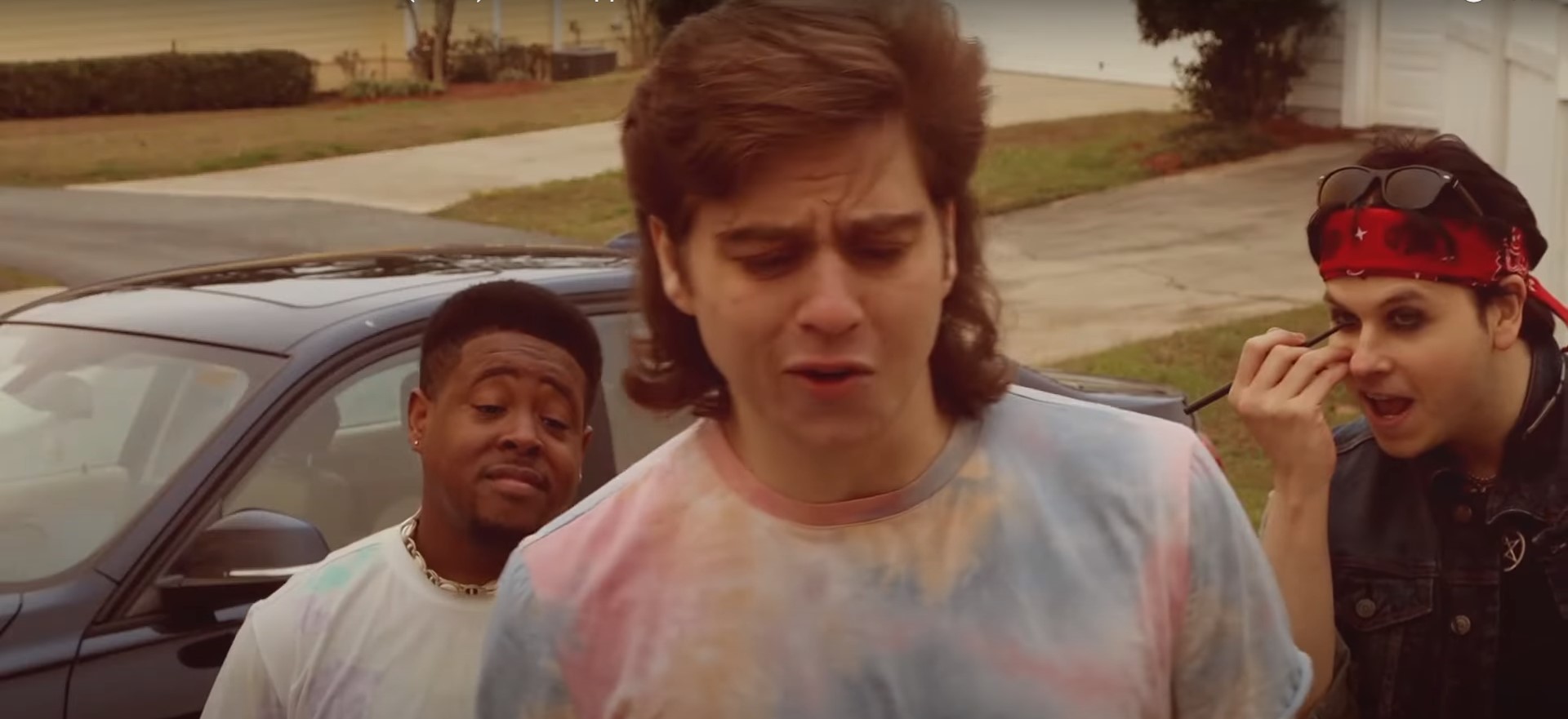
This is Not Taylor Swift’s “EVIL” Hit Song. “Cruel Summer” reviewed! (Scream Team Releasing / Blu-ray)

“Cruel Summer” on Blu-ray Home Video!

Heather and Felissa have planned the perfect weekend party for summer kickoff.  The custom invitations are set for their friends to cordially request their attendance for an 80’s themed murder mystery at Heather’s aunt and uncle’s cabin home.  Upon their arrival, the stock up on booze and groceries, fake knives and masks are in hand, and the game is about to begin, but little do they know, the surprises and terror in store for them are not manufactured by the rules of a party game.  A masked serial killer is heading straight for their night of fun and games, killing anyone who steps in his path, including other tourists, locals, and even the law enforcement called in to check on the party noise levels.  When friends suddenly disappear throughout the night, that strange feeling of derealization takes over and worry sets in that something other than being passed out from partying too hard has happened to them and that same fate will soon happen to them. 

Let’s face it.  All horror nowadays is rooted by the inspiration from horror long ago.   Originality has all but faded from the conceptual ideas, script pages, and in what the camera records.  Independent horror filmmaking is basically devotion digitized and the easily accessible equipment has turned every kid, who grew up watching Todd Browning, George A. Romero, and Dario Argento, into splintered, hackneyed versions of their favorite directors.  Most indies either follow similar formulaic narratives and styles or cast and cameo acting icons to draw upon homage or headlined sales, but for Scott Tepperman’s 2021 Indiegogo-funded slasher “Cruel Summer” there lies little effort in either department despite the film’s throwback claim.  The “Nightblade” and “Hell’s Bells” director based in Tallahassee, FL is not opaque with the 80’s obsession he integrates into his COVID production under his cofounded Los Bastardz Productions with Jim O’Rear.

If looking up “Cruel Summer” on IMDB.com or any other online movie database that lists the cast and the associated character names, a trend might pop out at you but might not be evident at first.  Since I personally try to avoid looking up or researching films or watch trailers to sideline any kind of preconceived biases, I began to pick up halfway through the runtime the correlation between all the character names in that they’re nods to renowned horror actors and directors.  Some examples include Ashlyn McCain playing principal lead Heather (as in “A Nightmare on Elm Street’s” Heather Langenkamp), Bridget Linda Froemming plays Felissa (as in “Sleepaway Camp’s” Felissa Rose), Harold McLeod II plays Tobin (as in “Saw’s” Tobin Bell), Will Horton plays Vincent (as in “House on Haunted Hill’s” Vincent Price), and Scott Tepperman plays Gunnar (as in “Texas Chainsaw Massacre’s” Gunnar Hansen.  There’s also references to Barbara Crampton (“Re-Animator”), Doug Bradley (“Hellraiser”), Robert Englund (“A Nightmare on Elm Street”), Tony Todd (“Candyman”), Linnea Quigley (“Night of the Demons”), Katheryn Bigelow (director of “Near Dark”), and William Lustig (director of “Maniac”).  While not an entirely novel idea to use genre names as characters, what’s wholly impressive is this scale of use but the characters themselves more-or-less dawdle without progressing the story or adding much substance.  Once the friends arrive at the house, not much else happens between them and no individual or group character arcs take shape and flesh out, leaving just potential fresh kills for a family of whack jobs with a loose tragic and traumatizing backstory with an incongruitous twist in family relations.  “Cruel Summer’s” cast rounds out with Jimmy Maguire (“Hell’s Bells), Paul Van Scott (“Shark Waters”), Jim O’Rear, H. (Hannah) Marie, R.J. Cecott (“House of Whores”), Keith Bachelor Jr. (“Survival of the Apocalypse”), Kim Casciotti (“I Dared You! Truth or Dare Part 5”), Ashley Casciotti, Abby Graves, and Aria Renee Kenney.

Not to be confused with the popular titular track by the teen enthralling, mega popstar Taylor Swift or the teenage angsty and melodramatic, anthological seasoned series of the same title that once starred Kevin Smith’s daughter Harley Quinn Smith, “Cruel Summer” has loose ties to the other two media consumptions with a rudimentary display of teenage complications that turns full blown slasher in a matter of minutes, ranking the indie horror as bottom shelf goods.  Cruelty lies within the character treatment in an unsatisfactory means to character’s life and/or their demise among a slew of plot holes galore, such as where are Heather’s talked about Aunt and Uncle who own the house?  Why are the killers suddenly interested in the house and the current occupants if they’ve been living next door or in the area all this time?  Is it just happenstance that the killers have imbedded kin in the group of friends travelling to this very house?  My head spins with questions that don’t play out with answers in what is truly a cruel movie that really doesn’t display the ostensible season of Summer with characters in unseasonal jackets, sweats, and flannel and staying in-doors to play in-door games.  Returning to what seems to be an epicenter of importance, the house feels keystone to the merciless slaughter, yet in the same breath, the explanation of executions doesn’t make much sense in the grand scheme of insanity cases, pulling the lynchpin on the narrative structure to have the story collapse on itself by relying on a cock and bull outcome in a slack climax.   

Scream Team Releasing, a distributor who I’ve praised the positive reviewed releases of “Dude Bro Massacre III” and “Rave,” is also home to “Cruel Summer” on Blu-ray home video.  The AVC encoded, high-definition, 1080p resolution BD50 maintains detail composure fairly well with a decoding bitrate average of 30Mbps albeit some fluctuation in the bitrate between exterior lit night scenes and the interior lit scenes.  “Cruel Summer” is more reliant on natural lighting where possible without hyper stylizing with color grading and misfitting CGI blood, resulting in a natural veneer that looks uninspired but adequate for the budget.  There is some minor splotching/banding in darker spots that is the extent of compression issues. The English language Dolby Digital stereo 2.0 mix has difficulty with sealing the rough-and-ready sound design when splicing multiple takes. Dialogue renders over nicely enough but the filtering out of extra elements, such as wind and echoes, that sneak into the recording and though a little background adds a bit of verisimilitude, there’s just too much start and stop audio files and there too intertwined within a varying levels of volume amplitude and varying levels of depth delineation, sometimes muffled or stifled to a softer mix. There are no subtitles available on this release. Bonus features include A Not-So-Cruel Summer featurette with cast and crew interviews, a glimpse behind-the-scenes that goes around scene setups and getting some background on what they’re doing at that time, an audio commentary with director Scott Tepperman going deep into every scene and their backstory with opinions on his cast but eventually Tepperman cuts out near the unveiling climax and he’s just silently watching the film with some snickering or sinus clearings to keep us aware he’s still there, Scott Tepperman, Jim O’Rear, and some of the cast’s Indiegogo crowdfunding campaign fundraiser spiel for a new kind of 80’s slasher, another Indiegogo proof of concept video and pitch, the cast and crew divulge their favorite slasher flick, the grindhouse trailer, and the trailer. The Scream Team Releasing is not rated, runs at a slim 78-minutes, and has region free playback. Don’t sweat over “Cruel Summer” in what is a lukewarm, low-budget slasher with little-to-no curb appeal and the only thing going for the Scott Tepperman feature is the filmmaker’s enthusiasm for 80’s horror which has seemingly been misplaced from the 80’s inspired film itself.

“Cruel Summer” on Blu-ray Home Video!

EVIL Has an Eye On You! “The Goldsmith” reveiwed! (Cinephobia Releasing / DVD)

“The Goldsmith” on DVD From Cinephobia Releasing!

Childhood friends and career criminals Stefano, Arianna, and Roberto plan their next heist of an elderly couple.  Suspecting the older husband to be a jeweler with a hidden lab stashed with product, the trio work off a plan based off a third party’s overheard intel that the house is well worth the score.  Successfully penetrating the home’s security system, securing the elderly couple, and discovering the jeweler’s hidden cache of priceless jewelries, the felonious friends believe they hit big in their home invasion scheme until the lab door suddenly closes behind them and they find themselves at the mercy of the old man, free from his confines and divulging intimate knowledge about each one of them over a videocam feed peering inside the lab.  Trapped, relationship destroying secrets are revealed by their seasoned captor who has something more odiously consequential in store for them than just letting their skeletons out of the closet.

The age-old idiom of to have a heart of gold, used to describe person’s generous nature, does not apply to Italian director Vincenzo Ricchiuto’s 2022 home invasion and survival thriller “The Goldsmith” where the absence of generosity gives way to greed, treachery, and one jeweler’s search to see inner beauty.  Known in Italy as L’orafo in the production’s native tongue, the writer-director’s debut feature tackling both sides of the creative spectrum in writing and helming is co-written alongside Germano Tarricone, co-writer of Italian horror thrillers “Eaters “and “In The Box.”  Together, “The Goldsmith” does play on the idiom more than meets the eye with the immeasurable principal characters that twist to knife harder in their gutting revelation or deceitful explanation.  From production companies Almost Famous Productions, Minerva Films, DEA Films (“The Perfect Husband”), and in association with Hurricane Studios, “The Goldsmith” is executively produced by Tarricone and the Ted Nicolauo directed “The Etruscan Mask” producer, Antonio Guadalopi.

The intimate casting provides a tight story primarily set at the older couple’s home with brief secondary story parallel and flashback sets confined to a mechanic shop, outside a bowling alley, and inside a nightclub.  The three thick as thieves are the nervously confident Stefano (Mike Cimini), his oversexed girlfriend Arianna (Tania Bambaci, “The Perfect Husband”), and the careless drug addict Roberto (Gianluca Vannuci, “Lui non esiste”) who become ensnared by an enigmatic goldsmith (Giuseppe Pambieri, “Yellow Emanuelle”) and his wife (Stefania Casini, “Suspira” ’77).  Cimini, Bambaci, and Vannuci favor ruffian routine but their performances are undercut by the script’s lack of development between Stefano and Arianna’s reclined relationship and the significance of why Stefano did a heist job on his own without his crew that seemingly had some unclear intensity in the backdrop on why he had to go at it alone.  The confusion of the first fib explanation from Stefano is quickly swept under the rug by the second bombshell that involves Arianna and Roberto, one that clearly overshadows Stefano’s deceit tenfold with its more transparent and personal complexion, and Arianna’s fib is more he-said, she-said that throws more shade toward the triangle-friendship as lie-after-lie quickly devolves an already brittle relationship into a flatlining hate to where they turn on each other, or at least two of them do.  The more interesting characters of the bunch are definitely the older couple with ulterior motives, luring bad people into their home just to trick them into being a part something far more sinister for their health.  Pambieri and Casini show their veteranized chops, delivering distinct lines within their distinct character voices and mannerisms but working together as a unit in a deranged, but endearing dispositioned husband and wife, especially Casini with her semi-handicapped character’s lady of the house demeanor that wears a crooked smile underneath.  “The Goldsmith” rounds out with Andrea Porti, Matteo Silvestri, and Antonio Cortese.

“The Goldsmith” might be inherently wealthy with its immeasurable karat of everyone is a villain in the story but the story itself isn’t as rich with its struggling with poor development to connect the pieces together in a coherent way.   In the overall picture from a high-level perspective, the basics of the acts are evident to where we’re setup with these three criminals looting a home, they find themselves in a pickle with a couple not as enfeebled as described, and with the second and most rising threat plot point being the goldsmith’s eye on the prize for his captives.  Yet, the ancillary scenes muddle up the support.  Point in case, the opening scene of the three hoodlums running from a dressed down priest, and the only reason we know it’s a priest is because the actor is listed as such in the credits.  The scene doesn’t explain much other than the troubled youngsters have presumably stolen a cross and have murdered the priest after a length chase on foot, setting up Stefano, Arianna, and Roberto as the antihero principals but the scene impresses more importance, like a moment to refer back to yet that moment never resurfaces into the grand scheme of the narrative.  Other similar instances rear-up throughout, questioning the motivations and the associations often left unsatisfactory by absence of valuable fill-gap material.  “The Goldsmith’s” themes of honor among thieves and attempting to see the good within come over clearly through a blanket of dark iniquities on both ends, leaving no good feelings for any of the antiheroic roles that flipflop for higher ground in this Italian-made home invasion thriller. 

Coming in as release number six on the spine for Cinephobia Releasing, “The Goldsmith” comes to DVD for the first time in North America. The MPEG-2 compression encoded DVD is presented in a widescreen 2.39:1 aspect ratio. Unfortunately, the Cinephobia release has a substantial artefact issue with the higher information rate on format’s compression encoder, resulting in a contouring blob during the first act’s darker scenes. The front and center macro-blocking ring produces a lighter shadow that becomes more of a visual obstacle to see past. Once the compression levels out, we do see some seesawing delineation details in a rather hard-lit, noir-lite cinematography from Francesco Collinelli (“Demon’s Twilight”), but the majority of details come through nicely, especially on skin textures and tones. The Italian Dolby Digital 5.1 surround sound offers forefront dialogue with cleanness and clearness. No apparent issues with the digital recording as the sound design forks up good depth between medium and closeup scenes and through the video-com as well as a selective range with some of the gorier moments with squishy-scoops and hammer-bashes. English subtitles are available with good pacing and a flawless, accurate translation from what I can tell as I don’t understand or speak Italian but understand the roots of Latin-based language. Bonus features a feature-length behind-the-scenes raw footage of the principal photography and trailers for Cinephobia Releasing films, such as “Brightwood,” “Emanuelle’s Revenge,” “The Human Trap,” and “Amor Bandido.” Physical features include a standard DVD amaray case with the titular character in a dark black and gold yellow closeup one-sided front cover, peering into the metaphorical windows of your soul with the jeweler’s head mounted magnifying specs in an eerie image of individuality prospecting. Inside there is no insert included and the disc art is a downscaled version of the front cover image with title underneath on top of a black background. The 89-minute film is not rated and though not listed on the back cover, playback is suspected to be region 1 locked. “The Goldsmith” aims to pull the wool over one’s eyes, or more accurately, replace the eyes altogether, with the deluding lustrousness of a home invasion thriller turned into an eyeful scoop of insanity.

“The Goldsmith” on DVD From Cinephobia Releasing!

Always Wear Protection From EVIL! “It Follows” reviewed! (Second Sight Films / Blu-ray)

“It Follows” You Home on Blu-ray and 4K Home Video!  

After sleeping with a young and handsome man in the back of his car, Jay wakes up strapped to a wheel cheer in an abandoned and dilapidated Detroit warehouse.  The panicked and apologetic man explains that having sex passed something to him and now he has passed it to her.  What it is is a supernatural force, a shapeshifter, always walking toward the last person implanted with an imperceptible sexually transmitted beacon.  Slowly but surely, the entity continues with a steady pace until reaching the infected person and brutally murdering them.  The only way Jay can unload this burdensome curse is to pass it along to someone else, but her tightknit group of friends aim to help her despite not being able to see the entity and drive her out beyond the stretches of her Detroit suburb home.  Yet, no matter how far Jay travels the entity eventually catches up to her, endless following her to wherever she goes, leaving her and her friends without options to alleviate her paranoia and fear.

David Robert Mitchell’s breakout horror success “It Follows” is the 2014 released supernatural teen terrorizer with an immutable edge of not only absolute apprehension but also with a distorted real-world dreaminess not based in vague abstraction.  Mitchell, who not only directed by wrote the film as well, is the sophomore feature from the “The Myth of the American Sleepover“ director who persists in the unravelling of apparent teenage problems, dramas, and sensations in the metro area and in the suburban borders of Detroit, Michigan, the state in which Mitchell was born.   “It Follows” barely scratched a significant budget for production but managed to succeed expectations earning domestically here in the U.S. 13x the film’s budget amount plus the additional international box office revenue and at-home media sales saw Mitchell’s indie horror a major sleeper amongst surprised genre fans who couldn’t get enough of the sexual transmitted spook.  Mitchell, along with Erik Rommensmo, Roby K. Bennett, Rebecca Green, Laura D. Smith Ireland, and David Kaplan, produced the venture under production companies Animal Kingdom and Two Flints with Northern Lights Films presenting.

At the center of a parentless predicament are a group of friends with the nucleate being the followed Jay under the performance of Maika Monroe, who also saw simultaneous and unexpected success in another 2014 thriller, “The Guest.”  Monroe’s slow burn sauntering becomes hit with complete shock when her lover betrays her, sends her spiraling in post-trauma harm, and instills a paranoia that can’t be ignored.  Jay no longer floats in life’s little wonders of love and romance; instead, she finds herself on the other side of the idyllic fantasy with the repercussions of her choices amplified by the supernatural spin.  At her side is her sister Kelly (Lili Sepe, “The Intruder”), childhood friends Paul (Keir Gilchrist, “Dead Silence”) and Yara (Olivia Luccardi, “Kappa Kappa Die”), and the across the street cool guy Greg (Daniel Zovatto, “The Pope’s Exorcist”).  Each play a role in Jay’s post-sex paranormal plight, some are a conductor of relief, such as providing a comforting presence as bodyguards per se or even become the next person to pass along the curse while others project future spurs of ominous ambiguity without the direct intention of doing so.  Though Mitchell might be invoking a dream state of events that may play into the following, I still found the groups’ idle hands to be concerning, especially during a school period from which we see Jay and Greg sitting in class together in one scene.  The cadence of time and responsibility doesn’t exist and that can be really jarring to our sense of natural order where school is an afterthought, juvenile attention is an afterthought, and the only thing that really matters is Jay’s imperceptible anxiety without any other exterior consequences pressuring their decision making.  “It Follows’” complete cast consists of Jake Weary, Bailey Spry, and Leisa Pulido.

Many of the film critics and analysts deconstruct and piece “It Follows” as an allegory for the sexually transmitted disease that will always be with you and how easily, or naively, it can be spread amongst friends and peers in casual intimacy and while that point can be seen as valid, there’s definitely merit behind that theory, I have come to an alternate conclusion of what the entity might represent that has been following me much like the entity has been following Jay. Since parents, or adults in general, are faceless, absent, or represented as attackers, Jay and her friends represent teens having to deal with the peak problematic adolescence with suggestions of suicide, drugs, neglect, abuse running rampant without ever having to be laid out in exposition or be straightforward and evident. The entity represents time running out in their youth dwindling quickly with every adult choice that they make, sex being the main sample of a larger grouping. No matter how hard the teens try to run from their issues, time never ceases and will eventually cause their mortal coil to succumb at an early age. Mitchell’s weirdly timeless set productions and props add systematic value in what has been longstanding through the decades of wriggling deviant teenage behavior. The indifference adult caregivers in themselves can be much scarier than the entity itself, a lack of experience and control often turns wild, unpredictable, and irrational, and set the story’s backdrop as the tatterdemalion surroundings of a once booming Motor City and you have a complete and total degradation of city to soul in one tailgating terrifier.

Follow Second Sight Films for a special release of David Robert Mitchell’s “It Follows” on an AVC encoded, high-definition 1080p, United Kingdom Blu-ray with an anamorphic widescreen aspect ratio of 2.39:1. Looking sharp and retaining original grading, this particular new Second Sight product, the standard Blu-ray version of the two-part deal along with a 4K UHD release, doesn’t hinge on perfecting or upgrading the digitally record video. Still, image quality renders like definite de facto distinctness that separates objects with delineated depth and a realistic color palette while the master of the slow pan, Mitchell, keeps scenes alive with an ever-moving camera shooting alternative, odd angles. Backside of the Blu-ray suggests a bitrate decoding at 23 Mbps but I had clocked it higher at low 30s that better suppresses any kind of compressions issues on the more than adequate BD50. The release comes with two English audio options: a Dolby Atmos produced by Second Sight and a DTS-HD 5.1 master audio surround sound. The Atoms provides a pedestal for the original composed score by Disasterpiece aka Richard Vreelord with his note firmly pressed on the slasher pulse while keeping a discordant arm’s length away from being too terribly catchy; instead, we shrill in fear with ever crescendo in letting us know the entity is here and near, foot-over-foot toward the target. Depth and range fathom well to create space and provide more than just a dialogue robust narrative with suburban ambiance as well as the exertion surrounding motivation to stay alive or to be followed and killed. Though not an A/V level up, Second Sight pours all their love and respect in new special features including new experience and opinion-laden interviews with Keir Gilchrist Chasing Ghosts, a new interview with Olivia Luccardi Following, a new interview with produce David Kaplan It’s in the House, new interview with composer Disasterpiece (Rich Vreeland) Composing a Masterpiece, and a new interview with production designer Michael Perry A Girl’s World that focuses on the out of time and oddly placed set dressings for era ambiguity. There’s also new commentary by author Joshua Grimm, an archived commentary with authors/film scholars Danny Leigh and Mark Jancovich, and a Joseph Wallace video essay surrounding “It Follows” Architecture of Loneliness, providing a deep-dive look into Mitchell’s curation of isolating loneliness in all areas of the cinematic story. The green Blu-ray casing has new simple, yet effective, artwork of Maika Monroe floating head bathed in small strips of rainbow glints contrasted against a dark background. No reversible cover or insert inside the Blu-ray but the disc pressing contains an equally color arrangement to the front cover with Monroe bound to the wheel cheer from a plot point moment. The region locked B release plays at a 100-minutes and is UK certified 15 for strong threat, sexualized nudity, violence, gory images, and strong language. Architecturally sound to be great horror movie of originality and inspiration, “It Follows” never succumbs to the frustratingly breeziness with when the entity enters the picture as director David Robert Mitchell is able to keep us ever vigilant with high suspense, stunning visuals, and keep characters from wandering too far off path.

“It Follows” You Home on Blu-ray and 4K Home Video!