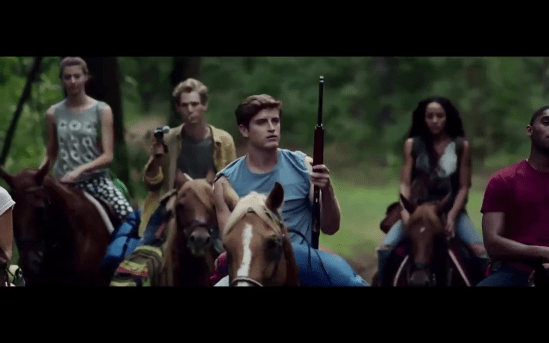
Set in Talbot County Georgia of 1986, six university students are assigned a write a 25-page report on a moment in history. The subject for the report was ultimately based off of local lore, a haunting story from a century old newspaper clipping that told legend of Emily Burt who was the prime suspect of being the notorious wild animal that tore through the local sheep herds. Ill-prepared and flippant for the report’s hot Georgia weathered journey into the woods, the students ride horseback through a labyrinth of trails on the Burt property and come under attack by a lurking bloodthirsty presence hellbent on separating them and tearing them to pieces. Desperation sets in when tensions flare, sides are taken, and perceptions are misled in a time of grave crisis, leaving the schooled students being taught a lesson in isolation and confusion in a classroom of ill-fated situations.
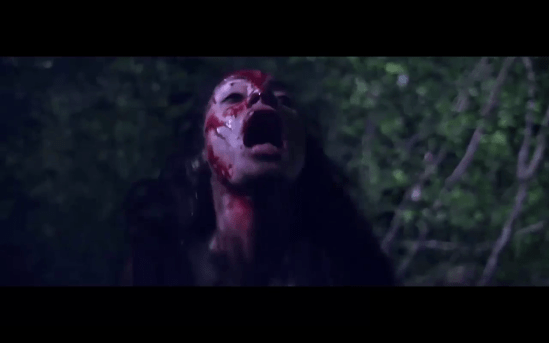
“Lycan” is the 2017 released survival horror thriller from co-writer and director Bev Land, making his inaugural feature film debut. Michael Mordler co-wrote the script that’s been described as “Hitchockian” and resembles a backdoor twist much to the similitude of M. Night Shayamalan films. Like Shaymalan’s earlier work, “Lycan’s” horror is extremely effective without having to bare witness an antagonistic beast and by leaving the girth of the killer’s destructive path to the imagination, our minds begin to formulate diegesis theories and build hypotheticals to the killer’s characteristics. The use of wolf-o-vision is a past time tool that flashes all it’s teeth to bring life to an unseen threat, but Land and Mordler pen a breadcrumb trail of hints that compound to a head in the midst of the chaos, unveiling the true threat in a full frontal way that’s a silver screen rarity, but nearly takes the fun out of the mystery.

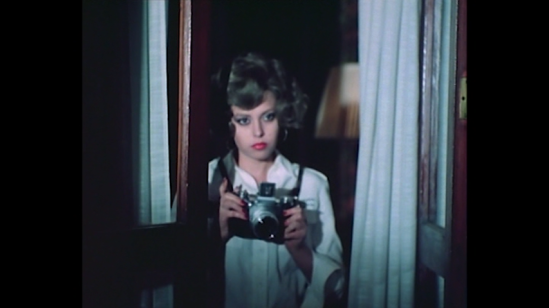
Starring in “Lycan” is Bev Land’s wife, Dania Ramirez (“Quarantine”), in the lead role of the mysterious Isabella Cruz. Ramirez’s has to accomplish multiple feats with Isabella Cruz whose a bit of an awkward loner who then has to reintegrate herself into the social realm of a group of variously distinguished characters. Parker Croft portrays as pot smoking, wise-cracking, pervert named Kenny McKenzie who documents the trip with an 8mm camera, Rebekah Graf is the stuck up and prissy Blair Gordon who only accompanies the group on this trip because of Jake Lockett’s baseball jock Blake Simpson. Craig Tate, unfortunately, falls into the stereotypical ‘token black guy’ Irving Robinson while Blair’s sorority pledge, Kalia Prescott’s Chrissy Miller, opts to the gal to get laid. Aside from Ramirez, the rest of the cast of characters fall into formulaic limbo, stuck in their own devices, and never really elevate into more than just surface level characters. Two of the more eyebrow raising actors that never saw the character development light of day were that of Gail O’Grady (“Chromeskull: Laid to Rest 2”) and Vanessa Angel (television’s “Weird Science”). O’Grady’s Ms. Fields warranted more background into how the ranch owner came to have Isabella Cruz enter her life and much more unopened mysteries about their dynamic.

While “Lycan” offers an up-to-snuff survival horror, the story’s bookends fall short of fully completing the story. The opening puts big man Presley Melson’s lonely farm boy stuffing lady of the night Anna, played by Alina Puscau (“Dracuala: The Dark Prince”), full of his pork roll. As the wolf-o-vision circles the lovemaking barn setting, Melson and Puscau trot out with only their skivvies to check out the outside racket and become, uh, victims of the antagonist? Not really sure because the scene starts from afar and the wolf-o-vision glides right up to Melson’s face without much of a peep from either Puscau or Melson. The ending is just as enigmatic with a brief present day scene (the story is set in Georgia 1986) of an unknown little girl picking up a razor sharp object from the leaf strewn ground and then there’s a cut to black to roll credits. Before this useless segment, the pinnacle moment of the third act springs too many leaks to plug. Combined with the stagnant and underdeveloped characters, “Lycan” is an unkempt story left wide open becoming a victim by it’s own scripted structure.
MVD Visual presents onto a region one, unrated DVD, the 1 Bullet in the Gun production, “Lycan.” Presented in anamorphic widescreen 1.85:1, MVD’s DVD image is beyond spectacular with immense details in every scene, even in the production illuminated night scenes. Digital noise is completely absent and the coloring is naturally vibrant. The Dolby Digital 5.1 Surround Sound has an effective ambient track with clarity and range in the wolf howls and the cracks and snaps of outdoor living. The original soundtrack by Devine Adams and score by Jason Pelsey revel in distortion free perceptible measures. An audio downside would be the dialogue track that suffers from unfortunate mic placement, leaving major story affected parts of the dialogue left muddled and indiscernible. Bonus material includes interviews with director and co-writer Bev Land, along with co-writer Michael Mordler, the cast including with Dania Ramirez, Rebekah Graf and Vanessa Angel, and Crystal Hunt (Executive Producer) and Steven C. Pitts (2nd Unit Director). A panel discussion with the Lycan producers and the original theatrical trailer round out of the extras. Land and Mordler’s “Lycan” disperses moments of original horror with snap-witty dialogue, but as a whole, the story trends toward a paint-by-the-numbers route without breaking the mold as a low tier “Hitchockian” thriller.
Category Archives: Trailers
Undercover. Underwear. Whatever Defeats Evil Sex Trafficking in “Two Female Spies with Flowered Panties” review!
Cecile and Brigitte have served two of their twelve month sentence for inappropriate sexual acts involving prostitution and stripping. International authorities, including an American Senator, remove the two ladies of the night from their incarcerations and have them audition a private and provocative dance routine that will spring them from prison life and place them into a contract for hire that the pair of beauties find difficult to refuse. Cecile and Brigitte use their God-gifted talents to slip undercover as a pair of lesbian dancers in order to spy on Mr. Forbes, the Flamingo club owner on the Canary Islands who moonlights as a sadistic sex trafficker. Forbes kidnaps, rapes, and then, with the help of his wife Irina Forbes, hypnotizes well-known and famous women to be the ever faithful lovers of Mr. Forbes wealthily clients and to stop the egregious trafficker, any smoking gun evidence must be photographed for the international police to make a move on an arrest.

Jess Franco is the maestro of guilty pleasure shlock and the 1980 violently erotic, crime drama “Two Female Spies with Flowered Panties” is no different inventoried with ubersleaze spiced in folly comedy and tense sadism. The sort of mixed bag genre film only writer-director knew, and understood, how to achieve on a minuscule budget level in hastily conditions, but “Two Female Spies with Flowered Panties,” whether designed or by chance, stemmed from the combination of old and new footage, re-edited out of the original title, “Ópalo de fuego: Mercaderes del sexo,” and told a slightly different tale with slightly rearranged character backgrounds and graphic scenes, and featured two different locations that were later labeled Las Palmas of the Canary Islands to tie it all together. Severin has included both versions on a limited edition Blu-ray (“Two Female Spies with Flowered Panties”) and DVD (“Ópalo de fuego: Mercaderes del sexo”) release to experience both versions.

Franco’s long time common law, then legal in 2008, spouse Lina Romay, under pseudonym Candy Coster stars as Cecile in really a non-seductive, non-promiscuous, and only pinched with erotica role. Unlike Romay’s “Bare Breasted Countess” (aka “Female Vampire”) role, Cecile undercuts the erotic tone with more gratuitous comic and threatening nudity. Relishing into a staple of erotica are all of Romay’s supporting cohorts consisting of “Zombie Lake’s” Nadine Pascal, “Women Behind Bars'” Joëlle Le Quément, Susan Hemingway of “Love Letters from a Portuguese Nun.” Interesting enough, Hemingway isn’t credit in either version of the film. Pascal offers playful dilly-dally while practically be nude throughout whereas Quément slips into a deeper carnality with an unhinged relationship with her sex trafficking husband Mr. Forbes while Hemingway just provides a taken-advantaged vessel to plunder her dignity, soul, and body for easy money. Surrounding the gorgeous vixens are ruthless, dirtbag men played by Claude Boisson as the club owning sex trafficker and “Elsa Fräulein SS’s: Olivier Matthot as the sleazy American Senator Connelly. The role with the most opaqueness between the two versions of the film goes to Mel Rodrigo as Milton, the club’s gay artist organizer with an existential crisis and a quick to rebel attitude.

Though charming in its own delectable unchaste ways, Jess Franco deploys a haphazardly glued story inflamed with by chance moments shrouded with psychosexual tendencies. Sexually ostentatious and manic, “Two Female Spies with Flowered Panties” wildly pivots like an out of control sprinkler, spitting lustful filth, jovial comedy, and menacing suspense everywhere while still, by way of only Franco can accomplish, accurately hitting the intended mark of downright Eurotrash entertainment. A shocking, yet hardly noticeable, factor of the director’s is his film withholds any large amounts of blood or gore; in fact, gore is absent and the blood is sparse, especially during the girls-on-girl torture scenes involving bondage, a switchblade near the hind parts, and a cinder-weaponized cigarette, but the element that sparks gritty fortitude in those same said scenes, shot intently with fraught close-ups and well positioned shadows, could culminate a subversive tone that ultimate could convey a scene without words.

Severin’s limited edition 2-disc release of the Eurocine produced “Two Female Spies with Flowered Panties” has rightfully been graced with the Blu-ray treatment. The release also has the Spanish edit version of “Ópalo de fuego: Mercaderes del sexo.” The Blu-ray is a 1080p encoded AVC transfer presented in a near stand definition aspect ratio format from a restored into HD, uncut print. The overall color palette appears fairly washed with only some segments, especially peering out over the water or inside tight quarters, stand out with rich color. Darker scenes are heavily splayed with turquoise that, again, give the washed overlay, but the richness of the shadows with grindhouse print grain is stellar. Franco’s struggle with focusing, as part of technical self embattlement or as part of an against-the-grain auteur, are prominent throughout. The two LCPM 2.0 tracks are dubbed only in English or French and while not tracked in the native Spanish, either track will serve as a palpable substitute despite the English track being transcribed awfully cheesy and the French track with consistent hiss. Bonus material includes “Two Cats in the Canaries: An Interview with Jess Franco” is an undated interview with Franco recalling his love for the Canary Islands and being a genre maverick. There’s also a 1993 interview with long time Franco composer Daniel White conducted by “Cannibal Hookers'” Donald Farmer, a thorough analyst of Franco and “Two Female Spies with Flowered Panties” by Stephen Thrower, location outtakes, and a theatrical trailer. While “Two Female Spies with Flowered Panties” is not the best example of Jess Franco’s credits, the vicious erotic thriller is arguably ambitious and epitomizes the style of the legendary filmmaker with sultry, fringed performances and an unforgettable narrative lined up in a one-two punch package from Severin Films!
Beer, Guns, and A Giant Crocodile! This is One Helluva Evil Ozploitation Film! “Dark Age” review!

In the Australian outback, a prehistoric and ginormous crocodile has surfaced in the wake of mankind’s gentrification of the wilderness land. Between ambushing crocodile poachers and snatching little Aborigine children from off the river shore, the ancient saltwater hunter has become the hunted as park ranger and crocodile preservation expert Steve Harrison has been assigned to kill the beast, but the local Aborigine tribe holds the killer croc sacred, calling it Numunwari, an ancient, spirit carrying crocodile that has embodied the bones and souls of ancestral aborigine. Together, Harrison and local tribe leader Oondabund must find a way to stop the chaos without terminating the Numunwari while combating drunken poachers and a rattled ranger chief looking to abruptly end public fear. With the enthusiastic help of Harrison’s ex-lover, Cathy Pope, the three devise a dangerous plan to sedate the massive croc and transport it to a secluded habitat before death rears it’s ugly head once again.

Arch Nicholson’s “Dark Age” is the Australian “Jaws” equivalent, introducing a massive crocodile that puts the fear of the murky rivers into the hearts of audiences much like a giant great white shark did for the ocean beaches. “Dark Age” is a raging adventure with a delicate undertone about nature fighting back against an aggressive, occupying force called man, especially the white man, who kills without cause, who plagues without consciousness, and whose power instills a reactionary fear to kill. A single, monstrous crocodile embodies and symbolizes the essence of an entire habitat, chomping through flesh and doing a death roll to make known that nothing can stop nature or as “Jurassic Park’s” Dr. Ian Malcolm so eloquently put it, “Life, uh, finds a way.” Nicholson’s film, from the novel of Grahame Webb novel Numunwari, isn’t solely a man versus nature horror despite marketed as one; instead, “Dark Age” unveils more the cruel side of human nature that’s more Machiavellian than nature running its course.

“Wolf Creek” star John Jarrett, who I better know from “The Odd Angry Shot,” stars as the conflicted park ranger and crocodile preservation expert Steve Harrison. Jarrett’s more convincing a maniac outdoors man than a crocodile conversationalist, but the iconic Aussie convinces us all that being in between two opposing sides is no easy task with this willingness to do what’s right on both sides. Nikki Coghill portrays Steve Harrison’s love interest, Cathy Pope, and Coghill is a dominating female lead by, not only being the only prominent female character, but with her striking ability to overpower Jarrett in scenes and with her also very striking beauty that comes to peak in a fleshy sex scene with Jarrett. The second most recognizable face behind Jarrett is aborigine descendant David Gulpilil. Most Stateside filmgoers may recall Gulpilil’s long locks and distinctive facial features from Crocodile Dundee in a ceremonial Aborigine dance alongside Paul Hogan. In “Dark Age,” Gulpilil plays Adjaral, son of Aborigine tribe leader Oondabund played by Burnham Burnham. “The Howling III” actor acts as a spiritual liaison between the crocodile and the white man world and Burnham Burnham’s childlike presence onscreen makes the actor very memorable and likable. Ray Meagher, Max Phipps, Jeff Ashby, Paul Bertram, and Ron Blanchard co-star.

There have been many installments and versions of crocodile leviathans. In fact, in It’s Bloggin’ Evil’s last review, Sion Sono’s Tag, there’s a dream sequence of a giant crocodile gorily snapping down upon a Japanese schoolgirl with blood spraying everywhere. While the scene is graphic, eye-catching, and notable, the croc was a mockery of reality with disproportionate jowl and a flimsy design that’s more cartoonish than substantially factual. Kuddos to the monster effects and long time visual effects artist Roger Cowland for constructing a frightening behemoth of a crocodile. Though slightly stiff in some scenes, Nicholson camera placement exhibits just enough to warrant a shortage of breath whenever the crocodile goes in for the kill or stalks a prey with the round eyes popping just above the water’s surface. This effect is masterfully executed by the late director who didn’t feel the need to be gratuitously gory with the death scenes that are modest, intense, and sheerly practical.

Yet to be on DVD or Blu-ray in the U.S.A., the good blokes over at Umbrella Entertainment release ultra-rare “Dark Age” for the first time hi-definition on Blu-ray as part of Ozploitation Classic series presented in a 1080p widescreen, 16:9 aspect ratio, format. The image looks clean without any noticeable enhancements, distortions or print damage with only some heavy noise in the darker scenes. The Dolby Digital 2.0 audio track is just as perfect with clarity in the dialogue, a pulsating synthesizing score, and fine fidelity and range. No hissing, popping, or any other noise annoyances were detected. Umbrella unleashes a slew of bonus material includes an audio Commentary with Actor John Jarratt and Executive Producer Antony I. Ginnane, a Bicentenary with Bite: Revisiting “Dark Age”, panel discussion with film historians Lee Gambin, Alexandra Heller-Nicholas, Emma Westwood and Sally Christie, and Uncut Not Quite Hollywood Interviews with John Jarratt and Antony I. Ginnane which are tremendously enlightening about the film’s birth and concluding reactions. There’s also a 1986 documentary entitled Living With Crocodiles with Grahame Webb, author of Numunwari, trailers, and an image gallery. Forget “Rogue.” Forge “Lake Placid” Lets even forget “Dinocroc!” Umbrella Entertainment’s “Dark Age” is the ultimate formidable 90-minute action-horror with trembling induced fear and adrenaline produced thrills accompanied inside a hi-definition release packed to the razor sharp teeth with extras.
An Evil Hog Demon Won’t Let You Escape this Island! “The Forlorned” review!

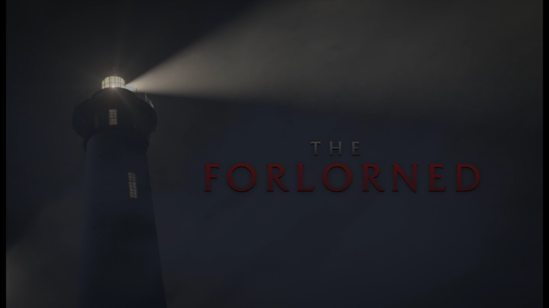
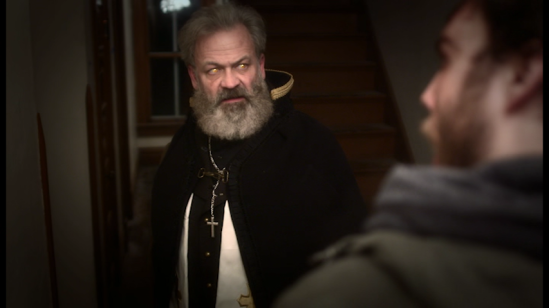
Just off the rough stormy shores of Nova Scotia is a remote island where American Tom Doherty becomes the newly hired lighthouse caretaker in search for good money. Already overwhelmingly cloaked with the lighthouse’s creepy adjacent housing and being forewarned by the island’s infamous legends, an isolated Tom experiences the abilities of dark force first hand and doesn’t know whether the forces are real or madness has swallowed him from the extreme isolation. As Tom continues the work, he discovers clues along the way that suggest the island holds a nefarious past involving murder, suicide, and cannibalism, but an old bible with a list of names is the key that has the potential to unlock all the island’s mysterious doors and can also be Tom’s unfortunate undoing if he maintains being the lighthouse caretaker.

Based off the Angela Townsend book with the same title, “The Forlorned” is the 2017 silver screen adaptation of Townsend’s mystery-thriller from “Dead Noon” director Andrew Wiest who has helmed a jolting, supernaturally visual and auditory accompaniment to Townsend’s literary work. To maintain authenticity, Townsend co-wrote a script alongside Wiest and Ryan Reed that’s riddle with an ill-omened story leading audiences down a path of insanity-ladened darkness. But what exactly is “The Forlorned?” Forlorn has two definitions: 1) pitifully sad and abandoned or lonely 2) unlikely to succeed; hopelessness. Either of the disparaging definitions, if not both, can be used to described “The Forlorned’s” eerily gloomy story that’s saturated in a motif of burdensome loneliness and relentlessly bashes the concept into our heads in a constant reminder that no one can ever escape the island even in postmortem. The character Tom is the very definition of the forlorned. Whether because of due diligence or a dark force, his role of caretaker is a permanent position allotted to him unwillingly by a sadistic, secret-keeping demon that seeks to swallow more unfortunate souls.

Colton Christensen inarguably shapes the role of Tom Doherty into his own with a solid solitary performance for more than half the film. Christensen also, for much of the last ten minutes of the story, had to systematically break away from his character in order to forge a combative persona to Tom and while Christensen does the job well for one character, shouldering a second didn’t suite the actor’s abilities despite a total embrace of character and a few jabs at his own humility. Wiest has worked with Christensen prior to “The Forlorned” and has seemed to continue the trend of using his own entourage of actors with the casting of Elizabeth Mouton (also from “Dead Noon”). Mouton’s character is briefly mentioned near the beginning as a little girl of a previous caretaker, but her adult version only makes the scene in the latter portion of the story to provide a better clarification and exposition into the demon’s background. Also serving exposition as story bookends and peppered through as emotional support is Cory Dangerfield’s “Murphy,” a sea-salty old bar owner who liaisons with the lighthouse committee and can make a mean clam chowder. Murphy hires Tom to do the restoration and caretaker work and while Murphy initiates Tom existence into the fold, Murphy, for the rest of the film, serves as slight comic relief and, in a bit of disappointment, an unfortunate waste of a character. I also wanted Benjamin Gray, Shawn Nottingham’s priest character, to be built upon and expanded more because the character is a key portion that, in the end, felt rushed with quick, messy brush strokes in order to finish painting the picture.

At first glance, Townsend, Wiest, and Reed’s script screens like a typical, if not slightly above par level, haunting where Tom encounters sportive spirits, ghastly visions, and a slew of ominous noises inside a time-honored lighthouse home, but then a twist is written into play, pitting Tom against a masterminding demon whose conquered many other bygone caretakers and whose the epicenter of all that is sinisterly wrong with the island. The demon, who has taken the form of a man hungry hog, lives only vicariously through the camera’s point of view, never bestowing an appearance upon to Tom or even the audience, but referenced numerous times by island locals and boisterously given hog attributes whenever the demon is near. The concept fascinates with this demon-hog thing kept stowed away deep inside the isle’s bedrock even if the dark entity never makes a materializing appearance, but where that aspect thrives in “The Forlorned,” a pancake thin backstory for the demon goes simply construed with a slapped together account of its languished two-century long past and wilts the demonic character wastefully down with backdropped uncertainly, powerlessness, and puzzlement that’s forlornly misfired. There’s no deal with the devil, no selling of the soul, no medieval rite that gives the demon-hog it’s power; it just turns into an evil spirit out of greed.

Andrew Wiest’s production company, Good Outlaw Studios, presents “The Forlorned” that found a distribution home in Midnight Releasing, the fine folks who released “Blood Punch” and “WTF!” “The Forlorned” is available on DVD and multiple VOD formats such as iTunes, Vimeo, Vudu, Xbox Video, and Google Play. Since a screener was used for this critique, a full review rundown of the technical specs will not be provided and no bonus materials were featured on the disc. Director Andrew Wiest and his cast and crew entourage are able bodied participants in assembling a good, entertaining, and sufficient indie mystery-thriller brought to fruition out of Angela Townsend’s story with the author’s pen ship assistance. With a little tweak here and there on the antagonistic demon-hog, “The Forlorned” might have necessarily escalated into a richly dark territory of a more volatile, blood thirsty spirit that’s scribed to have racked up body after body, century after century; however, the fleeting chronicle of how the demon-hog came to be a malevolent being leaves a bittersweet aftertaste on a premise that started out spooky and strong.
A Retelling of an Iconic Evil! “Apostle of Dracula” review!

While at a Spanish night club, Lucy meets a darkly tall and handsome gentleman who takes her back to his luxurious yacht and spends a romantic night with him inside his cabin on the sea. The next morning, Lucy suffers from a terrible case of amnesia, unable to recall where she’s met this mysterious man before or even remember her own past and as she relaxes in her hotel room after a soothing bath, a past life vision of herself entangled with her one night stand, otherwise known as Dracula, establishes her place amongst Dracula’s side as his undead love, but vampire hunters, Doctor Van Helsing and his faithful assistant Seward, are hot on Dracula’s scent toward his brooding castle in order to save Lucy from succumbing to Dracula’s cursed evil forever.

“Apostle of Dracula” is a Spanish retelling of the classic Bram Stoker “Dracula” tale, versed in Edgar Allan Poetry, and is directed and co-written by Emilio Schargorodsky. Also known more in other parts of the world as “Dracula 0.9,” Schargorodsky’s film boldly tiptoes through a minimalistic approach regarding the mythos of the legendary vampire that dabbles in some special effects when required and uncomplicated imagery that still relishes in wondrous imagery. The “Spirits of the Dead” poetic works of American macabre writer Edgar Allan Poe reinforces the Gothically garnished settings and costumes and heightens the gloomy sensationalism in Schargorodsky’s melodramatic horror soap opera that redesigns slightly Dracula’s origins and his infatuating love interest that isn’t Mina Murray.

Instead, Dracula’s focus is resuscitating the undead cursed life into Lucy dreamily and elegantly portrayed by model-actress Nathalie Le Gosles. Le Gosles has ghostly grey eyes that pierce vividly on screen through her Lucy Westerna performance that’s quite different than what audiences might be typically used to in the character. Lucy is the titular character, being the “Apostle of Dracula,” and Dracula (Javier Caffarena) spares no expense or time and effort in making Lucy his forever. Caffarena’s Dracula is very much overshadowed by Le Gosles’s beauty and performance as Caffarena’s acting experience before his freshman film only credits him in on other role in a short film directed by Schargorodsky, but Caffarena’s a busy body on this feature, delving into many facets from cast to crew as also one of the three co-writers and also donning not only the cape and fangs of the vampire but also creating a composing soundtrack, editing the film, and acting as a producer. In all honest, Paul Lapidus stole the show with his role as the most famous vampire hunter that was ever created – Van Helsing. Virtually embracing every facet of his time hopping character, along with the rest of the cast, Lapidus’s steadfast approach toward a more conventional Van Helsing relieves many anxieties of jumbling up Dracula’s mythology. Antonia Del Rio, Francisco Del Rio, Jose Luis Matoso, and Virginia Palomino round out the cast.

Schargorodsky’s indie Gothic Dracula feature is not immaculate; however, because Schargorodsky is an experienced photographer, a silver lining in his filmmaking playbook is his impeccable eye for cinematography. Whether in the framing or capturing the organic beauty of the landscape, Schargorodsky blends a dream with classic styles that had once scared the pants off people by incorporating shadow imagery that pays a dear homage to that of F.W. Murnau’s “Nosferatu” alongside Caffarena’s Dracula shaving his head and extending his fingers to be a lookalike Max Schrek. Captivating as many of the frames might be, the juxtaposition to the story doesn’t hold water as the story hops from one century to another without much regard for exposition. Lucy’s passionate yacht fling with a daylight walking vampire not only raises many vampire mythos questions, but also leads into Lucy displacing much of her memories of herself and her past. She then goes into a trance after returning to her hotel room, envision her great lineage self intertwined with Dracla and that story unfolds for a good portion of the film from the time Lucy’s bit to when Van Helsing and Seward interject at Dracula’s Castle. The story then returns Lucy’s back to present time where she then fights to urge to be a bloodsucker, but can’t stop her desires to be with her undead beau all the while a modern day Van Helsing and Seward, sporting sleek Secret Service-issues shades and wardrobe, seek to protect Lucy at all cost. Lost somewhere in the midst of the story is an important pice of the puzzle that goes unexplained.

Wild Eye Releasing MVDVisual present the 2012 “Apostle of Dracula” onto DVD for the first time in the U.S. The DVD, graced with a cover illustrating an unrelated naked female vampire crotched down and glaring outward, widescreen presentation sports a digitally shot transfer that fairly mediocre throughout despite soft details, faint aliasing, and spotty moments of digital noise during darker scenes. However, the worst technical aspect lies with the dialogue audio track that’s horrendously dubbed in non-optional English in such a flat, monotone voice that all the passion behind the actors is lost. If you watch close in the special features, clips of untainted portions of the film can be caught with the original Spanish track, bringing a whole new life into the scenes. There are no options to play the original language or even optional subtitles. Caffarena’s looming score comes out clean with subtitle details in the LFE emitting from Stereo audio which can be seen discussed on the bonus material about composing the score. Another special features contain a pleasant surprise with a never before scene interview with the late Jess Franco, who looked to be on his death bed, conversing his positive thoughts and praises on Emilio’s film that does have a faint resemblance to Franco’s work consisting of elements, but not limited to, the gothic, dream-like, and slightly sleazy. Bonus material comes full circle with Wild Eye Releasing trailers. Emilio Schargorodsky’s self-funded Dracula film proves any filmmaker can be a auteur without losing focus despite some flaws being on the grand stage of an iconic horror monster and while “Apostle of Dracula” flips the script on Bram Stoker’s telling of one of the greatest villains ever scribed, there’s something to be said for the multiple ways to skin a cat in this and still able to construct a solid story in this European horror.