Death Penalized EVIL Returns to Wreak Havoc on Young Women. “The Stay Awake” reviewed! (Cheezy Movies / DVD)

Can You Keep Your Eyes Open at “The Stay Awake?”  On DVD now!

America, 1969. William John Brown brutally slays and sexually assaults 11 women. Before a judge, the serial killer is sentenced to death by gas chamber where his last words proclaim him as the Angel of Darkness sent Earthbound to ravage women. Nearly 20-years later in 1988, the St. Mary’s School for Girls in Europe is holding a stay awake event where a handful of students and one chaperone stay up the entire night as a fundraiser for their school. Dark and nearly vacant, the school basks in an eerie haven for the murderous William John Brown’s returning spirit seeking new souls of the softer sex. Determined to protect the girls at all costs, chaperone Trish Walton will not stop protecting the frightened girls until the entity is destroyed but when the ethereal malevolent spirit takes shape of a monstrous rodent with outstretching attack tentacles and psychokinetic glowing eyes, chances of survival are bleak.

Malevolent forces crossing oceans to death grip the innocent are films that are few and far in between as most transatlantic terror usually stays put, regionalized and localized to keep an authentic aural blend of superstition and history. Director John Bernard attempts to go against the grain with a small crowd of filmmakers who either overcame the parochial provenance and succeeded tenfold or became lost in foreign land narrative and failed miserably.  Bernard and, assumed brother, Johan Bernard co-write “The Stay Awake,” a South African mixed lot of horror elements brewed together into a supernatural schlocker that’s one-half dark and stormy night, gloomy Church Gothicism and one-half final girl survival slasher but equal parts outlandishly overexerted ghost thriller stretching across multiple continents.  “The Stay Awake” is a product of Heyns Film & Television Productions, produced by Thys Heyns of South African action-thriller flicks, as well as produced by Paul Raleigh, the producer of the “From Dusk Till Dawn” and the notable Millennium Films cofounder Avi Lerner, of “American Ninja” and “The Expendables” franchises, in one of his earliest credits from 1988.
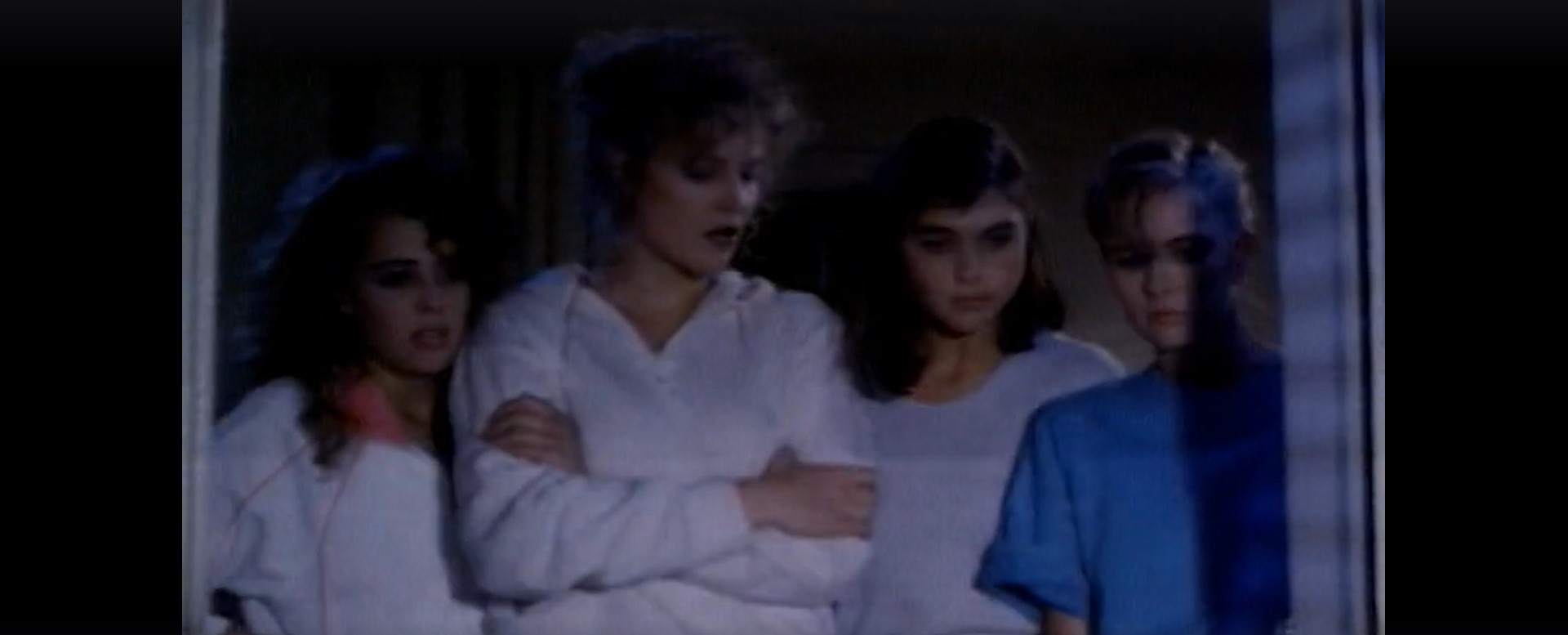
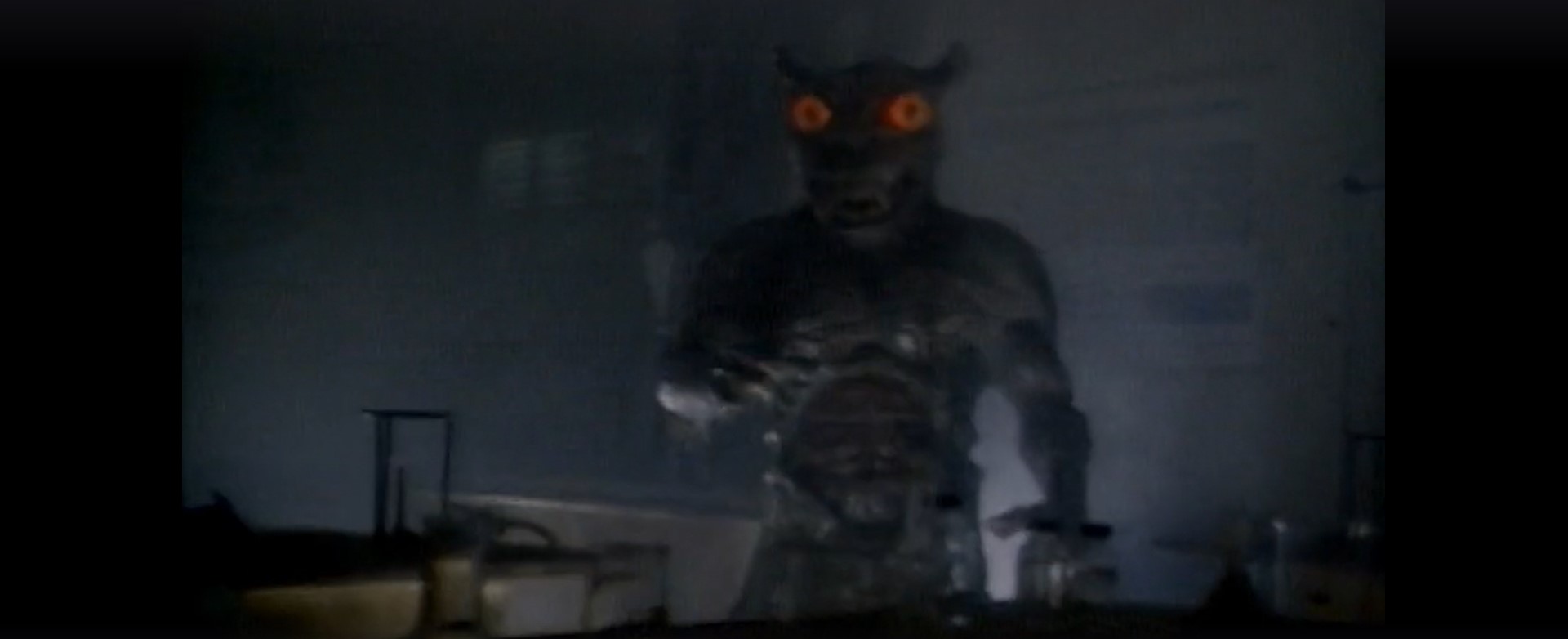
Though the story begins in America and mostly takes place in Europe, the cast is comprised of mostly South Africans trying to pass their accents for British English that is more like a rotating centrifuge of South African sub-accents.  Shirley Jane Harris (“The Most Dangerous Woman Alive”) spearheads the cast of principals with an extremely proclaiming protagonist, delivering lines with flatfeet and flat inflection that makes her one of the more forgettable final girls.  Her foe compares just as bland with a grunting, bodiless entity floating through corridors and hiding behind indoor plants (why would an imperceptible spirit need to hide behind anything at all?) before manifesting into what looks like a giant, big-eyed, and built on steroids rodent that then shows the William John Brown (Lindsay Reardon, “The Masque of the Red Death”) in side profile speaking in omnipresent and menacingly through the beast to taunt his prey.  The script allows just enough the group of young, private school girls to standout cliquishly, contain an ounce of contempt for each other, and underpin some form of individualism to make them retain some interest in their wellbeing.  However, most of the buildup that’s created to antagonize or unify between their personalities ultimately fizzle out into resembling something along the lines of kowtowing sheep or lemmings in more ways than one.  “The Stay Awake” caffeinates with a sizeable cast including Tanay Gordon (“Hellgate”), Jayne Hutton, Michelle Carey, Maxine John (“Howling IV: The Original Nightmare”), Hellie Oeschger, Joanna Rowlands (“Armageddon: The Final Challenge”) as the damsels, Bart Fouche (“Monster Hunter”), Clinton Ephron, Warren Du Preez, and Pierre Jacobs as the imposing boys, and Ken Marshall (“Return of the Family Man”) as the school’s night caretaker.
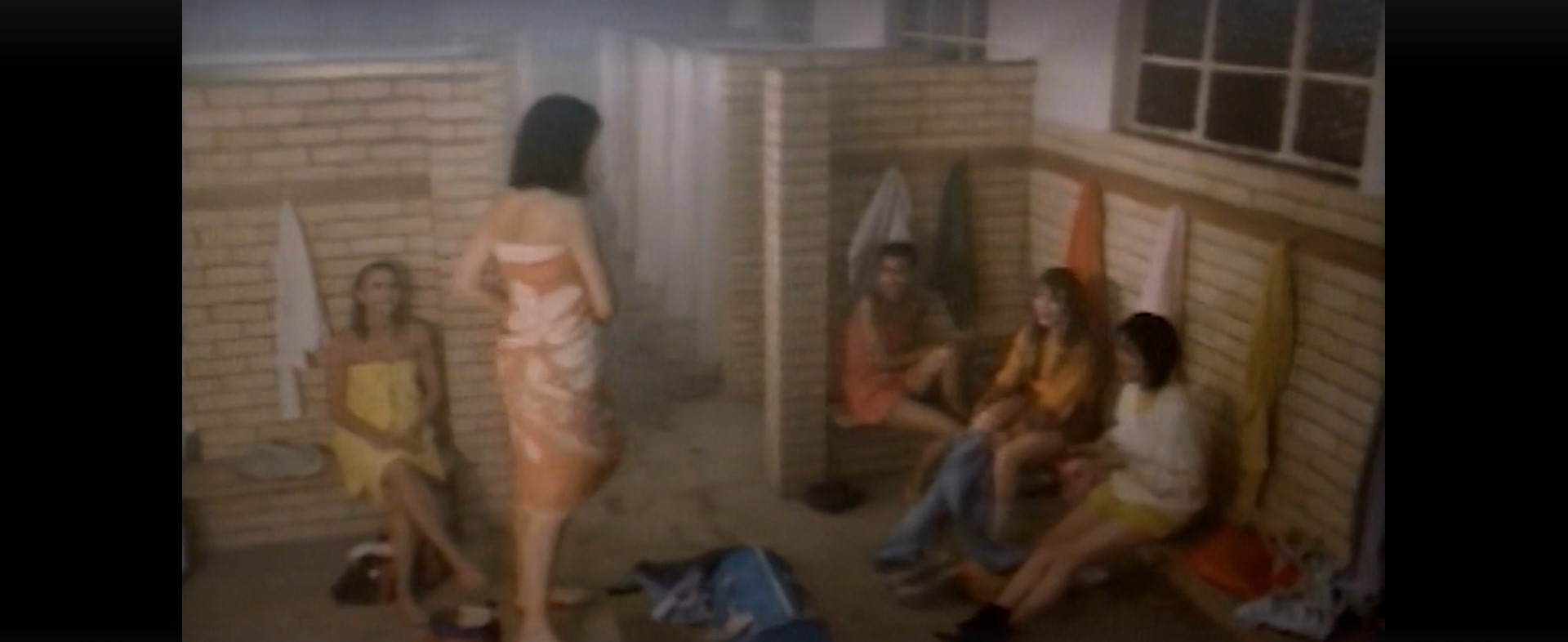
John and Johan Bernard’s logline for “The Stay Awake” likely looked appealing on paper but a full story treatment begs to differ with an inscrutable concept from start-to-finish.  “The Stay Awake” wades in generalities, oversimplifying locations and periods such as “America, 1969” and “Europe, 1988.”  The setup meat in between the disjointed times periods sets up a standard yet effective backstory for the killer, William John Brown, with a Judge’s voiceover of all his brutal transgressions, flashbacks of his victims at the death scene, and a slow walk down the corridor to the gas chamber that clearly denote him as the villain but then accentuates his supernatural supervillainy with a demonic voice screaming his return before the gas engulfs him.  However, why move from America to Europe and why in the span of 19 years does an unexplained possessed version of William John Brown return and select a group of religious school girls while his previous victims look to be a pact of randoms from off the street?  From the start, “The Stay Awake” has little to stay our fictional plausibility.  Couple the perplexation with dry performances, a possibly Hell originated monstrous, burning eyes rat creature, and the gratuitous horror nudity rug being pulled from under our feet as the schoolgirls tease with a shower scene only to be shown showering with towels wrapped around them and what has looked to be a promising possession of perpetual pandemonium  has quickly turned into a deflated disappointment with the only really good thing to come out of the film is the stationary man in a creature suit rat monster built like a bodybuilder.
“The Stay Awake” arrives onto DVD distributed by Cheezy Movies in a direct rip of the standard definitional 480i VHS transfer with a letterbox 1.33:1 aspect ratio.  Don’t expect a detailed transfer in a jittery and smoothed over standard definition that’s covered in a harsh blue tinted lens, but the condition of the interlaced video is surprisingly close to being damage free in a well-cared for print.  However, delph and range is difficult to determine due to the obvious lack of delineation but mostly because of the blue tint, poorly lit scenes, and contrast levels that make this presentation nearly pitch-black unwatchable in corridors, classrooms, and in the room of the like, but darkness is seriously enhanced and meshed together by Bernard stylistic choices of backlighting characters or using soft light to center the focus to offer a darkened horror picture. An English Dolby Digital 2.0 stereo serves as the only audio option which differentiates the soundtrack from the rest of the tracks.  Dialogue mostly separates itself to the top of the audio dogpile but is also well imbedded into the other track fighting to be heard that renders the dialogue dull and flat behind a wall of constant and diffused feedback static.  There’s also hissing at the tail end of sentences and faint crackling throughout.  Subtitles are not available.  The only extras on the static menu are back-to-back, quasi-grindhouse style trailers for two Cheezy Movies distributed titles of the blaxploitation “The Man from Harlem” and a “Dirty-Dozen”-esque “Commandoes.”  The physical aspects include a standard black DVD snapper with a rather enticing original title being sandwich with the demon’s glowing eyes on top and four schoolgirls ready to fight at the bottom.  The disk art is the same image except the four schoolgirls are cropped out and an unfortunate placement on the “The” from the title finds it punched out by the disc center/disc lock to just reveal “Stay Awake.”  The rated-R DVD has a region free playback and a runtime of 85 minutes.  “The Stay Awake” has all the indications of a cheap imitation on an established horror formula and this particular physical release doesn’t help the feature’s cause with an extremely dark and nebulous image to match its narrative.

Can You Keep Your Eyes Open at “The Stay Awake?”  On DVD now!

https://vimeo.com/814964711

Feminism Fights EVIL The Only Way Possible in “Broken Mirrors” reviewed! (Cult Epics / Blu-ray)

The Best Depiction of the Unpleasant Side of Brothels.  “Broken Mirrors” on Blu-ray.

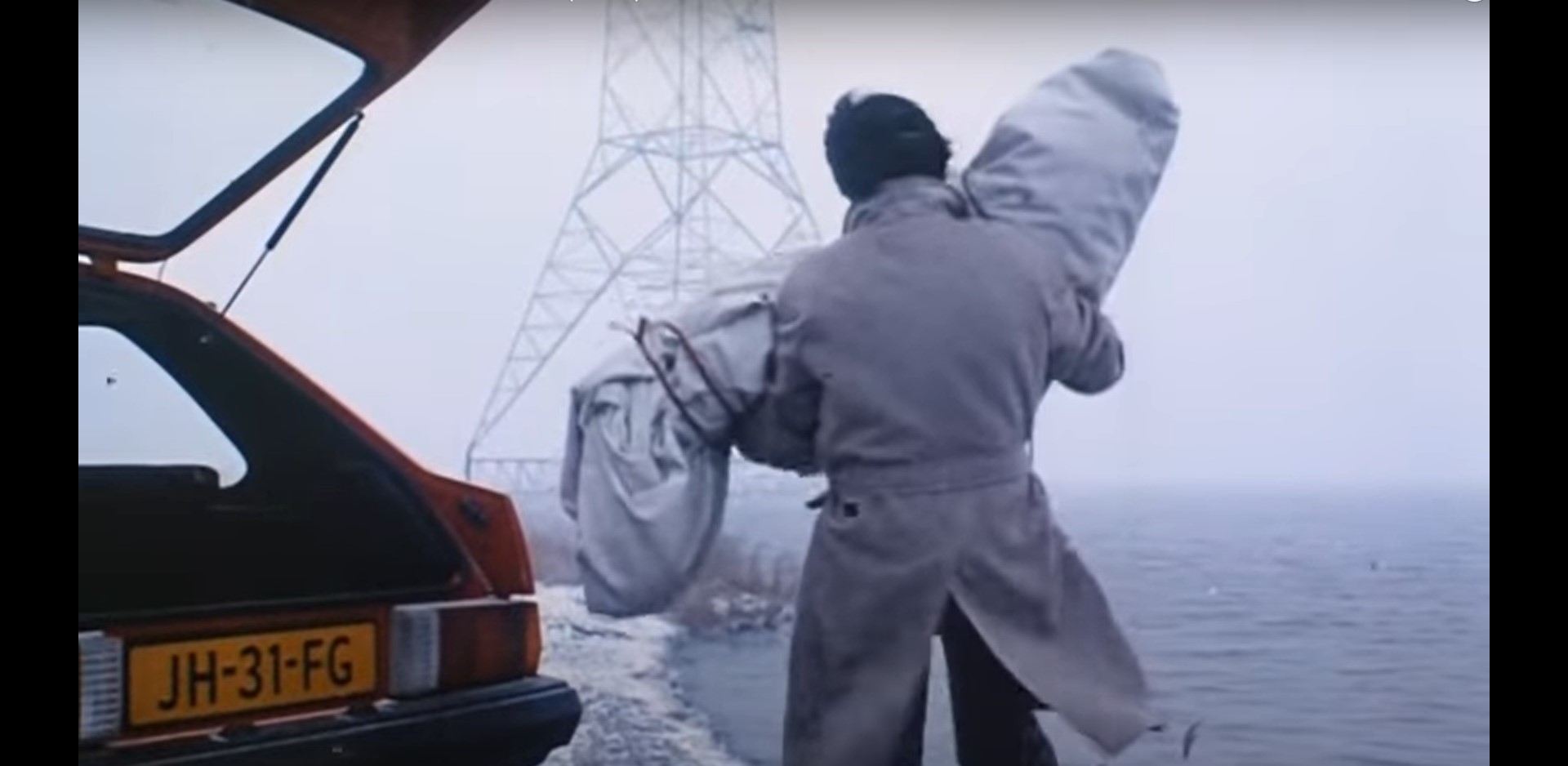
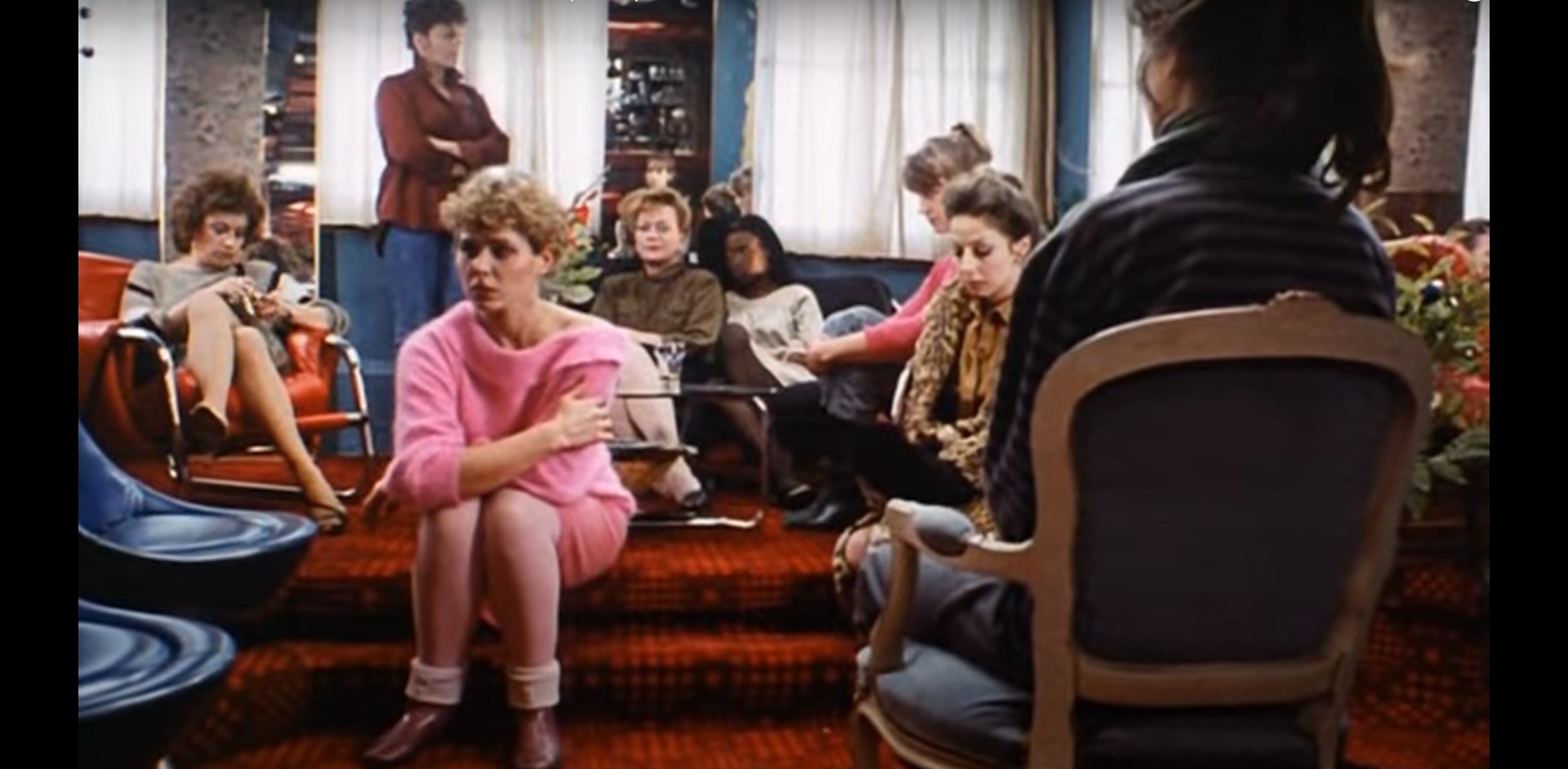
An Amsterdam brothel Happy House Club clings to the good girls that remain employed to pleasure the reprobate and insensitive johns that visit.  Dora, a virtual working girl lifer, brings in new blood, Diane, a young mother desperate in need of financial support because of her drug addicted husband.  Night after night, customers select through the ever-growing service list the club’s owner deems profitable while the women and the matron manager naively cope with a profession that’s quick, easy cash.  They create a process, a standard of procedure so to speak, that tries to make the work that much less degrading but with each client, a little piece of their humanity is chipped away.  Simultaneously, a methodical serial killer abducts the women he previously surveillances from off the street, chains them to a bed in a remote room, takes snapshots of them in confinement, and slowly starves them to death, which could last months.  The two stories are intertwined and connected by a gender dominance disease in which a slow resistance begins to build to an explosive head.

The unofficial sobriquet of the Queen of Feminism Marleen Gorris had made a name for herself as a staunch supporter of feminism and lesbianism with her controversial and provocative films.  Her acclaimed 1982 debut written-and-directed “A Question of Silence” show oppressed gender solidarity and mutiny against a systematically enslaved masculine society.  Continuing her crusade against the patriarchal grain, Gorris followed up “A Question of Silence” with another powerfully messaged, social commentary film that, again, places women emotions and safety under the unyielding thumb of men two years later with “Broken Mirrors.”  Natively known in the Netherlands as “Gebroken Spiegels,” the film marks the return of select cast from her inaugural feature, marshalling in a new narrative in the neo-feminism cinema under the returning production company Sigma Film Productions with producer Matthijs van Heijningen (“A Woman Like Eve,” “The Cool Lakes of Death.”).

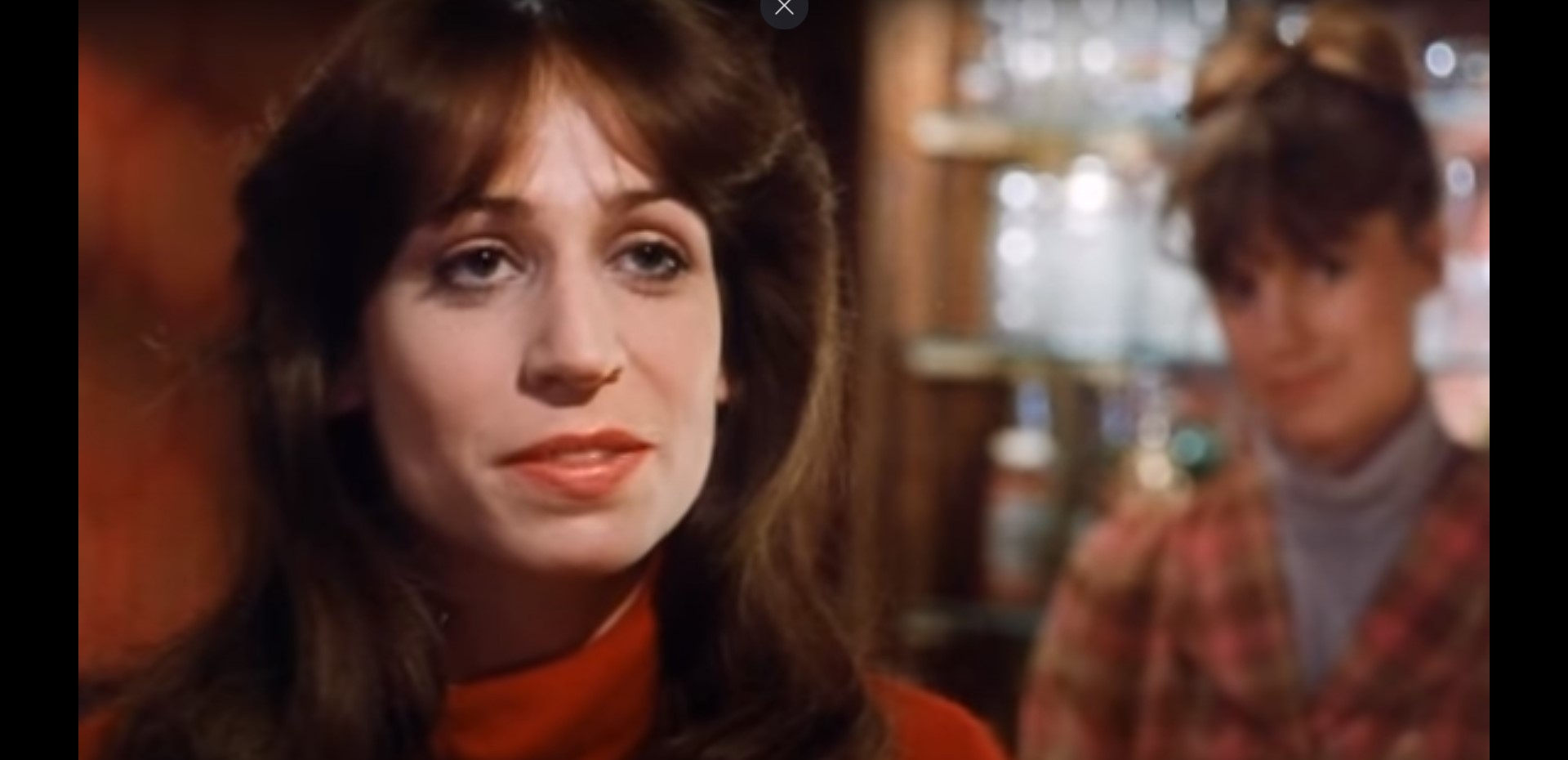
As mentioned, a pair of actresses have carried over from “A Question of Silence” to maintain a principal performance in “Broken Mirrors,” beginning with Henriëtte Tol who played the outwitting secretary in Gorri’s debut returns as a woman working in Amsterdam’s red-light district as a seasoned employee of the Happy House Club.  Tol ups the ferocity levels of her previous performance while still maintaining a gradually steady sex appeal.  Another returning actress who nearly didn’t have any dialogue in her previous role as a mother without a voice is Edda Barends now in a character that can’t stop screaming for her life as the latest abductee chained to a cruddy bed in a cruddy room with a coming-and-going, polaroid-enthused sociopath. In Barends starkly different rage against the man machine archetype, the actress finds herself discomposed in the face man she can’t understand but eventually recognizes his nasty need and withdraws it.  Both women excel beyond the unsavory current conditions and transfer the power that’s been dangling over their heads into themselves.  Newcomer Diane, played by Lineke Rijxman, becomes the key to initiate the unraveling of power of a man-owned brothel that subjugates women not as mere employees of a man-owned business but as nothing more than moneymaking ass-shakers and back-layers.  Rijxman puts in the work of having her character be resilient at work and at home as she juggles a wide variety of disgusting clients to please their whims while coming home to deal with a junkie husband’s mess.  As the story progresses and the women fall deeper under life’s heel, Dora and Diane spark what begins as a mutual friendship that slips gradually into sexual tension, giving them more assurances when they need it the most as the brothel parties become bigger and more intense.  The parallel story runs along the same oppressive path but in unconventional, unlawful, and inhuman way with the kidnap and starvation torture of a young mother.  Eddie Brugman is also a returning “A Question of Silence” actor who now finds himself in the shoes of Jean-Pierre, a mild-manner husband and by all rights societally normal seemingly man who visits the brothel for a quickie, easy money as Francine (Marijke Veugelers) would proclaim, but his dark hobby is to snatch unsuspecting women for his own perverse pleasure of watching and hearing them plea for their lives.  By the end of both stories, connected by Jean-Pierre and who finds himself at the end of the disappointing stick for his kicks, crafts more than one way to not give in and to stand up against male malarkey and nastiness.  The cast rounds out with Carla Hardy, Coby Stunnenberg, Anke van ‘t Hof, Elja Pelgrom, Hedda Oledzky, Arline Renfurm, Johan Leysen, Wim Wama, and Elsje de Wiljn.

Not only is “Broken Mirrors” another contentious and provocative incendiary story that wedges apart men and women, with the latter being victimized and justified in their actions, but Marleen Gorris also directs one hell of a boiling point intertwining between parallelisms that almost have no link to each other until the reveal.  Gorris doesn’t necessarily employ red herrings to keep audiences guessing but rather keep the killer obscure, as all that we are exposed to see is from behind the man, who doesn’t speak much either and if he does speak, his responses are to the point with as little descriptors and adjectives as possible.  Not only is the editing between simultaneous stories organic but also the other editing techniques that materialize the characters’ emotional decaying befit the mostly linear structure, such as with the student party montage at the brothel that does a roundtable of individualized scenarios between the women and their slimeball clients in an emotionally painful grin-and-bear it series that culminates to which one character best describes the ordeal as feeling like a human lavatory.  The feeling is very much mutual with viewers as well, like a used wet nap to scrub off a soul staining filth covering head to toe, as Gorris represents a thematic exactitude of fiercely dividing feminism that would define her career. A clear understanding of how brothels operate is greatly depicted with that flimsy layer of excitement and efficiency to mask the ugliness underneath.

“Broken Mirrors” arrives on a Blu-ray home video from Cult Epics and, once again, resurrects and restores a pièce de résistance of Netherland celluloid. The new 4K high-definition transfer from the original 35mm negative is presented in European widescreen 1.66:1 aspect ratio on an AVC encoded, 1080p, BD50. 35mm print looks none worse the wear over the course of father time with a mint print. Restored color graded has freshened up the natural print palette of the brothel story while the kidnapper’s tale sustains a grayscale to bisect the narrative and the delineation for both presents a palatable depth. The aplenty natural grain doesn’t swarm and takeover the higher pixelations to award us with a satisfying vintage image that now enriched without any smoothing enhancements nor any compression issues to note. The Danish language release comes with two audio tracks: A DTS-HD MA 2.0 Mono and a LPCM 2.0 Mono. “Broken Mirrors” fair well from both dual channel formats with the DTS-HD aggrandizing the Lodewijk de Boer razor synth score with intent that in itself is a character. Comparatively elsewhere, the two outputs offer little differences and sate with forefront dialogue, balanced in front an equally balanced ambient track. Optional error-free English subtitles are available with haste text to keep up with the fast-paced Dutch. Special features include an audio commentary by Leiden University film scholar Peter Verstraten, an archived 1984 interview with U.S. sex worker and activist Margo St. James with Cinema 3 host Adriaan van Dis, a promotional still gallery, and trailers. The Cult Epics Blu-ray comes in a clear, traditional snapper sporting the film’s most iconic and titular moment, displayed also on the disc art, while the reverse side of the cover depicts a still image of Carla Hardy. The region free Blu runs at a not rated 110 minutes. A good double bill against “A Question of Silence,” “Broken Mirrors” makes for a morosely on the trot sister feature in more ways than one to further a Marleen Gorris artfully aired agenda.

The Best Depiction of the Unpleasant Side of Brothels.  “Broken Mirrors” on Blu-ray.

Friends for Dinner is EVIL’s Table Setting! “Gnaw” reviewed! (MVD Visual / DVD)

“Gnaw” on this DVD from MVD Visual, Danse Macabre, and Jinga FIlms!

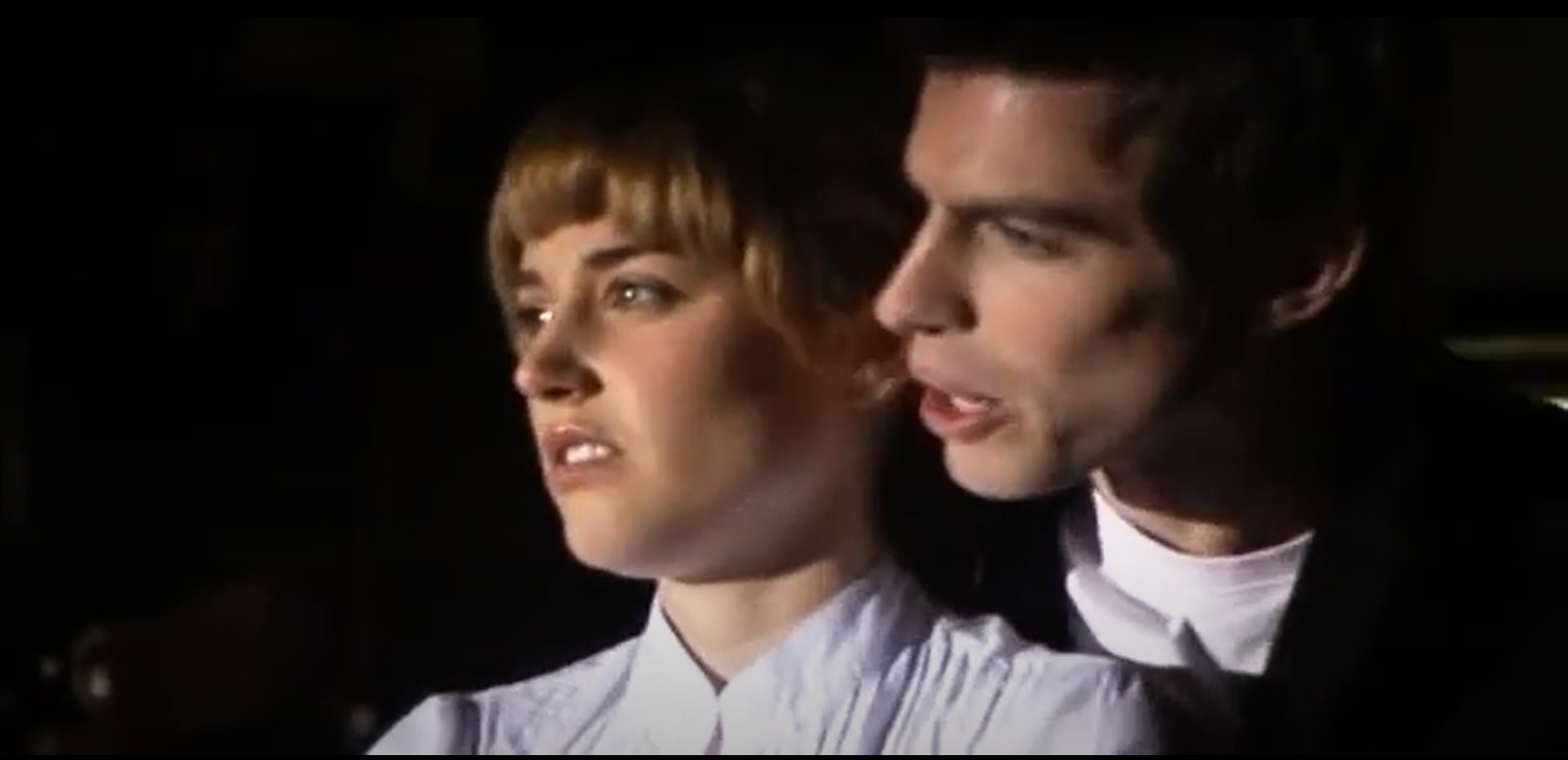
A holiday away in the English countryside might not be the perfect relaxation for six prickly friends.  Quarrelsome and unfaithfulness run rampant through their fragile friendship on the verge of collapse.  Everything at first was manageably enticing – a quaintly rustic countryside house, a quietly isolated surrounding woodland, and the matron house owner who whips up meaty delicacies for them to enjoy breakfast, lunch, and dinner – but when darkness falls amidst a heated love triangles, lustful romps, and frustrated behaviors, the divisive friends become blind to the ever watchful eye that’s hungry for what the group of young people have to offer – as fleshy comestibles.  A cannibalistic cook lurks in the shadows and in between the walls, waiting for the opportune moment to strike, fillet, ground, and prepare the tender meat for seasoning and baking, but his observant eye has set it’s sights on one whose expecting child that could be a tasty morsel for later. 

Cannibalism subgenre has been a staple in horror for decades the under the vastly wide dog-eat-dog umbrella that pits human beings against each other in one of the many gruesome reasons of unwittingly engaging into a form of Darwinism.  People considered as food are lower-shelf commodities to those who need to feed of human flesh and organs, regarding their placement in the food chain as superior amongst the rest despite being in the same category of the animal kingdom.  Every filmic narrative contains a tweaked difference in justification for cannibalism and in Gregory Mandry’s 2008 English horror, simply known as “Gnaw,” in lies that sense of definite worth in craving someone else’s entrails, boiling the viscera down into a hot soup or baking it into a meat and potato Cornish pastry.   The script, penned between first time screenwriters Michael John Bell and Max Waller from a story by independent horror producer Rob Weston (“Antibirth,” “The Thompsons”), contrasts people’s life-consuming narcissism and pettiness against something truly terrifying and waiting to sink its teeth in you.  Weston and Simon Sharp produce the film under Weston’s production company, Straightwire Entertainment Group, as well as The Big Yellow Feet Productions.

Being that “Gnaw” was released in 2008 and is a low-budget indie film, a novice bunch of English first timers trying to break into the acting game and industry overall comprises the story’s cast of victims and cannibals, but that isn’t to necessarily say the meat and bones are rotten from the very unwrapping of DVD case plastic.  As a whole, the fresh cast undertakes the pessimistic angles of a souring love triangle between established couple Jack and Jill, yes, like the nursery rhyme, played by Nigel Croft-Adams and Rachel Mitchem in a slowly sink ship that symbolizes their relationship, torpedoed by an unknown undercurrent in Jack’s fling with Lorrie (Sara Dylan, “Mandrake”).  Between the three, suspicion is entrenched in Jill with sarcastic lashings on Jack’s recent temperament and behavior that suggests she’s aware of wandering playboy antics, but what Jill is unaware of is the other woman, a hopeless romantic who can’t seem to see through Jack’s philandering, self-assured ways.  One thing “Gnaw” does to spoil this wonderfully taught threesome is not bring the tension to a head and, instead, deflects to the butchering head chef of human bodies, played gruntingly by a muted and snarky-looking Gary Faulkner attempting his best to imitate a killer from the very best of the 80’s slasher renaissance and only to come up short of the current slasher renaissance a decade and a half later.  Masked half the time with some kind of black felt cloth with an attached pelt, Faulkner looks more like a half-wit brandishing a two-prong pitchfork than an large, formidable intimidator you’d be scared of just by looking over your shoulder while running as fast as you can to get away.  Granted, the character is tough to kill, able to take punches and stabs as if they were mosquito bites, but his connection to cannibalism often feels lost in the chase rather than knee deep in guts and a frying pan.  The rest of the cast rounds out with a trope-horny couple in Julia Vandoorne and Hiram Bleetman (“Zombie Diaries”) and the matronly yet unnerving face and voice of Carrie Cohen as the house owner.

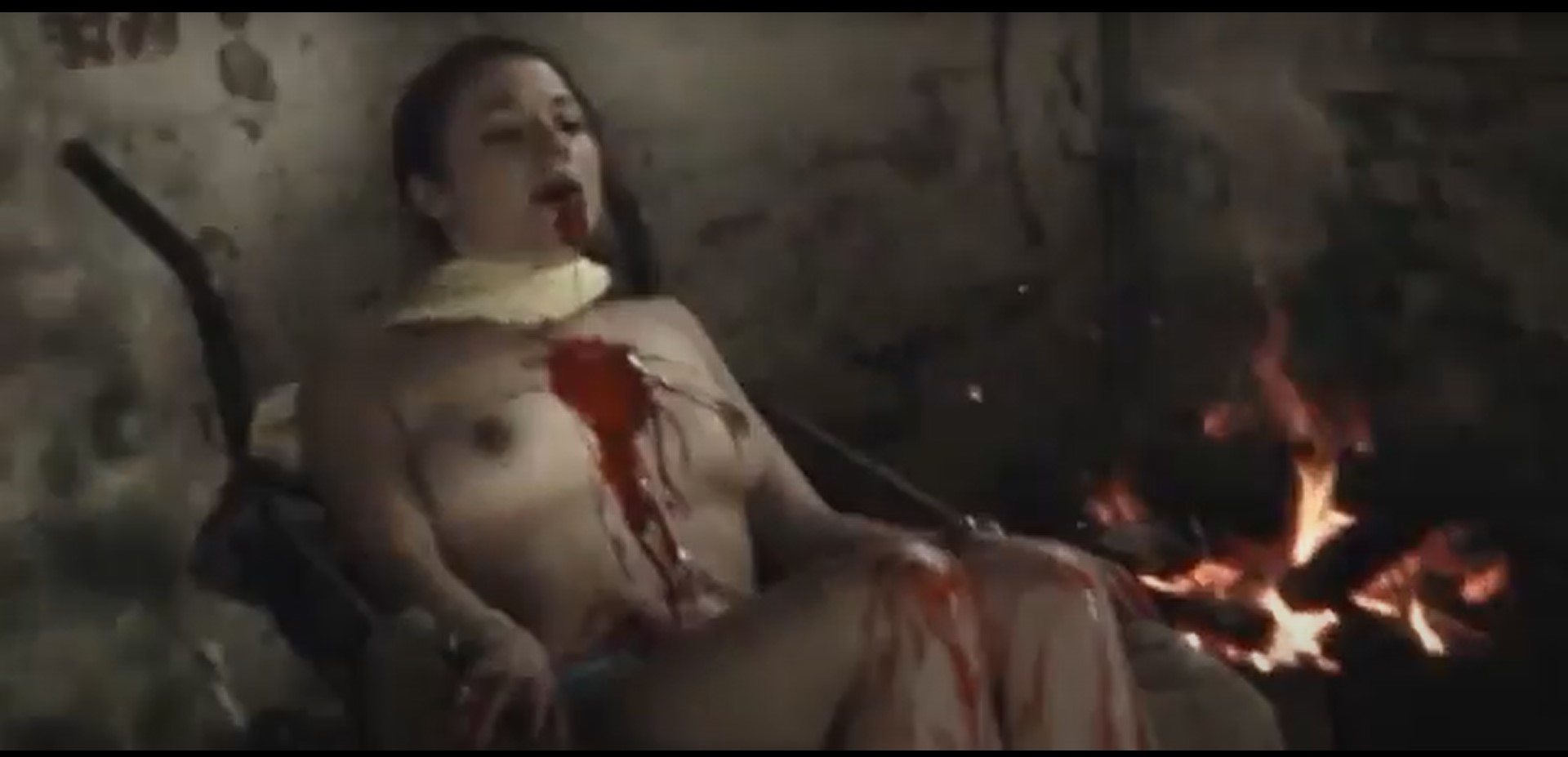
In the grand canon scheme of cannibalism films, “Gnaw” places on the generic neighborhood scale.  The small time indie picture rides the line of equivalence, neither being absolutely terrible or outstanding gruesome, with a less-is-more story that more-or-less been done before in the subgenre.  Yet, “Gnaw” doesn’t give audiences anything new to squirm about with its peanut long-pigs who arbitrary abduct locals for their bone-licking appetites.  “Gnaw’s” in frame gore generally consists of goring with that aforementioned puny pitchfork and we’re quickly skirted from the “Texas Chainsaw Massacre” inspired moment of Faulkner revving the two-stroke engine for maximizing terror in the eyes of a soon-to-be-in-bits victim   Gore should be a staple motif for any cannibal film where one deranged person has to either sauté, stew, bake, or grill the parts of a hacked up totally emotion-regulated person and Mandry’s film seldomly shows the sickening, sordid sloppy Joe-makings of a flesh eater, except for one scene of a severed foot being ground into hamburger meat that fits the bill while most of the rest happens implied off screen or unshown.  Mandry’s approach to telling the story has the inklings of a 80s-90s vintage made-for-TV movie with an unpolished dark veneer and snooping camera angles to obtain a POV sense of prowling prey while also keeping us engaged with the frustratingly unresolved melodramatics of the group that can stifle our concern for the characters in the last act, infectiously affecting the crude final scenes that literally drops a baby into our laps and expects us to know what to do with that information. 

Personally, my second time around with Gregory Mandry’s “Gnaw” but a lot has changed in between the more than 10-year span of now-and-then.  Hell, even I’ve changed in regard to taste and with now having consumed more cinematic wisdom over the years, from what I recall, “Gnaw” was a rememberable off-industry shocker to a limit and it’s gratifying to see the little cannibal film that could receive a revisit on DVD from MVDVisual in association with Danse Macabre and Jinga Films.  The film is housed on a DVD5 that presents the 35 mm stock in a widescreen 1.78:1 aspect ratio and in a rather chaotic upscaled transfer that may be more commercially equipment caused than artefact, but compression macro blocking is evident during the majority of night scenes as it phases in and out of overlapping darker shades. Tom Jenkins’s cinematography can be nicely fore focused to center the characters in front of a background out of focus, but there are other instances where the lighting is extremely binary with not a splash of other color to liven up the image. The only audio option is an English Dolby Digital 5.1 surround sound mix with an overkill statement on a film that doesn’t require it.  The back and side channels hardly become utilized for any back brush movement or creaky old house shifting so a lot of the sound is in the anterior which is where the dialogue most rightfully aggressive and clearest.  No issues with the digital recording that offers a balance between the placid moments and the screaming hysteria without being too much intake on the speakers.  There’s not much in the way of ambience, some chewing of the meat pies, steaming of pots, and the revving of a chainsaw is most character-driven sounds that overtake any kind of natural environment along the background landscape.  English subtitles are optionally available.  The DVD does not list special features, but extras appear on the static menu with a director’s commentary that can be toggled off/on.  There is also a trailers selection with previews for the feature plus “Midnight Son,” “After,” and “Red Latex.”  Physical features offer an alternate cover from the other releases with a man opening wide to take a bite out of a literal hand sandwich in the photoshopped composition.  The DVD case does not contain an insert and the disc art contains the same image as the front cover.  With a region free playback, the movie come not rated and has a manageable runtime of 84 minutes.  The second time around with “Gnaw” proves to appreciate the work that goes into a stably fixtured indie horror from the UK but with the copious entries of the cannibal subgenre, especially in the early 2000s with more theatrical pieces in “Wrong Turn” and “The Hills Have Eyes” remake, “Gnaw” treads mediocre waters just enough to sate the man-eater hunger.

“Gnaw” on this DVD from MVD Visual, Danse Macabre, and Jinga FIlms!

A Corrupted Nation, Operated by EVIL Drug Lords, Are No Match for “McBain” reviewed! (Synapse Films / Blu-ray)

“McBain” Explodes onto Blu-ray from Synapse!

Vietnam War has officially ended, and U.S. troops evacuate the worn torn country almost immediately until Robert Santos and his squadron happen upon a Vietcong-controlled POW camp still operating under the merciless thumb of North Vietnamese soldiers either unaware of the news that war is over or are blatantly disregarding defeat to deface the enemy. During the trouncing of opposition in a fury of firearms and explosions, Santos saves POW Robert McBain seconds before being stabbed in the back by the enemy. McBain pledges a debt to Santos for saving his life. Eighteen years later, the now Colombian revolutionary Santos, in fighting for his countrymen’s freedom and end of suffering, is killed by an iniquitous President controlled by a narcotic cartel. Santos’s wife travels to America to find McBain where the former soldier regroups Santos’s old platoon to avenge their brother in arms as well as to free the struggling people of Colombia from dictatorship and tyranny.

Director James Glickenhaus, known for his handful of thrifty, R-rated, action thrillers with some of the biggest names of the 1980s, including Jackie Chan, Sam Elliott, and Peter Weller, had previously not helmed a picture with a budget more than $5-10 million. That is until he met “McBain,” a fictional, titular character Glickenhaus created and wrote the screenplay for in his first feature at the turn of the decade. The 1991 film tripled in budget compared to the filmmaker’s previous films, aimed high for a larger scale that took the retribution guts of the story to multiple locations from around the New York metropolitan area to the surrounding waters of the Philippine islands that doubled for politically despotic Colombia in South America and multiple, sizeable explosions around every scene corner. “McBain” also hired an esteemed actor to bear the weight of the title that would contest the very robust budget against “The King of New York’s” star power, paid for by Glickenhaus’s own production banner, Shapiro-Glickenhaus Productions with executive producers Leonard Shaprio (“Black Roses”) and Alan M. Solomon (“Moontrap”) and producer J. Boyce Harman Jr.

“The King of New York,” if you haven’t clued in on the hint by now, is Christopher Walken playing a former Vietnam veteran turned NYC steel worker fulfilling his promise to repay a life debt to fellow former soldier Roberto Santos (Chick Vennera, “Last Rites”). Walken, in at least my eyes, has always been a one note kind of character and as McBain, that note remains true here as well.  Don’t get me wrong about Walken’s feature-after-feature character continuity as the acclaimed actor has his cool-cat idiosyncratic inflections and pompadour hairdo.  There’s also a relaxed swagger about the now 80-year-old actor that remains recognizable from his earlier work to all the way to today.  Usually, we do not see Walken paired up with a love interest and “McBain” is no different in a side-by-side with “Running Man” and “Predator 2” actress Maria Conchita Alonso as Christina, sister of Robert Santos.  The two are more servants of doing what’s right, connected by singular retribution, to provide justice for a mass of people drowning in injustice because of a small group of corrupt and dangerous empowerment.  McBain and Christina rarely share the screen together in a strategic mix of accomplishing their own parts of the mission:  McBain rallies sympathetic mercenaries to obtain money and gear while Christina rallies her people to rise up and raze the crooked administration.  Walken makes the ordeal look like a stroll in the park with lofty assurance to take down an entire country’s military power juxtaposed against Alonso soulful, teary-eyed pursuance in the eyes of Christina that’s more compassionate and real, especially with Alonso’s investment as a Cuban born actress who may know a thing or two about dictatorships.  McBain mercenaries are not a ragtag bunch but the former military unit that saved him from POW Hell along with Santos, but they are more of a ragtag, mixed lot cast of actors amassed to be characters ready to leave their professions and livelihoods for a South American throwdown.  Michael Ironside (“Scanners,” “Starship Troopers”), Steve James (“The Warriors”), Thomas Waites (“The Thing”), and Jay Patterson (“Hard Rain”) see to it that those mercenary warriors are committed beyond a shadow of a doubt and, no, Michael Ironside does not lose a limb in this film.  A rather bland McBain is backed by a rather highly skill set of commandos, such as post-Vietnam billionaires with long-reaching tech and a war pilot who is also now a surgeon, and this creates some depth complexity between a former POW turned steel worker McBain and those who saved him and came out better in life than the titular character.  “McBain’s” explosive action rounds out with roles from Forrest Compton, Hector Ubarry (“Crocodile Dundee II”), Nigel Redding, Victor Argo (“True Romance”), Michael Joseph Desare, and Luis Guzman (“Innocent Blood”). 

Explosive would be one of the words I would use to describe “McBain” to someone who hasn’t seen the film.  Another word I would use would be rudimental.  “McBain” struggles to provide opposition for our band of solicitous to the cause heroes who steamroll over the entire Colombia army and air force with little-to-no resistance or demise unless it was their own decision.  What basically unfolds is a much more expensive version of the A-Team with high powered gear and a will to flatten just about anything that lays in their path, making “McBain” shallow like an extended television episode rather than a saga of epic explosive proportions.  The one good aspect about Glickenhaus’s production is the pyrotechnics are ridiculously off the charts with a nonstop stop bombardment of military armament, combat vehicles, and personal convoys strapped with a weaponry assortment of M50’s, incendiaries, and stingers to light up every scene with miniature mushroom clouds glow with the heat of orange, yellow, and black.  “McBain” might as well have titled “McSplosion” with all the hellfire that lit up the budget.  Unfortunately, “McBain” doesn’t yield any other megaton fringe benefits from the acting to the story that seemed to have been caught in hoopla of the collateral damaging combustion, like an Andy Sidaris actioner but without the equalizing T&A to extinguish the bad by igniting another kind of pants fire.

Synapse Films delivers another high-quality product with the new 2K transfer of “McBain” on an AVC encoded, 1080p, Blu-ray.  Presented from its OAR of 1.85:1 to a high-definition 1.78:1 widescreen aspect ratio, Synapse’s Blu-ray release clearly has a pristine transfer to work from, likely the reason why there’s no mention of restoration printed on the back cover.  No significant signs of damage, age wear, or unnecessary augments on the 35mm print.  No notifiable compression issues on the information decoding that averages around the high 30s on a sizeable BD50.  A varied color palette has a renewed, clean, and stable appeal, pleasing to absorb and delineate objects within the primaries as well as patterns and sundry hues that separate into a range of objects and locations.  Specified new is the English DTS-HD MA 5.1 surround soundtrack created this release.  Accompanying also is the original theatrical LPCM 2.0 stereo mix.  The DTS-HD mix has superior strength to maximize the explosions across the cross-media channels. There’s also an unobstructed dialogue track that prominent but maintains the varying degree of depth during bullet buzzing skirmishes and the flaming tailed rockets.  Transmissions and comms hold the range to the appropriate subdued amount and, even more so, when the enemies engage each other in aerial combat. Exclusive to the release are newly translated, optional English subtitles. Bonus content underperforms on this particular Synapse title with only an audio commentary with director James Glickenhaus and film historian Chris Poggioli as well as the original theatrical trailer. Physical content comes home in a green, standard-sized Blu-ray snapper case with one of the more illustratively warm “McBain” poster arts on the single-sided cover art. Inside, a multi-page advert catalogue is included for your browsing pleasure and the disc art is rendered with the front cover art. “McBain” is rated-R, has a 104-minute runtime, and the release has a region free playback. “McBain” promises a retreat back into action for those missing action after the war is long over, but though there is a lot of bang, there isn’t a lot of buck with a seldomly challenging fight that practically makes McBain an invincibly dull crusader.

“McBain” Explodes onto Blu-ray from Synapse!

Just Because Your EVIL Dad Says Its Okay, It’s Probably Not. “Netherworld” reviewed! (Blu-ray / Full Moon Features)

Enter the Netherworld on Blu-ray!

A wealthy owner of the Thorton plantation bequeaths to his willfully neglected son, Corey, his large Louisiana estate. He’s welcomed by the estate’s unusual lawyer, a house caretaker with an affinity for birds, and her beautiful daughter Diane who, despite her teenage muliebrity, immediately takes an interest and liking to the handsome young man. Corey is also met with his shirker father’s penned testament, to be resurrected from the dead by a sexually alluring brothel woman and necromancer named Delores who works at the local bordello and bar named Tonks. Fascinated by the idea, Corey hangs around the bar and becomes just as engrossed with Delores as his father as he seeks to abide by his father’s supernatural wishes but there’s a warbler cult connected to Delores and Corey’s father with an underhanded scheme that doesn’t favor the new, young estate owner trying to save and possibly get to know the father he never knew, the same one who abandoned him as a small child.

One of the more stranger Charles Band productions to every come out of Full Moon Entertainment, and that’s saying something for a media empire that made killing on hawking killer dolls amongst other oddity-saturated, carnivalesque sci-fi and horror for many decades, “Netherworld” is the early 90’s, Cajun-encrusted, occulter of the Full Moon legacy director of “Tourist Trap” and “Puppet Master,” David Schmoeller, who also cowrote the film alongside Charles Band. “Netherworld” harkens to a time before Band became visionally crazed by dolls, or miniaturized maniacs in general, with a plot that promises Cajun black magic beyond the traditional spells and curses of Louisiana Voodoo, a son desperate to reconnect with his long-lost father who abandoned him, and a flying stone hand with finger extremities that turn into vicious snake-like creatures when attacking the quarried head, but is “Netherworld” too extrusive of the regular and in vogue poured cement of solidified psycho-dolls? ‘Netherworld” is executively produced by Charles Band, produced by Ty Bradford (“Trancers II”) and is a part of the vast Full Moon Entertainment catalogue of productions.

Unsuspectingly walking into between the veil of the living and the dead is predominately television actor Michael Bendetti (“21 Jump Street”) embarking on his first ever horror feature as Corey Thorton, the city boy, or so we assume as he leisurely journeys down a windingly steamy Louisiana tributary in a button-down shirt and tie, who learns his deadbeat, rich father has left him a large amount of property. For having been left fatherless for all of his life, the pill that read as Corey’s deep-rooted longing to familiarize with a flake of a father is a hard one to swallow. The angle that Schmoeller should have attacked more resurrection motivation is the one that involves Corey searching for answers in his father’s disfavor, choosing to live without the flesh and blood legacy of a son, and why now, posthumously, does his father want to reconnect? Audiences will find the answer overly obvious, but Corey Thorton’s thickness proves more difficult to penetrate, especially when he’s beguiled by an enchantress who can summon a flying, snake-fingered hand that emerges an affixing binding wire out from its stony skin and can turn whorehouse johns into caged birdies, literally, if they misbehave or become indelicately frisky. The house keeper’s horseback riding daughter Diane is marred by Holly Floria (“Bikini Island”) with an excessive Southern Belle accent when her character’s status doesn’t stem from sophistication and affluency but rather from the blue collared starry eyes of Anjanette Comer’s (“The Baby”) motherly and hospitality position. When the climax arrives in grand temps and we’re face-to-face with Corey’s ghostly pops, living in the titular Netherworld, the story takes a sudden branch drop that executes any voyage into the void between worlds and there’s quite a bit of neglect for Robert Sampson (“Re-Animator”) as Corey’s father who barely has any scenes to live up to being the film’s primo antagonist pulling the strings of the marionette of his flesh and blood. “Netherworld” fills out the cast with Robert Burr (“Ghost Story”), Alex Datcher (“Passenger 57”), Holly Butler (“Vendetta”), George Kelly (“Jugular Wine: A Vampire Odyssey”) and Denise Gentile (“Ordinary Madness”) as the super-sexy, premium prostitute Delores with parapsychological powers that connect her to the land of the dead.

Off the tip of a gator’s nose, “Netherworld” offers a taste of Full Moon’s 90’s production, promising radically outlandish F/X with a monstrous airborne hand, saucy sexual content, and gore. Corey’s inner thoughts exposition and waterway introduction tends to be more private eye monologuing in the explanation setup of his unplanned inheritance and it also feels like the brittle beginnings of a trashy romance novel: young man travels down the river to his inherited late father’s estate, torn between a pubertal young daughter of the long-standing estate housekeeper and the haram brothel seductress with an eldritch, supernatural inveiglement. Corey’s past lacks backstory, leaving an even playing field across the board of all characters and participating audiences in what to expect from the wild card that is Corey. Immediately drawn to the wanton Tonks not for carnal desires but rather the one woman who her father says can restore his past expiration, Corey’s not a wild card of ambiguity as his role lacks the pull of tough decisions, often between character versus character conflict, with basically a mind already made up to visit the bar-and-bordello despite the ominous warning signs between George Kelly’s sloppy bayou cajuner wanting to dance with Corey at Tonks, Diane’s strong opposition for Tonks in general, and amongst others dubious gratifying points. “Netherworld” very much lives in a world of opposition, like Superman’s bizarro world that defies logic. Logic such as the transition of people into birds, or being inducted into a clan of avian cultists, or ciphering who’s a good guy and who’s a bad guy, or, and this is the most important or, the suddenly cleaved ending that not only doesn’t allow a satisfying ending but also doesn’t explain much, in dialogue or in action, what came into existence once Corey was stuck in the Netherworld other than the obvious trade his father wanted to force.

Full Moon Features brings Hell to Blu-ray with an uncut and remastered from the original camera negative transfer of “Netherworld” in the continuous effort by the empire to upgrade all their classics for a new wave of format availability. Scanned into 2K from the 35mm negative, the AVC encoded, 1080p, high-definition Blu-ray looks pretty darn good. Well kempt over the years, the negative appears to have sustained little age or wear that progresses the hi-def upgrade with relative ease. Color grading is warm and stoked with detail that encrusts every object – the lushy bayou forest, the stony power of a flying hand, Michael Bendetti’s layered curly-perm mullet – all of it is greatly textured and delineated for depth, presented in the 1:78:1, widescreen aspect ratio. Compression doesn’t appear to be an issue despite a lower storage BD25 but that might be due to the utter lack of bonus accompaniments. The release offers two audio options: an English Dolby Digital 5.1 surround sound and an English Dolby Digital 2.0 mix. Both options are equally suitable as the there’s not much more environmental oomph through the extra channels despite the full-bodied cacophonous cicada singing, which unfortunately doesn’t open up depth in the back channels despite the prevalence of the singing in the story’s background sonance. However, dialogue doesn’t feel cheated with a dominating layer and decent range to go with it. Along with essentially what is a bare bones disc, there are also no subtitles available with this release. What is available to view outside the feature is other Full Moon trailers and the original VideoZone segment that covers this particular 1992 gem. Physical features don’t stray too far from VHS, to DVD, to Blu-ray with the same flinty hand rocketing outward in a 3D-like position on the front cover. There are no inserts included with this release. “Netherworld” Blu-ray comes region free, with a runtime of 82 minutes, and, for the first time ever, uncut! An opposition to the usual spun of Louisiana voodoo-hoodoo, there’s another dark magic brewing in the bayou in “Netherworld,” but the promising story can’t coherently piece together down river in an uneven quagmire of quandaries.

Enter the Netherworld on Blu-ray!