Little Book of EVILs. “The Last Thing Mary Saw” reviewed! (Arachnid Films / Digital Screener)


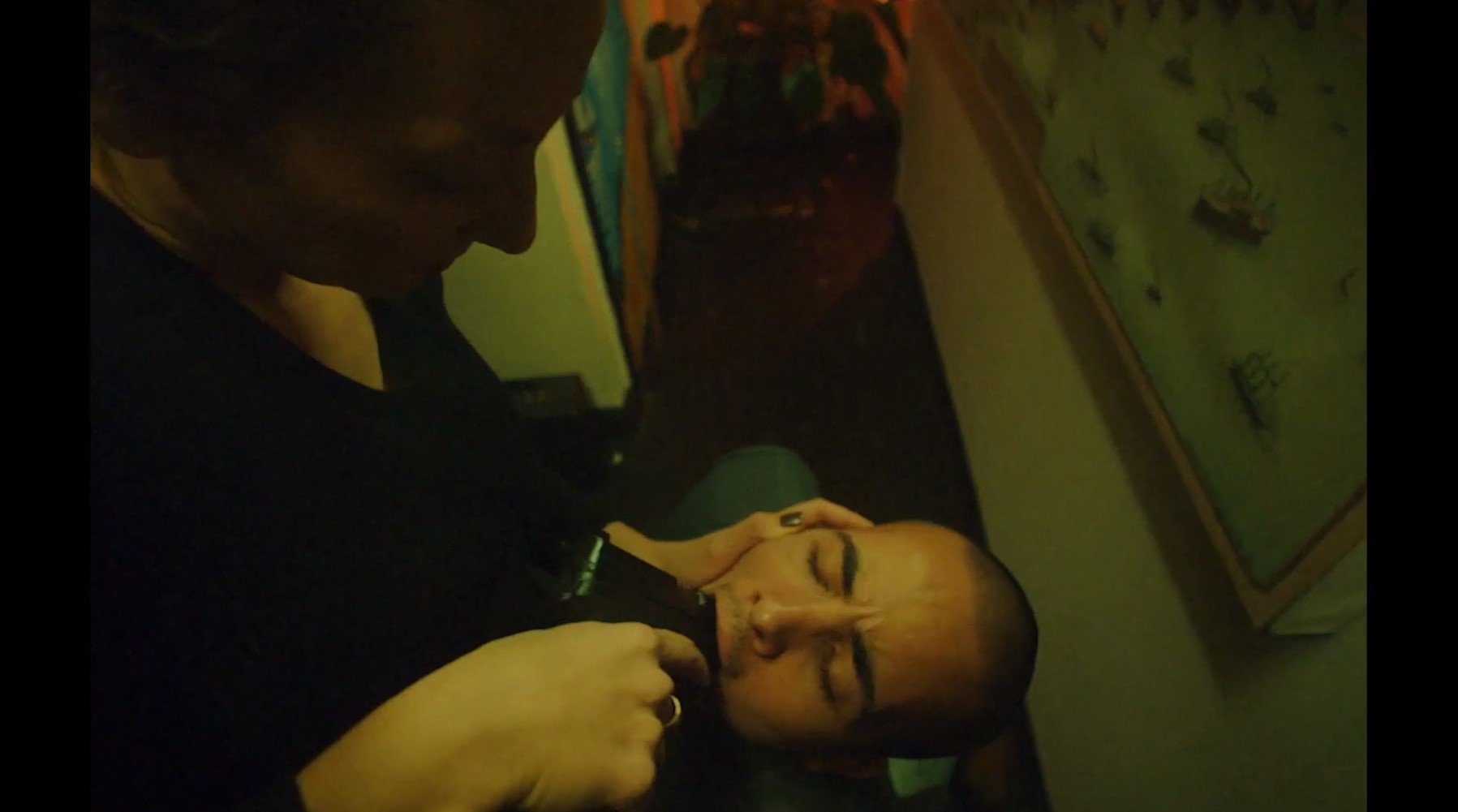
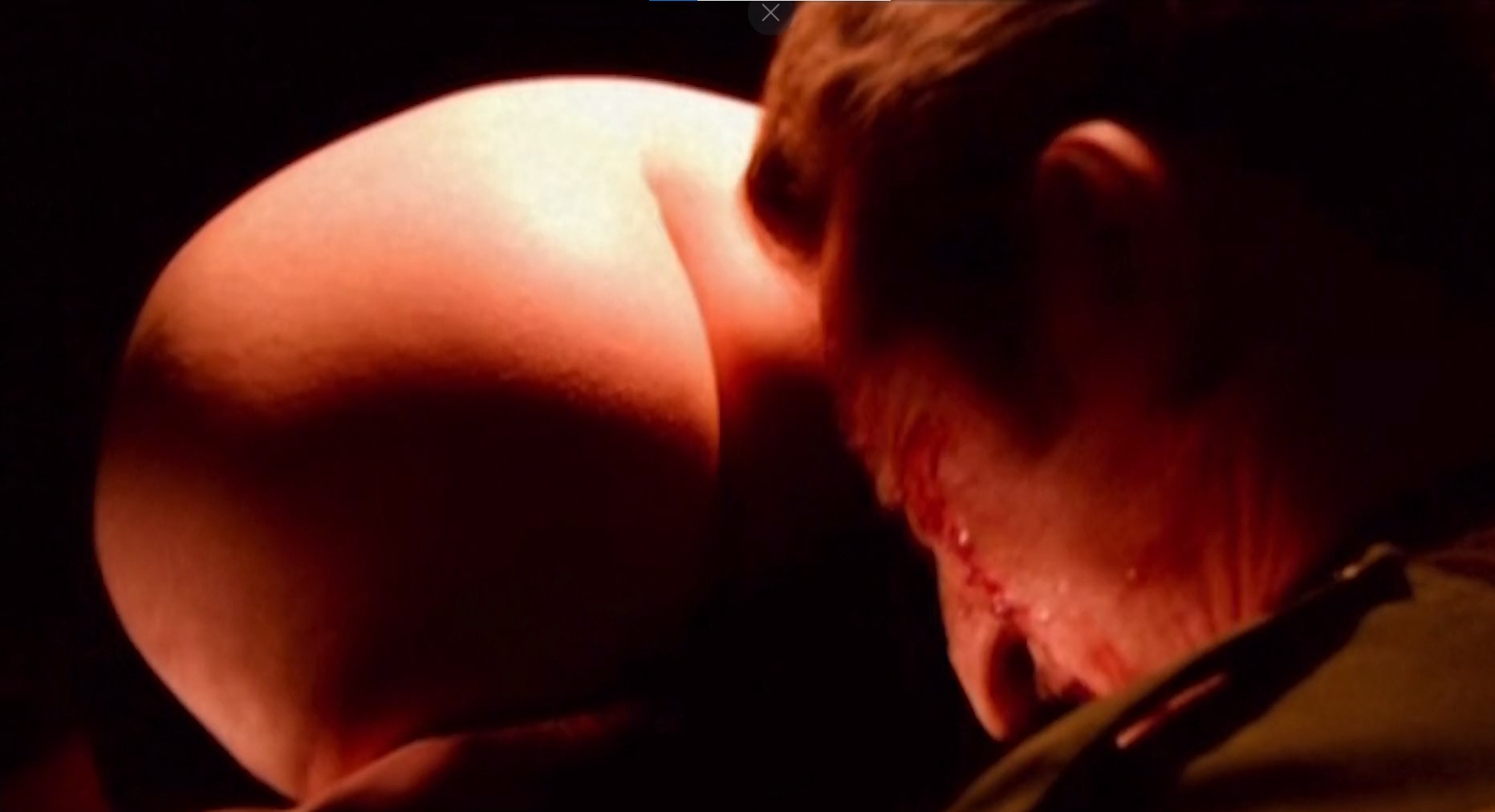
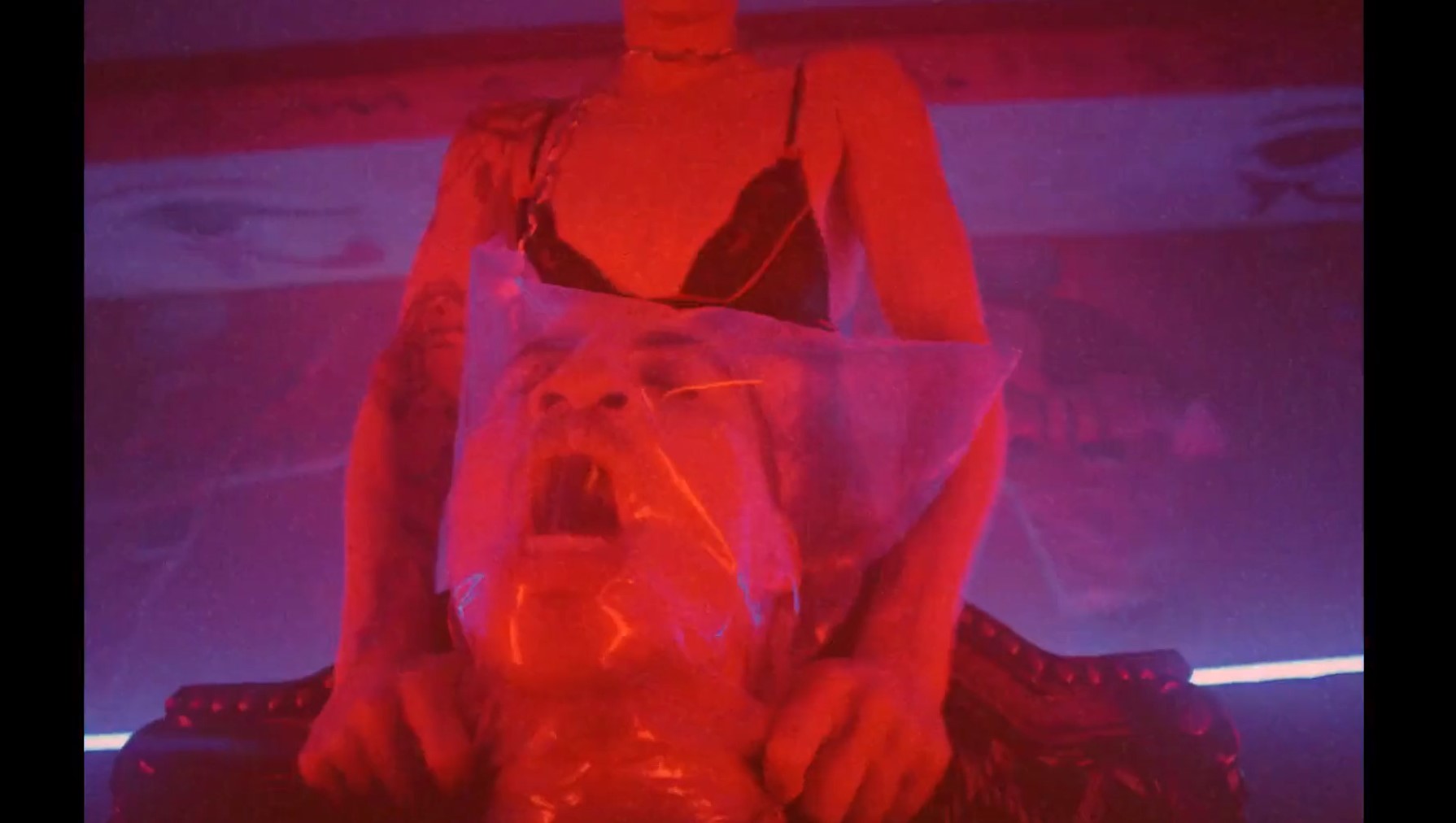
Southold, New York, 1843.  A young, once-proper, daughter, Mary, of a puritanical family sits before an investigator as suspect of the brutal massacre of her family.  Her eyes having been gouged and plucked from her skull, Mary can’t see the musket rifles pointed straight at her as she’s assumed to be practicing dark dealings being the sole survivor.  She must recount the exact details of story that begins with the family’s severe punishments imposed upon her and the house maid whose practically publicized intimate relationship was seen as wicked, sinful, and embarrassing.  Unable to be discouraged by disapproval and cruel corrections, Mary and the maid continue to sneak their forbidden affair but did she and her lover commit the heinous crime or was there more behind the veil involving an infinite evil, bound by a mysterious book, pulling at the marionette strings that has cursed Mary and her bigoted family?

Tackling themes of homosexuality in the 1800s in the time of itchy-trigger-finger heresy pointing and dogmatic ideologies comes the debut horror film of writer-direct Edoardo Vitaletti entitled “The Last Thing Mary Saw.”  The Northeastern Americana thriller is a fermenting tale of a remote extended family, of some wealth and stature, trying to remedy the eldest daughter’s uninhibited rendezvous with an equal in age young house maid by subjecting them both to torturous corrections aka kneeling on uncooked rice while reciting a specific passage regarding sin from scripture.  Vitaletti’s first feature length film is from executive producers Joseph Michael Lagana (“Actress Apocalypse”), Mike Nichols (Eli Roth’s “Fin”), Keryn Redstone, and Scoop Wasserstein and from New York based production companies Arachnid Films and Intrinsic Value Films. 

“The Last Thing Mary Saw” has an intriguing cast as well as a cast, at least I think, everyone should love.  When this Washington, D.C. born actress is not pretending to be a creepy psychotic child, “Orphan’s” Isabelle Fuhrman finds other ways to slip into tightknit family structures.  The now 24-year old Fuhrman plays house maid Eleanor who continues to fight for Mary’s affection despite Mary’s closed minded and religiously persecuting large, all-in-one-house family.  Mary, the titular character played by “Insidious:  The Last Key’s” Stefanie Scott, has stars in her eyes as she’s hot for the maid, but I couldn’t find that deeper connection between Fuhrman and Scott whose characters even further themselves from each other by being more intent on beating the system rather than being romantically and consummately intimate.  It’s almost as if Vitaletti starts beyond the point of building up the relationship, having prefabricated Eleanor and Mary’s love, and is only thirsty for the consequences that follow.  The lovers become embroiled into the family’s personal problem with their daughter’s relationship and at the helm of it all is the matriarch at the hands of Judith Roberts.  The “Dead Silence” and “Orange is the New Black” actress embodies coldly an unyielding crone that eager wants to keep the so-called troublesome maid with the family, even if that means passing her skillset to uncle Eustace (Tommy Black) and his wife and adolescent child (Dawn McGee and  “Starry Eyes’” Shane Coffey).  The crux of the problem starts with the father (Michael Laurence) who brings a book filled of peculiar, teratology-related storiettes that might not be odd today, but were damn near witchcraft in the mid-19th century, and that’s when things begin to spiral bleakly with manipulation and suffering in various ways.  “The Last Thing Mary Saw” rounds out the cast with Carolyn McCormick, P.J. Sosko, Daniel Pearce, Stephen Lee Anderson, and “Scream 4’s” Rory Culkin as credited “The Intruder.” 

What intrigues most about Vitaletti’s script is no character is inherently labeled as a conventional genre trope.  The chapter-storied narrative plays out in three parts with the title paralleling the contents of the mysterious red book as well as the action in each plotted chapter.  What seems orthodox for the film’s set period in punishing those in same-sex relations alluded “The Last Thing Mary saw” to be a tale of sordid, Godless misconceptions and yearning attraction between two young women, but then the catalyst  happens, a supernatural being is revealed, and then the tide turns from the sinister misguided to the sinister malevolent.  Another Vitaletti explores another theme: hate.  Mary hates her own family to the point of setting out revenge upon them; she would do anything to not separated from Eleanor, but yet Eleanor remains in the house, not dismissed, or reassigned to another house.  Hate festers into everything, boils closely at the edge, not just for Mary and Eleanor but for the family who hates secular unions, hate embitters in the grounds security guard after his leg was purposefully crippled for running away, and hate also tears are Rory Culkin’s The Intruder whose monstrous birth has left him with no family or respect amongst his peers so he must take away from others.  Without production designer Charlie Chaspooley and costume designer Sofija Mesicek, there wouldn’t be this resurrection of early 1800s resemblance that’s essential for the story’s period and the acting also smooths out the dialogue of a yonder-forgotten dialect of a lingering British-English set in area of Long Island.  Though I like where the story progresses and how climactically ends, following along with Vitaletti’s script falls nearly deaf on a coherent understanding.  Plot points do come out of nowhere at times that don’t segue neatly enough for comfort and we’re left with a mountain of enigma that somehow ties Mary, the book, and an unconventional Matriarch together into a dysfunctional family affair; yet, the sullen atmosphere makes for good unbenevolent folkloric horror coupled with Vitaletti’s incredible patience the scenes with immense anticipation and dread.

Premiering worldwide at the virtual rendition of the Fantasia Film Festival, “The Last Thing Mary Saw” will be a part of the festival’s first wave of films for attendees. No digital, on demand, or physical release dates have been set for this occult horror drama from first time feature director Edoardo Vitaletti, so you will have something to look forward to in the coming days of new releases! Director of photography, David Kruta, has come along way since the unfinished mess with the discarded survival-slasher “Old 37” by maintaining Vitaletti’s natural rustic scheme of the early 1800s and then toil with the phantasmal occult in one or two scenes with an airy, dreamy, and, if not, an ethereally beauty in it’s parlous context. Situational context is also key when a scene with a long stretch of no dialogue becomes the means to an end and Kruta has to capture culmination of storytelling through the facial emotions and body gestures coordinating in light charade as well as a more hefty depressed language. “The Last Thing Mary Saw” is unpretentious horror done right with a melancholic reflection of a bygone past mixed with obscure occult elements wresting life from already blinded grips consumed by hate and arrogance is pure bread and butter for a director just getting warmed up.

EVIL Has an Unbreakable Glass Ceiling. “The Five Rules of Success” reviewed (Ambassador Film Group / Digital Screener)

Upon his release from a long prison stint, a man incarcerated into the system since a young boy tries his hand succeeding in the outside world.  Alone with no family or friends for support and looking to keep his nose clean, he designs his own set of rules for success, including responsibly checking in periodically with his hardnose parole officer and saving up enough money and knowledge working at a restaurant to open his own.  When the path seems clear and everything seems to be falling into place for his chances as success, societal temptations gnaw at him as negative influencers tempt to steer him astray and his own goals try to illicitly fast track his efforts.  Will he fall into crooked society’s trap or will he persevere to reach his aspirations? 

Hard knocks.  That’s the simple, raw core theme of Orson Oblowitz’s “The Five Rules of Success.”  The 2021 crime-thriller is the third directorial from the “Corbin Nash” co-producer, but the second penned script following his debut, a seedy L.A. underbelly thriller “The Queen of Hollywood Blvd” from 2017.  The story is the first for co-writer Christian de Gallego who steps out of his international sales executive role to put his ideas onto paper.  As compelling as any story could be mirroring the struggles of a downtrodden ex-con in a society that browbeats and takes advantage of those on good intentions to rebuild, “The Five Rules of Success” is also a visual quest of imagery and color, produced and distributed by the Ambassador Film Group with de Gallego producing and Apurva Patel as executive producer. 

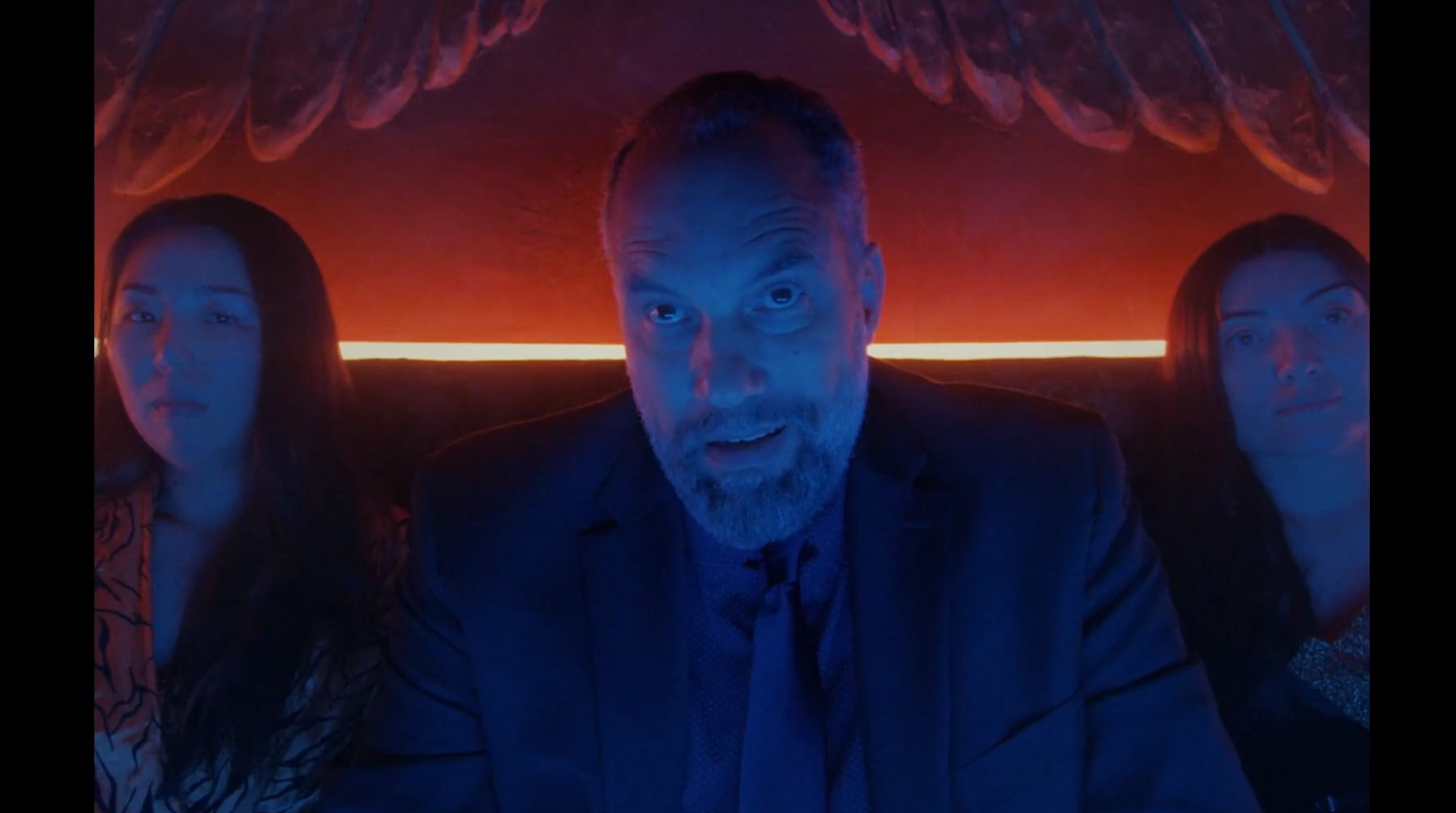
Stepping into his lead man shoes debut is Santiago Segura (“47 Meters Down,” “Scream: The TV Series”) playing the mastermind behind the five rules of success as X, as in X could be anybody.  However, X couldn’t have been more invested into than what Segura put into the story’s character as a man left to his own devices, without support, without a comforting presence, and without much guidance.  Segura’s range is limited to a monotone stare and tough guy attitude that never wavers or breaks and you have to wonder what X is fighting for to make his ambitious dream a reality?  Where does his determination root?  The fact that there is an absence in a grounding, sobering symbol all the more makes X more susceptible to the deeper end of society’s morality pool.  Along his rise up from the ashes, X meets colorfully sordid individuals feeding off his vulnerability due to either being on probation or stereotyped as being inclined to be favorable toward criminal activity…you know, being released from prison and all.  He’s befriended by Danny (Jonathan Howard, “Godzilla:  King of the Monsters”), a drug using goon who works alongside X at his father’s restaurant.  “Crocodile 2:  Death Swamp’s” Jon Sklaroff plays the stark contrasted Greek immigrant father, restaurant owner, and disappointed father to Danny.  Sklaroff and Howard couldn’t be more adversarial as a hardworking immigrant father who struggled to get to where he is today and a silver spoon fed son throwing his life away with riffraff, drugs, and as the restaurant’s cook.  The relationship formed between X and Sklaroff’s character is the wishful dreaming that X couldn’t be the son he never had and all X has to do is be patient and listen to a little friendly advice.  A more brazen and mysterious obstacle in X’s path is his parole officer, Emma, whose uppity authority holds X’s freedom in the palm of her hand played by Isidora Goreshter.  The line is blurry whether Emma has either the hots for X or is secretly a sadist and Goreshter offers to uphold that inscrutable presence with unscrupulous tactics. 

One way to crave out the meaning behind Oblowitz’s film is to not be standing high-and-mighty on greener pastures.  “The Five Rules of Success” sensationalizes real time problems with our prison system and the after effects of walking out a free man after years, if not decades, from a life that’s all you know to a life you know nothing about.  X’s past burdens him immensely as flashbacks, denoted in literal quick flashed cuts, of the downward spiral turning point in his childhood find their way into his determined route to success.  Ultimately, the past and present are one in the same where society sees not a boy, not a man, not a person, but a criminal and how we as a society be contemptuous of former convicts released back into our soicalled perfect public community.  There’s parallelism between each chaptered rule and the downward progression he sustains in his associations with the wrong people that start to twist his mindset, his rules, into the very unlawful reprehensible activities he tries very hard to avoid. Oblowitz does a nice job detailing X’s habits as a loner, working out his pent up frustrations by exercising, shadow boxing, and refining his rules, but the root of all evil is hard to ignore as cold hard cash, easy money for one of Danny’s illicit jobs, begins to lay out the possible steps to skip in order to fulfill his own ambition.  Despite the momentary monotone mishandlings from Segura, the story is well-written and mostly well played out with some scenes more intense than others with the subject material as you begin finding yourself rooting for the ex-con and booing the very society you yourself live in scot-free. 

Clocking in with a runtime at 83 minutes, “The Five Rules of Success” symbolizes the ups and mostly downs in the here and now game of chutes and ladders.  Having been released last month, July 30, be sure to check out the unrated feature available for purchase on your preferred platform of either iTunes or Amazon released by the Ambassador Film Group.  Oblowitz doesn’t just write-and-direct the film, but he also serves as cinematographer dabbling in a Kafkaesque arranged world with hints of tint, hints of different lenses, hints at overexposures, hints at strobe, and more.  Nearly every scene is comprised of a different shooting technique or editing visual that may or may not possibly induce a seizure as forewarned during the preface.  Stylistically, I can only compare and describe “The Five Rules of Success” as this:  Stanley Kubrick’s “2001:  A Space Odyssey” meets Darren Aronofsky’s “Requiem for a Dream.”  As far as extras go, there’s a quaint, no major dialogue memorandum scene after the end credits that speaks to vicious circles and permanency.  For a L.A. shot film that has more technique than bite, “The Five Rule of Success” is a success of an auteur’s written storytelling as well as the visual understanding of just how to tell that story in a surrealistic context. 

Rent or Buy “The Five Rules of Success” on Prime Video!

Mar and Scar is EVIL’s Sullied Handiwork and is Also Its Undoing! “Hanger” reviewed (Blu-ray / Unearthed Films)

Pimp Leroy likes money.  He likes money so much he stop anything and anyone from coming in between him and cold hard cash.  When Rose, his star prostitute, becomes knocked up and she carries the baby into the later terms, Leroy sees that baby as just another obstacle keeping him from dollar signs and performs a back alley abortion on Rose that results in her death and the newborn mauled by the close hanger used to pull him out.   Fast forward 18 years later, the disfigured boy Hanger, named after tool used to extract him from the womb, falls under the wing of his supposed father, one of Rose’s more admirer, only known as The John, and together they seek revenge for Rose.  In the meantime, Hanger is secured a job at the local recycling center where he is befriend by fellow outcast Russell and as The John ignites war against Leroy that spills into every prostituted infested corner of the streets and into the recycler center.

First off…Man, do I miss Ryan Nicholson.  Secondly, “Hanger” is one of the most depraved films I’ve seen in a long time.  Probably the most depraved amongst the credits of the “Gutterballs” and “Collar” writer-director who has left his mark on the sometimes bland indie horror scene with the craziest content that has become the epitomizing taste of Unearthed Films.  Nicholson cowrote the vulgar comedy-exploitation with Patrick Coble in their second feature story collaboration following their 2004 work on the Nicholson brutal rape-and-revenge directed tale “Torched.”  Rape and revenge, plus a whole lot of sleazy, scuzzy, and sordidness, doesn’t buck the Canadian filmmaker into doing something more political correct as the auteur is too well versed into capturing the base layer muck under his Plotdigger Films production banner in Vancouver, British Columbia  “Hanger” is financially produced by Nicholson and Coble and along with Wolfgang Hinz, Stephanie Jennings, and Michelle Grady.

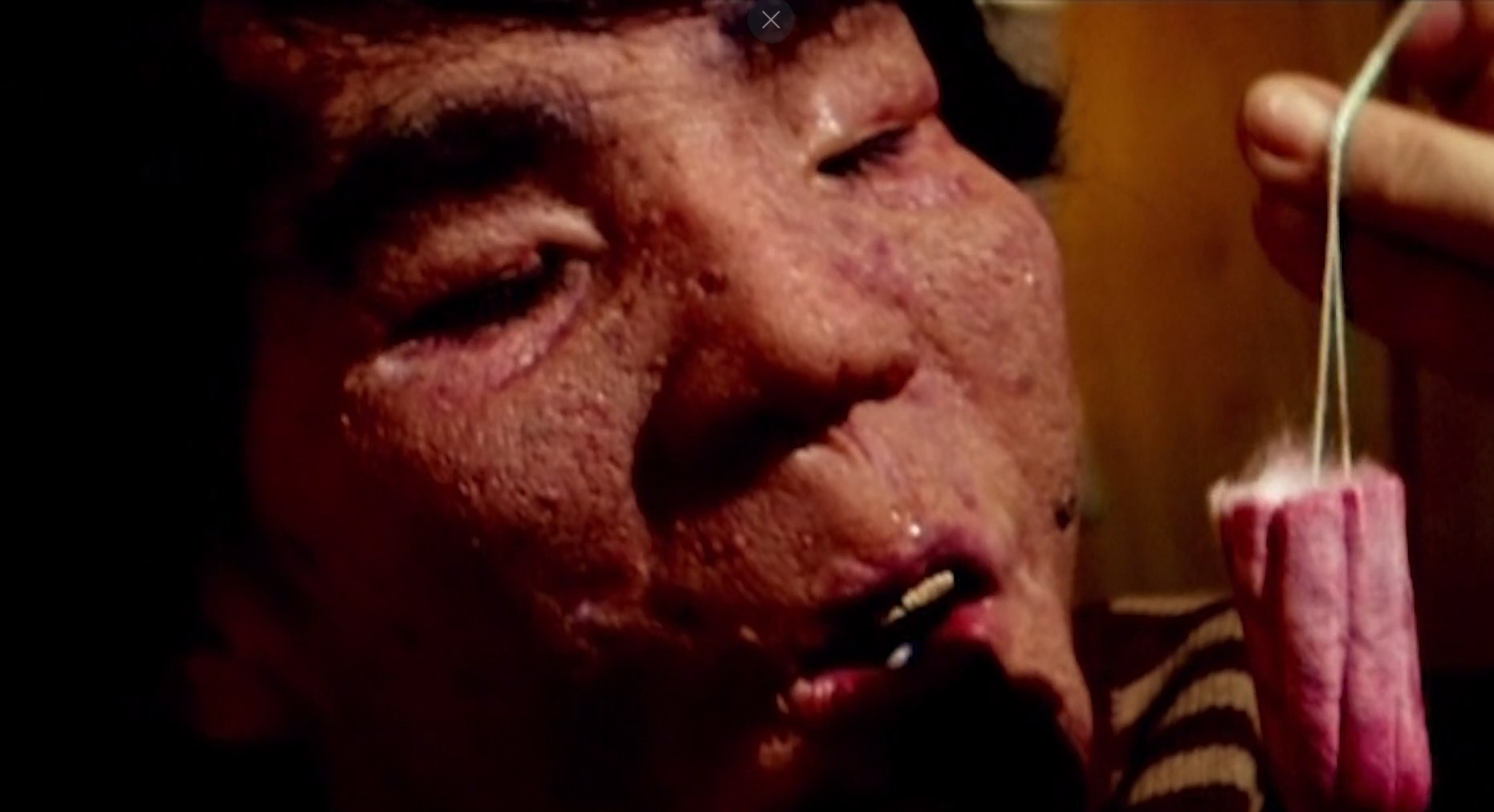
Needing no stamp of approval, “Hanger” would not have been as unpleasantly intoxicating if it wasn’t for the cast.  Each and every character beneath “Dick Tracy”-like prosthetics come to life with their own identifiable quirks and putrid personalities with perhaps the headliner in the tamest role being played by genre icon and scream queen Debbie Rochon (“Tromeo and Juliet,” “Model Hunger”).  Troma’s most famous gal isn’t the only Troma-head to be in Nicholson’s film with a guest appearance by Troma co-founder Lloyd Kaufman as Melvina the Tranny who has her willy kissed the stove-top burner.  I know what you’re thinking – Rochon and Kaufman is in anything is a must-see film!  I couldn’t agree more, but “Hanger” really lives and breathes on the more prosthetic-heavy performances of Nathan Dashwood, Wade Gibb, Dan Ellis, and, especially, Alastair Gamble as Phil.  Also known as Philthy, Phil is also a recycler on the look out for unemptied beer bottles for any kind of alcohol fix he can get his filthy hands on and Gamble really develops the ins-and-outs of the character’s mannerism and style and the “Gutterballs” actor does the role so well that Phil will forever be imprinted into your cerebral character catalogue for the rest of time.  I also couldn’t get enough of Wade Gibb’s Russell who gives the ethnic Chinese man a high-pitched voice and an insatiable hankering for porn and bad jokes.  Russel also has a penchant for trashed picked used tampons the administrative secretary at his job bins when she’s cycling through and after her late night self-pleasures, Russell can’t help but to blather on and on about her to his new friend Hanger, play with domicile explosiveness like TNT by “They Came From the Attic’s” Nathan Dashwood.  Candice Le (who is an uncanny Laura Prepon lookalike), Nadia Grey, Stephanie Walker, Rochelle Lynn-Jones, Susan Arum, Michelle Grady, and Dan Ellis who stars as Rose’s revenger-advocate, The John.

Ryan Nicholson passed away come two years ago come October due to brain cancer. From that condemned mind came some of the most vividly depraved characters, gratuitous gravities, and sweet, lip-smacking gore that just rolls into the place. “Hanger” is no exception; in fact, “Hanger” is probably Nicholson’s magnum opus considering all of the aforementioned descriptors. Obviously, pleasantries is not in Nicholson’s vocabulary with a storyboard progression rock hard on revenge, sex, and a recycling center full of a variety of perversions. Nicholson had a knack for obtaining real locations without having to build sets, one of his more cost-efficiency attributes to appreciate, and the recycling center where Russel, Hanger, and Phil worked was an actual true business, but the way Nicholson shoots the scenes, and with the other exteriors, is masterful in only allowing the audience to see what he wants you to see. Background details are tenebrously obscured as he highlights the basic necessities to convey what to focus on in relation to the characters. These characters are terribly invasive to the point where you can almost smell how they look and the need for a shower after some of their atrocities is well justified as this fetish theme of unsolicited bodily insertions goes over and beyond the borders of comfort. I still can’t get Alastair Gamble’s Phil out of my head. Rubber dicks, fart jokes, racist obscenities, trannies, voyeurism, masturbations, mutilation -“Hanger” has a lot of sin to be unapologetic for as it reeks lowlife war to the max. If desiring a little extra something-something, the Unearthed Films release comes complete with a second version of the film, XXX-rated cut, that’s not available on previous North American releases, such as with Vicious Circle unrated release. Where “Hanger” stumbles is with the narrative that divides like a cell into two rather different narratives after the initial coat hanger botched abortion. Though The John talks a good game and amps Hanger up for vengeance, the ex-military prostitute connoisseur goes for Leroy alone while Hanger and Russell burgeon their unusual friendship with trash-picking tampon diving and just hanging out. With the narrative more so focused on the latter, don’t expect “Hanger” to be round-the-clock carnage from start to finish.

Continuing their distribution of all Nicholson’s Plotdigger Films, Inc. catalogue, Unearthed Films 2-disc collector’s edition Blu-ray of “Hanger” is a must own and a must see for any fans of Unearthed Films’ gory longstanding pedigree and of Ryan Nicholson.  A warning about ghosting and compression artefacts precedes the film that is presented in a widescreen 16:9 aspect ratio, informing views of the unstable picture quality due to the nature of the recording equipment, but for the most part, the worst ghosting and compression issues are in the first scenes of the motel with Debbie Rochon and Lloyd Kaufman.  The controlled contrasting, comprised of limited lighting, a reduction in color, and perfect shadow placement, adds another flavor to “Hanger’s” squalid and vulgar character exteriors by accenting scenes with a post-apocalypse or slum living discomfort.  Details can get a very graphic, explicit, and fleshy as prosthetic organs ride that ambiguous seesaw and the prosthetics overall are extremely unique and memorable under the creative eye of Life to Death FX artist Michelle Grady.  The English language Dolby Digital 5.1 sound mix has ample fidelity despite the self-manipulation of voices and appropriations of cultural accents.  Dialogue is clean and prominently lucid.  Personally, the soundtrack is not particularly my favorite of a compilation of heavy rock and hardcore bands, such as Bison, Nomeansno, Spread Eagle, and Grass City and The Invasives, but do fit right into Nicholson’s scheme and personality.  The 2-disc set comes jampacked with over 16-hours of extras including a commentary with director Ryan Nicholson, Behind the Stoma:  The Making and Taking of Hanger with cast and crew interviews, a video diary-esque of Lloyd Kaufman’s single-day shoot entitled Enough Dope to Hang Yourself With:  On the Set with Lloyd Kaufman, a blooper reel, deleted and additional scenes, photo galley, Debbie “Rose” Rochon’s simulated sex tape “Black on White Bred” with pimp Ronald Patrick “Leroy” Thompson, the Colostomy Bag Edition aka the XXX-rated version of the film, trailer, and a second disc that’s nothing but outtakes.  The scene in the Colostomy Bag Edition, I believe, is just a minor penetrating cut-in scene more than likely not related to any of the actresses in the cast.  The Unearthed Films release is not rated and clocks in at 90 minutes (regular edition) and 91 minutes (Colostomy Bag Edition). The characters alone are worth “Hanger’s” price of admission but Unearthed Films delivers a sweet, comprehensive 2-disc collector’s set for this gore-soaked and grotesque little film.

A Must Own 2-Disc Collector’s Edition of Ryan Nicholson’s “Hanger” Available at Amazon

They Went To Look For Their Parents. They Found EVIL Instead. “Feed the Gods” reviewed (MVD Visual / Blu-ray)


Brothers Will and Kris just lost their foster mother to a sudden stroke but the bereaving moment between their clashing personalities only lasts a minute of solace before they’re back at each other’s throats.  When Will finds a strange VHS tape in their foster mother’s last will and testament belongings, recorded in a remote mountain town, they witness their parents on the tape.  The brothers, along with the encouragement and accompaniment of Kris’s girlfriend Brit, travel to the small tourist-sparse town that seems to have been all but forgotten and abandoned by the local residents.  Instead of locating their parents, the strange, remaining locals hoodwink them in believing their quaint backwoods town is quiet and unsuspecting as they chain the brothers and Brit to a sacrificial pole then waiting until a town-terrorizing beast that craves an offering for the townsfolk’s freedom feasts upon them. 

Always on the hunt for a good, or at this point even a mediocre, bigfoot horror, coming across Braden Croft’s “Feed the Gods” seemed like an stimulating option that dabbled in quasi-bigfoot lore rather than a full blown assault of Sasquatch bombardment.  The 2014 Canadian film is written and directed by the “Hemorrhage” filmmaker as Croft stays steadfast in the thrills and chills genre.  The elusive bigfoot is not only hard to capture sight of in the deep forest undergrowth, but also difficult to find sight of in a coherent, well-made film without an inglorious narrative that doesn’t respect Bigfoot’s towering eternal myth and legend.  Hard to believe, I know, but the hairy humanoid has crumbled down to nearly a gutless pelt of its former big screen self.  Every rare blood red moon, a fiercely gory 2006 “Abominable” or a kid-friendly and effects driven “Harry and the Hendersons” comes to our salivating attention and scratches the itch until the next dumpster fire Sasquatchsploitation crapper.  Keep reading for how Croft’s “Feed the Gods” fairs amongst the fray on the Bleiberg Entertainment subdivision, Compound B (“Dahmer,” “Monster Man”), presented Random Bench (“Sisters of the Plague”) production.

Having a hand in producing “Feed the Gods” as well as having a lead role is Albert Wesker himself, Shawn Roberts (“Resident Evil” franchise), playing the half-wit older brother, Will.  Roberts’s simpleton performance can be amusing, even when dangling nonsense like his bad German swashbuckler accent, as he runs around half the film with barely any clothes on which I’m sure will give some audience a thrill that’s not horror related.  I prefer Roberts when he’s “Tucker & Dale-ing” bad guys left and coolly wriggles his way through the forest and cabins to save his more common sensed younger brother, Kris, played by Tyler Johnston.  Will and Kris constantly butt heads and Roberts and Johnston make good on the sibling rivalry effectively communicating verbally and in body language their characters’ unsatisfactory levels with each other.  Some character developments, for example Kris medicating to relieve stress, never properly fleshes out after Will and Brit discover the medicine bottle, bringing no turmoil to his relationship with the obviously pissed Brit (“Kingdom Hospital’s” Emily Tennant).  In fact, neither character grows beyond their already initially established selves, leaving a lot on the table to be desired.  Characters are interesting enough, the plight is there, the need for growth is there, actors have unearthed the personalities with an X-Acto knife and yet the narrative executive fails them, revving us up only to hit the brakes right when the light turns green.  We definitely gain more out of townsfolk in Emma (Britt Irvin, “She Who Must Burn”), Hank (Lane Edwards, “Mortal Remains”), Curtis (Edward Witzke, “The Predator”), and Pete (Aleks Paunovic, “Snowpiercer” television series) who have either root themselves as they are or struggle with a change of heart that innately arc the character completely.  Rounding out the cast is Tara Wilson, Christine Willes, Garry Chalk, Robin Nielson, and Bill Croft.

Well, my search continues for exceptional bigfoot tales of terror after my viewing of “Feed the Gods” raised a mountain of questions without sating the curiosity.  The story itself is interesting of a dilapidated and antiquated town, on the cusp of timeless ruin, are hostage to a wilderness beast that requires a human meal and for each sacrifice, a ticket is granted to a local to decamp the town, but who physically grants the ticket?  Who are the people enforcing the barrier around the town?  These are just a couple of examples that go unanswered against the backstory of the wild forest creature who was fed small animals by the natives long ago, but when the white settlers purged the land of the red plague, the beast starting devour the white man ever since.  “Feed the Gods” becomes a that classic tale of lifelong consequence where the sins of ancestors becomes the sins of their children, but there had to be this covert group, who we never meet aside from a mean ole rifle-toting farmer at the preface scene, that kept the townspeople in check for generations.  Death special effects are routine but soluble to digest and are well done, though too dark at times the locations are aplenty between cabins, caves, and forests, and, as said, the acting holds its own, but Croft’s story feels terribly unfinished with an acute cut to credits.  As soon as creature presents itself, a man in full furball suit complete with passable prosthetics and teeth, standing face-to-face with our heroes for the first time ever, the protagonists run away in separate directions and that is where the practically ends.  After you pick your jaw up off the ground in disbelief, you’re quickly try to piece together what, where, when, why and how of how Croft that this route was plausible enough to properly finish a film.  After scoping out the bonus content’s behind-the-scenes, even the creature designer Travis Shewchuk was taken aback by Croft’s sudden alterations to have a shadowy monster, silhouetted mostly in the dark, become brilliantly lit up in day sequences at the last minute and had to scramble to figure out how to make it work.  Adding another noticeable layer is the heroes and the revealed creature obviously never share the same scene with slapdash editing to make the appearance as such. 

Serve up “Feed the Gods” as your main course plated with Sasquatch mystery and with a side dish of buff Shawn Roberts in his underwear coming to you as a MVD Visual Blu-ray release on the distributor’s Marquee Collection sublabel.  The region free BD25 is presented in HD, 1080p, of a widescreen 2.35:1 aspect ratio.  For a 2014 film, the contrast between day and night scenes are, frankly, day and night with the darker framed action less than desirable discernibility. You really have to have every single light source completely turned off to spy the faint silhouettes. Day scenes settle for better but the high definition in the detail personally feels a little soft, feeding into more of upper tier standard levels of resolution experience with lush foliage surrounding. Picture is not bad, but it’s not great is the end message here. The English language DTS-HD Master Audio 5.1 surround sound mix bare little to separate itself from the other audio option, a 2.0 LPCM stereo. You hear the difference in a more vivacious, if not voracious, soundtrack, but the hike never extends beyond that to the dialogue or ambient tracks. Aside from the soundtrack that oversteps at times, dialogue is rather clean and clear. No apparent damage to either audio or visual aspects but that’s fairly expected with any digital playback. Special features include writer-director Braden Croft and associate producer-creature designer Travis Shewchuk on a feature overlay commentary track, a “Feed the Gods” behind the scenes featurette in HD which plays out reminiscently between Croft and Shewchuk, the original theatrical trailer, and reversible Blu-ray cover art. Call me jaded by my previous down in the dumpster Bigfoot film reviews, but “Feed the Gods” has none of that deity staying power to rise the Sasquatch game out of the pits of despair; in fact, “Feed the Gods” only adds more fuel to the fire in another pernicious hit to our mean and nasty, rarely lovable, man-thing, Bigfoot.

“Feed the Gods” on Blu-ray.  Click here to purchase at Amazon.com!

When You’re Jilted and You Contemptuously Summon an EVIL Succubus! “Lillith” reviewed (Terror Films / Digital Screener)


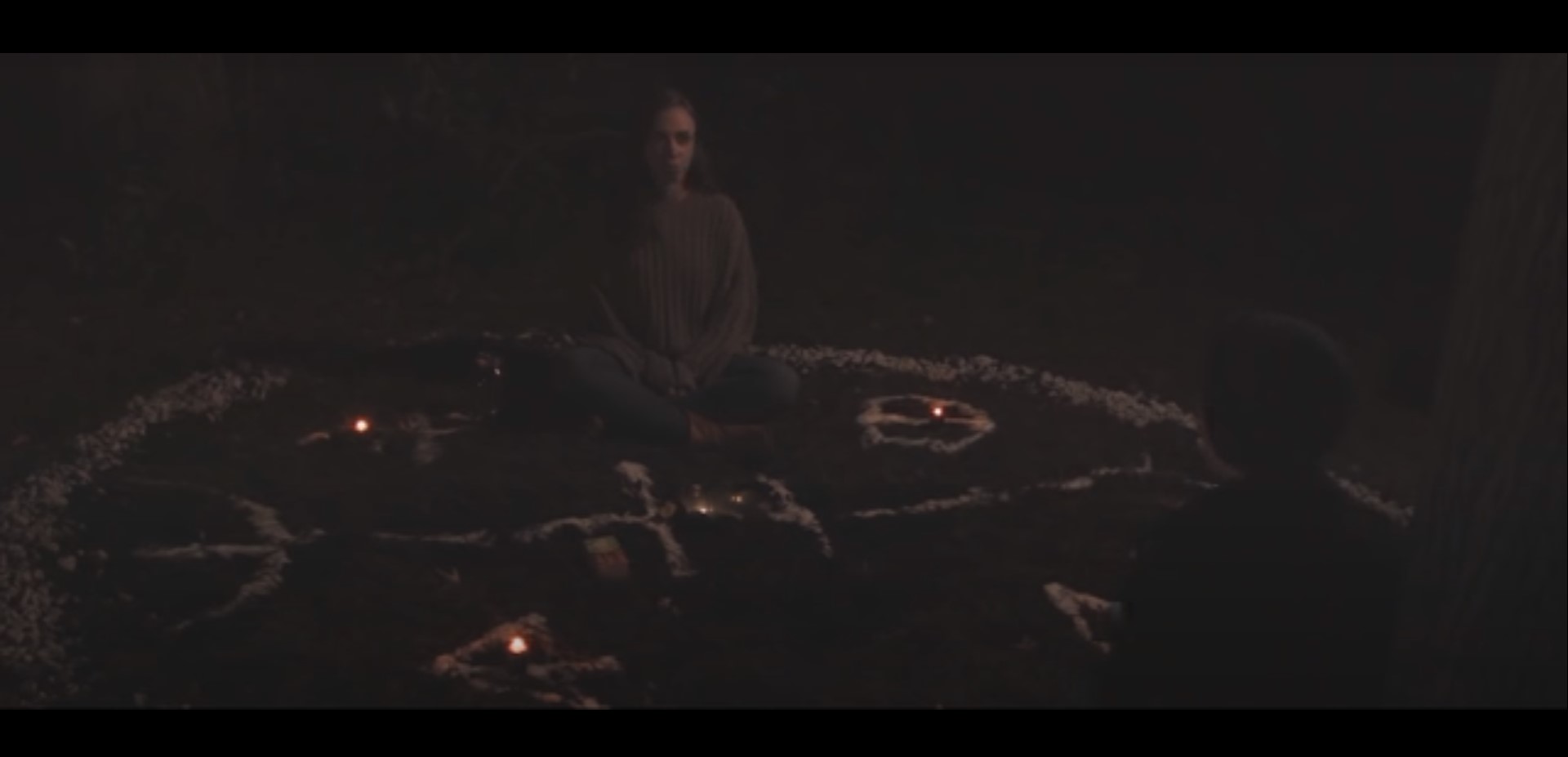
Jenna’s been dating Brad for 5 years and when she catches him red-handed with another woman, learning that he’s been with multiple women over the span of their relationship, blood boiling revenge seems like the only course of action.  Jenna’s wiccan friend, Emma, has a radical strategy to summon a succubus to sleep with Brad and give him heartbreaking Satanic STDs.  Warned about the dangers of black magic that could backfire 3 times the affliction upon them, Jenna and Emma go through the summoning ritual, calling forth the sex-crazed succubus named Lillith.  Quickly making short work of Brad, tearing him open like a gift on Christmas day, the friend soon realize they’ve unleashed an unstoppable, man-eating killing machine and they have no idea how to stop her. 

In Jewish theology, the she-demon Lilith has been weaves into popular culture and literature time after time again with tweaks, alterations, and revamps to capitalize on the first wife of Adam’s infamous name in various outlets.  Amongst being one of the first female demons, the figure, in name only, has been broaden across numerous religious texts and  pop culture mediums from vampires, to a wild beast, and to a source of lustful dreams.  For Lee Esposito, Lillith sticks to the demoness basics, luring gullible and randy men to sex and death as a ritual beckoned succubus, in the 2019 horror-comedy, merely titled “Lillith.”   The indie picture cautions revenge as a hasty, reckless option that tows disastrous, deadly consequences.  Based off Esposito’s 2016 7-minute concept short of the same name, the 93 minute feature length film levels up the concept’s sound department crew member, Luke Stannard, to cowriter and was the genesis of Esposito’s New Jersey-based production company, Ritterhaus Productions, with executive producers Joey Esposito and Mike Arpala footing the bill. 

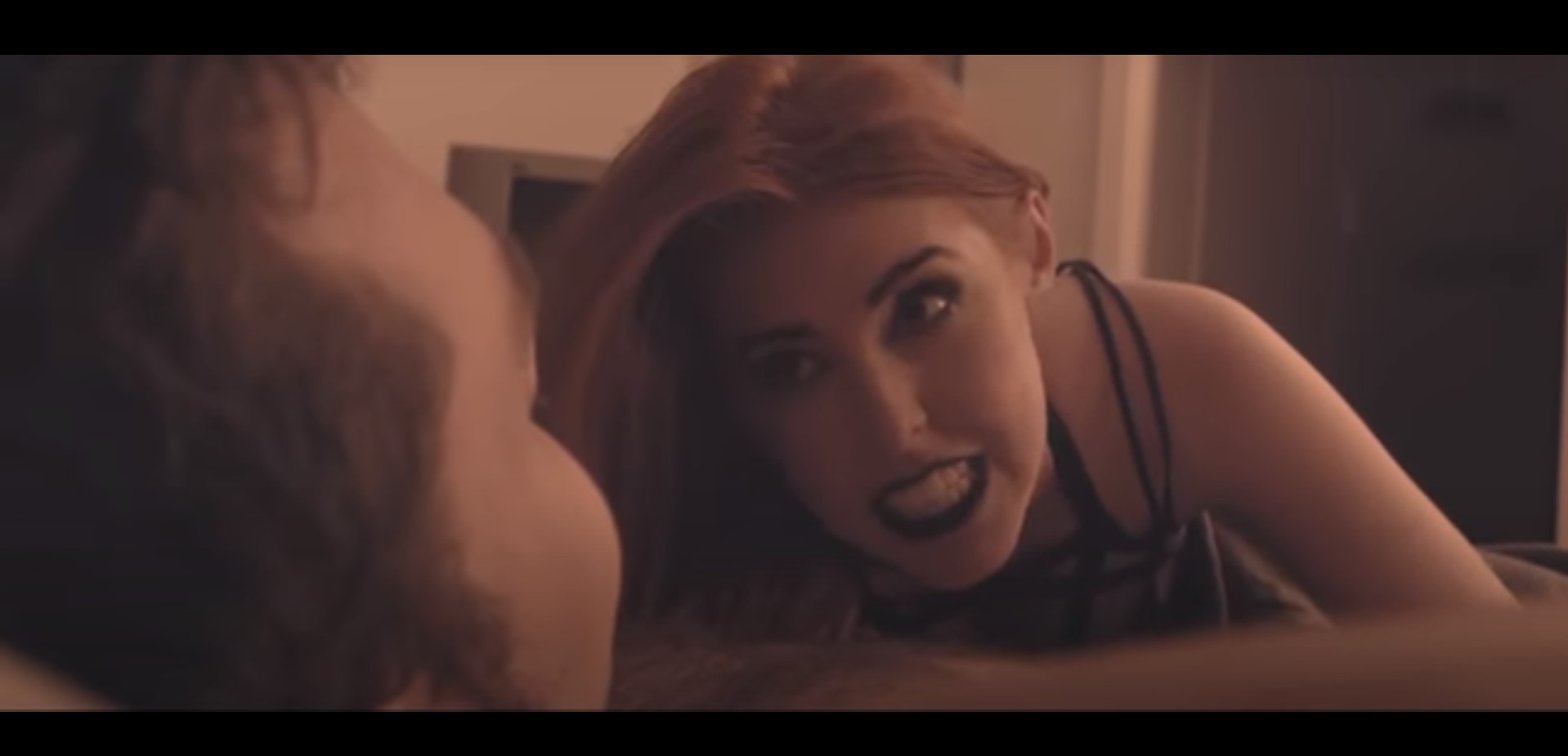
To pull off a slimmer version of “Jennifer’s Body,” “Lillith’s” cast had to be indispensably funny and well-versed with their characters.  For the most part, the cast stick the landing, running away with their character ticks that fully engulf the colorful performances and making them certifiably memorable.  Savannah Whitten most notably showcases her amusement playing the titular character decked out as an alternative-cladded woman with promiscuous purpose.   Whitten also doesn’t look too shabby in full body lime green attire that requires the actress to don a protruding head prosthetic, bulky mouthpiece, and vibrant yellow contacts as the Lillith shifts, in edited scene transitions, back and forth from alt-girl to full blown succubus.  The snazzy redhead, NYC based actress is opposite Nell Kessler and Robin Carolyn Parent in their respective roles, who spell besties as demon summoning chaos, Jenna and Emma.  Kessler and Parent equally have fun in being the vindictively scorned, jilted lover and her eccentric best friend who just wants to see if she can conjure up evil for the hell of it.  The female-led cast deliver timely, funny bits of dialogue individual wrapped like their very own personal skits, but then the attitudes change and the range stretches more meaningful when circumstances become dire and that’s when the cast of ladies really do shine as actors.  “Lillith” wouldn’t be as half as successful if it wasn’t aslo for the supporting cast, even in the small roles, to add a smooth ebb and flow of macabre comedy with Langston Fishburne (yes, that iconic surname is related to Laurence Fishburne), Taylor Turner, Lily Telford, and Michael Finnigan.

“Lillith” very much appeals to the feminist esteemed without beating you over the head with the crusading theme.  Cornerstones like a succubus snacking on sexually-charged males, Emma’s astute quips and enthusiasms about the historical and religious rises and victories over men while also in an unabashed lesbian relationship, and the vagina being held as a live or die power source of extraordinary consequences all reflect feminized filmmaking, but then Esposito, who is a man and identifies as a male, makes a sharp criticism that isn’t exclusive to feminism but can be said about most subjects if slipped into an oversaturated abundance.  What if the actions of feminism goes too far?   What if drilling an ideology beyond the point of no return causes more corrosive damage than actual good?  That’s what Esposito’s “Lillith” explores inside the “uh-oh, we made a mistake and must fix it” latter acts with great attention to how a woman’s genitals becomes key to saving all of mankind.   The irony is unbelievably hilarious, smart, and provocative, whether intentional or not.  What kills most of “Lillith’s” boutique vibe is the fluidity of the A/V technical quality that often approaches homemade movie levels of inconsistent sound design.  I’m frequently adjusting up and down the volume and trying to discern dialogue out of stronger ambience and noise the boom captures in an unfortunate leaky blockade of decent script dialogue. 

July saw the release of Lee Esposito’s “Lillith” rip through the hormonal student body pool with a laid back and snarky she-demon from Hell on Demand and Digital courtesy of indie genre distributor, Terror Films.  “Lillith” is shot over the course of 33 consecutive days from New Jersey to New York with director of photography Vincent Caffarello behind the camera and though making any sort of judgement on the A/V aspects for a streaming link might as well be akin to chucking my words right into the trash, I do firmly believe a considerable amount of budget went into casting solid actors and eye-catching makeup work as sound design guerilla notches into Lillith’s smoother interior like a throwing small river rocks at a pristine car. Maybe the shooting equipment lacked high definition properties or maybe post-production could have cleaned up Caffarello’s basic standard efforted shots but, either way, the DP’s stationary and steady cam of mediums and closeups, with occasional slight POV or over the shoulder, gather enough information about what’s happening in the scene in a still interesting perspective. With any digital screener, special feature content is at a zilch and there are also no bonus scenes during or after the credits; however, let “Lillith” speak for itself without the glamour of extra goodies. There’s hell to pay but paying hell with lives is what the sultry death-dealer “Lillith” does best between the sheets…just watch out for her teeth, gentlemen.

“Lillith” is right now included with Prime Video!