Will An Undercover Elite Three-Man Team Defeat A Evil Legion in a Small Texas Town? “Navy SEALS v Demons” review!


Washed up and dishonorably discharged Navy SEAL, Lieutenant Warren Carr, is haunted by the tragic death of his family and can’t manage to stop kissing the bottle, but when a Navy Lieutenant Commander offers him an olive branch toward redemption, one that involves facing the wrath of virgin blood thirsty demons in a Mexico bordering town called Jack County, Texas, Carr reluctantly accepts the black ops mission. Recruiting a pair of buddies of equally disgraced SEALS, Whiskey and Red, the three men go deep undercover as a bikers and join forces with an established Jack County biker gang to put a stop to the demons from spreading beyond the small town’s limits.

A good rule of them to live by when flipping through your DVD and Blu-ray library is if the film’s title reads and sounds like juvenile garbage – chances are – the film itself will be the same caliber, but there are diamond’s in the rough. For example, till this day, I still believe 2007’s “Shoot’Em Up” is one of the worst titled films, but the Clive Owen and Monica Belluci gory-action shoot out is great fun and undeniably attractive. Okay, so maybe that particular movie is a bad example, as “Shoot’Em Up” sounds pretty rad even if my 3-year-old daughter could have brainstormed a better title, but how about the AK Waters’ story, Charles Roy penned script, and Jeff Reyes directed film “Navy SEALS v Demons?” The common misperception is that a film entitled “Navy SEALS v Demons” must be an intentional farce, but is, in fact, a serious film about crotch rocket demons in search for pure virgin blood and three defamed Navy SEALS undercover as bikers who are hired for the black ops mission to take them out without support or backup. Demons weren’t the only prey of the American beloved, ass-kickin’ Navy SEALS as AK Waters, on the heel of Demons, had pitted the elite force against the living dead in a film entitled, you guessed it, “Navy SEALS vs. Zombies.” Put a KIA on the heads of demons and zombies, right up there with Osama Bin Laden, as our unsung heros can take on natural and unnatural enemies.

Built like a mountain Mikal Vega heads the charge as Warren Carr. Vega, with a resume that credits him a military or bodyguard typecast actor in some of Hollywood’s blockbuster films such as “Transformers: Dark of the Moon” and “G.I. Joe: Retaliation,” breaks from being a jughead extra for Michael Bay films and found a way to be a jughead lead actor in poorly produced nonsense filmmaking that has reared it’s ugly eye-sore head in horror films. By befriending AK Waters, Vega begins his career as a D-list actor with “Navy SEALS vs. Zombies” and working his way from there. Vega has potential and the talent, even if his talent’s rough and shaky at times. Alongside Vega are his two on-screen commando bros, Matthew R. Anderson (Red) and Les Brooks Jr. (Whisky). Together, the three don’t have great chemistry with no real bond forming that Military unspoken code of whether they live or die value. Liana Mendoza plays the semi-quasi female lead opposite Carr; her role of protective stripper mom doesn’t provide that one-on-one connection with Carr, especially since after her nipple-patch covered, incoherently edited lap dance for Carr upon his arrival into town was less than just okay (she’s much better in “Zane’s Sex Chronicles”), when her character is sorely underdeveloped to just be a waste of space and a fly on the wall. Lastly, there’s “Super Shark’s” Tim Abell as the ACES, special government agency whose acronym is never spelled out, acting head director Max Martini. Abell’s scenes in the command center are rather detached from the rest of the action. Abell does a fine job being the tough man in charge to a bunch of bewildered agents who look like they’re all sitting in a VFW mess hall, wondering how to keep operational their recon drone over Jack County, but Abell’s scenes are almost like a wasted effort in trying to sell his band of brother loyalty to Carr.

“Navy SEALS v Demons,” that’s not a typo in the abbreviated versus by the way, must have had storyboards that were shot from illustration-to-illustration because smooth transitions between scenes were anything but present. The 85 minute film also felt frustratingly rushed; for example, a portion of the finale tried to convey a death, a betrayal, and one other important antagonist upper hand all in 20 seconds of short clips, harshly edited together as the filmmakers said, “screw it, let’s just get it done.” The death of the major character didn’t get the respect the character deserved and I would be pissed if I was that actor, the betrayal comes out of far left field in such a brief scene, and the other scene, which I won’t go into details in case you want to actually watch this movie, goes relatively unexplained as well, but one can conclude that the dark powers of the head demon are Pied Piper-ly powerful. Special effects had some brief gory moments, all the demon makeup was obscured by off-screen voiceovers, structure impediments, and biker helmets, and to be frank, I’m still upset that Liana Mendoza, whose inherently sexy playing a sexy role, used pasties and the direction during the lap dance was to screen more of Vega’s mug of contempt as if the filmmakers themselves tried to intentionally censor themselves.

Ripped Boxers Entertainment and MVDVisual’s “Navy SEALS v Demons” goes to battle on Blu-ray home video. The Blu-ray’s image quality is actually quite good with an AVC encoded 1080p transfer presented in a 2.31:1 ratio. Color levels are balanced where needed, especially in the day time sequences, and skin tones naturally favor Carr’s middle-aged definition and heightens Mendoza’s ethnicity and womanhood. I can’t say the image quality did any justice to the demon makeup, rendering the oddly reddish hues on the shoddy latex an obvious quick job. The Dolby Digital 5.1 English only track has very little bite with some loss around the surround sound and the dialogue isn’t always in the forefront and clear. There are no extras on this release. “Navy SEALS v Demons” is, sadly, one of those bad low-rent movies with a low-rent title on a fairly good Blu-ray release and while Mikal Vega and Llana Mendoza share the intensity the story desperately needs, majority of the remaining is stale as week old bread, except for best part of the whole movie when Mikal Vega slaps around a lowlife biker in a barroom brawl. What will be AK Waters next versus project? Navy SEALS vs Vampyres, anyone?

Click to Purchase/Watch Navy SEALS v Demons!

In a Seemingly Fresh Corpose Lies a Legendary Evil.  “The Autopsy of Jane Doe” Review!


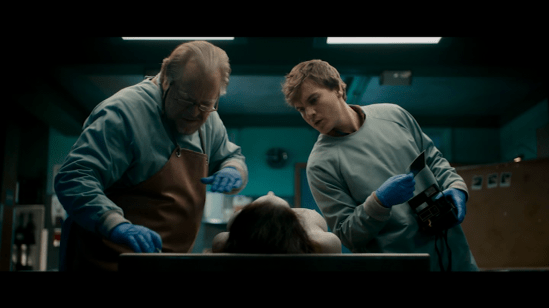
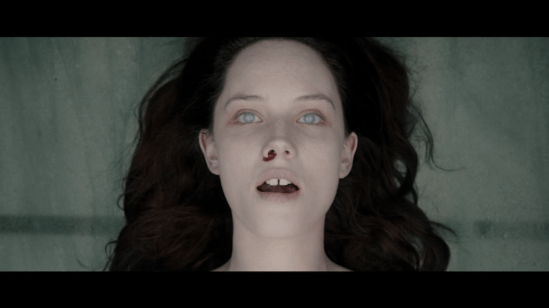
An unknown corpse of a young woman, found naked and half-buried in the basement of a home involved in a gruesome crime scene, is strolled into a small town family morgue and crematorium by a puzzled local sheriff.  Without any idea who this woman is and how to explain the her presence at the scene, the sheriff wants a cause of death on his Jane Doe as soon as possible and it’s up to Tommy and his son, Austin, to investigate what caused her demise and to determine her involvement in the grand scheme of the grisly events.  When the medical examiners begin to peel back the layers, each segment of the autopsy reveals impossible and unspeakable horrors underneath her cold flesh that go against their combined years of medical experience and the deeper they dig into her body, the more the autopsy room becomes a spine-tingling area as strange occurrences begin to happen to the father and son. Their only hope in stopping the ominous terrorizing presence and surviving the hell-bent stormy night is to continue the examination in order to unravel the enigma that surrounds Jane Doe.

“Troll Hunter” director André Øvredal helms a contemporary horror masterpiece with the Americana horror film,”The Autopsy of Jane Doe, that can be described as American folklore lit ablaze with modern day macabre that plays like a gruesome adult version of the children’s game Operation. Øvredal pulls inspiration from present day classical horror, including such films as the widely popular James Wan franchise, “The Conjuring,” by not embarking on an overkill journey of heavy duty effects or relying on gallons upon gallons of fake blood to sell his film. Instead, André Øvredal’s “The Autopsy of Jane Doe” is patient, subtle, and massively creepy, utilizing the dated morgue and crematorium basement setting to construct a dreadful, despairing dungeon atmosphere and focus on being very particular with every scene having a function to take advantage of the overwhelming brooding aurora and pop scare moments that can scare the pants off a mannequin. Øvredal heightens moments of complete pin-drop silence to amplify the terror and plays with camera angles that linger longer to leave an unsettling residue pooled in a spine-tingled soul.

Not only is the Ian Goldberg and Richard Naing script palm-sweaty frightening, tack on A-list actors like Brian Cox (“Manhunter”) and Emile Hirsch (“Killer Joe”) as a father and son team pitted against a dead body and “The Autopsy of Jane Doe” jumps up by tenfold as a must-see. Brian Cox is masterful as the widowed mortician whose numb to the pain of life and shock of work, making him a dedicated professional at uncovering the truth inside corpses, and he’s well companioned with Emile Hirsch, the mortician’s eagerly loving son and apprentice to the family business. The only problem is Austin doesn’t want to be a part of the family legacy, but is rooted by his continuously cloaked grieving father and you can see the struggle in Hirsch’s wish-washy character. The pair of veteran actors play off each other well being a medical super duo by conducting examination procedures and digging right into the corpse of dead, disfigured bodies like it’s just another day at the office. The gorgeous Olwen Catherine Kelly is dead on being a dead body. Though Kelly literally doesn’t move an inch for the entire runtime, her slim frame and blank facial expressions are truly haunting, if not also alluring to behold.

Immediately, my first impression of André Øvredal’s film had me stroll back to the past, nearly a decade a go to 2008, with the Marcel Sarmiento and Gadi Harel thriller “Deadgirl.” The premise of the film told the story of two high school aged boys discovering a seemingly near dead young woman in an abandoned asylum; the dead girl being played by Jenny Spain.  Whereas each film have their separate horrific identities, their end games bare supernatural similarities. What also separates André Øvredal’s film from Sarmiento and Harel’s “Deadgirl” are the two protagonists; instead of two teen boys pulling hormonal hijinks on a motionless attractive female body, Tommy and Austin are strictly professional, focused on their task to answer the riddle lying inside the very fabric and bones of Jane Doe. The only gripe I can bottom barrel scrape out is how Tommy and Austin had this big ‘what if’ epiphany that becomes the very basis of the entire film and, in my opinion, felt that scene was extremely chintzy and a cop out.

Lionsgate Home Entertainment delivers “The Autopsy of Jane Doe” from production companies 42, Impostor Pictures, and IM Global onto UK DVD and Blu-ray.  Unfortunately, a DVD-R screener was sent to me, resulting in no true examination of the audio and video qualities and the only extra on the disc was a Q&A with directorAndré Øvredal. Even if viewers might be able to guess the nature of the corpse – I did about halfway through – “The Autopsy of Jane Doe” is still way ahead of it’s genre brethren in being the best horror film of 2017 with an unlimited amount of sinister wretchedness that tugs at your soul strings and weighs heavy in your mind’s cache as soon as the lights go out for bedtime. I would recommend this title to anyone seeking an unadulterated horror experience.

Evil Lurks in the Woods. You’ve Been Warned! “Altar” review!


Maisy and her socially reclusive brother, Bo, venture on a mountain getaway trip with Maisy’s former college friends. With Bo documenting with a handheld video camera as part of his way in comforting his anxiety, he captures the dynamic of how each of Maisy’s friends have changed over years, especially with Asher and his recently High School graduated girlfriend, Pam. After breaking down on the side of the road, falling behind the rest of the caravan, they encounter a strange man with an axe, harshly warning them to not continue up the mountain pass. Shrugging of the warning and returning to their now working vehicle, the group resumes their drive, but makes a wrong turn and becomes lost in the mountains’ thicket of the Sierra Nevada. They decide to setup camp for the night and continue their way back the next morning, but the discovery an ominous, skull-riddled altar in the woods unleashes a frightening presence that won’t allow them to leave. As tensions rise and night falls, Bo keeps his camera running as a soul inhabiting evil has fallen upon them that seeks to destroy them one-by-one.

“Altar” is the 2016 found footage horror from writer-director Matthew Sconce. Sconce is actually able to harness a fraction of the mysticism and presence that made the found footage genre a thing back in 1999 with the ground breaking flick “The Blair Witch Project” and does a well enough job implementing it into his very own version of an allusive satanic cult ghoul, but with more specials effects and screen time. Despite being titled “Altar,” the story barely wraps itself around the titular object with only a handful of brief scenes, one of the scenes being the thinly-connected introduction that intensely catches the attention, while mostly focusing on the friends’ road trip chatter, breathtaking scenic gasps, and becoming lost on the mountain without much peril in-between. Even the creature, whom makes the scene approximately the last 10 minutes, has more of a presence than the altar itself.

The plot follows around Maisy Marks and her Aspergers labeled brother, Bo Marks, played by Stefanie Estes and Jesse Parr who pull off the socially awkward brother and the cutesy overprotective sister well enough to pass muster. Maisy’s other “beau” is Ravi, played by Deep Rai, and along for the ride as well is muscle head Asher, Tim Parrish, and his ditzy, teenage girlfriend, Pam, played by Jessica Strand. Rounding off the group is Chelsea, a communications graduate who could only find work as a bartender who seems to be stuck in life, and she’s catered to by Brittany Falardeau. Michael Wainwright, Tina Johnson, Master Dave Johnson, and Catherine Wilcox make up the rest of the cast. As a whole, the acting wasn’t terrible even if the script was conventionally kitschy and with a group of young actors, I’m fairly encouraged to see more of their work.

However, acting is only a third of the battle when critiquing a film and “Altar” has falters more in it’s own story and script that’s peppered with cliche after cliche. The scenes leading up to the mayhem constantly hyped that something bad is going to happen; Bo finds an online article of two newlyweds missing for six months (part of the introduction), characters kept comparing their scenarios like horror films, or a daunting man, named Ripper, sternly warns them with a very large axe in his hand. Moments like these try to build tension, but when overtly and grossly laid out for views, sustaining the substance behind them is lost and waters down the effect toward campy foreshadowing. Special effects weren’t overly cinematic nor where they similar to video nasties and kept simple, much like “The Blair Witch Project, with a little more padding to them. The Evil Spirit, as it’s credited in the film and portrayed by Nicole Osborne, is a black and white nightmare that’s effective on camera; slightly cheesy with a hint of gooeyness, but edited in nice and sporadically for those eye-clenching jump scares.

Production company Movie Hero Studios partners with Distribber for a VOD nationwide release of Matthew Sconce’s “Altar,” including platforms such as iTunes, Amazon, Google Play, Xbox, PlayStation Network, and on Hulu. A DVD-R screener was provided and so commenting on video and audio quality will not be critiqued and there were no extras on the reviewed disc. “Altar” is, disappointingly, just another found footage casualty with hasty slivers of hope of not falling into the muck that has become an over-tapped genre. What Sconce has done with “Altar” makes the film enjoyable enough for a single viewing with little-to-no repeat value as everything lays out in the open and the only subtly in the entire film is the altar itself.

Watch “Altar” on Amazon.com!

For All The Evil in the World, There is One Pint-Sized Hero! “The Search for Weng Weng” review!


Australian filmmaker Andrew Leavold set forth on an adventure of answers to discover the legendary, the one-and-only, pint-sized actor known internationally as Weng Weng. In the early 1980’s, Weng Weng became the Guinness World Record’s smallest lead actor in a slew of rare, some never-before-seen, Filipino spy films and took the world by storm, creating a bizarre cult following on social media, and for Andrew Leavold, the only way to learn more about the Weng Weng, who could actually act and do his own stunts despite his small stature, was to create a documentary film that would take years in the making, but would hopefully answer three very simple, yet extremely difficult, questions: Who really was Weng Weng? How did he become Weng Weng? And where was Weng Weng now?

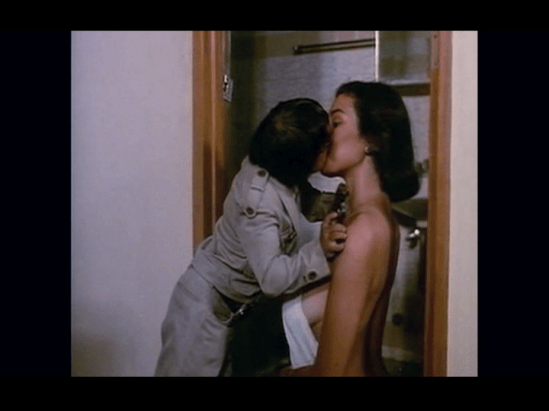
Weng Weng might be a humorous name for some, odd in fact, and his James Bond spinoffs as Agent 00 (double zero) flourished with zany stunts, practical special effects, and a tremendous amount of improbability – just like the Bond films themselves – but the Weng Weng films, even his Westerns, had an attractive aurora about them and not only because of the 2’9” sized actor. “The Search for Weng Weng’s” main focus was its titular star, but the film also displayed how the Pinoy films had engrained much of the Filipino culture and embraced their own charismatic star actors while, at the same time, being a byproduct of America’s Hollywood and other nation’s cinematic scenes. The Pinoy films were much akin to India’s Bollywood, replacing the musical and dancing segments with more action and comedy. Though Weng Weng’s films, including “For Y’ur Height Only” and “The Impossible Kid,” were whimsical and charming, Leavold’s documentary points out the darker side of the actor’s fame by comparing and explaining how Weng Weng’s “handicap” could be examined as a freak show gimmick that exploited Weng Weng out of cinematic earnings from his so-called adopted producers. The film also noted his lack of relationships with women and his health issues later on in life. Yet, “The Search for Weng Weng” highlighted much that was unknown about the actor, such as his real name, and that he was impressive and skillful at Karate; though small, Weng Weng wasn’t a traditional short person. He was fit and muscular and this helped him accomplish much of his own stunt work, which the Filipino stunt people have been claimed to be some of the best in the world.

Leavold doesn’t leave a stone unturned as he tracks down the persons involved in Weng Weng’s life. From the film crew who worked on the Agent 00 flms to his neighbors who grew up alongside him and from one of the five siblings, a brother whose the only surviving member of his impoverished family, to, perhaps, the wealthiest former first lady adored by all, Leavold checks every nook and cranny, every minute cubby hole to obtain that much more information about how Weng Weng lived and influenced their lives. In all, not a single person disliked the tiny personality as they appreciated much about him from his squeaking voice – that was always dubbed more masculine in the films – to his overall childlike serious, but calm nature. Weng Weng, in essence, was born a star guided by unscrupulous caregivers that was ultimately bittersweet for the childlike build and mentality.

“The Search for Weng Weng” hits the nail square on the head with the exactness of the title. Leavold’s impartialness leaves the wrongdoings against Weng Weng properly in the past as a good documentarian should impress. The editing is well done, taking a non-linear journey through Weng Weng’s short lived life and movie career and Leavold’s research and dedication to the project really amplifies through the film, giving Weng Weng the appreciation he rightfully deserves despite his height limitations.

Wild Eye Releasing in association with Monster Pictures presents “The Search for Weng Weng” on home video DVD. The region free, unrated DVD is shot in various formats from standard definition full screen to 16:9 widescreen with archival footage of the best of the best from the B-Asia film stock. Bonus features are plentiful with audio commentary from the director, Andrew Leavold, extended sequences of certain interviews, deleted scenes, the official “I Love Weng Weng” music video, and trailers. Who knew that there would be 92 minutes plus of content about a man not even three feet tall? Weng Weng was a mystery to us all and now, thanks to director Andre Leavold, everyone in the world can revel in that that is the amazing Weng Weng!

Buy Here “The Search for Weng Weng” on DVD!

Visions of Evil From a Disturbed Mind. “Lung” review!


An unidentified man, wearing medical scrubs and gloves, wanders through town, encountering hellishly gruesome scenes of death.  He wanders barefoot through a  ghastly journey that might figuratively expresses his back story of how he came to witness such visions and be relatively undisturbed by the horror they represent.  The filthy, gory, and ill-fated moments might also be hallucinations brought upon by a traumatic occurrence that wrenches him out of reality and into grisly purgatory.  Either way, the nameless man is a lost soul with no ambition, no emotion, and no direction to guide him through an inner conflict of blood-soaked entombment.

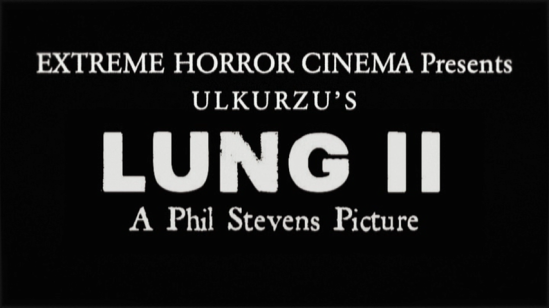
Unearthed Films’ 2-disc collector’s edition of “Lung I” and “Lung II” continues with the distribution company’s legacy of delivering the best underground cinema to the forefront of home entertainment.  Phil Stevens, director of positive-reviewed “Flowers,” writes, stars, and directs both feature films about the wandering man in a foggy, distorted haze, but “Lung II” is not a sequel to “Lung I.”  Instead, “Lung I” is the softcore version of events whereas “Lung II” is a hardcore redux – think along the lines of “The Evil Dead” and “Evil Dead II” – that’s much more detached from rationality and by collaborating with “American Guinea Pig: Bloodshock’s” Marcus Koch seizing upon the special effects, you can damn well count on “Lung II,” and certainly “Lung I” as well, being bare-faced dark, violent, and twisted. In more a sequential reality, “Lung” is part of the Phil Stevens’ proposed trilogy entitled the Violence of Dawn with “Flowers” leading the horrific charge. This review will focus more on “Lung II.”

Stevens stars as the unnamed lead, waking up lost under a creek bridge, dressed in medical scrubs, and haunted by unspeakable, bloody post-violence mayhem while continuously battling his evil doppelgänger self. Is this just a strange nightmare or a telltale sign of this man’s troubled past? Then, again, Stevens’ impassive take feels more like wandering through one hell of a dream, an endless journey into one’s post-traumatic warped mind rather than spelunking into one of a murderous soul’s, even if one of the moments of trauma could be his wife – or girlfriend – cheating on him and he catches her in the act with ill-fated consequences. Characters also related to the medical profession, such as a psychologist (David Copping) and quick flashes of a nurse (Angela Jane), are a part of this visceral vision quest. Finally, we come to The Exile character. The Exile might sound familiar if you’ve read my review on “Flowers” as he’s the only character, portrayed once again by Bryan W. Lohr Sr., that connects the two films. The Exile continues to mystify us about his presence, an extremely large and intimating brute with a deathly blank stare and a “don’t fuck with me” attitude.

Unlike “Flowers,” Stevens went the devoid of color route, constructing a black and white feature that, like “Flowers, goes without as much as a sentence of dialogue. Actions, expressions, and every sense of the word “art” tell the story. Non-linear editing and brutally realistic scenes of savagery in the confines of special effects exercise and sparks your brain’s neurons to try spitfire pieces together to cement a coherent narrative. Stevens is almost able to re-tap into and revitalize the silent film genre with “Flowers” and “Lung”, and with the help of a vehement brooding score by Mark Kueffner, I believe this type of experimental horror story telling can fascinate just about anyone without a weak stomach.

Unearthed Films and MVDVisual’s 2-disc DVD collector’s set a beautifully monochrome piece of art with roached infested severed heads, a halfway decomposed homeless man, and a pile of refrigerated sexual organs meshed together like something out of Brian Yuzna’s “Society,” but more gnarly. Im interested to see how Paradis, aka Paradis III, comes to conclude the trilogy and see how Unearthed FIlms releases Phil Stevens’ visionary tales. The Borderline Cinema and Extreme Horror Cinema “Lung” is comprised of two discs that entail “Lung I” Feature Film, “Lung II” Feature Film, Directors Commentary, Editors Commentary, Isolated Sound FX Track, Making of Lung 2 (which is very informative and fun to watch underground cinema come to the fold), Mark Kueffner: Lung Composer Featurette, Martin Trafford: Artwork Featurette, “Cats” Short Film, “Descent” Short Film, and Unearthed Trailers. “Lung” will not tickle everybody’s taste; surely sick and part of a niche network of darkly persuaded and humored people will most likely get it, but there’s still very much to appreciate here from director Phil Stevens and his eye for detail and disturbia. This gore and shock is worth a look and worth a chance.

Buy LUNG at Amazon!