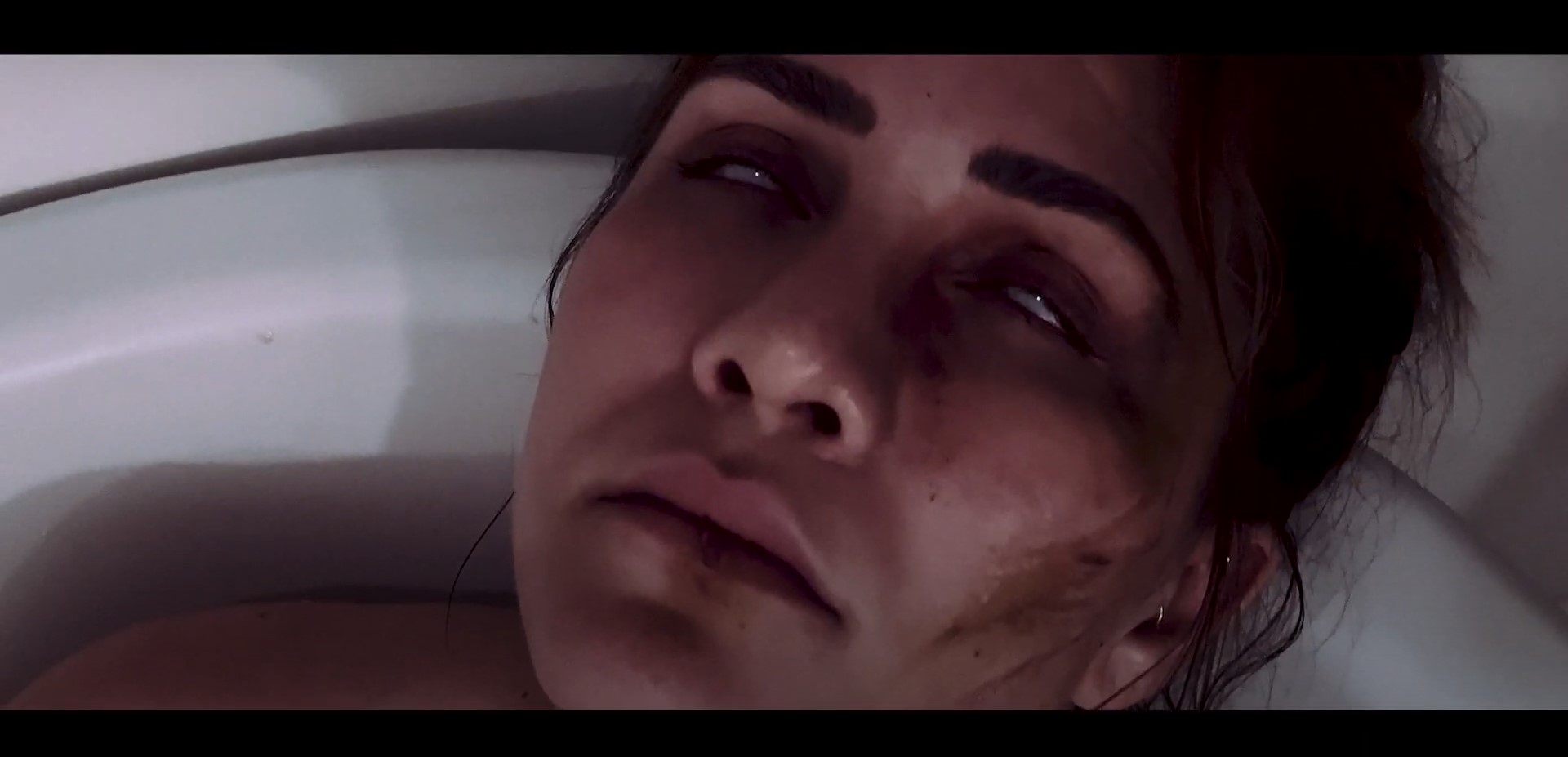
EVIL Moves in When Sister Goes Missing! “Sister Tempest” reviewed (Darkside Releasing / Blu-ray)


“Sister Tempest” – on Blu-ray home video at Amazon.com

Private school art teacher Anne Hutchinson faces an alien tribunal on the set of circumstances surrounding the sudden disappearance of her younger sister.  Anecdotally going through the chapters of her life, beginning with her parents perishing when the sisters were young into growing up in a confrontation household between the sisters’ warring personalities to Anne’s desperate search for her younger sister after an ugly fight one night.  Still reeling from the abrupt disappearance, a new student joins her class that ensues a sudden fascination from Anne.  When the student shows up one night at Anne’s house, unloading woes of being kicked out of school due to lack of funds, Anne offers sympathy and suggests staying in her sister’s room that’s now been vacant for some time, but Anne’s new roommate hides a secret as she must feed on raw meat to combat of a body-covering boil sprouting illness.  Little does the art teacher know that there’s a connection between her sister’s disappearance and her former blood-thirsty pupil that will shock her very core.

What happens when a promise to another person can’t be kept because that person’s will and commitment is so strong it’s becomes a severe fault?  From an not from this world alien perspective, the contradictory and irrational nature of humankind has a profoundly illogical pattern to it that bears hardly any understanding to an unlike mind.  There’s fragility to interpersonal relationships and to the people devoted to those relationships that force unforeseen, sometimes fatal, consequences when expected coherency and harmony turns into irrational chaos from seemingly arbitrary means.  This is how Joe Badon’s genre-bending “Sister Tempest” expresses that conundrum of curious conscious with a surrealistic sci-fi-horror-drama that teeters on the edge of deadpan.  The 2020 released “Sister Tempest” is the second written-and-directed feature film from Badon, following his 2017 experimental horror “The God Inside My Ear,” which falls upon similar “Sister Tempest” lines of emotionally distress-induced bale.  Filmed in New Orleans, Louisiana, “Sister Tempest” is a produced by Badon, editor/sound designer Joseph Estrade, Dustin Rosemark (“Inferno”) and cinematographer Daniel Waghorne with visual effects artist Clint Carney (screener of “Dry Blood”) and Miles Hendler serving as executive producers.

After a series of prefacing introductory and non-linear story scenes, Anne Hutchinson, a debut feature role for New Orleans based actress Kali Russell, sits in negative space wearing an orange jumpsuit and being introduced to her alien tribunal council.  Dazed and confused, but not totally in shock and frightened about being in the presence of otherworldly extraterrestrials, Anne recounts events surrounding the disappearance of her sister, played by Holly Bonney (“Bird’s Eye).  As sisters, a defined line between the older responsible and the younger immature is contentiously formed between Anne and Karen as they deviate from earlier promises after their parents’ untimely death to take care of each other.  Through Anne’s retelling of her life, her mother, though hard and disciplined, had a conditioning care that burdened the eldest child with a sense of duty and care at a young age and this really is no different from most firstborns who shoulders already a ton of responsibility regardless in taking on even more when the parents are no longer around.  You love them to death is great idiom that rings true in Badon’s subversive-cinema standards tale when the sisters can’t see eye-to-eye on matters and there’s a loss of connection, accountability, and gratitude that the audience can relate to.  For much of the picture, Holly Bonney takes a backseat to Kali Russell’s spiraling disconnect that affects her relationship with love interest Jeffrey the Janitor (Alex Stage, “Eat Brains Love”) and new life-entangling pupil Ginger (Linnea Gregg).  The latter Greg played character has a little more layers to peel back that involves directly with Anne.  Ginger’s is venom in disguise as vampire of sorts who requires raw meat and to keep her human appearance intact.  There’s a representational duality in Ginger, reflecting both a monstrous quality and a sweet innocence that ties into Anne personally and into the search for the sister.  “Sister Tempest” rounds out the cast with Clint Carney (“Dry Blood”), Lucas Boffin (“Return to Sender”), Andre LaSalle (“The God Inside My Ear”), Cami Roebuck (“Children of Sin”), and Sarah Rochis.

“Sister Tempest” has a foundational design we’ve all likely seen before with breaking points, dualities, and downhill-racing mystery unfathomable to the naked eye, but the Josh Badon story inexplicitly feels different from the others.  Perhaps because of Badon’s unconventional storytelling style that throws the normal perceptions for a loop, literally and figuratively, with a 50’s-ish callback to science fiction films or its glamour of 70’s-ish British horror in color and macabre or an unsane mixture of both. I’m not going to sugar coat “Sister Tempest” as an easy to follow, low-hanging fruit film that simple, straight-forward, and is everybody’s cup of tea. That would be a waste of peddle spiel. There’s a zaniness quality that can’t be ignored that surrounds the principal Anne character as if she’s experiencing an ersatz world normally. Some would say that Anne’s caught in a maelstrom, or tempest, of unclear thought and her ordeal is catalytically charged by the work and the love that is poured into her sister’s wellbeing only to be thrown back into her face. Badon has a flair for the unusual, an eye for the odd, and can extravasate an uneasy air from a capsule of seemingly randomized happenstance and beyond the already preternatural events to aggregating the wayward tension.

“Sister Tempest” is the very definition of independent movies with a take it or leave it spellbinding archetype that’s unlike anything ever seen before. You can bear witness to Joe Badon’s mesmeric madness and melancholy with a brand-new Blu-ray from Darkside Releasing. Presented in two aspect ratio formats, a 2.39:1 and 1.33:1, the screen really runs the side-to-side gamut. Image quality shows zero sign of issues from the high-definition digital video, shot on a 4K black magic pocket cinema camera. The blacks are deep and rich as well as the coloring through Daniel Waghorne’s versatile cinematography involving gel lighting, color reduction, and spotlighting. The English language 5.1 surround sound shows no sign of slowing down this A/V wonder with clean and lively multi-audio tracks that come through every channel definitively. Bonus material includes an audio commentary with the director, produces, and actors, a blooper reel, a deleted scene, and trailers for Darkside releasing surreal and giallo films. “Sister Tempest” Lynchian style is not going to please the masses, but it’s certainly the wildest ride in the theme park of contemporary indie cinema.

“Sister Tempest” – on Blu-ray home video at Amazon.com

Fixing the Tracking on Those EVIL VHS Cassettes! “Snuff Tapes” reviewed! (MVDVisual / DVD)

Ready to be Recorded?  “Snuff Tapes” now available at Amazon.com!

Marcela Arkaino investigates a Talca, Chile rapist and murder who has been drugging and abducting women for years to record aberrant tapes of his cruel exploits.  Marcela takes a special eager interest in this particular assignment as she was one of those unfortunate women.  As a silver lining out of an extremely bad situation, she is one of three women left alive by her brutal sex-sadist aggressor.  As the reporter in her garners the difficult stories from the other two survivors, Cataline and Jesus, abused by the same masked man, she inches closer to his whereabouts by triangulating attacks and connecting similarities but her scouring of roadside market, unlabeled VHS tapes became the smoking gun needle in a haystack that produces not just any depraved tape of his victims but of her own ordeal, turning now an inch into a mile in finding him.  Bring the other two women into the fold, Marcela devises a plan of revenge to direct a snuff film of her own, starring their rapist and torturer.  

Hailing from Talca, Chile, the same location where the story is set, comes the shock-slamming, VHS-inspired thriller “Snuff Tapes,” aka “Cintas Tapes,” from the Chilean born independent filmmaker, Vito Garcia Viedma.  The writer-director’s prior two zombie-influenced short films, the 2012 “Bajo el sonido del tren” and the 2017 “Escape from Zombie City,” along with the criminal underbelly 2017 feature, Los culpables,” displays a course change deviation that wouldn’t prepare the average Viedma film fan for his 2020 venture into the dark underworld exploitation of indie snuff.  While the title highlights the concept around videotaping the misuse of a person’s trust and vulnerability for one’s own disturbing profit, in this case to get one’s jolly’s off, much of Viedma’s story skirts around the edge with just mentioning the nixing of captured and consumed of vivacity women, saving the story’s climax for more detailed death dealing in a vengeful perspective rather than a videotaped one. “Snuff Tapes” is created under Viedma’s ZineFilms production company in association with Cabro Chico and Trippas Productions.

“Snuff Tapes” is no “8MM” with a mega-Hollywood budget and Nic Cage doing Nic Cage antics. “Snuff Tapes” is no “Effects” with cult icons Joseph Pilato and Tom Savini helming sordid scenes from fantasy to non-fiction. “Snuff Tapes” isn’t even on the same level as “A Serbian Film” and, to be honest, I don’t think any film anytime soon will ever be on the same level as that twisted picture. What all three of those successful and notorious films have in common and what Viedma lacks in separating itself from the rest are in two very important details: a budget and an array of talent. Viedma’s film humbles in comparison with not only a microbudget but also in a cast makeup of essentially five actors with withering substance. Valentina Soto Albornoz stars as the retribution-reporter, Cataline Ibarra, who for the last decade has been piecing together clues of her kidnapper’s whereabouts by purchasing random video cassettes tapes from Talca street vendors and when Ibarra strikes gold unearthing her own ugly tape, she understandably feels overwhelmed reliving visually the nightmare and subsequently gravitates toward being hellbent for revenge. Ibarra recruits her survivor carbon copies in the tattooed Jesus Mayano (Camila Medina) and aspiring photography model Marcela Arkaino (Camila Carreno Arancibia) for a little payback, but Ibarra, aside from her good friend Esteban (Hugo Villar) providing her a PAL encoded VHS player and rewatching her tape to catch clues missed, she virtually does all the legwork in pinpointing the one responsible, drugging him, abducting him, and committing herself to the nitty-gritty, fantasy plan for whenever she got her hands on him. I’m not sure what roles or business Arkaino or Mayano actually had to just stand there moping other than maybe bear witness to the end of their lifelong torment, to see the boogeyman parish once and for all? Reinaldo Aravena plays the man behind the mask who initially puts up a strong showing as the camera operator and stud of his homemade videos but then quickly fizzles disappointingly on the opposite side of the camera due to a lack of scaled down combating in what becomes just a one-woman show without much to show for it.

Viedma paves an interesting structural path for his film, taking the audience an extended 36-minute introduction of voiced over VHS recordings of survivor stories before entering opening credits to what then becomes a dichotomy narrative between backstory and present day. This also speaks to the visual cinematography as well that jumps back and forth between being shot on the VHS’s boxed-in format (found footage) to a wider lens of the digital world, capturing past and present in two distinct formats as well as capturing the past that isn’t glossy, pretty, and is an inescapable prison where the walls, the horizontal pillars, are closing in on the world.  Appearances, no matter how apt to the subject, do not give the movie soul and “Snuff Tapes” misses that poignant shock value target with poorly written characters and a misaligned connect-the-dots investigation that doesn’t make much sense.  Ibarra examination of the evidence, or really lack thereof, points to one man, but like a cheating slacker in high school, she does not show her work to come up with that result.  Instead, she repeats, at least in a couple of instances, her gut knows she has the right man.  In Viedma’s world, a gut feeling is factual evidence for stringing someone up to face judgement.  In reality, that’s a severe boo-boo case of miscalculation that would get you jail time.  Circumstantial street justice on little-to-no proof separates the empathy from what an audience is supposed feel fired up against an unspoken truth and gives them satisfaction in a just cause to see the obliteration of scum from the face of the Earth. In the first half, “Snuff Tapes” is undeniably graphic and cuts deep with a veridical, degenerate villain, but falters with a lazy second half approach and gratuitous revenge.

MVD Visual in association with Danse Macabre and Jinga Films release “Snuff Tapes” on a North American DVD release. The region free DVD is presented in a VHS format of 1.33:1 when looking cassette camera lens with the rest of the film in a widescreen 1.85:1 aspect ratio. As expected, the VHS quality has semblance of overuse and age with a fuzzy display and muted, boxy sound. Outside of that, the picture quality is not much better in reconstituting a playback on lower end of the DVD spectrum – approx. 3-5 Mbps. Compression artefacts are heavily present with poor clarity around the edging and blacks shimmer and appear blotchy. The lossy Spanish language Dolby Digtial 5.1 Surround Sound loses some of it’s fidelity in the compression but is the overall highlight amongst the DVD’s A/V scorecard; however, the subtitle transcription is the worst I’ve seen in quite some time with duplicated segments, spelling errors, and a timing that equates to a microsecond blip of dialogue on some occasions. The release comes with another version of the film as the sole bonus feature with an entire VHS 1.33:1 (4:3) VHS Cut for an immersive effect. As always, snuff features can be difficult to digest but they are becoming more and more prevalent and popular in a highly accessible home video market and director, Vito Garcia Viedma, tries his creative hand at creating disturbing content only to defile the genre with a subpar entry sullied by deficient storytelling.

Ready to be Recorded?  “Snuff Tapes” now available at Amazon.com!

Cannibals’ EVIL Break a Family’s Bond. “Blood for Flesh” reviewed! (SRS Cinema / DVD)


“Blood for Flesh” has a healthy amount of both!

Primitive cannibals sexually violate a brother and sister by a campfire ritual while feasting on entrails.  A family in the throes of hatred and forbidden incest is torn apart between death and mercy.  When these two powerful moments spur friction amongst the family, blood and betrayal runs like an unstoppable torrent.  Animalistic urges take over and neither brother, sister, or father are safe from the cannibals or each other in a landscape of barren and sociopathic madness.  Who will survive and come out on top of the internal upheaval when bloodlust is at its highest?

“Sangre Para la Carne,” or for the single-lingual, English-comprehending audiences, “Blood for Flesh,” is the 2019 ultraviolent and in your face gore-and-shock short-feature film from Mexican director Alex Hernández.  Though completed in 2019, “Blood for Flesh” gains traction into the at-home market three years later, finding distribution on multiple independent physical media distributors as well as video streaming services.  In his debut directorial, which doesn’t list the filmmaker as the screenwriter but is likely the architect of its abstract, Hernández caught the eye of another extreme auteur in “House of the Flesh Mannequins” and “Xpiation” director Domiziano Cristopharo and Italian-based TetroVideo to lift “Blood for Flesh,” fitting right into TetroVideo’s cache of erotic and extreme horror, into production and home video distribution. Shot in the arid depths of Tlaxcala, Mexico, labeled the epicenter in internationally trafficking female sex slaves to the United States, “Blood for Flesh” deluges itself with more unsavoriness, produced by Porfirio Hernández and Rodrigo Tellez Pérez.

To put it simply, “Blood for Flesh” is madness of unchecked immorality and to make something this deranged, Hernández would have needed a likeminded cast small enough to pull off callous scenes of rape, torture, and merciless death as well as aberrant scenes of incest surrounding three members of a truly messed up family. Beginning with the patriarch who is only know as the Father, played by Juan Manuel Martínez, whose subsequently becomes the violently persecuted by his own spawn after groveling at his daughter’s feet in a moment of bawling seeking forgiveness. Bound and gagged, beaten, and hung upside, the Father receives no mercy from his children and there’s no real revelation to why he’s become a subject of torture. Brother (Luis Navarro) and Sister (Erika López) fashion a complex relationship of courtship and collusion. As the Brother notes more than once in a divulging of truth the longing for his sister and his regretful reluctance in continuing the mistreatment of his father, its the Sister who seemingly has the upper hand, the hypnotic spell, over her love stricken brother and as Hernández dives into Sister’s unhinged scenes, especially where she marks her face and body with makeup, we come to realize that Sister just might not be right in the old cabeza. Now, how the cannibals – played by Christian Camara, Daniel Cruz, Enrique Diaz Duran, Aldo Palacios, and Marisela Plaza – fold into the family’s unraveling is a bit of a mystery but I’d like to think their naked savagery represents the rupture and hate between family and the cannibalism is kind of this dog-eat-dog mentality to come out on top by exploiting the other.

No matter which way you slice it, no matter how sharp the blade divides the skin, the muscle, the meat, or the bone, making sense of “Blood for Flesh” will never, ever happen as the almost an hour runtime feature, setup into chapters, is a bundle of biting brutality possibly representing a wide variety of real-world complications. The non-linear structure formulates no sensical path from beginning to end as you’re plopped right into the family’s madness from minute one and though I’m no stranger to undisguised abstract art in indie film, I can usually piece together to symbolic impressions or the weave a clear justification for most scenes in arthouse horror. With “Blood for Flesh,” I’m about as lost as a 5-year-old in a mall whose wander off from his inattentive shopaholic mother perusing the hot deal clothes racks at JCPenney’s the day after Christmas. I watch as Erika López strip away her clothes and her character’s mortality in every scene, I ponder and consider Juan Manuel Martínez’s Father’s compulsive reactions to seek forgiveness as well as to be vindictive toward his off-color and off-their-rocker offspring, and I am beguiled by Luis Navarro’s need to be inside his sister and, yet I feel nowhere near grounded to “Blood for Flesh’s” message if there is even one to be grounded to. Maybe we’re not supposed to connect with such corrosive content in what’s supposed to be just purely unabated shock content to rock the core of typicality. The cannibal scenes seem to be just an object of the director’s fascination with the ugly side of tribal horrors in a stereotyped rendition that depict them as nothing more than basal beasts that take what they want without an out of compassion and my mind continues to lean toward that high degree of barbarism to equate to a family built upon by hate, loathing, and individual interests.

“Blood for Flesh” could have easily fit in the catalogue of other extreme and underground horror labels, but this experimental purge of images and sins has found a home at SRS Cinema on the company’s Nightmare Fuel banner DVD distributed by MVD Visual. The single layer, region free, and unrated DVD is presented in a widescreen 1.85:1 aspect ratio that decompresses content around 5-6 Mbps, hovering around par for the course when considering DVD picture quality. Generally, the cinematography is bleak, like it’s content, with muted coloring or shot in the dark to avoid any colorful hues. Only when stark red filters are used, which is only one or two scenes, is when color unloads in every inch and corner of the frame. There’s some aliasing and banding in certain scenes that cause momentary distortion that make it hard to delineate exactly what you’re looking act – is it an open and bloody slit or gash or is a cheeseburger? That’s always a fun game to play. The Spanish language audio tracks come in two formats – a PCM Stereo 2.0 and a Dolby Digital 2.0. The PCM is, again, muted with a lack of robust quality the Dolby Digital has much more vigor in all the sub-tracks. Unfortunately, the pieced together soundbites lack creativity and are poorly spliced together that continuously drop off in an instant on the backend. The forced English subtitles synch okay and are captioned well. Bonus features include a filmmaker’s commentary track, interviews with the cast that come with awful Spanglish translations, and the film’s trailer. If Domiziano Cristopharo saw something unique in Alex Hernández, I have yet to see it as I’m not sold on the director’s fringe horror film that aims to just be randomize acts of violence for 59 minutes.

“Blood for Flesh” has a healthy amount of both!

The End of Days Runs on EVIL Fuel! “Wyrmwood: Apocalypse” reviewed! (101 Films / Blu-ray)

“Wyrmwood:  Apocalypse” – Z-Nation on Steroids!  Available at Amazon.

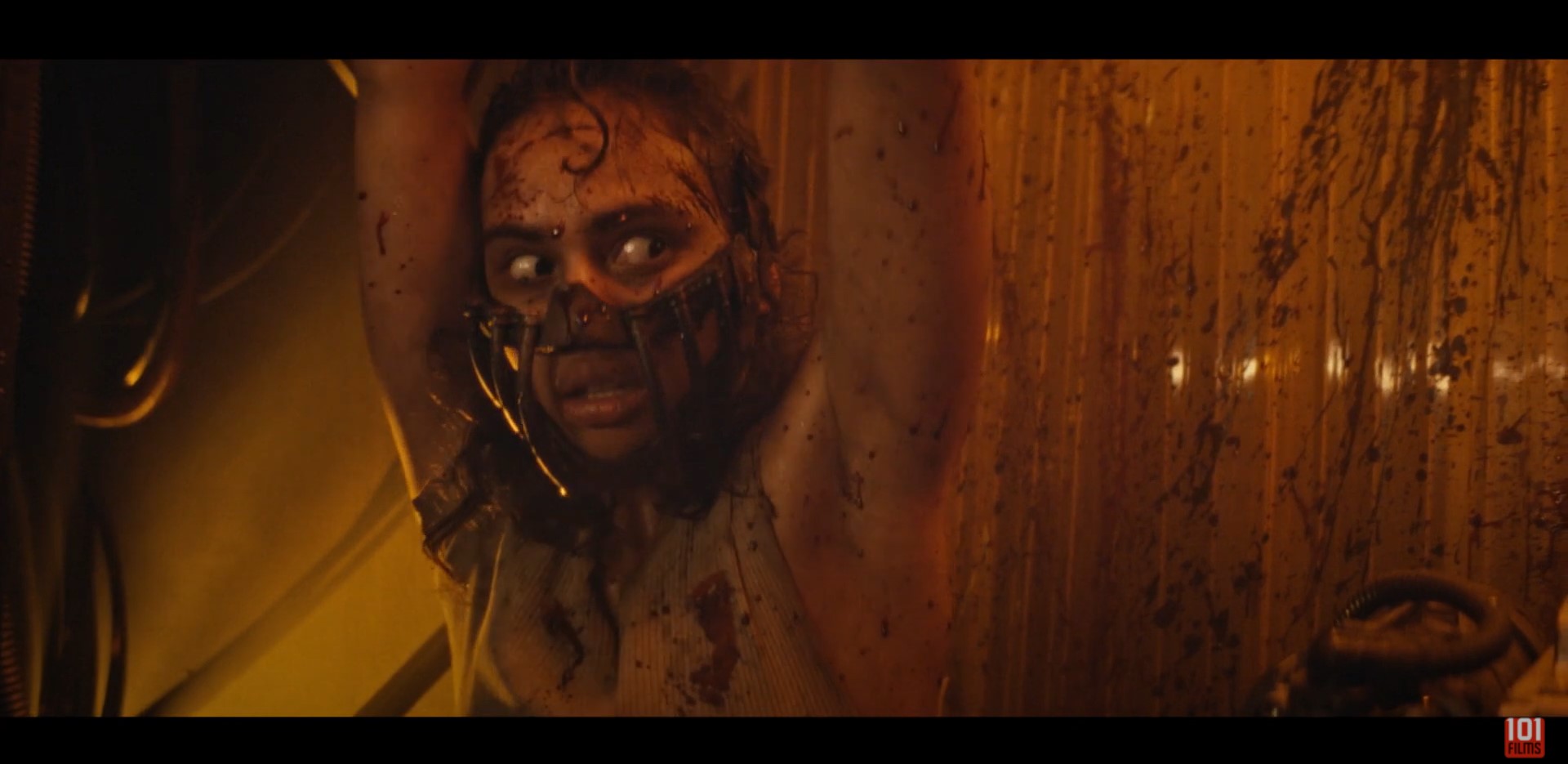
In a zombie apocalypse wasteland, the gaseous belching undead are used as the primary energy source, but the sight for a cure is still the goal for survival.  At least that is for boots-on-the-ground foot solder Rhys who lives in an isolated camp surrounded by the dead and ventures out to retrieve uninfected humans to bring them to the bunker-dwelling Surgeon General in hopes in discovering a cure.  After snagging a hybrid female named Grace who can control her turning by drinking single vial of blood, Rhys quickly learns that the Surgeon General and his armed entourage are experimenting to death the people he’s delivering to the bunker for their own selfish objectives.  Teamed up with Grace’s people – Grace’s sister Maxi, Barry, and Barry’s sister Brooke who is also a hybrid – Rhys is determined to no longer retrieve people but rather retrieve his soul from a group of well-armed maniacs while trying to not get eaten by the zombie hordes.

For someone like me, a film reviewer, whose fairly anal about watching a series, franchises, sequels, etc., in sequential order, I am stepping outside my comfort zone and out of my own convictions and into unknown territory by watching “Wyrmwood:  Apocalypse,” the direct sequel to Kiah and Tristan Roache-Turner’s 2014 Australian bloody zombie comedy-romp, “Wyrmwood” aka “Wyrmwood:  Road of the Dead”, before the first film.  While typically a no-no in my book, and very much likely in the rest of the filmic community, I like to live dangerously.  Any who, Kiah Roache-Turner sits once again in the director chair with the direct, follow-up sequel that picks up immediately where the other film left off or, I at least think so.  In reading the ending to the 2014 film, I see no mention of a couple of characters that are present at the beginning of “Apocalypse” and so I’ll be interested to watch “Road of the Dead” to see for myself how both films tie together.  The script is penned by Kiah and brother Tristan after fan support of the first film urged the filmmakers to do a sequel to their brainchild inspired by the blood-soaked and vaudeville slapstick horror of New Zealand and Australia – such as Peter Jackon’s “Dead Alive” aka “Braindead” and the Spierig brother’s “Undead.”   “Wyrmwood:  Apocalypse” is a Bronte Pictures production (“Out of the Shadows”) in association with Roache-Turner’s Guerilla Films and backed by the executive producer team of Todd Brown, Tim Nagle, Rhys William Nicolson, Sam Gain-Emery, Clement Dunn, and Maxime Cottray.

To make matters more confusing for someone like myself who hasn’t seen the first film, Tasia Zalar and Shantae Barnes-Cowan, nor their badass sisterhood characters Grace and Maxi, are listed in the cast of the first film nor are they in the short-lived teaser episodic series from 2017, causing a bit of disconnect for a nobody like myself who knows absolutely nothing of Wyrmwood universe when beginning the Roache-Turner series will the latest production. The “Uninhabited” Zalar and the “Frostbite” Barnes-Cowan quickly establish themselves as survivors devoted to each other by blood as their introduced rather quickly, harshly, and without background in the company of returning actors Jay Gallagher as Barry, described in the first film as a talented mechanic, and Bianca Bradley as the zombie hybrid Brooke who can control the regular horde of gas-chucking dead heads. Of course, being that a direct sequel, at least that’s how the Roache-Turner plays it, follows up 8-years later, some of the characters don’t quite look the same as when we first left them. For instance, Barry’s a little rounder and beefier and Brooke is, well, blonder. However, the bond between brother-sister is still strong and is even reinforced by Grace and Maxi’s relationship that blood trumps all. Another actor returns for the sequel but not toward the same character as Luke McKenzie adds to the theme of family by playing the avenge-longing brother of the first film’s antagonist known only as The Captain. Rhys (McKenzie) has more of a pure heart in contrast to his brother, or so we’re informed by returning characters, and becomes the unintended principal character amongst an ensemble cast by being the retriever, the deceived, and the reclaimer of his soul when he discovers the paramilitary survivors – The Doctor (Goran D. Kleut, “Alien: Convent”), The Colonel (Jake Ryan, “Out of the Shadows”), and the Surgeon General (Nicholas Boshier_) – are experimenting and killing captives for their own survival and grinding their corpses to make into anti-viral pills. There’s nothing bland about the Roache-Turner brothers’ character diversity and charisma as they each stick to a persona throughout the unfolding that quickly established who-is-who in the bad and good category.

“Wyrmwood: Apocalypse” is dieselpunk coated dead and delirium. With a definite George Miller approach and a zany-zombie gift of gore and gags, I can see where fans of the zombie genre can feel freer and more relaxed outside the confines of the somber-and-serious toned oeuvre of zombie films of the last two decades that has literally been beaten like a dead horse with a stick at every angle. The gonzo-gearhead carpet definitely matches the drapes in an outlandish universe where zombies are the Duracell and Diehard batteries of the future and while the story engrains a kindred theme and blood splatter fun, one element still guts me more than the multiple eviscerated entrails in the movie. Being a zombie movie of the flesh-eating kind, one would hope scenes of flesh-eating would be apparently present. Unfortunately, “Apocalypse” has zilch on zombie feasts. Though close in one scene where a big toe might be become an appetizer, in the end, there isn’t one bite of rotting teeth be pressed and puncturing flesh or viscera. What “Apocalypse” offers quite the opposite in where the dead are the exploited, utilized as a fuel source by feeding them beef and harnessing their oral gasses to drive vehicles and run high-powered miniguns or be under-the-influence of control by telepathic hybrids to do their bidding, aka suicide bombers or take the hits so the living can stroll in without garner so much as a scratch in a skirmish.

The final conclusion about “Wyrmwood: Apocalypse” is this, watch “Road of the Dead” first. Then, enjoy the rip-roaring and violent horror-action zomedy now available on an UK Blu-ray from 101 Films. The hard region B locked, AVC encoded Blu-ray is presented in 1080p, high definition, with an aspect ratio of 2.35:1. “Apocalypse” has the look of the early comic-book era style of pre-“300” Zack Snyder that hovers around the practical properties of “Tank Girl” in what’s fashioned together by the director of photography, and co-producer, Tim Nagle to appeal to a tactile of cold and grimy steel, sweet, and blood. The film uses very little visual effects which is mostly on the blood splatter, and you can tell the splatter is a bit off in having a waxy look to it. The decoding runs efficiently well to provide a clean picture through an edit heavy story. The English language audio mixes come in two options: a Dolby stereo PCM and a DTS-HD 5.1 surround sound. While there’s nothing wrong with the stereo PCM track that offers a clean and lossless recording, the 5.1 audio mix is a robust beast that channels every engine roar and isolates a zombie belch to be more inclusive for a viewer. If you’re in the mood for a longer sitting and bonus content, perhaps this 101 Films release is not for you as the runtime hits just above an hour at approx. 70 minutes long and just contains the feature and a scene selection. However, there is reversible front cover art. Easily, continuing the journey by working backwards in the Wyrmwood universe is worth the time as “Wyrmwood: Apocalypse” catapults the zombie into a new and unexplored rancid category of reverse exploitation in parallel with carnage, mayhem, and all of the anarchical above.

“Wyrmwood:  Apocalypse” – Z-Nation on Steroids!  Available at Amazon.

Become Lost with the EVIL in Your Head. “Faye” reviewed! (Reel 2 Reel Films / Digital Screener)


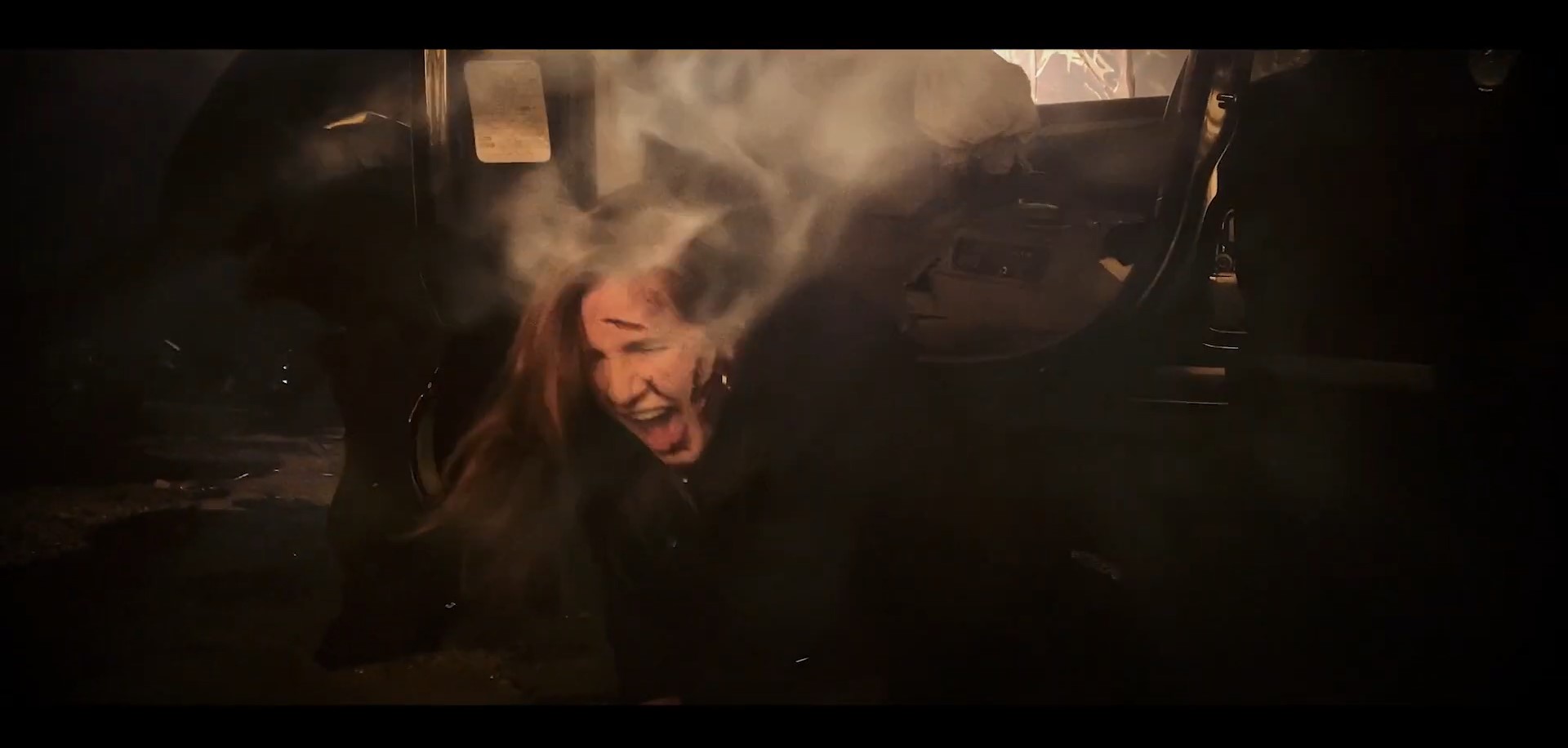
Author Faye L. Ryan has found success as a career writer penning personal growth and self-assurance books, but the renowned author has hit a mental wall in growing out of the process of mourning for her deceased husband, killed in a car accident in which Faye was at the wheel.  Scarred physically and mentally with painful reminders of that fateful night, Faye struggles to focus on her next new book, threatened to be dropped by her publisher if she doesn’t meet their deadline, and interacts with her husband as if he was still with her in person.  In a last ditch effort to get Faye back to writing before cutting her loose, the publisher offers up a lakeside vacation house to help focus on her work, but as Faye settles into her new, quiet writing space, she finds herself unable to escape a haunting presence tormenting her. 

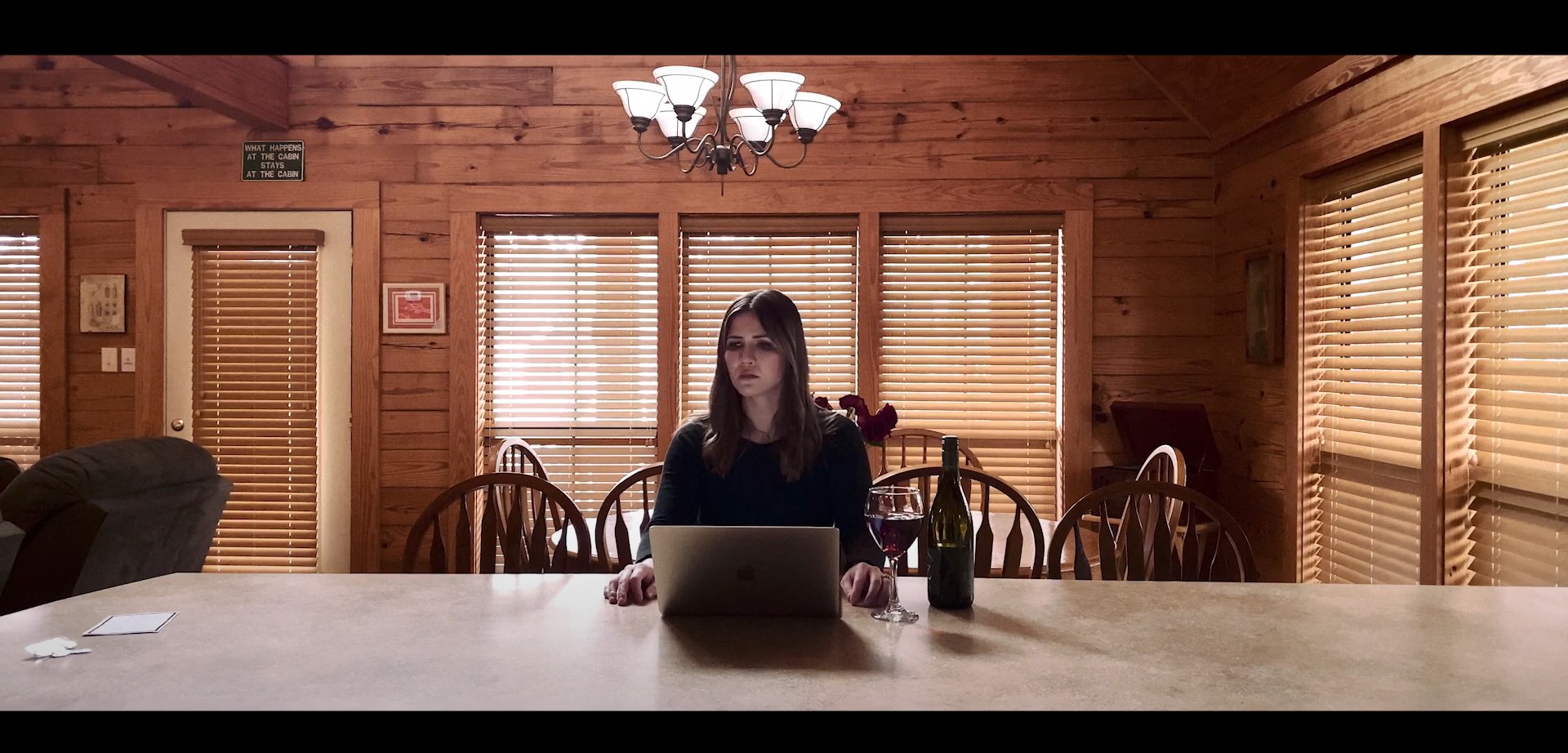
Working solo is tough.  Having no one to bounce off dialogue or react to their disposition can be daunting and unnatural for most actors and actresses.  Yet, the titular character in “Faye” must do very that to ensure Kd Amond’s 83-minute feature directorial about loss, grief, and the supernatural representation that braids into a broken reality will exist without suffering stagnation.  “Faye” is a 2021 female-driven horror-drama written by Amond and the film’s lone wolf star Sarah Zanotti as the two filmmakers reteam from the previous year’s dysfunctional family thriller, “Rattled.”  Shot between Nashville, Tennessee and the cabin resort of Lacombe, Louisiana, “Faye” is cut from an all-female producing team of by Amond, Zanotti, Sara DelHaya, and Nicole Marie Lim under Amond and Zanotti’s independent film production company AZ if Productions.

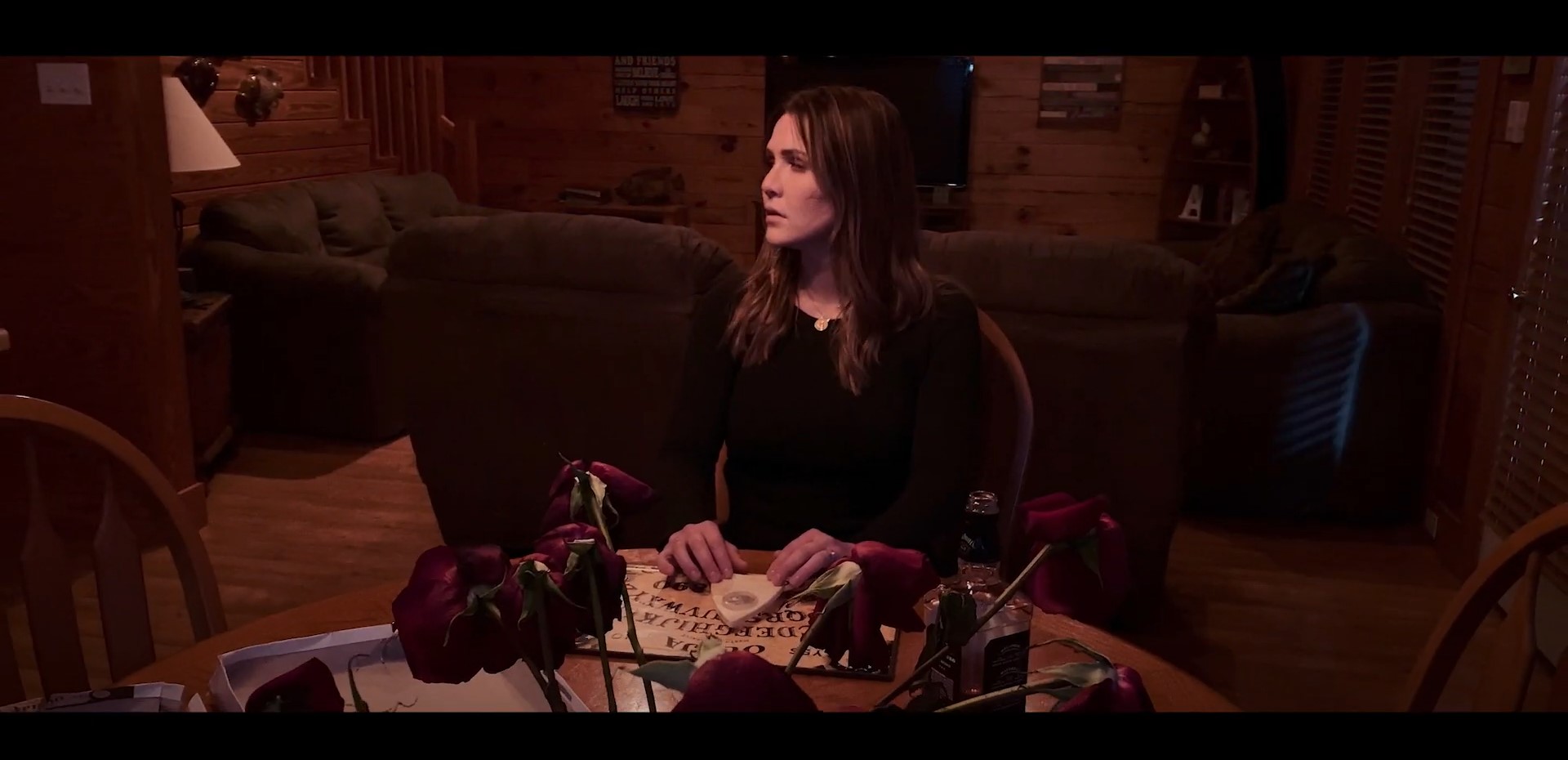
So, how did Sarah Zanotti perform going at the role alone with not another single body in sight?  Aside from the performance scale, initial first thoughts about an emotionally processing Faye rings clear that she is definitely alone with her thoughts without ever confronting her past head-on.  Faye, more or less, brushes the incident to the side, drowning herself in wine and loathing, until vague, intermittent memories pull her back down to reality every so often.  The role gratifies a sense of a struggling individual’s unintended and deeply personal isolation stemmed by unable to grasp with the hard to deal with issues to where’s she’s invented an imaginary friend in the form of her late husband in this pretend world of being normal, routine, and safe.  Looking from the outside in, Faye invokes pity on the saddest level as she converses with thin air as well as drinking large quantities of wine alone. There’s even the suggestion in either flashback scenes or maybe representational moments of despair that she, at one point in time, committed to, or thought of, suicide. As for the “Archaon: The Halloween Summoning” actress Zanotti? The actress, singer-songwriter, and proud cat mother (as stated on her personal website) breathlessly engrosses herself in Faye’s darkest moments with a ramble of insecurities that skate around the main issue until that issue manifests as a specter of duality, haunting “Faye” with her own scarred image that won’t allow her to leave until she combats the guilt eating her away. However, Zanotti’s a bit one tone through the entire storyline, never zig-zagging in a full range on emotive spectrum when face-to-face with the emulated specter. There are guest voices in the film whenever Faye takes or makes a phone call, including vocals from Corri English as Emory the publisher, Dean Shortland as Bobby, Brian Vance as Jacob, Kd Amond as Faye’s mom, and Zanotti as Elle.

To carry an entire feature film on your shoulders is empathetically tough for the one and only principle lead Sarah Zanotti and also the director Kd Amond as well and I wouldn’t declare “Faye” to be an overstimulating visual film albeit snazzy editing and makeup effects when sucked into supernatural self-reproach and suffering. “Faye” leans heavy into self-centered conversation in an acerbic chaptered and non-linear context that can be difficult to follow it’s pathway structure at times when the titular character is not framed in the cabin but rather sitting, speaking on a well-lit platform that fits her personal growth expatiate, like a Tony Robbins-type, connecting back to Faye’s mindset or actions in the cabin. Though much of the conversion is directed toward herself or the mental image and two-way communication of dead husband, a good chunk of the dialogue is the unwavering tough love business-speak between agent and client. Faye publisher rakes in money based off book sales and if Faye isn’t writing up drafts than a publisher does not care about your personal tragedy. That dynamic during the calls feels utterly cold with no pity or sympathy for Faye in the voice of the agent who cares solely about client image for publicity and is determined to nag a draft out of a woman who has lost her best friend in life – grief and guilt be damned. As a spook show, “Faye” whips up a few moments of fearful highlights but does little to the film’s self-proclaimed horror label when more of the acidity of internalizing the death and destruction of her life becomes more manic without the monster that’s introduced too late or comes too little often to be integrated into the story properly and stands out as negative concentrated symbolism.

Oozing with heartbreak and melancholy, the fracturing viability in “Faye” calls forth the detrimental impact and for reinstation back in the society, one needs to fall before getting back up. Reel 2 Reel Films brings the American-made, woman-driven, atmospheric and apparitional “Faye” to the United Kingdom on digital home video come May 9th. Since a digital screener was previewed, there will be no critique of the audio or video qualities. Kd Amond was really a one woman show behind the camera by taking on not only the directing duties but also many others, including cinematography and visual/practical effects and for “Faye,” the film was mostly captured with natural lighting outside the cabin, practical lighting for cabin interiors, and key lighting of Faye on stage. There’s use of a filters during the more supernatural plights and to tell night scenes that don’t look natural, leaning toward a more style-choice purple. For any extras, there were no bonus scenes during or after the credits. “Faye” has strong bones for a good grief and guilt ghost film in the indie realm and while it doesn’t have the star-laden power of other similar themes of its kind in “The Babadook” or “Hereditary,” “Faye” still invokes the power of hurt and the summoning of self-condemnation.