EVIL Has the Right to Remain Dead! “Magic Cop” reviewed! (88 Films / Blu-ray)

No Two-Bit Magician In ‘Magic Cop” on Blu-ray!  

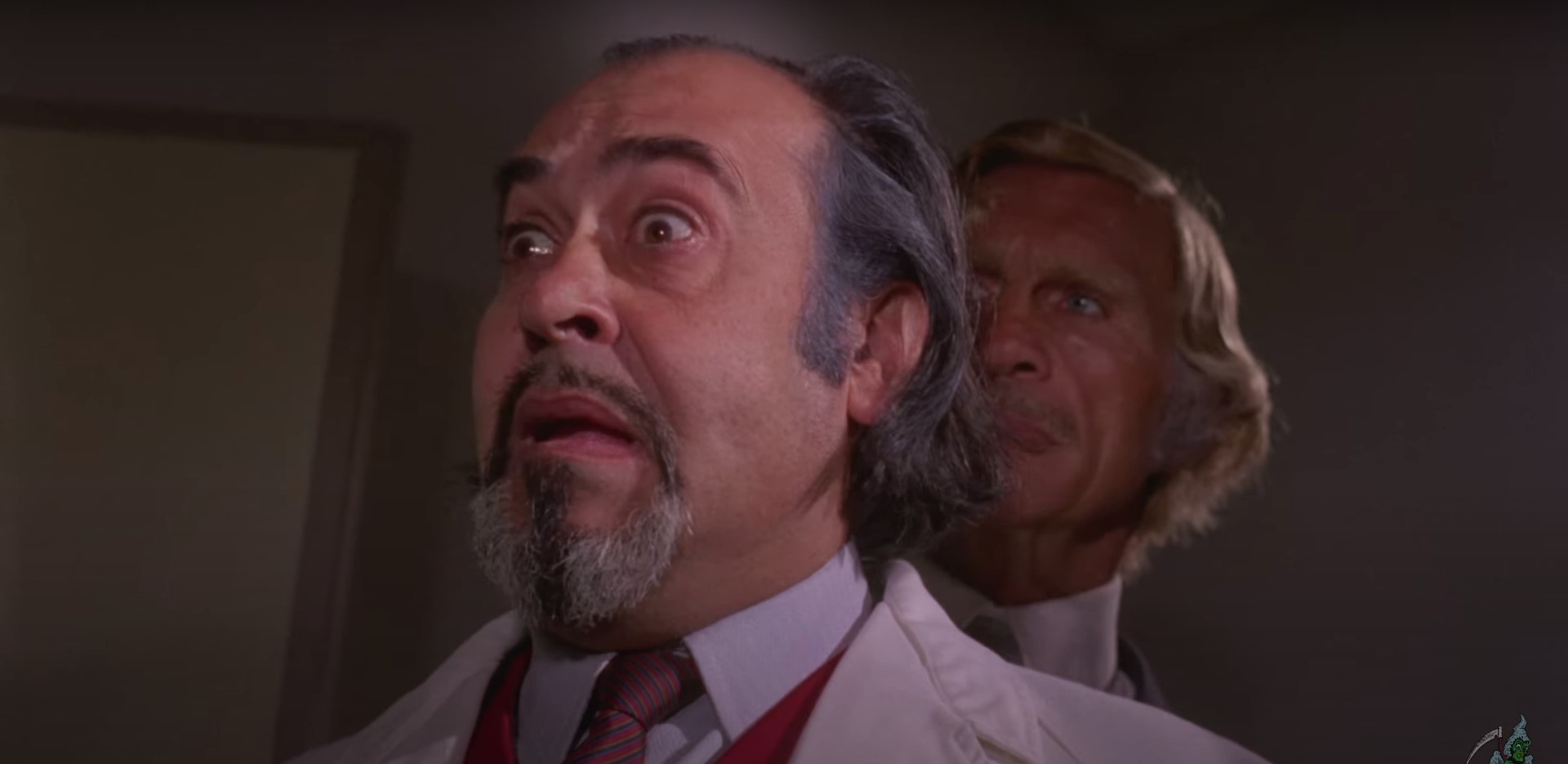
Hong Kong cops are confounded by a chaotic drug bust when learning that their female suspect, who had managed to overpower an entire unit of male officers and even take a bullet ambling deadpan into the streets, had died 7 days prior.  An outlying officer, and practicing Taoist, Uncle Feng is called to Hong Kong to not only quickly solve the narcotic crime but also investigate the unnatural properties of the case.  Feng is accompanied by his city eager niece Lin and two Hong Kong cops, a Taoist devotee and skeptic of Ancient Chinese spiritual mythologies.  Together, they track the drug trail to The Sorceress, a Japanese witch with powers that rival Feng and that can resurrect the dead into zombies and vampires to do her bidding, such as trafficking narcotics.  When the investigation closes in her business, The Sorceress and her right arm, skilled fighter plan to remove the only man worthy of stopping her.

Fans of Ricky Lau’s “Mr. Vampire” will once again be amazed and entertained by the fantastical and mystical action of Stephen Tung Wai’s “Magic Cop.”  Tung, a fellow martial artist and stunt man who had roles in “The Fatal Flying Guillotine” and John Woo’s “Hard Boiled,” helms his debut directorial penned by Chi-Leung Shum (“Vampire vs Vampire”) and the longtime Stephen Chow script writer Kan-Cheung Tsang (“Shaolin Soccer,” “Kung-Fu Hustle”).  The screenwriting duo brought lighting quick comedy to the mostly fictionally invented yet sprinkled with slivers of hard-pressed veracity and definitive entertaining occultism and what resulted resurrected “Mr. Vampire” semblance out of the being a period piece and into the modern day, backdropped in the year of 1990 when the film was released.  Long rumored to be the fifth sequel of the “Mr. Vampire” franchise, “Magic Cop” is a coproduction between Movie Impact Limited, Millifame Productions Limited, and Media Asia Film with star Ching-Ying Lam producing.

“Magic Cop,” and even “Mr. Vampire,” wouldn’t have such a cult following if it wasn’t for the Vulcan eyebrows and thin mustache of Ching-Ying Lam in costume.  The short-statured, Shanghai-born Lam delivers the same vigorous choreography and tranquil demeanor to this particularly stoic character of Uncle Feng, a Taoist practitioner to essentially wrangle unruly entities and please the spirits in the in-between our world.  Feng is old world and finds himself in surrounded by modernism when in Hong Kong, goaded by the young lead sergeant attached the case.  Practical as well as disrespectful, Sgt. Lam (Wilson Lam, “Ghost for Sale”) epitomizes today’s, or rather back then the 1990’s, modern man who has forgotten tradition and deference to those who came before.  Though padded with a fair amount of comedy coursing throughout, balanced against the impeccably edited tango fight sequences, Sgt’ Lam’s partner, known only as Sgt. 2237 played by “Centipede Horror’s” Kiu-Wai Miu, risibly wants to understudy Uncle Feng’s powers while Feng’s niece Lin, played by Mei-Wah Wong of “The Chinese Ghostbusters,” provides the subtle and quirky opposite sex that catches of the philandering eyes of Sgt. Lam.  The ragtag quartet of influx mindsets and personalities become challenged by their single common goal, to stop whoever is behind breathing life into the formidable dead and stop the unorthodox method of drug smuggling.  Former Japanese bodybuilder Michiko Nishwaki (“City Cops”) embodied that very dark magic antagonist.  Nishiwaki handles The Sorceress character with ease despite not having a surfeit army under her thumb; instead, this forces Nishiwaki to become the entire villain body with the slight, full-contact support for her right-hand bodyguard (Billy Chow, “Future Cops”) and a couple of undead lackeys, including Frankie Chi-Leung Chan of “Riki-Oh.”  “Magic Cop’s” cast rounds out completely with well-versed and seasoned, late actor Wu Ma (“Mr. Vampire,” “Return of the Demon”) as the chief inspector polarized in a complicated history with Uncle Feng.

What director Stephen Tung Wai boils down in essence is another variation of good executants of spirit humbled caretakers versus the wicked necromancers existing inside the fabric of the highly praised and cult-following “Mr. Vampire” universe.  Frankly, there’s nothing wrong with that derivativity since Ching-Ying Lam, Mr. Vampire himself, produces and stars as the titular hero.  Lam can conjure whatever-the-hell he wants in order to battle Hell itself.   “Magic Cop” is also a well-made, entertaining story, balanced between the contest wizardry, slapstick comedy, and the character dynamics, and stacked with improbable yet gratifying step-intensive fight orchestration that has gawked early martial arts films a wonder to behold and continues to do so to today but now trickles with pizzazz more-after-more due to put in place industry safety measures.  “Magic Cop” contains that lost art of potentially hazardous palatable physicality that beguiles more than the movie’s faux magic exhibited on screen.  To add to the authenticity, very little painted composited visual effects were used with makeup and the actors doing much of the heavy lifting with the editing team of Ting-Hung Kuo and Kee Charm Wu in full cut-and-paste fortifying mode to button up each sequence with comprehendible continuity of each punch, kick, and magical chopsocky.  One overtone made well known in “Magic Cop” is the unfillable chasms between old and new, respect and disrespect, and myth and science from whence solves no problems until some unified common ground can be reached in order to succeed, in this case, to stop a bitch of a witch.    

An age-resistance 35mm print scanned onto a buffed 2K Blu-ray that extracts the best print elements to-date. The AVC encoded, 1080p, Blu-ray presents Stephen Tung Wai’s picture in a widescreen 1.85:1 aspect ratio. A fine-tooth comb through the celluloid couldn’t unveil any major issue with the 88 Films release. Colors are richly grafted within the sabulous surfaces that are exceedingly defined with delimited, shadow-creating depth. Decoding speeds average around 35Mbps on a BD50, securing categorical choiceness amongst other releases and formats (that is until the potential 4K release). The release comes packed with four audio options to explore: The original Cantonese DTS-HD master audio 2.0 mix, a Cantonese DTS-HD 2.0 home video mix, an English DTS-HD 5.1 master audio dub, and an English DTS-HD 2.0 dub. Between the variated audio mixes, we preferred the original Cantonese DTS-HD 2.0 due to its cadence with the image and welcoming exactness through the lossless compression process. You can make do with the other three options, but the fidelity is much better with the original mix and only anti-subtitle sectarians would be pleased with an English dub. English subtitles are optional and synch well the dialogue but be prepared to speed read as the pacing is quick much like the dialect. Software special features include an audio commentary with Hong Kong film experts Frank Djeng and Marc Walkow, an alternate, standard definition Taiwanese cut of the film with alternate score, an interview with director Stephen Tung Wai, image gallery, and trailer. Endowed with a limited-edition, cardboard slipcover, the dark green Blu-ray snapper has newly illustrated, front cover artwork by Manchester graphic designer and 88 Films resident artist Sean Longmore, which is also on the cardboard O-slip. The reversible cover art has a reproduction of the original Hong Kong poster art. Stuffed in the insert is a mini-folded poster of Longmore’s front cover and a disc art, a scene moment captured in spherical rotunda, of the opening sequence. Available with a regional playback limited to A and B, the 88 Films release is not rated and has a runtime of 88 minutes. ‘Magic Cop, perhaps, wasn’t the sole proprietor of influence but certainly had a black talisman plying hand in the substrata of more Western favorites like “Big Trouble in Little China” and is a crucial cornerstone in representing the best of the Hong Kong Golden Age of cinema.

No Two-Bit Magician In ‘Magic Cop” on Blu-ray!  

EVIL Preys on the Goodness of the Weak. “Lady Terror” reviewed! (Sector 5 Films / DVD)

“Lady Terror” is on the Prowl.  Now on DVD!  

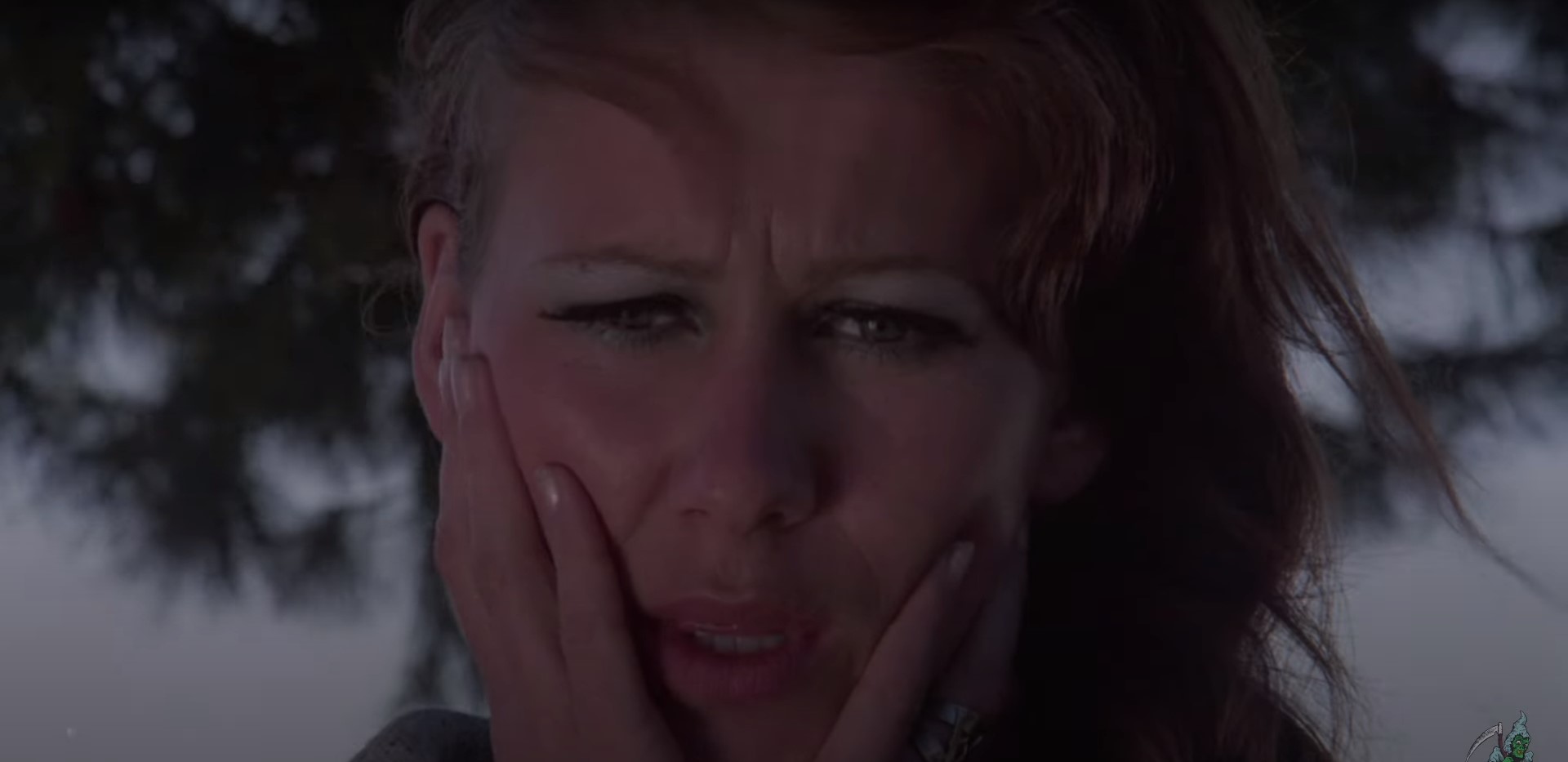
Jake Large, a shrewd personal injury lawyer, finds himself in a loveless engagement that’s full of contempt, especially with his finance who makes up excuses to not be around or intimate with him.  When Jake foils a thief’s grab and dash of Candice’s purse, the lawyer and the exotic dancer quickly fall into a relationship that rekindles Jake’s vivacity of work and life.  Breaking off the engagement to his equally two-timing finance, Jake pours every ounce of emotion into the sexually tempest romance that’s rapidly become more than just courtship when Candice suggests the murder of her frequently threatening and abusive stepfather.  Witnessing first hand some of his behavior, Jake agrees to take out her stepfather in a fiery explosion during one of his rabbit hunting trips.  When the dust settles and all seems to be going well with Candice, a watershed moment reveals Candice’s intentions are not what they seem to be and in the middle of taking the fall for everything is Jake. 

An enticingly fervid thriller, “Lady Terror” is the latest directorial from the 30-year industry producer, writer, and director, Nathan Hill.   Filmed in Melbourne, Victoria, Australia, “Lady Terror” harks back to the early 90’s erotic suspenser of sex, deceit, and murder where seduction and predatory persuasion are welded tools to accomplish unscrupulous acts.  Hill has submersed himself chiefly in low-budget genre films from his first feature, a sewer creature that craves Cartel drug pushers in the SOV shot “The Hidden” released in 1993, to more recent and gamut gorging Australian documentary pictures, such as “Bigfoot Down Under” and “Sex Down Under,” as well as keeping tethered to his horror roots with his short film work contributed to compilated anthologies in “Clownsploitation,” “Previews of Coming Attractions,” and “Schlock-O-Rama.”  Hill produces his “Lady Terror” under his company NHProductions with the Alien enthusiastic documentarian, executive producer Warren Coyle, and marks the reconnection of Hill and director of photography Dia Taylor following their debut, feature film collaboration on Hill’s “I, Portrait” and the various filmic vignettes from before. 

Not only does Hill write, direct, and produce, the filmmaker with a penchant for creating J-named characters is also the lead principal personal injury lawyer Jake Large, owner-proprietor of Large Lawyers.  Though successful in his legal craft, Jake’s has developed depression when his once endearing fiancé Celine has turned against him as she sneaks around his back with a mixed martial artist.   A loathing Celine is played severely cutting by Tritia DeViSha who has previous chemistry alongside Hill during their time on Hill’s “Revenge of the Gweilo” production and while the chemistry between their characters is palatably thick with contempt, there’s not much backstory in gain traction for sympathy, compassion, or any other emotive expression.  Jake has a single flashback of his and Celine’s happiness in simpler times during a moment of what could be regret or longing, but there’s simply not enough breadcrumbs for their history to take shape of any form.  Instead, their turmoil feeds into Jake’s unquestionable willingness to concede to a beautiful exotic dancer and damsel in distress named Candice (Phillyda Murphy).  The attention is good, the sex is good, why not just give a little back by murdering her crooked stepfather (Anton Kormoczi – who also goes by Anton Trejo because he mildly looks like Danny Trejo)?  Well, Jake’s lovestruck blindness obscures the real intent but, luckily for Jake, he has what he describes as a lucky rabbit’s foot in his secretary who aspires to be a private investigator and when she’s not punching keys, she’s clandestinely tailing Candice in a spying and snapping pictures behind trashcans and around corners caricature kind of way.  The platinum blonde and distant relative of horror maestro, Dario Argento, Simay Argento is the peripheral probing dick Ayla Harp that initially doesn’t have this close-knit relationship with her boss until the third act when she happens to take it upon herself, after examining Jake’s behavior and reading his desk notes, to snoop into his private life on his behalf.  It’s not entirely clear how she unearthed who exactly Jake became intimate with but she managed track down Candice’s exact location to snap a few black and whites.  “Lady Terror’s” remaining cast feels very much like Ayla Harp in the disconnection of each other’s narratives, ridden along in choppy succession that leaves too many plot holes to fill.  The cast rounds out with Leslie Lawrence, Anthony Cincotta, Robert Rafik Awad, Challise Free, and Adam Ramzi – the 40-year-old Melbourne actor, not the gay porn star.

Perhaps that character disconnection stems from the distracting filler from in between dialogue scenes.  A slew of these filler scenes are of Jake Large driving around town, pulling up into driveways, and entering his home, Candice’s home, or his office, eating into a runtime that could be better suited for character exploration or assembling the fragments of a deceptive thriller involving the key players.  The current design dulls the run-of-the-mill and insubstantial story with nothing new to offer audiences to facelift the core element, a rope-a-dope of relationship pretense in order to con a fall guy into another’s dirty work.  Though I know the answer in the back of my mind, a considerable amount of struggling happens in the deductive logic and complex problem solving regions of my brain for the missteps of what’s supposed to happen after Jake commits to the hit.  Ultimately, the worst outcome to happen to Jake is not what I suspected; in fact, we should be expecting a more disastrous, run-for-your-life fall from grace, but, instead, there’s no sense of urgency or consequence in the unravelling of Jake’s newfound and glorious prospects with Candice.  In fact, police presence is reduced to informing Candice her stepfather had died and that’s the extent of it, not mentioning the gunshot, a gasoline fueled explosion, or any other kind of suspicious death pursuits.  The awkwardness continues to bleed into the narrative continuity.  “Lady Terror” has a time span of at least a week or two, or longer as it’s not entirely clear, but Jake’s outfit rarely differs from the white pants, blue button-up shirt, tan sport jacket, and fedora.  The same goes with his lacy see-through topped assistant Ayla, suggesting that many of the scenes were shot on the same day or two without a wardrobe change.  When Jake does have a different outfit on, the subsequent scenes revert right back to that then by now stale getup. 

“Lady Terror” arrives onto DVD courtesy of Sector 5 Films, long overdue revisit of the distributor’s line of product since our last review from 2016.  Presented on a DVD-R, with DVD5 capacity, in a widescreen 1:78:1 aspect ratio, “Lady Terror” retains an unhewn image that appears soft, smooth, and with slight aliasing.  Overexposure wipes a fair amount of background sky, such as with approx. ten minutes into the story a plane just flies off into a bright void, but the overcast grading leaves this modern noir consistently dreary to where the only thing that stimulatingly pops is Phillyda Murphy in her skimpy intimates.  Again, there’s not a ton of landscape range, especially being set around Melbourne and not taking advantage of the city skyline or it’s Port Phillip harbor with the drone to gain urban rookery.  Sector 5 DVD’s back cover states the film has a 5.1 surround sound mix, but what my player tells me, “Lady Terror” actually comes supplied with an English Dolby Digital 2.0 mix.  The dual channel output would have been a sufficiently adequate mix albeit unpolished, echoey dialogue but for the entire length of the film, a harsh gargle undercuts the sharpness in the dialogue and the Jamie Murgatroyd (“No Such Things as Monsters”) soundtrack.  This also creates faint whispery-hissing.  There are no optional subtitles included.  Bonus features include doomsday, extraterrestrial, and anthropology hypothetical or alternative fact-doc trailers for “Occult of the Secret Universe,” “Nostradamus:  Future Revelations and Prophecy,” “Ancient Origins:  Extraordinary Evidence,” “Alien Paradox:  Legacy of the UFO,” “Demonic Aliens,” “Breaking Free of the Matrix,” “Ancient Origins:  Mankind’s Mysterious Past,” and “Elusive Bigfoot Abroad.”  The Sector 5 DVD is housed in standard black snapper with trashy romance novel resembling front cover of two who are not Nathan Hill and Phillyda Murphy in throes of passion.  The cropped top portion of the cover art that includes Murphy’s face in composited in 3 hues is also pressed onto the disc art.  The release comes not rated with an 80-minute runtime and a region 1 encoded playback.  Though performances are solid, “Lady Terror” ultimately feels underwhelming and unable to live up to the attractive title with an unadventurous noir thriller hamstrung stake to the heart from the DVD-R’s anemic technical and fidelity issues.

“Lady Terror” is on the Prowl.  Now on DVD!  

EVIL Will Piss on Your Skull! “Solitude of the Tormentors” reviewed! (DVD / SRS Cinema)

Loneliness Can Be Killer. “Solitude of the Tormentors” on DVD now!

Outpatient assistant caregiver Karla tends to the needs of the disabled, ensuring their medication needs are scheduled and administering fresh air with daily outside strolls. In the off hours, Karla emails a long-distant lover who will soon be visiting. What her lover nor her patients realize is Karla’s darkest secret of being a serial killer, using her position as an easy way into the lives of the enfeebled and killing the frail who don’t put up much of a fight back. Morris, Karla’s close acquaintance of taboo tastes, pays her a large sum of money to bring him a wheelchair bound man. Alone for a very long time, Morris enacts a relationship between the two men albeit the wheelchair man’s weakness to counter Morris’s appetite for advances and abuse. Between Karla and Morris, a deathly agreement of quid pro quo is made bond to parry loneliness off the skin of weakly others.

“Solitude of the Tormentors,” “aka “Desolation of the Tormentors,” or in Germany, “Einöde der Peiniger,” is not our first experience with the underground independent film writer-director Juval Marlon. We last visited the extreme gore-and-shock, cinematic furtive, Swiss-born filmmaker was during ItsBlogginEvil’s first quarter review in 2022 of “Snuff Tape Massacre,” the conspicuous title for Marlon’s 2019, Germany banned and confiscated first feature film, also known as “Assault Rifle” or “Sturmgewehr,” that had finally hit the U.S. retail market with a carnage celebrated DVD from SRS Cinema. “Snuff Tape Massacre” depicted the surfeit and superfluous graphic torture, rape, and death of a pregnant nurse and a deaf mute, the latter now being a reoccurring motif in Marlon’s sophomore gore feature with the introduction of even more physically challenged meat for the grinder. Stepping up his narrative game with two episodic slices of life of two sociopaths, Marlon self-produces his latest indelicate indie with intoxicating toxicities under his unfriendly Google search label, Beheading Films.

The picaresque “Tormentors” that belittle and butcher the physically and mentally impaired are a pair of German natives who walk a path paved in blood, well, more along the lines of blood red corn syrup. Isa Belle Fitzgerald (“La Petite Mort II,” “The Last Tape”) has found footing in the shock cinema of Marcel Walz but the raven-haired goth with soft eyes and a pierced lip has moved into the Marlon’s world of melancholic mania with the nudity-laden, Elizabeth Bathory-esque Karla. Karla’s cranomania tendencies is often displayed frolicking and rolling around naked through the woodland brush holding an animal or a human skull, gently stroking and kissing the fleshless, calcinated head, and also squatting to urinate on its existence as if to lay claim upon its dead imagery. The obsession forces Karla to live a life of solitude in her abundance of sociopathic lust. She even invites an attractive woman online to her neck of the woods where the intimate beginnings of a genuine relationship begin, despite its fast forward approach right into something sexual initiated by the other woman, and so it’s understood that Karla, by her physical and manneristic projections, is a suitable, capable person to love but her hidden narcissism spellbinds the young woman to betray those natural feelings into something far ghastlier. The second episode is a baton handoff to Morris, a lonely manor man corrupted by his own set of integrated sociopathic letches that have warped and twisted his mind. Much like his principal counterpart Fitzgerald, Jörg Wischnauski has become a blood stain in the extreme horror genre for the last six years with having roles in “Blight of Humanity” and “Forces of Dying II,” but unlike Fitzgerald, Wischnauski could be the tricenarian next door with less of a character coordinated effort in hiding his horrible compulsions. Morris’s compulsions fall no shorter when compared to Karla’s skull obsession, but his desires are equally as isolating that compel him to wine, dine, and dispatch his crippled companion with mercurial bipolarism. In one instance, Morris can be invasively creepy but caring to then turn on a dime toward pugnaciously cruel, treating his unwilling lover with degradation and objectification. Performances between both actors slip us into a serial killer’s woven world of dysfunctional addiction and impartial violence that has become their normal. The rest of “Solitude for the Tormentors” cast rounds out with Vlad Petrov as Morris’s unwilling wheelchaired beau and “Die Boten des Todes’s” Melody Bayer as Karla’s internet dupe as well as Marco Klammer (“Pestilenz”), Sven Zinserling, and Maria V. from “Snuff Tape Massacre.”

Compared to ice-veined contract killers of “Snuff Tape Massacre,” Juval Marlon lifts the shade higher on the core principals so we can see into the twisted soul of the serial killer characters with more definition albeit an unclear sense of purpose, much to the same beat to society integrated murderers.  Essentially, we’re granted a sneak peek into only a slither of what makes these sickos tick.  With plenty of profane and egregious gore to go around, Marlon doesn’t waste any time with a path less trodden exposition and lets the characters’ conduct speak for themselves in what is a bit of an individualized kink and kill dance of solitude.  Upping his game on the gore effects, Marlon doesn’t narrow the focus on any one particular prosthetic body part to ravage in frame as depicted in “Snuff Tape Massacre;” instead, in one cold-hearted and unforgettable scene, an entire female torso and head are crafted for a series of flesh popping puncture wounds in a measured orgasm of mutilation that ends bloody and fatally.  Perhaps a tad rubbery as the knife tends to bounce on the skin, the overall result is gruesome with the prosthetic appearing to slice and split open with organic optics that’ll transmit phantom pains to your own body parts, but does also discern a factuality oversight when the large blade goes into the woman’s mouth, and she continues to scream perfectly without obstruction.  One reoccurring motif strung along in both halves is one I wonder Juval Marlon has a particular fetish for much like bare feet and Quentin Tarantino.  There are numerous scenes and scenarios involving actual urination from both Isa Belle Fitzgerald, Jörg Wischnauski, and Vlad Petrov with some extreme closeups on the genitalia as urine streams.  Karla urinates on her prized skulls while Morris fills up a flute for a syringe to aspirate the lightly golden liquid where it’ll be injected into his helpless victim.   Again, comparing between his debut and sophomore full-length snuff burlesques, the stories told are kitschy tales of torture without a reaffirming arc we can stomach but they gratifyingly scratch the undertowing proscribed itch with a dash of artistic flare.

Juval Marlon is 2-for-2 in making the Nightmare Fuel collection on SRS Cinema’s Extreme and Unrated line of shocking, gory, and intense horror.  The MVDVisual distributed “Solitude of the Tormentor’s” DVD is presented in a 1.85:1 aspect ratio on an impressively compressed DVD9 that decodes at an average of 7 Mbps.  Foliage is detailed to every ribbed, photosynthetic leaf, the gore effects shine immensely in the details, especially with a lifelike prosthetics in the camera’s line of sight, and skin details rustle up nicely with shape and texture in every scene.  Budget doesn’t allow for tints and gels, or any variation of artificial environmental supplements, leaving everything in the scene as about as naturally colored as it comes and slightly overexposed that creates a sheen on many surfaces, except for a handful of dimly-lit, low-contrast moments forced into lossy compression to pull out as much delineation and detail through the e-interference as possible. A quite a few number scenes extract agreeably on the screen, such as the image pulled for DVD front cover illustration of an obscured, naked Karla holding a skull palms up in a field of tall grass.  Not only is the scene near impeccable in pixilation, as much as standard definition releases can muster, but the shot itself is mise-en-scene gorgeous and macabre.  The lossy German language Dolby Digital 2.0 caters to the wind and chordophone instrumental score and harsh Germanic dialogue rather than additional surrounding ambience but will home in on deliberate dins with exaggerated chewing or the clickity-clack of a keyboard.  Dialogue is clear and prominent in the composition of audio layers whenever there is no instrumental score until then does the dialogue have to fight for dominance.  Through the extra’s menu, subtitles are optionally available.  Also available in the extras is an interview with Isa Belle Fitzgerald discussing her project accepting process and nudity, an interview with Jörg Wischnauski on the graphic material and how he approaches acting, Juval Marlon’s short film “Spring Feelings,” aka “Frühlingsgefühle” with Jörg Wischnauski in the death during the birth of the lively season, and the film’s trailer.  I already commented on the SRS Nightmare Fuel front cover to which that image also resides on the disc pressed art as well in a bloodshot tone.  There is no insert included.  The uncut, unrated DVD has region free playback and a runtime of 65 minutes, aptly paced for the content without lingering too long on naked frolicking but who can argue with Isa Belle Fitzgerald nudity?  Director Juval Marlon lets it rip, literally and figuratively, in his grisly shocker that relieves itself here, there, and everywhere; an inducing catatonic crippler on path to likely become the Swiss filmmaker’s second banned and confiscated exploitation in a matter of years.

Loneliness Can Be Killer. “Solitude of the Tormentors” on DVD now!

Recalled to Nam is a Return Tour of EVIL! “Kill Zone” reviewed! (MVDVisual / Blu-ray)

Enter the “Kill Zone” on a New Blu-ray Home Video!

Combat POWs are captured by enemy forces, imprisoned in an outdoor internment camp.  Tortured for information, the prisoners are held without water in the scorching heat, strung up for hours on posts, beaten to a pulp, and stowed away in a hotbox if they do not cooperate with interrogators.  When Lt. Jason McKenna snaps and loses grip on reality, he breaks free from his confinement and kills four guards during the process when the soldier believes he’s back in Vietnam.  The only problem for McKenna is that the enemy imprisonment was a his own military’s roleplay training exercise for POW-survivalist.  The commanding officer, Colonel Crawford, had pushed McKenna too hard, making the exercise realistic as possible despite the warnings of fellow trainee and McKenna’s friend, Mitchell.  Now, the incensed Colonel is out for blood, covering his tracks with military leadership as he and the gung-ho soldiers seek to put an end to McKenna and it’s up to Mitchell to find his troubled friend first. 

The high-body count film that became the launching point for what would form Action International Pictures, 1985’s “Kill Zone,” an American-made, military actioner written and directed by the late David A. Prior (“Sledgehammer,” “Killer Workout”), opened the production door for a string of both action and horror ventures that spawned cult followings over the decades to come, especially when obscure titles such as “Kill Zone” never made it passed the release of its VHS format – until now.  John Saxon’s “Death House,” “Teenage Exorcist” with scream queen Brinke Stevens, and even the pint-sized creature feature “Elves” are just a few titles that owe “Kill Zone” some ounce of ground working thanks.  Prior cowrote the script with Jack Marino, who also produced the film under the limited formation of Spartan Films, and was shot in and around what is now Prado Regional Park in Chino, California.

Trekking from internment camp to civilization, aka the kill zone, and fighting and fleeing for their very lives from their own crooked military unit are McKenna and Mitchell, played correspondingly by “Killer Workout’s” Fritz Matthews and Ted Prior, younger brother of director David Prior.  Though Matthews has the emotional range of a tree stump, the leading man more or less fits the bill as a tall and stocky soldier protagonist while Mitchell does all the emotive heavy lifting of the pair, reflected in his large and muscular Stallone-sized biceps.  The comrades’ necks fall under the boot of Colonel Crawford from an aging David Campbell (“Scarecrows”) whose ridicule onslaught is dousing and his ruthlessness remains constant but can’t top the baseline he cemented early on into the story, diluting his villainy with not much formidableness, and becomes a feeble opposition.  Colonel Crawford is backed by his equally inadaqute military unit, former fellow trainees that divide themselves into a clique against the diverging outliers McKenna and Mitchell who separate themselves from the apathetic herd thinking either by post-traumatic mental illness or for concrete concern for a life-saving friend.  Either way, the rest of the unit bully their way into Crawford’s good graces albeit the Colonel’s lack of interest in the lives or death of his men in a nationally organized armed force that breathes the creed to keep the peace, but the Colonel’s men are just as complicit to their commanding officer’s callousness when they begin to rough up and snuff civilians in what is the most cold-blooded aspect of “Kill Zone’s” torrent.  Dennis Phun (“Surf Nazis Must Die”), Rick Massery, Richard Brailford, William Zipp (“Mankillers”), Richard Bravo (“Killer Workout”), and Larry Udy fill out the Colonel’s men while Ron Pace, Tom Baldwin, Jack Marino, and Sharon Young round out the civilian contingent.

On the surface, “Kill Zone” has the presentation of a direct-to-video, low-budget rip of “First Blood” but like the Sylvester Stallone John Rambo thriller, commentary undertones rise to the top with an additional few bobbing and freestanding from 1982 film.  Producer Jack Marino admits watching “First Blood” prior to writing the script that obviously become appropriated from the Ted Kotcheff picture in what is an underlining post-traumatic syndrome plagued individual in a dormant stage of the affliction then becomes pried open by aggressive, misapprehending authority with no time for a condition they’re ignorant too.  What follows is a deadly resistance against a barbaric enemy and the starkly different situations both characters John Rambo and Jason McKenna find themselves caught up in parallel their hellacious Nam tour in many synapse-snapping and physically scarring aspects to a point where the line blurs between being back in that Hell in reality and being back in that Hell in the mind.  What “Kill Zone” adds to its own version of the tale is no pedestrian anti-war pushback like we see with Brian Dennehy’s Podunk sheriff and his deputies but rather a shift in commentary toward the military’s once push harder and neglectful treatment on PTSD in what becomes an anti-military production to the extreme.  John Rambo had military sympathizers in Richard Crenna’s Colonel Trautmann but Jason McKenna’s Colonel spat flak with nothing but contempt for what he considers a weak soldier.  While military criticism is large and in charge, what negatively impacts “Kill Zone” is the no flare for technical military behavior or jargon.  The opening combat scene exemplifies the inexactitudes with Mitchell and his team storming through brush and across a river toward an unseen enemy’s stronghold guns blazing like little boys with popguns and mouthy explosions sounds of amateurism splayed all over as he and his team run wildly, hop like a bunny into fire stances, and point rifles with no line of sight.  Prior is able to achieve some nice shots of ammunition exchange with slow profile pans and aerial assaults filmed up from the ground, but there’s too much downplay to take this low-rung action film seriously and to really get a viewer the headspace of “Kill Zone’s” deathtrap montage that warrants more respect than what the rest of the presentation layout provides.

Missing in action from contemporary formats for over three decades, “Kill Zone” finally becomes rescued from inferior definition captivity and arrives onto DVD and Blu-ray (reviewed) courtesy of MVDVisual’s Rewind Collection series.  The Blu-ray is an AVC encoded, 1080p high-definition transfer scanned and restored in 4K from the 35mm interpositive print.  Presented in a widescreen 1.78:1 aspect ratio, the new transfer breathes new life into the lost but not forgotten feature with an enriched color grading and a sharpening of details, especially textures of the foliage and rocky terrains and assorted skin features.  Not entirely impeccable, contrast often teeters in the same frame and there’s an abundance of saturating grain, like large raindrop grain, in nighttime image that wash out details to great extent, but we’re always reeled back in with warm and pleasant color palette that flushes the previous VHS release quality down the core memory exiting drainpipe.  There’s one or two moments of vertical scratches, indelicately faint, and rough editing patches that distort to a blip that may be more problematic and age-related from the interpositive print than the dynamic restoration that was done.  The English language LPCM 2.0 mono track suffers from the low-quality sound recording equipment or placement that renders dialogue soft and nearly unintelligible as volume levels severely spike depending on how much the actors are projecting their voices.  There is some minor, unobtrusive popping throughout the fidelity faithful ambient and dialogue track, the latter, though softly wavering at times, does ultimately prevail to the forefront.  Optional subtitles are available.  Special features include a new audio (and optional video) commentary with producer Jack Marino, moderated by Cereal at Midnight host Heath Holland, a new Making-Of Kill Zone” featurette with clips interview with Jack Marino moderated by “Kill Zone” restoration project producer Steve Latshaw, the Vestron Video VHS version of the feature in standard definition, a photo gallery, and the original theatrical trailer redone with restoration elements.  The action-packed original poster art obtains a renewed look for the Blu-ray’s retro cardboard O-slip that resembles a torn, scuffed, and stickered VHS box art. Underneath the slipcover, the same poster art is on the front of the clear Blu-ray snapper case with latch and on the reverse side a back-the-scenes still images of Ted Prior and costars in character form.  The insert holds a folded mini-poster of the original poster art and the disc is pressed with the ridged gridlines of a VHS shell cassette with insert this side directions at the top.  Pretty neat design that further leans into “Kill Zone” VHS cult following purgatory.  MVD’s 50th release of the Rewind Collection is rated R feature has a runtime of 91 minutes and the Blu-ray is region unlocked for everyone’s viewing pleasure.  No longer destined to live out its shelf life on VHS, the wonderful contributors to obscure movie restoration brings “Kill Zone” back into action with a rejuvenated hi-def release that’ll blow you away. 

Enter the “Kill Zone” on a New Blu-ray Home Video!

What Russian EVILS Lie Beneath in “The Lair” reviewed! (Acorn Media International / Blu-ray)

“The Lair” Has a Deadly Secret!  Blu-ray Now Available!  

Royal air force Captain Kate Sinclair is shot down over the arid planes of Afghanistan.  Swarming with Taliban insurgents and her command officer killed, Sinclair takes shelter in an old, abandoned Russian bunker from the Russian Afghanistan invasion of the 1980s.  What she stumbles into is an experiment lair housing numerous stasis chambers and dark secrets.  Sinclair manages to barely escape with her life when one of the creatures inside the capsules is released, tearing to shreds her well-armed pursuers.  Rescued by a ragtag team of U.S. military outcasts based in the middle of nowhere as peripheral punishment and joined up by a trio of British special forces in the area, the Captain attempts to warn her rescuers what’s out in the desert only to be on the receiving end of a monstrous invasion that sees the slaughter of nearly everyone in camp, including the camp commander.  Miles from anywhere and not enough supplies to withstand another attack, those soldiers left alive band together to stage their own last stand assault on the creatures’ Russian bunker lair to ensure hostile eradication.

Acclaimed horror director Neil Marshall (“Dog Soldiers”) returns to his roots with a claustrophobic, high-energy, and violent creature feature known as “The Lair.”  Having experienced underwhelming success with the fiery Dark Horse antihero “Hellboy” remake in 2019, Marshall returns to independent scene for the 2022 released film having been shot in the barren lands of Budapest, Hungary to create the illusionary Afghanistan territory backdrop.  Marshall co-writes the script with “The Lair” star Charlotte Kirk, a reteaming affair from Marshall’s last feature “The Reckoning” from two years prior in which Kirk also produced and starred.  Also returning from “The Reckoning” and into the producer’s chair is Daniel-Konrad Cooper along with “Infinity Pool” producers, Jonathan Halperyn and Daniel Kresmery, and “Lords of Chaos’s”, Kwesi Dickson in this Shudder exclusive collaboration from Rather Good Films, Scarlett Productions Limited, Highland Film Group, and Ashland Hill Media Finance with Neil Marshall and Peter Shawyer’s private equity investment group, Ingenious Media, providing financial support.

Star Charlotte Kirk and Neil Marshall have a seemingly natural rapport that has transposed well from their collaboration on “The Reckoning” to the “The Lair,” crossing subgenre that involve the equivocal occult to a more plainspoken physical presence of foreign experiments gone wildly bloodlust.  Instead of being hunted by a 17th century witch hunters just for being a woman saying no to man, Kirk steps into a role of authority as military captain with loads of smarts and adept at close combat as she’s being, once again, chased by predators, but these uber-predators are unearthly, unremorseful, and ugly.  Marshall provides just enough character backstory for understanding the stakes and strengths of each of them but to reach a little more into their history might have been key to stronger motivations and for something to prove in not just being jarhead screwups.  Sinclair finds commonality and sympathy from Sgt. Tom Hook (Jonathan Howard, “Godzilla:  King of the Monsters”) who bears the guilt of losing men in battle and punishes himself to do better.  Psyche profiles for each soldier makes them rise above being flat by providing depth of flaw but what is vexing and irking about each, and this element may very well be intentional as an international thespian bout of poking fun, is the cast is nearly all British playing Americans with stereotypical drawls, ebonics, and punctuating southern accents so overexaggerated it’s downright sickening to hear, like watching a bad old war film, but what’s even worse and what drives a sharp claw talon into the inane heart of trite-tired audiences is the group slow walk before embarking into the battle of no return.  Again, this might be the work of intentional satire.  Some accents are gargantuanly worse than others, such as with “Titanic 666’s” Jamie Bamber’s pirate-patched Major Roy Finch and the Mark Arend’s Carolina-born Private Dwanye Everett.  From there, the elocution grades get better with less cliché but not by much with a cast rounding out of Leon Ockenden (“The Reckoning”), who I couldn’t understand because his accent was so Scottish-ly thick, Troy Alexander, Mark Strepan, Hadi Khanjanpour, Kibong Tanji, Adam Bond, Harry Taurasi, and Alex Morgan.

Neil Marshall not only returns to his horror origins but he also returns to the heyday of prime practical effects with inset creatures of a spliced appearance between the build, the dark full body achromia, and the facial configural layout of Marvel’s extraterrestrial antihero Venom with the eye-less, tongue-lashings and grabbings of Resident Evil’s staple adversaries, the Lickers.  Obvious a man in a prosthetic suit, the simplistic, brawny-framed humanoid basks in nostalgia despite being in a modern day movie, pining for the days when large or small men in full body, head-to-toe, terrifying imagery suits were the antagonists of our youthful nightmares while also providing the cast something to act against for a more realistic and rancorous on screen rendezvous.  The smaller scale production limits Marshall’s possibilities with his Kevlar-fleshed and razor-toothed creatures but the veteran director sells every act of “The Lair’s” story with trenchant action with hardly any downtime to catch one’s breath in between because the next blood-laden blitz rollout is upon us in a blink of an eye.  Between the action, the anomalous characters, and the pulsating, downbeat synthesizer score that courses through its veins, “The Lair” leans itself toward being a callback to the late 80s-early 90’s last stand dogfight subgenre and you can’t one second cease your attention for a director who appreciates the narrative surprise more than anticipated predictability.

Become lured into “The Lair” now on Blu-ray home video from Acorn Media International, a UK distribution subsidiary of RLJ Entertainment.  The AVC encoded, 1080p high definition release is presented in a widescreen 2.35:1 aspect ratio.  The BD25 offers sold flexibility for a film with hefty amount of night shoots and action as potential compression problems seem to stay at bay without any severe noticeable banding, blocking, mosquito noise, etc., however, the details are quite flat with a smoother finish, often in the blur of the fast camera workflow and editing because of the action sequences, leaving depth on characters, as well as in the scene, at arm’s length with monocular vision.  The warm hint of chartreuse embedded grading offers industrials color tones with a rich grit of oxidized bunker steel.  Don’t adjust your audio dial on the release’s English DTS-HD Master Audio 5.1 surround sound track, the dialogue only sounds wonky because its deliberate Americanized dialect set at the forefront and prominent amongst the audio layers which has significant range and depth with explosions, rapid gunfire from different calibers, and the guttural growls of the creatures that echo nicely through the rear and side channels when under the bunker or even affixed in a slightly decreased volume of its form in the attack of the basecamp.  There were no interference blights with the audio track, such as hissing, popping, or other discernible issues.  Special features included only a making-of featurette with clipped interviews during the shoot with director Neil Marshall, actors Charlotte Kirk, Mark Strepan, Jamie Bamber, Jonathan Howard, Leon Ockenden, and others regarding their admiration for the project in different aspects.  Acorn Media’s physical release comes in a slightly larger Blu-ray snapper, typical of the UK releases, with the cover art featuring an up-close and personal look at the creature’s ugly mug.  The same art is also on the disc with no insert inside the snapper case.  The release comes region B locked with a runtime of 97 minutes and is certified 15 for strong gory violence, language, and threat.  If you can stomach the fatuity at times, “The Lair” is a fast paced and staunch creature feature with a bunker full of gore.

“The Lair” Has a Deadly Secret!  Blu-ray Now Available!