Catalepsy EVIL Blended with Japanese Folklore! “Snow Woman” reviewed! (Darkside Releasing / Blu-ray)

Beware the “Snow Woman!”  She Just Might Just Leave You With the Cold Shoulder!  Amazon.com

Trekking up a mountain side are three male villagers hauling up a wooden casket.  Inside the casket is thought to be the malevolent Yuki Onna, the urban legendary beautiful snow woman spirit who roams the snowy landscape enticing men to their death.  Found seemingly dead and half naked amongst the village at the bottom of the mountain, this will mark the second trip up to the crag with her corpse that suddenly comes back to life.  Feared by the men, her casket is left abandoned and stranded atop of the icy, cold mountain yet the thing inside the casket isn’t a ghost, but rather a shunned woman, Yuki, with a thought supernatural evil power that’s actually a death-trance condition where her intense sexual climaxes render her unconscious and not breathing for long stretches of time.  Lodge owner Hyubei discovers her predicament firsthand after bedding the strange woman and the two use her condition to feign the killing of the “Snow Woman” when other persecuting-seeking male villagers coming calling for her head.

Many unusual, but still erotically stimulating, pink films have come across my desk for a professional review and for personal viewing.  Shintaro Sasazuka’s “Snow Woman” might be the goofiest, nonsensical one, and threadbare storied one yet.  Based off the Japanese folklore of Yuki-onna, various versions of Yuki-onna revolve around the freezing harm or death of children as well as succumbing those near the child to an icy grave.  For Sasazuka’s “Snow Woman,” the 2009 released adaptation follows more closely to the Ojiya region of Niigata Prefecture where a beautiful and mysterious woman sought out a man to marry for her own sensual desires only to dissipate into frozen droplets when forced into a bath.  While there’s no forced bathing in the film, the writer-director does pull inspiration of a woman immediately eager to please and marry the first man who doesn’t expel her permanently from companionship upon her climatic death-trance and is, in fact, more inexplicably inclined, aka an inkling of amorousness, to keep her around despite her unsettling disorder that locks their genitals together until she awakes from her stupor.  “Snow Woman” is produced by Takeyuki Morikakuo (writer of “Rika:  The Zombie Killer” and producer of “Legend of Siren XXX”) and is a production of the AMG vintage erotic catalogue.

“Tokyo Gore Police,” “Grotesque,” and JAV model actress Tsugumi Nagasawa stars in the folkloric titular role or Yuki. Nagasawa’s a bit all over the board, which is usually the case with all Japanese pink films, with her misjudged ghostly “Snow Woman” that loses all the pizazz when much of the mysticism is removed almost instantly when the immediate revelation of her sexual catatonic disorder renders her into a rigor mortis like state. Nagasawa doesn’t exactly sell the ethereal quality of the folklore of a presence able to float above sheets of snow without a trace left behind or burst into icicles surrounding heat. Yes, yes, I know pink films are strapped with very little cashflow, banking on the nudity and the bump-and-grind of exploiting popular and historical culture. Takishi (listed as Takashi on other platforms) Okabe opposites Nagasawa as the lonely lodger Nyubei who saves Yuki from an icy death by trying to charge her warmth and shelter. Okabe and Nagasawa fail to bring any kind of chemistry to the screen, romantically or sensually, that render themselves far short of saving this pink’s film vitality rebound on the home video market. The villagers who are seemingly more interested in destroying the Snow Woman as well as contemplating speculative conjecture on whether having intercourse with a monster is better than having intercourse with a woman who eats a lot is better. That whole section of the dialogue arc to the portrayed monster in the story, the Snow Woman, and when the virginal deft villager sees the Snow Woman for the first time, he immediately ravages her in a rape-eseque moment to prove no matter how monstrous she is he’s going to conquer by way of copulation. The other villagers round out with a cast in Takehisa Futagawa, Daisuke Tamaru, Horiken Fumio Yamamoto, Tetsu Teraoka, and Nami Uehara.

As mentioned, “Snow Woman” is considered a pinksploitation parody of a well-known folklore and as stated, the film’s financial support leaves much to be desired in the finish product to the point that there’s really not a story here to be told. Ostentatiously goofy without a morsel of A-for-effort lore or supernatural suspense to call a foundation, the struggle is inherently real to get through the entire film, a film that’s only approx. 1 hour long. The humor doesn’t stick and that would have flipped “Snow Woman” to a more advantageous experience coinciding with the one-on-one action that’s puts pink films on the erotica map. “Snow Woman” ultimately is a double flop on both fronts with the humor missing marks in its ultra-dry deliveries and miscued moments to the romping that’s not stimulating, titillating, or satisfying in the positioned choreography or character heterogeneity as a basic setup and cycle that inches toward only a chip of difference between the sexual scenes by adding the accompaniment of villagers with only the usual outcome results. The scenic views are actually pretty and breathtaking in see the snow-covered landscape with plenty of long and wide shots to capture Japan wilderness and while the location becomes only important in its aesthetic beauty, the b-roll footage never becomes important to the storyline as should with any Snow Woman themed media adaptation. I, personally, just wanted the characters to vamoose the lodge, or rather the overly large hut, that kept becoming the place of Yuki’s catalepsy trances because the location is the only interior location and gets old really quick.

For the first time, Shintara Sasazuka’s romantic-pink-comedy, “Snow Woman,” has a North American release from Darkside Releasing and distributed by MVD Visual. The region A coded Blu-ray release is an AVC encoded BD-R 25 presented in a widescreen 1.78:1 aspect ratio. There are two versions of “Snow Woman” available for viewing: the vintage version retains the Japanese orb of censorship around the nether regions and a newly restored version that basically means the removal of the those said orbs. Both transfers are identical in a clean and free from blemishes and damage eyesores. However, banding is a real issue that creates visible clear lines across a shade washed picture. The Japanese language Dolby Digital 2.0 soundtrack renders over quite well with discernable and clean dialogue, but the English subtitles are slightly out of synch and have at least one error that I saw. Special features include the original “Snow Woman” trailer, an erotic trailer reel that contains erotica and horror from select Italian productions, and a pink trailer reel that includes classic and modern pink films from PinkEiga. I guess in a world where pink films are outrageously perverse and can be downright sleazy and horrific, a necessity for balance would come in the form of goofy-romanticism and that’s what “Snow Woman” offers humbly by exemplifying passion and compassion as a cure for the mobbing disorderly and the ones with misunderstood disorders.

Beware the “Snow Woman!”  She Just Might Just Leave You With the Cold Shoulder!  Amazon.com

Entombed With an EVIL Loneliness. “Alone With You” reviewed! (Dark Star Pictures / DVD)

“Alone With You” on DVD at Amazon.com

Charlene anxiously awaits the return of girlfriend Simone who has been away on a photoshoot.  Today is their anniversary and Charlene wants everything to be perfect by creating a lovely evening together for just the two of them in their New York City apartment.  As the night progresses and still no sign of Simone, despite her flight landing hours ago, Charlene begins to worry but her phone suddenly malfunctions and her apartment front door jams, locking her inside with no way out.  To make matters worse, the outside is blacked out from something covering her widow to where no light can penetrate and she can’t see anything exterior.  Throughout the night, voices and shadows slowly surround her, dark silhouettes stand motionless in her storage basement and outside her jammed door, and the video calls with her mom and friends turn to an unnerving end as it seems Simone nor anybody else is coming to recuse her.  Intermittent flashbacks of her at the beach and a neighboring voice are her only company that menacingly mess with Charlene’s mind as she quickly realize that something is terribly wrong. 

If you’re looking for a compact, close-quartered, psychological barrel of scutter apprehension and fear, I wholeheartedly believe filmmakers Emily Bennett and Justin Brooks have what you need to inject that tar black cathartic dread right into your emotionally hungry veins with their latest film “Alone With You.”  Born and bred out of strict COVID times, “Alone With You” is the 2020 filmed mind-torturing, hell in a cell shot inside Emily Bennett’s NYC apartment during most of the shoot, using telecommunication technology to invite other actors into the spatial bubble and interact with the main lead without physically being on set.  We’ve seen a ton of other COVID-created content over the past two years, but “Alone With You” definitely shines as not only isolating madness but also a fear of disconnect in reality, mental struggles over brittle relationships, and an illusionary life stemmed out of disenchanting circumstances.  “Alone With You” is written and directed by Emily Bennett and Justin Brooks as their first feature film and is produced by “Underworld:  Awakening” actor Theo James and Andrew D. Corkin of the 2019 created production label, Untapped.

With a small indie feature film during pandemic pandemonium, the odds the cast and crew are downsized, probably meagerly paid, and limited by the pandemic-stricken environment and lack of funds.  “Alone With You” is just that film because at the principle lead is none other than Emily Bennett, one of half of the directing duo.  Bennett, who has a solid acting career with even a role alongside “The Devil’s Rejects’” Bill Moseley in the “House of the Witchdoctor,” gets cozy in her own two story apartment that suddenly becomes an ensnarement of unveiling and disturbing truth.  Bennett hits every level of descension without an immediate belief that something isn’t right with her surroundings.  Charlene takes multiple gradual hits of paranormal punches and Bennett executes her fear with great poise without any lopsidedness to give away too much too early that can sometimes kill momentum before the spookiness starts to really get good.  Through flashbacks and video calls, other actors interject moments of levity, different sides of tension, and, frankly, break up the Bennett monotony and from those brief moments, we get a sense of who Charlene is and a slither piece of her backstory.  The amazingly talented “Bliss” and “VFW” actress, Dora Madison, plays Charlene’s inebriated-uncouth friend Thea over a cell phone video call, zooming in is Charlene’s rightwing mother played by the ever versatile and extremely lovely Barbara Crampton, and, lastly, Emma Myles, in an unrecognizable role in contrast of a greasy haired addict and former Amish turned inmate performance in “Orange is the New Black,” is the always beyond arm’s length away love interest Simone.

What I like most of about “Alone With You” is the atmospherics of being in your safe, cozy place that has instantly turned in a prison of peripheral moving shadows, an invasion of privacy, and, most frighteningly of all with most millennials, none of the modern technology is working properly.  The story design feels extremely pushed toward a wash, rinse, and repeat cycle with no other areas in the apartment to explore other than the handful of main rooms and so we’re constantly in the bedroom, then living room, then front door, then basement, and then repeat for most of the 1 hour and 22 minute runtime but do you know what happens with that?  Bennett and Brooks strategize and outline the snowball of bad feelings inside the ominous compact, starting small and working up to a cacophony of madness to where Charlene is literally moving back and forth between truth and deception induced by being scared to shivers of her own apartment’s clad and taken for granted discomforts, such as the front door sometimes being stuck or the crying lady neighbor who you can hear clearly through the air register.  “Alone With You” fiddles with the theme of disconnection.  Here you have Charlene, a small town girl who moves into the big city, has discovered her sexuality, and has found a vocation that suits her to which all this change go against her mother’s approval, and she feels strongly attached, like an extension of herself, to girlfriend Simone and as the story progresses, we get the sense that not everything is lovey-dovey between the two and Charlene’s dependent world is slowly being severed.  Simple, yet effective, “Alone With You” is an undoing nightmare of personal happiness, a sentiment we all share and relate to during height of the pandemic.   

Now, we all suffer in Charlene’s insufferable loneliness and disconnection with the “Alone With You” DVD home video courtesy of Dark Star Pictures. The region 1, dual layer DVD is presented in a 2.39:1 aspect ratio of standard 480p resolution definition, but the DVD image renders nicely on screen with digital sharpness unaffected by any compression issues, especially with much of the space saving special effects coming in practical and mostly done in the editing room. The video calls vary in quality which is pleasantly dispersed to the appropriate electronic devise, i.e. television, phone, etc. Details are clearly there but only slightly softer around the edged delineation. Two audio tracks are available with an English language Dolby Digital 5.1 and a stereo 2.0, but the 5.1 track is an allocating alicorn for a low-budget DVD. Shawn Guffy and Nicole Pettigrew’s sound design is meticulously on point and on cue with every synchronous audio nudge to point Charlene in the right direction for another round of dread. The varying levels of the Phil Mossman’s soundtrack adds a blended flavor of melancholy and fear. Dialogue output renders clearly and cleanly with no issues. English SDH subtitles are available. DVD comes stocked with special features including a blooper reel, a bit of a waste of space on the deleted scene reel that doesn’t add much to either the character or story, a lengthy and in-depth filmmaker and cast interviews, a behind-the-scenes featurette of Emily Bennett and Justin Brooks remarking on the struggles of feature filming around their apartment during COVID spikes, and a director commentary with the duo. “Alone With You” has a heavy artsy side to it that can leave viewers wandering for answers but if pieced together, if paying close enough attention, the correlation between the story in the camera and the life behind the camera are really not terrifyingly different. One just happens to be more of a representation hyperbolized with terror of a crashing down reality than the other.

“Alone With You” on DVD at Amazon.com

EVIL is in the Eye of the Beholder! “Mansion of the Doomed” reviewed! (Full Moon / Blu-ray)

“Mansion of the Doomed” on Blu-ray.  Hold Onto Your Eyeballs!

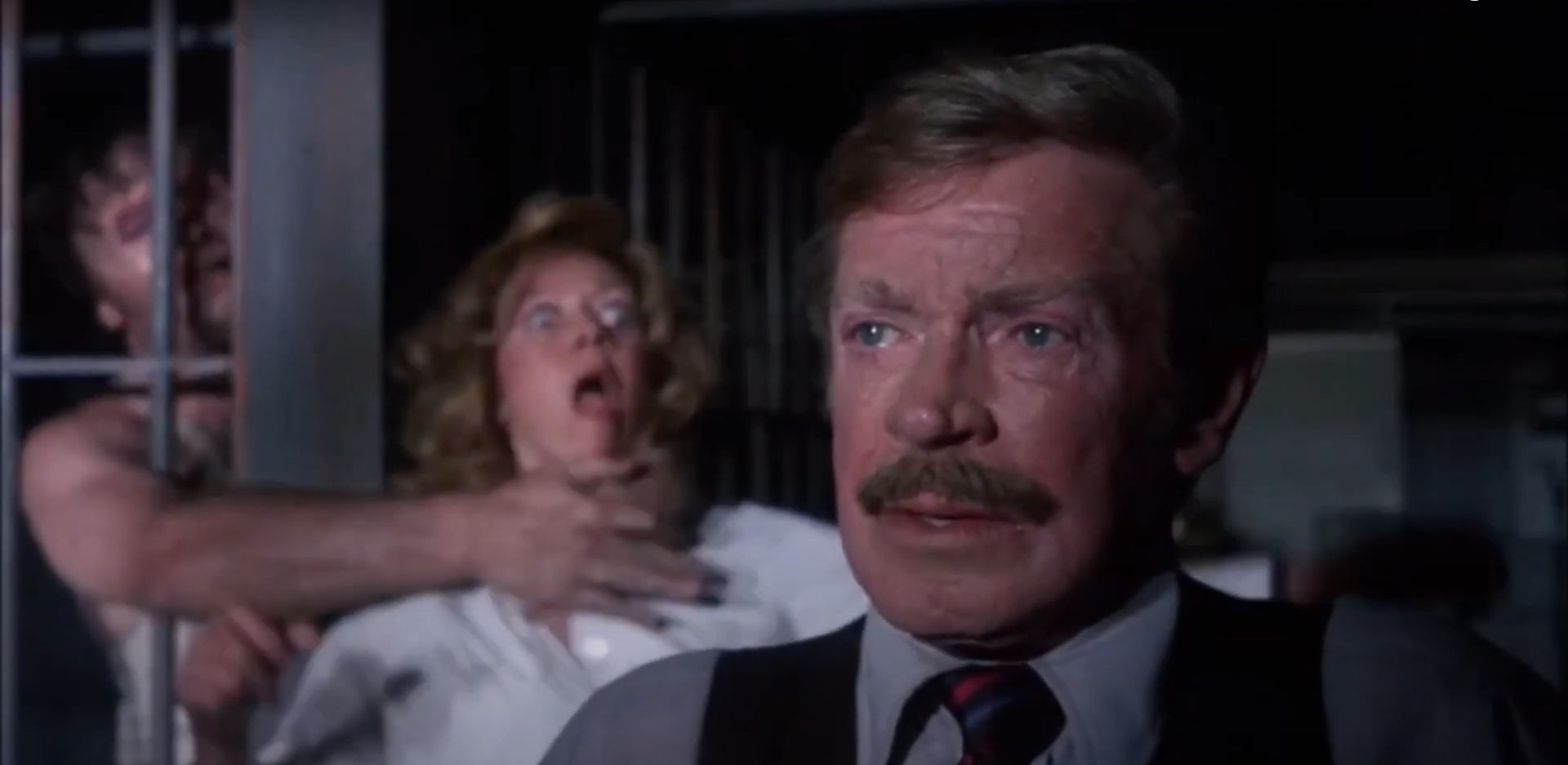
In a stroke of irony, renowned optometrist surgeon Dr. Leonard Chaney had a car accident that accidently causes his young adult daughter permanent blindness.  Obsessed by guilt and determined for her to see again, Chaney moves toward a not only radical procedure but also unethical one of a full eye transplant.  The catch for this type of surgery to be successful is the eye has to be extracted from a living patient.  Unwilling to wait for a donor, Chaney employs every deceptive tactic to lure unwillingly healthy and beautiful globular organ donors into his dark basement where he drugs them unconscious, surgically plucks out their entire eyes, and leaves them locked in a cellar cage, blind and crudely healed with scar tissue but still alive.  With each failed attempt at restoring her eyesight, the reminders of his experiments linger down below, screaming in pain, and pleading for their lives.  Soon, those pleas will ultimately catch up to him. 

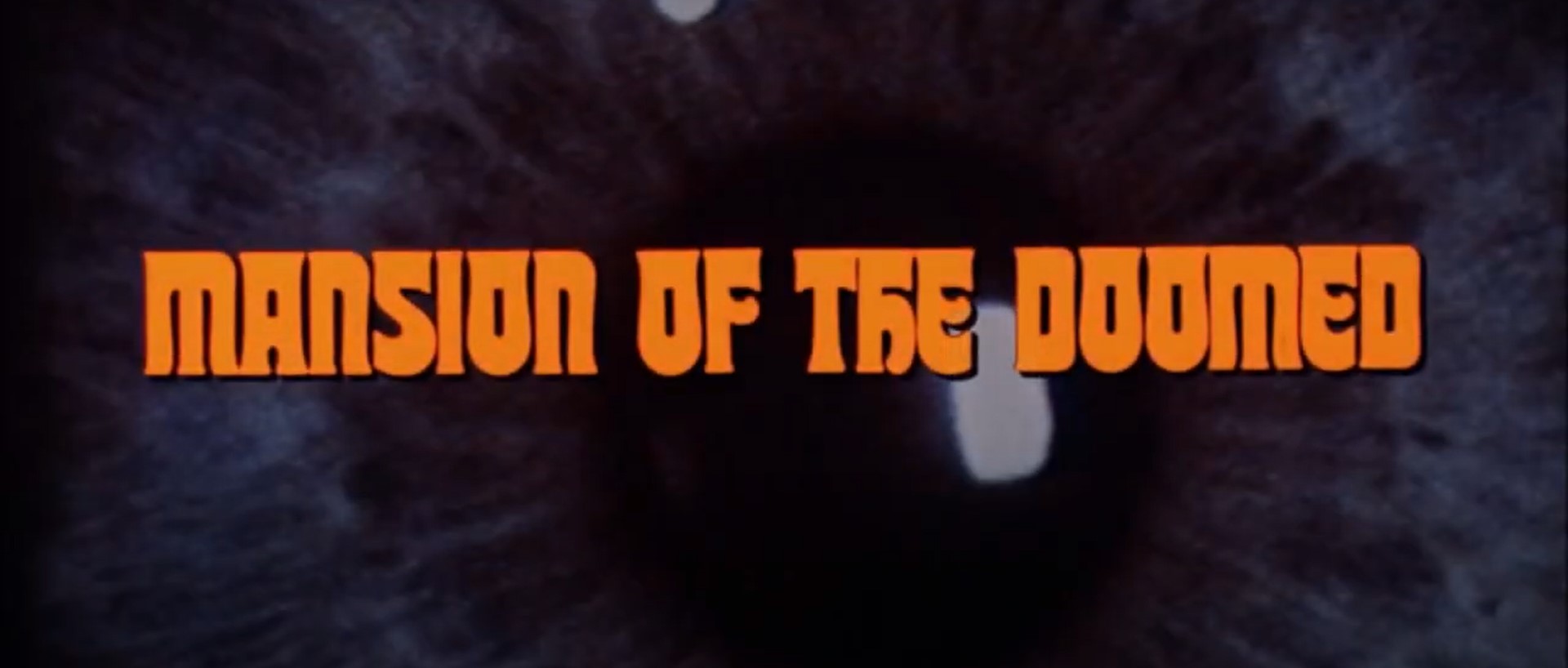
Before his fascination with mini-sized maniacs of killer animated toys and malicious experimental oddities, Charles Band used to produce other types of original horror and the “Mansion of the Doomed” was one of them.  The 1976 Frank Ray Perilli (“Dracula’s Dog,” “Alligator”) written and the “Dead & Buried” and “Halloween 4: The Return of Michael Myers” actor Michael Pataki directed mad surgeon “Mansion of the Doomed” was the first feature film Charles Band officially stamped his actual name onto along with father and western screenwriter, Albert Band, as financial executive producer.  While “Mansion of the Doom” is known by various other titles around the world – “Massacre Mansion,” “Eyes,” “Eyes of Dr. Chaney,” “House of Blood,” “Eyes of the Living Dead,” and “The Terror of Dr. Chaney” – the one aspect that the film is firm in is its Hancock Park and estate shooting location in Los Angeles as one of the very first features to come out of Charles Band Productions company.

Lance Henriksen.  You know name, right?  Sounds familiar, yes?  The “Aliens” and “Pumpkinhead” actor, hot off the success of “Dog Day Afternoon” with Al Pacino, begins his tour de force of horror and dark science fiction with the Pataki mad doctor eye opener.  Dr. Chaney uses his misguided experimental expertise first on Dr. Dan Bryan, played by Henriksen, after Dr. Bryan’s recent romantic relationship breakoff with the recently blind daughter of Dr. Chaney, Nancy (Trish Stewart).  Before he became the narrating voice in TV’s “Knight Rider,” the veteran actor Richard Basehart, who also had a role in the 1977 “The Island of Dr. Moreau,” became his own inhumane medical malpractice physician in Dr. Chaney.  Though Basehart makes for the epitome of a professional doctor, his performance was the weakest link in the cast’s locks that didn’t exhibit the stress and desperation of a man continuously exploiting and disfiguring people for his own personal guilt release.  The guilt was not compounding as much as the story wanted to suggest, but we feel more empathetic to Dr. Chaney’s longtime assistant in Gloria Grahame (“Blood and Lace,” “Mama’s Dirty Girls”) who we can see her character dissolve with each abducted patient and affected to the core by their sightless screams.  “Mansion of the Doomed” rounds out the cast with Al Ferrera (“Dracula’s Dog”), Marilyn Joi (“Black Samurai”), Donna Andersen, JoJo D’Amore (“Dracula’s Dog”), and Katherine Stewart.

Michael Pataki’s “Mansion of the Doomed” is an eye-peeling shocker that’s dark and grim to the core and has an eye for cynicism. I could keep the eye puns going but that would be too easy to pluck out. Perilli’s story is rather plainly spoken with not a lot of fluff diving into medical or procedural jargon to bore you down into a loss of interest. Instead, the good doctor character goes right to work getting his hands elbows deep into the eye sockets of his victims and that’s how this particular exploitation perfectly crafted the balance by tabling the under stimulating medicalese with caged disfigured patients left to live in agony. Where Pataki and Perilli faltered some is in the preface by skimming the surface of the Dr. Chaney caused accident that rendered Nancy blind when she face-planted right into the doctor’s windshield as he swerves to not runover a mutt. In driver’s ed, you’re supposed to hit the small animal that runs in front of you in order for these kinds of accidents don’t happen! Told in the inner thought of a flashback, the force between the two immovable objects shatters the glass but leaves Nancy unscathed physically yet, somehow, she loses her sight in both of her eyes and while Dr. Chaney is unable to best the blindness with everything the surgical optometrist throws at it, perhaps that’s the unsolvable mystery that beleaguers abashedly an expert at the summit of their excellence. ‘Mansion of the Doomed” is not a feel-good film as not one single character has a positive outcome and having lost more than just their sight but also, to name a couple, their humanity and their hope.

Uncut, restored, and remastered onto a new Blu-ray release, Full Moon Features re-release “Mansion of the Doomed” onto 1080p, full high definition, from the original 35mm negative. Source material held up over father time with a pristine 85-minute uncut transfer to retouch in a pop of color and refine the details in a softer, more airy-soft image, presented in a widescreen 1.85:1 aspect ratio. Full Moon offers two audio options available with an English Dolby Digital 5.1 surround sound and a Dolby Digital 2.0 PCM. Though slightly staticky in the ambient and dialogue tracks, the balance works and is full-bodied around more essential scenes of surgery and the cries of anguish. Dialogue doesn’t sound overly boxy or hissy and the cult composer Robert O. Ragland’s (“Deep Space,” “Q”) classic orchestra score come across with a powerful range that speaks the scene without exposition. The region free Blu-ray has no extra features, leaving this release as a bare bone, feature only. “Mansion of the Doomed’s” harrowing ending induces stupefying blank stare and feels like a brick just walloped you in the face knowing that every pawn in this story loses at the hands of man disillusioned in playing God.

“Mansion of the Doomed” on Blu-ray.  Hold Onto Your Eyeballs!

Book an EVIL Getaway Rental from the “Superhost” reviewed! (Acorn Media International / Blu-ray)

Never Again Feel Welcome After Watcing “Superhost” on Blu-ray Available at Amazon

Airbnb reviewer vloggers Claire and Teddy are bleeding viewership fast.  To save their monetized video channel, their financial independence, and possibly live happily ever after as man and wife, the duo was finally able to rent a highly demanded location set in isolated in the forest when it became available.  The house is more than they could ever hope for with beautiful floor-to-ceiling windows, spacious accommodations, and breathtaking idyllic mountain views.  The one little hiccup about the residential stay is the quirky superhost, Rebecca, who has been more than overly friendly.  An unsuspecting guest from the past turns the tables on Claire and Teddy as Rebecca slowly unravels her true intentions in a nerve-wracking game of life and death with all the amenities.

From the director of the supernatural baby-snatching “Still/Born” and the imaginary friend from Hell in “Z” comes Brandon Christensen’s next written-and-directed demented thriller “Superhost” that takes the automated vacation rental methodology and breaks them in half.  Shot just outside Las Vegas in the rural area of Mount Charleston, Christensen provides the illusion of a far trek away from busy street society with a cabin in the woods what if’er of an overzealous hosting homeowner making weird and uncomfortable conversation with their tenants on a daily or nightly basis.  Tacked onto that idea is the new age monetizing of vlogs and racking up subscribers that overtake or make us blind to what’s really important.  The Superchill and First Look Releasing production is executive produced by the Ty and Darren Siversten and produced by Christensen, Kurtis David Harder (“Spiral,” “V/H/S/94”), and stars Sara Canning and Osric Chau.

Aforementioned, Sara Canning (“Z,” “The Banana Splits Movie”) and Osric Chau (“Supernatural”) star in the film as vlogging couple Claire and Teddy.  Whether be the actors’ performances or the blind obsession toward their monetized YouTube platform to secure financial freedom, the on-screen chemistry between the couple didn’t jive.  What doesn’t help is there’s no real romance being displayed during their time together nor was there any expositional or any form of mentioning what their life looked like before becoming internet influencers.  Being influencers makes up a sizeable portion of what the audiences (us as viewers and not their video channel followers) know about the couple sans the miscellaneous background of Teddy’s parents providing rent aid whenever needed and Teddy’s top-secret engagement plan in which he also vlogs to his viewers behind Claire’s back.  We experience a little more where Teddy comes from, but Claire is a complete mystery much in the same way as superhost Rebecca.  However, as the crazed host, the enigma surrounding the jovially expressed Rebecca, eager to help with clog toilets and whip up pancakes, adds to her strange and frightening demeanor.  I would never want Gracie Gillam (“Fright Night” ’11, “Z Nation”) to uninvitedly walk into my vacation rental in her full Rebecca form.  I would forego my deposit lickety-split and hightail away from a much-needed getaway to literally save my skin from Rebecca’s crackpot revelry. Popping into the frame a couple of times is genre veteran and overall fan favorite is Barbara Crampton (“From Beyond,” “Re-Animator”) as Vera, a disgruntled property owner who tracks down Claire and Teddy for a vindictive, rock-throwing rant but becomes unsuspectedly ensnared in the Rebecca’s mare’s nest.

Brandon Christensen is no stranger to small productions with a small cast, but “Superhost” is a micro-production with a micro-cast and, somehow at no surprise, busts out a truly terrifying lunacy that can make you double think before clicking that confirmation button on the vacation rental reservation. “Superhost” is unsettling and invasive as if privacy is nonexistent and the ever-watchful eye is always looming. In fact, it is! With security cameras installed in basically every room, there’s 24-hour CCTV footage of every moment of Claire and Teddy, but isn’t the moment captured and being filmed constantly is what their livelihood and vocation is all about? Christensen has that paradoxical undertone packed exceedingly well beneath the veneer of voyeurism, inescapability, and troubled relationship issues that the theme becomes a backburner hit on the tail end in that what the thing that provides Claire and Teddy a reason to be free as individuals is the also the very thing that they can’t flee from and become merely a battered object of one’s mad person’s whims much like their more critical reviews can be ruinous to others. While “Superhost” can feel a bit slow for the first two acts, the story showcases a development and escalation of Grace Gillam’s Rebecca as a woman with more than one loose screw. Of course, Rebecca’s not seen for who she really is by the compulsion to film not just the rental, but also her, as gold-plated viewership material. “Superhost” admonishes a tread carefully thriller to beware and adhere the signs of mania danger and all those Rebeccas out there.

Trust me – cancel that reservation, plan on a staycation, and watch the Shudder-exclusive “Superhost” now on Blu-ray home video from Acorn Media International. The region 2, PAL encoded, Blu-ray is presented in an anamorphic widescreen aspect ratio of 2.35:1. Nothing terrible to note here as much of the digitally captured, RED Gemini images are about as crisp as they come with a natural presentation all around from cinematographer Clayton Moore (“It Stains the Sands Red”) with the exception of the unfiltered handheld camera and CCTV footage, which is also very authentic. The English language Dolby Digital 5.1 surround sound rustles together clearly and discernibly ever creak of the floorboards and every gushy stabbing sound for full impact purposes. Dialogue track is clean with pronunciation clarity and the bottom-and-bass dropping score by instrumental band Blitz//Berlin (“Psycho Gorman,” “The Void”) continue to impress with their original soundtracks. The special feature includes a director’s commentary, a behind-the-scenes that talks about Mount Charleston location, the annoying tiny beetle swarms, and how amazingly small the production crew was, a solid blooper reel, “Superhost” VFX featurette with green screening and matting car scenes and the ultra-graphic knife through the mouth effect, a behind-the-scenes still gallery, and episodes 1 and 2 of Brandon Christensen’s television shorts, “Scaredycats.” Remember, guys, hit that like bottom and subscribe to follow Brandon Christensen’s descension of guests becoming unaccommodated by a psychotic “Superhost!”

Never Again Feel Welcome After Watcing “Superhost” on Blu-ray Available at Amazon

This EVIL is Why I Don’t Have a Roommate! “2DLK” reviewed! (Unearthed Films / Blu-ray)

“2LDK” Now Leasing a New Life on Blu-ray from Unearthed Films!

Rana and Nozomi couldn’t be more different coming from different backgrounds with antagonizing behaviors.  The two aspiring actresses live in a cozy two-bedroom apartment hosted by the same production company that has them vying for the same lead role in an upcoming feature film.  The role could jumpstart either of their careers and, internally, Rana and Nozomi believe the other isn’t good enough despite their different approaches in as city girl Rana uses her famine ways and laxer attitude to slut her way up to the top while the country-born Nozomi diligently studies the dialogue and the role to impress beyond her days as a parent-encouraged elementary stage actor.  When tensions rise through apartment sharing irksome nuisances and a man’s affections put an even more divisive wedge in the already gaping hole between them, Rana and Nozomi reach a breaking point and a violent melee of at each other’s throats ensues.

From my personal experience, the only roommate I’ve ever had was my wife during our engagement period and I can tell you that living with someone else – someone’s quirks, someone’s habits, and someone’s tastes – can be utterly earthshattering and explosive in what seems like every little pampered or established, taken for granted role you had living without a roommate is acutely upended and tossed into apocalyptic chaos.  Or, at least, that’s how it feels, right?  The sentiment is exactly perfectly and with killer instinct in Yukihiko Tsutsumi’s written-and-directed fight!-fight!-fight! film “2LDK.”  The 2003 Japanese movie helmed by the “12 Suicidal Teens” Tsutsumi co-wrote the script with Yuiki Miura, who of the last six years penned episodes of the recent various “Ultraman” series.  The 8-day shoot left no time to spare, leaving much of the cast and crew to shoot longer, sleepless nights, on “2LDK,” which in Japan shorthand describes the type of apartment – a 2-bedroom apartment with a Living room, Dining room, and Kitchen.  “2DLK” is a production of Micott, Times in, and DUEL Film Partners and is produced by Kazuki Manabe and Susumu Nakazawa.

When the central plot revolves around two aspiring actresses cohabiting a single living space and, literally, fighting over every inch of space, also literal as well as figural, there’s no room for more cast or even extras.  We’re first introduced to Eiko Koike (“Terra Farmers”) as Nozomi, a small province girl, reserved in manner, and extremely methodical to the point of obsessive.  Koike perfectly pitches Nozomi’s quiet but strong behavior, yet still judgmental about a roommate from the total opposite spectrum in Rana.  Played by Maho Nonami (“Scarecrow”), Rana’s a big city Tokyo girl with a jaded history.  Blunt, sleazy, and inconsiderate of apartment-sharing etiquette, Rana knows how to push Nozomi’s buttons – hard and on purpose with a innocent smile.  The story dives into differentiating Nozomi and Rana with an immediate internalizing of trash talking voiced over for the audience to see how Rana thinks Nozomi wearing high school gym clothes is hanging on to her humble origins whereas Nozomi itemizes every piece of Rana’s expensive accessories with a dollar amount.  Tensions slowly build from there and the actresses do a phenomenal slow burn into madness where the pot lid rockets to the sky when irritations hit the boing point summit.  Before you know it, electric-corded chainsaws are being wielded, spray cleaner bottoms are being spritzed into eyeballs, and eggs and toilet lids are being cracked over heads.   

“2LDK” is compact carnage, relatable dark fantasies of every roommate with a grudge against something thought their roomie did incorrectly or inconsiderately over and over again.  Other factors play into the two women’s meltdowns that provided fuel to the flame the burns with them in.  Rana struggles with the indirect suicidal death of a mother and child during her affair with the woman’s husband.  Nozomi bears the burden of forcedly shepherd to be the best whether to her studies or acting.  Not to forget to mention that both are in the running to be handpicked for a feature film role by the production company and there’s a man in the mix as an exploited chip against the other adoring roommate just to stick that knife into the side and twist for a little extra gut-wrenching spite.  Tsutsumi builds the seething hate, the tension, and the momentum that all comes crashing down in a Tsutsumi tsunami of cat fighting violence, weaponizing every inch of that small apartment from their individual bedrooms to the kitchen as a battleground.  Tsutsumi smartly doesn’t make “2LDK” a story about good versus evil as there are hardly any instances where the audiences will feel Rana nor Nozomi are in the wrong and wish their demise by virtuous-righteous other.  The bout is equally matched at their core and in scrappy ability to pick up whatever is lying around as a deadly weapon. 

Unearthed Films brings this one-on-one battle royale to an all-new Blu-ray release in association with Duel Film Partners and distributed by MVD Visual.  The perfectly paced and timed 70-minute film is presented in a widescreen 1.78:1 of AVC encoded 1080p high-definition transfer.  Image appearance is quite similar to another Unearthed Films Blu-ray release in “Tokyo Decadence” with a hefty grain product that be very discernible in blacker/darker areas of the image, suggesting maybe a celluloid film gauge that offer a pleasantly filmic presentation instead of a white-glove and sleekly fabricated digital video.  While colors don’t exactly pop, the texture is there surrounding skin pores and facial imperfections that shine in the details.  Unearthed Films presents two options with a Japanese 5.1 DTS-HD master audio and a 2.0 PCM stereo.  The multi-channel has a tad trouble discerning the inner voice overs between the two woman and never quite isolating their individual dialogues.  Some food for thought in case you decide to not pay attention to the movie and look at your phone as the dialogue courses through.  Some of the action came off with a bit of an echo but the overall soundtrack is robust with a clean and clear dialogue that comes with option English subtitles.  Extras include a commentary with actresses Maho Nnami and Eiko Koike with subtitles, a making of “2DLK,” interviews from the Tokyo International fantastic Film Festival, interviews from the premiere screening, production briefs on the duel between the roomies, a video message for theater audiences, interviews from the screening at Kudan Kaikan, and a photo still gallery.  Duel epitomizes “2LDK” exactly and only the Japanese know how to formulate a 70-minute comedy-action-thriller of two going toe-to-toe to the death.

“2LDK” Now Leasing a New Life on Blu-ray from Unearthed Films!