Might Be Dressed as a Fool, but EVIL Can’t Outwit This Jester! “The Wrong Door” reviewed! (Visual Vengeance / Blu-ray)

“The Wrong Door” Collector’s Set Available at Amazon!

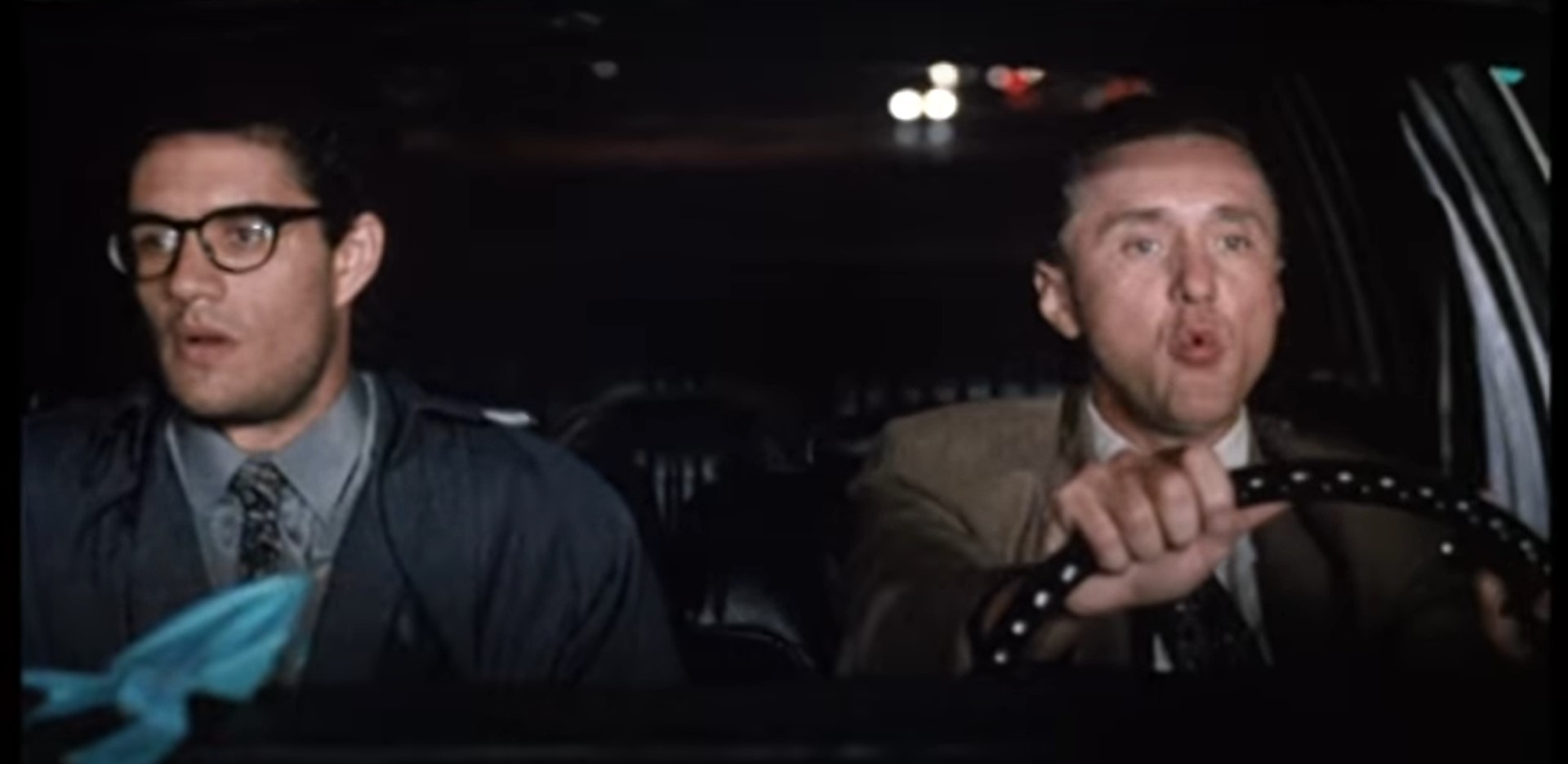
Ted, a radio sound design student, has to perform a singing telegram dressed in a jester costume on the very evening of having to pull an all-nighter to finish his final college class project.  After his melodic duties are fulfilled and the guests are entertained, he discovers a girl’s unconscious, bleeding body in an adjacent, dark apartment, a girl that he recognizes from campus.  Frightened by the sight and the shadowy figure in the apartment with him, Ted goes for help only to discover the girl vanished with no one else inside the apartment.  His drive back home is full of contemplation on the shocking memory when he notices the girl lying lifeless in the backseat of his car.  From then on out, Ted becomes embroiled into a murder mystery and pursued by the killers who are hellbent on tracking down the Jester-cladded man to cover up incrimination evidence and tie up loose ends.
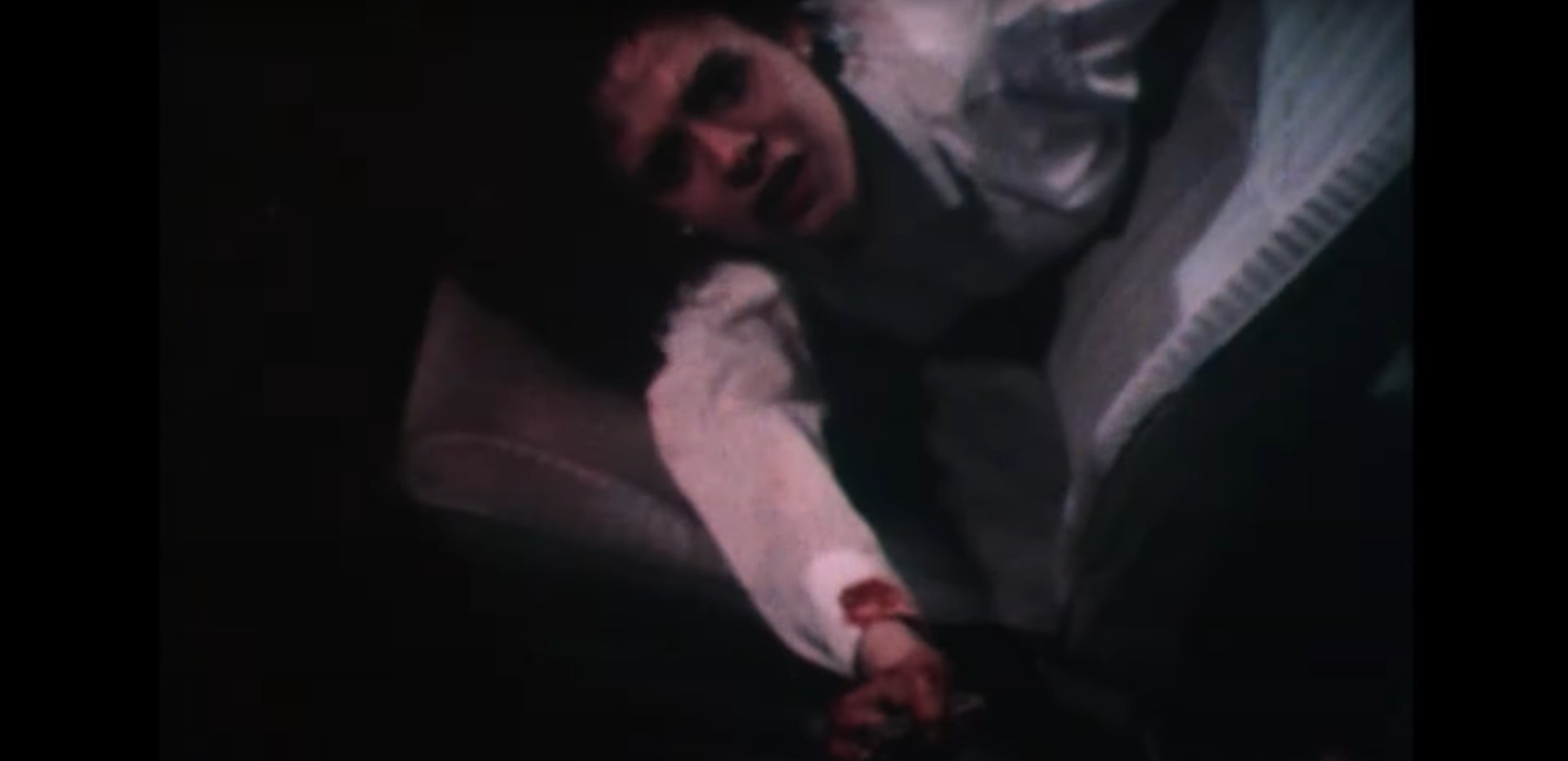
Even though our unlucky protagonist wears a court jester outfit, there’s nothing funny about the 1990 thriller, an intense bird-dogging murder-mystery, known as “The Wrong Door.”  Helmed by the creative ensemble of friends, the film is written and directed by James Groetsch, Shawn Korby, and Bill Weiss who eagerly sought to make a feature film on a strapped for cash budget after success of their Super 8 short films.  Contemplating using tape for their inaugural throes into feature film land, the auteurs revert their thinking back to film, settling on a faithful celluloid format to which they have experience with in, the ever gritty Super 8.  What results is a tenebrous yet effectively taut confrontation of frenetic hunting and a shocking homicide driven more with ambient sound than character dialogue.  The three creative minds behind “The Wrong Door” formed Sandman Films and coproduced alongside John Schonebaum for the Minneapolis Twin Cities’ production.
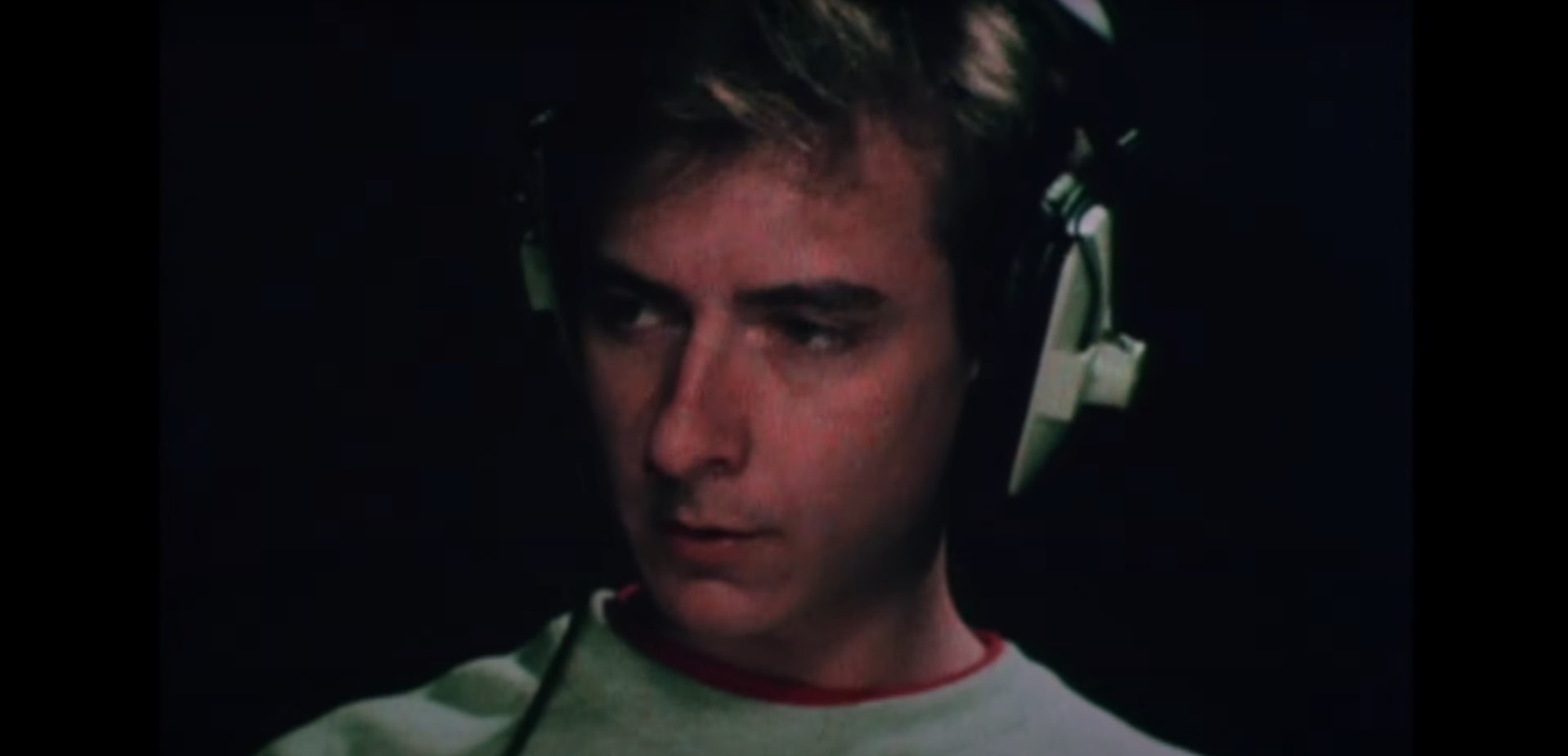
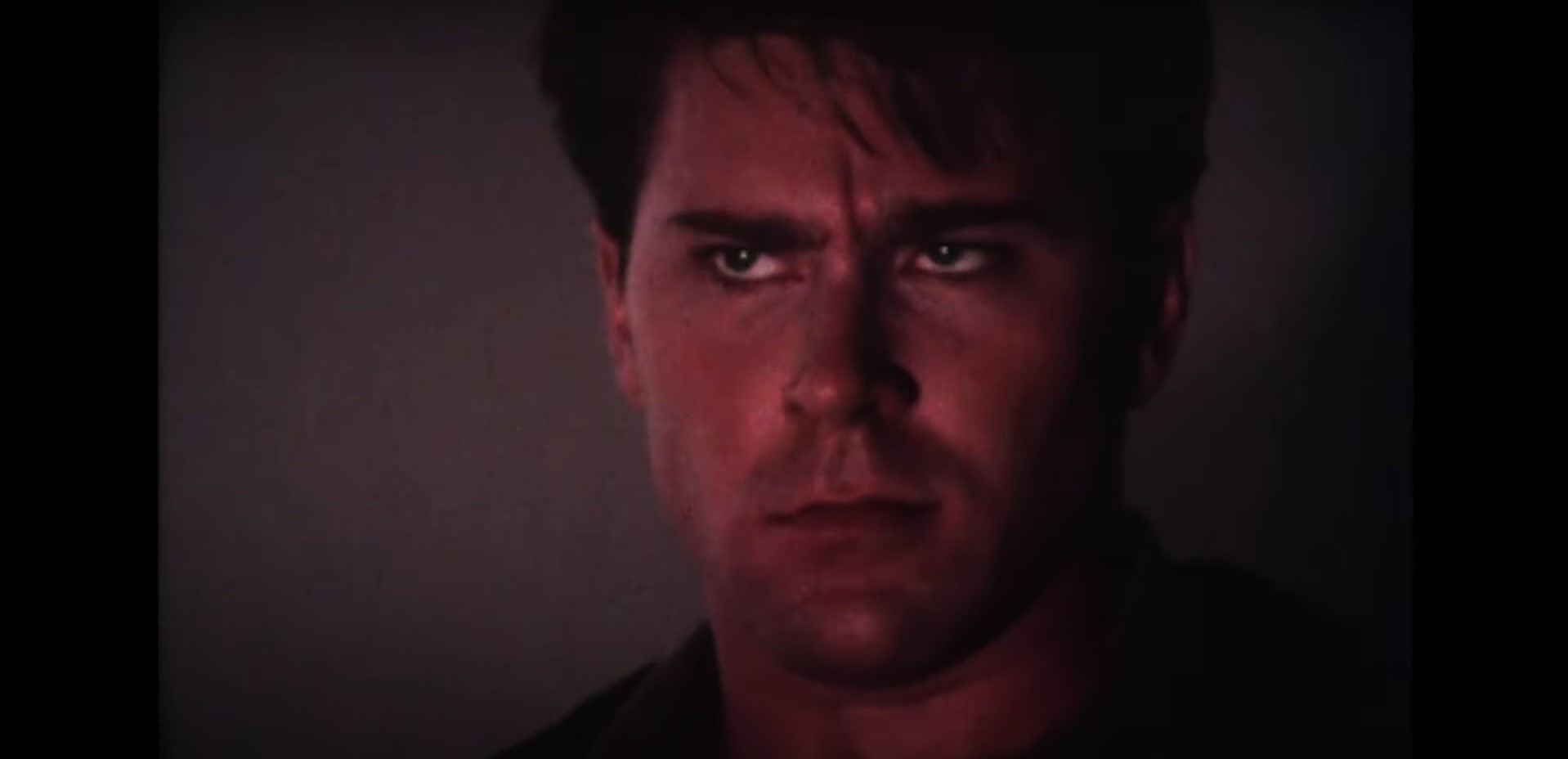
Cast locally around Minneapolis area, “The Wrong Door” is chock full of directors’ acquaintances who turned out to be really quite good at the parts they play.  Matt Felmlee stars in his debut performance as Ted, the class assignment under the gun student looking to knock out one last paying singing telegram gig before cutting and splicing audio for a final exam.  Felmlee isn’t given much dialogue to work with and his credibility relies burdensomely on nearly a vocally silent rundown from Jeff Tatum and Chris Hall respectively as deranged stalker and ransacking lunatic Jeff and his accomplice Vic.  Jeff Tatum makes for a good hardnosed psycho in a subtle yet menacing take of a trench coat robed coup de grâce kind of thug but the thug’s partner Vic is left as an nearly obscured sidekick and we don’t get to see Chris Hall ever come out and shine independently from Tatum’s enormous shadow.  Concluding on the three talking roles, unless you consider Loreal Steiner’s mostly dead body popping up performance where she speaks only in Ted’s nightmares, “The Wrong Door” instruments of interaction circulate around the three male principals peppered with Steiner’s maybe lifeless, maybe lively body stringing Ted along in order to slip him damning evidence on who and why she is being brutally murdered, in a nod of Hitchcockian hamboning.  A cast of supplementary, locally sourced pop-ins, including Jeanine Bourdaghs as Ted’s Radio classmate bestie, Stephanie.
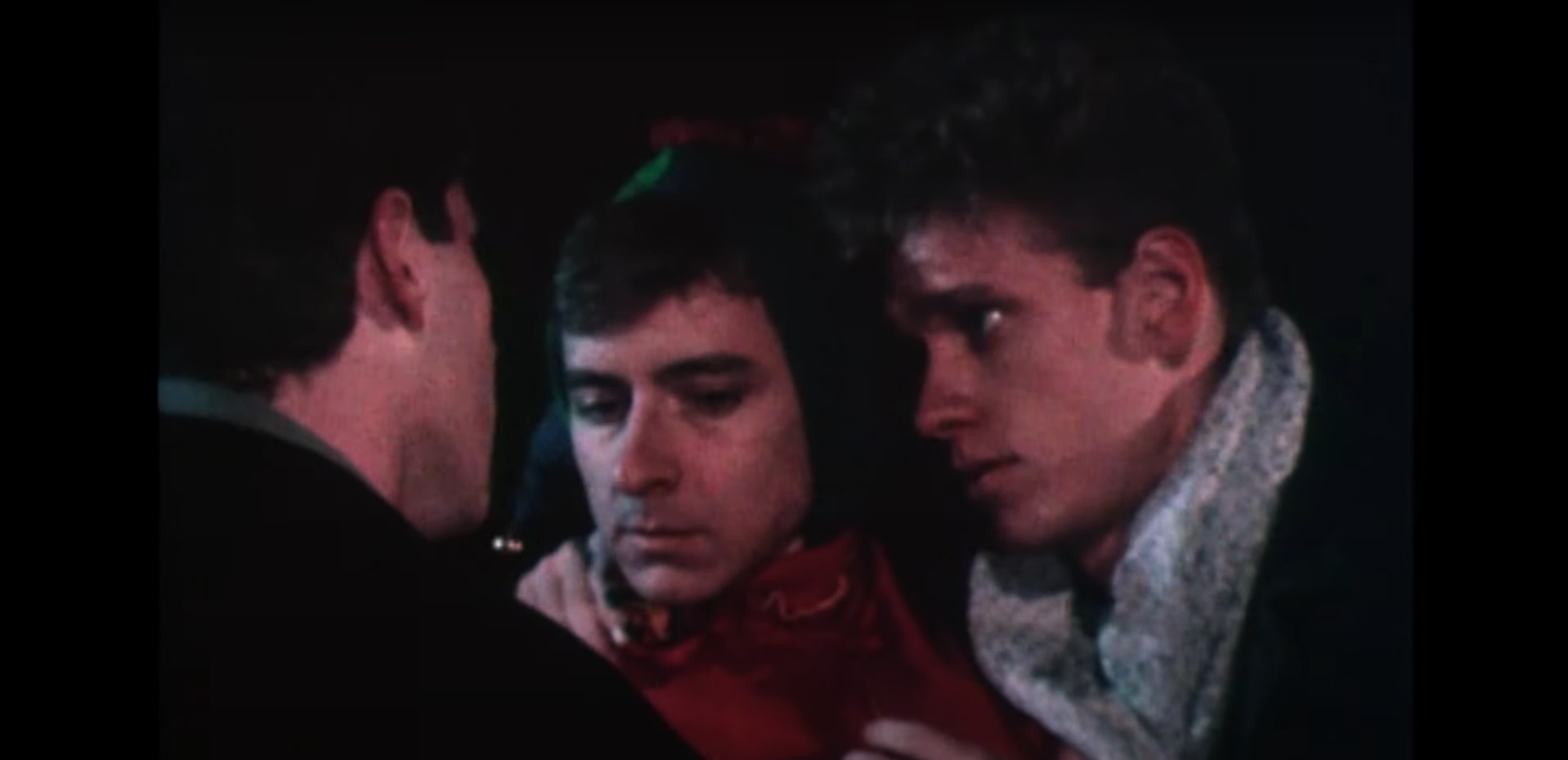
Obscured to the depths of regional relevance, “The Wrong Door” is opened only to adventurous cinephiles who are willing to spend hours upon hours scouring through the vastly lower-to-no budget, independent films lost behind the borders of zonal solitude  A Hitchcockian thriller venerated on a humble scale in regard to the storytelling’s use of focused sound design to narrate a chased protagonist under the gun, literally and figuratively, that turns a studious radio sound design student with a final exam project to complete into a marked man hunted down in a foolish jester suit.  Bookend by dialogue setup and a tense, skirmishing climax, the near omission of dialogue in order for sound to reign supreme as atmospheric tensions force viewers, and force them appealingly I might add, into Ted’s chest-tightening, alone-in-fear experience with not only being incognizant of the particulars of the murder surrounding the young woman he was once smitten with but also to his being pursued by goons that hangs us on tenterhooks.  There’s also pulsing paranoia of where the dead set antagonists are hot on his trail and will suddenly appear unforeseen out of the blanketing darkness of an exterior cat-and-mouse game.  This leads into ambiguity near the end that asks the question, did Ted experience all of this strife or was it a clever cut and splice of imaginative audio files to create a whodunit thriller?  A brief sense of hesitation brings a sigh of relief from the nightmare and also onsets a different kind of anxiety of not knowing what truly went down until the very last shot that explains it all. 
Wrong place at the wrong time is the theme for “The Wrong Door” which is the right door to open if looking to walk-through to an understudied tensioner. Well versed in greatly misunderstood, profound stepped over, and overall underdog pictures is the smaller picture championing Visual Vengeance, the distributor behind the collector’s edition Blu-ray release of “The Wrong Door” with an AVC encoded, 1080p high-definition, BD50 product presented in a full screen 1.33:1 aspect ratio. For the first time on disc anywhere, the Super 8mm film receives a brand new, director approved 2K HD transfer from the original elements. The perception of Super 8mm does not hold water here with a relatively pristine image quality for the sized celluloid with a mighty clean image. Other than the white speckles of dust, other signs of minute debris, and the natural amount of grain of Super 8mm, no cigarette burns, light emitting on the frame edges due to perforation alignment, and hardly any scratches hinder quality. Poor lighting conditions in the exterior, and even some interiors, plays to the strengths of negative voids but, in my opinion, adds to the gloomy puzzler filled with action, suspense, and acrimony. While 8mm’s grasp on a grittier saturation, the tonal shading refuses to pop inside the faded film stock. The English Dolby Digital 2.0 stereo doesn’t do the new transfer justice. The lossy format likely not the best choice on a sound gimmicky, indie film that uses more innate ambient sound and Foley to tell the story rather than through dialogue. Though manageably capable to pull through to the end, the already lo-fi standard now compressed audio file has anemic energy through the dual channels but while the distinctions are dainty, some distinct distancing between more than two effects does convey. Switching between ADR and boom, there’s never a sense of uniformity with the dialogue that can sounds lively and volumes with post-production recordings yet also be frail within natural earshot of a recording device. Optional English subtitles are available. What’s most impressive about this 14th release from Visual Vengeance amongst 13 titles before it is the seemingly incalculable number of special features within the submenu of the flat, rodded colorful cutouts on the fluid main screen. New grouped audio commentaries with directors Bill Weiss and Shawn Korby in one and the third director James Groestsch and John Schonebaum on the second kick off the content followed by a new documentary with interviews from all three directors in Men Make Movie, If Not Million$, individual interviews with James Groetsch, Shawn Korby, Bill Weise, and actor Bill Felmlee, an interview with Film Threat founder Chris Gore who was one of the few in the field to put the film in his magazine, an alternate, director’s cut of “The Wrong Door” coming in as a second feature, Super 8 shorts: Raiders of the Lost Bark and The Pizza Man, a 20-minute television episode from The Gale Whitman Show, the original unedited Muther Video VHS intro, image gallery, original storyboard gallery, the original ran print from Film Threat, a Visual Vengeance 2023 cut trailer of “The Wrong Door,” and other Visual Vengeance trailers. Tangibly, the release comes with a rigid O-slipcover hypnotically graded in Jester colors of subtle pink and purple. Inside is a clear Amary Blu-ray case with the illustrated cover art that also does double duty for the motion menu and the folded mini-poster insert. Also inserted is a double-sided Blu-ray acknowledgment one sheet, a Visual Vengeance exclusive “Do Not Disturb …The Disturbed!” doorknob hanger, and a retro sticker sheet that’s come standard with every release to date. Reversible cover art displays the original VHS cover, and the disc is pressed as a mock play of a cassette tape’s supply reel teeth – neat! The region free Blu-ray comes unrated and has a runtime of 73 minutes.

Last Rites: Do you hear what I hear? No longer lingering in the vacuous space of radio static, “The Wrong Door” was once another shamefully sidestepped film that has been resurrected by Visual Vengeance for the first time anywhere on disc and, all I can say is, it’s about damn time.
“The Wrong Door” Collector’s Set Available at Amazon!

Five Men. Two Women. What EVILs Could Be Committed? “The Last Island” reviewed! (Cult Epics / Blu-ray)

“The Last Island” is Man’s Last Hope!  Now on Blu-ray!

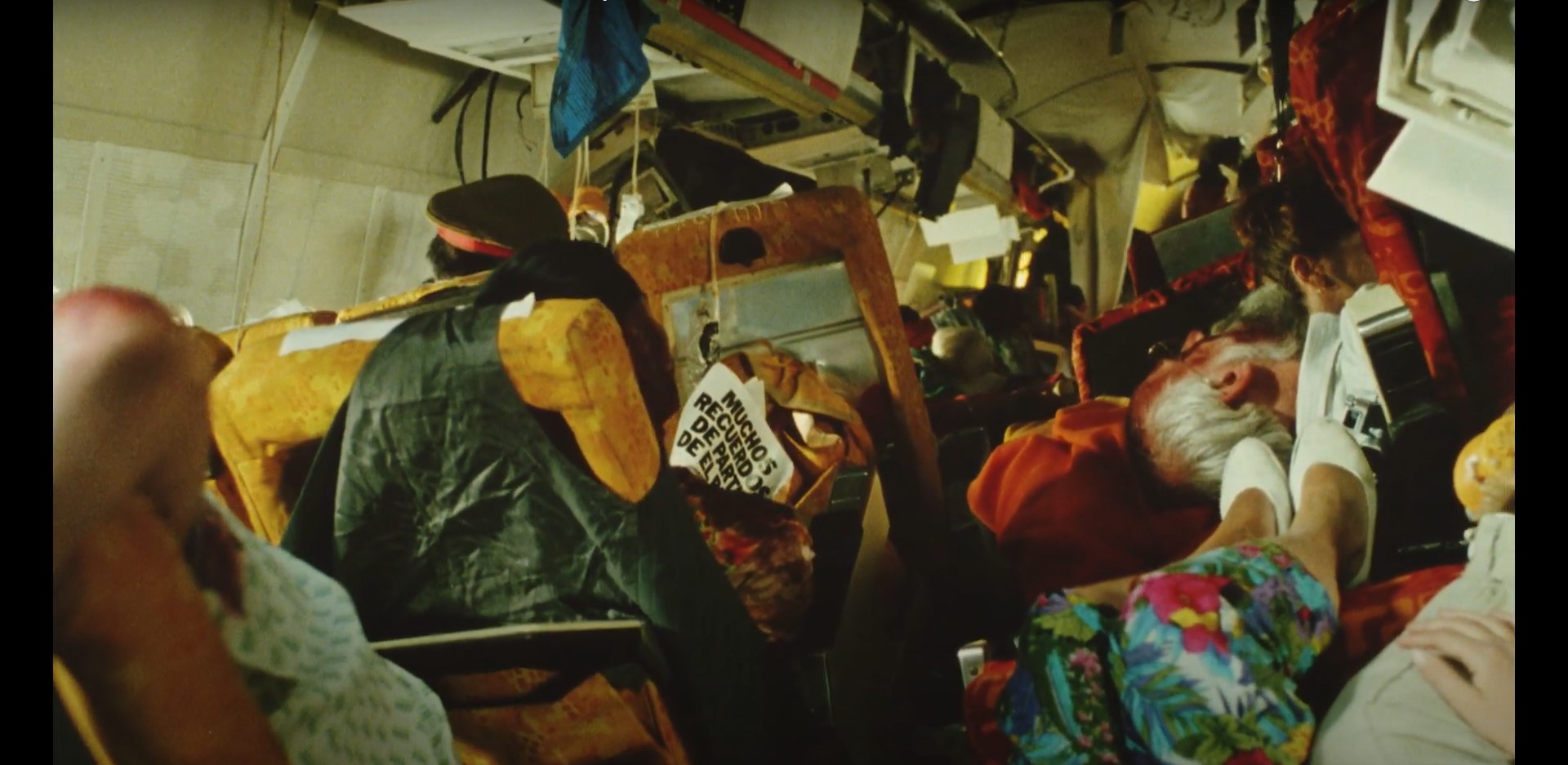
The horrible, mangled wreckage of a commercial plane crash on a deserted tropical island only leaves seven survives – five men and two women.  Burning what’s left of the remaining passengers, salvaging through baggage, and setting forth a plan of survival until their hopefully imminent rescue,  the survivors lean on each other and on hope for only temporary residence on the idyllic island.  With a working radio only picking up static on every channel, a mysterious boat carrying a charred body to shore, and other clues that suggest the world may have just gone through a nuclear disaster, the possibility of never leaving the island seems very real despite their best efforts to the contrary.  Fear of being the last humans on Earth takes hold and for the species to survive, the idea of procreation insidiously warps their already traumatized principles.  Two women survived the crash but with one being an old woman, the younger fair of the sex becomes the object of necessity between the men of varying sexual orientation, beliefs, and ethics. 

Director Marleen Gorris helms another powerfully provoking and feminist perspective, gender divisive drama, but her 1990 released third feature, “The Last Island,” is quite different from her previous two films that have established her with such labels as a feminist filmmaker and the more preposterously perception of being a man-hater.  The differences are stark within the Netherland born Gorris’s penned script and directorial.  Unlike “A Question of Silence” and “Broken Mirrors,” “The Last Island” isn’t casted with frequent Netherland actresses of previous collaborations with this particular film seeing more native English speakers from the U.K. and Canada.  A large scale production also distances the previous handful of dressed interiors with exterior foliage, day-glow lighting, and a giant plane prop that elevate the tensions of exposition.  “Amsterdamned” and “The Lift” director Dick Maas along with colleague Laurens Geels produce “The Last Island” under Maas and Geels cofounded Dutch production company First Floor Features as one of their many English-run films. 

“The Last Island” had a cast that brimmed with over-spilling success having just come off acclaimed features within the last decade.  Paul Freeman was the first villainous face against one of America’s most beloved archeological heroes as Belloq in “The Raiders of the Lost Ark,”  Freeman pivots nearly a decade later in another strong, affluent role but as an older gay man with a taste for grooming younger men.  Freeman plays the Scottish born Sean, a seemingly ally to the one child-bearing able woman on the island but his own gender is turned against him with his need to live and his need to be in power to sustain the human race.  Opposite Freeman, and eyed as more of the principal character, is the lesser known Shelagh McLeod (“The Sleep of Death”) who is given a voice of reason, voice of choice, and voice of justifiable resistance against a crumbling male majority.  McLeod completely stands rivaling against a formidable Freeman without the backstory of ethical waning and as the well-rounded Joanna, she finds herself in opposition of other eclectic group of men with extreme strengths and flaws.  Pierre (Mark Berman, “Tom et Lola”) is a brilliant scientist but a craven coward, Nick (Kenneth Colley, “Star Wars:  Episode V – The Empire Strikes Back”) has military arms training for hunting but is a bigoted, pious fanatic, Frank (Mark Hembrow, “Out of Body”) is strong and compassionate but indecisive and insecure, and Jack (Ian Tracey, “The Keeper”) is the epitome of youth but is arrogant and motivated by sex.   Morris is able to turn each of the salient men seem small and insignificant beside Joanna steadfast candor.  Then there’s Mrs. Godame, the seemingly most insignificant character who is actually the most complex out of them all.  Age is just a number but the way Morris writes the old woman makes subtle suggestion that she might be more of a higher power than what she appears to be on the surface.  One suggest is hidden in plain sight right in the old woman’s name, Godame, and if you split the syllables, God and Dame equals Woman God.  “Willow’s” Patricia Hayes dons a charitable, mother-like performance providing hints of being the abstention Almighty by ending many sentences to the others with my child, knowledgeable in wisdom and in parable, trying to guide with conversation and compassion, and we’re even introduced to Mrs. Godame lying on the beach, arms stretched, and perceived from a top view as if in a crucifix position.

Religious imagery and metaphors run beyond the subtext of Mrs. Godame.  The world has seemingly destroyed itself from what is suspected to be a nuclear war and thrusts a reasonable suggestion that the age of apocalypse is nigh.  Man and woman are stranded on an island that’s been referenced as paradise on more than one occasion and Eden, a garden where the first man and woman lived, was known for its abundance of natural beauty and paradisal qualities.  Other aspects from the story of Adam and Eve and the Garden of Eden are also present, such as the forbidden (poisonous) fruit and the snake that bites one of survivors.  Joanna can be said to be the forbidden fruit as well in a reversal of the theological tale where man is tempted by the forbidden fruit, tries to take a bite, and is cursed by removal innocence and bliss and replaced with sin, misery, and, eventually, death, more specifically, death of the human race.  Morris blends these elements smoothly into the conspicuous concept, leaving a very few mysterious metaphors left unresolved by the natural consequence of the characters, and ending on a note of ambiguousness hopelessness because is Joanna pregnant or not – we’re neither informed by the story or Mrs. Godame herself with another imparting and inconclusive turn of phrase that bestows a classic curtain fall on the unforeseeable future of the survivors. 

Cult Epics releases “The Last Island” on an AVC encoded, high-definition 1080p, BD50 presenting the new 2K transfer and restoration scan from the original 35mm print in a widescreen aspect ratio of 1.85:1. An opening preface notes that the restoration done was done on the only working English-language 35mm print known available, accompanied by evident dirt and scratch imperfections. Comprehensively, the restored print is beautifully vibrant with popping tropical frondescence and a deep blue sky. Much of the imperfections come early on, during the aftermath of the crash, where faint but evident scratches are noticeable, dust specks can be visible but insubstantial, and with the only real blight being a rip-split frame that flashes a horizontal tear across the screen. Details are sharper than expected with a nice delineation in the space between, skin textures, amongst other tactile elements such as trees, the plane, and the sandy setting, don’t wash out under the brilliant sun that lights up everything, and black levels keep inky inside the naturally adequate grain. Though a Dutch production, the dialogue track is all in English with a DTS-HD 2.0 master audio. Also available is a LPCM 2.0 stereo. Even-keeled throughout the picture’s entirely, never did the levels intertwine or lose strength in what’s a satisfactory arranged overlayed soundtrack in suitable company with Boudewijn Tarenskeen’s grave dramatic score. Optional English subtitles are available. Special features include an audio commentary by film historian Peter Verstraten who returns for another Cult Epics release, an audio-less, raw footage behind-the-scenes of certain production creations such as the plane setting and certain dynamic scenes mantled with diverse song tracks, an archive interview with Politica columnist Annemarie Grewel, the original theatrical trailer, promotional still gallery, and trailers. Also include but not in special features is a Dick Mass audio-only introduction at the play film selection. The clear Blu-ray amary case sports the original composition “The Last Island” one-sheet of wrecked plane and stranded survivors. On the cover’s reverse side is a full spread of the cast in one of the more memorable, heartbreaking scenes. There is no insert included inside and the disc art has the same rendered front cover art. Clocking in at 101 minutes, this Blu-ray has region free playback and is not rated. Gorris’s eye for upending men rationales to use against them tears into the very fabric of their misguided intentions as the prospect of end of the world comes down to one, single-minded thought – to procreate when facing extinction and the only way to do that is a man’s way.

“The Last Island” is Man’s Last Hope!  Now on Blu-ray!

Bruce Lee Fought EVIL for Justice. Mark Swetland Follows Lee’s Footsteps in “Blood and Steel” reviewed! (SRS Cinema / DVD)

Hiyah! “Blood and Steel” – the Lost Kung-Fu Film now on DVD!  

The brutal murder of his sister and her husband sends Mark Swetland into a vengeful fury.  Behind the heinous act, a drug smuggling organization, using a steel fabricating warehouse and a dojo school as a front, had sent a merciless assassin to take out Mark’s sister after a previous incident with the organization’s personnel that could bring down the whole drug shipment operation.  As Mark investigates for answers and track down those responsible, he’s greeted with hostility and uses his extensive martial arts experience, and a little help from a few of his closest allies, to bring the syndicate down once and for all, but the cruelty conscious conspirators don’t plan to go down without a fight as they kidnap Mark’s girlfriend and hire a mercenary fighter to bring the fight to them on their own terms. 

If you’re a martial arts film connoisseur or just an aficionado of the action-packed genre, here’s an obscure title from 1990 you desperately need to get your hands on, today if at all possible!  “Blood and Steel” is the Bruce Lee dedicated crime and martial arts actioner from producer, writer, and director, Mark Swetland.  Yes, Mark Swetland plays himself, Mark Swetland, as the unstoppable, vengeful vigilante hero in his own production that pits him going solo against a scumbag kingpin and his narcotic import-export empire.  Only recently discovered after being lost for decades, “Blood and Steel” breathes fresh 2023 air with a new DVD release and institutes a brand new, never-before-heard maxim, created by yours truly, of though white men can’t jump, they can certainly Kung-Fu.  Perms, handlebar mustaches, and tight fitting and unappealing fashion grace the screen as nunchakus and hook kicks pave the way for this seriously gratifying choreographed Kung-Fu spectacular to be resurrected from the cache of forgotten films of the cinematic cemetery, shot in and around upstate New York complete with the N.Y. accented, short-a phonological vernacular.

Mark Swetland, proprietor of a safe and vault cracking company in Cheektowage, New York, was once a martial arts instructor.  At the current age of 62, Mark has looked to cracking open safes instead of cracking open heads with his mixed martial art skills but Swetland also once dappled in film, developing his own low-budget Kung-Fu caper, inspired by his martial arts idol, the late and legendary Bruce Lee.   Ponying up much of the funds for what would be “Blood and Steel,” Mark poured every ounce of his soul and craft into the film that displays his range as a fighter as well as getting his chops busted in delivering lines and acting out emotions.  The former was more of his forte with asserting a magnetic presence as both an onscreen fighter and a competent choreographer to have the fight sequences appear realistic and quick against a slew of antagonistic opponents.  As a thespian, Mark often borrows too heavily from Bruce Lee with overzealous fist poses to even echoing Lee’s idiosyncratic short and elongated kiai sounds.    Swetland’s one-on-one scene with fellow martial artist David Bobnik, as the hired hitman Steiner, is well thought out coordination with lighting punch-kick combinations that would rival the best genre films of its time.  Neither Swetland or Bobnik are overly muscularly cut bodybuilders or the zero percent body fat of Bruce Lee’s rail frame as both men are in an ideal, physically fit shape to add to scenes test of time and doesn’t yell amateur hour of wannabe martial artist attempting half-hearted roundhouse kicks for their low budget movie.  “Blood and Steel” round out with a cast that includes Joanne Gargliardo as Mark’s girlfriend, David Male as drug kingpin Mr. Patterson, Elaine Arnone as the slain sister, Diane Zdarksky as the sister’s best friend, Rick Swetland as the sister’s slain husband, and cinematographer Al McCracken has the role of Mark’s best friend and sidekick to the end, Roy. 

Influenced by quintessential Bruce Lee films, “Blood and Steel” is entirely an homage to the exceptional action icon.  Mark Swetland’s film derives elements from “Enter the Dragon” with a plotline of the protagonists’ sister being killed by a drug trafficking enterprise as well as straight down to Mark Swetland’s yellow tracksuit, the same Bruce Lee wears in “Game of Death” with black lines down the arms and legs.  Despite the derivative aspects, Swetland still manages to output an entertaining reel in what has resulted as a passion project that has been stowed away and forgotten only to be unearthed as a transmogrified time capsule of awesomeness.  Swetland, who wore many productional hats, also edited, scored, and did sound design with a fair amount of adequate know-how.  Transitionally between scenes, “Blood and Steel” works to segue into the next scene with various connective images or fade away dissolve without appearing abrupt or muddled.  The additional Foley work, such as the whipping sound of the nunchakus, are done on a synthesizer with an unquestionable audio yield.   “Blood and Steel” has a little bit of everything that is very indicative of a Bruce Lee actioner.  Dirt bike chases that soar from off of a cliff into an exploding heap at the bottom of a ravine, forward and reverse car chases involving a 80’s Corvette Stinger, practical effects from throats being cut to spike cleats becoming lodged into the back of skulls, ridiculous over-the-head, over-the-knee backbreaking fatalities, helicopter entrances over the colossal Niagara Falls, shotgun squib explosions, and much, much more blood-churning excitement can engage the viewer into “Blood and Steel’s” edge of your seat conflict. 

Emerging victorious as a SRS Cinema home video release is the obscure revenge-action thriller “Blood and Steel” on DVD.  Presented in the boxy 1.33:1 aspect ratio, the standard definition 720p resolution, plus the type of camera being used seen in the bonus feature’s outtakes and the impurity characteristics of the image quality, all point to a super 8 shot feature.  Lined left with barely visible sprocket holes and occasionally lined right, a visible magnetic audio strip, often blue in hue, “Blood and Steel” is without a shadow of a doubt a glorified home movie in the right hands of Mark Swetland.  The washed look is a tell sign of no overlay grading, the tri-color emulsion layer remains as the original, natural grading, creating less shadowy contrast but remaining consistent and more-or-less delineated.  The English, single-channel mono track is about as flat as a pancake, if a pancake could make noise.  With hardly any depth, a steady crackling throughout, and depending on the camera mic placement in the shot, some scenes’ dialogue can barely be heard under what sounds like a soft breath or mumble while others are clearly audible and render no issue with understandability. SRS Cinema’s special features include a Fight Analysis with Mark Swetland and David Bobnik going over scene-by-scene, sometimes in slow-motion repeat, their fight sequences and explaining in commentary fashion how the crew set that all it up. Also included are outtakes, the original trailer, the new trailer, and other SRS trailers! The physical DVD sports the original “Blood and Steel” poster plastered inside a standard DVD case of an 80’s retro-rental mockup with color-coded round stickers of the genre action and of the Please be Kind & Rewind phrase. The disc art is a blowup of Mark Swetland from the original poster art. The film runs at a brisk 87 minutes, is region free, and is not rated. “Blood and Steel” has the independent spirit of the dragon, a fierce and fire-breathing martial arts film with fervent laudation for the late Bruce Lee, and is a white knight knockaround and Kung-Fu Flick that is vengeance glorious.

Hiyah! “Blood and Steel” – the Lost Kung-Fu Film now on DVD!  

Sheen and Estevez Take Out the EVIL Trash! “Men at Work” reviewed! (MVD / Blu-ray)

“Men at Work” Now Available on a MVD Visual Blu-ray at Amazon.com

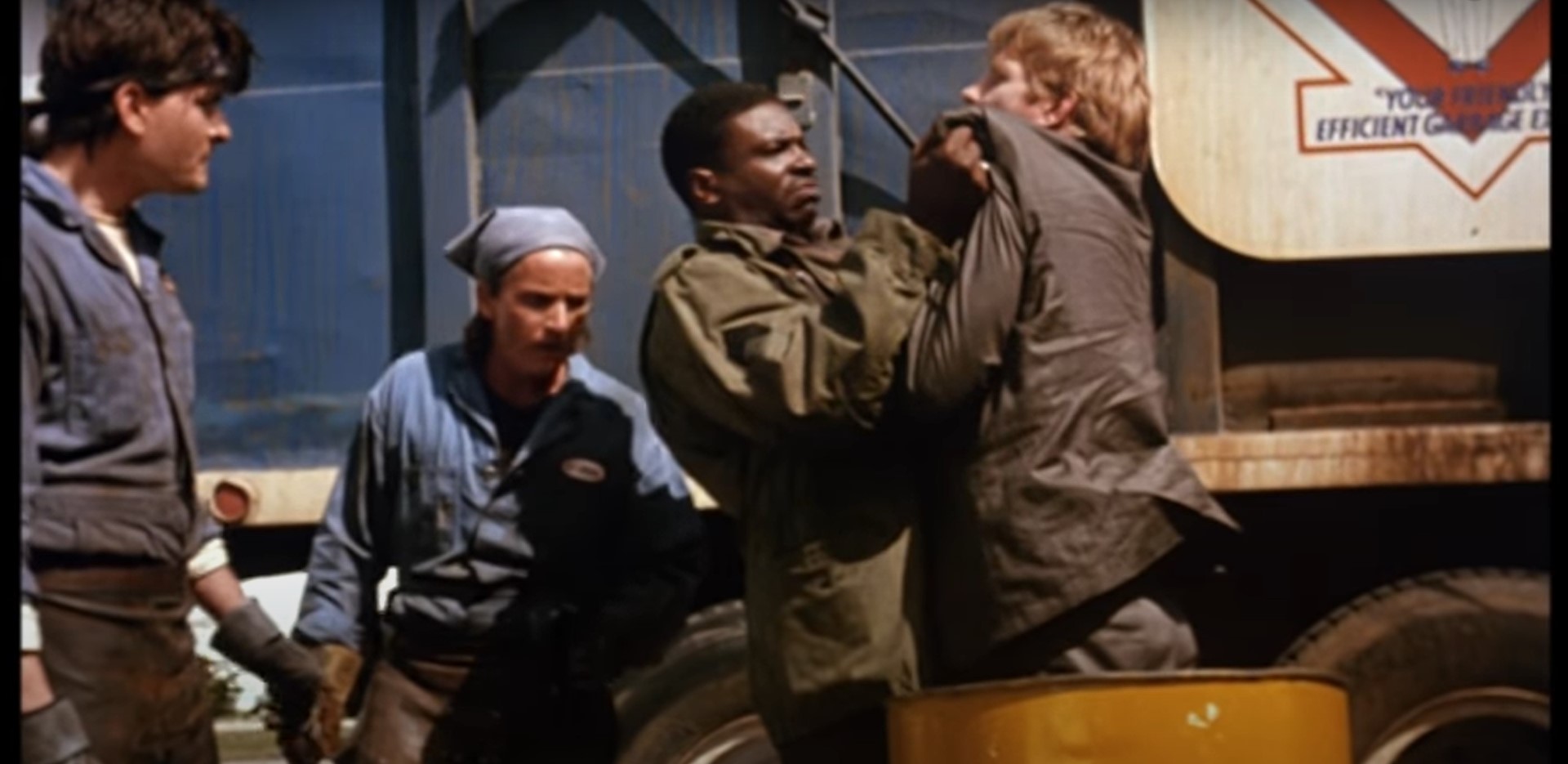
Garbagemen James and Carl are California dreamers, scoping out babes, riding the surf, and fantasizing about opening their own surf shop business one day.  Their day job goes against the grain of their live loose lifestyle, but when they discover a dead body in a trash can, the same dead body that was arguing with a beautiful woman in the building across the street and Carl shot in the butt with a pellet gun the night before, James and Carl no longer have the luxury of fun and games.  Their probational, ride along observer, a crazed combat veteran named Louis, doesn’t add to trash-slinging surfers’ comfort other than noting the strangulation marks around the neck, proving their innocence of a pellet gun murder.  The three men go into investigation mode and Carl infiltrates into the woman’s apartment for clues on what really happened but what they get themselves mixed into is manufacturer corruption on the highest level and now they’re in the crossfire and crosshairs of an off-shore, toxic waste dumping crime boss.

Seeing siblings on screen together has always been of great interest to myself because for an actor to grow up with another actor from adolescence, there’s some level of comfortability, trust, and likeminded, on the same wavelength, aptitude in the performance dynamic.  Brothers Charlie Sheen and Emilio Estévez certainly have a cozy dynamic as two laid-back garbagemen in the dark yet zany comedy, “Men at Work,” despite not sharing their Estévez surname.  Of course, this is a 1990 released film and things have changed between them and personally with themselves over the span of 30+ years, but the Emilio Estévez written-and-directed comedy is a snapshot of a relationship pairing that we didn’t see too often.  Sure, we received their performances in other genres, such as head-butting cowboys in the western-action “Young Guns” and as two sleazy pornographic film filmmakers divided by their own greed in the Jim and Artie Mitchell biographical picture, “Rated-X,” but we never again get a quirky, smorgasbord comedy that exhibits their distinct dry humor in one package.  Set on the beautiful shores of California, include Los Angeles, “Men at Work,” is a studio production from the Trans World Entertainment subsidiary label, Epic Productions, under Moshe Diamant (“Commando Squad,” “Ski Patrol”) and is produced by Cassian Elwes (“Mom and Dad,” “Knock Knock”) and Barbara Stordahl.

Safe to say that most audiences are familiar with the likes of Charlie Sheen and Emilo Estévez between their catalogue of rite of passage movies while growing up in the 1980s through the 1990s.  From “Major League” and “Maximum Overdrive” to “Hot Shots” and “Mighty Ducks,” the brothers captured comedy, action, horror, and feel-good films.  “Men at Work” is another one of those nostalgia recognized, yet slightly underrated, comedies that hasn’t necessarily aged well in regard to its comedy.  Sheen and Estévez are wonderfully poised with a pinch of mania performances surrounding a murder mystery, but the comedy has faded like washed out jeans as we’re numb to these types of comedic devices that have used and overused the last three decades.  Keith David, on the other hand, remains just as funny as the day of release as the Vietnam combat-shocked veteran, Louis, who has become James and Karl’s overseer after public complaints.  The “They Live” and “The Thing” actor costars alongside Charlie Sheen four years later after the release of Oliver Stone’s “Platoon,” which begs the question whether Estévez and Sheen are meddling with the cinematic universes just a tad, and David brings the intensity, high-energy, and overwhelming brutishness to “Men at Work’s” rather subdued, off-the-cuff antics of investigation work done by a pair of surfer dudes who have not witnessed the horrors of war.  The disturbing coolness of stride David’s character takes suits him as an angry vet with a penchant to go against authority.  The love interest in this narrative is played by the actress-turned-director Leslie Hope (“Doppelganger,” “Bruiser”) as a dead guy’s political campaign manager who just happened to be at the wrong place, wrong time accidently swapping the incriminating tape with her boss.  Did I mention the dead guy is a politician in bed with crime?  The “Weekend at Bernie’s” performance by Darrell Larson (“Android”) is one for the ages with Larson providing the slacked jaw, rigor mortis poses, and an overall deadpan dead guy.  “The Fly’s” John Getz is a suitable villain Maxwell Potterdam III, as if plucked straight from a comic book, to the quirky comedy despite being a bit hammy at times.  Potterdam’s bicker henchmen Mario (John Lavachielli) and Biff (Rufus funk musician Hawk Wolinski) are better suited to entertainment with distinct personalities that made their interactions dry and spot on funny. The cast fills out with Sy Richardson (“Repo Man”), Troy Evans (“Halloween 5: The Revenge of Michael Myers”), Geoffry Blake (“The Last Starfighter”), Cameron Dye (“Out of the Dark”), Dean Cameron (“Summer School”), and John Putch (“Jaws 3-D”) and Tommy Hinkley (“Silent Night, Deadly Night 4: Initiation”) as bike cops in a very compromising position.

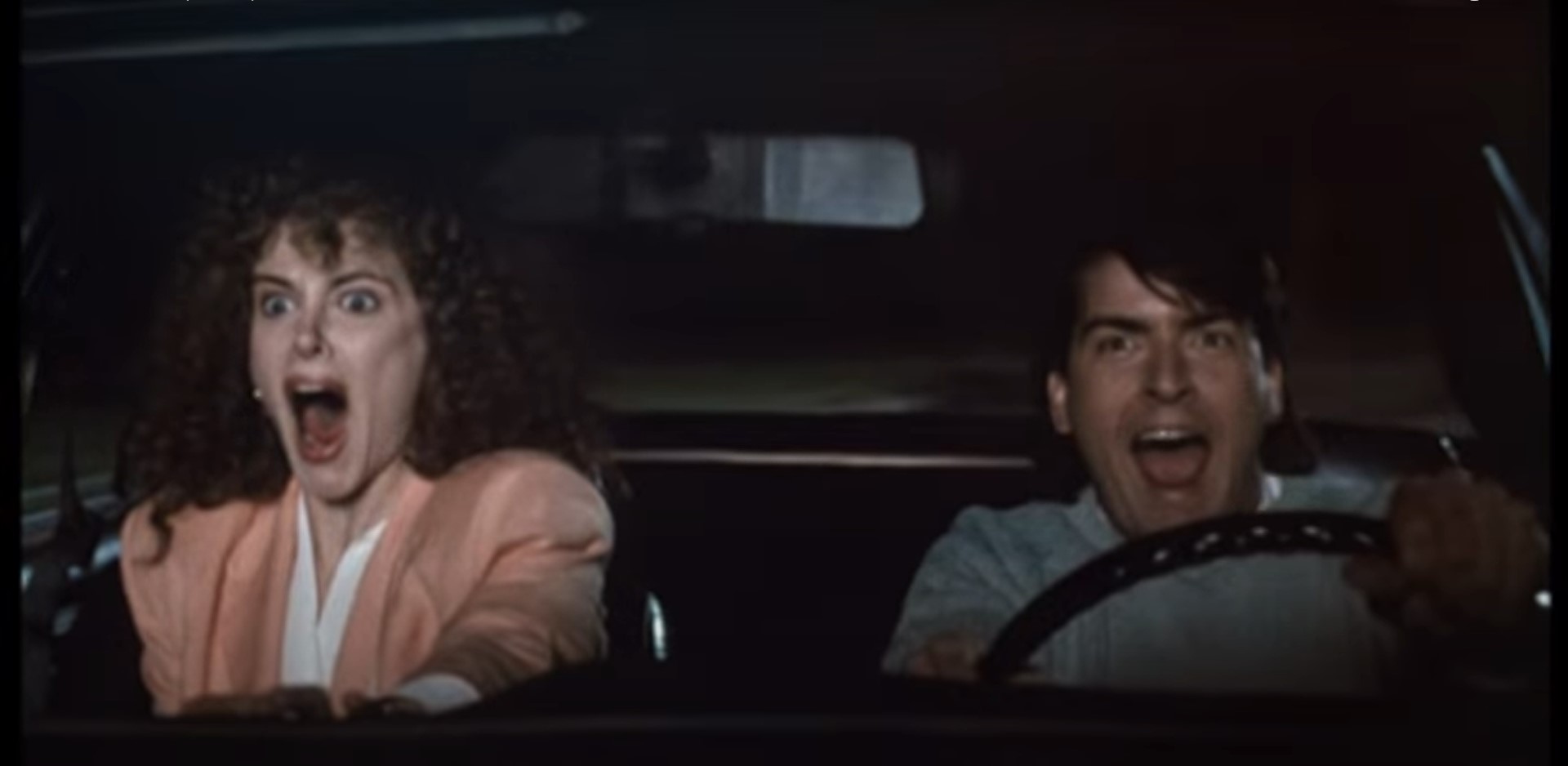
“Men at Work” is one of those memorable films that teeters between the 80s and the 90s.  Mullets, denim-on-denim, large three-piece suits, and the breeziness of politically incorrect humor genetically makeup “Men at Work’s” guilty-pleasurable and amusing plot anticipatedly driven well by the two principal leads, Sheen and Estevez, who are thrusted into the wrong place at the wrong time scenario as unlikely, joshing heroes, but the stars’ arm-candied, supporting cast of character actors shape and hold together a better lasting picture as with Keith David’s unphased Vietnam veteran, bored with life as it seems during his contentious first impressions with James and Carl, to nudge the garbage-toting friends into action as if he’s spearheading a campaign back in the bush fighting the Vietcong or with the two bickering hit-men who do more damage than damage control with their opposing opinions and tough guy prides.  Estevez’s farce is directed modestly well without the visual cues or styles to assist but rather works in alignment with how Estevez shoots most of his directing gigs with perfectly framed scenes and precision panning that join the foreground, background, and characters together all in one harrowing moment, such as with the pallet gun prank that ends in the murder of the politician, and those kinds of scenes speak for themselves without having to be edited down.  The by-the-numbers pacing builds the story up until a culminating head from the two simple sanitation workers living out their mundane lives with mundane problems to the classic showdown of being outnumbered with Potterdam and his toxic waste dumping henchmen in hazard gear, and though by-the-numbers, the pacing is fairly comfortable and routine, practically natural, without ever feeling forced with the exception of Leslie Hope’s character uncharacteristically, or maybe we’re just not privy of her personal background, lends to her spur of the moment coquettish behavior with Charlie Sheen’s play-dumb, act-dumb surreptitious act in her apartment alone and then out for a late night drive to a beach with him, again alone.  Stranger danger doesn’t apply here in this moment when inviting an unknown into the personal space without the accompany of others to be a safety net and this interaction has a fabricated-feel in moving the story along.

MVD Visual releases “Men at Work” onto Blu-ray in accordance with the distributor’s retro-repository label, the Rewind Collection.  Coming in at 46 on the spine, “Men at Work” transfer is pulled straight from the MGM vault and presented with an AVC encoded, high definition, 1080p resolution in a widescreen 1.85:1 aspect ratio. The MGM transfer transposition into an hi-def BD format doesn’t reflect the full effect of a bigger, better resolution. Image details remains quite soft but the end image quality is definitely still a palatable experience with natural, stable color grading and a suitable sheen (not Charlie Sheen) of the California sun and the night lighting that is often snuffed out by stylistic grading or alternative lighting and tint sources for creative measures. The transfer master remains clear and free of damage and withering wear. The English language LPCM 2.0 stereo projects just that, a two-channel output with a lower bit, and while perhaps not a science-fiction blaster-thon picture, there’s plenty of range opportunity to warrant a hearty audio mix, but the, like the picture quality, the result is negligibly free from imperfections. Dialogue contains no hissing and is clean, clear, and free from any other issues. Optional English, French, and Spanish subtitles are available. Special features has only the theatrical trailer going for it while the physical release bears the bonus material with a reversible, illustrated cover art, a mini poster of the original poster art, and the clear Blu-ray snapper is sheathed in an O-card slipcase doctored up to be retro-stickered with video rental trappings. The PG-13 film has a runtime of 98 minutes and the release is region A locked. One of the first buddy comedies to come out of the early 90s, “Men at Work” has an audience relatable rapport with the film’s stars absorbed into struggling, yet free-spirited blue-collar roles that are unwittingly forced to take on the big, bad evil industry and though the film may have lost its comedy edge, “Men at Work” still manages to be a repeatable watched classic.

“Men at Work” Now Available on a MVD Visual Blu-ray at Amazon.com

Weekend’s Over. Tomorrow’s an EVIL School Day! “Monday Morning” reviewed! (MVD Visual / Blu-ray)

Pick Up a Copy of “Monday Morning” Now on Blu-ray!

At Oceana High School, you’re either one of the local kids or you’re nothing. That’s how the aspired musician Bobby Parker and his friends are treated when their parents are transferred into town to build a powerplant. Shunned, ridiculed, and bully, Bobby can’t seem to catch a break even when he steals the heart of Noreen Hedges, a popular local and the sister of most bigoted bully of them all, James. To James who has essentially the entire town behind his way of obnoxious, intolerant thinking, Bobby Parker is no better than scum and is unwelcome anywhere in town, even at the local waterhole called The Shandy. After sneaking into The Shandy to see Noreen, Bobby is left in a heap of trouble with the law when a near fatal accident lands one of the local girls, James’s girlfriend, in the hospital. Looking to teach him a lesson he’ll never forget, James and his lackeys bring a gun to school to scare him but when a teacher is shot and James finds himself holding hostage his homeroom class with the gun, he’ll need to prove his innocence to his narrow-minded classmates as well as the police with itchy trigger fingers.

Mondays are the worst. When you’re a teenager coming off a weekend, that bell ringing at the start of the week is worse than fingernails on a chalkboard. When you’re a teenager who’s constantly bullied by popular jerk and the entire prejudging town that only sees you as an outsider, Mondays could shoot anyone’s nerves. Shoot being the key word in Don Murphy’s 1990 release feature film debut, or rather his only feature film credit, “Monday Morning.” Also known as “Class of Fear,” the cult drama with a classroom shooting at centerstage of the narrative feels awfully relevant in today’s tumultuous time of school and mass shootings. Where the topical issue of gun control is on the edge of every Red and Blue politician’s lips. For Don Murphy, who went on to produce notable blockbusters such as the “Transformer” films as well as cult hits with “Apt Pupil” and “Natural Born Killers,” “Monday Morning” is just a movie without any kind of political or social commentary behind the surface. In fact, Murphy has stated that production was initially a student film that evolved, but the theme behind reality and fantasy are the same in that children-bullying-children can push fragile minds beyond a breaking point. First A.D. of “Caged Heat 3000” Sheila Lightfoot produces the film alongside Murphy as executive producer under the production banner Team Angry Filmworks, Inc.

Noah Blake, the son of child star turned accused wife-murderer Robert Blake, steps into the constantly ragged on shoes of ostracized struggling high schooler Bobby Parker.  Bobby’s a never-say-die, never-give-up good guy given a cruddy hand in life as he’s dealt blows not only by his school peers, but also by his father who throws him out of the house for not living up to expectations and even by his band of like misfit friends for being traitorous for trying to live outside the confines of his unwanted status.  Bobby’s an extremely likeable and evolving character to almost a fault as he walks into foreknowledge adversarial situations without so much a clue on how to handle unprovoked hostility other than head on.  Perfect in the role that’s aggravatingly inspirational on how everyone should be pigheadedly neutral and able to see the good in everything, the “Piranhaconda” actor Blake takes Bobby Parker by the reins and lets the character be a subject of unbridled victimization.  One of the more conspicuously unhinged and douchey performances, landing this actor on the opposite end of the spectrum in contrast to Noah Blake, goes to Brandon Hooper as pretty boy bully James Hedges.  You really want to just punch James square in his pointy nose because of his incessant nitpicking and tunnel vision on making a crusade out of tormenting Bobby Parker for being in the platonic presence of his girlfriend (Shannon Absher, “Blood Nasty’) and having a romantic relationship with his sister Noreen (Julianne McNamara, “Saturday the 14th Strikes Back”).  What’s curious about “Monday Morning” is its ability to drop Bobby Parker’s friends from the principal lineup, with the exception of Bobby’s ride-or-die bestie Bill (Karl Wiedergott, a “The Simpsons” utility voice actor) though initially saturating the narrative with their bickering and turn the attention more on the town’s chief of police, played by “Sorority House Massacre’s” Fitz Houston fitting into his usual typecast role in law enforcement, by introducing one of the classroom hostages as his son (Vincent Craig Dupree, Julius from “Friday the 13th Part VIII:  Jason Takes Manhattan).  Rickey Dean Logan (“Freddy’s Dead:  The Final Nightmare”), Marta Marin (“Mindwarp”), Nicole Berger (“American Cyborg: Steel Warrior”), Jason Lively (“Night of the Creeps”), Brian Cole (“Mortuary Academy”), Paul Henry Itkin, Annie O’Donnell, and Lisa Rinna round out the cast.

How writer-director Don Murphy describes his film is “The Breakfast Club” with guns.  Granted, Murphy’s firsts draft contained more angst as an angry student holds the whole class hostage at gunpoint for the near entirety of the story, but “Monday Morning” is more akin to “Pretty in Pink” with A gun, isolating teenage cliques, trying to overcome their pressuring biases, and exposing differences in social classes and mistook attitudes.  Most of the film is building up to the clinching climatic classroom moment with Bobby trying his damn hardest to be a bridge between the gaps in a “Romeo & Juliet” type relationship that connects spurned outsiders with the spurning locals.   “Monday Morning” is a very contained narrative with only a handful of locations, primarily Oceana High and The Shandy, grounding the scale to a much more condense and story friendly design that’s easy to follow and digest.  That design isn’t turf war central.  We’re not talking about an all-out war between the Jets and Sharks.  Murphy, who often co-credits the final script to another screenwriter, rains down a supercell storm cloud’s rain and lightning on the downtrodden outliers to garner a tremendous amount of sympathy and to really beam lasers of hate into the local louts that essentially becomes a turf war just from their perspective for fear of losing their lionization over Oceana and the town.  “Monday Morning” embodies that quirky 1980’s teen melodrama with a very real, very terrifying, and very present-day topic that bumps Don Murphy’s movie up into the cult category.

We all agree that Mondays suck, but “Monday Morning” is a Monday associated gem of a film that is now available on a high definition 1080p Blu-ray from Angry Films and MVD Visual as part of MVD’s Rewind Collection banner.  The new transfer, taken from the original camera negative of a European based filmstock, is presented in a widescreen 1.85:1 aspect ratio.  The transfer release is reasonably well-dressed in color, with an ever so slight teal or gray tinge, and a good enough, above average decompression rate around 28mbps.  The transfer does display flashes of damage that look very much like tracking lines, but also could be light exposure on the negative.  The audio remains at an English LPCM 2.0 mono and contain static throughout with hissing in portions of the dialogue; however, the tracks are relatively clean enough for discerning dialogue.  Bonus features include a high-def, near feature length interview with writer-director Don Murphy doing a deep dive into his background, the film’s backstory, and his recollection of events throughout his career, a high-def, 24-minute Don Murphy from 2019 that looks at the producing career of the filmmaker, and the standard definition VHS version (1.33:1 aspect ratio) of “Monday Morning” under the alternate title “Class of Fear.”  The physical release comes with a reversible case cover art with alternate “Class of Fear” and a collectible mini-poster insert housed inside a clear Blu-ray snap case with a cardboard slipcover of the same primary cover except with faux cover damage to resemble a worn-torn rental.  Both versions of the film run at 105 minutes and is rated R.  A timely release for “Monday Morning” as a film that’ll reexamined and rethought of from its original entertainment purposes to be said that the issue has long since been prevalent and in the back of our minds.

Pick Up a Copy of “Monday Morning” Now on Blu-ray!