To be a Rich and Famous Rockstar, You Must Sign with EVIL! “Hell’s Bells” reviewed! (SRS Cinema / Blu-ray)

Sign Your Soul To Satan for the “Hells Bells” on Blu-ray!

A pair of middle-aged best friends and rockers named Arthur and Herb have minimum waged jobs, no ambitions, and two level-headed wives on the brink of divorcing them if nothing changes.  All the friends have is their band, Devil Music, and their glam rock music. Out of the blue, a music talent agent signs them in a heartbeat and before they know, Devil Music is rocking out to a packed-full arena full of adoring fans and obsessed groupies, raking in money beyond their capabilities of higher counting.  What they’re oblivious to is the band’s collective souls now belong to the Devil under the contract terms with the servile music agent doing the Devil’s fear-based bidding and whose life and soul hangs in the balance.  When the Devil comes to collect, sending his demonic minions to slay each member of the band, Arthur and Herb must find a way to save themselves from the Devil cancelling their life show forever. 

For over a decade now, filmmakers Jim O’Rear, who’s minor zombie role in George Romero’s “Dawn of the Dead” has launched a career in indie horror in front and behind the camera with “Hayride Slaughter,” “Three Tears of Bloodstained Flesh,” and the “Cruel Summer” trilogy,” and Scott Tepperman, who’s more recent filmography into the indie market also saw highlights of horror, have been in business together ever since co-starring in the 2013 haunted hospital flick, “Hospital.”   From then on, the two had formed their own production company, Los Bastardz Production, specializing in low-budget horror with a select entourage of talent.  The devil and his contract film, underscored with a rock-n-roll fame theme, released in 2020 is duo’s “Hell’s Bells,” a horror-comedy built around if it seems too good to be true, it probably is narrative.  “Hell’s Bells” is also produced by the two filmmakers.

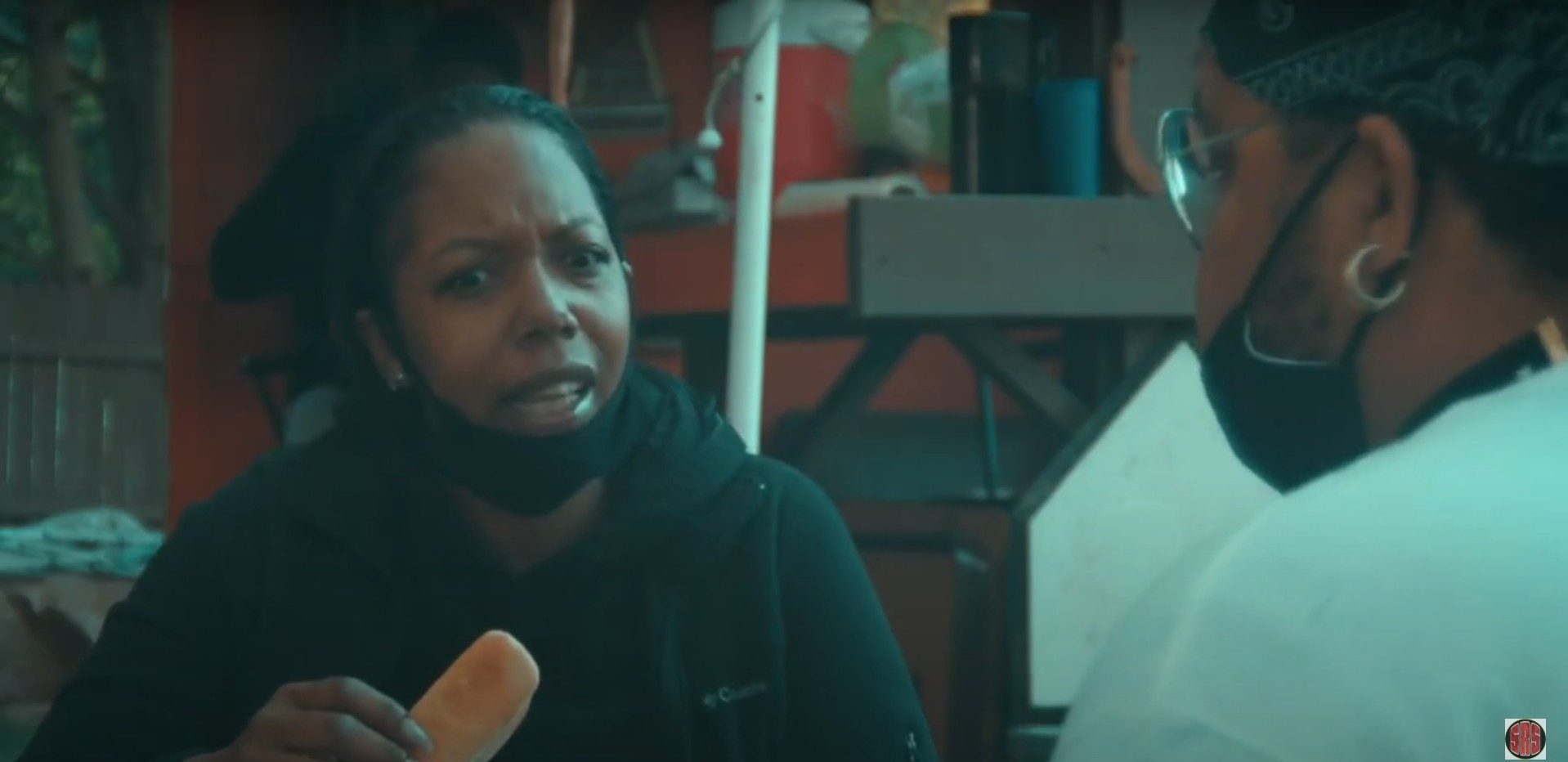
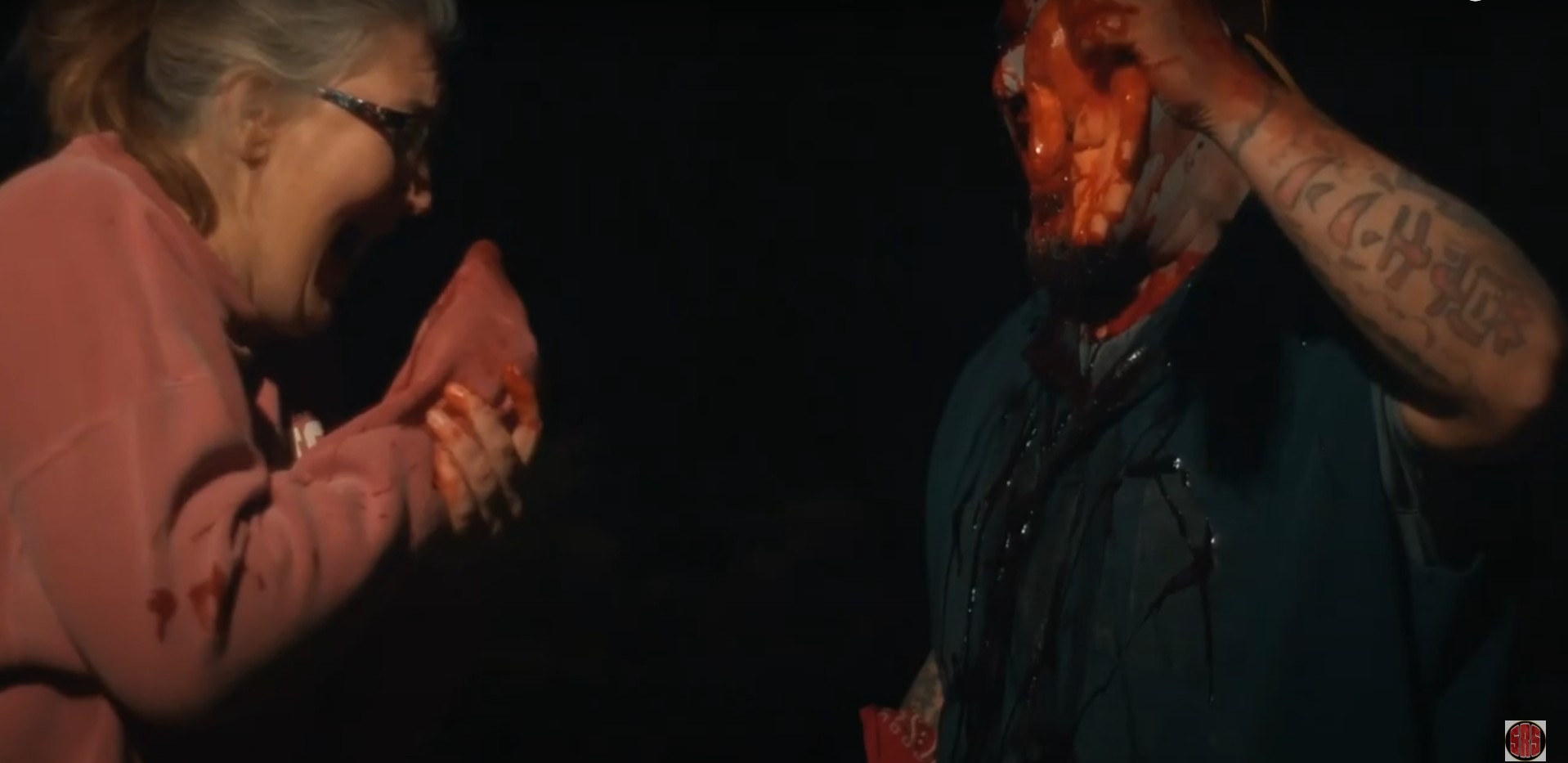
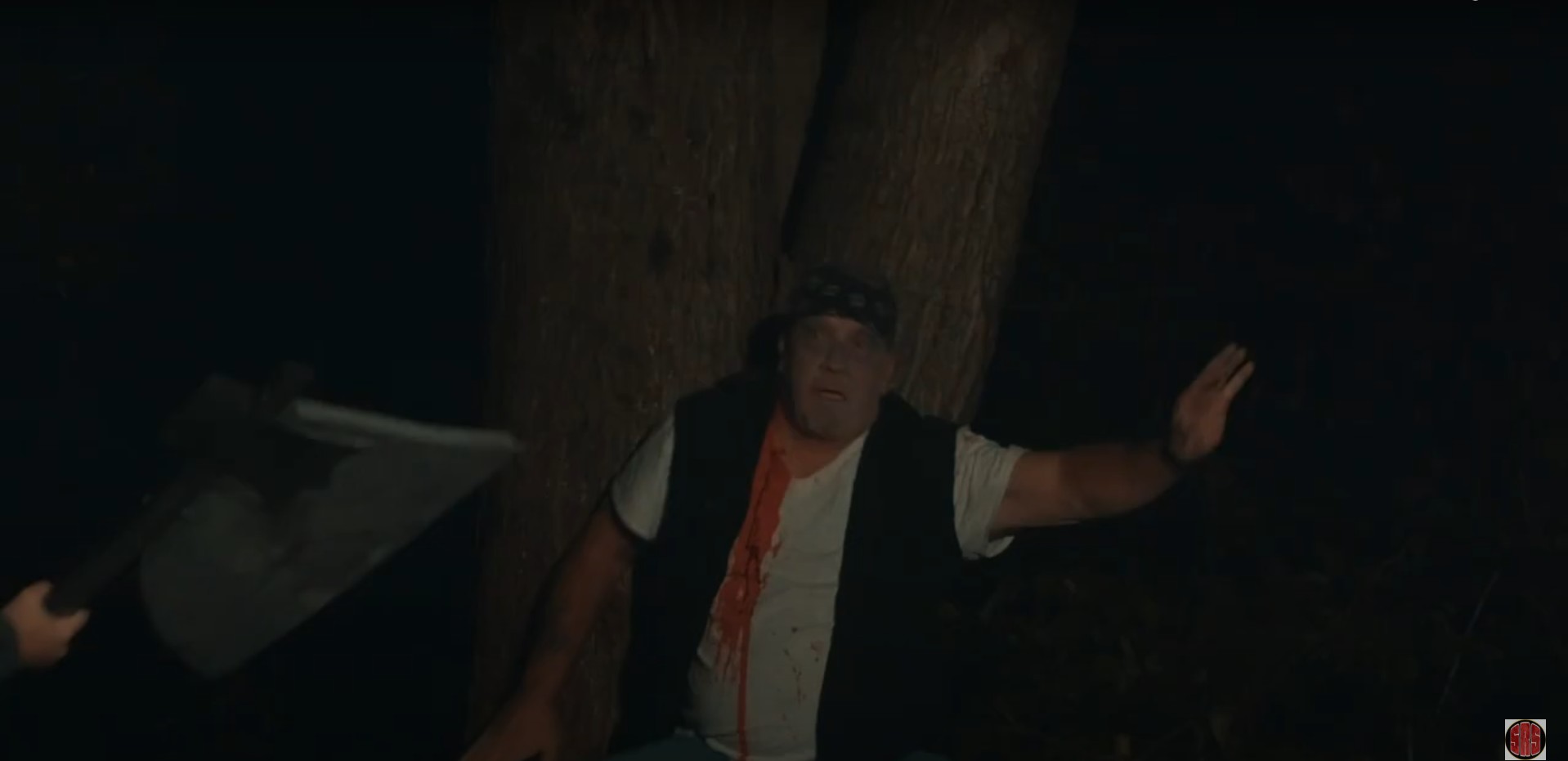
Like most of their produced product, it comes to no surprise that the Los Bastardz themselves, Jim O’Rear and Scott Tepperman step in the principal leads of a Beavis & Butthead or Bill & Ted type of heavy metal music centric duo who are daft beyond repair.  Any innovation aimed for the setup is instantly dissolved by the derivative tepidness as we’ve seen these characters before over the decades now, but O’Rear and Tepperman make for a good dimwitted and guileless pair with a gullibility and an innocence that makes them appear sympathetically simpatico, even when their levelheaded wives (Rebekah Erb, “Death Care,” and pornstar Layla Dawn. “Slumber Party Slaughter Party”) use threatening divorce language to motivate their one-track mind toward another desire in life.  The jokes are a bit long in the tooth and there are a handful of needless fart jokes, but the overall gags do land even if the terrain they contextually touch down on is rocky at best as they play to their individual character strengths of being a grocery bagger enthusiastic about making it big and a loafer who actualy has some intelligence underneath his Jesus hairstyle.  Their band mates, the cocky loudmouth drummer Vic (Paul Van Scott), the butch backup singer Shirley (Lisa Kirk), and the catatonic bassist Gary (Cameron Scott), all have their own quirks, and all are played by actors familiar with El Basterdz having donned roles in previously produced films from the company, such as the “Cruel Summer” series.  As the band Devil Music, they are targeted for soul reaping as a part of a contract byproduct against their music agent Caleb (Tom Komsar), drawn up by the devil himself in Marc Price (“Trick or Treat”) by duplicitous means with deceitful promises.  Without the horns, pitchfork, and red skin, Marc Price makes for a good Devil in human skin with only the economized visual effects fashioned glowing eyes.  Harold McLeod II preludes the story as a victim of contract, Cayt Feinics draws attention with a show of toplessness as Shirley’s lover, Jerry Reeves plays the demon x many going after Devil Music, and a sorely underutilized Jimmy Maguire, as the exasperated grocer manager tired of Arthur and Herb’s lack of common sense, fill out “Hell’s Bells” cast.

To preface with my previous experience with El Basterdz films, “Cruel Summer” didn’t do it for me with a dowdy slasher that’s didn’t leave impression.  Yet, “Cruel Summer” has two sequels plus a 4th soon to be on home video, making this series their most popular commodity.  What can I say?  Cinema is subjective.  That bad taste didn’t deter “Hell’s Bells” from the ever-growing review pile and a second chance to get this long-time horror fan aboard with Jim O’Rear and Scott Tepperman’s blithe outlook toward the horror genre, one that doesn’t take itself too seriously.  With that understanding, going into “Hell’s Bells” was rather easy with no expectations for commentative material and top-notch gags and laughs, but what El Basterdz provides has been long appreciated and continuously favored in genre films:  decent VFX, decent practical effects, and, of course, the provocation of nudity.  There may be times when films can get away with having only one of those key elemental pieces present with great immensity and intense projection that the film can’t be denied it’s due right to seen and heard as a well-made film but have all three and the formula works like a charm amongst genre fans no matter how bad the storyline gets and no matter how bad the acting is portrayed, leveling up a mediocre production to potentially the penthouse of the independent skyscraper.  To be fair, neither the story nor the acting in “Hell’s Bells” is atrocious but the technical aspects during principal photography and post-production throw the film off-balance into slapdash hogwash and that can be rather off-putting right out the gate for most audiences.

“Hell’s Bells” finds itself being a story having been told before, many times over in its airheaded budding duo faced with great task none think possible to complete, but O’Rear and Tepperman manage to befit themselves satisfactorily in archetype with a rock-n-roll nightmare by sticking to their character quirks and incorporating the backbone preferences of shoestring genre filmmaking.  SRS Cinema is a distributing house built on shoestring films and “Hell’s Bells” is another brick in its schlock-sturdy foundation with a Blu-ray release.  Encoded with AVC compression, presented with 1080p high-resolution, on a 25GB BD-R with the purple underbelly, “Hell’s Bells” looks pretty good for commercial grade encoding and minimal capacity.  Details are sharp enough to cause no concern to capture skin variations, the contrasting wardrobe textures, and the shifting compositions between reality and fantasy stemmed from visual effects and fade-in/fade-out montage sequences.   Scenes are mixed bag of grading, some more intense than others that are set with a brighter natural veneer, but all retain their intended quality without any substantial issues from compression.  The English language LPCM 2.0 stereo renders a mix of feeble commercial equipment and green technical knowledge that permits a large noticeable swing in all areas of principal sound recording with most of the pain points affecting dialogue with retreated vocal presence in certain scenes while robust in others, and even an in-moment change of the same scene at times.  Post sound design isn’t marred by the same scenarios that’s a clear as crystal with the added rock soundtrack, crowd cheers, and demonic gutturals.  No English subtitles are offered.  Special features include a commentary track with writer-directors Jim O’Rear and Scott Tepperman, a behind-the-scenes featurette, Arthur and Herb’s Devil Music music video, blooper reel, the feature trailer, and SRS Cinema catalogue trailers.  SRS Cinema’s Blu-ray mirrors their limited 100 count release without the director’s signatures, retailed with a regular Blu-ray Amaray case with illustration composition artwork of mostly the chief principal characters, and as always, the graphic artistry SRS uses is always 100x better the film.  There are no other physical accompaniments.  The not rated release has a runtime of 80 minutes and has region free playback. 

Last Rites: Throw up the sign of the devil horns for “Hell’s Bells’s” comedic contract with a hair metal Satan, but don’t let this narrative fool you by hawking new something old and done before.
Sign Your Soul To Satan for the “Hells Bells” on Blu-ray!

Who Would Have Thought Something So Tiny Could Create So Much EVIL! “Cannibal Tick” reviewed! (SRS Cinema / Blu-ray)

Get Bit by the “Cannibal Tick” Blu-ray! Now Available!

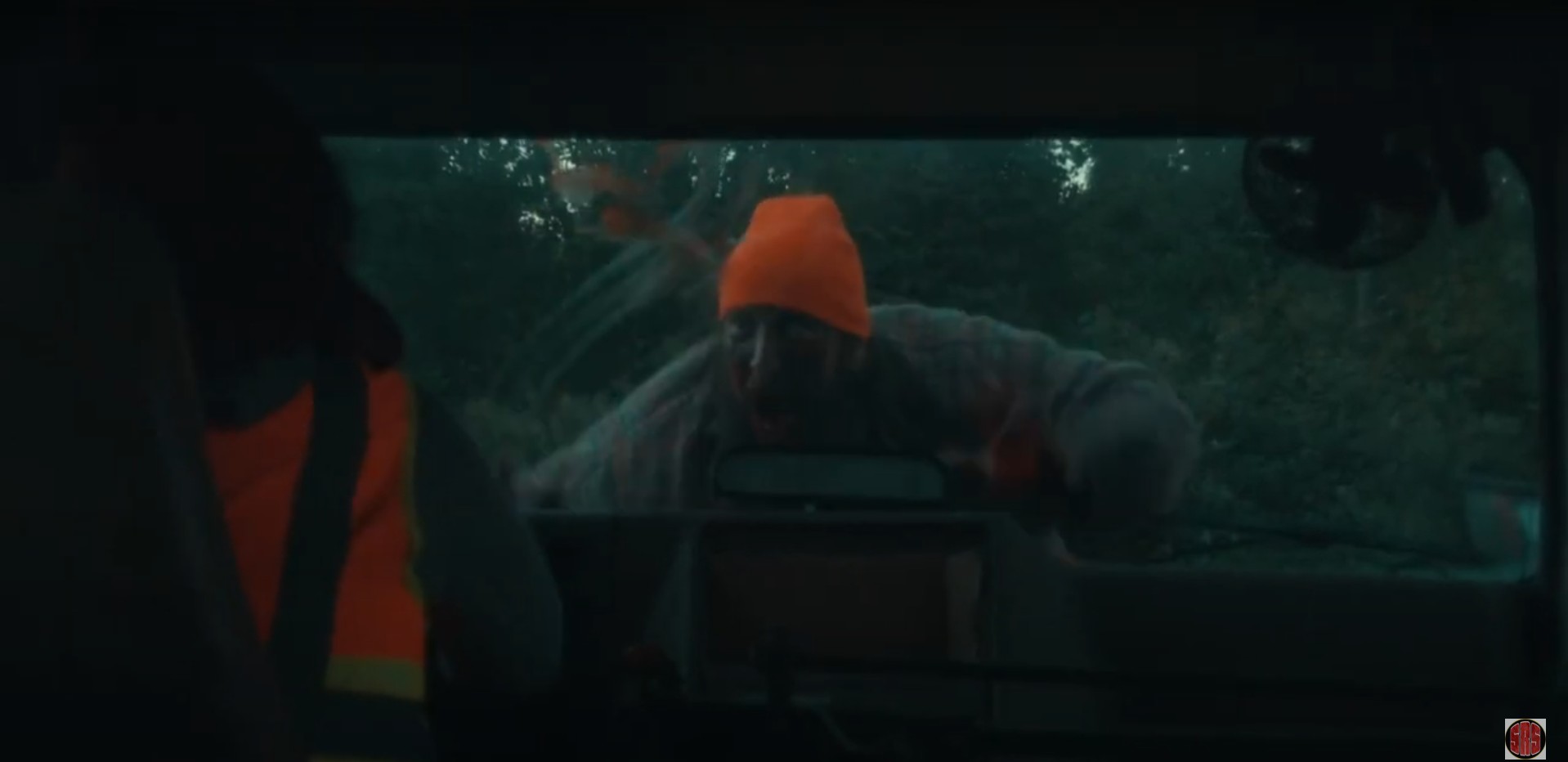
Jeb believes his late father’s purloined gold is stashed underground in his densely wooded backyard.  What’ Jeb unearths is not gold, but barrels of chemicals Jeb believes to be just as valuable.  What Jeb doesn’t know about the pinched drums is the ooze inside leaking from them turns the local tick population into diseased carriers, transmitting a sickness upon biting their hosts and transforming the hosts into ravaging flesh eaters that continue to spread the disease with one single bite.  All hell quickly breaks loose amongst a sleepy backwoods around Big J’s outdoor food truck until a retired vampire hunter, Alec, turns his skillset onto the zombified undead when twin brother Roscoe becomes patient zero.  Big J’s famous menu items pig dicks and beer won’t save the rustic hillbillies from a fast-spreading contagion but one kilt wearing son of a bitch aims to take on all of them with a help of local and his vampire slaying colleague.  

If Lyme disease wasn’t already bad enough, chemically diseased ticks being the parasitic harbingers of the zombie apocalypse might just be the worst.  Like a premise straight out of Valve Corp.’s Half-Life series, co-directors Ross Carlo and William Long’s low budget, running zombie-comedy film, “Cannibal Tick” will leave more than just a bull’s eye symptom in its bloody, outrageous wake.  Mostly derivative from other running undead features, the 2020 feature length film is the debut and first collaboration efforts of the Eastern Ohio-Western Pennsylvania filmmaking duo with Long running solo in penning the screenplay of rednecks running rampantly through a serious case of tick-induced rabies.  “Cannibal Tick” is a production of indie companies Poo House Productions located in Youngstown, Ohio and of William Long’s Dark Long Productions of Northern Cambria, Pennsylvania.  William Long and Ross Carlo retain the producing credits as well as taking on principal characters as per standard in the microbudget, everybody-pitches-in productions.

In the spirit of low-budget creativity, Ross Carlo (“Rotten, Welcome to the Freak Show”) accepts his dual role fate playing twin Scottish brothers Roscoe and Alec.  Carlo invests himself into the accent while getting physical when the ticking timebomb explodes and all zombie hell unfolds in the armpit of Nowheresville, Pennsylvania.  His presenting of Alec and Rosco couldn’t be more different but still oddly the same as Alec’s has more of an interesting background as a retired vampire hunter visiting his brother, or rather just dozing off on Roscoe’s couch.  Roscoe, on the other hand, is purely just a boondock alcoholic without much of anything else going on other than the next pint and a handful of used tissues from his personal pleasuring.  William Long (“The Devil’s Wasteland”) also has a role in the film but just one as the gold feverish Jeb looking for his late pop’s buried treasure.  Jeb’s quiet nature is not imposing and he’s terribly forgetful or just doesn’t listen to his wife but neither scenario is really relevant to the story, much like most of the carrier scenarios and backgrounds other than Alec’s vampire killing skills translating over to zombie dispatching.  So many characters are quickly tossed into the mix of a 73-minute story that they’re unfortunately not well fleshed out nor provided enough substance to even instill an impression upon and what they reduce to is simply just fodder for the carnage for the sake of a high body count.  John Catheline (“Deadly Numbers”) is and plays a forlorn former wrestler Curtis lost in beer and solitude for his prime fight days and has become a local mechanic, Maurandis Berger (“Chronicles of a Serial Killer”) and Sheneefah Johnson (“3 A.M”) are a black married couple who find themselves broken down in a white hick town, and Lena Devinney and the late Jimmy Barber Sr. (“Deadly Numbers”) are the couple who arrive at the wrong place, wrong time as they drive up to Big J’s for some pig dick and beer.  The aforesaid descripts don’t go any further with no progressive dynamism that usually establishes either a love or hate development with audiences.  “Cannibal Tick” also feeds upon Greg Bailey, Allison Devinney, Donnie Lawrence, Tene Gossard, RahZhee Emmaunel, Lisa Dapprich, Iesha Guzzo, Jana Ferris, and Michelle Dominique Buxton to be bigger in the slaughter and in the slaughtering. 

“Cannibal Tick’s” concept is sound – a tick becomes affected by a barrel of leaking toxic chemicals that causes their bite to inject the zombie creating substance directly into the bloodstream.  Yet, the problem is there is only one scene with a tick bite and the Rosco-Long production goes from interesting to run-of-the-mill zombie chaos with zero principal protagonist power.  Another knock down is the substandard traits of an extreme indie production that relies heavily on the character captivation and special effects caliber to be successful in a demanding market driven by those factors.  The former has been touched upon in great detail, but the special effects pull ahead as Michelle Dominique Buxton, who not only has a character role but is also the special effects makeup artist, is able to pull off a few interesting prosthetic monster looks as well as a decapitation death that in all honesty is really well done in framing and effect.  While the solid zombie carnage infects survivors left and right with a ferocious appetite, the narrative then evolves with Jeb’s direct ooze contact, transforming him into some similar to a zombie king that sets up “Cannibal Tick” to a potential sequel in the future.  However, that sequel hasn’t crawled its way to fruition just quite yet.

The blood thirsty arachnid with a zombifying bite buries itself onto a new Blu-ray release from SRS Cinema.  The AVC encoded, mastered 720p resolution, 25 gigabyte BD-R with the purple underbelly.  While typically unusual for a Blu-ray to be in standard definition, SRS Cinema’s certainly no stranger to their films being filmed in 720p, thus the format, but video, as well as audio, suffer quality buckling, especially when encoded onto a one-time writable disc that has its own technical limitations.  “Cannibal Tick” sees quite a bit of those technical woes in its compression codec from banding, splotchy macroblocking, and loss of overall finer details.  Many of the action scenes are done at night with little lighting and decoding struggles with delineation and details, especially when the use of commercial filming equipment was used.  The film is at least presented in a widescreen 1.85:1 aspect ratio.  The English audio isn’t written or displayed on back cover, but this does render through the receiver output as an uncompressed 2.0 mix that channels a dialogue and ambience stream through to another channel of a stock score.  Obvious lack of refinement housed in a lower bitrate captures less isolation efforts on the dialogue, leaving disruption to run interference that spike and subdues pitches and tones, but the dialogue strength has solid recorded quality from a well-placed boom.  Other than that, there’s not a good dynamic range other than zombie growl and gurgle to give “Cannibal Tick” a semblance of audio body.  Special features include raw footage of behind-the-scenes of stunt sequences and makeup effects without narrative context, the original trailer, the official SRS trailer, and trailers of other SRS Cinema catalogued films.  The standard Blu-ray contains original artwork of a large, translucent, yellow tick overtop a blood smeared, presumably, zombie woman that speaks greatly to and has intrigue appeal of an ultra-indie film.  With a runtime of a little over an hour, marking at 73-minutes, SRS Cinema’s release comes region free.

Last Rites: Ultra low-budget, rough-and-ready, and imitative in a rustic sense, “Cannibal Tick” drains interest and captivation with the film’s throwaway moonshine characters caught and released in the throes of a backwoods zombie outbreak.

Get Bit by the “Cannibal Tick” Blu-ray! Now Available!

This One Has the EVIL Touch! “The Hand” reviewed! (Synergetic / DVD)

“The Hand” Pops Onto DVD at Amazon! Click Here to Purchase.

After a night of heavy drinking, Bong-soo wakes up from a strange nightmare.  The nightmare continues when he habitually walks into the bathroom and discovers a grotesque hand sticking up and out of the toilet bowl.  The confused yet calm Bong-soo wakes his wife who passes out at the sight after the hand twitches right in front of them.  Bong-soo calls 911 to report the strange occurrence and when his residence’s security guard and the dispatched EMTs check out the scene and see his wife passed out on the floor and a supposed severed hand sticking out of the toilet, the unbelievable scenario spirals into suspicion and Bong-soo is detained for suspected gruesome acts of foul play, but when the hand violent moves again and the bathroom door suddenly becomes stuck, those left standing, out of the hand’s deadly reach, are left with only toiletries at their disposal to do battle against the a force their unable to flush.

Preying on one of the more irrational fears that something will slither up the toilet while you make the business, “The Hand” extends that fear with a supernatural startlement.  Shot in 2020 but released in 2023, “The Hand,” or “The Hand:  Attack of the Things” is to the degree of a ghostly-demonic thriller sprinkled with dry humor from South Korea by writer-director Choi Yun-ho, claustrophobically shot inside an apartment bathroom which, and let’s be being honest, is roomier than most bathrooms in two-story houses.  Toilet horror is a subgenre that’s not everyone’s cup of eau de toilette but has resiliently found a niche audience and continues to live quietly in the indie shadows, such as with Evan Jacob’s “Death Toilet” films, Matthew Mark Hunter’s “Killer Poop” franchise, and the Asian market, specifically, has an interest in potty horror-humor, “Zombie Ass:  Toilet of the Dead” instantly comes to mind.  However, the absurdity of these titles doesn’t infect Choi Yun-ho’s less feces-filled horror, focusing more on the curled, demonically-skinned hand from out of the toilet.  “The Hand” is a feature presented by Korea Creative Content Agency and Inoi Media and a production of Spooky House, and R202 studio.

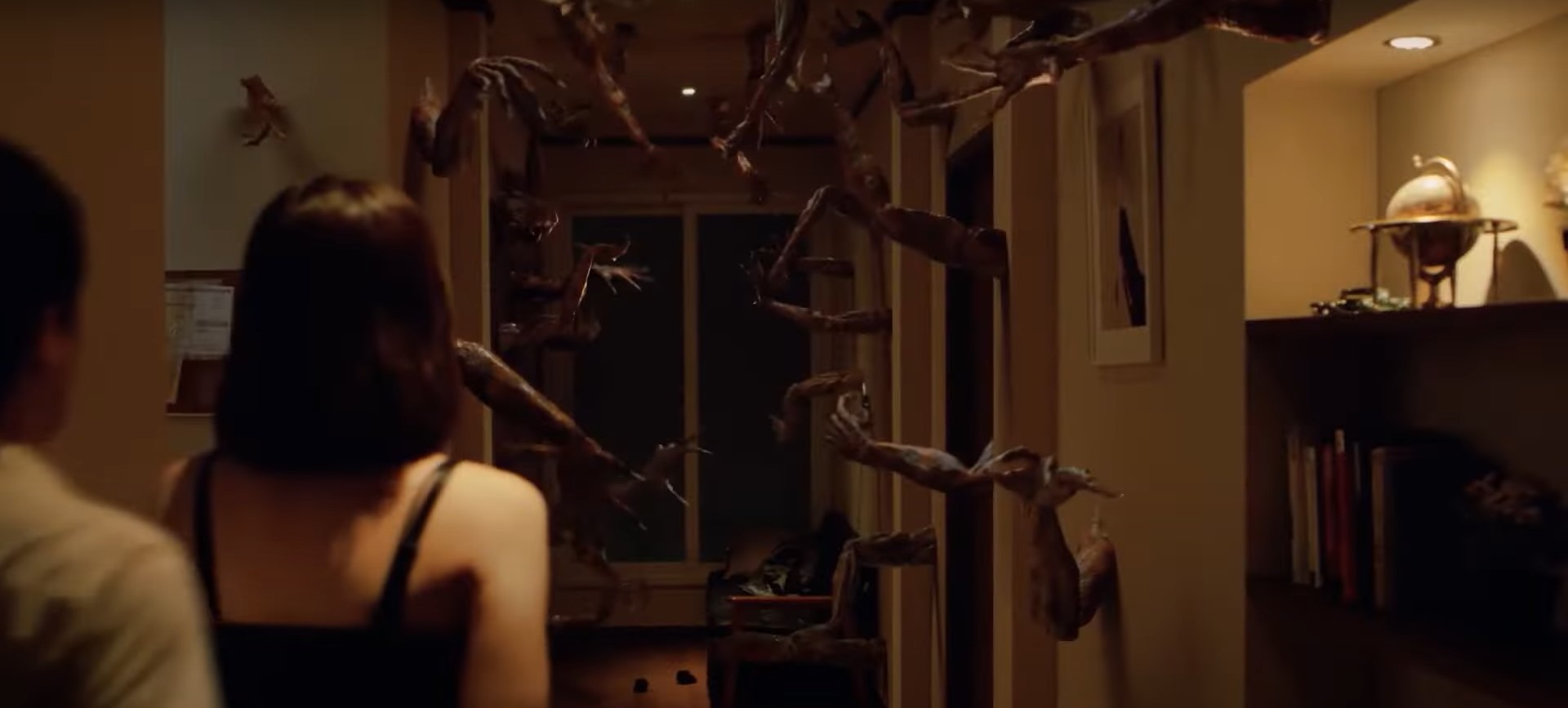
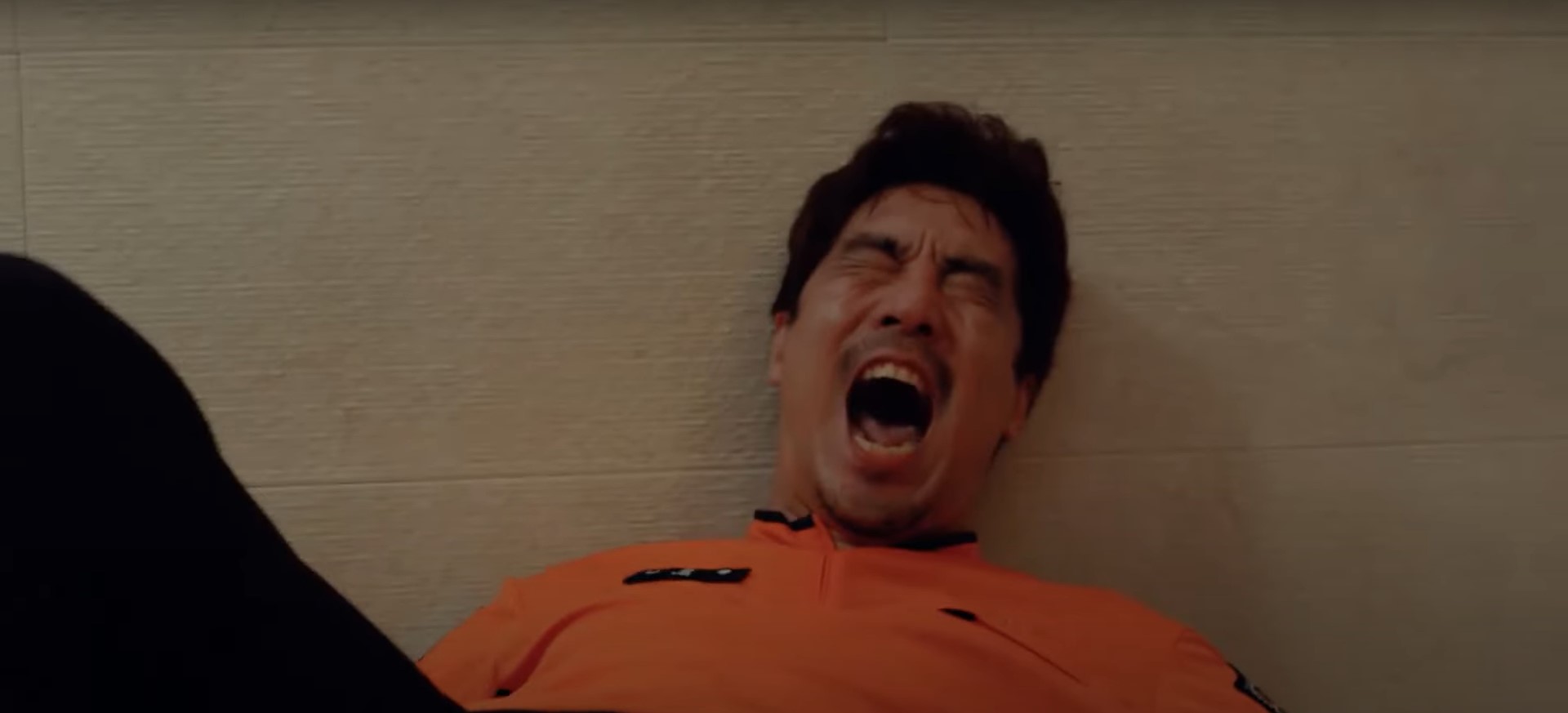
With an intimate setting comes an intimate cast to do battle with the mysteriously unknown monstrous hand.  Lee Jae-won is up to the task, or, well, placidly taking in the situation with subtle caution, as the expressionless alcoholic husband Bong-soo.  The regular Korean television actor infiltrates into his first leading man feature, or perhaps barely a feature with a film runtime of under 60-minutes, tackling close-quarter dynamics and a computer-generated thing with finger fingers, elongated fingernails, and a reach that turns the already compact bathroom into practically the size of a coat closet.  Considering the mention of his drinking problem more than once, Bong-soo’s alcoholism isn’t one of the more centric elements, especially at the chagrin of his wife Joohee (Jeong Seo-ha) to create a dynamic hurdle to arc over.  Once the building security guard (Soo-ho Ahn) and 3-person 911 team, with Park Sang-wook portraying lead paramedic, the energy devolves to a humorous suspicion of Bong-soo and the pigeon-hearted presence of the lead paramedic as the two men ever so lightly buttheads in a confounding position and through the progression of the ordeal, the squabbling pair form along the way a bond out of insta-desperation.  When the wife finally revives, another breakthrough moment between Bong-soo and his wife becomes realized that they’ll never take each other for granted again as they do slow motion poses and battles with an army of apartment wall-protruding hands who carry a deadly touch.  The jagged line graph tone maintains a comedic constant right through the heart of “The Hand” that lets the characters sway freely in various complexions without jarring their principles too flippantly. 

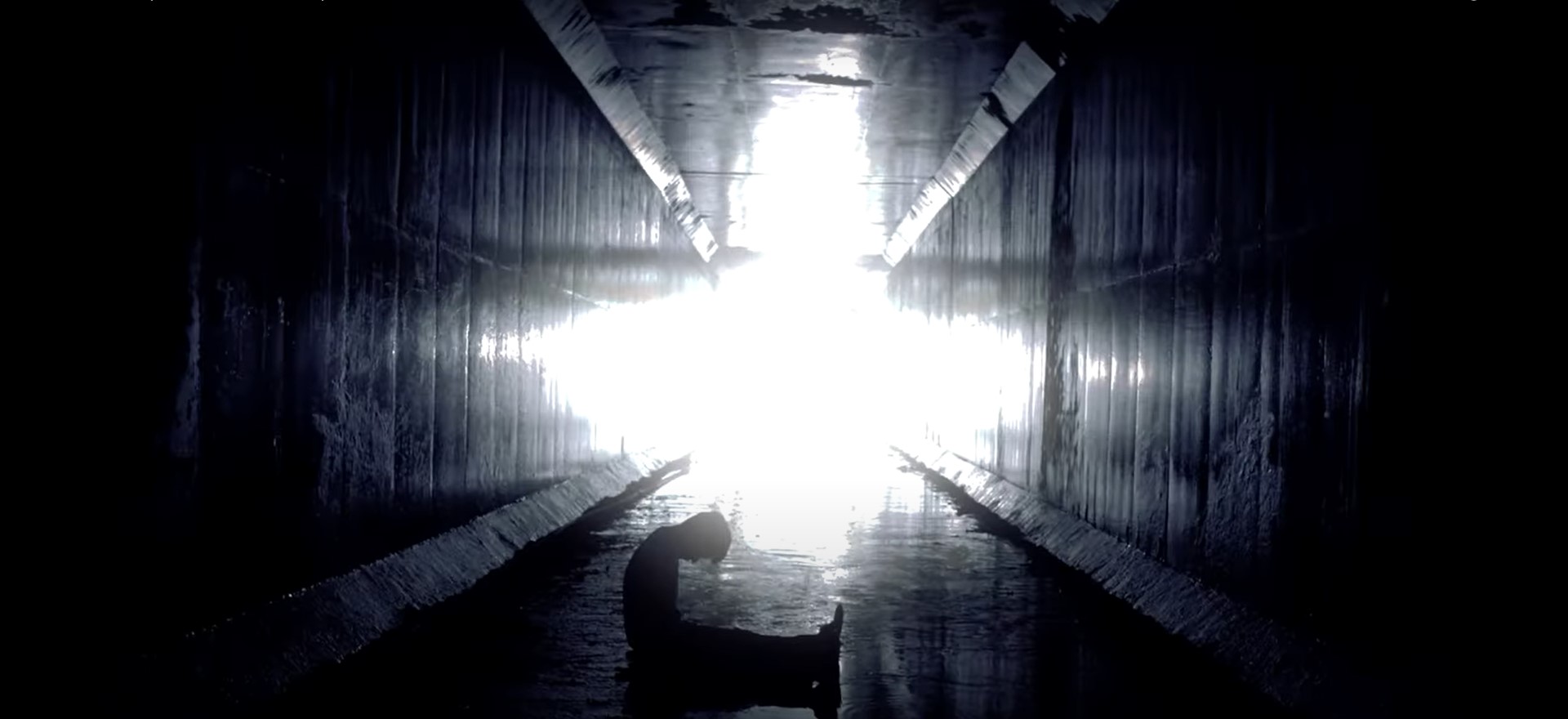
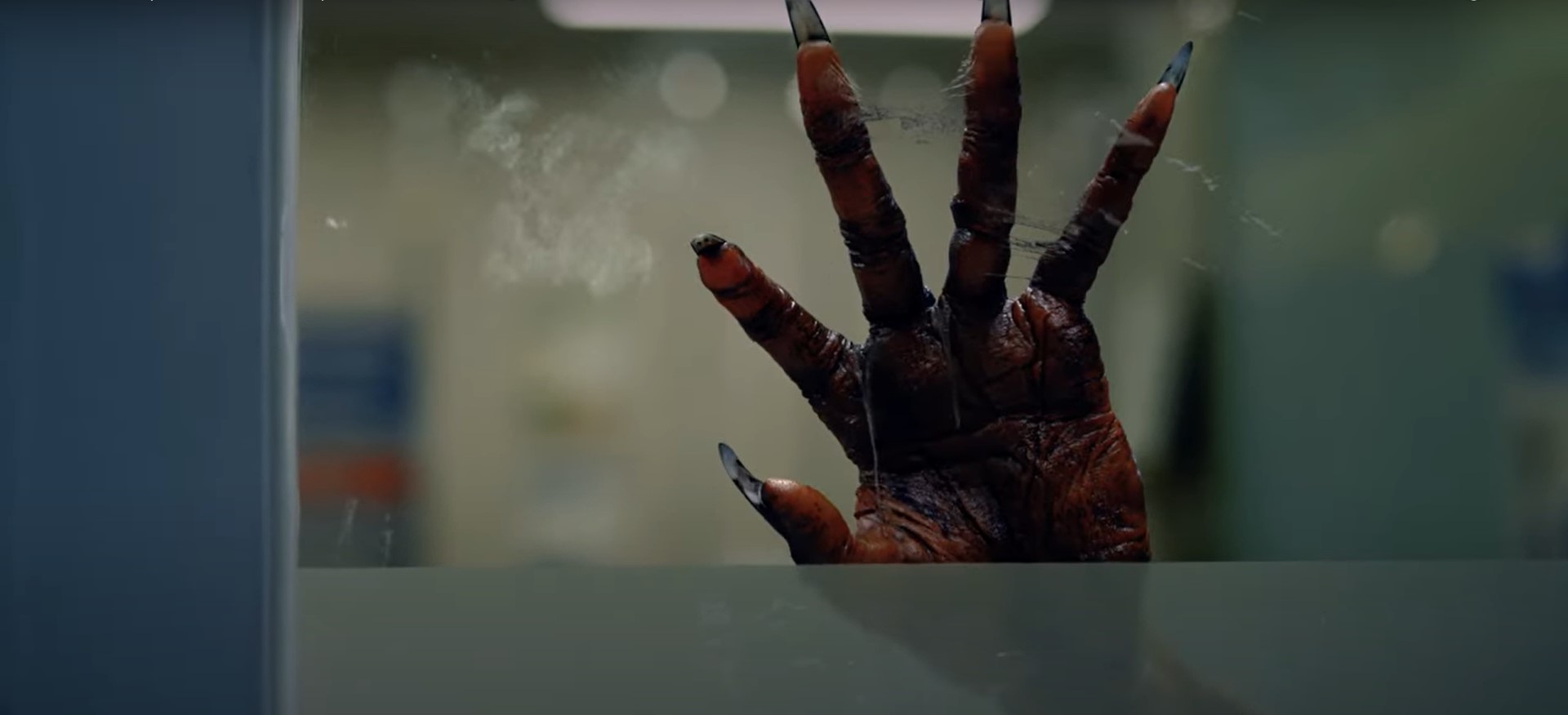
The titular hand is a fully operational character in itself.  A complete CGI mockup straight from the backstory sewers of Hell, conceived from a threadbare anecdote of a woman found dead in a nearby sewer tunnel with her arm missing a few days prior told by the paramedic leader.  That arm, with gnarled hand attached, is thought and assumed to be the same wretched one sticking ominously straight up and out from the toilet bowl.  Texturally, the synthetically composited hand looks pretty darn good with barely a trace of smoothed over plastic-splash veneer.  These scenes are also intermixed with a rubber hand cast with obvious contrast against the CGI hand.  That is until the arm extends feet beyond its chamber pot dwelling to tightly grip unsuspecting prey, like a crocodile lying in wait.  When in more a realistic scale, the hand’s movements are tremendously naturally looking with the help of green-suited animator and between appearance and mobility, the captured result, though miniscule in size appropriate for the indie film, has realistic attraction that edges “The Hand” out of the absurdity of circumstances and into more thrilling territory while still focus lit by comedic lighting.  The characters themselves are the more farcical models in comparison with representatives often aloof or arrogantly confident with ostentation as terror responses straddling between nonsensical and pragmaticism.  

“The Hand” arrives onto DVD home video from Synergetic, presented in a widescreen 1.78:1 aspect ratio on a MPEG2 encoded, standard definition, DVD5.  Decoding at a fairly high compression rate of 7 to 8Mbps, image quality has a fair amount of detail and color saturation from off the lesser disc capacity.  Facial details can appear soft throughout, sometime blotchy or waxy that fuses the contours and skin without delineation, and the CGI hand, though textured nicely, can have an early day video game blockiness about it in a handful of scenes.  The surround locations, such as bathroom and apartment, are hue balanced and display distinct visual variation.  The Korean Dolby Digital 2.0 mix is the only audio option available that comes with burned in English subtitles.  Dialogue renders over clearly inside the natural digital recording and prominent amongst the rest of the mix, isolating the changing levels of inflections and tones of what the moment calls for.  The English subtitles synch consistently with the action, but there are spot grammatical errors.  Aside from the play and chapter menu selection on the static menu, there are no selectable bonus features.  The after credits contains how the CGI scenes are composited together so stay tuned after the movie.  The scroll-like artwork with a monstrous hand, illustrated with a mock age-fading, is really neat visually and well-done.  Inside the bendy Amary case is just the disc with the same artwork in concise form.  With the region free playback, the Synergetic release runs at 62 minutes and, assumingly, comes unrated, as the rating is not listed on the back cover.

Last Rites:  Comedy and horror create stationary white-knuckle tension in “The Hand” despite not reining in a tightfisted backstory on the hand itself which ultimately turns the five fingered paw into more of a marginal footnote. 

“The Hand” Pops Onto DVD at Amazon! Click Here to Purchase.

EVIL Inspires a New Concert. “Nightmare Symphony” reviewed! (Reel Gore Releasing / Blu-ray)

“Nightmare Symphony” is a Falsetto of Praise for Lucio Fulci.  Purchase the Blu-ray Below!

Unable to cope with another large box-office failure, the American indie horror director, Frank LaLoggia, is in the travails of a make-or-break psychological thriller overseas in Kosovo.  With an executive producer forcibly pulling LaLoggia’s creative marionette strings and the film’s screenwriter displeased and disapproving LaLoggia’s arm-twisted version of the story, the struggling director finds himself frantic and in the middle of a breakdown caught between a rock and a hard place with a postproduction from Hell.  Those around him, the conceited producer, the upset screenwriter, the pushy wannabe actor, and more, are being hunted down and brutally murdered by a masked killer and the imaginary line between Frank’s reality and paranoia grows in intensity coming down the wire of completing his career-saving, or rather lifesaving, film.

Long time since I’ve heard the name Frank LaLoggia enter the dark corners of my brain as it relates to the horror genre.  The director of 1981’s “Fear No Evil” and 1995’s “Mother” had seemingly vanished from the director’s chair spotlight and more-or-less, or rather more so than less so, vanished from the broader film industry altogether.  Then, Domiziano Cristopharo’s “Nightmare Symphony” suddenly drops on the doorstep and there’s Frank LaLoggia, starring in the lead role of an Italian horror production.  Domiziano, known from his entries of extreme horror, such as with “Red Krokodil,” “Doll Syndrome,” and “Xpiation,” engages LaLoggia to act in an unusual role, as himself, and turns away from the acuteness depths of uber-violence and acrid allegories to a toned down, more conventionally structured, narrative inspired by the Lucio Fulci psychological slasher “Nightmare Concert,” aka “A Cat in the Brain.” Co-directed with first time feature director Daniele Trani, who also edited and provided the cinematography, and penned by the original screenwriter of “A Cat in the Brain,” Antonio Tentori, “Nightmare Sympathy” plays into questioning reality, the external pressures that drive sanities, and weaves it with a meta thread and needle. The 2020 release is produced by Coulson Rutter (“Your Flesh, Your Curse”) and is an Italian film from Cristopharo’s The Enchanted Architect production company as well as companies Ulkûrzu (“Cold Ground”) and HH Kosova (“The Mad MacBeth”).

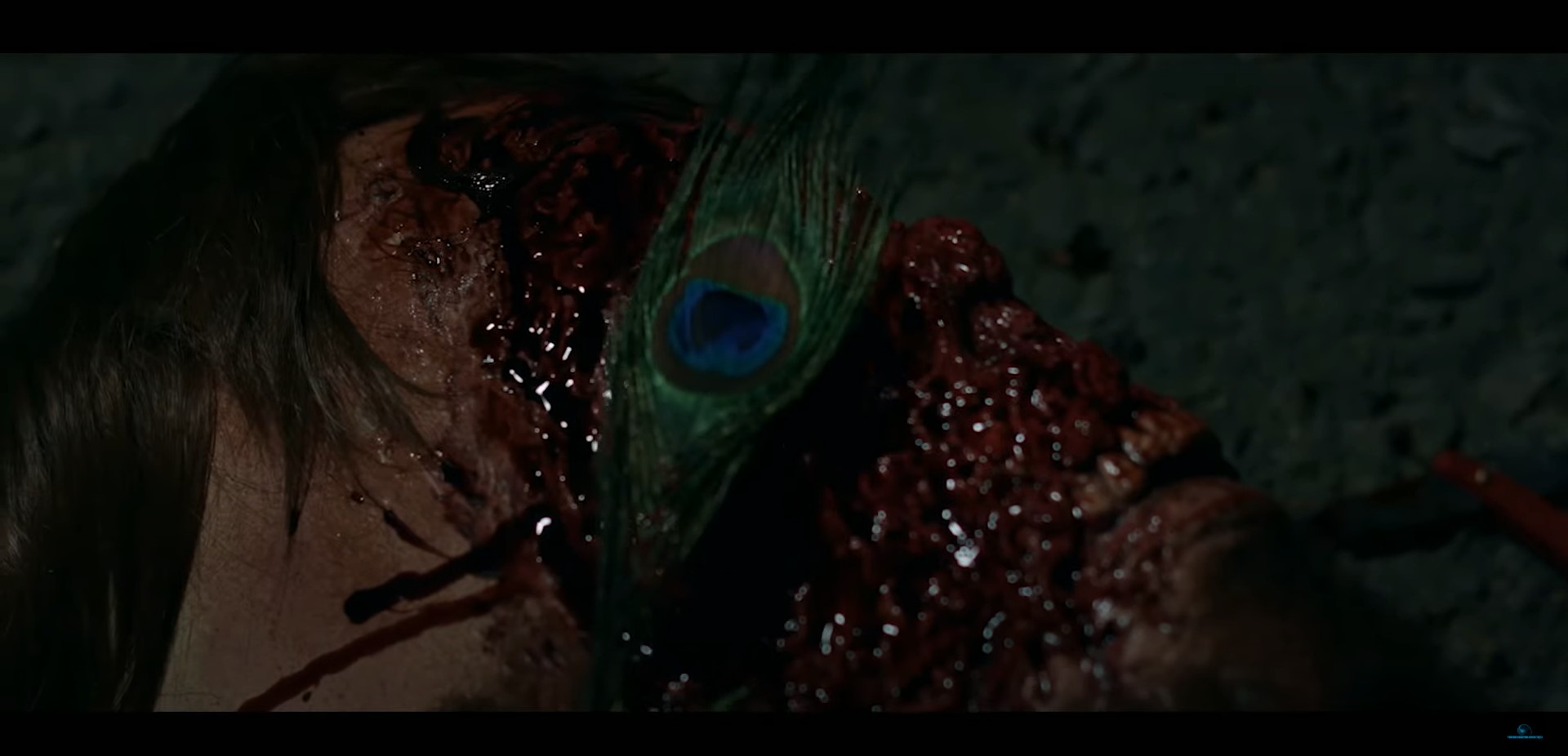
Much like “A Cat in the Brain,” Frank LaLoggia depicts his best Lucio Fulci representation as a horror filmmaker whose storyline production mirrors the individual slayings surrounding him. As a character, LaLoggia is not entirely aware of the murders as the peacock headed slasher’s string of sadism runs parallel to LaLoggia’s post-productional workload. Cristopharo pays a simultaneous tribute to not only Fulci but also LaLoggia with a built-in brief, off-plot moment of the editor, Isabella, a good friend and longtime partner of LaLoggia, running a reel of “Fear No Evil” to reminisce over his debut picture. Antonella Salvucci (“Dark Waves,” “The Torturer”) plays Isabella but also LaLoggia’s pseudo film lead actress Catherine in a dual role performance with the latter marking Salvucci’s topless kill scene that hits and sets up the giallo notes. Isabella denotes the director’s only real friend with everyone else, from the screenwriter to the executive producer, push their own self-gratifying wants onto the American filmmaker from all angles. A vulgar herd of personalities descend upon LaLoggia to exact their strong-willed ideas on how the film should appear and be marketed. From the screenwriter Antonio (Antonio Tentori, ‘Symphony in Blood Red”), the imposing desperate actor David (Halil Budakova, “Virus: Extreme Contamination”), to the uncultured and pushy executive producer Fernando Lola (Lumi Budakova) and his aspiring actress Debbie (Poison Rouge, “House of the Flesh Mannequins”), they all look to exploit LaLoggia’s modest career for their own benefit. Performances vary with a range of experience, and we receive more noticeably rigid recites and acts from the Kosovo cast in a clashing pattern with the Italy cast that has worked with Cristopharo previously. Ilmi Hajzeri (“Reaction Killers”), Pietro Cinieri, and Merita Budakova as a chain-smoking lady stalker that has glaring eyes for Frank LaLoggia.

While not necessarily thought of as a remake, “Nightmare Symphony” is certainly a re-envision of the Fulci’s “Cat in the Brain.” What Cristapharo and Trani don’t quite well connect on is connecting all the pieces of the psychotronic puzzle together into what is meant to be expressed. The giallo imagery is quite good, a praise of the golden era period in itself, with a mask and glove killer, the closeup of gratuitous violence, most of the score, and the stylistic visuals imparted with ominous shadow work, foggy and violent dream sequences, and with congruous cinematography and editing of earlier giallo. Plus, audiences are treated to not only the aforementioned Antonio Tentori, screenwriter of “Cat in the Brain,” but also have composer Fabio Frizzi score the opening title. Frizzi, who has orchestrated a score of Lucio Fulci films, such as “Zombie,” “The Beyond,” “Manhattan Baby,” and even “Cat in the Brain” just to select a few notable titles, adds that proverbial cherry on top to evoke Fulci directing “Nightmare Symphony” vicariously through Cristapharo and Trani. There are some questionable portions to reimagining’s take on the original work that are more the brand of the contemporary filmmakers. The presence of death metal prior to one of the kill moments puts the overall giallo at odds with itself in a fish out of water aspectual scene composition. Another out of place component are the external characters that are not directly involved with LaLoggia’s peacock-head themed slasher; the ironical venatic of an animal hunting down people is the reversal of a Darwinism theory that instead of sexual selection, the beautiful and elegant peacock forgoes using grace to attract and aims to survive by natural selection and thus the killer kills to remain alive. However, the story and the directors never reach that summit of summation and with the oddball characters adrift from the core story – such as the stalking woman and the eager actor – “Nightmare Symphony” flounders at the revealing end with its severe case of blinding mental delirium.

With a cover art of an upside skull overfilled with film reels and unfurling celluloid through the soft tissue cavities, “Cat in the Brain” continues to be reflected in “Nightmare Symphony” up to the release’s physical attributes on the Reel Gore Releasing’s Blu-ray. Presented in on a AVC encoded BD25, with a high definition 1080p resolution, and in a widescreen 2.35:1 aspect ratio, the Reel Gore Releasing espouses the Germany 8-Films’ Blu-ray transfer for a North American emanation, which might explain some of the complications with the bonus features that’ll I’ll cover in a bit. Situated in a low contrast and often set in a softer detail light, “Nightmare Symphony” doesn’t pop in any sense of term with a hazy air appearance and a muted color grading that goes against the giallo characteristics, especially when the clothing and set designs have the same desaturation or are colors inherent of low light intensity. Despite appearing like a slightly degraded transfer on a lower BD storage format, compression issues are slim-to-none with artefacts, banding, or blocking and this results in no tampering edge enhancements or digital noise reduction. The release comes with three audio options: A German DTS-HD 5.1, German DTS-HD 2.0 Master Audio and an English and Italian DTS-HD Stereo 2.0 all of which are Master Audio. The German audio tracks are a dub from the 8-Film Blu-ray and the 5.1 offers an amplified dynamics of the eclectic soundtrack and limited environment ambience. Dialogue remains outside the dynamics on a monotone course but is clean and clear with good mic placement and a neat, fidelity fine, digital recording. The German dub has a distinct detachment from the video because of its own layer environment, sounding a little sterile than the natural English or Italian, but works well enough as expected with the supplement multi-channel surround sound. English SDH and German subtitles are optional. Bonus contents feature a behind-the-scenes which is entirely just a blooper reel, an English language interview with co-director Domiziano Cristopharo whose secondary language is English, the original soundtrack playlist, and the teaser and theatrical trailer. I mentioned an 8-Films’ transfer complication with the bonus content because there’s is also an interview with Italian screenwriter Antonio Tentori that’s only in German dubbed and subtitled with no option for English subtitles or dub. When you insert “Nightmare Symphony” into your player, an introductory option displays to either pick German or English and I considered this to be the issue for the German only interview with Tentori; however, that is not the case as both country options are encoded in German for the interview, so at the beginning option display, I would recommend the German selection because the setup will have contain all audio options for the feature whereas the English selection will only contain the English 2.0. Reel Gore Releasing’s Blu-ray comes housed in a red snapper case, the same as the company’s release of “Maniac Driver,” and has a less tributing reversible cover art with more revealing and illustrated aspects of the narrative. The release is region free, unrated, and has a runtime of 78 minutes. Another little fun fact about the release is the incorrect spelling of the director’s name on the back cover that credits his surname as Christopharo instead of Cristopharo. Influenced by Lucio Fulci beyond a shadow of a doubt, “Nightmare Symphony” proffers the Horror Maestro’s less notable credit with a companion piece that punctuates both films love for the giallo genre, love for the violence, and love for the morbidly unhinged human condition.

“Nightmare Symphony” is a Falsetto of Praise for Lucio Fulci.  Purchase the Blu-ray Below!

A 13-Year-Old Girl is EVILLER than Skinheads! “Becky” reviewed! (Ronin Flix / Blu-ray)

“Becky” is Clearly a Special Girl!  Purchase the Blu-ray by Clicking the Below Cover!

Cancer has taken Becky’s mother away from her.  Over the past year, the 13-year-old girl finds comfort in being angry, especially at her father who choose to move forward with his life that stirs a flurry of pent up uncomfortable, rage-filled emotions inside the teen.  As Becky stays in her constant stew of angst, her father surprises her with a trip to their cabin getaway he initially planned to sell but had a change of heart.  There is one small caveat, he plans to propose to his girlfriend who joins them on the trip, cornering Becky into one-sided fight and meltdown with those who love her and care for her and sending her to retreat into her woodland fort.  At the same time, a group of escaped convicts take her family hostage in search for a mysterious key left behind by the escapee’s neo-Nazi leader, Dominick.  Dominick has planned for years every possible scenario to secure the key that will undoubtedly serve every race with what he thinks they deserve, but Dominick didn’t plan for one scenario:  Becky. 

Amongst the movie nerds, there’s a particular phenomenon that occurs when a film is first mentioned across the internet and an immediate acclaim and attraction follows in its wake toward the film’s actors or actresses flipping the script on their stereotyped industry roles and playing totally unorthodox personalities that may shock. “Becky” was one of those films.  The 2020 released home-invasion, revenge thriller has been labeled by critics and fans alike as a horror, but the Jonathan Milott and Cary Murnion codirected production is more than just blood and guts.  The Ontario, Canada production is based off an original and debuting script from Nick Morris with “The Devil to Pay” and “Rattle the Cage” screenwriting husband and wife team, Lane and Ruckus Skye who have specialized credentials in the thrillingly brutal, hardnose character genre.  With a punk energy and engrossing family themes, “Becky” is a heart-stopping, heart-stomping, mischief making, ball of fury.  Jordan Beckerman of Yale Entertainment (“Cut/Print”) and Boulderlight Pictures’ J.D. Lifshitz and Raphael Margules (“Barbarian”) serve as the U.S. production companies in association with Bondit Media Capital, SSS Entertainment and Buffalo 8 Productions and is presented by Quiver Distribution and Redbox Entertainment. 

Aforementioned, this strange manifestation of hype for an upcoming feature leads the world, or at the very least film aficionados, in extreme anticipation. The conspicuously, incongruous piece glimpsed briefly in the trailer, one-sheet, posters, and stills claws for our attention as our brains can’t quite compute or process Kevin James in an Aryan acolyte. With a shaved head, long beard, and covered in swastikas, SS doppel sigrune, and other various Nazi-symbolic tattoos, Kevin James transforms his loveable and comedic “Paul Blart: Mall Cop” and “I Pronounce You Chuck & Larry” self into a ruthless and irredeemable skinhead. James absolutely nails the look of escaped convict and neo-Nazi Dominick with growing out his facial hair and shaving his head that takes his usually unassuming presence to a whole new level of calculated evil, but the script spoon feeds Dominick too much leeway to tolerate insubordination amongst his four-man crew, to allow hostages to talk back, spit in his face, and antagonize against his goals, and lacks the know-how of how to appropriately bait Becky with her own family, if Dominick is truly a despicable person as we’re lead to believe in earlier scenes of an approved prison leadership shanking and the implied murdering of children sitting in the backseat of a family roadster he aims to hijack. Yet, Dominick allows to be taken advantage of despite his cruelty stating to the contrary. In a stark contrast to evil embodied, there’s teenage girl Lulu Wilson.  The New York City child actress has been quickly making a name for herself in the horror genre, as a scream queen prodigy of sorts, with having supporting roles in “Deliver Us from Evil,” Ouija:  Origins,” “Annabel:  Creations” and Netflix’s “The Haunting of Hill House” before landing the titular lead in “Becky.”  Instead of scared pretense, Lulu Wilson gives a visceral, violent performance.  It’s teenage angst on steroids.  “Becky” is the only child versus adult cat-and-mouse game where the audience will get more out of the younger, smaller rival full of enraged paroxysms.  Joel McHale is another comedic actor wiggling his way into more dramatic roles that expand not only his resume but his range to showcase the other side of the once syndicated television comedy host.  From his stint into horror alongside Lulu Wilson in “Deliver Us From Evil” and in dark comedy, such as “Happily” that released the same year as “Becky,” McHale is finding a different voice other than laughter that has come natural to the actor and does show a lot of promise in more compelling roles as in “Becky’s” widowed father looking to move forward with his life but treads on pins and needles with his angry daughter.  Those relationship complications between Becky and her father never wander but rather do wonders for the connection on coming to terms with little go of the past.  The robust range of characters continue with an eclectic and noteworthy remaining cast that includes Amanda Brugel (“The Handmaid’s Tale”, “The Infinity Pool”), former Canadian-turned-actor Robert Malliet (“Pacific Rim,” “300”), Ryan McDonald (“He’s Out There”), James McDougal (“Heinous Acts”), and Isaiah Rockcliffe (“Random Acts of Violence”).

Kids committing hyper-violence in films is not entirely uncommon but they’re also not run-of-the-mill either.  Yet, films like “Becky” produce an unsettling affect that churns in the back of our psyche when witnessing a young teen girl intently stabbing a grown man with a jagged ruler and a handful of colored pencils in the neck.  Fans and critics label “Becky” as an adult, violent version of “Home Alone,” but the comparison I would draw would be closer to “Die Hard” for the barely young adults.  “Becky” plays out like a graphic novel or a young adult novel, stylish and impulsive in its edgy execution and character.  Unlike “Home Alone,” hardly anything sweet and endearing radiates from Milot and Murnion’s ferocious family retaliator and though Becky may set a trap or two (really just one trap) to inflict pain and punishment on her pursuers, the youngster is more inclined to John McClane wing it as the plot plays out, going toe-to-toe, face-to-face with adults two and three times as big as her without a moment of hesitation. There are some unique and graphic death scenes that ooze Becky’s personal satisfaction, and the Derek Liscoumb (“Possessor”) special effects blood reel is perforating, shredding, and cutting to pile on perfection as the kills go deeper into mutilate pool. Tremendous raw emotion superhumanly strengthens Becky’s adrenaline rush as the tragedies aggregate into one big horrific destruction of familyhood, contradicting the first act’s despisal of her father with a regret-filled, redemptional theme that without family there’s nothing else to lose. Its powerful for Becky to lose people she, in the moment, abhors yet are close to her because of her own unworked out pain and suffering that in all innocence pit her against the world.

“Becky” is the quintessential diamond in the rough as an unsurprising hit with fans. This small, independent Canadian film can hold its own in story, style, and sanguinary. With a sequel in the works, entitled “The Wrath of Becky,” our friends at Ronin Flix have released a collector’s edition Blu-ray to enlighten those new to Becky’s inherent mean streak. Released on an AVC encoded BD50, the feature is presented in 1080p high-definition on a widescreen 2.39:1 aspect ratio. Nothing to particularly note negatively on the digitally recorded image quality to the tune of compression storage as there doesn’t appear to be an issue with a clean-cut picture that delineates the hell out of the image, capturing every contour, fiber, and skintag inconvertible. Colors are potent with a natural grade along with plenty of textures to salivate over with a palpable tongue, such as Becky’s wool hat or Kevin James’s thick beard. The compressed image unloads at a gloriously hefty 36-38Mbps. The CE comes with two lossless English audio options – a Dolby Digital 5.1 Master Audio and a Dolby Digital 2.0 Stereo. Unless your audio outputting on the television speakers, the surround sound is the optimal and preferred choice for “Becky’s” unmanage mischief making through the rustling brush. The small aspects of her plotting and executing her revenge are what give the ambient padding meaning and offer a plentiful and grotesque semiliquid, semi-flesh sound effects. Dialogue comes through clean, clear, and robust. Optional English subtitles are available in SDH. Over 60 minutes of bonus features are on this release with interview commentary by directors Jonathan Milott and Cary Murnion, an interview with Joel McHale, and an interview with Lulu Wilson that all pretty much do a similar roundtable of remarks of their time and experiences working with each other. Milott and Murnion provide more backgound, backstory, and insight to their directing process compared to solo directors. Behind-the-scenes gallery, fan art, audio commentary with Lulu Wilson and screenwriters Ruckus and Lane Skye, and individual pre-feature introductions by the directors. Physical features include a cardboard slipcover of composite art by Tim Johnson, which is also on the latch-featuring clear snapper case cover art, a reversible cover art featuring a solo Lulu Wilson, and an anime-esque, illustrated disc art by Andrea Michel. The Blu-ray is rated R for strong bloody violence, graphic images, and language with a runtime of 94 and is region A locked. “Becky” is brutal with blood and guts galore and is more fun than can be describe with Lulu Wilson delivering an atomically hot-headed performance and Kevin James sporting uncharacteristic, fascist tats.

“Becky” is Clearly a Special Girl!  Purchase the Blu-ray by Clicking the Below Cover!