This EVIL, Straight-Razor Killer Has a Novel Idea! “Tenebrae” reviewed! (Synapse / 4K-Blu-ray Combo Set)

2-Disc 4K UHD and Blu-ray Set Now Available of Dario Argento’s “Tenebrae”

While on a media book tour for his latest popular crime thriller novel, “Tenebrae,” American novelist Peter Neal is swiftly entangled in a killer’s puritanical wrath shortly after landing in Rome.  Using Neal’s story as an inspirational guideline to rid the world of what the fictional book labels as depraved people, the killer brutally murders women closely resembling characters in Neal’s book with a straight razor and sends Neal a deranged poetic message shortly after each death.  Police are on the case but always once step behind, even when the murders have seemingly stop connecting to the pages of Neal’s novel.  When the writer investigates by running through the list of possible suspects, the writer in him goes rogue by setting off to solve the case himself that would sensationalize and authenticate him as a crime writer, but the deeper Neal directly involves himself, the more the grislier the murders become and they’re starting to come closer to home than before. 

Dario Argento is unequivocally one of the best masters of horror for half a century, writing and directing not only some of the best Italian crime-mystery Giallos, splashed with hue vibrancy and caked in gruesome blood splatter, but also writing and directing those same films with major success internationally as his films connect with a global audience.  “The Bird with the Crystal Plumage,” “Deep Red,” and “Suspiria” have skyrocketed the filmmaker within the first decade of movie-crafting and Argento would not have been who is now without the guidance and the financial foundation constructed by father, Salvatore Argento.  Before his death in 1987, Salvatore produced one more of his son’s ventures in 1982 with “Tenebrae,” an emblematic mystery that brings Italian and American actors into the fold of Argento’s violent pulp puzzler.  Argento’s younger brother, Claudio, co-produced the feature under the Sigma Cinematografica Roma production company.

The Italiano-Americano production casts a pair of native New Yorkers in Anthony Franciosa (“Death Wish II,” “Curse of the Black Widow”) and John Saxon (“A Nightmare on Elm Street,” “Black Christmas”) who regularly crossed over the Atlantic for roles in international pictures.  Franciosa plays the novelist Peter Neal with Saxon as Neal’s newly hired agent Bullmer.  Their portrayed amicable relationship succeeds expectations of client and manager professionalism, but a good publicity campaign can be torpedoed by a sadistic killer with a throat cutting fetish and Roma’s best officers on the case intruding into the Neal’s personal promotion with Detective Germani, played by spaghetti western regular Giuiliano Gemma (“Day of Anger”), and his partner, Inspector Altieri, played by Carola Stagnaro (“Phantom of Death”).  The third English speaker is John Steiner (“Caligula”), a proper Englishman setup as an Italian television host on the docket to interview Peter Neal’s latest release success.  Steiner becomes an early favorite as the suspected killer with his odd pre-show questioning that falls in line with the Killer’s motives, but he isn’t the only person of interest as Neal’s estranged lover Jane (Veronica Lario) holds a lover’s quarrel with the writer who has seemingly become intimately close with his personal assistant Anne (Daria Nicolodi, “Deep Red”).  A conglomerate of characters gyrate Argento’s maelstrom mystery, each exhibiting profound performances that make each rich in their own right, and fill out with an assemblage of robust supporting characters diffusing through the story with Ania Pieroni (“The House by the Cemetery”), Lara Wendel (“Ghosthouse”), Eva Robins (“Eva man”), and Mirella Banti (“Scandal in Black”), the model most infamously on the front cover of most home video releases and poster one sheets with the iconic neck-sliced open and dripping blood along with her wavy hair suspended in a pose of vivid void and color.

“Tenebrae,” in Latin translates to darkness, describes Argento’s post-“Suspiria” feature intently.  Giallo lives within this time capsulated enigmatic madness, color-coated and visually complex to become an easy pill to swallow amongst all others in the Italian-reared niche.  Accompanying all the hallmarks of a Giallo construct – the killer’s gloved hands in POV, psychosexual tropes, mental instability exposures, violent and gory – Argento also impresses us with baroque mise-en-scene of lavish houses, detailed interiors, and extremely broad, emotionally phrenic individuals.  We also receive technical style wonders like a long boom shot that cranes up a house exterior to follow the idiosyncratic and opposing activities of two presently quarrelling lesbian lovers on a dark, stormy night in a tensely presage moment mixed with the synth-rock sounds of the “Goblin” theme track.  “Tenebrae” is chic in its ugliness and the patience Argento shows is formidably impenetrable without being flawed with lingering stagnancy.  While wallowing into what we’re led to believe, red herrings and other subterfuges to throw off audiences’ keen-to-solve sniffers, the story stirs a cauldron of coherent progression that is, more often than desired, lost in most gialli trying to weave through an intelligible punchy crime-mystery without becoming disoriented by the twists, turns, and topsy-turvy outcomes.   

“Tenebrae” hits 4K onto a 2-Disc, UHD and Blu-ray combo set from the genre-leading distributor, Synapse Films. The HEVC, mastered in Dolby Vision, encoding 2180p UHD and the AVC encoded 1080p high-definition Blu-ray are presented in a widescreen 1.85:1 aspect ratio in both the English and Italian versions of the feature.  One of the more gorgeously restored versions ever to be presented, with sharp delineation and organic popping colors within the narrow margins of infrequent gel lighting, the near flawless original negative is greatly elevated by Synapse’s ultra high-def facelift that resound the lavish textures of various sets, the expressional details of the characters’ face, and the glistening shine of the spraying blood.  There’s real balance between the colors in this presentation, offering not only a wide variety of hues but a great display of the mix.  Gels are not overly used and are more key lighting spotlights to heighten tension or introduce moods on an almost subconscious level.  Both English and Italian versions score a lossless DTS-HD Master Audio 2.0 mono.  This release caters to the very suspense Argento acoustically and phonically propounds that, in the same regard to the eyes, places viewers’ ears right in the middle of the action.  Every sound is distinct and unassuming during the throes of violence, a cleanly serrating effect that compounds killer consternation of being everything, everywhere, all at once.  Typical of the time and cost-efficient ADR usually retains some dubbing disharmony, but “Tenebra’s” tracks are neatly synchronous with Anthony Franciosa and John Saxon’s recordings timed exact and as if captured in the scene.   Some of the dubbing isn’t as in the bag, such as with Giuliano Gemma’s recording that’s does denote that space in between intensified by likely another voice actor’s reading overtop Gemma’s actual dialogue.  UHD offers English SDH on the English version while the Italian version has just regular English subtitles; the Blu-ray disc has the same.  Hours of bonus content, identical on both formats, begin with an audio commentary by Dario Argento: the Man, the Myths, the Magic author Alan Jones and film critic/historian Kim Newman, a second audio commentary by Dario Argento expert Thomas Rostock, and a third audio commentary by Maitland McDonagh, author of Broken Mirrors/Broken Minds:  The Dark Dreams of Dario Argento.  The fun doesn’t end there with a 2016 feature-length documentary “Yellow Fever:  The Rise and Fall of the Giallo” with interviews from Dario Argento, Umberto Lenzi, Luigi Cozzi, and Ruggero Deodato amongst the biggest names in film critic authoritarians, a newly edited archival interview with actor John Steiner, a newly edited archival interview with Maitland McDonagh, an archival featurette Voices of the Unsane with “”Tenebrae’s” Dario Argento, Daria Nicolodi, Eva Robins, Luciano Tovoli, Claudio Simonetti, and Lamberto Bava interviews, an archival interview with actress Daria Nicolodi, an archival interview with writer-director Dario Argento, an archival interview with composer Claudio Simonetti, an archival introduction from Daria Nicolodi, an international theatrical trailer, the Japanese Shadow trailer, an alternate opening credits sequence, “Unsane” end credits sequence, and an image gallery to wrap things up.  Inside the rigid O-slipcover, graced with a high quality and beautifully macabre illustration rendered by Nick Charge, is a Synapse Films’ black, 4K UHD labeled Amaray case with a double side disc lock and a reversible cover art with the Nick Charge graphic as default underneath the slipcover with the reverse side the Synapse Films’ standard Blu-ray cover art pulped with a famous death scene in pop art color. The insert houses a Synapse Films’ catalogue, and the discs are pressed with two notable kill scene frozen moments pulled in still image form. Feature runs at 101-minutes with an uncut presentation of the feature with a region free playback on both formats. ”Tenebrae” is Dario Argento in a cracked-up nutshell, paradoxically beautiful and horrible and burgeoning with suspense and color. The restored and remastered Synapse Films’ UHD and Blu-ray set is equally as such in its gorgeously grotesque packaging of film, its director, and its legacy that will outlive us all.
2-Disc 4K UHD and Blu-ray Set Now Available of Dario Argento’s “Tenebrae”

Never Trust a Script Written by an Egotistically EVIL “Scream Queen” reviewed! (Visual Vengeance / Blu-ray)

This Chainsaw’s Made for Cutting! “Scream Queen” on Blu-ray!

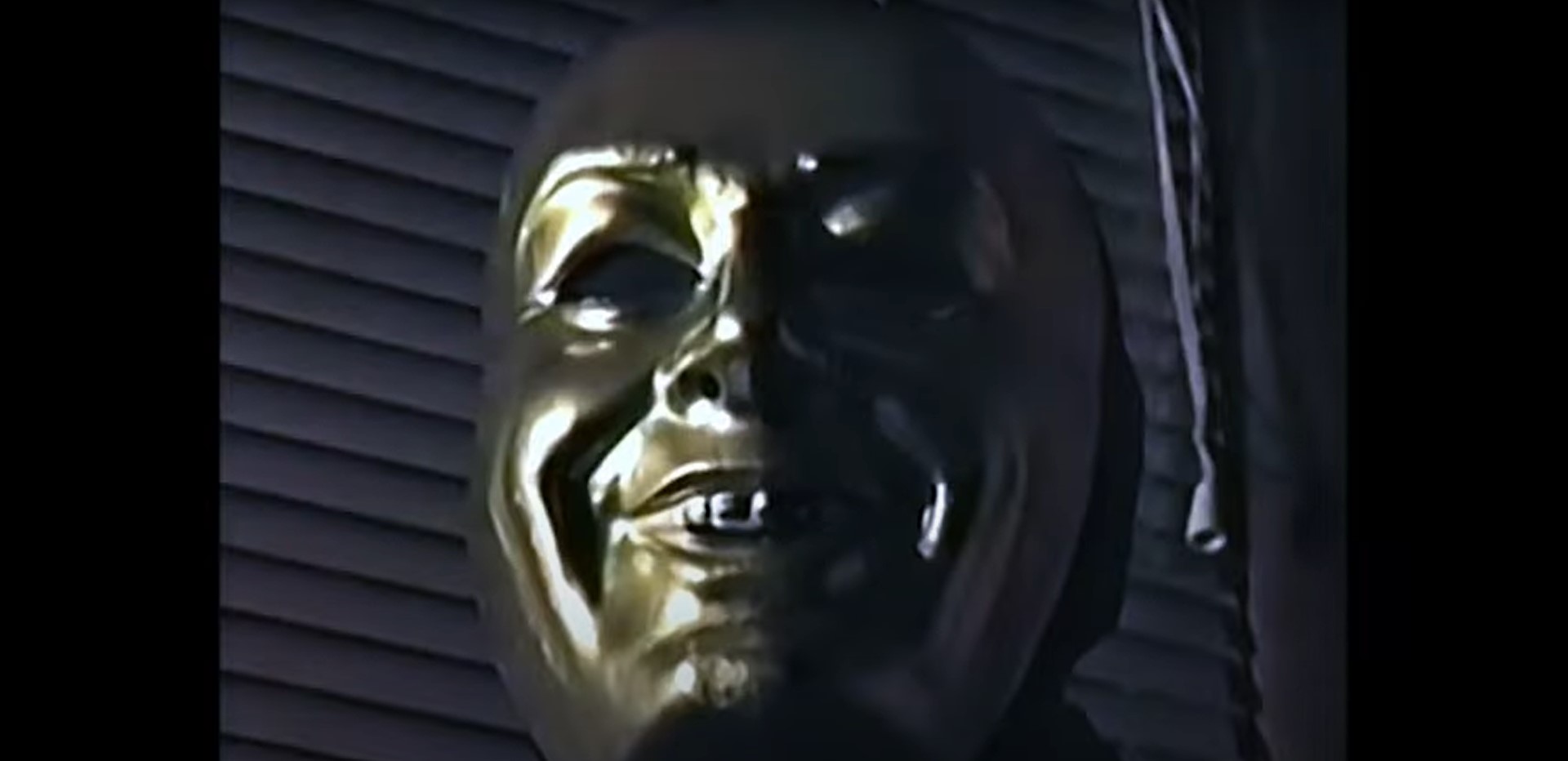
Malicia Tombs, an acclaimed horror actress known for B-movies and bad attitude, bursts into a wreckage of flames when her car sudden explodes after storming off the set of her new movie, “Scream Queen,” in which she wrote and starred as the titular character.  Part of the cast and crew were devastated by the accident that had cut their own career short while others were relieved the egotistical Tombs had perished despite publicly feigning grief over the loss of a genre fan-favorite.  Months later, the small cast and crew receive a mysterious invitation to gather at a creepy mansion butlered by Runyon.  When their host is unveiled as to be a very much alive Malicia Tombs, she offers them a lucrative sum of money to finish the film they’ve started but with a new script.  As the guests read through the new treatment, the cast and crew realize their present moments read just as their being played out in the script, even their deaths. 

If there was ever a single face deserving the representative distinction within an overpopulated categorized scream queen genus, Linnea Quigley would be that green-eyed, blonde-topped, beautiful face with an infectious smile.  Quigley worked with an array of filmmakers, ranging from some of the most renowned cult films of all times amidst reams of horror movies for nearly half a century (yes, we’re feeling old now) to the most independent of the independents films never having really receive the proper exhibition format or audience attention.  To what would be a delight to Quigley’s fanbase, one of those obscure features is Brad Sykes’ “Scream Queen,” a late 90’s filmed, 2002-released, SOV, U.S. slasher written-and-directed by the “Camp Blood” and low-budget filmmaker with Quigley in mind to play the scream queen character Malicia Tombs, now available, officially, on Blu-ray.  “Scream Queen” is the first major project for Brad Sykes in a collaborating effort in not only as a director but also as a co-producer alongside David Sterling of Sterling Entertainment.

“The Return of the Living Dead” and “Night of the Demons” Quigley puts on another memorable and wickedly fiendish performance as the haughty genre scream queen Malicia Tombs who superiority has gone to her head as she embraces her designation to an exact mania, displayed early on when her character’s character attempts to choke-kill another actress despite the numbered scene not being a death scene and Malicia harps on wanting to continue with the resembling act of murder.  As much as Malicia Tombs embraces the killer instinct inside of her, Linnea Quigley very much embraces Malicia Tombs without having to take her top off and despite having less screen time than her costars.  While Quigley fades in and out of the linear story, the narrative progresses with livelihood hardships of the now out-of-work cast and crew who relied heavily on that small film to boost their acting and filmmaking careers.  That crop of characters falls short tipping into their expectations, aspirations, and even their relations to be just slasher fodder for the mysterious maniac roaming the house.  Jenni (Emilie Jo Tisdale,” Escape from Hell”) and Devon (Nova Sheppard) are inferred romantic roommates who sell clothes on the side of the street to make ends meet post failed film but don’t have surmountable direction to either be a full-fledged couple to sympathize or seem terribly concerned about opening their own clothing shop other than what would be a bad decision to reside at the mansion overnight.  Again, no sympathy there either.  The special effects goof Squib (Bryan Cooper churns chuckles relentlessly by relating more to his crafted effects dummy more than people, marking him conclusively comedy relief as well as fated for death that, like in life, no one takes him seriously when he shows up gruesomely mutilated.  The other principal actress across from Tombs is Christine (Nicole West, “Dimension in Fear”), a buxom blonde tired of secretary work succumbing to lead man flirtations in a dark and scary house where every shadowy corner is lodged with threat.  The pair fall into that horror character cliché of have sex, will die, quickly downgrading their pre-professional relationship into nothing more than dark house desire.  Director Eric Orloff (Jarrod Robbins, “Evil Sister 2”), a presumed spin on the Awful Dr. Orloff and perhaps hints at his motives, seems to be stuck in angsty avoidance and melancholy stemmed by what could have been with Scream Queen but that also peters to a gross negligence end of an arc waste.  Rounding out the cast are a couple of special bit parts played by prolific Full Moon Entertainment and overall horror movie screenwriter C. Courtney Joyner (“Puppet Masters III,” “From A Whisper to Scream”) as a televised homicide detective and Kurt Levee in a quasi-return of his character Runnion from “Evil Sister” but alternatively spelled “Runyon” in “Scream Queen.”  

Though obviously and definitely not the first to do this, “Scream Queen” humors metacinema measures built upon horror tropes and spherical plot points that redirects the story back upon itself for a killer effect.  The feature has no issues making and poking fun at itself within a campy context albeit the usually grave apprehensions of a true scary slasher movie that’s less campy of which a scream queen is born – think Jamie Lee Curtis in “Halloween” or Neve Campbell in “Scream.”  Bryan Cooper not only portrayed the foolish effects guy persona but also actually did a lot of the gore gags for the film, achieving very detailed inlaid gore prosthetics for a smalltime picture with an axe embedded into a chest and a mangled face to name a few.  The story itself feels a bit rough and ready as it slips into supernatural obscurity and, as aforementioned, character setups flounder to a stagnation, killing instantly the miniscule arcs that were structured prior to their mansion gathering in what becomes a slapdash of serial offing that wraps up the story post-haste without much cat-and-mouse tension.  With that said, “Scream Queen’s” unpolished plot had once mirrored its fallowed physical release until recently but now witnessing its birth out of twilight has been multitudinous worth the wait. 

Another of Linnea Quigley’s lost films has been resurrected from the format graveyard by Visual Vengeance with a new Blu-ray release of “Scream Queen.”  The Wild Eye Releasing sublabel release comes with an AVC encoded, high definition interlaced scanned and director approved 1080i transfer from the 480p tape elements on BD50 capacity and comes also with the qualitative joys of a standard definition shot on video experience.  SOV tape upconversion can never completely eradicate the imperfections associated with tape and we also know this going in courtesy of Visual Vengeance’s standard practice of a fair warning before the film, but the overall “Scream Queen” presentation passes as clear content despite some minor tracking blips, 1.33:1 aspect ratio, original lower resolution, and scan line visibility, which is smoothed out nicely by the 1080i conversion. Exteriors and brightly lit scenes take on more shape compared to darker and low-lit areas that become like a void in standard DEF, which also hits the natural grading into a washed-out drab.  The English Dolby Digital 2.0 stereo labors to maintain some form of auricular strength but often nearly goes dark to where certain Linnea Quigley monologues periodically go silent for a few seconds, so the dialogue isn’t entirely clear but when it is, it’s relatively clean. There’s no hardiness pop in the audio track, staying suppressed throughout, and having little-to-no range or depth to the compile contexture. Some electro-interference throughout but nothing to be bothered by considering the grade of the SOV. Optional English subtitles are available. Special features include a commentary with writer-director Brad Sykes, a new behind-the-scenes documentary Once Upon A Time Horrowood that’s mostly Brad Sykes going through the stages of making “Scream Queen” and his recollections of his first big time produced film, a new interview with star Linnea Quigley, a new interview with one of the three various editors Mark Polonia (director of “Splatter Farm”), an original full-length feature producer’s cut of “Scream Queen,” a behind-the-scenes image gallery, Linnea Quigley image gallery, snippets from the original script, original trailer, and other Visual Vengeance distribution trailers. Along with the hearty software special features, hardware physical features include a six-page trifold with behind-the-scenes color photos notes by Weng’s Chop Magazine’s Tony Strauss and beautifully illustrated with dripping blood, a chainsaw, and Linnea Quigley on the front cover, a folded up mini color poster of a scantily-leathered Linnea holding one of the film’s murderous weapons, retro stickers, and your very own Four Star Video plastic rental card. All of this great stuff is stuffed inside a clear Blu-ray Amary case with a pressed disc art of a bloody illustrated Linnea sawing some unknown guy’s face off. The same illustrated graces the front cover in an expanded form and under a different hue. If you don’t like it, which I would be hard-pressed if you don’t, the reverse side contains one of the original cover arts with, again, a scantily-leathered Linnea holding that murderous weapon. The entire package is sheathed inside a rigid O-slipcover with an extended view of that chainsaw scoring with a bloody spray the eyeball from some guy’s face. The 13th Visual Vengeance release comes region free, unrated, and has a runtime of 78-minutes. Lost vintage now found and digitally revived to give us even more Linnea Quigley than we knew we needed with a meta-film shows initiative and fit special effects but swerves off trajectory into a more-of-the-same pathway. 

This Chainsaw’s Made for Cutting! “Scream Queen” on Blu-ray!

Down the Path of Darkness is EVIL. “The Long Dark Trail” reviewed! (Cleopatra Entertainment / Blu-ray)

“The Long Dark Trail” on Blu-ray at Amazon.com

Set in the idyllic boondocks of Northwestern Pennsylvania, two young brothers plan to escape the abusive grasp of an alcoholic father in search for a better life.  Without a plan and nowhere to go, they go around the small town to collect money from the odd jobs the brothers worked in preparation for their abscond.  While doing so, they come upon information about their mother, who abandoned them at a younger age, that sparks an desire to track her down in hopes that once she’ll lay eyes on them, she’ll want to rekindle the relationship with her two sons, but the trek deeper into the northern woods would be long and arduous through abandoned aqueducts, pine forests, and numinous burial stones belonging to an inimical cult of women controlled by a sadistic leader.  It is the cult where their mother left them to reside and it is there where they are headed on their haunting journey in hopes for a better life.

Tackling impoverished, ill-treated youth haunted by their past and uncertain about their future, directors Kevin Ignatius and Nick Psinakis write-and-direct “The Long Dark Trail” as a tale of resiliency for two close brothers relying on each other to climb out from a pit of despair.  Ignatius and Psinakis have collaborated previously together as writer-director and cowriter-actor in the misfortunate happenings comedy “My Best Friend’s Famous.”  The 2022 drama-thriller marks the first feature film for the filmmakers who explore coming-of-age through trial by fire, or by the supernatural psychological manipulation of enchanted rocks and by the coarse portents of a blood sacrificing cult.  Shot in Ignatius’s birthplace home of Warren County, PA, the two New York filmmakers shoot the low-budget venture under their independent production company, Four Eighteen Films, in association with El Jean Productions and with associate producers Michael Kraetzer (“The Slaughterhouse Killer”) and Nicholas Onetti (“Francesca”) of Black Mandala presenting the film.

“The Long Dark Trail’s” story follows two brothers played by real-life brothers, Brady and Carter O’Donnell, debuting in their first feature film.  You can tell the brothers don’t have a ton of acting experience as their dialogue is very mechanical and their movements are bit stiff and hesitant, but since the narrative revolves around their characters, antisocially bred by the abusive father’s impropriety, being socially awkward on screen, even between each other despite their off-screen brotherhood, doesn’t necessarily feel far-fetched.   “The Long Dark Trail” isn’t a heavy on the dialogue narrative, leaving much of the plot to unfold with the brothers’ wondering the forest grounds, natural and unnatural visual imagery, and the hypnotic folksy score.  From start to finish, Brady and Carter carry the entire storyline from start-to-finish with intermittent spliced in scenes of hooded cult acolytes doing obscure and violent things in what looks to be the upstairs of a vacant barn or with the earlier scenes of the boys visiting and conversing with a purpose with Mr. Barrow as he rambles on about his veteran war stories while the boys take full advantage of his porch sitting to steal food form his cupboards; a role undertook by Kevin Ignatius’s father, Paul “Doc” Ignatius.  The O’Donnell siblings shepherd much of the trail journey’s harrowing phantasms to the best of their ability but are also not limited to being just reactionary to the spooky woods.  Practical makeup effects and some visual compositions are chartered for divisive inducing dynamics in order to drive a wedge between the brothers’ already contentiousness of wanting to traverse a dark corner of God’s country to see a mother that has already forsaken them once.  Trina Campbell plays the indoctrinated mother now embedded into an outskirt cult led by Paul Psinakis’s version of a cult leader in Zeke.  Psinakis has the maniacal wild eyes and brooding aura demarcating him as a clear cut bad guy with a bunch of vary-in-age women in tow but the cult is not very clearly defined as a whole or with a purpose and when the boys stumble into their isolated camp, near that aforesaid barn full of now chopped up body parts and hunting game skulls, the exposition to follow is not presented and the real sense of danger is only palpable from Zeke and Zeke alone. 

While cast and story struggle to make ends meet with relative clarity, what Ignatius and Psinaki do really well in fashioning for effect is depicting the rural folk horror elements of vast natural landscapes that can turn looming and inescapable.  As a resident of Southeastern Pennsylvania, convenience and concrete genetically makeup my quasi suburban-urban scenery, but I can appreciate the opposite side of the state with greenery up to your neck and beyond, the solitude of a different way of life, and how one could also appreciate how menacingly engulfing that can all feel as well.  We’re also not completely stuck to the forest setting as the directors’ use riverbeds and lakeshores, sprawling grasslands, and the quaint town structures to enlarge the presence of a smaller shoot.  Kevin Ignatius isn’t just the co-director of “The Long Dark Trail,” he’s also the film’s composer, another aspect of highlight, amongst other hat wearing titles.  The catchy and mesmeric folk/bluegrass score is a real tribute to Ignatius’s musical background, having formed a band, Das Tapes, with brother Mark, by adding a layering combination of vocal sounds and banjo strumming.  The latter banjo reminisces a little bit of “Deliverance” but with an elongated cadence integrated into the brothers’ long road tour, becoming a mainstay importance to the overall lingering feel of backwater chills.  Where “The Long Dark Trail” fumbles is at the heart of project – the story.  Never really tying the elements all together, the narrative often feels abstract and unhinged in a series of randomized events between the cursed rocks, vivid hallucinations, the boys’ trauma, the women stuck in a cult of a madman, and the message on blood ties.  Was the father’s verbal and physical abuse the root cause of psychological and family brokenness?  Are the brothers’ bond and endurance being tested on the trial trail toward their last form of hope, their abandoning mother?  “The Long Dark Trail” is in a long, dark well of questions without any return of answers in a conclusion that can’t be roughly swallowed along the course of an exceptionally scored and formidable atmospheric thriller. 

“The Long Dark Trail” path leads to at home Blu-ray release from Cleopatra Entertainment, the film banner of Cleopatra Records, and MVD Visual.  The AVC encoded BD25 provides high-def resolution in 1080p of a widescreen presentation.  The Cleopatra Blu-ray does not list the aspect ratio and IMDB.com lists the film at 2.39:1 which is accurate in accordance to the release.  A combination blend of natural and lowkey lighting doesn’t appear to present too many issues with the format storage.  A few signs of pixilation in deeper negative spaces cease to only a handful of decoded moments stark contrast.  For a digital recorded film that’s churning out an average of 25Mpbs, par for the course for Hi-Def, the details don’t display to the fullest sharp potential but are certainly on the edge of so.  You can get better visuals from the brightly lit of primarily color contrasting scenes for a film that’s remains in natural grading.  Also not listed on the Blu-ray back cover is the audio specifications, but according to my player, the release comes with an English Dolby Digital 5.1 surround sound and an English LPCM stereo. The five-point multi-channel audio mix studs the soundtrack with piquant notes, harmonies, and twanging banjo chords. Dialogue is pleasantly defined through the robust soundtrack and the ambience has a nice range of rustle and depth. I’m quite surprised by this Cleopatra Entertainment release that doesn’t come with a second disc, a CD, of the soundtrack, likely due to the score not produced by the parent record label. English subtitles are optionally available. The bonus features include blooper outtakes and behind the scenes footage, an image slideshow, and the original trailer. The back cover also notes an interview with the director, but what’s on the disc is a featurette surrounding artist R.L. Black’s graphic novel artwork for the film and for the forthcoming comic based off the film. There is no interview with the director. The rest of the bonus material rounds out with Cleopatra Entertainment trailers of “The Ghosts of Monday,” “Frost,” “A Taste of Blood,” “Escape from Area 51,” Baphomet,” and “Scavenger.” The film is housed in a traditional Blu-ray snapper with a rough and ready composite of a skull looking to swallow the bicycling boys on the dark path with a dark lit moon overhead; a missed opportunity in my opinion as there’s a better poster out there for the film, a more graphic poster, of one brother’s bloody head split down the middle and opening for the other’s brothers face to show. The Blu-ray is region free, unrated, and has well-paced runtime of 78-minutes. Likely not to please by or understand by most, “The Long Dark Trail’s” coming-of-age narrative wrangles with what’s most important for a folk horror film of its kind – either to be an apparatus for breathtaking countryside imagery or of trauma that is tense-laden and tearing families to pieces – and unfortunately, the feature couldn’t be both.

“The Long Dark Trail” on Blu-ray at Amazon.com

The Evils of a Transgendered Occultist! “Miss Leslie’s Dolls” review


On a dark and stormy night after a school football game, a teacher and three students take shelter at a cottage adjacent to a cemetery. If the cottage wasn’t creepy enough, the sole occupant owner surpassed the bar. She calls herself Miss Leslie, a middle aged woman with an ill-fated story of her friend and mother’s fiery demise from long past and a quirky penchant for making life-size female dolls that set inside an illuminating shrine. Though they feel uneasy about the creepy surroundings, the visitors stay and get cozy, especially with each other, but Miss Leslie has ulterior, deranged motives. Her dolls are not just lifelike, they once were vibrant lives of women Miss Leslie sorely wanted to inhabit their feminine confines of youth and beauty from over the years, but now they are an undecomposable shells, encase in Miss Leslie’s special doll making brew to timelessly capture their lovely physiques. They are also beautiful, yet painful reminders of her failed attempts to transfer her essence into their adolescent bodies.

Every so often you come across a film with a gigantically absurd hard shell cover with the gooey insides of eye-rolling cheesiness and you just have to ask yourself, how in the world did something like this ever come to fruition!? Yet, somehow, someway, these productions of an oddball variety always have an intense allure about them and end up being just one of the coolest rarities to grace the glazed-over irises. Joseph Prieto’s “Miss Leslie’s Dolls” is the epitome of this very phenomena. “Miss Leslie’s Dolls” is an exploitation, nearly softcore porn, horror with a deranged killers with severe mental issues that range from communication with dead to, what can be now construed as antiquated, complications of gender identity. One of the last directed films from Prieto, who also helmed “Shanty Tramp” and “Savages from Hell,” also penned the screenplay alongside longtime collaborator and producer Ralph Remy Jr. The script reads like an insatiable bedside thriller novel, an object of complete obsession through the entirety and well long after being completed; “Miss Leslie’s Dolls’” has a rich gothic lining, a strong sexual appetite, and a timely LGTB subject that involves debate on mental illness or inherited gender orientation.

Not many actors performed in drag. Sure, there was Jack Lemmon and Tony Curtis in “Some Like It Hot” and there was even Anthony Perkins from “Psycho,” who some might go as far as saying that “Miss Leslie’s Dolls” might draw inspiration from with the whole mother fixation, but only a small faction of fans, especially in the genre, might know Salvador Ugarte. The Cuban born Ugarte has great poise as a woman imprisoned in a man’s body. Miss Leslie just isn’t a deranged killer in drag; the character has deep rooted issues stemming out of not only being a woman embodied incorrectly, but also seeded by an engulfing obsession with capturing beauty to obtain it for herself, an addition from a result of a permanent scarring left behind by Miss Leslie’s homicidal rampage in the character’s history. Ugarte has the mannerisms and the gait down so unerringly that’s the performance is downright creepy, but there was one aspect of womanhood that Ugarte’s masculinity couldn’t mask: his voice. The actor is horrendously dubbed, adding charm to the bizarre concept. Ugarte’s joined by “Little Laura and Big John’s” Terri Juston, Marchelle Bichette (“The Gruesome Twosome”), Kitty Lewis, and Charles Pitts of “Supervixens.”

Contrary to the above, “Miss Leslie’s Dolls” has some drawback. Though the characters might be entertaining and interesting, especially with the Bourbon obsessed and hot for teacher Roy and his terrible gangster accent or the fact that Ms. Alma Frost is a smoking hot, twenty-something year old prude teacher to her pupils who are practically the same age as her, they’re washed over with an aloof mentality, consequently looking past or just blatantly oblivious to Miss Leslie’s obvious male features, her inauspicious ramblings, and the fact she has a shrine of creepy and realistic dolls of women that fill the room with the smell like rot and death. Perhaps too busy running through the cemetery at night in skimpy bedroom garments. Yes, this does happen. On top of that, Miss Leslie harness of occult powers goes relatively unexplored, yet very much utilized as an important portion of the film near the last act. Despite being passively mentioned and rather undercut from more than most of the film, Miss Leslie’s occult mischief is plucked right from left field to further the enigmatic aurora of Prieto’s mystical exploitation.

Network proudly presents “Miss Leslie’s Dolls” on an UK 1080p Hi-Definition, region free Blu-ray home video, remastered from the original film elements once thought to be have been forever lost. The newly scanned transfer came from a surviving print and presented in the film’s original theatrical aspect ratio of 1.85:1. The restoration included detailed grain management, the automated and manual removal of dirt and damage, and the correction of major color instability, warp, and density fluctuations. (In full disclosure, Network sent me a DVD-R screener and that is what the following critique is based off of) Though in some frames there flares up some instability, from my perspective, the first act and half really came out well with the vivid, yet natural, coloring. However, once inside Miss Leslie’s basement, woozy blotchy moments of Leslie fiddling around makes the particular scene a bit off putting. The stereo mono track is fair for the 1973 film that has it’s share of distortions and editing pop faux pas, but the dialogue is fiercely prominent, despite the inherent awfully laid dub track, and equally well balanced with ambient tracks. There were no bonus material on the release. Transvestitism horror is quite a rare experience that always has a lasting impression, cerebrally popping visuals of grim visions commingling with the blood, the viscera, and the other supplementary violence. “Miss Leslie’s Dolls” deserved this Blu-ray release and Network did right by Prieto’s obscure grindhouse feature that will sear into your skull.