EVIL is the Will of the Gods. “Malpertuis” reviewed! (Radiance Films / Limited Edition Blu-ray)

“Malpertuis” Now Available at Amazon!

Jan, a young sailor returns home from a voyage to find his family home gone.  After getting into a scuffle with pimp at a night club, he’s knocked unconscious by a blackjack and wakes up to his sister Nancy taking care of him and in the bed inside the Malpertuis home of his draconian uncle, Cassavius, a wealthy, stern, and impatient man on the verge of death with terminal illness.  The sailor finds they’re not alone in the large labyrinth estate with peculiar relatives, nearby acquaintances, and longtime servants.  Before his death, Cassavius has his will read with everyone present bedside, announcing the distribution of the immense inheritance amongst the close assembly who’ve either worked and slaved hand and foot for Cassavius or have been on the outside clawing up into his good graces for their greed.  Yet, to receive their portion, they must abide by one stipulation:  they can never leave the Malpertuis.  Jan plunges himself into Cassavius’s unfathomable parting will and design, seeking to unearth Malpertuis’s warren secrets, but all a while, a killer begins to pluck away potential beneficiaries.

The 1943 gothic novel of the title by Belgium author Jean Ray serves as the film adaptation source for Harry Kümel’s 1971 gialli-like and surreal maddening “Malpertuis.”  Released in the U.S. as “The Legend of Doom House,” the Belgium and Dutch co-production creates phantasmic journey down the rabbit hole that unravels a mystery of pantheon proportions.  The “Daughters of Darkness” directing Belgium filmmaker helms the faultlessly fantastical adaptation and script by Jean Ferry, who would also collaborate with Kümel on “Daughters of Darkness” as well as pen original and adaptations of Franco-Italiano melodramas from “The Wayward Wife” to “The Foxiest Girl in Paris.”  Pierre Levie (1969 “The Witness”); and Paul and Ritta Laffargue (“The Mushroom”) produce the gothic and Greek movie under Artemis Film and Les Productions Artistes Associés.

“Malpertius” houses an international cast that ranges from the native English-speaking countries of Britain and America to the European republics of France, Belgium, Germany, and the Netherlands.  The biggest headliner out of the bunch, and perhaps the biggest drunk at the time too, is none other than “Citizen Kane’s” Orson Welles in the boisterous patriarchal role, Cassasvius, on the brink of death.  Welles commands the screen in his short lived but striking hard every note performance that simply overpowers an otherwise Eurocentric cast fashioned with off the wall characters.  The narrative circles around the ingenuous Jan freshly off the boat for a little R&R.  Played by Mathieu Carrière in one of his earliest performances of his copiously filled career that includes horror-based credits like “Born for Hell,” “Nurse Massacre” and “The Murdered Young Girl,” Jan refrains from mostly having a voice but rather actions his will to discover Cassavius’s secrets within Malpertius’s walls as well as extract his fellow beneficiaries aenigmas, such as why the lovely Euryale won’t ever look him in the eye though she’s destined to be his wife per Cassasvius’ will, his sister Nancy’s inexplicable need to leave Malpertuis with her lover, and Alice, one of three intrusive and gossipy sisters, with her cozy up urge to bed Jan while also sating the sexual desires of his greedy cousin and sneaky creep Charles Dideloo (Michael Bouquet, “The Bride Wore Black”).  All three women are played by a single actress.  Hailing from the UK, “The Violent Enemy” actress Susan Hampshire goes into complete incognito mode that disguises her physical attributes and character personalities with mere makeup and temperament tonal shifts too genuine to easily notice Hampshire being all three women.  Hampshire deserves much of the credit and earns a trifecta win by facing down the challenge without compromising character.  Perhaps a little unfair to single out Hampshire as such but the entire “Malpertius” cast deserves recognition for their titan acts, representing humanity-cladded divinity in the most simplistic of human limitation that none of them, apart from one being more recognizable against the others, can be pinpointed definitively who they’re roleplaying.  Charles Janssens, Jean-Pierre Cassel, Walter Rilla, Dora van der Groen, Daniel Piol, Sylvie Vartan, Jenny Van Santvoort, Jet Naessens, Cara Van Wersch, Fanny Winkler, and Bob Storm fill out the cast.

There’s nothing quite like a good film adaptation of a novel.  Author Jean Ray’s four-part narrative isolates characters more exclusively that delineates the individual storylines of the whole gothic affair inside , and outside in parts, of the crumbling Malpertuis estate.  The Harry Kümel and Jean Ferry vision set out to make “Malpertuis” cinematic by collapsing the subset storylines into a single perspective narrative bestowed upon Jan, who is also the main protagonist in Ray’s novel under Jean-Jacques Grandsire, but less involved in comparison to the film version.  This forces audiences to see through Jan’s eyes, a curious, naïve and perhaps good nature fellow, a nationalized sailor of sorts who cares more about his home and sister than the depravity of sailors on shore leave, and what Jan experiences is nothing short of exploitation, sexualization, and torment amongst Cassasvius’s most prized collection of heirs.  Which brings me to uncle Cassavius who is set up, through the remarks of his nephew Jan, as nothing more than a gruff and stern, ill-tempered man living in the gloomy prison-like structure that is Malpertuis, but Cassavius transforms in a postmortal light as no longer a wealthy grouch but as an omnipotent collector that instills a great power upon him albeit his once feeble condition that took his life.  His house is very much like himself, confounding, mysterious, and surreal now pact with peculiar beings that look, sound, and feel human, or at least to Jan, and in appearances to the audiences too.  There’s a theme of limitless power over power itself but with the caveat that everything must come to an end and “Malpertuis” has one Mount Olympus-sized end. 

What’s also definitive is the limited-edition Blu-ray set from Radiance Films.  A beautifully curated boxset encasing a dedication to the undervalued “Malpertuis” with a AVC encoded, 1080p resolution, BD50 set that’s presented in a 1.85:1 widescreen aspect ratio.  In the midst of Malpertuis’s dark corridors and staircases, its classically drab common rooms, and a bleakly deserted grayness to the seaport town that exemplifies the intentionally restored stark and severe grading overseen by director Harry Kümel, the 4K scan, compiled by the shorten Cannes cut and Kümel’s directors cut, depicts quite a bit of localized saturation that pops into play that creates stand out characters in tandem with their eccentric personalities.  There’s a meticulousness in the details that greatly heighten Malpertuis into a prison-like character, one that is personified holding the living, breathing characters into a stasis though they’re freedom to leave is unobstructed, the Lamplighter is a good example of this by appearing to be a near skin and bones, unkempt in appearances, and wailing in disquietude about Cassavius putting out the light, as if Cassavius himself was some sort of jailor and, in a way, he is.  No compression issue within the dim-lit black areas, the ruckus of various action, or any macroblocking during the decoding.  Though there is a language version somewhere in the world, Radiance Films supplies only the original Dutch ADR mono.  The post-production dialogue does have an asynchronous measure between picture and sound, especially between the non-native Dutch speakers, but the track is clear and prominent overtop a mysterious and unobtrusive Georges Delerue (“Platoon”) soundtrack, letting the actors and the action take the helm of the narrative with a low-toned menacing as well as hopeful score pieces that drive their curiosity and individual pecularities.  The diegetic dynamism denotes a defined design to be character driven rather than creating the immense suspense built by an edge of your score and omnipresent nondiegetic sounds.  The faultless and well-paced UK English subtitles are available and can be toggled.  Encoded special features include a 2006 audio commentary from director Harry Kümel and assistant director Françoise Levie, new interviews with Kümel and gothic horror writer Jonathan Rigby, an archival and behind-the scenes documentary on the making of the film with interviews Kümel, lead actor Mathieu Carriere, and director of photography Gerry Fisher, archival interviews with Kümel, Michael Bouquet, and Jean Ray with an archival featurette on Orson Wells and actress Susan Hampshire, Malpertuis Revisted takes audiences on location where the movie was shot with Kümel’s descriptions, the Cannes cut of the film, which is approx. 20 minute short than Kümel’s director’s cut and is viewable in the English and French language for selection, Kümel’s short film “The Warden of the Tomb,” and the trailer. Limited to 3000 copies, “Malpertuis’s” physical presence is palpable with a hard cardboard slipbox with Greek themed compositional artwork with a wraparound Obi strip denoting synopsis, bonus features, and technical aspects. Inside, a clear Blu-ray Amary comes primarily with a front and back still image cover given the artistic liberty treatment. The cover can be flipped from more traditional cover artwork, and all artwork provided is by Time Tomorrow. Heavier than the slipbox and the Amaray is the accompanying 78-page booklet with cast and crew acknowledgements, transfer notes and special thanks credits, and 2025 produced essays by Jonathan Owen, Willow Catelyn Maclay, Lucas Balbo, Maria J. Perez Cuervo, and David Flint. The region free release is region free and houses two runtimes with the main feature being the 125-minute producer cut and the Cannes cut, domiciling in the special features, clocking in at 100-minutes.

Last Rites: No one can top Radiance Films’ “Malpertuis” limited-edition Blu-ray set with its comprehensive insight into one of the more original adaptations surrounding Greek mythology, the harnessing and control of great, immense power, and the how that power is transposed and shaped into the human context where greed, sex, and love are the core contentions.

“Malpertuis” Now Available at Amazon!

Doppelganger EVIL Shares a Deadly Family Secret. “AmnesiA” reviewed! (Cult Epics / Blu-ray)

Become Caught Up in the Mystery of “AmnesiA” on Limited Edition Blu-ray!

Alex, a meek photographer, is called back to his family home by his estranged identical twin brother, Aram, on the news of their mother’s severe illness.  Agreeing to help look after her for a while, Alex travels back home with his new girlfriend in tow, a pyromania epileptic named Sandra.  Upon his arrival in Amnesia, the home of the family business of tinkering on broken down cars around the property, Alex is met face-to-face with a past he’s long tried to forget.  Aloof Aram’s peculiar involvement with organized crime, his heart-healthy mother’s obsession with heart conditions, Sandra’s fire infatuation, and himself crippled by a imprinted, photographic fear swirls with ridicule tension around the crumbling junkyard estate.  The years long secrets between the brothers about their childhood past have taken a personalized toll on them and being in the same space together after a long time a part has loosed embedded raw emotions and dug back up the past again to finish what they started all those years ago.

“Amnesia” is a curious and mysterious black comedy thriller from the Netherlands and is the surrealistically bold effect of duality and family skeletons in the closet from filmmaker, the Hague native, Martin Koolhoven.  Taking similar household elements from the avant, 60’s inspired “Suzy Q,” writer-director Koolhoven pours another fractured glass of dysfunctional family-ade to sour perfection, squeezing every last drop out of neglected relationships in order for the truth to the be tasted.  With themes around secrets, guilt, processing that guilt, and family, “Amnesia,” or as originally spelled, “AmnesiA,” progresses a narrative of an irreversible broken family from through the looking glass of dark comedy and layered mystery to it’s ultimate destruction perceived as bittersweet.  Shot in Belgium, “Amnesia” is produced by Paul Verhoeven “Black Book” producers, Jeroen Beker and Frans van Gestel, under the partners’ 1995 established, Amsterdam-based production company, Motel Films. 

If unable to locate two suitable actors to play siblings, why not have one great actor to be both?  That’s the approach Martin Koolhoven erected when falling head over heels with Fedja van Huêt who could intuitively give Koolhoven the exactness of each brother’s personality.  Brothers Alex and Amar are so distinct in how they carry themselves as well as in their appearance that your mind and eyes can barely keep the registered fact that the brothers are inhabited by the one and the same Huêt.  Huêt, along with some good writing from Koolhoven, keeps insecurities close to the chest, blossoming a massive bubble of enigma that often repels the brothers against one another to keep audiences from homing in too close to the exact cause of their personal strife.  Tension works wonderfully despite not having the ability to act against the actual physical embodiment of the antithesis to spar with and the editing fully supports the duality with perfectly seamed visual effects touchup efforts.  Other support efforts come from a great supporting cast, including the international success Carice van Houten who starred in Verhoeven’s “Black Book” and won an Emmy for her high priestess role of Melisandre on HBO’s “Game of Thrones.”  Houten’s cagy, pyromaniac Sandra is just as odd as her appearing suddenly into Alex’s life, or rather into the backseat of his car, when things are beginning to feel complicated for Alex having to return home after many years away.  Sandra’s emotionally supportive, almost as Alex’s backbone or a buffer, when dealing with Aram but she’s interpreted as not normal by the brothers’ mother (Sacha Bulthuis) who herself is a representation of the past that keeps the individualized brothers connected and tries to keep both boys nearby without angering them; she even attempts to turn Alex into his mechanic father, whether done consciously or subconsciously goes unsaid, but in the end, the past always creeps back to the present and the unresolved coming to a close will put the final nail into the coffin of the Amnesia family business for good.  Theo Maassen, Cas Enklaar, Eva van der Gucht, and Erik van der Horst costar.

“Amnesia” is a thought-provoking puzzle box of rearranging clues and drop in visitants that instill an uneasy, surrealism surrounding chiefly these two brothers.  Bubbling to the surface through a series of baby step flashbacks is the root cause for much of the tension coursing the narrative. History becomes the driving force behind Alex’s apprehension in returning home, seeing his naive mother, and interacting with sycophantic brother who’s also jaded by the life’s little lurid lesson by turning toward a life of crime and holding onto not only a grudge against his brother’s abandonment but also against a decision his father made many times over that he now sees as unfinished and unsatisfied. What’s even more interesting is the lack of urgency and empathy surrounding them and to resolve what has been stayed stagnant for years from their adolescence and into their adult established lives. Immediate attention matters become secondary to the underfoot game that occupies mental space between them, infects those around them, and spills out of the shadows to eventually into the light. For example, Amar’s partner Wouter is critically injured after a botched heist and comes to Amnesia to wait for further instructions from Eugene, Amar and Wouter’s boss; yet, while Wouter bleeds from his abdomen, Amar saunters around the house and Wouter is equally leisured when it came down to his mortal wound. Eventually, Sandra and the brothers’ mother grow accustomed to Wouter’s state, just like Wouter, and though their mother’s deteriorating health inches itself back and forth into the conversation, the only thing that doesn’t shy from the forefront and never becomes accustomed is the lingering sense of that something isn’t copacetic between Alex, Amar, and their father in what transforms into a problem of masculinity affairs in which Amar steers the way in accordance to alpha theory. Koolhoven uses closeups and arranges characters in scenes that makes them feel right on top of each other, in various ways, that perpetuates the incommodious communalism of Amnesia.

With the associated restoration from the Eye Film Institute, Cult Epics introduces a new 4K HD transfer and restoration of Martin Koolhoven’s “AmnesiA” onto a limited edition, 2-Disc, dual-layered Blu-ray from the original camera negative. IMDB.com lists “Amnesia” as an Arriflex 16mm film blown up to 35mm, but the is incredibly sharp for 16mm and there doesn’t appear to be a ton of makeup work to cover 16mm’s sizzling grainy and jitteriness. However, the film is presented in the European standard 1.66:1 aspect ratio that’s shot in Super 16 and is particularly fascinating how Koolhoven’s color schemes and depth shadowing adds to the noir fashion of Menno Westendorp’s beautifully warm and splintering specious cinematography. Restoratively, “AmnesiA” is a perfectly graded film with a sharp, invigorating image that exhibits no compressions issues on the dual-layer BD50, available on both discs. The Dutch language audio options on the Cult Epics release has three options: a LPCM 2.0 stereo, a DTS-HD 5.1, and a Dolby Digital 5.1. Jumping back and forth between the audio choices, I settled upon the DTS-HD surround sound mix that produces a better full-bodied output, if only by a little better with notifiable sharper crackling of the tire and car fires to bring an audible warmth to the scene. Sometimes, it’s the smallest vibrations that make a biggest impact. Dialogue renders nicely on each of the three tracks with clarity and a cleanliness of the recordings. Tracks are dynamically distinct in each scene that creates a nice depth in many of the closeup scenes with more than one actor. English subtitles are available on all three audio options. Special features on the first disc include an optional presentation introduction by director Martin Koolhoven, audio commentary by Koolhoven and star Fedja van Huêt that’s moderated by Peter Verstraten, a 44-minute theater aisle retrospective conversation with Koolhoven and actress Carice van Houten, a making-of featurette, an archive behind-the-scenes with Carice von Houten from 2001, and the theatrical trailer. The second disc includes two bonus films from Martin Koolhoven’: “Suzy Q” from 1999 and “Dark Light” from 1997. The release itself comes in a clear traditional Blu-ray snapper case inside a cardboard slipcover with a new burning tire lens illustrative artwork from Peter Strain. The snapper cover art is a split screen of Alex and Amar with Sandra divisively in the middle and the reverse side of the artwork contains original poster reproductions for “Suzy Q” and “Dark Light.” Disc art is pressed with the same cover design on the feature presentation while the disc two is pressed with an image for “Suzy Q.” The 89-minute “AmnesiA” comes unrated and the both Blu-rays are tested region free. A real mind flayer that gets under your skin in a humorously surreal way, director Martin Koolhoven’s “AmnesiA” stuns as an official debut feature film, a real under-the-radar sleeper hit for the Netherland filmmaking canon, that only Cult Epics could deliver pristinely with a time-of-day restoration and high-definition scan.

Become Caught Up in the Mystery of “AmnesiA” on Limited Edition Blu-ray!

EVIL Packaged Fresh, Never Frozen. “Raw” reviewed! (Second Sight / Blu-ray)

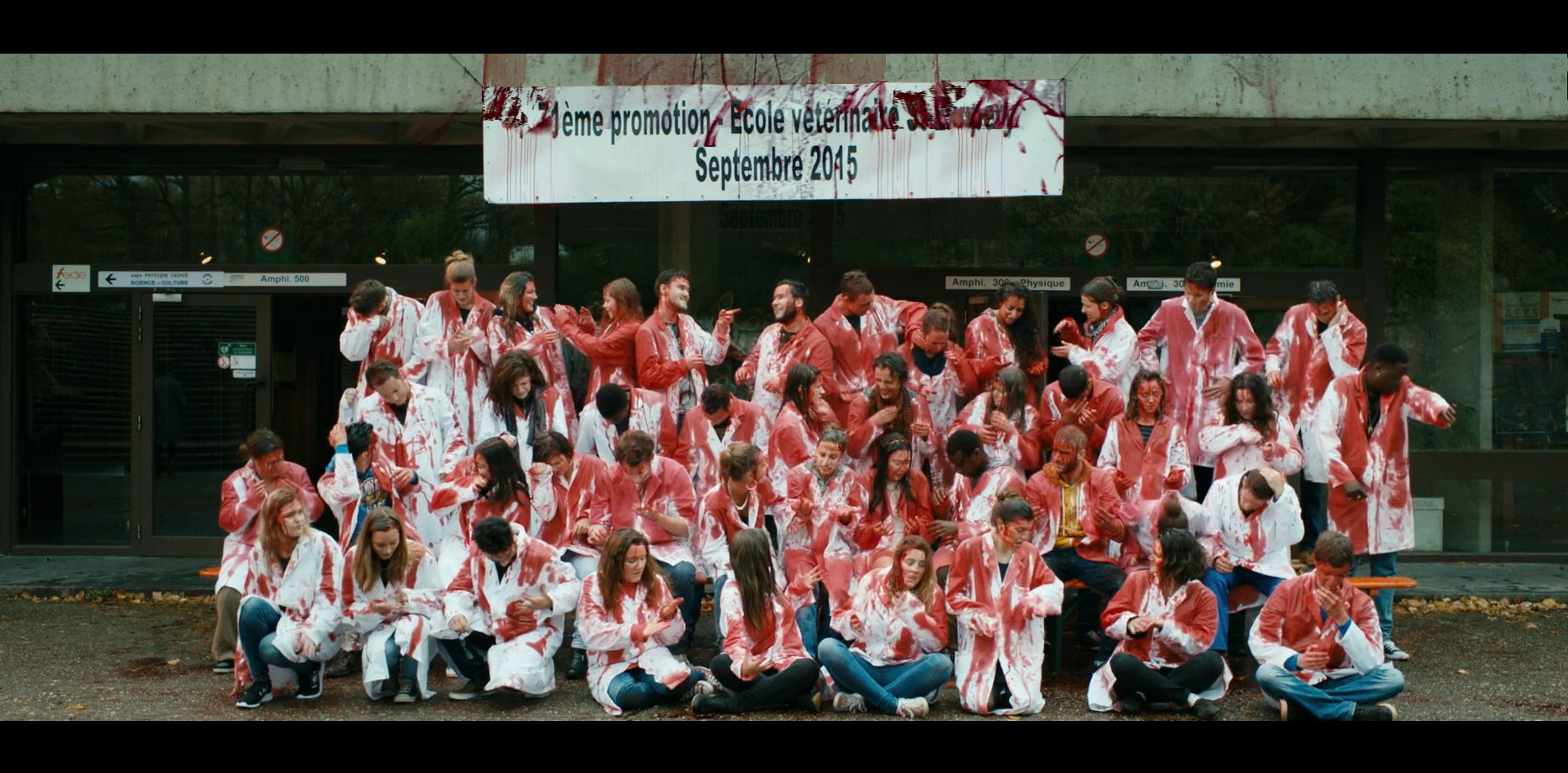
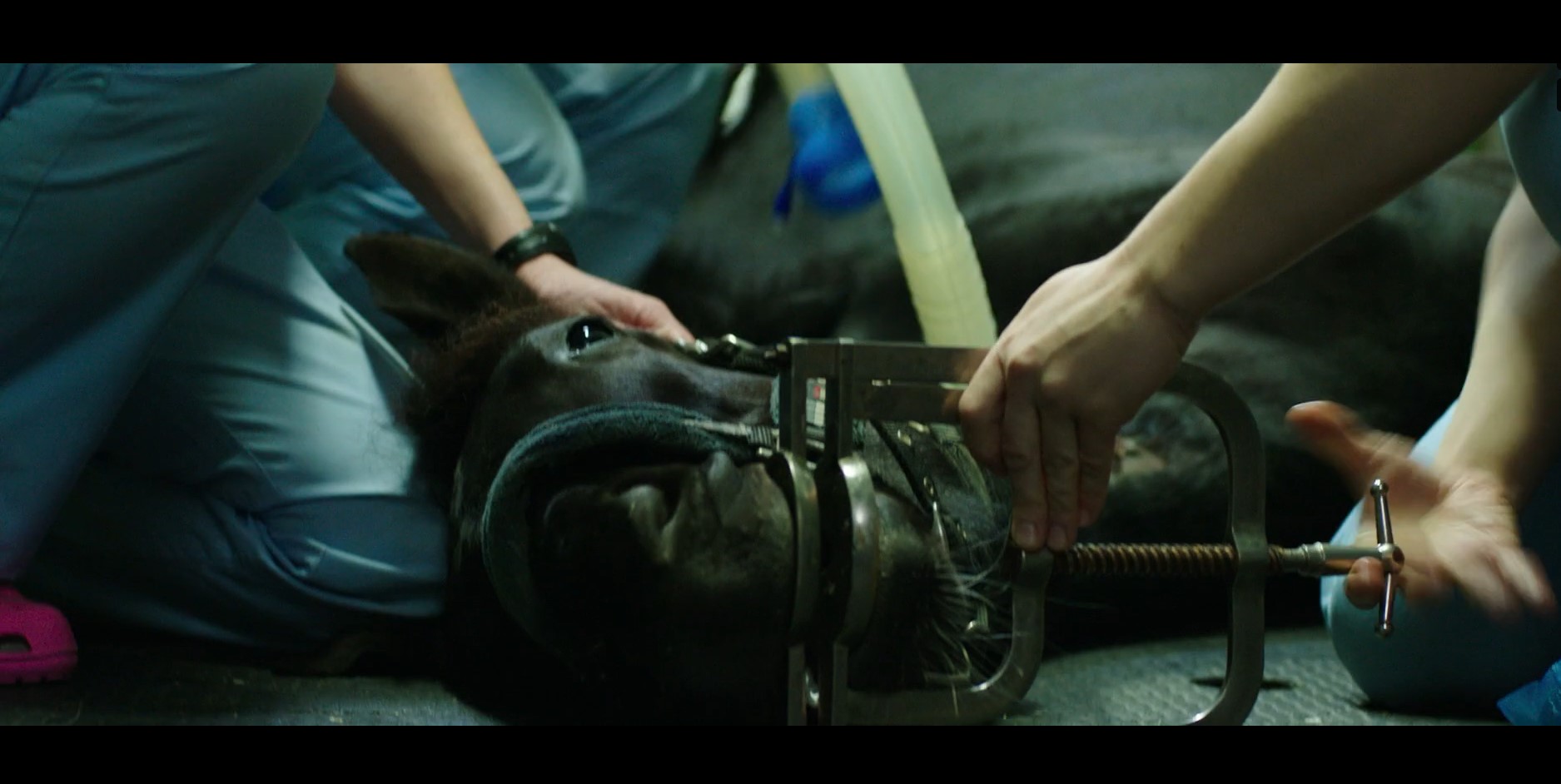
Brought up on a strict vegetarian diet by her parents, Justine became conscious that one swallow of meat down her gullet might start a chain reaction of life-threatening allergies. Her legacy acceptance into the prestigious Saint-Exupéry Veterinary School would have a set of challenges toward retaining that diet but her older sister, Alexia, who is still studying at the school and is also a vegetarian, would protect her from the intense hazing brought down upon the freshman class. When it turns out that Alexia gave into the temptations of peer pressure and egged her own to digest meat in a hazing ritual, Justine learns that her sister’s shielding won’t stand up against the forces of elder student pranks. From then on, a primordial animalistic behavior slowly transforms Justine from a quiet, awkward, and studious teenage girl into a party animal, an explorer of sexual awakening, and a herbivore whose slipping from her regime. Justine’s craving for raw meat digs deeper into the bone as the overwhelming need to consume human flesh spirals her down into an uncontrollable descent, turning the school’s exuberant hazing knaveries all the more dangerous.

Having been a meat eater all my life, the transition to vegetarian would be a hard-fought war that would likely shed years off my life just as much as eating a thick, juicy cut of a steak seasoned to perfection and medium cooked. After all, the human race is born with tapered canines that rip through the tough flesh and meat first and then pass along the now tendered feed to our molars, our mashers, that would handle the soft, chewy substance for an easy ride down toward our stomach. “Raw” takes that approach one step further, or maybe two or three steps further, by coupling the sudden discourse from meatless to meaty meals that expands into cannibalism with a coming of age and finding one’s place in life story that can be relatable to us all. The French film is written-and-directed by Julia Ducournau, who reprised herself with another body horror sensation with last year’s acclaimed “Titane,” and was shot at an actual veterinary school in Belgium, the University of Liège. Originally titled “Grave” before being upgraded to “Raw,” the film is a production from a conglomeration of studio labels, including the first horror production for Petit Film. Rouge International (“Murder Me, Monster”), Frakas Productions (“Sea Fever”), Ezekiel Film Production and Wild Bunch (“Martyr”) serve as a few of the film’s other coproduction companies with Jean des Forêts, Julie Gayet, Jean-Yves Roubin, Nadia Turincev, and Cassandre Warnauts as producers.

“Raw” is not your typical girl journeying through the trials and tribulations of normal self-discovery.  For this, you need not your typical girl to play centric character Justine.  Enters 16-17 year-old Garance Marillier, the Paris-born actress with an established bond on and off screen with director Julia Ducournau having debut her acting in Ducournau’s 2011 short film “Junior” as a tomboy going through a strange corporeal transformation.  Fun fact:  Marillier has been cast as a different Justine in all three of her collaborations with Julia Ducournau – “Junior,” “Raw,” and “Titane” since 2011.  Marillier soaks into “Raw’s” Justine with not only a transcending behavior pattern performance that takes the freshman from stifled to uninhibited, but the young actress also overhauls a complete body language transformation that sheds Justine’s meek skin, literally displayed on screen, for a more confident and abrasive veneer.  Ella Rumpf (“Tiger Girl”) receives Justine’s inexperienced blossom-hood with an the older, already initiated, sibling having been fostered by rambunctious peers to break the sheltering chains her parents had shackled with and just like true to life sisters, there’s contention.  The vehemence venom between them when they’re on bad terms on screen can stop one’s breath, you can hear a pin drop, yet you still understand their sisterly connection and love no matter how messed up a situation might be, especially when involving boys, such as the pansexual fluidity of Justine’s freshman roommate Adrien, played by Rabah Nait Oufella.  “Raw” rounds out the small cast surrounded by a slew of extras with Laurent Lucas and Joana Preiss as mom and dad.

Julia Ducournau has the body horror genre down to the molecular level.  It’s as if the filmmaker studied every film and playbook of David Cronenberg just from researching her various work credits that target to restructure and regress the human condition into something far worse and watching “Raw” unravel a symbiotic relationship between natural and unnatural human development blurs that line of what is considered to be normal so disturbingly good.  Exteriorly, we notice the changes and can almost set a clock to way our bodies react and change over time, biologically and socially, within the context of our environment.  Internally, a whole unexplored set of conditions apply to the unpredictable mindset of transfiguration and that’s where Justine paves an unfounded roadmap for her sudden kick from being a veggie lover to a flesh craver. “Raw’s” undoubtedly an allegory of a young girl’s pubescence and coming of age into her own from, essentially, being on her own exploring her sexuality and exploring new interests as is such with going into university. Ducournau casually strolls through Justine’s drama and tension as much of the body horror overwhelms our morbid curiosity but her angsty complications, still very much underlined even being overshadows, retain a constant line of parallelism in a symbolic reality. Delicate touches of indelicate gore really spice up “Raw’s” entrenching story not for the faint of heart as well as vegetarians.

Hot off the heels of their now out of print limited edition release of “Raw,” Second Sight Films offers a second, standard release on Blu-ray home video. The UK label offers a single disc packaged, region B encoded, BD-50 of a 1080p, high-definition, 2.40:1 aspect ratio presentation, listed at running an average frame bitrate of ~24Mbps. Highly accurate on its bitrate average, the image is well diverse in discerning details without an ambiguous scene or spot in sight. The color often feels muted, dreary, like one long continuous overclouded day that presents an everlasting feeling of dismay. Yet, that isn’t all cinematographer Ruben Impens has to offer with arthouse framing of disturbing imagery and an opening freshman party scene that takes us through the cramp pockets of sweaty, half-naked partygoers in one lengthy, single shot that expels just about everything Justine will face at her time in veterinary school. The French DTS-HD 5.1 master audio superbly distributes the audio tracks with just right levels to accommodate each scene. If there’s a noisy, bass blaring party, the score rightly takes over and the dialogue takes a muted backseat but still clear and intelligible – or so I believe since I don’t understand French, but I can make out the syllables and inflections. Otherwise, dialogue is king and clear alongside an eclectic soundtrack of English indie rock and experimental tracks as well as Jim Williams guitar and industrial synth trek across that’s beautiful and, simultaneously, disconcerting disharmonic. If you missed out on the limited edition, don’t bite yourself as the standard edition as plenty of extra features, including an interview with actress Garance Marillier The Girl Can’t Help It, an interview with producer Jean des Forêts Making Ends Meat, an audio commentary by film critic Alexander West, an audio commentary with director Julia Ducournau and critic Emma Westwood, an interview with Ducournau A Family Affair, the featurette Raw A Votre Gout with Ducournau and Emma Westwood, a conversation between Ducournau and critic Alexandra Heller-Nicholas Quick Bites, a genre matters panel discussion, an Australian premier introduction and post screen Q&A with Ducournau and Kier-La Janise, and a handful of deleted scenes. The film runs at 99 minutes, comes with well synced English subtitles, and is certified 18 for strong gory images and injury detail. Taste “Raw’s” unseasoned, unadulterated, pure and simple line of hidden truths and manifesting urges that once crossed there’s no turning back as the person you once were, is no longer akin to an impossible burger but a fully tendered hunk of mouthwatering meat freshly cut and ready to sink your teeth into.

Evil Gets Wild! “Cub” review!

Screen shot 2015-09-25 at 12.29.04 PM

A troop of cub scouts set out on a camping trip in the deep forests near an abandoned bus factory. At the helm are three scout masters overseeing a handful of lively young cub scouts. One of children, Sam, has been through a troubled and violent past and has been labeled the outcast amongst the rest of the troop. Sam encounters a feral young boy, who has been trained by a murderous psychopath whom has made the woods his deadly home. As nobody believes Sam’s run-in with the wild boy whose been stealing around camp, the troop hastily concludes that Sam is lying and stealing, resulting in the trop disliking him even more all the while setting up their fate for something far much worse: a killer camping trip.
Screen shot 2015-09-25 at 12.31.04 PM
Booby traps. Children vs. Children. Outside nude showering. An ingenious killer. Fun and newfangled horror has made it’s grand return since “The Collector!” Freshman director Jonas Govaerts, with a boat load of crowd funded money, has brought a keen eye to the campy, wooded survival genre with his independent film “Cub” aka “Welp” in the films original French/Flemish language. Going through the motions of setting up character development and moving the characters seamlessly into a ominous situation is what seems to come natural to director Govaerts. Unnaturally, Govaerts doesn’t explore the psychotic background of such an interesting, yet mysterious killer, leaving everything about the antagonist’s intentions to the imagination. This villain, only known as the “psychopathic mentor” on the Artsploitation Films Blu-ray back cover, maintains a dated, yet marathon technique killing spree operation underground in the dark woods, setting up crafty and deadly traps for those who embark on his land. There’s a little tidbit of setup on the killer from an officer explaining to the scout masters that the vacant nearby factory has made some previous employees disgruntled, making the land a cursed hotspot.
Screen shot 2015-09-25 at 12.24.14 PM
“Cub’s” success mainly stems from it’s actors. Gill Eeckelaert, who has only “Cub” credited under his name, phenomenally creates a superbly feral and masked boy, surviving on the land and in the trees. With a scrawny physique and zero dialogue, Eeckelaert has formed a eerily scary character, more so than the actual menacing mentor. In all honesty, the feral boy should have been the main antagonist pitted against the troop. This character’s counterpart, Sam, played by Maurice Luijten is the epitome of good, yet something is off with the character as told with seldom sharing of the information about his past, his foster parents, his damaged photograph, and the list goes on. While a clear picture of Sam never fully emerges until the finale, the good that bubbles up from his character couldn’t be any more prominent as he’s contrast next to the constant bully shadow of a scout master named Baloo and his mindless troop of followers, looking to be cool in the Baloo’s perverted and unorthodox eyes. With only a handful of ally accompaniments on this trip, those who wish Sam harm outweigh those who want to protect him.
Screen shot 2015-09-25 at 12.25.36 PM
With the “Lord of the Flies” similar attitude and with more than half your cast under the puberty requirement age, Govaerts ruthlessly places every single person in danger and places every single character on the chopping block. There’s no sugar-coated dancing around the innocent minors, making them actually part of the organic story instead of pussyfooting around them as if they’re made of fragile, non-tempered glass. However, I do feel the opportunity was completely wasted or missed to take out each individual character one-by-one with a signature death scene, but I don’t believe the effect of certain character or characters being dispatched watered down the “oh my god” value.
Screen shot 2015-09-25 at 12.27.22 PM
The Artsploitation Blu-ray has a beautiful 2.35:1 ratio, widescreen presentation with only very little aliasing detected and the night scenes just as clear as the day scenes. The 5.1 Dolby Digital mix flawlessly contributes to the overall impact of the story, creating a great balance between LFE and HFE, dialogue, soundtrack, and ambient tracks while providing accurate and well-timed English subtitles. The superb giallo-esque score by Steve Moore, who goes under the pseudo name of Gianni Rossi and worked on “Gutterballs”, delivers an intense, on the edge of your seat synth rendition of danger and chase. “Cub” director Jonas Govaerts and his crew earns their merit badges for constructing a bloody and innovative film. Another winning release for Artsploitation Films and another recommendation from this reviewer.

Sometimes Evil Needs a Little Fix! “The Treatment” review!

the-treatment-blu-ray
Inspector Nick Cafmeyer has a past constantly haunted by the abduction and the unknown whereabouts of his brother Bjorn. Nick always knew who took his beloved brother, a neighbor named Ivan Plettinckx, who relentlessly harasses and leaves clues about missing Bjorn, sometimes leaving clues right under Nick’s front door. Simultaneously, a young boy has gone missing when the parents are discovered in their home handcuffed to the fixtures for a number of days. Nick uses his tragic past and anger as extreme motivation in finding the missing boy and conducts a grand manhunt, ensuing to track down a dangerous and disturbed pedophile that is only known by the monikers of The Biter and The Troll. When Nick believes his missing boy case and his sibling Bjorn are connected, Ivan Plettinckx becomes his number one suspect and while Nick continues to investigate and target Plettinckx, another innocent family comes under siege by The Troll and the family’s time is quickly running out.

“The Treatment” is a captivating crime thriller from Belgium with a controversial and complex subject matter perhaps too explicit and bold for American taste. Not many films can pull off severe child mistreatment without the American ratings board slicing and dicing content and leaving difficult and displeasurable scenes on the cutting room floor. For director Hans Herbots, the cutting room floor serves at only his will as he chooses what stays and goes from his film “The Treatment.” Herbots has an incessant delivery of darkness that will clutch tightly and not release your attention, causing a disorientation in the story; a certifiable understatement when going deeper and deeper into this grim pit of child perversion. Just when you think the story starts to become bright and soft, Herbots slightly navigates around the rim of the positive portions and abruptly thrusts us back into that disturbing world with the homemade movies encoded in VHS video tapes, dead children with rectum bleeding and bite marks, and a story so heinous, bathing in sanitizer won’t thoroughly clean the body nor soul.
Screen shot 2015-08-21 at 10.22.26 PM
Aside from Inspector Nick’s dual and intertwining plots, a plethora of parallel character story lines supports the main artery, attempting to divert the focus toward a more “whodunnit” crime mystery: a swimming instructor whose awfully suspicious around police and seemingly uncomfortable around children, a father with an abusive past but supposedly victimized by The Troll, and a mentally unstable junk collector who happened to be dumpster diving during the police search for the missing boy. These characters are lead in various directions with no clear evidence or stability toward their role. The genius behind these characters are from the pens of “The Treatment” novelist, a British crime writer and bestselling author, Mo Hayder and the film adaption screenwriter Carl Joos. The particulars in molding the ambiguous characters are hard to detect, leaving one to guess these characters’ intentions and creating tension and determination on finding out just who is and who is not the child killing creep.
Screen shot 2015-08-21 at 10.22.24 PM
I have not kept up on Belgium actors and am not in the loop of their skill or fame, but theater actor Geert Van Rampelberg as Inspector Nick Cafmeyer engrosses the character by being a reckless and driven man unhinged by his past. Rampelberg might oversell here and there in certain scenes, but his shortcomings are overshadowed by the fire in his eyes and the repulsive subject matter of the story. If in the vengeful shoes of Nick, there is an expectation that one might act the same as Nick, aggressing for truth and striving to save the world no matter the cost even if that means putting the law on the back burner. I also like the aspect that Nick has no love interest; he ties himself to no one, embracing his cause all the more. However, there lies an unspoken companionship between him and his supervisor Danni. Their professional interactions seem personally close, but Nick also keeps himself at a distance, keeping her from becoming to close and that separation keeps him, if any, focused on the task at hand.
Screen shot 2015-08-21 at 10.22.49 PM
Artsploitation Films scores big with the Eye Works Films production and taboo-ridden film “The Treatment” and as an extra bonus, the Blu-ray release sizzles with a stunning 2.35:1 widescreen ratio presentation and a 5.1 surround sound in Dutch language with English subtitles. The subtitles don’t miss a beat with the dialogue and the composing by REC Sound company broods through the dark scenes. Amongst the technical portions, the bonus features contain trailers of various Artsploitation films, a featurette, and deleted scenes. The flawless picture catches every detail which will surely leave a dastardly seared imprint of immoral wretchedness in the whites of eyes.