EVIL Worming Its Way into Your Body! “They Crawl Beneath” reviewed! (Well Go USA / Blu-ray)

“They Crawl Beneath” on Blu-ray Home Video from Well Go USA!

After a near-death experience, Danny finds himself living on his profligate uncle’s couch when his family-desiring girlfriend fears his occupation will emotionally destroy them if he dies in the line of fire. The turbulent relationship reaches a stalemate, frustrating Danny further into confiding into his imprudent uncle as they work to rehab an old car. When an earthquake takes his uncle’s life, pins his leg underneath the car, and traps him in a closed garage isolated from much of civilization, Danny has limited options for rescue and to make matters worse, the ground opening up has released an undiscovered wormlike creature from the fissures. The severely injured officer now must fight for survival against an enemy unlike any other and face the terrible truth that could possibly change his life forever…if he lives through the night.

“They Crawl Beneath” is subterranean-to-surface horror with large wormlike aggressors hungry for fleshy food. The 2022 creature feature is the screenplay brainchild of writer Tricia Aurand who pens her way through a career of shorts to features with her second full length screenplay, originally entitled “It Crawls Beneath,” developed with the crux of the story surrounding the struggling emotional arc of a couple’s embattled relationship growth while being besieged by the belowground bloodsuckers in a tussle of grit and determination that dually transposes a never give up, never say it’s over theme. “Area 407” and “Reed’s Point” director Dale Fabrigar helms the film in what’s the second collaborator effort between Tricia Aurand and the director that falls upon the complete opposite on the genre spectrum behind the feel-good holiday movie “Middleton Christmas,” cowritten and produced by Suzanne DeLaurentiis and, before your wheels start spinning, there’s no mention of her relation to famous television cook Giada De Laurentiis or Giada’s Italian film-centric father, Dino De Laurentiis. Like an effort to purge cathartically the holiday spirit, Suzanne DeLaurentiis, who wrorte-and-directed 1996’s “Mutant Man,” produces the film with Fabrigar and Aurant spearheading the project under her banner, Suzanne DeLaurentiis Productions,” and presented theatrically by Kevin and Noel Goetz of BBMG Entertainment and “Monstrous’s” Film Mode Entertainment.

“They Crawl Beneath” is essentially a one-man show, puncturing much of the same vein as “Stalled,” “Buried,” or “The Shallows” where a single protagonist much problem-solve to work out from a difficult and deadly situation. Now, “They Crawl Beneath” slightly differs from the examples aforementioned that provides a bit of setup with cop-on-leave Danny (Joseph Almani) down in the dumps and hanging with Uncle Bill (Michael Paré, “Village of the Damned”) as a direct result of having a fallen out with girlfriend Gwen (Karlee Elridge) over a near death experience in a shootout with a perp. Almani gives a wrought performance that’s raps a handful of times on the door of embarrassing ignominy with overzealous one-liners that squander the fervid weight the story works very tirelessly to setup for Danny and his pitfall of troubles. Yet, Danny also can’t grasp the heaviness of Gwen’s decision to leave him as if what matters to her is no matter at all and that’s where the script disproportionally downplays Danny’s pride by having him recoil into the arms of a cool uncle. Michael Paré is the better half of that relationship despite his uncle Bill’s stag behavior. Paré has one of those classic, Golden-Age-type, voices to the likes of Robert Mitchum and though that doesn’t necessary speak to the Gen-X youth as cool, there’s still a panache quality about the 40-year vet actor that makes him feel bigger than the film itself. Elridge’s Gwen undercuts much into Almani’s man versus underground grub with an attitude in scenes that are terribly forced. Elridge, who doesn’t fail on her own accord, falls into an uninspiring role with unimportant lines and scenes just so there can be a prominent love interest for Danny. Gar-Ye Lee, Christopher M. Dukes, Brian DeRozan, and Elena Sahagun co-star.

I’ve read a few threads and comments around the worldwide web comparing Fabrigar’s “They Crawl Beneath” to the creature feature-classic Kevin Bacon-starring film “Tremors.”  Those comments and comparisons are grossly ill-conceived.  Aside from the physical release cover art which displays a well-armed individual standing cool on cracked pavement in the desert while the foreground large fissure in the road exposes a menacing burrowing organism does echo Graboid parallelism, but that’s the extent of it. There’s no “Mad Max” man with a rifle and a handgun in this flick. There’s an outskirt L.A. desert, but much creepy-crawler action takes place in a four-walled and dark garage. And the only similarities between these creatures and the Graboids are the Graboid’s snake-like tongues. The pint-sized creatures with tri-mandible, razor sharp teethed, mouths appear similar but individuated and brandish a stinger to be lethal at both ends of its larva bulbous body. The puppetry is obvious but also fantastic in the same breath. I couldn’t see Fabrigar and the creature effects supervisor pulling off the task any other way that doesn’t grade A visual effects, such as the cast in James Gunn’s “Slither.” “They Crawl Beneath” enters more of a survival horror and less of a creature feature with the principal lead finding himself trapped inside a garage and pinned underneath a car. Typical of many low-cost and independent productions that take refuge in one single, inexpensive location, the setup, the lion’s share act two, and the escape pays off big time in deflection stagnation by keeping Danny occupied with options though more than likely the creatures would have bit off his face during numerous moments of vulnerability. Pacing like this is troubled throughout. As I mentioned, Karlee Elridge’s scenes often created a distraction from the story’s essence and her scenes were intrusively pointless. As Danny finally connects with Gwen on the phone and she proclaims she will get ahold of Officer Holden to send help, there’s a scene following of her driving and calling officer Holden and explaining the situation. The scene bears inane purpose and is repetitive and there are a handful of scenes like this to thicken out the role of Elridge.

Practical effects driven “They Crawl Beneath” is middle of the road magnitude survival creature feather that has squirmed its way onto a Blu-ray home video from Well Go USA Entertainment. The unrated region A Blu-ray is presented in 1080, 1.78:1 aspect ratio with an impressive contrast with enriched negative space that demarcates the well-shot positive space. Picture quality doesn’t seem to suffer compressed on the BD25 as there is no banding in the blacks and there are plenty of darker scenes contained in the garage. Skin, human and Platyhelminth, appear textured aplenty and while typical arid landscapes can whitewash character details due to lack of diverse color and adjacent objects, that’s not the case here as the focus in exterior scenes is tight on the characters and less about what’s in the background. The English language DTS-HD master audio channels cleaning through the output with phonic clarity. Acoustically, the garage sequences can sound slightly isolating which works for the confined space meant to have no sound dampeners to start. Creature screeches are generic but effective and sync aptly to the action without degradation. Option English SDH subtitles are available. The Well Go USA Entertainment release is feature film only with no bonus material accompanying the 88-minute runtime. “The Crawl Beneath” returns to the midnight showings of the USA Network days where the schlock hits the fan with genre features playing at ungodly hours, but the Dale Fabrigar quaking-quagmire is quick to enclose one man trapped in a room full of man-eating slugs and, sometimes, that’s all we want in a film.

“They Crawl Beneath” on Blu-ray Home Video from Well Go USA!

EVIL Bigfoot is All About the Amputating and Mutilating! “Suburban Sasquatch” reviewed! (Visual Vengeance / Blu-ray)

“Suburban Sasquatch” On Sale Now at Amazon.com!

A mystical, murderous beast of lore has suddenly appeared in the woods of a small Pennsylvanian town.  Hikers, fishermen, urbanites, and even grandmothers are not safe from the carnage dished out by Bigfoot.  Sniffing around crime scenes is eager freelance reporter Rick Harlan to unearth the truth about the recent string of grisly attacks and make a name for himself as a journalist.  Harlan finds himself in the middle of a police coverup, a Native American woman-warrior, and one suburban playground where a phasing in-and-out Sasquatch can make a killing whenever and wherever.  The Native American, Talia, is destined to square off against the evilest anthropoid her tribe has ever faced, one that thirsts for blood and does the unspeakable with the women it abducts.  The story and clash of the century may be Rick and Talia’s last in this brutal man versus beast showdown. 

As an aficionado of the horror genre, I’m on what seems to be an eternal quest to unearth the best (I’ll even settle for just good at this point) Bigfoot/Sasquatch film that really can scare the pants off viewers while providing a good storyline and solid special effects for the hairy big guy. Is that so much to ask?  The next undertaking to flash across our eyes, like a brisk fur of man-beast in the forest thicket, is the classic SOV-shot and shamelessly spooled special effects endeavor that is “Suburban Sasquatch.” The 2004 Dave Wascavage film is the sophomore project for the writer-director, following up from his deadly fungi party comedy-horror, “Fungicide,” with a shot at the title for best-worst, or is it worst-best, Bigfoot movie in the early 2000s. Shot in my old stomping grounds of West Chester, Pennsylvania, the suburban setting is authentically captured in that piece of the Commonwealth state with sprawling neighbors that give wide berth of land between houses and plenty of parks and wooded areas to Sasquatch-suit tramps. Wascavage produces the film himself, while also wearing multiple hats in many other crew roles and creates the feature under the filmmaker’s very own Troubled Moon Films, a production company that prides itself on low-cost video production and storytelling in which Wascavage self-proclaims Z grade movie making results.

“Suburban Sasquatch” is a pendulum swing between character perspectives, disassociating any one character from being a main lead and focusing more on a group of principals that even includes the suburban sasquatch itself.  If focusing on the heroes of the story, or the hero-ish types, then Rick Harlan (Bill Ushler, “Viscera”), Talia (Sue Lynn Sanchez), and the two officers – John Rush (Dave Bonita) and Steve Parker (Juan Fernandez) – would be your best bet as the unorganized protagonists deal with the beastly menace in their own way.  The acting is forced and rigid all around but not entirely at the cast’s culpability.  The script is extremely breathy and scenes last too long by lingering exposition that resulted in the film’s too-lengthy 100-minute runtime, likely drafted as a shorter run film but dialogue was added to flesh out a full-fledged feature.  Even so, performances are blankly vanilla and, to be fair, that’s to be expected inside the low-budget market. Dave Weldon, Rush, Parker, and even director Wascavage himself enact Bigfoot’s posturing and behavior familiar to a mountainous silverback gorilla with wild cupped hands waving overhead and while this seems silly in the obviously cost-efficient makeshift suit packed with unnatural folds of the stomach, a bulging bosom, and a mouth that chews like a latex-fitted gumming grandmother, the trio make the best of Bigfoot’s monstrosity and hirsute lumbering to the point of knowing what you’re getting in a sasquatch for the rest of the film. It’s all about consistency, especially when four actors interpret the movements. Wes Miller, Dallas Quinn, Troy Stephen Sanders, Loretta Wascavage, Edward Wascavage, and David Sitborn, who I thought had the most natural dialogue in the entire story, rounds out “Suburban Sasquatch’s” mania.

Has “Suburban Sasquatch” become the Bigfoot film of my long-awaited dreams? Unfortunately, no. However, what the 2004 inexpensive picture offers is invaluable cabbalism that theorizes one reason why Bigfoot is only briefly caught out of the corner one’s eye, a peripheral phantom, with a phasing feature that allows Bigfoot to go in and out of reality. Like a good b-movie horror writer-director, Wascavage also capitalizes on the creature’s stature by not only arranging a towering comparison against his enemy and food but also by fabricating a big hairy foot, larger than man’s chest, to emphasize more on the beast’s epithet. In order to achieve the height, Wascavage uses easy, practical tricks to jumboize, such as playing with different depths, but Wascavage, in another one of his many hats, also attempts his hand at crude computer generated graphics that stretch beyond the images’ limits to achieve his desired effect. Pixelated and warped without any depth or any amount of smoothness, the cut and paste photoshopped animation is jerry-built “Monty Python” at its worst in a so bad its worth seeing phenomena and certainly priceless for internet memedom, especially when coupled with severed appendages doctored from the local Spirit Halloween flying in all different directions in a Bigfoot’s fit of animalism. A couple of slashing eviscerations, a head-popping decapitation, caricature arrows and tomahawks, attack crows, and a whole lot of thwacks summarize much of the monkey business violence “Suburban Sasquatch” unfurls and while not completely bottom-of-the-barrel terrible, translating better than most SOV post-work, this Bigfoot berserker extends the search for a better entry in the subgenre.

Much like the first three predecessors on the Wild Eye Releasing Visual Vengeance banner, “Suburban Sasquatch” receives a massive, special features loaded Blu-ray upgrade coming in catalogued at number four. Also, like the first three volumes, Visual Vengeance precautions viewers about the source material quality, an array of standard definition master tapes. The region free release is presented unrated in full-frame 1.33:1 aspect ratio and the picture quality fairs better than most SOV releases. While still heavy on the electrical interference with dancing pixels finding difficulty delineating the image, there is less tracking line obstructions and no macroblocking. Details are standard definition quality with softer details, more like smudgy, in the natural color tones and lighting. The English language lossy stereo audio mix has no punch behind unlike Bigfoot who comes out swinging like Rocky Balboa in every human encounter. I would take a wild guess and say the audio is more mono as every aspect from the dialogue to the soundtrack sounds muffled or muted, likely door to poor audio recording equipment and no boom mic, making the actors’ articulation often difficult to hear. Sound effects are the only mix that has any kind of stereo potency with an overboard variation of the impact or ambient sound that adds to “Suburban Sasquatch’s” slipshod satire. Optional English subtitles are available. But if you’re buying the release because you’re interested in the special features, then Visual Vengeance has you covered with a brand new 2021 audio commentary featuring director David Wascavage, a second commentary with Sam Panico of B&S About Movie and Bill Van Ryn of Drive-In Asylum, and a third commentary track, a RiffTrax episode special, that provides hilarious MST3K-like comedy throughout the feature. Other bonus material includes an archival behind the scenes featurette, the designing of the Bigfoot costume, outtakes, the so-called CGI making-of, an interview from David Wascavage, a behind-the-scenes image gallery, the original teaser and theatrical trailer, and other Visual Vengeance trailers. The physical release itself comes with a cardboard slipcover with artwork with new artwork, a reversible Blu-ray cover with the original artwork on the inside, a two-sided insert, retro VHS stickers, and a mini poster. All that is missing, beside the link, is the kitchen sink. To conclude, Visual Vengeance ample format and bonus material enrichment doesn’t take away from the fact that “Suburban Sasquatch” remains the trashiest sasquatchsploitation on SOV ever!

“Suburban Sasquatch” On Sale Now at Amazon.com!

Problems Arise When Your Brother is an EVIL Mutant Octopus! “The Kindred” reviewed! (Synapse Films / Blu-ray)

“The Kindred” on Blu-ray at Amazon.com!

Before the passing of his brilliant molecular scientist mother, scientist John Hollins fulfills his mother’s adamant dying wish to destroy her life’s long work at their old seashore home. She also spills out that he must put a stop to his unbeknownst to him brother named Anthony. John, who followed his mother’s footsteps by becoming a lead geneticist, devotes the efforts of his team to assist in the removal and destruction of the data but the extent of her work was severely underestimated. Digging through journals upon journals and computer data to find any mention of a long-lost brother, John delays the rescinding proceeding. That is until a member of his team is attacked by an unknown creature and that his brother might not be actually human. On top of it all, John’s lab supervisor, Dr. Phillip Lloyd, is hellbent on obtaining his mother’s covert creation and embeds a spy on John’s team to locate it by whatever means necessary. The simple deathbed request has become a monstrously frightening ordeal that will pit brother versus brother and place everyone’s lives in mortal danger with a tentacled creature set loose.

As Vin Diesel once said in 9 “Fast and the Furious” movies, family is everything. “The Kindred,” however, is not a Vin Diesel movie, does not have supercharged, illegal street race cars or even any high-octane action, and definitely pinpoints family to be more of a burden-riddled, hazard to your health kind of deal when the little brother you never knew existed turns out to be a hybrid surf-and-turf creature with a thirst for blood. That’s the barebone synopsis of “The Kindred”, a U.S. bred sci-fiction-horror from the directors of “The Dorm That Dripped Blood” and “The Power” Stephen Carpenter and Jeffrey Obrow. The 1987 creature feature is penned by the two filmmakers alongside John Penney (“Return of the Living Dead III”), Earl Ghaffari, and “The Exorcist” screenwriter, Joseph Stefano to give the script a little extra supernaturally special to make it stand out. The indie film is a production under the limited partnership of producers Jeffrey Obrow, Stacey Giachino, and executive producer Joel Freeman (“Love at First Bite”) and was theatrically distributed by the now defunct F/M Entertainment.

As a geneticist, “Manhunter’s” David Allen Brooks gives a fairly convincing performance as a strong jawed, blonde haired, and tall statured scientist wearing the now hackneyed glasses to make him appear nerdy and scientific. Honestly, the L.A.- born actor could have gone without the glasses and would have made no difference in the geneticist maven that is John Hollins but on screen, it’s a good look for the part. Yet, all the scientific studies in the world couldn’t prepare what’s to come for the level-headed researcher: a long weekend at the seashore house with direct report whizz-kids and a British acolyte of his mother’s with the blatant hots for him despite his longtime girlfriend (Talia Balsam, “Crawlspace”) tagging along to help with the cleanout. Romantic tensions flare, jealousy ensues, and personalities clash as a house full of emotional cannonballs are being launched in every direction, blinding them to the real threat at hand – a genetically spliced mistake roaming the grounds and full of bloodlust. In its rampaging path are a varied of vaguely hormonal and youthful scientist and administrative blend with a hilarious Peter Frechette (“The Unholy”), the nice guy in Timothy Gibbs (“Witchboard 2”), the Betty Childs from “Revenge of the Nerds'” with Julia Montgomery in a stepdown supporting role, Bunky Jones (“Hide and Go Shriek”), and the dubious dame of Amanda Pays (“Leviathan”) in her best Kelly LeBrock impression. The cast rounds out with a couple of veterans in Kim Hunter (“Dark August”) as mother Hollins and in an almost unrecognizable in appearance but unmistakable in performance from Rod Steiger (“Modern Vampires”) with hair (likely a wig).

“The Kindred’s” promising 80’s creature feature showstopper is marvelously slimy, grotesquely anthropomorphic, and stunningly conceived and manipulated creature effects by a team under Michael John McCracken’s supervision. The palpable, practical special effects works for “The Kindred’s” era that offers technology limited f/x options, but for this type of subgenre to be constructed in the late 80s, “The Kindred” takes advantage of the wide birth of possibilities from makeup to creature mechanics to pyrotechnics, and to be made would have less memorable as just been another bargain-basement botch job of trying to skirt around the cost at the monster’s expense. Plenty of love is poured into showcasing the monster movie madness that includes a watermelon sinking its barbarous tentacles under human skin and an open floorboard cavity into the creature’s watery pit where the hybrid emerges and slinks back into the abyss. While the practical effects menagerie is a gawker’s paradise, I find the story is only a firecracker’s worth of entertainment in comparison to the Yonshakudama-sized starburst that is McCracken’s Kraken-like monster. Rod Steiger plays the obvious mad scientist, experimenting on the recently traumatized who’ve suffered head wounds, with the nefarious creation of mindless, mutants who are held in the basement of his lab because, well, to be a reminder of his failures? How a dying molecular scientist’s genetic splicing-gone-wrong and Rod Steiger’s version of playing God with the “People Under the Stairs” intertwines is either above my intelligence or doesn’t have one ligament of connective tissue to bind them together. Dr. Lloyd often feels like a very separate story, not dovetailed to the slippery and octopus-shaped antagonist John Hollins and his team face. The only smidgen of connection between the two conflicting plot titans is Melissa Leftridge who’s blackmailed by Dr. Lloyd to retrieve a specimen or die from the same exposure that’s mutated the creature under the seashore house. What befalls Leftridge, in itself, is another substory left shamefully abridged given the spectacle transformation of human-to-fish that randomly flares into the fold.

With an all new 4K high-definition remaster of the unrated print, Synapse Films doesn’t hold back their Blu-ray release of “The Kindred” that’s presented in 1080p, open matte 1.78:1 widescreen aspect ratio.  The AVC encoded picture quality caters to the upscale class from a nearly mint transfer print.  The color is vivid, and details come through nicely with every bit of goo and glop spewed from the creature.  Any kind of issues with compression are either minor or non-existent in the 93-minute runtime and this is typical high-level execution as on many of Synapse’s upgraded and first-time ever on HD released products.  The English language DTS-HD 5.1 master audio surround sound cuts a vigorous soundtrack with ample range.  Depth is not really tested since most of the action is in the foreground but never does the action top the dialogue that remains free from obstruction and imperfections.  Optionally, the release offers the original theatrical 2.0 mono soundtrack as well as English SDH subtitles.  Ample bonus features on the unrated release include a commentary with directors Jeffrey Obrow and Stephen Carpenter that’s moderated by horror journalist Steve Barton, a near full length making-of featurette with directors and writers John Penney and Early Ghaffair in Inhuman Experiments that digs into genesis and principal photography, never-before-seen on-set compilation footage of Michael McCraken’s creature effects, a still gallery and storyboard concepts, TV and promotional spots/trailers, and the original theatrical trailer.  The physical release comes with a blackout Blu-ray snap case with a Synapse catalogue insert.   For a middle of the road creature feature, Synapse knocks the release out of the park, elevating by particularizing the details with care that makes the pint-sized “The Kindred” feel monolithically 100 feet tall.

“The Kindred” on Blu-ray at Amazon.com!

The EVIL Anti-Abortion Film You Never Knew You Wanted. “Evil Dead Trap 2” reviewed! (Unearthed Films / Blu-ray)

Aki is a self-solitude movie theater projectionist who avoids talking to men and to pretty much everyone in general.  Her high school friend, Emi, is the complete opposite, a socialite of sorts, with a previous celebrity career as a singer and a high profile television news reporter.  While Emi thrusts her unusual interests upon encouraging her married boyfriend, who is more than game, to sleep with Aki, the projectionist has a secret of her own in being the culprit of a string of grisly murders involving young women with their ovaries ripped from the inside out.  When these murders occur, Aki is in a feverish, yet reserved state of mind that borders being sexually and dangerous uninhibited and totally blackout deranged.  She discovers mementos of the night before in her home and questions her actions, especially as the kill count grows and Aki’s mind wanders between reality and the supernatural as a mysteriously eerie boy keeps popping up everywhere, even at the crime scenes.  Emi’s dangerous game and her smug prodding of Aki sends her friend down a rabbit hole of a disturbing past. 

If you’ve seen “Evil Dead Trap” then essentially forget everything you knew about the first film as the sequel is not a direct follow-up and concerns a different tale of prenatal byproduct revolving around a common moniker that connects both films.  That name of evil that binds would be Hideki with the sequel titled “Evil Dead Trap 2:  Hideki,” bestowed the subtitle to ensure proper acknowledge.  Another aspect that’s different is the person in the director’s chair as “Akira’s” screenwriter Izô Hashimoto helms the 1992 sequel from a script cowritten between Hashimoto and the then early in career Chiaki Konaka who would go on to pen teleplays for a number of Ultraman series and get his hands colorfully deep within various anime project, such as the Digimon series.  With such anime talent behind one of the more brutally savage renditions to sow the seeds early in the J-horror supernatural genre that incited the widely popular “Ringu” and “Ju-on” franchises less than a decade later, “Evil Dead Trap 2” pelts a supernatural and homicidal esoteric storyline riddles with themes of abortion, guilt, and deriding judgement.  Naokatsu Itô and Mitsuo Fujita produce the Japan Home Video production, the company behind metal-horror “Tetsuo” and the Yakuza-zombie film “Junk.” 

“Evil Dead Trap 2” washes the slate clean with a new cast enveloped into a ghastly chaos the abhorrent an the unnatural.  The story takes on a bold female lead in Shoko Nakajima at the beginning of her career and the fresh faced actress doesn’t also have the typical physique of leading lady.  Nakajima is not only a fascinating and curious choice to be the centerpiece principal but her performance is rock solid with an unsettling, mild-manner manic approach of a night stalker of women opposite her appearance.  Now, whether Hashimoto intended juxtaposition is completely unknown to me, but I find the affect potent nonetheless in unification with Nakajima’s near-subdued and muted act.  On the flipside, there’s “Last Frankenstein’s” Rie Kondoh as Aki’s good friend Emi.  Emi’s a hotshot in her mind fabricated from the television reporter’s brief stint with fame and is cavalier in nature when it comes to her friends and flings.  The contrast between the two is often playfully contentious that never settles on firm ground about how these two become to be friends to begin with, but when their friendship comes to a head in a heated and bizarre one-on-one skirmish with a boxcutter and film sheers, all bets are off and all our conclusions about the two friends are thrown to the wind.  What sets them off is a man, Kurahashi to be exact, a role filled in by Shirô Sano (“Infection”) playing a boyish-behaving philanderer between the two women.  The character of Kurashashi, much the same as Aki and Emi, have his own offshoot piece of the narrative pie with an unsound wife who waits for son to return home – the only problem is, Kurashashi’s wife never had a child.  This is where the 3 characters arcs begin to meld together in a disorder of surrealism between reality and nightmare and those entangled in that web are, for lack of a better phrase, entering a consuming darkness from which they can’t escape, and Hideki is in the middle of it all.  Performances are perfectly unhinged and coy, a variety of personas that make “Evil Dead Trap 2” engaging enough until the end, with a cast list that fills out with Sei Hiraizumi (“Orgasm: Mariko”), Kazue Tasunogae (“Ring 0:  Birthday”), and Shôta Enomoto as the ominous, tangible presence of Hideki.

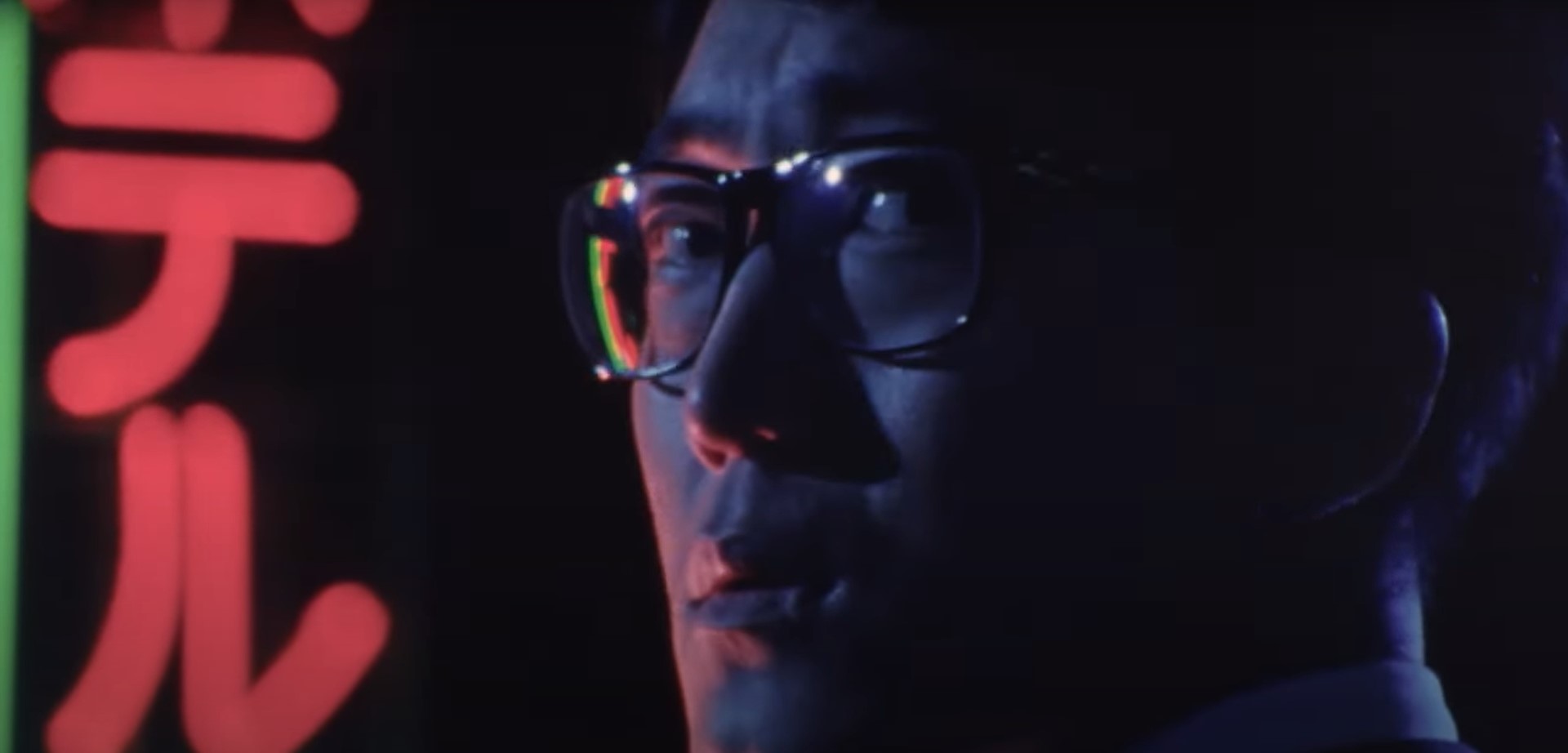
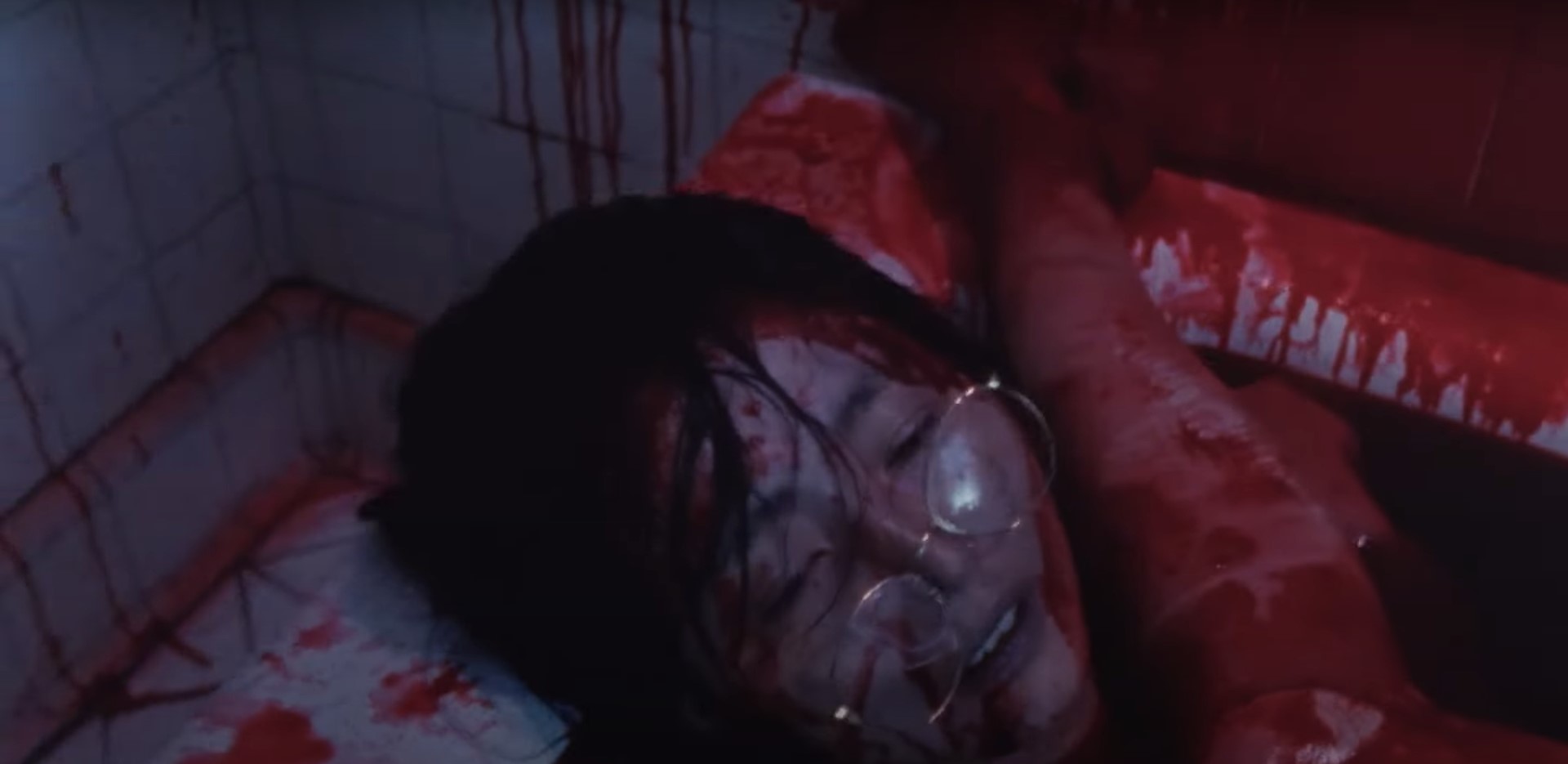
Comparing the original to the sequel is like comparing worn infested apples to bloody rotten oranges.  The melding of the characters in the third act succumbs to an arthouse avalanche of symbolism, upon symbolism, upon symbolism.  The audience is expected to piece together the chunks of sinew and connect the dots of sibylline secrets of a past contrition. There are strong themes of abortion that persist up into every other few scenes and mostly allude to Aki as the one who gave up a child that has somehow manifested into living, breathing, perceptible and tangible man-child. Aki’s haunted under her fragile, if not delusional, state and while making sense of the manifestations, that hasn’t quite come clear, yet the mental noise leads her to murder when provoked and has her staggering out into the middle of the night to be willingly ravaged by strange men. A logical response to Aki’s action is that internally grieved recluse has snapped, coming unhinged outside the guise of regret as she kills exclusively around a maternity ward that has since closed and is under heavy construction. However, you can’t disregard the supernatural element so easily as Aki visits a miko, a Japanese shaman of sorts, who is senses Aki’s connection to the other side. Multivocal like primordial Hell, Hashimoto works in beautifully shot scenes with brilliant urban lighting that collocates looming, in-your-face figure over the head of the antisocial Aki and shepherds the characters’ darkest secrets to summit before the entity rips them a part in a bloody showcase of madness.

Unearthed Films continues to reverse coagulation and let the blood flow once again with another obscure Japanese gory horror, “Evil Dead Trap 2: Hideki,” onto a new Blu-ray home video coming in at number nine on the spine for company’s Unearthed Classics banner. The release’s image is presented in a widescreen 1.85:1 aspect ratio and retains much of the luminescent coloring of heavy neon-lighting and intended gel filters to play down the story moment’s stitch in questioned reality. Skin textures appear really defined and that also translates into much of the other details as well. No bulky discolorations, splotchiness, or banding stand to say that there were no real compressions with this release albeit having virtually no special features to go along with the single layered feature. The release comes with two audio options, a lossy Japanese LPCM mono and a far more robust LPCM stereo. Both tracks outline a clean and clear passage with no real threats to the audio with only minor white noise in the background. Optional English subtitles provide an error-free experience and pace well with the film. Aforementioned, a lack of bonus features is reduced to only a photo gallery of scene stills and Unearthed trailers, “Evil Dead Trap 2: Hideki” included. “Evil Dead Trap 2: Hideki” challenges each and every one of us to think outside its basket case box and dredge up reason from an addled, abortion-deviled, and serial murdering narrative.

“Evil Dead Trap 2:  Hideki” on Blu-ray Home Video from Unearthed Films!

A Single Spool of Film Can Make the Filmmakers EVIL Enough to Murder. “Naked Over the Fence” reviewed! (Cult Epics / Blu-ray)

“Naked Over the Fence” on 2-Disc Blu-ray and CD set!

Rick, who runs an arcade business and is a pigeon enthusiastic with a dovecote on his building’s rooftop, attends his friend’s Karate competition with another good friend, a schoolteacher and his tenant, Penny.  Learning that his Karate friend, Ed Swaan, has developed a romantic relationship with Netherland pop-singer Lilly Marischka and will have a small role in an upcoming movie with the star, shooting in building adjacent to Swaan’s Karate studio, Rick doesn’t think twice about it until Penny catches glimpse of naked photography happening in the very same building.  Rick is sent that night to investigate, and witnesses Ed and Lily uncomfortably being persuaded to take part in a private viewing porno and nearly escape with their lives when they rescind their participation and are chased by two low-life goon twins.  Ed and Lily’s nudie film now threatens them with scandal and as Rick pokes his nose into the production team’s business, innocent lives pay the price to keep the film in the blackmailing and profit seeking hands of the filmmakers. 

A cult comedy-thriller for the ages, “Naked over the Fence,” aka “Naakt over de schutting,” is a murder-mystery monkeying with spirited jest from the Amsterdam-born filmmaker Frans Weisz. The screenplay treatment comes from Weisz familiar writers Rob du Mee and the late Rinus Ferdinandusse, who penned the novel of the same Netherland title from which the story was adapted and who had passed away back in July of this year. Both writers have worked with the director on respective projects, such as “The Burglar” and “A Gangstergirl” before “Naked Over the Fence.” Set in and amongst the close quartered housing of Amsterdam and along the river of the Amstel, Weisz very much incorporates the intertwining the compact of the brick-and-mortar and the expanse of a widened landscape flow of the surroundings into tongue-and-cheek situational micro comedies that sometimes has you forget your watching a rather cynical and entangling murder mystery involving shady pornography, blackmail, and murderous foul play. Parkfilm and Cinécentrum N.V. are the production companies behind the film with Rob du Mee producing and Gerrit Visscher as associate producer.

Initial previewing presumptions about “Naked Over the Fence” might fall along the lines of being a highly erotic comedy because of not only the film’s suggestive title and the half-naked actors halfway over a fence on one of the original poster artworks, but also the fact that Sylvia Kristel as one of the principal stars.  Kristel is far and wide known for her continuous provocative performances as the lusciously licentious title character in the erotically charged “Emmanuelle” mega-series that has expanded decades since the 1970s.  “Naked Over the Fence” is not that kind of movie.  Not even close.  There are moments of skin, conservatively from Kristel, and subtle and not so subtle scenes of sensuality coursed throughout but the Weisz film notes as one of the Netherlands’ actress’s first films of her career before “Emmanuelle,” exploring her range as a scared pop singer backed against into a career stemmed quid pro quo before becoming an embedded typecast of the erotic genre. Kristel perfectly complements as a beautiful, delicate, yet reserved in strength starlet alongside arcade owner and staunch friend Rick (Rijk de Gooyer, “Rufus”) and her new beau, a large karate dojo owner Ed (Jon Bluming, Paul Verhoeven’s “Turkish Delight”). As much as an odd couple as they’re describe, Gooyer and Bluming are greatly well-received on screen as a dynamic duo attempting to outwit shady porno makers, blackmailers, and merciless murderers as if the contest to the film reel is a game with that swashbuckling, self-assured attitude as two amateur sleuths. The one character I thought was a little out of place was Penny, played by Jennifer Willems as a schoolteacher renting a room in Rick’s arcade building but is also a good friend of both men. Penny feels solely like an object used to force the hands of Rick and Jon when trouble arises and never actually does any leg work in tracking down the film reel. Willem performs to the best of her extent in a role that doesn’t obtain much action until the unique action chase at the end. Willem, Gooyer, and Bluming have all worked with previously with director Frans Weisz on “The Burglar,” alleviating beforehand any undue first meet jitters and that translate tremendously on screen. “Naked Over the Fence” has an ensemble cast of color characters, each one more interesting than the next, that include Jerome Reehuis, Tom Lensink, Adèle Bloemendaal, Jerry Brouer, and mustache and curly perm identical twins Lodewijk and Hans Sijses as a pair of cronies.

“Naked Over the Fence” might be a pulp novel coursing loosely as a glib tongue in cheek but the complexities the film assume merits cult-worthy cachet. The adaptational flow of a novel story, its wildly entertaining and diverse performances, and its bold direction deserve accolades upon its accolades. The very beginning sets the tenor of the film on the Amsterdam rooftop with tracking shots that are simply amazing, smooth, and precise toward the working up of Rick waiting for his named pigeon friends to return, the Ferenc Kálmán-Gáll cinematography and Ton Ruys editing is remarkably accomplished as the intercut composite between Rick peeping through the fence and the boiling-to-conflict back-and-forth conversing of the pre-setup porn scene that lead up to the film’s title of Ed and Lily hopping climbing over 6 to 7 ft wooden fence is tip-top execution, and the extended tram chase is unlike anything I’ve ever experienced in a bird-dog chain of scenes as the two trams zip down the engrooved track lines on the streets of Amsterdam while making it whimsical and parlous with excitement. there’s real production money financially backing the uncontained and mutable story and it shows right from the get-go to the very end with only a handful of key instances where the digression of the certain level of high-dollar antics can only be done at a lower quality and that drags down Weisz’ flair quite a bit. An enjoyable romp of Dutch cinema, “Naked Over the Fence” ossifies friendship, loyalty, and morality over the forces of tit-for-tat evil.

Proudly continuing their restored release of Sylvia Kristel films, Cult Epics presents “Naked Over the Fence” onto a 2-disc, region free Blu-ray home video set with a newly restored high definition 4K transfer from the original negative. Virtually unscathed by time, the original negative beams with vitality in its showcased 1.37:1 aspect ratio, upgraded into an improved compression rate to hold all its detailed wonders for the full 91-minute runtime. The stable picture and natural, unwavering coloring persists with a consistent color palette. Other than complimentary natural grain of the stock, there’s no obvious instances to fault the image quality that’s above exemplary. The Dutch language tracks come with two audio options: a LPCM 2.0 and a DTS-HD Master Audio 2.0. Both render audibly clear and emphatically enough with the DTS providing a little ambient and dialogue boost with a cleaner track of the dub Dutch language. English subtitles are included and don’t have an apparent errors and synchs well with the pace. Special features include an audio commentary by biographer Harry Hosman, a 15-minute behind-the-scenes featurette of unpolished footage of scene takes and director Frans Weisz at work with his cast, a 2014 Dutch audio interview with Frans Weisz that includes English subtitles, an interview with composer Ruud Bos from 2015 that includes performances with the B-Movie Orchestra, a promotional gallery, Sylvia Kristel trailers, and a 2nd disc, included only in limited edition, 1000 copy sets, of the exclusive compact disc Soundtrack by composer Round Bos. The physical bonus material with the limited-edition release is cardboard slipcover and a reversible cover art that includes the original poster art and a list of the score’s 16 composed track list. I adore the quirkiness and relish in the story’s transgressional diegesis and now with this stellar new and improved Blu-ray release of the Netherlands’ “Naked Over the Fence,” the perfect movie does exist.

“Naked Over the Fence” on 2-Disc Blu-ray and CD set!