There’s EVIL in the Saying, No Other Choice. “Violation” reviewed! (Acorn Media International / Blu-ray)


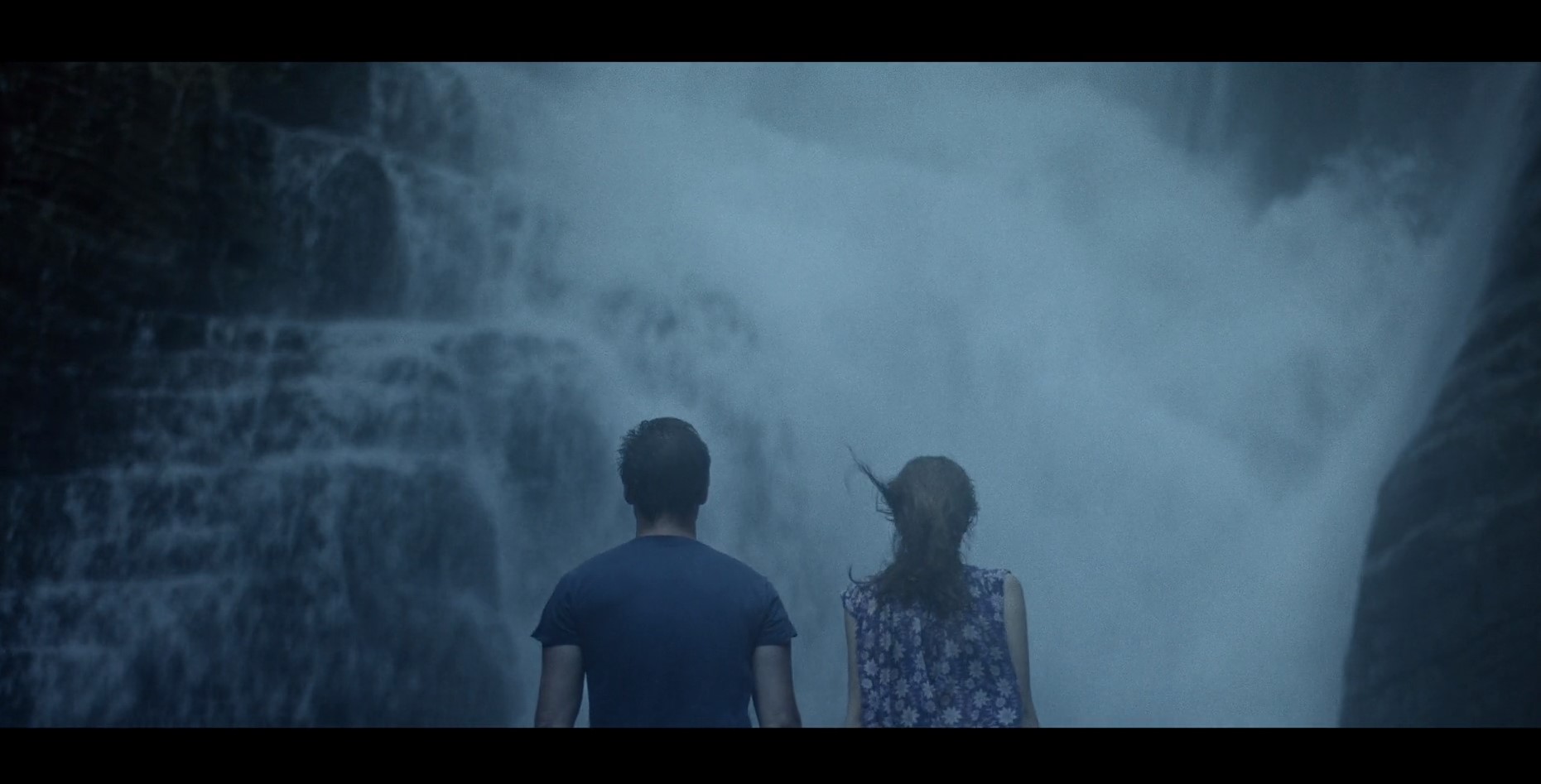
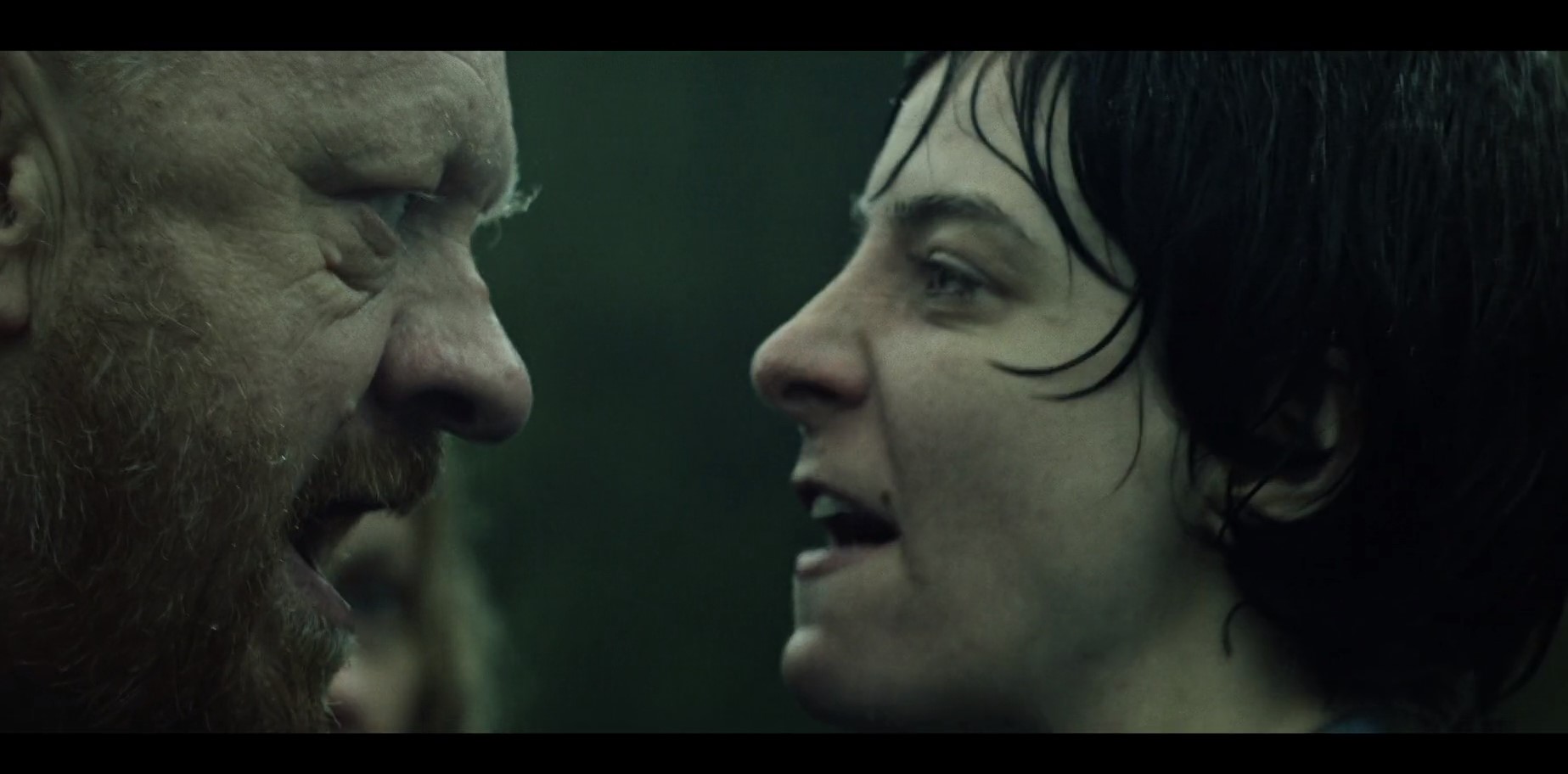
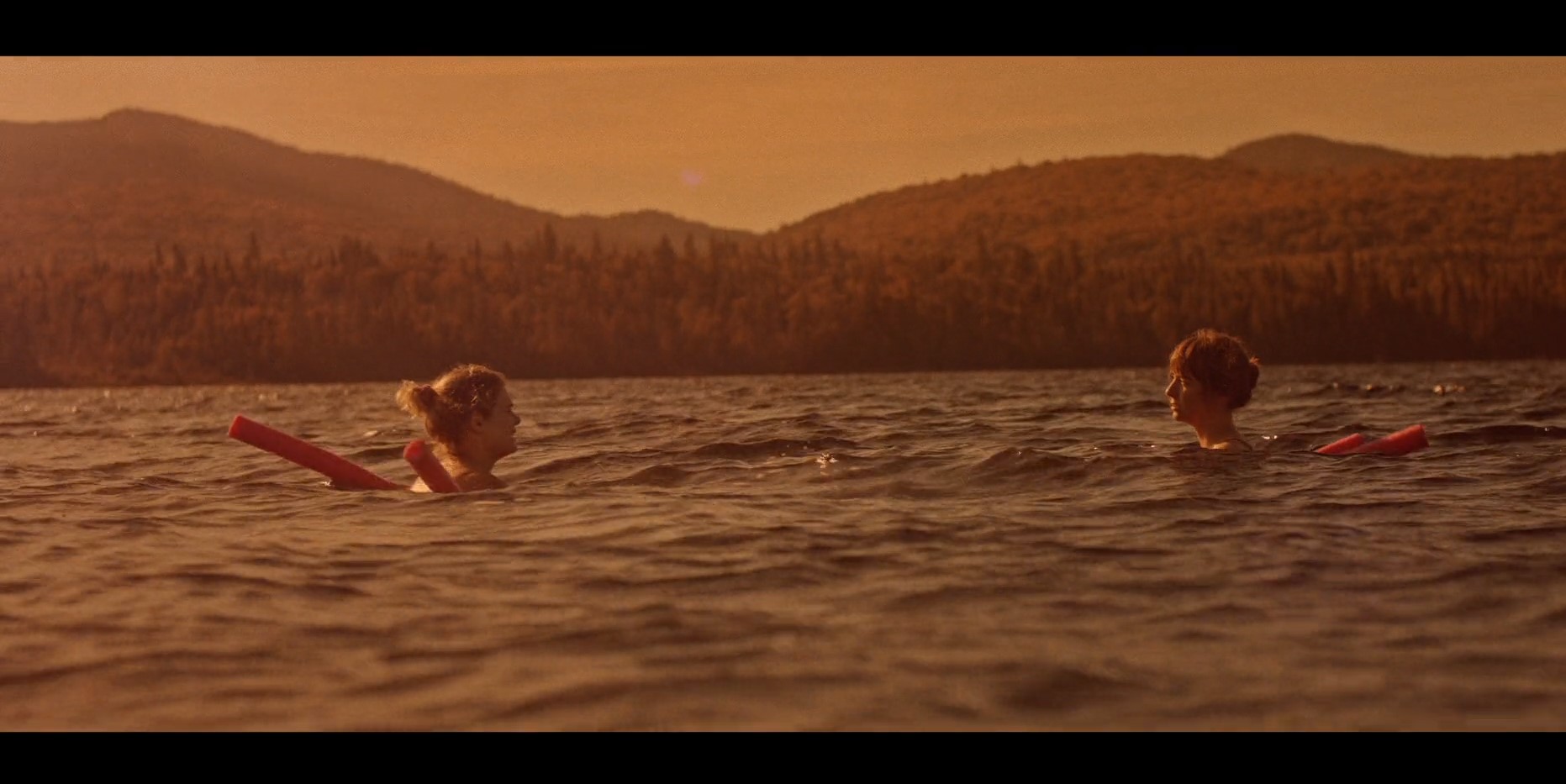
On the precipice of her loveless marriage ending, Miriam and her not-quite-yet estranged husband getaway to visit her sister, Greta, and husband, Dylan, at their quiet woodland and lakeside home, an area where Miriam and Greta fondly grew up together.  Also sharing a past together as high school friends, Miriam and Dylan enjoy each other’s company in a playful and quipping manner after a lifelong friendship, but after a night of drinking and an outpour of internalized emotions, Miriam slowly awakes to Dylan forcing his way inside her and is unable to stop him.  Confronting Dylan and Greta separately further strains the tense situation to the point that Miriam is made out to be the villain in her own sexual assault, sending Miriam to plot a thorough premediated revenge to not only avenge herself but also to save her sister still married to her attacker. 
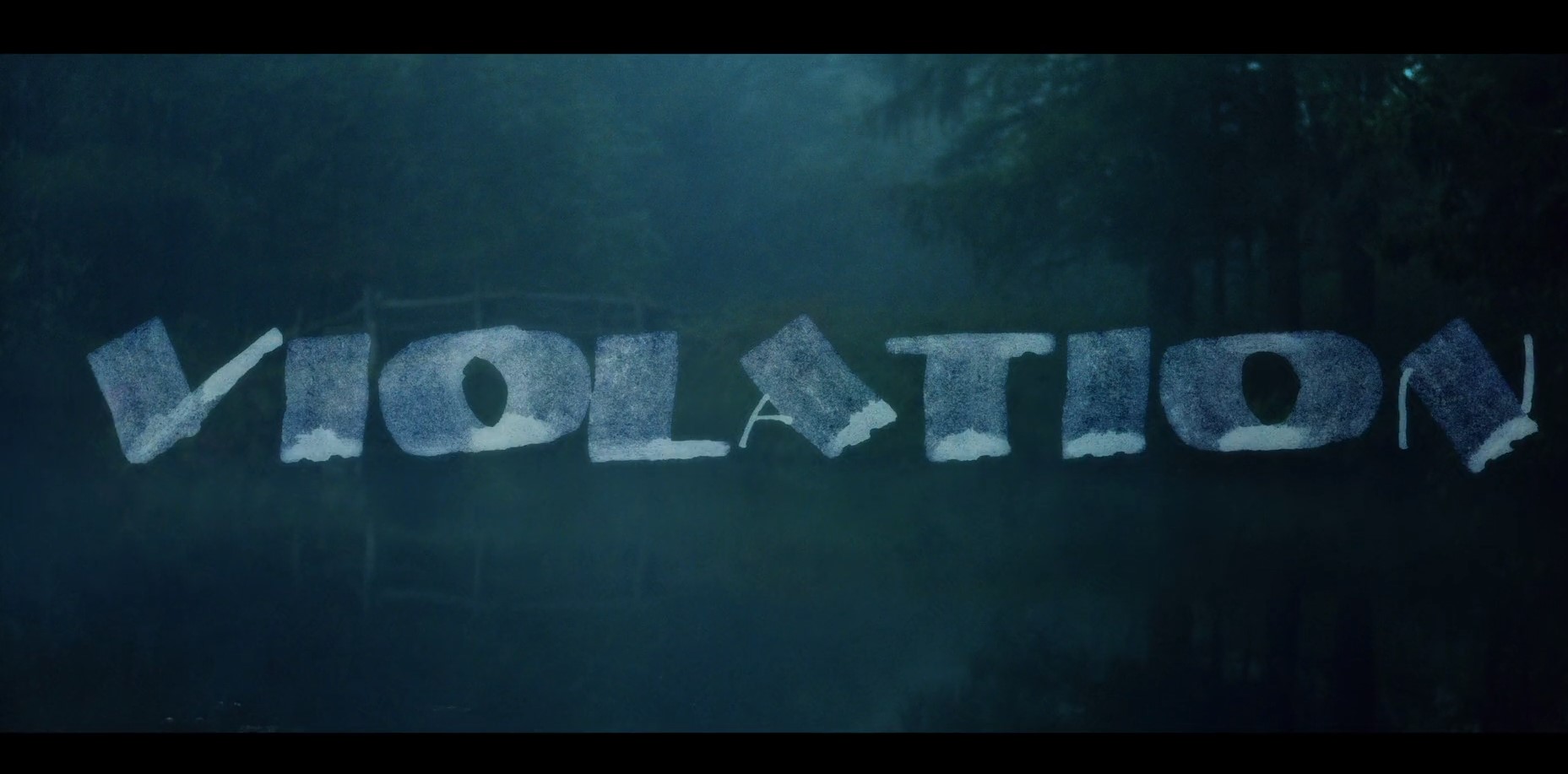
Real hands-and-knees puked vomit splattering over a black tarp.  A blindfolded, naked man tied to a chair with a real erect penis saluting tall.  If you’ve never seen this Shudder exclusive 2020 released film and you’re reading this review opening fresh eyed, you might automatically presume Dusty Mancinelli and Madeleine Sims-Fewer’s “Violation” a work of pure vomit gore and BDSM pornography.   Let me quickly put your mind at ease by saying “Violation” is nothing of the sort, but these unmistakable aspects in the Canadian revenge drama are real and explicit as a deep-seeded personal choice for the writing and directing duo’s first feature length project.  Mancinelli and Sims-Fewer’s collaborated history goes back to 2017 as they together write, direct, and produce a handful of short films with a core base of dysfunctional sexual themes in “Slap Happy,” “Woman in Stall,” and “Chubby,” to name a few in their credits.  “Violation” continues the trend, providing cathartic discussion for the filmmakers’ tabooed motif at an attempt at bold realism.  “Violation” is self-produced by Sims-Fewer and Mancinelli under their production banner, the Toronto-based DM Films, in association with Telefilm Canada and The Talent Fund with financing from the executive producer line of independents, such as François Dagenais (“Ankle Biters”), and the husband-wife duo of David Hamilton and Deepa Mehta of Hamilton-Mehta Productions.
In the lead of Miriam is the writer, director, and producer herself, Madeleine Sims-Fewer, succumbing to a characterized funneling toward piteous rock bottom within her role who, from the get-go, is already in hot water with a dissatisfied husband about their trip to see Miriam’s sister. There’s rarely any happiness for Miriam throughout, even amongst the contentious heart-to-hearts with her own sister, and the little designated of joy to her is quickly squashed by the narrative’s crux and then that’s when Sims-Fewer has to about face to a deeper austere level than even before when those closest to Miriam push her away and become her worst enemies in a blink of an eye. Those mercurial enemies are played by Anna Maguire as Miriam’s fickle younger sister Greta, reteaming with her “Forgotten Man” costar Obi Abili as Miriam’s distant husband Caleb and rounding out the cast as Miriam’s alleged rapist and Greta’s husband Dylan is Jesse LaVercombe who also previously worked on the directors’ short films “Slap Happy” and “Chubby.”  Sims-Fewer and Lavercombe really deserve praise for their dedication and courage that circles back to the beginning of this review about real puke and real erection.  There’s vulnerability when totally exposed and these two actors, who have tremendous chemistry, shy very little away from the uncomfortable provocations in hard to swallow scenes of realism.  We also know where Greta stands in the whole scheme of things, but a big plot hole obtrudes with Obi Abili’s Caleb who unexplainably vanishes in the latter half of the two part narrative.  There’s an unsaid presumption that Caleb left Miriam as already rocky marriage kept spiraling down the toilet in the first act, but there was no resolution, leaving the character out in the wind and neglected from the what could have been an interesting interplay of Miriam’s obsessive plot.
“Violation” is not the typical rape-revenge thriller where the victim rises from the ashes like a phoenix and has an insurmountable, if not endless, amount of hate and determination for street justice to see their rapist or rapists six feet under.  “Violation’s” slow burn method leans toward a character study with Miriam.  Her compassionate human side commingles with her victimized treatment and anger as she’s constantly and consistently second guessing her actions or feeling the utmost, sick-to-her-stomach remorse for her actions that needed to be done in order to avenge herself and also protect her sister as noted in a parallel dream she tells Greta about Miriam sitting in the next room while her sister is unintentionally self-strangulating.  Yet, another side to this tale that could also explain Miriam’s hesitancy and, perhaps, guilt.  Sims-Fewer and Mancinelli are very explicit in Miriam’s unhappiness with her marriage and also her flirtatious wanting of Dylan, pent up by the lack of sex and joy in her marriage, and she also initiates a kiss with Dylan.  Combine those details with a night of drinking, Dylan’s firm stance, and the way the film is shot ambiguously, a pressure cooker moment builds between the characters and viewers whether what stated happened actually happened.  Now, I’m not arguing a case for rape culture or make excuses for rapists, but “Violation” tilts toward Miriam’s mental quality that has been compromised by a contentious marriage, life envy, and the preconceived notion that she’s not a good person.  Either way, what follows the inconspicuous moment is sharply horrible, a real unsettling exhibition of meaningful art. 
“Violation” is certifiably fresh and deservingly so with jarring scenes of gruesomeness, a topical theme of trivializing rape accusations, and compelling character study of one woman’s disharmonious existence in her small inner bubble.  Now, you can own it the Sims-Fewer and Mancinelli film on UK Blu-ray from Acorn Media International. The PAL encoded, region 2 Blu-ray presents the film in 1080p full high definition in a widescreen aspect ratio of 2:39:1. “Violation” embodies an engulfing nature domination of the screen through an Adam Crosby lens. No matter how big and important the moment may be in the story, Crosby’s entrancing us with the tiny embers with a close up of the camp fire or having the actors dwarfed by towering trees until the second act that compartmentalizes two antagonistic characters in the same room. The release shows no signs of deflating Crosby’s and the filmmakers’ semi-surreal, flora and fauna vision with a sleek digital recording teeming with a range of wide landscape shots, stark long shots, and super closeups. The English language Dolby Digital 5.1 surround sound captures as snap, crackle, and pop of the great outdoors; however, the dialogue, though quite clean and clearly audible, sounds a bit boxy at times. Special feature include two extras that are essentially one and the same taking up double the space on BD25 with a meet the filmmakers (Sims-Fewer and Mancinelli) talk very briefly about the genesis of the “Violation.” The second extra, the TIFF Intro, mirrors nearly world-for-world the first special feature. “Violation” has a runtime of 108 minutes and is rated 18 in the UK for strong violence, gore, sexual violence, sex references, and nudity. Viscerally intimate and ghastly, “Violation” is labeled the anti-rape revenge narrative with a close examination of trust and the unfortunate triviality of rape sure to churn stomachs and second guess the intentions of those close to you.

Own “Violation” on Blu-ray Home Video!

A Concentration Camp of Desecrated Flesh and Pure EVIL. “The Gestapo’s Last Orgy” reviewed (Blu-ray / 88 Films)

After nearly escaping war criminal charges for his role as Commander of a bordello operated Nazi concentration camp that mistreated and murdered multiple thousands of Jewish women, former office Conrad Starker meets his lover Lise Cohen, a former Jewish prisoner of his he fell fond of during their time of occupation, at the same barbaric camp now in vacant ruin. Alone together and wandering the grounds, Lise recalls her first arrival at the camp and how the then ruthless Starker made it his mission to break Lise of her guilt-based nihilism by exacting cruel torture upon her and those close to her in camp. Commander Starker’s direct reports, a dominatrix SS officer named Alma and a sordid Lt. Weissman, serve as his deviant and sadistic right arm, assisting him in striking fear into his new pet project. While troves of Jewish women are being raped by a slew of German soldiers on leave, as well as being tortured and even tested as a source of delicacy, Lise’s alleviated guilt turns her to play Starker’s game, making her become his own mistress, but Lise will never forget the camp atrocities at the hands of the Gestapo.

Never in my life would there be the time I salivated over the thought – dang, what a poignantly awesome title. Far from a generic, uninspired appellation that has completely captured my attention, lured me in like a fish by a dangling sex and exploitation worm, is the 1977 Italian-made Naziploitation “The Gestapo’s Last Orgy.” Understanding that the Cesare Canevari written-and-directed exploitation extravaganza is fabricated fiction from the mind of the Italian filmmaker sexploitation films such as “The Nude Princess” and “A Man for Emmanuelle,” and amongst other popular genres of that particular Italian era, there still lies a contrite underlayer deep inside my bowels for knowing “The Gestapo’s Last Orgy” is inspired by a baseline of truths – aka – the rounding up of Jewish people, forcing them into work and slavery in some sort of servitude compacity, and ending their lives as many were murdered in concentration or extermination camps by incinerations while still alive; all of which are displayed in graphic detail by Canevari in his film. Also known as the “Last Orgy of the Third Reich” and co-written with fellow “The Nude Princess” collaborator, Antonio Lucarella, no words can describe the depictions of Aryan abomination better than Canevari with a display of a wide-range of depravities from the master race in this shocking Cine Lu.Ce. production that Canevari produces.

Only two main characters span the narrative’s timeline between the active war and in the post-war clampdown of former Nazi officers.  We’re first introduced to Commander Conrad Starker (Andriano Micantoni aka Marc Loud, “LSD Flesh of Devil”) in an unofficial capacity as a voice over of a heated war crime trial rages over his driving around a small village before arriving at a dilapidated camp to meet with his beautiful lover, Lise Cohen, an introductory feature film role for then model, and presently a UNICEF Goodwill Ambassador, Daniela Poggi (aka Daniela Levy, “Olga O’s Strange Story”).  From then on, the story goes back-and-forth between the camp horrors from most of Lise’s perspective and her present day melancholy strolling through the now empty camp.  Just between these two, a burdensome and destructive self-contained bubble ignites a prudent connection for a means to an end, whether be Commander Starker’s from merciless lust to love or Lise’s reversal of her exploitation to gain a survivalist’s upper hand by playing right into Micantoni’s sadistic impulses.  Micantoni and Poggi, despite their vast difference in age with Micantoni in his mid-50’s and Poggi in her early 20’s, have shuddering, knee-buckling chemistry in the more abhorrent scenes, one particular involving the fellatio act on a German Lugar.  There are other various scummy characters and if you like girls in uniform, the Doberman-loving Alma (“The Stepdaughter’s” Maristella Greco) is as beautiful as she is a gestapo femme fatale.  Greco’s domineering performance matches her male counterparts in enthusiasm but with a bonus side dish of sultry sadomasochism that can’t be forgotten as Alma whispers her viperous tongue into the camp Commander’s ear (while also sticking the blunt side of her whip into his rectum – ooph!).  “The Gestapo’s Last Orgy” is a perverse party with respectable size cast, including roles played by Fulvio Ricciardi (“Killing of the Flesh”), Vittorio Jorderi (“Gang War in Milan”), and Caterina Barbero (“Raptus”), enlarged by a grand amount of extras from German soldiers to the Jewish women creating the allusion of an inhuman love camp.

“Ilsa:  She Wolf of the SS,” “Love Camp 7,” “S.S. Experiment Camp,” “Nazi Love Camp 27,” “Achtung! The Desert Tigers,” S.S. Hell Camp.”   I’ve seen my fair share of Nazisploitation and, aside from Tinto Brass’s erotica-elegant “Salon Kitty,” Cesare Canevari’s wartime rape and ravager hails to be one of the more distressingly twisted and disturbingly beautiful entries in the exploitation subgenre.  For Canevari, every scene counts by not making every scene gratuitous.  Yes, “The Gestapo’s Last Orgy” has it’s preposterous moments where sex-crazed Nazis aggressively dominate unarmed, vulnerable women, especially when they decide to soak an unconscious naked woman in brandy and set her on fire to taste pork-like flesh; however, even in that instance of out of left field cannibalism, the atrocities are all in the name of progressing Germany in the wake of victory and to leave nothing to waste in Germany efficiency when utilizing inferior races, whether for labor or food, after Germany has conquered opposing forces.  Most of the second and third acts returns back to Earth with smaller scale plot devices surrounding Lise and Conrad locking horns in a battle of wills to extract fear from Lise’s, mostly nakeda nd suspended, fearless body.  “The Gestapo’s Last Orgy” can be said to be a film about challenging will power, enduring strength, and patience and for when the opportunity is right for the taking, strike while the iron is hot.  Or, for many, Canevari’s lopsided carnal lark can be viewed as a wicked sex fest reaped from the backs of other the people.   Canevari rides that thin line and never pushes the gratuitous full monty  down our throats.

For the first time on Blu-ray, anywhere, “The Gestapo’s Last Orgy” arrive onto a remastered in 2K transfer scan Blu-ray from UK distributor 88 Films who have crossed regions with one of their first North American releases!  Still currently banned in the UK, the stored film’s Blu-ray, remastered from the original print negatives, is region free and in full 1080 high definition, presented in a widescreen 1.85:1 aspect ratio.  The restoration is frankly flawless.  The composition of skin tones and textures and contrasting hue scheme offer a perceptible palate of every shadowy contrast and infinitesimal detail, especially in the impeccable facial diversities.  The release has offers two restored audio options:  An English dub 2.0 DTS-HD master audio and an Italian DTS-HD master audio with in-built English subtitles.  Both tracks share an ambient and soundtrack equality quality through the dual channel stereo; however the original Italian track is inherently smoother with the dialogue with accurately synched English subtitles. The Blu-ray snap case comes with reversible cover art, original poster art are in the inside along with a mini poster of the same art as one of two inserts. The other insert is a 21 page booklet brimming with stills, different country posters, and an essay from film historian Barry Foreshaw entitled Taking on the Censors: Italian Excess. All of this limited edition tangible goodness is housed under a limited edition cardboard slip cover with new art by illustrated Richard Davies. Inside the coding on the BD50 is also a work of art with audio commentaries by Italian film experts Tony Howarth and Nathaniel Thomason as well as a separate commentary with critic and author Samm Deighan. Special features also include an alternate Italian ending (rather an extension of the feature cut), an interview with Pierpaolo de Sanctis on Remembering Alberto Baldan Bembo the soundtrack composer, an interview with Luigi Cozzi in One Thing on His Mind in regards to director Cesare Canevari, and the English trailer. Movies like “The Gestapo’s Last Orgy” are completely in bad taste beyond a shadow of doubt. Luckily for me, and perhaps those reading this review, we’re a tasteless bunch of sleazy celluloid purveyors glad to see 88 Films praise Cesare Canevari’s most controversial and infamous film with a snazzy new Blu-ray treatment.

Don’t Miss Out on Owning 88 Films’ “The Gastapo’s Last Orgy” on Blu-ray!

EVIL is Only in Your Nightmares. Or is it? “Retribution” reviewed! (Severin / Blu-ray)

Severely depressed artist George Miller attempts suicide by jumping off from his apartment building.  During the exact same time, a low-end gangster is brutally killed by cruel loan sharks.  Being both born on Aril 1st and dying at the same time, the tortured spirit of the gangster possesses the meek artist’s body right before being resuscitated by EMTs.  After a long recovery filled with horrific nightmares, the affable artist returns to his apartment building where he’s welcomed by fellow tenants and an overly warm landlord.  Still plagued by nightmares that have seeped into his awake conscious state, George medicates himself to sleep but the nightmares continue as he sees himself using psychokinetic powers to kill random individuals with extreme malice.  The nightmares are so real he wakes up in a sweaty panic to find out that that exact person was killed the night before the very way it played in his dreams.  When George realizes the gangster has inhabited his body for revenge, he and his friends take measures to put an end to the vindictive carnage. 

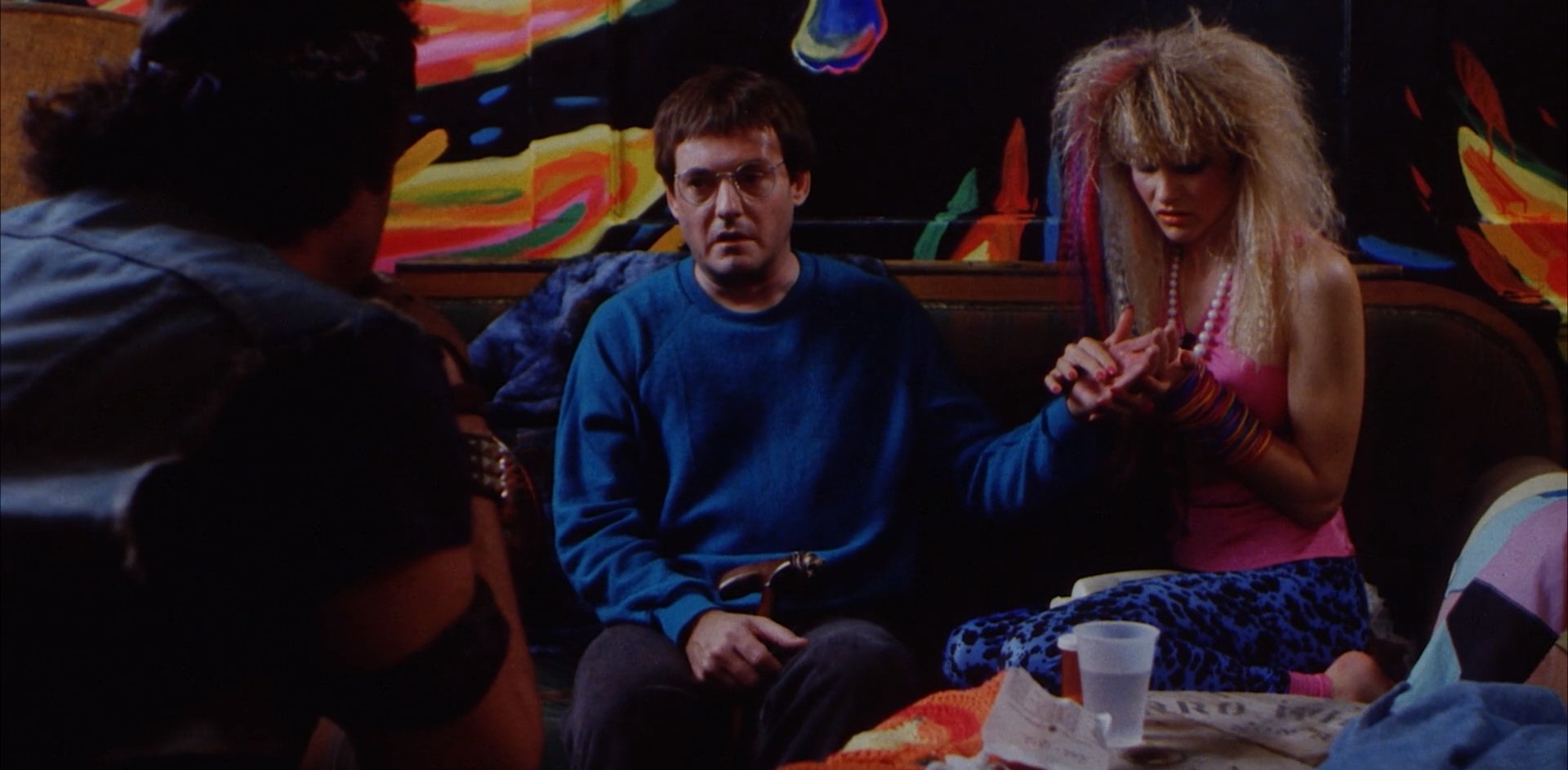
Santa Maria.  Mother of God.  Help me!!!  That phrase, attached to the very last seconds before a gruesome death and announced blankly from fiery, dagger eyes, has forever been seared into the recessed corners of my eardrums as the death cry that echoes throughout Guy Magar’s 1987 gory and visceral possession identity crisis, “Retribution.”  Magar’s ultra-violent and super-chromatic film is the filmmaker’s grand inaugural entrance as a full-length director following up behind a string of director chaired television episodes, including episodes from “The A-Team,” “Blue Thunder,” and “The Powers of Matthew Star” that regularly contained quickly charged, action packed sequences.  The Egyptian-born director translates those intense moments of frenzied disturbance into his mean-spirited and unforgiving vindicator of a script cowritten with then first time screenwriter, Lee Wasserman.  Shot in Los Angeles, “Retribution” is a virtual tour of the city, using the streets of L.A. and real locations, such as the Don Hotel for George’s residence and the nearby House of Neon Art, as a lively, eclectic, and wallet-saving convenient giftwrap for the film’s Dr. Jekyll and Mr. Hyde complexion that feels totally normal compared to L.A.’s divergent glamour.  Magar and Wasserman produce the film with Renegade and Unicorn Motion Pictures serving as the production companies and presented by Taurus Entertainment, formerly connected with United Artists. 

There are probably many actors that could been imagined for the role of George Miller, the suicidal artist plagued with visions of him committing murder, but it’s hard to imagine that venomous stare of complete satisfaction in madness spread across the face of anyone else other than Dennis Lipscomb.  No disrespect to the “Eyes of Fire” and “Wargames” actor but Lipscomb isn’t a chiseled-jawed and muscular leading man; in fact, Lipscomb is quite the opposite, but his range into mild-manner, all around nice guy George Miller into the lust for hatred and murderous revenge George Miller hangs on with complete chasmic permanence.  However, George’s love interest with the street working prostitute and fellow Don Hotel resident, Angel (Suzanne Snyder, “Return of the Living Dead II,” “Killer Klowns from Outer Space”), hardly ever seems natural in not only in the characters’ surreal age-yawning dalliance but also the chemistry looks and feels flat between Lipscomb and Snyder.  Magar and Wesserman neglect diving more into that bond between them but their enamored gleamy eyes for one another is apparent and strong without the context to back it up.  “The Dungeonmaster’s” Leslie Wing also is placed as a George Miller sympathetic advocate in her role as hospital psychologist Dr. Jennifer Curtis, but Dr. Curtis has more background to contend with in comparison to the suddenly conjured fondness from Angel as Curtis is a mental health professional caring for a suicidal patient from at his rock bottom worst to a complete positive turnaround in his mental transformation.  Curtis has more skin in the game with George’s supposed delusions of actually killing people in his nightmares as she defends not only George’s unique supernatural circumstances, but, in a way, herself as a licensed medical profession following HIPAA laws.  “Retribution” holds many dear and unforgettable characters that essentially captures the entire 1980’s spectrum of personalities and, even for a brief scene, the cast gives each role their all, including performances from Susan Peretz (“Dog Day Afternoon”), Clare Peck (“Teen Wolf”), Chris Caputo (“Ghost Warrior”), Danny Daniels (“Voodoo Blood Bath”), Ralph Manza (“Godzilla”), George Murdock (“The Sword and the Sorcerer”), Mike Muscat (“Hunter’s Blood”), and Hoyt Axton who doesn’t stray too far from his good intentions, but naïve, father role in “Gremlins” to being a detective tracking down suspect George Miller. 

I’m in total awe of Guy Magar’s “Retribution.” That opening scene of the suicide attempt with Alan Howarth’s building tension score drops not a single piece of dialogue yet opens with a gripping life and death situation, musically synced to progress toward a harrowing climax, and every frame is dripping with vintage 80’s appeal. Magar definitely knew what strings to pull to get the blood pumping, to get you excited, and to drop an excellent mystery right in the lap, or the middle of the street in this case with George Miller’s body after it flops off the car it just smashed onto. From that point on, “Retribution” peddles forward following the recovery, recouping, and ruination of George Miller’s life at the unseen hands of an exploiting, malevolent spirit that seeks to track down the top-tiered gangsters that shot and burned him alive and exact his own brand of harsh psychokinetic justice. Does it matter how George and this gangster, both born on the same day and both nearly died at the same time, came to fuse transcendently together? Don’t worry. Magar didn’t think it was important either and he’s right! “Retribution” snags all the attention for the sole purpose of the ride and that ride being a beautiful, color-coded daymare. The one aspect that ultimately retracts the buzzing high, stemmed from most 80’s films, is the sluggish love interest subplot between George and Angel stutter stepping into an awkward phase of interactions that hard stops much of core plot and though the plot is neurotically nonsensical to begin with, George and Angel’s desires for each other are about as cringeworthy as they come. Stick with the gore by honing in on Miller’s subconscious alter ego of a gangster serving his killers their just desserts via Kevin Yagher (“Nightmare on Elm Street 2: Freddy’s Revenge”) and his highly effective special effects on a low end budget that, along with a brilliant showing of cinematography by Gary Thieltges, tips into the categorical likes of “The Evil Dead” or “The Exorcist.”

“Retribution” delivers a fervency unlike ever seen in one of the utmost, must-see, shamefully overlooked horrors films of the 80’s.  Now, with a deserved boost and in style, “Retribution” gets the royal restoration treatment with a jammed-packed and sleek 3-disc Blu-ray set from Severin Films and distributed by MVD Visual.  Disc one’s theatrical cut, clocking in at 107 minutes, comes from the recently discovered 35mm pre-print elements, shot on an Arriflex 35 BL3 per IMDB, and has been digitally scanned in 2K, presenting the region free film in 1080p Full High Definition inside the original widescreen 1:85:1 aspect ratio.  “Retribution’s” image pleasingly pops with fine delineating attention to the details that reach out to the point where they’re nearly tactile textures.  Every single setup of Robb Wilson King’s production designs are rich to begin with but are even figuratively injected with a smoother compression growth enhancing hormone, adding more layers of surface level details that personify and personalize the space.  Magar’s chromatically fluorescent vision is a literal tilt-a-whirl palette blast of phantasmagoria.  Disc tow is the extended Dutch video version that adds back in the extended seconds on the longer, gorier kill scenes.  The English language DTS-HD Master Audio 2.0 is the sole mix on the release and, honestly, sates the need with the dual channels.  You obviously don’t get the surround sound, which considering this release would have been ideal, but the stereo mix, as well as the dialogue track, is still full-bodied, identifiable, and spotless of blemishes.  John Carpenter understudy Alan Howarth scores his solo synth-laden story on tenterhooks with a tinge of a Miami Vice theme as well as setting tonal moods that add depth to character layers.  If you want the entire OST, you’re in luck!  The third disc is a compact disc of the entire soundtrack.  Special features includes over two hours of content with Severin exclusive looking back at the experiences with the late director Guy Magar and the ins-and-outs of making “Retribution” interviews with co-writer Les Wasserman Writing Wrongs, actress Leslie Wing Shock Therapy, actress Suzanne Snyder Angel’s Heart, actor Mike Muscat Santa Maria, Mother of God, Help Me!, soundtrack composer Alan Howarth Settling the Score, special effects artist John Eggett Visions of Vengeance, artist Barry Fahr The Art of Getting Even, production designer Robb Wilson King Living in Oblivion.  Other special features include Guy Magar’s student film “Bingo,” stills and poster galley, and the theatrical trailer all packaged under a cardboard slipcover and a reversible snap case cover. Severin Film’s “Retribution” release is a triumph, a proper regenerarcy of revenge cinema, with all the gory details being the star of the show.

Own this Amazing 3-Disc set of “Retribution” from Severin Films!

Believe the Bruja When She Says There’s an EVIL Demon Inside You! “The Old Ways” reviewed! (Blu-ray / Dark Star Pictures)

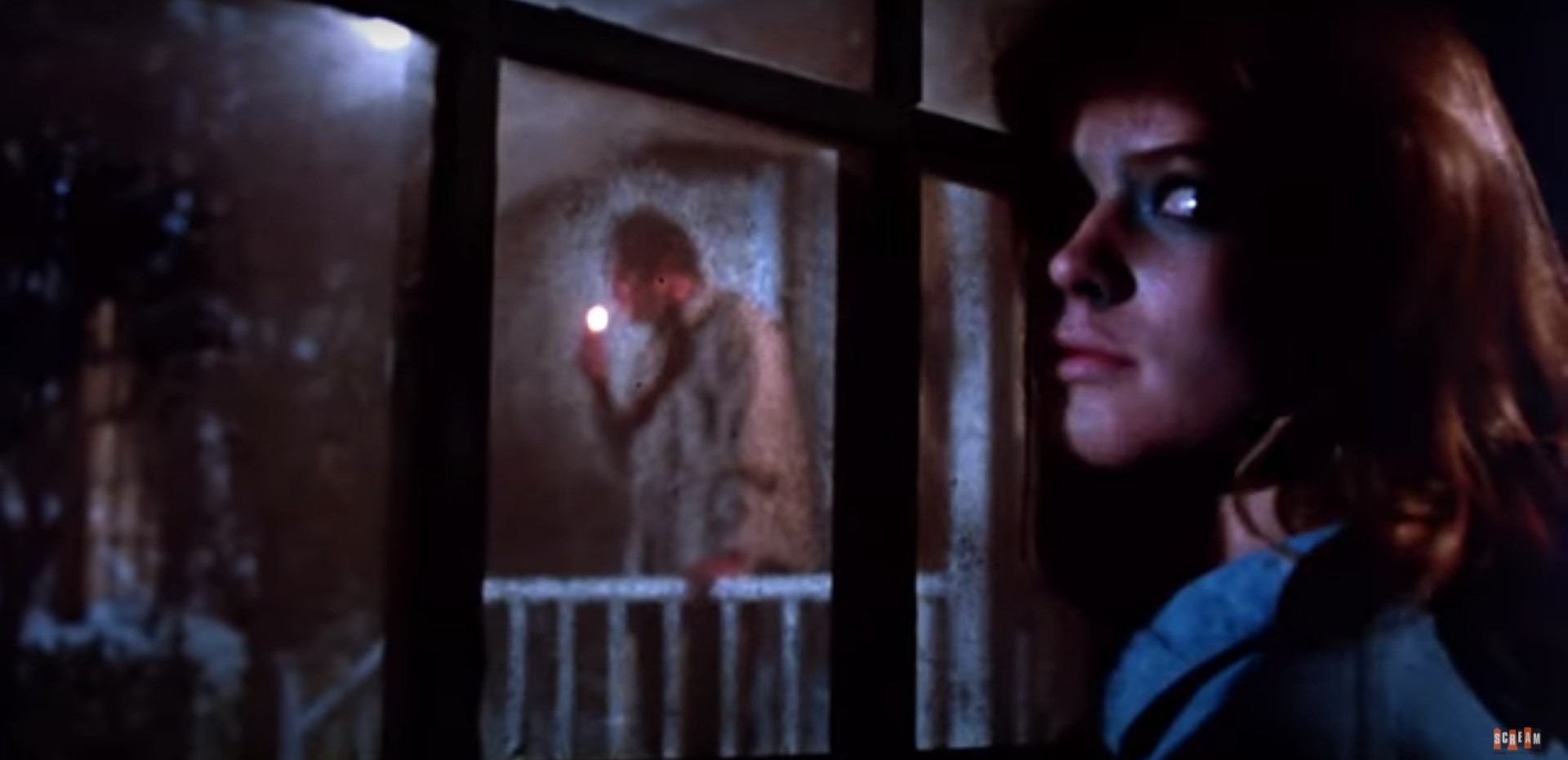
Drug-addicted and depressed American journalist, Cristina, travels to her ancestral home of Veracruz, Mexico to investigate local folklore and shamanism.  Upon visiting the local feared and shunned caves of La Boca, the next thing Cristina knows she awake locked up in and chained inside a makeshift cell and is told a demon is inside her by an elder Bruja and her assistant who still practice the old ways of exorcism.  Skeptical and scared, Cristina endures the primitive, and sometimes painful, religious rituals to extract the demon out from her soul, hoping they would eventually let her go if she feigns the demons release from her body, but when plagued by strange visions and unexplainable occurrences, Cristina comes to realize the real danger is actually from within.    

Shot on location in Catemaco, Veracruz, Mexico, “The Old Ways” clashes good versus evil in one small corner of the world while also enhancing the already enriched central American state known for its cultural brujo, or sorcery, celebrations and activity.  “The Old Ways,” which aims to symbolize spiritual demons to confront personal ones, is the first feature length venture from director Christopher Alender over 20-years since his first feature that was also, too, a horror, an off brand federal holiday themed slasher from 1999 entitled “Memorial Day.”  The 2020 demonic possession thriller reteams the “Memorial Day” writer and director as Marcos Gabriel pens the script that has become a miniscule reflection of himself being a Puerto Rician expat losing his own sense of heritage and culture of his ancestral land.  Full pin drop scares and profound depth of personal complexities, “The Old Ways” is a production of Soapbox Films (“The Wind,” “Southbound”) from Alender and Gabriel as executive producers along with Christa Boarini (“Spree”), David Grove Churchill Viste (“The Voyeurs”), and T. Justin Ross producing.

The lean characters keeps the story intimate and personal, rarely straying away from the rough-and-ready holding cell single location.  Only in Cristina’s backflashes of her Stateside office or the caves of La Boca do we dip into non-linear fractions of the what, when, why, where and how she became a befuddled prisoner to her Bruja host. No white washing here as the main cast is comprised of Latin-American actors and at the lead is “Fear the Walking Dead’s” Brigitte Kali Canales as the journalist with a death wish. You see, when Cristina embarks on her journey down to the La Boca caves of Veracruz, the troubled druggie searches for relief against an emptiness she can’t shake. Most of this narrative is backlogged backstory eventually worked on and worked out through flashbacks and through the excavation by her national residing cousin Miranda (Andrea Cortés). Canales really leans into her Americanized impediment delivering impatience, ignorance, patronization, and scoffing at Miranda and the Bruja teams’ beliefs and cultural responsibilities. The Bruja team, what I like to call it, is comprised of Julia Vera (“All Souls Day”) and Sal Lopez (“Return of the Living Dead III” ) as the last practitioner of primordial exorcism techniques, aka the old ways, and her assisting son, Javi, and the mother-son dynamic teeters of the customs and exercises of combating evil, a task that has been long withstanding against a beaten down and weary Javi. AJ Bowen (“The House of the Devil”), Julian Lerma, Michelle Jubilee Gonzalez, and Weston Meredith as the demon Postehki.

Now, Postehki is not a real demon from any culture’s cache of fiends. In fact, the whole mythos of “The Old Ways” is entirely fabricated for the sole sake of the story and I find that to be thrilling. Anything is possible with new folklore if done soberly without ostentatiousness and if mixed with some realism of the surrounding area, such as the Bruja element, that grounds the story with that much more of a terrifying blueprint. Plus, the allegories give the story tremendous depth with the demon inside Cristina that mirrors her addiction with drugs that initially obscure the audience from knowing if the evil within is real or is the drug effects the underlining culprit. Cristina’s addiction also plays into her immense sadness after her mother, the last connection to her heritage identity, dies and that melancholy she suffers forms a device that motivates her to return home looking to die herself. Cristina situation resembles being a satellite vessel cut off from the mothership and is lost and alone, leaving it up to Miranda to be that beacon of reconnection with not only her heritage but also her family. The third theme is the carryover of traditions from an older generation to a younger one that becomes very prominent between the Bruja, Luz, and Cristina to come to way of understanding the importance of keeping with the tried and true no matter how beyond crazy it may seem. The first two acts set up perfectly the puzzling nature of Cristina’s imprisonment and unraveling while touching upon subtopics and crowd pulling moments of breath holding terror, but the third act begins to spoil the salivating juiciness of what’s next behind each layer after a couple of false endings, a cheesy transition of character, and an eye-rolling one-liners essentially kill the visceral vibe.

Old habits, old feelings, and old origins pry open the emotional armor to a pervading and harbor-seeking evil in “The Old Ways” now on Blu-ray home video from Dark Star Pictures.  The not rated, dual-layer, region A BD25 is a presented in 1080p High-Definition with an aspect ratio of 2.39:1 anamorphic widescreen.  Cinematographer Adam Lee shoots a terrene-cladded and flat color incubus with strategically placed shots that trigger strong reactions that go toe-to-toe with a thumping tribal score and piercing ambient track from the 5.1 DTS-HD Master Audio track in the English and Spanish language.  Robust and formidable, the score packs a punch with a pulsating drum and pan flute score by “The Wolf of Snow Hollow” composer, Ben Lovett. Dialogue is clean and clear and the errorless subtitles align nicely with the vocals. English SDH subtitles are also optional. Special features include over 2 hours of bonus content with a feature length behind-the-scenes documentary The Old Ways: A Look Beyond that provides cast and crew opinions, history, and everything else in between about “The Old Ways” origins and reactions, a commentary track with director Christopher Alender and writer Nicholas Gabriel, deleted and extended scenes, and storyboards. “The Old Ways” is old world horror for the modern age, poised rightfully so to be a part of the possession genre canon even if coming off the tracks just a tad.

When the Girl of Your Dreams Thinks Like an EVIL Robot! “Deadly Friend” reviewed! (Blu-ray / Shout Factory)


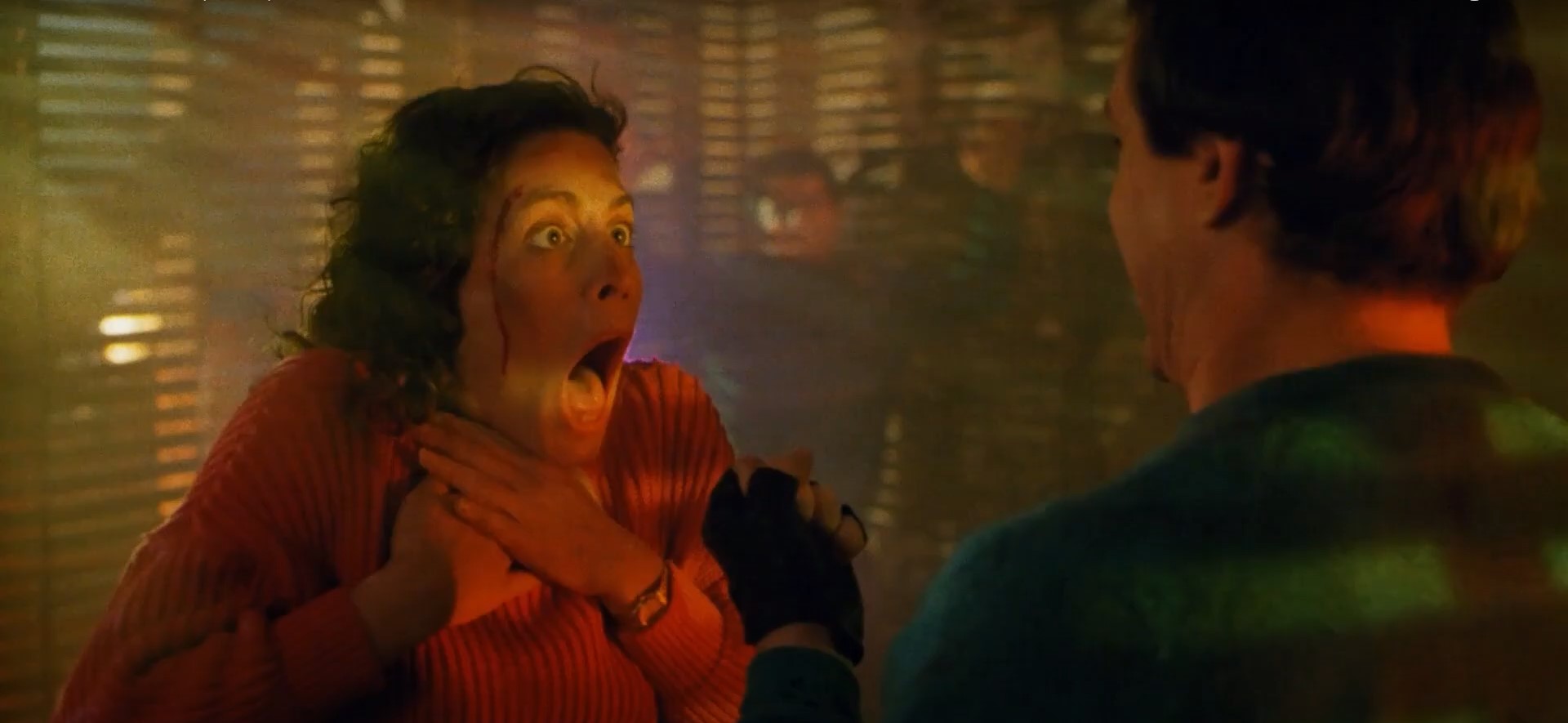
Whiz kid Paul Conway, along with his mother and artificial intelligence robot creation called BB, move to a new house to be close to Poly Tech where the teenage prodigy begins research study on the human brain.  Paul quickly befriends Tom, the local paperboy, and cute neighbor Samantha, aka Sam, that evolves into more than just friendship, but when Sam’s abusive father kills her and BB is blow to smithereens by a cruel, paranoid neighbor over the holiday season, a distraught Paul begs his friend Tom to assist him in a radical resurrection to save Sam by implanting BB’s A.I. chip into Samantha’s brain.  The long shot surgery pays off and Sam is awake and moving around automatonlike, but the thoughts and feelings of Sam and BB blend and the hatred toward their killers feeds into the need of grisly revenge.

Wes Craven.  Every genre fan upon hearing his name goes through an euphoric reliving in seeing one of his films for the first time.  For most that film is “A Nightmare on Elm Street” with Robert Englund starring as the fedora-sporting, dream killer Freddy Krueger  who wears a glove with finger knives.  Krueger has been and still is one of the most iconic and memorable villains ever in horror since Krueger’s from Craven’s nightmare-to-cinema creation in 1984.  Fast forward two years later, Craven hops at the chance to make a studio film with Warner Bros.  A film that’s polar different from “ANOES” with a touching, PG-rated macabre, science fiction coming of age story based off the Diana Henstell novel entitled “Friend” with an adapted script by Bruce Joel Rubin who went on to pen “Ghost” and “Jacob’s Ladder” a few years later.  After test screenings, the studio began to meddle, urging, if not demanding, Craven add horrific violence to the intensity lighter story thus turning “Friend” into “Deadly Friend” with a blender hacked story that failed at the box office during the Halloween season nonetheless.  Pan Arts/Layton serves as the production companies with Warner Bros presenting “Deadly Friend” under the studio’s banner.

At the center of the story are two star-crossed teens in the midst of adolescent flirtation.  Eyes glued to one another, but separated by the cruel whims of a drunken father, are Paul, “The Little House on the Prairie” star Matthew Labyorteaux and Samantha, “Buffy the Vampire Slayer” feature star Kristy Swanson.  While not overly smoochy between Paul and Sam, the then teenage youngsters sell the affectionate tension between them with depth in their performances.  Yet, the Swanson’s post-surgery mechanical movements are terribly rudimentary and cheesy, turning the studio warranted violent exploration of youth and morbid Sci-Fi cybernetics story into the laughing stock of the already inanely entertaining killer robotic subgenre.  Without the studio intervened violence and gory edits, I could not envision Craven and Rubin’s touching story between Paul and his desperation creation to cure his broken-hearted affection for both his robot and the girl next door.  By far the best principle role is Tom, played by Michael Sharrett (“Savage Dawn”) who really plays into that Craven and Rubin softer vision with a bit of well-timed comedy.  As a character, Tom’s always falling or fainting in some capacity and deliveries some great one-liners that jazz up the lightheartedness of “Deadly Friend’s” more macabre stance.  Big names and distinguish faces fill rather unexpected cameos, such as “The Goonies” Anne Ramsey as a paranoid recluse who blows away BB in a Halloween mischief gone wrong, as well as Roger Rabbit voice actor Charles Fleisher as BB.  “Deadly Friend” routs out with Anne Twomey (“The Imagemaker”), Richard Marcus (“Tremors”), Lee Paul, and Russ Marin (“The Dark”).

I know Warner Bros. swallowed the original intent of “Friend,” chewed it with the purpose to add crowd-pleasing violence and gore, and spat out an game-changing “Deadly Friend” totally going against the wishes of the cast and crew, but losing that more tender creativity of an undead romance narrative wasn’t put out to pasture in vain.  Infamy and a semi-cult status long after release came out of the hellish mixed-bag of critically panning spitfire and the disownment of the film’s creators.  One particular scene, involving a basketball and an explosion of head goo, is definitely one of the more rememberable and well executed kill scenes of the era.  As a whole, “Deadly Friend” rests in ridiculous peace as many viewers will watch, digest, and come to some kind of self-compromising understanding on Craven’s misadventure and will relinquish to the fact that the film has a place in his repertoire of work.  Yet, dicey editing and pacing issues suggests a heavily edited film and trying to surmise how “Friend” would have been perceived in studio unmolested form is nearly impossible given the already bizarre sci-fi narrative subject matter.  What I found more interesting is Craven essentially sticking it to the studio’s request for violence and gore by rehashing much of “A Nightmare on Elm Street” into “Deadly Friend’s” framework with the intense dream sequences, a giant furnace-boiler room, a severely burned man’s face, and even a few shots of a blond Kristy Swanson garbed in white has a familiar Amanda Weise skin.  Overly compressed and subsequently reworked to appease audiences, “Deadly Friend” is no friend at all on a “Re-Animator” or insert man-in-machine horror parallel dipped into a “Short Circuit” coating that plainly suffers from outside interference resulting in a neutralized effect.   

You’ll never have a friend like “Deadly Friend” now on a collector’s edition Blu-ray from Scream Factory, a subsidiary of Shout Factory!  The rated R film has a runtime of 90 minutes and is presented on a 1080p High-Definition, region A Blu-ray in a widescreen 1.85: aspect ratio from a new 2K scan of the interpositive 35mm film.  Without much criticism, the virtually undamaged transfer refreshes previous releases for high-definition aficionados with a palatable amount of grain and the details are clearly discernable.  Colors looks good too between the natural skin tones and the range in contrasts, providing new life into Philip H. Lathrop’s (“Lolly-Madonna XXX”) two-toned atmospheric cinematography.  The English language DTS-HD Master Audio Mono track is equally as pleasant with clear and clean soundtrack unobstructed by damage or static.  No issues with the dialogue as well in another testament to Shout Factory’s attention to the audiophile-appreciated fidelity.  Optional English SDH subtitles are available.  Special features include new interviews with Kristy Swanson and writer Bruce Joel Rubin who go into rigorous details about the Studio’s interception as well as working with their cast and crew mates.  There are also new interviews with composer Charles Bernstein and special make up effects artist Lance Anderson.  The theatrical trailer rounds out the special features.  “Deadly Friend’s” tech-horror with a twist is about as deep as the brain of a toaster oven replacing your girlfriend’s father submissive and overly meek brain, but the new Scream Factory collector’s edition is absolute perfection.

Wes Craven’s “Deadly Friend” now on a Collector’s Edition Blu-ray!