Cheese Isn’t the Only Snack on this EVIL Rodent’s Diet! “Rat Man” reviewed! (Cauldron Films / Blu-ray)

See Nelson de la Rosa as the “Rat Man” on Blu-ray!

On the Caribbean Island of Santo Domingo, a genetic fiend scampers on the streets.  By injecting the sperm of a rat into a Monkey embryo, one fervent geneticist’s desires to be globally renowned creates a small yet deadly human rat.  Intelligent, agile, and with a lethal poison under its fingernails that could kill a normal size human in a matter of seconds, the creature escapes confines and roams the streets looking for fresh meat to eat.  One of the victims is a photoshoot supermodel from New York City that prompts an unofficial investigation of the mistaken sister to the supermodel and a mystery writer who are now on the hunt for the whereabouts of the others from the photoshoot group.  As the bodies pile up, the rat man wreaks havoc on the small island villages where the survivors and investigators must fight for their life to avoid being gnawed upon.

“Rat Man,” aka “Quella villa in fondo al parco,” translated to “That Villa at the End of the Park,” is the 1988 the Italian-made, creature feature of predominant spaghetti western and poliziotteschi director Giuliano Carnimeo in what would become one of his last feature films  Credited as Anthony Ascot, the western “Sartana” franchise and “The Exterminators of the Year 3000” director tackles the horrors of genetic manipulation with survivalist rodent given primate intelligence, a far cry from Carnimeo’s usual genres.  The screenplay comes from “Demons” and “The Ogre” writer Dandano Sacchetti under the penname David Parker Jr.  Carnimeo and Sacchetti Americanize their credits to appeal more to western audiences who, in the late 80’s, were lapping up Italian horror and creature features starring known international actors in tropical republics and “Rat Man” falls perfectly into that category.  “Zombie” and “The Beyond” producer Fabrizio De Angelis produces the film from production companies Surf Film and Fulvia Film.

While usually Italian productions go after American names, like John Saxon, Christopher George, or Robert Vaughn, “Rat Man” looked elsewhere amongst the surrounding Anglo-Saxon countries and plucked a few names that lead the charge in what would become a cluster of principals to become ensnared by tropical bred, genetically tainted vermin standing just over 2-feet tall, with elongated sharp teeth, and poisonous fingernails.  Without a defined lead, the script swirls through possible hero and heroine tropes, such as the investigating team-up between New Zealand actor David Warbeck (“The Beyond”) and Swedish actress Janet Agren (“Eaten Alive”) who are no strangers starring Italian productions.  Agren plays Terry who flies into Santo Domingo under the impression her supermodel sister was brutally murdered, and she happenstance meets at the same hailed cab Warbeck’s character, work vacationing mystery writer Fred Williams, who for some reason, some how becomes involved in helping Terry without significant cause or benefit other than possibly the mysterious case being a good plot for his next book.  There’s also the case of the false hero and final girl with the pursuit of photoshop photographer Mark, played by Austrian actor Werner Pochath (“Devil in the Flesh”) and his hot model Marilyn, by Italian actress Eva Grimaldi (“Covent of Sinners”).  These intended, or perhaps not intended, red herrings do make “Rat Man” favorably unpredictable as well as grim in regard to centric characters.  Grimaldi becomes the object of obsession with gratuitous nudity and a showcase of her other assets.  In more forgiving times when the diverging physical differences subjected actors into selective roles, the film employed one of the shortest men in our lifetime with Nelson de la Rosa.  Standing all of 2’ 4 ¼” because of Seckel Syndrome, the Dominican Republic born actor donned the makeup, false teeth, glued-on nails, and the ratty clothes to be transformed into the titular villain.  Limited movements and with no dialogue, de la Rosa’s underrated, give-it-his-best performance reveals to be a bright spot in story about a rat spliced with a monkey with the assistance of some movie magic; that one scene where he climbs up the window drapes and looks over his shoulder at Eva Grimaldi as she sleeps in a dark room and he’s slipping into the shadows gives proper chills.  Cast rounds out with Anna Silvia Grullon, Luisa Menon, Pepito Guerra, and Franklin Dominguez. 

Out in the cinema land, there have been worse genetical abomination movies through the decades.  “Rat Man,” surprisingly enough, champions for the middle ground as a solid, campy, man-made creature-on-the-loose feature with, dare I say it, okay performances, competent camerawork, and a villain unlike any other scampering around.  Sure, there are cheesy moments, but rats do like cheese, or so the stereotype goes, and that adds a layer of relaxation and ease knowing Giuliano Carnimeo had a sense of acceptability rather than trying to make a absolute, serious horror movie.  The one aspect I will mention where there was difficulty in swallowing was the scattered story flow.  “Rat Man” seemed to be everywhere all at once from beaches to the jungle to the vacant streets of Santo Domingo without rhyme or reason.  For a while I ran with the theory the Rat Man followed the photoshoot group, targeting the eye candy for its own perverse desires, but that promising concept was blown to smithereens when the little village of St. Martin had been terrorized and abandoned in a moment of exposition awareness.  Carnimeo’s jump from out of the western pot and into the horror fire translates his eye for the lingering and peripheral dread, much like a showdown of glares that has revolutionized to the lie and wait of the rat man cometh but if only the director could yoke the loose story for a straighter edge, “Rat Man” would have been acute as pestilence in the Italian horror mercati.

The “Rat Man” chews its way onto a brand-new Blu-ray release from Cauldron Films.  The restored in 4K transfer is pulled from the 35mm original negative and presented on an AVC encoded, high-definition 1080p, dual-layered BD50, exhibited in the original European widescreen aspect ratio of 1.66:1.  Primarily in low key, shadows run the range of a creature lurking in every nook and cranny, turning “The Naked Doorwoman’s” Roberto Girometti’s, credited as Robert Gardner, cinematography from darkened eyesore to a penetrating thriller of what’s scuttering beneath the shadows.  Emerging from the color is the perfect diffusion of color and texture underneath the natural looking stock grain.  There also isn’t a compression blemish insight or any kind of unnecessary enhancements from this good-looking print.  The only audio optional available is an English dub 2.0 mono track.  Despite an assortment of nationalities, the English dub does make the distinct accents go away with language uniformity.  Foley strength lies principally in the forefront but does champion the beast with a low growl always at your feet, or face depending on the camera angle.   English subtitles are optionally available and synch well with no errors in spelling or in grammar. Cauldron Films exclusive bonus features include an audio commentary, also available on the audio setup portion of the fluid menu, with film historians Eugenio Ercolani, Troy Howarth, and Nathaniel Thompson, and three Italian language with English subtitles interviews with cinematographer Robert Girometti, camera operator Federico Del Zoppo, and post-production consultant Alberto De Martino. “Rat Man’s” trailer rounds out the special features encoded content. The standard release comes in a clear Amaray Blu-ray case with new illustrated artwork that gives a real sense of what to expect by Justin Coffee. The reverse has the original, and if I might add beautiful, poster art that’s less surmising but more intriguing. Authored for region free playback, Cauldron Films’ “Rat Man” scurries with an 82-minute runtime and is not rated.

Last Rites: Forget setting out the poison, “Rat Man” can’t be exterminated with a phenomenally invincible release from Cauldron Films. In the slim pickings of the killer rat subgenre, “Rat Man” leads the pack rats as one of the more bizarre, degrading, and omnipotent villains ever to be on prowl.
See Nelson de la Rosa as the “Rat Man” on Blu-ray!

The Gates Are Opening and The EVIL Wants to Squish Your Brains! “City of the Living Dead” reviewed! (Cauldron Films / 4K UHD – Blu-ray)

Cauldron Films’ “City of the Living Dead” on 4K and Blu-ray 3-disc Release!

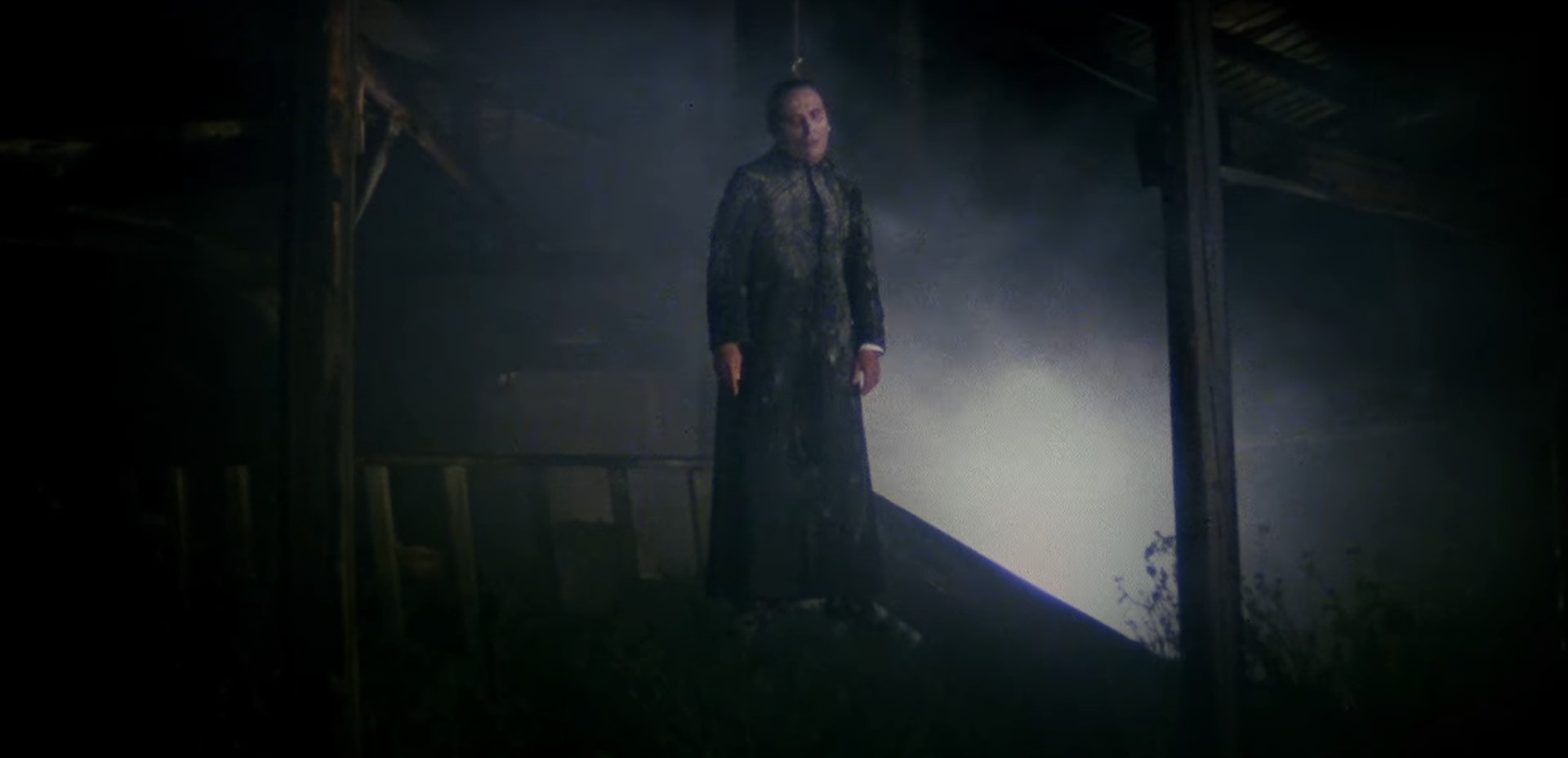
In the Dunwich, a priest commits suicide by hanging himself in the Church’s graveyard.  In the same instance, a psychic based in New York City holds a séance where she witnesses the beginning of the gates of hell opening.  The order sends the psychic into sheer fright that nearly kills her.  A reporter digging deep into the near death of the young woman also buried alive and befriends the psychic, following his nose for a good lead despite its absurd sounding hoodooism of death apocalypse in less than 72 hours.  The psychic and reporter travel to the hard-to-find Dunwich town where the residents have been mysteriously vanishing or discovered dead of curious causes.   Baffled by all the strange occurrences is the town psychiatrist who witnesses first hand the troubles that stir fear into those close to him.  When the psychiatrist teams up with psychic and reporter, they must venture to the very depths of crypt Hell to close the gates and stop the dead for rising before All Saints Day.

The Godfather of Gore Lucio Fulci undoubtedly lives up to his title, establishing himself as one of Italy’s more profound and substantial horror filmmakers before his death in 1996.  “City of the Living Dead” came at the height of Fulci’s success after his breakout into the American market with “Zombie” or “Zombi 2,” an unofficial sequel to George A. Romero’s superb “Dawn of the Dead.”  Yet, Fulci didn’t follow suit with “Dawn’s” social commentary and pale-faced flesh eaters; instead, the writer-director stemmed his undead creatures from black magic hoodooism set in the sunny and sandy Caribbean islands with just as much visceral violence as his inspiring mostly Pittsburgh-based counterpart.  Alternatively known as “The Gates of Hell,” the Italian production of “City of the Living Dead” remains set in the U.S., filmed in New York and the surrounding metropolitan northeast, as the first part of the Gates of Hell trilogy that coincided with “The Beyond” and “The House by the Cemetery,” both of which were released approx. a year later.  “City of the Living Dead” is a Dania Film, Medusa Distribuzione, and National Cinematografica production with Fulci producing as well as the American Robert E. Warner (“Return of the Swamp Thing”) as executive producer.

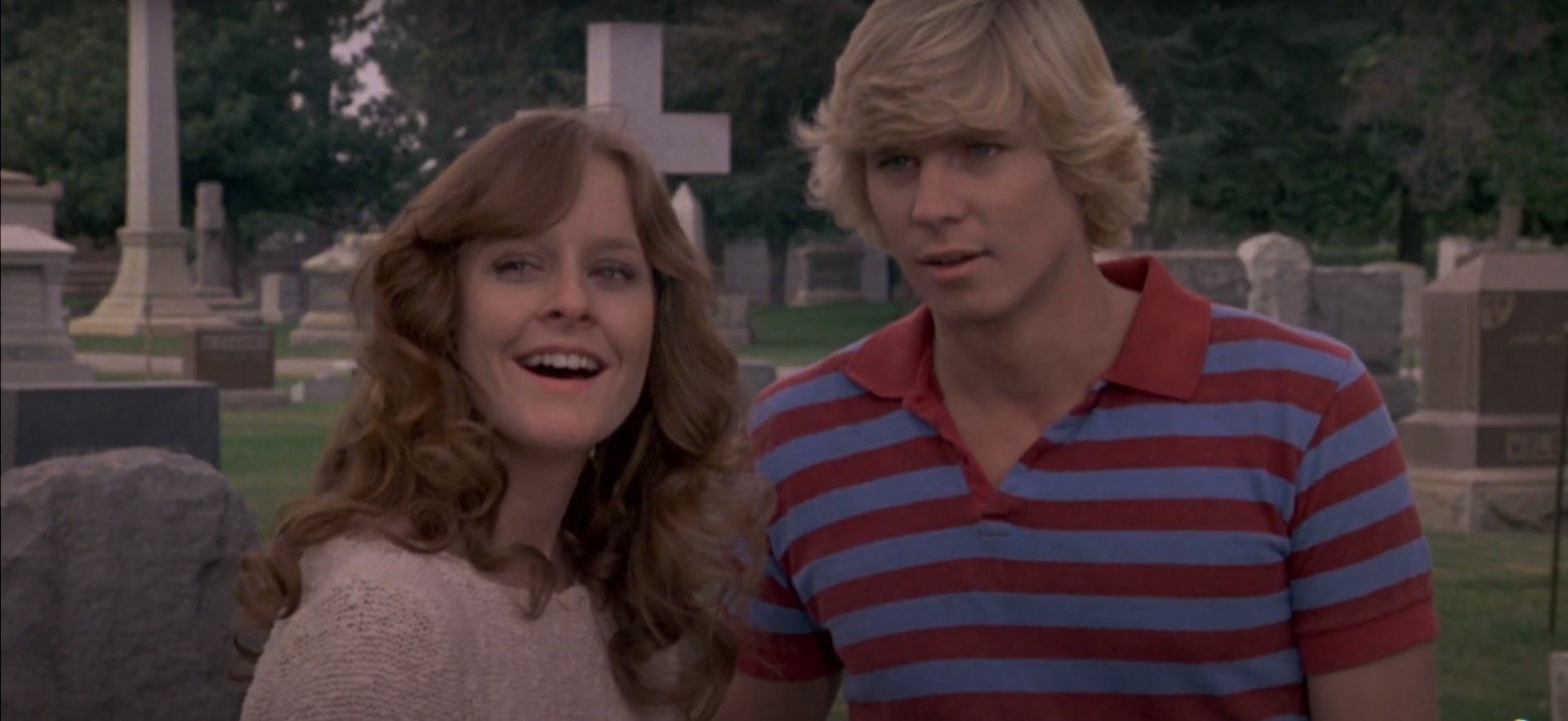
A medley of nationalities make up “City of the Living Dead’s” who either are or are playing American characters.  Comprised mostly of Italian actors Antonella Interlenghi (“Yeti: Giant of the 20th Century”) as one of the first doomed Dunwich victims, Michele Soavi (director of “The Church”) as a canoodler with his brains being squished, Daniela Doria (“New York Riper”) as the other canoodler having her innards become outers, Fabrizio Jovine (“The Psychic”) as the hung priest who started all this mess and as the harbinger of the living dead, and Carlo de Mejo (“Women’s Prison Massacre”) in the psychiatric lead.  There’s an abundancy of diverse Italian flavor that definitely grounds “City of the Living Dead” as an Italian production, but a minor chunk of the cast are Americans with co-principal Christopher George (“Graduation Day,” “Pieces”) as a rakish NYC reporter forcing his way into a minor lead turned major forthcoming day of reckoning and Robert Sampson (“Re-Animator”) in a minor law enforcement role that bears little significance.  Sprinkled in the cast is also the Swedish-born-turned-Italian actress Janet Argen (“Eaten Alive”) as the psychiatrist patient and UK actress Catriona MacColl rounding out the principal cohort as the psychic.  MacColl is the only actress to have a role in all three of Fulci’s Beyond the Gates films, playing different characters in each.  Between Christopher George’s skeptic playfulness, Janet Argen’s uncontrollable hysterics, and in the unmalleable wrought shock of fear, the sundry cast doesn’t hinder the performances that mesh well under the greater air of portent and the hours leading up to end of days.  Giovanni Lombardo Radice (“Cannibal Ferox”), Luca Venantini (“The Exterminators of the Year 3000”), Adelaide Aste, Venantino Venantini (“Cannibal Ferox”), Robert Spafford, James Edward Sampson (“StageFright”), Perry Pirkanen (“Cannibal Holocaust”), Michael Gaunt (“Forced Entry 2”), and filmmakers Robert E. Warner and Lucio Fulci costar.

Through an unexplained mysticism and preformed stipulations on why the priest was the be all end all gatekeeper to the dead’s awakening on Earth other than Dunwich was original built upon the ruins of a witch-burning Salem, Massachusetts or why the day after the unmentioned Halloween season (likely because Italians do not celebrate Halloween with an abundance of candy and custome), All Saints Day, becomes the zero hour date when clearly the dead are already fatally impacting lives in the corporeal realm, Lucio Fulci masterful magician qualities diverts attention away from seemingly crucial elements of the plot toward a complete and total elemental atmosphere of fear, using eerie fog, whipping wind, and phantasmagoria imagery of the macabre to implant chthonic horror slowly rising above ground.  Makeup artist Franco Rufini recesses the sight sockets with deep, infraorbital darkening under the eyes in stark contrast with the pale shade skin, creating that classic yet effective zombified corpse casing in conjunction with special effects artists Gino de Rossi (“Burial Ground:  The Nights of Terror,” “Cannibal Ferox”) use of ground raw meat or whatever the gushy material used to construct the cerebrum contents that just squishes to a pulp between the fingers of the undead when they grab a fist full of hair, skin, and brains from behind an unlucky left living.  There’s quite nothing like a Lucio Fulci film where the ghouls knock on the door from the other side, threatening the land of the living, the world even, with a sound and steady ghoulish malevolence and death in a well-lit and framed Fulci-scope to hammer down defined purpose that drives a penetrating stake through the chest bone and into a chilled soul.

“City of the Living Dead” goes beyond the format gates and arrives onto a 3-disc 4K/Blu-ray release from Cauldron Films.  2160p Dolby Vision 4K and a 1080p AVC encoded high-definition options really put this Fulci classic back on the map, unlike the small, forsaken city of Dunwich. The 4K UHD is an HEVC encoded, 2160p Dolby Vision ultra high-definition resolution while the AVC encoded Blu-ray sports 1080p high-definition, presented in a widescreen 1.85:1 aspect ratio. Through the translucent mist of natural, good-looking grain, Cauldron Films have hyper-accentuated the atmospherics with a clean rendering of the innate cooler-to-warner photography grades of blue-to-yellow with creating a harsh contrast transition. The encoding never shows an ounce of detail distress to keep textured and palpable image of the darkened crypt or the thick fog exteriors that often would degrade decoding with omitted data. The Cauldron Films release retains and sustains bitrate that fastens the dark levels to a robust and effective pitch black. What’s neat about this release is the ability to toggle between the English DTS-HD 2.0 Mono and the Italian DTS-HD 2.0 mono, both post-recorded in standard with Italian productions. Both tracks are comprehensibly sound with a clear and clean dubbing with the only detailed differences being one in English language and the other in Italian and the title card switched out for the each. Between the two, range is exact on both with not a lot of superfluous ambient sound and both tracks offer a near blemish free experience in a robust context of atmosphere. Disc 1 and 2, 4K UHD and Blu-ray respectively, come with new audio commentaries, including with cult film critic Samm Deighan, author of Italian horror cinema Troy Howarth and film critic Nathaniel Thompson, as well as individual archival commentaries with actors Catriona MacColl and Giovanni Lombardo Radice. Disc 3 includes an interview with production Massimo Antonello Geleng, actor Giovanni Lombardo Radice, and on-stage Q&A with Venantino Venantini and Ruggero Deodata (“Cannibal Holocaust”), a Q&A with Catriona MacColl, a Q&A with composer Fabio Frizzi, interviews with special effects artist Gino de Rossi and principal actor Carlo de Mejo, A Trip Through Bonaventure Cemetary – an explorational and historical account on the main cemetery where the priest in the film hangs himself, trailers, an image gallery, and other archival interviews in a near feature-length collection of conversations with cast and crew reminiscing about Lucio Fulci during filming. The 4K UHD and third disc packed with special features are region free while the Blu-ray remains region A locked in licensed playback on the format. Both features have a runtime of 93 minutes and the release is unrated. Emerging from the gates of standard definition hell, Cauldron Films tempers Lucio Fulci’s “City of the Living Dead” to a foreboding crust, burgeoning with ominous clout the undead’s underscoring resurrection.

Cauldron Films’ “City of the Living Dead” on 4K and Blu-ray 3-disc Release!

Early Bill Paxton EVIL in “Mortuary” reviewed! (MVD Visual / Blu-ray)

The tragic swimming pool drowning of Dr. Parsons might not have been an accident as determined by the police.  At least that is what his daughter, Christie, believes and she is for certain her mother has some involvement in the so called accident.  Plagued with nightmares followed by a stint of sleepwalking a month after her father’s untimely demise, Christie tries to maintain a semi normal life as a high school student romantically involved with boyfriend Greg Stevens.  Meanwhile, Greg’s best friend disappears after the two trespass onto local mortician Hank Andrews’s storage warehouse.  Christie and Greg unwittingly become embroiled into sinister intent by a masked and caped ghoulish killer stabbing victims with a detached embalming drain tube and at the center of it all is Hank Andrews and his son Paul’s family morgue that processes and possesses all the dead’s secrets. 

Before Wes Craven’s “Scream” mega-franchise turned caped killers revolutionary cool with meta-crafting horror tropes of the genre slasher, there was the little known “Mortuary” that perhaps paved just a slab of keystone for the Ghostface Killer who has become the face of slasher films for more than 20 years, much like Jason Voorhees or Michael Myers back in the 1980s and early 90s.  Written and directed by the Baghdad born filmmaker, Hikmet Labib Avedis, credited under the more westernized stage name of Howard Avedis, the 1983 film nearly had all the hallmarks of a peculiar macabre dance that skated around the slasher sphere.  “Mortuary” had seances, pagan rituals, a shrouded murderer, and, of course, the embalming of dead, naked bodies that are the inevitable, natural, mortality reminding entities in movies regarding morgues.  The late director, who passed away in 2017, cowrote the film with wife, producer, and actress Marlene Schmidt who had a role in every single piece of his body of work.  “Mortuary” was self-produce by the husband and wife filmmakers under their Hickmar Productions company and by grindhouse producer Edward L. Montoro (“Beyond the Door”).

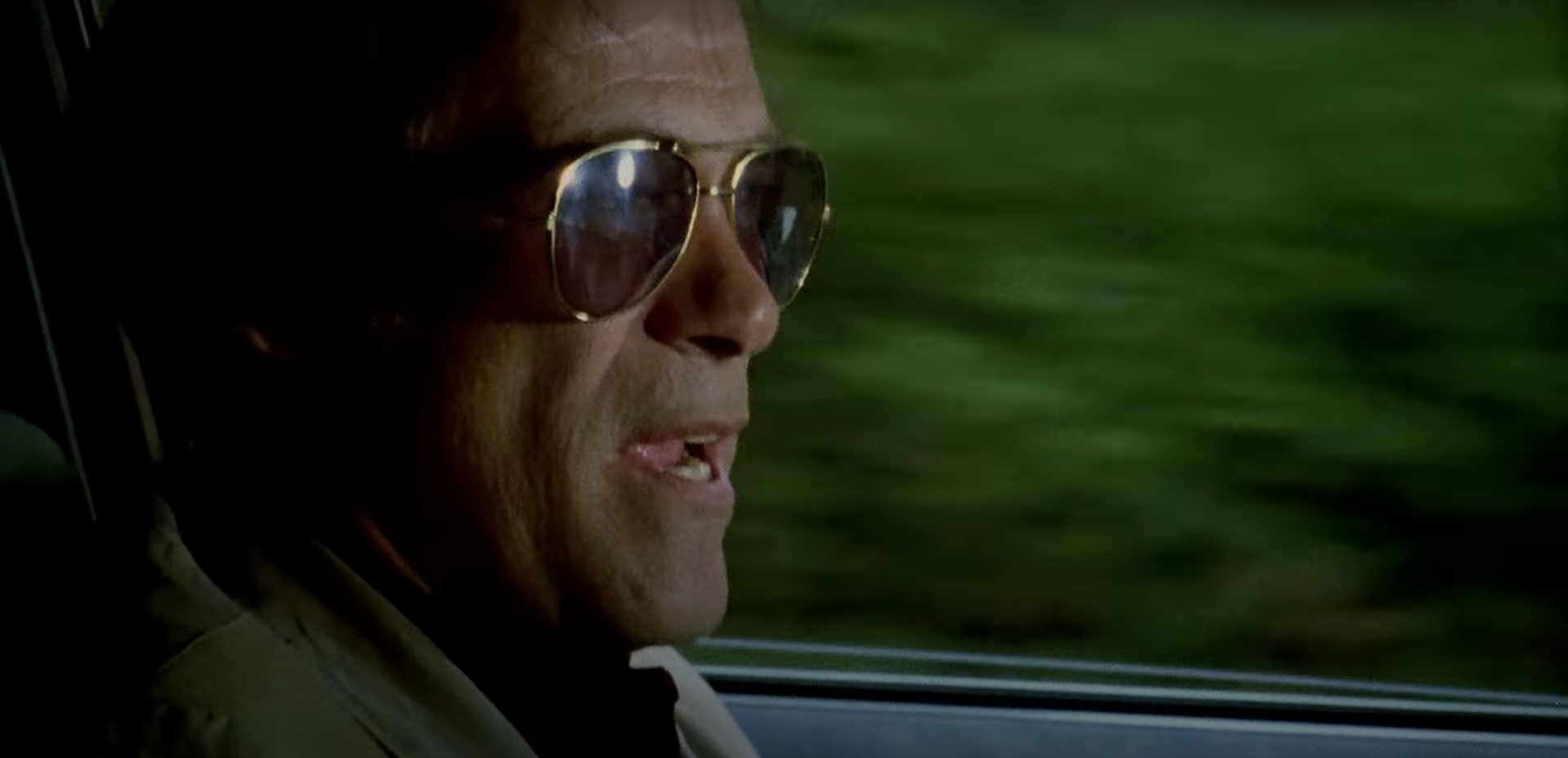
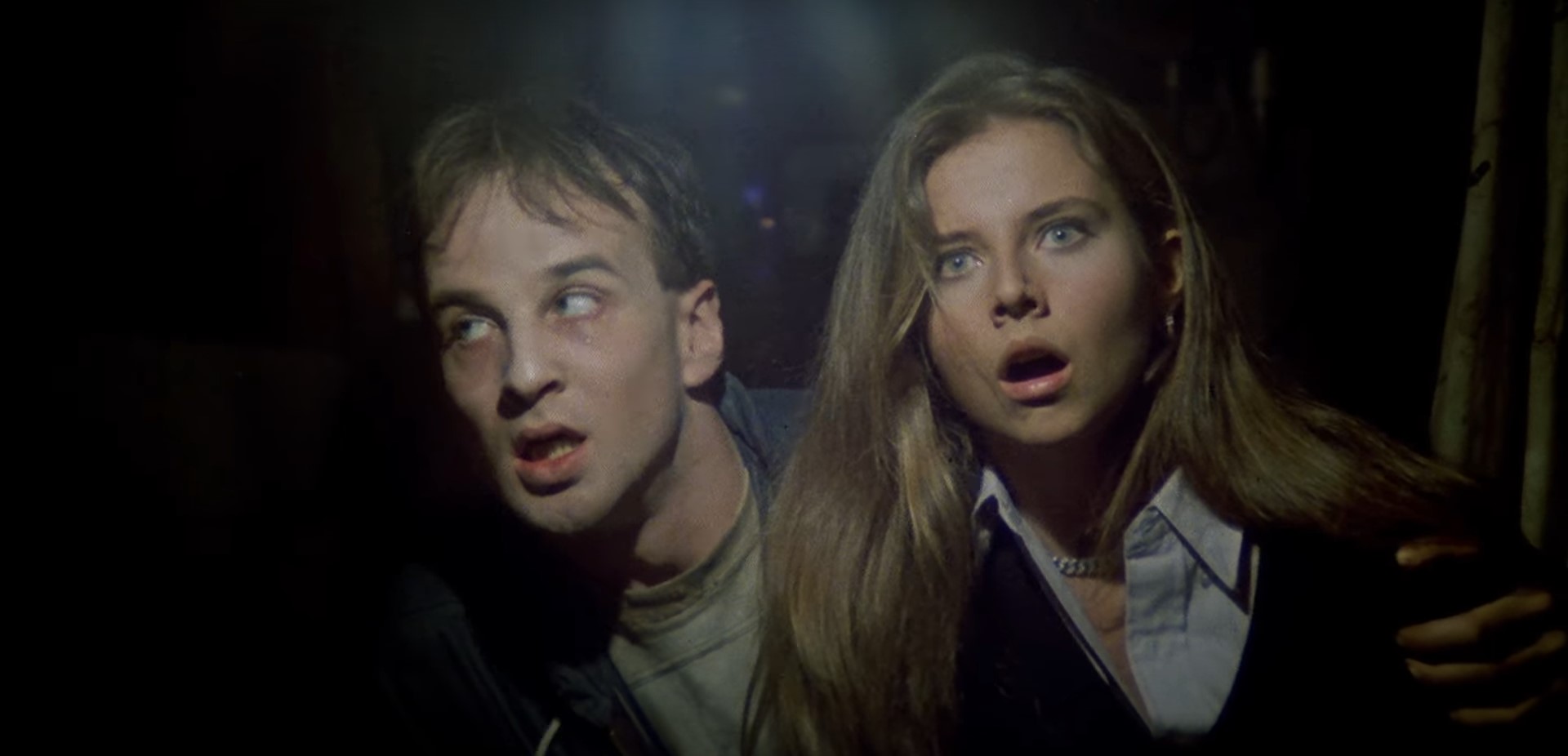
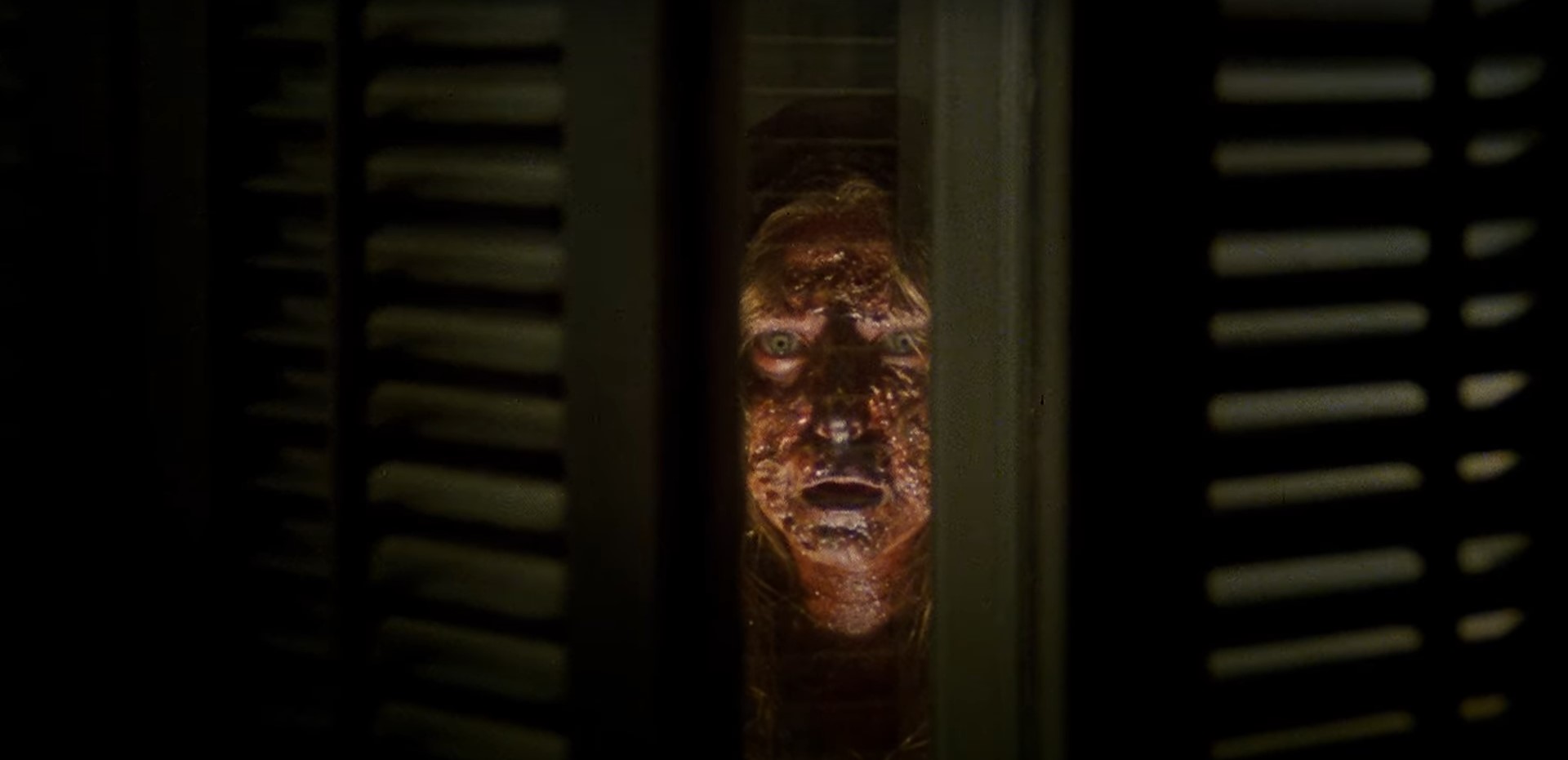
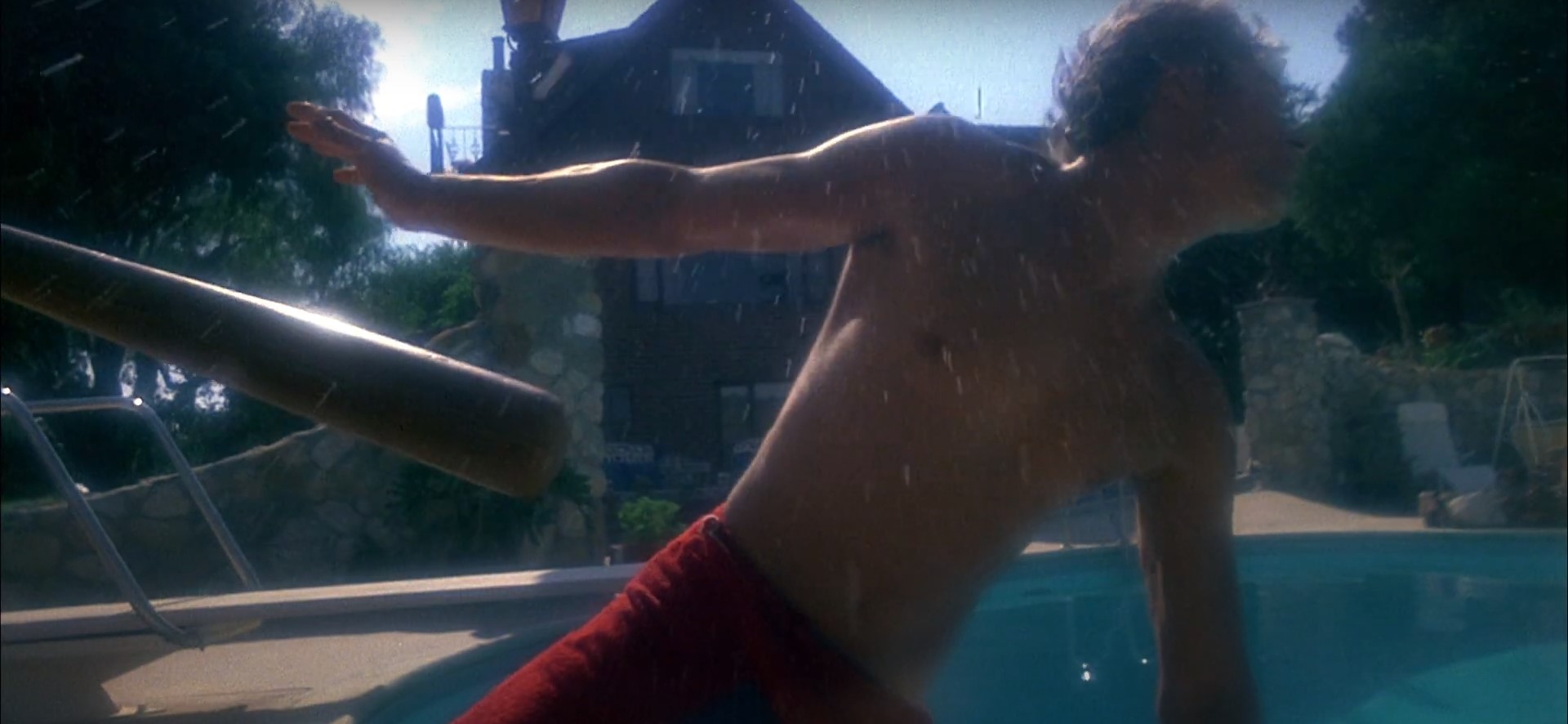
Though the post-credit opening scenes begins unscrupulous enough with Greg Stevens, played by television soap opera star David Wysocki whose credited as David Wallace, and his best friend Josh (Denis Mandel) stealing tires from Josh’s ex-employer, morgue owner Hank Andrews, the late “Day of the Animals” and “Pieces’s” Christopher George’s last cinematic role, because of being fired without being paid for his services, “Mortuary” inconspicuously moves from Stevens’ infringing on local law to surround itself more aligned with Stevens’ girlfriend Christie Parsons who feels more like a backseat character upon introduction.  Yet in a flurry of exposition with her mother, Christie, who is played by “Mom” actress Mary Beth McDonough, circles back and ties into the opening credit scenes of an unknown man being bashed over the head with a baseball bat and falling into his pool.  We learn that the man is Christie’s father whose death has been rule an accident (no evidence of baseball bat related injuries? Was evidence collecting really that low-tech in the 1980s?), but Christie begs to differ as she point blank accuses her mother, Christopher George’s life co-star Lynda Day George, being involved in his poolside death.   While performances statically hover inside the wheelhouse of teen horror with Greg and Christie seemingly unaffected by the mysterious incidents happening all around them until someone literally is grisly murdered in their adjacent bedroom, a fresh-faced Bill Paxton (“Frailty”) inevitably steals the show with this enormous presence on screen as Paul Andrews, the town’s mortician loony son working for his father as an embalmer.  Paxton’s zany act borders “Mortuary” as either a diverse trope horror with an awkward outlier character stuff into the eclectic mix or a seriously unserious bluff of being a serious horror film – see what I did there?  Paul listens to Mozart on vinyl, has an obsession for Christie, and likes to prance and skip through the graveyard as a son broken by his mother’s unhinged suicide.  “Mortuary” rounds out with Curt Ayers (“Zapped!”), stuntwoman Donna Garrett (“The Puppet Masters”), Greg Kaye (“They’re Playing With Fire”), Alvy Moore (“Intruder”), stuntman Danny Rogers, Marlene Schmidt, and Bill Conklin as a walking contradiction as a beach town sheriff wearing an unabashed cowboy hat like a sorely out of place rootin’-tootin’ lawman from the West complete with country draw lingo. Also – don’t miss the bad nude body double used for McDonough when Christie is lying on the morgue slab.

Now, I’m not saying “Mortuary” is the sole inspirational seed that sowed the way for the “Scream” franchise, as I’m sure many, many other iconic classics inspired Kevin Williamson, but, in my humble opinion as an aficionado about the genre components and how they’re all connected by a few or many degrees of separation, “Mortuary’s” villain could be the long, lost ancestral sperm donor responsible for the origins of Ghostface.  The purposeful movements and actions align very closely in a parallel of deranged defiance and floaty black and white costumes.  However, “Scream” is just packaged nicer as “Mortuary” continuously drips all over the place like a three scoop ice cream cone on a hot summer day.  Containing Avedis’s arc on Christie was nearly impossible as each act jumps and focuses on someone entirely different while also exposing the killer blatantly without even trying to misdirect or repel any kind of suspicion.  It was as if Avedis and Schmidt swung for the fences with a convoluted giallo mystery plot but couldn’t figure out how to build that into the narrative without drawing from and drowning in exposition and that’s how the cards came crashing down by unfolding with talking head pivotal plot points that steered to a rather quick, yet pleasant, climatic head of a total mental meltdown that’s much more cuckoo than Billy Loomis and Stu Macher will ever be. 

If you didn’t score a copy of Scorpion Releasing’s limited edition release of “Mortuary” on Blu-ray, then sing the praises of second chances with this Scorpion Releasing Blu-ray reissue through the MVD Visual Rewind Collection line. The all region release is presented in a high definition, 1080p, widescreen 1.78:1 aspect ratio of the Scorpion Releasing AVC encoded transfer on a BD25. Quality-wise, the release delivers the perhaps the full potential of a cleaned up 35 mm restore with no sign of cropping, edge enhancing, and a healthy amount of good grain, but there are noticeable gaffes with select scenes that seemed to have missed or left out of the restoration all together, reverting back to the rough, untouched image. Coloring, skin and objects in the mise-en-scene, come out lively, naturally, and without a flutter of instability with transfer damage at a minimum. Probably the most surprising is the original 2.0 mono LPCM track. The English language mix does the job without climbing the audiophile corporate latter, leaving in the wake a soft dialogue that’s a struggle to get through if you’re not wearing headphones. Depth seems a little slim, but the range keeps progressing nicely that often feeds into the late John Cacavas score. Cacavas operatic film score is bigger than the movie itself, often grandiose the Gary Graver one-note cinematography. The overexposed ethereal flashback has slapped redundant fatigue plastered all over it but, then again, the film is from the 80’s. Option English subtitles are available. Special features include only an interview with John Cacavas from 2012, from the original Scorpion Releasing print. Two upsides to the MVD Visual release are the cover art mini-poster tucked inside the casing and the added cardboard slip cover that resembles a tattered VHS rental tape slip box complete with a faded Movie Melt yellow caution sticker, a Be Kind, Remind sphere sticker, and a Rated R decal. If you’re a big Bill Paxton fan, “Mortuary” reveals another shade of talent from the late actor. Other than that, the Howard Avedis production often haphazardly stumbles bowleggedly to a giallo-errific-type ending made in America.