No EVIL Gets Left Behind! “P.O.W. The Escape” reviewed! (Ronin Flix / Blu-ray)

“P.O.W. The Escape” on Blu-ray at Amazon.com!

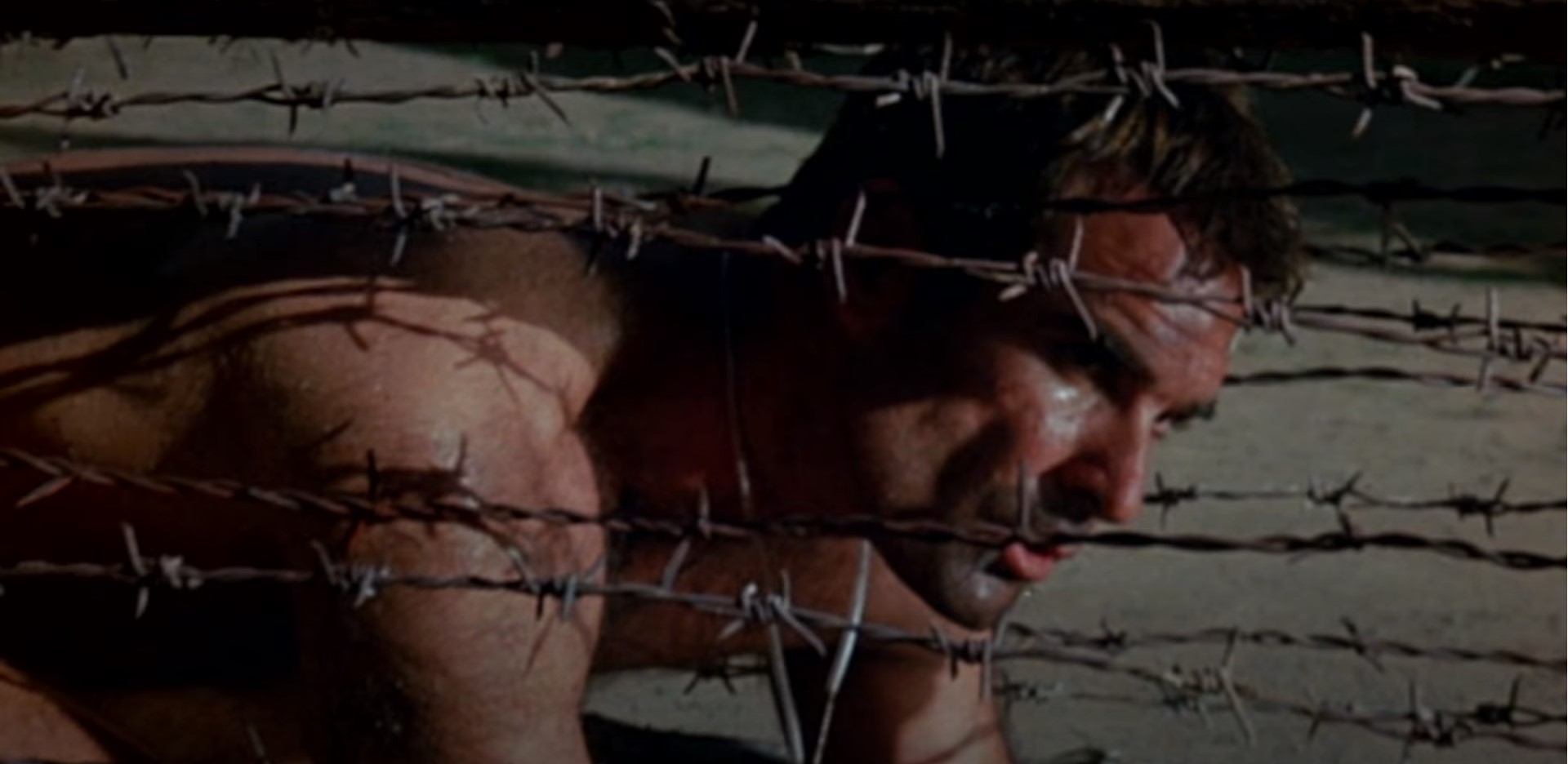
Colonel James Cooper’s moto is no one gets left behind.  The seasoned P.O.W. extraction officer volunteers for a politically spearheaded suicide mission to save Vietcong American captives before a cease fire treaty ends the war, effectively turning the P.O.W.’s into M.I.A. and possibly never heard from again.  As the U.S. Airborne Colonel expected, the mission of rescue results in a complete fiasco of resources and being empty handed of prisoners as the enemy suspected an imminent attack.  Cooper becomes a P.O.W. alongside the men who set to rescue but that doesn’t deter the determined officer to plan his escape, but before detailing out a route out, the camp’s warden Captain Vinh has alternative plans for his prized captive in all of North Vietnam.  Vietcong headquarters wants to retrieve the Colonel in two days for public execution but Capt. Ving seeks a better life outside his country and accumulates the K.I.A. and P.O.W.s valuables plus in addition to stealing gold bars form his country in order to relocate him and his family to the U.S. but on his terms with a perilous journey across enemy lines with all the P.O.W.s in order for no one to get left behind.

The Carradine name is one of the most recognizable names in Hollywood with David Carradine the most famous, behind his father John Carradine, with his highly successful television series from the mid-70s, “Kung Fu.”  A part of “Kung Fu’s” success was due in part of the decade itself where kung fu films were a peak popular with rising star Bruce Lee.  A decade later and still in the shadow of that breakout series with a made-for-television movie, Carradine breaks into another rising type of films that trades in hip-throws and round house kicks for M1 assault rifles, Huey helicopters, and the jungles of the Vietnam war.  And coincidently enough, Vietnam actioners were made popular by another martial artist with “Missing in Action” starring Chuck Norris.  Carradine’s venture into the America’s shame frame being exploited for personal gain is P.O.W. The Escape, a rip-roaring and explosive do-or-die war caper from first time director Gideon Amir and penned, and re-penned, by Jeremy Lipp (“The Hitchhiker” TV series), James Bruner (“Invasion USA”), and “Deadly Sins” co-writers Malcolm Barbour and John Langley.  Also known as “Attack Force ‘Nam” and “Behind Enemy Lines,” the Philippines doubling Vietnam production is produced by Yoram Globus and Menahem Golan as a Globus-Golan Production.

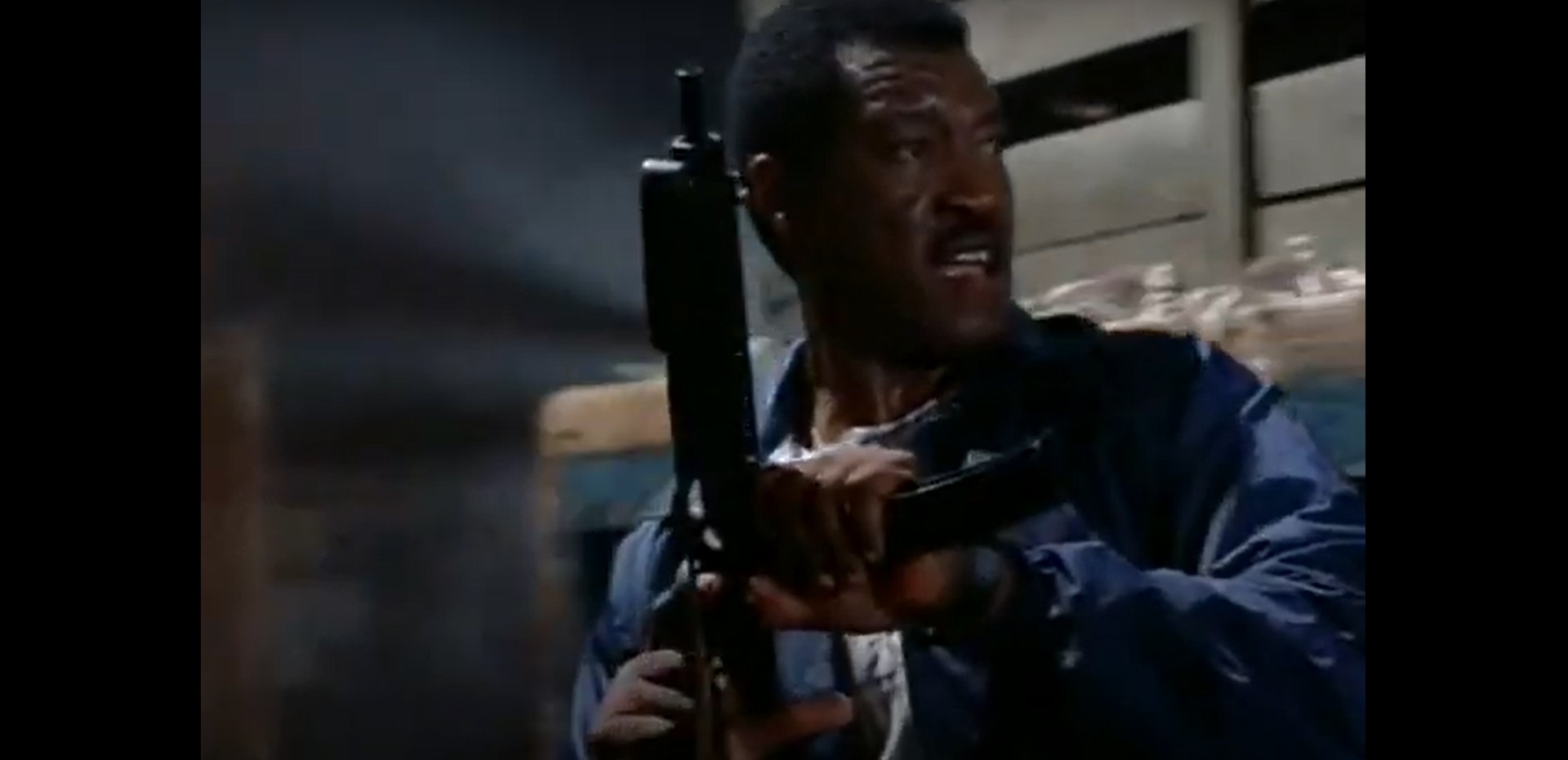
The Late Carradine epitomizes stone-faced patriotism as the exfiltration expert Colonel Cooper.  Showing hardly any emotion except for a handful of scenes that call for it, or else Cooper would be a full-scale unempathetic sociopath, Carradine gives his best harden American warrior as well as an indestructible combat commando where a barrage of bullets whizz around him, explosions don’t impede his health, and an army of Vietcong are no match for the Colonel’s American flag draped, M60 machine strapped fighting spirt in an uphill battle of certain death.  Its farcically funny to behold but that was the traditional one-man-army paradigm back then and, to an extent, still is even today to give audiences as gung-ho and impossibly invincible hero.  Cooper leads a bunch of weary P.O.W. troopers on the brink of becoming lost in wartime politics and only three out of the bunch are highlighted throughout the misadventure toward safety with those roles’ boots on the ground by Steve James (“McBain”), as the order-following Sgt. Johnston, Phillip Brock (“American Ninja”) as wise-cracking know-it-all, good soldier Adams, and Charles Grant (“Witchcraft”) as the maverick Sparks who initially goes against Cooper’s plan.  Sparks is likely the most interesting and complex character with an internal conflict having set into his own path of escape dedicated on selfishness and greed only to feel the tremendous weight of guilt and burden of his fellow soldier while on the bed of a half-naked, North Vietnamese prostitute.  The last major principal is actually a Captain, that is Captain Vinh, played by one of the most recognizable faces in Japanese cinema history, Mako, of Arnold Schwarzenegger “Conan” fame as the Akiro the Wizard.  Understanding Vinh’s motivation hardly musters conclusively on why he wishes to defect his country and why he needed Colonel Cooper to accomplish it.  Perhaps Vinh’s undergoing hate for his own country was lost in the editing room as the film is noted to have gone through multiple re-writes, edits, and additional post-production shoots.  “P.O.W. the Escape” fills out the cast with Daniel Demorest, Tony Pierce, Steve Freedman, James Acheson, Ken Metcalfe, Ken Glover, Rudy Daniels, and Irma Alegre.

For Gideon Amir’s first picture, this Vietnam vehicle is an action-packed romp.  Never letting up on the accelerating peddle, especially with Cooper’s blank determination to get all the men out of the arm struggle before a treaty wraps up the conflict and leaves his charge in casted away in the arms of the enemy, what Amir accomplishes at the behest of his influential producers wonders how this high-value production ever made it past post without being a completely incomprehensible mess.  There lies choppy moments of editing that puts into question it’s original concept even if one isn’t aware of the film’s narrative conflictions.  What ensues is not a traditional rally and escape from a torturous, inhuman enemy camp that one can’t abscond from so easily; instead, the narrative becomes an escapade of itinerant provides various difficult scenarios that split up the group, sees internal turmoil, and propels desperation to get to the friendly Huey’s with their very lives, but doesn’t see Cooper come under threatening fire as he spurts off short rifles rounds and takes out a handful of Vietcong at once with one scene reminiscent on a particular World War II hero charging up hill and taking out a whole German squadron alone with a machine gun.  Audie Murphy, If remembering accurately, but instead of sustaining any projectile wounds, Cooper thrusts forward unscathed while those G.I.s he’s trying to recover and rescue perish in an inescapable firefight.  Carradine’s stoicism throughout the life profit and loss campaign doesn’t match Cooper’s liberation maxim that forces “P.O.W. the Escape” into an impassive, often times comical, attitude with the story’s central character.

Director Gideon Amir and David Carradine tempt their hand at the Vietnam vamoose now on a Hi-Def Blu-ray forged by Ronin Flix through way of Scorpion Releasing’s 2019 HD transfer of the previous MGM print.  The widescreen 1.78:1 aspect ratio presented feature fails to capture impeccable clarity of acme perfection with approx. half the frames wilted away with artefact de-escalation of details. Half the scenes look great with a semi-serious saturation of color, a few of facial and foliage details come out, and textures have tactile range at times, but the film’s glass is only half full within a darker dilution of speckled splotches. The English DTS-HD 2.0 master audio mix relays a fair enough dialogue consignment with comprehensible clarity and is utterly clean but lacks punchiness with a flat as a David Carradine’s poker-face facade. With a robust range of gunfire, explosions, and modes of transportation, especially going through the mucky and miry jungles of war-torn Vietnam, the film definitely needed a stronger suit of sound but was ultimately discharged without dullness. English subtitles are available. Special features include three on-camera interviews with Director Gideon Amir, screenwriter James Bruner, and stunt man Steve Lambert discussing their particular involvement in pre-and-principal shoots, some of the process woes, and how exotic the opportunity was to work internationally and with David Carrine. The film’s original trailer rounding out the special features block. Physically, the Ronin Flix release comes in a standard Blu-ray snapper with an action-packed and commandoed David Carradine blasting off his rifle like in a Ghana-esque illustrated movie poster. Inside, the lack of insert and reversible cover art leads our eyes straight to the disc art that’s the same as the cover, cropped down to fit in the circumference. Rated PG, that is rated 1986 PG with strong war violence, strong language, and nudity, the release is region A locked in playback and has a runtime of 86 minutes. A campy commando campaign capitalizing on the success of the Vietnam prison camp subgenre, “P.O.W. the Escape” could be much worse for wear as a solid action flick fierce in delivery yet fickle in substance.


“P.O.W. The Escape” on Blu-ray at Amazon.com!

Beckerland Fosters Deranged EVIL Upon POWs! “Opposing Force” reviewed! (Scorpion Releasing / Blu-ray)

“Opposing Foce” now in Control of Blu-ray Home Video!  

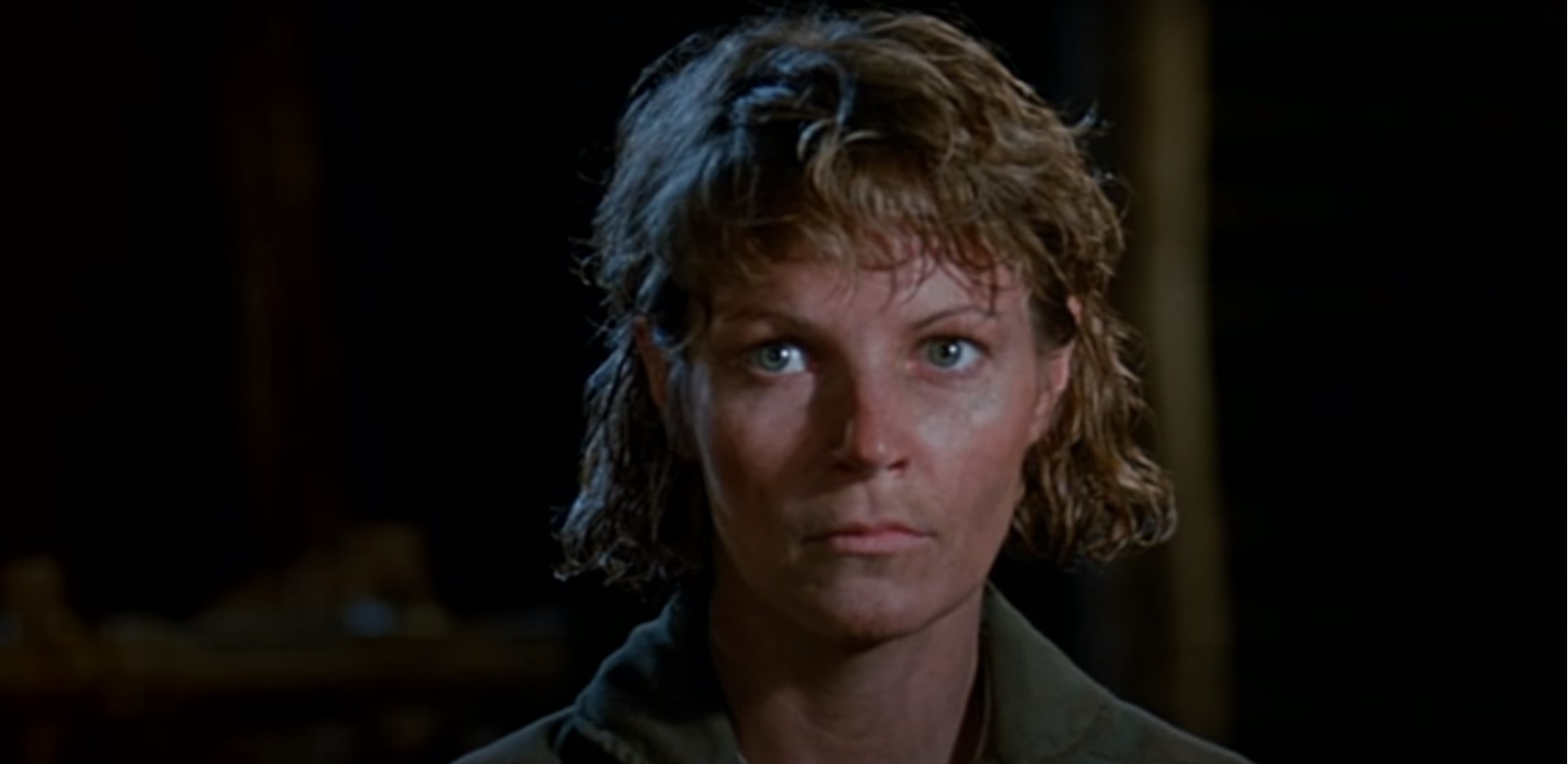
Air Force Lieutenant Casey has initiative, determination, and something to prove being the first woman to be approved for a special and notorious evasion and escape course on a remote U.S. base Philippine island.  The course simulates downed Air Force pilots behind enemy lines where they either have to evade capture or escape as POWs without divulging U.S. secrets.  The simulating is meant to break down the individual physically and mentally through psychological and physical torture that nearly blurs the regulation guidelines of the United States military, but has been proven to be an effective training to withstand the most brutal of POW conditions despite the course’s infamous reputation.  Casey joins the ranks of participants, a young group of eager male officers and one experienced Major Logan looking to requalifying for action, and are dropped into the simulated enemy combat zone controlled by General Becker, a calculating commanding officer who has succumb to his opposing force role.  Becker’s unconventional and illegal tactics exploit Casey’s gender in the name of training her, but his knowingly criminal activity puts the rest of the trainees in danger and it’s up to the Logan and Casey to stop him and his opposing force in an all hell breaks loose war.

POW exploitation has been missing in modern day cinema.  A subgenre that is a dark, degrading note of unscrupulous and vengeful action has been exclusive to the 1980s for far too long, barely being reprised throughout the proceeding decades.  Not to be restricted to the popularization films of Chuck Norris of the “Missing in Action” franchise or of Sylvester Stallone’s Rambo II and III, these camp from Hell films run the money and production gamut, pulling inspiration on conflict wars before the decade, such as Korea, Cambodia, and even as far as World War II.  For mainstream, the jungle entices with harrowing heroism that glorifies determined, strong-arming patriotism while showcasing America’s enemies as Geneva Convention ignoring villains who deserve every ounce of blow’em up, shoot’em up at the hands of escaped captees or an elite team, or a one-man, rescue mission.  Nazis saw more action in the low-budget Eurotrash market with sexploitative women-in-prison camps ran by the sleazy, inhumane, and experimenting Gestapo mostly.  American filmmaker Eric Karson, director of Jean-Claude Van Damme actioners “Black Eagle” and Lionheart,” moves away from the Muscles from Brussels and into Tom Skerritt’s mustache behind bamboo bars in the 1986, American-versus-America military-thriller “Opposing Force.”  Penned by Linda J. Cowgill, under the pen name of Gil Cowan in what’s likely a name change spurred by sexism in the industry, originally titled the script as “Hell Camp” but took the name “Opposing Force” based off the antagonistic enemy labeled as OPFOR right on their chest.  “Opposing Force” is coproduced by “Skinner” and “Final Mission” producer Tamar E. Glaser and “Sometimes They Come Back… for More” producer Daniel Zelik Bert under the theatrical distributors of Orion Pictures. 

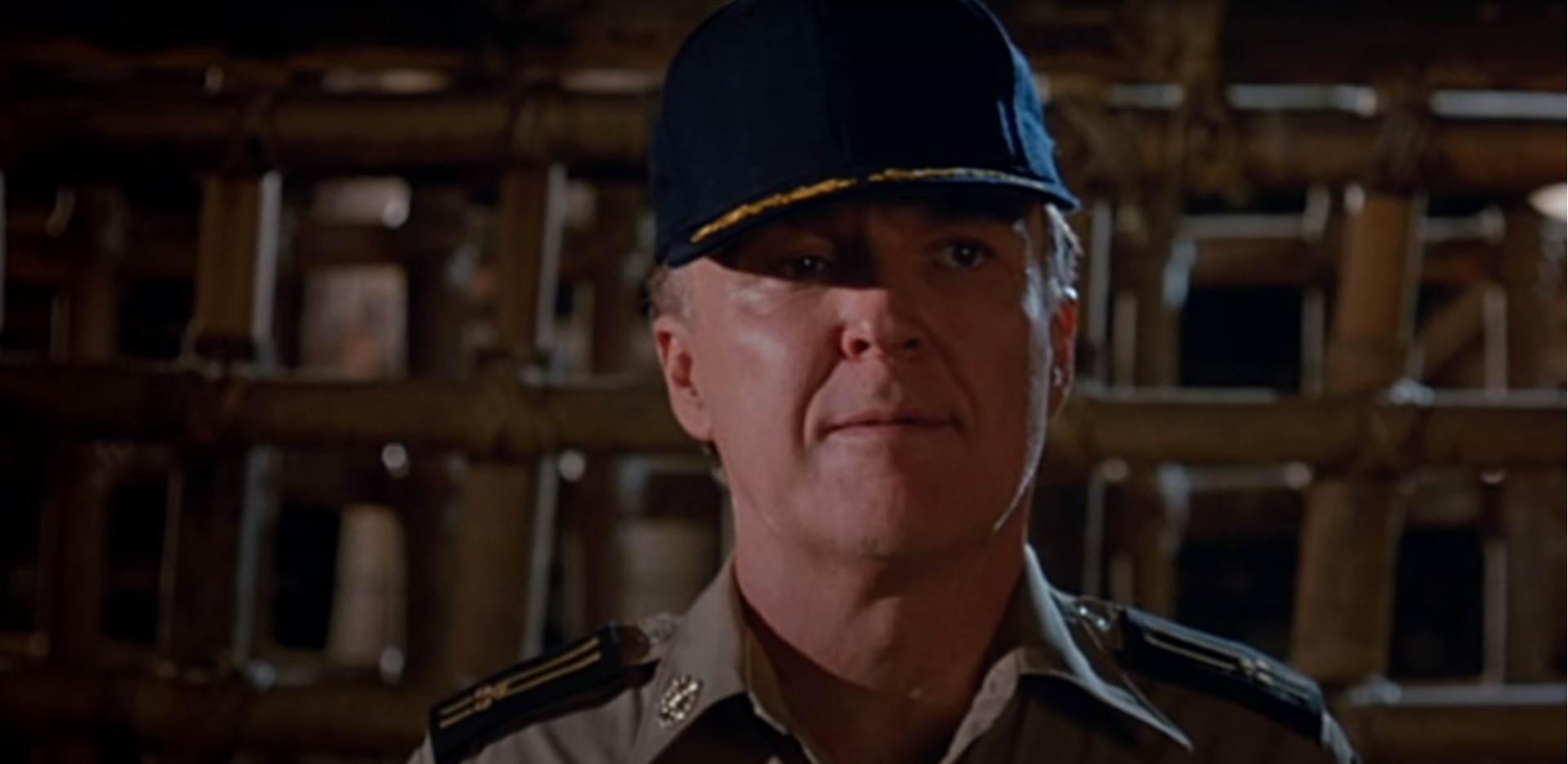
We already know Tom Skerritt’s world-renowned mustache is in the movie and is the star of the show, but Tom Skerritt is in there as well as the man behind the stache as the seasoned boot Major Logan.  The “Alien” and “Contact” actor become the patriarchal figure to a bunch of figurative sons in younger course participants and overprotective of one figurative daughter in Lt. Casey in a wildly uncharacteristic situation brazenly exploited in unconventional mainstream means in the uncomfortable skin of Lisa Eichhorn (“Deus”).  What Lt. Casey goes through is more on familiar ground with the low-budget sleaze of women-in-prison grindhouse and while it’s certainly jarring and unexpected, It’s a welcoming chance for an upper tiered independent film with big names attached.  A couple of the other big names attached are Anthony Zerbe (“The Omega Man”) and Richard Roundtree (“Shaft”) as Commander Becker and his staff sergeant Stafford.  Becker and Logan mirror each other as veterans that have graded into either being corrupted by power or to be righteous in doing what’s right.  Yet, but Zerbe and Skerritt play into what the experienced actors know best, their trademark stoicism.  Tack on Eichhorn’s equally endurable fortitude and a three way standoff erects a monumental solemn stalemate of relatively the same attitudes until the last straw breaks the proverbial camel’s back and war erupts.  Roundtree at least develops Stafford’s internal conflict when the job bites at his conscious, becoming the connection needing convincing of Becker’s crossing over to the darker side of power like a Sithlord in public face disguise.  The narrative physicality aspects piece together a grueling atmosphere that each actor undertakes appropriately by their determined military rank, but as eloquently as Lt. Casey puts it to the aging Major Logan, “You got a limp and I got tits; these aren’t great things ot have in the military,” sets up themselves as misfits-to-heroes that were being crapped on all their careers for their antithetical military image.  “Opposing Force” rounds out the cast with a bunch of moaning male air force participants in the middle of it all with performances from Paul Joynt (“Echos”), Robert Wightman (“Impulse”), George Cheung (“Rambo:  First Blood Part II”), and John Considine (“Circle of Power”).

Influenced by the U.S. Military’s real life training program known as S.E.R.E. (Survival, Evasion, Resistance, and Escape.), Cowgill uses the program to formulate “Opposing Force’s” principle groundwork in setting up the jungle POW scenario on a remote island that goes through the motions of no chance of a rescue and aid of any kind.  Participants are throw into a survivalist gauntlet that turns surprisingly rough aggressive when physical and mental tortures are instilled upon those thinking the training would be a walk in the park.  This particular training simulation is unique to the OPFOR team with an aging officer looking to requalify for combat and the first woman to ever be accepted into the course due to a loophole, throwing new challenges to an embedded far too long commander who can easily break a man’s spirit but tiptoes around the possibilities of what to do with a woman until his insidious power and authority blurs right from wrong and takes the torturous tactics and enhanced interrogation techniques too far, beyond the limits of what’s necessary and beyond the limits of human decency all in the name of reinforce training.  The grueling torture and bush action is palpable enough to contrast the naked, sweaty, and battered bodies with the M1A1 bursts and munition explosions galore.  Only one aspect adds an out of place measure in the narrative and that is of the rest of the POW contingent and their seemingly wishy-washy decision on whether to escape, stay put, or join in the fight against Becker and his live-round shooting island battalion; the group disperses into the jungle only to fade from the climatic third act Major Logan, Lt. Casey, and Botts defending their lives against a treacherous throng and their wicked commanding warden.  Their disappearance doesn’t allow for closure for the acts against them during the entire ordeal and becomes a fizzling distraction.  Another distraction is the severely cut ending that freeze frames on Eichhorn’s final act with her voiceover exposition post-battle in what feels sorely rushed to complete.  The Blu-ray bonus features has an extended ending that’s more completist approach in wrapping up the story sutibly.  For a POW film, “Opposing Force” is an archetype of its originating decade that sates the subgenre’s need to pit an overreaching and ruthless camp head against the resiliency and determinate of the America fighting spirit. 

A re-release from the 2019 Scorpion Releasing Blu-ray comes “Opposing Force” reprising a presence on online retail shelves.  The AVC encoded, high-definition, BD25 is presented in 1080p resolution with a widescreen 1.78:1 aspect ratio.  Identical to the earlier Blu-ray 4 years prior, the image quality is freshened up quite a bit from the likely 35 mm print source into a detail-laden HD transfer that offers a lush jungle-scape to be in juxtaposition against the camp from within its center, a large guerilla compound bathed in browns and greens make for good POW-themed pageantry.  Skin tones and individual features flesh out nicely, adding detailed levels of salubrious status over the course of the day-to-day detainment. The English language DTS-HD master audio 2.0 leans toward a softer dialogue mix that, for the majority, is discernible despite favoring “Opposing Force’s” selling points: large explosions, pepper potshots, and militant vehicles running rampant around and above the island terrain. Dialogue’s clear enough to emerge without much hinderance with enough depth to provide a sense of position and the audio layer is remarkably clean with no hissing, popping, or static. English subtitles are an available option. Special features include an audio commentary with director Eric Karson, the trailer, and that extended ending I mentioned, and noted preferred, earlier in the review. The traditional Blu-ray snapper casing includes a rendition of the alternate titled “Hell Camp” poster with a more titillating illustrative lookalike of Lt. Casey in shredded rags and ride-up shorts with hands tied above her head and looking over her shoulder. The warm yellow with a hint of white stirs in an element of jungle heat ramped up by also providing the cage accommodations in the background to let it be known you’re about to watch an exploitation POW film. Locked on a region A playback, “Opposing Force” has a runtime of 98 minutes and is rated R. Eric Karson manages to find a place amongst a serrating subgenre that takes an ostentatious, yet not entirely fictious look, at prisoners of war with his “Opposing Force” actioner that goes to convey that not every unethical and malintent camp leader is a foreigner; evil can also be domestically grown.

“Opposing Foce” now in Control of Blu-ray Home Video!  

Vengeance Knows No Price on EVIL’s Head Alive. “L.A. Bounty” reviewed! (Scorpion Releasing / Blu-ray)

“L.A. Bounty” on Blu-ray and Available to Purchase at Amazon.com

When a Los Angeles mayor candidate is kidnapped from his home at gunpoint, suspicions immediately turn to the incumbent mayor in what seems cheap move to remove a rival, but the abduction is no snatch and grab for a quick buck and political advantage.  All-around prevailing bad guy Tim Cavanaugh is the spiritually unhinged mastermind orchestrating the scheme behind the scenes.  When the police don’t have a clue what to do next other than to wait for kidnapper demands, bounty hunter Ruger steps into the fold with a coerced hot tip about the kidnapping plan.  With a score to settle in the death of her ex-partner, Ruger is hot on Cavanaugh’s tail, foiling multiple assassination attempts on a witness, the mayor candidate’s wife, by Cavanaugh’s men, and determined to put an end to Cavanaugh once and for all.

If you’re a Sybil Danning fan whose had enough of seeing the blonde genre film icon in skimpy, or even sans, clothing, then “L.A. Bounty” should be your next upcoming feature with a leather-cladded Danning, in a nearly dialogue silent performance, blasting away henchmen left-and-right with a pump action shotgun.  The 1989 action thriller is penned by Michael W. Leighton (“Rush Week”), based off a story from the “Chained Heat” and “Howling II …. Your Sister is a Werewolf” cult actress and directed by “Power Ranger” franchise director Worth Keeter.  Before made-for-TV round house kicks, Zordon, and Kaiju monsters and machines that has become the mega “Power Ranger” franchise, Keeter had made a modest life out of obscure indie horror with “Dogs of Hell,” worked with buxom blondes such as Pamela Anderson in the thriller “Snapdragon,” and even dabbled in the exploitation ventures of Earl Owensby productions with “Chain Gang.”  Filmed in and around the Los Angeles area, “L.A. Bounty” is the ex-con gone vigilante with a vendetta from the production team of the Danny, Robert Palazzo, and S.C. Dacy founded Adventuress Productions International as well as a production of Leighton & Hilpert Productions, with Michael Leighton producing, and presented by the Noble Entertainment Group.

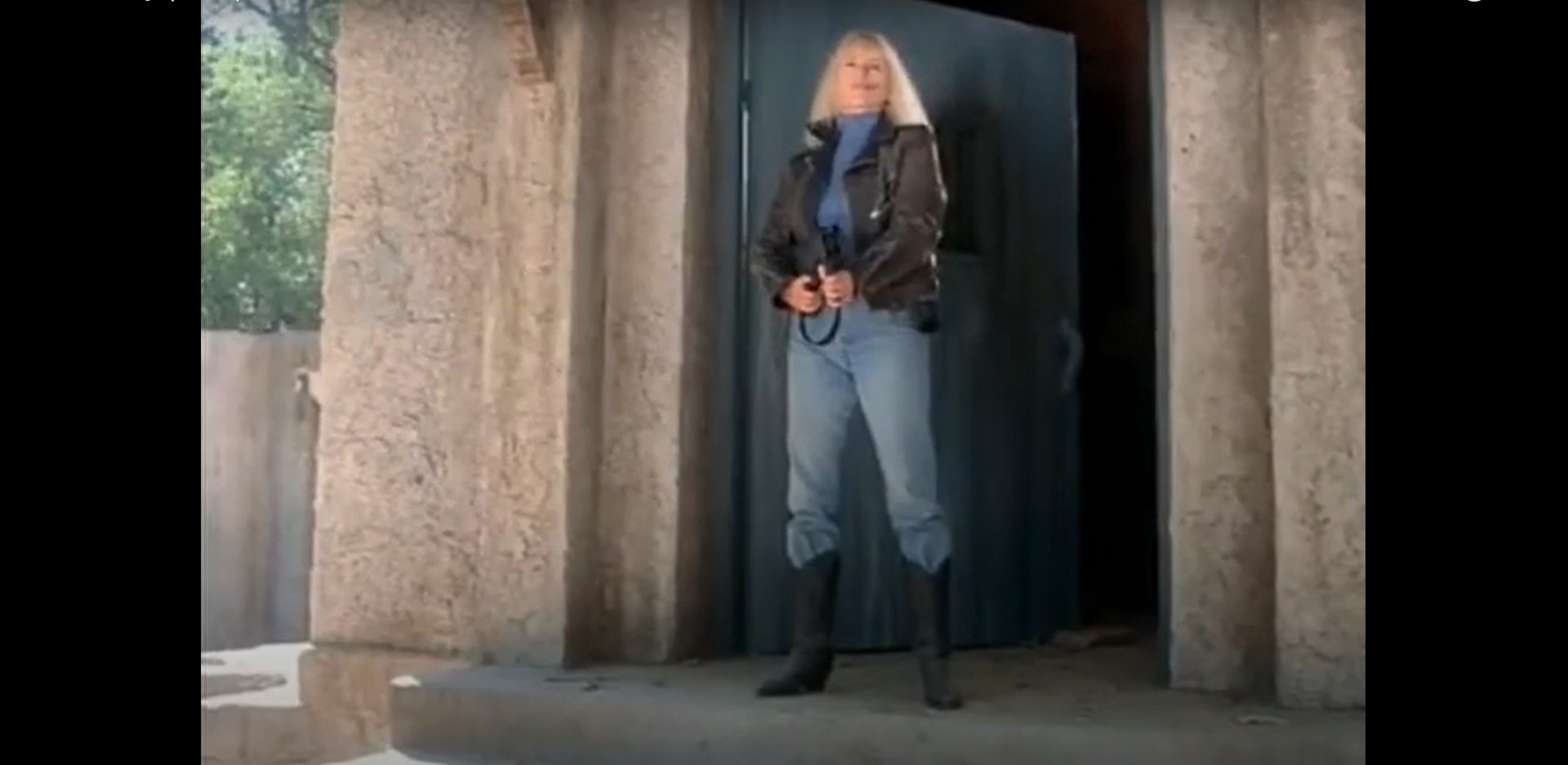
As one of renowned queens of scream, Sybil Danning, is a recognizable icon amongst low-budget horror fans as well as cheap thrill actioners and sexy thrillers.  So much so, that her fame has granted her the opportunity to work on a passion project where she can be the Sylvester Stallone or Chuck Norris shoot’em up action hero that was a popular juggernauting ilk in the 80’s.  Cladded in leather and denim, Danning plays the silent, strong type with emphasis on the silent. Her character, an ex-cop named Ruger now a bounty hunter looking to even the score with Cavanaugh who ruthlessly wasted her partner, has roughly three lines in the entire 1 hour and 25-minute runtime, but Ruger is in full blown view of being badass with a large gun and unafraid to use it on mindless grunts. Danning coldness compliments the contrary with Wings Hauser’s babbling, manic psychopath. The “Mutant” and “The Wind” actor’s sordid bad guy Tim Cavanaugh has a special relationship with God, warped by his twisted nature for organized chaos, but is unable to keep trusted entourage due to the fact he keeps killing them for not being able to nix Ruger. Hauser is fantastic to watch as the unconventional villain of unpredictability. For instance, Cavanaugh never leaves home base, a storage warehouse full of crates and containers and apparently inside those crates and containers are mechanism and gadgets to thwart off unwelcomed guests. As Hauser improves dancing through the hallways and displays erratic behavior while painting, we’re starting to realize Cavanaugh’s mindset is one we’ve seen before but without the Joker face paint and the act is entertaining and pairs well with Danning’s stoicism. While Ruger and Cavanaugh are obviously the main course, veteran TV actor Henry Darrow (“Tequila Body Shots”) and a slightly younger veteran TV actress Lenore Kasdorf (“Amityville Dollhouse”) appetize in between with sticking to the script of a routine kidnapper scenario, offering little to motivate the direction the story itself works toward itself. Robert Hanley, Van Quattro (“Agnes”), Bob Minor (“Commando”), Frank Doubleday (“Escape from New York”), Robert Quarry (“Count Yorga, Vampire”) and Maxine Wassa (“No Strings 2: Playtime is Hell”) as Cavanaugh’s nude muse for his art.

“L.A. Bounty” is about a bounty hunter tracking down an old adversary for retribution but other than a few pieces of wanted paper notices, there’s really no other indication that Ruger is like Dog Chapman the Bounty Hunter although the platinum blonde hair would suggest otherwise.  Sybil Danning is definitely sexier in leather and denim than Dog and sure does talk a whole lot less but as a part of general audience pool and with a title that suggest such a profession, wouldn’t it make more sense to build up Ruger’s caseload with a few introductory chases before we’re chin deep in the Cavanaugh obsession?  Also, that motivational drive that sends Ruger down a path of payback lacks substance and is sullied by a script snafu of Ruger having a flashback of Cavanaugh executed her partner despite not being present.  Fortunately, “L.A. Bounty” is not a feeble farce of an action flick.  Danning is a striking, statuesque presence, the squibs exhibit a bloody gun blazing firefight, and if you’re a disappointed perv in Danning keeping her clothes on this time around, there are a handful of brief nudity scenes from other actresses sprinkled throughout.  One of the other highlights is the eclectic score arrangement by then “Heart” guitarist Howard Leese and John Sterling of “Revenge of the Cheerleaders.”  With a Jan Hammer-esque synth-tense wave, a cop melodrama guitar riff, presumably provided by Leese, and a contemporary tribal beat, “L.A. Bounty” has immense range for every scenario with its own personal composition that’s high energy, catchy, and fits the action.

“L.A. Bounty” differs from any other role in the Sybil Danning canon that’s mostly action and barely any talk and is dead set on broadening the cult actress into the popular rogue cop role of the late 80’s-early 90’s. Scorpion Releasing presents the original MGM vault material of “L.A. Bounty” on a high definition, 1080p, AVC encoded Blu-ray release with an anamorphic widescreen 1.85:1 aspect ratio. The 35mm stock has retained its blue-ribbon quality from over the years and the transfer really accentuates the near timeless picture with a brilliant, well-balanced, color palette, an even contrast for production lighting to properly illuminate around the faint and dense shadows, and no noticeable meddling against a natural grain with a pleasant texture scheme. The English DTS-HD stereo mix is mighty donkey that might be lite but packs a punch when it kicks. The release could benefit from a multi-channel surround sound output to give a tumultuous sense of melee gun battles. Dialogue is clean, clear, and ample with good depth definition and plentiful range in ambience. Optional English SDH subtitles are available. What’s essentially a bare bones release, the Blu-ray only comes with chapter selection and setup options. The physical attributes echo the supplementary material with a traditional Blu-ray snapper with outer latch and cover art based off the film’s original one sheet. The film is rated R, is region A hard coded, and has a runtime of 85 minutes. “L.A. Bounty” remains a step or two above the Andy Sidaris guns, girls, and giant explosions fare with gilt-edge performances and stylistic avenues representing the best of the originating decade in what is the most divergent film of Sybil Danning’s typically typecasted career.


Hunt down “L.A. Bounty” into Your Sybil Danning Collection! Purchase here!


A Double Dose of Jason Blade Breaking Bad Guys’ EVIL Jaws in “Day of the Panther” and “Strike of the Panther” reviewed!


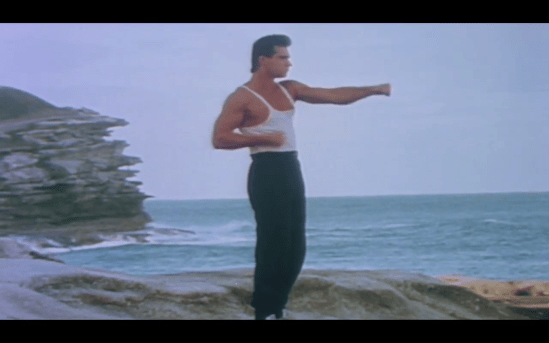
A secret strike force known as the Panthers enlist the best of the best when considering agents and those who pass the Panther’s rigorous training will become part of the fight for good organization. The Hong Kong Panther branch graduates two Westerners, Jason Blade and Linda Anderson, who become a perfect undercover team. When the pair uncover a Triad drug ring, the investigation sends Linda ahead to Perth in West Australia to initially track down Jim Baxter, a lethal enforcer in the drug dealing business. Anticipating losing the tail on Baxter and disregarding Jason’s wishes to wait for his arrival, Linda surveils and sneaks into the Baxter’s hideaway only to be falling into a trap that ends in her demise. Jason vows vengeance and infiltrates Baxter’s organization for leads and information, using his martial arts expertise to gain him complete trust and access to the kingpin.

“Day of the Panther” is part one of this two part film series which has been released onto Blu-ray courteously by Umbrella Entertainment and, perhaps, even showcases Australia’s most famous martial arts superstar! Released in 1988, “Day of the Panther” combines fisticuffs, roundhouse kicks, and an arsenal of quips into a panache of action hailing from the land down under. Hard to phantom that Brian Trenchard-Smith, man behind “Dead End Drive-In” and then later went on to direct demonic anarchy in “Night of the Demons 2” and a couple of those pint sized “Leprechaun” sequels, one including space, was at the helm, steering eight glorified and unstoppable fight sequences complete with “Street Fighter II” punch and kick sound effects. “Dangerous Game” stunt coordinator and writer, Peter West, pens the script that leads Jason Blade down a road of vengeance for a slain colleague in a formulaic and cliché trope driven plot, but this Ozploitation is more entertaining than uninteresting for a younger audience.

In “Strike of the Panther,” the break a politician’s drug addicted daughter out of a brothel and inclusive crime fighting Panther, Jason Blade, returns when Jim Baxter holds hostage’s his girlfriend, Gemma Anderson, after a deadly prison escape. Fortified in a ready to detonate vacant Perth power plant, Blade and his crime task force attempt to beat the information out from Baxter henchmen before sieging a rescue. Baxter declares his own brand of revenge toward Blade that not only includes high yield explosives that could wipe Perth from off the map, but the brute also summons every malign martial arts fighter he can muster to cloak themselves in amongst the power plant rafters, lying in wait for Blade and the police to storm their holdup. Blade must go for Baxter alone to not only save his girlfriend, but save Perth as well.

What is essentially Jason Blade part deux, “Strike of the Panther” retreads over old footsteps in this 1989 release with Brian Trenchard-Smith and Peter West filling in once against as director and writer. The obvious back-to-back shoots suggests that not much has diverted from the original tone of the film and with that truth, Jason Blade continues his trend of human punching bags without so much of breaking a sweat. The sequel, much like the first film, is good, clean action without much blood, without much cursing, and without much perversion. “Strike” might be edgier with a few more side boob scenes. That’s about it.

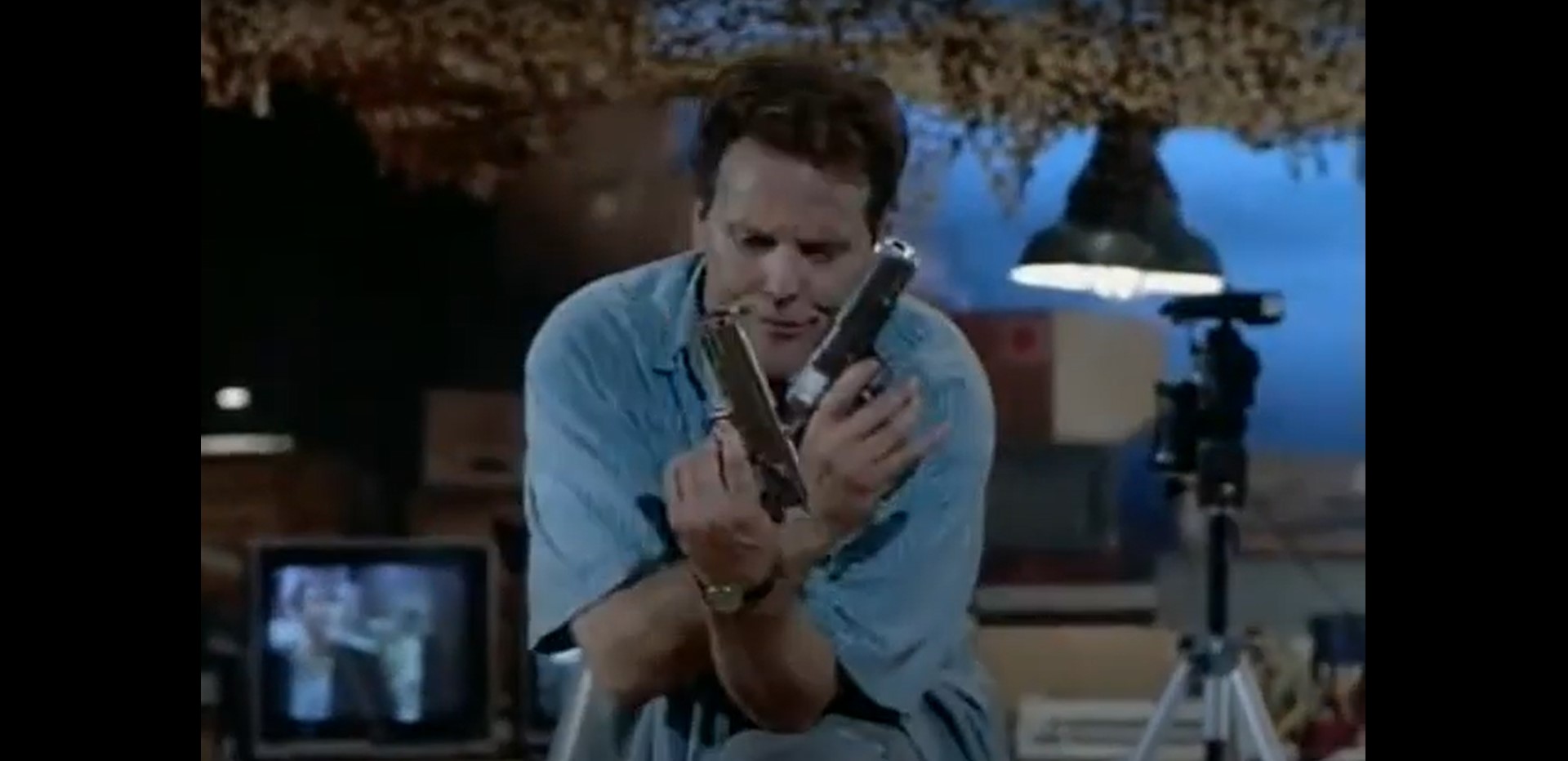
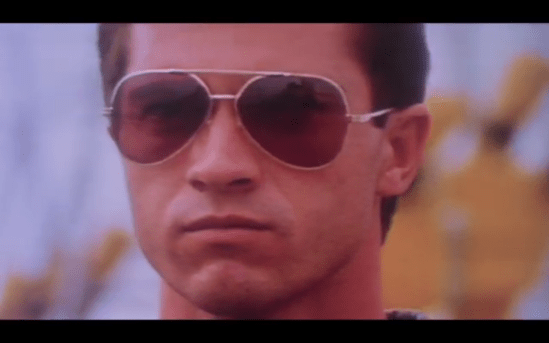
Martial arts expert Edward John Stazak is quintessentially the Chuck Norris of Australian cinema, but whereas Norris has a prolonged career in the film industry, with credits out the wazoo, Stazak’s success in the biz never took a jump kick flight. Not even with Jason Blade, a character who sounds like a fighter straight out of a Mortal Kombat installment, could boost a lustrous vocation. Stazak’s likeability is only shorn by his lack of expressive versatility as he’s virtually one dimensional, showing no range of emotion when the scene calls for it or even when in the rare instance of being bested at a fight, but the handsome, muscular Aussie can sell a hand-to-hand skirmish with one or ten opponents without wondering too far into cheesy coordinated territory, which Stazak co-assisted in the fight sequences alongside screenwriter and stunt man Peter West. The lack of a good and powerful antagonist also spikes “Day” and “Strike’s” well-rounded action status. Jim Richards as the tough Jim Baxter wasn’t a formidable adversary for Jason Blade. Baxter never challenges Blade’s weaknesses because Blade doesn’t have any weakness so it seems. Even with Gemma Anderson is kidnapped, Baxter never really leverages the opportunity. Jim Richards also looked out of shape in comparison to Stazak, who routinely went sleeves and, more frequently, shirtless to show off his physique, but Richards is also a well-known self-defense instructor who has worked with military personnel. In short, Stazark looked better for the camera. If you’re not an actual fighter, you’re an actual actor, such is the case with John Stanton and Michael Carman who brought a little thespianism to the “Panther” films. Stanton presented a fatherly figure, playing a Panther named Wes Anderson at the tail end of his tenure with the organization, to Stazak’s Blade. Andersen’s barely copes to the loss of his daughter, Linda, but that’ the Panther way or so it’s assumed as he puts it, “life goes on.” That such detached reality can be said about Zukor, the drug kingpin of Perth, played by Michael Carman (“The Devil’s Playground” and “Quigley Down Under”). Carman provides the aggressive affluent with has thugs to do his dirty work. Unfortunately, Carman does not continue with his Zukor role in “Strike of the Panther,” but Zukor and Wes are the fire and ice that motivate the marionettes into action at least in “Day of the Panther” while Wes pivots on a strange character tangent with supernatural abilities that’ll be explored later. As far as Love interests go, Paris Jefferson fills that void as Gemma Anderson. The “Xena: Warrior Princess” star becomes the niece to Wes Andersen, taking care of her uncle while she takes care of Jason Blade’s needs – wink wink. Jefferson’s stout feminine performance perfectly outcasts any kind of frail attributes typical of a damsel in distress that’s is trope-laden in action films; think Mary Elizabeth Winstead in “Live Free, Die Hard.”

Overall, as action films, “Day” and “Strike of the Panther” are fairly conventional martial art films for the 1980’s with a few eye brow raising quirks. For instance, Jason Blade is infallible. Perhaps, too foolproof as he single handily breaks down drug structures with a one-two punch simplicity, as if the level setting was on easy mode. Another what? moment stems from the character Wes Anderson in the sequel film when he suddenly obtains empathic powers after being grazed by a fleeing car and he’s able to reach Jason Blade on a subconscious level as he enters the power plant’s maze and takes on ninja-cladded warriors. Lastly, for back-to-back shot films where the release dates are stack closely upon each other, the need for an in-depth recap was terribly excessive that perhaps only required a tiny bit of exposition to fill in the gaps. “The Evil Dead” series is an ideal candidate for comparison of prologue recaps. Ashley Williams explains, with accompanying depiction variants, in “Evil Dead II” and “Army of Darkness” his misadventure to a cabin in the woods and his poor Linda becomes a Candarian demon plaything, but the Sam Raimi directed cult horrors are also at least five years separated. Brian Trenchard-Smith concentrates his direction of “Strike of the Panther” to detail almost every plot point through a Wes Anderson voiceover and rehashed footage. There are also awkward workout and dance scenes reused for the sequel that are not a nod back to the first film, but are used as current storyline. Talk about your deja vu!

Umbrella Entertainment release “Day of the Panther” and “Strike of the Panther” onto a double bill Blu-ray, a first for the Ozploitation gems. The two-films on a single BD50, region B disc is presented remastered in a high definition 1080p widescreen, 1.85:1 aspect ratio, from the original 35mm interpositive negatives, scanned and restored in 4k. Despite some minor strip issues (i.e. some cigarette burns and a few translucent scratches), the picture has tremendous stability in color and in natural grain. However, the framing seems a bit off as if the cropped, but that could also be very much intentional by cinematographer Simon Akkerman. The English language 2.0 DTS-HD Master Audio track has full-flavor robustness and balanced across the board. Remember those Street Fighter II sound effects? Dialogue has good distinction with solid range and depth with the soundtrack and ambience. No subtitles are available on this release. Unfortunately, there are no bonus features on this release either. The Brian Trenchard-Smith back-to-back films, bustling with endless wrangle, hail from Australia for the first time on Blu-ray and while might seem excessively obsolete in contrast to today’s action film, “Day of the Panther” and “Strike of the Panther” are ravishing relics that are extremely priceless to martial art cinema collectors.

Day and Strike of the Panther on a Blu-ray! WHAT!! Get it now at Amazon!

One Tough Cop Taking on Evil Cyborgs! “Nemesis” review!


In the year 2027, enhanced humanistic cyborgs virtually run the planet with the renowned L.A.P.D. being no exception. Alex Rain, one of L.A.’s finest brute cops, is partially cyborg himself, but the essence of his soul remains human intact while his synthetic flesh cloaks the icy machine beneath. After tracking down suspected cyborg terrorists and almost losing his life in the struggle to stop them, Alex questions his dwindling humanity, leading him down a path of unfulfilling revenge and botched smuggling before his former employer, the L.A.P.D. commissioner named Farnsworth, tracks him down and uses deadly coercion to force Alex as a pawn in dangerous covert mission. The burnt out cop is thrusted back into the fray of his former life when Farnsworth orders him to retrieve data from the treacherous female cyborg, Jared, who was once Alex’s partner and lover, before she hands over the sensitive information to a group of cyborg terrorists who call themselves The Red Army Hammerheads. With a micro bomb implanted near his heart as insurance, Alex has no choice but to accept the assignment before detonation in 3 days and with his time running out, finding Jared isn’t the problem as Alex comes to realize that deception has convoluted the stakes and nothing is who or what they seem.

Albert Pyun’s 1992 cyberpunk action-thriller “Nemesis” is an explosive-heavy, science fiction existentialism film never before seen, or even aware of, by this reviewer, but the ground-worked narrative has remained a constant piece of foundation in being the byproduct of inspiration extracted from other cyberpunk films of its kind, such as “Robocop,” “Blade Runner,” and “The Terminator.” “Nemesis” has a presence much to the tune of another film, “Cyborg,” starring John-Claude Van Damme and that inclination would inevitably make a world of sense when the awe-striking epiphany lands that Pyun also directed that film, also utilizing some of the same actors for his early 90’s cybernetic dystopian feature. In reviewing Pyun’s credits, the assumption can be made that the filmmaker has a sturdy hard-on for the intertwining of mankind and machine as not only did the director write and direct “Cyborg” and helmed “Nemesis,” but went on to be a part of, whether director, writer, or producer, of four more “Nemesis” sequels with a fifth being produced and shot, but scrapped in post-production due to Pyun’s flailing mental health. Rebecca Charles fed the scribal beast as “Nemesis’” screenwriter, along with penning “Nemesis 2: Nebula” and “Nemesis 3: Time Lapse.”

Alex Rain is a cold cut character, sliced thick like a cool cucumber on top of a hard to wedge salad. Rain’s iciness symbolizes his downtrodden humanity status and with each part of his body shattered from destruction, he becomes one step closer to being an automaton with eye brows. B-movie action star Olivier Guner essentially make a big career breakthrough with “Nemesis” as his sophomore feature. Guner’s military background suitably solidifies his physique as a workaholic cyborg cop while also presenting a rough cut speech impediment that’s very straight forward and without emotion. Some would say that Gruner’s approach fits his half-human, half-toaster oven character and I would say that would be correct. The 80’s and 90’s saw a crowded entry list of action stars, including Jean-Claude Van Damme, Chuck Norris, Steven Seagal, Sylvester Stallone, Arnold Schwarzenegger, and many others in various degrees of success – and Olivier Gruner became one of those faces that had since then been lost over the years; Gruner’s performance in “Nemesis” lacked pizazz which could have been the contributing factor to his success, but the monotonic, unflattering one-liners and blank face stare didn’t spark any fires on top of his average muscular frame. His performance, to keep with the fire motif, didn’t provide the oxygen, a combustible, or a flammable source to quickly set ablaze a trail for semi-popularity amongst his peers and that’s where “Nemesis” falters in entertainment value. Comparatively, “Trancers” franchise actor, Tim Thomerson, is full of range and vigor as an concealing Commissioner Farnsworth. Thomerson, in his early 40’s at the time of filming, displayed an impressive physicality to his role, keeping up nicely with his onscreen rival. Farnsworth, from the get-go, reeks of desperation when pressuring Alex to do his bidding and Thomerson really nails the part and can switch on the proverbial dime as an egocentric field operative when chasing Alex through the jungles on the Hawaii set. The night and day performance is a stark contrast between the two actors. What’s mostly disappointing about “Nemesis’” cast that favorable characters come and go; some the characters a pinned with terrific actors such as Shang Tsung himself, “Mortal Kombat’s” Cary-Hiroyuki Tagawa, as the leader of The Red Army Hammerheads and the late, great Brion James (“Red Heat”) chirping a lousy German accent of the Commissioner’s right hand man. The cast has many other recognizable names that, again, come and go, including a strung out looking Merle Kennedy (“Night of the Demons 2”) as Max Impact, Marjorie Monaghan as the algorithmic beauty Jared, Vincent Klyn (“Cyborg”) as a disposable bodyguard, an extremely fit and nude Deborah Shelton (“Body Double”), voice actor Nicholas Guest (“Dollman”), brief cameo by Jackie Earle Haley (“Watchmen”), a fresh faced version of “The Predator’s” Thomas Jane, and Thomas Jane’s bare ass.

The financial backing was obviously designated for a particular department in the “Nemesis” workshop and that department was special effects. Explosions, rotoscoping, stop-motion, sculpture, implosions, practical effects and makeup are just the tip of the iceberg. Frayed wires and eye ball cannons are the elegant touch that makes “Nemesis” a cult favorite and bring substance to a clunky storyline and divisively dynamic acting. However, not all the specials are pinpoint precision and grounded by reality. The one scene that stands above the rest when Farnsworth is hot in pursuit of Alex and Max and he’s shelling off rounds of a shotgun, standing relatively still, blasting away without moving the barrel around to compensate for his prey’s length of distance gained or even when they decided to make quick pivots in direction. Somehow, the rounds hit very close to Alex and Max and that’s not all, they even explode like a single stick of TNT. ACME must have had a hand in the special effects department because the scene sure was loony. Yet, the implosion of a monolithic silo was uber-impressive, well-executed, and really ritzy for the silver screen.

Imperial Entertainment’s “Nemesis” infiltrates onto another home video release, a region free, dual DVD and Hi-Def 1080p Blu-ray format release, from MVDVisual under their MVD Rewind Collection series. Sheathed by a slick, retro-grade slipcover with familiar art, reminiscent of the now decade old Sterling DVD release, the special collector’s edition provides two aspect ratios, an anamorphic widescreen 2.35:1 and a widescreen 1.78:1. This MVDVisual Release has stellar detail in the texture and in framing that are exhibited in various tint shades, such as yellow and blue, and eventually cough up toward a more natural look into the second act when Alex reaches the rough neighborhood of Shang Loo, Java. Even though the visual compositions and mold work doesn’t pop with color and are a bit fuzzy, “Nemesis” is a product of it’s time, the early 1990’s and you can’t fault Pyun’s film for that. The English 5.1 surround sound is beautiful. So beautiful and potent, in fact, that you can actually understand Olivier Gruner’s mumbling, putting dialogue for all characters right into the front row while offering a stimulating range and depth of ambience sound, an unlimited variety of explosions, and plenty of miscellany cyborg hubbub. Other language are available, including French, German, as well as English in 2.0 stereo and there are English and German SDH subtitles available The Blu-ray bonus features include new interviews with producer Eric Karson and director Albert Pyun, “Nemesis 2.0” the director’s cut with Albert Pyun audio commentary, and original theatrical trailer. The DVD is the director’s cut and also includes the Japanese cut with Japanese subtitles burnt-in. Bonus features for the DVD include introductions by the director Albert Pyun and star Olivier Gruner, an afterword by Albert Pyun, a behind-the-scenes featurette, an interview with star Olivier Gruner, the making of segment involving the hefty special effects, stunt work, and visual effects, a featurette entitled “Killcount,” a behind-the-scenes photo gallery, TV spots, Key Art Photo gallery, and, top it all off, a mini-poster inside the casing. Inside a killer definitive, two-format and disc set from MVDvisual, “Nemesis” hones in on the existentialism notion of what being human actually means to each and every one of us through the bombardment of gun fights and jumbo explosions on top of a conglomerate cyborg coup that peaks with hard bodies and even harder viewer contemplation.