Gaudy, Superfluous EVIL Sits in Your Living Room and Destroys Your Family. “The Coffee Table” reviewed! (Cinephobia Releasing / DVD)

“The Coffee Table” Would Look Good in Your Living Room! Purchase It Here Today!

Jesús and Maria are new parents with a beautiful baby boy.  Maria has been eager for a baby and sent through several medical treatment for the bundle of joy while Jesús continuous rides the fence about being a father.  When the baby arrives, the boy becomes a source of usually one-sided bickering and jabbing contention as Maria feels Jesús could be a better father to their newborn son.  When they move into a new apartment, they find themselves in a furniture store looking at a gaudy glass coffee table Maria can’t stand the sight of, but Jesús very much can’t live without.  While Maria steps out to shop for an upcoming luncheon with Jesús’s brother and young girlfriend, Jesús briefly stops assembling the table to take care of the baby until a tragic accident happens that reshapes everything and everyone Jesús cares about, and impels him to bottle in the tragedy, hiding it in extreme guilt from his wife and guests, as he struggles to find the right moment to relieve his soul. 

Marriage is hard.  Parenting is even harder.  Choosing a coffee table should be a delicious piece of decision-making cake but for director Caye Casas choosing living room décor can be deadly.  The “Killing God” director follow up his debut feature with the 2022 released domestic disturbing comedy-horror “La Mesita Del Comedor,” aka “The Coffee Table.”   Casas cowrites the film with Cristina Borobla, her first screenwriting credit but not her first collaborative effort working with the director as the vocational Art Director has been involved in Cases’s other works, such as “Killing God,” his 2017 short “RIP,” and amongst others.  Maria José Serra (“Amigo Invisible”) and Norbert Llaràs (“Killing God,” “The Perfect Witness”) put their producer café mugs onto “The Coffee Table” with the hailing from Spain production companies La Charito Films, Alhena Production, and Apocalipsis Producciones. 

Much of “The Coffee Table” is set inside the tiny, newly moved into apartment of Jesús and Maria who even though rag on each other’s opinions and one of them don’t necessarily favor being a parent, deep down the unlikely pair do have a strong love attraction that swims upstream against the repelling.  In the roles of Jesús and Maria are David Pareja, whose worked with Casas inner circle before with “Killing God,” and Estefanía de los Santos with an unforgettable, characteristic raspy voice that magnifies the role tenfold.  Both Pareja and de los Santos are comedically bred with a long list of hilarious Spanish features to prep them to see the gut-punching, black humor of what’s to come in “The Coffee Table.”  Frankly, there’s nothing negatively to report in Pareja and de los Santo’s flawless, funny, and unfortunate family dysfunctional performances surrounding their love-hate relationship and the knot of culpability and the bliss ignorance contrast that’s delineated between them.  Floating into the mix of repressiveness are side stories that become assimilated by the untold tragedy, such as the neighbor’s daughter (Gala Flores) with an intense belief Jesús loves her, the smarmy coffee table salesman (Eduardo Antuña, “Killing God”) who also have an interest in Jesús, and Jesús’s brother Carlos (Josep Maria Riera, “RIP”) and his barely 18-year-old girlfriend (Claudia Riera, “The Communion Girl”) being ribbed for their own odd couple relationship and giving a surprise announcement of their own. 

Though a comedy and a horror, I didn’t find “The Coffee Table” all that funny but more so quirky, outrageously bold, and shockingly hard-hitting instead.  Horror, definitely without a doubt, comes through but not in a typical to be scared or to exact fear way with any of the conventional themes to support its harrowing weight.  The horror that uncoils is every parent’s worst scenario, the underlying nightmare that grabs the soul and squeezes until every drop of anxiety is wrung out of our wet bag of bones and meat.  The incident itself is gnarly and unspeakable but the post-trauma slithers in a nasty case of guilty conscious, shame, and fear that can freeze someone to the spot to where they clam up, sweat profusely, stomach twisted, and have self-harming thoughts from the conjoined cause and effect of having to tell your partner the most terrible of news and see their composure, their affection flush away in a blink of an eye.  Casas able to string along the aftermath to extract a feature length film without it ever approaching critically forced or farfetched, adding on and expanding upon the luncheon or Jesús’s wiggling through painfully with excuses on why Maria should leave the baby sleeping peacefully in their room.  The passively aggressive sparring atmosphere quickly turns into colossal tension and hopelessness through the mechanism of dark black comedy.  As a parent myself, “The Coffee Table” evokes great sadness and mental strife of the situational possibility, the greatest horror of all time.    

The cruel film by Caye Casas arrives onto a Cinephobia Releasing DVD. The MPEG2 encoded, upscaled 720p, DVD5 comes in at being the eleventh release for the Philadelphia based, eclectic independent film distributor. And, boy, is it a doozy. For “The Coffee Table’s” image, not the two, artificially gilded naked women holding an oval shape, unbreakable pane of glass, the feature’s picture quality renders about as good as any single layer capacity unit can decode in a digital age with modest details, muted hues, hard lit, and a good amount of spectrum banding in the darker areas. Not to fret, however, as there’s plenty to discern with a film that isn’t reliant on details but more reliant on hitting you wear it hurts, heavyheartedly. The Spanish language Dolby Digital 5.1 uses a lossy compression that, again, suitable to the movie’s means of conveying a contortioned, ruthless story defining the very meaning of a no way-out, no-win situation. Dialogue really is key for this type of narrative to work and progress and does come through fine without an ounce of earshot hinderance. Also, not that type of film that provides a breadth of range or depth as much of the layers express in a very near arrangement, as expected in a concentrated setting of Jesús and Maria’s apartment home. English subtitles are optionally available, and they synch up and pace well with only one noticeable grammatical error. Not much in the way of special features as only Cinephobia Releasing trailers fill that spot and there is not mid or end credits scene. The 90-minute film’s DVD release comes not rated and has region 1 playback. Other regions are untested, and the back cover does not state the official region playback capacity.

Last Rites: Caye Casas and Cinephobia Releasing has the cajónes to not table this wonderfully bleak black comedy-horror from reaching audiences far and wide. “The Coffee Table” is a painful reminder of just how fragile life can be, much like a cheapy made piece of tawdry decor from China.
“The Coffee Table” Would Look Good in Your Living Room! Purchase It Here Today!

Playboy Discovers Vengeful EVIL’s Hidden BDSM Room A Little Too Snug. “Emanuelle’s Revenge” reviewed! (Cinephobia Releasing / DVD)

Emanuelle’s Revenge now on DVD from Cinephobia Releasing!

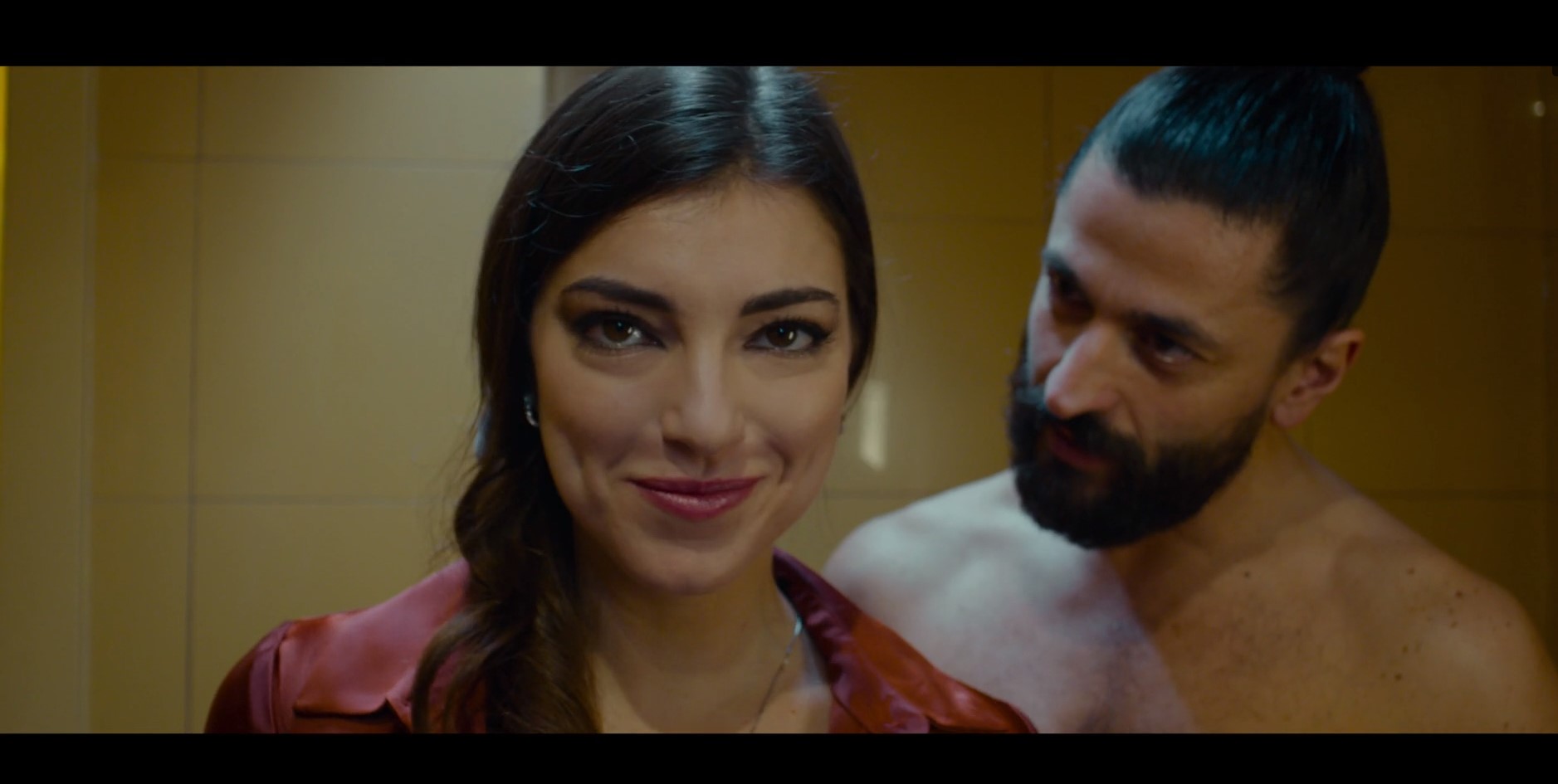
A wealthy businessman philanders his way through woman in a pursuit of satisfactory conquest.  The formidable challenge of bedding a hard-to-get woman arouses him and the chase is all that more thrilling and erotic.  His persistence and perfect man act pays off with up-and-coming model Francesca, but for the playboy, Francesca becomes another notch in his belt and quickly implodes Francesca’s romanticized relationship after a sexual tryst in the public eye.  A year later, he begins his surmounting quest again with Emanuelle, a renowned writer in a lesbian relationship.  The beautiful and darkly seductive woman catches his eye and the game begins as he uses every excuse to rendezvous with her despite the Emanuelle’s partner standoffish opposition, but as his tenacity appears to be paying off as she leads him on, awarding his constant charm with favorable kittenish returns, Emanuelle is actually leading him straight into the jaws of a deceitful plan.

Italian co-directors Monica Carpanese and Dario Germani are copiously inspired by the heyday of Italian Eurotrash cinema.  The actress-turned-debut director Carpanese has starred in a handful of erotic and horror thrillers of the prolific trashy filmmaker Bruno Mattei, such as “Dangerous Attraction” and “Madness,” while also having a principal performance in the 2022 sequel to Joe D’Amato’s notorious cannibalism film “Anthropophagus.  Her colleague Dario Germani is also the cinematographer for the spaced-out follow-up as well as establishing himself in the genre not as a filmmaker behind the lens but also a director with genre films under the belt with “Anthropophagus II,” a dissimilar lover’s anguish in “Lettera H,” and a snuff-slasher “The Slaughter.”  Carpanese and Germani’s next collaborating venture continues with another D’Amato influence mixed with the popular erotic series, and its tangent spinoffs, of Just Jaeckin’s “Emmanuelle” that has official and unofficial sequels spanning all through Europe with enticingly, titillating erotic stimuli and thrills.  Their explicit explication of the near 50-year-old sexy-laced franchise comes in the form of “Emanuelle’s Revenge.”  Dropping the second “m” along with the choice of similar story and title moves the film closer to being a remake of the Joe D’Amato “Emanuelle and Francoise,” aka “Emanuelle e Francoise” or “Emanuelle’s Revenge.”  Carpanese pens the Marco Gaudenzi and Pierpaolo Marcelli produced script under the production flags of Flat Parioli, Haley Pictures, and TNM Productions. 

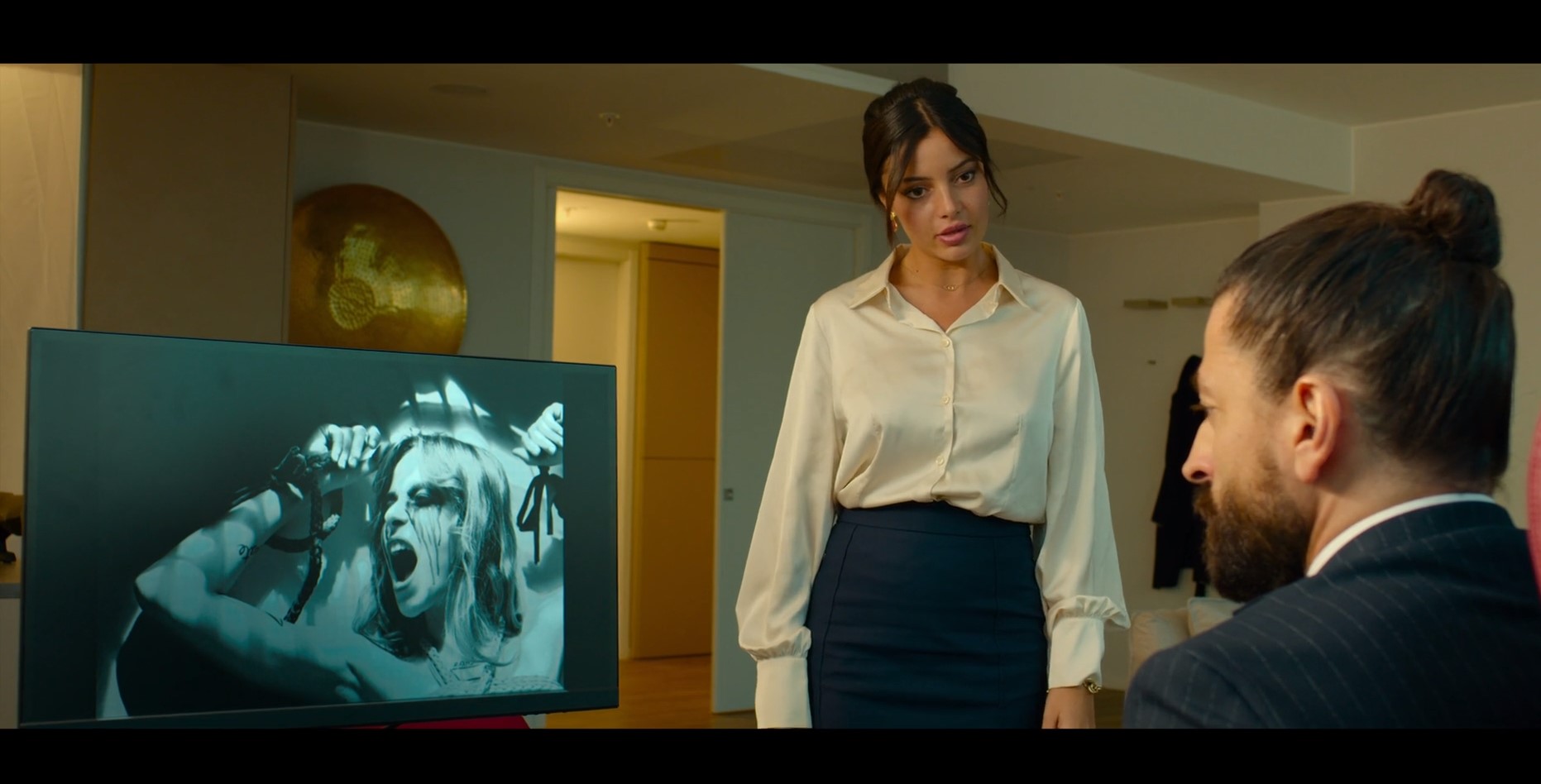
“Emanuelle’s Revenge” is carried by a small, four-person principal cast and half that for peripheral players within a dual-timeline story that provides the same cat-and-mouse game but with different, yet shocking outcomes on both of them.  At the tip of the spear is playboy Leonardo played by Gianni Rosato.  Sporting his best bandholz beard and pony bun, Rosato’s aggressive entrepreneurship extends beyond the working stiff hours and into the extracurricular activities of hunting down and dominating the opposite sex to sate his kicks for kink.  As the primary principal, Rosata receives the screen time that digs further into Leonardo’s psyche and what’s revealed about Leonardo’s nature is obvious trouble with an aggressive flirtation to the point where his whole game is akin to a stalker, showing up unannounced where he knows his targeted woman will be, obtaining their property that he has no right to, and essentially sucking their face with really bellicose kisses that look like they hurt.  Okay, maybe the latter is more overzealousness on Rosata’s part but certainly adds to Leonardo’s alarming behavior to which women seem to be attracted to as if giving into the idea that women prefer bad boys.  Such as the case in the first narrative with Francesca, a promising model with a now sex-relationship smart attitude after a previous relationship went terribly wrong with revenge porn.  Played by Ilaria Loriga in her own credited role, the young actress isn’t quite the epitome of innocence but is understandably weary to fall in love again with the persistent Leonardo but with all the foretell warnings of a disaster in the making, Francesca’s penned as sorely naïve and having learned not one single lesson of her past relationship with promiscuous men.  A year later, in the second act’s story, Emanuelle strolls into the picture under the olive-skin and deep eyebrows of Beatric Schiaffino who bats enticing eyes of the titular character’s hidden agenda. Schiaffino’s crafts a demeaner starkly different against her previous year counterpart as Emanuelle’s coquettishness doesn’t refrain from the fact she’s already in a hot-and-heavy relationship and matching Leonardo’s hot-to-trot escapade with a come-hither that’s just out of his reach. If a rake beckons a game of amorous desire, then Emanuelle enacts a game of her own, one of a lure to lead the blind right into her spider’s web and Schiaffino properly tightropes pleasure and purpose to a somatosensory stimulation level. “Emanuelle’s Revenge” rounds out with Luca Avallone as Leonardo’s licentious friend and business understudy, Ilde Mauri as Emanuelle’s lesbian partner, and Miriam Dossena as Leonardo’s 20-something daughter who suddenly pops into play in the Emanuelle story.

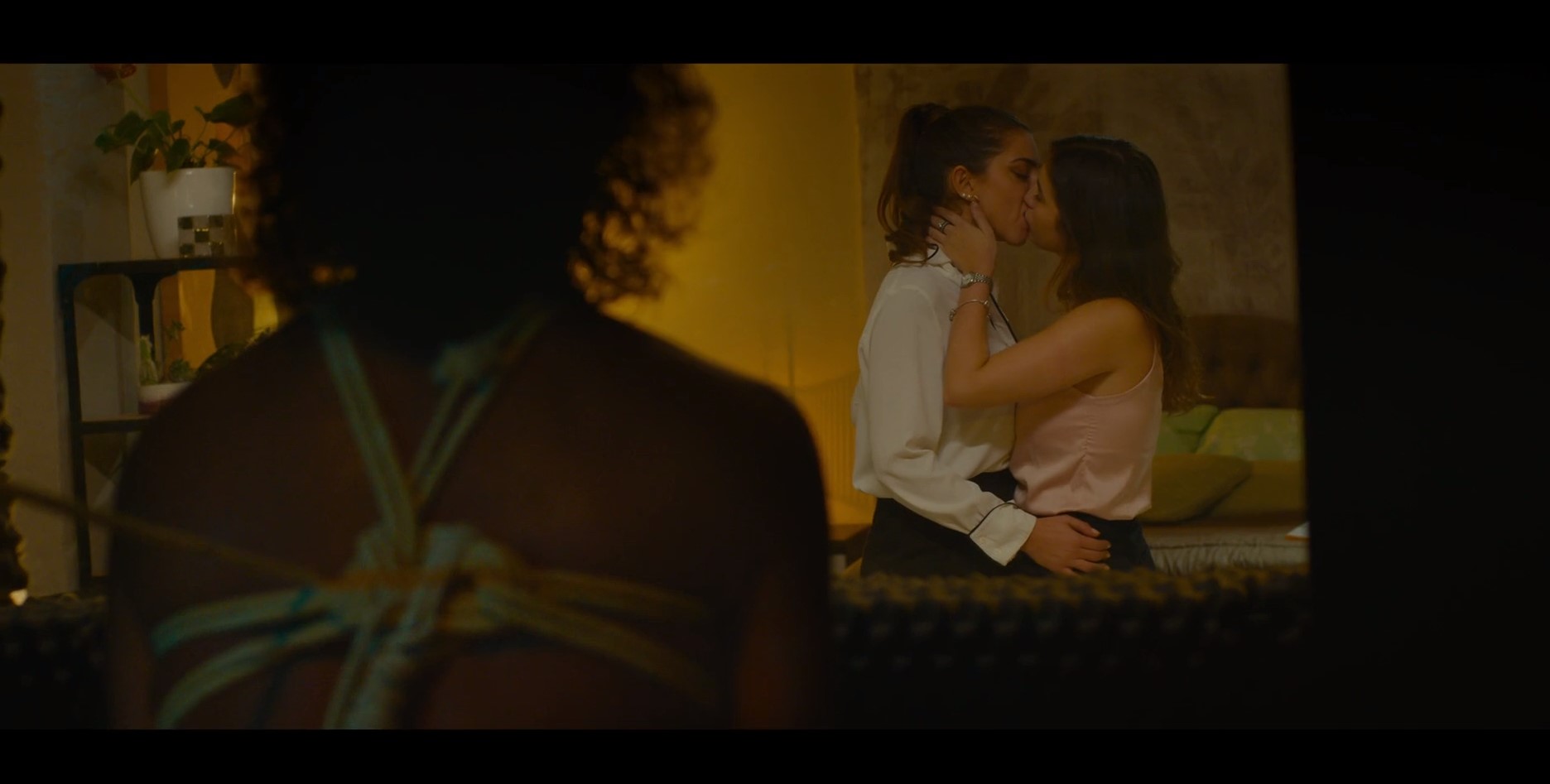
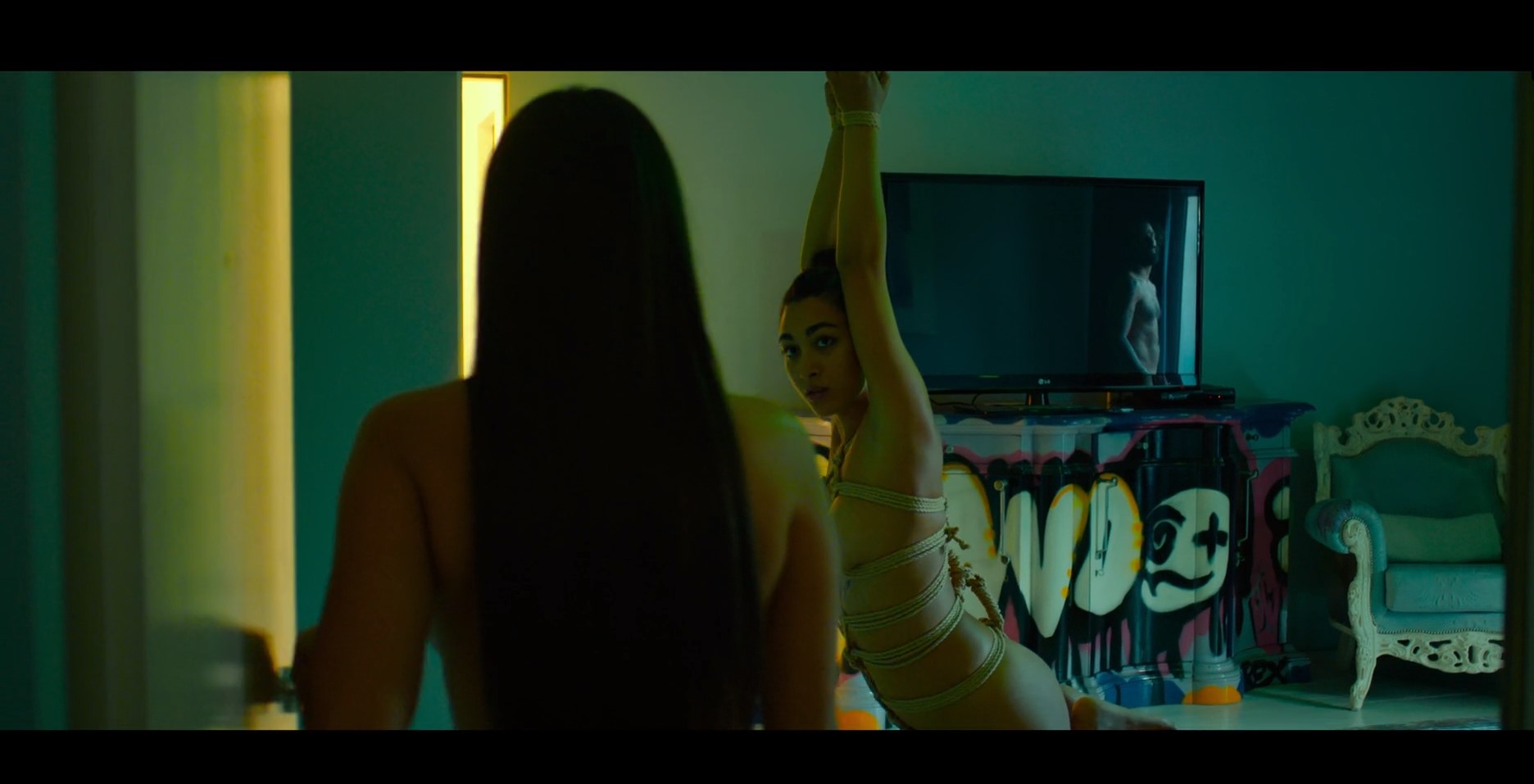
Even though “Emanuelle and Francoise” has never traipsed across my eyes, from what I’ve read the Joe D’Amato and the coproduction of Monica Carpanese and Dario Germani share a lot in common, but the modern-day version of this sordid tale of lust and revenge sticks to the venereal veneer only whereas D’Amato engages a cannibalism and other ghastly horrors. “Emanuelle’s Revenge” seduces with melodramatics, frisky fantasies, and contemptible thralldom because of one man’s wandering libido, focusing tremendously on the building game of mostly pavalar rather than diving into shock value. The narrative begins with a suicide of Francesca, jumping half nude off a busy passenger vehicle bridge, and this segues into Leonardo’s assertive activity into Francesca’s life and so the tale’s non-linear format is already incredulously fated with tossed in opening scene just to grab attention. When following Leonardo’s uncomfortable pursuit, and uncomfortable henpeck kissing, of Francesca, the audience is just along for the ride up to the point of incident where they’re abruptly blue-balled by cut-to a year later without knowing why Francesca decided to throw in her life towel. The brain and our movie-watching experience eventually catchup with the fact everything will be explained at the climatic, but the format jars the assimilating process a tad. Throughout the narrative, there’s plenty of a T&A to go around as I believe nearly every actress with speaking lines drops at least her top, living up to the long history of “Emmanuelle’s,” or “Emanuelle’s” fleshy affluence and erotic elements. Considering the plot twist, Carpanese’s approach doesn’t compel any creativity into the mostly remade erotic-revenger and makes contact with formulaic properties that poison any kind of novel ideas that might have been indited in the inner story layers.

Arriving at number 8 on the spine for Cinephobia Releasing, “Emanuelle’s Revenge” is now on DVD, presented in a widescreen 2.35:1 aspect ratio. The MPEG-2 encoded DVD9 has a sleek look albeit tumbling through a bitrate spread of 5 to 7 Mbps. Some surface coloring suffuse, especially on skin where similar tones seep into the adjacent due to block boundary artifact, but the amount is very little and doesn’t sully much to render the picture an admixed wash in the lion’s share of soft lighting. Details are okay here with the stunning urban landscapes and more opened metropolitan venues, such as a rooftop party, opening up audiences to the chic levels of high society’s profanation of control and sex. The release offers two Italian language audio tracks: A Dolby Digital 5.1 surround and a 2.0 stereo. If asked, I would suggest less channels as they are redundant and useless and go for the 2.0 stereo as there’s not much frequential range in what is essentially a talking head film with an exposition driven narrative. Dialogue is clearly and cleanly stated overtop other audio layers with a powerfully boosted stock file soundtrack in parallel unison to the theatrics. English subtitles are optionally available and the error-free translations keep up with dialogue pacing. Only other Cinephobia Releasing film trailers, including “Brightwood,” “The Goldsmith,” “The Human Trap,” and “Amor Bandido,” are available bonus content. The black background front cover delineates deliciously Beatric Schiaffino as the titular Emanuelle sitting open robed, in thigh-high laced stockings, and on her wicker chair throne. This image reminds me of a mistake in this revealing scene with the very first image of Emanuelle sitting in the oversized back chair resembling closely the front cover image, but the subsequent scenes have her once flesh exposed chest to midriff covered up with censurable continuity. Inside the DVD Amary case lie no insert and the same provocative front cover Emanuelle image more centrally cropped down and blow up to emphasize the seductive siren. The not rated, 83-minute feature is limited to a region one playback. “Emanuelle’s Revenge” spices up the contemporary franchise with erotic entails, exorbitant egos, and illicit indecencies despite its sacrificing of pacing and organization for sleaze, skin, and a side dish of kink.


Emanuelle’s Revenge now on DVD from Cinephobia Releasing!

EVIL Has an Eye On You! “The Goldsmith” reveiwed! (Cinephobia Releasing / DVD)

“The Goldsmith” on DVD From Cinephobia Releasing!

Childhood friends and career criminals Stefano, Arianna, and Roberto plan their next heist of an elderly couple.  Suspecting the older husband to be a jeweler with a hidden lab stashed with product, the trio work off a plan based off a third party’s overheard intel that the house is well worth the score.  Successfully penetrating the home’s security system, securing the elderly couple, and discovering the jeweler’s hidden cache of priceless jewelries, the felonious friends believe they hit big in their home invasion scheme until the lab door suddenly closes behind them and they find themselves at the mercy of the old man, free from his confines and divulging intimate knowledge about each one of them over a videocam feed peering inside the lab.  Trapped, relationship destroying secrets are revealed by their seasoned captor who has something more odiously consequential in store for them than just letting their skeletons out of the closet.

The age-old idiom of to have a heart of gold, used to describe person’s generous nature, does not apply to Italian director Vincenzo Ricchiuto’s 2022 home invasion and survival thriller “The Goldsmith” where the absence of generosity gives way to greed, treachery, and one jeweler’s search to see inner beauty.  Known in Italy as L’orafo in the production’s native tongue, the writer-director’s debut feature tackling both sides of the creative spectrum in writing and helming is co-written alongside Germano Tarricone, co-writer of Italian horror thrillers “Eaters “and “In The Box.”  Together, “The Goldsmith” does play on the idiom more than meets the eye with the immeasurable principal characters that twist to knife harder in their gutting revelation or deceitful explanation.  From production companies Almost Famous Productions, Minerva Films, DEA Films (“The Perfect Husband”), and in association with Hurricane Studios, “The Goldsmith” is executively produced by Tarricone and the Ted Nicolauo directed “The Etruscan Mask” producer, Antonio Guadalopi.

The intimate casting provides a tight story primarily set at the older couple’s home with brief secondary story parallel and flashback sets confined to a mechanic shop, outside a bowling alley, and inside a nightclub.  The three thick as thieves are the nervously confident Stefano (Mike Cimini), his oversexed girlfriend Arianna (Tania Bambaci, “The Perfect Husband”), and the careless drug addict Roberto (Gianluca Vannuci, “Lui non esiste”) who become ensnared by an enigmatic goldsmith (Giuseppe Pambieri, “Yellow Emanuelle”) and his wife (Stefania Casini, “Suspira” ’77).  Cimini, Bambaci, and Vannuci favor ruffian routine but their performances are undercut by the script’s lack of development between Stefano and Arianna’s reclined relationship and the significance of why Stefano did a heist job on his own without his crew that seemingly had some unclear intensity in the backdrop on why he had to go at it alone.  The confusion of the first fib explanation from Stefano is quickly swept under the rug by the second bombshell that involves Arianna and Roberto, one that clearly overshadows Stefano’s deceit tenfold with its more transparent and personal complexion, and Arianna’s fib is more he-said, she-said that throws more shade toward the triangle-friendship as lie-after-lie quickly devolves an already brittle relationship into a flatlining hate to where they turn on each other, or at least two of them do.  The more interesting characters of the bunch are definitely the older couple with ulterior motives, luring bad people into their home just to trick them into being a part something far more sinister for their health.  Pambieri and Casini show their veteranized chops, delivering distinct lines within their distinct character voices and mannerisms but working together as a unit in a deranged, but endearing dispositioned husband and wife, especially Casini with her semi-handicapped character’s lady of the house demeanor that wears a crooked smile underneath.  “The Goldsmith” rounds out with Andrea Porti, Matteo Silvestri, and Antonio Cortese.

“The Goldsmith” might be inherently wealthy with its immeasurable karat of everyone is a villain in the story but the story itself isn’t as rich with its struggling with poor development to connect the pieces together in a coherent way.   In the overall picture from a high-level perspective, the basics of the acts are evident to where we’re setup with these three criminals looting a home, they find themselves in a pickle with a couple not as enfeebled as described, and with the second and most rising threat plot point being the goldsmith’s eye on the prize for his captives.  Yet, the ancillary scenes muddle up the support.  Point in case, the opening scene of the three hoodlums running from a dressed down priest, and the only reason we know it’s a priest is because the actor is listed as such in the credits.  The scene doesn’t explain much other than the troubled youngsters have presumably stolen a cross and have murdered the priest after a length chase on foot, setting up Stefano, Arianna, and Roberto as the antihero principals but the scene impresses more importance, like a moment to refer back to yet that moment never resurfaces into the grand scheme of the narrative.  Other similar instances rear-up throughout, questioning the motivations and the associations often left unsatisfactory by absence of valuable fill-gap material.  “The Goldsmith’s” themes of honor among thieves and attempting to see the good within come over clearly through a blanket of dark iniquities on both ends, leaving no good feelings for any of the antiheroic roles that flipflop for higher ground in this Italian-made home invasion thriller. 

Coming in as release number six on the spine for Cinephobia Releasing, “The Goldsmith” comes to DVD for the first time in North America. The MPEG-2 compression encoded DVD is presented in a widescreen 2.39:1 aspect ratio. Unfortunately, the Cinephobia release has a substantial artefact issue with the higher information rate on format’s compression encoder, resulting in a contouring blob during the first act’s darker scenes. The front and center macro-blocking ring produces a lighter shadow that becomes more of a visual obstacle to see past. Once the compression levels out, we do see some seesawing delineation details in a rather hard-lit, noir-lite cinematography from Francesco Collinelli (“Demon’s Twilight”), but the majority of details come through nicely, especially on skin textures and tones. The Italian Dolby Digital 5.1 surround sound offers forefront dialogue with cleanness and clearness. No apparent issues with the digital recording as the sound design forks up good depth between medium and closeup scenes and through the video-com as well as a selective range with some of the gorier moments with squishy-scoops and hammer-bashes. English subtitles are available with good pacing and a flawless, accurate translation from what I can tell as I don’t understand or speak Italian but understand the roots of Latin-based language. Bonus features a feature-length behind-the-scenes raw footage of the principal photography and trailers for Cinephobia Releasing films, such as “Brightwood,” “Emanuelle’s Revenge,” “The Human Trap,” and “Amor Bandido.” Physical features include a standard DVD amaray case with the titular character in a dark black and gold yellow closeup one-sided front cover, peering into the metaphorical windows of your soul with the jeweler’s head mounted magnifying specs in an eerie image of individuality prospecting. Inside there is no insert included and the disc art is a downscaled version of the front cover image with title underneath on top of a black background. The 89-minute film is not rated and though not listed on the back cover, playback is suspected to be region 1 locked. “The Goldsmith” aims to pull the wool over one’s eyes, or more accurately, replace the eyes altogether, with the deluding lustrousness of a home invasion thriller turned into an eyeful scoop of insanity.

“The Goldsmith” on DVD From Cinephobia Releasing!

Staying in the Closet Can Lead to an EVIL Series of Events! “The Latent Image” reviewed! (Cinephobia Releasing / DVD)

Out today on DVD “The Latent Image” from Cinesphobia Releasing!

An aspiring novelist isolates himself in a secluded cabin to write his work-on-progress thriller without distractions, especially avoiding he contentious ones with his longtime boyfriend. Working through the night hours on the precipice of a storm, a mystery man drifts into the cabin, injured and claiming car trouble. After letting him stay the night on the couch and knowing he should ask the drifter to leave, the man’s rough allure instills deep desiring dark fantasies to bubble up to the surface that result in keeping his lingering presence around while also the experience doubles as subject inspiration for his novel. Yet, there’s something off about his unexpected and unusual visitor that lends to curiosity into what’s being hidden or being unsaid. The drifter’s trunk becomes an object of obsession that turns into wild speculation. Fear and fantasy collide into an explosive and destructive cat-and-mouse game of downlow and deadly secrets.

Based on the 2019 short film of the same title, writer-director Alexander McGregor Birrell (“Braincell,” “Sleepaway Slasher”), alongside co-writer and star Joshua Tonks, return to “The Latent Image” for a 2022 full script treatment to flesh out a fleshy grass isn’t always greener on the other side homoerotic thriller.  “The Latent Image” is Birrell’s third feature length film of essentially is Joshua Tonks inaugural writing and producing credit into the United Kingdom production that clashes tantalizing and dangerous one-time temptations with the safety and security of routine and longevity woven out of being inside a complicated gay relationship that stings with old systematic-induced worries and consequences.  Latent Image defines as an exposed picture or film not yet developed and Birrell and Tonks use that to purposely shield viewers from the utmost truth until the petrifying picture is clear.  Latent Image LLC in association with the queer community storytelling serving June Gloom Productions are the picture’s production handlers with the latter company’s Brandon Kirby and Michael Varrati as executive producers and Tonks and Birrell co-producing their debut feature collaboration.

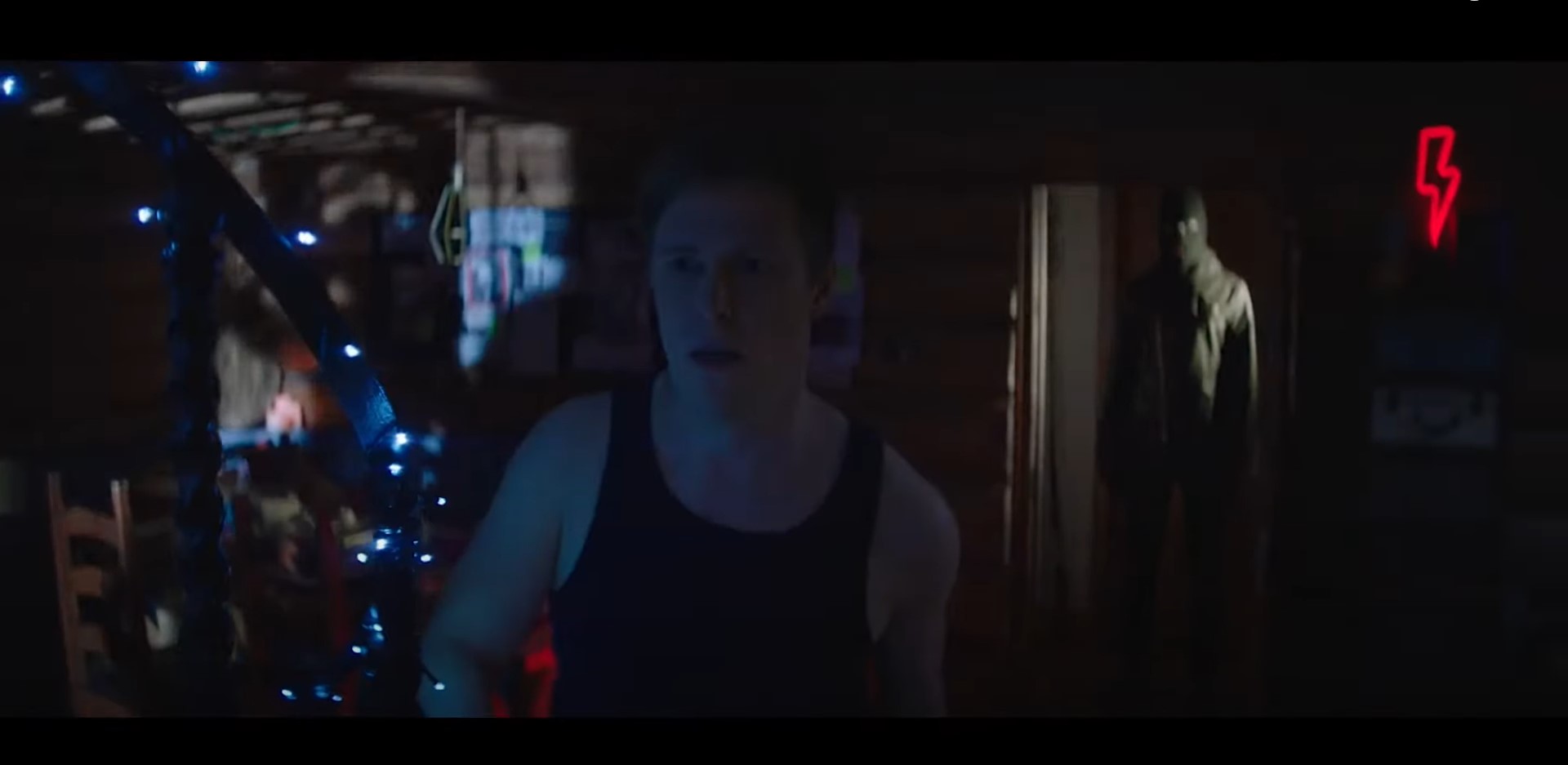
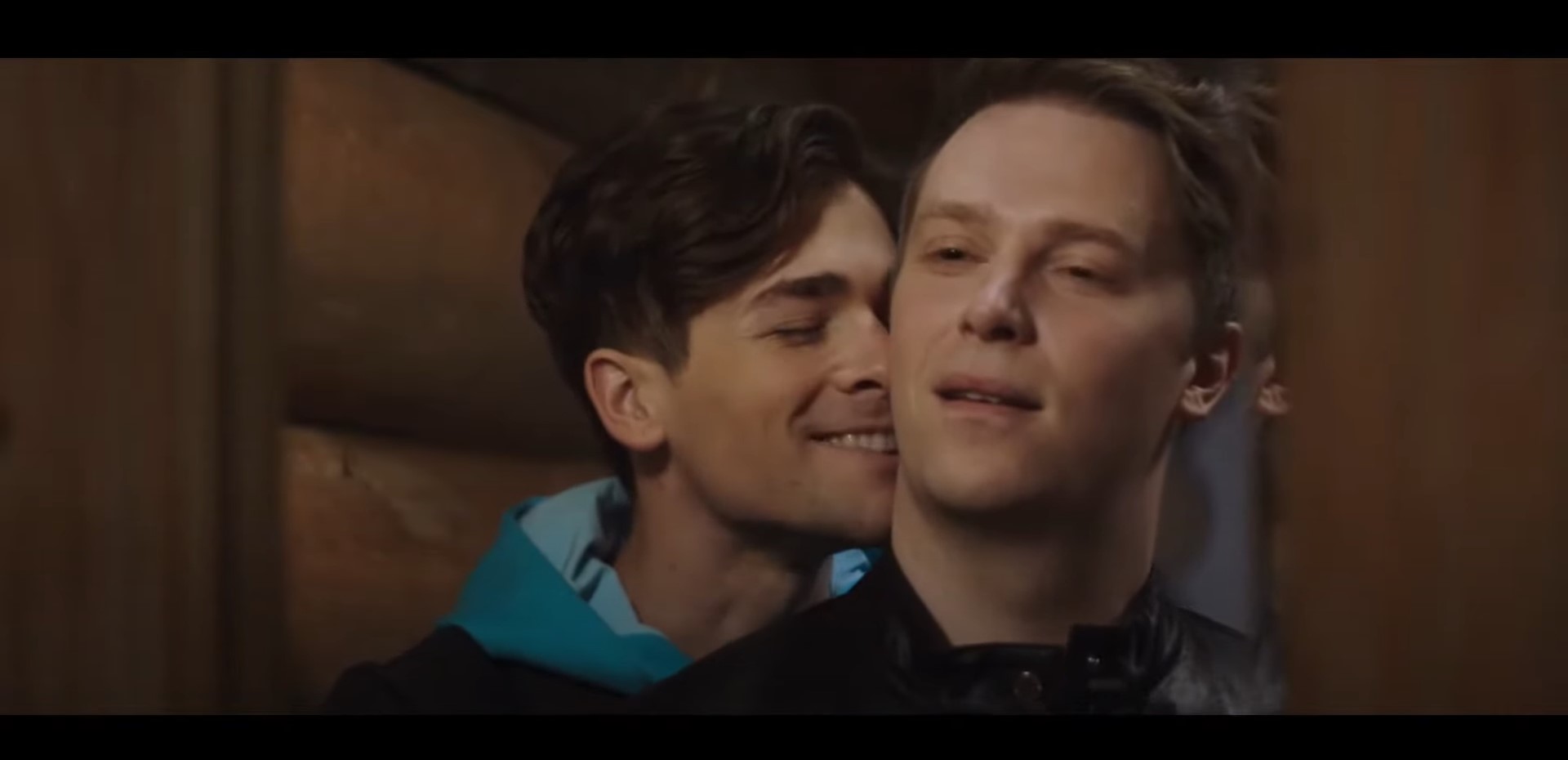
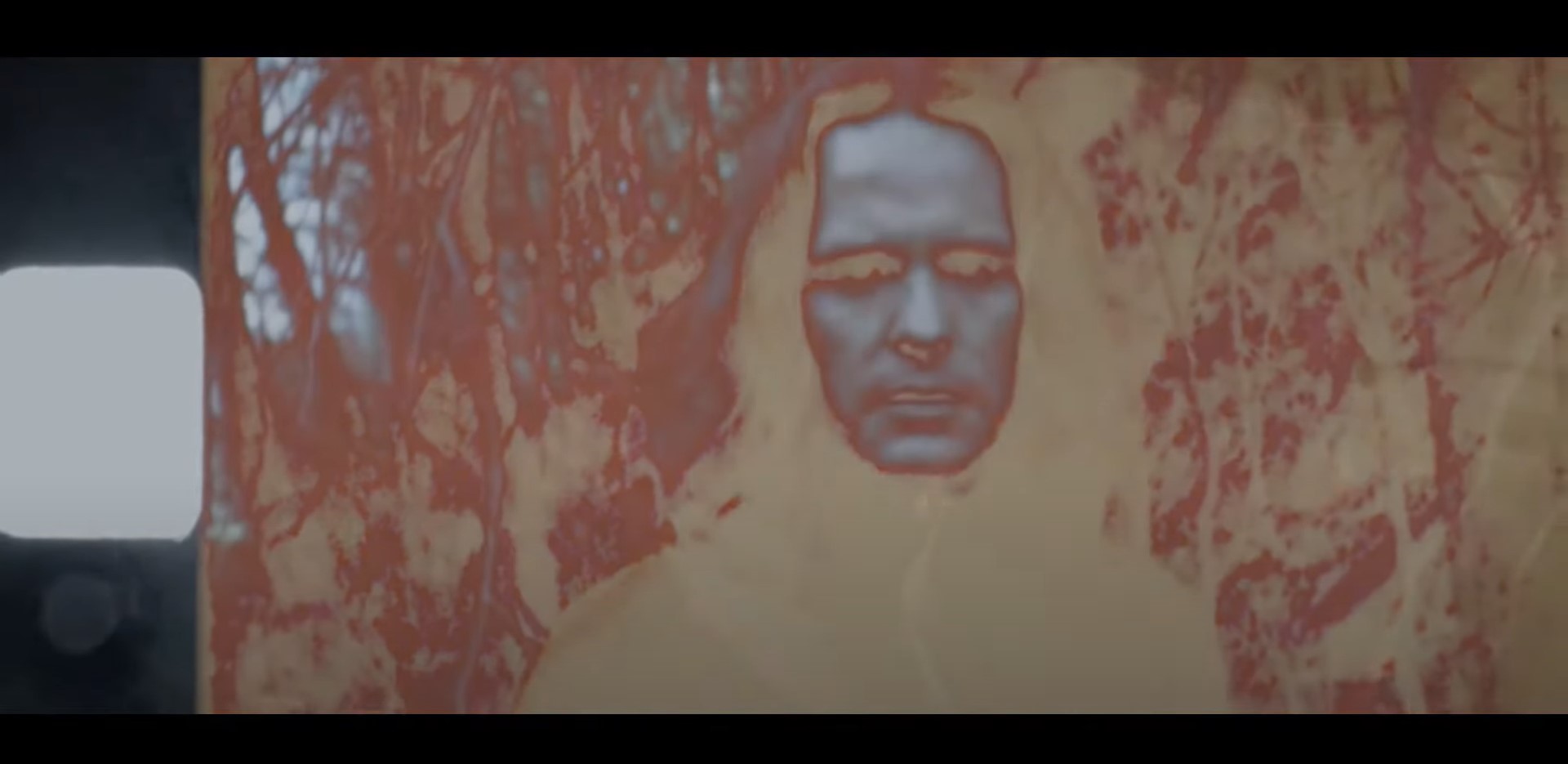
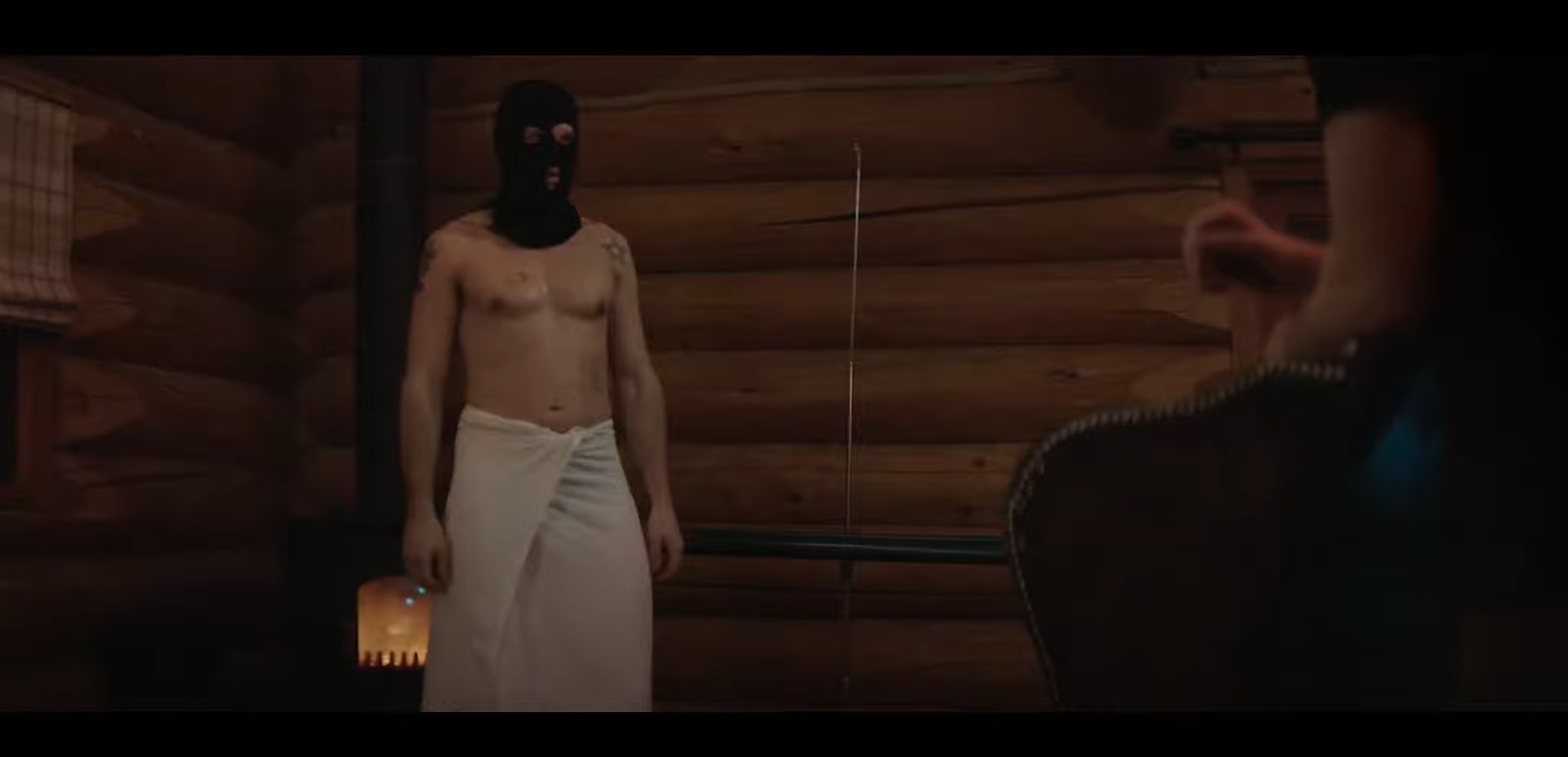
Being Joshua Tonks’s grandstand into his first feature production and as the lead character, the British-born, Vancouver film school-trained actor reprises his short film part with only two significant differences:  one being a principal name change from Robert to Ben and the other in providing Ben with more substantial backstory in the form of reveries or creative abstractions of a linear trickster narrative.  Ben’s old school, a reflection seen through his love for old photography without a display screen, his typewriting of the novel, and filming on celluloid film stock with a Super 8 camera.  This affinity for the antiquated matches his sexual stigmas, a flaw that shepherds in more harm than good.  Tonks readily handles Ben’s technological quirks as well as deepen his character’s philandering fantasy life with sexual daydream and night terror trances of being pursued, abused, and enjoying it.  Tonks works off the more indelicate stranger-danger of fellow Vancouver film school graduate Jay Clift.  Long hair, leather jacket, rugged approach, Clift in the role simply known as The Man portrays patience as weapon to wield to win over the quasi confidence and trust of the lonely and relationship confused novelist with an active imagination, a deadly combination to be caught with your pants down.  Clift becomes the character interloper in Ben’s life in more ways than one, some more subtle than others, and equivocally provides baited lure to either seduce the novelists or setup him for a fate far worse.  To complicate matters, Ben’s boyfriend, who he has a current agitated relationship with and viewers will initially think is safe and cozy back at their abode, will eventually enter the picture with newcomer William Tippery in the role to complete the all-male, three-man cast.

“The Latent Image” plotline doesn’t justify Birrell’s picture as anything else but another stranger showing up at cabin in the woods thriller.  However, beyond the shallows of the film’s surface level tension are deeper waters surrounding Ben’s parting of pathways.  The novelist not only struggles to conjure up a decent spinetingling narrative, but he also struggles personally with an uncertainty of where he fits into his relationship with at-home boyfriend Jamie and with this new, dark fella wandering into the cabin in rake portance.  From the beginning, Birrell and Tonks often visits Ben’s unconscious chimera but also often feels very real in its merge of reality and fantasy of what Ben’s sometimes wishes would happen, but don’t expect this thriller to be a based in psychosis.  “The Latent Image” is not a mental health movie of one man’s isolation snaps his baseline reality.  That would have overdone, overcooked, and overserved with stale bread and flat soda.  What “The Latent Image” taps into is not the age-old tale of a drifter’s in doubt motivations but rather a fear of being found out or fear of oneself when they themselves are unsure of who they are as a person and that can be a scary thought to let the imagination run wild. 

“The Latent Image” lands a debut distribution deal with the Philadelphia based Cinephobia Releasing.  The single layer DVD, arriving on retail shelves September 12th, is a compressed MPEG presented in anamorphic widescreen 2.39:1 aspect ratio.  Between the use of anamorphic lens, split lens, Super 8 reverse stock, and a ton of mood lighting, “The Latent Image” really pops cinematically with a variety of visuals and looks that can induce a breadth of emotions.  For a DVD presentation in an age where Hi-Def continues to the upward climb, the Cinephobia Releasing has tremendous sharpness and detail inside and out of the fuzzy warmth and often the vividly brilliant, focused lighting that induce back and front shadowing, decoding at average of 8 to 9 Mbps that eliminates any prospect of compression complications.  The English audio options include a Dolby Digital 5.1 surround sound and a Dolby Digital 2.0.  The 5.1 trumps the 2.0 In offering much environmental elements of rustled foliage and depth of character actions.  Dialogue conveys strongly, securing its spot Infront of the other tracks where depth allows.  English optional closed caption subtitles are available in the setup menu.  Special features include an audio commentary with director Alexander McGregor Birrell and stars Joshua Tonks and William Tippery going over their mindset of the characters, background, and visual and stylistic choices in an enlightening discourse, the 2019 short film “The Latent Image,” the audio commentary for the short featuring just Birrell, and other Cinephobia Releasing trailers.  The 83-minute film is released not rated and has region 1 layback, untested for other regions.  Well executed indie suspenser with a subtext clout to one’s essential nature and a smartly planned story has exposed “The Latent Image” as impressively top-notch and worth seeing. 

Out today on DVD “The Latent Image” from Cinesphobia Releasing!

Ever Get the Feeling that Your Downhill Relationship is an Endless EVIL Loop? “Brightwood” reviewed! (Cinephobia Releasing / DVD)

“Brightwood” available on DVD August 22nd!  

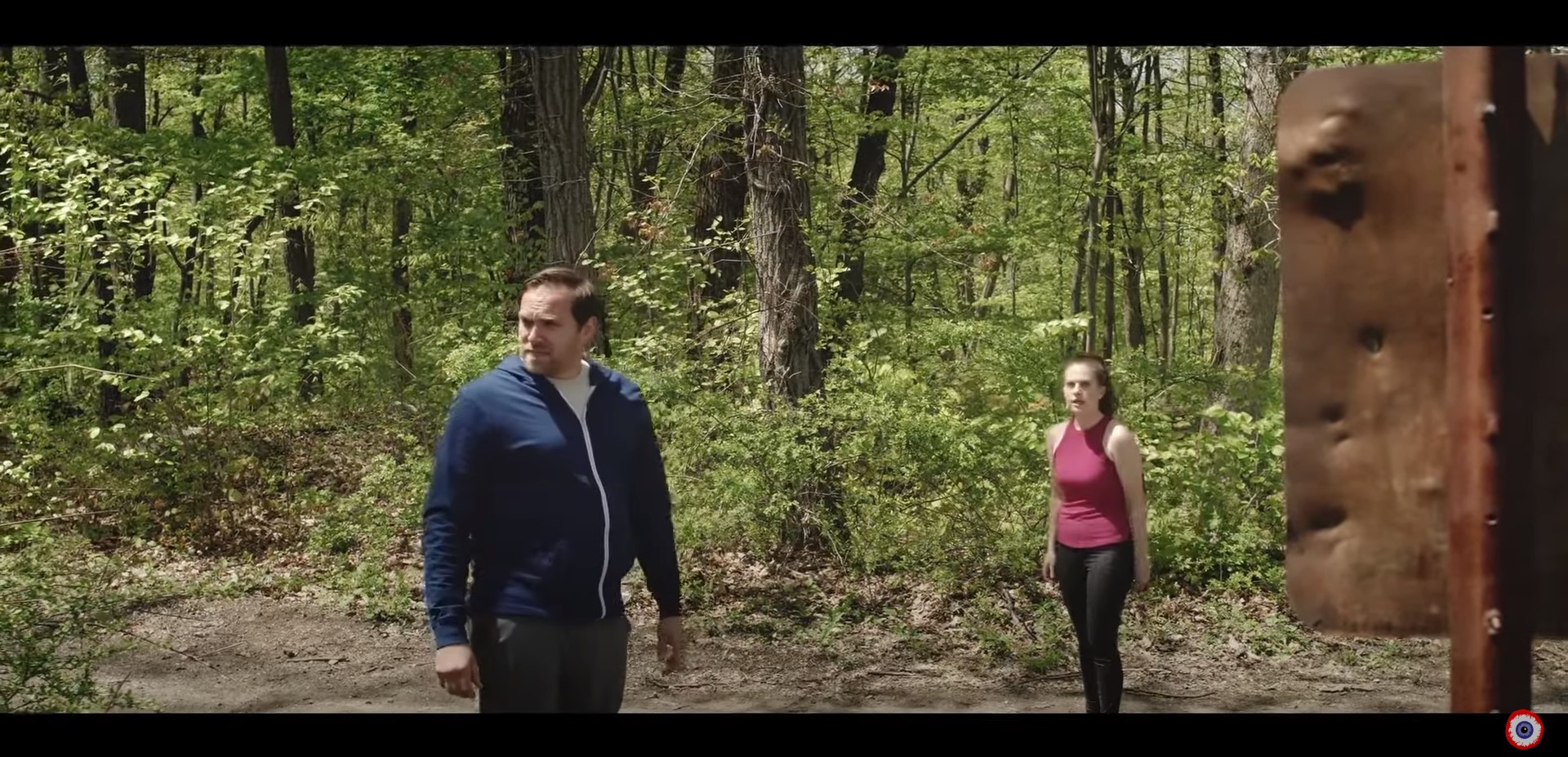
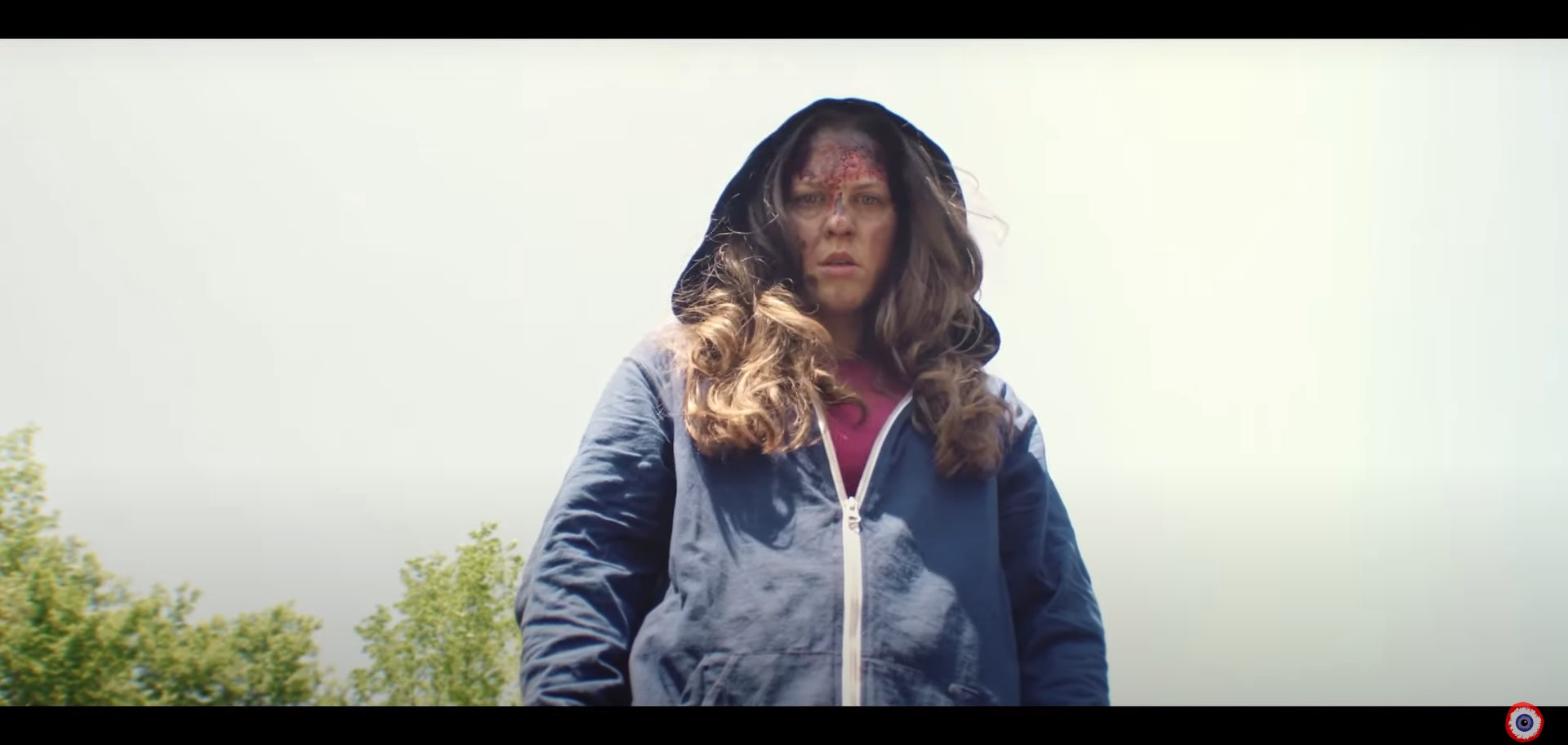
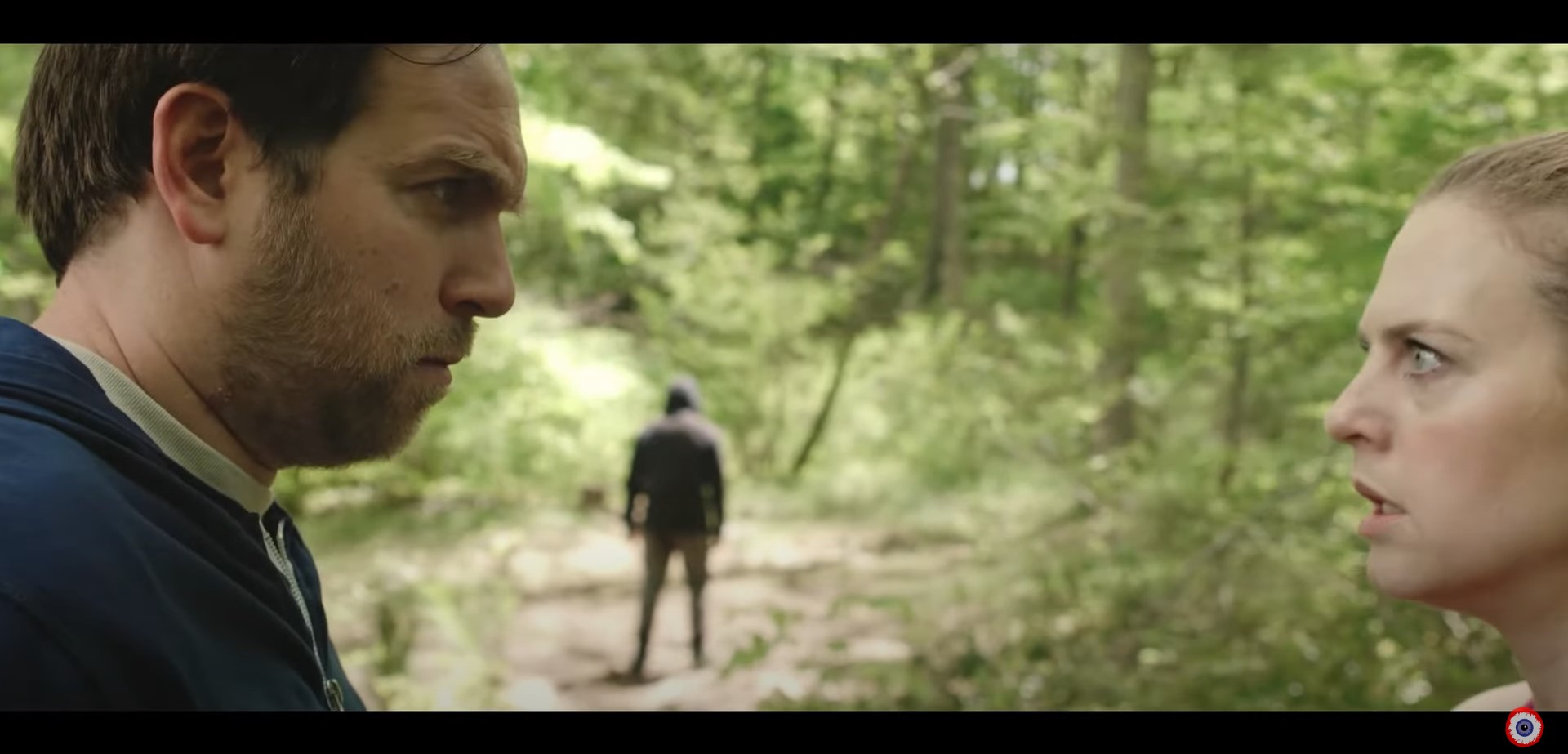
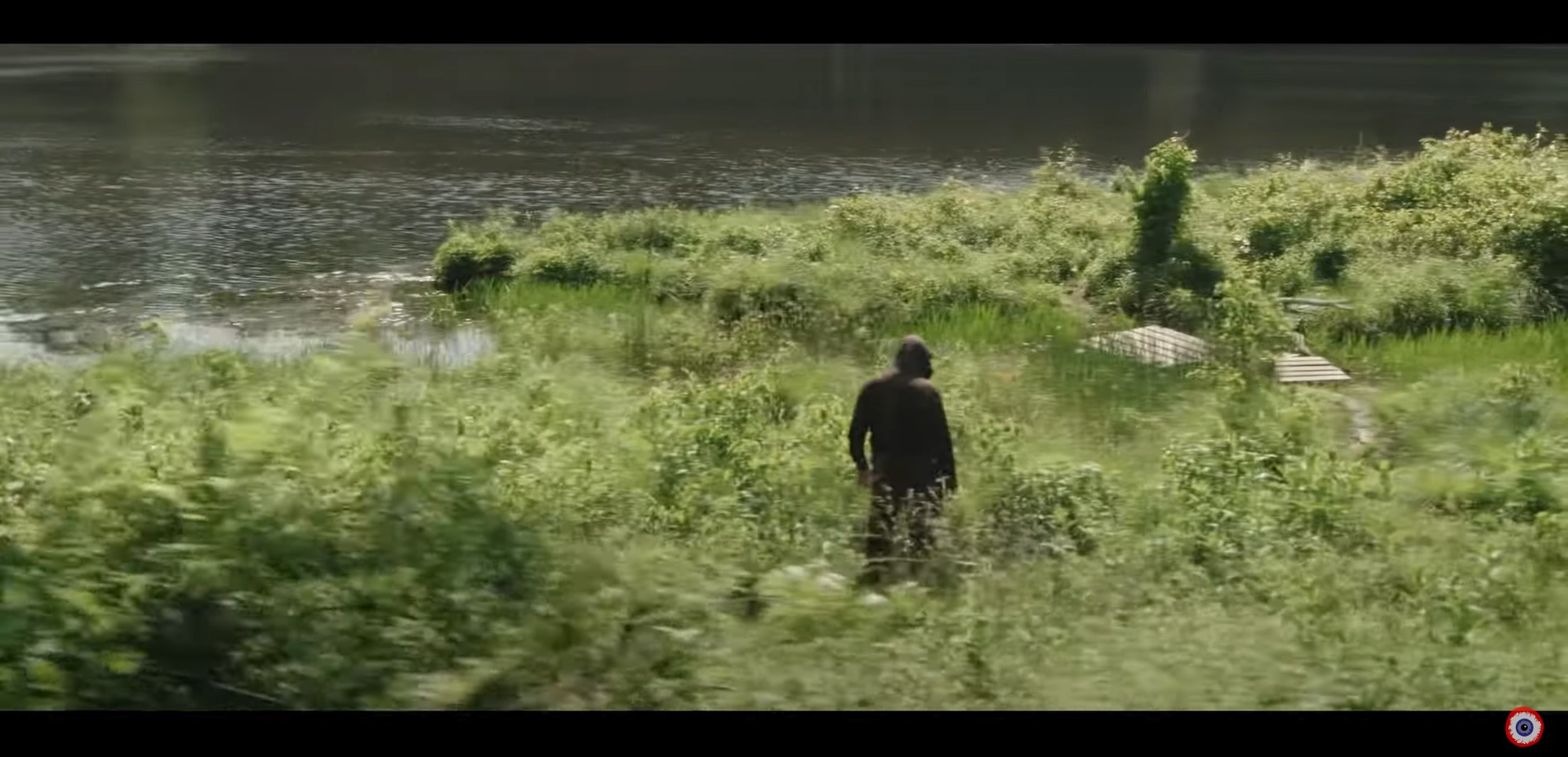
Jen and Dan have been a couple for a long time.  A stupid long time.  Such a long time, Jen has come to loathe Dan for everything he is worth.  On the other hand, Dan self-deprecates himself into submission despite his love for Jen, even a loveless, spit firing Jen.  When the two go for a run, hashing out the contentious night before, Jen heads for the pond to run laps around Dan in avoidance.  Having circled around a few times, Jen realizes the once exit trail from the pond, the trail she run through to the pond, is now no longer visible.  Perplexed, she voices her concern to Dan who also can’t seem to find the exit trail and every attempt to navigate through the surrounding forest reverts in them being brought back to the pond.  With no way to escape a dead cell service zone, the couple realize their not alone when they come across different versions of themselves stuck on a time loop from the very beginning moment the quarreling couple first ran onto the pond circuit to the future, disheveled versions that no longer have humanity.

Strained relationships and cosmic horror go hand-in-hand.  Or, at least, sometimes they feel like they do with an endless and revolving stagnation of being one with another as the hatred for the other and the fear of being alone cancel out any promise of an amiable or favorable solution.  Instead, staying put seems safe albeit the loop around effect of revising old and reoccurring snags that keep the relationship stale and hopeless instead of moving forward.  That’s possibly how writer-director Dane Elcar sees the suffocating time warping scenario playout symbolized in his debut cosmic horror feature “Brightwood.”  Based off and remade from Elcar’s 2018 20-minute short film entitled “The Pond,” anxiety riddles an already one-sided contempt couple who can’t find the path out of not only the pond but also their relationship in the thriller that’s peppered with dark comedy.  The 2022 feature, filmed around Egbert Lake in New Jersey, is produced by the director as well as star Max Woertendyke under Noble Gas Media productions presented by Media Moove and the LLC, Pond Pictures. 

“Brightwood” has a whopping cast of two and, honestly, the story doesn’t require the need for more and the principals, who may be better described as neutral characters or possibly as far as anti-protagonists, run the gamut of moral principles depending on which in-time version of them we’re witnessing.  Dana Berger and Max Woertendyke play the beleaguered and one-sided cantankerous couple Jen and Dan who are unable to escape the mysterious circumstances of being trapped around and forced to endured permanent residence at the trail that encircles a nearby pond.   The couple’s relationship dilemma relates irreconciled differences once adoring lovers cross beyond into when the romance goes stale.  Jen notes this by saying how she hates Dan’s smell as if it just lingers in her nasal cavity.  Hate is sowed deep after years of living with the person she has come to despise because of Dan’s lack of gumption to be anything but mediocre.  Like a puppy trying to keep up with an odiously pissed off owner, Dan mostly fears losing the one woman who likely puts up with his inadequacies.  Berger and Woertendyke really do nail the exposition history while feeding into these dynamics to setup their characters’ climatic, life-altering stuck in an invisible cosmic cage.  Stuck, the word that best describes both a worn-out relationship and the unnatural situation they’re in.  Jen and Dan are stuck together, possibly forever, to work out couple complications or to give up and just terminate it all.  The actors tap into that cathartic back-and-forth by giving a range of therapeutic emotion performances that purges truth and guilt from their characters, like any relationship would in order to grow and/or move forward.

“Brightwood” is one diabolical tale of torment of being indefinitely stuck in relationship Hell.  Analogies and metaphors compile along the way in a parallel stream of unfavorable situations.  To add more layers, Dane Elcar throws them for a loop, literally.  Jen and Dan are copied over-and-over again in a replay of moments and time and each time they’re copied, new developments emerge in the time loop that were different from before, ascertained by previous versions of themselves.  Conceptionally, the idea has it’s convoluted moments in trying to make the characters appear derived from a particular staring point and interact with each other in various behavioral outcomes, but this particular subtenant, niche layer of the cosmic horror genre is innately difficult to represent but a moderate degree of success can be conveyed or extracted depending on how much you’re willing to be opened minded, or stretched the limits of reasonability, or just don’t plain give a damn about it making sense.  Films like Justin Benson and Aaron Moorhead’s saturated cosmic horror “The Endless” or not-so-cosmic but tantamount to the concept is George Moïse’s “Counter Clockwise” are examples that work and work well to entertain a coherency and a consistency of repeated time.  If expecting a flashy and full-fledged effects driven feature, “Brightwood” is the opposite with a low-key approach that relies on staggering scenes to eventually overlap them, keeping the common core element of the pond as a center focus and turning it instantly in our minds as an undercurrent source of evil despite’s its serenity and idyllic nature.  Little do we know, our instincts might be more on point than lead to believe.

Psychotic endlessness is synonymous with loveless relationships in Dan Elcar’s “Brightwood” available on the 3rd DVD distributed by Cinephobia Releasing come August 22nd.  The single layer, interlaced DVD is presented in a widescreen 2.35:1 aspect ratio.  Image quality on the release displays a subtle overexposure, shot mostly with natural daylight, and desaturated video image not terribly rich with coloring.  Basic detail renders over nicely, exhibiting fair delineating and depth within a nature coloring scheme that micro blends characters into the foliage and mirror pond landscape.  Minor aliasing shows within the frame but the overall compression artefacts end there, decoding data at the higher end of where DVD’s can perform around 7-8 Mbps. “Brightwood” comes equipped with two English audio options – Dolby Digital Stereo 2.0 and a Dolby Digital 5.1 Surround Sound.   Between the tracks, dialogue transcends the others in a very line heavy narrative to push the small cast along but there’s a suffice amount of leaf rustling and trail running ambience and range to expand the sound into the back channels.  Jason Cooks composed score a lightly melodious score mixed with harsh tones to keep viewers edgy with suspense.  English subtitles are available.  Bonus features include a feature commentary from director Dane Elcar and stars Max Woertendyke and Dana Berger, 11-minutes of deleted scenes, the original 17-minute short “The Pond,” and Cinephobia Releasing trailers.  The standard DVD sports “Brightwood” poster art with no insert on the inside and the disc art the same as the poster with release spec, which are a not rated feature and a runtime of 84 minutes with an unlisted regionality of region 1 playback.  “Brightwood” endures the subgenre’s stumbling blocks with concentrated acting stability and synergy between the 100% invested Dana Berger and Max Woertendyke who could literally perpetuate Dane Elcar’s vision endlessly.

“Brightwood” available on DVD August 22nd!