A haughty and unpleasant stock trader taking an Uber to a late-night business meeting stumbles upon a drug deal gone bad. Monstrously bad. A werewolf intrudes into the exchange, killing three people and biting the trader on the shoulder. Stumbling into the nearby woods disoriented and with a pocketful of cocaine, his desire to relieve the pain from his shoulder as well as to escape the nightmare of being lost and confused in the woods lies within the white as snow narcotic housed on his person, but every time he takes a nasal hit, his addiction curses him into becoming like the wolf that attacked him. Happening across a film crew shooting a microbudget horror film and having no clue what’s happening to him, he partakes with the director’s cocaine habit that fuels his inner beast to come out and hunt them down one-by-one to rip them to shreds high on nose candy.
Much the same way the farcical “Sharknado” gave birth to a few analogous action-horror spoofs with similar ridiculously punned titles, such as “Clownado” or “Lavantula,” that combines a vilified thing with one of the many wraths of mother nature, 2023’s “Cocaine Bear” too began the same conceptual nonsense that spewed out “Attack of the Meth Gator,” “Cocaine Shark,” and now, we’re treated to the next level of hopped-up creatures with “Cocaine Werewolf.” Helmed by longtime microbudget horror filmmaker Mark Polonia, under the Polonia Bros. Production banner, and penned by first time screenwriter Tyger Torrez, the 2024 horror-comedy cuts the werewolf’s bane with powdery coke, spiraling the legendary lycanthrope into a stimulated frenzy of blow. “Camp Blood’s” David S. Sterling of Sterling Entertainment funds the in-and-around Wellsboro, Pennsylvania-shot project with fellow producers Ford Austin (“Dahmer vs. Gacy) and Cleopatra Entertainment’s Tim Yasuni and Brian Perera (“Frost,” “The Black Mass”) serving as producer and executive producer.
Returning to the schlocky world of penny-made horror is Brice Kennedy who has reconnected with Mark Polonia since “Razorteeth” and “Splatter Beach” from 2007. Shortly after Mark’s brother, John Polonia, unexpectantly died in 2008, Kennedy returns to the in front of the camera scene in 2024 after a lengthy hiatus of 17 years. Kenney takes the lead role of the cocaine addicted stock trader bitten to become a rampaging werewolf with a proclivity for nose blow. The West Virginia native never lost a step in those 24 years of off camera with a smooth slip into an obnoxiously crass stock trader jostled to wander the woods and to be anxious to get to the next snort of his pocket narcotic. Kenney plays on a fraction of the rubber masked werewolf, with Mark Polonia and others donning the snarling molded and faux hair stitched latex, but we don’t know or can’t tell which portion of the man-wolf Kenney portrays. Brice carries much of the story until he meets the film crew halfway, through the muck of drug deals gone sour between actors James Carolus and Titus Himmelberger of “Sharkula,” a pair of unlucky drivers behind the wheel of their cars in Michael Korotitsch (“Motorboat”) and Marie DeLorenzo (“Sister Krampus”), and two hunters, from James Kelly (“Sharkula”) and Jeff Kirkendall (“Motorboat”) suspicious of the recent mauling deaths of their neighbors and find themselves way over their head with the animal that’s causing all the carnage. Principal position shifts from being solo to a shared introduction of the film crew, exploring satire of making a low-budget, independent horror movie about a hackneyed clown slasher (Noyes J. Lawton, “Virus Shark”) chasing two girls through the forest. Those two females leads, Jamie Morgan (“Motorboat”) and Greta Volkova (“The Last Frankenstein”), get put through the trope wringer with lesbianism tendencies and gratuitous shower nudity, not to also neglect mentioning being damsels in distress from a killer clown, and become centrically the focus toward heroine, aka the final girl, as the cocaine werewolf infiltrates their small band of filmmakers. Hot on the savage beast’s trail is Ken Van Sant (“Virus Shark”) as the local sheriff baffled by what’s tearing people apart. If you couldn’t tell already, the cast is comprised of Mark Polonia regulars, those who have worked together on numerous projects, and have a kind of inner circle rapport with each other from the various Mark Polonia Bros. productions and this also includes Cody Losinger, Tim Hatch, Yolie Canales, and Alyssa Paige that rounds out “Cocaine Werewolf.”
I had promised myself after reviewing “Motorboat” dismally, I would stay away from another Mark Polonia production but because of my personal philosophy and prejudge avoidance policy of not researching and previewing films before watching them for critical analysis, I burned myself into Mark Polonia’s world once again. I was duped in part of Cleopatra Entertainment being partnering producers and the distributing label as they’re becoming well known for release moderately subpar horror product and have their own entourage line of actors, actresses, and filmmakers, such as Devanny Pinn and Brandon Slagle, with notable B-movie guest stars like William Shatner (“Star Trek”), Vernon Wells (“Commando”), and Udo Kier (“Blood for Dracula”) in some of their releases. Additionally, I absolutely enjoyed “Gun Woman’s” Kurando Mitsutake from print-to-film manga adapted “Lion Girl” that recently saw the physical media light. Unfortunately, I did not get the same pleasure out of “Cocaine Werewolf” under Polonia’s formulaic filmmaking and while Polonia does apply some effects techniques, mostly off-kilter visual f/x such as the added cold breath, the blood spurts, or the swirling faces that indicate human-to-wolf transition, but there isn’t a consistency to them and doesn’t blend into “Cocaine Werewolf’s” whole tone in what is more of a convenience choice rather than a unifying or connective element. “Dead Ant” and “Psycho Goreman’s” Josh Wasylink’s werewolf mask design would be any kid’s Halloween wet dream in what has pretty remarkable detail contrasted against the microbudget. Granted, there are not pneumatic or hydraulic components to the constant mask but a little blood here, a little blood there, and some glowing red eyes and you got yourself a damn good-looking, classic-feeling werewolf.
From Cleopatra Entertainment, the film division of music label Cleopatra Records, comes “Cocaine Werewolf” onto an AVC encoded, 1080p high-definition, BD25 Blu-ray. Frequently lacquered in a CIG haze, the ungraded image manages to retain a solid definition of sharp detail presented in an anamorphic 1.85:1 aspect rato. This can be good and bad for the image quality that while really creates delineation around textural clothing and the ample foliage it can also really expose to a fault and emphasize the rubbery inanimate mask along with the large cut out eyes, blackened with dark makeup to try and make the mask and the actor seamless. Depth is fine and medlied across multiple locations and the color range has natural, varied pop, diffused into the smokey trope atmospherics and angled up and key lit cinematography by Paul Alan Steele. Blacks are slight washed but not crushed or with significant banding. Like most Cleopatra Entertainment releases, the soundtrack overwhelms enough of the other audio layers in this English language LCPM Stereo 2.0 that it slightly takes of the edge of the impact, but the lossless quality awakens the snarling, growling werewolf noises and the dialogue is amply consistent throughout that even the Gothic rockabilly score from The 69 Cats doesn’t fully immerse viewers solely in the band’s dark melodiousness. Bonus content includes a Mark Polonia commentary, which the director is usually pretty good about supplying and supporting for most of his work, an image slideshow, and the trailer plus trailers for other Cleopatra Entertainment releases. Physical attributes of the conventional encased Blu-ray include an uncredited but insane Red Riding Hood inspired illustration on the front cover. There is no reverse side of the cover nor are there any inserts included in his release and the disc is pressed with the same front cover image. The unrated Blu-ray comes region free and has a runtime of 80 minutes.
Last Rites: “Cocaine Werewolf” is better than most of the contemporary Mark Polonia body of work, but the heart-pounded effects of his laced comedy-horror is not addictive enough to produce the euphoria to warrant another line hit, leaving this derived werewolf indie in withdrawals.
Based off a slice of Ted Bundy’s murderous impulse-driven life, the notorious American serial killer’s escapes from the upper West Coast and lands him residence in Tallahassee, Florida in the moderately warm winter of 1978. As he picks the pockets of those around him, scrounging up what little cash he needs to survive on, Bundy urges grow to kill grow more intense. He begins to stalk a nearby university sorority house that’s buzzing with potential prey. As works out a plan to attack, his good looks and impeccable charm make him desirable around women and men alike, offering opportunities that tend to fizzle out before they can begin, and when his need to spill blood agitates him excessively, he starts to creep out those around him by glaring out them and making off-the-cuff shrewd comments. With his options declining rapidly, Bundy decides to take advantage of the sorority house’s broken backdoor lock and set in motion a night that will forever live in American infamy.
For her feature length film debut, scream queen actress Devanny Pinn takes on one of the most vile villains ever to walk the Earth in her biographical horror “The Black Mass.” The “Song of the Shattered” and “Frost” actress and producer brings a headspace perspective to Ted Bundy committed at least 20 confirmed murders between 1974 and 1978. The true crime thriller named after what one of the victims described Bundy’s attack on her as simply as a black mass before being bludgeoned. Brandon Slagle (“Song of the Shattered”) and Eric Pereira (“The Locals”) collaborate on penning the script. Slagle directed Pinn in the 2022 element horror and survival feature “Frost” and now it’s Pinn to take a stab at the director’s chair with a Slagle screenplay, pun intended. Pinn coproducers her film alongside Michelle Romano (“Night Aboard the Salem”) and Cleopatra Entertainment’s Tim Yasui (“Frost,” “The 27 Club”) under the production banners of Jaguar Motion Pictures (“Dead Sea”) and Roman Media (“Millwood”).
The main focus in the feature is of the titular character, “The Black Mass,” that is Ted Bundy, almost seeing what he sees through his eyes of skulking and morbid fantasy. Played by British actor Andrew Sykes, the centrically focused character is experienced not directly through his eyes but over his shoulder, peering from behind as if audiences are accomplices to his murderous wake. Sykes performs well in a nearly voiceless role that does more lurking than talking but Sykes’s worked up frustration clearly surfaces and erupts out of Bundy when strapped for cash and has a tremendous itch that needs to be scratched as his wishy-washy path to do good crumbles from under his footing. As the main focal point, no other character really comes close to a lead principal. The sorority girls are introduced in mass and jump from sister-to-sister individually conversating routine and tales of the day-to-day within the college student context with roles from but not limited to Lara Jean Mummert-Sullivan (“2 Jennifer”), Brittney Ayona Clemons (“Twisted Date”), and Alex Paige Fream (“Into the Arms of Danger”). Yet, Pinn’s storytelling purpose is paradoxical with the whole story flowing through the perspective of Ted Bundy with his prey hanging mostly in the peripheral and not emanating the warm and fuzzies of sympathetic, relatable characters, but at the end of the film, there’s an acknowledging tribute for the victims who we really know nothing about from the narrative, creating an acute pivot from the killer’s personal bubble. “The Black Mass” rounds out it’s relatively large passing-through cast with Chelsea Gilson, Susan Lanier, Eva Hamilton, Sarah Nicklin, Elisabeth Montanaro, Mikaylee Mina, Jennifer Wenger, Grace Newton, Devanny Pinn, and with cameos from Lew Temple (“The Devil’s Rejects”), Jeremy London (“Alien Opponent”), Lisa Wilcox (“A Nightmare on Elm Street 4: The Dream Warriors”), Kathleen Kinmont (“Halloween 4: The Return of Michael Myers”), and schlock movie veteran Mike Ferguson.
“The Black Mass” is the perfect example of style over substance. While the story is formatted around Bundy’s outlook, there’s not a significant amount of edification for his warped mindset. Some backstory leaks through his beseeching phone conversations with ex- or current girlfriend Liv, a phone voiceover presumingly based off the real Bundy girlfriend Elizabeth Kendall, that teeters the appearance of his humanity side as he talks about his addictive struggles and trying to walk a straight line, but any kind of sympathy is quickly tabled without an ounce of provision, likely for his inclination to lie for advantage and exploitation’s sake. Pinn only teases the inexplicable morose and ghastly gears that rotate inside Bundy’s head, spurring a single blood-drenched daydream of a girl pulling off her skin in the shower, and erotically enjoying it immensely. The scene feels sorely out of place amongst the rest of reality-grounded narrative that resorts to a cut-rate version of Bundy’s devolving surrounding is fleeting patience and feign niceties. What’s appreciated mostly about “The Black Mass” is Pinn’s ability to work the camera in not revealing too much of a modern-day society by maintaining that closeup distance behind Bundy and only really showing what needs to be seen for a late 70’s biopic. Costuming, production design, and vernacular are appropriate for the era as well. Coming back to the proximity around Bundy, there’s a purposefulness in not showing his full face or looking at him from the front that keeps the particulars of his image in an effective, if not slightly scary, enigma albeit the other characters’ brief descriptions of him in conversation do provide a rough picture of him.
MVD Visual distributes the newest cinematic Bundy biopic from Cleopatra Entertainment. The AVC encoded, high-definition 1080p, BD25, presented in a widescreen 2.39:1, has welcoming veneer, splashed with a 70’s color scheme saturation, and is graded with a middle-of-the-road or slightly darker color palette. Sufficient capacity and compression encoding offers a clean, sleek digital image without artifacts and with the ample attention to minor era details where possible and Noah Luke’s fill and back-lit cinematography when things get really dark, as in sinister, that snappy image presentation is key. The English language options are a lossy Dolby Digital 5.1 and a PCM 2.0 stereo renders a clean, balanced mix between dialogue, ambience, and dialogue with less suppression on the PCM audio if you’re looking for a lossless option. The setting sounds are nicely immersive compared to the limited and concise framing, opening up the world audibly rather than visually. No technical issues with the digital audio on neither front; however, depth and reality checks are missed marks as all the dialogue doesn’t abide by spatial awareness; when the sorority sisters are talking indoors or from afar while Bundy lurks outside the house, or from a distance, spying on them, all the dialogue is unobstructed and too prominently clear for natural conventions. Bonus features include an image slideshow and the feature trailer. Ancillary content includes other trailers for Cleopatra films with “Frost,” “The Ghosts of Monday,” “The Long Dark Trail,” “What the Waters Left Behind: Scars,” and “Lion-Girl.” Released in a traditional Amaray Blu-ray case, “The Black Mass” sports a Dimension-like front cover, dark and full of characters. No insert or tangible content inside and the disc art mirrors the front cover. Cleopatra’s region free Blu-ray comes unrated and has a runtime 82 minutes.
Last Rites: Devanny Pinn quarterbacking her first feature film with an à la mode Ted Bundy portion, an interpretative taste of his absolute madness, doesn’t faze the long-time scream queen actress and producer who takes on the subject head on, but the overall concept does need tweaking in the area of purpose that can be easily conquered with more practice.
In the year 2045, a rain of meteorites harbingers the possible destruction of the human race as the space rocks contain harmful, radioactive rays that either kill a human within seconds or doesn’t kill them at all but transformers them into bloodletting, mutated beasts with superhuman abilities known as Anoroc. While the rest of the world collapses, only Tokyo remains as the last human stronghold governed by a fascist dictator Nobuhide Fujinaga and his band of ruthless, police state Shogun led by despotic Kaisei Kishi. Fujinaga and Kishi’s prejudices extend decades later when children in utero are exposed to Anoroc rays that keep their human appearances and behaviors only to have gained the psychokinetic energy powers. These evolved man and Anoroc are labeled Man-Anoroc and are sought out for extermination but one defender of the weak and less fortunate, known as Lion-Girl, takes a stand against the forces of evil and bigotry, making Lion-Girl Earth’s last and only hope.
Inspired by the prolific manga works of Gô Nagai (“Cutie Honey,” “Devilman”) and Nagai providing the conceptual illustrations, the Japanese filmmaker behind the pulse-pounding pistol-whipper “Gun Woman,” starring cult erotic-actress Asami, and the Italian yellow picture, or giallo, influenced “Maniac Driver” turns his eclectic, electric style to reproduce his love for manga and the classic Japanese superhero canon with a new heroine in “Lion Girl.” Kurando Mitsutake endears to his audiences through passion for cutting-edge manga’s commanding nudity, a hero’s odyssey in a dystopian future, and a comic’s style depicting graphically good versus evil. The COVID era stymied production costs due to supply issues, affecting various departments such as special effects and even the cast with relative unknown faces, but Mitsutake pushes forward with the Japanese Toei Video Company (“Battle Royale”) co-production with America’s Flag Productions and Nagai’s Dynamic Planning. Masayuki Yamada, Gaku Kawasaki (“The Parasite Doctor Suzune”), and Mami Akari (“Maniac Driver”) produce the film.
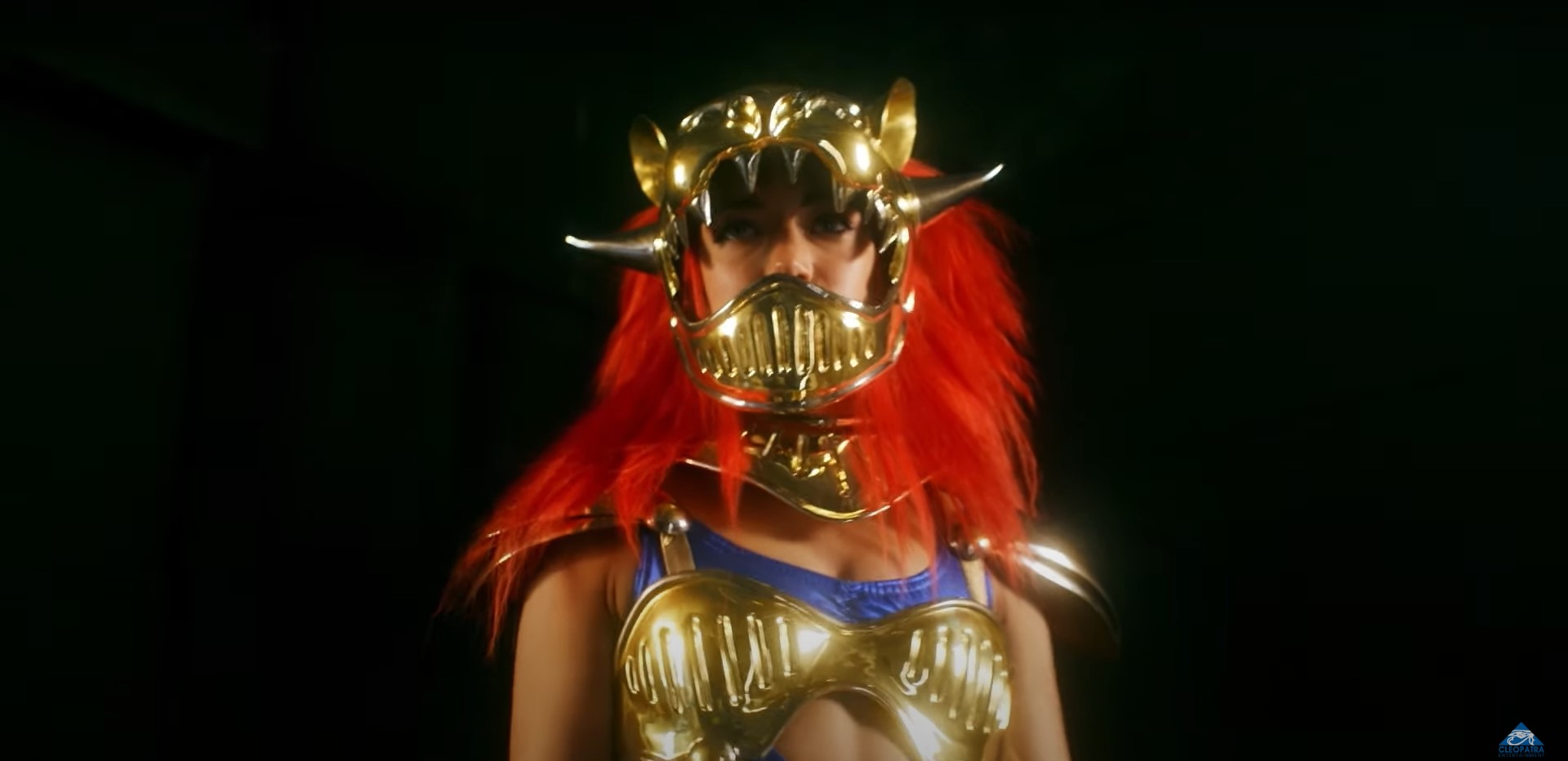
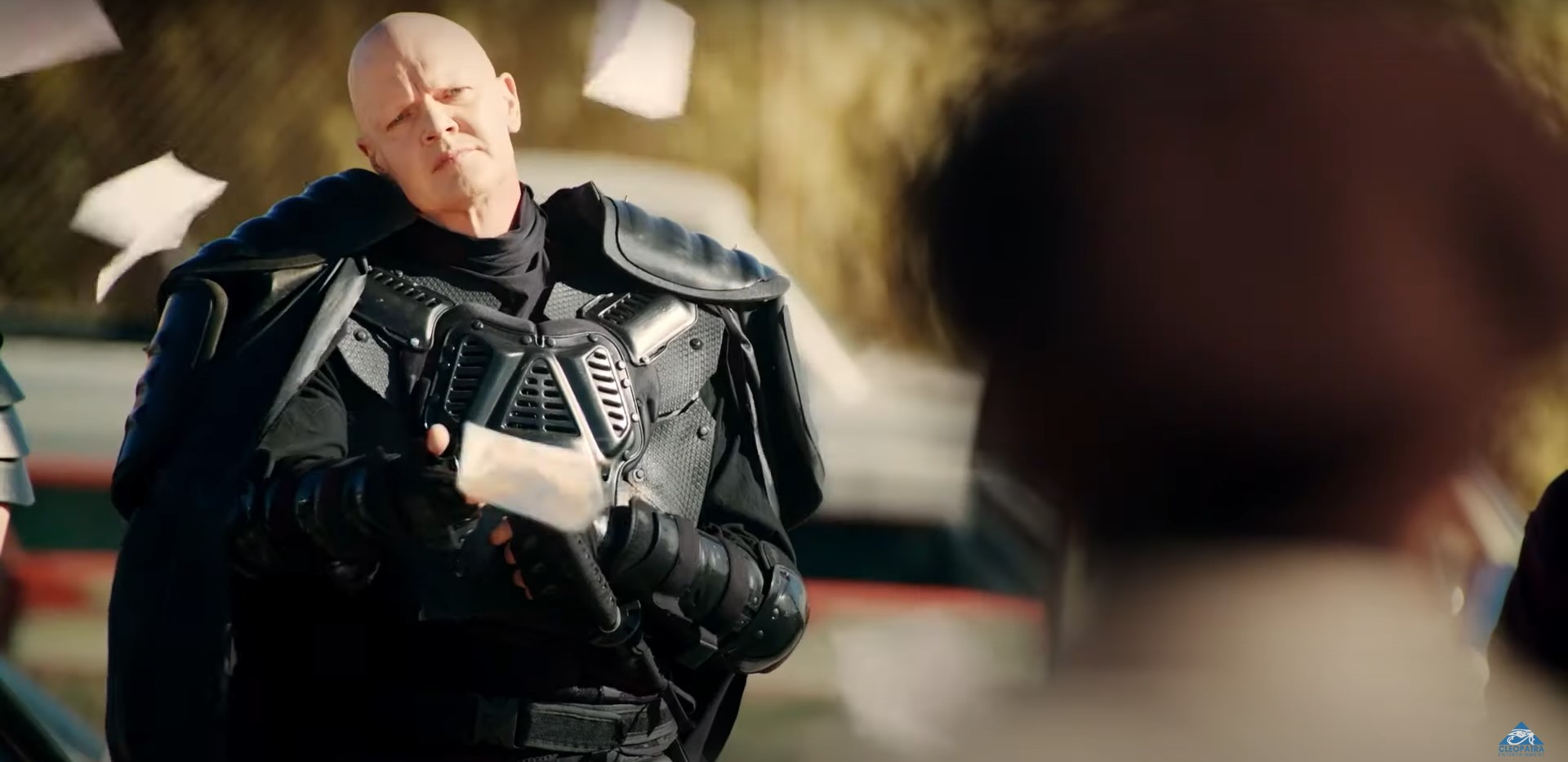
As stated, “Lion-Girl” is filled with unrecognizable faces save for one, an actor who is usually behind the masks, such as in “The Hills Have Eyes 2” ’07,” “Predators,” and even donning the iconic hockey mask for the 2009 reboot of “Friday the 13th” as Jason Voorhees. Derek Mears headlines being the film’s core villain, shogun Kaisei Kishi, the remorseless, power-hungry right-hand man of the Fujinaga state, as Mears’ towering 6’5” stature and unique facial features pit him against a then 22-year-old newcomer Tori Griffith in a highly visibly protagonist role requiring fully onboard nudity and choreographed physical altercations. Griffith pulls off both requirements going through the tokusatsu, hoodoo cliffside and other desert terrain, geometries of motion that fortunately conceal a more softened performance when compared to Mears’ who actually puts a fair amount of attitude into the shogun role. As the Lion-Girl’s sworn protector, as well as one-eyed uncle, Damian Toofeek Raven (“Komodo vs. Cobra”) resembles the sempai fostering and mentoring a younger, stronger apprentice to one day save the world. Raven, like most of the film’s cross-cultural influences, is able to ride the line as force into an honorable fatherhood with Ken Shishikura but the character poorly exorcises compassion of a father substitute until the very end when the right moment in the script calls for it. One flaw in “Lion-Girl’s” casting stitch is the feature could have been meatier as keystone supporting characters come and go so quickly that it could rival the likes of “Mortal Kombat 2: Annihilation.” Thus, rapid firing subordinate roles just to progress the story creates more questions than answers and creates more plot holes than necessary. Nobuhide Fujinaga (Tomoki Kimura, “A Beast in Love”) leads as the iron fist of bigotry in a tyrannically society but barely has presence other than on television announcements, a pair of Kishi entourage lackeys (David Sakurai, “Karate Kill,” and Jenny Brezinski, “From Jennifer”) get lifted up by the dialogue and some action but have the rug cut out from under them from really being developed and explored, and even principal character Marion Nagata (Joey Iwanaga, “Tokyo Vampire Hotel”), the gunslinging coyote, has zero foundational building blocks being a love interest for Lion-Girl yet crowns as such at the story’s climatic showdown. “Lion-Girl” is saturated with supporting cast and stock characters with round out by Marianne Bourg, Matt Standley, Shelby Lee Parks, Hideotoshi Imura, Holgie Forrester, Katarina Severen, Stefanie Estes, and Wes Armstrong.
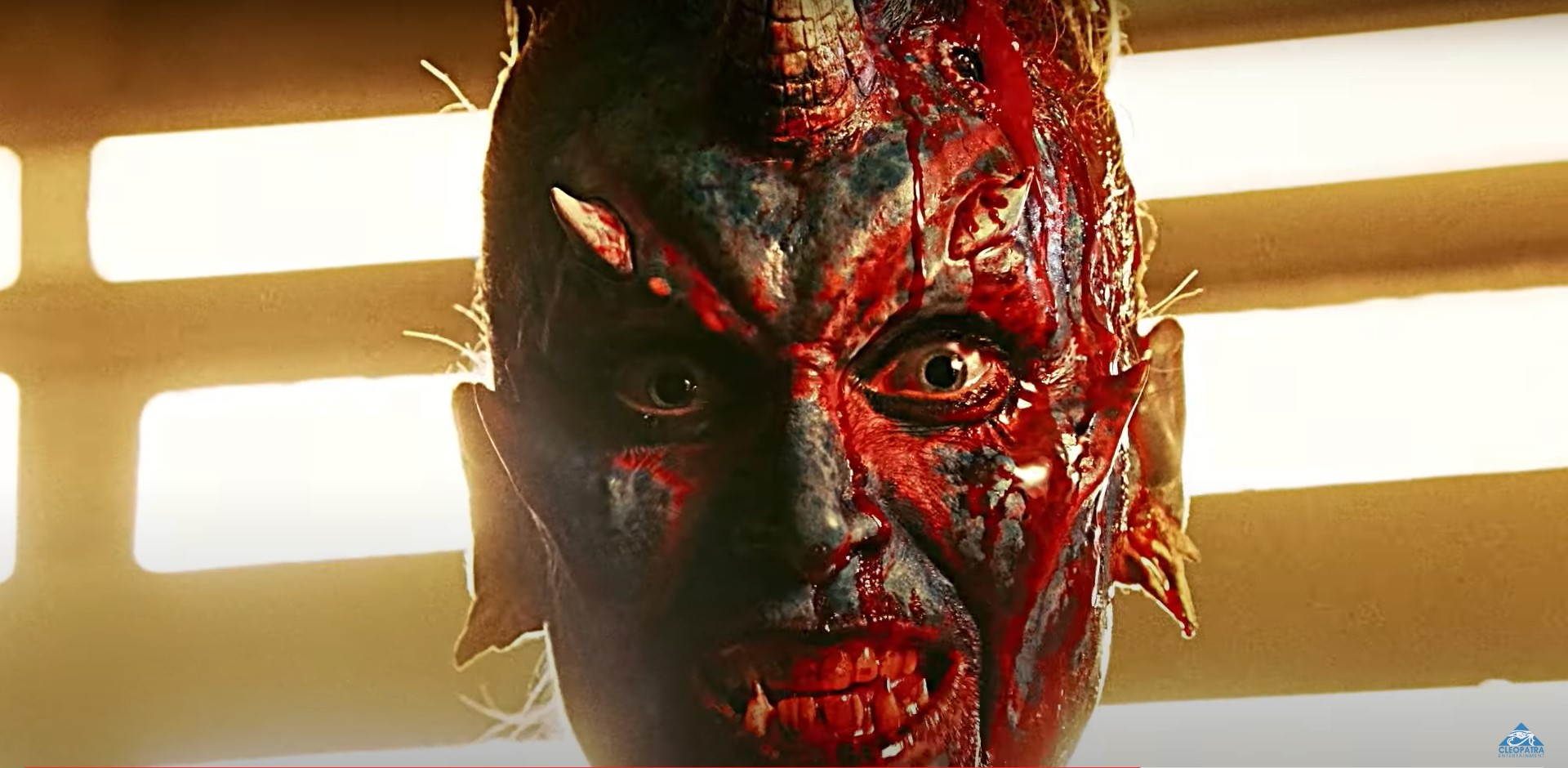
“Lion-Girl” roars as a wild, untamed animal, mangy in its worst moments but also majestic at the same time. This paradoxical cultural expression befits the co-superpowers production, blending Japanese and American flavors and faults into one oversized bag of live-action manga. With a derision mostly toward western affairs, such as the media circus surrounding the xenophobic administration’s handling of the corona virus, to which the filmic beasts known as Anaroc is corona spelled backwards, the haughty, bullying state doesn’t stray far from Kurando Mitsutake’s pen-to-paper handiwork as he also invokes Gô Nagai’s freedom sense of nudity and violence aimed to shake up with acculturation in high level eroticism that’s not seen as sleazy or objectifying but rather empowering and artistic. What Mitsutake does really well and what’s also to the film’s misstep for today’s audiences is the complete blitzkrieg of background setup that’s bombastically overwhelming with incident backstory, dystopian factions, and the new terminologies in a single, longwinded breath, culminating to an early point in the film with a fight between Lion-Girl and an Anaroc beast where mutated breasts are essentially turned into a flamethrower and psychokinetic battles are commissioned in headspace. That’s the kind of psychotronic tone that bears the cult seal of approval, or in this film, the lion’s share of cult approval.
Cleopatra Entertainment, the filmic subsidiary company of Cleopatra Records, scores big with Kurando Mitsutake retro-fitted superhero “Lion-Girl” on Blu-ray. The AVC encoded, high-definition 1080p, single-layered BD25 is literally stuffed to the brim, presented in a 1.78:1 widescreen aspect ratio. Compression bitrate swings the pendulum, decoding between low 30s and high teens resulting in smoothed over details. To the film’s advantage, the abated details play into the old-style Japanese action flicks of yore, creating a pseudo-illusion of a flatten color palette and lower resolution last seen on tube televisions. Okay, might not be to that extent as therein lies decently popping color scheme and rough contouring and lighting in more scarce settings to make the scenes less complex and rely on more smoke and mirrors to stretch the interior-exterior location budget. The lossy English language Dolby Digital 5.1 surround track is accompanied with also a Dolby Digital 2.0 stereo. While nothing to negatively harp on in regard to “Lion-Girl’s” sound design and soundtrack as a whole, there’s plenty to like about the wide-ranged, heavy rock-riffing audio with unequivocal balance between the sounds and channeling albeit a lesser fidelity. Peppered with Japanese words, the dialogue is forefront and clear that red-carpet the numerous monologues with all-day importance. The release does not come with any subtitle option. Bonus content includes a director’s commentary track, a conversation between Kurando Mitsutake and manage artist Gô Nagai as they discuss nudity, working in America, genesis for “Lion-Girl,” and their COVID era collaborations, the making-of “Lion-Girl,” “The Hollywood premier screen with cast and director Q&A, a picture slideshow, and the theatrical trailer. Cleopatra’s release caters to a conventional standard retail market with a commonplace Amaray and disc release and nothing more. The front cover design is not terribly appeasing with a crowded image composite bathed in an eye-deafening and searing red. Disc represents the same front cover image and there is no insert inside the Amaray casing. The region free release is unrated and has an impressively entertaining runtime of a 121-minutes. Marketed to be a different kind of superhero movie, “Lion-Girl” is certainly more than that, portrayed by Kurando Mitsutake as a love song toward the pulp exposure of his childhood and the film really glows passionately like an Anaroc with supernatural powers ready to strike with nostalgia at the heart of Japanese pop culture.
Set in the idyllic boondocks of Northwestern Pennsylvania, two young brothers plan to escape the abusive grasp of an alcoholic father in search for a better life. Without a plan and nowhere to go, they go around the small town to collect money from the odd jobs the brothers worked in preparation for their abscond. While doing so, they come upon information about their mother, who abandoned them at a younger age, that sparks an desire to track her down in hopes that once she’ll lay eyes on them, she’ll want to rekindle the relationship with her two sons, but the trek deeper into the northern woods would be long and arduous through abandoned aqueducts, pine forests, and numinous burial stones belonging to an inimical cult of women controlled by a sadistic leader. It is the cult where their mother left them to reside and it is there where they are headed on their haunting journey in hopes for a better life.
Tackling impoverished, ill-treated youth haunted by their past and uncertain about their future, directors Kevin Ignatius and Nick Psinakis write-and-direct “The Long Dark Trail” as a tale of resiliency for two close brothers relying on each other to climb out from a pit of despair. Ignatius and Psinakis have collaborated previously together as writer-director and cowriter-actor in the misfortunate happenings comedy “My Best Friend’s Famous.” The 2022 drama-thriller marks the first feature film for the filmmakers who explore coming-of-age through trial by fire, or by the supernatural psychological manipulation of enchanted rocks and by the coarse portents of a blood sacrificing cult. Shot in Ignatius’s birthplace home of Warren County, PA, the two New York filmmakers shoot the low-budget venture under their independent production company, Four Eighteen Films, in association with El Jean Productions and with associate producers Michael Kraetzer (“The Slaughterhouse Killer”) and Nicholas Onetti (“Francesca”) of Black Mandala presenting the film.
“The Long Dark Trail’s” story follows two brothers played by real-life brothers, Brady and Carter O’Donnell, debuting in their first feature film. You can tell the brothers don’t have a ton of acting experience as their dialogue is very mechanical and their movements are bit stiff and hesitant, but since the narrative revolves around their characters, antisocially bred by the abusive father’s impropriety, being socially awkward on screen, even between each other despite their off-screen brotherhood, doesn’t necessarily feel far-fetched. “The Long Dark Trail” isn’t a heavy on the dialogue narrative, leaving much of the plot to unfold with the brothers’ wondering the forest grounds, natural and unnatural visual imagery, and the hypnotic folksy score. From start to finish, Brady and Carter carry the entire storyline from start-to-finish with intermittent spliced in scenes of hooded cult acolytes doing obscure and violent things in what looks to be the upstairs of a vacant barn or with the earlier scenes of the boys visiting and conversing with a purpose with Mr. Barrow as he rambles on about his veteran war stories while the boys take full advantage of his porch sitting to steal food form his cupboards; a role undertook by Kevin Ignatius’s father, Paul “Doc” Ignatius. The O’Donnell siblings shepherd much of the trail journey’s harrowing phantasms to the best of their ability but are also not limited to being just reactionary to the spooky woods. Practical makeup effects and some visual compositions are chartered for divisive inducing dynamics in order to drive a wedge between the brothers’ already contentiousness of wanting to traverse a dark corner of God’s country to see a mother that has already forsaken them once. Trina Campbell plays the indoctrinated mother now embedded into an outskirt cult led by Paul Psinakis’s version of a cult leader in Zeke. Psinakis has the maniacal wild eyes and brooding aura demarcating him as a clear cut bad guy with a bunch of vary-in-age women in tow but the cult is not very clearly defined as a whole or with a purpose and when the boys stumble into their isolated camp, near that aforesaid barn full of now chopped up body parts and hunting game skulls, the exposition to follow is not presented and the real sense of danger is only palpable from Zeke and Zeke alone.
While cast and story struggle to make ends meet with relative clarity, what Ignatius and Psinaki do really well in fashioning for effect is depicting the rural folk horror elements of vast natural landscapes that can turn looming and inescapable. As a resident of Southeastern Pennsylvania, convenience and concrete genetically makeup my quasi suburban-urban scenery, but I can appreciate the opposite side of the state with greenery up to your neck and beyond, the solitude of a different way of life, and how one could also appreciate how menacingly engulfing that can all feel as well. We’re also not completely stuck to the forest setting as the directors’ use riverbeds and lakeshores, sprawling grasslands, and the quaint town structures to enlarge the presence of a smaller shoot. Kevin Ignatius isn’t just the co-director of “The Long Dark Trail,” he’s also the film’s composer, another aspect of highlight, amongst other hat wearing titles. The catchy and mesmeric folk/bluegrass score is a real tribute to Ignatius’s musical background, having formed a band, Das Tapes, with brother Mark, by adding a layering combination of vocal sounds and banjo strumming. The latter banjo reminisces a little bit of “Deliverance” but with an elongated cadence integrated into the brothers’ long road tour, becoming a mainstay importance to the overall lingering feel of backwater chills. Where “The Long Dark Trail” fumbles is at the heart of project – the story. Never really tying the elements all together, the narrative often feels abstract and unhinged in a series of randomized events between the cursed rocks, vivid hallucinations, the boys’ trauma, the women stuck in a cult of a madman, and the message on blood ties. Was the father’s verbal and physical abuse the root cause of psychological and family brokenness? Are the brothers’ bond and endurance being tested on the trial trail toward their last form of hope, their abandoning mother? “The Long Dark Trail” is in a long, dark well of questions without any return of answers in a conclusion that can’t be roughly swallowed along the course of an exceptionally scored and formidable atmospheric thriller.
“The Long Dark Trail” path leads to at home Blu-ray release from Cleopatra Entertainment, the film banner of Cleopatra Records, and MVD Visual. The AVC encoded BD25 provides high-def resolution in 1080p of a widescreen presentation. The Cleopatra Blu-ray does not list the aspect ratio and IMDB.com lists the film at 2.39:1 which is accurate in accordance to the release. A combination blend of natural and lowkey lighting doesn’t appear to present too many issues with the format storage. A few signs of pixilation in deeper negative spaces cease to only a handful of decoded moments stark contrast. For a digital recorded film that’s churning out an average of 25Mpbs, par for the course for Hi-Def, the details don’t display to the fullest sharp potential but are certainly on the edge of so. You can get better visuals from the brightly lit of primarily color contrasting scenes for a film that’s remains in natural grading. Also not listed on the Blu-ray back cover is the audio specifications, but according to my player, the release comes with an English Dolby Digital 5.1 surround sound and an English LPCM stereo. The five-point multi-channel audio mix studs the soundtrack with piquant notes, harmonies, and twanging banjo chords. Dialogue is pleasantly defined through the robust soundtrack and the ambience has a nice range of rustle and depth. I’m quite surprised by this Cleopatra Entertainment release that doesn’t come with a second disc, a CD, of the soundtrack, likely due to the score not produced by the parent record label. English subtitles are optionally available. The bonus features include blooper outtakes and behind the scenes footage, an image slideshow, and the original trailer. The back cover also notes an interview with the director, but what’s on the disc is a featurette surrounding artist R.L. Black’s graphic novel artwork for the film and for the forthcoming comic based off the film. There is no interview with the director. The rest of the bonus material rounds out with Cleopatra Entertainment trailers of “The Ghosts of Monday,” “Frost,” “A Taste of Blood,” “Escape from Area 51,” Baphomet,” and “Scavenger.” The film is housed in a traditional Blu-ray snapper with a rough and ready composite of a skull looking to swallow the bicycling boys on the dark path with a dark lit moon overhead; a missed opportunity in my opinion as there’s a better poster out there for the film, a more graphic poster, of one brother’s bloody head split down the middle and opening for the other’s brothers face to show. The Blu-ray is region free, unrated, and has well-paced runtime of 78-minutes. Likely not to please by or understand by most, “The Long Dark Trail’s” coming-of-age narrative wrangles with what’s most important for a folk horror film of its kind – either to be an apparatus for breathtaking countryside imagery or of trauma that is tense-laden and tearing families to pieces – and unfortunately, the feature couldn’t be both.
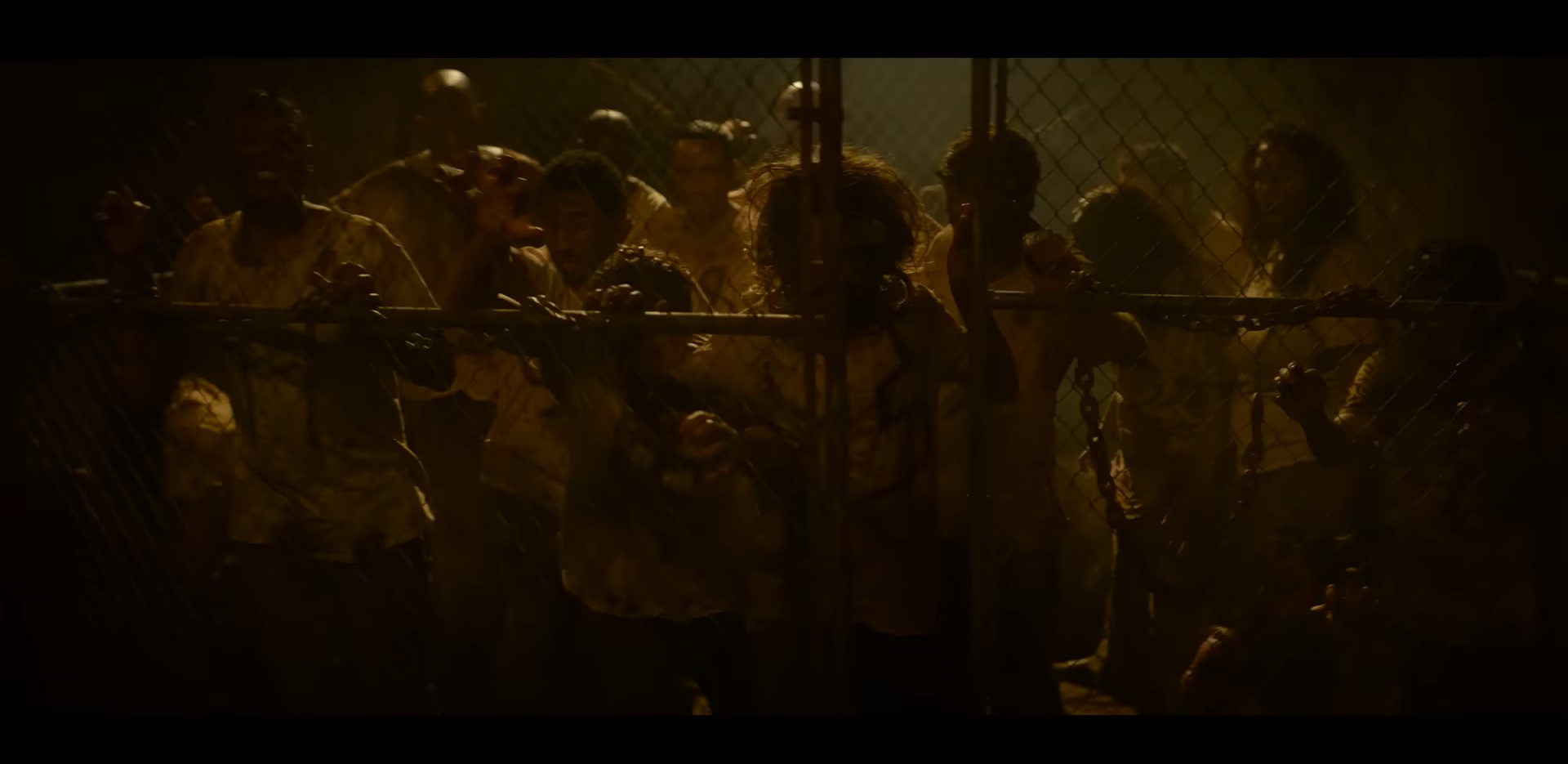
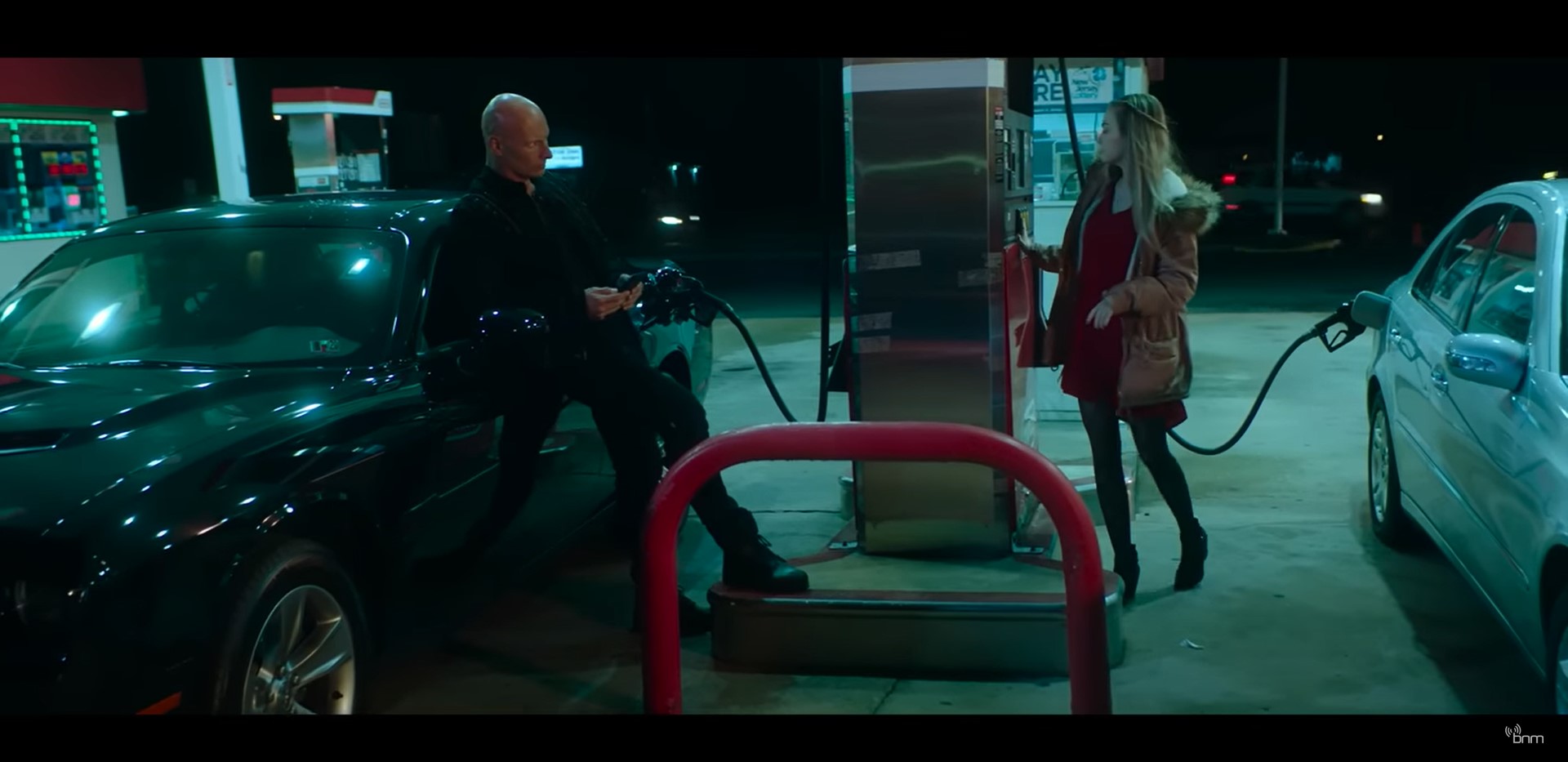
Having recently lost his wife, Pastor Bishop tries hard to keep his two school age daughters safe with an oversight thumb, but when his oldest daughter, Sarah, begs him for the car, God himself knows that the Pastor’s children can’t stay children forever. Bishop fears come reality when Sarah is chased by a sadistic man, ran off the road, and zip tied to her steering wheel as her car is pushed into a nearby ravine. Destroyed by another loss, there is seemingly no way out of the grief hole for the man of the cloth until a Detective, who once shared Bishop’s pain and suffering with a similar, personal experience, introduces him to his isolated former fallout bunker turned torture cabin in the woods with the man who killed Bishop’s daughter chained captive in the basement and next to him sits a variety of melee tools of affliction. Deeper into the Detective’s subterranean dwelling lies a more terrible, caged secret, one that is incidentally unleashed upon the world, and will wreak carnage upon the land and it’s up to the grin and bear it Pastor to take a stand against pure evil.
Frighting for yourself and for special persons in your life is crucial for any self-respecting person to be able to look at themselves in the mirror and say, “I did all I could.” Those who believe in understanding and forgiveness ultimately fall into being trampled on and biting the bullet because just surviving the other end of a contentious situation can be a false sense of security and an opaque veil to the ever-present dangers lurking in every crevice. The 2021 release of “The Retaliators” accouters that theme of following one’s combative conscious to protect what’s dear while also sporting a hefty amount of violence, blood, subhuman psychopaths, and a nearly all nu metal musician cast. Co-directed between from short and music video filmmaker, Samuel Gonzolas Jr., the film’s star and “Central Park” actor, Michael Lombardi, and music video director, Bridget Smith, “The Retaliators” aims to show an ugly, real truth that can affect and twist good men into the same abhorrence and villainy they’ve struggled to repel and resolve. “The Retaliators” mark the first screenplay from the Geare Brothers, Darren and Jeff Allen, is shot across various locations in the U.S., including states Nevada, New Jersey, and Connecticut, and is a production of Lombardi’s Better Noise Films with the company’s CEO, Allan Kovac, and Philly Born Film’s Mike Walsh also producing.
As a company that’s half part a music record label, the film was destined to showcase some of the independent rooted musical and elemental talent of the rock genre, but the narrative is convoyed by a fellow musician, who will humbly admit they are not trained or experienced actors, but rather actors who are rock artist sympathizers, in the case of principal leads Michael Lombardi and Marc Menchaca of Peacock’s new horror thriller “Sick” and who you may not have recognized in the third season of Amazon’s “Tom Clancy’s Jack Reason” as a high-and-tight, clean-cut naval captain. Menchaca is anything but burred cut as a bearded and wavy-haired, somber detective assigned to Pastor Bishop’s (Lombardi) case of his murdered daughter. Menchaca does his work in feeding off the dark energy cocktail of Lombardi’s grief, despair, and vengeance-stricken neo-pastor. Lombardi’s heartfelt performance definitely deserves praise for how one should react in losing a child and also reflects the helplessness that burdens the parent into a black hole of sorrow. As a character, Bishop struggles morally with seeping into and being swallowed by the grim circumstances gifted for him despite however the circumstances may seem to be in his favor. The gears Lombardi has to switch from a faithful person, to rancorous, to then finally a path of soul changing redemption goes smoothly enough to justify his position as principal lead. Menchaca’s demented detective almost feels left out to an extent, but the audience will get enough of a taste to satiate his unglued righteousness. While no love interest makes it into the fold of characters, the narrative does house spots for the nu metal and rock musicians in supporting or minor roles. Papa Roach’s Jacoby Shaddix, Mötley Crüe’s Tommy Lee, Ice Nine Kills Spencer Charnas, Escape the Fate’s Craig Mabbitt, From Ashes to New’s Matt Brandyberry, Lance Dowdle, Danny Case, and Matt Madiro, and Five Finger Death Punch’s Ivan L. Moody, Zoltan Bathory, and Chris Kael are just a select few of rockers you’ll see in “The Retaliator’s” lineup. Personally, I wanted to see more of Jacoby Shaddix as Quinn Brady, a homicidal madman in a horrific cat-and-mouse lark with the detective. Who knows, maybe we’ll see a prequel with Shaddix returning to the role. For the most part, like Shaddix, the musicians are well integrated with diverse roles that range from biker club, to strip club DJs, to bartenders, and to AA participants. “The Retaliators” round out the cast with Katie Kelly (“Deadly Seduction”), Abbey Hafer, Cree Kelly (“Aftermath”), and the massively built and scary-looking Joseph Gatt (“Titanic 666”) as the child-killer strapped and prepped for Pastor Bishop to physically and mentally break.
Better Noise Films is comparable to another divisional filmic offshoot of a larger parent music record label. Cleopatra Entertainment, of Cleopatra Records, often builds film structures and narrative plots around the company’s signed ensembles to promote and market their lyrical and thrash-heavy material as well as putting names to faces and thrusting them out into the world to those who may not have heard of their music. Aside from likely being a huge cost-savings benefit, these films are often scored by their artists, leading to a diverse sounding and electric soundtrack that typically works out less than desired. What the directors end up implementing, musically, yields result only half of the time while the other half is forced unto the audience for the sheer effect of promotion despite the off-putting composition. Not every intense scene needs a band backdrop to flourish raw emotion and pump up the blood but that’s what films, like “The Retaliator’s,” is bred to show off in a marbled genre that has categorical plot pivots all along the way to the grand finale of an all-out brawl, fight for your life skirmish with the criminally and tortured insane. That latter concept is perhaps one of the more interesting and original ideas of reinventing the psychopath that I’ve seen in a long time and the anticipatory excitement and thrills of their release to wreak havoc like barbaric rippers had found moments of great gore excess when Paster Bishop finds his divine strength to help the savage sadists meet their maker by way of machete, a shovel, and a woodchipper. “The Retaliators” make use of familiar horror tropes, such as the fog machine and a blend of lowkey and neon flushed lighting, to conjure an unconventional crypt of rock and homicide, putting its own unique stamp of indirect evil leading to up to another bigger, badder bedlam of things.
Chalked up to be an 80’s-stylized 90’s cinematic horror pulp, with early 2000’s soundtrack, “The Retaliators” arrives onto Blu-ray home video courtesy of Quiver Distribution. The AVC encoded, high definition, 1080p BD50 has a CinemaScope, aka anamorphic, widescreen 2.39:1 aspect ratio. The large storage formatted disc offers more variety as the capacity can handle the expansion of color and range of content. From complex, diversly lit, and heavily foot trafficked interiors to the great outdoors with trees fields, gravel terrain, and watery brooks, the quite a bit that’s going on looks pretty good on screen and the anamorphic widescreen doesn’t have that squeeze-it-in feel either but can’t escape a few scenes of lens flare. Details provide a tactile enamel, but the colors are quite soft with a lower dialed in color grading. The English DTS-HD 5.1 surround sound has more teeth in the soundtrack that overlaps and snuffs out any ambient sound design, essentially making “The Retaliators” a 96 minute, give-or-take a few scenes, music video. Dialogue doesn’t suffer the same backseat fate as the script-to-screen exchanges are in the forefront and though the soundtrack is a bit flat, the original, nebulous-electronic score in between by “Stranger Things” composers Kyle Dixon and Michel Stein does stand out to add a nice underlayer of questionability and suspense. Special features include cast interviews with actors and music artists speaking to their experience on the film, “The Retaliator’s” music video, and theatrical trailer. The physical release comes with a cardboard slipcover on the first pressing with a rendered pseudo-illustrated mockup of pyramid arranged character heads with Pastor Biship standing bloody and machete in hand right smack in the middle. The standard Blu-ray snapper includes the same cover arrangement art as the slipcover. Not listed on the back, the unrated film does support region A playback. “The Retaliators” pumps up the blood as well as the jams during an overhaul of one’s convictions in a baptism by hellfire.









 It's Bloggin Evil!