The Body Must Go Through an EVILution to Survive! “Crimes of the Future” reviewed! (Second Sight / 4K-Blu-ray)

“Crimes of the Future” 4K UHD/Blu-ray Set is the New Sex!  

Physical pain no longer resides in the human body, infection has all but been inexplicably eradicated, and new organs spontaneously appear, mutating their bodies and humanity into grotesque performance artist and back alley surgical pleasure seekers.  Saul Tenser and his partner Caprice showcase the new organ oddities with surgical art of removing the organ in front of sensually aroused and curiously stimulated spectators.  When an admirer offers an idea for a show, an autopsy of his recently deceased son he promises will be full of surprises, the artists dig into what could be a spectacular operational observation for shocking advant-garde art, but the deeper they dig the more than realize their own bodies might be evolving to a synthetic-laden environment and there are those working in favor and against what it means to be considered human in the New Vice Unit, at the National Organ Registration Office, and clandestinely, behind-the-scenes of the corporation Lifeform. 
David Cronenberg is known for pushing provocation in style and in substance.  His latest dystopian picture “Crimes of the Future” continues the provoking, controversial trend in his verve of body horror that has collectively corroborated Cronenberg as the face of the biologically integrating subgenre.  Cronenberg writes and directs the quasi remake of his 1970 feature of the same title with modern day effects as well as providing new reconstructive surgery on the story surrounding the man who grows new organs just to have them cut out shortly after.  Cronenberg tackles themes of human physiological evolution in a plastic consumed and destroyed environment and the evolution of performance art as it relates to sex or stimulation while also dipping his toes into the darker side of control with organization entities that either become an obstacle or a complete antagonist of corruption within a commercial corporation sense or a threadbare government agency that attempts to control and police a person’s own body and life.  Shot entirely in Athens, Greece under local production company Argonauts Productions, as one of man of the companies backing the 2022 feature, “Crimes of the Future is also funded by the capital investment company Ingenious Media (“Guns Akimbo”) and the Canadian governmentally funded Téléfilm Canada (“Ginger Snaps”) with Serendipity Point Films, Crave, and Rocket Science to name a select few in the co-productions.

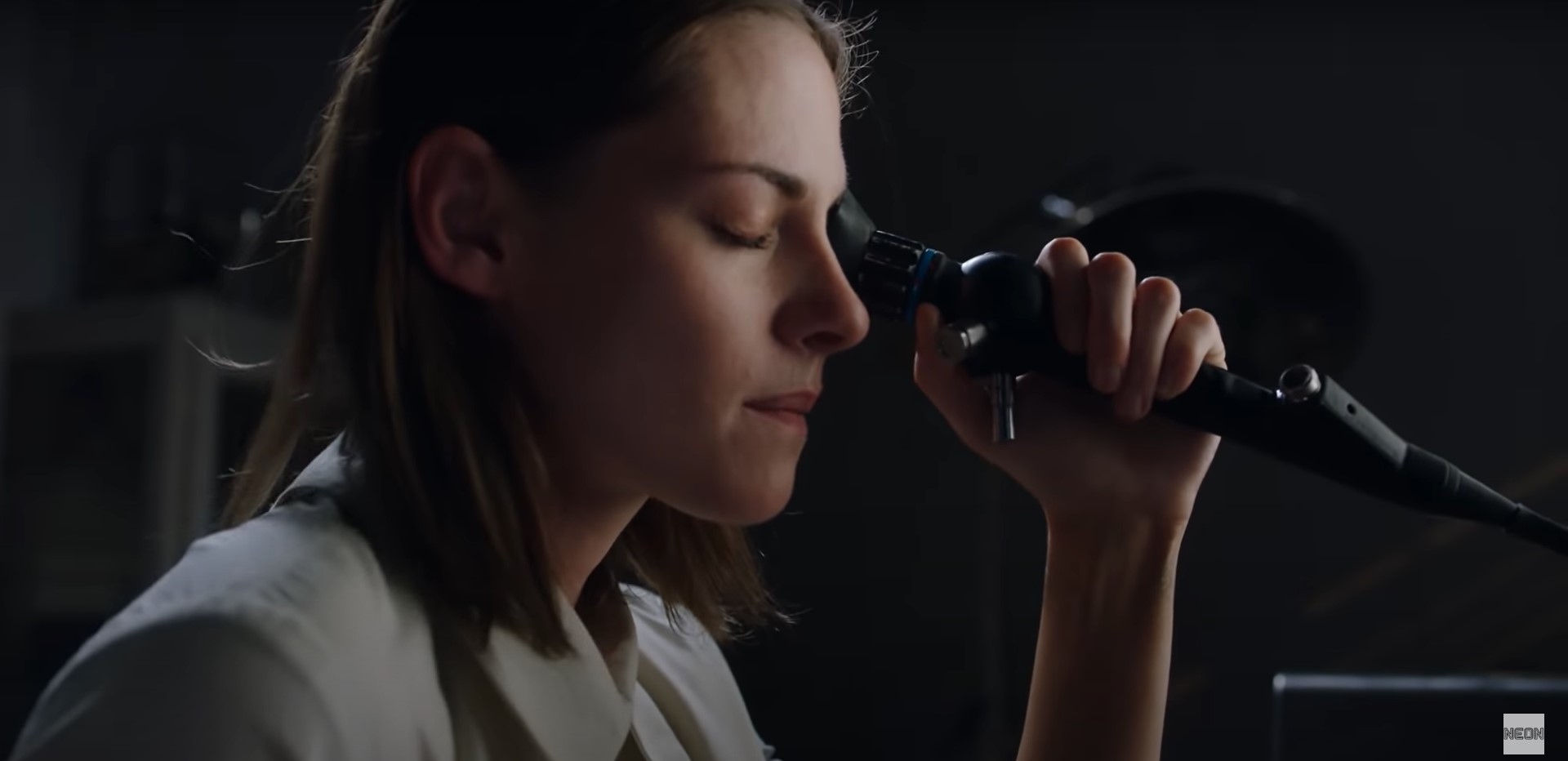
Marking his fourth collaboration with the director, Viggo Mortensen (“Eastern Promises,” “A Dangerous Method”) handles the fame of Saul Tenser, the subject of performance art with a knack for spontaneously growing new organs, or tumors, nearly at will and having them removed during surgical exposition at the hands of his intimate partner Caprice, quizzically seduced by the performance from “Blue is the Warmest Colour” and “Spectre’s” Léa Seydoux. Mortensen plays into Tenser’s will to remain what the institutes define has human only to become conflicted with the investigation into the prospect of rib-splitting a deceased young boy that sends Tenser into what-if territory. Scott Speedman (“The Strangers”) is the cause-driven father of the expired boy and Speedman sustains the character with his usual calm, soft-spoken demeanor which didn’t quite feel passionate enough for a neo-rebel against a society against what he stands for, what he is, and what he thinks everyone should relinquish to – to let the organs grow and flourish. Instead, the New Vice Unit Agent (Welket Bungué), the National Organ Registry’s bureaucrats, the excitable Whippet (Don McKellar, “eXistenZ”) and odd yet attractive Timlin (Kristen Stewart, ‘Underwater”), and an unscrupulous corporation looking to stop the spread of evolution insurgence for capital sustainability. Full of complex characters and neoteric performances, “Crimes of the Future” leaves a lasting impression, makes you stop and think, and indulges in the possibilities of the future with the help of a supporting cast that rounds out with Nadia Litz, Tanaya Beatty, Lihi Kornowski, and Yorgos Pirpassopoulos.
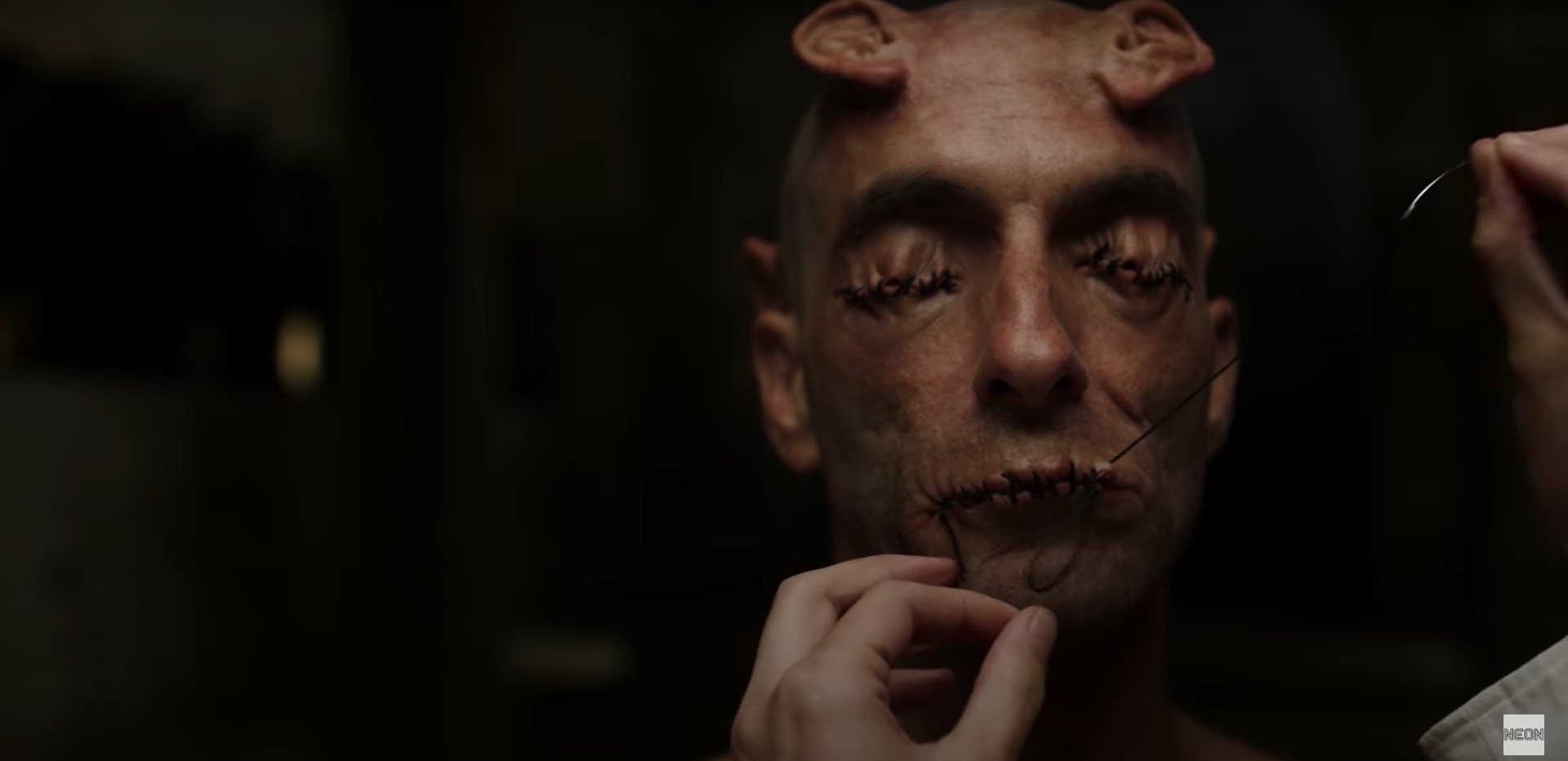
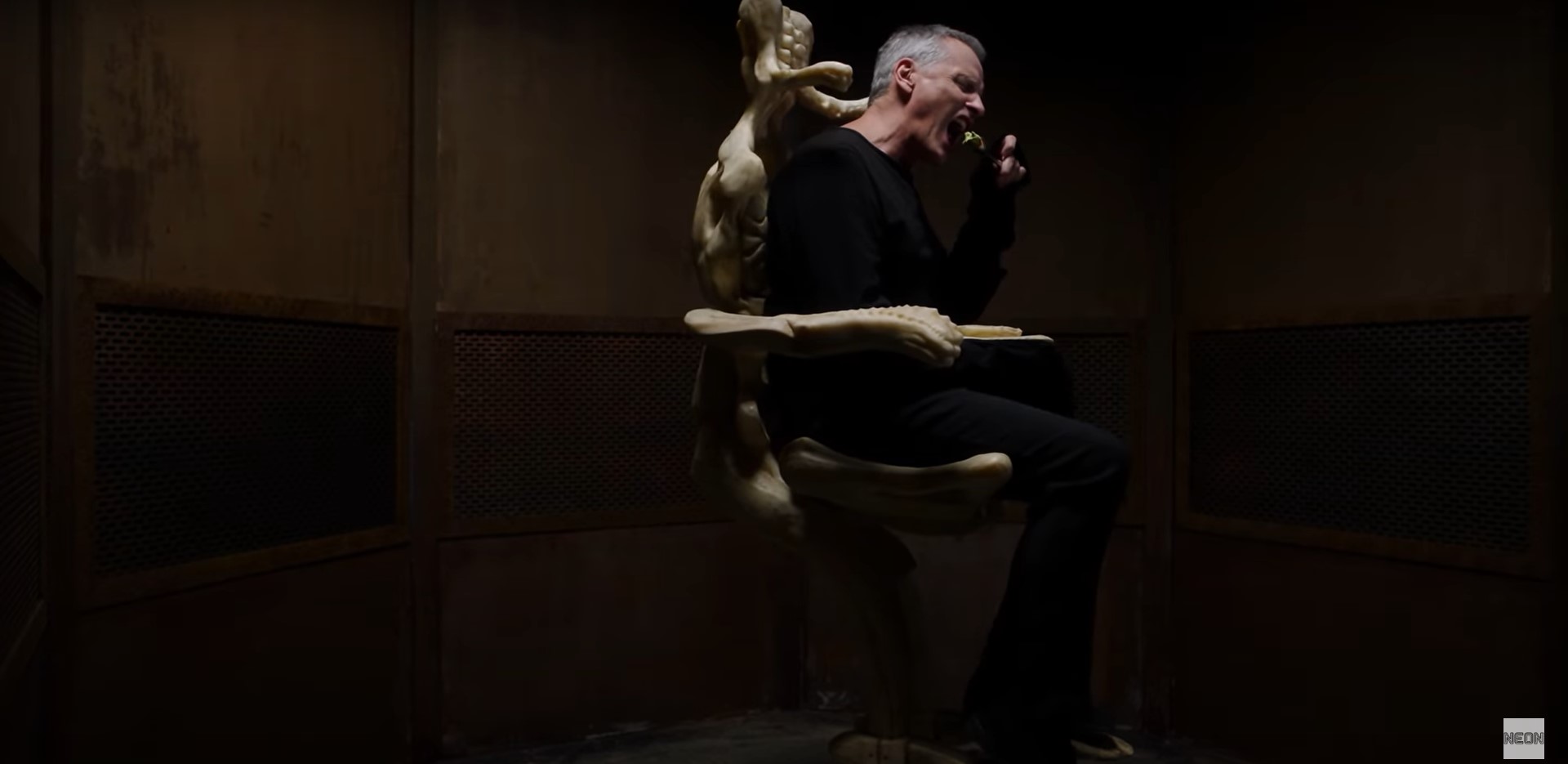
My official opinion about Cronenberg’s “Crimes of the Future” is that many viewers won’t see the multifaceted sides of what the writer-director is trying to convey.  What will be seen is the grunting organic bed that tilts back-and-forth, the fleshy and clunky moving digestive assistance chair that also has low guttural sounds, a dancing man sewn with many human ears, people being sliced open and enjoying it, and a dystopian future where suffering is not a main element.  People will see surface level abnormalities and gore and not understand the layers of a hard-pressed evolution in stagnation by unknown fear and extreme prejudice that runs rampant throughout Cronenberg’s underlying implication of an adaptation and updated normalcy inside a synthetic world.  “Crimes of the Future” is grotesquely beautiful in the depiction of not only how human culture and arts have morbidly progressed by the elimination of pain and by the advancement of technology only to be harshly juxtaposed against the grimy, gritty, and dilapidated habitation where infection feels high risk and imminent, but also in the corruptibility of the human condition that isn’t a naturally biological one like growing spontaneous organs.  Instead, the two bureaucrats of the National Organ Registry are supposed to be hardliners, rule followers, and thorough with their newfangled profession in the everchanging, unexplored future of the human physiology but are seduced by the intimacy of surgery, comparing it to sex with a high addiction rate.  The two agents are constantly breaking government policies and rules in order to be close to the dazzling aciurgy considered artful and alluring like a beauty pageant for the celebration of one’s innards.  Cronenberg also adds the caveat of corporate greed into the folds and flaps of “Crimes of the Future’s” dash of commercial retail that can be fleeting if not paying attention.  The threat of evolution aims to put body mechanism-correcting bed and chairs out of business and so a concealed aim to lobotomize that particular information permanently creeps up onto the narrative in some of the more frightening and gruesome scenes of smothering the risk it can spread like theater fire panic.  “Crimes of the Future” is an eye opening epiphany of everlasting ecological entrapment and the only way to survive is becoming accustomed to the taste of waste in order to be free of it.
If “Crimes of the Future” isn’t already remarkable enough in the wake of David Cronenberg returning to the body horror heir class, Second Sight stuns us with an impressive collector’s set from the UK. The 2-disc 4K UHD and Blu-ray set exhibits the film in a widescreen 1.85:1 with both formats decoding at an average bitrate of 23Mbps. The 4K UHD Dolby Vision comes in a HDR10 2160p while the High-Definition Blu-ray comes in a 1080p. Douglas Koch’s umbrageous urban bathed in greens and yellows and all the colors in between starkly hard lighting against softer details on the visual effects. Most details are lost in the tenebrous and decaying background of age worn and spartan warehouses with little-to-no wide longshots other than the opening of an overturned cruise ship in one of the very few daylight scenes, but the extreme contouring lucidly delineates the shapes around people and objects. Both formats include an English DTS-HD 5.1 Master Audio, providing a coherent and even robust dialogue through much of the Mortensen’s Tenser throaty rasp, Stewart’s Timlin robotic inflections, and Speedman’s Lang soft and breathy speech. “Crimes of the Future” is not volatile and full of action in what’s more a slow noir progression, focusing in on intimacy of dialogue, the proximate ambience, and Howard Shore’s (“Lord of the Rings”) neo-space opera and synth score. English subtitles are available for the hearing impaired. Second Sight puts heart and soul into every release when not only considering A/V but also special features and limited-edition contents. Special features include multiple succinct Second Sight produced interviews with director David Cronenberg and stars Viggo Mortensen, Léa Seydoux, and Kristen Stewart regarding “Crimes of the Future’s” broad vision. An extended interview with Don McKellar dives into his relationship with David Cronenberg from over the years plus his role as the National Organ Registry agent, plus additional crew interviews with producer Robert Lantos, cinematographer Douglas Koch, and editor Christopher Donaldson. Famed film journalist Leigh Singer provides a video essay New Flesh, Future Crimes: The Body and David Cronenberg, a making of featurette, production design materials that go deep into the austere and spartan look of Greece-turned-dystopian future, and a short film “The Death of David Cronenberg by Cronenberg and his daughter, Caitlyn. The physical features are a whole other beast within a rigid slipcase with new artwork by Marko Maney of a pitchy Saul Tenser relaxed in his orchid bed with tentacles while the back reads in stacked words, Body is Reality, glowing inside an old tube television. Both discs are held in an insert jewel amary case with its own Maney artwork of extracted organs in the same color scheme as the slipcase. Alongside the casing, there are 6 collectible art carts, a 120-page color book with production designs, location setups, and new essays by Reyna Cervantes, Tim Coleman, Joel Harley, Rich Johnson, Mikel J. Koven, Phil Nobile Jr., Ian Schultz, and Hannah Strong. “Crimes of the Future” is certified 18 for strong gory images and sex reference and runs 107 minutes on both formats with the Blu-ray locked in B region while the 4K UHD is listed as region free. Plausibly absurd, “Crimes of the Future” imparts far-fetched and dark humored science fiction, but if plants and animals biologically adapt to new or changing environments in order to survive, director David Cronenberg sees the future and renders a concept that, on a second sight thought, may be existentially key.

“Crimes of the Future” 4K UHD/Blu-ray Set is the New Sex!  

Under an Urban Club Scene, EVIL Horrors Connect Us All. “Flesh City” reviewed! (Wild Eye Releasing / DVD)

“Flesh City” Yearns for Connection on DVD!

An insomnious city pulsates with an industrial soundtrack and claws cantankerously at denizens without pity. Under one of the raging night club scenes, enamored raver Vyren follows the beautifully alluring Loquette, an inspiring electronic DJ, down into the club’s labyrinth of old stone corridors. Their coquettish play becomes the monitored study of Professor Yagov, a glowingly cadent and mad experimenter of anthropology. The two lovers are drugged and abducted by the Yogav with the intent of genetic mutating the couple’s anatomy that renders Vyren’s hand displaced with a bulbous nub and Loquette impregnated with an ingestible sludge. What becomes of their affliction insidiously infects the entire city population with a flesh tentacle curling through the city’s underground sewer and drainpipe infrastructure in what amasses to a single connection of brain-invading techno-horror.

“Flesh City” annexes our individuality for the sake of connective solidarity conveyed in an electronically infused and alternatively aesthetic experimental film from Germany’s own jack of all independent media and artistic trades, Thorsten Fleisch. The 2019 released feature is Fleisch’s first and only written-and-directed full-length film depicting his feverish analog avant-garde, reflecting the filmmaker’s menagerie of orthodox-shredding short films, video art, and written and produced music. Overseeing “Flesh City’s” cinematography and special effects, Fleisch has complete and utter autonomy of the visuals to obtain a harshly discordant image melody edited together, which Fleisch also manages, into an agglomerate of acetic aesthetics to shock and stress the audio and visual cortexes. Once under the working titles of “Berlin Blood” and “Zyntrax: Symphony of Flesh,” “Flesh City” is entirely shot in Berlin, Germany, produced by the director and United Kingdom producers Arthur Patching and Christian Serritiello, and is a feature of Fleischfilm and Tropical Grey Features.

One of the film’s coproducers and musical artists, Christian Serritiello (“Streets of East L.A.”), is at the front lines of “Flesh City’s” afterthought cast of characters with Vryen as essentially the naïve and lured-in Alice chasing the white rabbit Loquette, played by Eva Ferox (“Love Songs for Scumbags”), down the twisted rabbit hole of a cellar dwelling doctor.  I say afterthought because the characters take a backseat to Fleisch’s contortion of reality and the analogical subtext generated by Fleisch’s love for analog anomalies, using them as supporting pawns to carry out his visceral vision of vitality.  Music videos, psychedelic montages, and grotesques images of beetles absorb screen time like formless or arthropodal principals.  Even Professor Yagov (Arthur Patching”) is obscured by a rainbow shimmer, never visually seeing his face as an individual seemingly between two dimensions.  “Flesh City” is a very multiverse, multidimensional nightmare-scape of unconventional color that has culminated from Fleisch’s imaginative idiosyncrasies over the years and that’s what being intently showcased here with more evident display of a less-character driven, shapeless story within the technical aspects of the DVD release where the soundtrack drowns the dialogue into a muffled deaf tone, like any good loud music venue would subdue.  “Flesh City’s” urbanites fill out with Marilena Netzker (“Love Songs for Scumbags”), Shaun Lawton (“Possession”), Denis Lyons (“German Angst”), Anthony Straeger (“Call of the Hunter”), Maria Hengge (“Love Songs for Scumbags”), Helena Prince (“12 Theses”), and Thorsten Fleisch in a Max Headroom meets Total Request Live-like host role of Quantum 1337.

“Flesh City” will not be everyone’s approx. 90 minutes of how to spend their time choice.  The experimental film will only speak to a few select souls with a filmic affinity for Lynchian peculiarities, Terry Gilliam’s bold fantasy, David Cronenberg’s body horror, and a hellish capriccio along with an eclectic music palate for noise rock, henpecking alternative, and strident industrial bass.  I wouldn’t go as far as saying Fleisch’s film is akin to nails on a chalkboard but can be boisterously unpleasant to the ears at times while, in the same breadth, be stimulating visually, even if that stimulation may induce a photosensitive epileptic seizure.  Fleisch’s non-traditional narrative design splices in music videos from various underground and indie artists with him providing introduction as an illusionary host in a virtual world, breaking up the Vyren and Loquette’s post-punk-adelic core quandary with a teetering melodic cacophony of feedback rock electronic, a hostile rhythm, and bizarre lyrics and visuals.  Fleisch pushes the taboo envelope with not only liberal nudity, to which Germans are very at ease with their body image, but also within the unconfined stylistic creativity of multi-formats that razzle-dazzles like the innards of radiant plasma globe; the Tesla coil electrons that’s drawn to your conductive flesh won’t hurt you but provide a feeling of captivated wonder.  Yet, don’t expect to be thrilled in a traditional predator-and-prey sense as “Flesh City” appeals more to our disconnect from each other and how to reconnect must be through some kind of inclemency. 

Likely to transmit under the radar, “Flesh City’s” biomorphic body horror arrives onto unrated director’s cut DVD home video courtesy of cult and independent distributing label Wild Eye Releasing in association with Tomcat Films.  The DVD5 presents the transfer in a widescreen 2.35:1 aspect ratio with varying levels of image quality due to different types of equipment and methods used to create Fleisch’s tripped out vision that contains, but isn’t limited to, black and white, color, stylistic lighting, analog equipment, digital equipment, stock footage, and so forth.  This mishmash movie makes for divisible degrees of signal quality that can be look crystal clear in one scene and then heavy noise interference the next, but the overall clarity is remains stable without any scenes being rifted because of visual vagueness.  The audio comes in two formats:  a English Dolby Digital 5.1 surround sound and a English Dolby Digital 2.0.  Frankly, the original English dialogue track is feeble under the tremendously potent soundtrack and sound design that makes comprehending Vyren and Loquette subterranean exchanges under the industrial rumble of the score virtually impossible to discern.  Even Quantum 1337’s cyber-stutter chat softly introduces us into his world, essentially leading the blind into a mound of musical mania. Bonus features only include other Wild Eye Releasing trailers with the physical aspects of the DVD come with a misconception cover art that has a terrifying gaunt and fleshy, humanoid creature front and center, but that creature doesn’t exist in the film until maybe at the climax that’s nebulously discernible at best what viewers are supposed to see. Inside the standard DVD snapper, the disc art is pressed with the same front cover image but with no accompanying insert. The region free disc features the unrated film with a runtime of 84 minutes. “Flesh City” is a delicacy of distortion, but the Thorsten Fleisch film is an acquired taste that general audiences won’t have taste for but, then again, general audiences are not Wild Eye Releasing’s target audience, now are they?

“Flesh City” Yearns for Connection on DVD!

Biding Time Can Be Dystopianlly EVIL and Claustrophobic. “Tin Can” reviewed! (Dread / Blu-ray)

“Tin Can” on Sale Now at Amazon.com!

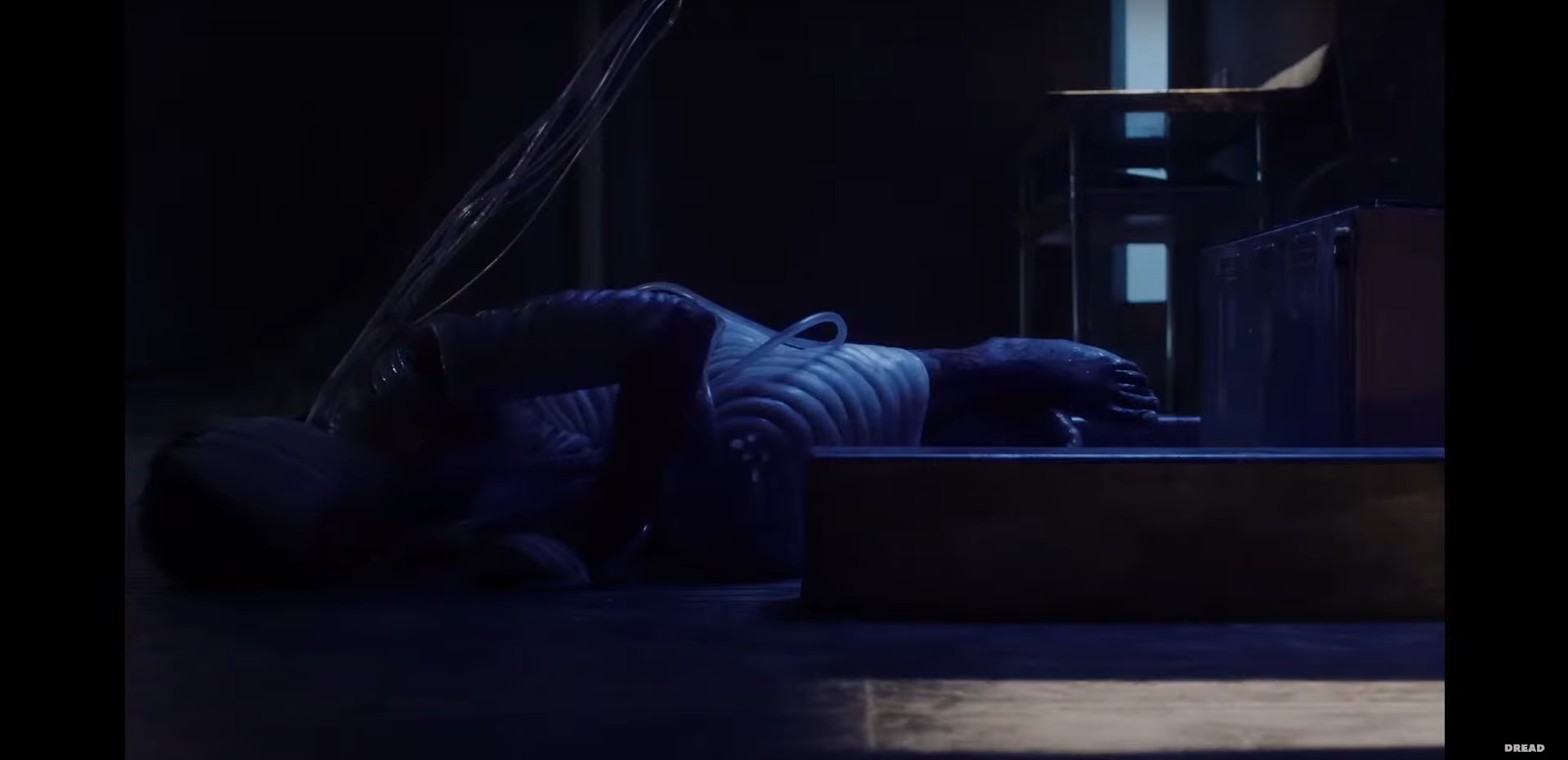
A viral fungus pandemic has plagued the world.  Fret, a parasitologist, has worked toward a cure to stop the spread of a virus that grows Clavaria-like basidiocarps from inside out the body that’ll eventually enclose the victim to death in an organic cocoon.  Before Fret can develop and distribute the recently discovered global cure for the virus, she awakes in a confined metal container constructed to suspend life duration for those who contracted the illness.  Confused and disoriented, Fret learns she’s not alone as others awake around her and able to talk with through the containers, including your infected husband John.  Unaffected by the virus and believed to be encapsulated in error, Fret works desperately on an escape from her well-intended prison in order to save humanity before it’s too late.   

By now, most of us can relate to a pandemic-driven storyline because, well, you know, COVID.  The 2020 sci-fi body horror “Tin Can” is no exception despite having been filmed prior to all the pandemic induced deaths and lockdowns.  Perhaps premise creator and director Seth A. Smith had a little foresight into coming events that inspired the Canadian project co-written with Darcy Spidle.  “Tin Can” is the fourth pen-to-paper collaboration between Smith and Spidle who previously completed two feature films (“Lowlife,” 2010 / “The Crescent,” 2017) and one short (“The Brym,” 2016) along with “The Willows,” the duo’s fourth feature film and revolving once again around preternatural events, that is currently in pre-production. For “Tin Can,” Smith and Spidle entangle a science fictional, dystopian, Hell in a handbasket world with selfish motives that outweigh saving the world. Seth A. Smith’s Nova Scotia based production company, Cut/Off/Tail Pictures, develops the story produced by company producer Nancy Ulrich and financially backed by the executive producing team of Michael Baker, Marc Savoie, Tim Lidster, and Rob Cotterill (“Possessor”).

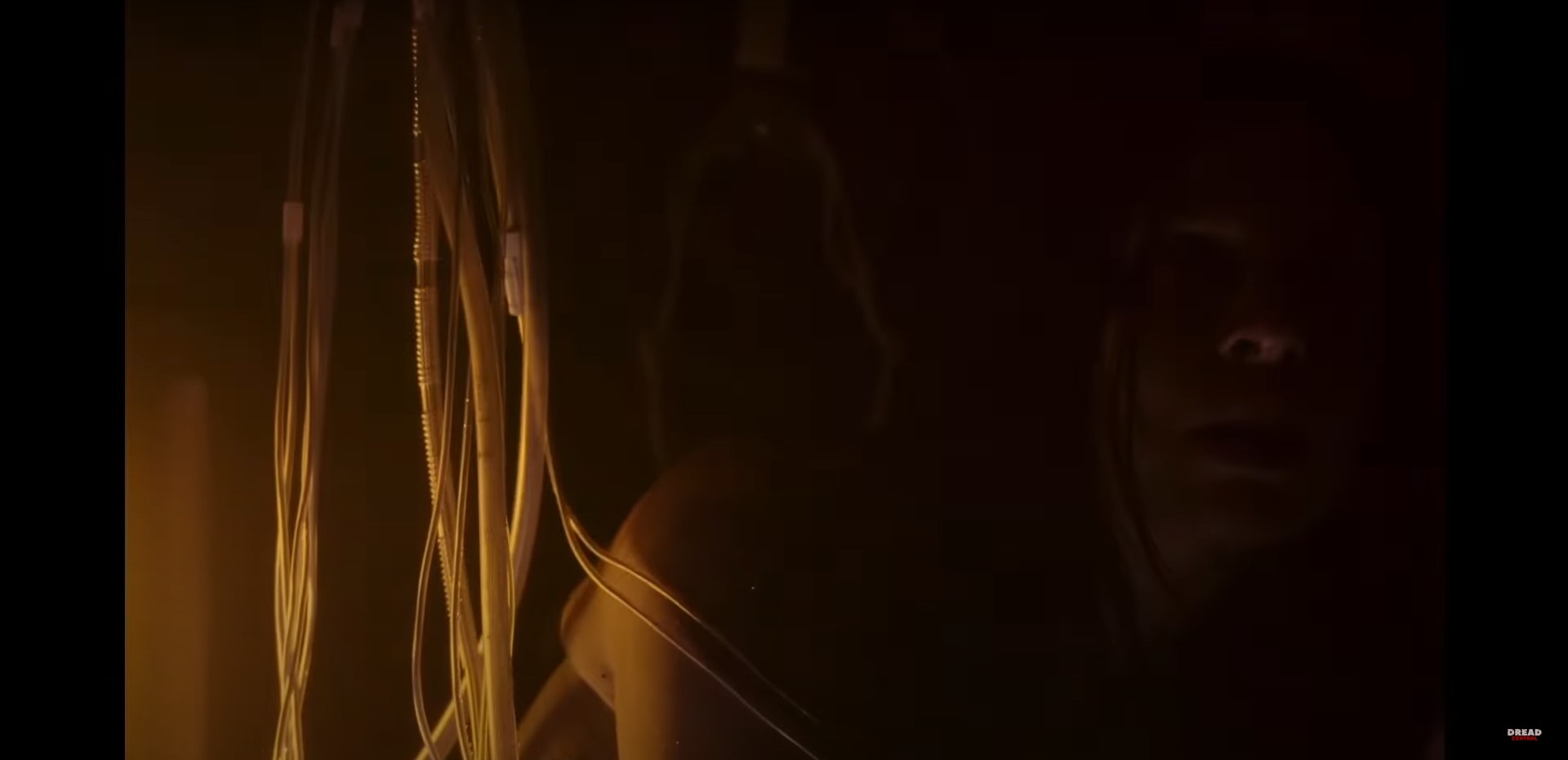
“Tin Can” might evoke a sense that one main character will be the focus point for the entire storyline, such as with “Buried” that stays put on the singular person trapped in this very tight, very claustrophobic-inducing soda can. Yet, that is not such the case with “Tin Can” that does circle around a centerpiece character in Fret (Anna Hopkins, “V/H/S/94”) but the cure-all scientist waking up in a life-extending canister while on the edge of saving mankind isn’t alone. Surrounding Fret are strangers, colleagues, and even her husband, some of whom, such as her husband, are suffering the protruding fungal fairy fingers of the virus. Anna Hopkins fields a hefty, difficult role after an initially a humble beginning as a scientist that more so-or-less feels the pangs of a low rent indie, but as Hopkins’ Fret transcends time by waking up weeks (or maybe months…years?) later, her environment becomes frantically imprisoning. The tight confines of the titular object with medical tubes dangling from the ceiling, a Tracheostomy tube down the throat, a malfunction video screen, and mysterious bars that light up one-by-one set a stronger stage for the actress to be put up against and Hopkins nails the mindset of a woman vehement and determined with escape to not only save her own life but the life of billions across the planet. In the cans beside Fret, providing Hopkins with more serve-and-volley fuel, is her husband John (Simon Mutabazi) inflicted by disease but becomes more than just a victim, Wayne (Michael Ironside, “Starship Troopers”) who I couldn’t really grasp as a component in the story as he’s like a project financier in the tin can project to save his own skin from being reskinned by fungus, Darcy (Amy Trefry) as a colleague-friend of John and Fret, Whistler (Tim Dunn, “The ABCs of Death”) who is the most interesting and weird doomsayer of the bunch, and a fist banging mute (Sara Campbell) also inflicted. For much the back-and-forth in the cannister talk, the dynamic is more of a talking head roundtable of initial discussions of popping open a small air vent so they sce outside their enclosed cell and eventually lead to more depth and deception that narrows the story with the what, when, why, and how.

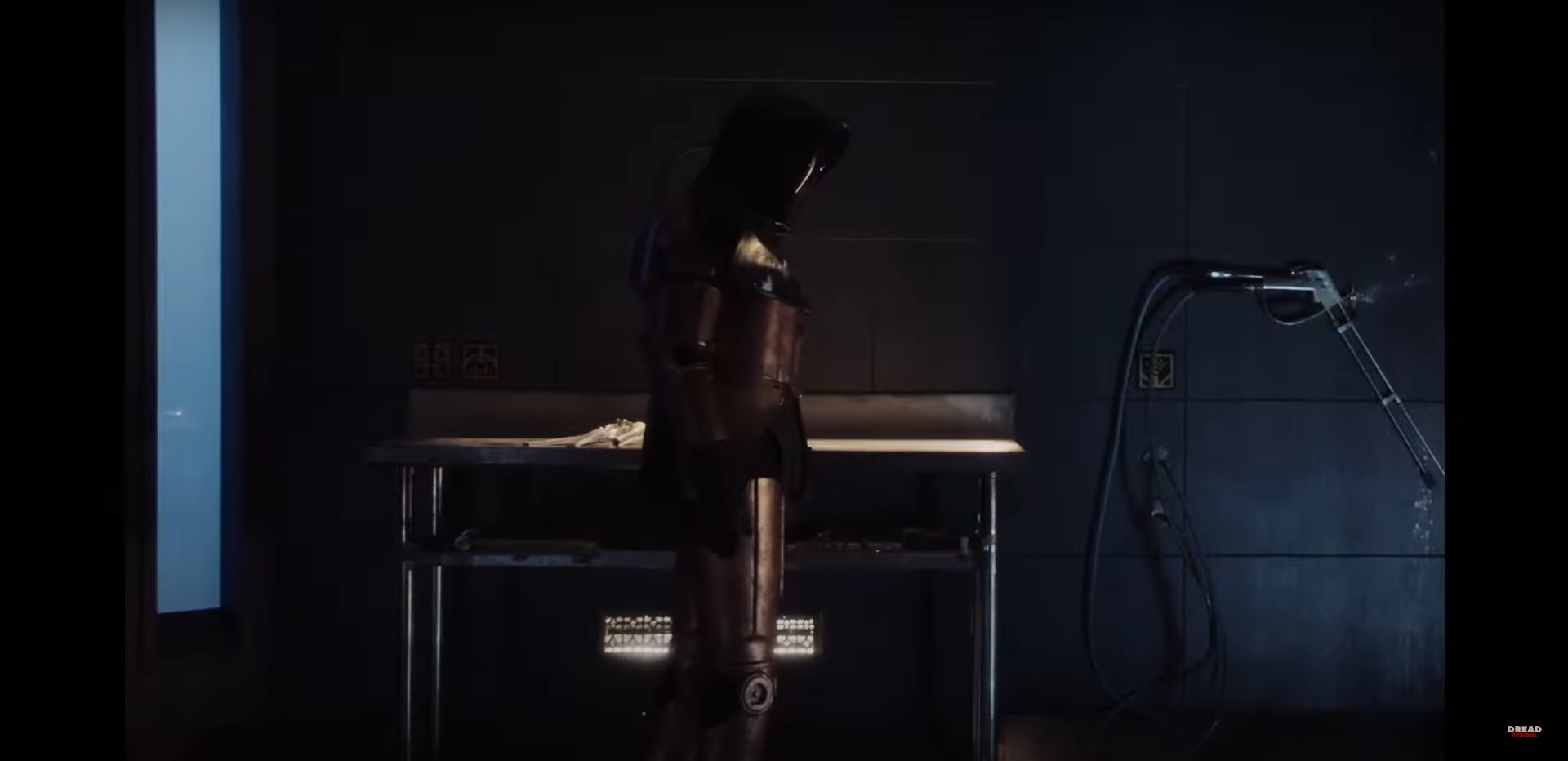
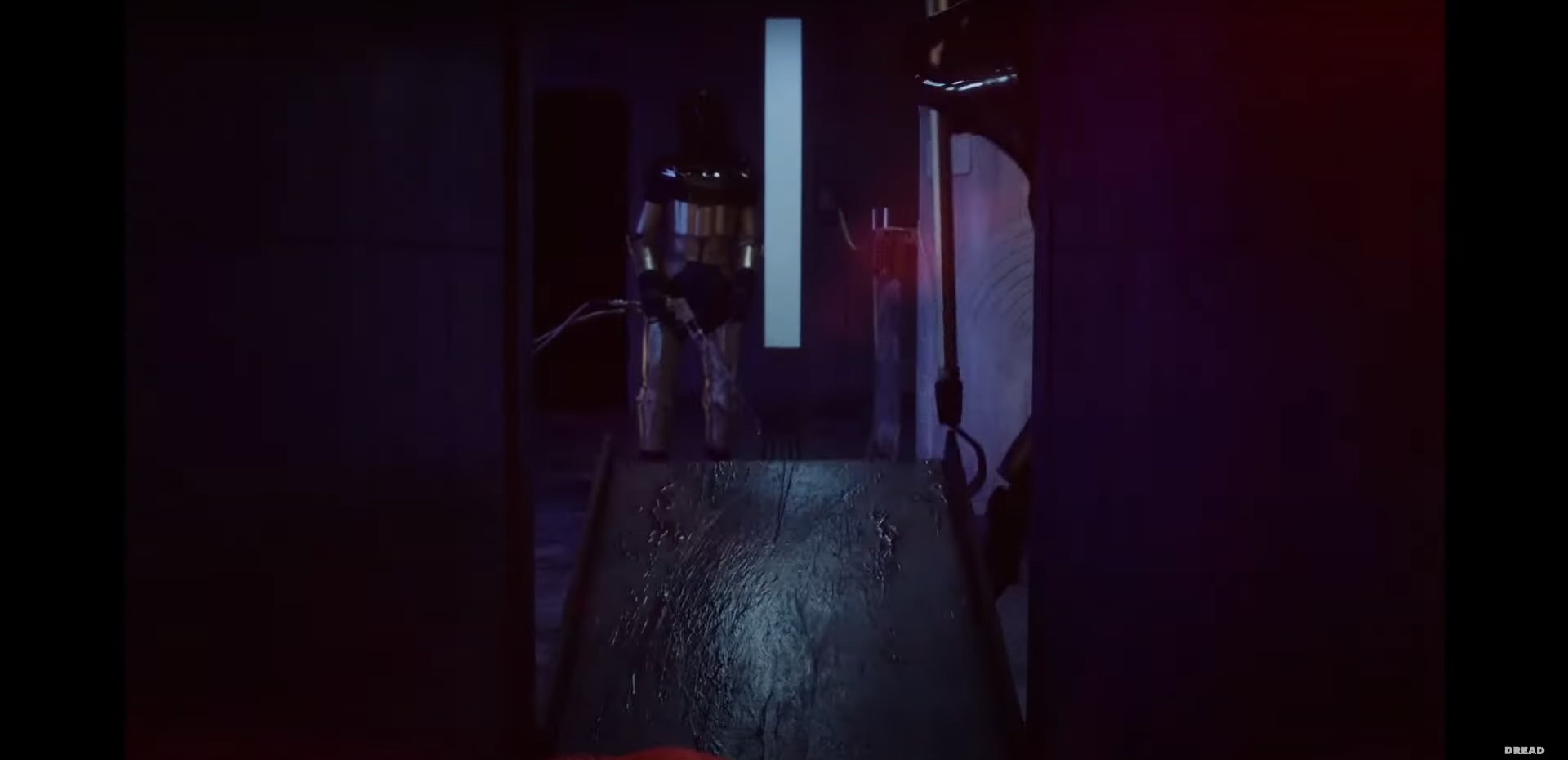
“Tin Can” aspires to be a chaptered three-act conundrum. I don’t mean that in a negative perspective. What Smith brings into existence is a polished independent film of Cronenberg-esque and has ensuing weirdness act-after-act only paralleled by the double-crossing exoneration or a retaliating impugn of keeping one alive after being severely scorned. The first act plays out like the world of today, a devastating pandemic that has ravaged the human population. The second act unsheathes the mystery of waking up inside the tin can device with people she knows and is eager to discharge herself from a capsule that’s supposed to sustain her life. Then, the third act rolls in, the third and final chapter, and time has officially been corrupted as we know it with a futuristic beings suited in various colored alloys. Alloys are definitely a theme beginning with title “Tin Can.” Fret discovers a cure for the diseases by commingling it with an alloy and each containment artificer is suited in a different metal and are credited as Copper, Gold, Silver, etc. What Smith could be suggesting is the element that could cure us could also incapacitate or, even worse, transfigure our existence with a lifesaving, yet life altering, solution to the extreme. Cinematographer Kevin Fraser industrializes the look of “Tin Can’s” existential view and is a glorious rusty bucket of a cheerless life. If Smith wanted to convey a life of nihility and automaton, Fraser nailed down the oxidation state. “Tin Can’s” a cold hard look at the cost of saving the world that, in the end, might not be worth saving.

A part of the Dread Central at home release line, “Tin Can” arrives onto a high-definition Blu-ray distributed by Epic Pictures and MVD Visual. The region free Blu-ray is presented in a throwback 3:2 with letterboxing and has a color reduction implemented to give it that demoded depiction. Image looks amazing without an inkling of any kind of compression issues especially with many of the scenes shot in darker and bleaker circumstances. Fraser delivers some awe-inspiring, creative angles that produce a how-did-they-do-that response to get a 360-degree single take of Anna Hopkins in the cannister or the rotation of a limp body on a large wheel door. The Dolby Digital 5.1 English audio mix has solid sound design as more than half of the picture is off the principals talking through their metallic cylinder containers that created a muffled depth and low range flickering in the backorder, the mechanized hum mixed with scraping metal, does wonders to sell the dystopian effect that borders steampunk. No inherent or noticeable flaws in the final product. English subtitles are available. Special features include a commentary with Seith A. Smith, The Last Bell Doe Toll – the making of “Tin Can'” exhibits the construction and creation of the displaced subsequent future, how to achieve a few of those crazy Kevin Fraser shots, and provide cast and crew interview insights, and the bonus content rounds out with two music videos – The Last Bell Does Toll and ZAUM – The Enlightenment (Part I). “Tin Can” runs at 104 minutes and is not rated. “Tin Can” is ingenious on a level many will not fully understand and, frankly, I barely can tether my impression and have it make sense, but there’s a unique ore core to this science fictional, ill-fated fantasy that can be so odd at times you can’t help but not look away.

“Tin Can” on Sale Now at Amazon.com!

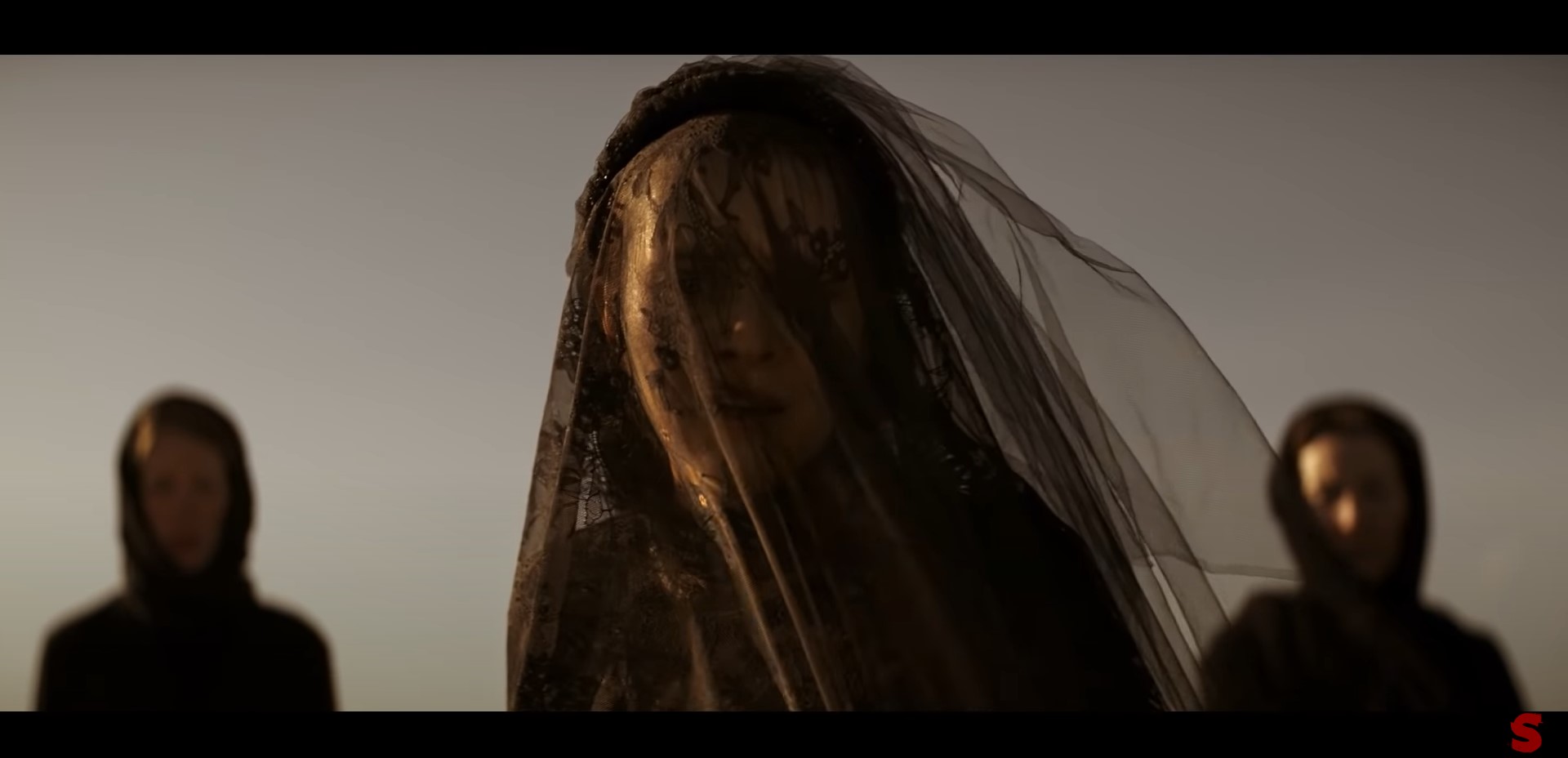
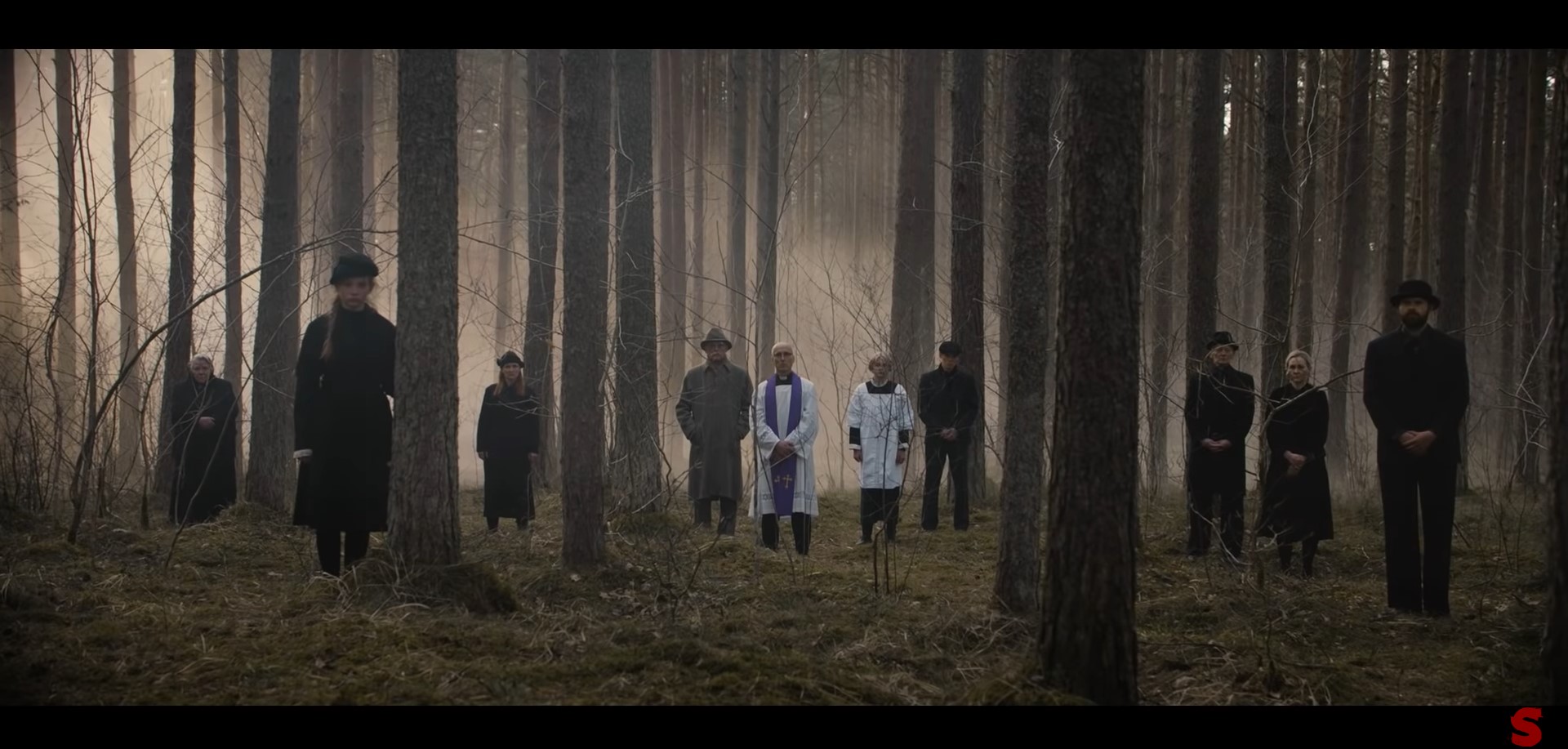
When the Heart Loses is When EVIL Invades the Head! “The Twin” reviewed! (Acorn Media International / Blu-ray)

After the tragic car accident that claims the life of their son Nathan, grieving Rachel and Anthony move from New York City to a sublime region of Finland, a place where Anthony’s lineage lies and where he spent time as a child. Nathan’s twin brother, Elliot, is frequently overprotected by his mother after the loss. When Elliot begins to exhibit troubling signs in his behavior that links to his deceased twin brother, Rachel grasps out for explanations, looking for a rational and irrational answer that could contribute to such erraticism in her son. One possibility, paved by a local outsider with her own personal demons, is the Finnish community is beholden to a supreme darkness that seeks to possess the child from the beyond. With nowhere to turn for help, Rachel relies of her motherly instinct to protect her child at all costs and from all malice from all forms. but what the evil that plagues Rachel and Elliot might be closer to her than she realizes.

Identical twins are already at about a 10 on the creep factor scale. Margot Kidder in the dual psychotic role of Brian De Palma’s “Sisters”, the unnerving Jeremy Iron performance of manipulation and cruelty in David Cronenberg’s “Dead Ringer,” and even those Grady twin sisters from Stanley Kubrick’s “The Shining” are an eerie extract overlooking the fact that two people can look so exactly alike. The biological phenomena goes against what proclaims us to be human in the first place – our individuality – and to be regularly utilized as a factor of the strange and unusual in a horror film just fills the cup up with a whole bunch of, and I quote Jordan Peele, nope! Finnish writer-director Taneli Mustonen is the next filmmaker to implement the oddity of identical siblings in his latest horror-thriller entitled simply “The Twin.” Co-written with Aleksi Hyvärinen, “The Twin” is the sophomore horror feature behind 2016’s “Lake Bodom” to emerge from the writers who have found cadence writing, producing, and directing comedies. Spun from Mustonen and Hyvärinen’s production company, Don Films, Don as in the title of respect, along with collegial line producer Mika Pajunen. Responsible for funding “The Twin” are returning “Lake Bodom” executive producers Fabian Westerhoff, Joris van Wijk, and Toni Valla with Shudder’s Emily Gotto acquiring distribution rights with financial backing.

Like most films about twins, the 2022 released twists and turns of a back-and-forth intrapersonal thriller uses one person to Eddie Murphy the roles. That person in “The Twin” is the pintsized Tristan Ruggeri who made his television debut as young Geralt in the hit Netflix book-adapted dark fantasy series “The Witcher.” Unlike most films about twins, Ruggeri really only has to play one but teeter the personality of the other in a symbolic showing of painful sorrow manifested to sorely miss what’s essentially your exact self. Imagine you’re a twin of a deceased sibling and you look at yourself and see your brother or sister. Rugger’s able to capture that emotional payload at such a young age despite being rigid as many child actors typically unfold early in career. Much of the story is seen through the eyes of Rachel, a distraught mother coping with the tragic loss, and the audience experience darkening, supernatural plot that’s unravelling a Satanist cult’s clandestine desires to bedevil her now only son Elliot.  “Warm Bodies” and “Lights Out” star Teresa Palmer plays the now the mature and safeguarding motherly role in the grand horror scheme alongside fellow “Discovery of Witches” costar Steven Cree (“Terminator:  Dark Fate’) playing her novelist husband, Anthony. For “The Twin” to actually work for the viewer to understand on a sympathetic level, you need to feel the love between them and finding love between Palmer and Cree is about as loveless as a platonic relationship. Aside from sharing a bed and a child, the romance and amorous has been removed from play, but that of frigid factor could have very well been intentional for the story. The principal casting concludes with Barbara Marten (“The Turning”) and the town eccentric, a foreigner who Rachel relates to and latches on to when the crisis with Elliot worsens.

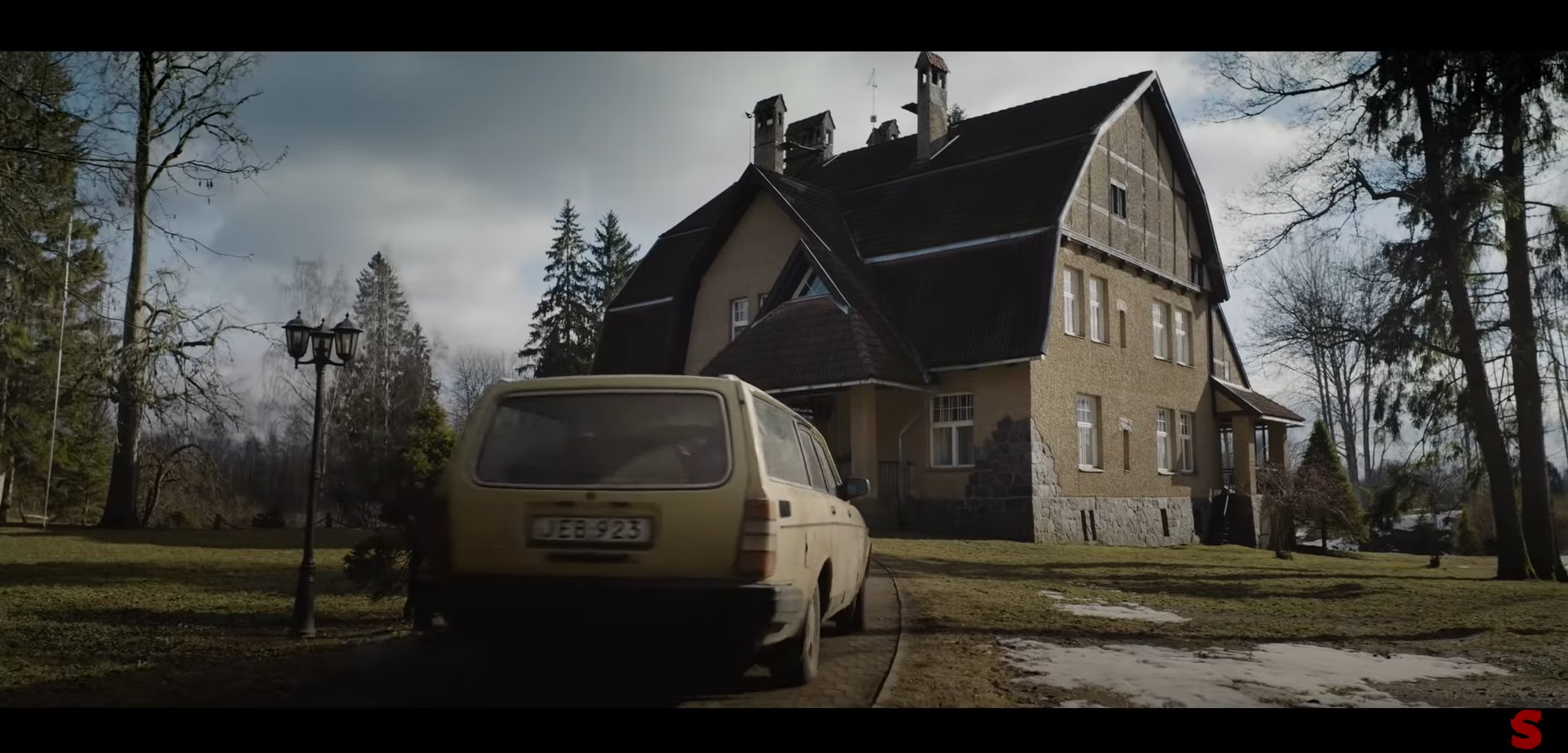
“The Twin” is small principal cast with big background actors that menacingly swallow nonconformers alien in nature to their surroundings. Foggy atmospherics, looming, creaky wooden house, and the dissociative difficulties that put Rachet through a tizzy compound the fear and the affliction of anxiety that turns everything close to you against you in a heap of isolation. All the dead silence and surreal nightmares build tension effectively, keeping the audience on the edge for that peak moment. Mustonen and Hyvärinen throw in a capacious curveball that lets characters wander and explore then develop and action against before pulling the rug from under our one-directional firm footing for a twist. That twist, however, is a play fake we’ve seen before in recent years with the armor of horror shielding the true trepidation. When the peeling begins and the revealing shows us more complicated layers beneath the rotten onion, the once randomized vectors formulate a picture and within the systematic process of slowly uncoiling initial perceptions and believed facts, the story takes on a whole new meaning and, sometimes, even begs the question if what we just watched is still a horror picture after all? “The Twin” very much fits into this goose chase genre but fits like a size two times too small. The path Rachel follows is a yellow brick road to Oz. Oz being the satanic cult is scheming kid-snatch in place of the Beast more vigorous. Mounds upon mounds of hearsay, circumstantial evidence, and even a factoid or two lead the film by the nose to an unwittingly demise of its importance to the story as a whole once all the cards are laid out before us. “The Twin” then goes into heavy exposition to try and explain much of what Rachel experiences and it really felt like a bunch of hot air, a passive attempt to briefly summarize the last 109 minutes without really telling us much about anything. There’s still lots of questions concerning Anthony’s wealth, background, and mental fortitude. Questions also arise about the story’s hook that suddenly drives the characters to make radical changes in a blink of an opening montage eye. “The Twin” has shuddering moments of stillness suspense and a disorienting subcurrent that severs safety at every turn but flirts with unoriginality too much for exhilaration in an all-been-done-before dogleg…with twins.

Acorn Media continues to be the leading UK home video rights distributor for exclusive Shudder releases as “The Twin” makes it’s Blu-ray debut in the region. The PAL encoded region 2 Blu-ray is presented in 1080p high definition with a 2.40:1 aspect ratio. Retaining mostly in gray and blue hue to convey melancholia to the fullest extent possible, the picture quality doesn’t retain a terrific amount of detail. Textures are often softer during gel-night scenes with no well-defined lines and when compared to day-lit scenes, the details are starkly steelier. The English language Dolby Digital 5.1 surround sound caters to a sound design that can differentiate between the bumps in the night as well as the stock-still silence that strikes at the nerves. Dialogue amplitude is on the softer side but very clean and very clear to comprehend. English subtitles have optional availability. Special features include a making-of featurette with cast interviews spliced in. The standard Acorn physical releases for Shudder remain the same for “The Twin” with a common blue case snapper with one-way cover art of uninspired creation. The film is certified 15 for strong horror, threat, bloody images, and violence. As far as doppelgänger bearing horror, “The Twin” is nowhere near identical to others but as for its fraternal individuality, there’s little unique about the Taneli Mustonen picture involving paranoia and primal maternal instinct.

EVIL Packaged Fresh, Never Frozen. “Raw” reviewed! (Second Sight / Blu-ray)

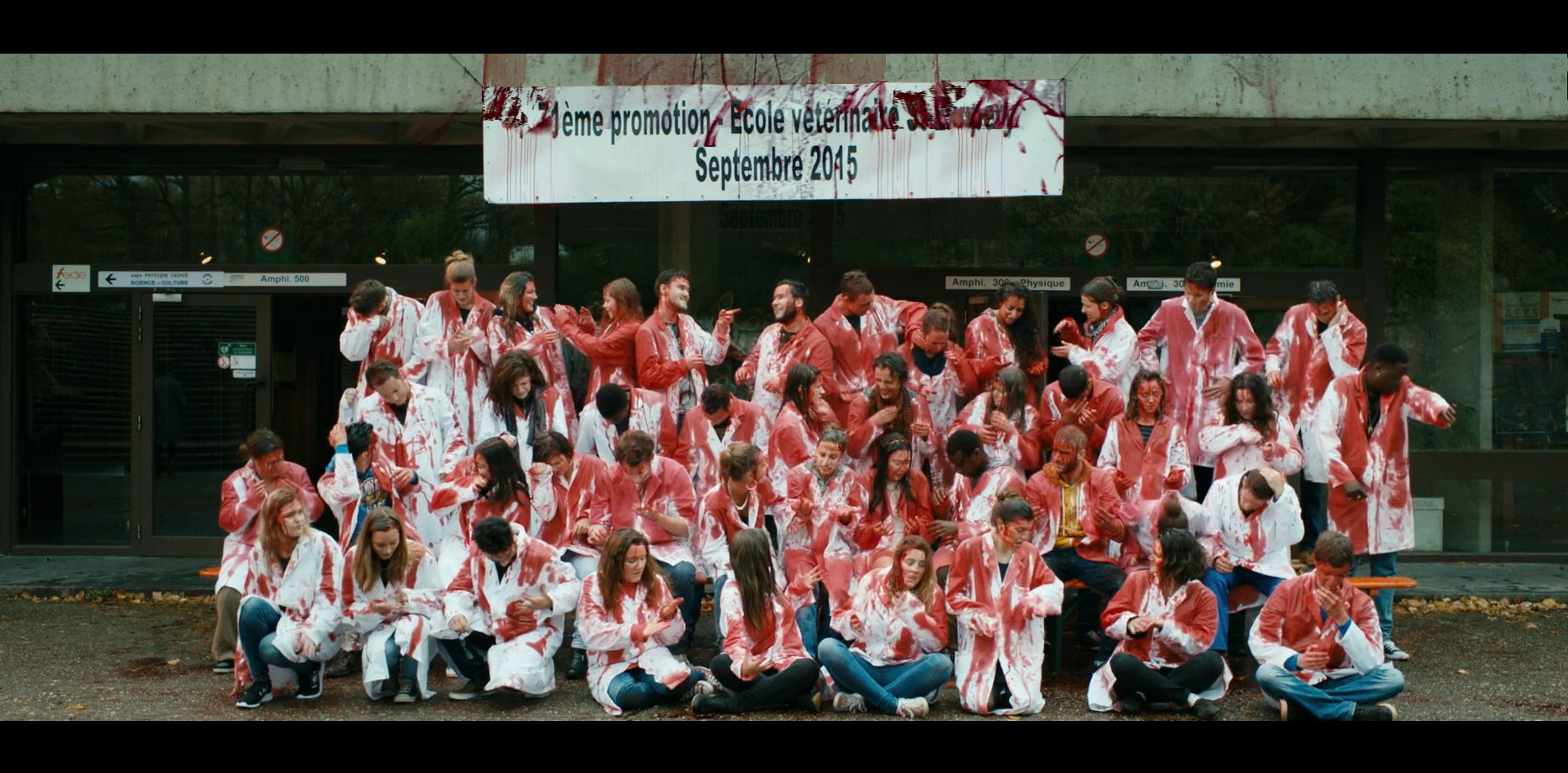
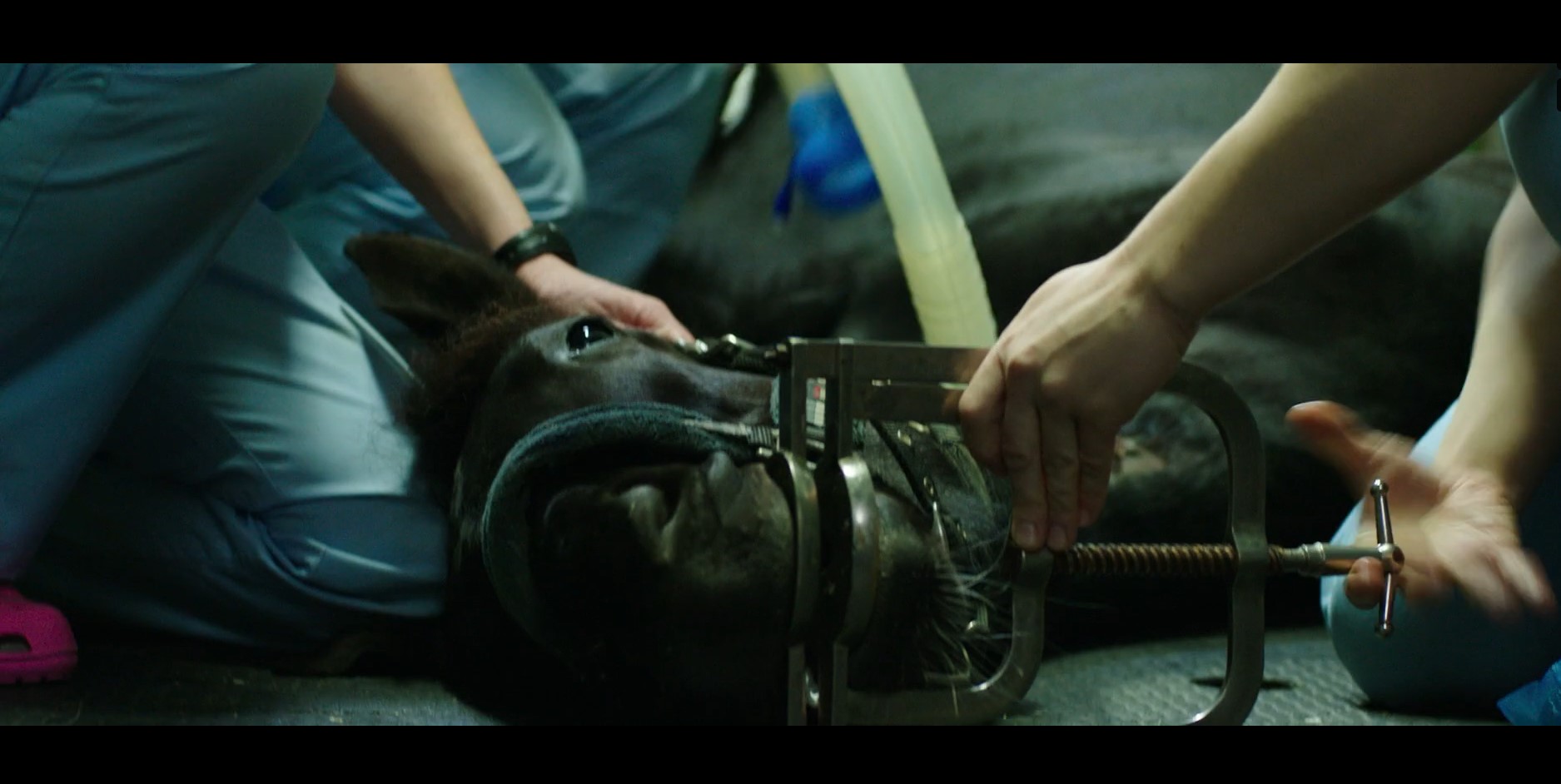
Brought up on a strict vegetarian diet by her parents, Justine became conscious that one swallow of meat down her gullet might start a chain reaction of life-threatening allergies. Her legacy acceptance into the prestigious Saint-Exupéry Veterinary School would have a set of challenges toward retaining that diet but her older sister, Alexia, who is still studying at the school and is also a vegetarian, would protect her from the intense hazing brought down upon the freshman class. When it turns out that Alexia gave into the temptations of peer pressure and egged her own to digest meat in a hazing ritual, Justine learns that her sister’s shielding won’t stand up against the forces of elder student pranks. From then on, a primordial animalistic behavior slowly transforms Justine from a quiet, awkward, and studious teenage girl into a party animal, an explorer of sexual awakening, and a herbivore whose slipping from her regime. Justine’s craving for raw meat digs deeper into the bone as the overwhelming need to consume human flesh spirals her down into an uncontrollable descent, turning the school’s exuberant hazing knaveries all the more dangerous.

Having been a meat eater all my life, the transition to vegetarian would be a hard-fought war that would likely shed years off my life just as much as eating a thick, juicy cut of a steak seasoned to perfection and medium cooked. After all, the human race is born with tapered canines that rip through the tough flesh and meat first and then pass along the now tendered feed to our molars, our mashers, that would handle the soft, chewy substance for an easy ride down toward our stomach. “Raw” takes that approach one step further, or maybe two or three steps further, by coupling the sudden discourse from meatless to meaty meals that expands into cannibalism with a coming of age and finding one’s place in life story that can be relatable to us all. The French film is written-and-directed by Julia Ducournau, who reprised herself with another body horror sensation with last year’s acclaimed “Titane,” and was shot at an actual veterinary school in Belgium, the University of Liège. Originally titled “Grave” before being upgraded to “Raw,” the film is a production from a conglomeration of studio labels, including the first horror production for Petit Film. Rouge International (“Murder Me, Monster”), Frakas Productions (“Sea Fever”), Ezekiel Film Production and Wild Bunch (“Martyr”) serve as a few of the film’s other coproduction companies with Jean des Forêts, Julie Gayet, Jean-Yves Roubin, Nadia Turincev, and Cassandre Warnauts as producers.

“Raw” is not your typical girl journeying through the trials and tribulations of normal self-discovery.  For this, you need not your typical girl to play centric character Justine.  Enters 16-17 year-old Garance Marillier, the Paris-born actress with an established bond on and off screen with director Julia Ducournau having debut her acting in Ducournau’s 2011 short film “Junior” as a tomboy going through a strange corporeal transformation.  Fun fact:  Marillier has been cast as a different Justine in all three of her collaborations with Julia Ducournau – “Junior,” “Raw,” and “Titane” since 2011.  Marillier soaks into “Raw’s” Justine with not only a transcending behavior pattern performance that takes the freshman from stifled to uninhibited, but the young actress also overhauls a complete body language transformation that sheds Justine’s meek skin, literally displayed on screen, for a more confident and abrasive veneer.  Ella Rumpf (“Tiger Girl”) receives Justine’s inexperienced blossom-hood with an the older, already initiated, sibling having been fostered by rambunctious peers to break the sheltering chains her parents had shackled with and just like true to life sisters, there’s contention.  The vehemence venom between them when they’re on bad terms on screen can stop one’s breath, you can hear a pin drop, yet you still understand their sisterly connection and love no matter how messed up a situation might be, especially when involving boys, such as the pansexual fluidity of Justine’s freshman roommate Adrien, played by Rabah Nait Oufella.  “Raw” rounds out the small cast surrounded by a slew of extras with Laurent Lucas and Joana Preiss as mom and dad.

Julia Ducournau has the body horror genre down to the molecular level.  It’s as if the filmmaker studied every film and playbook of David Cronenberg just from researching her various work credits that target to restructure and regress the human condition into something far worse and watching “Raw” unravel a symbiotic relationship between natural and unnatural human development blurs that line of what is considered to be normal so disturbingly good.  Exteriorly, we notice the changes and can almost set a clock to way our bodies react and change over time, biologically and socially, within the context of our environment.  Internally, a whole unexplored set of conditions apply to the unpredictable mindset of transfiguration and that’s where Justine paves an unfounded roadmap for her sudden kick from being a veggie lover to a flesh craver. “Raw’s” undoubtedly an allegory of a young girl’s pubescence and coming of age into her own from, essentially, being on her own exploring her sexuality and exploring new interests as is such with going into university. Ducournau casually strolls through Justine’s drama and tension as much of the body horror overwhelms our morbid curiosity but her angsty complications, still very much underlined even being overshadows, retain a constant line of parallelism in a symbolic reality. Delicate touches of indelicate gore really spice up “Raw’s” entrenching story not for the faint of heart as well as vegetarians.

Hot off the heels of their now out of print limited edition release of “Raw,” Second Sight Films offers a second, standard release on Blu-ray home video. The UK label offers a single disc packaged, region B encoded, BD-50 of a 1080p, high-definition, 2.40:1 aspect ratio presentation, listed at running an average frame bitrate of ~24Mbps. Highly accurate on its bitrate average, the image is well diverse in discerning details without an ambiguous scene or spot in sight. The color often feels muted, dreary, like one long continuous overclouded day that presents an everlasting feeling of dismay. Yet, that isn’t all cinematographer Ruben Impens has to offer with arthouse framing of disturbing imagery and an opening freshman party scene that takes us through the cramp pockets of sweaty, half-naked partygoers in one lengthy, single shot that expels just about everything Justine will face at her time in veterinary school. The French DTS-HD 5.1 master audio superbly distributes the audio tracks with just right levels to accommodate each scene. If there’s a noisy, bass blaring party, the score rightly takes over and the dialogue takes a muted backseat but still clear and intelligible – or so I believe since I don’t understand French, but I can make out the syllables and inflections. Otherwise, dialogue is king and clear alongside an eclectic soundtrack of English indie rock and experimental tracks as well as Jim Williams guitar and industrial synth trek across that’s beautiful and, simultaneously, disconcerting disharmonic. If you missed out on the limited edition, don’t bite yourself as the standard edition as plenty of extra features, including an interview with actress Garance Marillier The Girl Can’t Help It, an interview with producer Jean des Forêts Making Ends Meat, an audio commentary by film critic Alexander West, an audio commentary with director Julia Ducournau and critic Emma Westwood, an interview with Ducournau A Family Affair, the featurette Raw A Votre Gout with Ducournau and Emma Westwood, a conversation between Ducournau and critic Alexandra Heller-Nicholas Quick Bites, a genre matters panel discussion, an Australian premier introduction and post screen Q&A with Ducournau and Kier-La Janise, and a handful of deleted scenes. The film runs at 99 minutes, comes with well synced English subtitles, and is certified 18 for strong gory images and injury detail. Taste “Raw’s” unseasoned, unadulterated, pure and simple line of hidden truths and manifesting urges that once crossed there’s no turning back as the person you once were, is no longer akin to an impossible burger but a fully tendered hunk of mouthwatering meat freshly cut and ready to sink your teeth into.