Death Penalized EVIL Returns to Wreak Havoc on Young Women. “The Stay Awake” reviewed! (Cheezy Movies / DVD)

Can You Keep Your Eyes Open at “The Stay Awake?”  On DVD now!

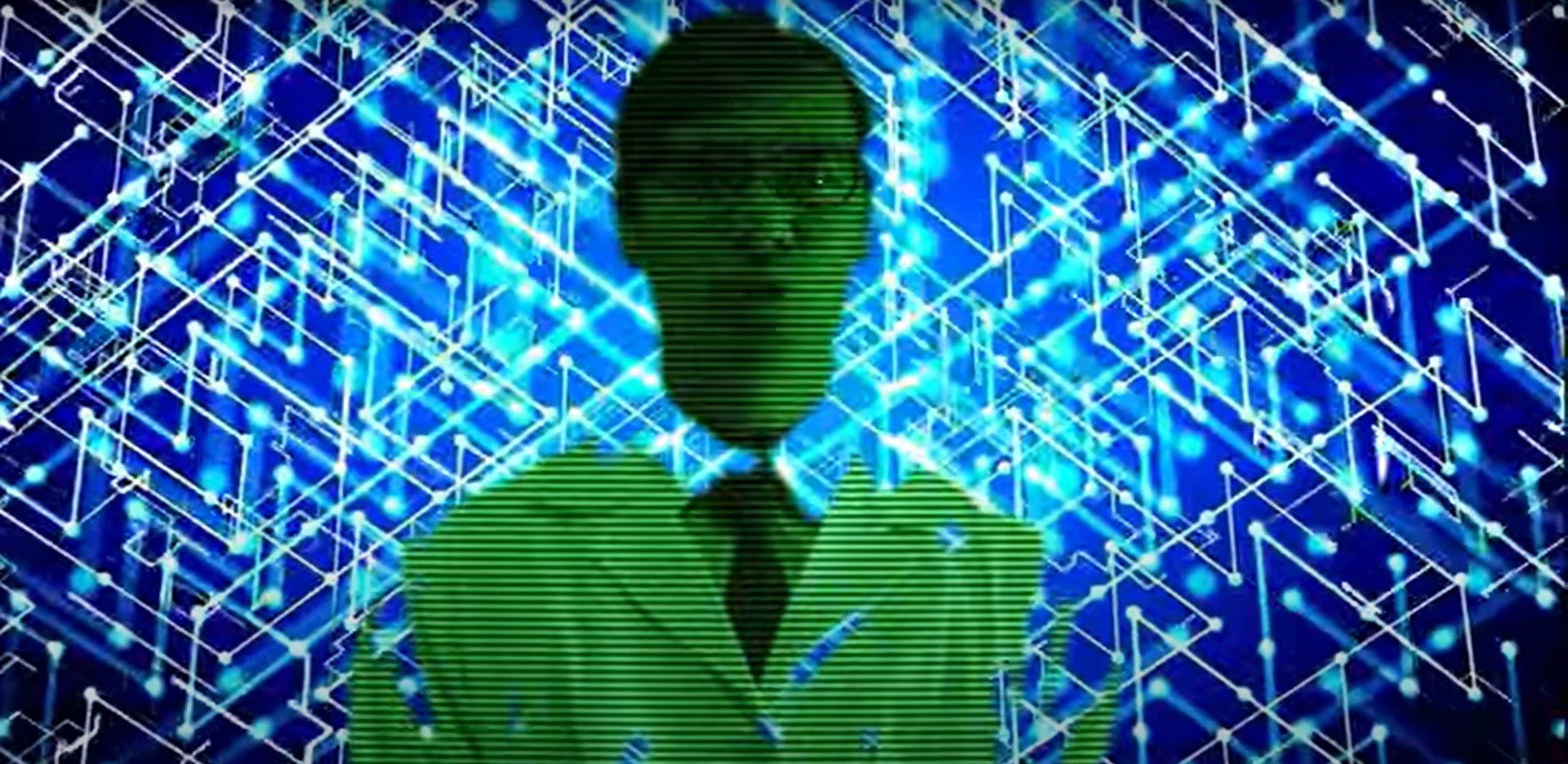
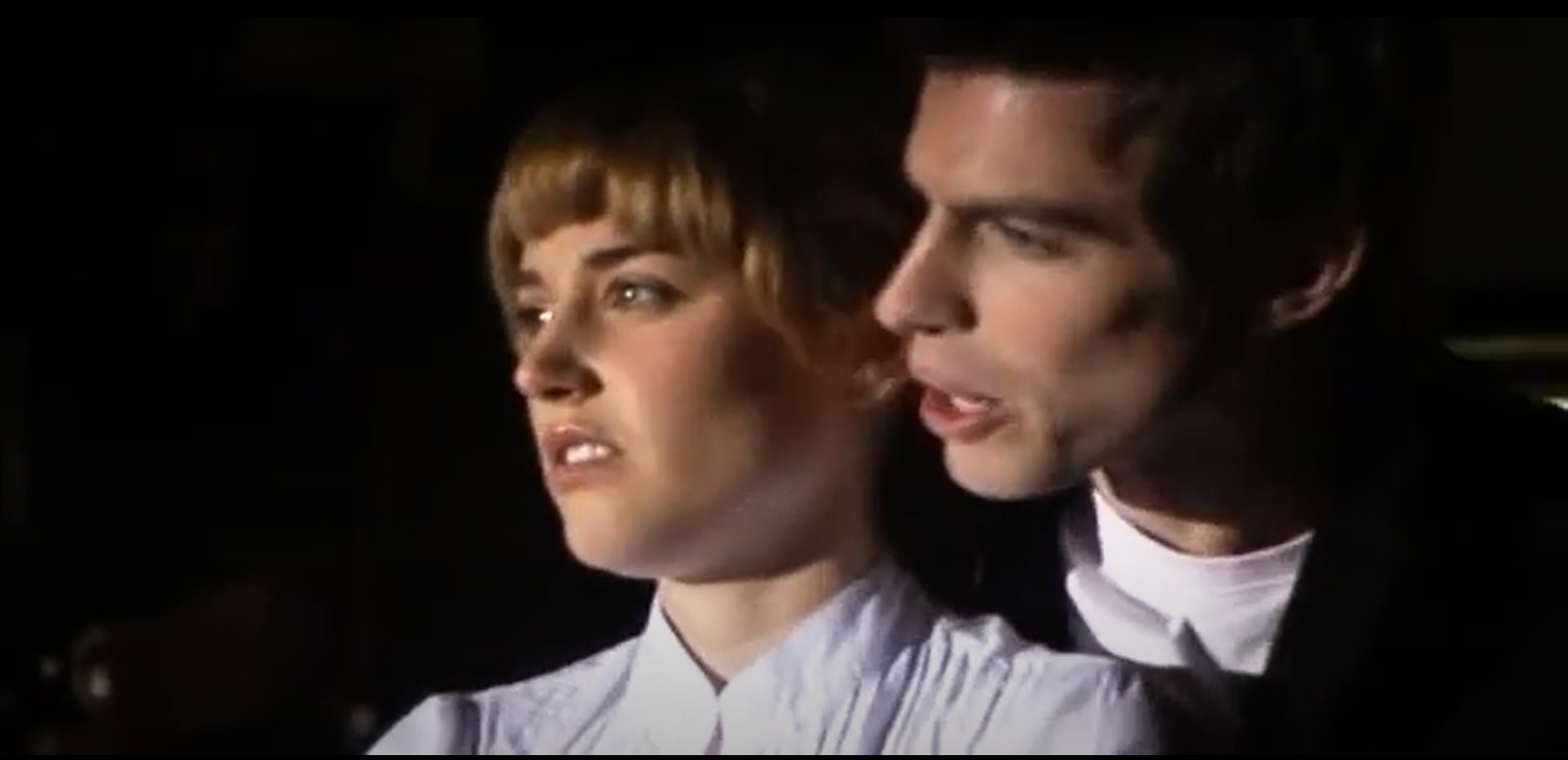
America, 1969. William John Brown brutally slays and sexually assaults 11 women. Before a judge, the serial killer is sentenced to death by gas chamber where his last words proclaim him as the Angel of Darkness sent Earthbound to ravage women. Nearly 20-years later in 1988, the St. Mary’s School for Girls in Europe is holding a stay awake event where a handful of students and one chaperone stay up the entire night as a fundraiser for their school. Dark and nearly vacant, the school basks in an eerie haven for the murderous William John Brown’s returning spirit seeking new souls of the softer sex. Determined to protect the girls at all costs, chaperone Trish Walton will not stop protecting the frightened girls until the entity is destroyed but when the ethereal malevolent spirit takes shape of a monstrous rodent with outstretching attack tentacles and psychokinetic glowing eyes, chances of survival are bleak.

Malevolent forces crossing oceans to death grip the innocent are films that are few and far in between as most transatlantic terror usually stays put, regionalized and localized to keep an authentic aural blend of superstition and history. Director John Bernard attempts to go against the grain with a small crowd of filmmakers who either overcame the parochial provenance and succeeded tenfold or became lost in foreign land narrative and failed miserably.  Bernard and, assumed brother, Johan Bernard co-write “The Stay Awake,” a South African mixed lot of horror elements brewed together into a supernatural schlocker that’s one-half dark and stormy night, gloomy Church Gothicism and one-half final girl survival slasher but equal parts outlandishly overexerted ghost thriller stretching across multiple continents.  “The Stay Awake” is a product of Heyns Film & Television Productions, produced by Thys Heyns of South African action-thriller flicks, as well as produced by Paul Raleigh, the producer of the “From Dusk Till Dawn” and the notable Millennium Films cofounder Avi Lerner, of “American Ninja” and “The Expendables” franchises, in one of his earliest credits from 1988.
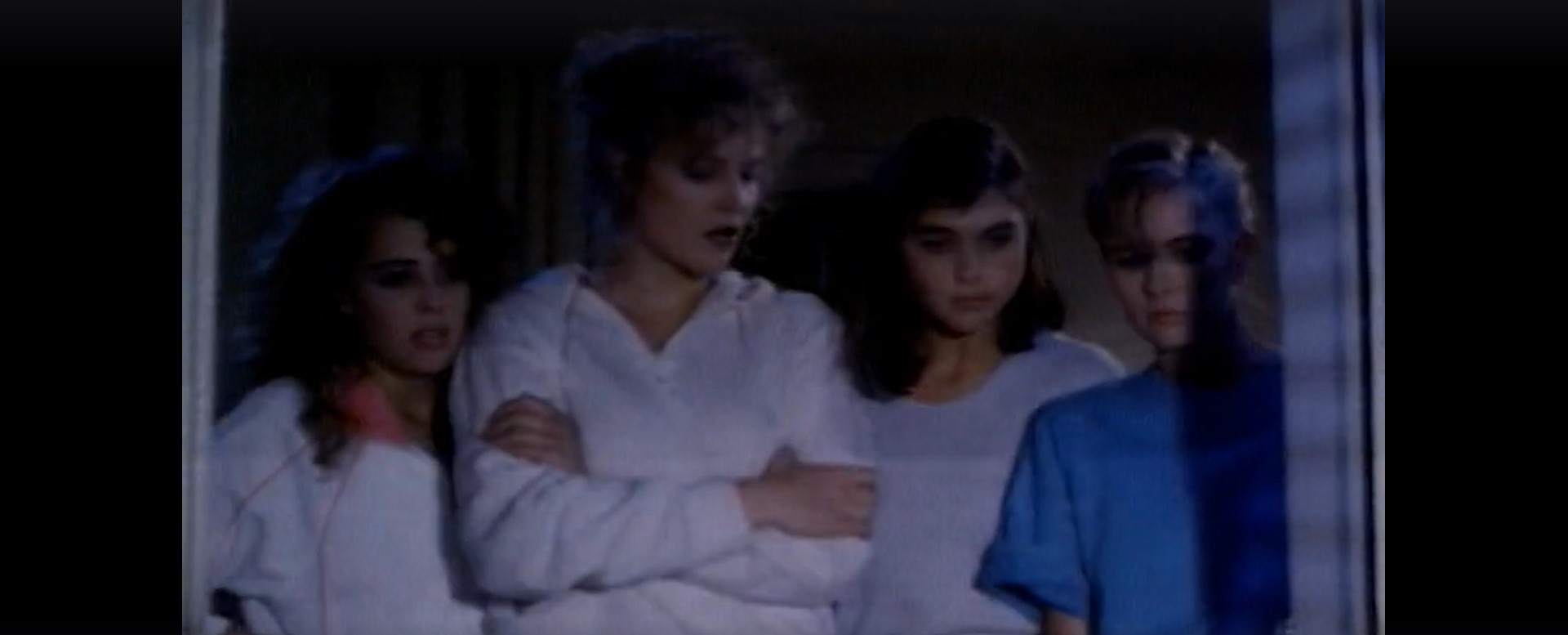
Though the story begins in America and mostly takes place in Europe, the cast is comprised of mostly South Africans trying to pass their accents for British English that is more like a rotating centrifuge of South African sub-accents.  Shirley Jane Harris (“The Most Dangerous Woman Alive”) spearheads the cast of principals with an extremely proclaiming protagonist, delivering lines with flatfeet and flat inflection that makes her one of the more forgettable final girls.  Her foe compares just as bland with a grunting, bodiless entity floating through corridors and hiding behind indoor plants (why would an imperceptible spirit need to hide behind anything at all?) before manifesting into what looks like a giant, big-eyed, and built on steroids rodent that then shows the William John Brown (Lindsay Reardon, “The Masque of the Red Death”) in side profile speaking in omnipresent and menacingly through the beast to taunt his prey.  The script allows just enough the group of young, private school girls to standout cliquishly, contain an ounce of contempt for each other, and underpin some form of individualism to make them retain some interest in their wellbeing.  However, most of the buildup that’s created to antagonize or unify between their personalities ultimately fizzle out into resembling something along the lines of kowtowing sheep or lemmings in more ways than one.  “The Stay Awake” caffeinates with a sizeable cast including Tanay Gordon (“Hellgate”), Jayne Hutton, Michelle Carey, Maxine John (“Howling IV: The Original Nightmare”), Hellie Oeschger, Joanna Rowlands (“Armageddon: The Final Challenge”) as the damsels, Bart Fouche (“Monster Hunter”), Clinton Ephron, Warren Du Preez, and Pierre Jacobs as the imposing boys, and Ken Marshall (“Return of the Family Man”) as the school’s night caretaker.
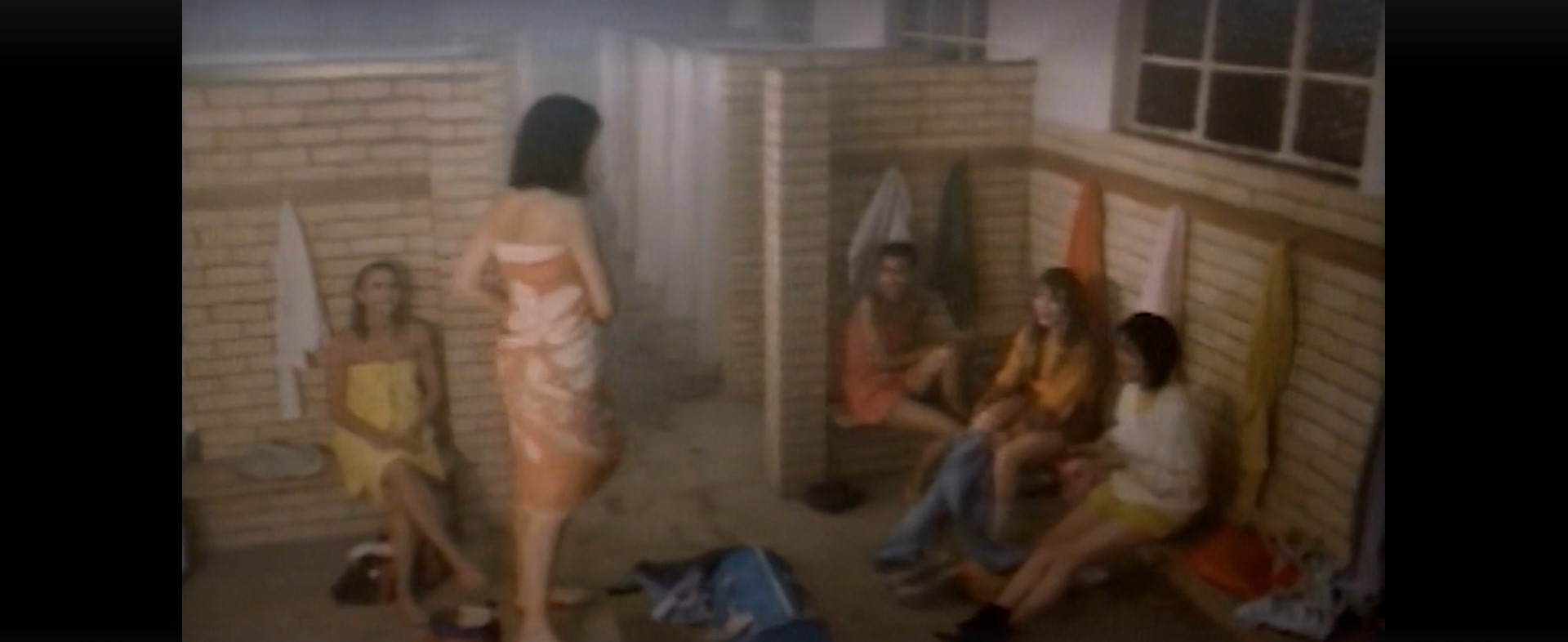
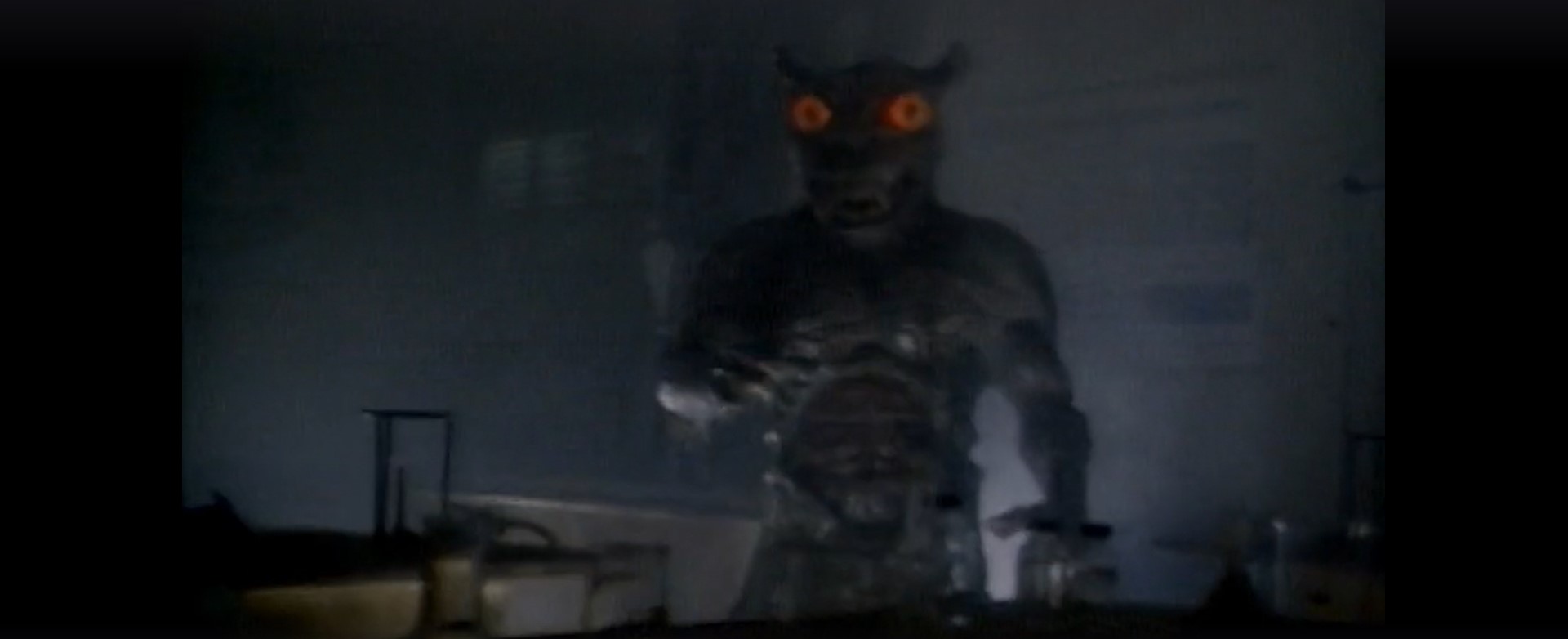
John and Johan Bernard’s logline for “The Stay Awake” likely looked appealing on paper but a full story treatment begs to differ with an inscrutable concept from start-to-finish.  “The Stay Awake” wades in generalities, oversimplifying locations and periods such as “America, 1969” and “Europe, 1988.”  The setup meat in between the disjointed times periods sets up a standard yet effective backstory for the killer, William John Brown, with a Judge’s voiceover of all his brutal transgressions, flashbacks of his victims at the death scene, and a slow walk down the corridor to the gas chamber that clearly denote him as the villain but then accentuates his supernatural supervillainy with a demonic voice screaming his return before the gas engulfs him.  However, why move from America to Europe and why in the span of 19 years does an unexplained possessed version of William John Brown return and select a group of religious school girls while his previous victims look to be a pact of randoms from off the street?  From the start, “The Stay Awake” has little to stay our fictional plausibility.  Couple the perplexation with dry performances, a possibly Hell originated monstrous, burning eyes rat creature, and the gratuitous horror nudity rug being pulled from under our feet as the schoolgirls tease with a shower scene only to be shown showering with towels wrapped around them and what has looked to be a promising possession of perpetual pandemonium  has quickly turned into a deflated disappointment with the only really good thing to come out of the film is the stationary man in a creature suit rat monster built like a bodybuilder.
“The Stay Awake” arrives onto DVD distributed by Cheezy Movies in a direct rip of the standard definitional 480i VHS transfer with a letterbox 1.33:1 aspect ratio.  Don’t expect a detailed transfer in a jittery and smoothed over standard definition that’s covered in a harsh blue tinted lens, but the condition of the interlaced video is surprisingly close to being damage free in a well-cared for print.  However, delph and range is difficult to determine due to the obvious lack of delineation but mostly because of the blue tint, poorly lit scenes, and contrast levels that make this presentation nearly pitch-black unwatchable in corridors, classrooms, and in the room of the like, but darkness is seriously enhanced and meshed together by Bernard stylistic choices of backlighting characters or using soft light to center the focus to offer a darkened horror picture. An English Dolby Digital 2.0 stereo serves as the only audio option which differentiates the soundtrack from the rest of the tracks.  Dialogue mostly separates itself to the top of the audio dogpile but is also well imbedded into the other track fighting to be heard that renders the dialogue dull and flat behind a wall of constant and diffused feedback static.  There’s also hissing at the tail end of sentences and faint crackling throughout.  Subtitles are not available.  The only extras on the static menu are back-to-back, quasi-grindhouse style trailers for two Cheezy Movies distributed titles of the blaxploitation “The Man from Harlem” and a “Dirty-Dozen”-esque “Commandoes.”  The physical aspects include a standard black DVD snapper with a rather enticing original title being sandwich with the demon’s glowing eyes on top and four schoolgirls ready to fight at the bottom.  The disk art is the same image except the four schoolgirls are cropped out and an unfortunate placement on the “The” from the title finds it punched out by the disc center/disc lock to just reveal “Stay Awake.”  The rated-R DVD has a region free playback and a runtime of 85 minutes.  “The Stay Awake” has all the indications of a cheap imitation on an established horror formula and this particular physical release doesn’t help the feature’s cause with an extremely dark and nebulous image to match its narrative.

Can You Keep Your Eyes Open at “The Stay Awake?”  On DVD now!

https://vimeo.com/814964711

Ever Get the Feeling that Your Downhill Relationship is an Endless EVIL Loop? “Brightwood” reviewed! (Cinephobia Releasing / DVD)

“Brightwood” available on DVD August 22nd!  

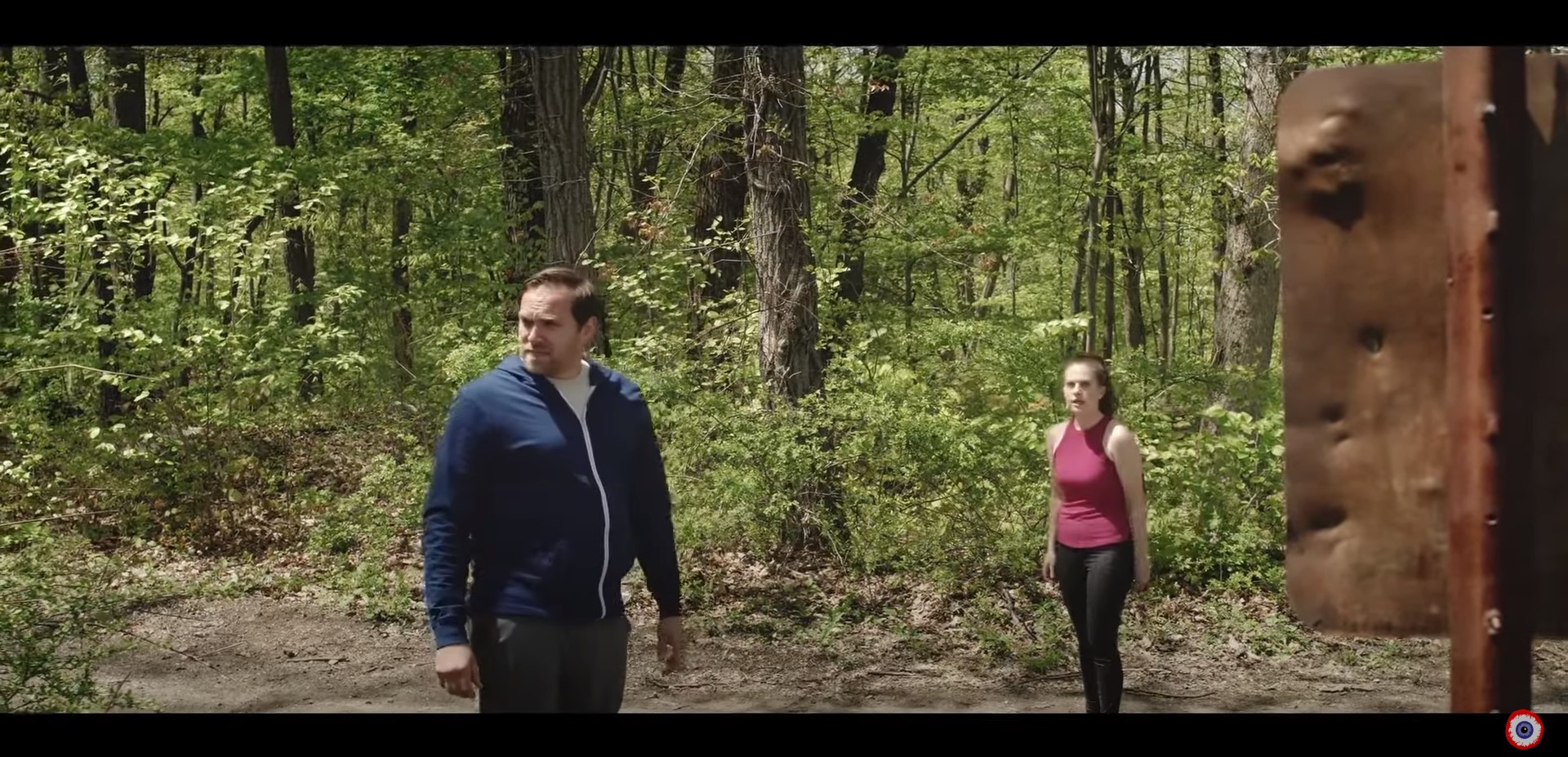
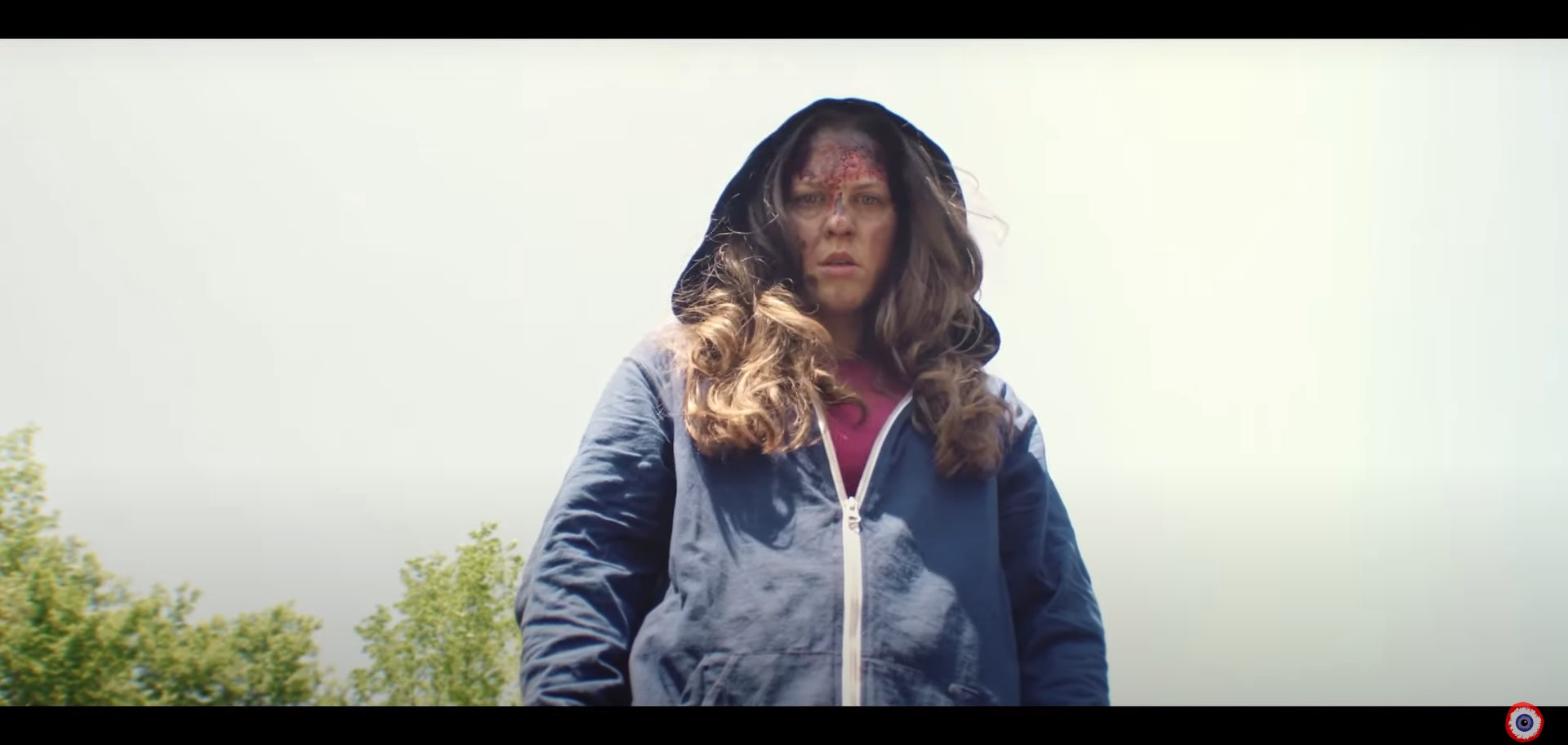
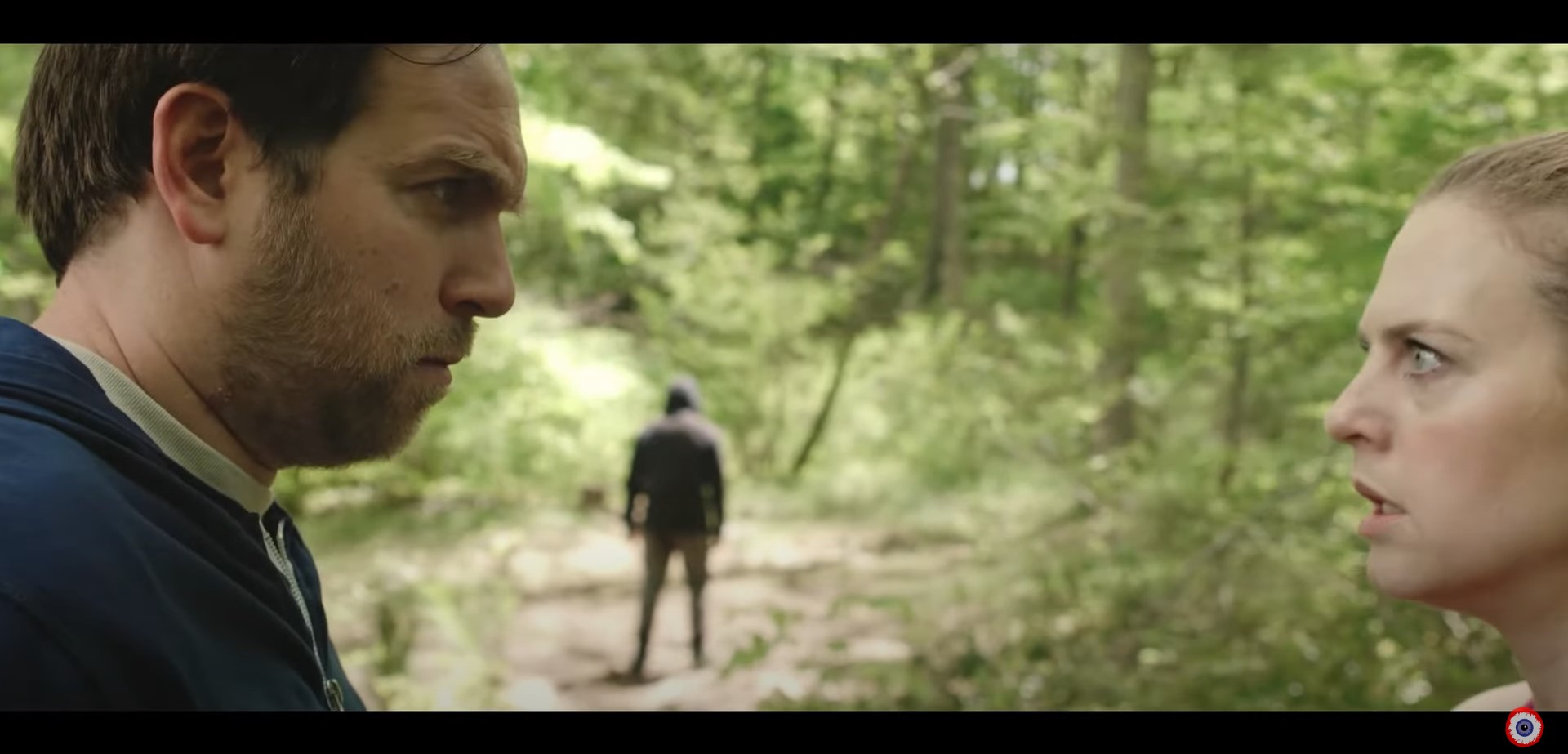
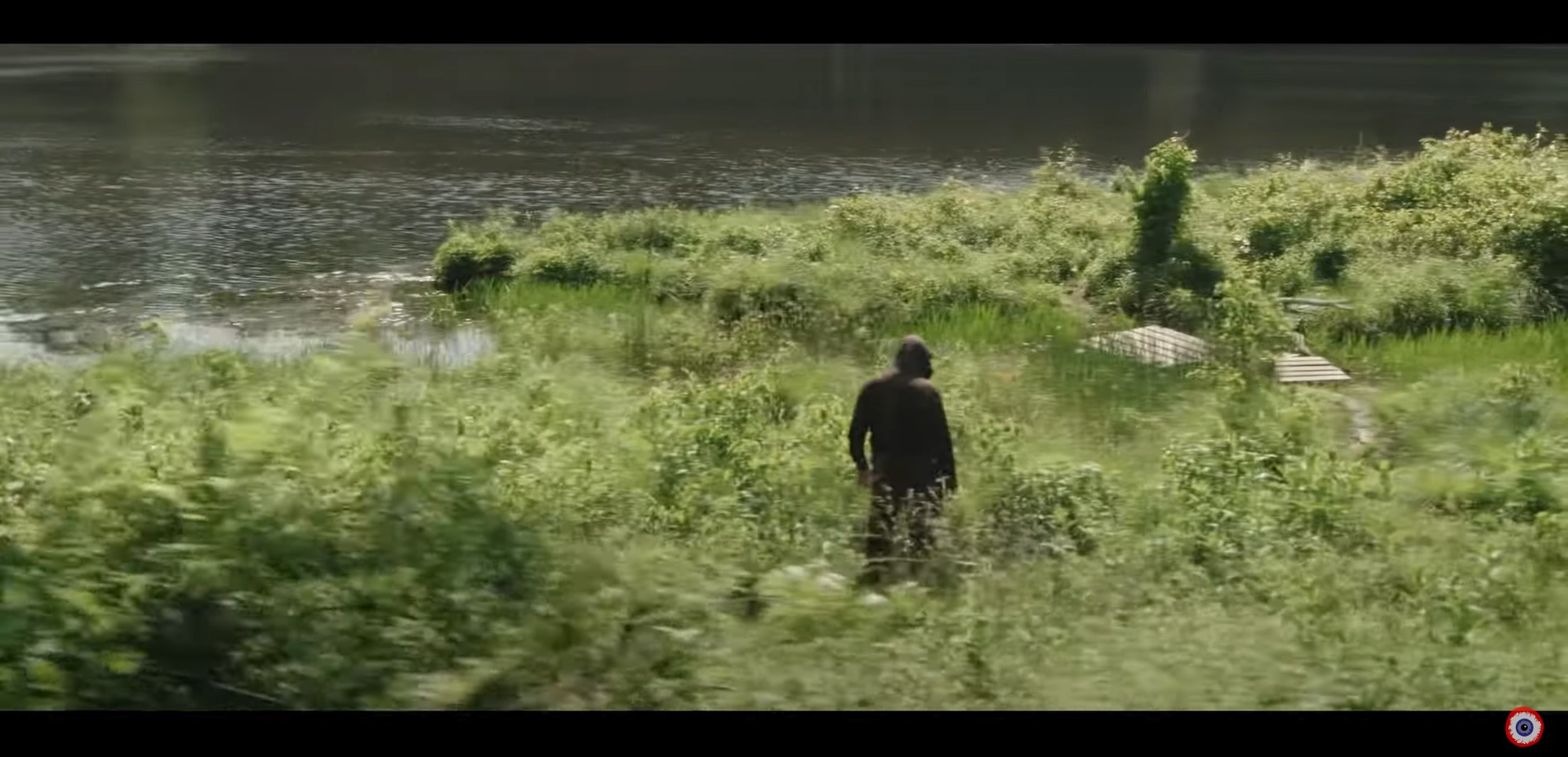
Jen and Dan have been a couple for a long time.  A stupid long time.  Such a long time, Jen has come to loathe Dan for everything he is worth.  On the other hand, Dan self-deprecates himself into submission despite his love for Jen, even a loveless, spit firing Jen.  When the two go for a run, hashing out the contentious night before, Jen heads for the pond to run laps around Dan in avoidance.  Having circled around a few times, Jen realizes the once exit trail from the pond, the trail she run through to the pond, is now no longer visible.  Perplexed, she voices her concern to Dan who also can’t seem to find the exit trail and every attempt to navigate through the surrounding forest reverts in them being brought back to the pond.  With no way to escape a dead cell service zone, the couple realize their not alone when they come across different versions of themselves stuck on a time loop from the very beginning moment the quarreling couple first ran onto the pond circuit to the future, disheveled versions that no longer have humanity.

Strained relationships and cosmic horror go hand-in-hand.  Or, at least, sometimes they feel like they do with an endless and revolving stagnation of being one with another as the hatred for the other and the fear of being alone cancel out any promise of an amiable or favorable solution.  Instead, staying put seems safe albeit the loop around effect of revising old and reoccurring snags that keep the relationship stale and hopeless instead of moving forward.  That’s possibly how writer-director Dane Elcar sees the suffocating time warping scenario playout symbolized in his debut cosmic horror feature “Brightwood.”  Based off and remade from Elcar’s 2018 20-minute short film entitled “The Pond,” anxiety riddles an already one-sided contempt couple who can’t find the path out of not only the pond but also their relationship in the thriller that’s peppered with dark comedy.  The 2022 feature, filmed around Egbert Lake in New Jersey, is produced by the director as well as star Max Woertendyke under Noble Gas Media productions presented by Media Moove and the LLC, Pond Pictures. 

“Brightwood” has a whopping cast of two and, honestly, the story doesn’t require the need for more and the principals, who may be better described as neutral characters or possibly as far as anti-protagonists, run the gamut of moral principles depending on which in-time version of them we’re witnessing.  Dana Berger and Max Woertendyke play the beleaguered and one-sided cantankerous couple Jen and Dan who are unable to escape the mysterious circumstances of being trapped around and forced to endured permanent residence at the trail that encircles a nearby pond.   The couple’s relationship dilemma relates irreconciled differences once adoring lovers cross beyond into when the romance goes stale.  Jen notes this by saying how she hates Dan’s smell as if it just lingers in her nasal cavity.  Hate is sowed deep after years of living with the person she has come to despise because of Dan’s lack of gumption to be anything but mediocre.  Like a puppy trying to keep up with an odiously pissed off owner, Dan mostly fears losing the one woman who likely puts up with his inadequacies.  Berger and Woertendyke really do nail the exposition history while feeding into these dynamics to setup their characters’ climatic, life-altering stuck in an invisible cosmic cage.  Stuck, the word that best describes both a worn-out relationship and the unnatural situation they’re in.  Jen and Dan are stuck together, possibly forever, to work out couple complications or to give up and just terminate it all.  The actors tap into that cathartic back-and-forth by giving a range of therapeutic emotion performances that purges truth and guilt from their characters, like any relationship would in order to grow and/or move forward.

“Brightwood” is one diabolical tale of torment of being indefinitely stuck in relationship Hell.  Analogies and metaphors compile along the way in a parallel stream of unfavorable situations.  To add more layers, Dane Elcar throws them for a loop, literally.  Jen and Dan are copied over-and-over again in a replay of moments and time and each time they’re copied, new developments emerge in the time loop that were different from before, ascertained by previous versions of themselves.  Conceptionally, the idea has it’s convoluted moments in trying to make the characters appear derived from a particular staring point and interact with each other in various behavioral outcomes, but this particular subtenant, niche layer of the cosmic horror genre is innately difficult to represent but a moderate degree of success can be conveyed or extracted depending on how much you’re willing to be opened minded, or stretched the limits of reasonability, or just don’t plain give a damn about it making sense.  Films like Justin Benson and Aaron Moorhead’s saturated cosmic horror “The Endless” or not-so-cosmic but tantamount to the concept is George Moïse’s “Counter Clockwise” are examples that work and work well to entertain a coherency and a consistency of repeated time.  If expecting a flashy and full-fledged effects driven feature, “Brightwood” is the opposite with a low-key approach that relies on staggering scenes to eventually overlap them, keeping the common core element of the pond as a center focus and turning it instantly in our minds as an undercurrent source of evil despite’s its serenity and idyllic nature.  Little do we know, our instincts might be more on point than lead to believe.

Psychotic endlessness is synonymous with loveless relationships in Dan Elcar’s “Brightwood” available on the 3rd DVD distributed by Cinephobia Releasing come August 22nd.  The single layer, interlaced DVD is presented in a widescreen 2.35:1 aspect ratio.  Image quality on the release displays a subtle overexposure, shot mostly with natural daylight, and desaturated video image not terribly rich with coloring.  Basic detail renders over nicely, exhibiting fair delineating and depth within a nature coloring scheme that micro blends characters into the foliage and mirror pond landscape.  Minor aliasing shows within the frame but the overall compression artefacts end there, decoding data at the higher end of where DVD’s can perform around 7-8 Mbps. “Brightwood” comes equipped with two English audio options – Dolby Digital Stereo 2.0 and a Dolby Digital 5.1 Surround Sound.   Between the tracks, dialogue transcends the others in a very line heavy narrative to push the small cast along but there’s a suffice amount of leaf rustling and trail running ambience and range to expand the sound into the back channels.  Jason Cooks composed score a lightly melodious score mixed with harsh tones to keep viewers edgy with suspense.  English subtitles are available.  Bonus features include a feature commentary from director Dane Elcar and stars Max Woertendyke and Dana Berger, 11-minutes of deleted scenes, the original 17-minute short “The Pond,” and Cinephobia Releasing trailers.  The standard DVD sports “Brightwood” poster art with no insert on the inside and the disc art the same as the poster with release spec, which are a not rated feature and a runtime of 84 minutes with an unlisted regionality of region 1 playback.  “Brightwood” endures the subgenre’s stumbling blocks with concentrated acting stability and synergy between the 100% invested Dana Berger and Max Woertendyke who could literally perpetuate Dane Elcar’s vision endlessly.

“Brightwood” available on DVD August 22nd!  

When Machine and Man Merge, Which EVIL Will Emerge? “Re-Flesh” reviewed! (SRS Cinema / DVD)

“Re-Flesh” DVD Available Now to Replace Your Old Skin!  

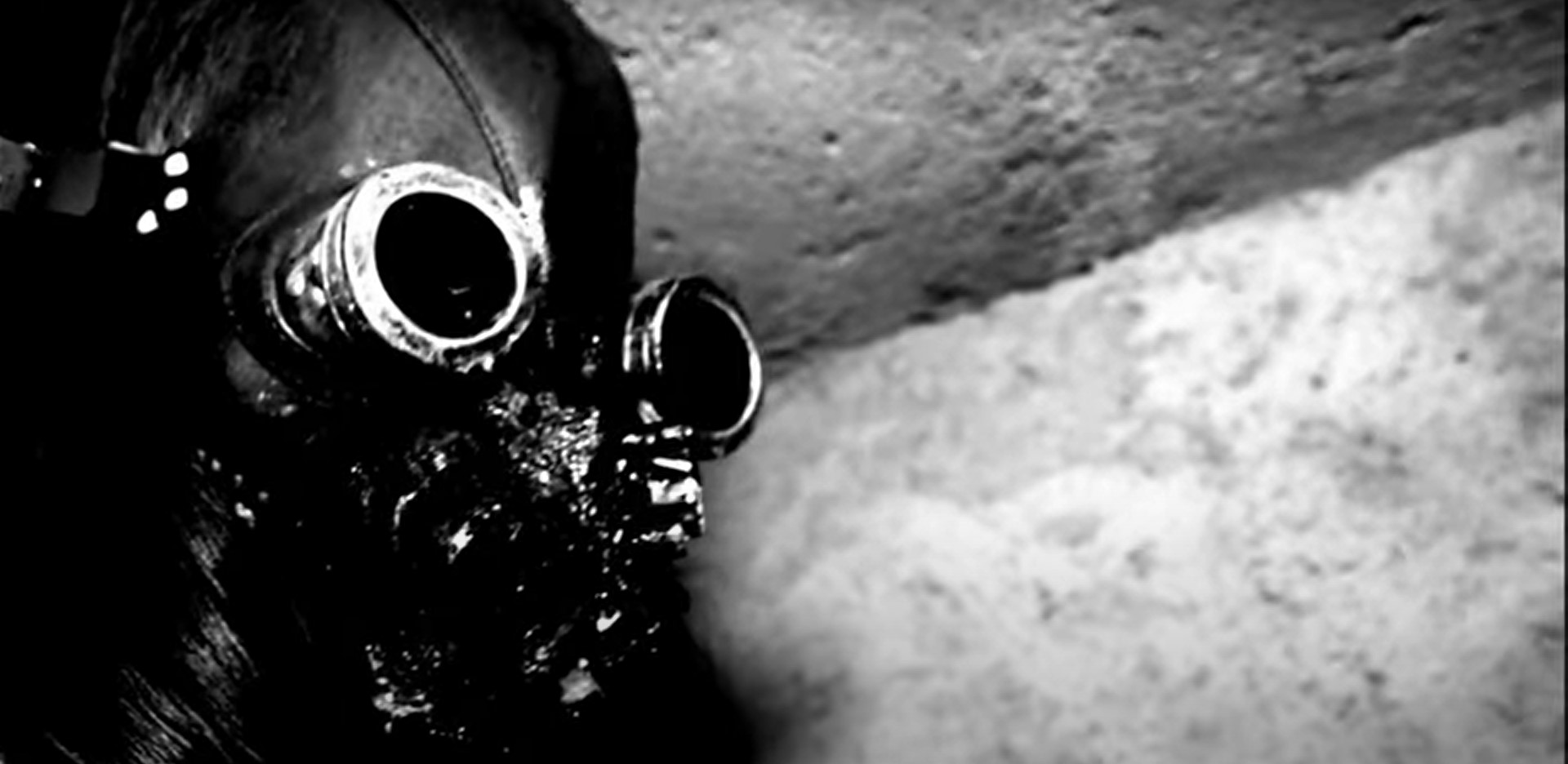
In a dystopian future, machine and man have merged into an asymmetrical symbiosis where machine is preponderantly present to corrupt man’s benevolent humanity.  Such corruption removes compassion at the core level with the use of neurol inhibitors of technological ascendency over mankind in a gruesome, unpleasant fashion.  The exhibited process is exampled with a masked nurse pushing a wheelchair bound masked man down a dank and dark hallway and into a reprocessing room where he’s plugged with a cable attached to his arm.  From there, the man is fitted with a virtual viewfinder displaying five short reprocessing-to-repair files, transmitted before his eyes to incite organic machinery violence that’ll absorb and eradicate years of human psychological evolution.  Slowly through the images and videos of visceral excision does the man morph into an automaton of flesh, blood, and commingled organic cabling and mechanical veins that will render him resolved as biologically re-fleshed.

Japanese splatter punk Body horror inspired “Re-Flesh” becomes “Deep Web XXX” and “Suffering Bible’s” director Davide Pesca’s tribute to the very distinctive denaturalization of the man-machine mix cinematic movement from the unabashed narrative risktakers hailing from land of the rising sun, Japan.  Made popular by the likes of auteurs Shinya Tsukamoto and Shozin Fukui and cult favorites like “Tetsuo:  The Iron Man” and “Tokyo Gore Police,” “Re-Flesh” adds to the niche palate with an unconfined, Italianized take to ambiguate that blurry line between the soul and the soulless as man comes to terms with a terror-inducing technological takeover.  Writer-director Pesca’s underground anthological tale pits the human condition, it’s mortal coil if you will, up against the cold and heartless tech to create coded layers of neova carne, or new flesh.  Pesca and fellow coproducer Massimo Bezzati reteam after “Night of Doom” to collaborate the 2020 released production under their respective indie companies Demented Gore Productions and M.B. Productions.

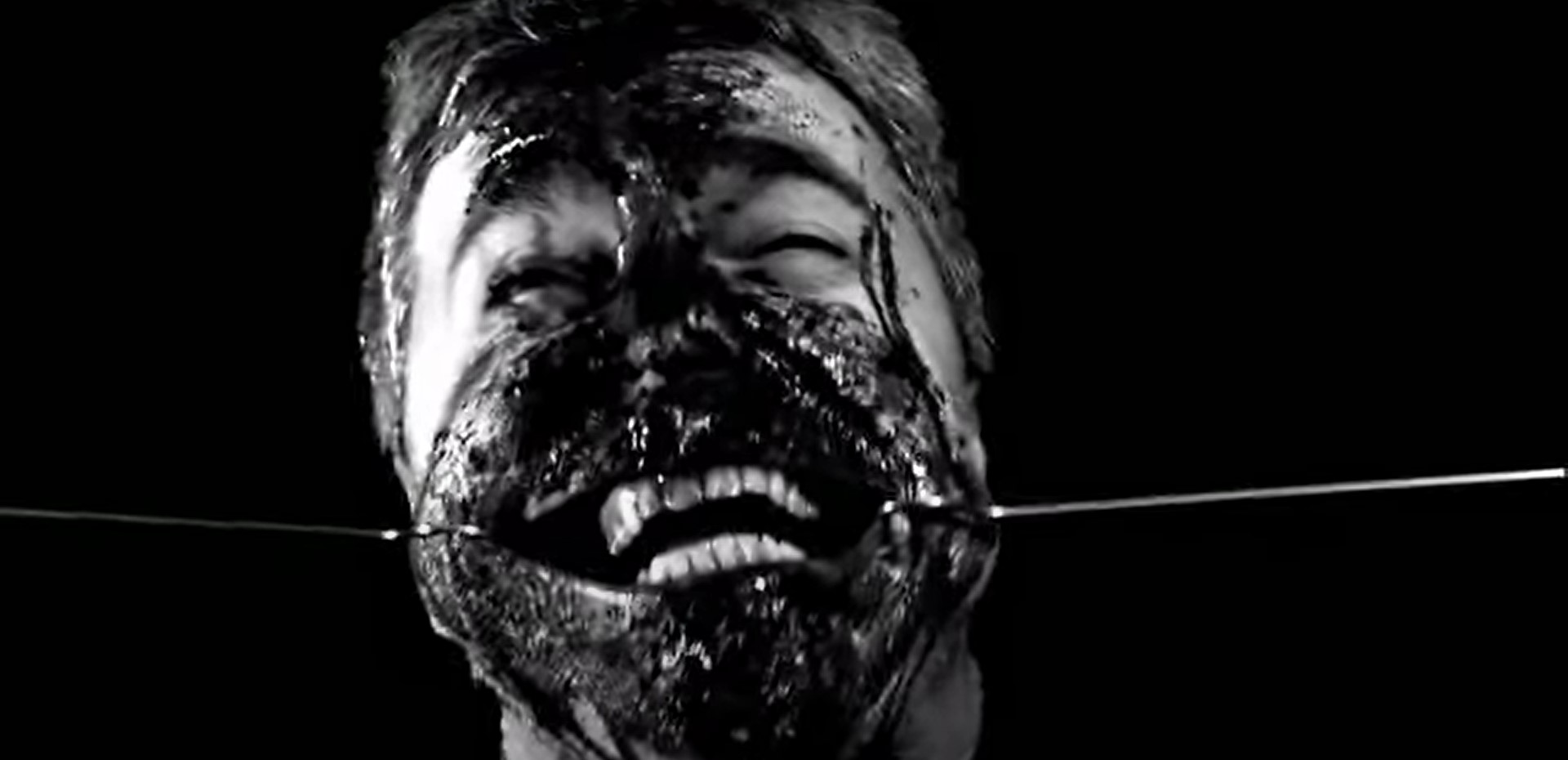
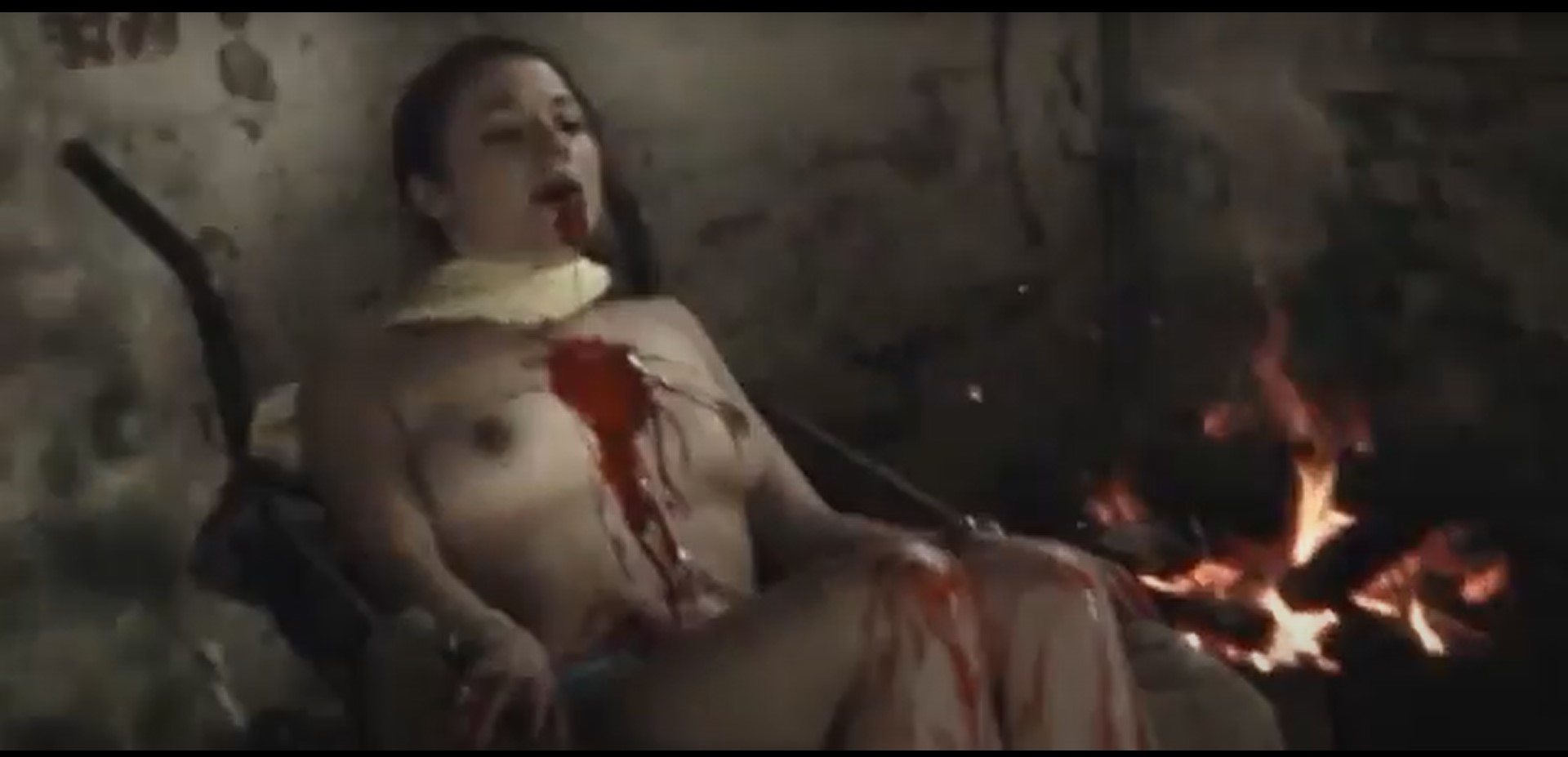
The five-story anthology with the interweaving wraparound of a man being reprogrammed casts a lot of visual performances without the need for dialogue.  Dialogue is reduced to only a pseudo medical television advert or surgical endorsements for a better, prosperous life to eliminate human flaws, advancement in new, and improved, flesh, and can even cure homeless afflictions like drugs and addictions.  Pesca keeps a simplicity about his scenes by keeping sullying dialogue removed to just retain the beauty of body horror and a sonorously cacophonous industrial soundtrack.  Each story’s characters are also fairly simplified.  Without dialogue, individual complexities and depth remain shallow in what is “Re-Flesh’s” sole celebration of horror based cybernetic organisms.  This creates no emotional attachment to any of the characters being violated by fiber optic cables and experimentally operated on with crude animatronic gizmos, but Pesca does implant an imploration of at least one emotional response from his audience through gratuitous nudity on half of the female protagonists going through a rapture and ruination of bodily rape and mutate connected by inhumane sentient cybernetics.  Most of the women protagonists are half-naked women ensnared by the inescapable new world of merged new flesh but the tail end episodes dig a little deeper, perhaps even stretch the theme to the limits of cyberpunk horror, to where women are more than just ravaged victims.  “Re-Flesh” sees skin in the game from Alessandra Pellegatta (“Night of Doom”), Giacomo Clerici, Mery Rubes (“Rage Killers’), Reiko Nagoshi (“Devil Times Two – Quando le Tenebre escono dal Bosco”), Giulia Reine, Paolo Salvadeo, Amira Lucrezia Lamour (Devil Times Two – Quando le Tenebre escono dal Bosco), Alessandro Davoili (“Alice Was My Name”), Ivan Brusa (“7 Days, 7 Girls”), and Marco Cinque.

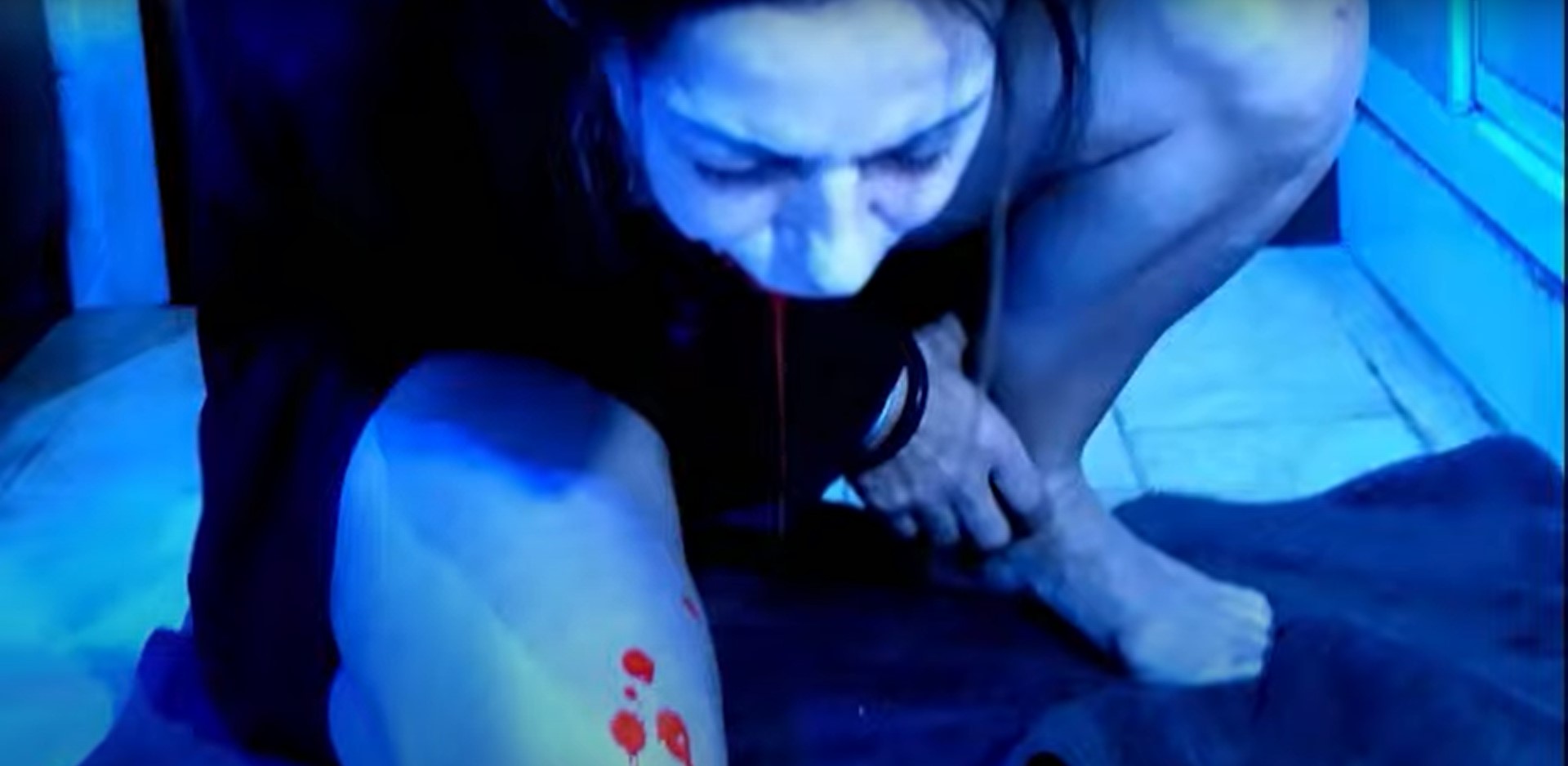
David Pesca is no stranger to short, gore-laden, underground films having been a featured segment director on a pair of anthologies in the last decade from “A Taste of Phobia” and “After Midnight.”  For “Re-Flesh,” Pesca doesn’t have to share the spotlight in his very own tech-themed, feature length compilation that narrates transmitted computer files as tech insidiously infiltrating our insubstantial innards.  The first three episodes revolve around phones and solitary women become enslaved to the devices with a link of invading their bodies with a foreign object, whether be adopted a virtual, grotesque pet to being the reason for infection that spreads throughout the body like a flesh-eating disease, to being beamed up and constrained for a thorough, if not sexual, examination of one of mother nature’s creatures.  I’m intentionally skipping the review of fourth short and head straight into the terminal episode that is more dystopian splatter punk than the others with an experimental bio-cybernetics company called Neo Vita, or New Life, ridding the world of lowlifes by module implants that turn them into society-controlled puppets.  Yet, all these stories are not terribly straight forward with the rub being the ambitious nature of interpretation and the fact there isn’t a dialogue track for most of the runtime.  Taking a step backwards to the fourth short, I found this particular short doesn’t fit “Re-Flesh’s” theme with a demonic woman damning three inert souls to a black void of pain and death.  Perhaps, a construal could be constructed to lay in code into the technology sequence strand, but the code would be a fractional stretch in comparison to the surrounding system.  As a whole, “Re-Flesh” may side more with gory sanguine than an illuminating story but does depict the scourged with a front row seat in this bloodcurdling network of body horror.

Befitting to be distributed on SRS Cinema’s Nightmare Fuel – Extreme and Unrated sublabel, “Re-Flesh” emerges as a bizarre aghast mix of tentacle erotica and technical dysfunction onto a 480p DVD, presented in a widescreen 1.85:1 aspect ratio.  Technical dysfunction also applies to the image quality.  Though combating some lossy compression issues, the standard definition resolution and budget filming equipment sustain a level of image softness under a desaturated color palette.  Depth and delineation range from hazily outlined to a complete wash out from the frame’s JPEG conversation.  Pesca operates under a wide-stylistic format that incorporates varied black-and-white schemes (a gritty B&W wraparound story compared to a more defined desaturated monochrome for the fourth segment), natural lighting, harsh gel lighting and tint, and green screen for CGI backdrops.  The English dub stereo 2.0 mix will obliterate your sound setup if not careful and without a subwoofer with a booming LFE industrial soundtrack that has produced an inherent crackle and since there is no in-scene dialogue or ambience, all of which is 100% done in ADR, the lower frequencies engulf the other channels that may pop in for phone effects or squishy surgery sounds.  “Re-Flesh” is an Italian film, but the cybernetic implant advert shot, originally spoken in Italian, is dubbed in a burned-in expeditious English dub that is what it is.  Bonus features include a promo and original trailer, a behind-the-scenes featurette entitled Backstage which is a look at some of the gory scene effects the first two segments, the short “Electric Dreams” which is an alternate graded version of the second segment, and other SRS trailers.  The traditional DVD snapper case comes with the illustrated front cover art of the man plugged in under a faux harsh white neon glow with the disc art containing the same art but superimposed with a red hue layer.  There is no insert inside the casing.  The unrated feature has a runtime of 72 minutes, more than enough time for this type of anthology, and has a region free playback.  A kitschy and schlocky graft of “Re-Flesh” will get under your skin, but this anthology quickly grinds gears toward a blue screen of death.      

“Re-Flesh” DVD Available Now to Replace Your Old Skin!  

Friends for Dinner is EVIL’s Table Setting! “Gnaw” reviewed! (MVD Visual / DVD)

“Gnaw” on this DVD from MVD Visual, Danse Macabre, and Jinga FIlms!

A holiday away in the English countryside might not be the perfect relaxation for six prickly friends.  Quarrelsome and unfaithfulness run rampant through their fragile friendship on the verge of collapse.  Everything at first was manageably enticing – a quaintly rustic countryside house, a quietly isolated surrounding woodland, and the matron house owner who whips up meaty delicacies for them to enjoy breakfast, lunch, and dinner – but when darkness falls amidst a heated love triangles, lustful romps, and frustrated behaviors, the divisive friends become blind to the ever watchful eye that’s hungry for what the group of young people have to offer – as fleshy comestibles.  A cannibalistic cook lurks in the shadows and in between the walls, waiting for the opportune moment to strike, fillet, ground, and prepare the tender meat for seasoning and baking, but his observant eye has set it’s sights on one whose expecting child that could be a tasty morsel for later. 

Cannibalism subgenre has been a staple in horror for decades the under the vastly wide dog-eat-dog umbrella that pits human beings against each other in one of the many gruesome reasons of unwittingly engaging into a form of Darwinism.  People considered as food are lower-shelf commodities to those who need to feed of human flesh and organs, regarding their placement in the food chain as superior amongst the rest despite being in the same category of the animal kingdom.  Every filmic narrative contains a tweaked difference in justification for cannibalism and in Gregory Mandry’s 2008 English horror, simply known as “Gnaw,” in lies that sense of definite worth in craving someone else’s entrails, boiling the viscera down into a hot soup or baking it into a meat and potato Cornish pastry.   The script, penned between first time screenwriters Michael John Bell and Max Waller from a story by independent horror producer Rob Weston (“Antibirth,” “The Thompsons”), contrasts people’s life-consuming narcissism and pettiness against something truly terrifying and waiting to sink its teeth in you.  Weston and Simon Sharp produce the film under Weston’s production company, Straightwire Entertainment Group, as well as The Big Yellow Feet Productions.

Being that “Gnaw” was released in 2008 and is a low-budget indie film, a novice bunch of English first timers trying to break into the acting game and industry overall comprises the story’s cast of victims and cannibals, but that isn’t to necessarily say the meat and bones are rotten from the very unwrapping of DVD case plastic.  As a whole, the fresh cast undertakes the pessimistic angles of a souring love triangle between established couple Jack and Jill, yes, like the nursery rhyme, played by Nigel Croft-Adams and Rachel Mitchem in a slowly sink ship that symbolizes their relationship, torpedoed by an unknown undercurrent in Jack’s fling with Lorrie (Sara Dylan, “Mandrake”).  Between the three, suspicion is entrenched in Jill with sarcastic lashings on Jack’s recent temperament and behavior that suggests she’s aware of wandering playboy antics, but what Jill is unaware of is the other woman, a hopeless romantic who can’t seem to see through Jack’s philandering, self-assured ways.  One thing “Gnaw” does to spoil this wonderfully taught threesome is not bring the tension to a head and, instead, deflects to the butchering head chef of human bodies, played gruntingly by a muted and snarky-looking Gary Faulkner attempting his best to imitate a killer from the very best of the 80’s slasher renaissance and only to come up short of the current slasher renaissance a decade and a half later.  Masked half the time with some kind of black felt cloth with an attached pelt, Faulkner looks more like a half-wit brandishing a two-prong pitchfork than an large, formidable intimidator you’d be scared of just by looking over your shoulder while running as fast as you can to get away.  Granted, the character is tough to kill, able to take punches and stabs as if they were mosquito bites, but his connection to cannibalism often feels lost in the chase rather than knee deep in guts and a frying pan.  The rest of the cast rounds out with a trope-horny couple in Julia Vandoorne and Hiram Bleetman (“Zombie Diaries”) and the matronly yet unnerving face and voice of Carrie Cohen as the house owner.

In the grand canon scheme of cannibalism films, “Gnaw” places on the generic neighborhood scale.  The small time indie picture rides the line of equivalence, neither being absolutely terrible or outstanding gruesome, with a less-is-more story that more-or-less been done before in the subgenre.  Yet, “Gnaw” doesn’t give audiences anything new to squirm about with its peanut long-pigs who arbitrary abduct locals for their bone-licking appetites.  “Gnaw’s” in frame gore generally consists of goring with that aforementioned puny pitchfork and we’re quickly skirted from the “Texas Chainsaw Massacre” inspired moment of Faulkner revving the two-stroke engine for maximizing terror in the eyes of a soon-to-be-in-bits victim   Gore should be a staple motif for any cannibal film where one deranged person has to either sauté, stew, bake, or grill the parts of a hacked up totally emotion-regulated person and Mandry’s film seldomly shows the sickening, sordid sloppy Joe-makings of a flesh eater, except for one scene of a severed foot being ground into hamburger meat that fits the bill while most of the rest happens implied off screen or unshown.  Mandry’s approach to telling the story has the inklings of a 80s-90s vintage made-for-TV movie with an unpolished dark veneer and snooping camera angles to obtain a POV sense of prowling prey while also keeping us engaged with the frustratingly unresolved melodramatics of the group that can stifle our concern for the characters in the last act, infectiously affecting the crude final scenes that literally drops a baby into our laps and expects us to know what to do with that information. 

Personally, my second time around with Gregory Mandry’s “Gnaw” but a lot has changed in between the more than 10-year span of now-and-then.  Hell, even I’ve changed in regard to taste and with now having consumed more cinematic wisdom over the years, from what I recall, “Gnaw” was a rememberable off-industry shocker to a limit and it’s gratifying to see the little cannibal film that could receive a revisit on DVD from MVDVisual in association with Danse Macabre and Jinga Films.  The film is housed on a DVD5 that presents the 35 mm stock in a widescreen 1.78:1 aspect ratio and in a rather chaotic upscaled transfer that may be more commercially equipment caused than artefact, but compression macro blocking is evident during the majority of night scenes as it phases in and out of overlapping darker shades. Tom Jenkins’s cinematography can be nicely fore focused to center the characters in front of a background out of focus, but there are other instances where the lighting is extremely binary with not a splash of other color to liven up the image. The only audio option is an English Dolby Digital 5.1 surround sound mix with an overkill statement on a film that doesn’t require it.  The back and side channels hardly become utilized for any back brush movement or creaky old house shifting so a lot of the sound is in the anterior which is where the dialogue most rightfully aggressive and clearest.  No issues with the digital recording that offers a balance between the placid moments and the screaming hysteria without being too much intake on the speakers.  There’s not much in the way of ambience, some chewing of the meat pies, steaming of pots, and the revving of a chainsaw is most character-driven sounds that overtake any kind of natural environment along the background landscape.  English subtitles are optionally available.  The DVD does not list special features, but extras appear on the static menu with a director’s commentary that can be toggled off/on.  There is also a trailers selection with previews for the feature plus “Midnight Son,” “After,” and “Red Latex.”  Physical features offer an alternate cover from the other releases with a man opening wide to take a bite out of a literal hand sandwich in the photoshopped composition.  The DVD case does not contain an insert and the disc art contains the same image as the front cover.  With a region free playback, the movie come not rated and has a manageable runtime of 84 minutes.  The second time around with “Gnaw” proves to appreciate the work that goes into a stably fixtured indie horror from the UK but with the copious entries of the cannibal subgenre, especially in the early 2000s with more theatrical pieces in “Wrong Turn” and “The Hills Have Eyes” remake, “Gnaw” treads mediocre waters just enough to sate the man-eater hunger.

“Gnaw” on this DVD from MVD Visual, Danse Macabre, and Jinga FIlms!

EVIL Preys on the Goodness of the Weak. “Lady Terror” reviewed! (Sector 5 Films / DVD)

“Lady Terror” is on the Prowl.  Now on DVD!  

Jake Large, a shrewd personal injury lawyer, finds himself in a loveless engagement that’s full of contempt, especially with his finance who makes up excuses to not be around or intimate with him.  When Jake foils a thief’s grab and dash of Candice’s purse, the lawyer and the exotic dancer quickly fall into a relationship that rekindles Jake’s vivacity of work and life.  Breaking off the engagement to his equally two-timing finance, Jake pours every ounce of emotion into the sexually tempest romance that’s rapidly become more than just courtship when Candice suggests the murder of her frequently threatening and abusive stepfather.  Witnessing first hand some of his behavior, Jake agrees to take out her stepfather in a fiery explosion during one of his rabbit hunting trips.  When the dust settles and all seems to be going well with Candice, a watershed moment reveals Candice’s intentions are not what they seem to be and in the middle of taking the fall for everything is Jake. 

An enticingly fervid thriller, “Lady Terror” is the latest directorial from the 30-year industry producer, writer, and director, Nathan Hill.   Filmed in Melbourne, Victoria, Australia, “Lady Terror” harks back to the early 90’s erotic suspenser of sex, deceit, and murder where seduction and predatory persuasion are welded tools to accomplish unscrupulous acts.  Hill has submersed himself chiefly in low-budget genre films from his first feature, a sewer creature that craves Cartel drug pushers in the SOV shot “The Hidden” released in 1993, to more recent and gamut gorging Australian documentary pictures, such as “Bigfoot Down Under” and “Sex Down Under,” as well as keeping tethered to his horror roots with his short film work contributed to compilated anthologies in “Clownsploitation,” “Previews of Coming Attractions,” and “Schlock-O-Rama.”  Hill produces his “Lady Terror” under his company NHProductions with the Alien enthusiastic documentarian, executive producer Warren Coyle, and marks the reconnection of Hill and director of photography Dia Taylor following their debut, feature film collaboration on Hill’s “I, Portrait” and the various filmic vignettes from before. 

Not only does Hill write, direct, and produce, the filmmaker with a penchant for creating J-named characters is also the lead principal personal injury lawyer Jake Large, owner-proprietor of Large Lawyers.  Though successful in his legal craft, Jake’s has developed depression when his once endearing fiancé Celine has turned against him as she sneaks around his back with a mixed martial artist.   A loathing Celine is played severely cutting by Tritia DeViSha who has previous chemistry alongside Hill during their time on Hill’s “Revenge of the Gweilo” production and while the chemistry between their characters is palatably thick with contempt, there’s not much backstory in gain traction for sympathy, compassion, or any other emotive expression.  Jake has a single flashback of his and Celine’s happiness in simpler times during a moment of what could be regret or longing, but there’s simply not enough breadcrumbs for their history to take shape of any form.  Instead, their turmoil feeds into Jake’s unquestionable willingness to concede to a beautiful exotic dancer and damsel in distress named Candice (Phillyda Murphy).  The attention is good, the sex is good, why not just give a little back by murdering her crooked stepfather (Anton Kormoczi – who also goes by Anton Trejo because he mildly looks like Danny Trejo)?  Well, Jake’s lovestruck blindness obscures the real intent but, luckily for Jake, he has what he describes as a lucky rabbit’s foot in his secretary who aspires to be a private investigator and when she’s not punching keys, she’s clandestinely tailing Candice in a spying and snapping pictures behind trashcans and around corners caricature kind of way.  The platinum blonde and distant relative of horror maestro, Dario Argento, Simay Argento is the peripheral probing dick Ayla Harp that initially doesn’t have this close-knit relationship with her boss until the third act when she happens to take it upon herself, after examining Jake’s behavior and reading his desk notes, to snoop into his private life on his behalf.  It’s not entirely clear how she unearthed who exactly Jake became intimate with but she managed track down Candice’s exact location to snap a few black and whites.  “Lady Terror’s” remaining cast feels very much like Ayla Harp in the disconnection of each other’s narratives, ridden along in choppy succession that leaves too many plot holes to fill.  The cast rounds out with Leslie Lawrence, Anthony Cincotta, Robert Rafik Awad, Challise Free, and Adam Ramzi – the 40-year-old Melbourne actor, not the gay porn star.

Perhaps that character disconnection stems from the distracting filler from in between dialogue scenes.  A slew of these filler scenes are of Jake Large driving around town, pulling up into driveways, and entering his home, Candice’s home, or his office, eating into a runtime that could be better suited for character exploration or assembling the fragments of a deceptive thriller involving the key players.  The current design dulls the run-of-the-mill and insubstantial story with nothing new to offer audiences to facelift the core element, a rope-a-dope of relationship pretense in order to con a fall guy into another’s dirty work.  Though I know the answer in the back of my mind, a considerable amount of struggling happens in the deductive logic and complex problem solving regions of my brain for the missteps of what’s supposed to happen after Jake commits to the hit.  Ultimately, the worst outcome to happen to Jake is not what I suspected; in fact, we should be expecting a more disastrous, run-for-your-life fall from grace, but, instead, there’s no sense of urgency or consequence in the unravelling of Jake’s newfound and glorious prospects with Candice.  In fact, police presence is reduced to informing Candice her stepfather had died and that’s the extent of it, not mentioning the gunshot, a gasoline fueled explosion, or any other kind of suspicious death pursuits.  The awkwardness continues to bleed into the narrative continuity.  “Lady Terror” has a time span of at least a week or two, or longer as it’s not entirely clear, but Jake’s outfit rarely differs from the white pants, blue button-up shirt, tan sport jacket, and fedora.  The same goes with his lacy see-through topped assistant Ayla, suggesting that many of the scenes were shot on the same day or two without a wardrobe change.  When Jake does have a different outfit on, the subsequent scenes revert right back to that then by now stale getup. 

“Lady Terror” arrives onto DVD courtesy of Sector 5 Films, long overdue revisit of the distributor’s line of product since our last review from 2016.  Presented on a DVD-R, with DVD5 capacity, in a widescreen 1:78:1 aspect ratio, “Lady Terror” retains an unhewn image that appears soft, smooth, and with slight aliasing.  Overexposure wipes a fair amount of background sky, such as with approx. ten minutes into the story a plane just flies off into a bright void, but the overcast grading leaves this modern noir consistently dreary to where the only thing that stimulatingly pops is Phillyda Murphy in her skimpy intimates.  Again, there’s not a ton of landscape range, especially being set around Melbourne and not taking advantage of the city skyline or it’s Port Phillip harbor with the drone to gain urban rookery.  Sector 5 DVD’s back cover states the film has a 5.1 surround sound mix, but what my player tells me, “Lady Terror” actually comes supplied with an English Dolby Digital 2.0 mix.  The dual channel output would have been a sufficiently adequate mix albeit unpolished, echoey dialogue but for the entire length of the film, a harsh gargle undercuts the sharpness in the dialogue and the Jamie Murgatroyd (“No Such Things as Monsters”) soundtrack.  This also creates faint whispery-hissing.  There are no optional subtitles included.  Bonus features include doomsday, extraterrestrial, and anthropology hypothetical or alternative fact-doc trailers for “Occult of the Secret Universe,” “Nostradamus:  Future Revelations and Prophecy,” “Ancient Origins:  Extraordinary Evidence,” “Alien Paradox:  Legacy of the UFO,” “Demonic Aliens,” “Breaking Free of the Matrix,” “Ancient Origins:  Mankind’s Mysterious Past,” and “Elusive Bigfoot Abroad.”  The Sector 5 DVD is housed in standard black snapper with trashy romance novel resembling front cover of two who are not Nathan Hill and Phillyda Murphy in throes of passion.  The cropped top portion of the cover art that includes Murphy’s face in composited in 3 hues is also pressed onto the disc art.  The release comes not rated with an 80-minute runtime and a region 1 encoded playback.  Though performances are solid, “Lady Terror” ultimately feels underwhelming and unable to live up to the attractive title with an unadventurous noir thriller hamstrung stake to the heart from the DVD-R’s anemic technical and fidelity issues.

“Lady Terror” is on the Prowl.  Now on DVD!